



Abstract
This article considers ways in which toys have featured in children’s play throughout the COVID-19 pandemic. Whilst often dismissed as trivial novelties, toys can be seen as a significant aspect of material culture, both reflecting and constructing ideas of childhood. A multimodal social semiotic perspective is used to examine a selection of toys produced between 2020 and 2022 that respond to the pandemic in various ways. The toys feature representations of the virus, of accessories for enacting pandemic practices such as mask-wearing and vaccination, and of pandemic ‘heroes’. In addition to these commercially produced toys, examples of toy play collected by the Play Observatory project from 2020 to 2022 are also analysed. These real-world instances demonstrate toys and everyday objects being used to playfully make sense of, and communicate understandings of, the COVID-19 pandemic. In combination, the examples reveal discourses embedded in the multimodal design of ‘pandemic playthings’ and ways in which toy play demonstrated children’s agentive meaning-making, including awareness and understandings of the pandemic they may not have articulated verbally. In this way, toys and toy play are seen as deeply meaningful, revealing stories about children and childhood in the time of COVID-19.
Introduction
Although associated with fun and often seen by adults as trivial objects, toys are part of material culture, intimately connected to what goes on in society and reflective of ideas about childhood. This article considers the particular case of toys and toy play throughout the COVID-19 pandemic, firstly by analysing a selection of playthings produced for children between 2020 and 2022 that feature or reference the pandemic in various ways, and secondly through examining examples of children’s play with toys and playful use of other objects during this time period. Drawing on a multimodal social semiotic perspective, a case is made for viewing playthings as having complex multimodal meaning potentials, and play as children’s powerful meaning-making activity, revealing social dimensions of the recent but historic COVID-19 pandemic.
Children’s play and peer cultures tend to frequently be overlooked by adults despite occupying a central and significant place in children’s lives. Toys in particular are often dismissed as inconsequential, associated with frivolity and ephemera, part of a passing trend soon to be cast aside or a moment in childhood to quickly grow out of. However, increasingly the separation between children’s worlds and adult worlds are less distinct, leading to many toys and games now being played by children and adults alike (van Leeuwen and Selander, forthcoming). Like all cultural objects, toys are produced in a social and historical context, offering insights into that specific time period and highlighting change. Toys can be considered a particularly interesting case since they have traditionally been designed, developed, created, marketed and purchased by adults for children, unlike most other material artefacts. As such, toys often reflect a particular view of children and childhood at a moment in time, encapsulating certain adult ideals and social values.
Given this connection between toys and the wider social world, it is perhaps unsurprising that toys have historically referenced significant real world events. For example, specialist collections of toys held at institutions such as the Strong Museum of Play in New York and the Victoria and Albert Museum in London feature military toys replicating the aircraft and tanks of the Second World War and toy rockets referencing the Apollo moon landings of the 1960’s.
Following the World Health Organisation’s declaration of COVID-19 as a pandemic in March 2020, life around the world changed dramatically in an attempt to curb the spread and impact of the virus. This included practices such as mask wearing, social distancing, lockdowns, quarantine, virus testing and vaccination programmes. A number of toys produced during this period reference these shifts. However, whilst receiving some scant media commentary (Reuters, 2020; Rice, 2020; Yahoo Finance, 2020) these toys have not received scholarly attention and warrant analysis of the ways they encourage children to engage with the pandemic.
Perspectives on playthings
Toys and toy play have been theorised from a range of perspectives. A functional approach to children’s toy play can be witnessed as far back as Plato, who argued that particular playthings could prepare children for their future roles in adult life, for instance giving miniature building tools to develop skilled builders (D’Angour, 2013). Similarly, pioneering educationalists Friedrich Froebel and Maria Montessori developed sets of instructional playthings such as blocks and towers designed to support specific aspects of children’s learning and development. Toys have also received attention within developmental psychology as part of valuable practice play in preparation for adulthood (Bruner, 1972; Piaget, 1945; Vygotsky, 1978). Furthermore, psychoanalytic approaches have conceptualised toys as important ‘transitional objects’ and have highlighted therapeutic aspects of toy play related to emotional development, secure attachment and wellbeing (Winnicott, 2009). The role of toys in the thinking of these key educationalists reveals a long association between play and outcomes for children (Cowan, 2020), where the didactic, therapeutic or socialising potentials of toys are given particular emphasis by adults.
In the late 1950s, French philosopher and semiotician Roland Barthes critically commented on this socialising function of toys, stating that ‘toys always mean something, and this something is always entirely socialized, constituted by the myths or the techniques of modern adult life’ (Barthes, 1973: 53). He drew particular critical attention to the ways in which toys usually involve imitation of the adult world, prefiguring and shaping the child’s future role in society. He noted that, with the exception of more abstract playthings such as blocks, toys tended to be miniaturised versions of real-world adult objects and practices, arguing that this served to produce consumers rather than creators, thereby reinforcing a particular social order. However, today’s toys increasingly represent fantasy as well as such real world objects and practices.
Play scholar Brian Sutton-Smith built on this social perspective in his theorisation of toys as culture (Sutton-Smith, 1986), while Fleming (1996) conceptualised toys as popular culture and their increasingly strong connection with media. Folklorists Iona and Peter Opie placed particular emphasis on children’s culture, with toys and games featuring as part of their extensive collection of children’s play throughout the 20th century (Opie et al., 1989; Opie and Opie, 1997). Whilst often remembered for their surveys and written accounts of children’s play preserved in archives (Opie and Opie, 1959), the Opies also collected physical objects associated with ‘the world of the child’ including toys and games, recognising that such objects would likely become of historical interest to future generations.
As artefacts produced within particular social, cultural and historical contexts, toys have increasingly received attention as sign-objects, drawing on the discipline of semiotics. From such a perspective, with roots in Halliday’s (1978) social semiotic theories, toys can be considered in terms of both their inbuilt meaning potential – what can be represented with them – and their inbuilt activity potential – what can be done with them (van Leeuwen and Selander, forthcoming). Both of these are realised in the design of toys as three-dimensional physical artefacts that use a range of resources for meaning-making in complex multimodal combinations, such as size, colour, texture, sound, writing and kinetic possibilities. These meaning potentials are then available to child players, who are recognised as active and agentive meaning makers, within the particular social contexts in which play occurs, which may or may not place constraints on the resources available and on what may be done with them. This has given rise to conceptualisations of toys as communication (van Leeuwen and Selander, forthcoming), toys as texts (Almeida, 2020; Wohlwend, 2011) and toys as discourse (Machin and Van Leeuwen, 2009).
An analytic framework for investigating orchestrations of modes is outlined in Kress and Van Leeuwen (2021) and Van Leeuwen (2022), both of which include specific reference to toys as three-dimensional texts. They highlight the importance of attending to aspects such as representation, interaction, modality, composition, style and materiality in order to consider the communication of meaning. Such a perspective has been used to examine various aspects of toys such as gender (Caldas-Coulthard and van Leeuwen, 2002; Wohlwend, 2012), early infancy (Caldas-Coulthard and van Leeuwen, 2001), diversity (Almeida, 2017), political values (Almeida, 2014) and war (Machin and Van Leeuwen, 2009).
The activity of play itself, including play with toys and other items ‘to hand’ for children, has also received consideration from a multimodal perspective. Within such an approach, small moment-by-moment instances are analysed to examine how players draw upon the meaning potential and activity potential of toys, and how toy play may also incorporate complex multimodal orchestrations of body movement, gesture, gaze, facial expression, voice sounds and speech. Such a perspective has been used to examine children’s toy play as part of early literacy, including play with toys and everyday items around the home (Kress, 1997), moment-by-moment collaborative play in a nursery setting (Cowan, 2018; Kress and Cowan, 2017) and children’s role play with dolls and action figures in school (Wohlwend, 2011, 2012). Such instances show that toys, whilst often designed with certain play in mind, have latent affordances that can trigger new meanings dependent on the player’s own particular interest. A multimodal lens reveals toy play as a complex process of meaning-making, unfolding moment-by-moment in multiple modes, highlighting significance in fleeting and seemingly small everyday instances.
Multimodal studies of toys and toy play therefore highlight the social within the sign-object, drawing attention to ways in which toys reflect and construct particular discourses, always communicating both representational and interactive meaning, whilst simultaneously recognising the agency of the player.
Methodology and methods
This article draws on a multimodal social semiotic perspective (Kress, 2010) to examine toys and toy play that emerged in the context of the COVID-19 pandemic. The data comes from two main sources, to enable attention both to commercially produced toys and to the kinds of play that were happening with toys during this time period.
The first part of the data consists of examples of toys sold from 2020 to 2022, included for analysis on the basis that they in some way feature or reference the COVID-19 pandemic or its associated practices. These were identified through online searches of toy retailers and toy company websites, with some featured in media coverage of the pandemic (Reuters, 2020). Due to conducting the search in English, the examples featured are predominantly European and North American, but span large international toy companies such as Mattel as well as lesser-known companies such as the Spanish toy brand Famosa and independent makers selling their products on the online marketplace Etsy. Many of the toys included in the study are no longer available for purchase, highlighting their particularly distinctive focus and timely significance. The examples discussed are not exhaustive but represent a sample of typical and notable toys referencing the COVID-19 pandemic. The selection therefore provides the basis for a case study approach, with detailed analyses of the design of specific toys offering insights into broader cultural meanings, both semiotic and social.
Seventeen toys (or sets of toys, in some cases) were identified for inclusion in analysis. The examples range widely in type, including soft ‘plush’ toys, role play sets, action figures, miniature vehicles, fashion dolls, baby dolls, stress balls, a piñata and a chemistry set. Due to this wide variety, the toys were first considered thematically and grouped as follows:
(i) Toys representing the COVID-19 virus
(ii) Toys reflecting pandemic practices
(iii) Toys referencing ‘heroes’ of the pandemic
Following this broad thematic analysis, a more fine-grained multimodal analysis was carried out using a tabular matrix format for each theme (Cowan, 2014). This used one horizontal row for each toy or set of toys, and then systematically attended to modes column by column (such as size, texture, colour, kinetic possibilities – see van Leeuwen and Selander, forthcoming). The packaging, product description and marketing materials were also studied and noted in this matrix. This enabled detailed attention to the multimodal design of each toy and relevant contextual information, whilst facilitating comparison and contrast within the themes.
The second part of the data consists of examples of children’s play with toys during the period 2020–2022. These were collected as part of the project, ‘A National Observatory of Children’s Play Experiences During COVID-19’, a 15-month study led by an interdisciplinary UK research team from UCL and the University of Sheffield (Potter et al., 2023). The project examined the impact of the COVID-19 pandemic on children’s play, seeking to better understand children’s experiences during times of stress and uncertainty, and created an archived collection to inform future generations’ understandings of young people’s lives at this time in history. Utilising fully remote methods due to the restrictions of the pandemic, the Play Observatory conducted an online survey inviting children and adults to share examples of play in a range of media including written descriptions, photographs and video (Olusoga et al., 2022). Over 200 submissions were received from countries spanning Europe, North America, South America, Asia and Australia. To add depth to the survey responses, online case studies were carried out with ten UK families, in which children were invited to share further details through an online interview and to create representations of their play through drawings and films (Cowan et al., 2022). The study received ethical approval from UCL Institute of Education, guided by the BERA Ethical Guidelines (British Educational Research Association, 2018) and the NCRM ethical guidelines for working with visual data (Wiles et al., 2008). Detailed discussion of the project’s methods and findings can be found elsewhere in this special issue and in publications relating to particular strands of the study, such as digital play (Cowan et al., 2021) and media-making (Cannon et al., 2024).
Toys featured in several submissions to the Play Observatory survey and in the follow-up case studies. The submissions did not include play with the commercial pandemic-related toys identified in the online search, and unfortunately due to the restrictions of the pandemic and scope of the Play Observatory project, it was not possible to organise an observational study of children playing with these artefacts. However, the examples present instances of ‘real world’ toy play during this time, and there are connections between the Play Observatory examples and the themes identified in relation to the commercially-produced toys.
In the discussion that follows, organised by theme, both the commercially-produced toys and the examples of toy play submitted to the Play Observatory are jointly discussed. In this way, in-depth multimodal analysis of toys as artefacts is layered with broader social and contextual insights offered by the ethnographic survey and case studies (Kress, 2011), supporting discussion of both toys and toy play throughout the COVID-19 pandemic.
Findings
Toys representing the COVID-19 virus
Eight toys and playthings were examined within this theme: four soft ‘plush’ toys, three stress balls and one piñata. The toys are all of a similar shape, round with protruding spikes, reminiscent of the enlarged COVID-19 virus molecule widely used to accompany news reports relating to the pandemic. All these toys therefore magnify the virus, with Giant Microbes stating that their COVID-19 plush toy is ‘1,000,000 times actual size!’ This makes the usually invisible virus visible and tangible and placing it at a par with other magnified plush toys such as caterpillars, bees, beetles and butterflies. This humanises and individualises the virus – some even have faces, with eyes and mouths conveying sad or anxious expressions (see Figure 1).
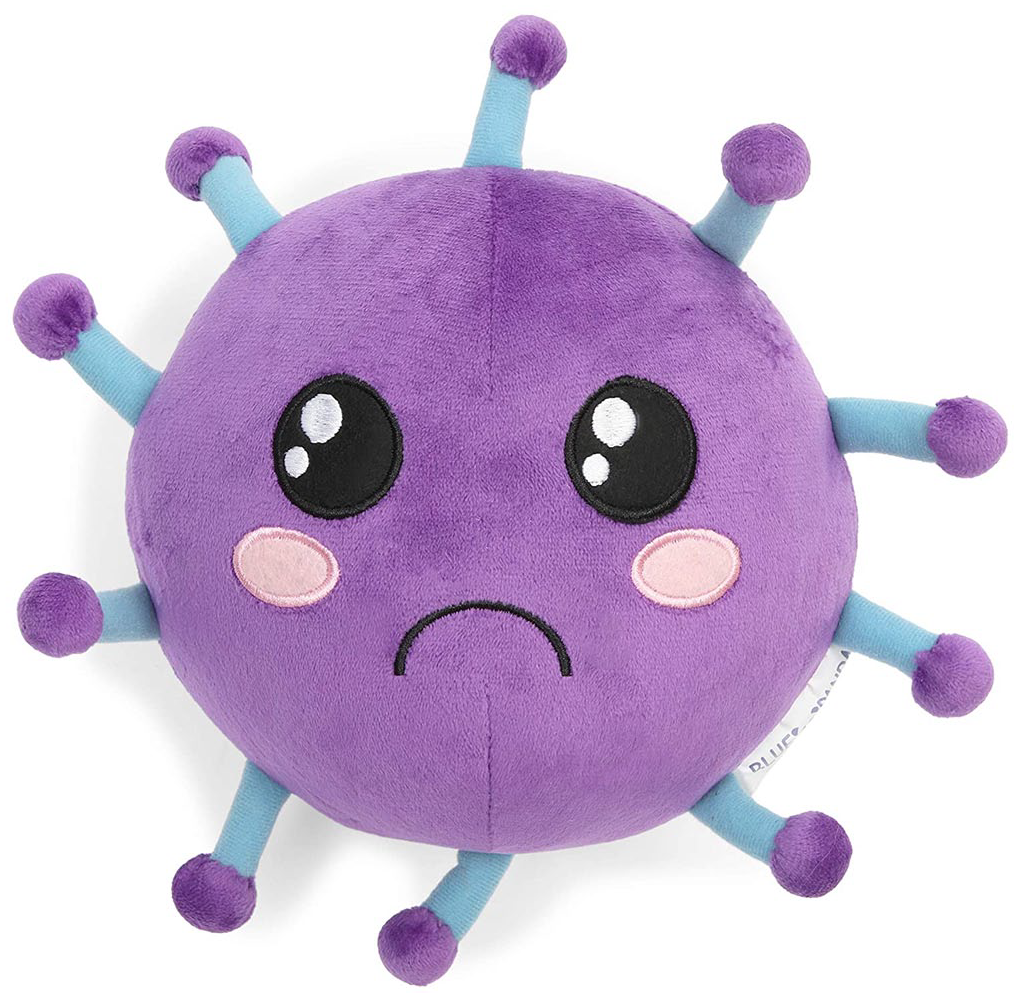
‘Microbe plush stuffed toy’ by Blue Panda.
Across the examples, the degree of detail and scientific accuracy varies. Two of the toys (one plush toy and one stress ball) are grey with orange and red protrusions, showing strong similarities with scientific depictions of the magnified virus and its characteristic spike proteins. Others are more simplified or stylised, making use of pleasant warm colours such as yellow and red, or of fleshy pinks and purples. Van Leeuwen (2022) has noted that the animated viruses in the backgrounds of news programmes also move in ways that are highly symbolic rather than scientifically accurate.
A shared characteristic of the toys representing the virus is an invitation for interaction. The plush toys are made of furry outer material and soft inner stuffing, roughly the size of teddy bears. Through their design, these toys convey softness and cuteness, offering pleasant sensory qualities and inviting gentle and caring actions such as stroking or cuddling. Thus they become ‘adorable purple and blue microbes’, as the product description of one of the viruses has it. Other toys representing threatening objects or creatures have also been represented as harmless by making them cute, for instance the vampire from Sesame Street, Count von Count. According to Bettelheim (Bettelheim, 1978: 7–8), ‘many parents believe that [children] should be exposed only to the sunny side of things’. But this, he says, does not help children confront and overcome their anxieties.
Whilst similar in shape to the plush toys, the stress balls and piñata instead invite more aggressive forms of interaction. The palm-sized stress balls are smaller than the plush toys and are made of firmer materials such as plastic and rubber containing spongy or slime-like filling, encouraging squeezing, squashing and stretching of the toy. This action is further encouraged through the packaging of the Virus Smasher stress ball (see Figure 2) which explicitly directs the player to ‘Smash him!’ and ‘Beat him up!’, personifying the virus, gendering it as male, and positioning it as an enemy to be fought. The piñata invites similarly aggressive actions, designed to be hit forcefully until broken to release the items inside.
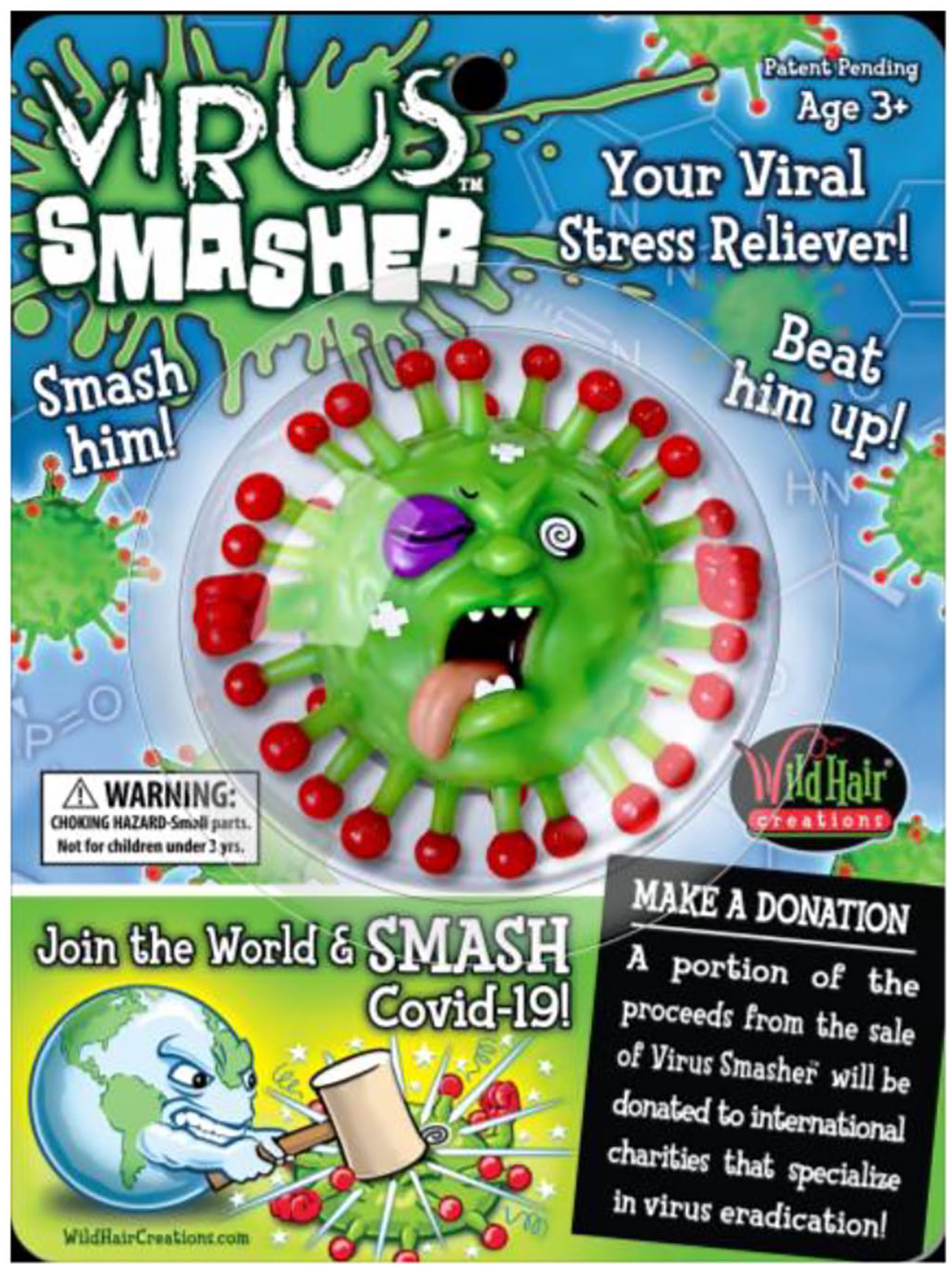
‘Virus Smasher’ by Wild Hair Creations.
The Virus Smasher and Coronavirus Piñata have been anthropomorphised through facial expressions, but rather than conveying cuteness like the plush toys, they include exaggerated grotesque features such as large menacing eyes, wide open mouths and sharp teeth. Unlike the pleasant warm colours of the plush toys, these toys make use of bright greens and uneven textures, reminiscent of mucous or mould. The effect is representation of the virus as a repulsive and dangerous monster, inviting aggressive interaction such as squashing and hitting.
The accompanying product descriptions emphasise the cathartic potentials of such toys, with the Virus Smasher packaging stating, ‘Take out your anger and frustration by pummelling this surrogate virus into submission’, and the RonaBall stating that it offers ‘stress (and comic) relief for those affected by the pandemic’. Humour and amusement are also emphasized in the descriptions of several of the plush toys, with RonaCuties describing their products as ‘Fun covid therapy items for all ages’ and the makers of the piñata highlighting its ‘funny virus shape’, and the ability of such toys to ‘bring a smile to anyone’s face’.
The Virus Smasher packaging explains that a portion of the toy’s sales are donated to international charities related to the pandemic. In this way, the toy invites parallels between an individual physically directing anger at what they call the ‘viral villain’ personified in the stress ball whilst also supporting a wider collective humanitarian response to the pandemic.
The marketing texts accompanying the toys often emphasise their educational potentials. For instance, the Giant Microbes plush toy includes a printed card with ‘fascinating facts about the actual microbe or cell’ and suggests the toy offers a ‘memorable way to remind loved ones to stay healthy’. Similarly, the stuffed toy by Blue Panda (Figure 1) is described as ‘a great educational tool . . . to teach kids and students the importance of good hygiene and how to stay healthy’. These product descriptions therefore suggest toys depicting the virus can be (sometimes simultaneously) amusing, therapeutic and educational, although the toys hardly educate children in practices that effectively keep the virus at bay.
Representations of the virus were also found within submissions to the Play Observatory survey. A parent from the UK shared a photograph of their child’s construction, explaining ‘My son age nine made a model of a coronavirus molecule with an orange and wooden kebab sticks’ (see Figure 3). In this example, long sticks have been stuck into the orange and protrude in all directions, reminiscent once again of the round virus shape and its distinctive spike proteins. Items that were readily to hand in the home during the confines of lockdown were repurposed for this representation. Although not typical playthings, the example shows the creative and playful use of everyday objects and the child’s awareness of, and interest in, the iconic shape of the COVID-19 molecule.
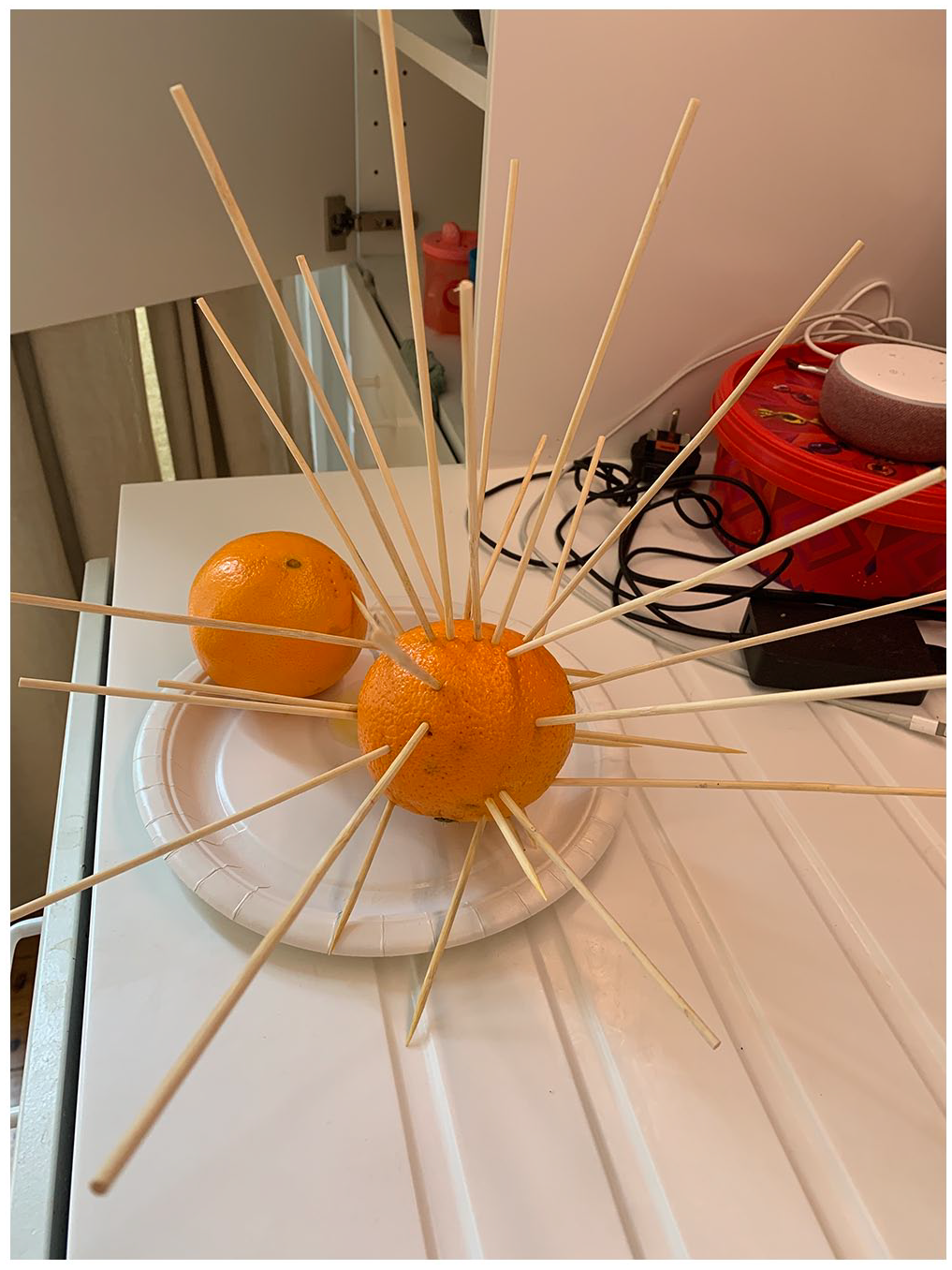
‘Coronavirus model from orange with sticks’, submitted to the Play Observatory (2023) in 2021. Catalogue number PL39A1/S001.
A family in Germany shared an example of play that featured another representation of the virus: One morning during quarantine, we were talking about how angry we were with COVID and [our 6 year old] said he wanted to kill COVID. I suggested we could make a COVID pinata to bash and ‘kill’ and then get the sweeties from inside. Over the next few days we made a paper mache COVID pinata, I filled it with sweets and the kids (2 and 6) and I decorated it. My 6 year old had the idea to use crumpled-up pieces of paper to make the red spike proteins. The kids had a blast beating the COVID and then of course enjoyed the sweets in the end.
In this example the parents and children created their own piñata from craft materials at home under quarantine during a time of particular frustration with the pandemic constraints. They draw again on the recognisable shape and colour of the enlarged COVID-19 molecule as a signifier of the pandemic. Like the manufactured stress balls, the homemade piñata becomes a proxy physical target for anger at the usually invisible virus.
To summarise, toys representing the virus and children’s own representations of the virus drew on the distinctive and now iconic shape of the COVID-19 microbe as a symbol of the pandemic. Enlarged and often humanised, the toys’ multimodal design conveys a more-than-real representation of the virus, made to be acted upon either affectively in the case of the plush toys or aggressively in the case of the stress balls and piñatas. Across the examples there is an emphasis on humour, attempting to diminish the threat of the virus both through exaggerated cuteness and extreme ugliness and to playfully encourage empathy on the one hand or permit acts of aggression on the other, with suggestions that such play might have therapeutic value during times of stress and uncertainty.
Toys reflecting pandemic practices
Four toy sets were analysed within this second theme: a pair of fashion dolls, a baby doll set, a ‘small world’ play set and a role play set. Although quite different types of toys, they all reference aspects of the pandemic that could be called a ‘new normal’ – practices such as mask-wearing, virus testing and life in lockdown that became highly familiar and characteristic of the COVID-19 pandemic but were not especially widespread before 2020.
The Spanish toy company Famosa, which brought out several new products during 2020, produced three of the toys examined within this theme. This included two dolls in their Nancy range (see Figure 4). Similar to Barbie and Sindy dolls, Nancy dolls are miniature female figures made of moulded plastic with long synthetic hair, exaggerated feminine features, detailed removable fabric clothing and accessories. The A Day with a Facemask range includes two Nancy dolls with floral and rainbow patterned masks in fabric matching their dresses and hairbands. The product description states that Nancy is ‘Always protected and fashionable!’ and that ‘It is the ideal doll to make girls aware of the use of masks in a positive and fun way’. As in the previous theme, we again see the didactic quality of toys being foregrounded, this time perhaps more usefully, by teaching children (specifically girls) to adopt particular pandemic practices.
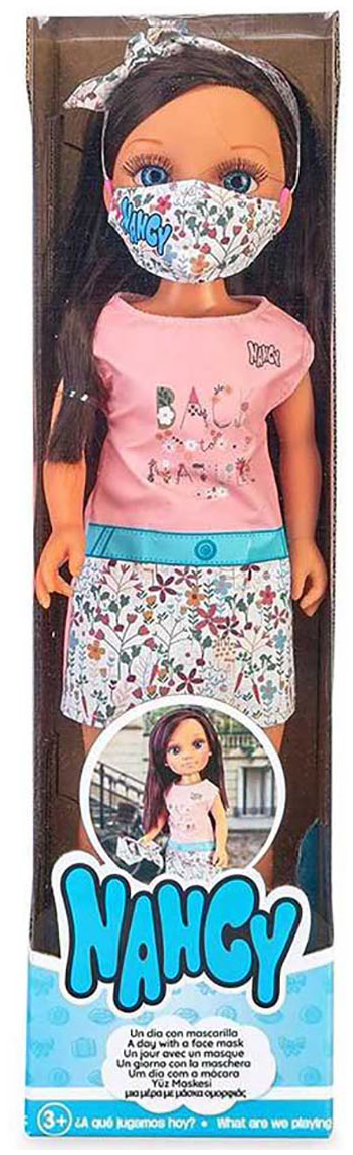
‘Nancy: a day with a facemask’ by Famosa.
Famosa also launched a play set in their Nenuco baby doll range, Nenuco, Estas Malito? (‘Nenuco, Are You Ill?’) (see Figure 5). Like Nancy, the doll is moulded out of hard plastic and has fabric clothes but is larger, designed to be carried and cared for like a baby rather than held in the hand like the fashion doll. Nenuco has features such as an open mouth enabling her to ‘drink’ and typical baby accessories such as a dummy. Additionally, as with the Nancy doll, Nenuco has a facemask in pastel colours that coordinates with her outfit, which the product description calls ‘a very cute mask to wear to be protected’. The play set also features a number of medical care accessories including a small model light-up infrared thermometer, virus test randomly displaying a happy green or sad red face, syringe and vaccination certificate, referencing health practices that became characteristic of the COVID-19 pandemic. As with the Nancy dolls, didactic functions are emphasised in the product description which states, ‘With Nenuco, little ones have a great time mimicking their moms and dads and learn values that encourage their development’.
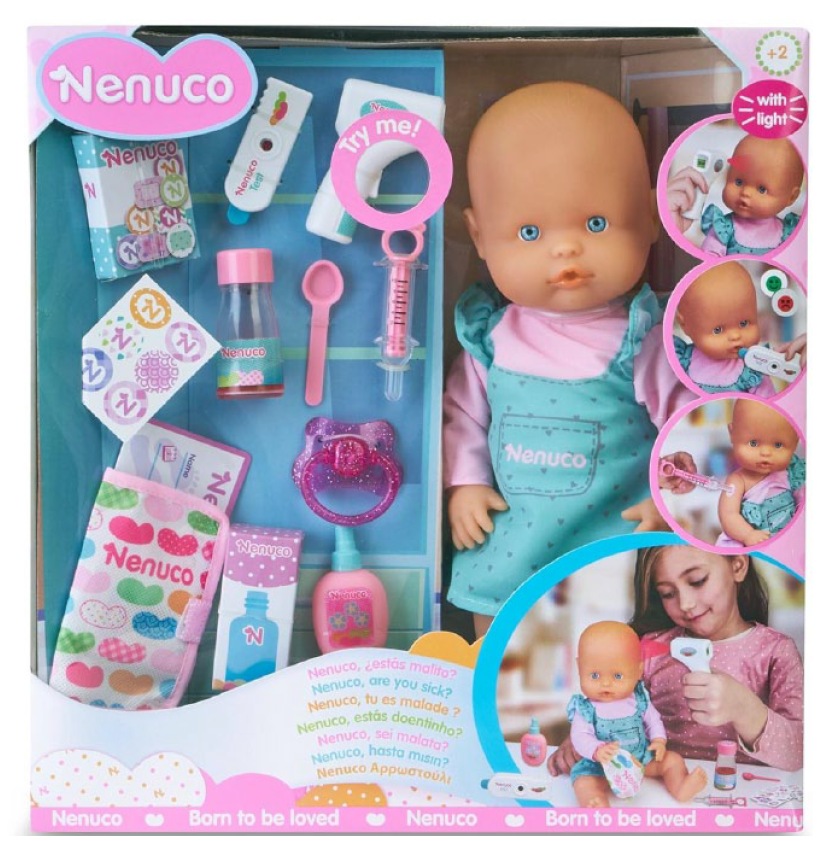
‘Nenuco, Estas Malito?’ by Famosa.
A third product released by Famosa during 2020 was a Virus Tester playset for The Bellies toy range of small baby figures. In bright purples, pinks and yellows, with vivid green slime-like patterns, the Virus Tester has many interactive features including buttons and switches. The set has a central compartment into which the dolls can be placed, lighting up green or red when a button is pressed to suggest infection, and a laboratory zone and recovery area. Miniature accessories include a swab, syringe, petri dish and test tubes, with the set’s background containing images of characters in facemasks and a central cartoon-like image of a green smiling COVID-shaped virus.
All three sets make prominent use of pinks and purples in their products and focus on fashion and baby care, characteristic of much gendered toy marketing targeted at girls. Masks are coordinated with outfits and highlighted as being ‘pretty’, and traditional baby care is extended to include practices relating to preventing or treating COVID-19. The toys reinforce gender stereotypes and invite girls to rehearse these gender roles themselves. In this way, pandemic practices are brought into gendered discourses contained within the toy design.
A somewhat different kind of pandemic practice is referenced in the fourth example, a ‘Working From Home’ role play set created by the Mattel brand Fisher Price. This set contains a miniature plastic laptop, phone, headset and coffee cup as signifiers of home-working, a practice which became necessary for many adults when lockdowns and social distancing measures came into force. At the time of the launch in 2020, Mattel COO Matthew Dickson said, ‘We are constantly looking for ways to help create playful connections between kids and their parents and caregivers. As many families continue to work – and play – from home, we recently introduced a #WFH-inspired play set for pre-schoolers’. The set is part of their Mini Me range of preschool toys which the company says ‘features a number of actions kids are seeing the adults in their lives do now more than ever . . . and enables kids to do the same’.
These four examples are all miniaturised toy versions of real adult objects and practices, referencing various aspects of day-to-day life during the COVID-19 pandemic such as mask-wearing, virus testing and home working. They invite children to take on and practice adult roles through a number of child-sized but lifelike accessories. Such toys are reflective of changes in the wider world and children’s interest in playful imitation, but perhaps also suggest an element of commercial opportunism with toy companies attempting to capitalise on new practices with new products.
Several of these toys have explicitly didactic functions, with product descriptions suggesting they will encourage players to adopt pandemic practices such as mask-wearing themselves. In the case of the role play set, such a toy might be seen as preparing children for a future kind of work. In this way, the socialising function of toys is particularly explicit, as objects with the potential to transmit and reinforce certain adult values and broader cultural discourses.
The Play Observatory collected several examples of children referencing pandemic practices in their play. A particularly common example was children making masks for their toys, often out of various everyday household materials that were readily to-hand such as tissues, unused masks and fabric scraps. For example, one UK parent shared that their daughter ‘found a scrap of material and asked for a little bit of help to make a mask for her favourite cuddly toy’. Another parent from the UK shared an image of Barbie dolls wearing masks made from tissues which her daughter said they ‘all had to wear to stop them getting ill’. These examples show children’s awareness and understanding of the practice of mask-wearing and their interest in extending this in their play, perhaps particularly because of the affection and care that is often felt towards toys.
A number of examples in the Play Observatory also relate to play with masks. One UK parent submitted an image of their young son hiding behind a disposable mask and shared, ‘My little boy will often ask to play with my mask. He will put it on toys, will attempt to put it on himself or will try to put it on us’. Another UK family shared an image of their son using a disposable mask as a parachute for an action figure. In these examples, we can see children tuning into the playful possibilities of the objects around them, in this case an object that was probably initially novel but rapidly became part of day-to-day pandemic life. This is evidence of children tuning into the latent affordances of everyday objects in play and exploiting their meaning potentials and activity potentials in creative and perhaps unexpected ways.
Some of the examples submitted to the Play Observatory reflected pandemic health practices as they unfolded. For instance, a parent from Singapore noticed hospitals and vaccinations becoming a feature of his daughter’s play with her Beanie Baby soft toys around the time when the family was talking about being vaccinated (see Figure 6). The child made this interest and awareness evident through her careful positioning and layout of the toys to suggest hospital bays, and the addition of found materials such as small plastic bags suggestive of drips.
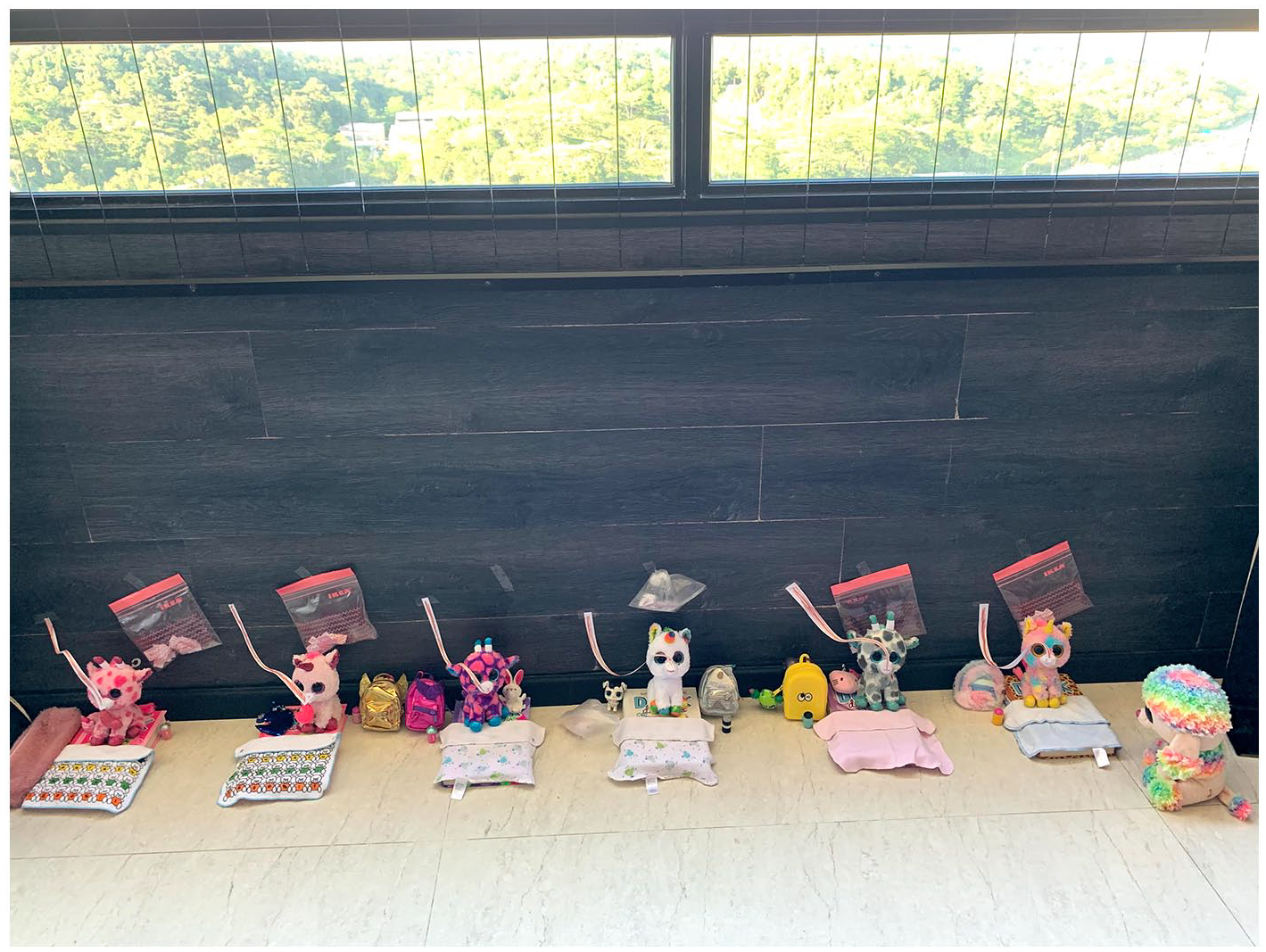
‘Beanie Baby toys in hospital’, submitted to the Play Observatory (2023) in 2021. Catalogue number PL175A1/S002.
Another example referenced the practice of home testing that became common in the later stages of the COVID-19 pandemic. In a short video clip uploaded to the Play Observatory by a parent in the UK, a young child places a plastic toy screwdriver into the mouth and nose of a large toy reindeer (a character from the Disney film ‘Frozen’). She counts to ten as she twists the screwdriver around in the reindeer’s nostril, in one direction and then the other, then takes it to her mother, who has her hand cupped, and ‘dips’ it in and out several times. She then pretends to squeeze the screwdriver onto a nearby surface as she makes a ‘ssss’ sound, with her mother then saying they need to ‘wait for the results’. Using the screwdriver as an apt signifier for a swab, the child’s actions and gestures show close familiarity with the various stages of carrying out a COVID-19 test: swabbing the nose, dipping the swab into a container, dripping the solution onto a test strip and waiting.
In these examples, children’s favourite and familiar toys take on new lives and roles during pandemic play beyond those presumably envisioned by their designers, such as wearing masks, attending hospital for vaccination or undergoing a home virus test. The examples show children’s knowledge of a ‘new normal’ and their interest in such practices. They illustrate children’s close attunement to the social world around them, as well as their willingness to playfully bring out latent affordances of toys in perhaps unexpected ways. The examples make signs of children’s awareness and understanding evident, and highlight play as a significant meaning-making activity particularly during times of change.
Toys referencing ‘Heroes’ of the pandemic
Five toys and playthings are analysed within this final theme: a set of action figures, a set of model vehicles, a range of Barbie dolls, a set of collectible figurines and a chemistry set. Three of the toy sets were produced by the toy company Mattel as part of a special ‘#ThankYouHeroes’ line ‘to immortalize and honour healthcare and everyday heroes’, with a proportion of sales being donated to a charity supporting frontline workers.
The first example, a series of action figures in the Fisher Price range, depicts professions including a doctor, a nurse and a delivery driver (see Figure 7). Typical of many other action figures, the toys are moulded from hard plastic with articulated limbs and C-shaped hands capable of gripping accessories and inviting the player to move them in dynamic ways. Whereas action figures of this kind might typically depict superheroes from media and popular culture, or other figures of combat and action such as soldiers or knights, the #ThankYouHeroes line depicts everyday professions, denoted by their distinctive uniforms. Somewhat cartoon-like in their design, the male figures have square jaws and broad shoulders and all the figures have a wide stance, conveying a more-than-real quality suggestive of extraordinary strength and power. In mostly blues and whites, the toys use colours associated with medical professions and avoid the pinks and pastel shades of the dolls analysed in the previous theme, perhaps targeting these toys more at boys as is typical of many action figures.
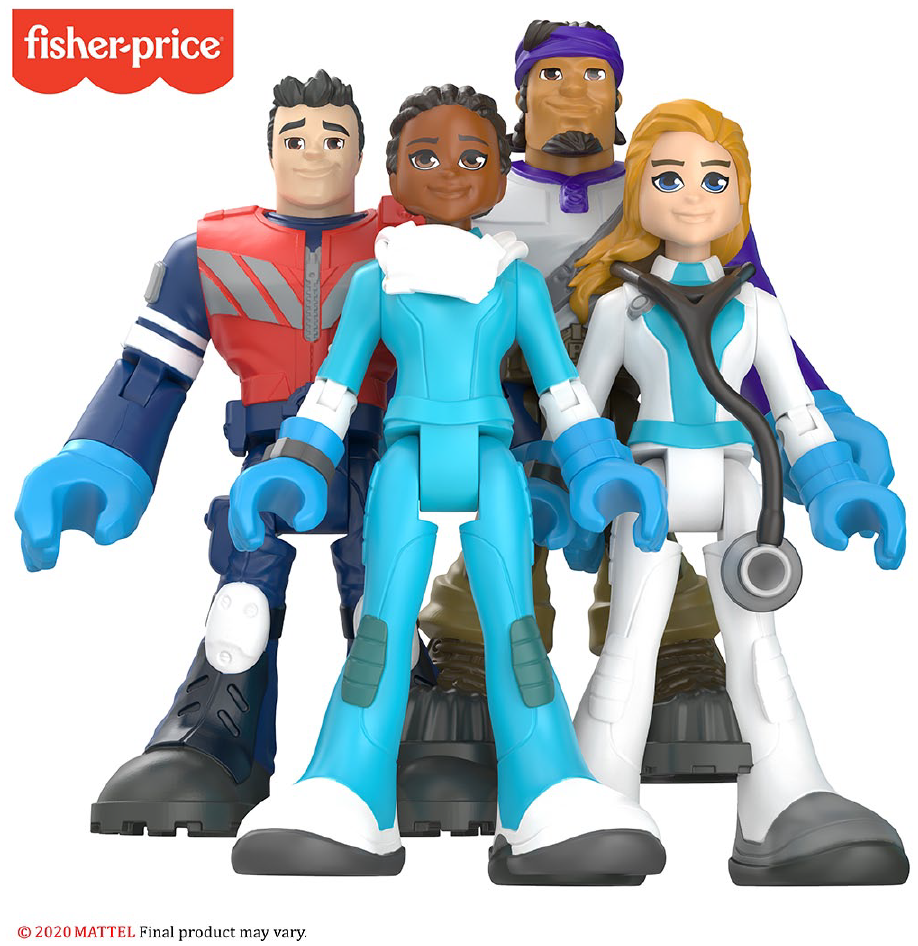
‘#ThankYouHeroes action figures’ by Fisher Price.
The second example, a series of models in the Matchbox toy range, consists of detailed miniature versions of vehicles including an ambulance, mobile hospital, delivery van and news helicopter. Made from die-cast metal with moving wheels, the toys invite motion and action, and have a close resemblance to their real-world counterparts but on a small hand-held scale. In mostly bright primary colours, several of the vehicles display the message ‘Thank You Heroes’.
Whereas the action figures and model vehicles depict generic professions, the third example, a series of Barbie dolls, represents individual women noted for achievements in medicine and research throughout the pandemic, such as Professor Sarah Gilbert who led the development of a COVID-19 vaccine in the UK. As with the action figures, professions are signified by uniforms, such as white coats and hospital scrubs. Whilst depicting real women, the dolls have characteristics typical of the Barbie range, such as tall, slim proportions, broad smiles and glossy hair, arguably remaining a fashion doll.
Mattel describes the #ThankYouHeroes series as being designed to ‘immortalize and honour’ healthcare workers and everyday professions. The idea of heroism is emphasised by allusion to the pandemic as a battle, and those being thanked as having played a major part in ‘the fight against COVID-19’. Particular focus is placed on contribution and sacrifice, with the toys taking on a celebratory and commemorative dimension. The product descriptions and marketing materials suggest the toys will ‘inspire the next generation to take after these heroes’, projecting hopes for values that might be transmitted through such toys.
Funko Pop’s ‘Frontline Heroes’ range is in some ways similar. Known mainly for producing collectible pop culture characters from comic, film and game franchises, their Frontline Heroes range depicts anonymous figures in masks and medical uniforms. Made of solid plastic without moving parts, the figures are moulded into powerful poses including crossed arms, hands on hips and wide stances. These toys are given status as collectibles and perhaps even memorabilia of the pandemic, with the product description stating that ‘No Funko collection is complete without the Frontline Heroes, so show your support by ordering yours today’.
The final example considered within this theme is a contemporary iteration of a children’s chemistry set from the company Science 4 You (see Figure 8). Marketed as an ‘Antivirus Lab’, the set includes items such as pipettes, petri dishes and gloves alongside materials and instructions for a number of experiments and activities such as culturing bacteria and fungus, creating a protective facemask and making soap. The set includes an educational booklet and the packaging mentions an explicit emphasis on supporting STEAM (science, technology, engineering, arts and maths). The child on the box is depicted wearing an eye mask, cape and boxing gloves, punching an illustration of a green spiked molecule resembling COVID-19. Overlaying the virus image is the text, ‘Become a microbiology scientist and learn how to defeat virus, bacteria and fungus!’ Unlike the previous examples, in this case it is the child who is positioned as the hero (or potential hero), with the ability to fight and defeat the virus and implied preparation for future viruses, with children presented as hero scientists of tomorrow.
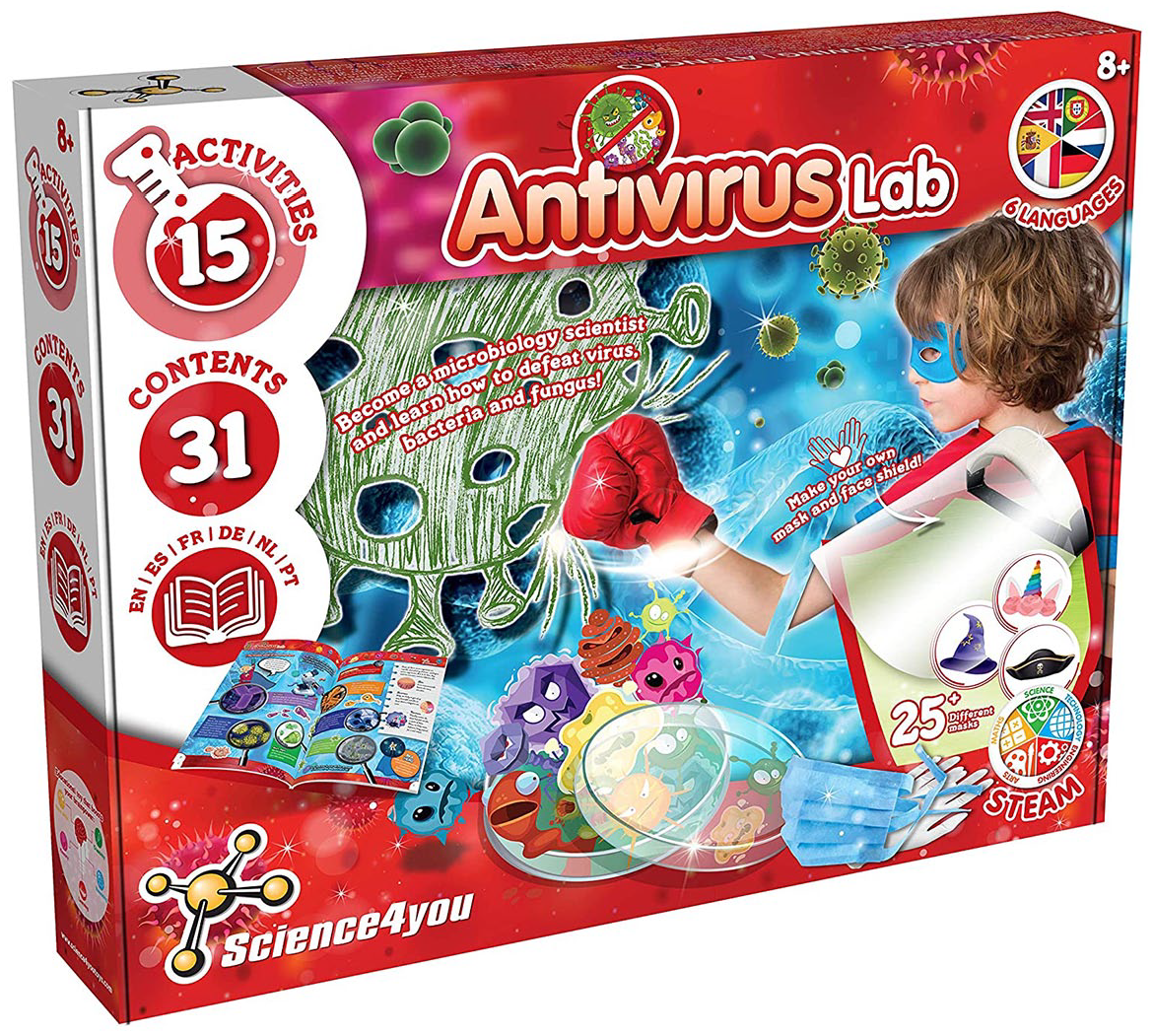
‘Antivirus Lab’ by Science 4 You.
These examples encapsulate a wider contemporary discourse concerning heroes of the pandemic. The toys are embedded with values, about who we should be saying thank you to and why, communicating that these are aspirational role models for children. They build on widespread action figure and superhero genres (for instance, Action Man and Marvel) typified by extraordinary strength and power. However, they challenge the conventional hero stereotype in several notable ways, by placing emphasis on everyday heroes and real-world professions rather than epic adventurers and fantasy. Gender stereotypes are also challenged, with the Fisher Price and Funko Pop sets depicting both women and men in frontline roles, and the Barbie range spotlighting real female experts. They also position the child as a (potential) hero themselves, an active agent in a ‘fight’ against the virus.
There is perhaps a greater awareness in these examples of the toys’ status as historical objects, as collectibles and memorabilia of a particular moment in history. With the #ThankYouHeroes line also donating a portion of sales to pandemic-related charities (as did the Virus Smasher stress ball), such toys also become connected to wider discourses about collective humanitarian efforts, as well as the public image toy companies hope to promote.
Several submissions to the Play Observatory alluded to medical settings and hospital workers. For instance, one parent from the Netherlands shared an image of a hospital their child had made from LEGO and a grandparent from the UK described their grandchild using everyday items such as washing up gloves and an apron to ‘dress up’ in PPE (personal protective equipment). However, a discourse of ‘heroes’ was not strongly evident in the toy play examples within the Play Observatory data, perhaps indicative of the fact that this concept related more to adult framing and values.
Discussion and conclusions
Toys evidently play a more important role in society than is often thought, and studying toys can help to understand cultural continuity and change (van Leeuwen and Selander, forthcoming). As Kress and Van Leeuwen (2021) argue, ‘Toys are mirrors of their worlds and can herald a world to come’ (p. 265), and in their design simultaneously encapsulate dominant discourses, reinforce certain social values, project desired hopes for children and shape their futures.
As Kress (1997) argues, toys ‘are sign-objects which code meanings about a society’s view of . . . childhood. . . .The domain of toys constitutes a communicational system, in which differing ideas of being a social human are suggested, and forms of social life explored’ (p. 105). Such a perspective highlights the discourses embedded in the multimodal design of toys, and toys as vehicles for communicating such discourses. However, Kress (1997) goes on to stress that ‘children act on materials also’ (p. 105), calling for attention not only to the design of toys but recognition of children’s creativity and agency in play with toys and playthings of all kinds. Such an understanding requires attention to both the design of toys and the act of play as meaning-making, necessitating a multimodal social semiotic perspective as adopted in this study.
This article has shown how the global toy industry responds to significant real world events, in this case the pandemic. In doing so, the industry uses traditional toy genres such as plush toys, fashion dolls, baby dolls, action figures, ‘small world’ and role play toys. Thus it overlays a message about the pandemic on the continuing meanings and values associated with these genres, for instance the consolatory potential of plush toys as ‘transitional objects’, or the gendered nature of dolls and action figures.
Messages about the pandemic are of several kinds. Toys representing the virus make the virus harmless in one of two ways, by representing it as a cute cuddly creature with a human face, or by representing it as a grotesque punchball that can safely be attacked and pummelled. Dolls either come with accessories that allow children to mimic preventative measures such as wearing masks, or with accessories that allow them to enact the role of the professional heroes who combat the disease. It was striking that, in this respect, the activity potential offered by the toy industry closely related to the actual play activities reported in submissions to the Play Observatory Project, even though these did not use commercially produced pandemic toys.
The toy industry accompanies the pandemic playthings it produces with didactic discourses, suggesting that the toys can help children come to terms with the stress caused by the pandemic. In some cases, this is purely symbolic and could even be seen as misleading, or at best confusing, as when the virus is represented as a cuddly friend. In other cases, it clearly encourages children to rehearse meaningful pandemic practices such as mask-wearing and vaccination.
The Play Observatory submissions confirmed the key assumptions of this article’s social semiotic approach, namely that play is a significant meaning-making activity that can, in this particular case, help children to make sense of and to live with the unprecedented changes in everyday life which the pandemic brought. Such observation is a crucial aspect of the social semiotics of toys, because it can actually show how the meanings of sign-objects are ‘read’ by children who would not necessarily be able to verbalise their interpretations of, and emotional reactions to, the world they grow up in.
This multimodal social semiotic approach highlights the agency of children as meaning-makers and the creativity offered by play. Whilst toys may be designed with particular meaning potentials and activity potentials, encouraging certain kinds of play, children readily exploit the latent affordances of toys and everyday objects in unanticipated and non-normative ways, such as a plastic screwdriver becoming a swab or a mask becoming a parachute for an action figure. In this way, play is always a creative act of meaning-making and deserves to be recognised and valued as such.
Although having a relatively short ‘shelf life’ in terms of their contemporary relevance and resonance, several of the pandemic-themed toys discussed in this article have been added to the toy collection held at the Strong Museum of Play, with the Play Observatory examples of pandemic toy play preserved in an online collection (Potter et al., 2023). They complement other notable studies of children’s play during the pandemic (Beresin and Bishop, 2023) and provide a lasting historical archive of children’s experiences during COVID-19. Whilst this article has demonstrated the value in capturing play in exceptional times such as a pandemic, there is also a strong case for ongoing recognition and preservation of children’s play, building on the extensive work and traditions of the Opies. By recognising play’s significance, and the importance of toys as part of play, we are offered windows into children’s meaning-making, signs of their interests and experiences beyond that which might be verbalised, and deeper understanding of social and cultural change.
Footnotes
Funding
The author(s) disclosed receipt of the following financial support for the research, authorship, and/or publication of this article: ‘The Play Observatory: A National Observatory of Children’s Play Experiences during COVID-19’ was a collaborative project undertaken by researchers at University College London and the University of Sheffield, UK (2020-22), funded by the Economic and Social Research Council (ESRC) under their UKRI COVID -19 Rapid Response Fund, grant no. ES/V015451/1. The team consisted of Professor John Potter (Principal Investigator), Dr Yinka Olusoga, Dr Julia Bishop, Dr Kate Cowan, Dr Catherine Bannister, Dr Michelle Cannon and Dr Valerio Signorelli.
