




Abstract
The outburst of the coronavirus pandemic in Poland has led to specific measures related to covid, which affected unequally different age groups. Children were presented as “spreaders” of the disease, and a threat to the societies’ safety. Such fears led to new disciplining practices, such as prohibiting children from leaving the house without adult’s supervision during the first wave of pandemic in Poland. In the consequence of those special measures, the pandemic crisis challenged and blurred some previously existing boundaries, such as those between home and school, private and public, health and illness, online and offline, etc. In this paper, we examine how Polish children experienced their childhood through playful activities during the COVID-19 pandemic. Using data from three different research projects conducted during the COVID-19 pandemic in Poland, we reflect on the children’s understandings of what is safe. Our focus is on various spaces which either enabled or restrained such activities, and on active work of children in finding and creating a safe space. We argue that, in the circumstances in which known-to-date divisions blurred, children’s seeking of safe spaces, in literal and metaphoric sense, were the means to deal with the new realities. These were primarily negotiable spaces, created through various social practices such as play.
In this paper, we examine how Polish children experienced COVID-19 pandemic through playful activities. We explore how the pandemic has been reflected in Polish children’s play cultures, especially when restrictions were imposed on children in relation to gathering in groups, use of after-school activities, playgrounds, or commercial spaces. We especially examine how children negotiated their safe spaces during the COVID-19 pandemic, how they explored, moved and blurred the boundaries established in the pre-pandemic world through play.
In our article we focus on space, which is a key concept in childhood studies (Farrugia, 2014). Pandemic limitations of space (such as the stay-at-home recommendation, closure of schools and playgrounds, etc.) were among the most profound changes for children during this time (Götz et al., 2022). We argue that in the circumstances in which known-to-date divisions (such as those between the secure and the risky, the outside and the inside, leisure time and work time, etc.) blurred, children’s seeking of safe spaces, in literal and metaphoric sense, was the means to deal with the new realities.
The paper is based on the data from three projects which were conducted by members of the Interdisciplinary Childhood Studies Research Team at the University of Warsaw: (1) Children’s Pandemic Archive, (2) Change. Children’s Pandemic Experience, and (3) Pandemic and Post-pandemic Children’s Worlds. They were conducted in different periods, from the first stages of the pandemic until its close (from spring 2020 to summer 2023) These were projects of various types and scope, but they all were shaped by our interest in children’s worlds in the local, Polish context of the global crisis. Globally, there were many similarities in how the pandemic changed children’s lives, but there were also local differences (Cortés-Morales et al., 2022, Iqbal et al., 2023). By collecting data about children’s experiences during the pandemic in Poland, we also wanted to add up to the global research on children and COVID-19.
The outburst of the coronavirus pandemic in Poland has led to covid-related intergenerational inequalities, as “measures do not address the population independently of their chronological age, but rather as members of certain age groups” (Höppner et al., 2021: 2). Children were presented in the public discourse as “spreaders” of the disease. Such fears led to new disciplining practices, such as prohibiting children from leaving the house without adult’s supervision during the first wave of pandemic in Poland. In this paper, we would like to analyze how the pandemic shaped the children’s play, looking beyond different binaries. Thus, following Merla and Murru (2021), we see the pandemic as a “challenge-trial,” a historical challenge which strongly influences social relations, but is experienced not necessarily negatively. The pandemic was an adversity, but by that it also made visible the resilience and coping mechanisms in children who actively sought their own ways of understanding it and dealing with it (Webster and Donati, 2022).
Pandemic in Poland: Contexts, general data and implications for children
Like in many other countries, in Poland a rapid acceleration of reactions toward proliferation of the new virus was observed in the first months of the year 2020. Vaguely discussed then-so-called “Chinese virus” in the beginning of the year, in the following months turned into a number one matter of public concern and a subject shaping societal realities at many levels. This changed the quality and quantity of social interactions, led to reframing previously taken-for-granted ways of behavior and to re-evaluating many social norms. Discussed globally and locally, pandemic led to amplification of some voices as stronger than ever, while some others remained silent in the public debate. Although the course of the pandemic, as measured by the “waves” of the spread of the COVID-19 disease, as well as the type of political response, or societal response may seem similar in different countries, especially when seen from a certain distance of time, it is still the local, unique experience that might best add up to a greater picture. We think that looking at the children’s experience during the pandemic of COVID-19 is a lens through which some local conditions are best visible.
In Poland, the universities, primary and high schools, kindergartens, and nurseries were closed nationwide on March 11, 2020. At the same time, the adults were asked to work from home, if possible. In the first 2 weeks, no regulations toward education were introduced, leaving children, educators, and parents without directions and resources concerning the new, abruptly changed realities. Some schools undertook educational activity from the first day of school closures, whereas others ceased all the teaching and caring functions. At the end of March, the Ministry of Education and Science announced the start of obligatory on-line education. Distant teaching and learning started, for a long time without set rules concerning its scope and character. The following 2 years were marked with periods with schools’ closures and openings. The older children (grade 4 and up) spend more time on distant learning than the younger ones. Kindergartens were open most of the time, with two periods of closure, each lasting for a few weeks.
An important regulation was introduced on March 31, 2021. From that day on, it was forbidden for persons under the age of 18 to leave the home without adult supervision. The same day brought another restriction: it was forbidden to enter parks, use boulevards and green areas, and leave home for recreational purposes. In the consequence of protests, on April 19, the government allowed children over 14 to leave homes without adult supervision (children under 13 still need to be accompanied by an adult). The entrance to parks, forests and recreational areas was also made possible, and leaving home for recreational purposes was allowed. In Polish public discourse, inconsequential, accidental, and not research-based character of these changes was discussed. 1
As research in various countries shows, COVID-19 crisis has not impacted equally all groups in the society. Children and young people, whose health was less affected than of other age groups, may be not seen as those harmed by the pandemic (Amsellem-Mainguy and Lardeux, 2022). The pandemic changed the power dynamics in the society: “not only did the closure of schools limit the rights of many children to access education, but it also limited children’s right to be heard on matters that directly affected them” (Donegan et al., 2023: 237). The children are certainly a diversified group, and diversified psychological or environmental influence played an important role in children’s pandemic experiences (Satariano and Roberts, 2022). The factors which shaped this experience in various ways were, for example, the neurodiversity (Canning and Robinson, 2021; O’Hagan and Byrne, 2022), child’s disability (Kocejko, 2021), disability in the family (Buchnat and Wojciechowska, 2020), or socioeconomic situation (Pastore and Salvi, 2023). This is in line with general reflection in social research that overlapping diseases and factors like age, poverty, access to healthcare, etc. make the pandemic health crisis consequences distributed very unequally (Mendenhal et al., 2022). It is also worth noting that for some children in Poland the pandemic was the time when their psychological and physical safety was threatened (Krasiejko, 2021, Szredzińska and Włodarczyk, 2021, Sajkowska and Szredzińska, 2022).
Children’s and young people’s mental health was a matter of concern and research has shown the impact of COVID-19 pandemic on them (Chałupnik et al., 2022). However, there were numerous consequences beyond health issues. Children’s situation was framed as especially risky, for example in the communication of international organizations and agendas: “Children are not the face of this pandemic. But they risk being among its biggest victims” (UN Sustainable Development Group, 2020). The measures which touched mostly children were far-reaching and, according to Adami and Dineen (2021), oftentimes based on discriminatory, childistic attitudes toward the younger members of societies. Children’s wellbeing was to a great extent dependent on the actions of the adults. Parents in Poland struggled with this new situation and empathy as well as social support were crucial in building positive experiences during the pandemic (Woźniak-Prus et al., 2023). Online education posed new challenges and demands for children and young people, such as self-organization and timing (Kovács Cerović et al., 2022), or self-restrictions on media use (Lemish and Hudders, 2022). The consequences of the pandemic were not equal for all the children, and the wellbeing and educational outcomes were threatened more for the undre-priviledged children, with limited access to technologies and the support of the adults (Ptaszek et al., 2020; Pyżalski, 2022).
The pandemic crisis changed children’s lives in numerous ways, from everyday eating practices to education, and play, to mention a few. Like in many other countries, children’s play in Poland was influenced by national epidemiological safety measures, decreasing especially activities outside, in parks, playgrounds or other public spaces (Kourti et al., 2021). The pandemic strengthened the role of indoor play and changed the role of electronic media and gave new meanings to children’s activities with their use (Barron et al., 2021). The electronic media were used for multiple purposes; not only educational (Popyk, 2020), but also social: supporting ties between separated members of families, impacted by lockdown and travel restrictions, including national “closures” (Popyk and Pustułka, 2021). These are only few aspects of how the pandemic impacted children’s lives, and play is definitely one of them.
“While all rights are important at all times, rights are most likely to be under risk during times of crisis or emergency” (O’Hagan and Byrne, 2022: 30). There are rights that seem to be more endangered, and children’s right to play during the pandemic was one of them (Doek, 2021). Children’s right to leisure and play is in modern societies important and undeniable, which is reflected in the UN Convention on the Rights of the Child. According to Article 31, “States Parties recognize the right of the child to rest and leisure, to engage in play and recreational activities appropriate to the age of the child and to participate freely in cultural life and the arts.” (UNCRRC, 1989). Play during the pandemic was shaped by the new circumstances. There was an increase in screen time among children, not only for educational purposes, but also for leisure activities (Kourti et al., 2021: 12–13). It is worth noting, however, that even in the years previous to the pandemic the use of electronic media grew rapidly and shaped the ways in which children played, and that blurring the boundaries between the online and the offline was not a new phenomenon (Potter and Cowan, 2020). Cowan et al. (2021) observed certain playful ways in which children used digital media in the pandemic, using such strategies as: continuation, adaptation, emergence, and reference. When play with use of electronic media was flourishing, other aspects of play, especially those connected with being outside, was negatively impacted, and children needed to find new, safe ways for their play.
Research in and about the pandemic—ethics and methodology
In Poland, not much research was done with the children during or about the pandemic, but especially research with younger children is scarce. The pandemic encouraged (or, one may even say, forced) the researchers worldwide to seek for new ways of doing research, to accommodate to the abruptly new and challenging circumstances, such as new folkloristic studies (McKinty and Hazleton, 2022), or digital dialogues (Donegan et al., 2023). Together with the colleagues from the Childhood Studies Interdisciplinary Research Team, University of Warsaw, following the need to understand the situation of children, we undertook various activities, from collecting data on public discourse, to preparing pandemic calendar, to collecting data on and with children. 2 In different stages of our work on the pandemic we used different tools, adapted to the changing aims and possibilities. Due to the pandemic restrictions, like other researchers in childhood studies, we had to seek methods which could be efficient in these circumstances (Fajardo-Tovar, 2023; Souza, 2020). We also had to accept the necessity to cooperate with other adults, namely parents and teachers, whose engagement was necessary for research with children at this time. It was characteristic for the research on play especially at the first stage of the pandemic (McKinty and Hazleton, 2022).
We decided to take action early on from March 2020. This was a project Children’s Pandemic Archive 3 aimed at collecting children’s accounts about the pandemic. The abrupt changes which we faced at the outbreak of the pandemic set limits of scope and length of the project, which was planned as an immediate research action with use of then-available tools, and lasted for about 4 months. Via social media and with the help of parents, teachers, and journalists, we managed to gather several children’s works. All the works were made accessible for researchers and the public online. Our aim was to find out what children thought about the pandemic, but we didn’t have a chance to speak to the authors of the works gathered in the archive. Moreover, we were only able to reach a specific group of young people: mostly children whose parents made the effort of making copies of the works and sending them to us. We thus assume that most of the participating children were from middle-class families, who had access to information about the research as well as means to engage in the project.
Ethical aspects of such a method of collecting research data may be thus disputed. We decided, however, that in circumstances of the onset of the pandemic instantaneous action was needed, which allowed us to collect valuable material for further analysis. In the response to our call, we gathered data in various forms of expression that could be sent with the use of electronic media. Our collection showed children’s freedom of expression, from the most typical children’s art like drawings to photographs, to song lyrics, to written instructions for handwashing. Among the works, there were also homeworks given by a teacher from one of the Warsaw primary schools during the pandemic. Students (age 11–12) were tasked with taking photos titled “Turbulent times” (see Figures 1 and 2) or writing a letter to a classmate about how they spend their time when the school is closed due to the pandemic. These works were also sent to our archive with permission of the students.
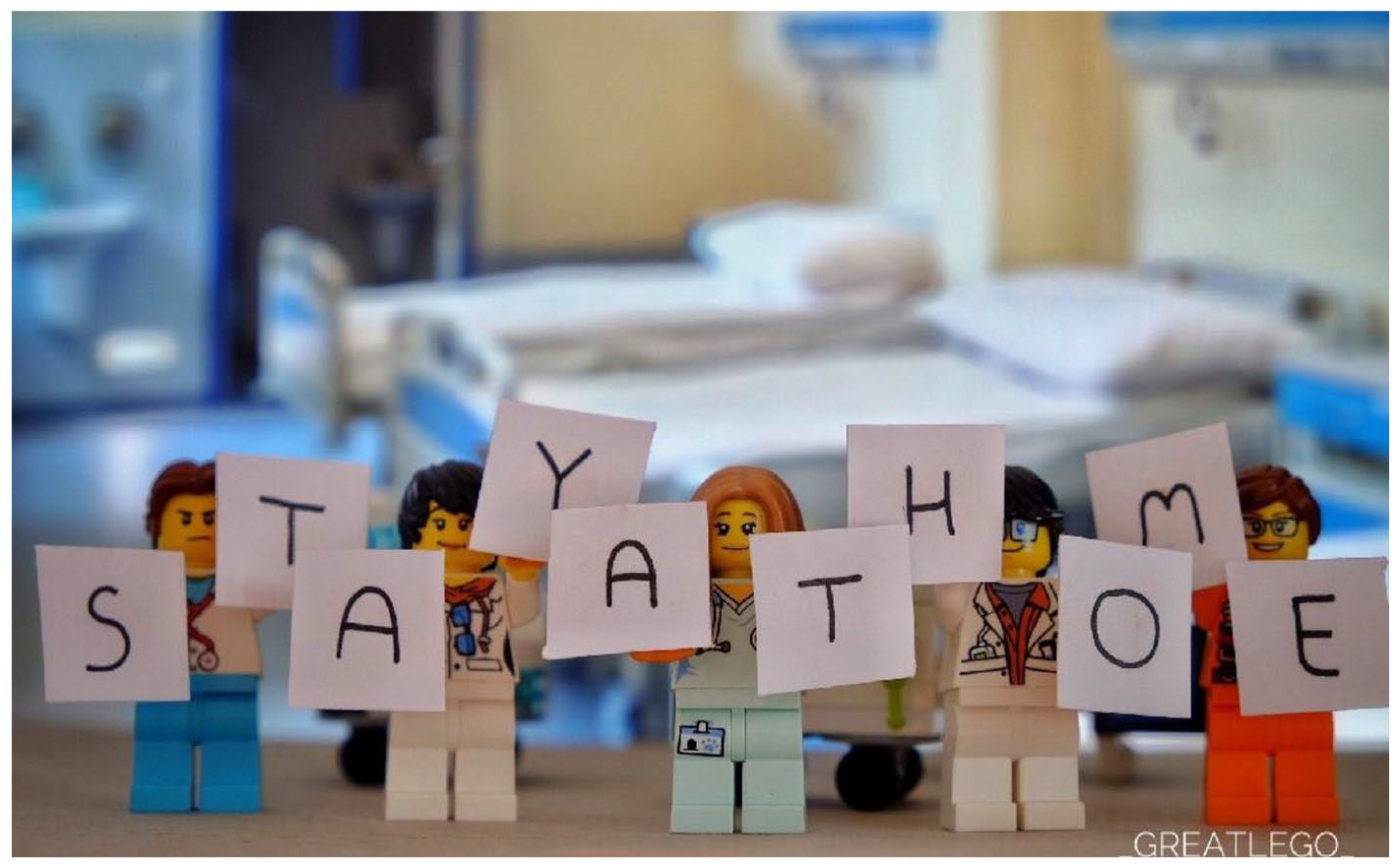
Ignacy, 11-year-old; a picture taken as part of the school photography project Turbulent times, collected in Children’s Pandemic Archive.
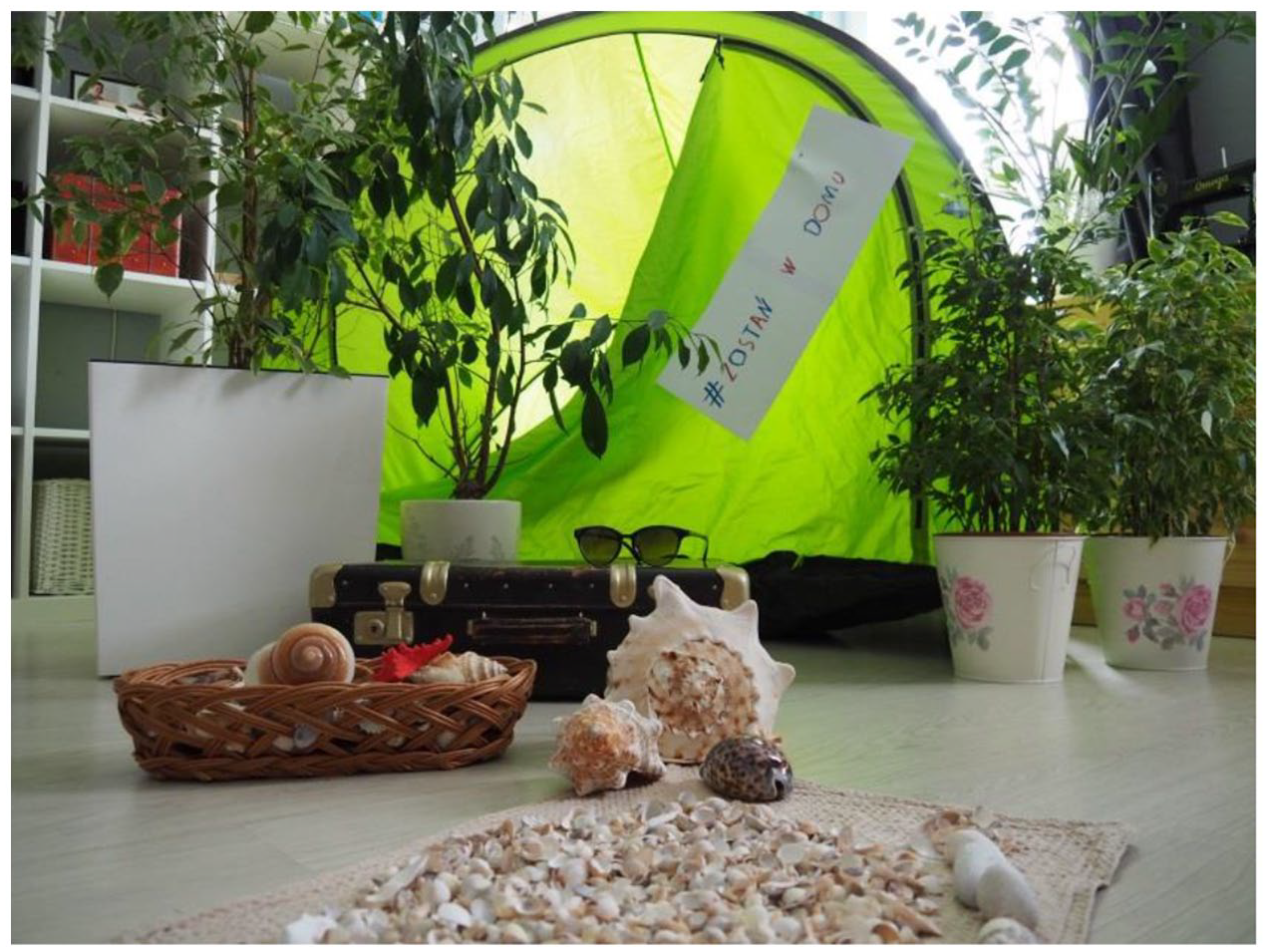
Antek, 11-year-old; a picture taken as part of the school photography project Turbulent times, collected in Children’s Pandemic Archive.
The second project from which we use data in this article is Change. Children’s pandemic experience. 4 It was aimed to investigate how preschool children experienced the changes connected with the pandemic. When most education institutions were closed in Poland, preschools generally remained open, but it was not possible for any adults, besides the employees, to enter them. To be able to study children’s views about their situation, we decided to conduct our research in cooperation with preschool teachers. We created the methodology of research together with teachers, provided them with continuous support, and discussed the results on a regular basis—all of that online. The data were collected from March to May 2021 and included work with children from the kindergartens in a small town in central Poland, near Warsaw. This was a public kindergarten in a neighborhood which had a diversified social class structure. The project was carried out during the daily work of the kindergartens and included various activities, group and individual. Children and teachers talked about feelings and were drawing emotions related to a pandemic. Groups of children made drawings of the world after the pandemic collectively, and talked about it with their teachers. A gallery of children’s art works and an audio library were created as a result of this project.
The third research project 5 used for this analysis was conducted in person, in two age groups: 5–7 and 7–9 years (preschool and first classes of school). Children were researched in small groups, and a total 150 children participated. The researchers tried to access children from varied social backgrounds. The research was conducted in both public and private educational settings (for younger children) or in children’s homes (in the older group). The data for this analysis were collected in the first half of 2023. Research team members developed a methodology based on the artful activities and imaginative play. The first task was based on the idea of a time capsule. It is not as widespread in Poland as it is in Anglo-Saxon cultural contexts, but it is growing in popularity thanks to its presence in globally popular films and programs. This is the case of Peppa Pig and Time Capsule book and film, which were presented to children prior to the research session. Children, together with the researcher, prepared the pandemic time capsule, filled with small drawings of whatever children felt was associated with the pandemic and worth showing to the people in the future. Then the researchers and children played in make-believe activity of travel in time, where “discovered” and analyzed the content of the capsule. The second task was photo-elicitation. Children analyzed pictures of children making different everyday activities and told whether they were “like pandemic” or “unlike the pandemic.” The third task was to divide a piece of paper into two parts and draw “the pandemic” and the “non-pandemic.” During realizing these tasks, children revealed varied, rich accounts of the pandemic. The drawings were not to be analyzed for themselves, but were a part of complex research experience.
The process of data analysis was tailored to encompass rich and dispersed materials. Researchers worked with drawings, photographs, and other artworks, as well as short interviews with children conducted by preschool teachers. They also engaged in conversations and observations during play and workshops with children. All conversations with children were audio-taped, with the children’s permission, and transcribed. Recognizing that transcripts do not capture the full character of discussions, and that nonverbal communication along with bodily expressions are not reflected in transcripts, we made field notes and short reports after meetings with children.
We employed an inductive approach using thematic analysis, with interpretive categories emerging as the empirical work progressed and the researchers’ knowledge of the analyzed issues developed (Silverman, 2022). During the analysis, we found such topics such as home, future, computer, loneliness, and play recurring in the material. We analyzed the visual material alongside the transcription of the conversations and field notes. No source of data was treated separately. Even if our analysis describes specific children’s work, it should be seen as an example of an idea encountered in more than one source.
Especially, the visual works of art do not represent an independent value for us as research material but rather gain significance in the wider research context. Following Clark (2011), we approach visual materials in a verb-oriented manner, considering a temporal perspective and the inherent change, as opposed to a noun-oriented approach that stabilizes and essentializes. In this specific pandemic context, we analyze visual data as a part of the entire pandemic landscape constructed by people, legal acts, coronavirus, spaces, and other human and non-human actors.
Stay at home (and play at home)
Children who participated in all three projects stressed the importance of being together, hanging out, sharing moments of playfulness and fun. Pandemic restrictions were seen as regulations which separated them from the spaces of togetherness. The outside was presented as no longer fun, because spaces which make collective play possible, such as playgrounds, were closed. The inside was seen as a safe space, but limiting the possibilities of play. The previously existing boundaries were undermined, and new pandemic-related meanings were given to play. The pandemic blurred the distinctions which were previously more stable, such as those between inside and outside, safe and dangerous, healthy and unhealthy, etc. Being outside, which was previously advised for children by the adults, becomes unwelcome, dangerous, therefore discouraged, even forbidden.
The understanding of space was shaped by the new pandemic realities and various actors’ strategies of dealing with the risk and the disease itself. Safety was also a concept whose role grew during the pandemic, and was a common concern for young people (Sivers et al., 2022). Safe space could be understood literally, as a space which is safe from the virus, a place where one can protect themselves from the dangerous pandemic. This sometimes meant being closed and stuck in one place, as it was in most cases in our research. But it could also encompass strategies of moving around, giving the safety priority over the stability. This was the case of a 7-year-old girl who said during the research: “I wasn’t ill. First my dad was sick and lived in our house, and we lived at grandma’s, and then it was the other way round, mom was ill and she lived at grandma’s, and we, with my sister and dad, lived in our home.” Here we can see how seeking for safety could be a collective family endeavor, shaping everyday living experiences, leading to creating spaces which are safe in a very literal way, and how children were equally engaged in creating safe spaces as the adults.
In the article about safe space in the context of children’s food cultures, Zofia Boni noticed: Safe space is defined as comfortable, respectful space that allows freedom of expression of opinions and practices. It relates to a physical place, which people treat as theirs and to metaphorical space constructed through social relations (. . .). The concept of safe space is processual. It is vital to consider the relational work which is put into making and preserving safe spaces. Roestone Collective explain that “cultivating safe space is simultaneously reactive and productive work, reconfiguring existing and context-dependent social norms. This work is both symbolic and material” (2014, 1360). Safe space is not completely bounded; it is partly defined by what it is safe from. However “safe spaces are something more than simply a response to a static and predefined category of “unsafe” (. . .) Safe space [is] a site for negotiating difference and challenging oppression” (Roestone Collective, 2014, 1347–1348). (Boni, 2017: 3)
Boni (2017) argues that literal meanings of safe spaces should be distinguished from the metaphorical. “Parents are trying to keep their children safe (literally), which might not feel particularly comfortable and safe (metaphorically) to children.” (3) Safe space is also about independence and autonomy, which are not always in line with a parent’s view of what is safe and what is not for a child, so it should be treated relationally (Boni, 2017: 3).
In Poland, just like in other European countries, the “stay at home” slogan was omnipresent at the beginning of the pandemic. It defined what a safe space meant. According to the public discourse during the pandemic, a safe space was considered to be one’s home or isolated places away from other people. The concept of safety was dominated by the medical and epidemiological discourse. In the works sent to our archive, it is evident that children have grasped this slogan (see Figure 1), and have even become its advocates.
In the picture taken by an 11-year-old Antek from Warsaw (see Figure 2) we can see a tent set up on the floor in a room, with a note attached to it saying “stay at home” (in Polish, “zostań w domu”). “[It] conveys the meaning of home as a shelter, a safe space where you can stay hidden and healthy and help others by following the rules of social isolation” – as Maciejewska-Mroczek and Witeska-Młynarczyk wrote.
The “stay-at-home” slogan (. . .) announces not only: I am responsible, I protect the vulnerable ones, I save the medical system from a breakdown, but also – I have a nice home, me and my family have memories of beautiful travels, I am surrounded by the adults who build my sense of citizenship and agency and they make me believe that my voice matters. (Maciejewska-Mroczek, Witeska Młynarczyk 2020)
Safety of the domestic space is evident in the drawing by 10-year-old OK (see Figure 3). At home, there lives a lady (a mom?) with a red heart on her blouse, while the outside world (including the playground) has been colonized by the coronavirus. The domestic space appeared as the only safe space, free from viruses. This drawing illustrates also what Sivers et al. (2022) pointed out: that many children felt protected by the familiarity of the home and proximity of the loved ones.
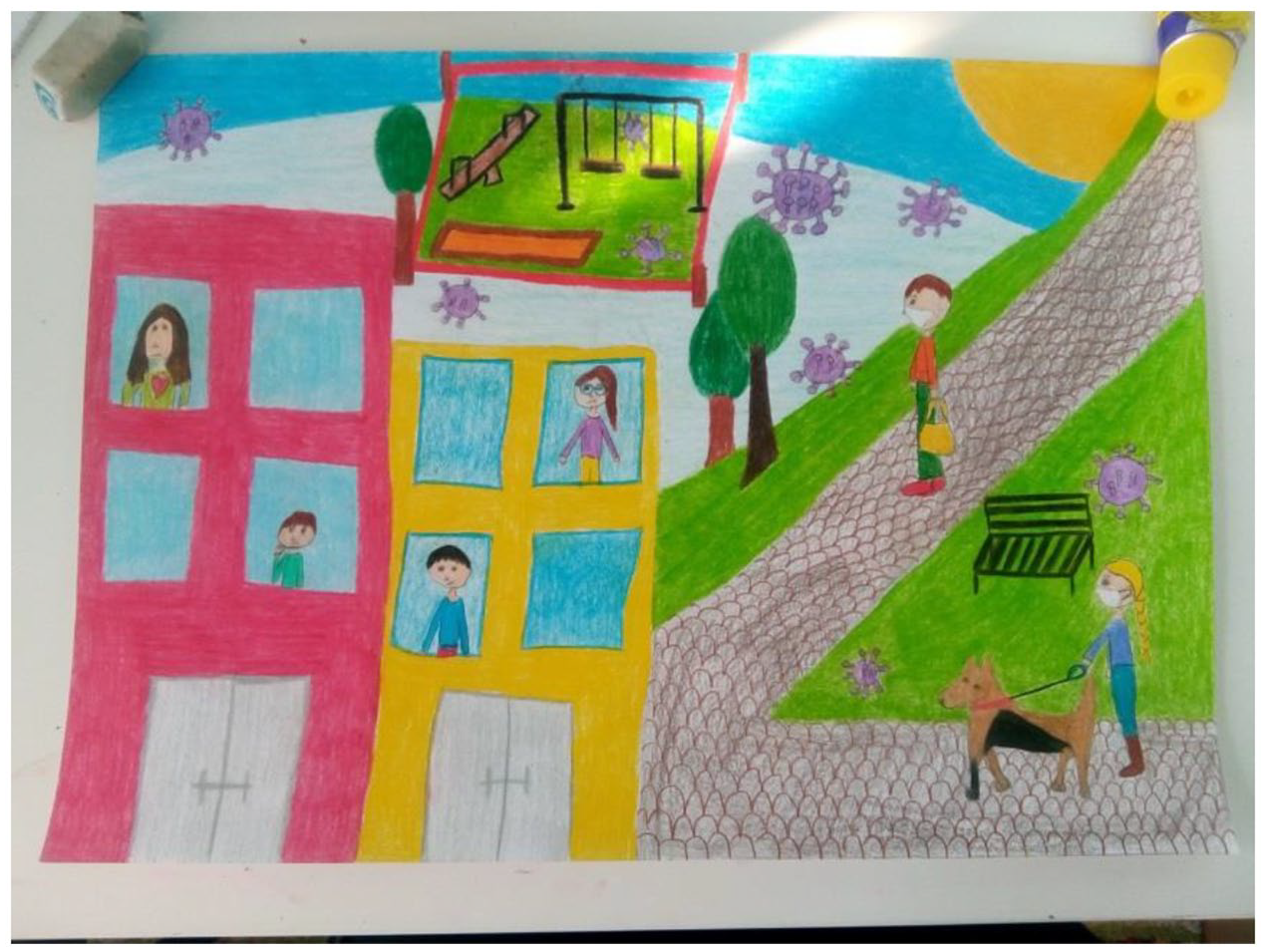
OK, 10-year-old girl. Children’s pandemic archive.
However, the home was not free from pandemic-related artifacts. Masks, in particular, quickly made their way into the realm of children’s play. In the archive’s photographs, we can see LEGO figures wearing masks, robots, teddy bears, and even Easter eggs. 6 The pandemic infiltrated the safe space of the home through these artifacts, and in this way blurred the inside/outside binary. As a result, the external space appeared even more dangerous. The coronavirus served as a reminder of its existence in many domestic spaces, influencing children’s practices.
Both in the drawings sent to us for archivig and in conversations with children during the pandemic in its various phases, the opposition between the time of the pandemic and the time before or after it is reflected in the opposition between closed spaces, most often the home, and open spaces such as parks, forests, or playgrounds.
Alright, show me what you drew and tell me about it.
Here, it’s me sitting at home and waiting for the pandemic to be over. And that behind me is the couch.
I see, and you were sitting on the couch, right?
Yes. . . . And when the pandemic was over, I went to play basketball (see Figure 4).
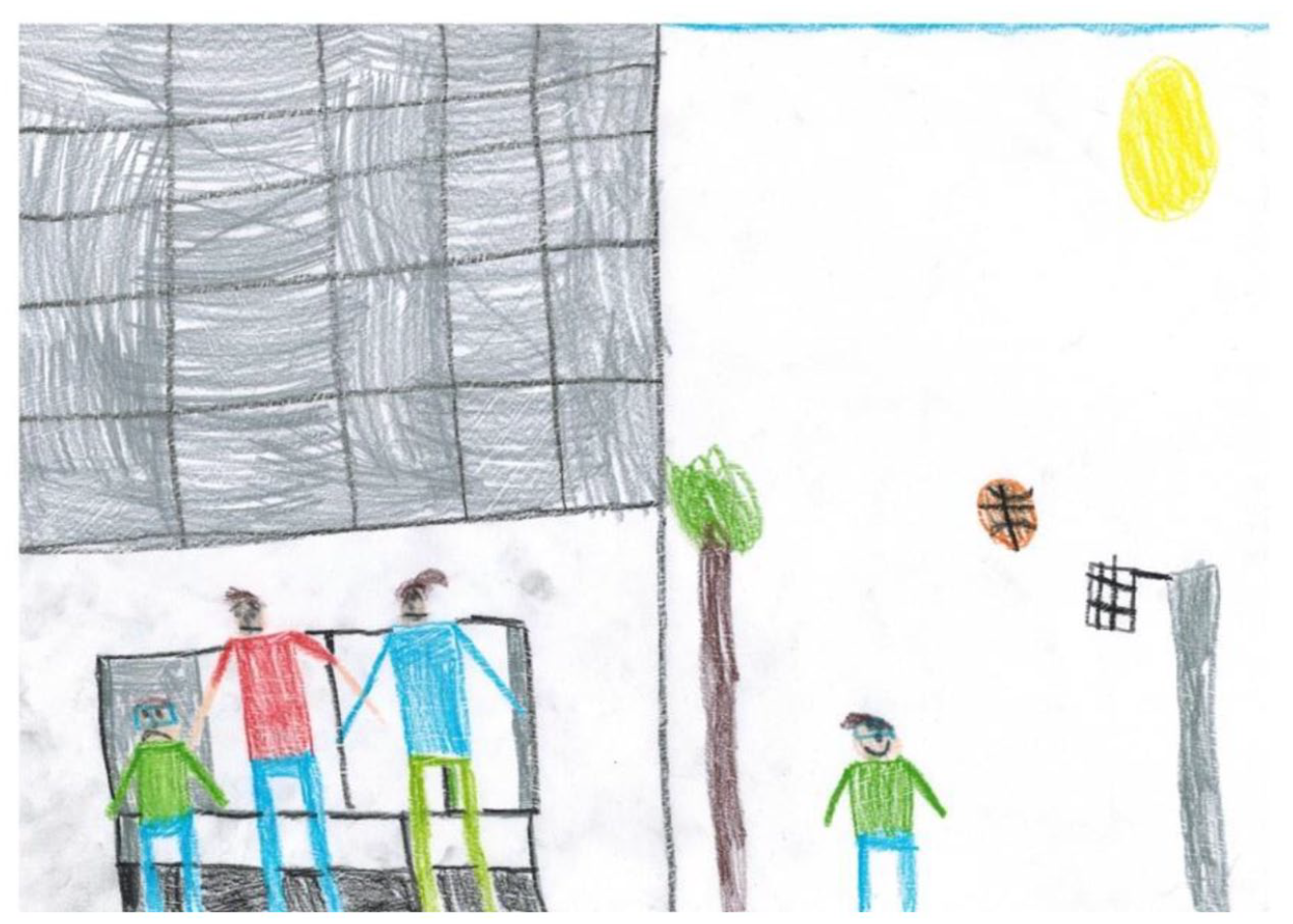
The drawing made in the frame of the Pandemic and Post-Pandemic Children’s Worlds project.
Here, we can see that what is safe and what is possible to do changed over time, and had to a great extent spatial character.
Home is a safe space where one should stay to avoid getting infected or infecting others, but it is also often associated by children with a space of boredom and longing. In the drawing by 9-year-old Joanna (Figure 5), we see a sad girl with a caption: I don’t care for books and dolls, if my friends are not around.
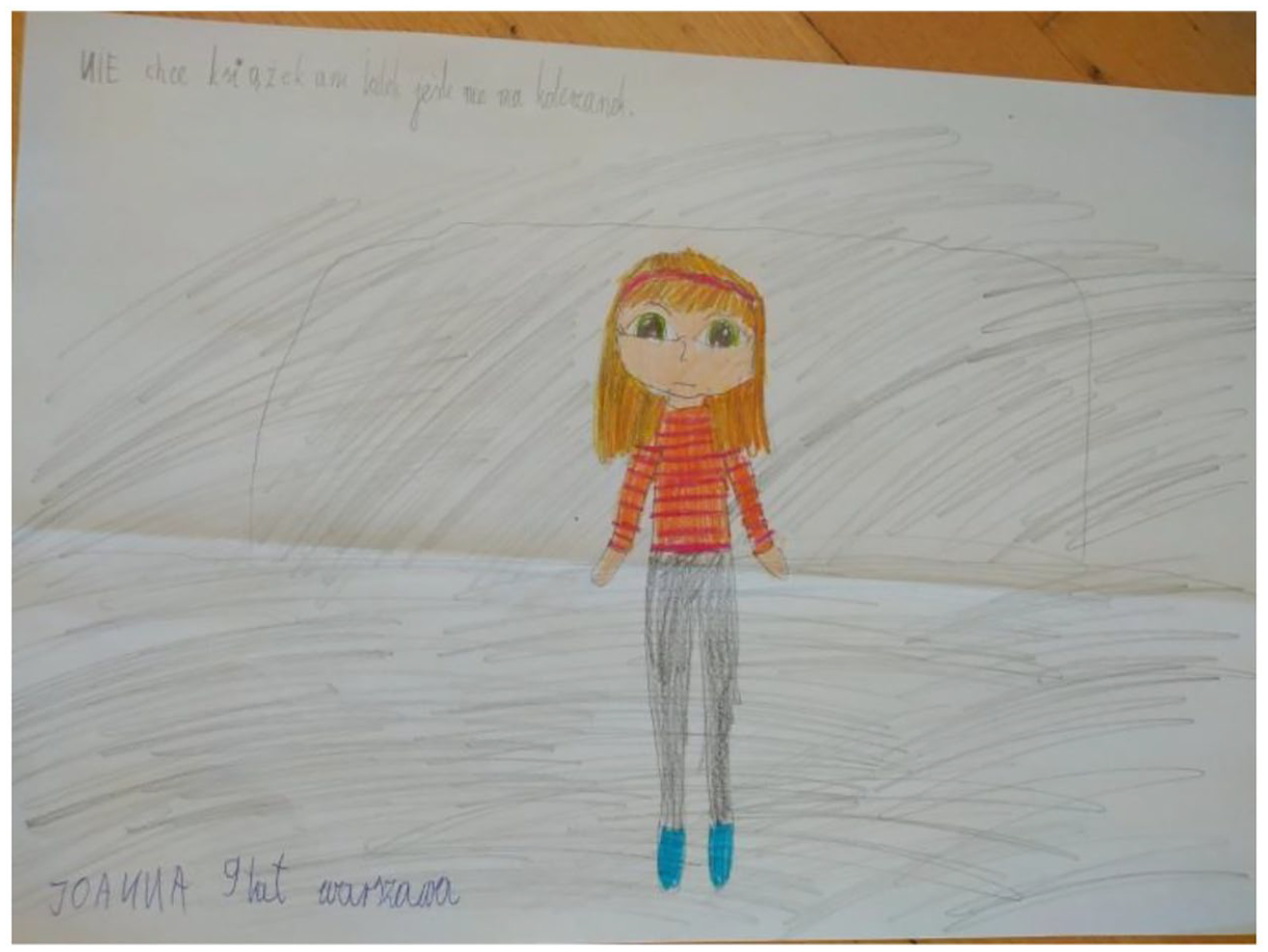
Joanna, 9-year-old girl Children’s pandemic archive.
Another research participant directly spoke about boredom. It was one of the more frequently coined topics by the children, when asked about the pandemic.
Okay, what were children doing during the pandemic?
They were bored.
They were bored, I see. Well then. . .
They were playing.
They were playing. Where could children play?
At home.
Many research participants admitted that they longed for a “normal” world in which they could engage in relationships without the mediation of a computer. HHome is seen as a safe space, but in a narrow, epidemiological understanding of the word “safe.” The concept of a safe space is also associated with the right to play and freedom. Children repeatedly chanting the slogan “stay at home” was primarily an indication of their responsibility. IIt was a thing which children were able to do, even if it meant to relinquish their right to play, the practice of relationships with friends and family, and exploration of the outside world. However, children were aware of the costs and consequences of such a sacrifice. Inside/outside dichotomy was accompanied by a dichotomy of sadness, dullness vs. joy and playfulness. Safety, as proposed in the discourse about the pandemic, implies boredom and longing.
Extended safe space
As we mentioned, the pandemic crisis challenged and blurred some previously existing boundaries, such as those between home and school, private and public, health and illness, online and offline, etc. Pandemic circumstances may be thus seen as not necessarily strengthening generational divisions, but changes which would lead to new, more inclusive social life and ways of expression for all, independently of their age; “building infrastructures beyond adult/child binary” (Oswell, 2019: 211). For most of our participants “the family unit was an integral part in meaning-making, intimacy, care and support during this uncertain period” (Twamley et al., 2023: 6). Doing things together, sharing the new realities may lead to building stronger connections. During our research children talked about undertaking new activities, such as baking bread or practicing yoga together with their parents. A 11-year-old girl wrote in her letter to friends (the task was her homework): Despite everything, we are holding up well. This time keeps us away from friends but brings us closer to our family. We cut our own hair and cook healthy meals. We explore the forest and observe woodland animals. I believe that such isolation also has many positive aspects. We all finally have the time to reflect on how we live and what truly matters.
New ways of bonding throughout new social practices marked the changes in the researched children’s lives. On one hand, being closer to family and spending time together during the pandemic defined a strong boundary between home and the rest of the world and in many cases strengthened the safe space of home. On the other hand, we observe how various divisions and boundaries changed during the course of the pandemic. “Building infrastructures beyond adult/child binary” (Oswell, 2019: 211) is evident when we look at pandemic mediascape, understanding as kinds of assemblages, “infrastructures of assumptions as well as people, things, places, images” (Clarke 2010, 105). Computer and other electronic devices in pre-pandemic times were the subjects of very intensive negotiation between children and parents (Radkowska-Walkowicz, 2021). As Walkedrine (2007) pointed out, “Regulating children’s game play so that they do not become addicted has been one of the central concerns of many parents since the games became a popular form of play” (p. 101). Digital technologies have often been presented as “harmful and morally undesirable” (Buckingham, 2011: 1), and children are treated not as “empowered, but rather as powerless victims of commercial manipulation and exploitation” (Buckingham, 2011: 1). Parents for many years have been exposed to psychological discourses that they were responsible for limitation of access to computers and other technologies. Due to the pandemic, however, they had to change their attitudes and parental duties. Children needed computers for education, entertainment and keeping contacts with friends and family members. As McKinty et al. (2023) put it, “[e]ventually, previous generations’ experience of a knock on the door followed by ‘Can you play?’ was signaled during lockdowns by the sound of a device alert” (p. 364). The value of the digital world and electronic media rose up as its everyday usage grew substantially, especially for educational purposes. In the public discourse even the very access to the new media became presented as a children’s right and children who had limited access were presented as underprivileged (Ptaszek et al., 2020). Thus, understanding what is a safe space in the context of mediascape, and what is unsafe, changed after the pandemic outbreak. Digital technologies, considered earlier as a space of entertainment and risk, became indispensable for the purposes of education, therefore they started to be treated as necessary for children’s wellbeing. In a very short time, the boundaries between offline safe space and unsafe Internet space had to be reinterpreted. Moreover, when the Internet became for many children (oftentimes named “digital natives”) a basic tool for contact with meaningful others, i.e. grandparents (Popyk, Pustułka, 2021), technologies reinforced children’s agency and changed their position vis a vis adult people. In his letter to friends one boy wrote: We had [Eastern] breakfast very late, so when we called our grandparents and family, they had already finished breakfast a long time ago. Unfortunately, we didn’t get to see grandma completely because she couldn’t figure out how to position the camera, so we only saw her forehead.
In a traditional Polish family, grandmother is responsible for Eastern breakfast, but during the pandemic she lost her position as a family head and caretaker, and in the above-mentioned became somehow reduced to a fragment of the body on the computer screen. If Internet and computer technology has changed hierarchies between different age groups, the pandemic has brought about even more radical changes. This is most evident in relation to the mediascape, which has not only expanded significantly, but also the connections between social actors within have fundamentally changed.
Mediascape expanded its network to include new actors like grandparents and teachers, but also various “analog” toys. This change blurred further the existing boundaries, among others, between digital and analog. We saw this clearly in our own family life, when our children were sitting in front of a computer screen and playing with their friends board games - considered as a good form of play, in opposition to “harmful” computer games (Radkowska-Walkowicz, 2021). In such cases, the Internet served them only as a transmitter of voice and image, and the play was an adaptation (Cowan et al., 2021) of the previously-known activity (see Figure 6).
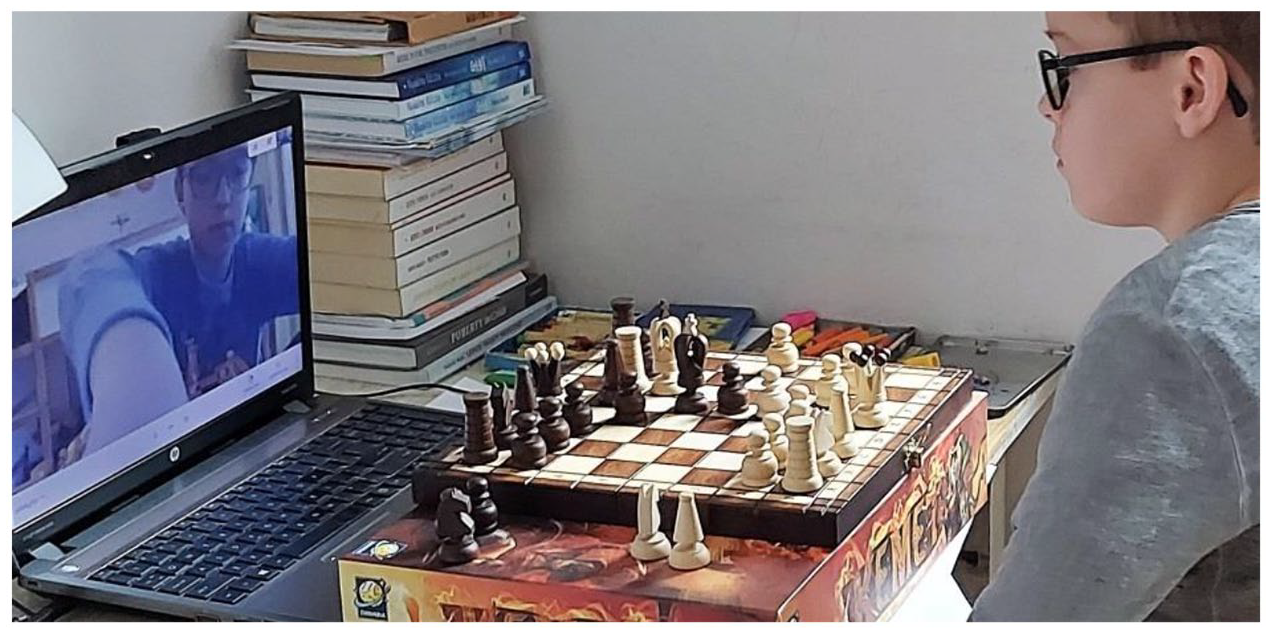
Children playing chess using the Internet.
Unusual perception of space, changed by the new pandemic realities, is mirrored in the invented expression, a construction which puts together the previous routine of “going to school” and the realities of online contacts, making a computer a kind of passage to a different space. A 7-year-old girl remembers that “We used to come to school through the Internet.”
But it was not only the Internet that expanded the safe space of home. In play, children found various ways to expand the safe space, including its physical dimension. This is how one of the preschool girls described it: Child: I could meet with my friends. I knew when they were sick because I had a rope attached from apartment to apartment, and we could leave notes on it. . . if someone was sick, she could write it on there. . . .It was inside, just a rope passing through the stairs, and I would drop it down, slide it, and my friend who was downstairs would come up the stairs and then exchange letters.
We see these play activities not only as moving within and expanding space but also as a kind of movement through time. The girls recalled games they knew from books and stories told by grandparents. They utilized an old form of communication to make their safe yet enclosed space more friendly and provide a different form of communication than by the electronic means. By playing chess via the Internet, children creatively combined traditional play with the possibilities offered by new means of communication. This also proves that the relational aspect of play, “being the embodied process of becoming together, a space between us” (Krnjaja and Mitranić, 2023: 37) was a common and dominating feature, no matter to what extent the play circumstances involved the new media or old modes of play.
On one hand, home was a safe space, separated from the dangerous world outside, where one could potentially get infected with the virus. On the other hand, as a place perceived as dull, isolated from peers and access to playgrounds and outdoor activities, home did not fulfill the definition of being a safe space. However, children found ways to alter this space, including shifting or blurring the established boundaries from the pre-pandemic world.
Future as a safe space
Seeing children both as “being and becoming” (Uprichard, 2008), in our research we were able to observe children as future-makers (Spyrou, 2020). They “make” the future in many ways, for example through play, school and sport activities, or everyday decisions, as well as discussion with parents and peers. In our research we had the possibility to observe “only” practices of storytelling and creating art, we did not see children in other actions. But we agree with Appadurai’s (2013) call that it’s worth to put imagination back in the cultural, and in result anthropological, activity (p. 286), and perceive it as a cultural practice.
We were able to learn how children see themselves and their world in the future, and what the future means for them. In their wordy and artistic expressions we can notice how they “begin anew in light of new possibilities of thinking and acting” by considering how things could be otherwise (Appadurai, 2013: 213; Spyrou, 2020). In this sense, we propose to see the future as a safe space where the imagination can find the possibility to make the world better. Safe space can also be built through imagination. Moreover, safe spaces are not fixed “‘places’ but ongoing, evolving, dynamic relationships that emerge through people’s active interaction with(in), through, and alongside the material and social world.” (Djohari, 2018: 354). In our research, the future meant a safe space in two ways. Firstly, talking about the future, the world after the pandemic, was a safe, and ethical method of interviewing children in front of potentially painful topics. Secondly, we believe that by telling us about the world after the pandemic, children created a safe space for themselves. As Williams et al. (2013) argue: “Raising children’s voices and listening to them through supporting their hopes and (aspired) agency is a key aspect of children’s mental health and well-being in disaster recovery.” (p. 1359)
While the schools were closed generally for over a year, the break in functioning of kindergartens during the lockdown was short. However, children were strongly affected by the restrictions related to the pandemic, new sanitary and educational regimes, etc. Talking about the world after the pandemic, they indicated spaces, which were infected by coronavirus, and by pandemic restrictions. Many children mentioned that in the future all playgrounds and other child friendly places will be open. Gabrysia said: “Shops and different playgrounds will be open, so I would like to play with my mum, dad and brother in the playgrounds and go to the cinemas when they open the cinemas and different playgrounds.” Many children were also talking about access to swimming pools:
And tell me, what do you think the world will be like if there’s no coronavirus?
There will be open pools. . . .
And what else at this pool? What are you going to do?
To play.
What else will you be able to do? Hm?
Sit in the cinema and watch different films.
Although playgrounds and parks were closed for only 3 weeks, in children’s opinions this characterized the entire pandemic time. Even though they went to playgrounds, shops, cinemas, etc. during this time, they did not feel that these places were completely open. Using playgrounds was related to other important life activities, such as meeting family or friends. Restrictions (very visible in children’s statements and drawings), such as the obligation to wear masks or restrictions on contacts with relatives and friends, made the children feel that playgrounds were not really open, and children did not have as much freedom as in times without a pandemic. Therefore, the time of the pandemic was a period when play was somehow restricted, and pandemic restrictions affected children’s sense of freedom.
When asked to draw the pandemic and the non-pandemic, children, who participated in the project Pandemic and post-pandemic children’s world, made a clear division between the two realities. They put in their drawings sad people locked inside their homes or drew a house surrounded by bad weather, on one side of the paper, and on the other side, they depicted the world outside the home: shining sun, flowers, trees, and butterflies (see Figure 7). In one of the artworks, the non-pandemic world is symbolized by a red heart, while the pandemic is represented by a green coronavirus and a mask (see Figure 8).
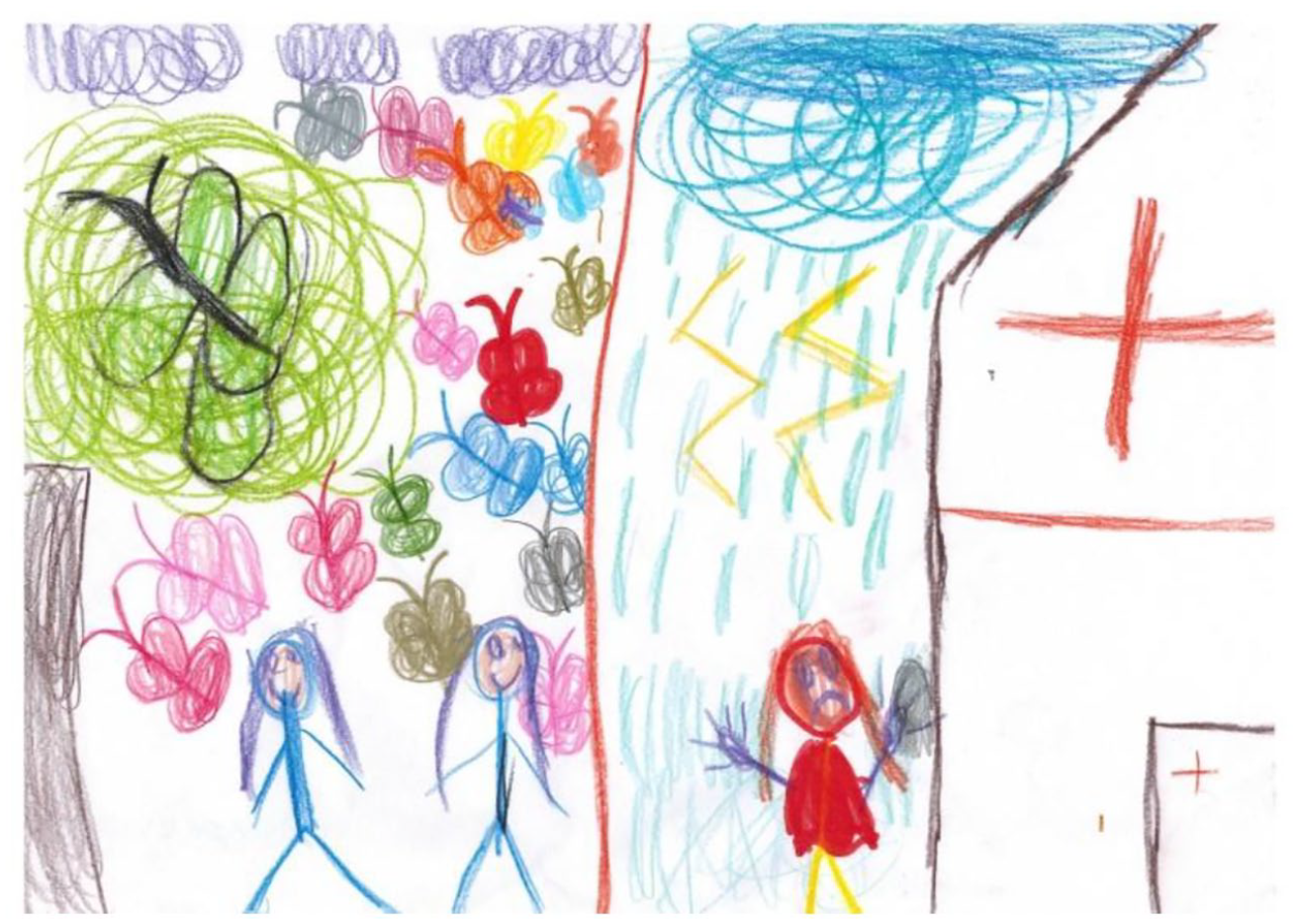
The drawing made in the frame of the Pandemic and Post-Pandemic Children’s Worlds project.
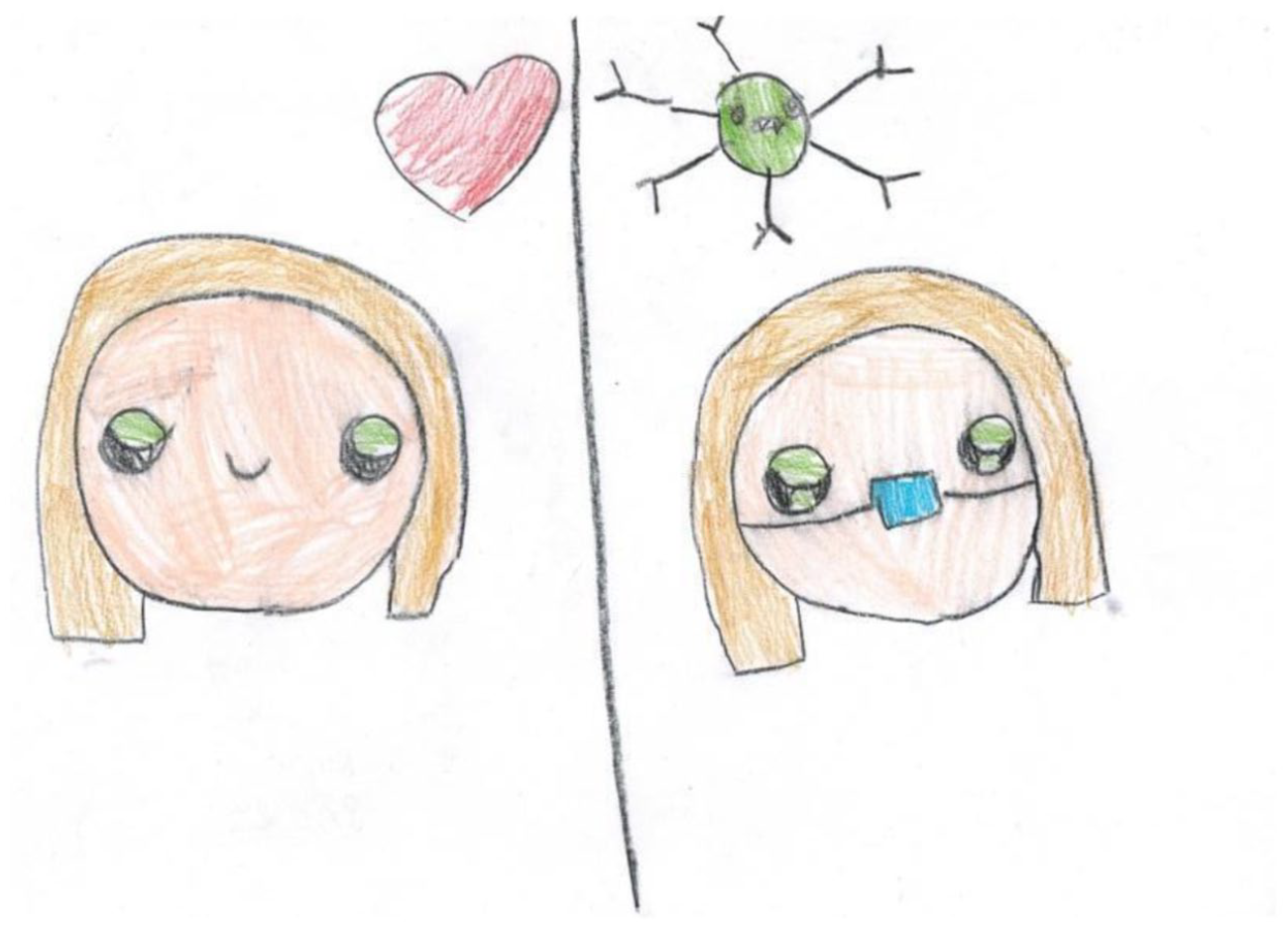
The drawing made in the frame of the Pandemic and Post-Pandemic Children’s Worlds project.
In this context, the world after the pandemic appears as a place of freedom and unrestricted practice of childhood (Diasio, 2010). This is evident in Kinga’s words: “So I’m going to feel that after the coronavirus I’ll be able to. . . I’ll be able to take off my summer shoes and run around on the grass.”
Thus, we can see that pandemic lockdown is in the children’s view connected to the restriction of freedom. When the teacher asked preschoolers how the world after the pandemic would look like, they often said they wouldn’t have to wear masks: “And then I’d do things without masks and the other with my dad, and my mum and brother would go to the shops without masks.” Future will be safe, people will not need to protect themselves with masks or gloves. In the future also the social, family relations will be fixed: “When there is no coronavirus, I will be able to come to my grandparents and I will be happy. And then I’ll even be able to visit my aunt and uncle. And. . . and then the world will be cool.”
For children, the pandemic meant special, strange time, constrained by many limits. For us it was especially evident when children told teachers about the future. They didn’t talk about anything special, related to technological development, for example, as we expected. Rather they pointed to ordinary things and activities: “And finally we won’t have to wear masks everywhere. And we’ll be able to go for ice cream without masks, for example. . . . And we’ll go for fries.”
Pandemic is an abnormal time, when even TV works in a special mode, making the news about coronavirus dominate the usual content for children:
And what else will change?
Well, that we won’t have to watch the “Facts” [popular in Poland TV news program] any more.
Right. What will be on TV then?
Cartoons without coronavirus.
This fragment shows how children perceived changes due to the pandemic. Watching news became a must for them, because the coronavirus dominated the TV-scapes for all, both in the quantity (news as omnipresent) of and in the quality (disturbing information instead of familiar fiction).
When people wear masks on their faces, when you must not meet grandma and grandpa, and coronavirus is on TV all the time, the world appears unsafe. Thus, children look for safe spaces in many ways, and through various activities. Participation in ethnographic research allowed them to settle safe spaces in the future and define the future as a safe space. Imagination makes a good life one of the possibilities. Thinking and talking about the pandemic surprisingly opened the door to see a better future. When the preschool teacher asked her about the world after the pandemic, Patrycja responded without hesitation: We’ll be able to hang out when there’s no coronavirus. We’ll be able to make hugs and come to stay overnight in each other’s homes and we’ll be able to share food and now you can’t. And yet. . . And we won’t have to wear masks yet. And we will be able to meet up with our friends in the yards. And it will be nicer, and the leaves will grow nicer and there won’t be that coronavirus.
This does not mean that the future is always bright for children. After February 24, 2022, the Russian invasion on Ukraine, the topic of war appeared in a conversation with children as an element of the future. It can be noticed that both stories—the one about the greener grass after the pandemic and the one about the war—are among many possible versions of the future. However, telling them is not a neutral practice, but it can affect the children’s experiences of the world in the present, as well as their attitudes toward the future. We could see that this future-making activity around the pandemic, which we described above, is rather the way of dealing with present time, than future. This work of imagination allows one to cope with the difficult reality by turning the future into a safe space.
Conclusion
Children during COVID-19 pandemic acknowledged the need to stay at home, but at the same time, they felt that the physical space of the house did not fully satisfy their needs. If safe space is considered a space of the children’s well-being, it can be argued that it was expanded through relations and practices, including play. Safe space had not only a physical and material dimension, which resonated particularly in the “stay at home” slogan. It was a relational negotiable space, created through various social practices.
The domestic space had been perceived by children as a safe space due to the clear definition of what was considered unsafe outside. However, in later children’s narratives (collected as part of the third research project, described in the chapter on methodology), we see how much the world of children has changed during the pandemic and became restricted due to the redefinition of what is safe. From the perspective of time, children define and recognize the domestic space in a different way. They equate the pandemic with confinement. In the depictions of the pandemic, we see a child lying in their bed or a sad family sitting in front of the television. In most of the works made after the pandemic, the home was not portrayed as a safe, pleasant, or welcoming space. The pandemic signifies restriction, sadness, and a lack of freedom. In contrast, the world without a pandemic in children’s drawings is depicted as colorful, sunny, and full of flowers. Here, the safe space encompasses open playgrounds, swimming pools, or holiday resorts, and is related to fresh air, sun, and nature.
Our research has shown that the future can also be a safe space for children. Within it, children envision optimistic scenarios for the world, where the grass will be greener and television will not be dominated by news about the coronavirus. The question about the future allowed children to create narratives about a better world. This does not mean that pessimistic scenarios about the future did not exist in children’s imagination. However, exploring a better world helped children cope with the restrictions of everyday life and enabled the creation of safe spaces in a situation where many of the available playscapes for children have suddenly been drastically limited.
The ostensibly unifying, global challenges provoked varied, grassroot responses in the young members of the societies. The research material which we obtained was very rich and diversified. With all the limitations of the research imposed on both researchers and children, it shows that what it meant to be a child during the pandemic in Poland was probably not very different from what could be observed in other countries. Our research on the play in the pandemic times proved that children were active in making sense of social change, no matter how abrupt or disturbing it might have been (Libenstein et al., 2023). They could revise and expand such concepts as space, safety, or the future. They acknowledged the meaning of social relations and saw their role in creating them, with the use of tools which were accessible to them in the time of pandemic.
Footnotes
Acknowledgements
We would like to thank our colleagues from the Childhood Studies Interdisciplinary Research Team from the University of Warsaw for their discussions about this research. We are especially grateful to our colleague Maria Reimann, who tragically died in 2023, for the cooperation in creating the Children’s Pandemic Archive and website mip.uw.edu.pl, and Paulina Andrzejewska and Marta Rakoczy for the support in the project Change. Realization of the project Pandemic and post-pandemic children’s worlds was made possible due to the work of Celina Kamecka-Antczak as co-researcher. We are thankful to Anna Witeska-Młynarczyk and Zofia Boni for their conceptual support on planning the research. The research on which this article is based was made possible through financial support from the National Science Centre (Narodowe Centrum Nauki) in Poland [No UMO2021/43/B/HS6/00287].
Funding
The author(s) disclosed receipt of the following financial support for the research, authorship, and/or publication of this article: The research on which this article is based was made possible through financial support from the National Science Centre (Narodowe Centrum Nauki) in Poland [No. UMO-2021/43/B/HS6/00287].
