



Abstract
This paper presents and discusses the findings of a collaborative investigation into Nordic approaches to evaluation and assessment in early childhood education and care. The project explored values and principles that underpin and guide evaluation in ECEC systems and practices in five Nordic countries: Denmark, Finland, Iceland, Norway and Sweden. The qualitative study combined documentary analysis with interviews with early childhood educators, academics and policy makers. The study was commissioned by the Nordic Council of Ministers in order to shed light on the values and principles that have guided the evaluation and assessment of the quality of early childhood education and care in the various Nordic countries, the ways in which evaluation and quality assessment has been developed in the Nordic countries and the parties responsible for carrying out the evaluation and assessment. Central to our exploration was whether a coherent Nordic approach exists and what characteristics distinguish it from other possible models of ECEC system evaluation. This question has gained relevance in global contexts of International Large-scale Standardised Assessments in ECEC, promoted most prominently the Organisation for Economic Co-operation and Development (OECD). Our findings confirm the existence of a Nordic approach, consisting of a shared and coherent understanding of the underpinning values, the purpose and the appropriate methodologies across several dimensions of comparison between countries as well as within countries. Shared values and principles include well-being, child-centredness, play, learning, professionalism and reducing inequalities. Shared purpose of evaluation is to provide relevant information to improve the quality of the ECEC system. In consequence, the focus is on evaluating settings and systems that enable children to thrive, rather than assessing individual children. Nonetheless, the Nordic model must be carefully interpreted in its specific contexts. Much responsibility is delegated to the municipality level, leading to local variations and influences. More generally, we found the Nordic approaches to evaluation and assessment in ECEC firmly situated in a Nordic model of governance that emphasises decentralisation and values local democracy. We discuss the implications of this for international comparative research in ECEC, for further research into the relationship between the central and the local in ECEC and for the possibility of an explicit Nordic contribution to informing the global ECEC policy debate.
Keywords
Introduction – quality, assessment and the Nordic as discursive spaces
The study presented and discussed in this article is framed and contextualised by an unwavering interest in services for young children, their families and communities in the international policy arena. This is, to a large extent, a story of success. Over the past two decades a broad global consensus has emerged, that participation in early childhood education and care (ECEC) is beneficial for children, for families and for society in its entirety. The consensus is manifest, for instance, in the inclusion of early childhood education in the United Nations 2030 Sustainable Development Goals (United Nations, 2021), recommendations by international policy forums like the Group of 20 (G20, 2018) and high-profile policies of the European Union (Council of the European Union, 2019). Policy arguments for public and state engagement with, and investment in services for young children regularly draw on the importance of these services being of ‘high quality’ (i.e. Council of the European Union, 2011), leading to further questions about how to understand, develop, assure, assess and evaluate the quality of early childhood education and care. None of the concepts listed above are neutral, all of them are highly contested in policy, professional and academic debate (Moss, 2016, Urban and Swadener, 2016). All of them are imply choices to which there are always alternatives.
Nonetheless, it is widely accepted, and supported by a strong body of research evidence, that participation in early childhood education and care, provided the programmes are of high quality, is beneficial for all children, and especially for those from disadvantaged backgrounds (Council of the European Union, 2019; European Commission, 2011; Eurydice, 2009; United Nations, 2017). Increasingly, participation in early childhood education and care programmes is understood as a right of each child, an essential public service for families and communities, and an investment in the present and future cohesion and prosperity of society. However, the concept of quality itself, how it can be defined, developed and evaluated, is highly contested by early childhood scholars, professionals and international organisations (Penn, 2011; Urban, 2005; Woodhead, 1996). While some promote more universal definitions that are meant to apply in any country and context, and that lend themselves to standardised testing and measurement (Organisation for Economic Co-operation and Development [OECD], 2010, 2012, 2015; Raikes et al., 2020; Sylva et al., 2003, 2004), others argue strongly for contextualised and multi-dimensional understandings of quality that are closely linked to local and cultural values, and require respectful observation, dialogue and systemic approaches to definition and evaluation (Dahlberg et al., 2007; Jones et al., 2014; Matthes et al., 2015; OECD, 2001, 2006; Urban, 2015b; Woodhead, 1996). The European Union has recently published a Quality Framework for Early Childhood Education and Care that emphasises the importance of these holistic approaches to defining, developing and evaluating quality in ECEC across countries’ entire early childhood system (Council of the European Union, 2019; Urban et al., 2011, 2012; Working Group on Early Childhood Education and Care, 2014).
Nordic countries–Denmark, Finland, Iceland, Norway, Sweden (and Faroe Islands, Greenland and Åland)–have a long tradition of value-based approaches to understanding and describing quality in ECEC. They are often summarised as the Nordic approach to ECEC policy and pedagogy and have raised special international interest based on the high priority given to values of social inclusion through the ideas of universal ECEC services and the Nordic ideal of child-centredness (Einarsdottir et al., 2015). However, the uncritical assumption of a single Nordic approach carries the risk of undue simplification. It is important to bear in mind that significant differences exist between the Nordic countries.
It has been one of the central criticisms of the practices of some of the most influential policy actors in the field, that particular understandings of quality, evaluation and assessment are presented as undisputed and matters of fact, while in reality they are the result of paradigmatic and political choices. It is important, too, to remind ourselves that the international debate on quality and its related concepts is mainly conducted in the English language, which has become the de facto lingua franca in both policy and scholarship. This has profound implications, not least because English (like any language) is embedded in a considerable cultural, historical and in consequence onto-epistemological hinterland that it projects (and imposes) onto other cultural contexts. Arguably, the uncritical acceptance of English as the dominant language obscures, among other things, a western-centric and neo-colonial dismissal of majority-world knowledge and scholarship.
One of the discursive spaces that has emerged in the early childhood field is the positioning of a Nordic approach to providing services for young children, and a model of social welfare policies more broadly (Esping-Andersen, 2002). This Nordic model of universal, rights-based, democratically accountable, high tax and high public investment is often presented in contrast to an Anglo-Saxon model, characterised by low tax, low public spending welfare regimes, targeted interventions, combined with centralised, prescriptive governance, managerialism and technical accountability. Both are constructs–discourses–rather than objective definitions; they might well serve introspective purposes as much, or more, as they describe the reality of early childhood education and care practice and policy.
In evaluation and assessment in ECEC, the Anglo-Saxon paradigm is epitomised, among others, by initiatives taken by the Organisation for Economic Co-operation and Development (OECD), especially its International Early Learning and Child Well-being Study (IELS). IELS was proposed by OECD as early as 2012 as large-scale standardised testing exercise for young children. From 2017, a first round of IELS has been conducted with three participating countries: the US, England 1 and Estonia. Several other countries were invited to participate but declined, often pointing out that IELS was not commensurate with the underpinning values of their ECEC systems. These include countries as diverse as Germany, Japan, New Zealand and others. First IELS results were published by OECD (2020). IELS has drawn criticism from the early childhood field globally from the outset. Main points of critique are that IELS:
adopts a largely decontextualised approach that is insensitive to cultural and local contexts;
uses standardised testing of five-year-olds to produce country comparisons and league tables, modelled on other International Large-scale Standardised Assessments (ILSAs) run by OECD, most prominently the Programme for International Student Assessment (PISA);
disregards the histories, political contexts, values and principles that underpin countries’ ECEC systems. Instead, it treats the education of young children as a merely technical practice;
has questionable validity considering the unexplained choice of sample (a comparison between three countries with profoundly different ECEC systems)
(Carr et al., 2016; Moss et al., 2016; Moss and Urban, 2017, 2018, 2020, 2021; Pence, 2017; Urban and Swadener, 2016).
Despite numerous approaches from ECEC scholars, professionals and their associations OECD has consistently declined to respond to any concerns or to take part in an open critical debate.
The study Nordic approaches to evaluation and assessment in early childhood education and care is grounded in these contexts, and their ongoing changes and developments. For instance, questions and doubts about the appropriateness of standardised testing of young children (the OECD’s IELS model), raised by Nordic policy makers, were an important impulse for commissioning this research. We will return to this question in the concluding section of this article.
Evaluation as meaning making and dialogue about values
We strongly believe in the importance of systematic evaluation, and comparative studies of early childhood education. Equally strongly, we believe that they should be approached with respect and understanding of the cultural context, pedagogical tradition, image of the child, governance and value base of the countries under investigation. This raises questions about the limitations of International Large-scale Assessments (ILSAs) as promoted, for example, by the Organisation for Economic Cooperation and Development (OECD) to the field of early childhood education and care (OECD, 2020). An understanding of comparison and evaluation as part of a science of difference (Nóvoa, 2018) can address some of these limitations. In this way the world’s rich diversity and complexity can be taken into account in evaluation and assessment of quality and remind us of that early years education is not primarily a technical endeavour (of standards and indicators, measurement and management), but a political endeavour about meaning, purposes, values and ethics’ (Guevara, 2022; Moss and Urban, 2020).
The position we take with this study is supported by John Bennett, the author of the OECD’s landmark comparative studies in early childhood education and care, Starting Strong I+II, who points out the importance of acknowledging the ‘underlying assumptions about childhood and education’ that shape policies and practices in different countries (OECD, 2001). The call for a project to assess and evaluate the quality of early childhood education and care in the Nordic countries acknowledges the deep connection between the value base of early childhood systems and any attempt to better understand, document and develop them further. Evaluation and assessment are terms that are firmly established in the global discussion on early childhood education and care, not least due to endeavours by transnational organisations like OECD (in the Global North) and World Bank (in the Global South). Developing a better understanding of early childhood system based on reliable data is undoubtedly important. It enables governments to set priorities, allocate resources more equitably and monitor the effectiveness of policies put in place to reduce inequalities and achieve better and more equitable outcomes for all children, families and communities (Urban et al., 2021). However, large scale evaluations and assessments in early childhood education and care have become overly influenced by a particular paradigmatic position (i.e. A basic belief system through the lens of which we see, interpret and make sense of the world and our experiences in it (Moss, 2019). The paradigmatic position, assumed, for example by OECD, tends to over-emphasise decontextualised truths revealed by scientific methods. In consequence, it tends to disregard complexity, context and subjective interpretation and meaning making. A growing body of international scholarship that has been critiquing the way such thinking has informed recent and current assessment practices in the field of early childhood education and care (Auld and Morris, 2016; Carr et al., 2016; Morris, 2016; Moss, 2014; Moss et al., 2016; Moss and Urban, 2010, 2017, 2018, 2020; Pence, 2017; Roberts-Holmes, 2019; Sahlberg, 2015; Urban, 2015a, 2017, 2018, 2019; Urban et al., 2022a).
Methodological considerations
The study adopted a qualitative approach, combining two interconnected elements:
Documentary research, focused on the content and discourse analysis of relevant policy and practice documents, and scholarly articles related to ECEC, identified through a systematic literature search.
A series of individual and group interviews with ECEC educators, policy makers and scholars in the five Nordic countries
Both strands were developed and discussed with (a) a steering group comprising senior staff at the five ministries responsible for ECEC and (b) a scientific advisory board, comprising ECEC scholars in the participating countries.
Documentary analysis
We carried out a systematic literature search and review, followed by content and discourse analysis of all documents deemed relevant to the brief of this study. 2
As a first step, we conducted a documentary search to identify local and international literature in the five Nordic countries. In order to identify the different voices (government, academics, practitioners and international organisations) around evaluation and assessment, we looked at a variety of documents, such as policy frameworks, reports, white papers, academic literature, country profiles and international organisations’ reports. We conducted an in-depth search of local google domains, Google Scholar and various databases through the DCU and University of Stavanger libraries, using keywords in English and in local languages (evaluation, assessment, quality, early childhood, early childhood education and care, among others). In addition, we received support from all members of the steering group and the scientific advisory board to identify the most relevant documents in each country, including official texts and grey documents (i.e. unpublished texts and working documents).
In a second step, we carried out a systematic literature review of a total of 157 documents. All sources were entered into the Covidence® software package for screening and data extraction. We extracted the documents based on key variables, such as publication year, document type, objective and topic, voices made visible, methods, empirical and conceptual basis and what the documents said about quality, evaluation and assessment. We analysed the information with a content and discourse analysis approach. For processual peer validation, preliminary findings were shared and discussed with the Scientific Advisory Board.
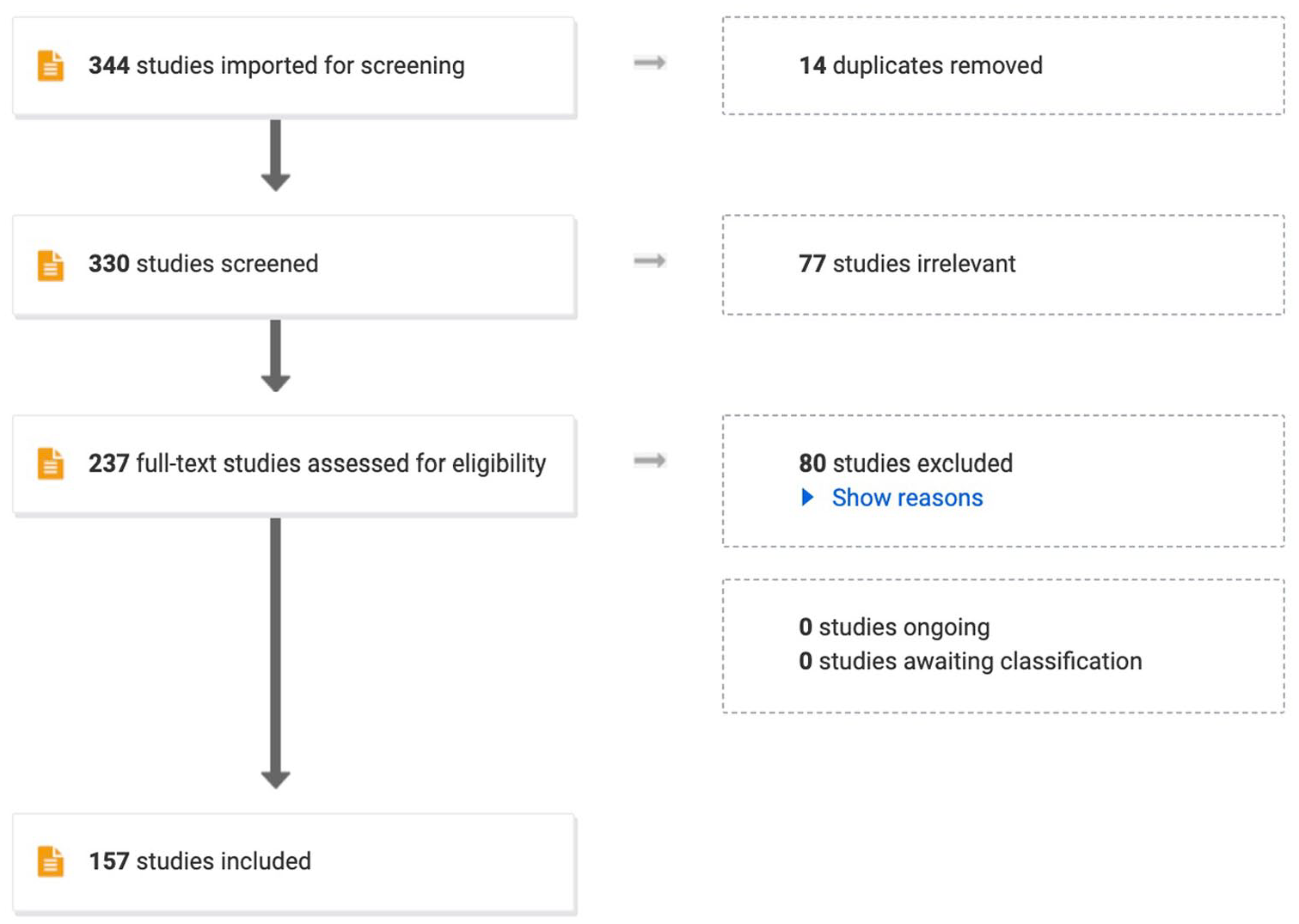
Systematic literature review.
Semi-structured interviews
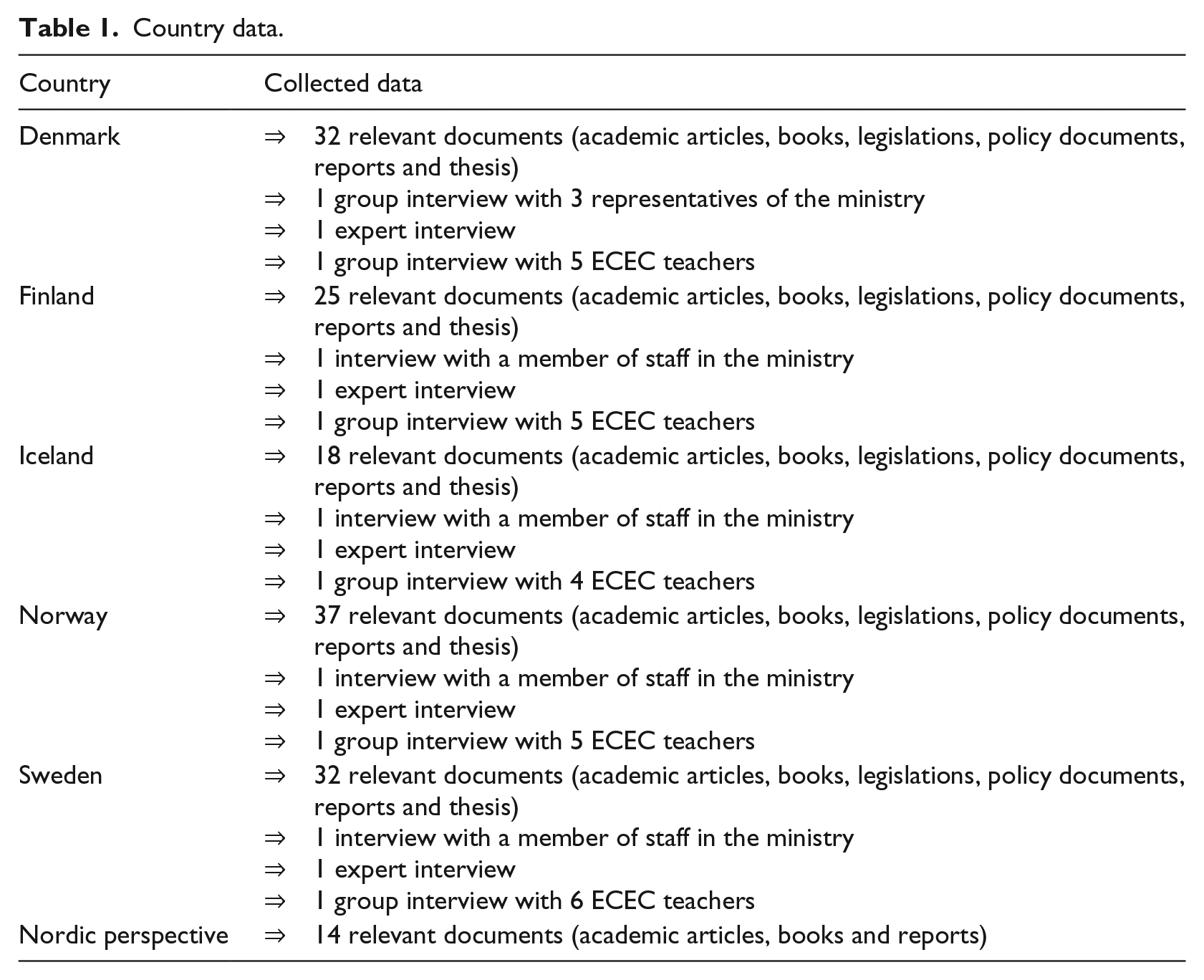
A total of five interviews with policymakers (one of them a group interview), five interviews with ECEC experts and five group interviews with ECEC teachers 3 were conducted. The aim of the interviews was to reveal how the different actors in the ECEC field perceive and describe the values and principles of evaluation and assessment in ECEC.
Interview partners were selected in a convenience sampling process: participating policy makers were members of the steering group, experts/scholars of the advisory board of the project. Groups of local teachers were identified through existing contacts of the research team or advisory board members.
Interviews with policy makers and experts were conducted in English, group interviews with teachers in local languages.
All interviews were conducted using encrypted Zoom video conferencing software. Recordings were transcribed, anonymised and transcriptions given a file identifier that is not traceable to individuals.
However, considering the small sample in expert interviews, participants in these interviews may be identifiable. Participants were aware of this when asked to give their consent prior to the interview.
We took a hermeneutic approach to the analysis of the interviews, reading the interviews as coherent texts and interpreting individual parts in light of the whole (hermeneutical spiral; Alvesson and Sköldeberg, 2016: 194). We carried out content analyses of the interview material (Jacobsen, 2018: 207). Based on the transcribed interviews, we identified categories and abstractions keeping in mind that these analyses seek to shed light on aspects of the informants’ horizon of understanding. This form of analysis is often referred to as double hermeneutics (Gilje and Grimen, 1993: 144–147; Table 1).
Country data.
Situating the project in the context outlined in the previous section (meaning making and values) had implications for our approach to methodology and research design. We summarise them below, focusing on two main aspects, the languages of evaluation and comparative research understood as learning with each other.
Languages of evaluation
Early childhood education and care is a value-based practice. To acknowledge the existence of this value base in the participating countries was a crucial starting point for our research design. This required a careful, respectful and informed consideration of the cultural and societal values, their commonalities and differences across the five Nordic countries. It required, too, the acknowledgement that differences exist within an overarching Nordic value system, and that values and practices are contested and subject to change and democratic debate. Hence, our starting point for the research was what Moss et al (Dahlberg et al., 2007) call ‘languages of evaluation’: a careful exploration of concepts and terms of evaluation that are commensurate with the ontological, epistemological, political and ethical positions that underpin the Nordic’ approach.
Comparative approach: Learning with each other
The second pillar of our approach to the research responds to the comparative purpose of the study that inquired ‘whether the Nordic countries have a coherent view on evaluating and assessing the quality of early childhood education and care and how evaluation and quality assessment is seen to be linked to the quality and development of early childhood education and care, to pedagogical practices and to the wellbeing, development and learning of children’ (Ministry of Education and Culture, 2020). Addressing this purpose, we paid careful attention to the possibilities of learning from and with each other across the early childhood systems of the Nordic countries. It guided us in designing a methodology that prioritised dialogue between countries and participants in a shared framework (values) over simplistic comparison of predetermined items. Our approach followed the examples set by leading international educational comparativists, that is, Steiner-Khamsi (2004, 2013), Alexander (2000b, 2012) and Morris (2016) who emphasise the inseparable connection between culture and pedagogy (Alexander, 2000a) and the value of cross-country comparison while, at the same time, cautioning against naïve attempts at policy transfer between distinct country contexts (Auld and Morris, 2016; Steiner-Khamsi, 2004). A similar approach to carefully designed learning from and with each other across countries was employed by OECD in the initial Starting Strong studies (OECD, 2001, 2006). Instead of a simplistic ranking of the five countries, our approach to comparative study, evaluation and assessment emphasises pedagogical practices and their implications in context–as complex cases (Bartlett and Vavrus, 2017; Stake, 2003)–and explores and documents the policy choices available to decision makers in relation to the specific contexts of their own countries.
Summary of findings
Documentary analysis: Common features and country variations
Although there are slight differences in the description of the guideline documents, they all focus on evaluation of the learning environment, relational quality and organisation of the ECEC. The main emphasis in all these documents is to evaluate and assess the pedagogical activities and learning environment, mainly by self-evaluation, in order to improve the ECEC. Common for all the countries is that the local level has the main responsibility for how the assessment and evaluation is carried out. The documents stipulate that the ECEC-staff must monitor the children’s development, but not assess children regarding learning objectives. The objective and purpose of quality assessment and evaluation are linked to objectives in the curricula, that emphasise holistic growth, all-day pedagogy, well-being, democracy, equality and participation. Learning and playing is seen as interwoven processes, and childhood has intrinsic value.
There are some minor variations between countries regarding evaluation of the individual child’s development. For example, the Finnish curriculum requires an individual ECEC plan for each child. This plan should be evaluated regularly regarding its ability to enhance the child’s development. In Sweden, the curriculum requires the ECEC-teachers to document and analyse each child’s learning and development, to evaluate how the ECEC institutions provide the child with opportunities to develop and learn in line with the curriculum objectives. In Norway, all children’s development must be monitored and be documented if the staff have concerns about the child. In Denmark, the objectives and guidelines for evaluation are set by the municipal council. The director/leader of the ECEC is responsible for establishing an evaluation culture.
Interviews: Values and principles
Throughout the interviews, both with experts, officials from the ministries and ECEC-professionals, some values regarding assessment and evaluation recurred. These were values such as well-being, child-centredness, play, learning, professionalism and reducing marginalisation by working towards equal opportunities regardless of background and abilities. These values represent important objectives in the ECEC of all the Nordic countries and are therefore central for the evaluation and assessment. All participants reflect upon the staff’s competence as a decisive factor for developing ECECs. Furthermore, an agreement appeared throughout the interviews that evaluation and assessment should primarily be of the learning environment, not the children. However, most of the evaluation and assessment were delegated to the local level, which entails variations in evaluation practices, also regarding evaluation of individual children. The participants underlined those individual evaluations were performed if the staff considered needs for extra efforts. In the interviews the respondents reflect upon the different requirements concerning pedagogical documentation regarding assessment and evaluation in the countries. Although variations exist between the countries concerning documentations, the ECEC-teachers mentioned extensive documentation and other structural factors as a hindrance to achieving the quality objectives.
In all the group interviews with the ECEC-teachers, the value basis of the respective countries’ laws and regulations appeared as the starting point for the systematic work for improving the practices. Teachers reported on their evaluation and assessment of their pedagogical work, but also explained that structural qualities, or lack thereof, such as adult-child ratio, group size, lack of personnel etc., had an important impact on their ability to live up to the national guidelines. The structural qualities were, however, seldom a part of the evaluation and assessment carried out by teachers. Focussing on improving the ECEC as a pedagogical institution, throughout all the group interviews the teachers singled out pedagogical practices, not children, as the prime object of evaluation.
The scholars/experts were asked a general question of what characterised a good ECEC. They referred to values such as wellbeing, child-centredness, play, learning, professionalism and reducing marginalisation by working towards equal opportunities regardless of background and abilities. These values align with values found in national legislations and curricula, and seem to be perceived as embedded in the Nordic tradition.
The experts held education level of the ECEC-staff to be a crucial factor for translating these values into practice. However, they also emphasised other aspects such as structural factors and the interplay between pedagogical quality and structural preconditions. Children’s learning and well-being require sensitive presence of pedagogues and co-workers. All five countries organise the governing of ECEC-sector under their respective ministries of education. The debate whether ECEC is a social service, or a part of the education system seems to have settled, although Denmark may be an exception since ECEC recently changed ministries there. The dual mission of ECEC-services, that is, provider of education and equal opportunities in the job market, may be seen in the dual emphasise of care/wellbeing and learning as fundamental pillars of ECEC-pedagogy.
Limitations of the study
Despite its reach over five countries, this was a small-scale study conducted with limited time and resources. We identified important factors guiding the approaches to evaluation and assessment in early childhood education and care in the participating countries, and across stakeholder groups (practitioners, policy makers and scholars). However, a much more detailed analysis of both documents and interview data will have to be undertaken by a better resourced follow-up project.
The literature review focuses exclusively on national regulations. This is a significant contribution, as it sheds light on the guidelines for evaluating and assessing the quality of ECEC in the Nordic countries. One of the findings of this study is that, in recent decades, municipal governments have gained an increasingly important role in regulating ECEC. Therefore, to understand the full picture of ECEC quality evaluation and assessment in the participating countries, local regulation should be analysed. Future projects should include the study of regulations and guidelines at all government levels, including interviews, with particular attention paid to the municipal level. Finally, it should be highlighted that due to the small sample size and the qualitative, hermeneutic research approach, findings from the interviews cannot be considered representative and any generalisation should be approached with caution. While generalisation should never be at the core of qualitative research, a larger and more varied sample (i.e. including local policy makers), in better resourced follow-up projects would certainly enrich the picture presented in this study.
Discussion/conclusion
This study is an investigation into questions that relate the ongoing international debate about quality in early childhood education and care to the specific situation in the participating five Nordic countries–Denmark, Finland, Iceland, Norway and Sweden. In commissioning this study the Nordic Council of Minister also responded to an increasingly prevalent discussion: how do actors at all levels of the early childhood system assure themselves and their respective audiences of what is actually going on in our ECEC settings, and how do we make sense of it in order to support and improve it? In recent years, these are questions have increasingly been framed as questions of evaluation and assessment. The conceptual link between quality and evaluation in education in general, and in early childhood education more specifically, has been promoted by influential international actors. They include the European Union, who specifies evaluation as one of five pillars of the EU Quality Framework for Early Childhood Education and Care (Council of the European Union, 2019; Working Group on Early Childhood Education and Care, 2014). Linking quality to evaluation has been a central topic of the work undertaken by the Organisation for Economic Co-operation and Development (OECD) in the field of education and early childhood education and care over the past two decades. This has taken a specific form, connecting a rather technical and managerial language of quality with standardised and largely decontextualised assessment and standardised testing. The approach taken by the OECD has been widely criticised by some authors who point out that it deflects attention from children and educators’ experiences in divers contexts to largely meaningless ranking and comparison of countries (Alexander, 2008; Auld and Morris, 2016; Ball, 2012; Carr et al., 2016; Moss et al., 2016, Moss and Urban, 2017, 2018, 2020, 2021; Pence, 2017; Urban and Swadener, 2016). As authors have pointed out consistently, introducing and using such particular language of evaluation (Dahlberg et al., 2007) is a political choice and paradigmatic position, to which alternatives exist and can be constructed. The problem arises when such positionings remain undeclared, own vantage points are assumed to be shared by all, and the existence of alternative paradigms is ignored.
Responding to the brief given to us by the Nordic Council of Ministers we situate our study within the existing paradigm of quality of ECEC as something to be aspired to, and evaluation as one critical tool for achieving the goal. We are, however, aware that the questions of what goes on in ECEC settings, in interactions between individuals, groups and institutions in that space, can–and should!–be investigated and understood in many other ways as well, that are beyond the scope of this study. Alternative paradigmatic positions could include, for instance, the exploration of early childhood education as local experiments in democracy (Moss and Urban, 2010) and shared meaning making, as intergenerational encounter in the face of existential crises facing humanity, as spaces for onto-epistemological engagement with many different funds of knowledge or as radical challenge to neoliberal individualism and creative realisation of the common good (Moss, 2014; Roberts-Holmes and Moss, 2021).
Is there such a thing as ‘the Nordic approach’?
Our findings point to the conclusion that there is indeed an approach to early childhood education and care, and more specifically to evaluating the quality of practice, that transcends the practices and policies in the five participating countries and can be described as Nordic.
The study findings point to the existence of a Nordic approach to evaluation and assessment in ECEC. It is identifiable as a value-based set of practices, embedded in a wider Nordic model of governance. In the documents reviewed (academic articles, reports and regulations) the existence of a Nordic approach is stated by authors from Nordic and other backgrounds. In the documents, the existence of such an approach is usually defined in opposition to other approaches (i.e. the Anglo-Saxon perspective). In the documents, especially in the academic literature and international reports, the Nordic model is associated with: universal services, holistic approaches to ECEC, the ECEC as a means of counteracting social inequality, children’s and families’ participation, some level of local or institutional decision-making, unstructured learning environments, value-led education and systemic approaches to evaluation and assessment.
The analysis suggests that elements of the Nordic approach coexist with elements from other approaches. This is discussed in the academic literature on the topic and can also be found in the regulations. A growing emphasis on evaluation and assessment seems to be present in most Nordic countries, which can be seen, for instance, in the creation of national evaluation agencies, the introduction of individual development plans and the exploration of standardised instruments such as ECERS. This may suggest the presence of elements from other models. However, since evaluation in most Nordic countries is a municipal competence, this point will require further analysis.
The findings further indicate that there is a shared understanding of how evaluation and assessment are presented in the legislation and guidance documents. This is evident across the countries. This shared understanding is present in the findings concerning values and principles of the ECEC. This seems to confirm the portrayal of a Nordic model based on common values such as well-being, child-centredness, play, learning, professionalism and reducing inequalities.
However, what presents itself under the umbrella of this Nordic model is complex, diverse and by no means uniform. Despite the differences between the ECEC systems, significant similarities exist across the Nordic countries in relation to values, policies and practices, and not everything that takes place in ECEC in the Nordic countries can be linked to the Nordic model as there are other coexisting influences (see, for instance, Dannesboe et al., 2021).
The similarities, we found, centre around the value base that underpins every-day pedagogical practice as well as policy making in the ECEC space. One of the key messages from all our participants is that the central locus where quality is produced, assessed and evaluated is indeed the concrete daily interaction with young children. It is in these pedagogical relationships where quality becomes visible, not in specific assessment events, set in scene to produce test results or other forms of decontextualised data.
Everyday pedagogical practice as the centre of quality points to the value that is attributed to early childhood educators (early childhood teachers, pedagogues) as the ones that are central to enacting and assuring quality in their interactions with children, individually and in groups. This, in turn, is only possible because of the trust other actors at policy level (the system) put in early childhood educators who are seen as competent, autonomous, professional and ethical actors.
Local governance and democracy: Preconditions of the Nordic model?
The systemic characteristic of what we identify as the Nordic model is reflected in the importance given to the local sites of interaction and engagement with quality. The document analysis (regulations) show that the role of municipalities is particularly prominent in the context of our study, reflecting how the Nordic model is embedded in wider societal structures in the Nordic countries, and closely connected to local democracy.
A constituting element of the Nordic model is that children’s well-being comes across as the core of the purpose of early childhood education; an orientation that is shared widely, by actors at all levels of the ECEC system.
Further to this shared orientation towards children’s wellbeing, and the shared value of local enactment of quality, we find a shared understanding that the focus of evaluation is on the learning environment and the systemic interactions between individuals, institutions and agencies in the ECEC system, rather than on assessing (testing) individual children.
These values are reflected at the level of national ECEC governance, which is understood as having responsibility for enabling the emergence of quality ECEC experiences for all children. National structures and agencies assume their responsibility by recognising the central role played by actors at local/municipal level.
The findings must therefore be nuanced by including a discussion of the local context of the ECEC. In all Nordic countries the municipalities play a major role in governing the local ECEC-institutions. The informants discuss how the delegation of responsibility to the municipality level influences the evaluation and assessment in local ECEC-settings. The participants emphasised this variation from their respective perspectives, that is ministry, research and ECEC-institutions. This may indicate that the variations are not so much country specific, but rather linked to local contexts. For example, a municipality in Iceland and a municipality in Norway may have more in common with each other regarding evaluation and assessment than they have with other municipalities in their respective countries. In this manner evaluation and assessment is situated in the Nordic model of local governance of ECEC. The findings seem to reflect close cooperation between the Nordic countries regarding evaluation and assessment in the legislation and guidance documents. Furthermore, the participants perceived research conducted in one of the countries as highly relevant for, and easily applicable to the other Nordic countries. However, they also indicate that research and tools for evaluation and assessment from countries outside of the Nordic context are relevant. This means that the governance of the ECEC-sectors on the various levels is influenced by many factors, that is the strongly emerging focus on learning is not only a result of integrating the ECEC in the education sector, but also a result of impulses from a wider international discourse.
The Nordic model as an imaginary of early childhood education and care
The Nordic that underpins the approaches to ECEC documented in our study can and should not primarily be understood as a geographical concept, located in five countries only. It is more helpful, we suggest, to approach our understanding of a Nordic model as a concept with implications that are bound by values, interests and politics that surround and transcend early childhood education and care.
One question arising from such a view is, for instance, whether the apparent dichotomy of the Nordic and Anglo-Saxon models (as brought to the debate by authors including Moss, Bennett and others) could be understood as a construct brought to the table with specific objectives in mind. In what way, for instance, can the introduction of a Nordic approach be seen as a conduit–a discursive tool–created by authors from within the dominant English language context, for the purpose of giving shape to the critique of their own context? Such a reading, then, might link the English language debate about what constitutes a Nordic model to other concepts that have entered the anglophone debate on early childhood education and care, including, for instance, the concept of social pedagogy (i.e. Cameron and Moss, 2020). It might also lead into a critical debate on how other, non-Nordic value based pedagogical approaches have been used to formulate resistance and alternatives to existing mainstream ECEC practices and policies in the ‘anglosphere’. Moving forward it will be important, we suggest, to critically interrogate the implications of such strategic uses of concepts and terms. Could, for instance, the proliferation of the Nordic in the ECEC discourse contribute to its decontextualisation, as it has, arguably, in the case of Reggio Emilia? If that is the case, what are the implications of such an interpretation for the recognition (or NOT) of other possible ‘models’ that are not dominated by English language and its surrounding socio-cultural/political assumptions?
Conclusion
The role of the local in Nordic approaches to evaluation and assessment in early childhood education and care has emerged as crucial from our study. Considering this, we suggest that further comparative studies should pay much closer attention to the municipal arena of producing, interpreting, evaluating and assuring quality in ECEC. This has consequences for how we conceive and design comparison that reaches beyond the national level. We have touched the surface of this but were limited in the scope (i.e. time and resources) of this project.
We suggest that rather than shifting the focus from the national (i.e. country comparison) to the micro-level (local processes) it will be important to design studies that investigate the relationship between the local and the central (i.e. levels of government) as a defining element of evaluation in ECEC systems (Guevara, 2022). One question arising for the international debate on evaluation and assessment is how much the approaches promoted by influential international actors (i.e. OECD) are shaped by undisclosed assumptions about the role and power of central government (a key feature in the UK, for example). What are the implications for designing large-scale international tools if local democracy and decision making are recognised?
We suggest that the findings of this research could inform a more in-depth discussion within and among the five participating countries about possible next steps towards comprehensive systemic evaluation of ECEC. This discussion would take further the initial doubts about the appropriateness of decontextualised, standardised approaches as exemplified by IELS. It could seek to engage and invest in processes to develop an alternative model to comparative ECEC systems evaluation, grounded in the values, principles and democratic structures that underpin early childhood education and care in the Nordic countries. Other countries outside of the Nordic region could be invited to join the process. Together, the five Nordic countries would be able to exert considerable influence in the international debate on ECEC policy, in the context of the European Union as well as within the OECD.
Footnotes
Funding
The author(s) disclosed receipt of the following financial support for the research, authorship, and/or publication of this article: The research was funded by the Nordic Council of Ministers.
Ethical approval
This research project was approved by the Research Ethics Committee at Dublin City University (DCUREC/2021/121).
