



Abstract
This article proposes the living journals method for remotely studying participants, elevating participant agency in the data generation process and minimising or completely removing the need for a researcher to be physically present in the field. Employing this method, the paper describes how the method was used to explore 5-year-old children’s digital practices in five families in Azerbaijan. Mothers were assigned as ‘proxy’ researchers to generate the data following prompts sent through a smartphone application. Mothers’ answers were used to create journals, and subsequently, fathers separately, and mothers and children together were requested to interpret their own journals and those of other participant children. Allowing other families to comment on one another’s journals further revealed their attitudes towards using digital technologies and enriched the data, emphasising its multivocality and metatextuality. The article describes the living journals method in detail, highlighting its affordances for researchers to generate data from a distance in other contexts. The article also discusses the methodological and empirical contribution of the method to this study about young children’s engagements with digital media at home. By decentring the researcher in the data generation process, the method allows researchers to generate both visually and textually complex and rich data. The visual and personal nature of the method goes beyond text-based research accounts to bring the data to life, allowing the researcher to generate multimodal, multivocal, metatextual and multifunctional data.
Introduction
This article proposes the living journals method for the remote study of participants, elevating participant agency in the data generation process and minimising or completely removing the need for a researcher to be physically present in the field. Using this method, participants are assigned as ‘proxy’ researchers in situ, thereby delegating the data generation undertakings in the field (Plowman, 2017) and simultaneously as interpreters of the data. I initially developed this method to address the challenges of researching young children’s everyday encounters with digital technologies such as computers, laptops, smartphones or tablets at home and beyond to answer the research question: ‘How can we study young children’s digital practices in a home setting?’ Through the living journals method, I asked mothers to send me their 5-year-old children’s pictures or 30-second videos with commentary through a widely used application – WhatsApp. I created actual journals from the generated data and used them as prompts to discuss them with family members. The discussions built around the living journals enriched the data with multivocality – listening to all research participants, and metatextuality – generating an additional layer of insights through commentary on the existing text gathered in the previous phases from them and other participant families. This article aims to introduce the living journals method and demonstrate its utility for researchers in social sciences, illustrating its implementation details and affordances rather than focusing on the study findings.
The method draws on contextualist ecocultural theory, emphasising the importance of the environment in which children live and the interlocutors with whom they communicate in their daily lives. The theory provides insights into young children’s everyday lives by exploring their everyday activities (Tudge, 2008; Tudge et al., 2009; Weisner, 2002). The theory, therefore, enabled me to examine children’s everyday lives, focusing on their environment and other actors in their lives.
The research setting and focal children
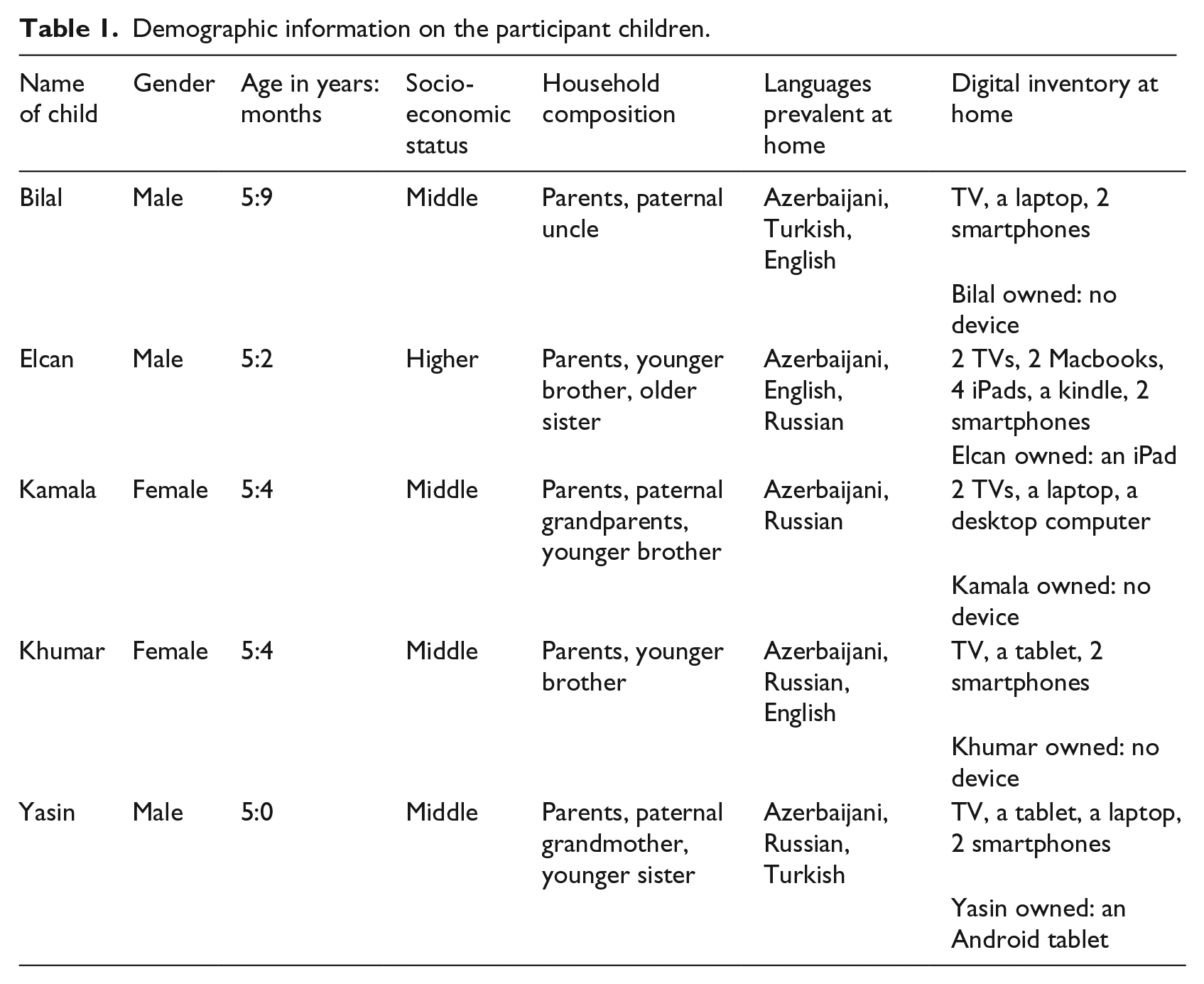
The participant families in the study live in the Republic of Azerbaijan – a transcontinental post-Soviet country situated at the crossroads of Western Asia and Eastern Europe. Azerbaijan is on the Organisation for Economic Co-operation and Development (OECD) (2020) list of eligible countries to receive Official Development Assistance. Purposeful sampling was employed to recruit participants for the study, expecting that the approach would lead to ‘information-rich cases’ to find out more about ‘. . . issues of central importance to the purpose of the inquiry’ (Patton, 2015: 53). Through my personal and professional networks in Baku, I managed to recruit five families with 5-year-old children, with age being the only compulsory requirement to participate in the study. The following table describes demographic information about the participant children, whose names are pseudonymised (Table 1). The Socio-Economic Status (SES) is derived from my observations of the participant families, compared against the general condition of the population rather than the definition of statistical agencies, as I had not collected data on income and other pertinent criteria. A low SES equates to near or below the poverty line, while a middle refers to people who can afford to live comfortably, have their own flat, a car and at least one stable job. In my research project, high SES referred to a family which was comparatively well-off and could afford to send children to prestigious private preschool as well as providing digital devices to all their children.
Demographic information on the participant children.
Background
Studying young children’s everyday digital practices presents methodological challenges for researchers, who are often inclined towards home visits. To investigate children’s daily lives at home and beyond, researchers tend to conduct extensive observations using digital cameras themselves (Gillen and Cameron, 2010; Gillen et al., 2007), researchers and parents taking turns in video-recordings (Aarsand, 2012), trusting cameras to parents and instructing them to record their children (Given et al., 2016) or trusting children with digital tools to video-record or take pictures of their daily lives (Clark and Moss, 2011; Poveda et al., 2012). Irrespective of the variety of existing approaches, home and formal education settings where young children spend their time around their family members, friends and relatives remain largely inaccessible (Aarsand, 2012; Plowman and Stevenson, 2012; Poveda, 2019). Researchers’ presence for an extended period of time in such contexts can cause discomfort for children, especially at a young age (Poveda, 2019). Hence, researchers turn to digital tools to ‘observe’ children’s daily lives within hard-to-reach contexts at home or beyond.
In addition to digital cameras, smartphones have been used in various studies to generate data (Clark, 2005; García et al., 2016; Poveda et al., 2012; Rönkä et al., 2017; Teichert 2020; Yamada-Rice, 2017). For example, Mobile Phone Visual Ethnography (MpVE) has been used to study research participants’ everyday lives and mobility within marketplaces (DeBerry-Spence et al., 2019), or the Mobile Instant Messaging Interview (MIMI) to study research participants’ everyday use of media (Kaufmann and Peil, 2020).
One of the most notable methods in a home setting is the mobile phone diaries method developed by Plowman and colleagues in their study of Toys and Technology (Plowman and Stevenson, 2012). Focusing primarily on parents’ viewpoints, the researchers developed a mobile phone diaries approach to study young children’s daily activities within and beyond home. The researchers sent text messages to remind mothers to take pictures of children at certain times. The authors labelled the pictures ‘experience snapshots’ of young children’s daily lives (Plowman and Stevenson, 2012: 543). Once they collated the data, the authors turned them into storyboards and asked mothers and children to comment on their activities.
The living journals method draws on the mobile phone diaries method, but a key difference is that participants were invited to provide commentary on others’ journals as well as their own, highlighting similarities and differences within the presented daily lives. Furthermore, the living journals unified a mixture of multimodal data: pictures, videos, audio and text messages, and alongside the rest of the data, they were also coded and analysed.
The main focus was on young children’s daily digital practices and their interactions with digital technologies within their natural settings. In this vein, Experience-Sampling Method (ESM) was attractive to be applied to and integrated with digital technology use. ESM allows researchers to document individuals’ lives in situ and specific contexts (Hektner et al., 2007). The method preceded the current technological boom and used to be administered by collecting participants’ self-reports within the repeated timeframes using texts, pagers, digital tools or applications (Csikszentmihalyi and Larson, 2014). ESM has not been used in education research broadly (e.g. Plowman and Stevenson, 2012; Rönkä et al., 2017). However, utilising modern digital tools and involving participants as proxy researchers can offer educational researchers opportunities to adapt the method to study participants’ lives in situ, minimising their presence in the field. In this research project, the method helped study young children’s individual lives because they were ‘. . . “behind closed doors” (literally and figuratively) and because participants are not always aware of patterns in the way contexts shape their own behaviour’ (Zirkel et al., 2015: 9). The following section provides details of the living journals method by describing its phases.
Details of the living journals method
The living journals method was the second step of the research design in the study that explored young children’s interactions with digital technologies in a home setting in Azerbaijan. The data generation commenced with almost 3 months of fieldwork in Baku, Azerbaijan, where three visits were conducted to each of the five participant families from October till December 2018. After the 3 months of completing fieldwork in Azerbaijan, I continued the data generation process through the living journals method in the UK, starting in March 2019. The living journals method includes three phases, and each phase is described in detail in the narrative below. Overall, in this study, implementing the living journals method required almost 10 months.
Phase 1
In the first phase, I asked mothers to send me pictures or 30-second videos of their children, prompted by my messages at certain times of the day through WhatsApp application. I further requested that commentary be added based on the questions: Where is your child? Who is your child with? What is your child doing? Why is your child doing that? In the second round of the data generation, I added one more question as I grew more interested in the affective engagements of the children: How is your child feeling? In most cases, I immediately confirmed to mothers the receipt of responses. The data generation process in the first phase continued for a week, running twice throughout the year, once during term time, in April, and another time during school holidays, in August.
The living journals method is situated within the ecocultural theory (Tudge, 2008) that is often associated with cross-cultural research and visual methods for gathering data on everyday life. I was interested in children’s ecologies, and posing the above-mentioned questions were beneficial in further examining their daily lives. I intentionally avoided focusing on any particular activity and explained to mothers that I was interested in their children’s daily lives. As a result, I gained insights into children’s ecology of daily activities, revealing digital practices naturally occurring in situ.
Phase 2
In the second phase, I combined pictures, texts, still images from video clips and voice responses and created a living journal for each child in digital and paper formats. While compiling each child’s journal, I paid particular attention to translating and transcribing mothers’ commentaries accurately. I used almost all the photos and videos, as well as a wide range of stills from videos in the journals. Often, there were several pictures in the same setting with a slight variation. In such cases, I used two of the most divergent versions, excluding the rest.
In the mothers’ commentaries, every piece of text and transcription of mothers’ audio messages were used. I used the children’s favourite colours and particular interests as themes to personalise respective journals (Figure 1, children’s journal covers and sample journal pages). The videos were playable in the digital versions, but the paper format used stills from the videos.
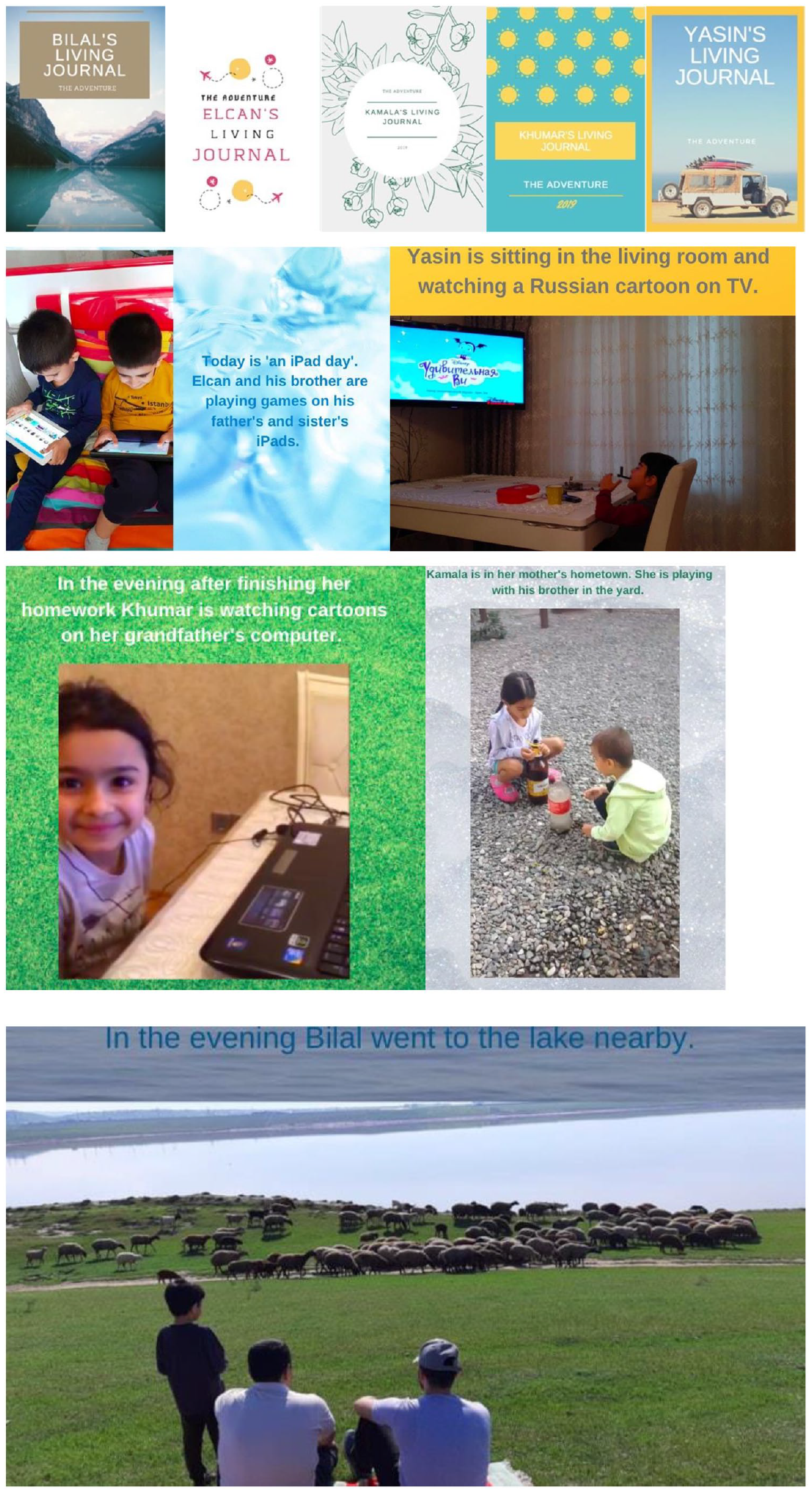
Children’s journal covers and several sample pages from the journals.
The journals were multifunctional on their own; they were analysed as data alongside other data in the research study, and they were themselves research output, which was also shared with participants as memorabilia. I sent each child’s journal to their families in a paper format but used the digital format for screen-sharing during online discussions of other families’ journals with names pseudonymised, thus avoiding unnecessary circulation of sensitive information. I requested mothers’ and children’s consent prior to sharing their journals with fathers. The absence of fathers from the data generation process necessitated such renewal of consent to avoid unwittingly disclosing information that could have been implicitly shared with me by mothers, be it about themselves or the children. Moreover, I acquired families’ consent prior to showing their journals in a digital format to other families.
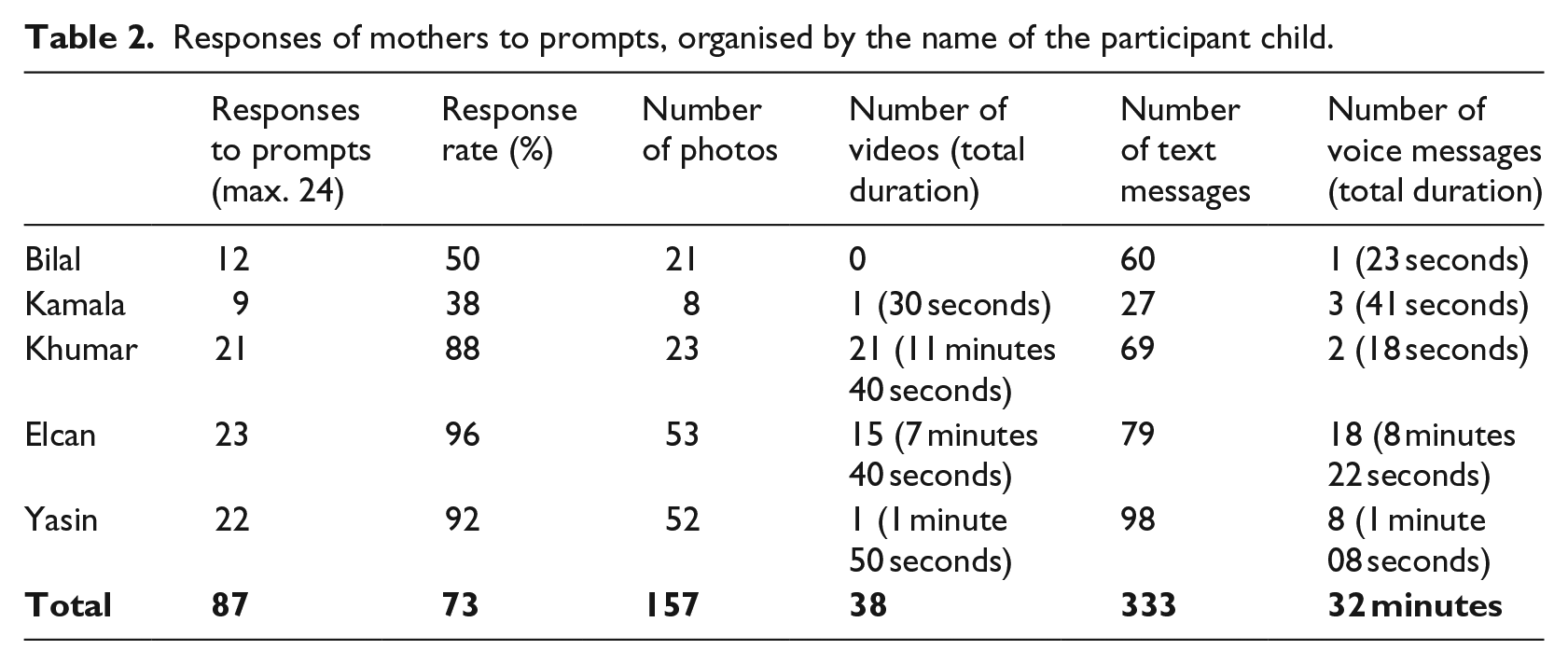
The response rate to the prompts differed across families: two families engaged at 50% and below – the rest at 88% and above (Table 2). The overall engagement rate across all families was 73%. Having the freedom to respond according to their preferences and opportunities potentially contributed to the high engagement rate. The lower engagement rate is characteristic for mothers who were in full-time employment during the data generation process, affording them fewer opportunities to respond to prompts. Mothers sent their commentaries mostly in the form of voice messages. This was a common practice of using WhatsApp in Azerbaijan and was likely seen as a more efficient way to convey information than typing text. Furthermore, as it is seen in the figure on response rates, I have also added the quantity of the mothers’ multimodal responses. Multimodality of responses in this study was related to the variety of the data, such as visual (pictures and short video clips), audial (audio messages) and textual (text messages).
Responses of mothers to prompts, organised by the name of the participant child.
Phase 3
The third phase of the data generation process comprised online discussions around the created living journals with mothers and children together and fathers separately. Since mothers and children had been present in the initial process of data generation, their further joint involvement in the research did not present any conflict. Involving fathers separately was motivated predominantly by ethical concerns as described earlier, as well as by methodological imperative – their initial absence provided me with a fresh perspective on the children’s activities. This phase was a further and vital stage in the living journals method and added multivocality and metatextuality to the method.
During the initial steps of the data generation for the study, I had observed that each family had its own unique set of digital practices, so I sought to further my understanding of their perspectives. To avoid the discussions being limited to their own practices, I shared the journals of other families to gauge the attitudes towards mediation of digital technology use. Sharing the journals across families also helped me discuss practical examples of digital technology use that were uncommon to individual families’ digital culture. The tangibility of the living journals further contributed to recalling and discussing daily activities described in the journals. The living journals were informative to all participants: in addition to their own, they had a chance to study practices of four other families’ everyday lives within the same cultural context. This approach was further motivated by the observation that parents find it more practical to reflect on their children’s daily routines rather than respond to questions on abstract principles of childrearing (Harkness and Super, 2006). Overall, the living journals discussions differed from standard interviews and sharing the journals across families strengthened multivocality and metatextuality of the living journals method.
Data analysis
The variety in the types of data the living journals required a flexible tool for analysis. In my study, I used inductive thematic analysis (Braun and Clarke, 2006; Nowell et al., 2017) to explore the various types of data of each case. Each family was treated as a case whose data was initially analysed separately, based on the research foci of the study, and then across cases (Stake, 2006). The inductive thematic analysis allowed me to reveal and analyse opinions of various research participants, highlighting respective changes and similarities in their perspectives within each case as well as across cases (Braun and Clarke, 2006). As in the case of the analysis of the visual and textual data gathered during the family visits through observations and interviews, I employed an iterative approach for the analysis of the created living journals, adapted from the work of Miles et al. (2019) (Figure 2). During the analysis process, I revisited each step multiple times.
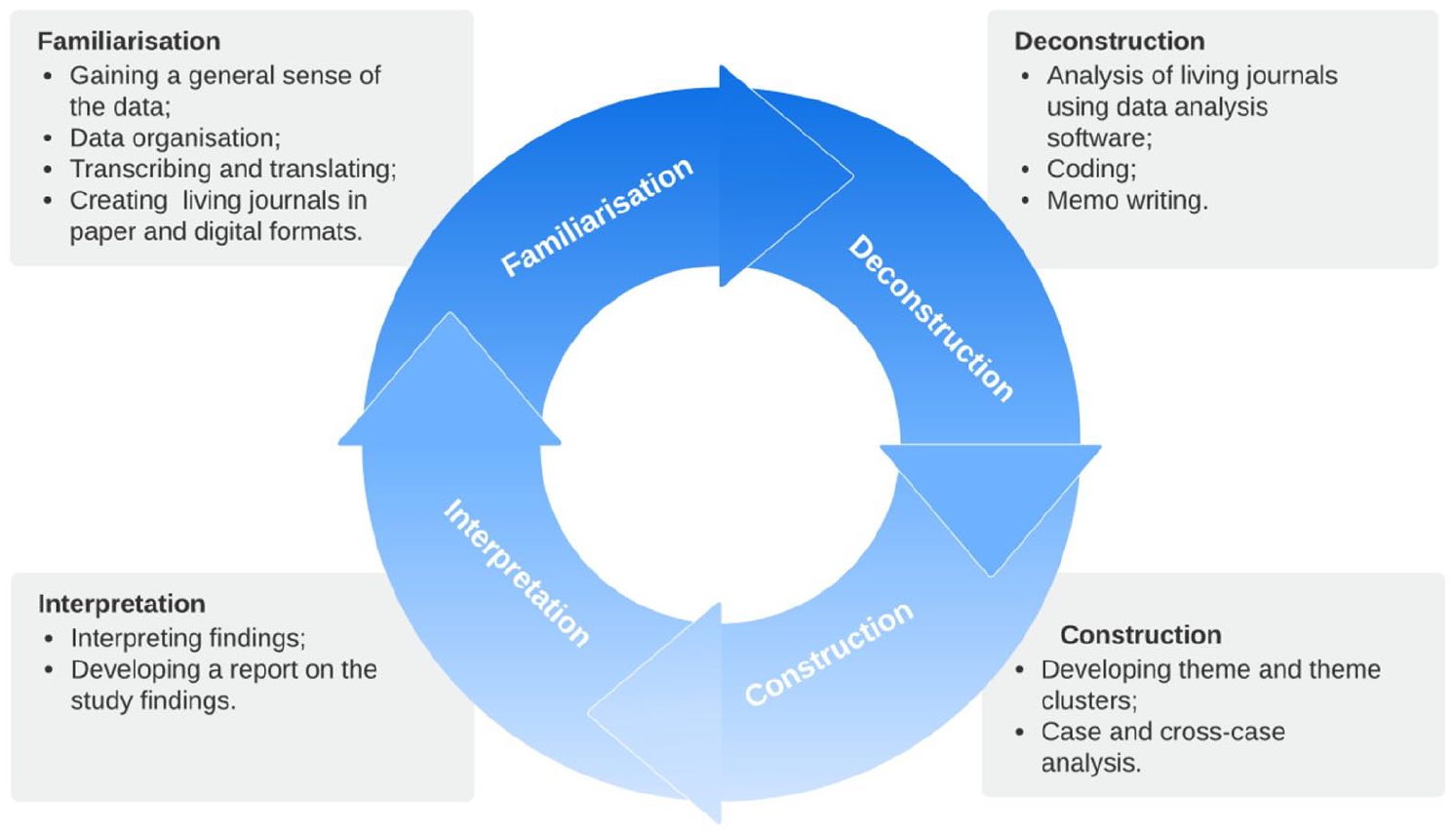
Data analysis process (sequence adapted from Miles et al., 2019).
In the Familiarisation stage, I became acquainted with the raw data before analysing it exhaustively. Additionally, living journals were created in digital and paper formats. The familiarisation stage was instrumental for making an initial sense of the data and taking note of initial emerging themes (Braun and Clarke, 2006). Subsequently, based on this stage and guided by my research question, I constructed initial themes related to young children’s daily activities with digital media, such as ‘using a tablet to learn a language’, ‘entertainment with iPad’ and ‘reward screen time’.
In the Deconstruction stage, the primary analysis was carried out, where I conducted initial and detailed coding of the journal data. I developed codes inductively as they emerged from the data, following the research aim and question. In this stage, I was able to identify codes and code clusters that were omnipresent in all cases. Examples of this would be: ‘expectations from digital devices’, ‘parent influence on the device use’ and ‘child agency’. Furthermore, memo-writing helped me keep track of the ideas emerging from the coding used in developing themes.
In the Construction stage, the developed codes and code clusters were further enhanced across cases and transformed into themes. The application of rigorous thematic analysis revealed the differences and similarities across cases, and this urged me to stay alert to similarities and differences observed in all other cases in order to try and establish whether themes observed in one family were repeated or refuted across others.
Ethical considerations
The employment of visual methods, the involvement of young children and using homes as a research site (Plowman, 2015), as well as the use of social media (WhatsApp) for generating data, all contributed to the ethical complexities of developing the living journals method. All ethical procedures were in line with the guidelines of the research association relevant to the field of study (BERA, 2018). All names were pseudonymised. All parents and children agreed to use children’s unaltered visuals in academic work disseminated publicly, such as conference presentations and publications.
Parents’ and children’s consent and assent to participate in this study were regarded as a continuous process (Arnott et al., 2020; Einarsdóttir, 2007; Flewitt, 2005; Russell and Barley, 2020; Wall, 2017). Firstly, during family visits, I acquired children’s and parents’ consents for conducting the living journals method. In each family visit in Baku in the autumn of 2018, I allotted some time to explain the specifics of the living journals to parents and children. Upon my return to the UK, starting from March 2019, I first reached out to mothers through the WhatsApp messaging application for their consent. After receiving their permission, I recorded a short video about the living journals approach for the children, where I reminded them of the method and what they and their mothers were invited to do. I sent video messages to mothers through WhatsApp and asked them to invite their children to watch the video recording together. In the video recording, I explained everything about the living journals method in practical terms and with examples to make it easier for children to understand. The children were also invited to send me pictures or videos of themselves, provided that they were willing and parents allowed them to do so. I was aware of the possible power relations at home and mothers’ decisions on allowing their children to send me pictures or videos using their phones (Gallacher and Gallagher, 2008). Children responded to renew their consent to participate in the living journals method through their mothers. Unfortunately, I did not have a chance to engage in direct communication with children. However, given their consent on the method during the family visits, I accepted their assent conveyed through their mothers, after which I started the data generation process – the first phase of the method.
Due to mothers’ involvement as proxy researchers and my physical absence from the field, I was unable to observe children’s nonverbal responses to the research process (Einarsdóttir, 2007). Still, I stayed alert to the videos and pictures I was receiving after each prompt. Additionally, I regularly asked mothers whether their children ever objected to being recorded. I was prepared to ask parents to stop the data generation if I felt any discomfort in the visuals or heard anything to this effect from mothers. It was more important that children were satisfied and happy to have their mothers take their pictures or record videos than to generate useful data for the method (Flewitt, 2005). The pictures and videos that followed also indicated that the children were aware of what was happening, and this, in its own right, warrants the assumption that children did not view this method as a kind of ‘surveillance’ of their daily lives or an imposition. On the contrary, sharing activities with someone they had previously met at home seemed enjoyable for children, and establishing trusting relationships with them during family visits helped me ensure this (Flewitt, 2005; Wall, 2017). Also, parents were not doing anything out of the ordinary, as they constantly carried their phones. Additionally, the prompts asked for nothing that deviated from what was already an established practice in their everyday life (Plowman and Stevenson, 2012).
Throughout the living journals method, I have been mindful of the mothers’ involvement in the selection of the pictures. I was aware of the fact that the mothers had sole authority to decide what to ‘show’ to the researcher and what to disclose about their children’s lives (Barker and Smith, 2001). Like any other parent in the world, participant parents wanted to show a good side of their children’s daily activities. The notion of ‘good representation of Azerbaijani children in the western world’ also added to this desire. Mothers had full control and ownership of the data they were sending after each prompt or later that day, and they were also vocal in their messages about their children’s daily activities, emphasizing what they thought was good or bad for their children. For example, there were three instances where mothers sounded frustrated with some of their children’s activities. The mother who took a picture of her child playing outside 2 days in a row expressed her frustration in the commentary, saying: ‘no reading books, no studying’. I took note of those instances for analysis of the data. In line with other similar studies (Flewitt, 2005; Plowman, 2017; Plowman and Stevenson, 2012), my stance towards this issue has always been rooted in its recognition. Rather than discarding the data based on this reason, I have instead embraced it as mothers’ aspirations of what they would have wanted to see their children doing instead, which in itself constituted informative data.
In the second phase, before creating the actual journals, children’s renewed consents were sought through their parents. I asked children and mothers if there were particular visuals they did not want me to include in their journal. All parents agreed with the use of all the visuals and messages. They also explicitly expressed no objection from their children. Children’s consent was sought for all activities due to several reasons: not only were their pictures and videos taken by mothers, but I was also using their visuals to create journals, which would be available in a physical form for themselves, parents and perhaps their guests. This was particularly emphasised as their lives and individual activities were the main focus of discussions with fathers (separately) and with mothers and children (together).
In the third phase of the living journals method, prior to showing journals to fathers and other families, I returned to parents and children for renewing their consent. As noted earlier, this was a cautious approach on my part, pre-empting potential conflict that might have arisen by sharing this information with the fathers. After acquiring proper consent from each family, I decided to show the journals of other families with pseudonymised names through screen-sharing only, which in turn was necessitated by the sensitivity of the living journals data.
Fathers were invited to discuss the living journals separately from their spouses and children. This decision was motivated by the fact that fathers had not participated in the generation of the data for the journals. They first saw the visual and verbal data after the journals had been completed and printed. When invited to comment on the pictures and videos, they had a fresh perspective on their children’s activities. As intended, discussing the journals separately helped them speak freely, as opposed to feeling constricted by spouses or children’s subjective interpretation of the journals. During discussions, they interpreted their own children’s activities and commented on others with great interest and attention. The richness of the activities in the five families’ lives allowed research participants, in particular fathers, to have a glimpse of other children’s lives and recognise or even sometimes discover their own children’s day-to-day activities by analysing them in light of other families’ daily practices.
Discussion
Digital technologies are rapidly being embedded in young children’s everyday lives (Arnott et al., 2019; Marsh et al., 2005; Rideout, 2013). Consequently, researchers face new challenges in trying to capture young children’s encounters with new digital technologies in their own setting. In this vein, researchers are encouraged to develop new approaches, mixing visual with verbal in their methodologies (Yamada-Rice, 2017). Considering the importance of studying young children’s daily digital practices within their natural settings and realising challenges and resource-intensiveness of ethnographic fieldwork, the living journals method offers researchers the possibility to use smartphones to generate data remotely by assigning participants as proxy researchers.
As mentioned above, the living journals approach extensively draws on the mobile phone diaries method (Plowman and Stevenson, 2012). In this section, I further elaborate on other similar methods while trying to situate the living journals method among them together with its strengths and caveats. Another well-known method to study how digital technologies influence young children’s (0–3) and their families’ lives was called ‘A Day in the Life’ approach, developed by Gillen and Cameron (2010). In the study, the authors video-recorded one full day or at least 6 hours of seven 2.5-year-old girls’ lives in different countries: United States, Canada, Peru, UK, Italy, Turkey and Thailand. The authors also combined the recordings with interviews and discussions with families, and other methods to describe young children’s daily lives.
Earlier than that, Tobin et al. (1989) developed Video-Cued-Ethnography (VCE) in their study of ‘Preschool in Three Cultures’ to examine children’s daily lives in a preschool setting in three different countries – Japan, China and the United States. The authors identified a school setting in each country, spent time there and video-recorded a full day in each school. They then edited those videos into short clips and showed them to participants in respective schools as well as across schools. The authors thus were able to identify patterns within and across schools in three different cultures. A decade later, in 2009, Tobin and a new team of colleagues conducted a follow-up of their study, where the authors returned to the same preschools to study the changes in the settings and practices (Tobin et al., 2009).
Researching young children’s daily lives is considered challenging, even though the importance of including young children’s voices in research studies related to their lives has always been the subject of researchers’ interest (Clark, 2011; Gallacher and Gallagher, 2008). The above-cited research studies have mainly relied on parents’ or caregivers’ opinions on the children’s lives while providing a rationale for their deliberate decision to select this approach. An alternative approach is to see children as ‘experts in their own lives’ (Langsted, 1994). Through participation in research, children can communicate and make meaning out of the matters concerning their daily lives. Basing their reasoning on this thesis, Clark and her colleagues developed a ‘strength-based’ framework called the Mosaic approach to listen to and include young children’s voices in the data generation about their lives through multiple methods such as tours, map-making and photography, with the variety of it all making the approach Mosaic (Clark, 2005; Clark and Moss, 2011). The Mosaic approach amplifies children’s voices by giving them digital tools to record themselves; however, this approach was not suitable in my research context. During family visits in Azerbaijan, I observed that most families had adopted a restrictive mediation style towards their children’s digital technology use. Therefore, it was not appropriate for me to provide children with a digital device and ask them to record their daily activities themselves, leading me to seek alternative solutions.
With the living journals method, I took another approach to include children’s voices in the data generation process by offering them an opportunity to send me pictures or videos of themselves through their mothers in the video message I sent to them. I emphasised to children the importance of gaining their mother’s permission before doing so. My motivation was to remain cautious and not interfere with any power balance between children and their mothers at home in terms of digital technology use. Three of the participant children sometimes asked their mothers to record videos and take a picture of certain activities or events to send to me, although these occurrences were not frequent enough to state that children’s voices were prominent in the first phase of the data generation for the living journals. To address this issue, I further revised my approach and invited children and their mothers to check the journals and comment on them in the third phase of data generation. Speaking to them together was also driven by my interest in the anticipated discussion that would emerge from the generated data, in which mothers and children had participated together. Children seemed quite interested in the journals, and together with their mothers, they joined the discussions. In turn, this contributed to enriching metatextuality and multivocality of the living journals method through children’s active participation.
Overall, the inclusion of family members’ voices in the data interpretation process accentuates the multivocal aspect of the living journals method. This enabled the parents to reveal and interpret insights into their family lives and allowed me to explore my main focus – children’s interactions with technologies – through the voices of fathers, mothers and children, shifting ‘the anthropological gaze from the researcher observing and interpreting informants to informants observing and explaining themselves’ (Tobin, 2019:13). In contrast with the Video-Cued Ethnography and the ‘A Day in the Life’ methods, the living journals method is distinct in that it avoids the constant presence of video cameras in the families’ everyday lives, which in turn contributes to minimising the researchers’ visibility and their potential influence on the research setting.
As explained earlier in the article, the living journals method is primarily inspired by the mobile diaries method by Plowman and Stevenson (2012). Additionally, other methods described in this section have influenced its development at different stages. In the following section I further elaborate on the significance of the method focusing on the four Ms: multimodality, multivocality, metatextuality and multifunctionality of the living journals.
Significance and caveats of the method
First and foremost, researchers do not need to be in the field when using the living journals method. I was able to generate data twice at different periods of children’s lives from afar. I remained a researcher throughout the process; however, my role was minimised as mothers were asked to be proxy researchers in the field. Mothers’ assuming this responsibility also enriched the data, although the content they decided to share with me needed further interpretation. These decisions were carrying meta-information on their views of children’s engagements with digital technologies as well as their daily lives. Therefore, neither the researcher nor the researched needed to change their context, and studying the children’s daily lives in their own settings contributed to the authenticity of the generated data. The data presented to the research participants for commentary was collated but not altered, and the journals were tangible research data generated from, by and about participants. In general, the method’s visual and personal nature goes beyond text-based research accounts to bring the data to life. The method allowed me to generate multimodal, multivocal, metatextual and multifunctional data.
To elaborate, the participants have the freedom of deciding how to communicate the messages back to the researcher. Therefore, the data generated through the living journals method can be multimodal. In my study, this included textual (text messages), visual (pictures and short video clips) and spoken (voice messages) information, making the data both informative and visually telling. The method allowed me to gather reflections of fathers, mothers and children, which contributed to increasing the multivocality of the research project. The multitude of voices enriched the gathered data, as well as the interpretation process. The method incorporates already gathered data into the next phase of data generation. In the case of my research project, the participants were offered to reflect on the commentary they had provided, as well as on the text generated by other families through similar means. Such an additional layer of interrogating participants’ attitudes turns the final dataset into a metatextual product. Furthermore, in this particular study, participants across all families found other children’s daily activities interesting. All of the participant mothers noted that the journals were also a great keepsake to be shared with extended family members and friends. Thus, the created living journals are multifunctional: they contain data to analyse, serve as prompts for further data generation and represent research outputs that can be produced as part of the research.
Based on the discussion above, I summarise the potential benefits of the method for researchers:
(i) Generate data remotely without having to be in the field;
(ii) Decentre and deprivilege the role of the researcher by inviting participants to act as proxy researchers in the field to generate the data;
(iii) Better capture research participants’ daily activities or other phenomena of interest in their natural settings;
(iv) Enrich the data description by eliciting the participants’ interpretations of the raw data;
(v) Present the generated data in a material form that serves as a prompt for participants to engage in discussion;
(vi) The generated data is truly rich and diverse: producing multivocality, metatextuality, multimodality and multifunctionality.
Above all, the first point in the list is particularly significant in the current circumstances when the world is facing the COVID-19 pandemic. The living journals method enables researchers to generate data remotely, minimising or completely removing the need to be physically present in the field. I conducted the study and developed the living journals method well before the pandemic, but the current context makes it even more suitable for conducting research remotely. Having had the opportunity to meet face-to-face before commencing the data collection aided in establishing trusting relationships with the participants; however, the method could be replicated with considerable success without the initial meetings in person.
Footnotes
Acknowledgements
‘I am forever grateful to my supervisor, Professor Lydia Plowman for her valuable comments and insights on the draft of the article. I would also like to thank the journal editor, Professor Nicola Yelland and the anonymous reviewers for their constructive and helpful feedback’.
Funding
The author(s) received no financial support for the research, authorship, and/or publication of this article.
