




Abstract
Although digital games have become a constituent part of young children’s lives, not enough is known about the kinds of meanings children give to games and gaming. This qualitative study contributes to resolving this need by engaging 26 5- to 7-year-old Finnish preschoolers in an open-ended drawing task to answer the following research questions: What aspects of digital games appear meaningful for young children when they act as game designers? Why are these aspects meaningful for young children? The findings suggest that children are not mere passive consumers of digital games but are agentic meaning-makers who are capable of critically evaluating digital games when a safe and supportive space and the appropriate medium are provided. The children refined, modified, and personalized existing influential games by replacing the leading male character with a female one or by having a player operate as the antagonist instead of the hero. The findings suggest that there are vast unexplored dimensions for scholars to engage with in young children’s gaming cultures, children’s perceptions of game content, early game literacy, as well as children’s meaning-making in games. Implications for pedagogy of early childhood education are discussed.
Introduction
Digital games have become a significant part of young children’s lives (Chaudron, 2015), and children’s gaming has been studied extensively during the past decade. These studies have typically focused on the quantity of digital gaming (i.e. how much children play; Common Sense, 2017) and its potential benefits (Granic et al., 2014) and disadvantages (Elson and Ferguson, 2014). Although these studies have provided important insights, they have tended to position children as passive consumers of digital games, and their perspective on children and childhood has therefore been somewhat restricted. Such a view conflicts with the modern view of children as social agents who actively make sense of their lives (Tangen, 2008). Although research on children and media has begun to better acknowledge children’s agency (Leinonen and Sintonen, 2014), young children’s meaning-making around digital games is still understudied. Thus, there is a need for research on children’s gaming that takes the children’s perspectives and voices into account. The present qualitative study, therefore, engaged 26 5- to 7-year-old Finnish preschoolers in an open-ended drawing task about their conceptions of “the best game in the world.” The study was guided by two research questions: what aspects of digital games appear meaningful for young children, and why are these aspects meaningful for young children?
While knowledge of children’s game-related meaning-making is valuable in itself, it is also meaningful for the pedagogy of early childhood education (ECE), which refers to institutional education for children from 0 to 8 years old as young children’s digital cultures are gradually being considered in the curricula for ECE. Take Finland (the context of this study), for example. The new Finnish National Core Curriculum Guidelines for ECE (Finnish National Agency for Education (FNAoE), 2016), in use since August 2016, call for a comprehensive pedagogical approach to digital games. The media education section of the curriculum states that children’s critical media literacy is supported in ECE by familiarizing children with different media and media production, and by discussing the veracity of media content related to children’s life-worlds. In addition, the curriculum states that different kinds of games should be explored with children in ECE. Play, drawing, and performing arts are examples of child-centered methods for exploring media-related themes (FNAoE, 2016).
These methods not only reflect the pedagogical traditions of ECE but are also in line with the multimodal and transductive way children approach games and other forms of media. Children’s digital game-related meaning-making is not restricted to playing games but occurs via role-playing, drawing, writing, and discussing verbally (Aarsand, 2010; Giddings, 2014; Lehtikangas and Mulari, 2016; Wohlwend, 2010). A further distinction can be made between role-playing that draws its themes and characters from digital games and a play-form in which children play to play a digital game. As an example of the latter one, Giddings (2014: 29–30) used a play of two brothers who moved from playing Lego Racers 2 on a computer to playing with actual Lego blocks. According to Giddings (2014), [n]ot only were the images and dramas of the computer game being played out with real toys, but the physical and kinaesthetic ways the boys played with their actual Lego blocks were quite different. They were not only continuing the game of racing Lego cars begun on the computer screen (its characters, scenarios and dramas) but were playing with the actual Lego as if it were a video game. (p. 30, italics original)
These two forms of play require somewhat different types of knowledge. Whereas playing a game-themed role-play requires only knowledge about the characters, scenarios, and dramas, playing to play a digital game also requires an elementary understanding of a game’s mechanics and dynamics. To draw on Zichermann and Cunningham’s (2011) definition, mechanics are the functioning components of a game and are controlled by the designer. For example, primary mechanic elements may include points, levels, and challenges or quests. A game’s dynamics consist of the interactions between a player and the game’s mechanisms (Zichermann and Cunningham, 2011: 35–76).
Drawing from Bourdieu’s seminal work on cultural capital, Consalvo (2007: 4–5) conceptualized knowledge of games as gaming capital. According to Consalvo, the term is useful because it suggests a currency that is by necessity dynamic—changing over time and across types of players or games. However, not all knowledge of games is equal to gaming capital. Which digital games are considered good and cool is an object of negotiation among children (Aarsand, 2010). Some games are dismissed as irrelevant to the category, while others are made visible as good and cool, and the knowledge of “cool” games forms gaming capital. What makes a game “good” is a multidimensional question. Children’s game preferences often reflect their broader media tastes (Inal and Cagiltay, 2007). For example, children who find Star Wars games interesting are also typically interested in the Star Wars movies, books, cartoons, and TV series (Aarsand, 2010). This fluid movement across and between different media types has been conceptualized as “transmedia” (Jenkins, 2010). Other important aspects of games for young children are the imaginary worlds that allow children to do things that are not possible in their everyday lives (Ermi and Mäyrä, 2005), as well as the possibility of identifying with the character (Van Reijmersdal et al., 2013).
That said, it would be oversimplified to claim that children divide games into mutually exclusive “good” and “bad” categories. Koivula and Mustola (2015) studied young children’s gaming practices in a preschool context and found that children occasionally complained that the games they liked to play did not always allow them to do what they wanted. For instance, the children would have liked to interact with objects that were designed as unresponsive background graphics. Research also suggests that children can play games by creating their own (often situational) rules and neglecting designers’ intentions (Kjällander and Moinian, 2014). In other words, even when children find a game appealing, they may still find flaws in it as their and game designers’ ideas of (and ideals for) a good game may differ.
Methods
Participants and research context
Data for this qualitative study were collected from The Best Game in the World project carried out in collaboration with one preschool group consisting of 26 5- to 7-year-old children (17 boys, 9 girls) in spring 2016. Teachers of the class had noticed that digital games were a frequent theme in the children’s play, discussions, and drawings, and had begun to consider how they could engage with games as a media cultural form in their teaching. Pekka (who had regularly collaborated with the teachers since 2013 and was familiar with the children) was invited to participate in planning and implementing the project. The process for the complete project is displayed in Figure 1. The data used in this study were produced and collected during the first phase. The second phase has been reported in detail in another publication (Salomaa and Mertala, 2019).
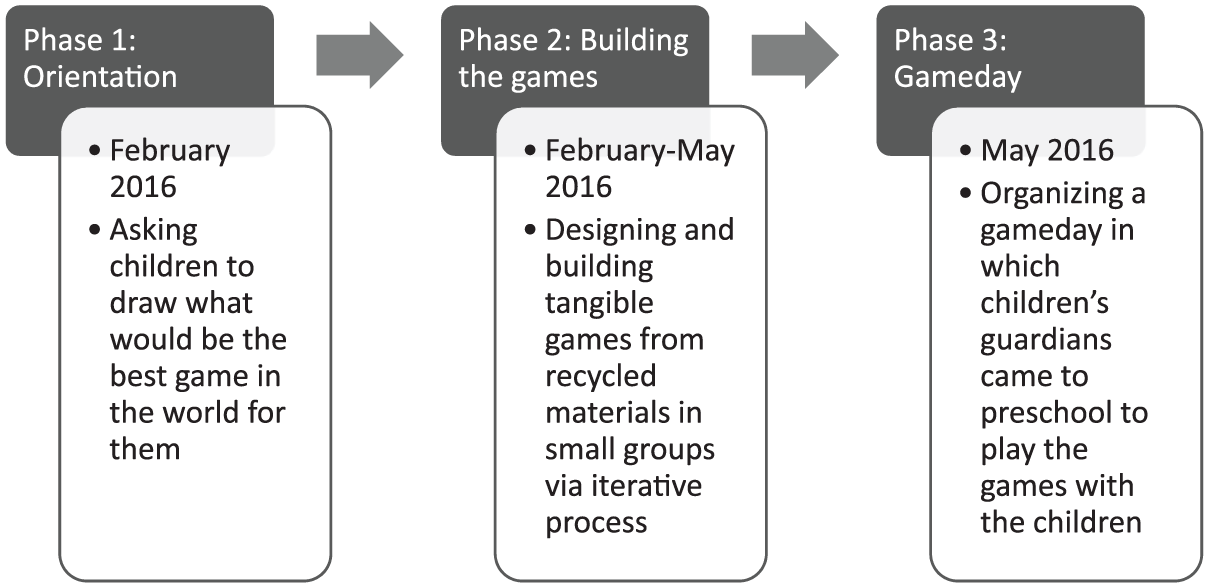
Outline of the process.
Data collection
Data collection took place in a preschool. The children were first introduced to the aim and methods of the research. Their consent to participate in the study was requested verbally and a written consent was obtained from the children’s guardians prior to data collection (Flewitt, 2005). It was emphasized that all children could participate in each phase of the project regardless of whether they participated in the study.
The children were then asked to draw their idea of “the best game in the world.” Drawing was chosen as the means for data collection for several reasons. Drawing is an enjoyable and beneficial activity for most children (Ólafsdóttir and Einarsdóttir, 2019), and it can be combined with other forms of narration, including talk (Spyrou, 2011). By combining visual and verbal narration and using drawing—or some other visual medium—as a mediating tool, different parties can understand each other’s thinking, thus creating a transitional space in which thoughts and ideas can be externalized into concrete form (Lipponen et al., 2016). Drawing is also one of the ways in which children reflect their experiences of digital games through their own initiatives (Giddings, 2014; Wohlwend, 2010), and it has been shown to be a useful method for studying children’s meaning-making of digital media in general (Mertala, 2019b).
During and after the drawing activity, the games drawn by the children were discussed with them in conversations led by either the teachers of the group or Pekka. We sought to make the interviews as informal and discussion-like as possible. A structured interview discussing only themes relevant to the research objective may signal to a child that his or her opinions and topics of interest are not considered important (Gollop, 2000); therefore, instead of restricting the children’s narration, we allowed them to tell us whatever they wanted. However, since a research interview also inevitably seeks to gain answers to research questions (Helavirta, 2007), a thematic checklist was used to ensure that themes relevant to the research interest were covered in each discussion. If these topics were not addressed spontaneously, narrative invitations (e.g. “tell me about your drawing”) (Roos and Rutanen, 2014) and open-ended questions (e.g. “why would this be the best game in the world?”) were used. We also asked questions about the games the children played at home and whether they engaged in role-plays with game-related themes, in order to gather information about what types of gaming and game-related activities the children found important and meaningful. The children’s narration and spontaneous comments during drawing were recorded by writing them down on observation sheets (Einarsdottir et al., 2009). The data consist of 27 drawings (one child made two) and 26 interview sheets. Drawings were returned to the children as soon as digital copies were made for research purposes.
Analysis
The analysis of the data consisted of two sequential phases. The first phase was descriptive analysis, which explores the kinds of varieties in which a phenomenon appears (Elliott and Timulak, 2005). In practice, this meant close reading of the data to identify commonalities and differences that could be used as the basis for categorization. The analytical query guiding the process was what aspects do young children include in their drawings of “the best game in the world”? Via this process, four categories were formed: (1) influential games, (2) transmedia influences, (3) fantasy, and (4) personalization. The next phase was interpretative analysis, which aims to understand why the phenomenon comes about (Elliott and Timulak, 2005) or put differently, and why the data fell into these particular four categories. The analytical query guiding this phase was why are the aspects identified during the descriptive analysis meaningful for the children? In both phases, constant comparisons between data-driven notions and existing research literature were made (Suddaby, 2006), which locates the analysis under the abductive approach in which the researcher moves between inductive and deductive reasoning to open up new ways of theorizing about the phenomenon under investigation (Dey, 2003).
Findings and discussion
This is called the Rainbow Park. One must find ice cream cones to keep moving. When they eat the cone, they can run really fast. They are like a kind of power stones. The girl is called Alexandra. She runs with a cat and a dog. The cat is called Miisa and the dog Mikko. The cat has the same name as my cat, because it looks a bit like her. If they find a rainbow, they can use it as a slide if they want. The unicorn is a fast runner, and if they want, they can ride with it. When they have reached the goal, they get ice cream cones. After they have eaten it, they fall asleep.
This is how 6-year-old Alina (all names are pseudonyms) described her best game in the world (Picture 1). Alina is what Patton (2002) described as an informant-rich case: not only was she talkative, but her drawn and spoken narration was rich in detail and included many of the themes and phenomena expressed by the other children. We, therefore, refer to Alina’s drawing as an example when presenting findings related to each of the four categories formed during the analysis, in order to concretize the richness of the data and to illustrate that the categories are not mutually exclusive. We begin by addressing the role of influential games in children’s drawings and then discuss each of the three remaining themes (transmedia influences, fantasy, and personalization) in subsequent sections.
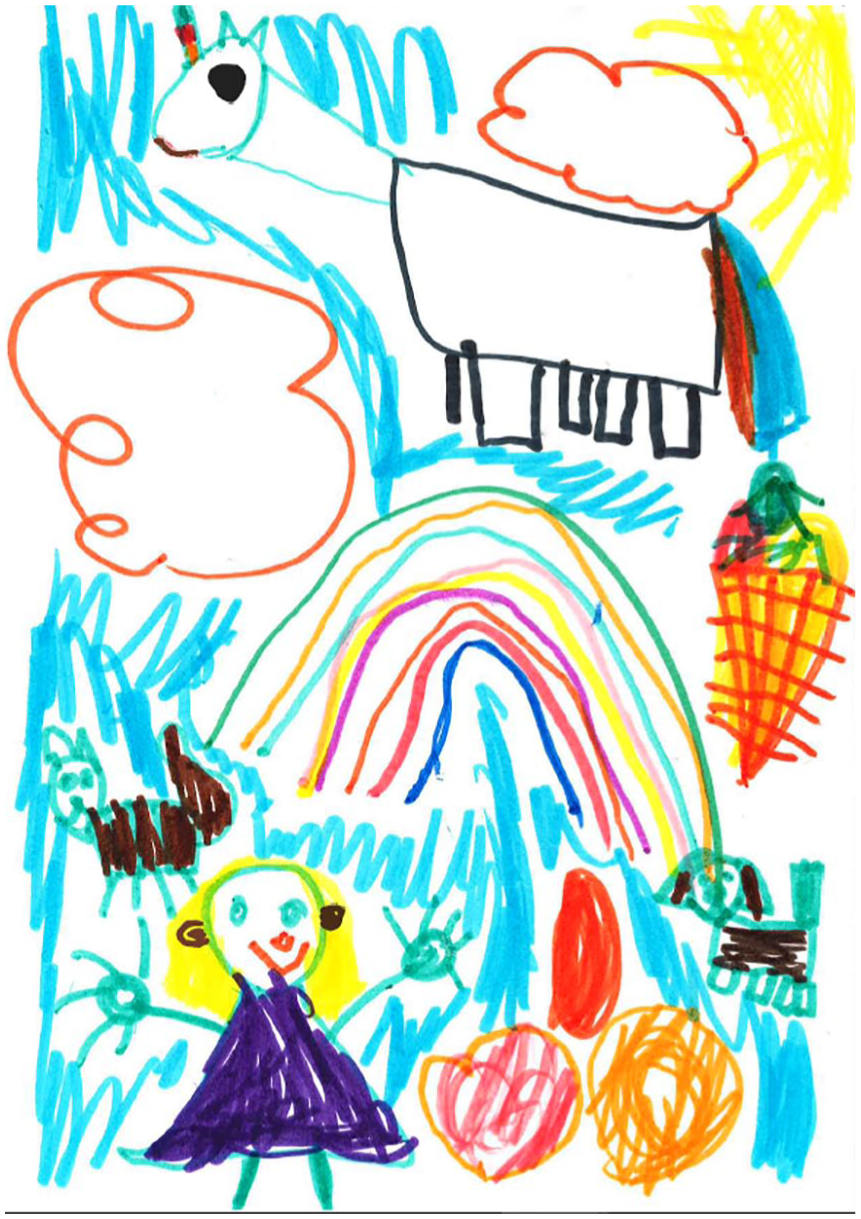
Alina’s game design drawing.
Influential games
The first meaningful aspect was influential existing games. The data were rich with explicit references to popular games such as Minecraft, Super Mario, NHL, and Farming Simulator. In Alina’s case, however, the influential game was not a best-selling game from a big game company. Instead, her drawing was inspired by the children’s TV show The Game Challenge, aired by the Finnish national broadcasting company, YLE. In The Game Challenge, primary school-aged children design and program games in small teams. Alina stated that she had watched the show many times. “The one in which they collect the rainbow stones is a nice game. This is a bit more fun.” The game she referred to was designed by a group of children who called themselves Team Creepers. As can be seen in Picture 2, their game and Alina’s drawing have notable similarities.
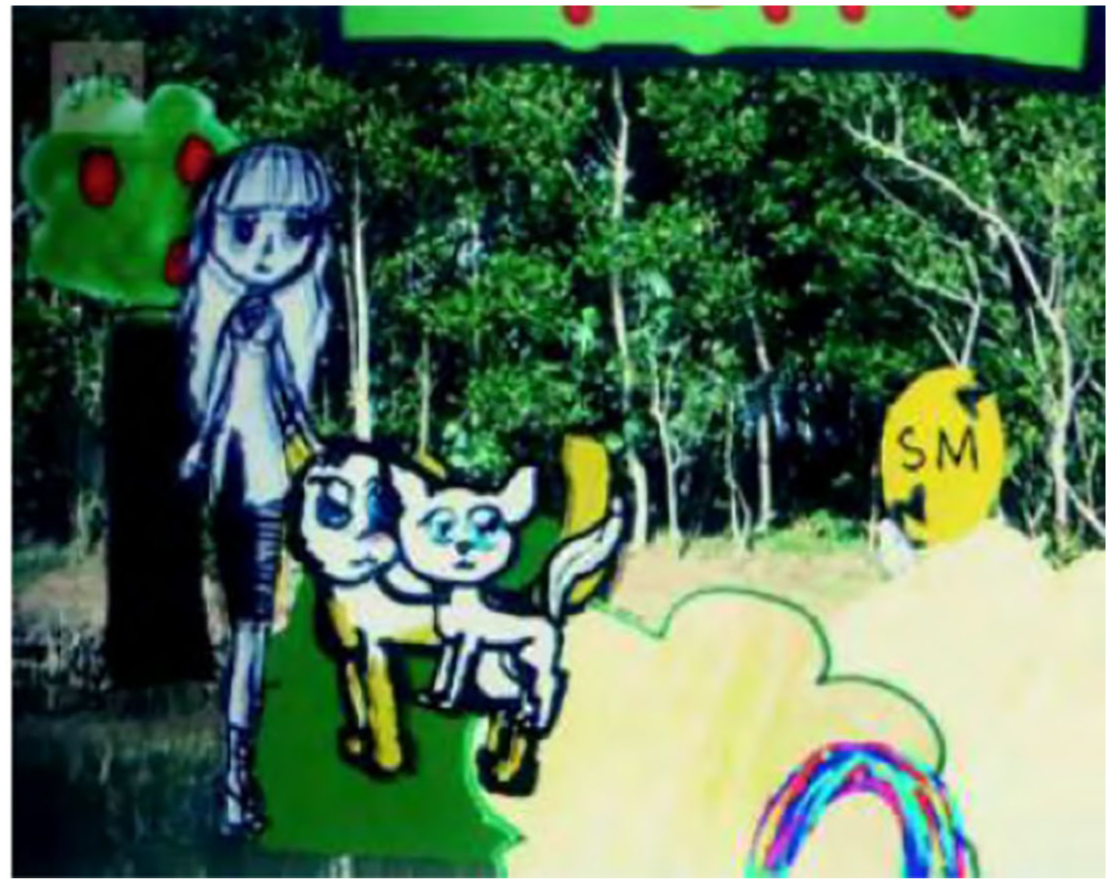
Team Creepers game design from The Game Challenge.
Nevertheless, Alina’s comment about her game being “a bit more fun” suggests that instead of simply copying the Team Creepers idea, Alina modified it to her liking. The most notable addition is the unicorn, whose role will be discussed in more detail later. However, children in the class also created drawings that were direct reproductions from existing games with no explicit modifications. The most prominent example is a Minecraft-themed drawing by Patrik (see Picture 3).
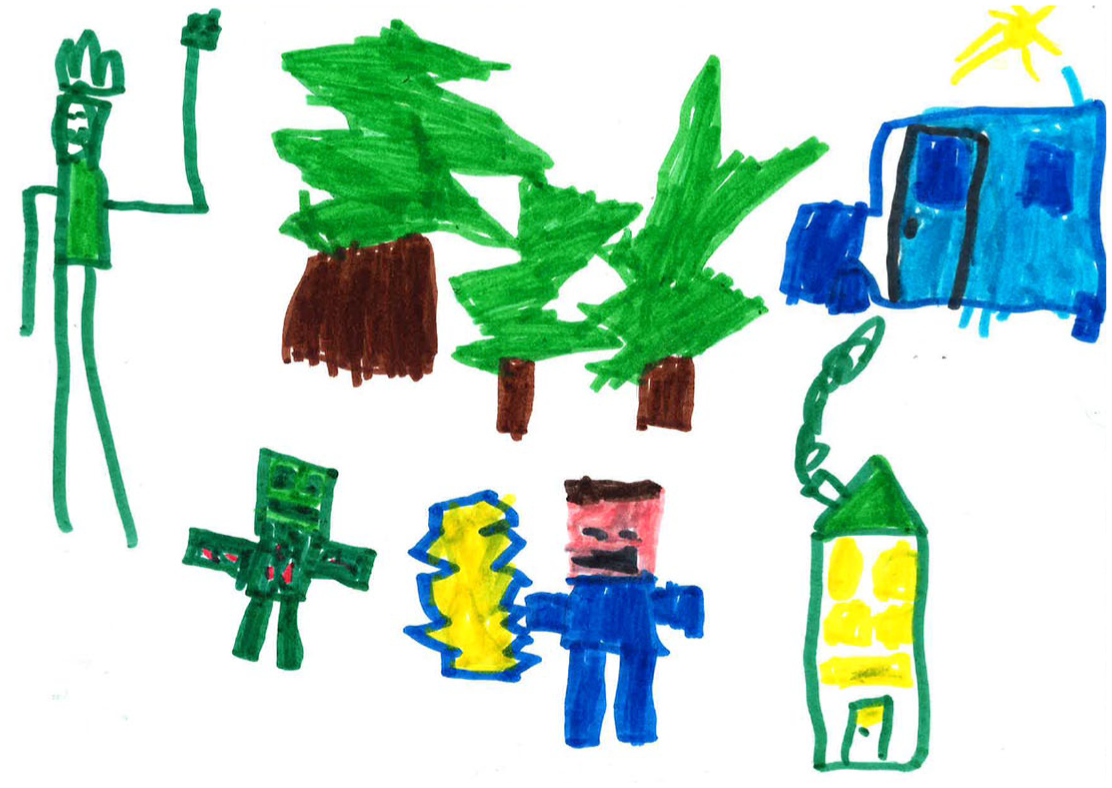
Patrik’s game design drawing.
When asked about the drawing, Patrik stated, You can build things. When zombies or spiders or some strange dude comes after you, you destroy them. Many nights and days pass. Sometimes, it rains, and there are occasional thunderstorms. If Steve destroys a zombie, he gets new blocks or a new weapon. Steve beats a zombie with a pickaxe. Zombies try to beat Steve. They wanna grow bigger. This in the Statue of Liberty from New York City. They are in the forest. There are lots of zombies hiding in the forest in Minecraft. I like to play Minecraft role-plays sometimes. I like to be Enderman because he can teleport himself and he is tall.
The drawing and the spoken narrative illustrate that he possessed a notable amount of knowledge about Minecraft. However, during the interview, he revealed that “we don’t have it [Minecraft] at home. I asked for it for a Christmas present, but I didn’t get it. Maybe I can have it as a birthday present.” Instead, his knowledge was from Minecraft videos on “YouTube and Google. There is some man playing in them. They are videos and they are in English.” This notion is in line with previous research (Lehtikangas and Mulari, 2016), which identified that children can possess detailed knowledge about media texts they have no firsthand experience of. In other words, the knowledge is constructed from secondary sources, which in Patrik’s case were game videos from streaming services. As Minecraft-related elements were present in various children’s drawings, it is justified to say that Minecraft was something that was considered good and cool among the children (Aarsand, 2010). Thus, knowledge about Minecraft, accumulated from the media surrounding the game, can be seen here as what Consalvo (2007) described as “gaming capital.” Patrik was certainly interested in Minecraft, but he also needed Minecraft-related gaming capital to be able to play Minecraft-themed role-plays, which according to the children were one of the most popular play themes at the time.
Whereas other children’s drawings were typically influenced by games that they had played, neither Alina nor Patrik had firsthand experience of playing the game that influenced the drawing. From an interpretative point of view, this notion is highly interesting as it appears that the inaccessibility had created a mythical aura around these games, especially in Patrik’s case. To draw on Consalvo (2017), Minecraft game videos can be understood as paratexts, which are texts or artifacts that surround a central text (here, the Minecraft game). Paratexts also shape how we understand what a particular game might look like and how best to play it. Consalvo (2007: 21) has further argued that knowledge of paratexts can be a significant component of gaming capital. This appears to be especially the case with young children’s multimodal and transductive meaning-making for digital games. For example, in Patrik’s case, his paratext knowledge enables him to participate in “playing to play” activities although he has no firsthand experience of the central text. This allows children to have an imagined experience of playing a game even though they cannot play the game itself, for example, due to parental restrictions. This is likely a common situation for young children due to many popular games’ age ratings (e.g. Minecraft is rated PEGI 7 (Pan European Game Information) and ESRB 10+ (Entertainment Software Rating Board)).
Transmedia influences
The second key theme identified in the data is transmedia influences, which refer to influences that are derived from media texts other than games. When Alina’s drawing is compared with the Team Creepers game, the most notable difference is the unicorn. It was not present in the Team Creepers game, but in Alina’s drawing, the unicorn is the largest figure. The reason became clear when Alina stated, Unicorns are just my favorite things in the world! Sometimes, we play them with Iina [sister] [for] so long that Iina says, “This is boring.” We have one unicorn, which has diamonds on it, and when it is pressed, its horn starts to glow.
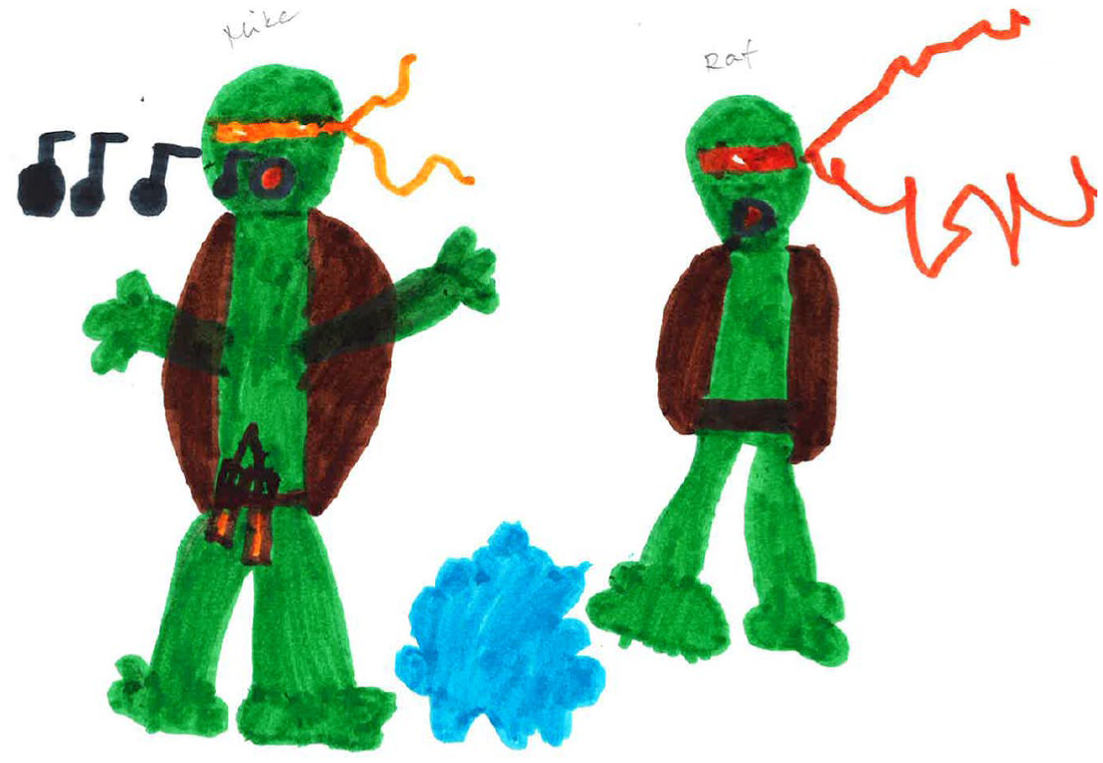
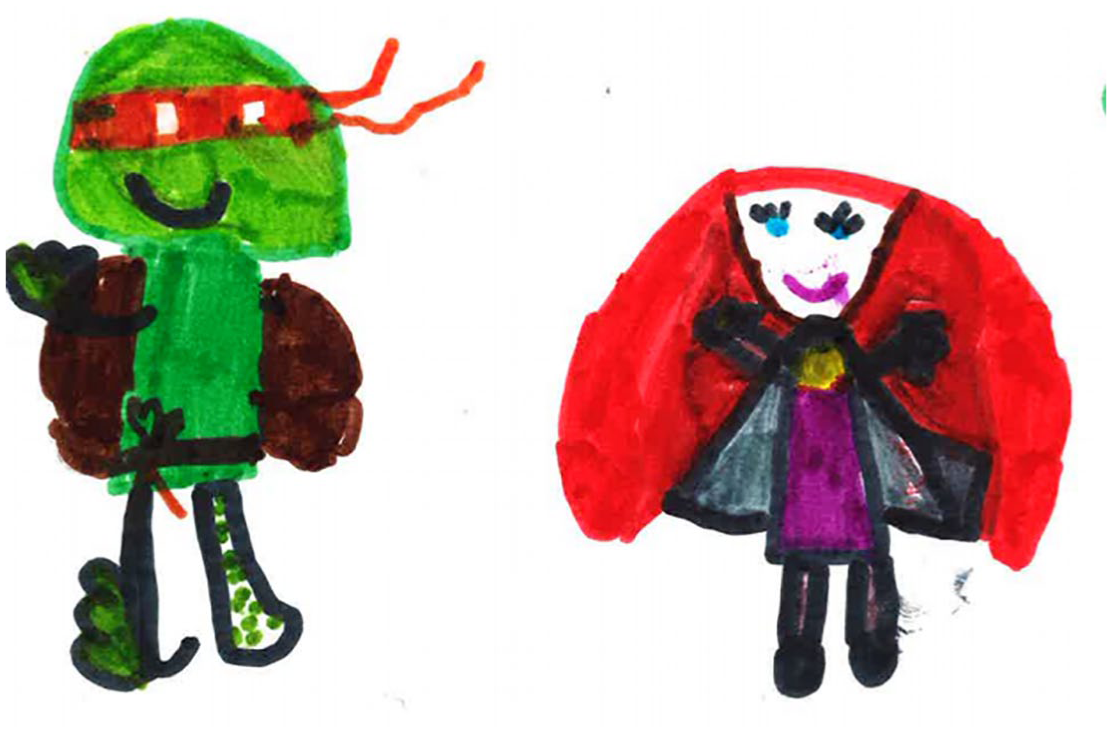
Alina’s interest in and affection for unicorns seems to have (at least partially) media cultural origins, as the toy unicorn she talked about is a unicorn called Rarity from My Little Pony: Friendship Is Magic, a highly successful animated television series about the adventures of six anthropomorphic female ponies in a fantasy world called Equestria. Alina was not alone in the desire to add her favorite media character in the game. Other piquant examples are drawings by Emma and Jenni (see Pictures 4 and 5). In both of their game ideas, the main characters were from Teenage Mutant Ninja Turtles (TMNT). Jenni, for example, stated that she watches the TMNT series at home with her big sister and plays TMNT role-plays in preschool with Emma. From an interpretative viewpoint, these influences can be understood to reflect the broader transmediated nature of the contemporary (children’s) media culture in which the children live. In other words, the same characters appear in various forms of media texts (Giddings, 2014: 2–3), and as Alina’s, Emma’s, and Jenni’s drawings suggested, children apparently found it convenient to include their favorite TV characters in their ideas for the best games in the world.
Emma’s game design drawing.
Jenni’s game design drawing.
Transcriptions of Emma and Jenni’s narratives also highlight how gaming capital is a subject of negotiation and a question of power (Aarsand, 2010). The following extract illustrates how Jenni is aware that Emma knows more about TMNT than her, and Jenni turns to Emma when in doubt how to color April O’Neil’s (a reporter and a close friend and ally of the four turtle brothers) shirt and jeans. The following occurs:
Mine is the Turtles game, the April game. She [April] could wear a dress. What color is her shirt?
Yellow
What color are her trousers?
Ordinary jeans, brown ones.
She has a cape because she is going to somewhere. She has an invisible cape. She has grown this kind of hair.
April O’Neil is typically dressed in a yellow outfit and has medium length red hair. Except for the hair color, Jenni’s representation of April is not loyal to the original version. Emma does not comment on or oppose the changes Jenni makes to April’s appearance. However, when Jenni says the turtle character Raph (a nickname for Raphael) is smiling at April, Emma stops drawing and comments in a loud voice, “Raph can’t smile!” Then she turns to their teacher and informs her that Raph is “every day and every week and every year really angry—if you mess with Raph, you will get a really big bump on your face!”
Why was it acceptable to Emma for Jenni to modify April’s appearance but not draw Raphael smiling? Clothes or hair length do not determine who April is, but Raphael smiling is at odds with the fundamental nature of this particular character. Each of the four turtle brothers has his own personality and temper: Leonardo is the devoted leader, Michelangelo is the relaxed and goofy joker, Donatello is the introspective thinker, and Raphael is the short-tempered hot-head. In other words, smiling is characteristic of Michelangelo, and Raphael smiling was something Emma could not approve. This notion is supported by previous research: although children often use media influences creatively in their role-plays, there always are boundaries that should not be crossed because then the play would move too far from the original idea (Aarsand, 2010; Kalliala, 1999). In addition, children with more gaming capital can bend the rules more than children with less (Kalliala, 1999) as their attempts at creative solutions are considered a lack of knowledge instead of creativity (Aarsand, 2010). To put this idea in context, by explaining Raph’s characteristics to the teacher, Emma is, simultaneously, informing her that Jenni is doing something inappropriate and that she (Emma) is the one with proper gaming capital.
Fantasy elements
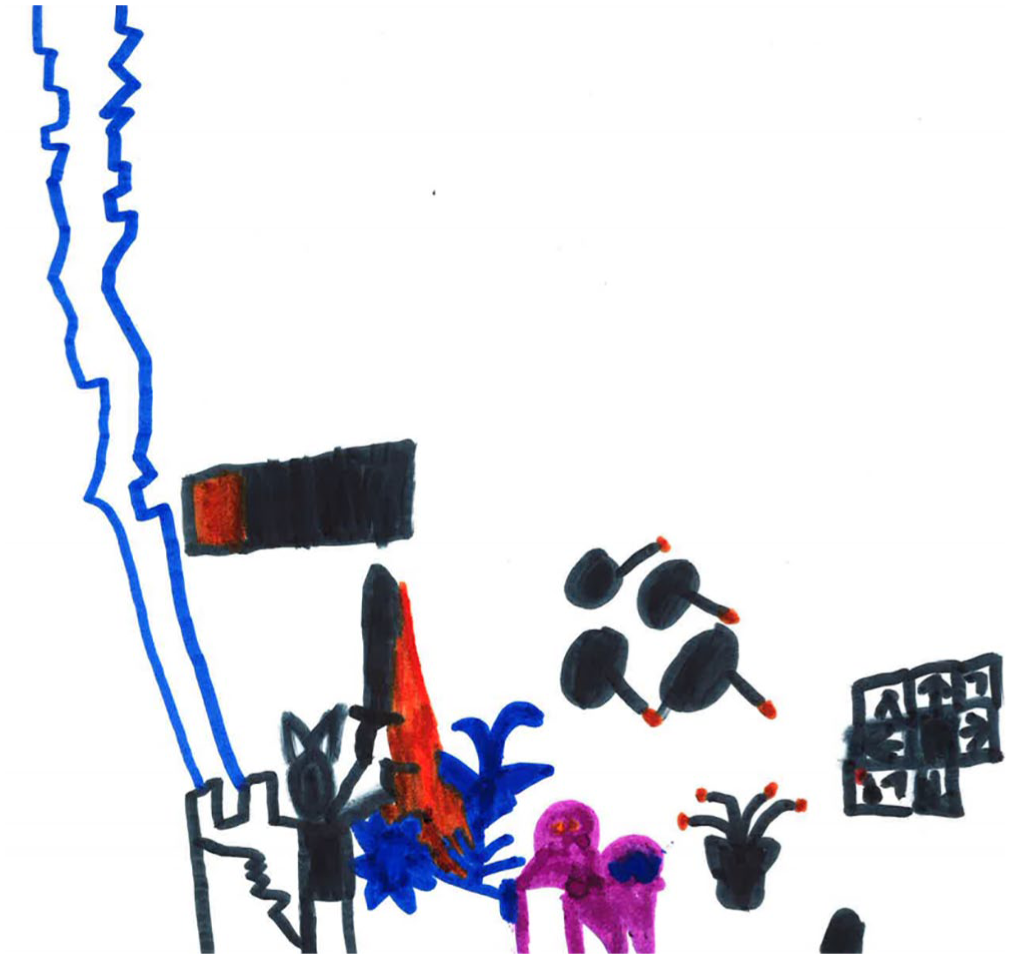
The third key category is fantasy elements. In Alina’s drawing, the most notable fantasy elements are riding the unicorn and sliding down a rainbow, both activities that are impossible to do in everyday life. In her case, riding the unicorn can be interpreted as expanding the unicorn-themed fantasy role-play which her sister got tired of more easily and quicker than Alina. Fantasy elements were included in several other children’s drawings as well. Next, we examine Lassi’s drawing (Picture 6) as it allows us to explore a child’s perspective on violent game designs which are a common topic of concern among researchers (Elson and Ferguson, 2014) and ECE practitioners (Lehtikangas and Mulari, 2016).
Lassi’s game design drawing.
Lassi described his drawing as follows: I am this baddie. The baddie must try to destroy the castle. I don’t move this [good guy], but it moves by itself. It tries to kill. This is a four-bomb. It has four bombs, and when it explodes, ashes will fly out of it. This red is blood because it [the good guy] has hit my character. There were two characters. I killed one of them here. The dead guy transformed into a weapon on this guy’s [baddie] hand. If I can destroy the castle, I have won the game, and there will be a new field. I must not kill the two other guys, or I lose the game. That’s why there are these guys, that you can either win or lose. Also, if lightning strikes the castle, I lose the game.
From the viewpoint of fantasy, Lassi’s decision to position himself playing the role of the “baddie” is highly interesting. Kalliala (1999), who has studied young children’s play culture, argued that play offers children a safe environment in which to try what it would be like to be bad and/or act immorally. In our understanding, Lassi’s drawing reflects this phenomenon. Previous research supports this interpretation, as both young (Kafai et al., 2009; Searle and Kafai, 2009) and adult (Jantz, 2015) players have been known to use digital games to experiment with “immoral” identities and actions without fear of out-of-game consequences.
Moreover, although Lassi’s drawing was undoubtedly violent, the violence was arguably not an end in itself. Instead, the violence can be understood to reflect Lassi’s emerging understanding of game mechanics and dynamics. Lassi’s comment “I don’t move this (good guy), but it moves by itself” shows an elementary knowledge that actions of non-controllable figures are determined by the game designer. Accordingly, the comment “the dead guy transformed into a weapon” reflects the fact that, in many games and game genres, defeating an enemy provides the player with new resources, such as weapons. Perhaps the most informative example is Lassi’s notion “that’s why there are these guys, that you can either win or lose,” in which he explicitly argued that the mechanics and dynamics of this particular game genre require that characters fight each other, which in turn defines the game’s core rules of winning and losing. That said, it should be acknowledged that examples signaling any consciousness of game mechanics and dynamics were rare in the data overall.
Personalization
The fourth prominent aspect of the children’s drawings was personalization, which refers to the inclusion of personal elements in the game idea. In Alina’s case, personalization was visible in the way she gave the female character a name (Alexandra) that had a clear phonetic resemblance to her own name. Alina also drew the girl as having blonde hair, like hers, and gave the cat the same name as her own cat (Miisa). Personalization was also visible in Jenni’s drawing. In the original TMNT media texts, April is only a secondary character; however, in Jenni’s drawing, April was the main character and Jenni referred to her design as “the April game.” This change was due to April being Jenni’s favorite character in TMNT; she said, “I [role-]play Turtles at home and in preschool. I’m always April.” Thus, in Jenni’s “best game in the world,” she would be able to break the established hierarchy of the characters and play the role of her favorite figure with whom she shared a biological gender, even though this character was treated as a secondary character in the original media.
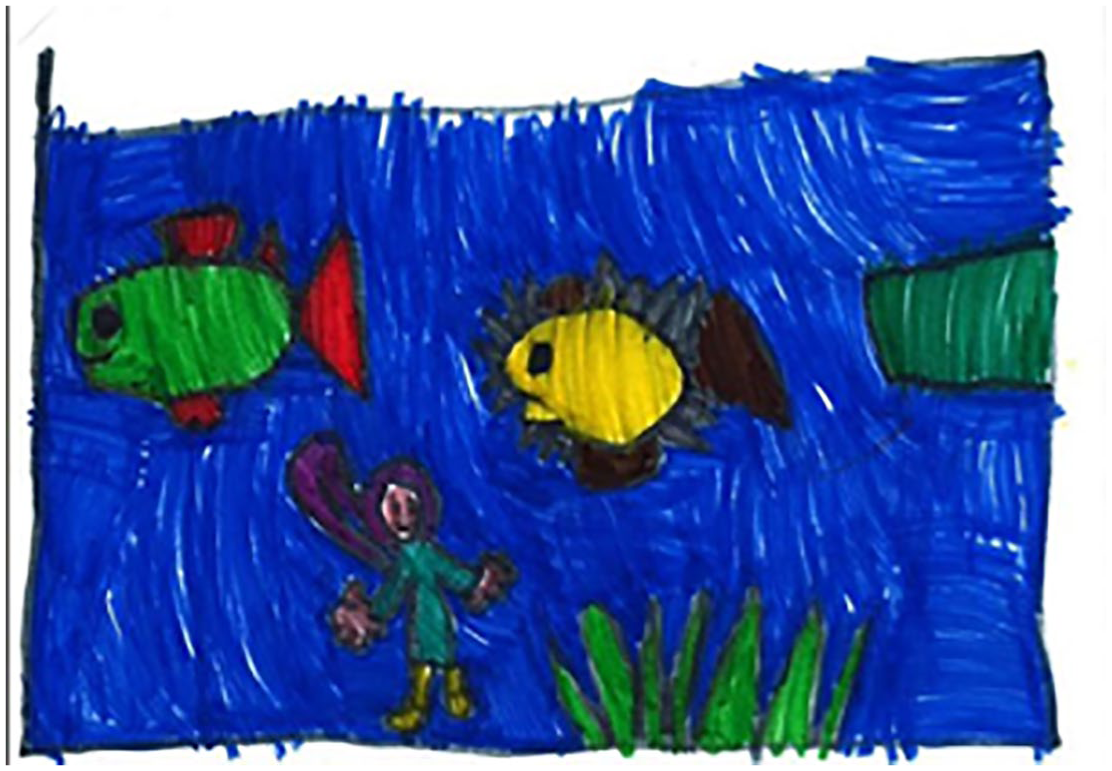
One more piquant example is Minna’s drawing (see Picture 7). It is very Super Mario-like, and Minna stated that she plays Super Mario at home with her parents and siblings. However, instead of being a short, mustachioed, cap-headed plumber, the game character was a purple-haired girl. That said, Minna did not just simply replace one character with another but the main character in her drawing was modifiable. In her own words, “you can modify this character. You can, like, decide the name and choose the clothes.”
Minna’s game design drawing.
In game research, these maneuvers are called avatar customization (Ducheneaut et al., 2009). Avatar customization has been found to increase identification with the avatar (Bailey et al., 2009), and identification with characters, in general, is strongest among the youngest of children (Van Reijmersdal et al., 2013). Hair color and style are typically considered essential features of avatar customization as players can update their avatar(s) to match their current appearance (Ducheneaut et al., 2009). Thus, as suggested by Bailey et al. (2009), avatar customization and personalization often lead to a more immersive gaming experience. From the interpretive viewpoint, identification and immersion appear to be why personalization is a meaningful aspect of digital games for children. For example, in Alina’s drawing, the character riding the unicorn and sliding down the rainbow is not a generic figure but a digital version of Alina herself. The same phenomenon is apparent in Lassi’s comment, “I am this baddie,” instead of saying, “I move this baddie,” or something similar.
Conclusion
This study gave 5- to 7-year-old Finnish children a forum in which to express their meaning-making around digital games by asking them to draw their conception of “the best game in the world.” While some children drew replicas of existing games (e.g. Patrik’s drawing), the vast majority of children refined, modified, and personalized existing games. These non-replica drawings can be conceptualized as hybrids: they combined various aspects of the children’s life-worlds, including the games the children had played or with which they were familiar (influential games), with appealing media other than games (transmedia influences), with the children’s own person characteristics (personalization), and with the children’s desires to surpass the boundaries of their everyday lives (fantasy elements). While each of these phenomena has been acknowledged at some level by previous research (e.g. Ermi and Mäyrä, 2005; Inal and Cagiltay, 2007; Van Reijmersdal et al., 2013), they have not been previously studied in relation to each other. This study, therefore, contributes to a more holistic understanding of young children’s meaning-making around digital games.
The open-ended nature of the data collection procedure also provided insights that could not have been achieved from simple observations of children’s gaming. Although children have been found to play digital games according to their own rules (Kjällander and Moinian, 2014), the scope of such modifications is limited by game mechanics; for example, it is impossible to adjust the power dynamics between primary and secondary characters (as in Jenni’s drawing) or to replace primary characters with new ones (as in Minna’s drawing). Moreover, it can be argued that the knowledge provided by an open-ended drawing task is less bound to an immediate situation than if the data were collected by asking children to evaluate the game they are playing. This was especially the case with drawings that were partially based on games with which the children had no firsthand experience.
Implications for future research and pedagogy of ECE
The hybrid nature of the children’s drawings suggests that children possess emerging capabilities to critically evaluate digital games and their own experiences of them. Perhaps the most interesting example of criticality was that some of the girls replaced leading male characters with female characters (e.g. Minna’s and Jenni’s drawings). These modifications can be understood as critiques of the game design tradition in which main characters are typically male (Williams et al., 2009). This is important since, with a few exceptions (e.g. Aarsand, 2010; Giddings, 2014), research is currently dominated by a view of children as mere consumers of digital games. By challenging this presumption, this study highlights preschool-aged children’s gaming as a viable subject for game and player research, which has previously focused largely on adults and adolescents. There are therefore unexplored dimensions for game scholars to engage with in young children’s gaming cultures, children’s perceptions of game content, early game literacy, and children’s meaning-making in games. The specific issue of gender is another concrete subject for future research.
The current Finnish Core Curriculum demands that different kinds of games should be explored with children in ECE (FNAoE, 2016). Thus, from a pedagogical point of view, it is important to note that, since the study took place within a practitioner-led project implemented in an actual preschool group, the data collection methods—drawing a game and telling about it—can be operationalized as a pedagogical practice. Such an approach would likely be beneficial, since research suggests that early childhood educators have negative attitudes toward children’s engagement with digital games (other than instructional ones) and believe that children play such games excessively at home (Mertala, 2019a). This study, however, shows that children can possess detailed knowledge about games that they may not have ever played. The study also supports previous research (e.g. Koivula and Mustola, 2015) that suggested that children’s digital gaming does not displace or threaten traditional forms of play, but instead enriches them. We argue that listening to children and providing them with more opportunities to discuss their gaming experiences and views could dispel unfounded concerns and provide educators with a more versatile understanding of how children relate to games and gaming. This would benefit children as well, since game-related role-plays can currently be forbidden in preschool (Lehtikangas and Mulari, 2016), thereby preventing children from reflecting on and processing games in a way that is natural and enjoyable for them.
Finally, while this study is of scientific and practical importance, it also has some limitations. One limitation is the geographically homogeneous nature of the data. In addition, hearing from parents would have provided more detailed information about the children’s gaming cultures and practices at home. Nonetheless, studies in which children are considered meaning-makers and the primary informants are needed to gain a better understanding of their relationship with digital games as well as other forms of digital media.
Footnotes
Funding
The authors received no financial support for the research, authorship, and/or publication of this article.
