




Abstract
This study utilised a school-based survey with parent reports across 1,050 Nigerian parents to investigate the socio-demographic variables influencing parental media mediation and examine digital literacy as a mediator of demographic variables and parental mediation. The sample comprised 1,050 parents aged 25-65 who had children aged 13-18 years living with them. The participants were parents of children in the targeted schools in Lagos. Confirmatory factor analysis (CFA) and structural equation modelling (SEM) were applied to analyse the collected data to investigate the relationship among the demographic variables, parents' digital literacy, and parental mediation practices. It was revealed that the socio-demographic variables (the age and gender of parent and child, marital status and educational qualification) directly influenced parental mediation types. The indirect effect of the mediating variable offers further evidence that parents' digital literacy can enhance mediation strategies for parents in Nigerian families.
Introduction
The advancement in digital technology has ushered in new challenges for parents to guide their children’s digital media use. Previous studies have not looked into the new skills afforded by emerging technologies to enhance parental confidence in mediating children’s media use (Bartau-Rojas et al., 2018; Nikken and Opree, 2018; Tao et al., 2022). Recent studies (Adigwe 2021; Adigwe and Van der Walt, 2020) suggest that parents' digital literacy can improve their mediation practices in mediating children’s online media activities. Acknowledging the ever-changing media landscape that characterises children’s media activities and how it influences parental mediation in the digital age is imperative.
Parental mediation practices are geared towards guiding children’s digital media use against online risks (Adigwe and Van der Walt, 2020; Livingstone et al., 2017). The effect of demographic variables on parental mediation practice differs, and the impact of these variables on the digital literacy of parents cannot be undermined (Adigwe, 2021; Kirwill et al., 2009; Livingstone et al., 2017; Nikken, 2017).
Statement of the problem
Previous studies have yielded mixed results on the effect of demographic variables on parental mediation practices. While some studies (Garmendia et al., 2012; Livingstone et al., 2015; Nikken and Opree, 2018) show that the parent’s and the child’s age and gender are vital variables that influence parental mediation practices, other studies (Duerager and Livingstone, 2012; Livingstone et al., 2015) indicate that education and income should not be neglected. It is most likely that the level of education one acquires may significantly determine one’s income level, which will affect the acquisition of digital media platforms in the home (Livingstone et al., 2017). Research has shown that marital status also impacts parental mediation. Livingstone et al. (2017) found that divorced parents exercised lower mediation practices than married parents, which was evident in restrictive mediation practices compared to other mediation strategies.
Little is known about how the demographic characteristics of parents might function in non-Western cultural contexts, like Nigeria, where there are different cultures and beliefs, coupled with the very low literacy level of parents, which may impede effective parental mediation (Adigwe, 2021; Adigwe and Van der Walt, 2020). The current study examines the path demographic variables, digital literacy, and parental mediation will add to theory development and its implications for parenting in the digital age in Nigeria, in particular.
Nigeria has the highest digital media and Internet technology penetration in Africa (Terragon Group, 2018) and is one of the countries with the highest number of Internet users worldwide (Johnson, 2021). Digital media devices, such as smartphones, tablets and iPhones, are rapidly penetrating many homes in Nigeria, which may give rise to unrestricted use of digital media by children. On average, adolescents spend 3 hours and above on digital media devices at home (Adigwe and Van der Walt, 2020). These devices are becoming more personal, more private, and less supervised. Risks of harm may emerge if children’s media use is not safeguarded by parents (Livingstone et al., 2017).
Significance and justification of the study
The literature holds that parents who exercised technical mediation more than other mediation forms exhibit high digital literacy, and parents with low literacy are more restrictive in their mediation practices. Livingstone and Bryne (2018) and Nikken and Opree (2018) opine that parents with low digital literacy may exhibit insufficient knowledge of their children’s online media activities, preventing them from effectively managing their children’s digital media. This suggests that digital literacy skills foster parental confidence and competencies.
The extent to which digital literacy skills of parents foster parental mediation practices and the relationship between them remains unclear. Overall, recent studies (Adigwe 2021; Adigwe and Van der Walt, 2020) suggest that demographic variables alone cannot sufficiently explain how parents mediate children’s media use in digital media contexts without considering parents' digital literacy. Providing an understanding of the complexities of these relationships could have important implications for theory regarding parenting in the digital age in the Nigerian context. Therefore, this study investigates the relationships between socio-demographic variables, digital literacy and parental mediation practices.
Based on the evidence provided by previous studies, the predicting variables examined in this study were parents' gender and age, income, educational qualification, marital status and ethnicity. Because parents exercise more mediation on younger children than adolescents, they encounter more risks owing to less mediation. This is why this study focuses on children aged 13-18 years.
Theoretical insights and underpinnings
This study incorporates Parental Mediation Theory and the digital literacy framework to investigate the relationships between demographic variables and parents' digital literacy in connection with parental mediation practices. While the digital literacy framework offers a new set of 21st-century skills involving digital technologies (Ng, 2012), it is also essential to understand how parents apply the different parental mediation strategies.
Before the emergence of digital technology, parents used media literacy to mediate children’s television and game use. However, the advent of digital technology demands new literacies for parents to mediate their children’s digital media use. Parenting in the digital age seems anchored to digital technology knowledge and skills. The digital literacy framework provides different dimensions of new literacies, including digital competencies. One of the significant dimensions of this framework hinges on cyber safety literacy, which is central to other dimensions of parental mediation strategies (Livingstone et al., 2017; Ng, 2012; Nikken and Opree, 2018).
Parental Mediation Theory explains different mediation strategies employed by parents to control, supervise or interpret media content for children and adolescents to ensure their safety online. Previous studies suggested and empirically validated three mediation types for traditional media (active, restrictive and co-view) (Livingstone et al., 2017; Nikken and Opree, 2018). Four major mediation types in the digital age have been suggested (active, restrictive, participatory learning and technical mediation) (Clark, 2011; Livingstone et al., 2017; Zaman et al., 2016).
Parents may employ a mediation strategy that relates to the child’s cognitive and social behaviour (Fu et al., 2020; Pfetsch, 2018). For example, some parents enforce rules and regulations about media use to limit and control children’s media use with restrictive mediation. This mediation type can be an effective mediation strategy for young children whose identity is not yet formed. In the case of active mediation, parents have evaluative conversations with their children to explain or discuss children’s use of digital media. Participatory learning leverages co-learning media activities, which encourages participation from both children and their parents, where parents share media activities with their children, driven by a common interest. There are three tenets of technical mediation. First, parents regulate the online media activities of children. The second is that parents regulate online access. Lastly, the use of parental controls that filter, track and regulate children’s online media activities.
Socio-demographic characteristics of parents as predictors
Research has shown that parents' cultural backgrounds influence their adoption and use of digital technology. Regarding digital literacy, other demographic factors, such as socioeconomic status, education and gender, influence parental beliefs about device usage and media activities (Domoffa et al., 2017).
Empirical evidence reveals that a parent’s gender can motivate effective parenting in this digital age (Livingstone et al., 2017; Nikken and Opree, 2018). For instance, in most cultural settings, the primary responsibility of mothers is to nurture the child. This is not to say that fathers are not concerned about their child’s safety online. How fathers and mothers safeguard their children’s digital media use may differ in the digital age (Bradley and Inglis, 2012). Exploring socio-cultural dynamics offers an opportunity to understand the effect of gender in parental mediation.
In Nigeria, males tend to be more digitally literate than females and have a higher literacy level than females (Ifijeh et al., 2016). The inequality in literacy level is stimulated by the lower priority accorded female children in Nigerian cultures. This raises the concern of whether parents, particularly mothers, are equipped to face the daunting task of parenting in the digital age. The findings of earlier studies concerning gender differences are mixed, multifaceted and controversial (Domoffa et al., 2017; Sasson and Mesch, 2016). This may be partly explained by gender imbalances in these studies resulting from research design, data or family characteristics.
Parents' education and income levels are other critical socio-demographic variables influencing mediation practices. There is the possibility that the educational qualification of parents and income level directly or indirectly influence parental mediation practices. Studies examining parental mediation practices suggest that parents' income levels can enhance or impede mediation strategies (Livingstone et al., 2018; Sasson and Mesch, 2016).
Kur et al. (2019) found that Nigerian parents with less education and less income were more authoritarian in their parenting approach than more educated parents with more income. These authors highlight the importance of the relationship between educational qualification and income level in relation to the parenting strategy. Figure 1 theoretical framework showing the interrelationships among the study variables.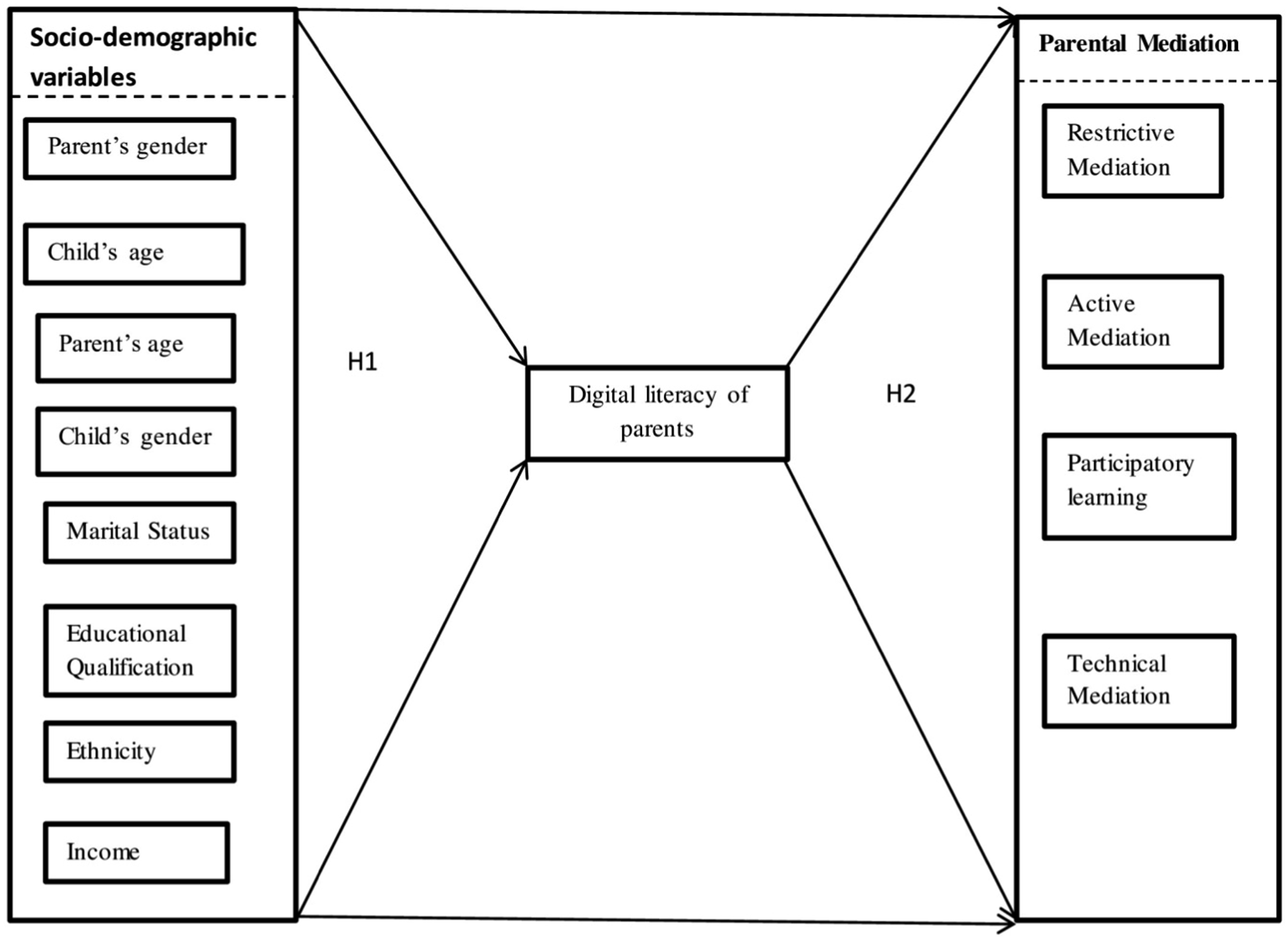
Lastly, the impact of ethnicity as one of the predictors of parental mediation has often been neglected in earlier studies (Livingstone et al., 2017). This may be because ethnicity appears insignificant in the samples of those studies. In the context of Nigeria, where there are variations in the culture of the people as a result of the different ethnic groups, parents' ethnicity may be significant in explaining differences and relationships among the demographic factors considered in this study. This is relevant because the literacy level of parents differs from one ethnic group to another (Kur et al., 2019). Together, the contribution of these socio-demographic characteristics is important in ascertaining the predicting variables of parental mediation practices in Nigeria.
Digital literacy of parents as a mediating variable
Digital media use by children raises new questions and requires new methods of investigation. Fu et al. (2020) aver that parents have to work out strategies to mediate their children’s digital media use because the digital skills of parents can enhance their (parents’) digital literacy. Although the digital media knowledge gap between children and their parents is gradually decreasing (Adigwe and Van der Walt 2020), parents often struggle in their roles as 'gatekeepers' of children’s online activities as a result of a lack of digital skills (Livingstone et al., 2017). The level of digital literacy a parent acquires is not necessarily dependent on the influx of digital media in the home (Fu et al., 2020). As digital skills develop, inequalities persist even among parents regarding age and gender (Livingstone et al., 2018; Sasson and Mesch, 2016). Specific efforts to overcome digital skill inequalities have been recommended (Fu et al., 2020; Livingstone et al., 2017; Livingstone et al., 2018; Sasson and Mesch, 2016).
To achieve its aim, this study asked the following questions: (1) What relationship exists between parents' socio-demographic characteristics and digital literacy? (2) What is the influence of digital literacy skills of parents on enhancing parental mediation?
Two hypotheses were formulated to answer these questions: (1) H1 There is no significant difference between the demographic characteristics of parents and digital literacy. (2) H2 There is no significant difference between the digital literacy of parents, and enhancing parental mediation practices in Nigerian families.
Methodology
Sample and procedure
The Lagos State Government and the Office of the Head of Service approved the study to be conducted in senior public schools through the educational districts where the schools were located. The stratified random sampling technique was employed to obtain an equal representation of schools from the six educational districts in Lagos. Then a systematic approach was applied to each stratum (district). A systematic approach was also applied to select two schools using a sampling interval from the random number table. A total of 12 schools were chosen for the study.
The sample included 1,270 parents aged 25-65 with children aged 13-18 living with them. The participants for this study were parents of children in the targeted schools in Lagos. The principal of each school assigned a teacher to assist the researcher to administer the questionnaires to the students during school hours and the parent’s copy of the questionnaire as a take-home survey. The students' and the parents' questionnaires carried the same number to align every student with their parents for analysis. This implies that the questionnaire of the parent and that of the child constituted one set of questionnaires. In the case where two students attended a school in a family, only one student was permitted in the study. One parent was asked to complete the questionnaire. The students were given 3 days to return the completed questionnaire. Participation was voluntary and there were no incentives for the participants. Teachers followed up with every student to ensure that the copies of the questionnaire administered to their parents were returned. Despite no incentive for completing the questionnaires, the response rate was very high at 94.00%. The study guaranteed the confidentiality of the participants by not indicating their names or location on the questionnaires. Overall, 1,100 copies of the questionnaire were returned. A total of 1,050 copies of the questionnaires were included in the analysis, owing to many unanswered questions in the 50 copies left out.
Measures
Demographic characteristics of research participants.
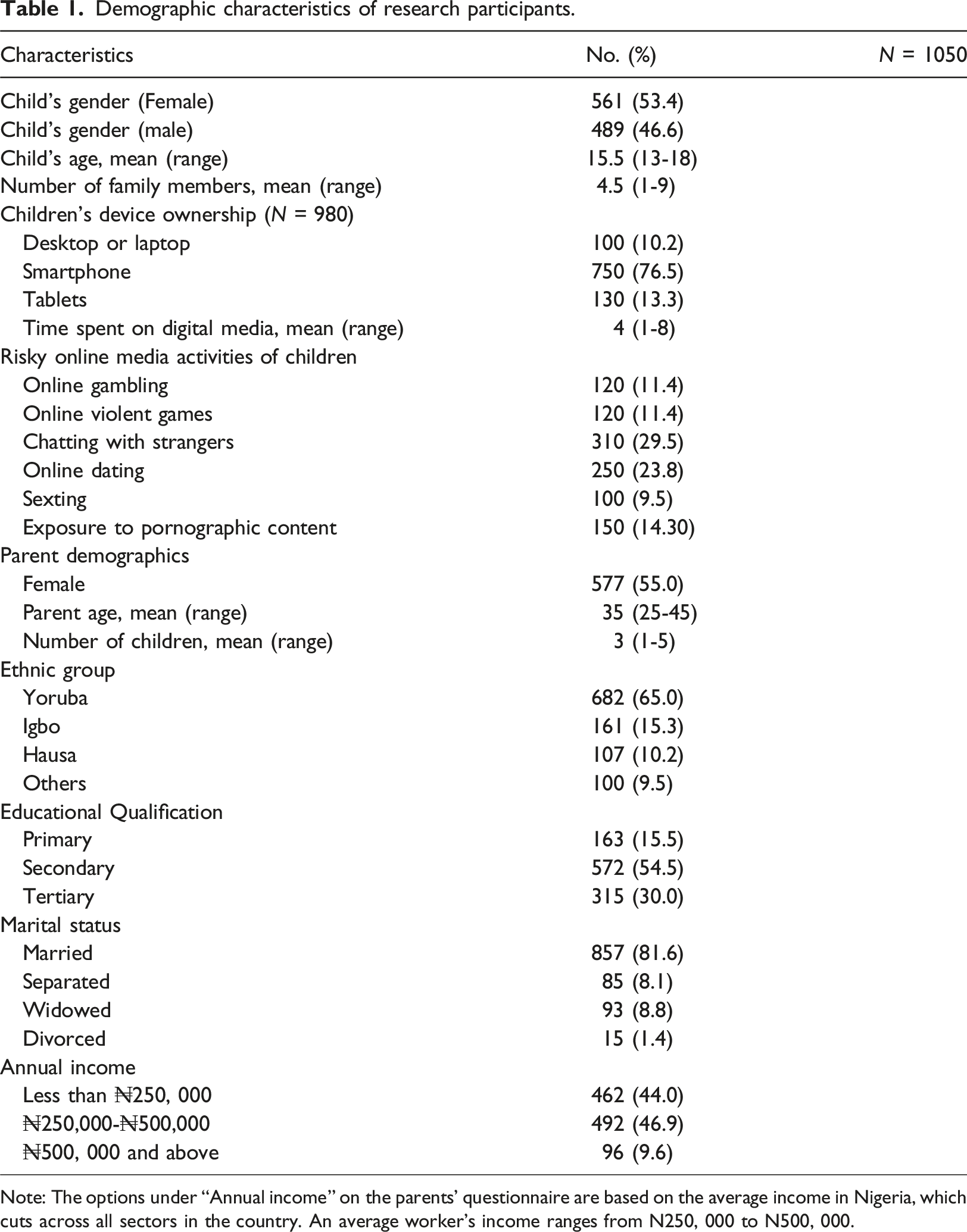
Note: The options under “Annual income” on the parents' questionnaire are based on the average income in Nigeria, which cuts across all sectors in the country. An average worker’s income ranges from N250, 000 to N500, 000.
Parental mediation
Measures of the study construct.
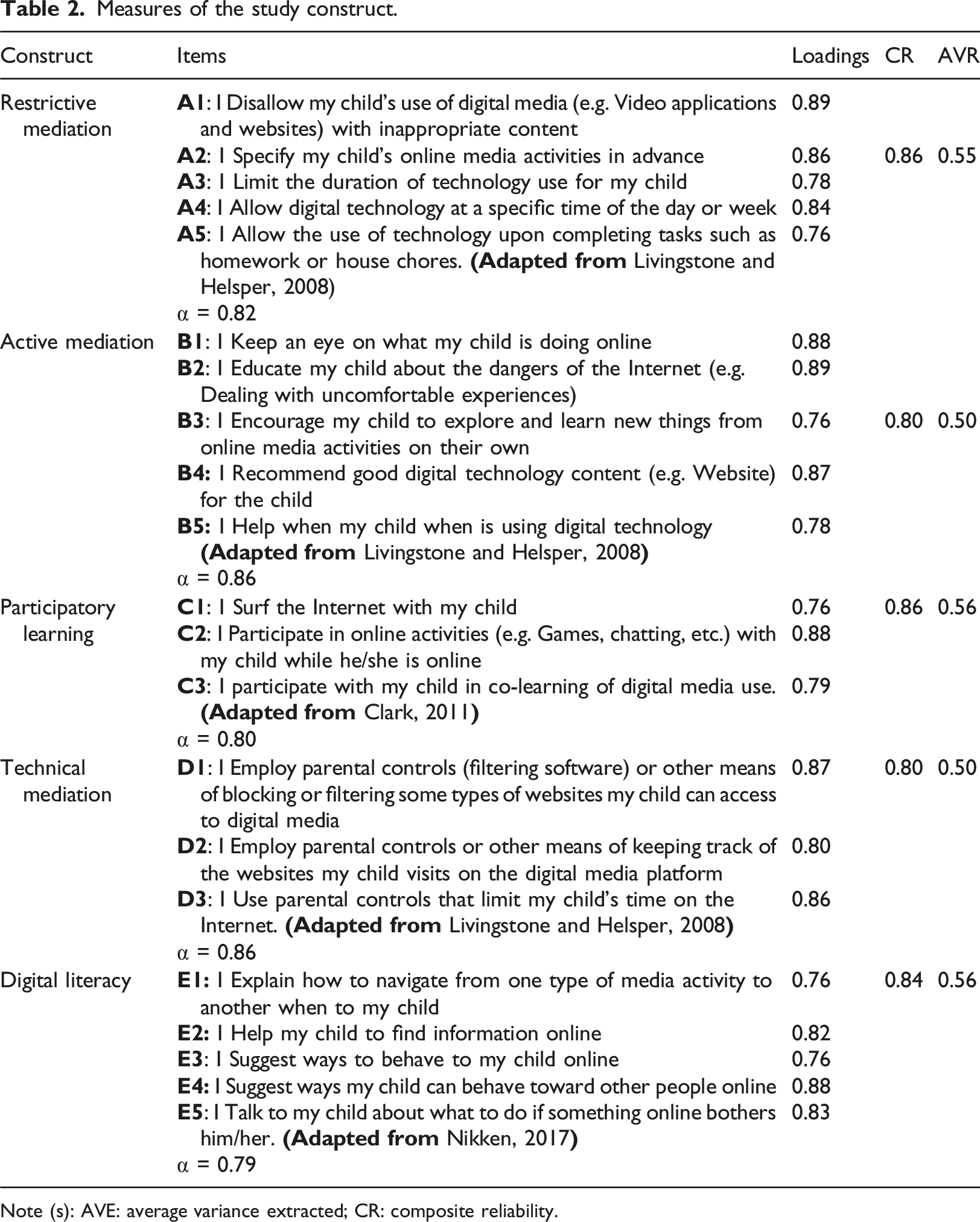
Note (s): AVE: average variance extracted; CR: composite reliability.
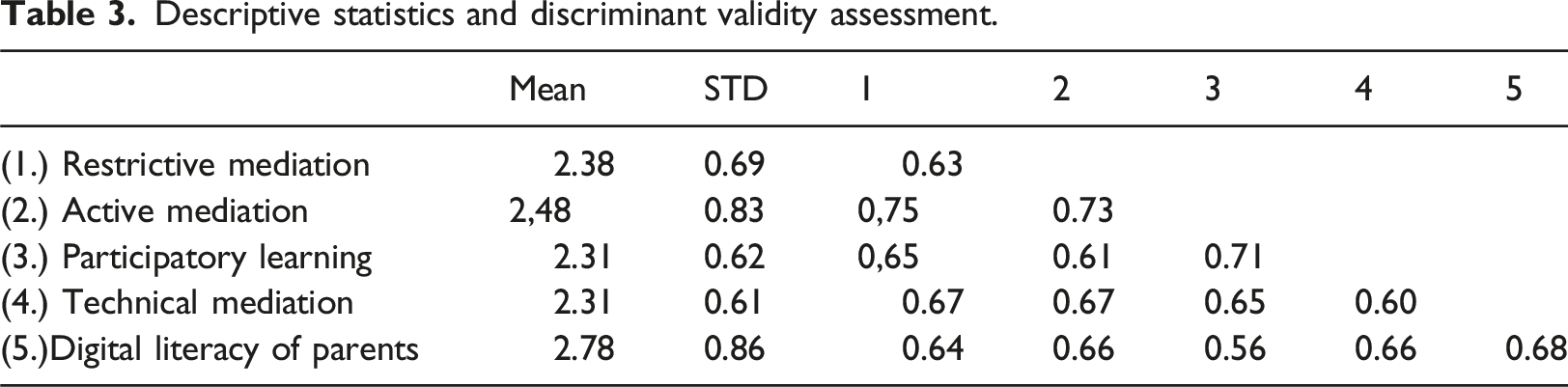
Descriptive statistics and discriminant validity assessment.
Digital literacy
This construct was measured using five items based on the findings of earlier studies (Nikken, 2017). Table 2 provides detailed information concerning the digital literacy items measured in this study.
Online media activities
In this study, online media activities include online gambling, online gaming, chat room interactions with strangers and online dating. Their negative effects on children’s online behaviour may consist of sexting, exposure to pornographic content, cyberbullying and grooming (Changa et al., 2015; Soh et al., 2018). The online media activities children engage in are presented in Table 1.
Data analysis
This study applied mediation analysis to determine whether the statistical power of one variable is transmitted to another variable through a third variety. The mediation analysis employed bootstrapping with 1000 resamples in the larger sample to provide more robust estimates (Lei and Wu, 2007). The bootstrapping mediation approach has been applied to test the significance of mediation effects (Lei and Wu, 2007). Mediation analysis is suitable to ascertain the importance of the changes in the outcome variable (Lei and Wu, 2007). Before the analysis was performed, the covariates were coded into a dummy variable. For instance, gender was coded as 0 for males and one for females. The age of the participants was collected as a ratio variable. Other categorical variables, such as marital status, ethnicity, education and income, were also re-coded into dummies. For instance, dummies have been created for educational qualifications with three categories (primary, secondary and tertiary). This suggests that educational qualification’s influence on parental mediation produced three regression weights impacting the outcome variable.
In this study, confirmatory factor analysis (CFA) and structural equation modelling (SEM) were applied to analyse the collected data to investigate the relationship between demographic variables, parents' digital literacy and parental mediation practices. The dependent variable in this study was parental mediation practices. These include restrictive, active, participatory learning and technical mediation. The covariates, which were the socio-demographic variables, were the independent variables. A two-stage modelling approach was applied. The first stage looked at the influence of demographic variables on parental mediation practices, while the second stage looked at the impact of digital literacy of parents enhancing parental mediation practices.
Confirmatory factor analysis provides an avenue to assess whether the hypothesised model adequately fits the data. It was applied to test the construct measured in this study. The analysis followed the Baron and Kenny (1986) framework by employing structural equation modelling (SEM) to analyse the mediated effects of digital literacy on the relationship between socio-demographic variables and mediation strategies. The recommendations proposed by previous studies regarding the parameters for significant levels of the fits were followed to determine how well the model fits the observed data (Bentler, 1990; Browne and Cudeck, 1993; Hu and Bentler, 1998). These parameters include the chi-square goodness of fit index, comparative fit index (CFI), root mean square error of approximation (RMSEA), and Tucker-Lewis Index (TLI). Confirmatory factor analysis (CFA) showed that the model met the criteria for an acceptable model of fit (χ2/df 20.005/2, RMSEA 0.45, CFI 0.96 and TFL 0.92). The convergent validity has been assessed using a standardised factor loading, composite reliability (CR) and average variance extracted (AVE) and discriminant validity. As displayed in Tables 2 and 3, the standardised loading and AVE of each construct were higher than the threshold value of 0.5 (Hair et al., 2010), and each construct’s CR value was higher than the cut-off value of 0.7, as recommended by Fornell and Larcker (1981) for an acceptable convergent validity. The discriminant validity was also acceptable using the criterion that the square roots of the AVEs are less than correlation values (see Table 3).
Results
This study developed a conceptual model that incorporates digital literacy in explaining parental mediation practices in the digital age in Nigerian families. The relevance of digital literacy as a mediating variable and its effect on the mediation types were discussed.
Research question one: What relationship exists between parents’ socio-demographic characteristics and digital literacy?
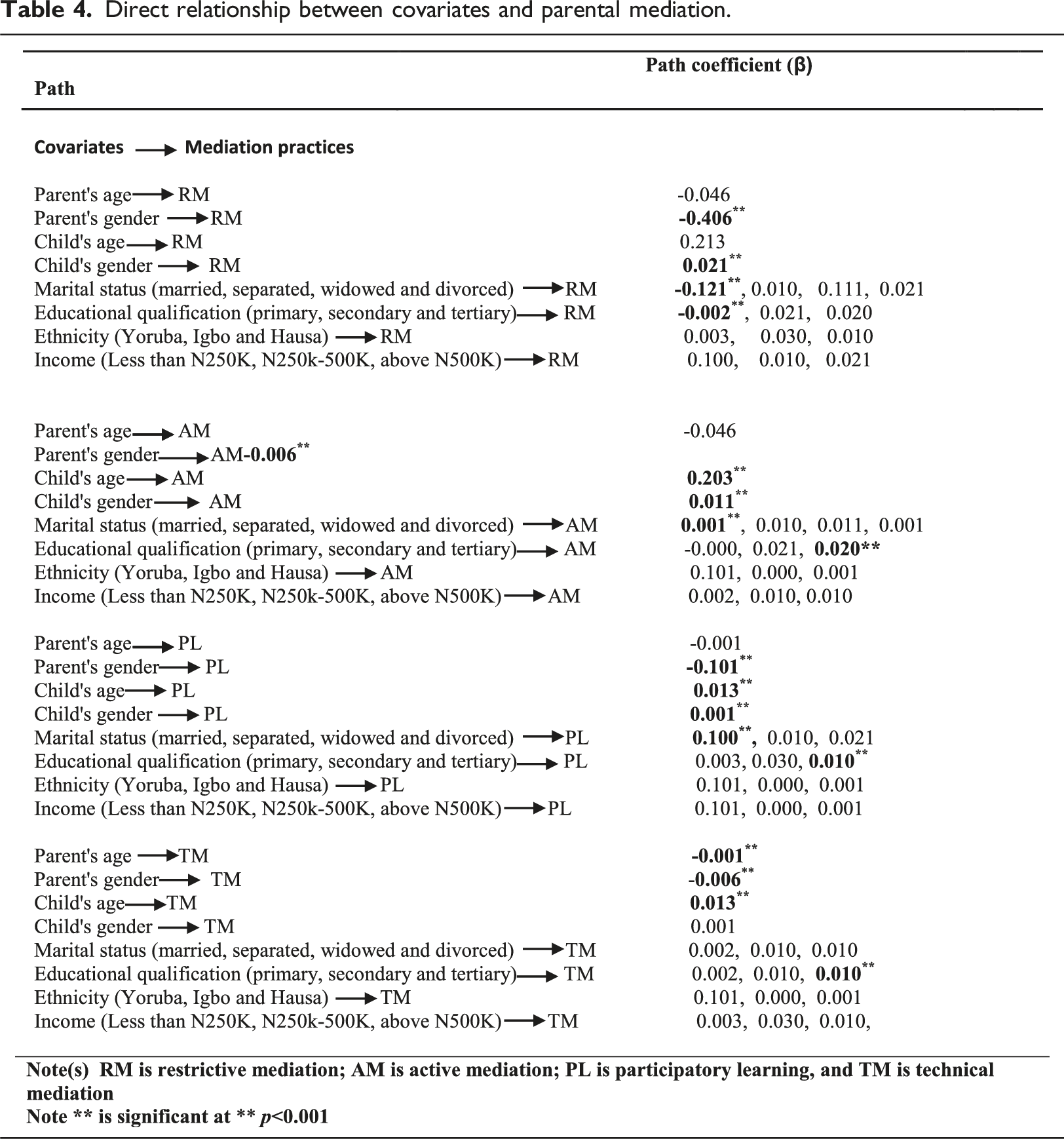
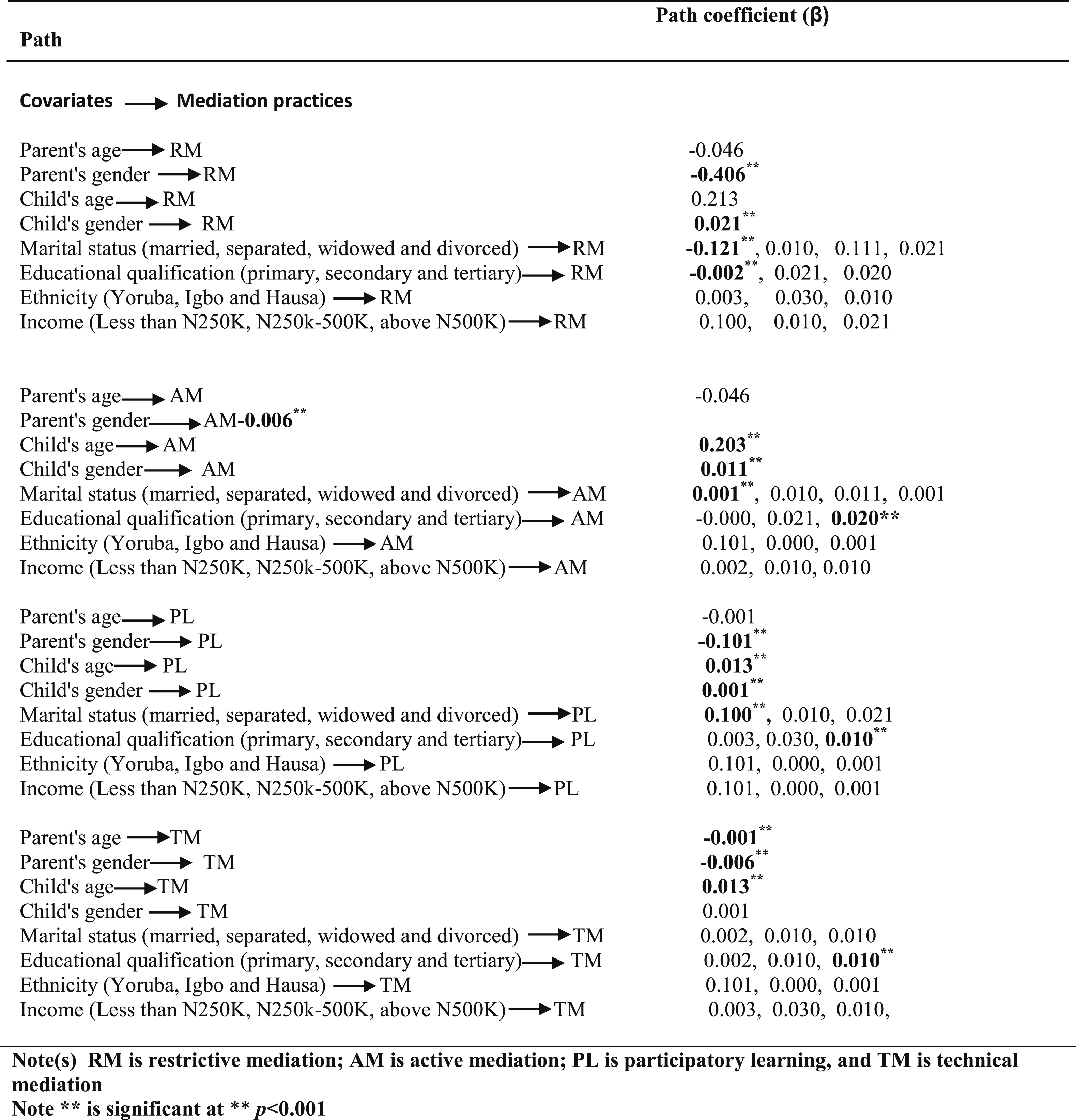
Direct relationship between covariates and parental mediation.
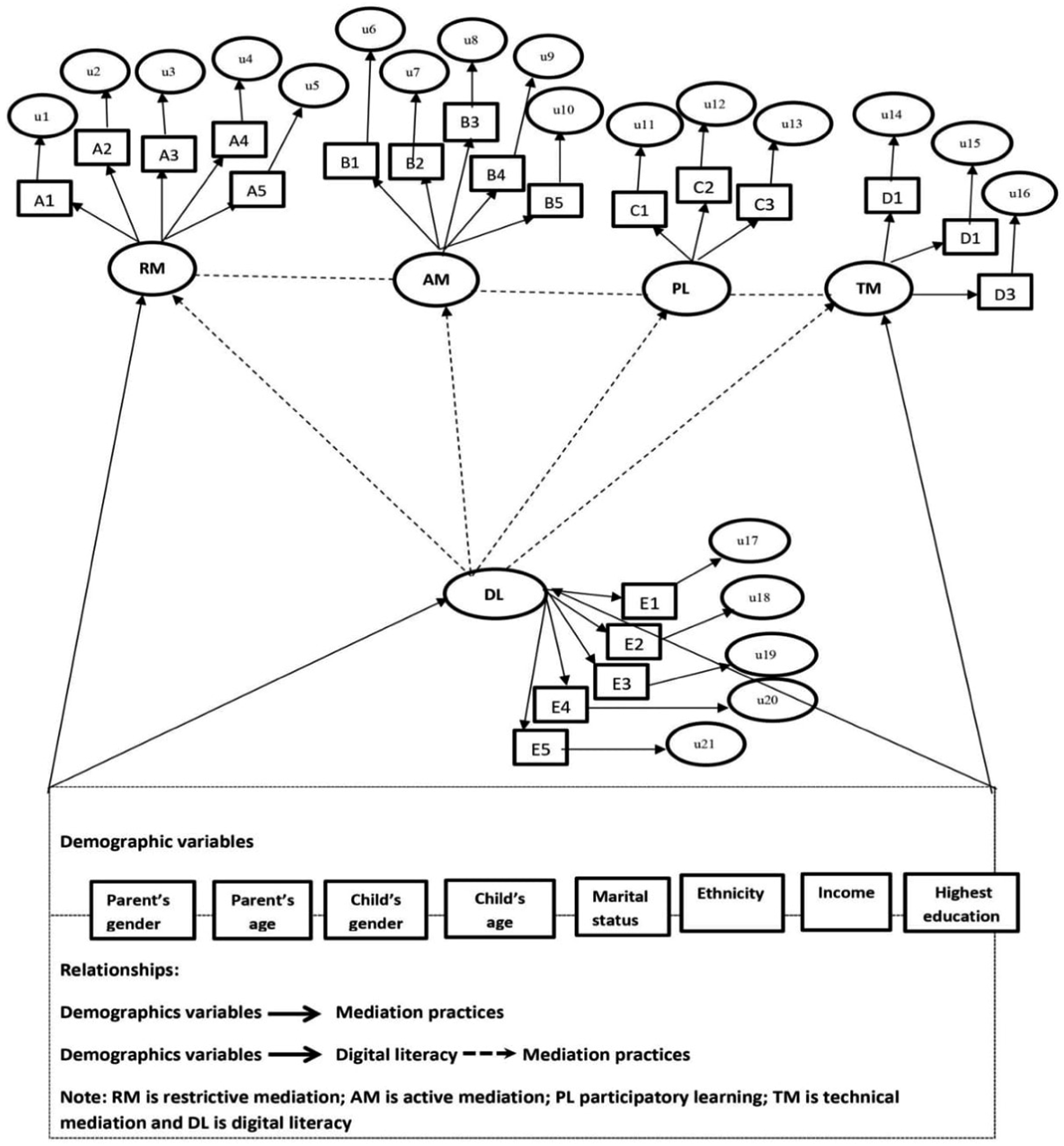
SEM showing the interrelationships among the study variables.
Restrictive mediation
The direct effect of the covariates was significant for the parent’s gender (β = −0.406, p < .001), child’s gender (β = 0.021, p < .001), marital status (married) (β = −0.121, p < .001) and educational qualification (primary) (β = −0.002, p < .001).
Active mediation
The direct effect of the covariates was significant for parent’s gender (β = −0.006, p < .001), child’s age (β = 0.203, p < .001), child’s gender (β = 0.011, p < .001), marital status (married) (β = −0.01, p < .001) and educational qualification (tertiary) (β = −0.020, p < .001).
Participatory learning
The direct effect of the covariates was significant for the parent’s gender (β = −0.101, p < .001), child’s age (β = 0.013, p < .001), child’s gender (β = 0.001, p < .001), marital status (married) (β = −0.100, p < .001) and educational qualification (tertiary) (β = −0.010, p < .001).
Technical mediation
The direct effect of the covariates was significant for the parent’s age (β = −0.001, p < .001) parent’s gender (β = −0.06, p < .001), child’s age (β = 0.013, p < .001) and educational qualification (tertiary) (β = −0.010, p < .001).
Of all observed covariates influencing parental mediation practices in Nigeria, only income and ethnicity of the demographic variables were insignificant in influencing parenting in the digital age. The results showed that parental education was a crucial covariate. For instance, parents with primary education enforced restrictive mediation and parents with tertiary education engaged in active, participatory and technical mediation. This finding corroborates the studies of Livingstone and Zaman et al. (2016), Nikken (2017), Nikken and Opree (2018) and Helsper (2018).
Earlier studies, such as Livingstone and Helsper (2008), Kirwil et al. (2009) and Livingstone et al. (2017) found that parents and the child’s ages and genders, parent marital status and the parents educational level were predictors influencing parental mediation. This corroborates the current study. However, the degree of significance was skewed between the findings relating to the relationships between socio-demographic factors and digital literacy skills. This might have resulted from the cultural differences between the samples, which could also lead to bias in the results (Adigwe, 2021; Livingstone et al., 2017; Nikken and Opree, 2018).
Research question two: What is the influence of digital literacy skills of parents on enhancing parental mediation?
This research question addresses the indirect effect of the mediator variable. Indirect effect means the strength of association through two structural variables (i.e. independent variable and mediator) on the outcome variable. The mediating effects of digital literacy on the four mediation strategies are presented here.
Restrictive mediation
The indirect effect of the covariates and the effect of digital literacy on the outcome variable were significant, but negative for the parent’s gender (β = −0.306, p < .001; 95% CL = 0.35, −0.19), child’s gender (β = −0.010, p < .001; 95% CL = −0.10, −0.12), marital status (married) (β = −0.101, p < .001; 95% CL = 0.55, −0.14) and educational qualification (tertiary) (β = −0.101, p < .001; 95% CL = 0.25, −0.39).
Active mediation
The indirect effect of the covariates and the effect of digital literacy on the outcome variable were significant, but negative for the parent’s gender (β = −0.306, p < .001; 95% CL = 0.35, −0.19) and child’s gender (β = −0.010, p < .001; 95% CL = −0.10, −0.12), marital status (married) (β = −0.101, p < .001; 95% CL = 0.55, −0.14) and educational qualification (tertiary) (β = −0.101, p < .001; 95% CL = 0.25, −0.39).
Participatory learning
The indirect effect of the covariates and the effect of digital literacy on the outcome variable were significant, but negative for the parent’s gender (β = −0.306, p < .001; 95% CL = 0.25, −0.19), child’s gender (β = −0.010, p < .001; 95% CL = 0.10, −0.11), marital status (married) (β = −0.101, p < .001; 95% CL = 0.32, −0.32) and educational qualification (tertiary) (β = −0.101, p < .001; 95% CL = 0.55, −0.14).
Technical mediation
The indirect effect of digital literacy and the covariates on the outcome variable were significant, but negative for the parent’s gender (β = −0.046, p < .001; 95% CL = 0.15, −0.29) and child’s gender (β = −0.406, p < .001; 95% CL = 0.25, −0.39), marital status (married) (β = −0.213, p < .001; 95% CL = 0.10, −0.13) and educational qualification (tertiary) (β = −0.001, p < .001; 95% CL = 0.25, −0.14).
Regarding the indirect effects (addressing Q2), the model showed the correlation between the covariates and the mediating variable influencing the outcome variables. These correlations were lower than the direct effect on the outcome variables. Applying the standardised weights in the model allowed us to describe the precision of the complex interrelationships in both directions (direct and indirect effects) between variables in the model (Table 4).
Discussion of findings
The study explores parents’ socio-demographic factors influencing their mediation practices and the effects of digital literacy as a mediating factor. The key relevance of the study is how it applied similar research in the context of sub-Saharan African nations. The study was guided by clearly stated research questions. It showcased the prevailing negotiations essential for parents and their children about real life and leaving in a digital society and within a digitally dynamic age.
The findings of this study revealed that parents’ level of education determined the mediation strategies they applied. For instance, parents without a college degree applied restrictive mediation and those with higher degrees applied active mediation, participatory learning and technical mediation. This study is in line with previous studies (Adigwe, 2021; Livingstone et al., 2015; Nikken and Opree, 2018). This explains the association between the level of education one acquires and the income level. That is to say, an increase in education may also give rise to higher income. However, income was insignificant in influencing parental mediation types in this study, compared to other studies. This might be because there is less income variance in Nigeria compared to other countries.
Previous research (Livingstone et al., 2015) has shown that an increase in education largely gives rise to higher income. This may lead to parents acquiring more digital media devices in the home by parents. Parents use a combination of mediation approaches to establish the relationship between parental education and income level.
The findings of this study showed that the direct effect of the impact of socio-demographic factors on the digital literacy of parents was highly significant. The study affirms the argument of Livingstone et al. (2017) that parents' digital literacy can enhance parental mediation strategies in the digital age. The indirect effects of the path analysis highlight the importance of digital literacy and parents' socio-demographic characteristics. These results suggest that, though parents' digital literacy may indirectly enhance parenting in the digital age, its impact on mediation types is lower than that of the direct effect of the independent variables. Digital literacy has been suggested in previous studies as potentially crucial in investigating parental mediation practices (Livingstone et al., 2017). The results of this study validate the claim that the digital literacy of parents is an essential consideration in the study of parental mediation practices.
In line with Livingstone et al. (2017) and Nikken and Opree (2018), the link between the socio-demographic variables and digital literacy is established in the context of parental digital media use. Helsper (2012) and Van Deursen and Helsper (2015) found that occupation, education, gender and age were among the socio-demographic variables precipitating high digital literacy skills, which this study’s findings corroborate.
The combined effects, the direct and indirect effects and the relationships between the study variables have been established. Comparing the direct and total effect, we observed that the indirect effect’s magnitude of correlation was negative and larger than the corresponding positive direct effect. This explains why the total effect was a negative sign. As such, the findings of this study relating to the indirect effect should be interpreted with caution owing to its lower standardised weights in the model. However, even if the direct effect had a higher significance than the negative indirect effect, we can consider the direct and indirect impacts jointly.
The findings of this study indicate that parents' education is a relevant variable that predicts the form of mediation parents engage in. Then, to what extent does the educational qualification of parents enhance parents' digital literacy in parenting in the digital age? The assumption that parents with more education are likely to be more digitally literate than parents with little or no education is yet to be empirically investigated. This creates an avenue for further exploration.
The limitations of the study are highlighted here. One should be careful in generalising and interpreting the findings of this study. First, the design employed in this study is cross-sectional; it is challenging to examine causal relationships between variables measured in this study. This may lead to inappropriate conclusions about causal relationships between variables. Longitudinal or experimental studies could confirm causality in future studies. Second, only parents of children in public senior secondary schools in Lagos, Nigeria were the participants in this study. A comparative study between public and private secondary schools would provide more robust data on parenting in the digital age and how the digital literacy of parents enhances parental mediation in Nigeria. This study only employed the quantitative approach, which could be affected by reporting bias. Future studies should employ the mixed method. This involves the combination of quantitative and qualitative approaches. The tendency of parents to report self-bias is reduced with the mixed-method approach. This could be achieved through triangulation of the quantitative data obtained from questionnaires and qualitative data obtained through interviews. Future studies should explore whether differences in parents’ age by being digital natives or digital immigrants affect their digital literacy skills. It is expected that parents who are digital natives are younger and may possess more digital literacy skills compared to older digital immigrants. Juxtaposing the level of digital literacy enhancing parental mediation approaches will be an interesting area to explore. Other socio-demographic variables, such as occupation and religion, should be added to see their effect on parental mediation. Research has shown that one’s occupation influences one’s digital skills. This creates an avenue for future studies to explore further. Different beliefs may impact parental mediation. In terms of religion, for example, in Nigeria, the Hausa-Fulani ethnic group are predominantly Muslim and the Yoruba and the Igbo ethnic groups are predominantly Christian. Since cultural nuances influence the belief and ways of life of a particular group of people, there is a tendency for the parental religious background to impact their mediation approaches and expectations.
Summary of main findings
The findings of this study have shown that mothers play an important role in overseeing children’s digital media. Because mothers are more available at home than fathers in overseeing children’s media activities, interventions should be targeted at them. One would assume that experience using a digital device may have an impact on digital mediation irrespective of the educational background of the parents. The findings of this study also showed that the digital literacy of parents enhances mediation approaches in intervening in the digital activities of their children. However, recent research has shown that, in Nigeria, fathers are more digitally literate than mothers irrespective of their education and occupation (Adigwe and Van der Walt, 2020). Because the average girl child lacks access to education in Nigeria, this may affect the digital literacy skills of future mothers. To remedy this situation, public schools are not left out in the quest for ensuring that parents are equipped with the necessary digital skills to enable them to guide children’s digital media use. It can be deduced from this study that socio-demographic variables, such as parent’s age, parent’s gender, parental marital status and educational qualification as well as the child’s age and child’s gender, are predictors directly influencing parental mediation practices in Nigeria. Digital literacy training for parents, especially parents with less educational attainment, is recommended. Priority should be given to current mothers with children in high school. Also, the digital literacy skills of future mothers should not be ignored. Interestingly, education is a factor that could influence parents’ digital literacy. The Government should formulate policies through the Ministry of Education to ensure that girls have equal access to education as boys. With this, the disparity in digital literacy between fathers and mothers, to a large extent, will vanish soon.
Conclusion
It was revealed that the socio-demographic variables (parent’s age, gender, marital status and educational qualification, and child’s age and gender) are the prevalent predictors directly influencing parental mediation practices in Nigeria. The indirect effect of the mediating variable offers further evidence that parents' digital literacy can enhance mediation strategies for parents in Nigerian families. Digital literacy is only partially mediated by the socio-demographic variables influencing parental mediation practices. Adding other variables that may directly or indirectly influence parental mediation types is essential and should be given utmost priority in future studies. This may result in further modifications of this conceptual model in the future. The indirect effect of the mediating variable suggests that future research efforts should be directed at investigating the undiscovered pathways that may enhance the model. Although the results were statistically significant for the direct and indirect effects, the indirect effect was lower than the total effect and direct effect on the outcome variable in the model.
There may be digital inequality among parents owing to sociodemographic variables, which may account for some differences in the digital skills of parents in Nigeria. This study adds to the Parental Mediation Theory the fact that the effect of digital literacy on parental mediation practices in the digital age should not be ignored. This provides better insights into how digital literacy impacts parental mediation types and how the socio-demographic variables of parents have a huge impact on their digital literacy skills.
Footnotes
Declaration of conflicting interests
The author(s) declared no potential conflicts of interest with respect to the research, authorship, and/or publication of this article.
Funding
The author(s) received no financial support for the research, authorship, and/or publication of this article.

Data Availability Statement
The dataset generated and analysed during this study will be made available by the corresponding author upon reasonable request.