




Abstract
Geometric habits of mind (GHoM) are the approaches that individuals use to solve geometry problems. This study aimed to determine the effect of dynamic geometry software (DGS) in activating the GHoM of pre-service mathematics teachers. The study was conducted with six teacher candidates who were enrolled in a semester-long course titled "Computer Assisted Mathematics Teaching" that entailed a focus on GHoM. In order to identify the impact of the DGS on their GHoM, clinical interviews were conducted with the participants before and after the course wherein they were asked questions relating to each habit. The preliminary interviews showed that, prior to the intervention, the pre-service teachers primarily used the software in the context of the habits of exploration and reflection and visualizing geometric shapes to find the solution of a given problem. On the other hand, the post-intervention interviews revealed that the DGS supported the habits of investigating invariants, reasoning with relationships and considering specific cases and generalizing geometric ideas. This paper discusses how the DGS supported each habit.
Introduction
From Ancient Greece to the present day, geometry has been central to the development of mathematics. The importance of geometry as a crucial discipline stems from its being a useful tool not only for solving mathematical problems, but also for generating solutions to problems faced in other disciplines (Booker et al., 2015). Given the essential role of geometry, developing skills in this subject area is a foundational aspect of education. According to NCTM (2000), some important geometry-related skills encompass communication, reasoning, problem solving, visualizing given shapes and solving geometry problems. Problem-solving, in this sense, is expressed as the process of geometrically interpreting a given situation, thinking logically by associating geometric objects with one another, and using mathematical language effectively in this process (Kuzle, 2013; Lesh and Zawojewski, 2007). One of the important factors in increasing the success of individuals in problem solving is their ability to use problem solving strategies effectively (Schoenfeld, 1992). For this purpose, computers offer an important means to support the problem solving process due to capabilities such as associating geometric shapes on the screen, dragging, and shifting (Christou et al., 2005; Healy and Hoyles, 2002; Selakovic et al., 2020). As such, using dynamic geometry software (DGS) in geometry courses may support students in applying diverse problem solving strategies. In this study, DGS is considered as a tool.
During the geometric problem solving process, individuals tend to use specific geometric habits of mind (GHoM). Selecting a suitable habit from a pool of habits and using it appropriately plays an important role in problem solving. Such habits emerge in the process of solving difficult problems (Costa and Kallick, 2009; Cuoco et al., 1996; Desti et al., 2020; Driscoll et al., 2007; Driscoll et al., 2008; Hanson and Lucas, 2020; Prasad, 2020; Schallock, 2020). Since this study focuses on the GHoM of pre-service teachers, these habits are detailed in the following section.
GHoM
Habits of mind are ways of thinking or behaving intelligently when encountering new learning challenges (Hanson and Lucas, 2020). In other words, habits of mind are the methods students use to think like mathematicians (Cuoco et al., 1996). In the related literature, habits of mind are divided into two categories: (1) general habits of mind, and (2) content-specific habits of mind. General habits of minds include either cognitive habits such as pattern-sniffing, experimenting, formulating, tinkering, inventing, visualizing, and conjecturing; or affective habits such as persisting, managing impulsivity, listening with understanding and empathy, flexibility, and bias (Costa and Kallick, 2009; Cuoco et al., 1996; Lim and Selden, 2009). Content-specific habits of mind, on the other hand, are habits related to a given field; these include mathematical habits of mind, GHoM, computational habits of mind, engineering habits of mind and technological habits of mind. The focus of this study is on GHoM.
Mathematics students mainly tend to activate their GHoM when they encounter a geometry problem. For example, when asked to solve a geometry problem in which a circle is drawn, they usually draw the radius and try to find parallel lines by drawing tangents of the circle (Bülbül, 2015; Bülbül and Güler, 2021). In other words, they make additional drawings on the given shape and try to find associations between the parallel lines and the shapes. In this sense, they activate their GHoM. Researchers have classified GHoM in various ways, depending on the purpose of the subject they were studying or their participants. For example, Goldenberg (1996), who emphasized the necessity of including GHoM in geometry teaching programs in a project called Connected Geometry, classified GHoM as (a) the inclination to visualize and interpreting diagrams; (b) to describe formally and informally; (c) to translate between visually and verbally presented information; (d) to tinker; (e) to look for invariants; (f) to mix experiments with deductions; (g) to build systematic explanations and proof; (h) to construct and reason about algorithms; and (i) to reason by continuity. Driscoll et al. (2007), on the other hand, selected four GHoM that constituted their framework, including (a) reasoning with relationships, (b) generalizing geometric ideas, (c) investigating invariants and (d) balancing exploration and reflection. They argued that this framework would foster the geometric thinking of K-8 students, particularly middle schoolers.
The GHoM framework specified by Driscoll et al. (2007) is based on pencil-and-paper activities involving basic cognitive habits. This framework was revised by Bülbül (2015) to include high-level cognitive habits and activities based on the use of DGS in geometry teaching. For example, while Driscoll et al. (2007) included indicators such as the comparison of basic geometric shapes and classification of geometric shapes in the habit of reasoning with relationships, the same habit was detailed by Bülbül (2015) to include high-level geometric skills such proportional thinking or establishing associations of parity and similarity between geometric shapes (see Figure 1). In this sense, going beyond Driscoll et al.’s (2007) emphasis on the paper-pencil environment, DGS stimulates different outputs for the habit of investigating invariants. Geometric habits of mind model.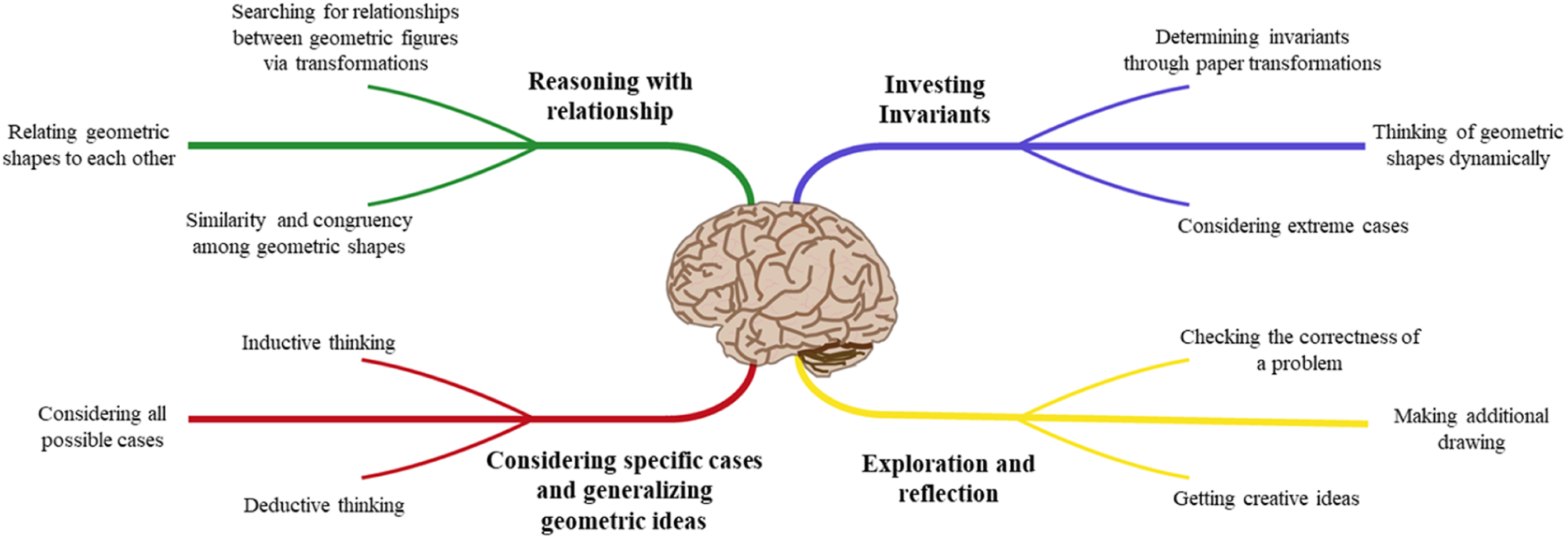
As seen in Figure 1, there are three basic indicators for each habit. For example, the GHoM of reasoning with relationships consists of the indicators of searching for relationships between geometric shapes with the help of transformations; using similarity and congruency among geometric shapes; and relating geometric shapes to one another. On the other hand, the GHoM of considering specific cases and generalizing geometric ideas includes the indicators of inductive thinking, considering all possibilities and deductive thinking. The third GHoM, investigating invariants, includes the indicators of manipulating geometric shapes and using invariant properties. Finally, the GHoM of exploration and reflection involves verifying the correctness of a solution, making additional drawings and getting creative ideas. In this study, course content based on the use of DGS was created in light of all of the GHoM mentioned above. In creating this content, the guidelines for the emergence of GHoM found in the literature were taken into consideration (e.g. Costa and Kallick, 2009; Cuoco and Goldenberg, 2001; Cuoco et al., 2010; Driscoll et al., 2007; Driscoll et al., 2008; Hanson and Lucas, 2020; Leikin, 2007; Mark et al., 2010). These guidelines were as follows: (a) the problems given to students to stimulate their GHoM should be non-routine; (b) students should be given the opportunity to explain the solution process after performing each task; and (c) the crucial role of DGS should be considered in the development of GHoM. Accordingly, each of these three premises was considered in the study.
DGS and GHoM
The use of DGS has been popular in the context of teaching and learning, particularly over the past two decades, because it is easy to access, economical, and supportive of out-of-school learning. With its capacity to facilitate students' conceptual understanding, researchers agree on the potential of the effective use of technological tools in achieving the desired skills in learners (Birgin and Uzun-Yazıcı, 2021; Hallström et al., 2015; Hanson and Lucas, 2020). According to Hallström et al. (2015), the technological tools used in education should include both components and connections. In this sense, the more components and connection there are in the use of technological tools, the more effective they are in addressing complex target behaviors (see Figure 2). Diagram of students’ progression beyond the systems horizon between non-complex artefacts and complex systems (Hallström et al., 2015).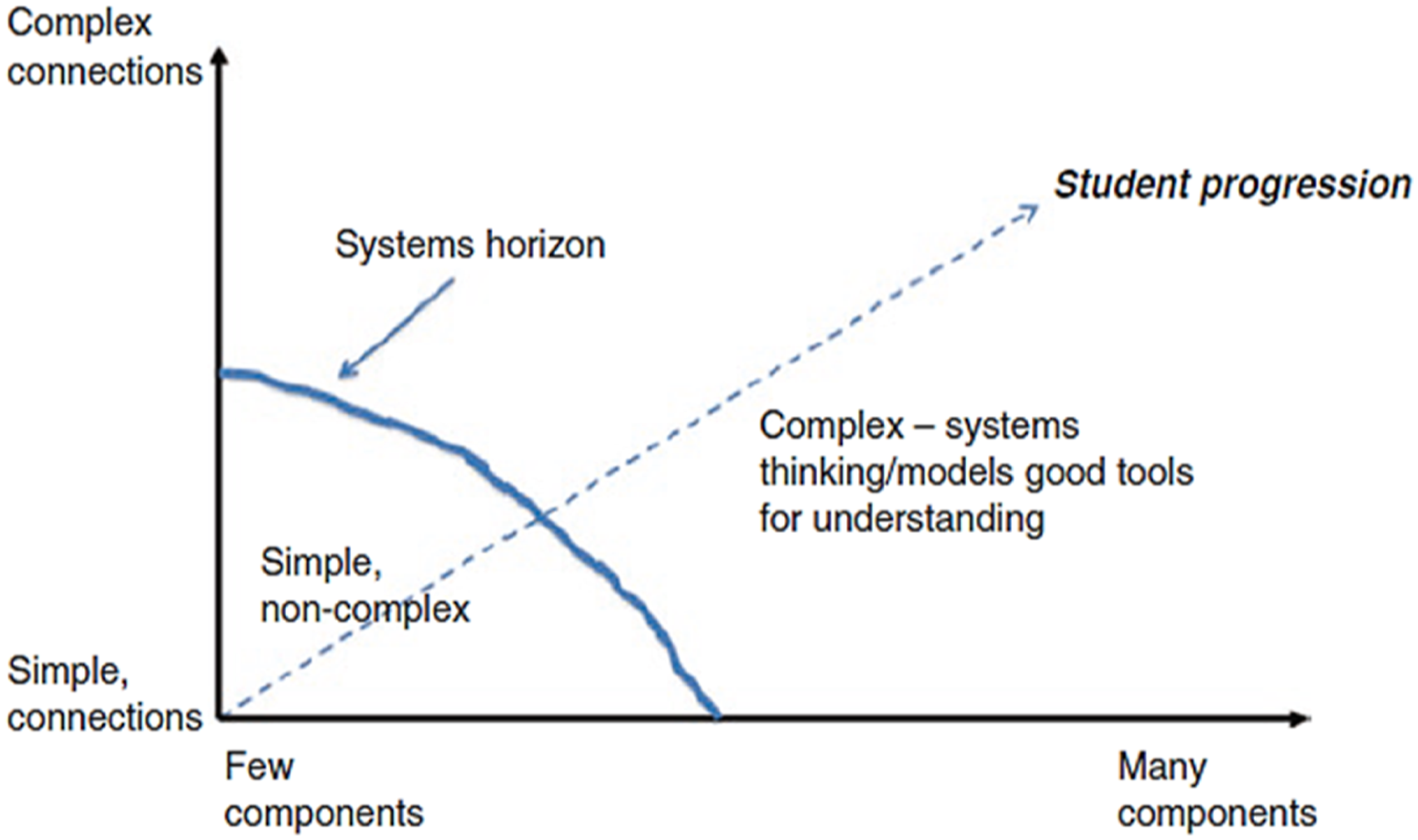
Close to the origin in Figure 2, in the lower left-hand corner, are the simplest technological tools or objects. However, as we move outward on the x and y axes, the number of components increases, and so does the complexity of the connections between the components. In other words, as the x and y axes move towards the starting point, the decrease in components and connections means that the goal-behaviors that should be taught to students are at a basic level. However, the more complex components and connections there are, the more one can go beyond the system horizon line; this entails having a more detailed knowledge of a subject, as well as a grasp of more complex concepts.
One of the methods to achieve this deeper level of understanding is by directing the technological tools used in the learning environment according to the versatile habits of mind of the students. For example, when pre-service teachers are given a problem that involves measuring the interior angles of a triangle, if they try to solve the problem using only the internal angle properties, this behavior will fall below the system horizon. If instead, they focus on high-level connections and components such as extending one of the sides in the triangle, drawing a different triangle on its side, transforming or translating, this behavior will fall beyond the system horizon. An example problem is given in Figure 3. An example of a problem involving the subject of angles in a triangle.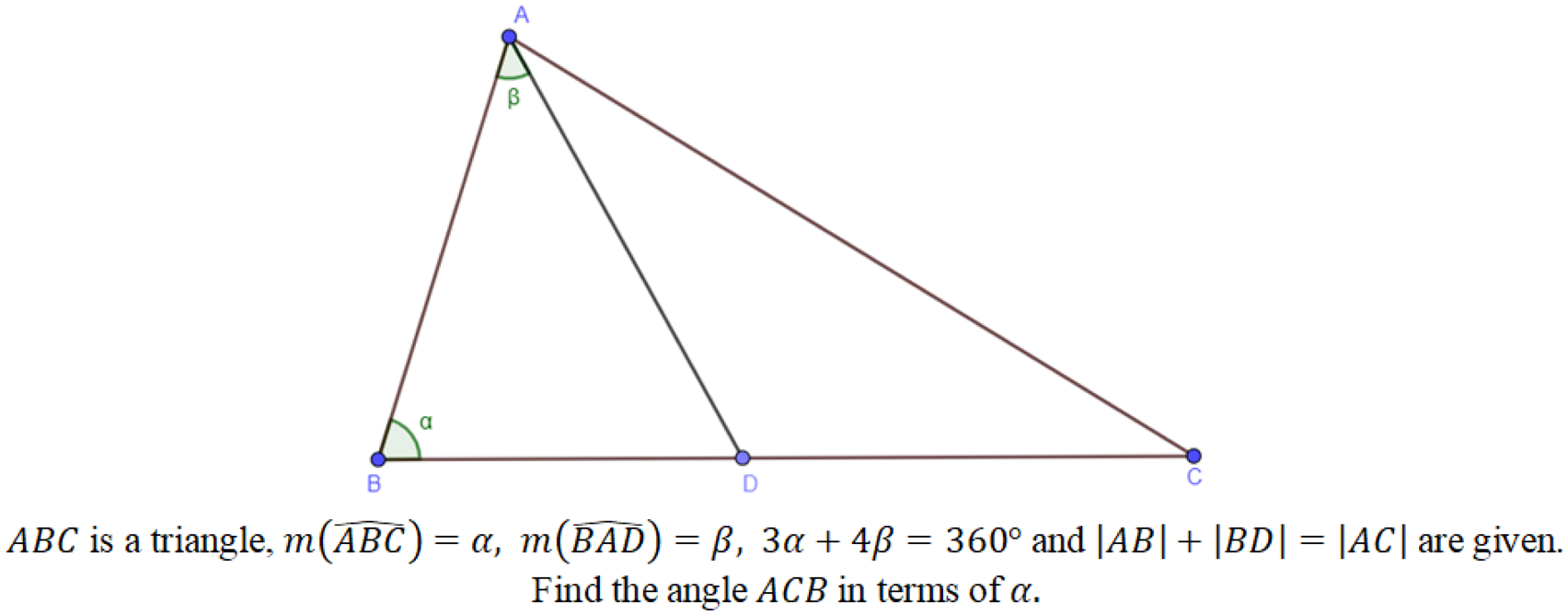
The problem given in Figure 3 can be solved in various ways. For example, since the problem concerns the angles in a triangle, a potential search for a solution may involve using only the angles and their properties. A different search for a solution might include making additional drawings and seeking a solution using different components and relationships, such as drawing a line segment equal to a given line segment and drawing a line to the extension of an edge. These two potential solutions are presented in Figure 4. Solution strategy of simple connections and components versus complex connections and components.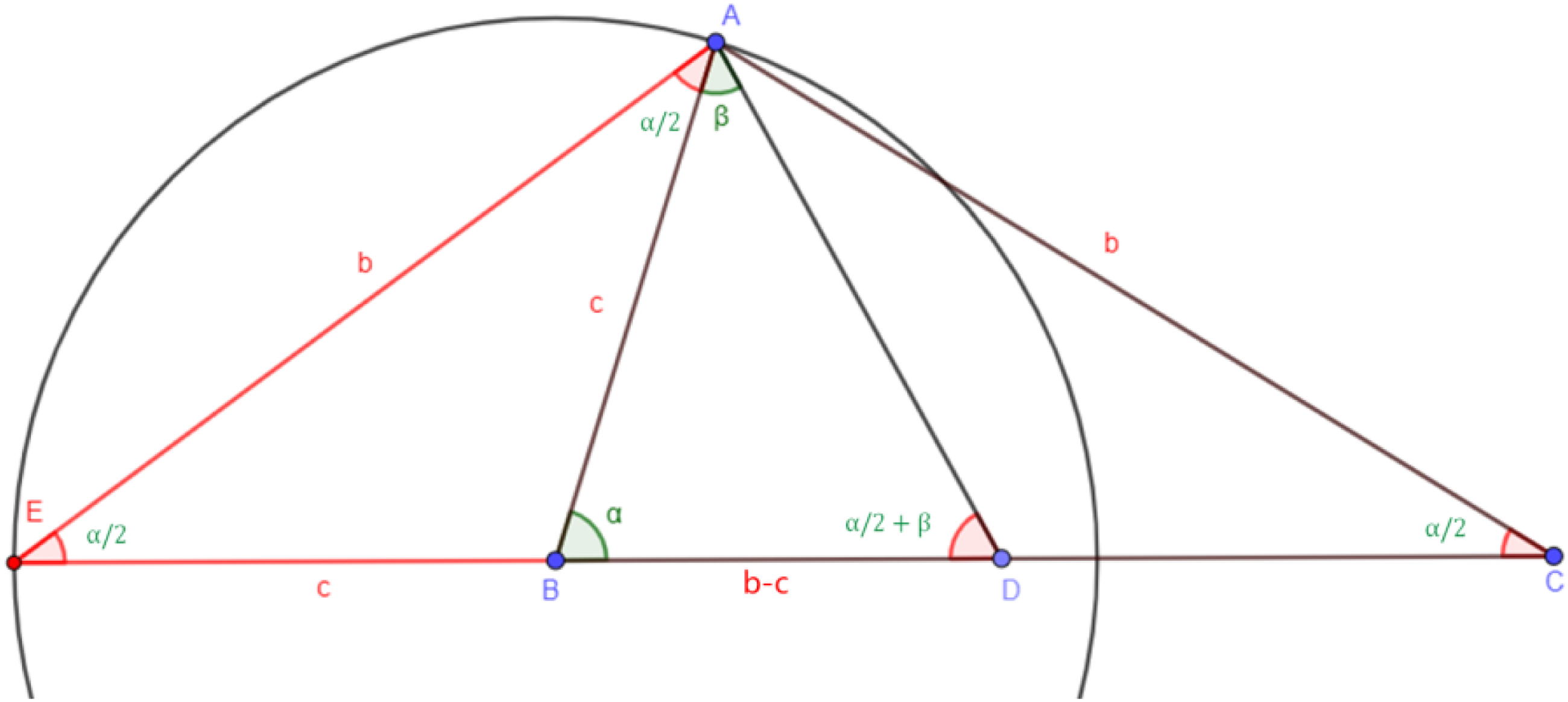
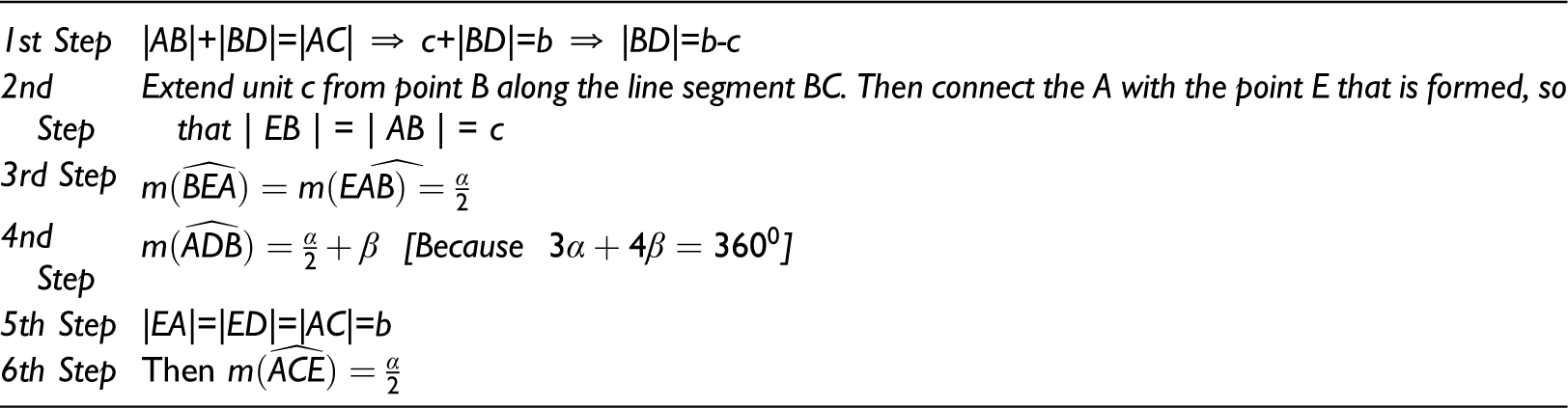
Analyzing the second solution, it can be observed that the DGS helped the student to make additional drawings in the second step and to associate the lengths of the sides formed in the additional drawing with the other side lengths of the triangle. In this context, it can be said that the DGS guided the use of the habit of exploration and reflection. Therefore, while the first solution remained below the system horizon line in terms of using simple connections and components, in the second solution, complex connections and components were applied to go beyond the system horizon line.
The aim
The experience of the researcher during her university education is that geometry lessons are mainly limited to activities carried out with pencil and paper. Moreover, in the activities conducted by the first author in her own teaching, it has been observed that pre-service teachers generally focus on the simple-level components of GHoM and have difficulties with complex-level components. For example, while teacher candidates can easily show the cut points of the diagonals of a given rectangle in paper and pencil activities, many of them have difficulties forming the geometric structure by folding the long side of the rectangle onto the short side. Similar findings were also reported by Driscoll et al. (2007). In their research with primary school students, they discovered that utilizing regular geometric figures divided into unit squares, the students had no trouble calculating area. The same students, on the other hand, struggled to calculate the areas of geometric figures without using unit squares. In a study with prospective classroom teachers, Yavuzsoy-Köse and Tanşlı (2014) found that the teacher candidates were unable to analyze the problems appropriately and they could not carry these actions to the whole, so their geometric thinking habits were not at the desired level. For this reason, it can be claimed that there is a need for content that will stimulate high-level habits of mind, both for in-service teachers who do not have technology-aided instructional experience and for pre-service teachers in the tertiary education process. With this in mind, a computer-aided learning environment was created by the researchers in order to observe the effect of the DGS at this stage. While numerous studies in the literature provide outcomes on the effects of DGS on academic achievement (Christou2005; Seago et al., 2013), the main purpose of this study was to demonstrate the use of GHoM rather than measuring achievement. This was a preliminary study conducted with GeoGebra, a popular DGS application, focusing on GHoM to determine the characteristics of the learning environment. Hypothesizing that courses taught by focusing on GHoM via DGS may offer students the opportunity to go beyond the system horizon, this paper focused on numerous components and connections through GeoGebra, rather than resorting to simple connections and components. Briefly, this study examined the role of GeoGebra in developing the GHoM of the pre-service mathematics teachers.
Method
A case study method was adopted for the purpose of investigating the contribution of DGS to the GHoM of pre-service teachers, because case studies are used for examining a specific subject in depth, defining its details, and explaining and evaluating it (Gall et al., 2007). This method was believed to be appropriate for the current study, as the GHoM used by the participants through the DGS were examined week by week. Furthermore, in-depth clinical interviews were carried out with the participants both before and after the intervention.
Participants
The study was carried out within the scope of a Computer Aided Mathematics Teaching course conducted by the first author, and six pre-service mathematics teachers who were enrolled in this course participated in the investigation. Since the lecturer conducting the course knew the students from other courses, she used purposeful sampling in the selection of the participants. The pre-service teachers in the study had previously learned the use of GeoGebra at a basic level and knew how to create basic functions such as drawing geometric shapes and actively using the program’s menus. With this in mind, three criteria were considered in the participant selection. The first of these was the achievement level of the students; in this regard, they were selected as having a low GPA (below 2), a medium GPA (higher than 2 and below 3), and a GPA of higher than 3. The second variable was the pre-service teachers' ability to use computers. The whole class was asked to score themselves on a 5-point scale concerning their skill in using computers, and students with similar distributions were classified as low, medium and high. Finally, the participants were informed about the study, and those who were willing to participate voluntarily were identified. Two participants in each of the three categories were selected, for a total of 6, and coded as PT1, PT2, ... PT6.
Process
In order to examine the role of GeoGebra in developing the GHoM of pre-service mathematics teachers, a pre- and post-test were applied. Furthermore, since the focus of the study was on the purposes of using DGS in recruiting their GHoM, rather than on their geometry achievement, clinical interviews were conducted with the participants after implementing the tests to elicit these purposes. During the study, which lasted a total of 10 weeks, the participants were assigned a task each week. In preparing the weekly activities, attention was given to the features of the environments to be utilized for the development of GHoM and the use of DGS (see Figure 5). Study process.
During the implementation process, activities related to a given geometry topic were carried out each week. In preparing the activities, the GHoM were the central focus, and the activities included characteristics that were intended to encourage students to use the DGS. In the literature, it has been stated that in activities that are centered on GHoM, it is necessary to inform students about which habits they are using when solving a problem (Cuoco and Goldenberg, 2001; Cuoco et al., 2010; Driscoll et al., 2007). Accordingly, the pre-service teachers were informed about GHoM in the first week of the study, and sample geometry problems were solved in order to demonstrate which habits were used in solving these problems. In the second week, the interface of the GeoGebra software was explained and sample applications were carried out. During the next 4 weeks, while the activities were being implemented, the pre-service teachers were encouraged to use the DGS. For example, if the activity included a parity between a triangle and another triangle, the pre-service teachers were given guidance such as: (a) Draw the given geometric structure in GeoGebra; (b) Examine whether a relationship exists between the lengths of the given sides in the structure; (c) How can the relationship you found be used to solve the given problem? (d) Which GHoM do you think you used in arriving at this solution?
The first 4 weeks of the course were taught in this manner, with the aim of observing the participants’ ability to use the DGS, as well as informing them about their GHoM. Accordingly, the activities during this 4-week period consisted of simple connections and simple components to enable the candidates to understand and use both their GHoM and the DGS effectively. In the following 4 weeks, the candidates were expected to have achieved a higher skill level. Therefore, the focus of the activities centered on multiple components and connections through the use of the GeoGebra software. The activities were given to the pre-service teachers each week, and they were allotted 10 min to complete them. In this process, the GeoGebra software was made ready for use on each candidate’s computer, but no guidance was provided for the solutions. After completing the tasks individually, all of the pre-service teachers discussed the results together, including how they approached the tasks, the GHoM they used in the solution process, and how they used the GeoGebra software.
Instruments
Interview content before and after the implementation.
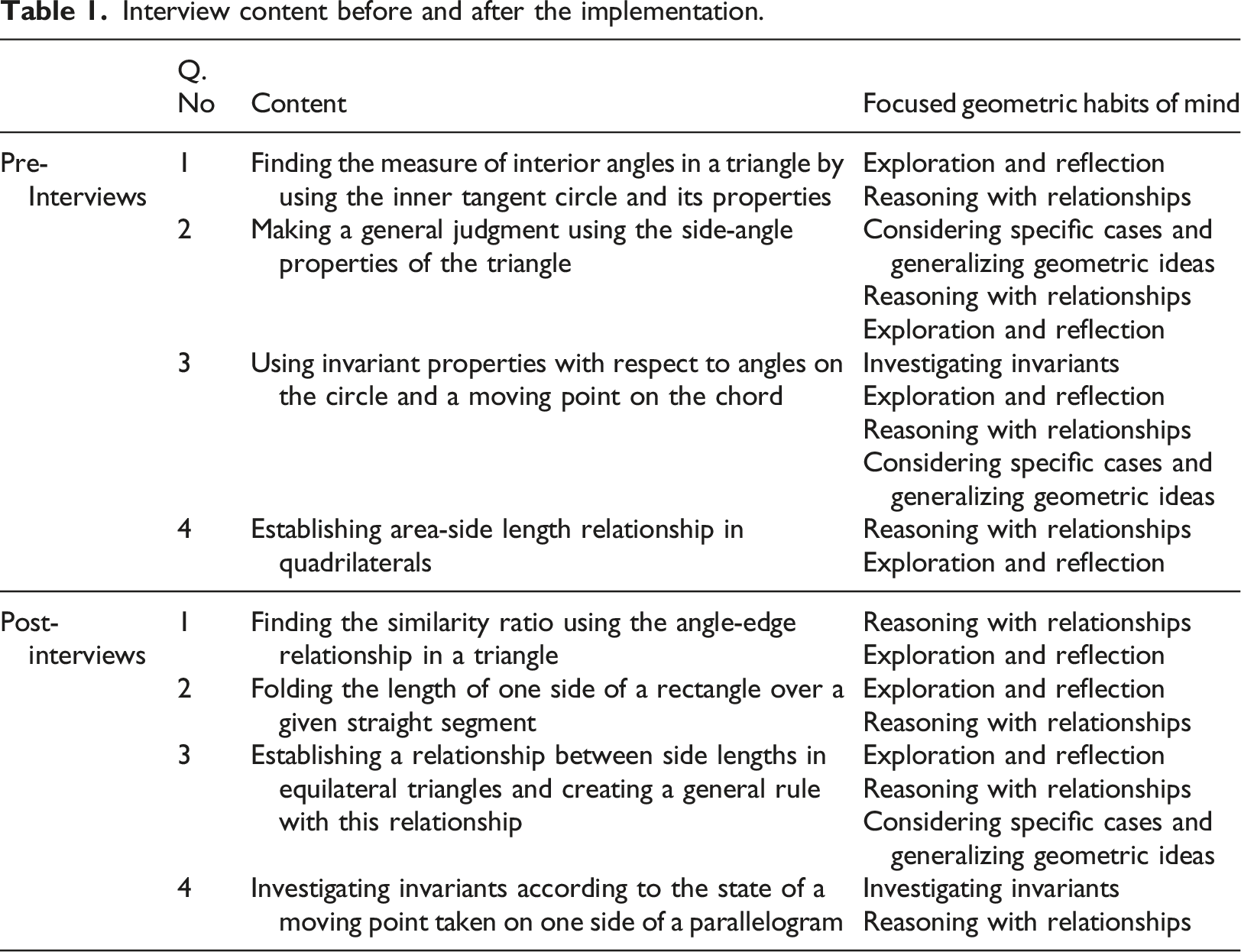
As outlined in Table 1, interviews consisting of eight open-ended questions were conducted with each pre-service teacher both before and after the intervention. The researchers focused mainly on the observable GHoM in the possible solution of each problem. The questions asked both before and after the intervention included equivalent GHoM and DGS usage, but the questions were different. The interviews were conducted individually in a computer environment with GeoGebra installed. The researcher’s field notes, which were utilized as a second data source for the study, consisted of the dialogues between the pre-service teachers and the researcher on their use of GeoGebra.
Data analysis
The data were analyzed in two phases. In the first phase, the responses of the pre-service teachers to the activities and the problems in the interviews were examined in consideration of the indicators in Figure 1, focusing on which GHoM was used. For this purpose, a rubric was developed by the researchers to determine the level of GHoM that pre-service teachers used when solving the problems. Responses that evidenced no GHoM in solving a problem were not classified. Responses that indicated the participants had used GHoM in solving the problem but did not provide any justification were labeled as low, and responses that revealed use of GHoM, along with justification for the answer, were labeled as high. In the second phase, the researchers examined the candidates’ efforts to benefited from the DGS while using their GHoM. Afterward, the data obtained from both phases were shared, coded and assigned to relevant themes. After this aspect of the analysis was carried out separately by both researchers, common codes and themes were determined, and the findings were prepared. In Figure 6, a sample analysis is presented for the answer given by a pre-service teacher to one of the problems. A problem used in the second week and the response of candidate PT2.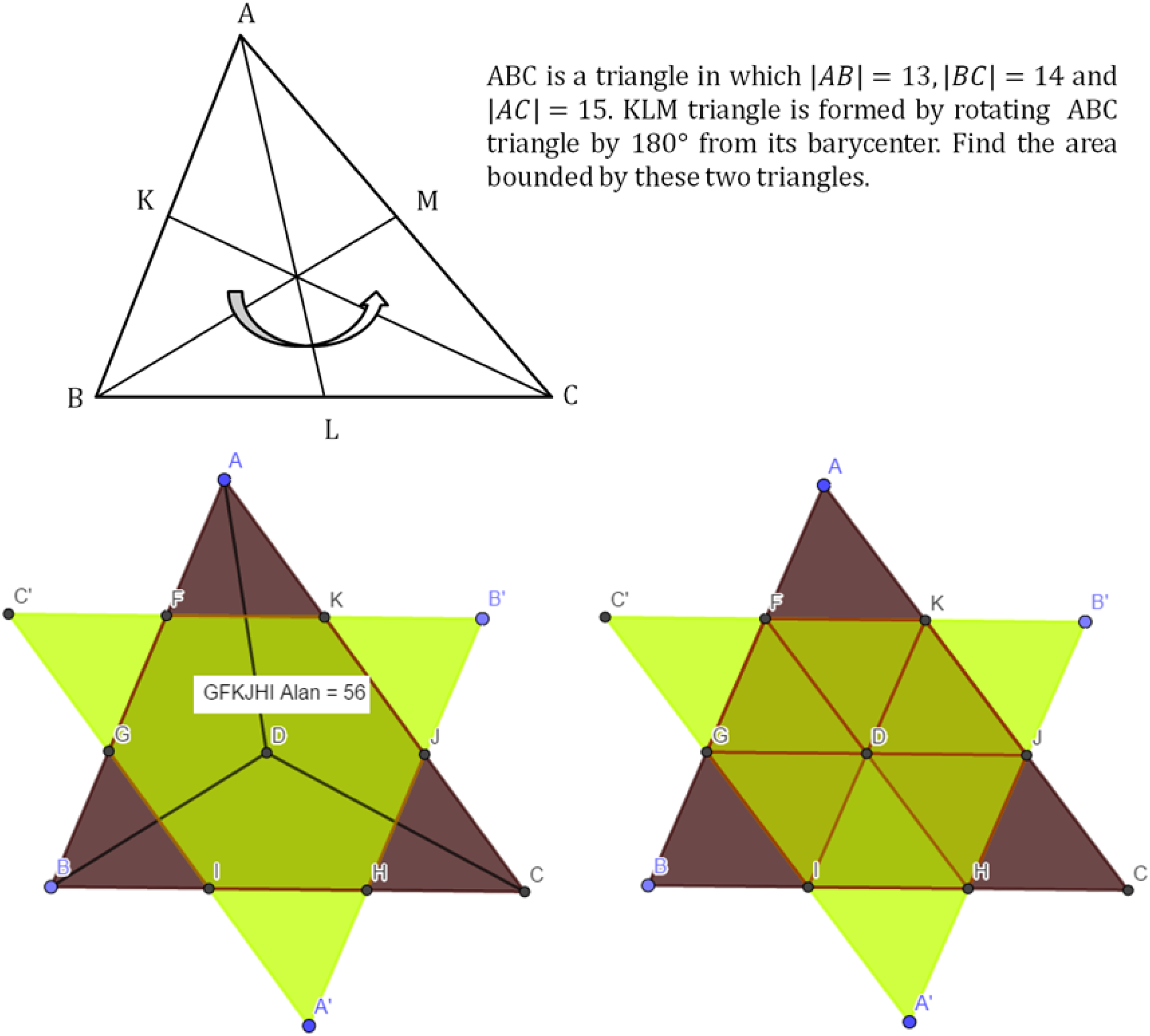
The analysis of the response of PT2.
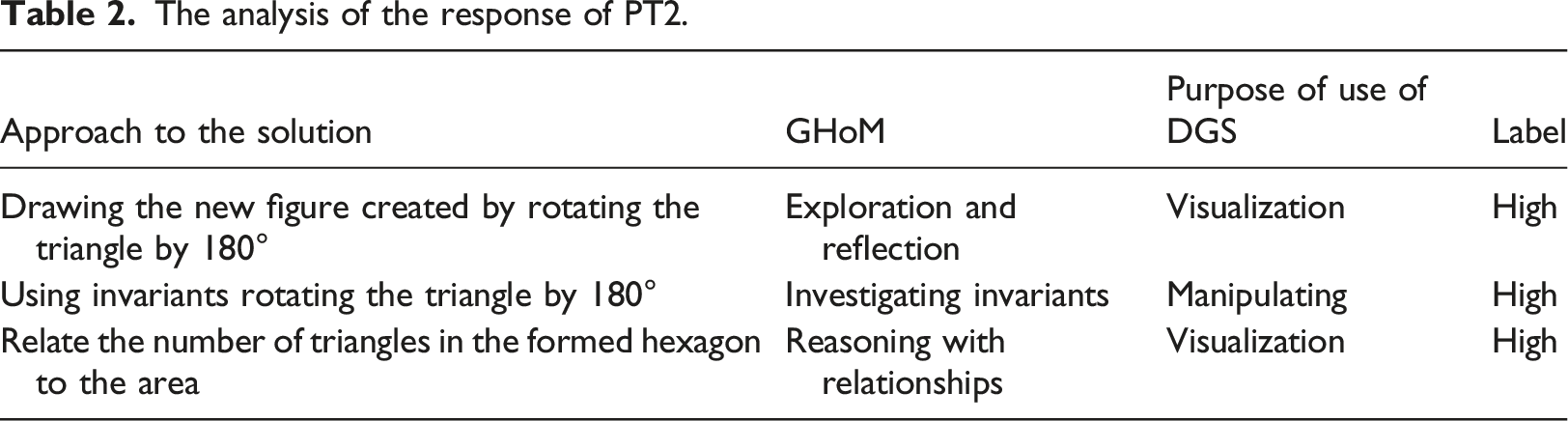
The sample analysis in Table 2 describes how the pre-service teacher carried out the solution process step by step and which GHoM was used in this process, as well as the purpose for which the DGS was used. Given the solution section presented in Table 2, PT2’s statement that there was no change in the triangles by rotating the given triangle 180° indicated use of the investigating invariants habit and was therefore labeled as high. In addition, PT2 showed the newly formed triangle with an additional drawing; therefore, the exploration and reflection habit was also evidenced and coded as high. Likewise, arriving at a solution by comparing the side lengths of the drawn shape and the areas of the triangle indicated the reasoning with relationships habit; this was also labeled as high.
The responses of each participant to the problems before and after the intervention and the interviews (recorded with the permission of the candidates) were analyzed by both researchers. The differences in coding made independently were discussed until consensus was reached, and the codes were then finalized.
Results
GHoM levels used before and after intervention.
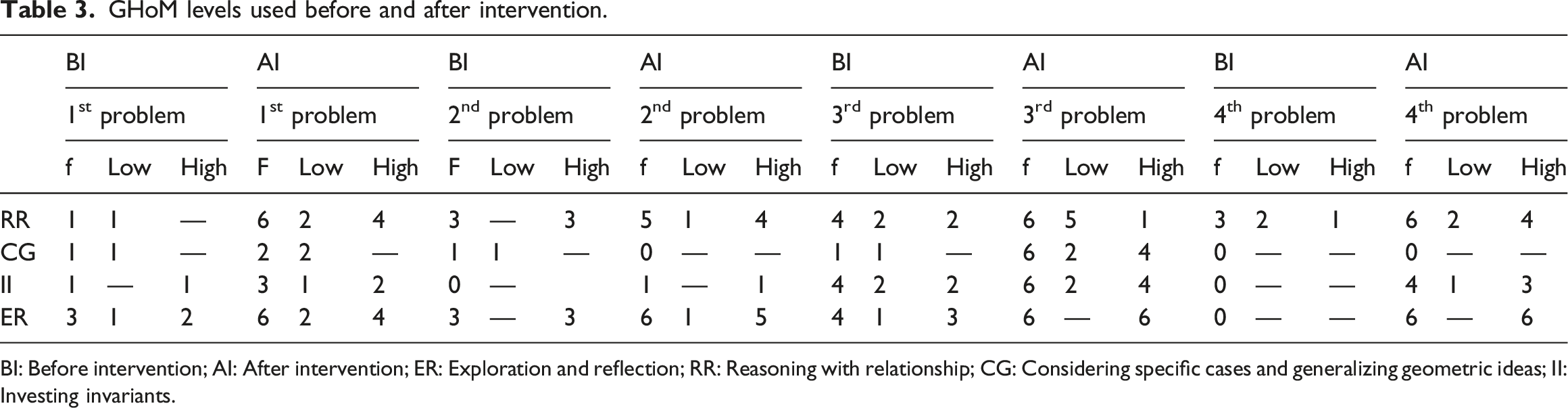
BI: Before intervention; AI: After intervention; ER: Exploration and reflection; RR: Reasoning with relationship; CG: Considering specific cases and generalizing geometric ideas; II: Investing invariants.
As Table 3 demonstrates, prior to the intervention, the PTs primarily used the GHoM of reasoning with relationships and exploration and reflection. It also indicates that the use of all GHoM increased markedly after the intervention. This increase was at the lowest level with respect to the habit of considering specific cases and generalizing geometric ideas. Moreover, the purposes for which the DGS was used, as well as the related GHoM, were also determined. A general map of how these GHoM differed for the PTs according to the intended use of the DGS is presented in Figure 7. Network of geometric habits of mind activated before and after the intervention in the context of the use of dynamic geometry software.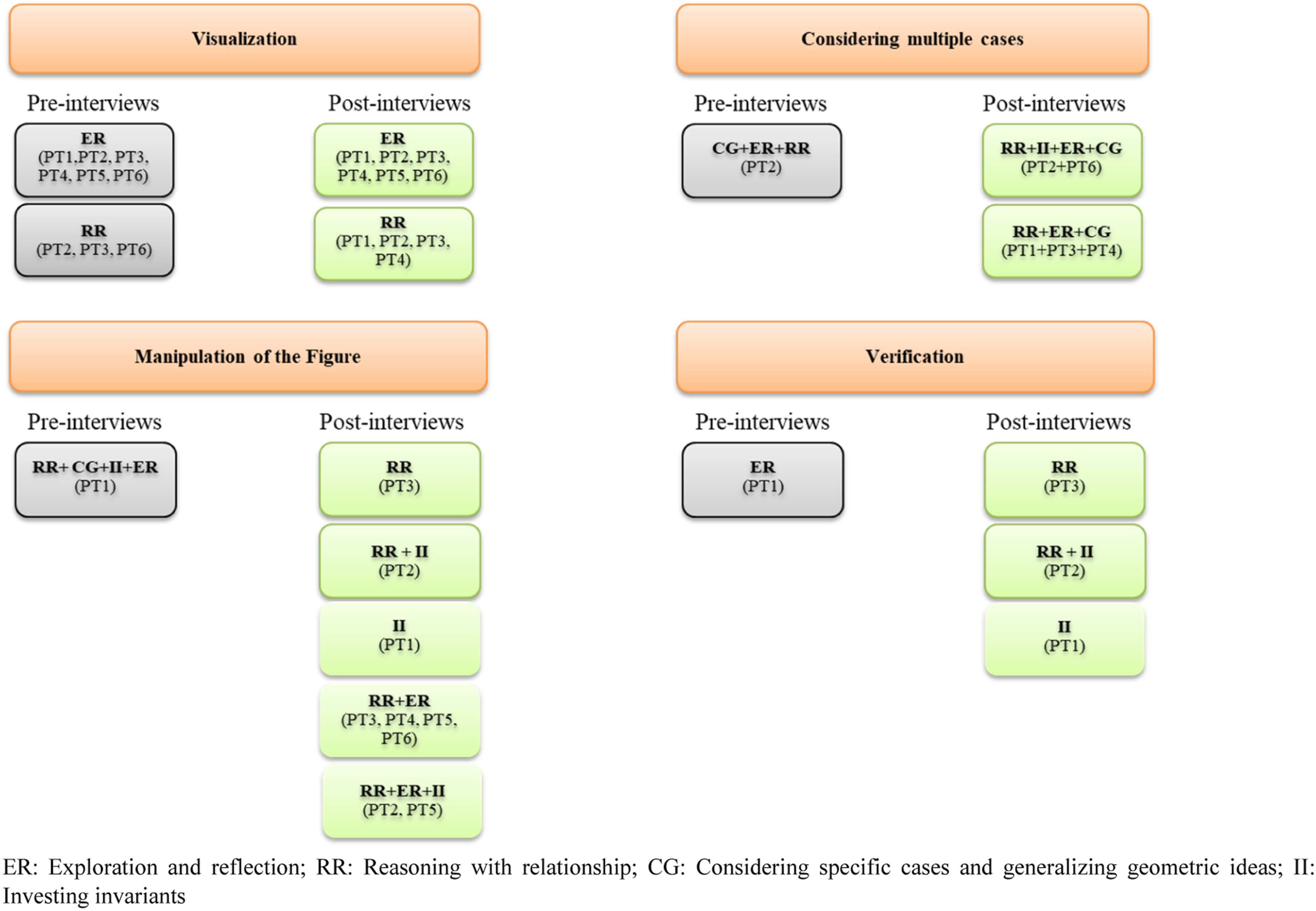
As Figure 7 illustrates, the pre-service teachers used the DGS for the purposes of visualization, considering multiple cases, manipulation of the figure, and verification of their responses. One noteworthy point in this regard is that, although the participants used the DGS for common purposes both before and after the intervention, they focused on more and varied GHoM after the intervention. For example, while the DGS was used for considering specific cases and generalizing geometric ideas both before and after the intervention, three other GHoM were activated after the intervention. In other words, before the intervention, the pre-service teachers used simple connections and simple components in the context of GHoM while using the DGS. However, the post-intervention results revealed that many components and connections were applied while using the DGS. Considering the data in both Table 3 and in Figure 7, it can be seen that there was an increase in the quality of the GHoM used by the PTs, and the labels of “high” occurred more frequently after the intervention. In other words, the improvement in GHoM for the purpose of using the DGS was not only quantitative, but also qualitative. The findings obtained in the later parts of the study were examined in the context of the use of the DGS before and after the intervention, as described in the following sections.
Visualization
Before the intervention, all of the PTs who used the software in problem solving process first drew the geometric figure of the given problem in GeoGebra. While some of the participants drew the figure correctly,, others had difficulties in creating the structure. Figure 8 provides examples of these situations. Drawings for the first problem discussed in the interviews (PT1 on the left and PT5 on the right).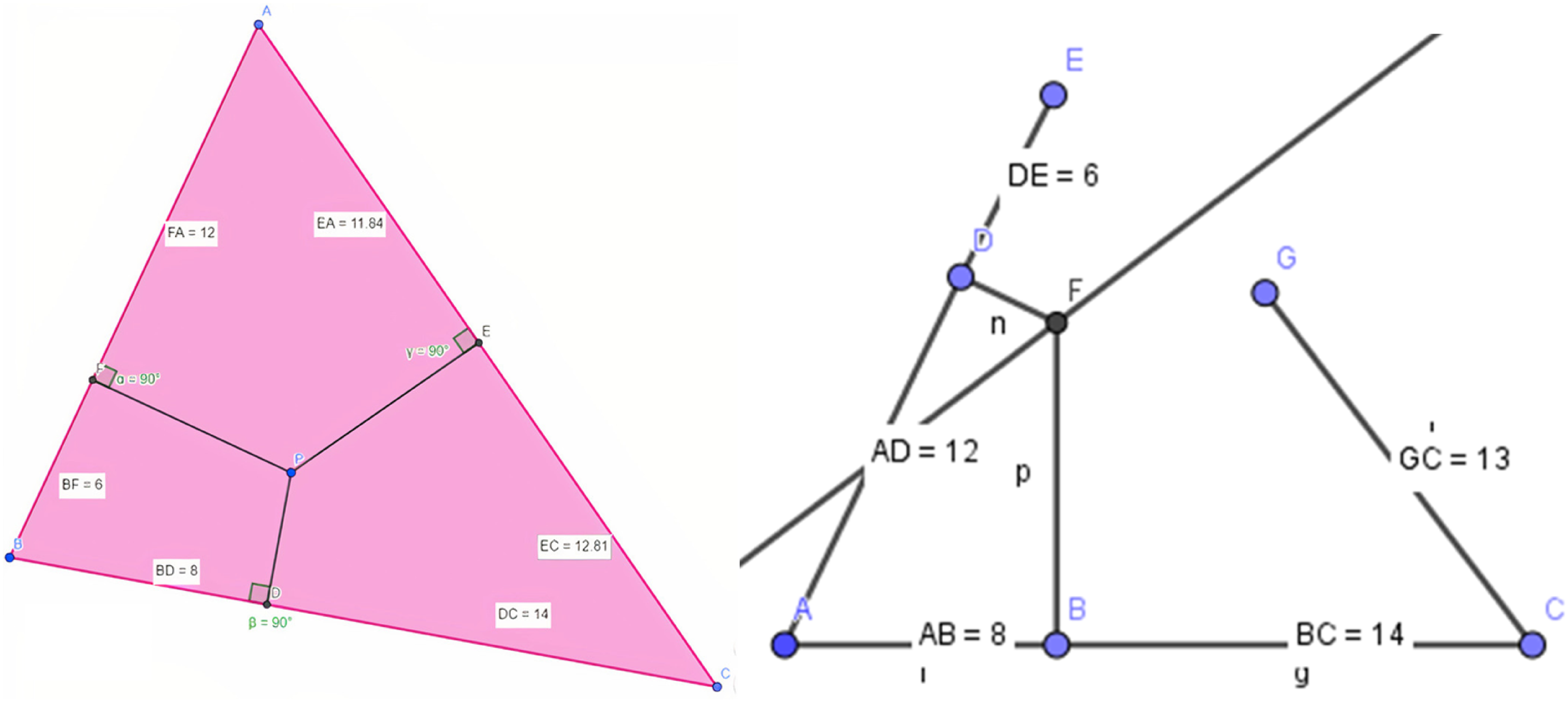
Looking at the figure on the left, it can be seen that the pre-service teacher coded as PT1 created the correct geometric form while solving the problem. However, PT5 formed the structure incorrectly, as can be seen on the right-hand figure. In the interview with PT5 about this drawing, he said, "I could not draw the triangle with the given lengths. I tried to draw a circle inside the triangle. I tried to draw a triangle on the circle. I tried to go on the edges, but it did not work". On the other hand, PT1 explained, "I first drew the shape, then I applied the Pythagorean relationship by combining the corners and the line part to the middle point". According to PT1’s explanation, the software was used as a visualization tool for one part of the problem, and he then found the correct solution by drawing the figure with a pencil and paper in the other part. Therefore, both pre-service teachers used the exploration and reflection GHoM while using the DGS as a visualization tool. The response given by PT1 was labeled as high in the habit of exploration and reflection, since a logical justification was made for the solution. However, although the PT5 visualized a solution using the habit of making additional drawings, the solution was labeled as low, because no correct drawing was produced through any logical justification. Other PTs who used the software for visualization also examined the different forms of the geometric figure by making additional drawings.
After the intervention, one of the purposes for which all of the PTs used the DGS, as with beforehand, was visualization. On the post-test, while using the software based on the visualization component, the PTs supported their drawings with logical rationalization and generally found the correct solution. For example, while PT3 chose not to use the DGS in the pre-intervention interviews, she activated her exploration and reflection habits with the software after the intervention (see Figure 9). The response of PT3 to the first problem on the post-test.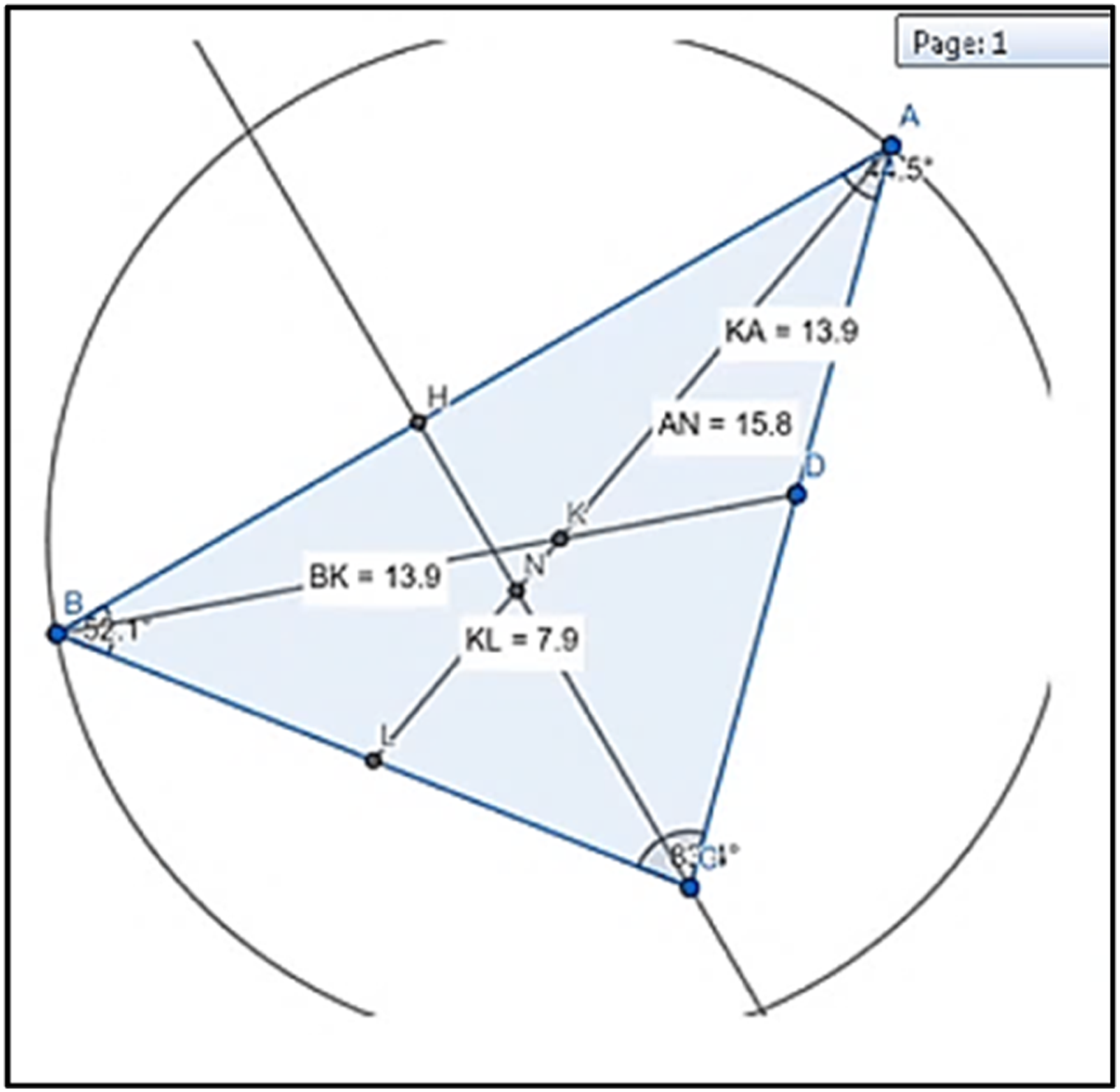
It can be seen from the drawing of participant PT3 in Figure 9 that the visualization of the verbal problem (see Supplemental Appendix 1) was expressed through the software. When PT3 was asked to explain her solution, she responded, “After drawing the figure, I wrote down all the values given in the problem. Then, when I calculated the values obtained in the software, I found the desired ratio as 2.” Therefore, we understand that she found the correct solution. The candidate also used the DGS as a visualization tool. When examined in the context of GHoM, PT3 applied the habit of exploration and reflection in her solution for the first problem. This was coded as low, because, although the verbal expression was visualized with additional drawings, the solution provided no logical justification for the drawings. In other words, rather than using her judgment, PT3 found the solution by making a direct calculation using the software. In this regard, after the intervention, the other PTs used the DGS for visualization purposes, as with to PT3.
Manipulation of the figure
The pre-intervention clinical interviews revealed that only PT1 used the software to manipulate the shape in the first and third problems. In both instances, PT1 used all of the GHoM while using the software. For the first problem, the explanation of the participant is as follows: I drew triangle ABC randomly. Then I drew the inner tangent of the triangle and the line segments IC and AB. Then I tried to move these angles using the slider tab, because I was checking whether it was the same at different degrees. For example, when I used 30°, was the same thing happening with the 30-60-90 triangle and the 40-80-60 triangle? I used the slider tab to look at them.
The explanation given above by PT1 reveals that the candidate first drew a random triangle and then examined the result for different angles by placing a slider tab on the inner angles of the triangle. In this regard, PT1 was coded as low for both the habit of exploration and reflection and of investigating invariants, because the additional drawing was made randomly, and the slider tab was used randomly.
Candidate PT2 likewise used computer-aided software for visualization to solve the third problem (see Figure 10). The response of PT2 to the third problem in the interview before the intervention.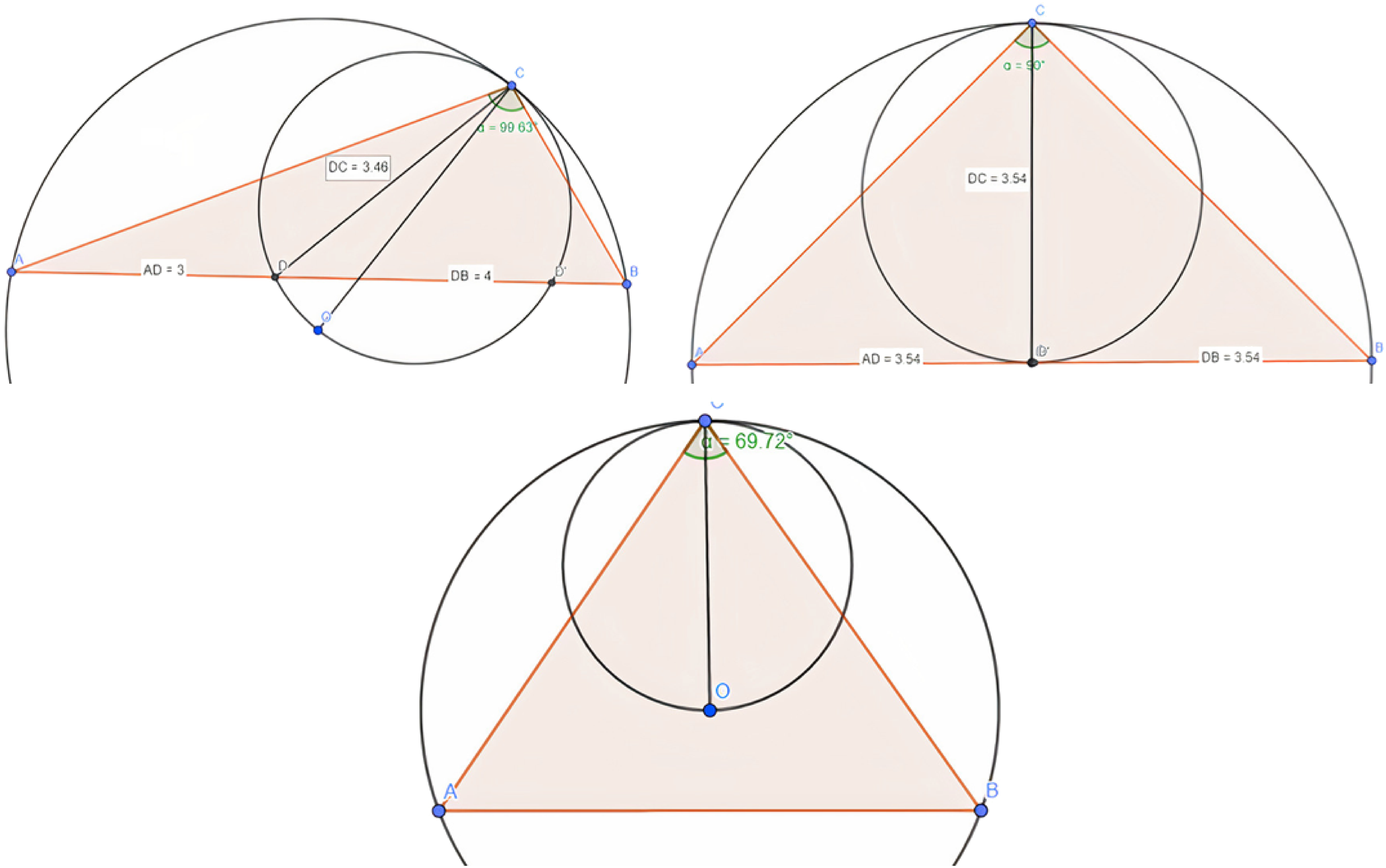
The response of PT2 to the third problem shows that the candidate considered different triangles, including an obtuse triangle (the first drawing in the figure), a right triangle (the second drawing), and an acute triangle (the third drawing). The following statements were analyzed in order to examine in depth which GHoM the PT2 used in this stage: Because the measure of angle A = 90°, line AB becomes the diameter. In this case, all lengths are equal to the radius, so DC equals the radius. When the measure of A is smaller than 90°, I cannot find the length of DC, since it does not intersect with AB, so I cannot show any line.
Since PT2 correctly constructed the figure for the different situations desired in the problem, the candidate was labeled as high with respect to the habit of exploration and reflection. On the other hand, the label was assigned as low in terms of the habit of investigating invariants, because the response focused on the unchanging properties in different situations, but without offering a justification. Moreover, the response was coded as low for the habit of investigating invariants, because he demonstrated the correctness of the special cases but did not arrive at a general judgment in terms of considering specific cases and generalizing geometric ideas. As with PT1 and PT3, PT2 used the DGS to manipulate the geometric figure during the solution process. In other cases, some of the PTs who used the software for visualization in the problems given before the intervention examined the different forms of the geometric figure by drawing more than one figure for a problem (see manipulation of the figure). Accordingly, it was observed that the most frequent purpose for using the DGS prior to the intervention was visualization.
On the other hand, after the intervention, most of the PTs used the DGS for the purpose of manipulation of the figure. Under this theme, the PTs used dragging, rotating and extension of the geometric figure functions of the DGS. One of the important findings from this was that the GHoM of the PTs after the intervention were high when they used the software for manipulating the figures. For example, PT5 used a combination of the habits of investigating invariants, exploration and reflection, and reasoning with relationships (see Figure 10).
In the third problem, two equilateral triangles were given, and the candidates were asked to find the relationship among the lengths between certain vertices (see the right-hand triangle structure in Figure 10). Participants PT5 reported that, in solving this problem, “I first drew the 2 equilateral triangles given in the question. Then I placed corner D on side AB, and corner E on side AC. Since both are equilateral triangles, as I have drawn in the figure above through GeoGebra, the given points will be placed on the edges. In this case, the desired lengths are equal”. In examining this explanation, as well as the figure he drew in GeoGebra, it was determined that he activated the habits of investigating invariants by dragging the given corners; of reasoning with relationships by finding the desired lengths to be equal as a result of dragging; and of exploration and reflection by drawing the figure. In this solution, the PT5 correctly stated that when he placed corner E on side AC, the reason for the formation of a structure as in the figure was that they were equilateral triangles.
For the second part of this question, PT5 reported, “I applied the same steps with the square. Here, as well, when I brought the corner points over the edges, I found that the length of EB and the length of DG were equal; and at the same time,
Considering multiple cases
Use of the software for the purpose of considering multiple cases involves thinking about a given problem from different perspectives. Prior to the intervention, only participant PT2 used the DGS for this purpose. One example of this participant’s use of the software for this purpose entailed an examination of various aspects situations of the triangle according to the solution presented in Figure 9, considering the angle A as smaller than 90°, larger than 90°, and exactly 90°. In this solution, PT2 exhibited the habits of exploration and reflection, reasoning with relationships, and considering specific cases and generalizing geometric ideas. The quality of this solution was coded high in terms of exploration and reflection and low in both generalizing geometric ideas and investigating invariants. Of all of the participants, PT2 was the only who used the software for the purpose of considering multiple cases prior to the intervention.
On the other hand, the post-intervention interviews revealed that most of the PTs used the DGS for considering multiple cases. In the context of GHoM, most of the PTs’ responses were coded as high in solving the problems, with most of them examining whether the features given in the problem were provided in different geometric figures or for different properties of the same geometric figures. One of these participants, PT6, provided the drawing shown in Figure 11 for the question “Point D is taken on the side [AC] of an acute triangle ABC. The median [AL] bisects the height [CH] and the line segment [BD] at points N and K, respectively. If N∈ [AK] and ǀAKǀ = ǀBKǀ, find the ratio The response of PT6 to the first problem after the intervention (the cases of equilateral and isosceles triangles).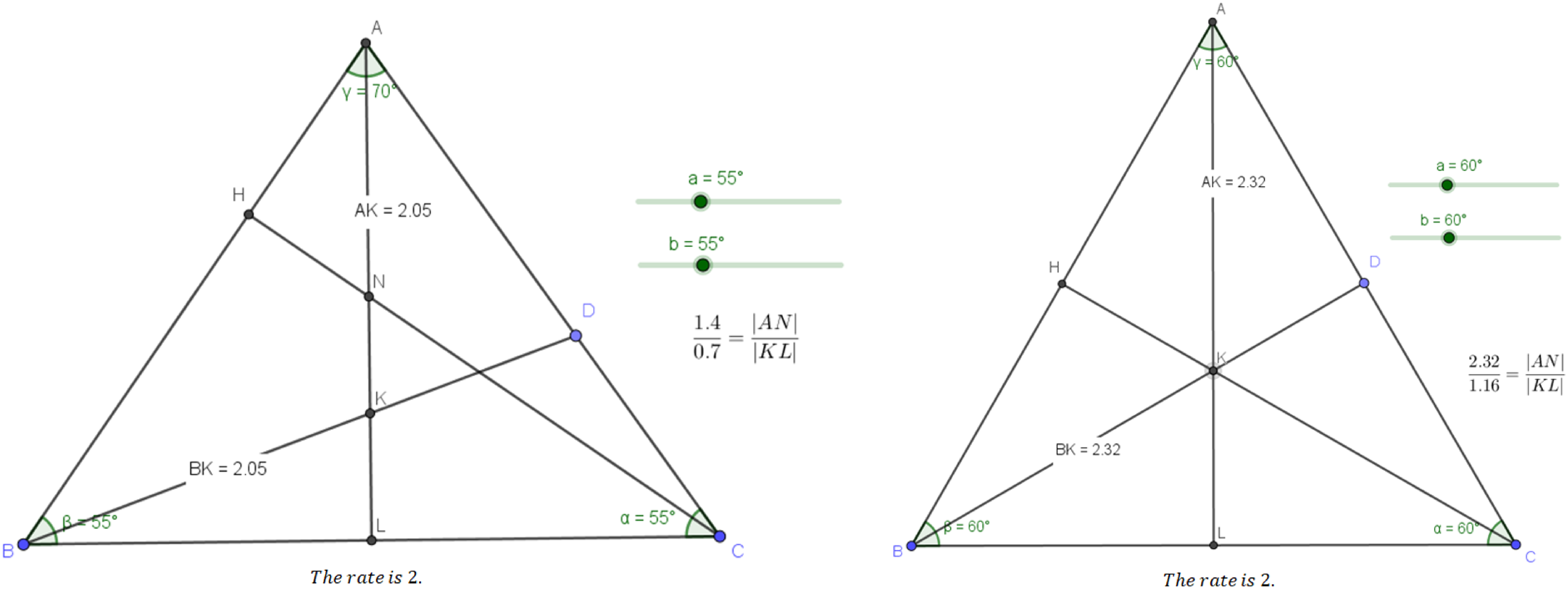
An acute triangle expression is given in Figure 11. PT6 examined the situation first for the equilateral triangle (on the left side in Figure 11) and then for the isosceles triangle (on the right side). The candidate then gave the following explanation: I first examined the triangles according to different situations. For example, what if the triangle is equilateral? So, I created an equilateral triangle as in the figure above. In the question, it was given that |AK | = | KB |. Therefore, I equalized these lengths and saw that the ratio was 2; so |AN| = 2|KL|. Then I thought that an equilateral triangle might be a special case, so afterwards, I checked the lengths for an isosceles triangle. First, I placed a slider. I marked the base angles for the slider (I initially took 55° so that it could be changed later). When | AK | = | BK |, I noticed that the desired ratio was 2. So, I wondered whether I would still get the same ratio if I drew the scalene triangle.
The explanation given by PT6 refers the two special cases of an equilateral and an isosceles triangle. While carrying out this examination, the participant placed a slider at the two inner angles of the triangle and examined the change by moving the slide. The second stage of the answer of PT6 to the first problem is given in Figure 12. The response of PT6 to the first problem after the intervention (the case of the scalene triangle).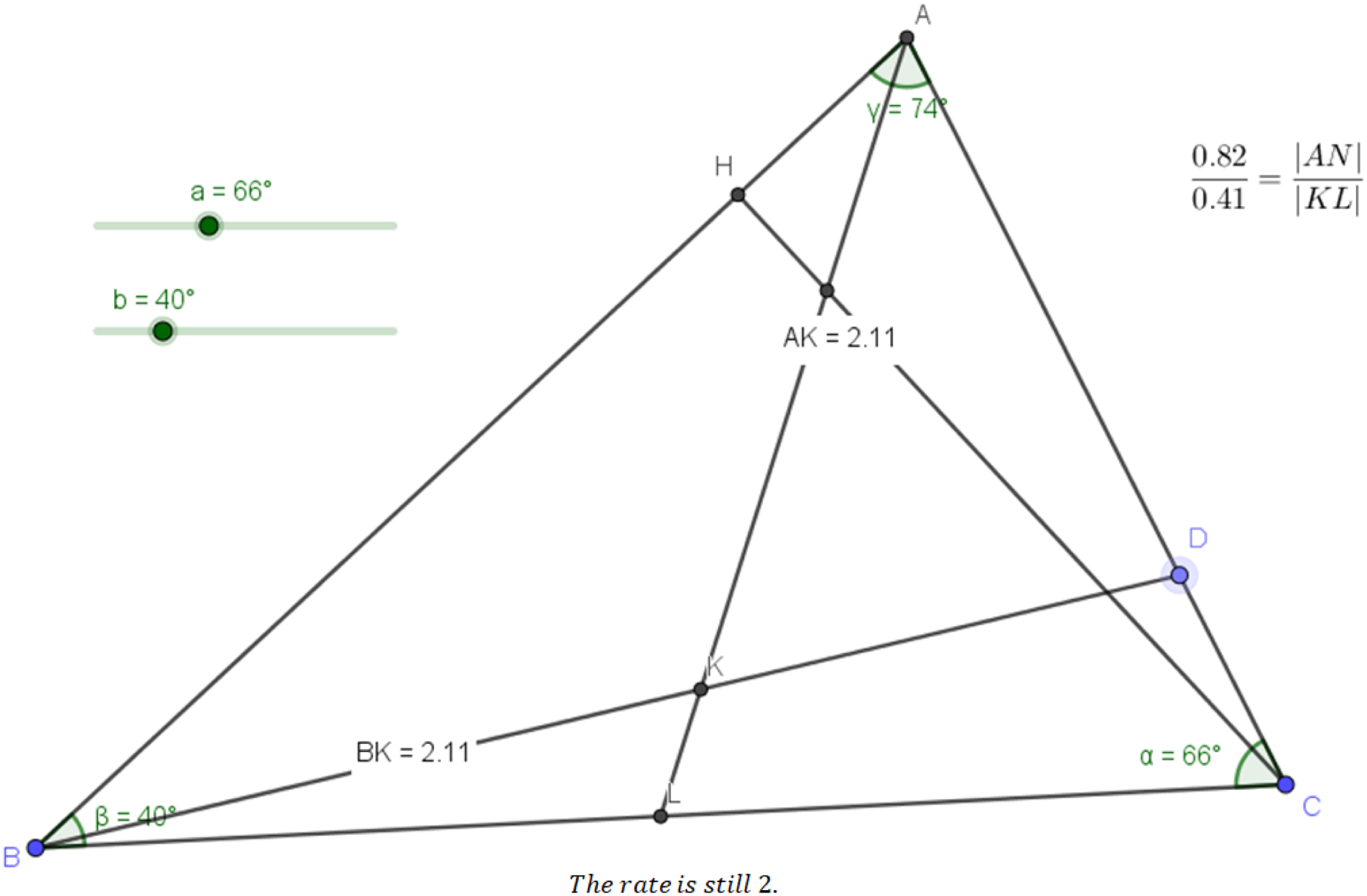
In trying to reach a general judgment by drawing different triangles, PT6 explained that, “When I followed the same process, I got the ratio 2 again. When similar figures are drawn, the ratio always became 2:1. In other words, the ratio is always constant, and this situation can be generalized”. This thinking reveals that PT6 solved a problem given in verbal form by using the software to discover different situations. For this solution, PT6 was coded as high in investigating invariants due to the use of a slider to examine different triangles to identify their unchanging properties. Moreover, since additional drawings were made, along with logical justifications, the habit of exploration and reflection was coded as high. On the other hand, PT6 generalized the results obtained from the equilateral-isosceles and scalene triangles, but since the inferences were not explicitly identified mathematically, the habits of generalizing geometric ideas and reasoning with relationships were coded as low.
Verifying
Prior to the intervention, only PT1 used the software for the purpose of verifying. In this sense, PT1 first solved the given problem with paper and pencil and then verified the solution using the software.
Figure 13 illustrates PT1’s paper-based solution to the problem. Here, it can be seen that the participant made additional drawings on the given figure and then used the Pythagorean theorem with respect to right triangles. For this solution, PT1 scored two points for the habit of exploration and reflection, since additional drawings were made to apply the Pythagorean relationship, as well as two points for the habit of reasoning with relationships, because the association between the sides of the triangles was made correctly. After solving the problem on paper, PT1 used the DGS to draw the same figure by entering the given lengths. He was then able to PT1 assert that his solution was correct when he found the length x to be 12 units on the figure in software. In this sense, this participant was noted as using the DGS for the purpose of verifying his solution. The response of PT1 to the first problem prior to the intervention.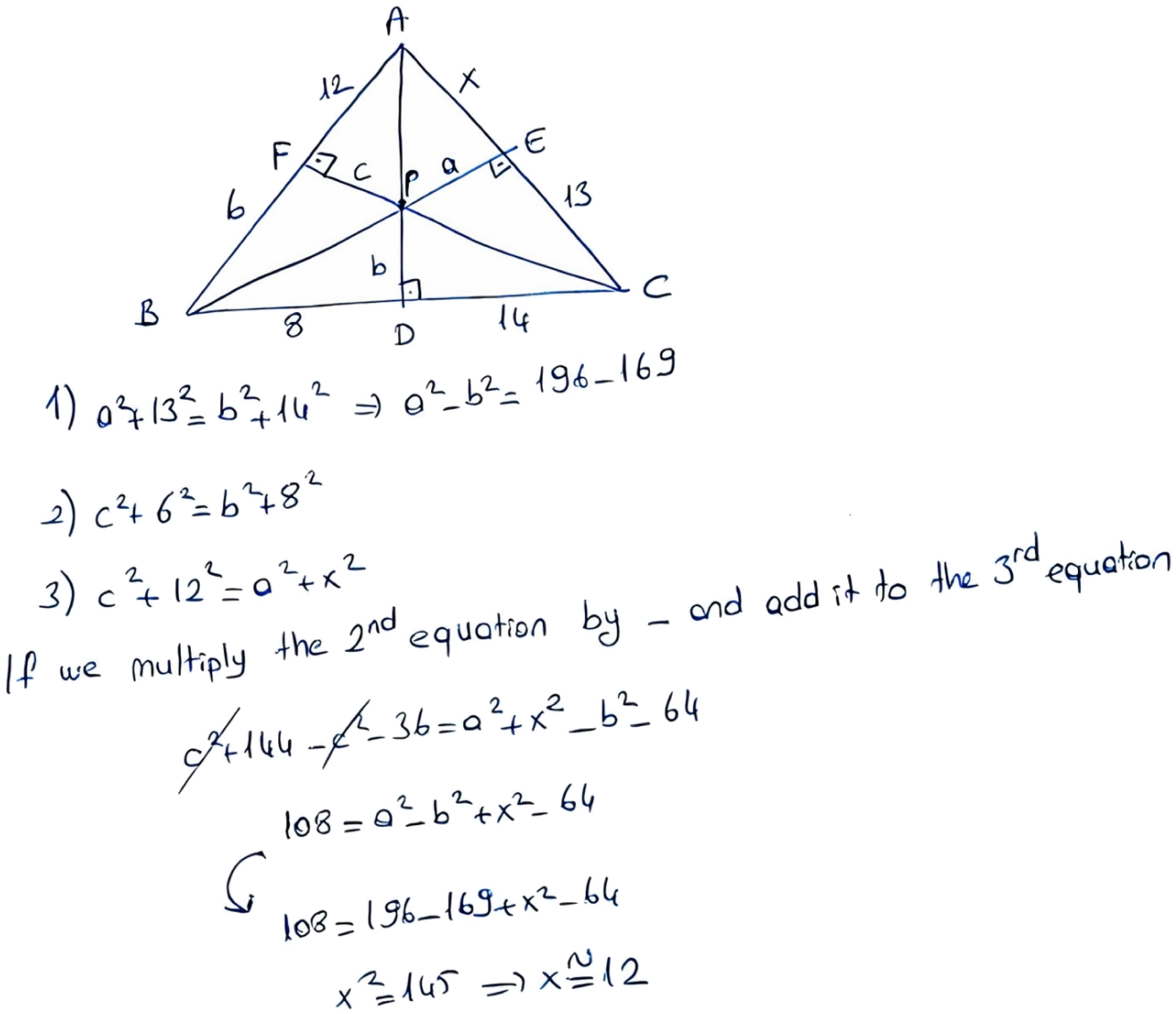
The results of the study revealed that overall, the participants did not make much use of the DGS prior to the intervention, relying primarily on paper and pencil to solve the problems. After the intervention, however, four of the PTs (PT1, PT2, PT3 and PT4) did use the software for the purpose of verifying their solutions. An examination of one such instance by PT4 is presented in Figure 14. The response of PT4 to the second problem following the intervention.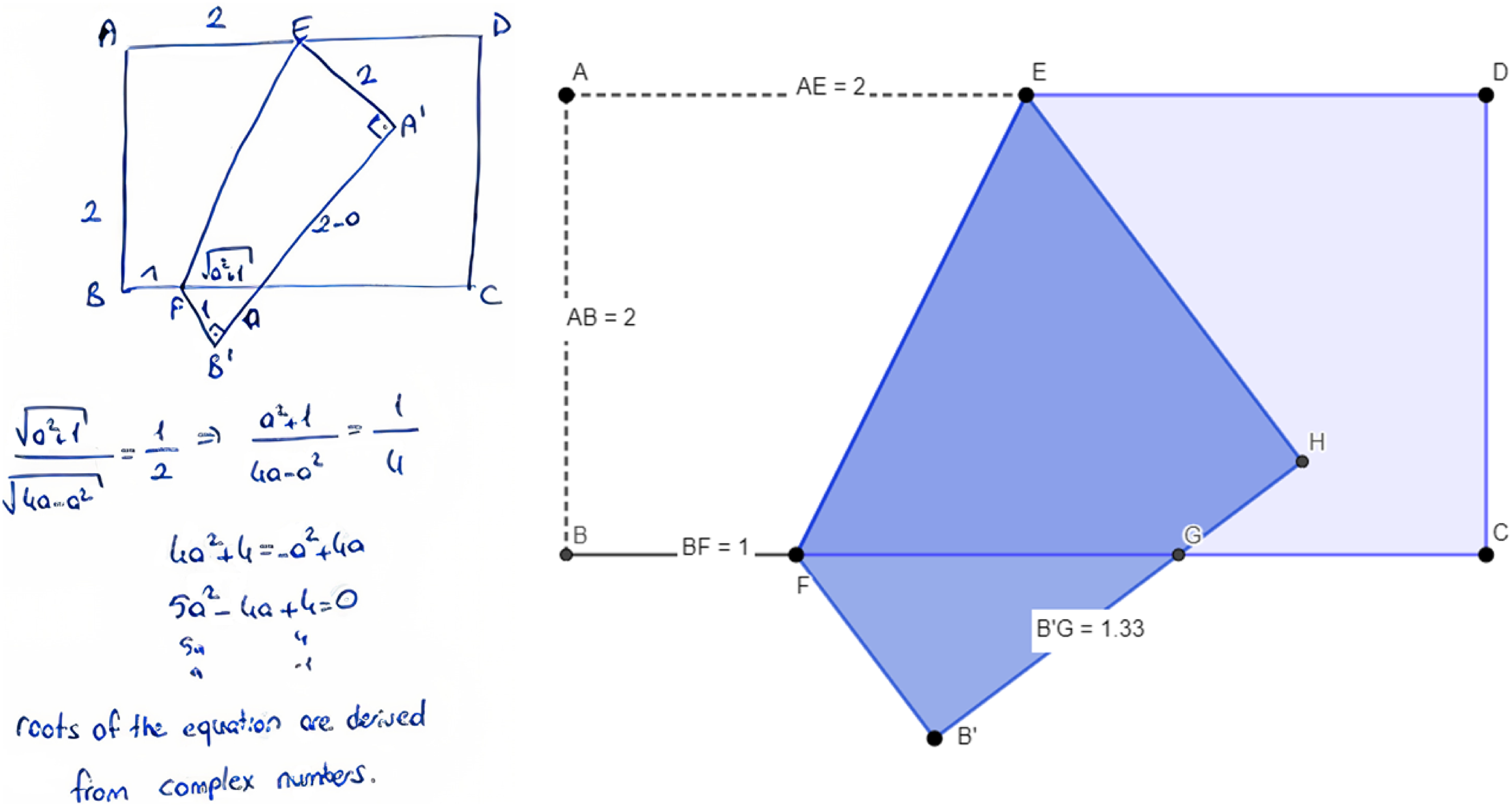
An examination of the solution in Figure 14 reveals that PT4 first solved the given problem with paper and pencil. While working on the solution, he drew the shape formed as a result of folding the corner of the rectangle correctly and indicated the corresponding triangles. After the completing this solution, he constructed the same shape using the software in order to verify his answer. During this process, he was scored as high for the habit of exploration and reflection.
Discussion and conclusion
In this study, the effect of DGS on determining the geometric thinking habits of prospective mathematics teachers was examined. For this purpose, computer-aided geometry lessons centered on GHoM were administered with six pre-service mathematics teachers during the course of one semester. The role of DGS in the PT’s use of GHoM was determined through clinical interviews that took place both before and after the intervention. The first finding obtained from this study was that the PTs used more GHoM based on logical justifications on the post-test than on the pre-test. In particular, there was an observable change in the use of exploration and reflection and associated habits in the problems given after the intervention. In other words, the fact that the habit of exploring and reflecting, which was used 10 times prior to the intervention in the solution of the given problems, was used 24 times after the intervention, and that the reasoning with relationships habit was used 11 times before the intervention and 23 times after the intervention, can be interpreted as development of these GHoM. In this regard, the assertion by Goldenberg (1996) that activities or learning environments developed in consideration of GHoM will guide students to make discoveries overlaps with the results of the current study.
Furthermore, the PTs in this study discussed their solutions to the problems with one another during the activities over the course of the semester. This finding demonstrates that the habit of exploring and reflecting can be developed through association. Cuoco et al. (1996) likewise found that students sharing problem-oriented solutions and making comments about their correctness or incorrectness positively affects their discovery and association process. It was also observed that the PTs in this study made additional drawings while using the habit of exploration and reflection prior to the intervention, but they were not able to explain the reasons for doing so from a conceptual/logical perspective. Similarly, some of the PTs made comparisons between the areas of geometric shapes and edge lengths while using the habit of reasoning with relationships, but they could not use these comparisons correctly in the solution process. Therefore, while the solutions of the PTs were labeled as “low” before the intervention, their solutions after the intervention were labeled as high. Additionally, the frequencies regarding the use of the habits of considering specific cases and generalizing geometric ideas and investigating invariants both revealed improvements following the intervention.
A further finding of the study was that the PTs used the DGS for the purposes of visualization, manipulation of the figure, considering multiple cases, and verifying both before and after the intervention. Prior to the intervention, the software was used for the purpose of visualization primarily to support the habits of exploration and reflection and reasoning with relationships. However, although the purpose of visualization before and after the intervention seems to support the use of the same habit, it was seen that the habits were used in the context of more logical reasoning on the post-test. For example, prior to the intervention, PT5 was not able to connect the three sides in drawing the triangle with GeoGebra with the given side lengths. Therefore, although he used the software for visualization purposes, he used the attribution habit, receiving a label of low because this was not based on logical reasoning (see Figure 8). On the other hand, following the intervention, it was observed that the same PT used the software for the purpose of visualizing the shape in the solution of the third problem based on logical reasoning, thus receiving a label of high in this instance (see Figure 15). As such, it can be inferred that the PTs developed the habits of reasoning with relationships and exploration and reflection while using the software for the purpose of visualization. This finding is supported by Friel and Markworth’s (2009) contention that problems should be visualized to develop the relationship search strategy in students. The response of PT5 to the third problem after the intervention.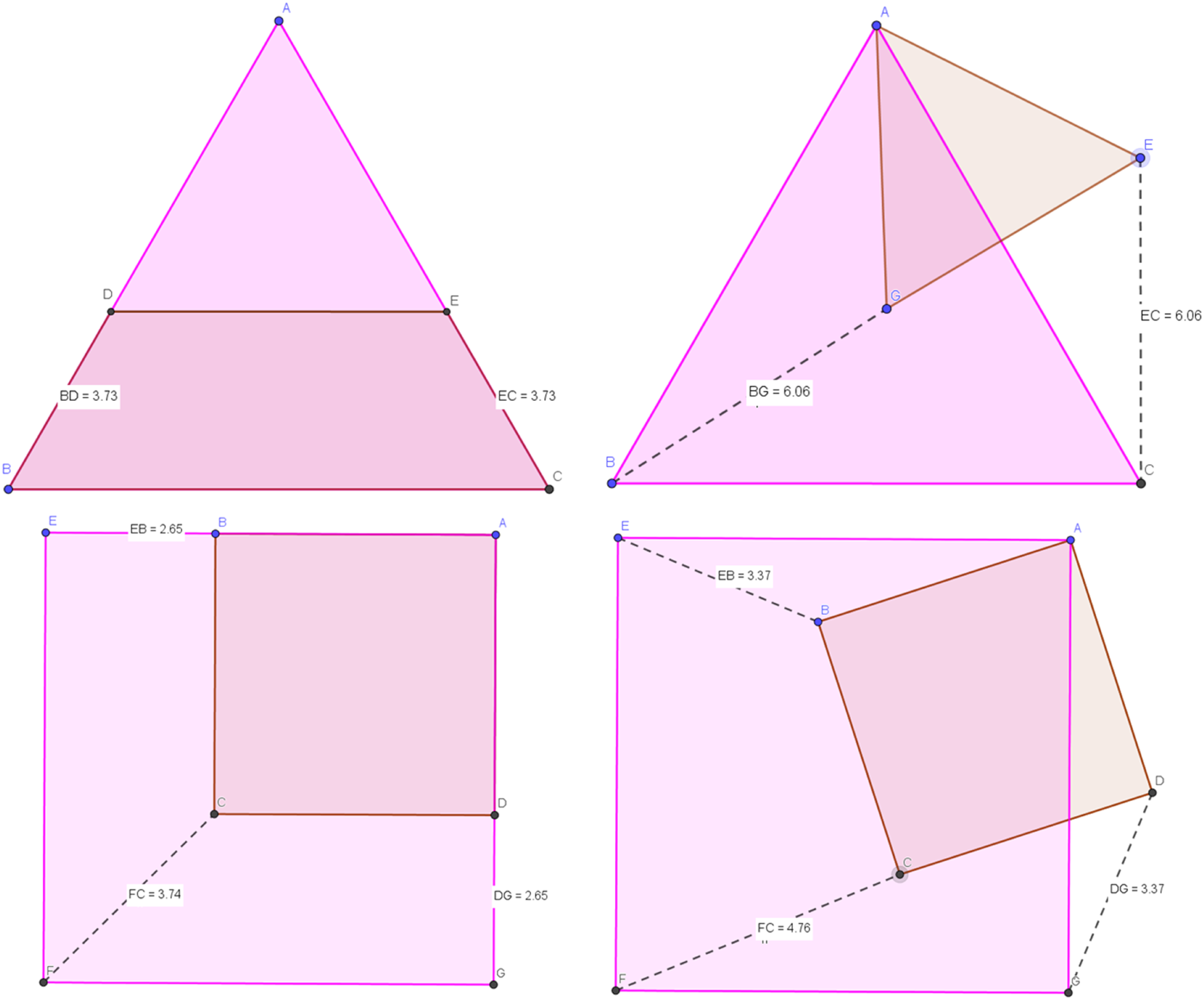
On the other hand, the results of the current study revealed that only one PT who used the software for the purpose of manipulation of the figure used all GHoM at once prior to the intervention. However, the same purpose for using the software after the intervention showed that the intervention supported the use of the habits of reasoning with relationships, exploration and reflection, and investigating invariants in different ways. For instance, the use of the GeoGebra software for the purpose of manipulation of a figure was particularly helpful in observing the habit of investigating invariants, because manipulation of the figure entails transforming a geometric shape into a moving structure by dragging, shifting or taking its symmetry. A similar result can be found in the study by Selakovic et al. (2020) on the drag method in dynamic geometry. In this sense, Selakovic et al. stated that the transformation of geometric figures into different structures by dragging positively affects students' discovery process and supports them in using different solution strategies. The habit of investigating invariants mentioned in this study involved problem solving by using the invariant properties of the geometric figures viewed through different transformations. Therefore, the manipulation of the figure with the software and the habit of investigating invariants can be considered collectively.
Likewise, in the current study, it was observed that the habit of investigating invariants, reasoning with relationships, and exploration and reflection all developed through the manipulation of the geometric figures. An explanation for the development of these habits may relate to the emphasis given to the candidates that the figures should be viewed from all angles, not from a single angle, in implementing the activities. For example, in the first problem discussed in the post-interviews, the candidates were asked to find a ratio using the given properties of an acute triangle ABC (see Supplemental Appendix 1). When the researchers introduced this type of problem in the classroom, they also considered the obtuse angle of the triangle and investigated other possible cases. Accordingly, the PTs examined possible situations by dragging the acute triangle into an obtuse or right-angle triangle. Thus, in using GeoGebra as a tool for manipulation, it was aimed to activate all of the GHoM of the PTs. According to the results of the study, it can be claimed that this intervention successfully activated their GHoM, especially the habit of investigating invariants. This result supports the emphasis of Seago et al. (2014) on the need to utilize transformations and technology-supported educational environments in order for students to make connections. In this regard Seago et al. underscored the fact that realizing that geometric objects are dynamic contributes to students’ understanding of conceptual geometry.
In addition, the use of the software for the purpose of considering multiple cases primarily helped to activate the habits of considering specific cases and generalizing geometric ideas and reasoning with relationships prior to the intervention, while it supported the use of all GHoM after the intervention. One reason for this result may be the inclusion of problems that lead the PTs to think about different positions of the shapes during the period. For example, although the third problem from the interviews prior to the implementation aimed to stimulate the use of considering specific cases and generalizing geometric ideas, only one participant demonstrated this habit. On the other hand, following the intervention, more than one pre-service teacher activated their GHoM in solving the same problem. Moreover, while doing so, they tested whether the given proposition would be correct under different conditions by selecting different geometric shapes with the GeoGebra software. This result implies that problems designed to showcase the ways that different structures of geometric figures will produce results are effective for developing GHoM. In contrast, prior to the intervention, the PTs mainly focused on inappropriate results by overgeneralizing in problem solving. A similar case was also observed by Yavuzsoy-Köse and Tanışlı (2014), who examined the GHoM of the classroom teacher candidates and concluded that the candidates made inferences about special situations but over-generalized them. Likewise, Posamentier and Krulik (2008) stated in their study of effective methods in problem solving that students may ignore some situations when working to come up with all possible scenarios. Since the features of generalization were discussed with respect to the software during the intervention, our post-intervention interviews revealed that the PTs made progress in this regard and did not repeat their tendency to overgeneralize.
In terms of verifying using the software, while only one PT evidenced the habit of exploration and reflecting prior to the implementation; however, after the intervention, four of the pre-service teachers exhibited this habit. Driscoll et al. (2007) point out that verifying solutions is important for developing students' GHoM and emphasize this process as developing the habit of exploration and reflection. During the intervention phase of this study, it was aimed to develop different solution strategies by comparing the solutions made by the PTs in each activity. In this phase, some of the PTs used the GeoGebra software to verify their solutions. Therefore, it can be claimed that these activities were effective in the development of the PTs’ habits of reasoning with relationships and exploring and reflection.
This study was carried out to examine the role of GeoGebra, one of the commonly used DGS applications, in the development of pre-service mathematics teachers’ GHoM. For this purpose, rather than using only simple connections and components, the intervention included multiple components and connections in order to support the PTs in acquiring more and higher-quality GHoM. The post-intervention interviews demonstrated that most of the PTs were able to apply most of the components of the GHoM with the aid of GeoGebra. Since this study involved an in-depth investigation of the participants’ GHoM and use of GeoGebra, it was limited to six participants. In future studies, it is recommended that the number of participants be expanded to determine their GHoM, taking into account the intended use of the GeoGebra software. In addition, the study was limited by its use of descriptive statistics. Further research may be carried out through correlational studies, using a larger sample group, to seek the potential relationships between variables.
Supplemental Material
Supplemental Material - Examining the effect of dynamic geometry software on supporting geometric habits of mind: A qualitative inquiry
Supplemental Material for Examining the effect of dynamic geometry software on supporting geometric habits of mind: A qualitative inquiry by Buket Özüm Bülbül and Mustafa Güler in Comparative Political Studies
Footnotes
Declaration of Conflicting Interests
The author(s) declared no potential conflicts of interest with respect to the research, authorship, and/or publication of this article.
Funding
The author(s) received no financial support for the research, authorship, and/or publication of this article.

Supplemental Material
Supplemental material for this article is available online.
Author Biographies
References
Supplementary Material
Please find the following supplemental material available below.
For Open Access articles published under a Creative Commons License, all supplemental material carries the same license as the article it is associated with.
For non-Open Access articles published, all supplemental material carries a non-exclusive license, and permission requests for re-use of supplemental material or any part of supplemental material shall be sent directly to the copyright owner as specified in the copyright notice associated with the article.
