




Abstract
This paper examines the impact of using mobile devices, the pivotal element of a student-centered ecosystem, on the learning process and learning outcomes from a system’s view in which mobile technologies are considered a critical success factor to facilitate the dialogue and self-regulatory learning processes, thereby enhancing e-learning outcomes. We synthesize the disparate literature to develop an elevated model. A total of 323 valid and unduplicated responses from students who have completed at least one online course at a Midwestern university in the U.S. were used to examine the structural model, using SmartPLS v. 3.3.2. The results of this study show that the use of mobile devices positively affects student-instructor and student-student dialogues. It also facilitates the self-regulation process, which in turn positively affects the learning outcomes. Integrating mobile technology enables educational institutions to design and build distance learning systems that allow students to be highly flexible with their locations and schedules in the learning process. We discuss several implications of this research for educational institutions and distance learners in a student-centered higher education ecosystem.
Keywords
Introduction
Mobile devices, primarily cell phones, smart phones, and tablet PCs, have gradually been introduced into the university campus and online education over the past several decades. According to the Pew Research Center report (2021), 99% of US adults between the ages of 18–29 own a cell phone or a smart phone. This has changed the nature of the delivery mode in university education and led to the extensive use of mobile devices in the learning process. Campus Technology reported the results of a recent survey from Learning House and Aslanian Market Research. This survey asked questions about the extent of the use of mobile devices when doing various on-line, course related activities. In one survey, 67% of 1500 current and past students completed at least some of their online coursework on a mobile device (Magda and Aslanian, 2018). The most common activities completed on a mobile device include the following: accessing course readings (referenced by 51% of respondents), communicating with professors (51%) and fellow students (44%), accessing the learning management system (45%), doing research for reports (41%), finishing assignments (40%), and accessing lectures (31%).
Moreover, understanding the demographic characteristics of current and future distance-learners is an important first step for designing and delivering effective distance-learning systems. In recent years, the economic and societal trends have also shifted the demographic characteristics of postsecondary students. A substantial proportion of undergraduate students work either full or part time, and more attend on a part time basis. Consequently, they may need flexible schedules so they can complete their coursework at their own pace. In an effort to meet the needs of these types of learners, new models of learning opportunities have begun to emerge. These new models include competency-based education, blended learning, online learning, and industry aligned, job-based training programs (King and South, 2017). The U.S. Department of Education proposed the term “a student-centered higher education ecosystem” to embrace the new models of learning opportunities. Student-learning in this ecosystem is both lifelong and life-wide (in their homes, at their places of employment, any flexible location such as in the car, train, etc.), and it is enabled by mobile technology.
This research aims to examine the impact of using mobile devices, which is the pivotal element of a student-centered ecosystem, on the learning process and learning outcomes from a system’s view. It also aims to identify the mediating variables that affect the learning outcomes. Most prior research studies failed to provide a satisfactory basis for explaining how the use of mobile devices affects the learning process. Although almost all the studies reported that the use of mobile devices resulted in a higher level of learning outcomes, only a few of them showed the mediating constructs that produced the higher leaning outcomes (Oyelere et al., 2018; Arain et al., 2018; Zhonggen et al., 2019). The extant literature on the effects of the use of mobile devices on the learning outcomes have largely treated the learning process as the black box without any knowledge of its internal workings.
The next section presents a system’s view of the e-learning success model as a research framework. The third section is literature review, followed by the description of the research model and hypotheses development. We then discuss research methodology, including the development of a survey instrument to collect data, structural equation modeling (SEM) methodology, and the results of a partial least square (PLS) analysis of the research model. We then present the study findings. The final section describes the theoretical and practical implications for future university distance-learning.
A system’s view of the e-learning success model
Our research model is grounded in a system’s view of the e-learning success model. Based on a review of the past several decades of e-learning empirical research, a system’s view of the e-learning success model has emerged to advance our understanding of the effective management of the critical success factors (CSFs) of e-learning. This is an empirically tested, learning theory based, holistic model that demonstrates that the learning outcomes and student satisfaction critically depend on three mediating constructs: student-student (SS) dialogue, student-instructor (SI) dialogue, and self-regulated learning (SRL) behaviours (Eom and Ashill, 2018).
There are two characteristics that set this view apart from other e-learning empirical models: the significant reduction of the number of independent and dependent variables and the interdependence of the critical success factors with inputs, processes, and outputs. First, this model used a significantly reduced number of independent and dependent constructs and incorporated the interdependent process nature of e-learning success. Arbaugh, et al. (2010) identified and classified 158 independent variables and 107 dependent variables in e-learning empirical research. The myriad of independent and dependent variables are due to the lack of a consensual definition of the variables. The number of variables impeded the progress toward a cumulative research tradition in which researchers can build on each other’s previous work and share definitions and concepts (DeLone & McLean, 1992; Keen, 1980). As such, applying multiple learning theories (constructivism, collaborativism, and cognitive information processing) resulted in the extraction of eight variables: three input variables, three mediating variables, and two output variables.
Second, the majority of e-learning success models (Arbaugh, 2005; Kim et al., 2011; Eom and Ashill, 2016; Eom et al., 2006; Sun et al., 2008; Mashaw, 2012; Johnson et al., 2008; Peltier et al., 2003; Barbera et al., 2013) examined the relationships between independent variables and dependent variables using the simple cause-effect relationship model. This means that each independent variable is directly connected to the dependent variables without mediating variables. The system’s view of the e-learning success model uses the complex cause-effect relationship model or the mediation model. It considers one or more mediator variables between the independent variables and the dependent variables (Peltier et al., 2007; Wan et al., 2008; LaPointe and Gunawardena, 2004; Wan, 2010; Wilson, 2007; Young, 2005; Eom and Ashill, 2018).
The mediation model approach is an effective method for dealing with several CSFs that consider the interdependence of the critical success factors that affect e-learning outcomes. This approach reflects the theoretical advancement in educational psychology (Butler and Winne, 1995; Bangert-Drowns et al., 1991; Craven et al., 1991).
Our research model (Figure 2) exhibits the complex cause-effect relationship model in which all three mediator variables (SI dialogue, SS dialogue, and SRL efforts) mediate the independent variables and the dependent variables. The system’s view of e-learning success helps us view and analyse e-learning systems as a dynamic set of interdependent sub-entities interacting together. Additionally, the e-learning systems are not explainable from the characteristics of isolated sub-entities. The systems view is in part built on an elevated model of feedback and self-regulated learning that synthesized a model of self-regulation based on contemporary educational and psychological literatures (Butler and Winne, 1995). There are two crucial components of the model proposed by Butler & Winne. One is the instructor feedback, delivered through SI dialogue as a prime determinant of the self-regulated learning process. The other component is that feedback and self-regulated learning are inseparable elements in learning research. Furthermore, the model of Butler and Winne suggested a schema for planning future research that integrates course design, instructor activities, students’ self-regulation, as well as internal and external feedback in the knowledge construction and cognitive learning process (Butler and Winne, 1995).
Literature review
Prior empirical studies on the effects of the use of mobile devices/mobile learning applications on the learning process and outcomes.
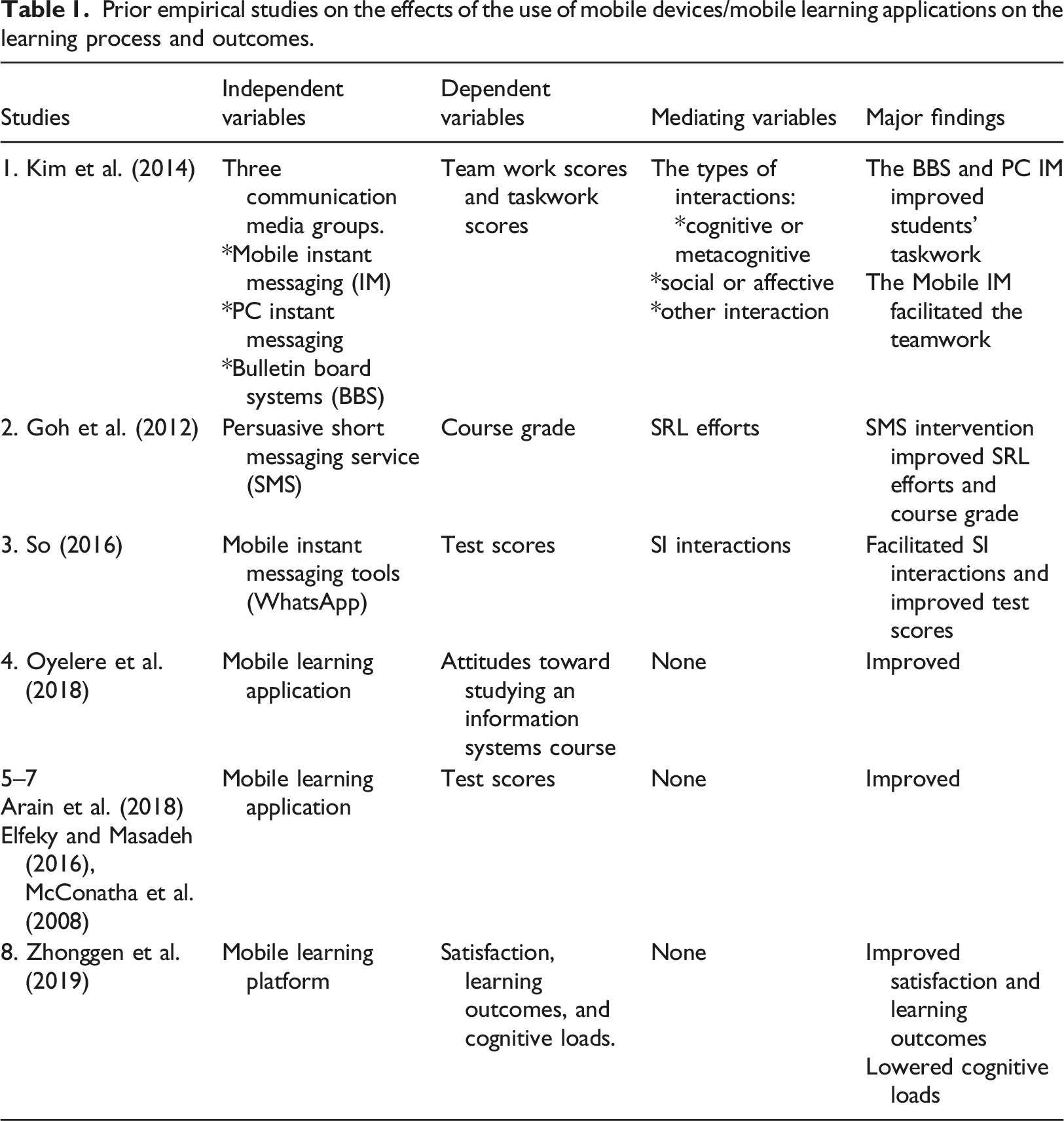
Effects of specific functionalities (instant messaging tools and services) of mobile devices with mediating variables.
The first study by Kim et al. (2014) compared the effect of mobile instant messaging (IM) with PC instant messaging, and the effects of the Bulletin Board System (BBS) on teamwork scores and taskwork scores. More cognitive and metacognitive interactions were found in the BBS group, while social and affective interactions were the major types of interactions in the mobile IM group. The BBS and PC IM improved students’ taskwork, while the mobile IM facilitated their teamwork. Furthermore, the taskwork score of the mobile IM group was significantly lower than the other two groups. Cognitive and metacognitive interactions centered around the key concepts and learning theories that were involved in the course. However, social and affective interactions primarily involved non-task related topics, such as the students’ private lives, praising the other student’s comments, etc.
The second study by Goh et al. (2012) investigated the impact of persuasive short messaging service (SMS) on the students’ SRL efforts and course grades. The study found that several aspects of students’ SRL strategies and efforts had been improved for the experiment group. However, the time and study environment management dimension (attending class regularly) had been significantly lowered for the control group that did not receive SMS intervention. The study demonstrated a positive impact of persuasive SMS on the students’ SRL efforts, and it also showed that the SMS intervention improved the students’ SRL effort and learning outcomes compared to the control group.
The third study (So, 2016) finds that the use of mobile instant messaging tools, such as WhatsApp, outside of school hours facilitated student-instructor interactions and improved the learning achievement measured by test scores.
Effects of specific functionalities of mobile learning applications/platforms without mediating variables
The remaining five studies (62.5%) investigated the effect of the use of mobile learning apps or platforms on the learning outcomes. The fourth study (Oyelere et al., 2018) reported that using mobile learning applications improved the students’ attitudes and has the potential to improve students’ learning achievements. The following three studies (Arain et al., 2018; Elfeky and Masadeh, 2016; McConatha et al., 2008) investigated the influence of a mobile learning application and found positive effects on the learning outcomes that were measured by test scores. The last study (Zhonggen et al., 2019) empirically investigated the impact of a mobile learning platform to identify whether this platform could significantly improve the proficiency of English as a foreign language (EFL), yield learner satisfaction, and reduce learners’ cognitive loads. They concluded that participants with the mobile learning platform were more satisfied than those without it, and the learning outcomes improved significantly. Furthermore, the cognitive loads of the participants with the mobile learning platform were significantly lower than those without it.
Summary and synthesis
There are three preliminary conclusions to be drawn from this review. First, a critical shortcoming of many previous studies is the wide range of numerous dependent constructs. There are at least 7 dependent constructs, as shown in the third column of Table 1. Defining the dependent variables is a critical issue for distance learning empirical research to become a coherent and substantive research field. The mix of the process and outcome constructs makes the previous studies difficult to interpret and compare. A careful review of past empirical research reveals that learning outcomes and learner satisfaction are two major dependent variables (Barbera et al., 2013; Eom et al., 2006; Eom and Ashill, 2016; Eom and Ashill, 2018; Johnson et al., 2008; Kim et al., 2011; Sun et al., 2008).
Second, another critical shortcoming of the prior empirical studies is the absence of the process/mediating constructs. Five out of the eight studies shown in Table 1 do not have any process/mediating constructs. An important reason for conducting empirical e-learning research is to understand why and how the use of mobile phones and mobile apps resulted in positive learning outcomes and students’ satisfaction. The majority (62.5%) of reviewed research failed to provide satisfactory answers to why and how mobile technology integration affected the positive outcomes and satisfaction.
Third, e-learning empirical research must build on the previous research of the cognitive learning processes, notably from educational and psychological literatures and our own empirical research. We introduced the model of Butler and Winne, which suggested a schema for planning future research. They recommended that the research on feedback and the research on SRL should be tightly linked together. Furthermore, the integration of other variables is also necessary to generate synergistic outputs in the knowledge construction and cognitive learning processes. Other variables include course design, instructor activities, the students’ self-regulation, as well as internal and external feedback (Butler and Winne, 1995). Previous research concluded that mobile instant messages facilitated SI interactions or improved SRL efforts. This indicates a lack of a theoretical foundation that was derived from the reference disciplines of educational and psychological literatures. This could lead to suboptimal outcomes.
Research model and hypotheses development
The left side of the research model, Figure 2, contains exogenous/independent latent variables, while the right side includes endogenous/dependent latent variables. More than 60% of the previous studies we reviewed failed to provide a satisfactory, theoretical basis for explaining how the use of mobile devices affects the learning process. The lack of mediating constructs is the main shortcoming of many prior studies that failed to provide a satisfactory theoretical basis of how the use of mobile devices affects students’ learning processes and outcomes. According to Butler and Winne (1995), SRL is a pivot upon which the students’ learning outcomes turn, and feedback is a prime determiner of the processes that constitute SRL. Feedback is delivered through dialogues (SI dialogue and SS dialogue). Feedback and student motivation jointly contribute to the self-regulation behaviour that affects the learning outcomes. This view supports a model of self-regulated learning that views the instructor’s cognitive and metacognitive feedback as a prime determinant of the self-regulated learning process when it is delivered through SI dialogue (Butler and Winne, 1995).
Self-regulated learning, dialogue, and cognitive learning process
Few theoreticians in educational research disagree with the notion that SRL is the pivot on which learning outcomes depend (Butler and Winne, 1995; Zimmerman, 1990). Self-regulated students are the ones who are “meta-cognitively, motivationally, and behaviorally active participants in their own learning process (Zimmerman, 1986).” The metacognitive processes of self-regulated learners consist of setting goals, planning, organizing and selecting learning strategies, self-monitoring, and self-evaluating at various points during the process of knowledge acquisition (Corno, 1986).
Feedback is a prime determiner of the SRL process, and therefore, research on feedback and research on SRL should be tightly coupled (Butler and Winne, 1995). Feedback is defined as “information provided by an agent (e.g., teacher, peer, book, parent, self, experience) regarding aspects of one’s performance or understanding”(Hattie and Timperley, 2007). It is an inalienable catalyst that fosters goal achievement. Internal feedback is generated as the outcome of the monitoring process. More research provided further confirmation that learners are more effective when they attend to externally provided feedback from peers and the instructor (Butler and Winne, 1995; Bangert-Drowns et al., 1991). External feedback is provided to learners through interaction/dialogue with an agent in various communication modes, such as e-mails, multimedia conferencing, bulletin board systems, text messaging, mobile phones, etc. Figure 1 illustrates that interaction/dialogue occurs among entities on the left-hand side (the students, instructors, and information systems/learning management systems). The research model only includes two major types of dialogue: SS dialogue and SI dialogue. They affect SRL efforts as well as learning outcomes. System’s view of e-learning success model. (Source: Eom & Ashill 2016, p.189)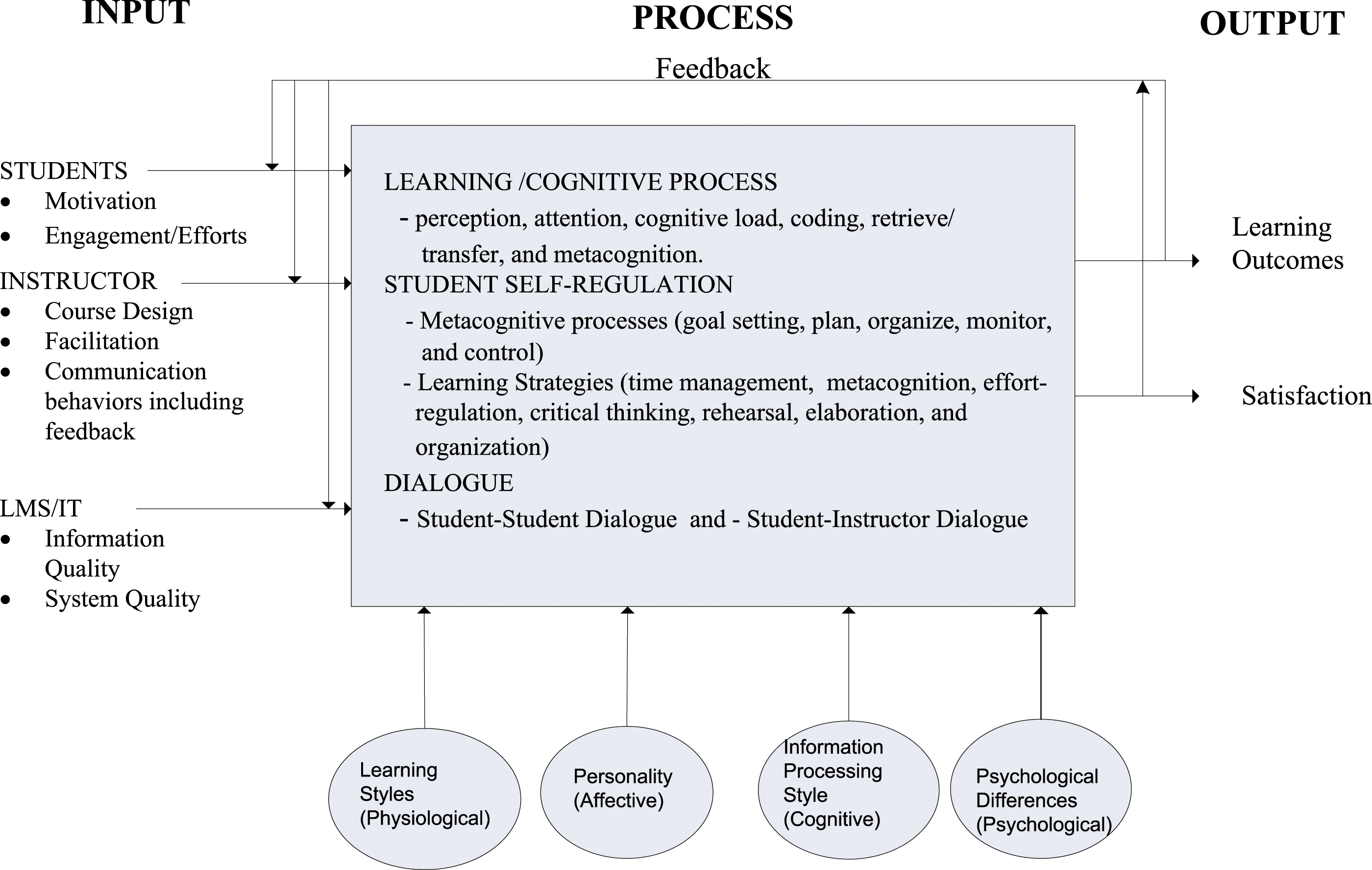
Mobile technology and dialogue
The use of mobile technology is a predictor that affects the learning process with three sub-processes: SRL strategy selection, SS dialogue, and SI dialogue. As previously mentioned, communicating with professors (51%) and fellow students (44%) were the most common activities performed, according to a survey of 1500 current and past students (Magda and Aslanian, 2018). The primary function of mobile devices is to communicate with the instructor and students in online classes (Gikas and Grant, 2013; Shonola et al., 2016).
Therefore, we hypothesized:
: Students with a higher level of mobile technology use in online courses will report higher levels of dialogue among students.
: Students with a higher level of mobile technology use in online courses will report higher levels of student-instructor dialogue.
Mobile technology and self-regulated learning
Learners with a high level of self-regulation are “metacognitively, motivationally, and behaviorally active participants in their own learning process. Such students personally initiate and direct their own efforts to acquire knowledge and skill rather than relying on teachers, parents, or other agents of instruction (Zimmerman, 1989, p.329).” As such, it is necessary for them to continuously monitor the learning process and outcomes to evaluate the learning effectiveness.
Monitoring the learning process involves continuously tracking the discrepancy between learning goals and plans, including the target course grades and learning outcomes. Mobile technology provides students with the tools to continuously monitor their grades and adjust the study plans in each course, so they can select a self-regulated learning strategy to achieve the desired learning outcomes (Zimmerman, 1990; Shih et al., 2010; Eom, 2019). Therefore, we hypothesized:
: Students with a higher level of mobile technology use in online courses will report higher levels of self-regulated learning activities.
Dialogue and self-regulated learning
The model proposed in Figure 2 is built on the foundation and outcomes of previous research over the past several decades. SRL is a pivot upon which the students’ learning outcomes turn, and feedback is a prime determiner of the processes that constitute SRL. Feedback that is delivered through dialogues (SI dialogue and SS dialogue) and student motivation jointly contribute to the self-regulation behaviour that affects the learning outcomes. This supports a model of self-regulated learning that views the instructor’s cognitive and metacognitive feedback delivered through SI dialogue as a prime determinant of the self-regulated learning process (Butler and Winne, 1995). Research model.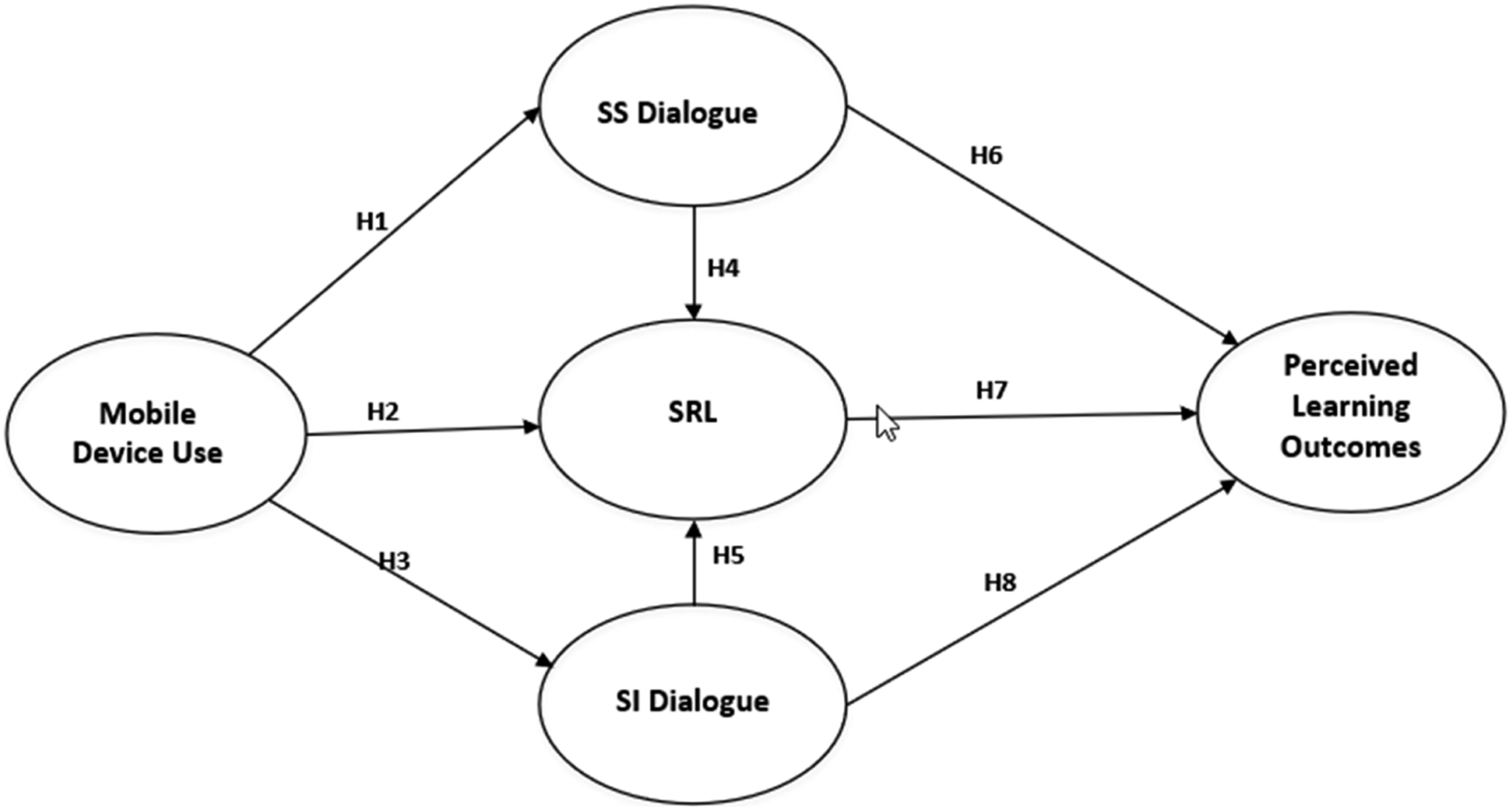
Moreover, recent empirical studies demonstrated that SS dialogue has a positive impact on both the students’ satisfaction and learning outcomes (Eom and Ashill, 2016; Eom and Ashill, 2018). Yet, few e-learning empirical studies provide any direct empirical evidence between SS dialogue and SRL. The system’s view of e-learning success, on which this current research model is based, manifested that dialogue (SI dialogue and SS dialogue) and self-regulatory learning processes are the two pivots upon which student learning outcomes and satisfaction depend. As such, it suggests that meaningful and positive interactions (SI dialogue and SS dialogue) positively influence the self-regulated learning process. The direction of influence from dialogues to SRL is the important issue here. This relationship between SI dialogue and SRL was empirically tested (Eom and Ashill, 2016).
The dialogue between students and the instructor about the students’ progress helps students activate their metacognition and direct their attention to the learning outcomes (Ley, 1999). As such, students select and use their SRL strategies to achieve the desired learning outcomes, continuously monitor the learning process and become responsive to self-oriented feedback about learning effectiveness, and activate their interdependent motivational processes (Zimmerman, 1990; Perry et al., 2002). Within the constructivist paradigm, one school of thought, collaborativism, assumes that knowledge is socially and collaboratively constructed through sharing (Arbaugh & Benbunan-Fich, 2006). Accordingly, involvement, interaction, and dialogue (SS dialogue and SI dialogue) are viewed as being critical ingredients to the success of e-learning (Arbaugh and Benbunan-Fich, 2006; Bruner, 1985; Vygotsky, 1978). Therefore, we hypothesized:
: A higher level of perceived SS dialogue in online courses will be positively related to the higher level of SRL activities.
: A higher level of perceived SI dialogue in online courses will be positively related to the higher level of SRL strategies.
Dialogue and perceived learning outcomes
The extant literature (Hirumi, 2002; Moore, 1993; Vrasidas and McIsaac, 1999; Woo and Reeves, 2007) suggests that only meaningful and positive interactions (dialogue) between the instructor and students, as well as among students, positively influence the learning outcomes. In this study, the term dialogue refers to purposeful, constructive, and meaningful interaction that is valued by each party. Dialogue promotes learning through active participation and enables deep cognitive engagement for developing higher-order knowledge. Focusing on only the relationship between dialogue, significant positive relationships between both SS dialogue and learning outcomes as well as SI dialogue and learning outcomes are reported (Eom and Ashill, 2016; Eom and Ashill, 2018). A higher level of perceived dialogue is measured by the frequency and quality of dialogue that improves the quality of the learning outcomes. Their findings underscore that only meaningful interaction (dialogue) counts. It also emphasizes that it directly influences the learners’ intellectual growth, stimulates the learners’ intellectual curiosity, and helps them achieve a higher level of learning outcomes. Therefore, we hypothesized:
: A higher level of perceived SS dialogue in online courses will be positively related to a higher level of perceived learning outcomes.
: A higher level of perceived SI dialogue in online courses will lead to a higher level of learning outcomes.
Self-regulated learning and perceived learning outcomes
Pintrich et al. (1991) broadly categorize SRL strategies into two groups: cognitive and metacognitive strategies (rehearsal, elaboration, organization, critical thinking, and metacognitive self-regulation) and resource management strategies (time management and study environment, effort regulation, peer learning, and help seeking).
Cognitive and metacognitive strategies refer to a set of strategies that promote the awareness and control of thought. The extant literature has shown that the e-learners’ use of the SRL strategies (time management, metacognition, effort regulation, and critical thinking) were positively correlated with academic outcomes (Asarta and Schmidt, 2013; Baugher et al., 2003). On the other hand, rehearsal, elaboration, and organization had the least empirical support (Broadbent and Poon, 2015). Therefore, we hypothesized:
: Students with a higher level of SRL activities in online courses will report a higher level of perceived learning outcomes.
Survey instrument and sample
All model constructs were measured using five-point Likert scales with reflective indicators since they measured the same underlying phenomenon. With reflective measurement, all indicators are interchangeable, which is a key principle of reflective measures (Chin, 1998). We selected the survey questionnaire from previous studies (Eom and Ashill, 2016; Eom and Ashill, 2018). The previous surveys are in part adapted from the commonly administered IDEA (Individual Development & Educational Assessment) student rating system developed by Kansas State University. The questionnaire on student self-regulation was adapted in part from the Motivated Strategies for Learning Questionnaire (MSLQ) (Pintrich et al., 1993), an 81-item, self-reported instrument designed to measure the college students' motivational orientations and their use of different learning strategies (Pintrich et al., 1991). Questions on self-regulated learning (14, 15, and 16) were adapted from the learning strategies section of the MSLQ instrument. MSLQ learning strategies scales are composed of 9 different subscales: rehearsal, elaboration, organization, critical thinking, metacognitive self-regulation, time/study environment management, effort regulation, peer learning, and help seeking.
We collected the e-mail addresses of 3285 students from the student data files archived with every online course delivered through the online program of a Midwestern university in the United States. The Institutional Review Boards (IRB) determined that the research proposed presents minimal risk and falls into Category 2 of research that is eligible for exemption from IRB approval. The survey questions did not include any identifiers (e.g., name, address, telephone number) that could be used to identify a specific survey participant. The survey questions were created using Survey Monkey, and the survey URL and instructions were sent to all e-mail addresses. A total of 323 valid, unduplicated responses were received from the students (a simple random sample). The sample has the following characteristics as shown in Appendix B.
Methodology The research model was tested using SmartPLS version 3.3.2 (Ringle et al., 2015), which is the structural equation modeling (SEM)-based Partial Least Squares (PLS) methodology. This is a second generation, multivariate statistical method that can handle unobserved latent variables (constructs) and measurement errors. SmartPLS is used for predictive research models in the initial exploratory stages of theory development. If the prior theory is strong and the objective of the research is further testing, then covariance-based SEM, such as LISREL, is a better choice. Furthermore, SmartPLS does not require specific data distributions. The evaluation of PLS-SEM is divided into two parts: measurement (outer) model and structural (inner) model.
Measurement (outer) model evaluation
The measurement (outer) model defines the relationships between the latent variables (constructs) and their indicators. The evaluation of the reflective measurement model includes examining: (1) the indicator reliability values (squared outer loadings are 0.70 or higher); (2) the internal consistency reliability with several criteria such as Cronbach’s α , composite reliability; (3) the convergent validity with the average variance extracted (AVE); and (4) the discriminant validity (Hair et al., 2017).
Reflective outer model validation results.
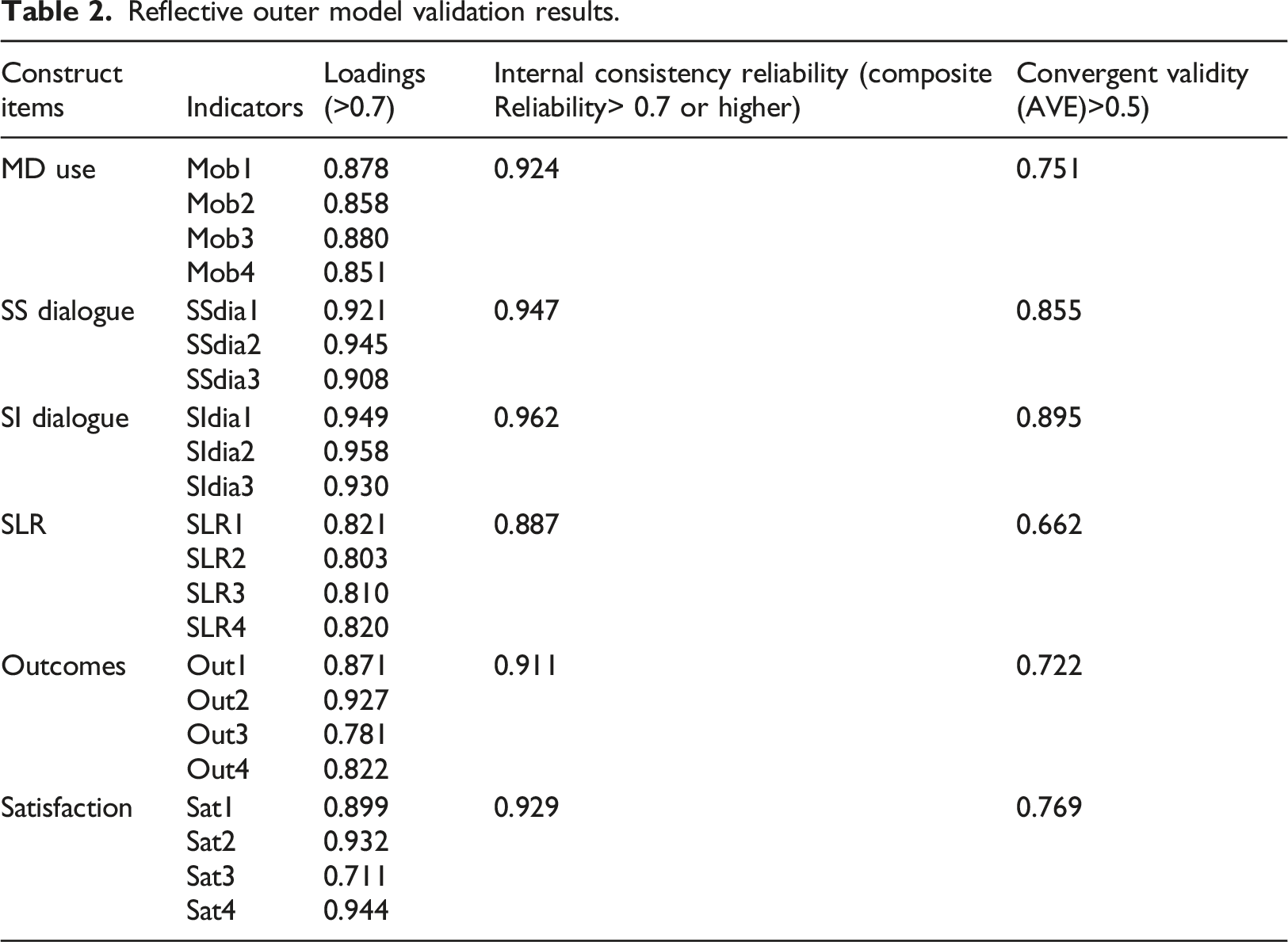
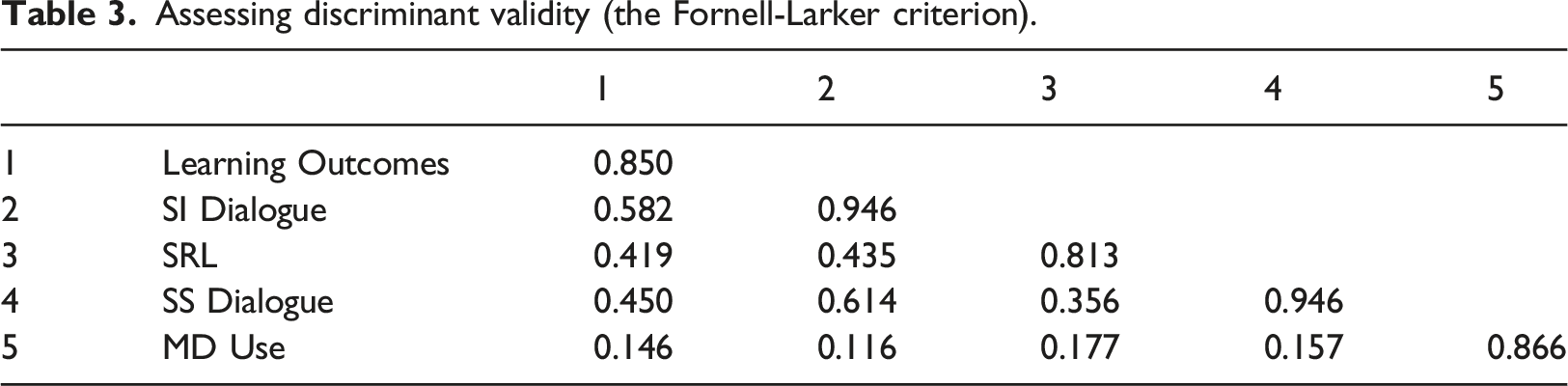
Construct validity is assessed through establishing both convergent and discriminant validities. Convergent validity refers to the extent to which a set of indicator variables load together and highly (loading >0.50) on their associated factors. Individual reflective measures are considered reliable if they correlate more than 0.7 with the construct they intend to measure. Table 2 shows that all of the loadings are higher than the threshold value of 0.7. When indicator variables do not cross-load on two or more constructs, each construct is said to be demonstrating discriminant validity. In PLS, discriminant validity was assessed using two methods. The first method examined the cross-loadings of the constructs and the measures. The second method compared the square root of the AVE for each construct with the correlation between the construct and other constructs in the model (Fornell and Larcker, 1981; Chin, 1998). All constructs in the estimated model fulfilled the condition of discriminant validity.
Assessing discriminant validity (the Fornell-Larker criterion).
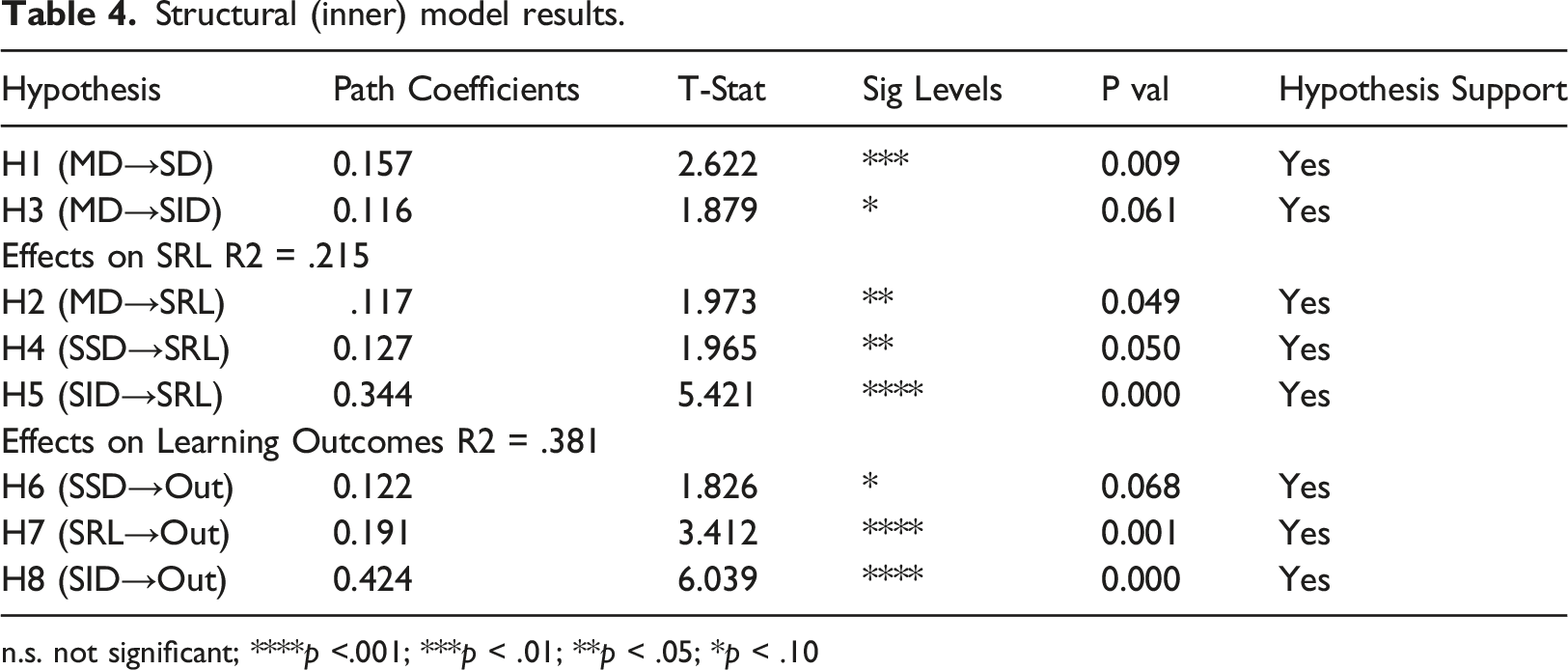
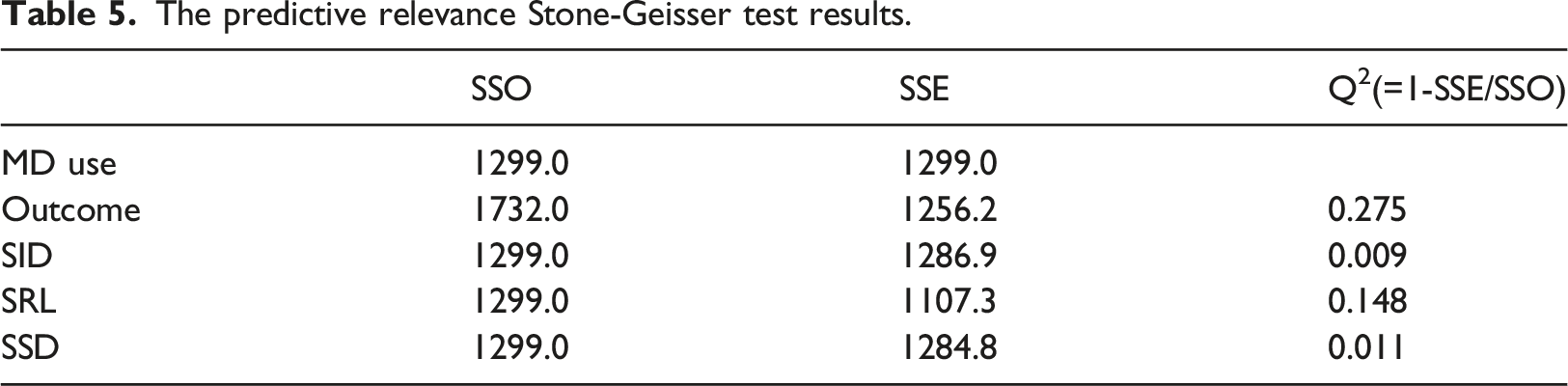
Since PLS-SEM has no distributional assumptions in its parameter estimation procedure, smart PLS applies a nonparametric procedure that allows the testing of the statistical significance of various results. The assessment of the structural model involves examining the significance and relevance of the structural model relationships (the size, t-statistics, and significance level of the structural path coefficients), R2 values for the dependent constructs, and the predictive relevance Stone-Geisser Q 2 test (Hair et al., 2017).
Structural (inner) model results.
n.s. not significant; ****p <.001; ***p < .01; **p < .05; *p < .10
The specific hypotheses, H1 through H8, were tested. Due to the exploratory nature of this study, a significance level of 10% was used. Hypothesis 1 examined the relationship between the use of mobile devices and student-student dialogue. The relationship was positive and significant (β =.157, t = 2.622). The relationship between mobile technology use and student-instructor dialogue was also significant (β = .116, t = 1.879), thus supporting H3. The effect of mobile technology use on selecting self-regulatory learning strategy (β = .117, t = 1.973) was also significant, thus supporting H2. Furthermore, two other hypotheses (H4 and H5) were supported, meaning that a higher level of perceived SS dialogue and SI dialogue in online courses positively lead to a higher level of SRL efforts. The effects of the three mediating constructs (SI dialogue, SS dialogue, and SRL) on learning outcomes were significant, thus supporting H6, H7 and H8 (β = .122, t=1.826, β = .191, t=3.412, and β = .424, t=6.309, respectively). In summary, the findings indicate that SI dialogue (β = .344) is the strongest predictor of SRL. Moreover, SI dialogue is the strongest predictor of learning outcomes (β = .424).
The predictive relevance Stone-Geisser test results.
Conclusion and discussions
This research examines the impact of mobile device usage from a holistic view in which mobile technologies are considered a critical success factor to facilitate the learning process to produce positive e-learning outcomes. Based on the educational and psychological literature (Butler and Winne, 1995; Zimmerman, 1990) on SRL and interaction/dialogue and contemporary state of the art research (Eom and Ashill, 2018), we present an elaborated research model that synthesizes SRL and the two types of interaction/dialogue (SS dialogue and SI dialogue). This research is built on a learning theory-based, integrated e-learning success model of a dynamic interdependent set of CSFs interacting together. It demonstrates that learning outcomes critically depend on two factors—dialogue and SRL behaviors.
More than 40 years ago, Keen (1980) defined the three main needs of management information systems in order to become a coherent research field: clarification of reference disciplines, definition of the dependent variables, and building a cumulative research tradition. This is still true in distance learning empirical research, except for the clarification of reference disciplines. This paper adds the following points to the existing distance learning knowledge base.
First, we synthesized the previous literature in Table 1 to develop an elevated model to build a cumulative research tradition. The review of the literature revealed that the use of mobile instant messaging or mobile learning applications/platforms is positively related to a higher level of perceived/actual learning outcomes. In addition to instant messaging, our research empirically tested a wide range of other mobile device functionalities such as real-time monitoring to check the students’ progress as well as real-time feedback and dialogue between students and the instructor. It also tested an interface tool that facilitated class discussions and a forum activities tool that asked questions and answered the questions posted on the learning management system by other participants.
Second, the previous studies failed to explain the mediating roles of cognitive learning processes in which the three mediating variables are intertwined. Only two studies partially explained that persuasive SMS intervention improved SRL efforts (Goh et al., 2012) or that facilitated SI interactions resulted in positive learning outcomes (So, 2016). Our elevated model showed that learning outcomes depend on the cognitive learning process that consists of the students’ SRL behaviour, SI dialogue, as well as SS dialogue and dynamic interplay between SRL and the two types of dialogue. This research model, Figure 2, is built on a system’s view of the e-learning success model (Eom and Ashill, 2018) that identified three essential process/mediating variables that affect positive learning outcomes: SRL behaviour, SI dialogue, and SS dialogue. To be a useful distance learning model, it is necessary to clearly define the relationship among the three process variables. In doing so, this research further integrates contemporary educational and psychological literatures (Butler and Winne, 1995). According to Butler and Winne (1995), SRL is a pivot upon which the students’ learning outcomes depend. Feedback is inherent in the learning processes that constitute SRL, and it is a prime determinant of learning processes. The positive learning outcomes are the output of the dynamic learning process in which the three process variables are intertwined. Specifically, SI dialogue and SS dialogue are prime determinants of the self-regulated learning process as the two arrows pointing to SRL show in Figure 2.
Third, we clarified the dependent variables. As shown in Table 1, the dependent variables in the previous eight studies in the review include at least eight variables. As such, meaningful conclusions are hard to reach with no coherent definition of a dependent variable. As reviewed, Arbaugh, et al. (2010) produced more startling numbers: 158 independent variables and 107 dependent variables. The myriad of independent and dependent variables in the empirical research in any field hampers the progress toward a cumulative research tradition (DeLone and McLean, 1992; Keen, 1980). To facilitate the progress toward a cumulative research tradition, this research used learning outcome as the dependent variable. The e-learners’ learning outcomes and satisfaction have been two major dependent constructs in e-learning empirical studies (Eom et al., 2006; Eom and Ashill, 2016; Eom and Ashill, 2018; Arbaugh and Benbunan-Fich, 2006; Barbera et al., 2013).
Theoretical and practical implications
Digital distance learning processes occur on a digital IT infrastructure that is composed of several major platforms, such as computer hardware platforms, networking platforms, etc. The mobile digital platforms have become an increasingly important current trend in many organizations, including educational institutions. Mobile technology devices such as iPhones, Android smartphones, and tablet computers have been increasingly used by distance learners due to their improved and powerful functionalities. Most mobile handheld devices are mobile phones with core functions (such as voice calls and text messaging) and mobile computing devices that support wireless communication protocols including Wi-Fi. It is the wireless Internet access capability of mobile technology devices that have transformed digital distance learning and have had far-reaching deeper and wider theoretical and practical implications.
E-learning, m-learning, and digital distance learning are conceptually and technologically different. There are many similarities and differences, and there are also many benefits and disadvantages (Basak et al., 2018). A consensus has not been reached yet in defining the three terms (Peters, 2007; Park, 2011; Grant, 2019; Moore et al., 2011). This paper focuses on the effects of the use of mobile devices on the e-learning process and perceived learning outcomes. As such, we present information technology-driven definitions of e-learning, m-learning, and digital distance learning (Figure 3). The advent of mobile technologies has created opportunities for the delivery of learning via mobile devices (Eom and Laouar, 2020). Digital distance learning.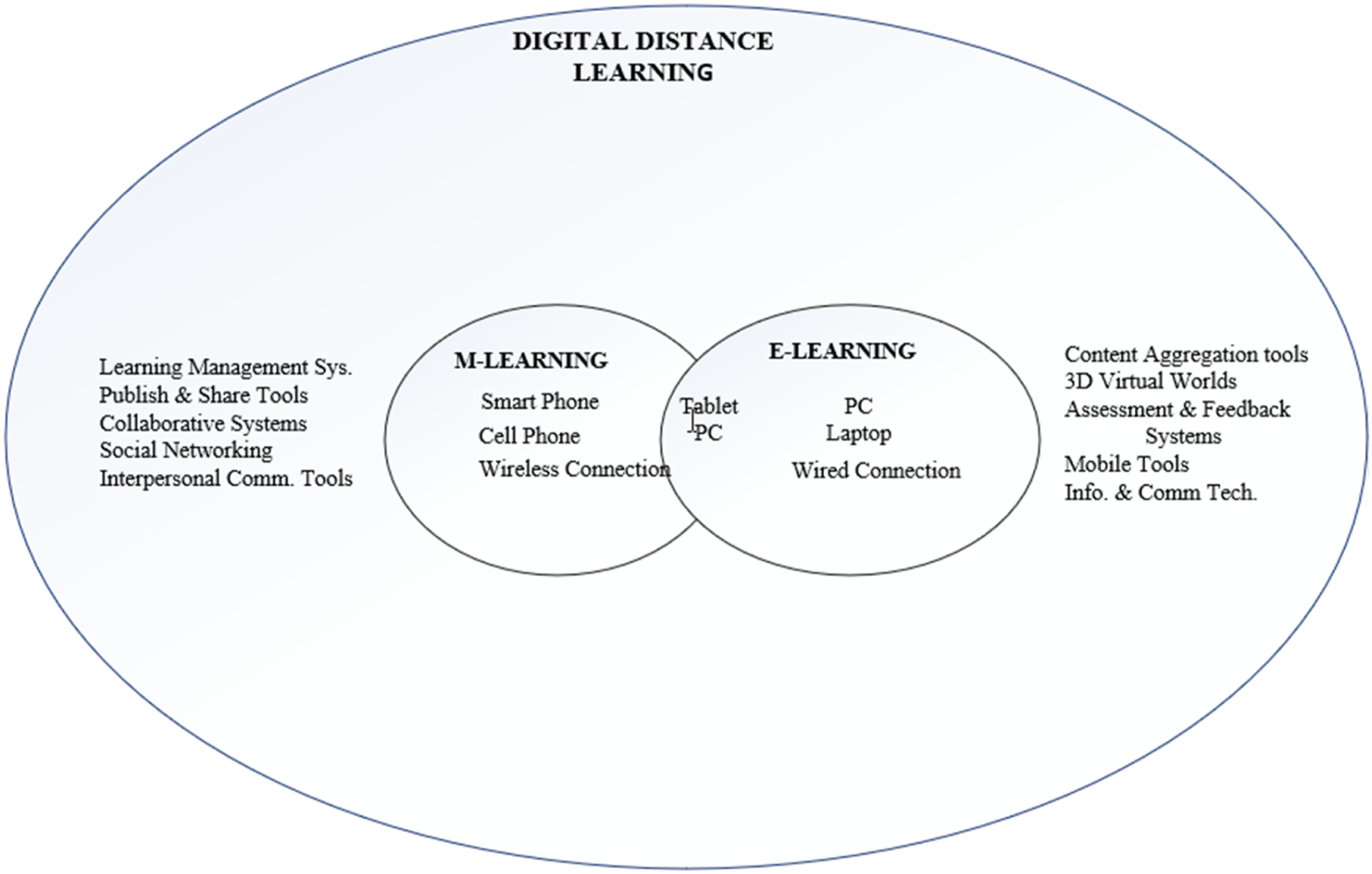
According to Basak, et al. (2018), digital learning is “a term that is increasingly replacing e-learning and it concerns the use of information and communication technology (ICT) in the open and distance learning.” The defining characteristics of digital learning are the use of a wide spectrum of digital technology tools to increase the students’ learning outcomes as well as to bolster students’ learning experience (Basak et al., 2018; Grand-Clement et al., 2017). This broad definition of information technology driven digital learning makes it an encompassing term to include e-learning, m-learning, blended learning, face-to-face learning, and massive open online course (MOOC). Figure 3 summarizes and contrasts the differences among e-learning, m-learning, and digital distance learning. Based on a recent literature review, there are 10 digital technologies frequently used by students in higher education under digital distance learning (Pinto and Leite, 2020).
First, the findings of this research show that the use of mobile devices by distance learners positively affects their cognitive learning process and perceived learning outcomes. Many prior surveys indicated that students use a wide range of mobile devices to complete course-related activities. Nevertheless, Farley et al. (2015) conclude that the delivery of learning processes encountered specific pedagogical challenges when integrating mobile devices with instructional design strategies. They proposed some practical, low-cost tactics that the instructor and administrators can implement to facilitate the learning processes and to bolster learning outcomes. They include enhancing the learning resources (course materials, course websites, and LMS) to make them mobile friendly, adjusting course materials in multiple file formats, and recommending some useful apps and mobile friendly resources.
Second, integrating mobile technology enables educational institutions to design and build the distance learning systems that allow students to be highly flexible in the learning process. The distance learning systems allow them to learn at a flexible location and learn with a flexible schedule. The power of mobile digital computing and communication devices enables distance learners to learn anywhere, at any time. Student learning with mobile technology-integrated environments is both lifewide and lifelong learning. Mobile handheld devices allow distance learners to pursue lifewide learning, which is learning in different places (in their homes, at work, on the train, etc.) simultaneously, thanks to the ubiquity of the internet access. Lifelong learning is learning throughout one’s life time. The use of mobile devices is not required to be a life-long learner, but it will give life-long learners more flexibility (Barnett, 2010). Furthermore, it allows students to choose the timing and format of delivery (online, blended, and mobile) that fit their personal circumstances. These learning opportunities are enabled by mobile and portable technologies (King and South, 2017).
Third, due to mobile devices’ various distinctive features such as individualized interfaces, real-time access to information, context sensitivity, and real-time feedback and dialogue, the integration of mobile devices promotes self-directed learning and inquiry learning. It also enhances the quality of the learning process. It does so by providing real time feedback via SS dialogue and SI dialogue to select an appropriate SRL strategy to reduce the discrepancy between the learning goal and the current status.
Fourth, the introduction of mobile phones and wireless devices into e-learning contexts over the past several decades has transformed the nature of e-learning significantly. The transformation has reached a point that demands a new term or a new definition of e-learning. This is needed in order to accurately reflect the current state of university online education in which 67% of fully online students used mobile devices to complete some of their online coursework (Schaffhauser, 2018). With the integration of mobile devices into online education, are we delivering mobile learning? The answer is not so clear and straightforward. If we apply the definition of Keegan (2005), ‘the provision of education and training on PDAs/palmtops/handhelds, smartphones and mobile phones’, the answer is yes. On the other hand, if we apply other definitions such as Traxler (2005), ‘any educational provision where the sole or dominant technologies are handheld or palmtop devices’, the answer is no, since the mobile devices are neither the sole nor dominant technologies. The transformation in distance-learning points to a new wave of distance learning environments: the emergence of digital distance learning in which either traditional e-learning and mobile learning coexists, or e-learning and m-learning are being integrated and switchable. For example, a cloud-based adaptive learning system that incorporates mobile devices into the e-learning system allows users to switch between e-learning and m-learning, and between devices, without any loss in personalized content (Nedungadi and Raman, 2012). The current practice of e-learning reflects a combined form of e-learning and m-learning. The existing definitions of e-learning are neither suitable nor comprehensible and need to be replaced by a new term, digital distance learning. The term “digital learning” is a generic term applicable in all domains, including face-to-face education, e-learning, blended learning, and m-learning.
Limitation and future research directions
Although this study expands our knowledge of the effects of mobile device use on the distance learning process and outcomes in university education, it has several limitations. Additionally, viable prospects for further research remain.
First, our study was completed using data from online students of one Midwestern university in the U.S. This may limit generalizations. To broaden the database for further generalizations, testing the viability of our model in other online programs at other universities would be fruitful. While the use of a single organizational setting allows the control of confounding effects originating from interorganizational differences, it limits generalizability. Therefore, future studies among students of online programs in other universities are needed for conclusive generalizations.
Second, our research presents a gray box model in which some parts of internal processing activities (students’ SRL and SI and SS dialogues) are known, while other internal cognitive process are not known. A future research agenda should examine the relationships between internal cognitive processes and actual learning outcomes (Wilmer et al., 2017).
Third, although this study focused on the effect of mobile device usage on the learning process and outcomes, future studies are needed to build and test a holistic model of e-learning success models in which the use of mobile devices is a CSF. A future research model is an expansion of the system’s view of the e-learning success model (Eom and Ashill, 2018: , p.46). The expanded model of future research consists of an additional input variable of mobile device usage, the same process variables (SRL, SS dialogue, and SI dialogue), and the same output variables. Nevertheless, adding the mobile device usage variable to the distance learning success model could lead to several fruitful directions, such as the impact of mobile device usage on the students’ motivation to learn. Although there are several studies that examined the relationship between the level of students’ motivation and mobile device usage (Chaiprasurt and Esichaikul, 2013; Mockus et al., 2011), they all failed to reach a consensus. Therefore, a fruitful direction for future research includes the investigation of mobile technology’s role in relationships with other variables in previous research (Eom and Ashill, 2018).
Footnotes
Declaration of conflicting interests
The author(s) declared no potential conflicts of interest with respect to the research, authorship, and/or publication of this article.
Funding
The author(s) received no financial support for the research, authorship, and/or publication of this article.

Author Biography
Sean B. Eom is a Professor Emeritus of Management Information Systems (MIS) at the Harrison College of Business of Southeast Missouri State University. He received his PhD in Management Science from the University of Nebraska ‐ Lincoln. He also received an MS in international business from the University of South Carolina at Columbia, an MBA from Seoul National University, Korea, and a BS from Korea University, Korea. His research areas include digital distance learning, business intelligence, and bibliometrics. He is the author/editor of 12 books and has published than 85 refereed journal articles and more than 130 articles in encyclopedias, book chapters, and conference proceedings.