




Abstract
This study set out to provide a descriptive yet critical exploration of teachers’ experiences while using e-learning in the context of the 2019 novel coronavirus (COVID-19) pandemic. Using a qualitative phenomenology research paradigm, the study explored first-hand experiences of three university teachers (hence researchers as well) from two countries, that is, Bangladesh and Saudi Arabia. The contexts in which the researchers used e-learning showcased complex, challenging, and dynamic sites, that is, within institutions and individual classrooms. More specifically, the study identified acceptances, struggles, and negotiations at both the macro-level of policy/decision making and the micro-level of online classroom practices. Reflecting on the findings, this article concludes by offering a set of recommendations that might be applicable and useful for similar contexts beyond Bangladesh and Saudi Arabia. The researchers argue for developing a context-based, inclusive, and appropriate e-learning policy guideline that could be utilized during the emergency time now and in the near future.
Introduction
COVID-19, with its spawning outbreak, almost paralyzed the whole world, including political, socioeconomic, and educational contexts. However, while other sectors have started resuming their real-time activities, the lockdowns imposed in countless cities and quarantining of millions worldwide have crippled the whole education system. Students around the world have literally been stranded for an indefinite time. In-person classes in universities, colleges, and schools were postponed in attempts to deter community transmissions of the virus. After the spread of the COVID-19 pandemic, the education systems across the globe have seen how the exponential emergence of emergency remote teaching (ERT), a diluted form of e-learning (Hodges et al., 2020), has turned into an agent of the new-normal reality, a rescuer. Institutions with the technical capabilities to do so have started offering classes online. In the “stay home” situation during the COVID-19 pandemic, e-learning made it possible to continue classes as it ensured the flexibility of space and time limitations. Consequently, students could participate easily in lectures, course work, discussion sessions, exams, and other activities (Khan, 2009), anywhere and at any time. This saved them from losing valuable semester time and hence saved both students and institutions from possible financial disaster.
Set against this backdrop, the current study attempted to examine teachers’ experiences of using e-learning during the COVID-19. More specifically, the study aimed to investigate and develop a critical understanding of their first-hand experiences of using e-learning in both digital and emerging digital contexts. In this regard, the experiences of three university teachers from the Kingdom of Saudi Arabia (KSA) and Bangladesh were studied, as these two countries are regarded as a digital and an emerging digital context, respectively. One university teacher had the opportunity to use Blackboard Learn (BbL), an integrated and complete learning management system (LMS) adopted by the university. Another used Google Classroom (GC), which was preferred by the university authority. The third one used Zoom Meetings, a choice he had to make by himself as the university authority did not suggest or arrange any specific means for conducting online classes. The study, therefore, attempted modestly to investigate the following research questions: How have the studied universities responded to the need to introduce e-learning during the COVID-19 pandemic? Were the universities institutionally and technically ready to face the unprecedented challenge posed by the pandemic? What were the university teachers’ experiences while using e-learning in their own contexts? What issues did they face at the beginning phase of using e-learning?
The article is structured in the following way. The introductory section provides a rationale for undertaking the study. The literature review section presents a brief chronology of e-learning, including its usage in emergency periods. The next section addresses the COVID-19 issue in general and its impact on education in the studied contexts in particular. The methodology section entails the theoretical framework of the study. The findings section showcases the three university teachers’ first-hand experiences of using e-learning, followed by a discussion of the key findings. Finally, the study’s limitations are addressed and its contribution to scholarship is presented, along with some implications for future research and practice.
Literature review
From correspondence learning to technologized learning
The origin of e-learning was distance education, which was first documented in 1728 and conducted by Caleb Phillips as “correspondence study” (Holmberg et al., 2005; Kentnor, 2015). The first distance course was provided by Isaac Pitman in England. He taught shorthand using postcards in the 1840s and received students’ assignments for correction (Hansen, 2001; Holmberg et al., 2005; Kentnor, 2015). The University of London became the first university to offer distance learning degrees in 1858 (IMDET, 2020). In the 1990s, personal computers and the internet revolutionized distance education, with the gradual integration of synchronous and asynchronous techniques of data transmission (Holmberg et al., 2005; McIsaac and Gunawardena, 1996). Over the years, the need for distance education grew to meet teacher shortages, minimize overhead costs, and cover geographical distances. The evolution and progression of distance learning carried on in parallel with innovations in communications technology. At the end of the 20th century, the advancement of the internet transformed the older forms of distance learning into e-learning (Kentnor, 2015; Liu and Wang, 2009). Since the scope of the current study and the space of the article do not permit a detailed chronology of distance education, the literature review section is focused on e-learning.
E-learning, also known widely as online learning, online distance learning, or web-based learning (Arkorful and Abaidoo, 2015; DeBlois and Maltz, 2005; Khan, 2009; Liu and Wang, 2009), incorporates information and communication technologies that are either web-based, web-distributed, or web-capable (Nichols, 2003). It disseminates and enables global access to online learning/teaching resources (Arkorful and Abaidoo, 2015) in the form of network courses in many ways (Liu and Wang, 2009). An LMS, in this regard, supports e-learning activities from traditional classrooms to total course management online. It is a web-based platform for providing complete learning solutions where online course components are assembled and used (Muñoz Merino et al., 2006; Nichols, 2003). The tasks that can be conducted through LMS platforms include organizing lectures, monitoring students’ activities, giving feedback, uploading course materials, and conducting assessments. Realizing the functionality to improve instructional processes, many universities around the world have adopted LMSs (Al-Busaidi and Al-Shihi, 2012; Aldiab et al., 2019). Institutions with limited or no access to LMS platforms are struggling to provide students with distance learning during the COVID-19 pandemic. Some of the social networking platforms, namely, Zoom, Facebook Messenger, WhatsApp, and YouTube, could be used, but their apparent inadequacies can never enable these to be substitutes for LMSs.
E-learning in times of emergency
Access to education is directly interrupted by emergencies such as wars, conflicts, natural disasters, disease outbreaks, or economic fallouts (Creed and Morpeth, 2014). Evidence from different countries has reported such interruptions. UNICEF reported about 35 million children missing out on education because of conflict or disaster (UNICEF, 2018). More specifically, hundreds of schools have been destroyed or occupied by armed groups in Yemen and South Sudan. Many schools were turned into temporary shelters during the 2007 Cyclone Sidr in Bangladesh and 2010 floods in Pakistan. Likewise, the Ebola epidemic in West Africa caused school closures over the region in 2013. In such cases, distance education has always helped to enable education to continue. In Iran, TV channels were used for one-way learning in the last years of the 8-year-long Iraq and Iran war (Tehran Times, 2020). In Syria, the Philippines, Sri Lanka, and Afghanistan, short-term open, distance, and flexible learning (ODFL) was offered during armed conflicts. New Zealand saw measles epidemics in 1991, 1997, and 2011, and all the children in the country went through distance learning for several weeks (Creed and Morpeth, 2014). The University of Canterbury, New Zealand, immediately adopted e-learning technologies, for example, LMS, web conference, recorded audio, and video, for its students after the 2011 earthquake (Ayebi-Arthur, 2017). Most recently, Najran University, which is located on the border of Saudi Arabia and Yemen, has used e-learning initiatives to conduct online classes and assessments as the university remains closed due to the ongoing political crisis between these two countries (Rajab, 2018).
The latest worldwide outbreak of COVID-19 has added another example to the milieu of ERT, where e-learning has been considered a rescuing tool by and for tertiary institutions. The current unprecedented challenge and ongoing emergency caused by COVID-19 led to a greater preponderance of e-learning than before. E-learning, in this way, is still a way to support traditional classrooms, making teaching and learning possible, feasible and flexible. Institutions around the world opt for using (if possible) modernized distance education, that is, e-learning, with its various LMS and other web-based platforms. The next section describes the impacts of COVID-19 on the studied contexts.
COVID-19 and e-learning in two countries
COVID-19, one of the members of a large family of viruses (WHO, 2020d), was first reported on 31 December 2019 in Wuhan city, Hubei province of China (Peeri et al., 2020). It is believed to be a zoonotic pathogen, with early cases infected from a zoonotic source, for example, wild bats (Peeri et al., 2020; Sahin et al., 2020). Unlike the previous two coronaviruses, namely, the severe acute respiratory syndrome (SARS) and the Middle East respiratory syndrome (MERS), COVID-19 became the focus of global concern because of its contagious nature, rapid spread (Peeri et al., 2020; WHO, 2020b), and a higher case fatality rate than that of influenza (Rajgor et al., 2020). The WHO declared the outbreak to be a public health emergency of international concern on 30 January 2020 (WHO, 2020c). Assessing the outbreak, on 11 March 2020, WHO announced the disease as a pandemic and called for immediate actions across the globe (WHO, 2020b, 2020e). As of June 2020, the outbreak has since spread to 216 countries, with more than 6.9 million confirmed cases and 0.40 million deaths (WHO, 2020a). COVID-19, thus, appears to be more contagious and deadly than SARS and MERS (Wu and McGoogan, 2020).
Following the guidelines prescribed by the WHO, most countries applied not only social distancing, quarantine, and isolation measures in an attempt to restrict the spread, but also adopted strict measures—declared curfews, stopped international flights, suspended public transport, and closed workplaces. With no end in sight to the pandemic, educational institutions also suspended face-to-face classes and exams for an extended period. By April 2020, 190 countrywide closures had affected 90% of the world’s student population (UNESCO, 2020). This critical situation necessitated e-learning as an emergency response to enable education to continue. Bangladesh and Saudi Arabia, the contexts of this study, were no exception (see Figure 1). The next subsections explicate their responses to the unprecedented challenges. Infographic of events during the outbreak.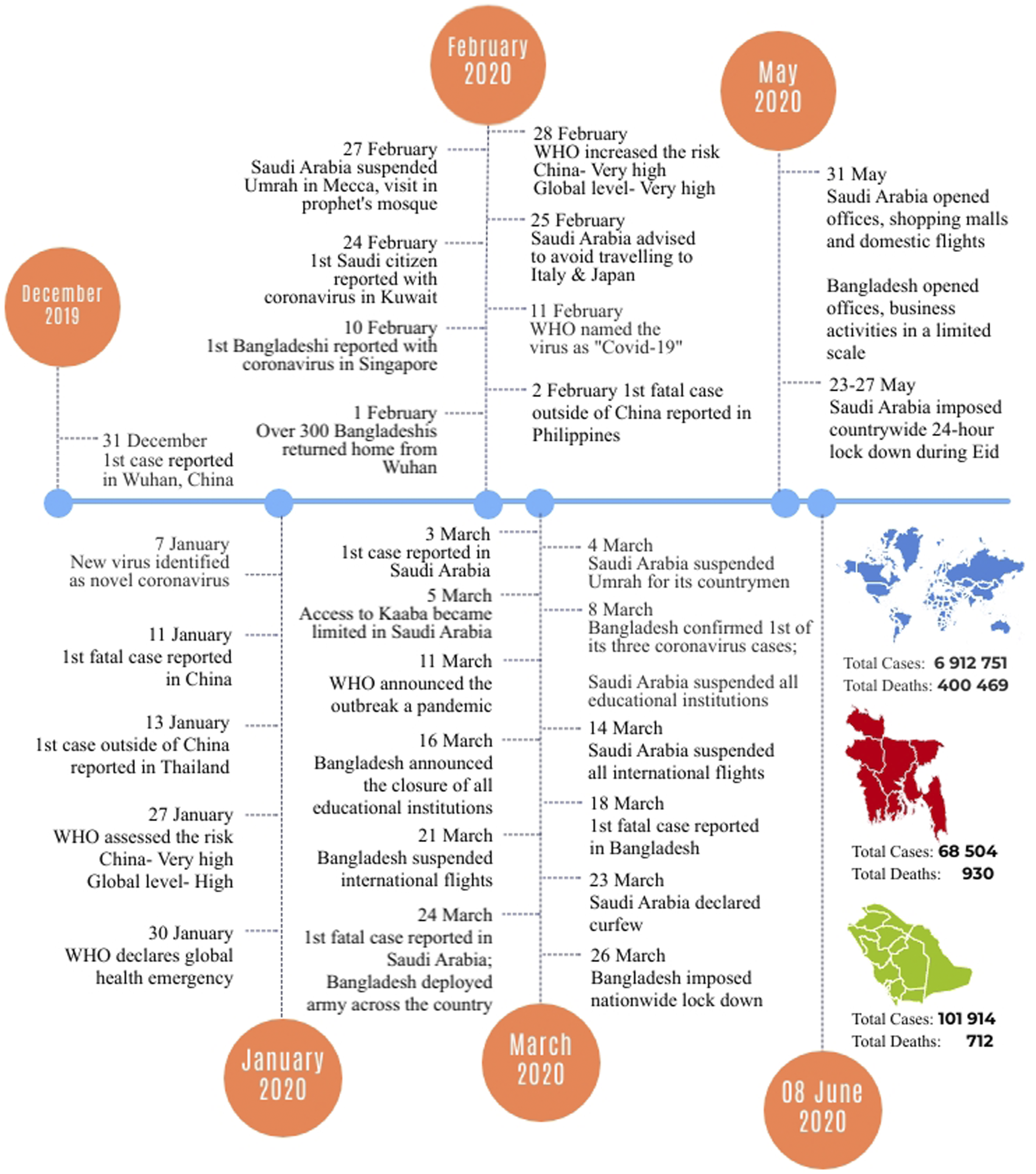
Bangladesh
The first coronavirus case and death in Bangladesh were reported on 8 and 18 March 2020, respectively. By 8 June, 68,504 cases had been confirmed, with 930 deaths (DGHS Bangladesh, 2020). Foreseeing the threat of the virus, Bangladesh imposed a countrywide lockdown on 26 March and suspended all on-campus academic activities from 18 March to 15 June. To support students’ learning during the closure, the Bangladesh government started broadcasting video lessons for the school students on its state-run Sangsad Bangladesh Television. Video lessons were also made available in “My School at MY Home,” a YouTube channel, and the “Kishor Batayon” website. However, universities carried out their own initiatives to continue students’ academic activities online. Currently, there are 46 public, 105 private, and 3 international universities in Bangladesh (UGC, 2020). Of these, 63 started online classes using Zoom Meetings, GC, and other social networking platforms, for example, YouTube live, Messenger, and WhatsApp groups (Daily Star, 2020a). The final exams of the Spring semester in private universities were scheduled at the end of April. Instead of conducting online exams, the University Grants Commission of Bangladesh (UGC), the apex body of all the affiliated universities in the country, instructed the universities to grade students’ overall performances based on the final assignments and in-course work before the pandemic.
Saudi Arabia
Saudi Arabia reported its first case on 3 March and first death on 24 March 2020. The country had 101,914 confirmed cases and 712 deaths by 8 June 2020 (MOH, 2020). With immediate effect, Saudi Arabia suspended pilgrimages of Umrah and access to Kaaba, prayer at mosques, and international flights. Also, nationwide 3 p.m.–6 a.m. curfew was imposed to restrain the spread. Like other countries, educational institutions in Saudi Arabia also have been closed indefinitely.
Long before COVID-19, Saudi Arabia had already set up advanced online learning systems in many of its universities (Al-Shehri, 2010; Aldiab et al., 2019; Arab News, 2020), with LMSs used as a complementary method of conducting virtual classes and assessments alongside the face-to-face classes. The Spring semester started in January but following the complete suspension of classes on 8 March due to the pandemic, all the institutions in Saudi Arabia started online teaching, in line with the original semester plan. School students attended virtual classrooms at Vschool.sa or using the mobile app “Unified Educational System.” Most of the universities, on the other hand, started using their dedicated e-learning systems with LMS platforms to conduct classes (Arab News, 2020). Saudi Arabia, being very much optimistic and determined to go with its original study plan, finished the Spring semester on time.
Research design
Research approach
To study the lived experiences of three university teachers in using e-learning during the COVID-19 pandemic, the researchers followed a qualitative phenomenological approach. This decision was guided by Tuffour (2017) and Van Manen (1996, 2016), who asserted that the goal of phenomenology is to describe the meaning of experience from the perspective of its experiencer—both in terms of “what” was experienced and “how.” More specifically, a hermeneutic phenomenology (Heidegger, 1962) approach was used because, according to Bynum and Varpio (2018: 252), this seeks “to understand the deeper layers of human experience that lay [sic] obscured beneath surface awareness and how the individual’s lifeworld, or the world as he or she pre-reflectively experiences it, influences this experience.” This methodological choice enabled the researchers to critically describe the essence of the phenomenon (in this regard, the experience of using e-learning during the COVID-19) and thus develop a rich, detailed, and contextualized meaning and understanding of the use of e-learning in the time of COVID-19. In so doing, the researchers acted in an “interpretative bricoleur” role, in which they constructed the knowledge connecting their assumptions, multiple descriptions, perspectives, and interpretations of their experiences, that is, the phenomenon (Denzin and Lincoln, 2005; Merriam, 2009). Underpinning this study within a constructivist–interpretivist paradigm also supported the exploration of contextual and holistic details, that is, the meaning behind the phenomenon (O’Donoghue, 2006).
Study participants
In a qualitative research study, it is common practice to have a small yet appropriate group of participants. Instead of employing a total research population group or a statistical sample, the current study followed a purposeful, hence convenience, and/or opportune, or nonrandom, sampling technique while employing the researchers (the three university teachers) themselves as the study participants (Brodaty et al., 2014; Farrokhi and Mahmoudi-Hamidabad, 2012; Patton, 2015; Wilson, 2013). More specifically, the three researchers involved in this study extracted their own voices (Lichtman, 2006), thus becoming the primary data source. Three factors influenced the technique of participant selection. First, following the hermeneutic phenomenologists (Heidegger, 1962; Moran, 2002; Neubauer et al., 2019; Van Manen, 1996), the researchers’ subjective perspectives should be recognized and utilized given that their past experiences and knowledge are worthy not only to investigate a phenomenon but also to illuminate the fundamental structure, accounts, reflections, and interpretations of that phenomenon. Second, there was a practical concern, since the concurrent situation of COVID-19 did not allow the researchers to arrange and reach other prospective study participants due to both contextual and technical limitations, and so they utilized convenience sampling. This strategy was also supported by Dornyei (2007), who indicated that convenience and nonrandom sampling can be employed for a study if the study participants meet certain practical criteria, such as geographical proximity, availability at a certain time, easy accessibility, or the willingness to volunteer. The study participants, though varying in gender, age, and other demographic characteristics, showed an affinity with Dörnyei’s criteria. Third, as a consequence of the second reason, it was assumed that, instead of having dialogical interviews with others, the researchers here could act as the study participants to provide live, comprehensive, fresh-hand information and competing perspectives and insights regarding the phenomenon embedded and experienced in their own contexts.
Data collection method and analysis
Since the hermeneutic phenomenology approach is used to interpret the experiences shared by research participants in relation to their individual contexts and to decode the meanings of these experiences, the researchers of this study used a more fluid, continuous, and self-retrospective process of data collection and analysis. More specifically, they employed autoethnography to collect data. The underlying assumption of autoethnography as a research tool was to construct and shape the truth and reality which the researchers lived and experienced. In this regard, autoethnography is not merely reporting one’s experiences, but is being critical about the experience of the phenomenon (Méndez, 2013). Moreover, autoethnography as a data collection tool enabled the researchers to experience, examine, observe, reflect, and reveal the broader context of the phenomenon under investigation (Ellis and Bochner, 2000); enabled the researchers’ voices to be heard; and provided a platform to transition from being an outsider (teacher) to an insider (researcher) (Hitchcock and Hughes, 1995).
The data derived from autoethnography, that is, personal lives and experiences, can take the form of a poem, a narrative, or a story (Connelly and Clandinin, 1999; Denzin, 1989). The researchers, in this regard, maintained reflective diaries. As soon as the study was planned, the researchers started taking notes on their day-to-day experiences of online classes for the period of March–May 2020. The individual notes were transformed into anecdotal narratives that described institutional planning, initiatives and support and individual experiences of executing online classes, assessments, and other peripheral issues. These introspective personal accounts were more explorable, “more-than-verbal,” and contextual as they embodied the significant implicit meaning of the phenomenon (Finlay, 2013; Todres, 2007). The narratives were then read and reread, coded, and categorized following the hermeneutic cycle of analysis (Grondin, 2002). Traversing the narratives shared by the three university teachers, the whole data analysis process was, therefore, data-driven and inductive, that is, thematic (Braun and Clarke, 2006). However, the data analysis has been presented using the lens of the research questions. The experiences in the form of narratives have been illustrated as three individual phenomena describing the introduction of e-learning during the COVID-19 pandemic, the readiness of the institutions to carry out e-learning, and the lived experiences of the teachers while using e-learning in the early phases.
Ethical considerations
Given the nature of the research approach and participant selection, there was some likelihood that the researchers’ roles could be biased. However, hermeneutic phenomenology is based on ontological and epistemological assumptions, and autoethnography emphasizes on the self, hence inviting, acknowledging, and reorienting participants’ self-preconceptions, self-experiences, self-reflections, and subjectivity was prevalent throughout the data collection and analysis processes (Bynum and Varpio, 2018; Laverty, 2003; Méndez, 2013; Neubauer et al., 2019). In hermeneutic phenomenology, as Bynum and Varpio (2018: 253) asserted, the researchers play dual roles to “maintain a strong orientation to the phenomenon under study (i.e., avoid distractions) and attend to the interactions between the parts and the whole” and thus develop an in-depth and rich understanding of experiences about the phenomenon. Furthermore, autoethnography as a data collection tool “itself is an ethical practice” (Ellis, 2007: 26) and so “writing autoethnographically entails being ethical and honest about the events described as well as the content of words expressed by all the people involved in these events” (Méndez, 2013: 283). By following these processes, the researchers in this study were able to be reasonably unbiased in their approach to the data.
The researchers were confident that the study’s trustworthiness, that is, credibility, dependability, and transferability, was not compromised at the cost of the research approach. To exert the quality and value of the study and the integrity of the researchers (Denzin and Lincoln, 2005; Patton, 2015), credibility was ensured through establishing that the data and interpretations were not a mere fabrication of imagination, but were developed from the facts and experiences shared by the researchers, that is, the three university teachers. Dependability was maintained by cross-checking with each researcher at every stage of the data collection and management. The researchers established the study’s transferability by employing diverse research contexts assuming that the findings and understandings might be generalized appositely in other research sites. In addition, the real names of the three universities were not mentioned directly, in order to maintain ethical principles, including anonymity and confidentiality associated with the research process (Denzin and Lincoln, 2005).
Lived experiences from three universities
Phenomenon 1: Blackboard Learning
This section provides an insight of a faculty member of management information systems regarding the university’s role and BbL user experience during COVID-19 at “X” University, KSA. BbL is used widely in universities across the globe because of its potential for student engagement, flexibility (Al Meajel and Sharadgah, 2018), and its user-friendly tools, for example, synchronous and asynchronous mode, customized course menus, and a dashboard for course updates and upcoming activities (Alturki et al., 2016).
“X” University, with more than 50,000 students, is a public university in the southern part of Saudi Arabia. It has a dedicated e-learning unit, named the Deanship of E-learning, which was established in 2006 (Weber, 2018). Over the years, the university has been practicing three dimensions of e-learning in its academic activities, that is, supportive, blended, and full e-learning. The university uses BbL as an LMS to address these dimensions. The utilization of supportive e-learning is compulsory in all courses, and 15% of semester work is conducted using BbL. In addition, teachers present virtual lectures at least once a week and accommodate 25% of the semester work via blended e-learning. However, fully fledged synchronous virtual classes are designed for only a few courses. Faculties offering these courses conduct 40% of the assessment online and the rest in the e-learning LAB, utilizing the full e-learning platform. Regular training sessions are arranged for both teachers and students to become comfortable with the BbL system.
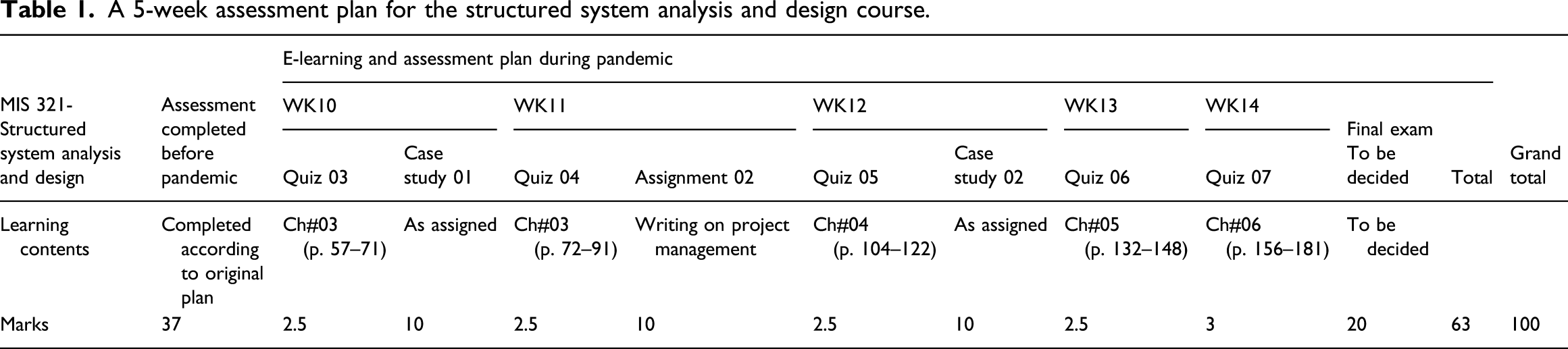
With the closure of all educational institutions on 8 March, “X” University immediately adopted full e-learning for all the courses following the directive of the Ministry of Education. A series of online training sessions was set up on virtual classroom management, conducting tests, grading, and student support. The Spring semester had only 7 weeks to completion. The university decided to go along with the original schedule and instructed the faculties to submit a 5-week online assessment plan for each course.
A 5-week assessment plan for the structured system analysis and design course.
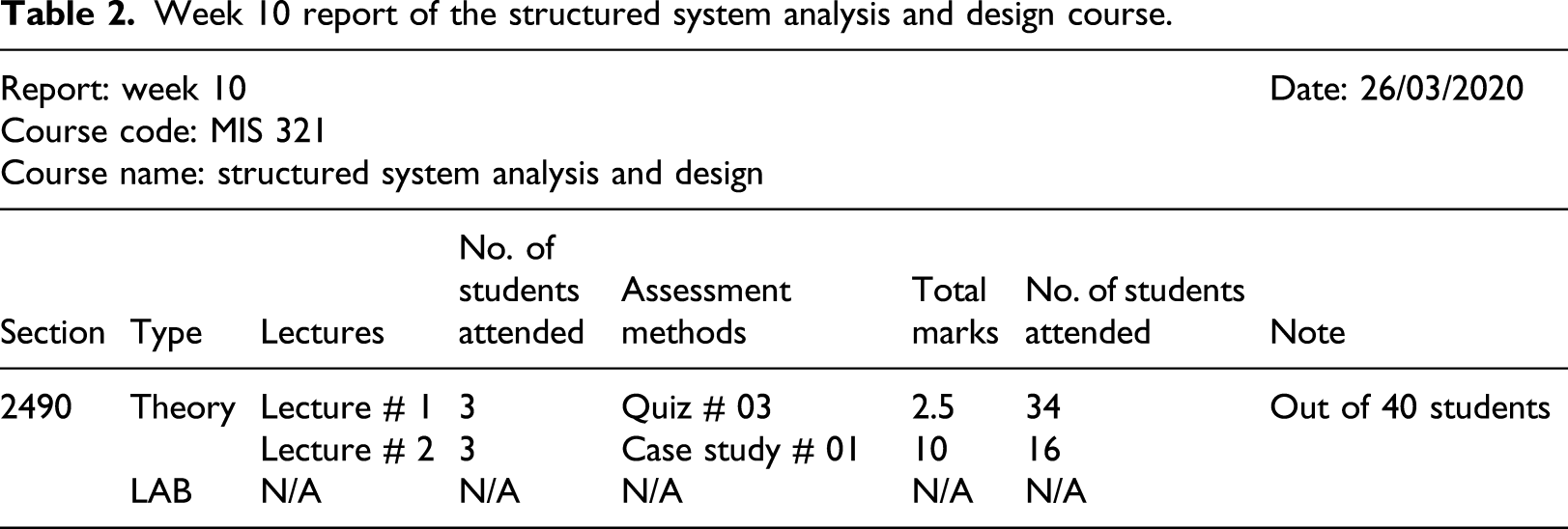
In week 8 of the semester, the teacher arranged all the course materials, that is, lecture notes, assignments, and case studies and made several BbL announcements to the students about real-time classes and assessment plans for the upcoming weeks. The first online lectures of IIT and IRM were conducted on 10 March using the highly configured Blackboard Collaborate Ultra with many options, for example, file and application sharing, polling, hand raising to get attention, instant chat and a whiteboard for interacting, and session recording. However, as expected, no student attended these very first sessions. The full sessions were video recorded and made available for downloading (see Figure 2). From week 9 onwards, all the lectures of the three courses were conducted successfully. Unexpectedly, however, only two or three students attended all of these lectures. The students were sent frequent BbL announcements and course messages to remind them to join classes. Since attendance was not mandatory, they were reluctant to join the lectures. This brought the whole effort of e-learning into question. Recorded lectures of the SSAD course in BbL. SSAD: structured system analysis and design; BbL: Blackboard Learn.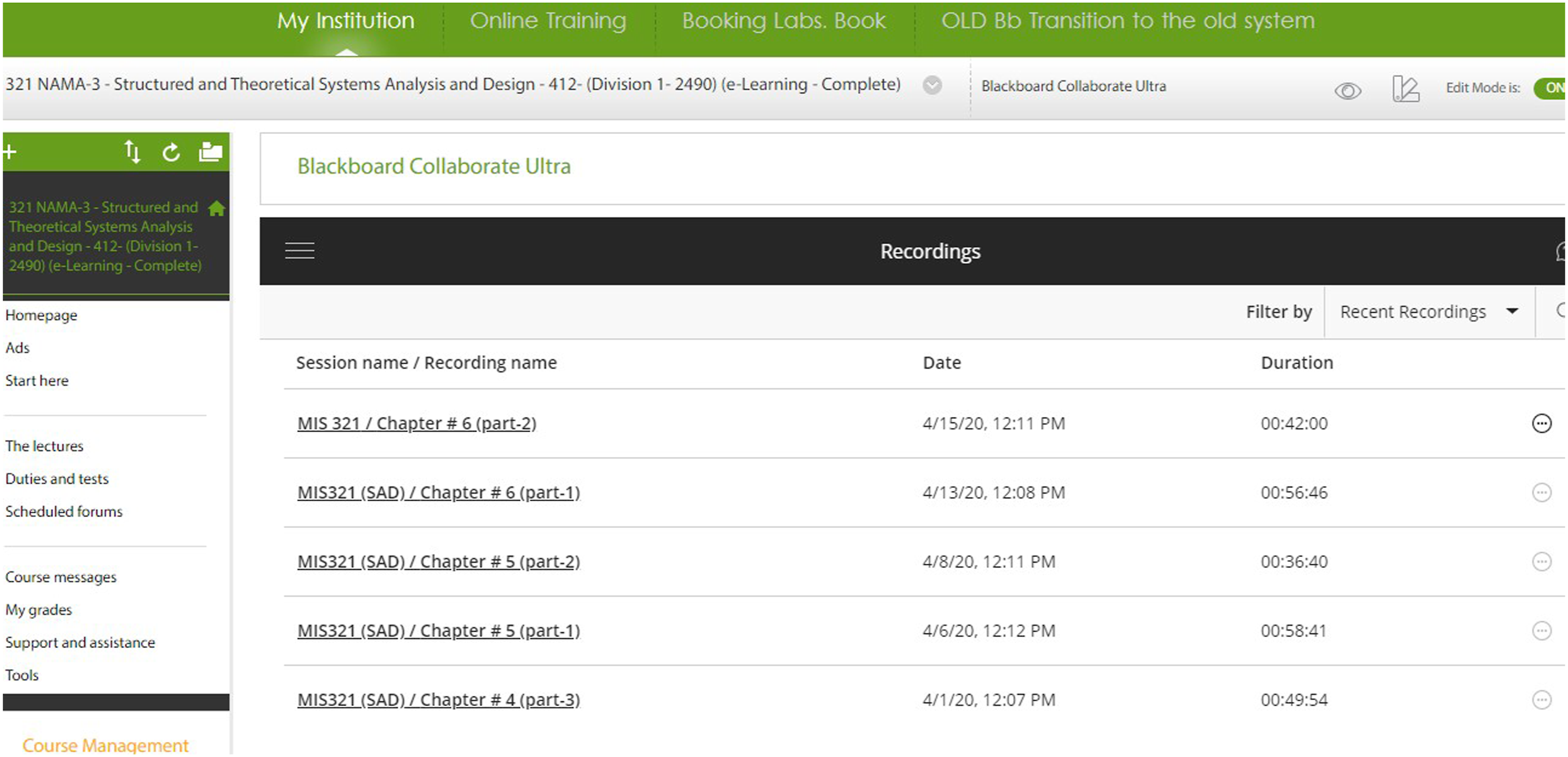
From week 10, in addition to the lectures, course assessments, that is, quizzes, assignments, and case studies, were developed and assigned using the BbL tools, and the due dates were linked to Google Calendar. While quizzes were graded automatically, assignments and case studies had to be checked manually and individually. There were a few missing responses due to slow internet and for personal reasons, according to students’ reports. So, they were given second chances. The teacher found some cases of plagiarism while checking the assignments and case studies. He also speculated that answers to the quizzes were shared among the students as the scores were the same in most cases.
Week 10 report of the structured system analysis and design course.
“X” University completed the semester amid the COVID-19 crisis, employing e-learning as planned. BbL, a dedicated LMS of the university, thus supported the teacher in organizing and managing the courses effectively; however, students' attendance in online classes and the issue of plagiarism were critical problems.
Phenomenon 2: Google Classroom
This section describes the lived experience of using GC by a Bangladeshi university teacher. GC is an add-on to the online education system in the name of LMS that operates teacher–student activities in a paperless yet organized way.
The sudden outbreak of COVID-19 across the globe had a critical impact on education in Bangladesh. To respond to the situation effectively, “Y” University, the top-tier private university in Bangladesh, decided to continue its Spring semester (which had 4 weeks remaining) online. The university established an institutional affiliation with G Suite and adopted GC as the platform. Concurrently, the IT wing of “Y” University arranged multiple in-house training sessions for the teachers. However, the sudden closure of educational institutions on 18 March meant that these sessions did not happen as planned. Instead, virtual training sessions were conducted. University teachers were advised to prepare online materials, generate respective course links, and notify students accordingly.
It was 29 March when “Y” University officially launched its online classes following the original schedule. The teachers were instructed to provide information as well as feedback on their classes through the department chairpersons. The authority sent a “Thank You” email to all its teachers during the second week to express appreciation for the successful launching of online classes, ensuring students’ maximum attendance, and, last but not least, for the extra effort expended during the pandemic. This note of appreciation enhanced the teachers’ motivation. The teacher-researcher in this study used this as an illustration that “Y” University did not leave any stone unturned to continue the academic activities via online mode and to make it successful.
The teacher-researcher started online classes for Advanced Writing Composition (two sections), Phonetics and Phonology, and Semantics and Pragmatics, of which the first two were undergraduate courses and the third one, a graduate course (see Figure 3). As the classes began, a few students notified the teacher that they had failed to enroll in the classes due to the unavailability of their university email IDs. The problem was reported immediately to the IT department and was gradually resolved for all but five cases. With these initiatives, the average percentage of attendance for the aforementioned courses ranged from 85 to 98%. This high attendance rate continued until the end of the courses. Courses designed in Google Classroom.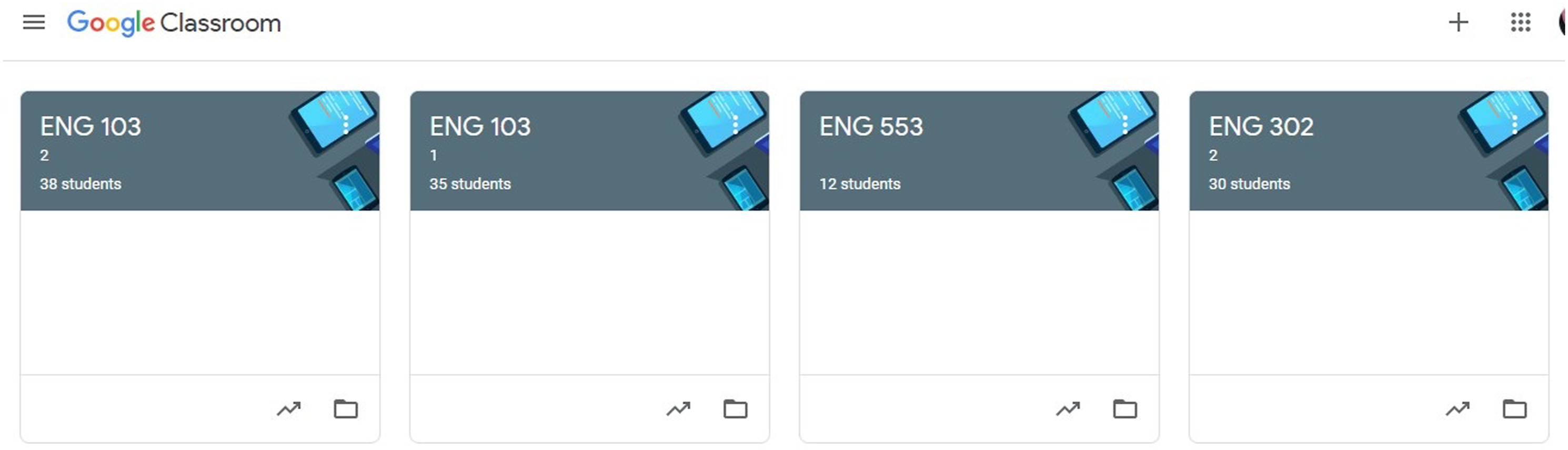
Class planning was outlined beforehand. While conducting online classes, the teacher utilized facilities including posting announcements, sending emails, posting audio recordings of lectures, sharing the screen with slides/documents, uploading course materials, and live chatting. These facilities enabled students to access online classes both synchronously and asynchronously. The teacher herself experienced unstable internet connection and power cuts several times. These issues were worse for some students, particularly those living in rural areas as the teacher noted frequent leaving and re-joining sessions due to internet and electricity issues.
Initially, it was decided by the “Y” University authority to follow the original course outline for completing the syllabus, giving online quizzes, assignments, presentations, and grading those accordingly. The teacher, following the directions, prepared online quizzes. They were administered and graded using the GC classwork portal. Trial quizzes were designed and conducted beforehand since the majority of the students were uncertain about the process of taking an online quiz. As the teacher recalled, the students expressed their excitement when they received their quiz grades instantly.
However, the “Y” University authority had to step back from its initial directives regarding online assessment and admission test for the fresh student intake. It was the UGC that instructed the universities (particularly the private ones) to discontinue their online assessment. The direction was based on the issue of uneven and inaccessible internet for students across the nation. In addition, the UGC directed universities not to conduct any sort of student registration and admission processes for the next semester. They asserted that the COVID-19 situation in Bangladesh had put the whole nation in a grave situation by challenging people’s lives and economic capabilities. The UGC concluded by directing that private universities could conduct online classes to complete their syllabi; however, student assessment, grading, registration, and new admissions would not be allowed until the return to normalcy (Daily Star, 2020a, 2020b). It was, thus, speculated that the Spring semester might be extended. At the time of writing this article, the teacher had just received news that the UGC had eventually permitted online assessment to complete the current semester and start the next semester accordingly. Following the revised directions, the “Y” University authority decided to assign student assignments as the final assessment. The teacher finished the semester feeling nonplussed due to the inconsistent directions.
Phenomenon 3: Zoom meetings
Zoom is a cloud-based and peer-to-peer software platform used for teleconferencing, telecommuting, and social relations. The researcher, a teacher of “Z” University, had to use the free version of Zoom since the university did not have any dedicated online teaching platform. Moreover, the university did not give any directive for the teachers to conduct online lectures during the COVID-19 pandemic. Although, at the outset of the pandemic, the authority initially decided to conduct online classes as per the UGC guideline, it pulled out from its decision considering the inconsistent internet access, a practical concern for most students
The teacher conducted three undergraduate courses online: American Literature I: Introduction, American Literature III: Fiction, and Literary Criticism. Before going online, discussions were held with students through email and Facebook Messenger about online classes. Zoom class invitations were sent to the students, including the topic, time, meeting link, meeting ID, and password. Lecture materials were selected from different sources focusing on the syllabus defined by the institution. For each lecture, the teacher prepared a PowerPoint presentation with a detailed discussion of the selected topic.
While conducting lectures on Zoom in a synchronous mode, the teacher shared lecture materials with the students using the “screen share” option (see Figure 4). The whole session was kept interactive by allowing the students to talk using their audio connections. The teacher allowed the students to leave messages in an in-meeting chatroom or “raise hands” to notify him if they needed any assistance. He garnered immediate feedback about the lecture by permitting the students to participate in the discussion. Course lecture using Zoom meetings.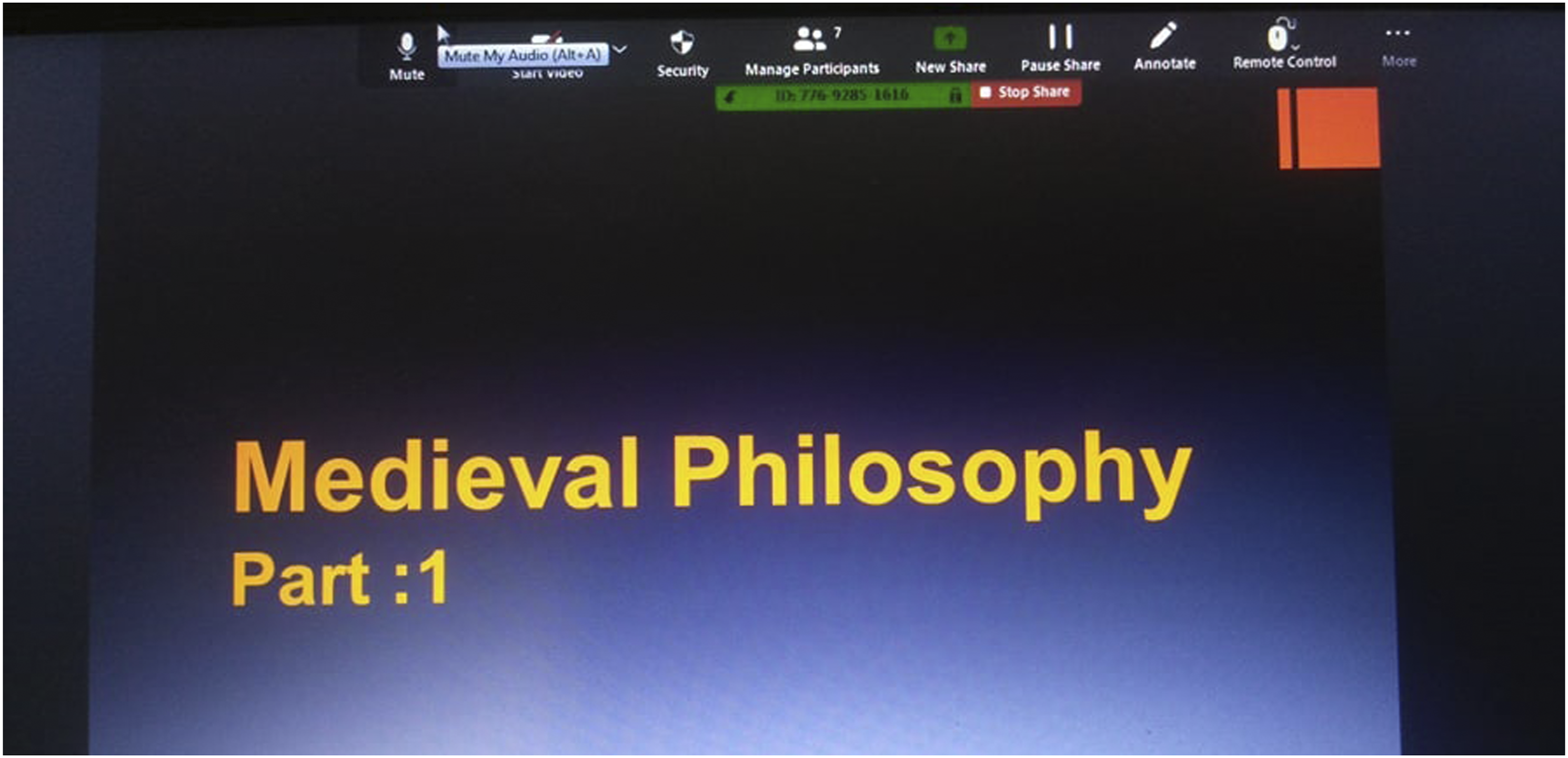
Considering the practical concerns like power cuts and internet failure, the teacher also accommodated the asynchronous learning mode via Zoom. The classes were recorded using the Zoom recording option and emailed to the students. The asynchronous mode, in this context, also established learning equilibrium without being biased toward any particular student, as everybody could watch the recorded lectures as many times as they wanted.
The teacher faced some limitations and obstructions while conducting classes online. For example, rigid time schedules made it difficult for everybody to join meetings at the same time; technical challenges, for example, internet speed and connections, and hardware requirements made it almost impossible for some students to attend the lectures at all. As a result, students’ attendance in online classes fluctuated between 70 and 80%.
During the outbreak of COVID-19, Zoom faced public and media scrutiny for its vulnerability due to unsolicited access to cameras and microphones by unwanted persons. For this reason, the teacher had to sacrifice the video option in consideration of the students’ privacy. Instead, only the audio facility was used, along with Zoom’s screen sharing and in-meeting chatroom options. Audio-only lectures made it difficult for the author to gauge the students’ attentiveness and made the lesson less interactive.
The free Zoom version, which is meant for conferences, is not a proper alternative to LMS, but served in this case as a short-term rescuer. This is why it was not feasible to administer exams via Zoom. The teacher used it to conduct online lectures; his aim was to complete the syllabi although he ended up only being able to cover them partially. The semester was extended as the pandemic lingered.
Discussion
This section, employing a critical stance, brings together and discusses the narratives regarding the experiences of using e-learning at the time of COVID-19. Data were collected from three university teachers in two countries. The contexts in which the teachers used e-learning showcased complex, challenging, and dynamic sites, that is, within institutions and individual classrooms. More specifically, the teachers reported acceptance, struggles, and negotiations at both the macro-level of policy/decision making (institutional) and the micro-level of online classroom practices (individual). Figure 5 shows the key findings of the study. Key findings of the study.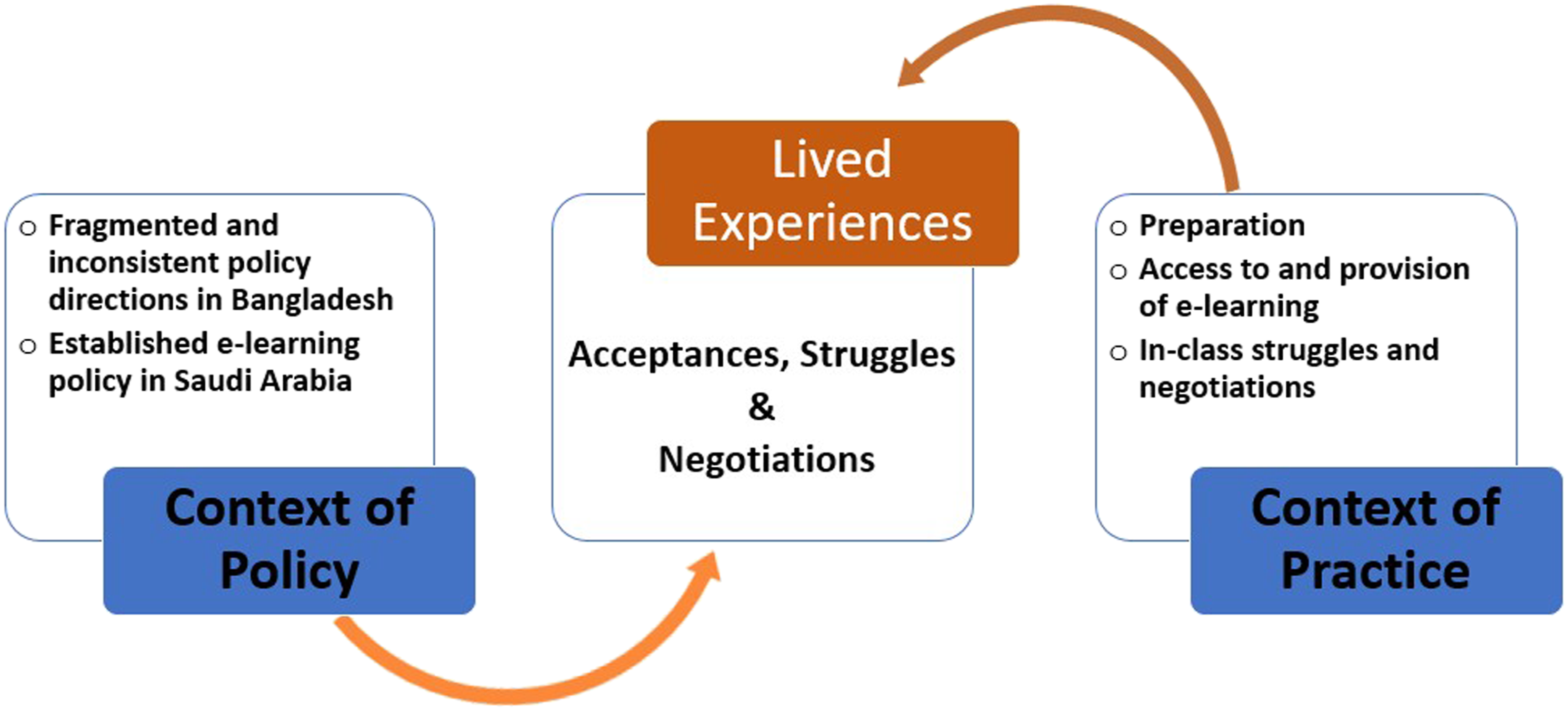
Context of policy
The data analysis in both the Saudi and Bangladeshi contexts identified relevant stakeholders’ enthusiasm and sense of urgency about addressing the impacts of COVID-19 on education. However, the analysis also identified inconsistency and advertency in policy directions regarding online class during the COVID-19 in Bangladesh and Saudi Arabia, respectively.
Fragmented and inconsistent policy directions in Bangladesh
The decision to continue academic activities amid COVID-19 in Bangladesh was praiseworthy, yet it missed the mark of projecting more concrete, adequate, and advertent attention. Instead of having rational, systematic, integrated, and comprehensive policy directions, there were signs of fragmentation and inconsistency. Equating e-learning with educational and economic benefits during the pandemic, the policy-making stakeholder, that is, the UGC, issued an official order on 24 March 2020 advising and encouraging the universities to start online classes. However, only 63 universities responded to this direction (Daily Star, 2020a, 2020b). The rest, including the public ones, remained unresponsive. This incongruity in implementing directions for starting online classes was not handled aptly by the UGC thus leveraging academic semester gaps among the universities.
Moreover, the UGC itself showed inconsistency while orienting online education policy directions. At the very onset, there was an expression of negation from the UGC regarding the online classes. The attitude, which was adjusted later due to the top-tier private universities’ untiring expressions of interest and capabilities, was premised upon two main issues, namely, institutional capabilities and students’ socioeconomic conditions. However, conducting online assessment was still an issue of debate between the UGC and the universities. The decision from one of the top-ranked private universities for assigning grades without holding any assessment stirred up the debate (Daily Star, 2020b). The UGC eventually declared such a decision to be unethical. Initially, the UGC was against any form of online assessment. However, several virtual meetings with the stakeholders of private universities led to a short-term solution: either to complete the semester by setting assignments and grading the students accordingly, or to wait until normalcy returned. In this regard, the UGC issued a set of conditions and directions for conducting online assignment tasks and continuing online education for the duration of COVID-19 (Daily Star, 2020a). Following the directions, “Y” University completed the semester, while “Z” University could not.
Established e-learning policy in Saudi Arabia
The Saudi context, on the other hand, showed a very deterministic approach to online classes, assessment, and semester completion. In fact, Saudi Arabia has developed many initiatives to introduce e-learning in its universities in recent decades. The Arab Open University, an online university having a partnership with the Open University, UK, has been offering distance programs in Saudi Arabia since 2003. Also, the Saudi Electronic University was established in 2011 to use blended e-learning to provide higher education and lifelong learning. The Saudi Ministry of Education launched the National Center for e-Learning and Distance Learning in 2005 to facilitate off-campus learning in the Kingdom. Besides, Saudi Arabia’s Vision 2030 manifests an expansion of “the scope of online education” in the country (Rajab, 2018). Therefore, most of the universities were equipped with advanced platforms, so they were able to start classes online and complete the semester in a planned way. In this way, the three contexts illustrated complex and sometimes challenging, but dynamic phenomena relating to the use of e-learning during the COVID-19 pandemic.
Context of practice
The in-class experiences in three contexts shared by three university teachers showed a series of acceptances coupled with struggles and negotiations. The following discussion demonstrates the theme aptly.
Preparation
Considering the pandemic nature of the virus and the importance of continuing education, the authorities of the institutions decided to start online teaching through an LMS and other available platforms. This common viewpoint can be attributed to the dogma that tech-based education is a time-demanding venture that enables continuity in the face of an invisible enemy like COVID-19. The teachers in this study also reported having positive attitudes toward starting online classes during the pandemic. However, not all three of the institutions were fully prepared and equipped with the requirements to conduct online classes. “Z” University was such an institution. While “X” University already had an established and dedicated LMS, “Y” University planned for and provided its teachers with training and related assistance to start online classes. Thus, for “Z” University, the stakeholders’ directions regarding starting online classes without proper or minimum preparation conveyed a sense of normative imposition of more aspirations with less projections and support.
Access to and provision of e-learning
The Ministry of Education, Bangladesh, and the UGC, on 30 April, asked all private and public universities to complete academic activities for the current semester through online classes. However, only 63 universities started offering online classes, and most of these were online in name only (Daily Star, 2020a). The authorities of those universities mentioned institutional incapability in terms of technical and logistic support, uneven internet access across the country, and students’ access to internet facilities as reasons for not holding online classes efficiently and adequately. Most of the universities were, therefore, poorly prepared for e-learning services. Furthermore, the low quality of internet infrastructure and load-shedding remain significant obstacles for executing online activities in Bangladesh. A recent report (Rizzato et al., 2020) showed that Bangladesh had the lowest download speed (7.8 mbps) among 42 countries studied during the COVID-19 pandemic. Moreover, only 37.6% of the households in the country have access to the internet from home via any device, and only 5.6% of households have a computer (Bangladesh Bureau of Statistics, 2019).
Bangladesh set a vision for “Digital Bangladesh” to be achieved by 2021, its 50th anniversary of independence. Following the Masterplan Review 2019, conducted by UNESCO, the Ministry of Education’s ICT wing stated that Bangladesh had undergone significant progress in incorporating ICT into classrooms. Nevertheless, in reality, the country is still far from achieving this goal. Simply providing academic institutions with laptops, computers, and multimedia projectors does not qualify them as digitized or digitally literate institutions. The provision and availability of these machines yield another critical issue, that is, the disparity between rural and city institutions (Nur, 2019). Therefore, Bangladesh still suffers from disparities in access to and provision of e-learning, making the context of using e-learning a challenging one in which teachers struggle incessantly.
The Saudi Ministry of Education, on the other hand, provided all educational institutions with guidance and support during the outbreak. Due to Saudi Arabia’s affluence, internet access was adequate for conducting online classes. The country opened the internet for public use in 1999. By the end of 2017, the number of internet users in Saudi Arabia reached over 26 million, 82% of the total population (CITC, 2017). By April 2020, the country had become 10th globally in internet speed, with 55.71 MB per second (Saudi Press Agency, 2020). Most Saudi universities have dedicated LMSs, and they were well prepared for e-learning before the outbreak started.
In-class struggles and negotiations
With regard to in-class contexts, the university teachers from two countries reported struggles and negotiations that arose from local issues while conducting e-learning.
In the Saudi context, the teacher regularly provided reports on online classes and weekly assessments to the department. This was a tiresome task alongside the regular tasks of content preparation, lecturing, and assessment design. Moreover, the student attendance rate in the Saudi context was very disappointing. In fact, students’ attendance was almost nil, as per the teacher’s report. This lack of students’ attendance and participation made the teacher feel demotivated and discontent. Moreover, the university authority was very reluctant to improve the situation even after receiving regular reports. Therefore, the teacher had to provide asynchronous services alongside the synchronous ones, using BbL and WhatsApp.
The Bangladeshi context, on the other hand, was better in this regard. The teachers from both “Y” and “Z” Universities reported high rates of student attendance and participation in online classes. However, unlike BbL and GC, the dedicated LMSs used in “X” University and “Y” University, respectively, the Zoom Meetings used in “Z” University had some issues. For instance, Zoom provides neither a student registration integration system nor total course management. Fearing Zoom-bombing, the “Z” University teacher also had to abandon video lectures. That is to say, Zoom is handy for virtual communication and lecturing but is not a professional e-learning system.
The local environment, particularly in the context of Bangladesh, was another impediment for conducting online classes. As experienced by the teachers from “Y” and “Z” Universities, the issues included uneven internet connection and speed, expensive internet data packages, lack of proper home environments for teachers to conduct and students to attend online classes, and financial constraints faced by students and institutes to buy the technology and gadgets required for online classes.
Regarding assessment through e-learning, while the teachers from “X” and “Y” universities reported their experiences of struggles and negotiations, the teacher from “Z” University could not conduct assessment using Zoom because of the unavailability of assessment options. Most of the assessment tasks were assignments and case studies that required individual responses and feedback. The teachers commented that this type of assessment made the whole process stressful. Moreover, heavy plagiarism was a common phenomenon in both contexts. Both teachers speculated that their students were sharing quiz answers, as the scores were similar in most cases. The teachers could not monitor if the students were getting help from others to complete their tasks. The teacher from “Y” University also reported heavily plagiarized assignments. In both contexts, the teachers reported students’ excessive use of multiple devices (e.g., mobile phones) to connect with classmates (using Messenger/WhatsApp groups) during their exams. For “Z” University, there was no direction from the university authority about conducting the online assessment. These issues made online assessment ineffective and questionable to a great extent.
Another pertinent and critical issue, as discussed by the teacher from “X” University, was that some teachers were less conversant with harnessing e-learning–related technology and managing virtual classrooms. It is recognized universally that the extent of success or failure in teaching, be it real or virtual, depends mostly on teachers’ capabilities. If the teachers are not technologically savvy, conducting classes through an e-learning system might be difficult and complicated. The teacher pointed out this issue while reflecting on his colleagues, particularly the older ones.
By discussing and elucidating the findings gathered from the three contexts, the study has attempted to address the questions posed at the outset. The analysis has signposted not only a rich account of lived experiences of the three teachers’ struggles and negotiations while using the e-learning platform during COVID-19 but also their acceptances of it.
Contribution to scholarship
You can’t develop systems directly. You have to design the system to develop itself. (Barber and Fullan, 2005: 34)
The current study supports Barber and Fullan’s assertion that the system should be designed in such a manner that it paves the way to develop itself. The significance of this study lies in the fact that it adds a deeper understanding of the “system infrastructure,” that is, the policy and practice of e-learning during an emergency. This understanding can be shown in the study’s demonstration and explanation of experiences of using e-learning in three different contexts in two countries. While relevant studies (Abuhlfaia and De Quincey, 2019; Aldiab et al., 2019; Al-Fraihat et al., 2020; KurtÖ, 2019; Salloum et al., 2019; Zulfikar et al., 2019) tended to investigate the evaluation, effectiveness, or usability of e-learning and the related tools, for example, LMSs, the researchers, while acknowledging the merits of these discrete foci, have attempted to focus on an understudied topic, that is, the complex nuances, struggles, and dilemmas within the context of policy and practice of e-learning during the COVID-19 pandemic.
The researchers also concur with Fullan’s (2007) assertion that any educational change is a process, not an event. It is hoped that the findings from this study will serve as food for thought for policy planners in processing their future work as well as in the overall process of e-learning policy practice, particularly in digitally emerging countries like Bangladesh. The study is, thus, a small contribution to a much larger sphere of ongoing digital education policy research.
Moreover, the study’s contribution to scholarship can be defined from the sociocultural perspective. It does not posit the study participants merely as members of the teaching community; rather, their experiences and voices reflect the critical notions of their broader sociocultural and educational contexts that triggered their professional lives, passion, dedication, and motivation to teach during the current pandemic. Therefore, the study presents a broader understanding of the studied phenomenon.
Limitations of the study and future studies
Even though this study has revealed some important insights relating to the experiences of using e-learning in three different contexts in two countries, it also had some limitations which might be considered for future research.
Due to the pandemic nature of COVID-19, the current study followed a convenience sampling strategy to collect data. Such limitations in sampling might suggest that the study was compromised by not uncovering more dimensions of experiences and perspectives embedded in other contexts. Therefore, future studies with more study participants could be conducted to get a holistic and comprehensive understanding of the use of e-learning in a time of worldwide university closures.
A further limitation of this study was that it did not investigate students’ experiences of participating in e-learning systems, even though this has been studied already in different contexts (Abuhlfaia and De Quincey, 2019; Dogoriti et al., 2014; Eom and Ashill, 2018; KurtÖ, 2019; Muñoz Merino et al., 2006; Rajab, 2018; Valencia-Arias et al., 2019). Combining the two stakeholders’ (teachers and students) experiences would give another, more holistic, view of the phenomenon.
Conclusion and recommendations
By applying a critical lens, the current study aimed to develop a rich understanding of teachers’ experiences of using e-learning, particularly its complexity, messiness, and relational dimensions, in the time of COVID-19. To achieve this end, a convenience sample of three university teachers (who were also the researchers) from two countries was used. A critical stance was taken to recapitulate and discuss the key findings concerning the questions posed in the Introduction section of this article. The overall findings reflected the use of e-learning as a complex, challenging, and dynamic phenomenon, with the researchers’ reported acceptances, struggles, and negotiations at both the macro-level of policy/decision making (institutional) and the micro-level of online classroom practices (individual).
Some recommendations can be drawn from the teachers’ experiences, which might be useful beyond Bangladesh and Saudi Arabia, to other countries with similar contexts. More specifically, Bangladesh, within its capacity, requires the development of robust policy planning for e-learning and to ensure its proper implementation, whereas Saudi Arabia, being technologically affluent, needs to strengthen effective systems for monitoring e-learning practices.
The first two decades of the 21st century saw several variations of coronavirus and many other emergencies. Unfortunately, we did not learn from them and are still ill-prepared to make education available under emergency conditions. The findings, therefore, implicate the need for policymakers to move toward more context-driven, rational, synchronized, and holistic approaches to formulate policy regarding e-learning or online education. This is because the success of e-learning principally requires proper planning and support from policymakers. To this end, governments, while considering the socioeconomic context of their countries and their academic institutions, should develop common e-learning platforms and ensure democratic access to them. Next, countries should develop robust internet infrastructures and free access for students to the internet and technology. Then institutional training should be arranged to develop teachers’ capabilities to conduct e-learning. A uniform online assessment policy should be devised to avoid incongruities or discrepancies among institutions.
The task of policy development will be futile and unproductive unless proper implementation is ensured. Central and institutional monitoring systems should be strengthened in this regard. In addition, the focus should be on ensuring students’ attendance and participation. Teachers’ clerical tasks related to e-learning should also be lessened to provide them with time and space to prepare materials, lectures, and assessment tasks. To conclude, we need to adopt, adapt, and formulate e-learning–related policy based on a constellation of coherence, synergy, alignment, and appropriateness, all within the capacities of our own contexts, and then integrate accountability and support to mobilize and ensure this type of policy is put into practice.
Footnotes
Declaration of conflicting interests
The author(s) declared no potential conflicts of interest with respect to the research, authorship, and/or publication of this article.
Funding
The author(s) received no financial support for the research, authorship, and/or publication of this article.
