




Abstract
This study aims at investigating student perception of Nigerian institutions of higher learning using the new digital culture induced by the COVID-19 pandemic, namely, online learning (i.e. e-learning), that has become commonplace globally and specifically in Nigeria. The study used quantitative survey methods and a sample size of 1134 Nigerian students of the three types of higher institutions in Nigeria: universities, polytechnics, and colleges of higher education based on student state residential location. The respondents completed a questionnaire via Google Forms in June and July 2020. The study found that students are not satisfied with virtual learning embarked upon by many higher institutions throughout the country during the COVID-19 lockdown and would not want the online learning to continue after the pandemic due to poor internet infrastructure and lack of electricity. The study concluded that students of higher education in Nigeria have a low acceptance of online learning technology, preferring instead the traditional classroom setting, and thus putting them in the “Laggards adopter categorization” of the diffusion innovation theory, i.e., the group that is highly conservative and extremely slow to accept new technological innovations. The study recommends that universities should engage students more interactively not only through texts but also video (e.g. camera demonstrations), increase their online learning during the pandemic so as not to lag academically, and spend more time on online learning to get the best possible level of instruction until traditional learning resumes. Also, it is recommended that administrators of Nigerian higher institutions should return to a traditional learning format as soon as the pandemic is over as well as an overhaul and restructuring of the internet and power grid nationwide.
Introduction
The increasing access to new information and communication technology (ICT) via internet connectivity is making access to education easier barring the previously insurmountable barrier of distance and location of higher education seekers (Oriji and Torunarigha, 2019; Renes, 2015). Many higher institutions around the world are embracing online learning (i.e. e-learning) as a way to offer educational opportunities to prospective students such as those for whom availability in the location of the university is impossible, students with full-time employment who cannot leave their jobs, and physically challenged persons as well as parents with children and military personnel amongst others (O’Neill and SinghO’Donoghue, 2004; Renes, 2015). Such an educational process involves instructor and students—who are not in the same location and in which learning can take place in a synchronous or asynchronous context—to exchange instruction via ICT. This kind of learning is mediated by ICT tools through the use of video, audio, or computer technologies, use of technology such as CD-ROM, and even by written correspondence or via storage device such as USB-enabled saving tools (Renes, 2015). As a result, e-learning for students can be viewed from different perspectives. While some authors (Hawkes and Cambre, 2000; Knight, 1996) believe that e-learning will make students more involved in the learning process as well as make them participate more actively since they have to do a number of tasks on their own, different from the on-site process that seems to focus more on “spoon-feed” education, others such as Kershaw (1996), Cooper (1999), and Renes (2015) note that not all students will be able to achieve the aim of their studies since not all of them will be able to learn independently. This means higher education institutions will need to create models that address individual student needs as well as cater to their abilities to achieve the proper skills.
E-learning requires basic infrastructure that makes it possible for the process to be effective. In much of the developing world, acquiring digital tools such as laptops and smartphones is expensive. For example, in Nigeria, data are also not cheap, and given the poverty level is at approximately 40% of 200 million people, this translates to a population of 74 million low-income earners (City Population, 2020; Punch, 2020). As a result, for the low-income proportion of the population, acquiring the necessary equipment for effective e-learning is challenging (Olaniyi, 2006). Olaniyi (2006) argues that setting up ICT centers in university campuses without paying attention to the accompanying internet connectivity requirements is unproductive. Many scholars have researched the strengths and shortcomings of e-learning in higher institutions. O’Neill and SinghO’Donoghue (2004) argue that many universities compete to be e-learning-compliant without evaluating the shortcomings despite the “prophesized” successes. They posit that the shortcomings to which attention must be paid include, but are not limited to, the costly implementation to staff and students, limited active participation of the student, health implication of staring constantly at a screen, training and retraining of staff to embrace this nontraditional form of education which can be costly and time-consuming, and many staff are feeling “forced” and have difficulty in determining the advantage of e-learning vis-a-vis the traditional form of on-site scholarship.
In a study of 266 university students of five Ugandan universities on the integration of e-learning with face-to-face learning, Kituyi and Tusubira (2013) found that majority of students believe that none of both methods is as effective as when both methods are combined. In Nigeria, scholars such as Olaniyi (2006) and Eze et al. (2018) opine that the e-learning format most common in Nigerian institutions is when lectures are prepared and saved on a CD-ROM which can be played at the convenience of the learner. Scholars (Hurixdigital, 2020; Nnajiofor and Achukwu, 2011) have listed the many benefits and challenges of e-learning in Nigeria. Some benefits include flexibility (i.e. participation from any location), cross-platform accessibility (i.e. use in several digital tools), low delivery costs (i.e. ability to reach many participants with the same cost), collaborative learning (i.e. participants can interact at ease), and scalability (i.e. content can be accessed by any size audience). The many challenges of online learning in Nigeria include reluctance to embrace e-learning, the problem of lack of electricity, lack of bandwidth and connectivity, inadequate ICT facilities catering to the e-learning platform, low level of computer literacy, and lack of technically experienced lecturers (Afolabi and Uhomoibhi, 2017). Similarly, Afolabi and Uhomoibhi (2017) found that 72% of British students using e-learning assimilated easily compared to only 58% of Nigerian students. Several authors have researched how students perceive e-learning as active participants. Linjawi and Alfadda (2018) stated that previous knowledge of ICT and a good internet connection was key to successful online learning. However, Armstrong (2011) noticed that student perception of the technological tool was important but the quality of communication was far more important.
In terms of quality of online learning, Ward et al. (2010) and Gómez-Rey et al. (2018) observed that students believe that online lectures were high in quality, although Smart and Cappel (2006) noted the quality of elective courses was better than required ones. Conversely, Armstrong (2011) elucidated that students perceive online learning as less academically rigorous than face-to-face education. Similarly, while Bali and Liu (2018) found students perceive face-to-face learning better than online learning, Matsunaga (2016) observed that students preferred online learning better than face-to-face. These studies were not specific to Nigeria and they were also not investigated from the perspectives of a pandemic such as that of COVID-19. This research explicitly investigates this gap by looking at the perception of Nigerian students in terms of online learning in the period of the COVID-19 pandemic. Five key events and concepts—namely, COVID-19, pandemic, digitized education, online learning (i.e. e-learning), and perception—deepen the understanding of how Nigerian students perceive learning and their higher educational experience.
Digital education is the type of education in which instructors and learners (i.e. students) utilize digital technologies to deploy teaching and learning via remote location (Oriji and Torunarigha, 2019). This has become an increasing feature of education in many societies occasioned by the fact that many of the younger generations of the 21st century were born as “digital natives,” who from birth speak the language of digitalization, computers, video games, and the internet. Students have grown up surrounded by digital technology such as smartphones, computer devices, high-speed internet, social media, e-mail, telegram, and online-based messaging services (e.g. WhatsApp) (Oriji and Torunarigha, 2019). When these tools are deployed for educational purposes, then such a form of education is called digitalized education. Siemens (2020) defines digitalized education as education that deploys “the use of desktop computers, mobile devices, the internet, software applications, and other types of digital technology to teach students of all ages.”
E-learning refers to all educational activities carried out by individuals or groups working online or offline and synchronously or asynchronously through a network or stand-alone computer or other electronic devices (Tulasi et al., 2013). E-learning is the intentional use of electronic media, that being the letter “e” stands for “electronic” in which ICT is used for the teaching and learning process. The term e-learning is used interchangeably with other similar terms such as online learning, virtual learning, distributed learning, as well as network and web-based learning (Naidu, 2006). E-learning is individualized in that it can be fitted to one’s individual pace. At the same time, it can also be group-based and tailored toward a specific target group. It is online when the studies require internet connectivity, it is offline when the resources for the learning do not necessitate a constant online connection, and it is synchronous when all learners work together at the same time versus asynchronous when learners can work at different times (Naidu, 2006). E-learning enables a high level of interactivity among the instructor and students creating flexibility between the two whether it be undergraduate or graduate-level instruction.
The broad objectives of this study are to determine (1) the extent to which institutions of higher learning in Nigeria undertake e-learning; (2) the degree to which students of institutions of higher learning in Nigeria undertake e-learning; (3) the degree of student satisfaction with online learning; and (4) the types of challenges students encounter in the online learning process. Utilizing these objectives, we formulated four matching research questions: RQ1: To what extent are institutions of higher learning in Nigeria undertaking e-learning during the COVID-19 period? RQ2: What degree of e-learning are students of institutions of higher learning in Nigeria undertaking during the COVID-19 period? RQ3: What is the degree of student satisfaction with online learning during the COVID-19 period? RQ4: What types of challenges do students of institutions of higher learning in Nigeria encounter in online learning during the COVID-19 period?
A breakdown of the article is structured as follows: methodology, results, and discussion and recommendations.
Methodology
Review of online learning during the COVID-19 pandemic
Li and Lalani (2020) stated that COVID-19 has impacted education globally and pushed over 1.2 billion students out of the classroom, thus causing the need to explore other means of educating school children. They argued that language applications, virtual tutoring, video conferencing tools, and online learning software have significantly surged since the outbreak of COVID-19 with financial investments in education likely to increase from USD 18.66 billion in 2019 to USD 350 billion by 2025—prompting many platforms to offer free classroom services. BYJU, a Bangalore-based educational technology for online tutoring, founded in 2011 has become the world’s most highly valued EdTech (i.e. education technology) company. Bansal (2020) argues that e-learning is cheaper than classroom learning. BYJU’s “Think and Learn” app has witnessed a 200% increase in the number of new students using its product since the COVID-19 outbreak. Similarly, Lark, a Singapore-based education tool, offers education services such as unlimited video conferencing time, auto-translation capabilities, real-time co-editing of project work, and smart calendar scheduling, all of which increased patronage of the software exponentially during the COVID-19 pandemic. Also, the European Commission (2020) and Song et al. (2004) have added other advantages of e-learning to include asynchronous learning environments for teachers and students, an opportunity for the professional development of staff (i.e. that would not have been available in physical environments), access to information and online resources that otherwise would have been inaccessible in a none COVID-19 era, learner motivation, better time management, and comfortableness.
Despite this, Li and Lalani (2020) claimed that online learning still presents several challenges (e.g. lack of access to digital tools for digital learning and absence or poor internet connectivity). In terms of the effectiveness of e-learning, Gutierrez (2016) noted that the retention rate of things learnt was 25–60% in e-learning compared to 8–10% in classroom learning and students learn five times more materials in e-learning than they would do in the classroom even though the students spend 40–60% less time in e-learning than in classroom learning. Li and Lalani (2020) argued that the advantages of e-learning over classroom learning are a result of students being able to study at their own pace, ability to go back to listen to recorded lectures, and e-read materials amongst others. However, some scholars (Bansal, 2020; Goldstein et al., 2020; Lau et al., 2020; Srivastava, 2020) argue that e-learning does not achieve as much as classroom learning because of poor access to digital tools such as computers, internet connectivity, and the digital divide. Similarly, Goldstein et al. (2020) have found out that less than half of American students are not undertaking online classes in the COVID-19 era due to chronic absenteeism and nonperformance of assignments. Srivastava (2020) found out that as of 2018, only 21.3% had access to computers in their schools while Lau et al. (2020) posit that a real university environment is irreplaceable and the key to deep understanding.
Theoretical framework: Diffusion of innovation theory
The diffusion of innovation theory, which is one of the oldest social science and communication theories, was developed by Everett M. Rogers in 1962. It explains that a new information technology innovation grows and diffuses to become popular and accepted over a while within a specific population or social system (LaMorte, 2019; Frank et al., 2020). In other words, people in a particular social system perceive and adopt a new idea, behavior, or product and thereafter diffuse the idea to other members of the same social system or to wider groups outside the population where the idea originated. Such perception, adoption, and diffusion of an idea is often principally innovative to fit into this theoretical framework and is a process that normally occurs over a certain period.
Adoption of innovations by individuals in a social system does not happen at the same time. People tend to adopt a new idea with time. While some require a shorter time, sometimes the period can be much longer—this is called adopter categorization (Dearing and Cox, 2018; Frank et al., 2020; LaMorte, 2019). Such adopter categorization helps to explain how populations either accept or refuse innovations. Dearing and Cox (2018) and LaMorte (2019) have listed the five adopter categorizations: (1) innovators—these are people who are daring and are always willing to try an innovation (i.e. this population will accept innovation as soon as it is discovered without any persuasion); (2) early adopters—these are people who occupy leadership positions and enjoy large followership and can, therefore, mold opinion of such populations quite easily (i.e. these people can embrace innovative ideas with no persuasion); (3) early majority—these are people who generally do not occupy leadership positions but easily embrace new innovative before other members of the population but need evidence that the innovative idea works before they embrace such ideas; (4) late majority—these are people who are always skeptical of change and typically embrace an innovative idea that has been accepted and confirmed as effective by the larger population; and (5) laggards—these are very conservative people and are the most difficult to convince of an innovative idea and can only be carried along via statistics, fear appeals, and pressure from others. However, for all adopter categorizations, Dearing and Cox (2018) have listed three major factors that affect the adoption of innovative ideas, namely, the advantages and disadvantages of the innovation, the unique characteristics of adopters such as whether they trust opinion leaders views on innovations, and the larger social and political context such as how convincing the innovation is to the populace, the timing of the introduction of the innovation, and how the innovation is presented to the populace. This theory is very appropriate for this study because e-learning (i.e. online or virtual learning) for studies is innovative. As such, the current study, in a general sense, attempts to find out how students of higher institutions in Nigeria have accepted or adopted this innovation.
Learning theory
Learning theories have their origin in theoretical psychology. Psychologists have become interested in how one acquires knowledge. This is because “it is only if we know how knowledge is acquired that we will be able to use appropriate teaching and learning methods in the classroom” (Learning Theories, 2004). Learning Theories (2004) have identified the four so-called modern learning theories, namely, behaviorism, cognitivism, Gestalt theory, and constructivism. Behaviorism can be traced to the works by J.B. Watson and B.F. Skinner in the 19th century and focuses on how students learn. It is a theory that holds “all behaviors are learnt through interaction with the environment [and that] innate or inherited factors have very little influence on behavior” (Western Governors University, 2020). Cognitivism is a direct reaction to behaviorism in which psychologists started to de-emphasize interest in the overt and observable behavior and stressed instead more complex cognitive processes such as thinking, problem-solving, language, concept formation, and information processing (Ertmer and Newby, 2013; Rhalmi, 2011). Cognitivism de-emphasizes any outward exhibition of learning and focuses on the internal processes and connections that take place during learning in which learners are active participants in the learning process (Rhalmi, 2011). Gestalt theory birthed in the 19th century through the works of German psychologists Max Wertheimer, Wolfgang Köhler, and Kurt Koffka, who were studying the nature of perception, derived the theory from the German word “Gestalt” meaning the “shape of an entity’s complete form.” The theory posits that every stimulus is perceived by humans in its most simple form. Applied to a learning environment such as a school, the Gestalt theory applies to problem-solving and perception (Pappas, 2014). In Gestalt theory, psychologists believe that the whole is greater than the parts and that if a problem arises, it can disturb the equilibrium of the organism and its environment which seeks balance. The constructivist theory is rooted in the works of Jean Piaget, Jerome Bruner, and Cecile Goodman and is often considered to be a branch of cognitivism. However, while cognitivism focuses on the mind as the sole source of knowledge, constructivism interprets the mind’s source of knowledge on experience. In other words, constructivism “equates learning with creating meaning from experience” (Ertmer and Newby, 2013: 11).
Since this study investigates the application of e-learning tools in higher education, both the Gestalt and constructivism theories provide a stronger justification for the study. The Gestalt theory, because it explains learning as basically problem-solving, justifies the deployment of e-learning tools to resolve the problem of higher education during the pandemic. Similarly, since the constructivism theory explains learning based on the active participation and experience of the learner, the students’ (i.e. learners’) explanations of their perception of e-learning is based on their individual experiences.
Sampling size
The descriptive research design has been adopted for this study. Descriptive research is primarily concerned with investigating or finding out phenomenon that is already existing and to determine the level or extent of the existence of the phenomenon (AECT, 2001). Similarly, the descriptive research design is majorly either quantitative or qualitative (Apuke, 2017). The descriptive quantitative method is the most appropriate for this study because it investigates the current state of online learning that is already taking place in higher institutions in Nigeria as well as the suitability of the large sample size.
As of 2017, Nigerian university undergraduate and postgraduate students totaled 1,962,364 (NUC, 2020). There are no official statistics for undergraduates of polytechnics and colleges of higher education. However, based on the view of State University (2020), Nigerian university students represent 50% of all undergraduates and postgraduates in Nigeria, polytechnics at 31%, and colleges of higher education at 19%. Based on this information and the known statistics for universities, a breakdown of the students attending higher institutions in Nigeria can be computed as follows: (1) universities = 1,962,364, (2) polytechnics = 1,216,666, and (3) colleges of higher education = 745, 698. The population of this study, therefore, is the total number of undergraduate and postgraduate students in Nigeria which is 3,924,728. Taro Yamane (GfK Polonia, 2013) designed a formula for determining sample size, based on a 95% confidence level (i.e. p-value equals 0.05) equation (1)


Results
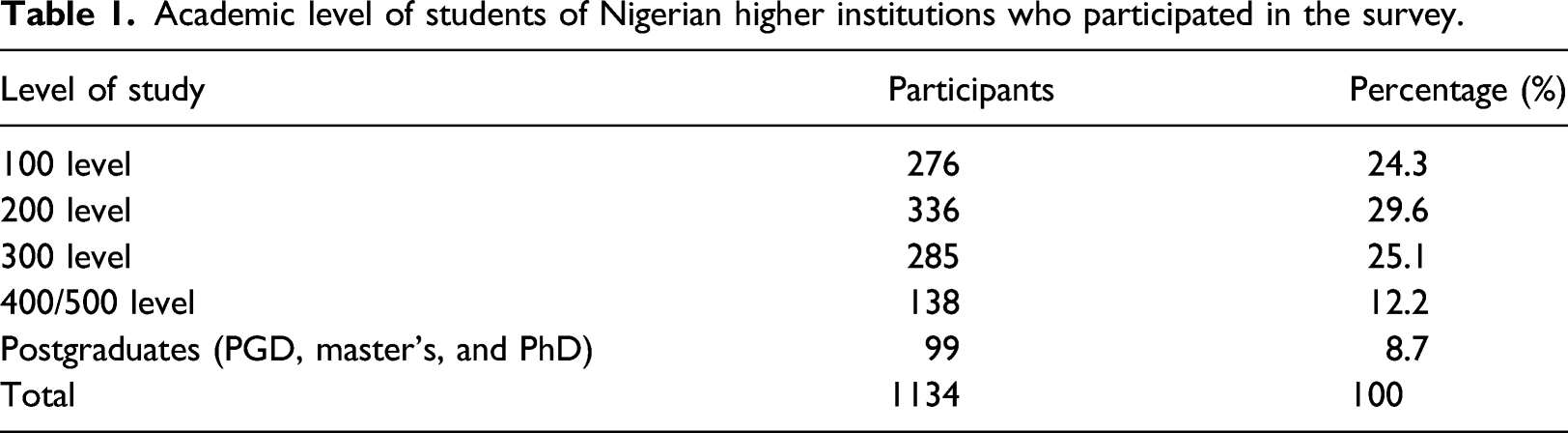
Academic level of students of Nigerian higher institutions who participated in the survey.
RQ1
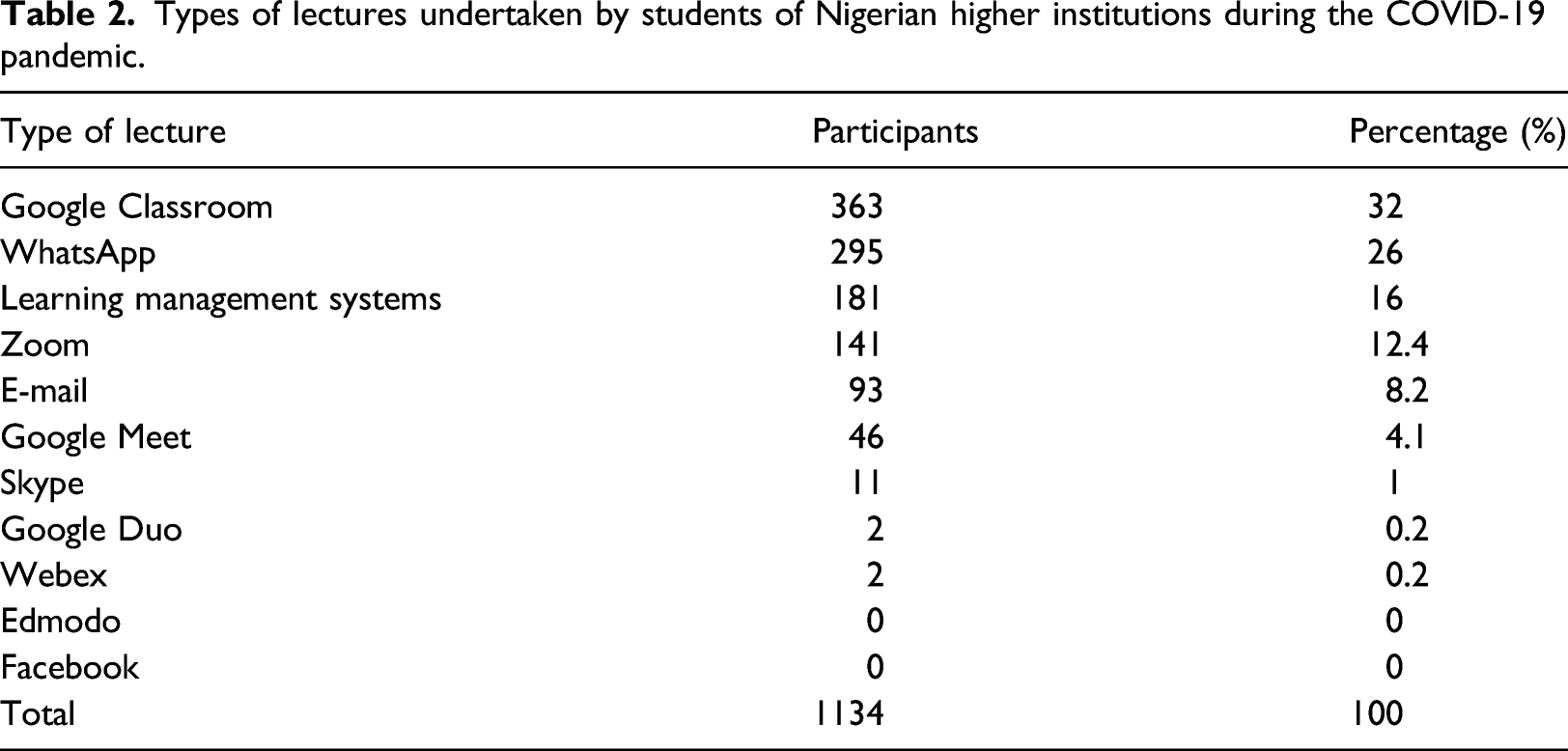
Types of lectures undertaken by students of Nigerian higher institutions during the COVID-19 pandemic.
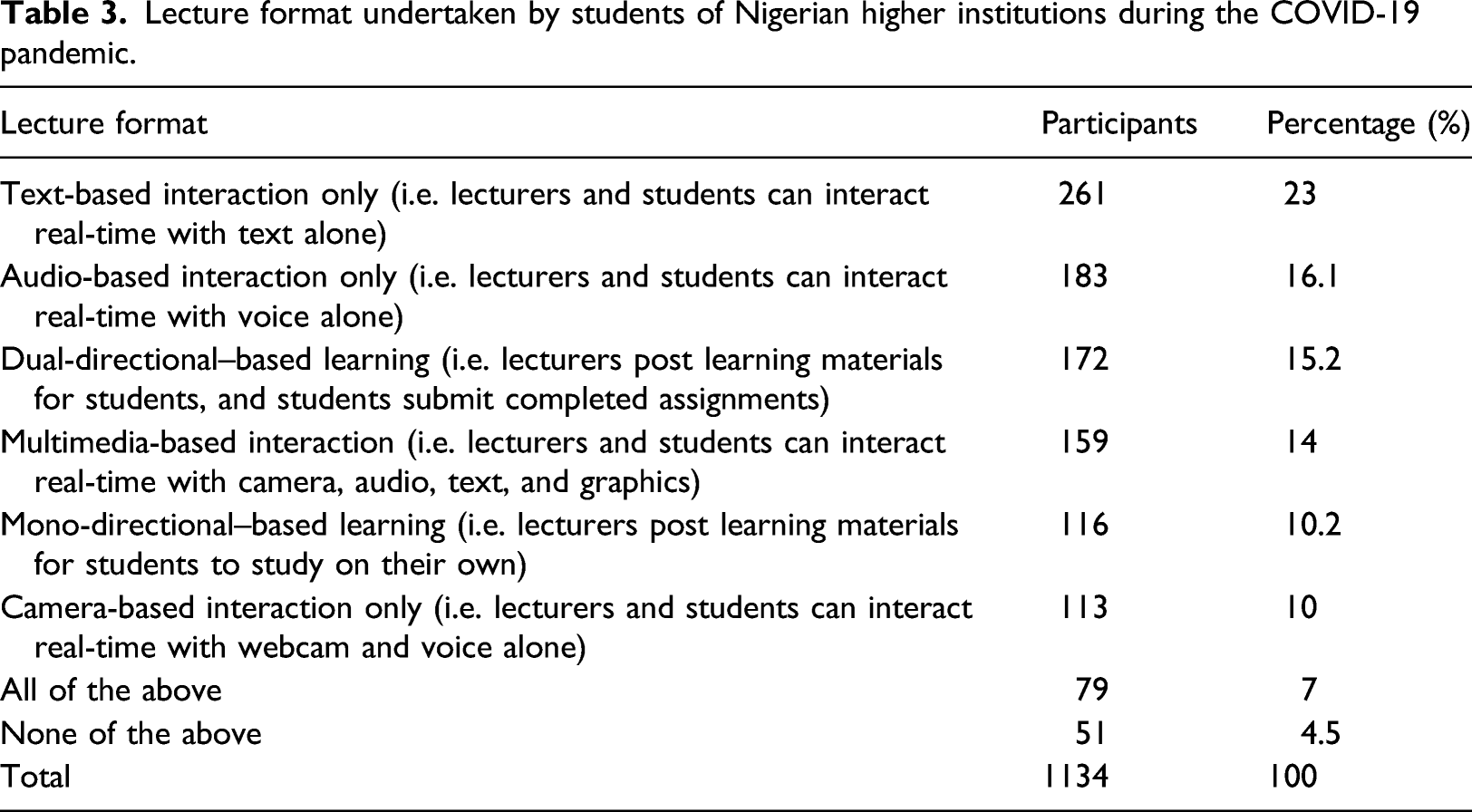
Lecture format undertaken by students of Nigerian higher institutions during the COVID-19 pandemic.
RQ2
Figure 1 reveals how Nigerian higher institutions engaged in different forms of academic activities during the COVID-19 pandemic. Example activities include semester-like academic studies, academic activities that were intensive but did not follow a semester format, and just mere interactions with students at the lecturers’ convenience. Data showed that universities (i.e. 66%) in general are more likely to engage in semester-like online learning than other types of institutions of higher learning—that is, polytechnics scored 57% and colleges of higher education only 25%. Conversely, colleges of higher education (i.e. 75%) had the most non-intensive academic activities during the COVID-19 pandemic period in comparison with other types of institutions of higher learning: polytechnics (i.e. 24%) and universities (i.e. 20%). Other institutions (i.e. 1%) utilized the normal semester timetable and have not observed the COVID-19 restrictions. Degree of academic learning in Nigerian higher institutions during the COVID-19 pandemic.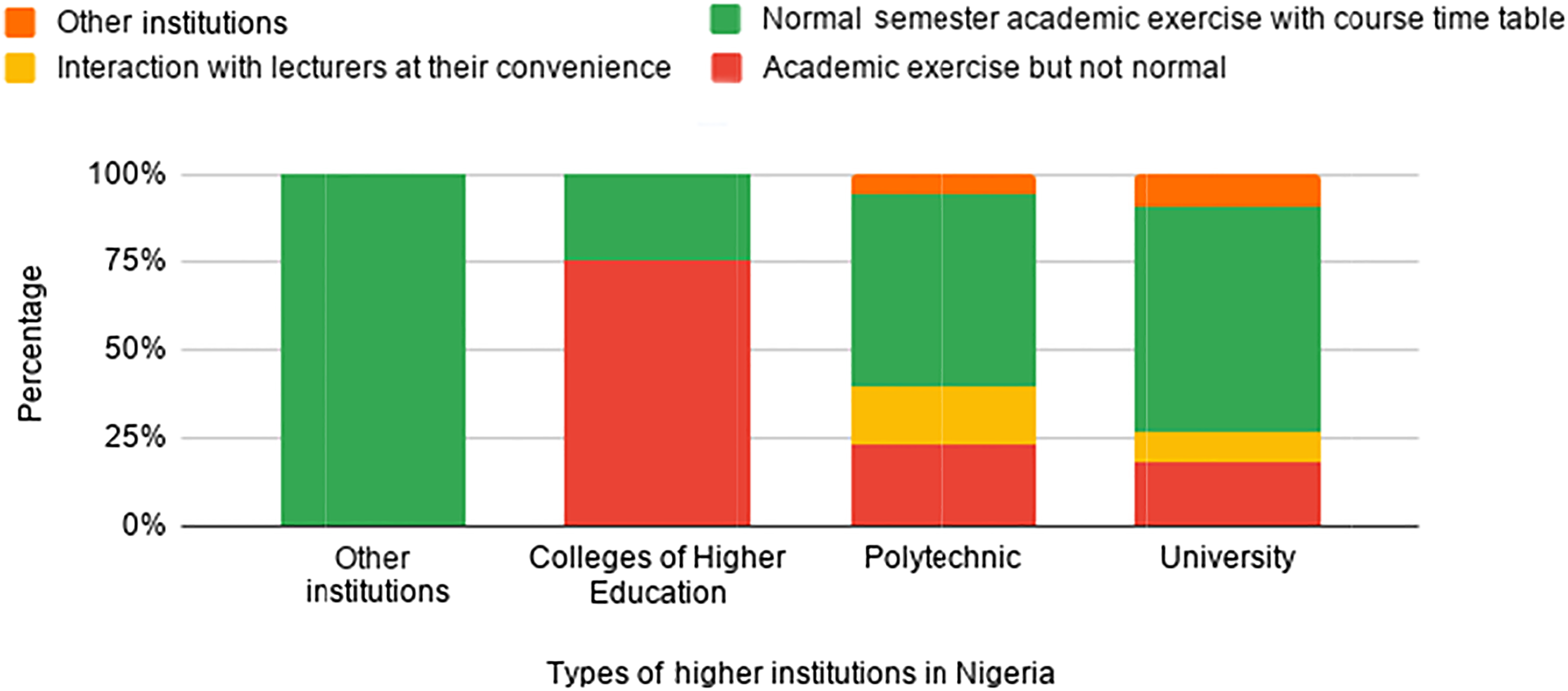
In terms of the intensity of academic activities of students during online learning, the data indicated that three out of every five students (i.e. 61%) spent an average of two hours for their online lectures daily (Figure 2). Since there are four lectures on the average per day and lecture hours total eight daily, the data would imply that students spend about a quarter of the normal time for academic activities if it were physical classrooms. Duration of time spent daily for online lectures by students of Nigerian higher institutions during the COVID-19 pandemic.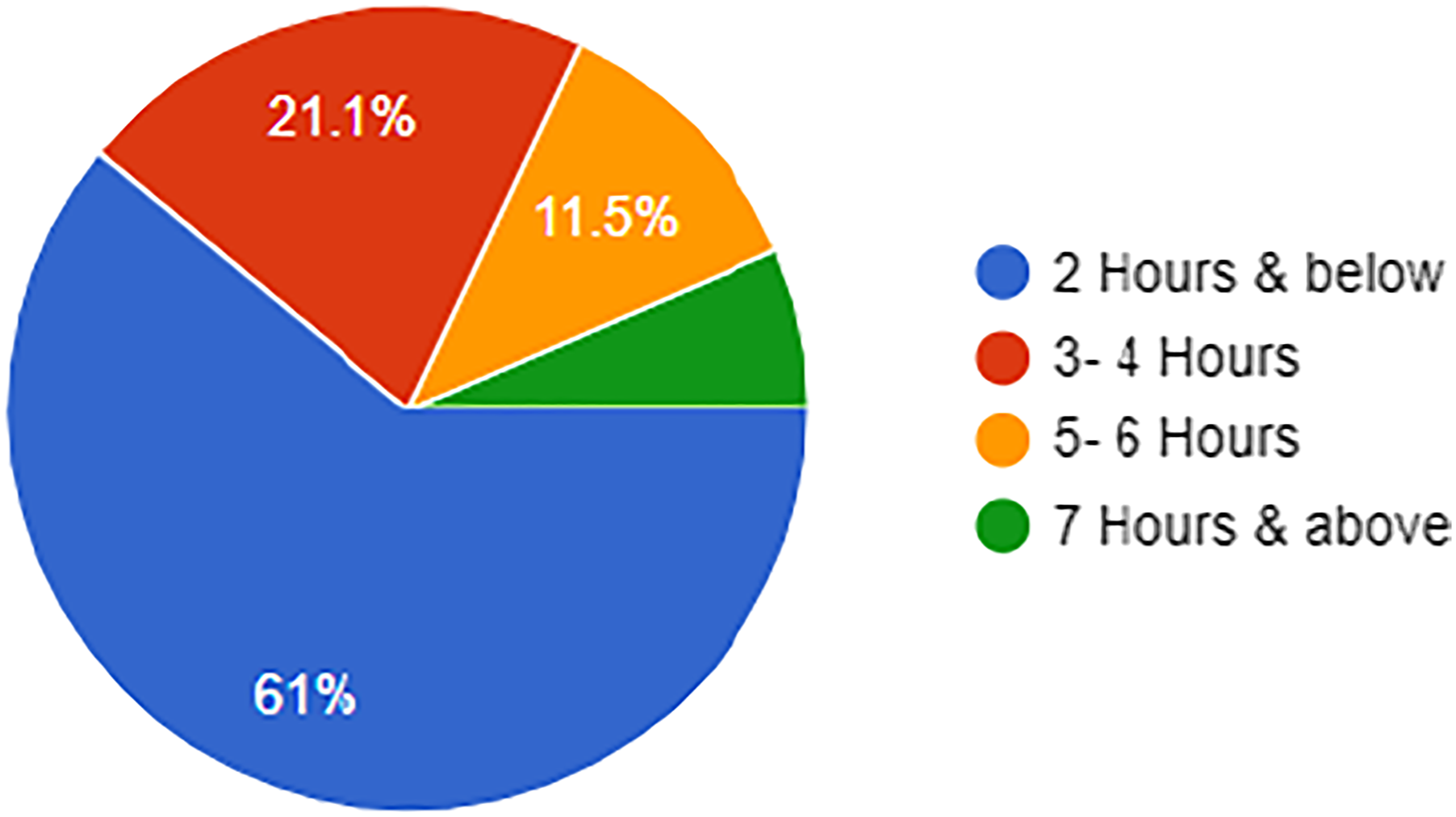
RQ3
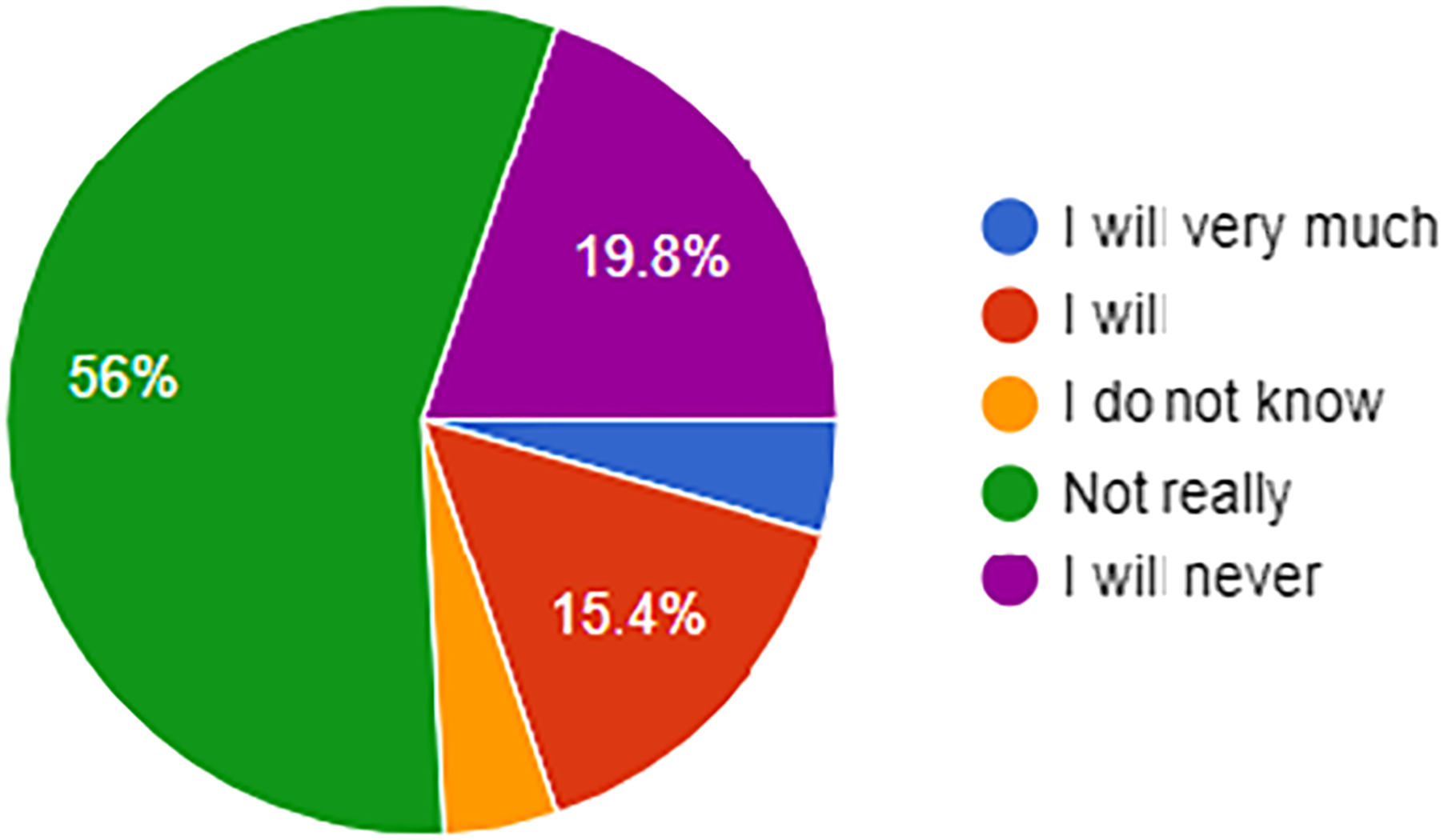
The data in Figure 3 showed that university students (i.e. 45%) were more satisfied with online lectures compared with their counterparts in polytechnics (i.e. 27%) and colleges of higher education (i.e. 25%). Contrariwise, half of the students from colleges of higher education were the most dissatisfied with online learning. This confirms the earlier findings that more university students took part in online learning during the pandemic while students of colleges of higher education participated the least in online learning during the COVID-19 pandemic. In Figure 4, an overwhelming 75.8% (i.e. three out of every four) of Nigerian students do not want to have blended studies in which online learning will run concurrently with classroom learning after the COVID-19 pandemic. Degree of student satisfaction with online learning during the COVID-19 pandemic. Level of desire of students of Nigerian higher institutions with blended study forms after the COVID-19 pandemic.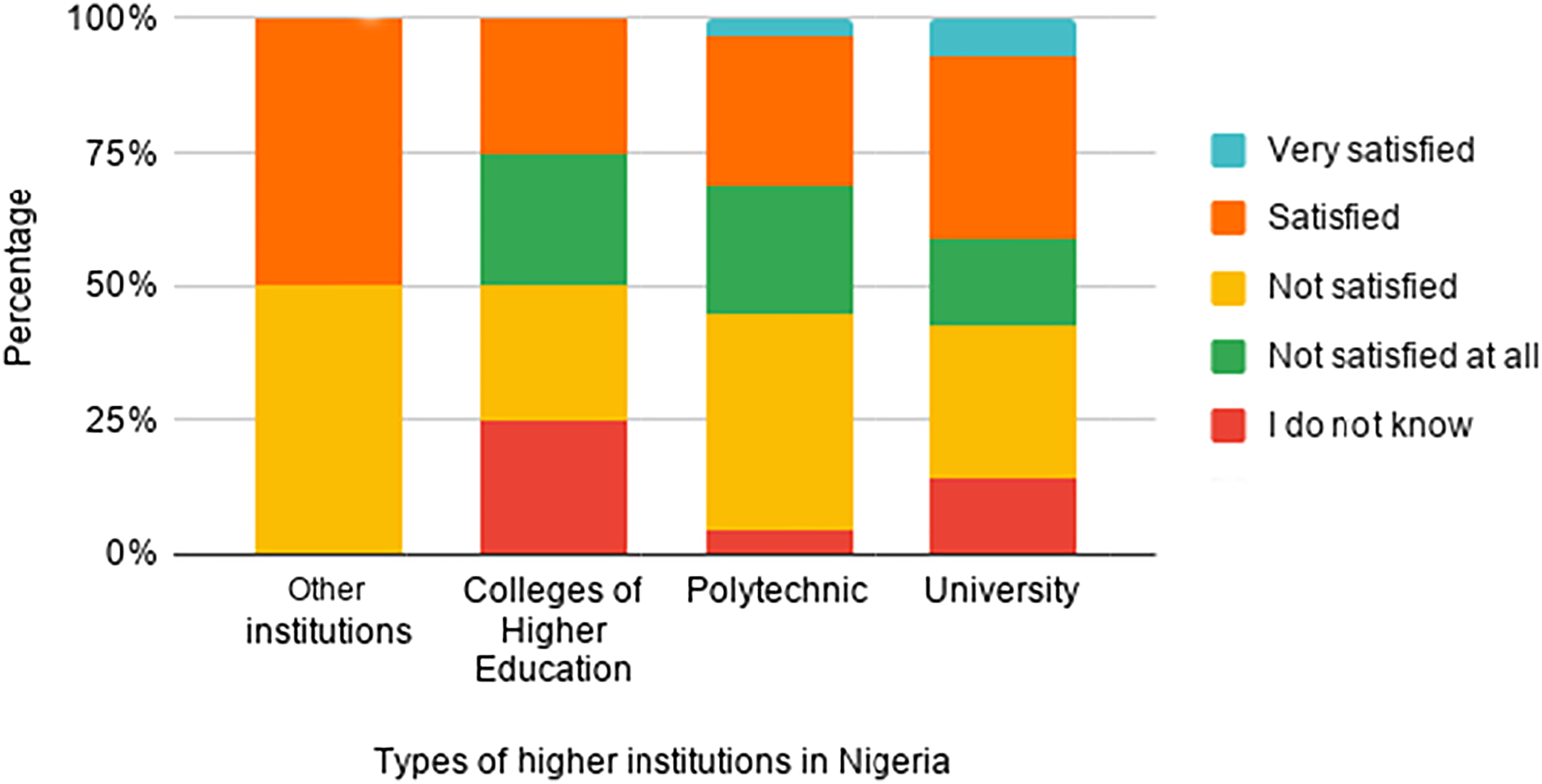
RQ4
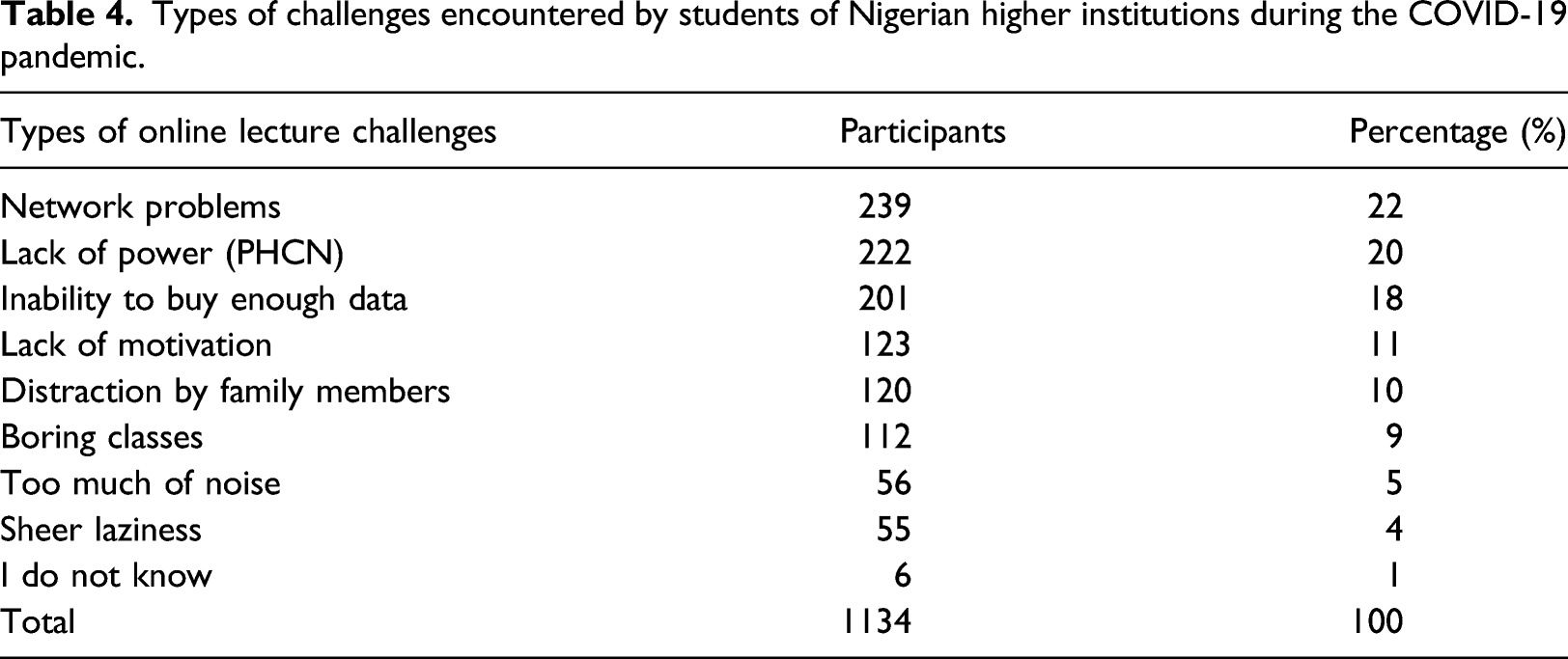
Types of challenges encountered by students of Nigerian higher institutions during the COVID-19 pandemic.
Discussion and recommendations
The findings discussed are principally how students, based on their responses to the research questionnaire, perceived online learning during the pandemic. Thus, the research findings have shown that many higher institutions in Nigeria resorted to free learning tools such as Google Classroom, WhatsApp, and Zoom (i.e. 70.4%) for online learning during the pandemic while only 16% of institutions paid for online learning via the LMS. Findings also indicated that many online lectures were majorly text-based rather than audiovisual such that camera-based interaction between students and teachers was 1 in every 10 online lecture interactions. Similarly, findings revealed that 1 in every 10 students did not partake in any form of online lectures during the pandemic. Moreover, two-thirds of all institutions of higher learning in Nigeria that engaged in semester-based online activities were universities closely followed by polytechnics and then colleges of higher education. On the other hand, 75% of students from colleges of higher education had the least intensive academic engagement during the pandemic, namely, lecturers engaging with their students at their convenience but not closely related to the semester-like academic style of learning. As such, three out of every five students spent only two hours for online lectures on a daily basis corresponding to a quarter of the normal eight hours of daily lecture time in a typically physical classroom setting.
Further findings revealed that approximately two out of every four students of higher institutions that were satisfied with the online learning activities during the pandemic were university students compared to only one each for polytechnics and colleges of higher education. These findings correspond with studies by Adewole-Odeshi (2014), Bali and Liu (2018), and Opeyemi et al. (2019) which found that students of several Nigerian universities were positively disposed to e-learning. Conversely, during the pandemic, two out of every four dissatisfied students with online learning were students of colleges of higher education. Also, three out of every four students of higher institutions in Nigeria signaled they did not want blended studies after the pandemic whereby online and classroom learning run concurrently, preferring instead the traditional classroom format. This finding aligns with those of Smith et al. (2019) who found that students were not satisfied with online learning and preferred the traditional classroom-based learning form. Even so, in a study by Kituyi and Tusubira (2013), university students indicated that a blended form of studies was the best form of learning—leaving some form of interpretation for future research and experimentation.
Moreover, findings showed that of the four clusters of challenges inhibiting the successful implementation of online learning in Nigeria, challenges which border on infrastructural deficiency in the country (i.e. cluster one), namely, network problems and lack of power, constituted 42%. Poor internet connectivity was also found in the studies of Olaniyi (2006), Afolabi and Uhomoibhi (2017), and Li and Lalani (2020) as the major hurdle to online learning. Other clusters of challenges include cluster two which are personal factors (i.e. lack of motivation, boredom, and sheer laziness at 24%), cluster three which is financial (i.e. inability to buy enough data, 18%), and cluster four which are environmental factors (i.e. distraction by family members and too much of noise, 15%). In other words, infrastructural problems are the most serious challenges to effective student online learning in Nigerian higher institutions followed by personal, financial, and environmental factors. In general, these findings do not support the theory of diffusion of innovation. While the diffusion of innovation theory states that innovation in new ICT experiences growth and diffuses to become popular and accepted over a period of time within a specific population or social system (Frank et al., 2020; LaMorte, 2019), findings of this research have shown that students of Nigerian higher institutions do not accept the technological innovation of online learning in their studies yet, and would prefer, the “old” method of physical classroom learning. Nigeria’s higher education, therefore, probably belongs to the “Laggards adopter categorization” of the diffusion innovation theory, that is, the group that is highly conservative and extremely slow to accept new technological innovations. This may, thus, explain student reluctance to embrace the innovative idea of online learning.
The findings of this study have confirmed previous studies on online learning and justify the use of the diffusion of innovation theory. While other studies were limited to student perception of online learning from specific institutions and other circumstances related to only COVID-19, this study should be considered pilot national-level research for both because it investigated student respondents from across the country and investigated their perception of online learning during the COVID-19 pandemic. As such, the sample size for the study, sufficient according to Taro Yamane (GfK Polonia, 2013), confirmed the generalizations reached and reaffirms a nationwide recommendation to improve internet infrastructure and ICT-friendly innovation. This is directly related to the poor network and lack of power (i.e. electricity) as the two most debilitating factors that adversely affected the success of online learning during the COVID-19 pandemic.
Recommendations
Based on the above discussion, the following five points can be recommended: universities should engage students more interactively not only through texts but also video (i.e. camera demonstrations); polytechnics and colleges of higher education should increase their online learning during the pandemic so that their students will not lag academically; internet and power infrastructure in Nigeria need to improve since they constitute the major problems of online learning in the country; students should endeavor to involve themselves and spend more time on online learning to get the best out of it similar to classroom semester-based learning; and since students of higher institutions in Nigeria do prefer online learning to continue after the COVID-19 pandemic, administrators of higher institutions in Nigeria should consider returning to the physical classroom learning format after the pandemic.
Concluding remarks
Based on the outcome of this study, which is a pilot-nationwide attempt to understand online learning utilization in Nigeria during the COVID-19 pandemic, it can be concluded that Nigerian students of higher education have a low acceptance of the online learning technology and favor instead the traditional classroom learning setting, thus, putting them in the “Laggards adopter categorization” of the diffusion innovation theory, that is, the group that is highly conservative and extremely slow to accept new technological innovations. It can also be concluded that the success of online learning in Nigeria is hinged on the improvement of two critical sectors of the national infrastructure, namely, power (i.e. electricity) and internet connectivity (and accessibility), as these two factors largely contributed to the failure of online learning during the COVID-19 pandemic.
Footnotes
Acknowledgments
The authors would like to thank the research assistants from Edo University Iyamho and the University of Abuja for helping us conduct the research.
Author contributions
PE and POI collected, analyzed, and interpreted the data. EP, IP, and FOI wrote the original draft preparation. GTC did the visualization, edited, and revised readability of the manuscript. All authors wrote, read, and approved the final manuscript.
Ethics approval
The Ethical Committee has proved that this study complies with the ethics of scientific research described in the Ethical Principles of the Declaration of Helsinki and other applicable ethical principles and legislation in Nigeria and the European Union.
Informed consent
Respondents volunteered to participate autonomously without their identity being recorded. Informed consent was obtained from all the participants in the study via Edo University Iyamho, Iyamho, Edo State, Nigeria. Consent to participate was voluntary and approved by the University of Abuja Ethical Committee, Abuja, Nigeria.
Declaration of Conflicting Interests
The authors declared no potential conflicts of interest with respect to the research, authorship, and/or publication of this article.
Funding
The authors disclosed receipt of the following financial support for the research, authorship, and/or publication of this article: The research was financed by the Polo Centre of Sustainability under the “EMS Nigeria Fund”, Grant No. EMSNigeria1001.
