




Abstract
Young people are increasingly connected in a digital and globalized world, but technology-mediated interactions alone do not necessarily lead to a culture of meaningful participation and meaning making processes. Students from disadvantaged contexts are especially vulnerable to this. Drawing on the Activity-Centred Analysis and Design framework this paper discusses a case study situated in disadvantaged schools in Chile. Phase 1 of the study revealed that high school students’ literacy practices in the everyday classroom mostly reflected low conceptual and procedural understanding of new literacies, confirming that these young learners enacted passive forms of technological use in and out-of-school spaces. Phase 2 of the study involved the development and implementation of a digital project at a Chilean school. Results offer insights on how alterations in tools, learning tasks, and social arrangements, led to reconfigured literacy practices. Findings also show that the relationship between access, use and outcomes is not straightforward, and students’ cultural capital varies, even in disadvantaged schools. Implications of the study stress the pivotal role of schools and the potential of well-orchestrated educational designs, for introducing and encouraging meaningful literacy practices, and for leveling up the access to the digital world.
Introduction
Technology is pervasive in young adults’ lives today. Data shows that 89% of young adults in the United States are going online once or more times a day (Pew Research Centre, 2018). Similarly in Europe, on average 70% of young adults use the Internet daily (Eurostat, 2017) whilst in Chile 50% of young people use the Internet every day several times a day (Cabello and Claro, 2017). Consequently, adolescents are increasingly connected to a globalized world, experiencing interactions and communication that are different from previous times.
Scholars researching the impact of the digital context on literacy practices, argue that young adults meaning making practices in out-of-school spaces have become increasingly multimodal, collaborative, interactive and ubiquitous (Padgett and Curwood, 2016). Tools available in the online space, such as media apps, forums and social network sites are now used alongside traditional meaning making practices, such as the use of pen and paper (Warschauer and Matuchniak, 2010). Researchers report that adolescents are confidently engaging in a participatory culture which allows them to be not only consumers but also producers of media content (Greenhow and Lewin, 2016; Jenkins, 2012; Marsh and Hoff, 2019). By writing blogs, engaging in fan fiction communities, playing massive online games or by creating remix videos (Hobbs and Friesem, 2019), adolescents are reconfiguring new ways of making meaning, but not all adolescents actually engage in these practices. There are variations in young people’s circumstances, dispositions, perceptions, which ultimately influence their practices with technology (Beckman et al., 2019).
According to a recent National Education Technology Plan in the United States, a usage gap exists between those young people who use technology “to create, design, build, explore, and collaborate and those who simply use technology to consume media passively” (U.S. Department of Education, 2017: 18). Data from the EU Kids Online survey indicates that “countries were also uneven for creative skills, though in most of them, fewer than half of the children said they could edit or make basic changes to online content” (Smahel et al., 2020: 7). A recent study by Chaudron et al. (2019) interviewed 244 children across 21 European countries, and their findings highlighted that all interviewed children used “digital technologies mainly in leisure time, for relaxing and entertainment” (p.137).
Although schools historical function has been to prepare young adults for their technical or professional development (Collins and Halverson, 2010), fast changes in the information society seem too often to cause a disconnect between emerging changes and school systems (Warschauer et al., 2014). As Yeoman and Wilson state (2019) “educational research tends to frame material and digital infrastructure for learning as deterministic (causing change) or instrumental (improving efficiency)” (p. 2091). Such binary view may lead educators to speak of technological changes in education as uniquely related to equipping schools with infrastructure, while being somewhat blind to the powerful role of teachers in the learning process. But also, they seem to enact assumptions that young learners can naturally learn from and with technologies, as described by those contesting the myth of the digital natives (Selwyn, 2009). Instead, research shows that digital vulnerabilities are not only related to individual skill and digital access and outcomes, but are also strongly related to cultural and social capital (van Deursen and Helsper, 2015). Offline differences can be seen in areas such as political and civic engagement, educational attainment and employment outcomes (van Deursen and Helsper, 2015: 30).
The present research explores this gap and the role of schools in equipping vulnerable students with digital competences to participate and make meaning in a digital world, and within the context of a developing nation. This article discusses a three-year project which focused on the nexus between literacy, technology, design and learning in Spanish classrooms in Chile. As researchers we wanted to gain insight into existing literacy practices and technology use in disadvantaged Chilean schools and to explore ways of supporting literacy practices attuned to the current digital world.
To explore the connections between literacy practices, digital technologies and learning design within the context of disadvantaged schools in Chile, the following research questions guided our study:
How are new literacies entering the school space in a Spanish classroom? What are the implications of the design of a digital learning project on teacher practices and on students’ literacy learning and engagement? What is the relationship between the components of the proposed design (set, epistemic & social) and emergent learning activity?
While there is much research on technology integration in the classroom (McKnight et al., 2016; Voogt et al., 2013), most of these accounts seem based on affluent first world environments, and often assume that results can be generalized globally (Czerniewicz, 2018; Livingstone et al., 2019). Children’s use of digital technologies in the global South is still under researched (Livingstone et al., 2019). In the next section, we introduce the theoretical framing that shapes our inquiry, to then review research studies that problematize the use and impact of digital tools and literacy with a focus on the context of disadvantaged classrooms in Chile.
The activity-centred analysis and design framework
In order to trace the relationship between new literacies and tool use in the Spanish classroom we drew on the Activity-Centred Analysis and Design framework (ACAD) (Goodyear and Carvalho, 2014). ACAD allows us to explore part-whole relationships in the Spanish classroom and establish connections between designable elements and the emergent activity of students when engaging with literacy practices. Most importantly, we were interested in an analysis that would explain not only what is happening but how change happens (or not) after alterations in digital and physical elements, in a disadvantaged school context. ACAD characterizes four key structural elements of a learning situation, three of these are the ‘designable components’ – or the set, epistemic, and social design. These elements are said to influence the emergent activity of learners. For example, choices are made in relation to digital and material elements that will be brought to a classroom, such as digital (e.g. an app) and material tools or resources (e.g. pen and paper, furniture); these are elements in ‘set design’. Teachers also create tasks with suggestions of things for their students to do, whilst carefully planning the sequencing and pacing of information; these are elements in ‘epistemic design’. The social organization of students, whether they will work in pairs or groups, suggestions of scripted roles or divisions of labor, are all part of ‘social design’ (See Figure 1). The combined choices for elements in set, epistemic and social design, will result in a certain configuration or an assemblage of elements. The activity of students, as they interact with this assemblage – or what learners do at “learntime” – is not “designable”, because students often have agency to reconfigure and reshape what has been proposed. The emergent activity is the fourth element of the framework, characterized as acts of ‘co-creation and co-configuration’. The ACAD analytical lenses helped us break down the complexity of the assemblage of elements involved in the Spanish learning environment, and to search for relationships between ‘designable components’ and ‘emergent activity’. In particular, our interest was on students’ experimentation with new literacies, and how this connected to changes in the social and epistemic arrangements in the classroom. We were also interested in the introduction of new technologies that could offer students new ways to learn and engage with Spanish content.
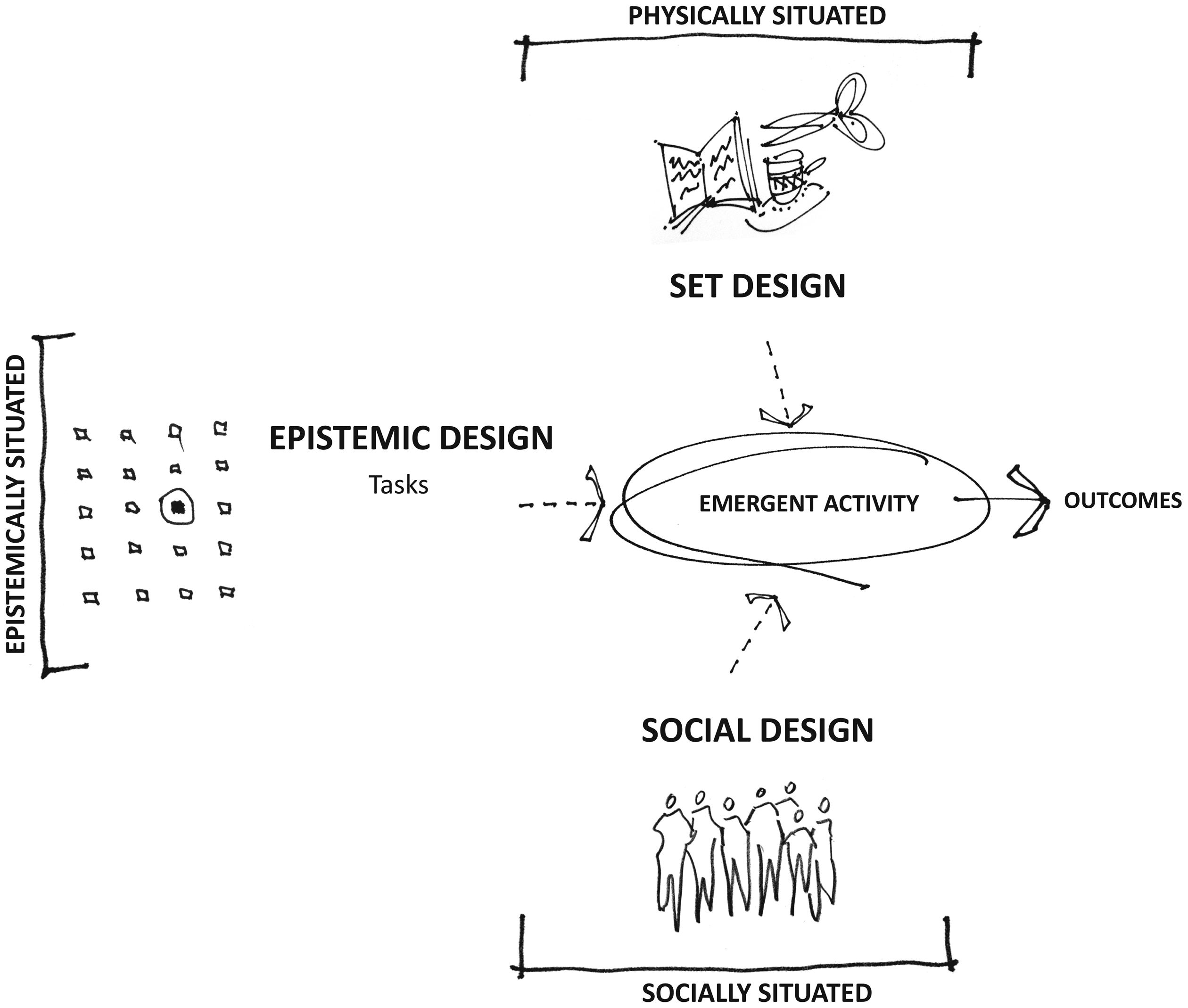
ACAD framework (adapted from Goodyear & Carvalho, 2014: 59).
Literacy practices in a digitalized world
Definitions of literacy practices encompass dynamic, multimodal, social, and technologically mediated concepts (Coiro et al., 2008). Curwood and Cowell (2011) foreground literacy practices as emphasizing a new set of skills, such as audience awareness, critical and collaborative engagement with content and text production, promotion of multiple modalities, authorship, essentially suggesting a shift from a static text-author process to a more dynamic process. As research shows, changes in tools, modes and relationship between agents and tools are also reshaping traditional ways of communicating and representing meaning (Kress, 2010; Thibaut and Curwood, 2018). From this perspective, new models of literacy are shaped by the historical and cultural context and the tools available for meaning making at a specific time (Lankshear and Knobel, 2007). Similarly, research suggests that “knowledge is situated, being in part a product of the activity, context and culture in which is developed and used” (Brown et al., 1989: 32). This is particularly relevant as technological tools and digital spaces are reconfiguring the concept of literacy (Jewitt, 2013; Lankshear and Knobel, 2006; The New London Group, 1996).
In Gee’s (2014) New Literacies Studies “new types of literacy beyond print literacy, especially ‘digital literacies’ and literacy practices [are studied as] embedded in popular culture” (Gee, 2014: 44). A contemporary and nuanced understanding of literacy calls for the examination of multimodal modes of representation, which include linguistic, visual, aural, embodiment, action and interaction, and the relationship between these modes (Jewitt, 2013; Kress, 2010). We adopted Gee’ s definition of literacy practices in order to account for a fluid and ever-changing concept of literacy, but also to situate these practices as part of a continuum connected to early work on literacy, acknowledging the social and cultural contexts as pivotal to meaning making practices.
Digital divides and literacy affordances
Whilst in out-of-school spaces research is mostly positive in signaling the literacy affordances of today’ s digital landscape, in terms of participation (Livingstone et al., 2015); identity formation (Greenhow et al., 2009); social interaction (Bers, 2012); civic engagement (Jenkins, 2012); production (Burn, 2009); authorship (Magnifico, 2010) and cultivation of students’ creativity (Bowmer and Curwood, 2016), research also alerts to the need to consider learning in these online spaces with caution; as “persistent, high-quality authorial involvement does not necessarily constitute typical participation” (Magnifico et al., 2017: 3). In fact, participation is often peripheral, passive or not intended by young learners and only a minority might show active creation and social interaction (Magnifico et al., 2015). Marsh and Hoff (2019) highlight that there might be issues of trust, but also differences on people’s ability to use and translate digital abilities into real outcomes (van Deursen and Helsper, 2015).
Despite the potential of technology in education, the digitalization process might be contributing to widening inequalities. At first, the digital divide included a single distinction: accessing or not accessing technologies. However, simplistic assumptions underlying this concept led to the development of a second digital divide. As Claro et al. (2015) posit “(the second digital divide) also accounts for factors that are extrinsic to technology, such as individual skills or digital literacy” (p.2). Recently, the notion of a third digital divide emerged to illuminate how digital skills are translated into people’s lives, considering aspects such as work opportunities, civic engagement or social participation (van Deursen and Helsper, 2018). Such differences may be strongly related to students’ social inequalities (Claro et al., 2015) and to social and cultural capital (van Deursen and Helsper, 2015).
Schools may play a critical role in leveling up opportunities for students’ learning in a digital world ( Warschauer et al., 2014). High indexes of inequality in Chile (and in Latin America in general) are pervasive. The digital divide adds another layer to the existing structural differences in those countries. In despite of policies in Chile making an effort to equip schools with technologies (Ministerio de Educación, 2013), according to PISA (OECD, 2017), Chile has the “fifth strongest association between socioeconomic status and student performance among all PISA (OECD Programme for International Student Assessment) 2015 participating countries” (p.13). Studies reporting on technology integration in the classroom in Chile are rather scarce. The few available studies show a slow transition from access and infrastructure to students’ learning outcomes and skills acquisition (Cabello and Claro, 2017b; Cordero et al., 2014; Hepp et al., 2013). Although initiatives such as “Agenda Digital” or the implementation of national standards on digital skills, over a decade ago, attempted to implement changes (Mineduc, 2017), research shows that technology is not being integrated effectively in Chilean school classrooms (Hepp et al., 2017; Thibaut, 2020).
In the next section, we introduce our study, methods and participants, to then reveal how some of the existing socio-structural differences might be affecting literacy learning in disadvantaged schools in Chile.
Study and methods
Acknowledging the call for more authentic and ethnographic approaches in educational research involving technology and learning in schools (Greenhow and Lewin, 2016), the present study uses a qualitative situated approach at two vulnerable school sites. The first school allowed us to pilot the study and gather data on students’ access and use of technology, while a case study research design and multi-method approach (Yin, 2009) was conducted in the second school. The rationale for this decision considered school’s availability and teacher’s interest on continuing with the design phase of the study.
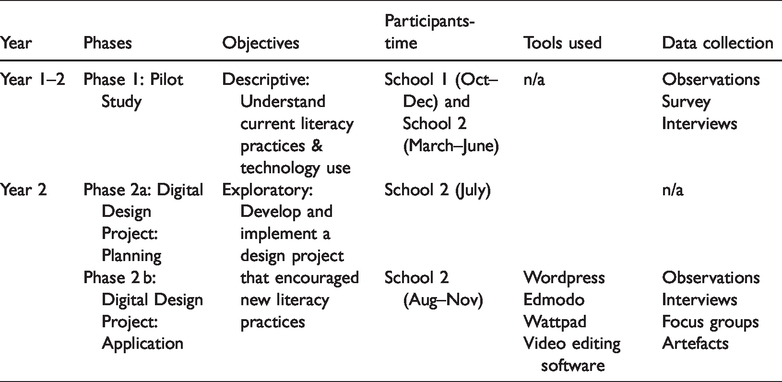
The overall study comprised of two phases. Phase 1 involved gathering data about current literacy practices and technology use at both schools. Phase 2 involved the design and implementation of a design project in partnership with the teacher in School 2. Table 1 outlines details about the study, including both phases, objectives, duration of each phase, types of data and tools used in the digital design project at School 2.
The study design.
The digital design project was elaborated in conjunction with the teacher in School 2, taking into account key competences in the Chilean national curriculum related to 10th Grade (15 years old students). Learning objectives in the digital design project included (a) reading: multimodal comprehension, evaluation and analysis of different types of texts and (b) writing: understanding writing and digital media; collaborative writing; intertextual meaning; production of multimodal text considering narrative voice; and various modes including visual, audio, kineikonic and multimodal. Students final multimodal productions were included as part of their formal summative assessment, and their participation on Edmodo, Wattpad and Wordpress were considered as part of formative assessment during the semester.
Context
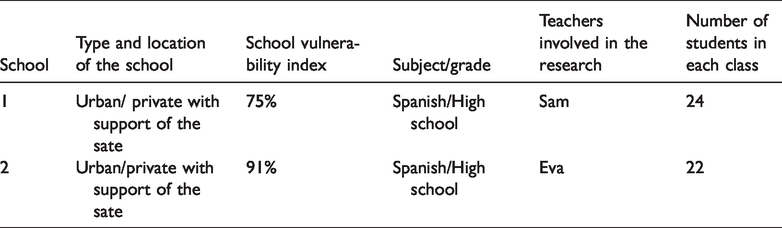
Two vulnerable schools were identified through an index elaborated by the National Assembly of School Help and Scholarship 1 (Ministerio de Educación, 2017) using purposeful sampling (Merriam, 2009: 77). This index considers poverty conditions and students’ risks of failing or withdrawing from school based on data from the National System of Equity Assignment. Both schools selected had high vulnerability indexes (see Table 2). School 2 had a 75% of vulnerability, whereas School 1 had a 91%.
School 1 and 2 descriptors.
Participants
We selected one classroom at each school, including a total of 46 students in 10th Grade and two teachers. Pseudonyms were assigned to all participants to assure confidentiality and anonymity. At the time of the study, Sam (School 2) had two years of teaching experience while Eva (School 1) had 17 years of experience. Eva described herself as a facilitator of her students’ learning and someone who was curious about the use of technology in the classroom, although with not much expertise in that area. Sam, instead, reported feeling rather competent with the use of technology in general, although she also stated she did not use many digital tools in the classroom (see Table 2 for School 1 and 2 descriptors).
Data collection and data analysis
Multiple data sources contributed to the analysis including observations, interviews, focus groups, survey and artefacts produced by students. This allowed for data triangulation and for increasing trustworthiness (Denzin and Lincoln, 2003) and offered different angles to be explored through thick description (Geertz, 1973). Data analysis depended upon the type of instrument and type of data gathered as described:
Observations
Observations of classroom practices where held over a period of one semester, in each school site, between year 1 and 2 of the project timeline. An observation protocol was adapted from Milicic et al. (2008) used to systematize indicators of digital tools use in the Spanish classrooms.
Interviews and focus group
Semi-structured interviews explored teachers’ beliefs and conceptions of teaching and learning, literacy and technology (School 1 and 2). After the design phase, follow up interviews and a focus group were conducted in School 2 with Sam and selected students. A content analysis technique was used for the analysis of interviews and comprised of carefully reading interview transcripts in an iterative process. Once saturation of concepts was reached, fragments of transcripts were selected in order to allow the researchers to interpret meaning (Saldana, 2009).
Survey
A student survey was conducted in Schools 1 and 2 in order to identify their access and use of technology in their everyday life. This baseline data provided information about school learning activities prior to the design of the project. Likert scale, dichotomic and short open-ended questions were used in the survey protocol and a descriptive analysis was conducted.
Artefacts
In Phase 2 of the study, data collection included students’ artefacts, such as videos, blog posts, contributions to online collaborative writing and students’ asynchronous interactions on an educational social networking platform. These artefacts were analyzed and then discussed in an interview with the teacher, to gather further insight into the proposed learning design. The ACAD framework shaped the data analysis.
Findings and discussion
Returning to our research questions, we first describe the new literacy practices identified in the Spanish classrooms (School 1 and 2) prior to the implementation of the Digital Design Project (RQ1). We then explore literacy practices that occurred once the project was underway (School 2) (RQ2 and RQ3). We include participants’ voice, of both teachers and students, to illustrate their own experiences with literacy practices.
New literacies in the everyday classroom
In Phase 1, the data shows a disconnection between the way students were engaging in literacy (mostly through paper-based reading and writing) and the way scholars report youth new literacy practices (Lammers et al., 2014; Rothoni, 2017). In fact, the analysis revealed that new literacy practices were mainly absent, which might be due to the low use of technology in the Spanish classrooms. This finding was supported by the teachers’ interviews, which showed low levels of understanding of the concept of new literacies. Sam and Eva’s cultural models of literacy referred only to reading and writing on pen and paper, even though both valued technology integration in the classroom.
Our observations identified that although technology was integrated in lessons, these activities mostly reproduced older approaches with new tools, such as students copying content from a PowerPoint presentation, rather than a static Whiteboard. In the SAMR framework (Puentedura, 2014), this is characterized as substitution, and reflects a low level of technology integration in teaching practices. As Eva mentioned: we get stuck, and in the end, we work the same as usual: PowerPoint to present content and as a content back up, and there we stay (Eva, Teacher)
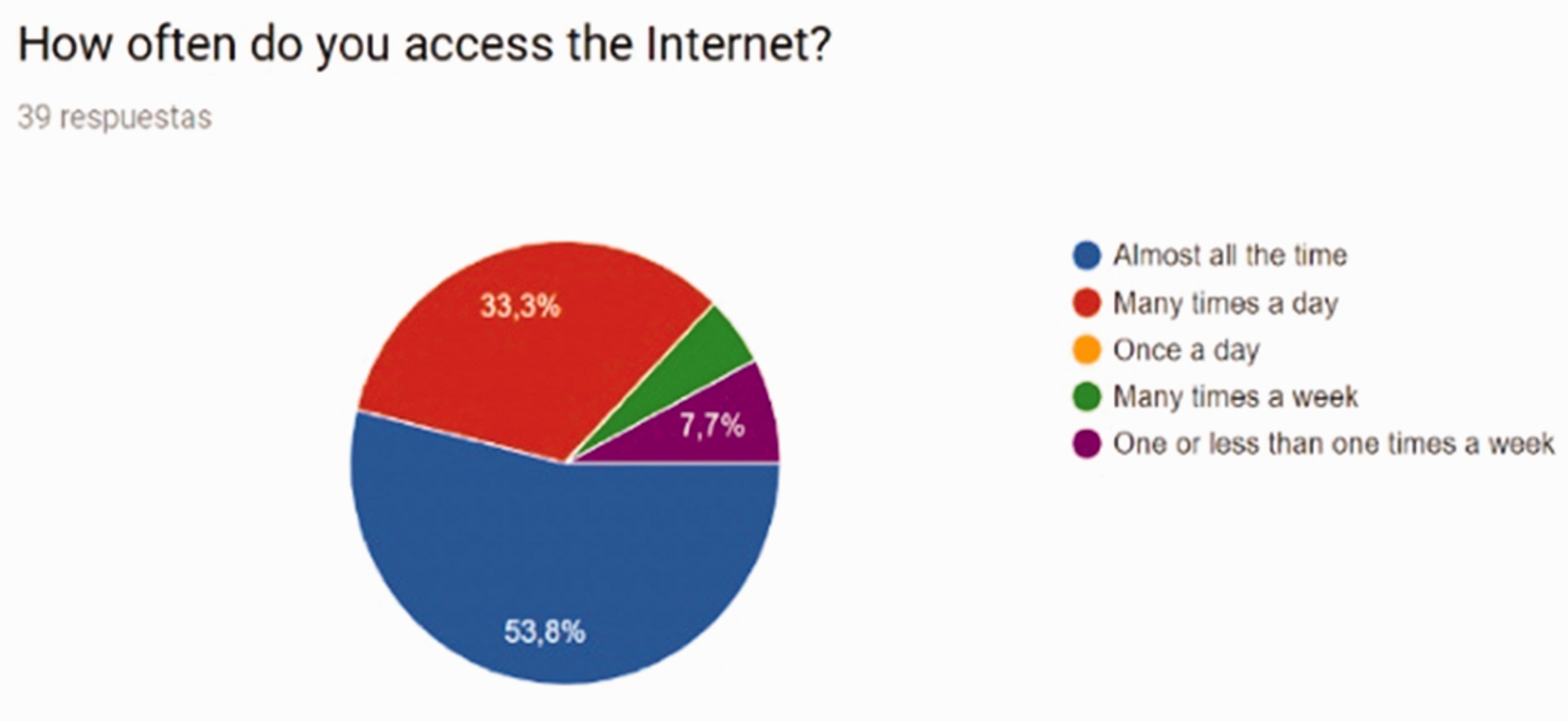
Students’ survey: internet use.
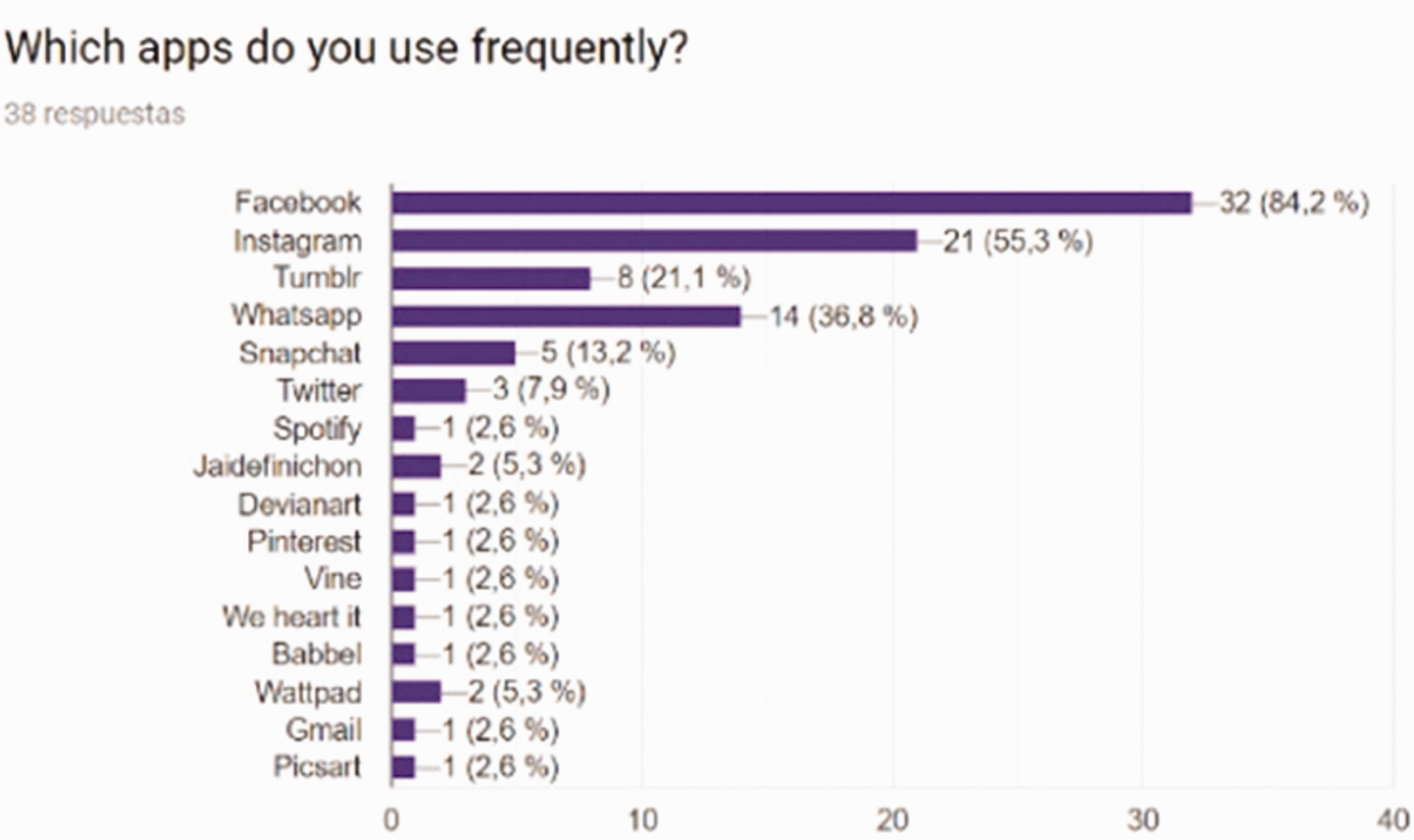
Students’ survey: technology use.
These results align well with research stating that youth, might benefit from explicit teaching, to understand how to meaningfully use technology and to gain beneficial outcomes for their future lives (Selwyn, 2009). Our observations pointed to students’ lack of understanding of technology at a procedural level (e.g. creating an email; linking a user account to a blog application; editing content online), and at a conceptual and safety level (e.g. understanding the risk of disclosing personal data; considering the effects of the digital footprint in a person’s life; understanding netiquette procedures; critically assessing information on the net). These results have implications connected to the third digital divide (U.S. Department of Education, 2017; van Deursen and Helsper, 2015) in which digital access and skills are no longer enough for effective participation in society. Interestingly, Sam expressed similar points during her interview: students are surrounded by technology, so what is missing is to teach them, so that technologies also enter their academic space and that is what we did this year, because for them, technologies are Facebook, Instagram, WhatsApp, but the fact that we were able to show them other technologies…that they found amazing (Sam, Teacher) it is still fun to do draw on a notebook, but no one sees it (Miranda, Student) I upload my work and if people want me to continue on one, I keep working on it (Miranda, Student). we gather together to write…we have a notebook and when Daniela says -ideas, ideas- then we gather, discuss our ideas and write them up on Wattpad (Paula, Student) In Wattpad we choose what we want, whereas in school the teacher sends us only what she likes and we have to read it anyway, and that is why we get bored, because is not what we like (Andrea, Student)
Designing a digitally rich environment in the Spanish lesson
Based on findings from Phase 1 of the study, we worked with a teacher in Phase 2 to design a digital project to support her students’ engagement in new literacy practices. This involved coming up with learning tasks that covered the Chilean national curriculum in the subject area of Spanish (epistemic design), and bringing in new elements in set design, (e.g the blogging application WordPress, a social network site for learning purposes Edmodo, and Wattpad, an application that allows reading, writing and editing content from different genres). Students used computers provided in the school lab, and additionally, they could use their smartphones to work in their projects.
Overall, Phase 2 introduced new key design elements, and our focus was on understanding how these elements contributed to shaping new literacies (see Table 1). We considered that the teacher would play a critical role in the introduction of new tools to students and in the development of the digital project. And so, the first step of the digital project involved the researchers modeling the use of the tools in private sessions with Sam. The teacher and researchers discussed the applicability of various tools and the teacher then selected tools that seemed to enable teaching and learning of the type of content she identified as relevant for her students. A timetable was created in order to sequence and pace the introduction of different tools, allowing time for students to get familiar with each of them, through learning activities conducted within the classroom, between August and September. Also, as each tool was introduced, a short presentation was organized to show students the main features of a tool, followed by activities that encouraged students to practice using them in class. These presentations happened in the school’s computer lab, so that all students were able to practice in the devices provided. Students were first introduced to WordPress, followed by Edmodo, Wattpad and finally Moviemaker. These tools were incorporated into the teachers’ lessons and used as part of formal assessment tasks, related to multimodal analysis and production in class.
During the project, students’ use of tools was scaffolded and monitored, for instance as the teacher shared the message below on Edmodo, reminding students that they would be working with the tool, uploading their work to the platform and they should pay careful attention to instructions:
Dear students, now I can see that you are getting used to this social network, so now we can start working with it. As I already mentioned in class, each week we will be giving you a task that you should upload to the platform. Pay attention to the instructions, regards!
Interactions, feedback and collaboration: Looking at connections between set, social and epistemic design
The ACAD framework acknowledges learning as a physically, epistemically and socially situated activity (Goodyear and Carvalho, 2014). Practically, the framework helps us break down the complexity of learning situations to maintain a focus on relationships, or on how elements in set, epistemic and social design are likely to influence students’ activity.
As previously stated, new literacies in the form of digitally mediated meaning making practices where almost absent in the Spanish classroom. Initially, there was a clear disconnect between tools, tasks and social configurations, as although digital tools were being used (set design), their use was mainly to display information (epistemic design) with social arrangements that rarely invited students to interact with one another (social design). The digital project was then designed to reconfigure some of the elements in these dimensions, with the design rationale of fostering new literacy practices. As this was a Spanish lesson, learning tasks focused on knowledge and information in connection to the Chilean national curriculum (epistemic design). Set design accounted for the availability of tools that could allow students to experiment with multiple forms of representation – linguistic, visual, aural, action and interaction (Jewitt, 2013).
For instance, Edmodo (set design), was included to encourage students’ reading and writing activity. In doing so, Sam was able to leverage students’ motivation and interest, whilst introducing Spanish content through a film project for her students (epistemic design).
Figure 4 shows a snapshot of students’ interactions in Edmodo. In these interactions, students are exchanging views about the need to improve light in their shots, or to refine the ending of the script because is “confusing”. Through these conversations, students were not only interacting with one another, but they were also being invited to think critically, to provide feedback, to engage in linguistic exchanges, and to analyze visual images.
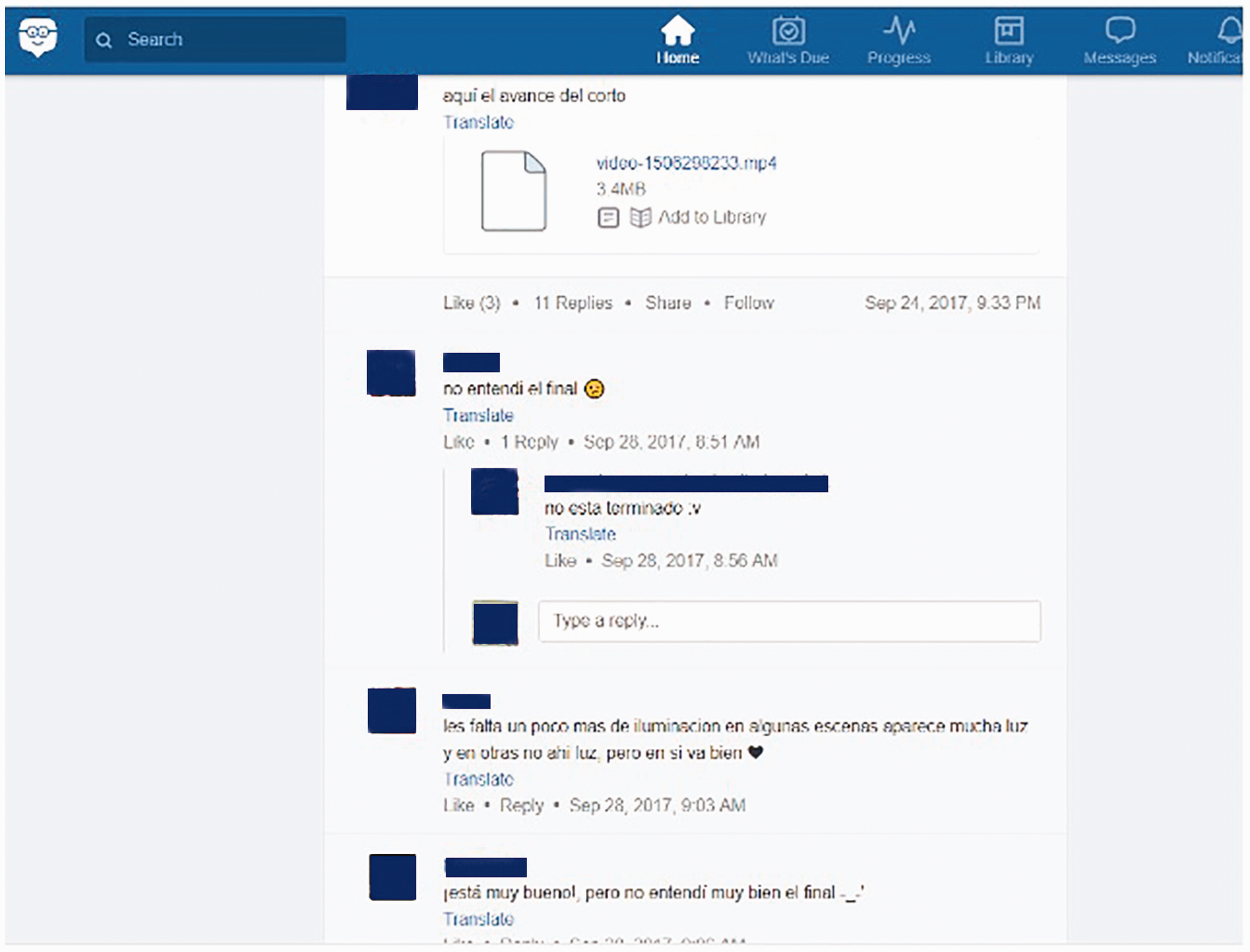
Students’ comments on the videos uploaded on the Edmodo wall.
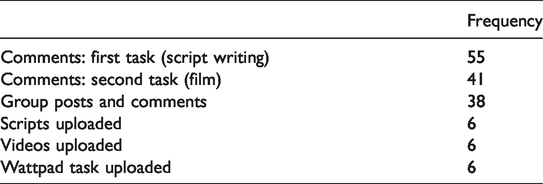
Students’ emergent activity, such as posting of their work online, giving feedback to peers, chatting about how to design and improve their films, or just commenting on their activities, could be seen as connected to changes in the traditional structure of the classroom, towards a more collaborative environment (social design). This is also in line with a social approach to learning (Kalman and Guerrero, 2013) in which the cultivation of social relationships is key for facilitating learning. Students were no longer just sitting in rows facing their teacher (set design) but moved around to talk about their own ideas with peers, while also being guided by the teacher. Consequently, the previous hierarchical structure of the classroom was challenged, and new opportunities created on a social level (Yeoman, 2017). The introduction of new elements in set design (e.g. Edmodo, WordPress, Wattpad, Video editing software) called for the reconfiguration of learning tasks (epistemic design), and included tasks that involved critical reflection (e.g. thinking about peers’ work), collaboration (e.g. contributing thoughts to how one’s work could be improved), and creativity (e.g. bouncing ideas about their own films and scripts). Table 3 summarises the frequency of students’ comments and tasks that were uploaded. As their teacher stated:
Summary of Edmodo.
a key outcome of the project was that students learned to generate feedback, to help each other, to work in groups and to shape leadership (Sam, Teacher)
For instance, students with expertise on platforms such as WordPress became tutors to their peers and were asked to supervise groups along with their project work (another re-configuration observed in social design). Thus, forms of apprenticeship (Lave and Wenger, 1991) started to take place when more knowledgeable students in certain areas tutored their peers in the classroom. While these observations provided encouraging signs on new literacy practices, questions remain about whether such activities would continue over time, after the digital project was completed.
The role of epistemic design for supporting students’ agency and creativity
Evidence of creative skills emerged as students developed their own work and productions (such as videos or pieces of writing). According to Sam, the reconfiguration of the learning design enabled them to see: language not just as words, but also as actions. That was very interesting! (Sam, Teacher)
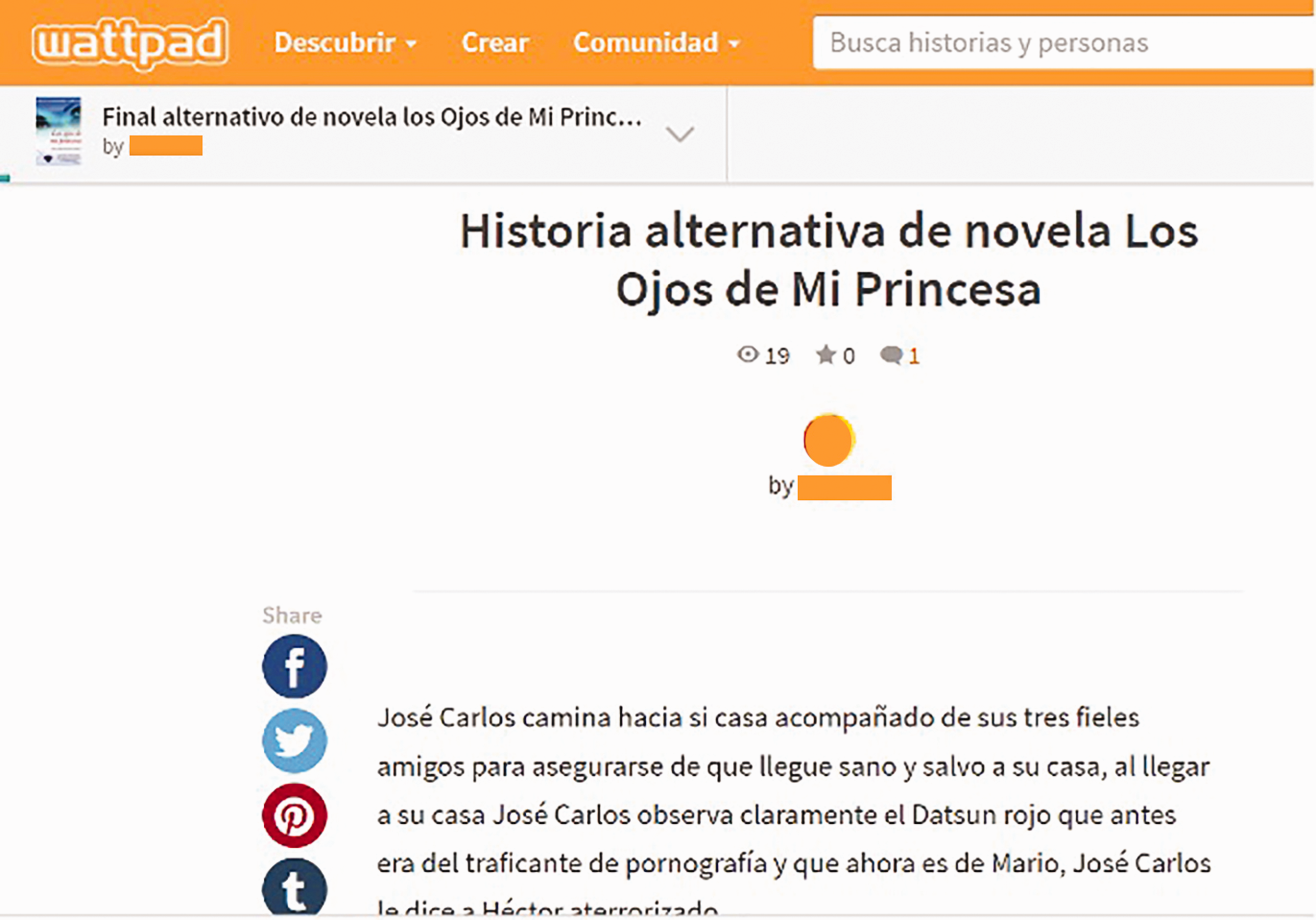
Example of students’ Wattpad profile.
Similar to our earlier example describing Miranda’s engagement with online applications to show her art, these students were also engaging in a publication process. Knowledge and situated activity are both relevant for learning (Brown et al., 1989) and when combined with a publication process may offer students a sense of empowerment and autonomy, that differs from the routine activities observed previously in the classroom.
Creativity was also displayed during group work as students produced short films. A first analysis of their multimodal productions (artefacts) shows that unlike the use of traditional writing, students composed and combined multiple pieces of work (including script writing, sound, images and student acting). As research suggests, the effectiveness of students’ engagement in multimodal productions strongly depends on teachers’ willingness to blur the boundaries between subject areas and to stimulate students’ work beyond the print text (Gomez et al., 2010). This was possible due to Sam’s willingness to shift her prior cultural models on literacy as she embraced digitally-mediated, multimodal and collaborative aspects in meaning making. She states: I think that this type of work must be challenging for them and I can see this because during the project they found hard to do some tasks, because they had to create, and that is something that they are not used to. In the traditional way they do not have to create, everything is given, so that is something they are not used to (Sam, Teacher)
Conclusion
Findings from the survey, observations and follow up interviews stressed that within this vulnerable group of students, access to technology was rather ubiquitous, yet, there were differences in their use and tangible outcomes in their literacy practices, with a majority of students engaging in passive consumption and substitutive uses, and a minority engaging in active and creative uses.
In addition, new literacy practices were not often part of everyday literacy learning in this vulnerable Chilean classroom. This suggests that even teachers that report being comfortable with the use of technology for learning, still may lack understanding of what new literacy practices mean, and how and with what purpose they might include these practices in the classroom. Interestingly, technology did not seem to be what prevented changes to happen, but more so a view of technology integration focused mainly on access and using technology as a substitution tool. This is in line with literature on technology integration in the classroom in Chile which also suggest that teachers’ professional development and pre-service teacher education may need to more strongly address changes in meaning making processes in the digital age (Charbonneau-Gowdy, 2015; Claro et al., 2013; Hepp et al., 2017; Thibaut, 2020).
The digital project reported illustrates how a carefully orchestrated learning design helped to shape a more collaborative environment, highlighting social elements of learning. In particular, transformations occurred in relation to social activities, with the teacher encouraging student’s interaction, participation in authentic activities, as well as students’ engagement in creative and productive learning. Interestingly, these results are similar to those found in more affluent schools in English speaking countries (McKnight et al., 2016; Thibaut et al., 2015), suggesting that learning designs that connect elements at the set (digital tools, in this case) and social level (students-students interactions) can enable students to interact with one another in different ways (Carvalho and Yeoman, 2019). Such learning processes are enriched through collection of feedback and advice on how students may develop and improve their own productions, allowing them to feel connected to a community of learners. These processes can be linked to theories of situated learning and socio-cultural learning (Lave and Wenger, 1991).
Research in outside school settings have shown the potential of technology to effectively connect agents, people, accessible tools and resources (Ito et al., 2013), but their affordances may fail to successfully impact learning processes within schools, particularly if not appropriately linked to content and skills in the classroom. Thus, not only coherence between design elements in set, epistemic and social design is crucial (Carvalho and Yeoman, 2018, 2019), but we also need to find ways to more explicitly show students how to navigate new literacy practices within both informal and formal settings. Further research with a larger sample is needed to explore results in other vulnerable schools and to replicate the design of the digital project across contexts.
To conclude, we argue that understanding connections between multiple dimensions of learning design is critical if one hopes to address digital inequality. It involves effective professional development for teachers and updated pre-service teacher education. It also requires not only teacher’s effort, but also a strong support from policymakers and government organizations, thus considering macro levels of design (Carvalho and Yeoman, 2018).
It is also important to note that while there are a number of research studies reporting on students’ digital literacy experiences in developed economies, research in Latin America has received much less attention and visibility. As Livingstone et al. (2019) outline “by far the majority of the available research derives from the world’s wealthier countries, but it is in the global South that the majority of children – including child internet users – already live, and notably where the majority of future users will live” (p.79).
We hope our research will contribute to build up capacity and understanding for a future research agenda of new literacies in Chile, as well as to debates concerned with the development of support mechanisms for technology use and literacy learning in disadvantaged schools, in countries where funding and opportunities might be somewhat limited. We argue that in order to truly address digital inequalities and create more inclusive global societies, it is crucial that we understand the experiences of those living in places beyond the world’s wealthier countries. In particular, this research should be of interest to all of those searching to understand how to design for and nurture meaning making processes in a digital world, infusing schools with new literacies, and in so doing, making these practices available to all students.
Footnotes
Declaration of Conflicting Interests
The author(s) declared no potential conflicts of interest with respect to the research, authorship, and/or publication of this article.
Funding
The author(s) disclosed receipt of the following financial support for the research, authorship, and/or publication of this article: This work was supported by The National Fund for Scientific and Technological Development (FONDECYT) through grant No. 3160114.
