




Abstract
In most cases, private schools in India are considered to have sufficient ICT resources for teaching-learning in 21st century classrooms and are assumed to be leaders in technology integration in the school pedagogy in this country. This study aimed to investigate the state of ICT integration and the degree of expertise these schools have attained. A survey of forty teachers from twenty purposively selected private high schools was conducted using a set interview protocol. Data were analyzed following the grounded theory approach. Results revealed that despite a high level of appreciation among teachers of the importance of ICT integration into teaching and learning classroom integration was not found problem-free. Several debilitating factors evolved including, a lack of ICT infrastructure, a lack of institutional encouragement, weak policies, and above all a lack of sufficient skills among teachers at all levels- technological, pedagogical, and integrative. This shows poor conviction in the hypothesis that private schools are good at ICT integration. Based on the analysis the study proposed 3E-Model along with a program of action for its implementation to improve ICT integration by dampening down the challenges and recommending schools to establish independent authorities; for example Working School Governing Bodies (WSGBs) that would look after the model and issues relating to the promotion of ICT integrated pedagogies in schools.
Keywords
Introduction
Information and Communication Technology (ICT) has penetrated the society to the point of becoming vital to most of its day to day functioning, and it has strongly featured in education for teaching and learning in recent times (Minty and Pather, 2014). The integration of ICT in teaching-learning is essential as it creates more chances for teachers and learners to work better and learn more in an information age (Minty and Pather, 2014; Nkula and Krauss, 2014; Yusuf, 2005) since ICT has the potential to innovate, accelerate, enrich, and deepen skills, to motivate and engage students, to help relate school experience to work practices, create economic viability for tomorrow's workers, as well as strengthening teaching and helping schools change (Yusuf, 2005). However, the potential of ICTs could only be noticed if the educators can integrate them into teaching-learning effectively. In India, private schools play a crucial role in that they complement the government schools by providing quality education to the learners who are enrolled by them and parents choose to send their children to private schools because they believe that there rest the quality education and modern pedagogy (EQFI, 2015). This study sought to investigate the degree of credibility in this assumption by investigating the status and degree of expertise these schools attained in ICT integration in curriculum delivery which is considered vital for the 21st Century classrooms.
Importance of ICT integration in school pedagogy
Several studies have shown the effective integration of ICT provides enormous opportunities for learners (Chigona, 2015a; Mdlongwa, 2012; Minty and Pather, 2014; Ndlovu and Lawrence, 2012). ICT provides the tools for creating, collecting, storing, using, and attaining knowledge through communication and collaboration (Kozma, 2003) therefore, in recent time, the importance of education and training in ICT for citizens with the necessary skills to access information and participate in transactions through these technologies is recognized by many countries (Kozma, 2008). Numerous studies indicate that the introduction of ICT for educational purposes has the potential to bring positive changes to teaching and learning practices. Kubiatko (2013) found that effective use of technology can motivate students, make classes more dynamic and interesting and renew teacher enthusiasm as they learn new skills and techniques; similarly, Zang and Aikman (2007) found computer education has increased students’ interest in education which impact on their enrolment, attendance, retention, level of motivation and achievement; Chou’s (2003) observed ICT is seen as a tool to revolutionize education, improve learning, empower learners, produce richer curricula, enhance pedagogies, and it will lead to more effective organizational structures in schools and produce stronger links between schools and society; Unwin (2009) contended that ICT can be a catalyst by providing tools which tutors its user to improve his/her teaching and by giving learners access to electronic media that make concepts clearer and more accessible; also showed that ICT is perceived as an important tool in improving performance, collaboration, learning experience and learning outcomes.UNESCO (2002) observed ICT has become, within a very short time, one of the basic building blocks of modern society and recommended member nations for adopting ICT based pedagogy to ensure that all countries both developed and developing have access to the best educational facilities necessary to prepare young people to play full roles in modern society and to contribute to a knowledge nation. Many countries now regard understanding and mastering the basic skills and concepts of ICT as a part of the core of education. Ghavifekr et al. (2014) said the rapid growth of ICT has become one of the most important topics discussed by the scholars in education and this is due to the capability of ICT in providing dynamic and proactive teaching and learning environment. Hence, every classroom teacher should optimize the use of learning technologies, attaining techno-pedagogic efficiency, and efficacy to enhance student learning in every subject.
ICT use vs. ICT integration in pedagogy
Responding to the current digital era, teachers are required to integrate ICT in their daily teaching by replacing their traditional methods with modern tools and facilities. There are differences between bare ICT use and ICT integration in pedagogy. Nkula and Krauss (2014) said that ICT integration neither refers to simply placing of computers in the classroom nor using technology to sustain traditional teaching methods, but rather integration refers to the use of technology to promote teaching-learning, that is, where students use ICTs in acquiring new knowledge and skills. Therefore, implementation with integration puts ICTs at the heart of teaching-learning. With this in mind, there is no doubt that “ICT implementation with integration encourages cross-curricular use of ICTs rather than having it only as a separate subject” (Nkula and Krauss, 2014). ICT integration is meant to be cross-curricular rather than become a separate course or topic in itself and it is needed to provide a bridge between teacher, students, parents, and the community (Flanagan and Jacobsen, 2003). Wilson-Strydom and Thompson (2005) further made this difference evident by saying that the idea of ICT use and its integration as an approach, emerged as a reaction to the restrictions of computer usage in schools which focused only on promoting computer literacy or technical knowledge of computers and the use of various computer applications rather than emphasizing on using ICTs to learn. They further argued that the acquisition of technical skills and learning about computers is implementation without integration whereas learning through or using a computer is referred to as implementation with integration. UNESCO (2002) also advised member states to maintain an optimal balance between ICT and older educational technologies and has been assisting countries in developing educational software and materials by integrating new technologies such as multimedia, e-learning, and distance education delivery into their educational system. But effective integration of ICT in pedagogy is a complex task that needs effective functioning of several internal and external factors. Research conducted in countries with different cultures reported that although there has been an increase in the availability of ICT tools in schools, there is an indication that teachers are not using these as expected (Aldunate and Nussbaum, 2013).
A variety of external factors have been identified that influence the effective ICT integration in schools including technology availability, accessibility of ICT equipment, time to plan for instruction, technical and administrative support, school curriculum, school climate and culture, faculty teaching load, and management routine, and pressure to prepare students for national entrance exams (Al-Ruz and Khasawneh, 2011; Lin et al., 2012; Tezci, 2011). Pelgrum and Law (2003) indicated that effective ICT integration depends on the perceptions and vision of school leaders. School cultural is also considered as an important element in the implementation of ICT (Albirini, 2006) that plays a crucial role influencing how teachers relate their beliefs to ICT use having a mediating role that influences teachers’ actions, beliefs, and attitudes(Chai et al., 2009). Cultural differences have been identified when comparing Indian and American teacher perspectives on the use of ICT in teaching-learning where Indian teachers express more doubts about the constructivist principles underlying many ICT applications (e.g., collaboration, independent learning, and self-directed learning) and perceived themselves more of an authority role compared to Western teachers that negatively impact on the teachers’ use of educational technology (Kundu, 2018).
Internal influencing factors include teachers’ belief; understanding of ICT use; attitudes toward technology integration; perceptions including intention or motivation to use ICT; self-confidence and knowledge; readiness to use ICT; and self-efficacy including technology efficacy, pedagogical efficacy, and integration efficacy (Al-Ruz and Khasawneh, 2011; Chen, 2008; Lin, Wang and Lin, 2012; Palak and Walls, 2009; Sang et al., 2010, 2011; Tezci, 2011). In addition to the influence of teacher attitudes, Sang et al. (2010) further indicated that pre-service teachers with highly constructivist teaching beliefs have stronger intentions to integrate technology into their future teaching practices. Frederick et al. (2006) pointed out on the factors like student mobility, special needs, and anxiety as major internal challenges associated with ICT integration.
Teachers’ role in ICT integration
Teachers are regarded as the most influential factor in educational innovations and new technologies demand fundamental changes in the teacher’s role as well as in the shape and the activities in the classroom (Fishman and Davis, 2006). Hence Balanskat et al. (2006) said that teachers appreciate the role of ICT in classrooms but they continuously find obstacles in using these technologies into pedagogy. Chigona (2015b), Palak and Walls (2009), and Sang et al. (2010) have identified teachers’ attitudes and pedagogical beliefs as a crucial contributing factor in the integration of ICTs in the classroom. Indeed, teachers do not possess a similar set of beliefs on how students learn and their decision on how to use ICTs in the classroom depends on their beliefs about teaching and learning. Teachers are more likely to teach the same way they were taught hence, pre-service teachers not modeled on technology integration are less likely to believe and have the confidence to integrate the tools into their pedagogies (Chigona, 2015a). According to Salehi and Salehi (2012) “the integration of ICTs in teaching and learning is not a method; rather it is a medium in which a variety of methods, approaches, and pedagogical philosophies may be implemented”. This implies that the success of ICT use depends on how and why it is applied and integrated. The relation between teachers’ digital competence and their ability in ICT use in the classroom is established in Technological Pedagogical Content Knowledge (TPACK) framework developed by Mishra and Koehler (2006). Koehler and Mishra (2009) proposed that for a teacher to be able to effectively use technology in the classroom, he/she needs to be well-versed in the possible interconnections of subject content, pedagogy, and technology. Hence Valiente (2010) has said, even for schools that have abundant ICT resources, teachers are unable to utilize those as they are not acquainted with the utilization process of these technologies. Fredriksson et al. (2008) found participation in professional development activities can significantly influence teachers’ ability to ICT use. Minty and Pather (2014) further said that if the use of ICTs is to have a positive force on teaching-learning then teachers should be developed professionally to be capable to carry out the extra responsibilities that the use of ICTs obliges them to do.
Thus teachers’ perception of their new roles as facilitators, their attitudes, beliefs, knowledge, and skills play important roles in the effective integration of ICTs and these parameters need to be studied to understand the level of ICT ingestion and integration in pedagogy. Coming to the Indian context several studies found poor integration of ICT in schools though most of these studies conducted among government schools (Bharadwaj, 2007; Bindu, 2019; Gupta and Haridas, 2012; Kaur, 2019; Kundu and Dey, 2018; Netragaonkar, 2015; Prasad, 2013; Thirumurthy and Sundaram, 2003) and a strong presence of teacher-centered pedagogy with student compliance was prevalent in classrooms, and this traditionalism clashes with effective ICT integration (Fang and Warschauer, 2004).
Reason to bring private schools to the study
Indian government launched various schemes and measures to utilize the potential of smart technologies following the focus made in Revised National Policy on Education in 1992 (NPE Revised, 1992) emphasizing the need to employ educational technology to improve the quality of education that led to a few major centrally sponsored schemes, namely, Educational Technology (ET), Computer Literacy and Studies in Schools (CLASS), ICT@School, etc. Latter National Curriculum Framework (NCF, 2005), Samagra Shiksha Abhiyan or Education for All (SSA), Rashtriya Madhyamik Shiksha Abhiyan (RMSA), National Policy on ICT in School Education (MHRD, 2012) also stressed the need along with providing fixed guidelines to integrate ICT in school pedagogy but all these initiatives were limited only in government-run schools and its implementation was reduced to the level of giving computer literacy to students as several studies found (Bindu, 2019; Bharadwaj, 2007; EQFI, 2015; Gupta and Haridas, 2012; Kaur, 2019; Kundu and Dey, 2018; Netragaonkar, 2015; Prasad, 2013; Thirumurthy and Sundaram, 2003). Thus the ground reality of ICT integrated pedagogy in government schools kissed the waste owing several problems and education in these schools is still a phenomenon, highly centralized, examination driven, joyless, impersonal, teacher-centered, and utterly irrelevant to the child’s world and not much changed since the observation of Yash Pal Committee (MHRD, 1992) entitled ‘Learning without Burden’.
Now hope and expectations rest with the private schools and the parents feel they are more efficient in modern pedagogy with ICT integration than government schools as most of the private schools in India have a favorable teacher to pupil ratio, splendid buildings, sound infrastructure which makes parents and other stakeholders in the field of education believe that private schools offer quality education (FICCI, 2014). The current K-12 school system in India is one of the largest in the world with more than 1.4 million schools with 250+ million students enrolled and schools have grown at a CAGR of 2.5% from 1.2 million in 2005 to 1.4 million in 2011 and enrolment has grown at a CAGR of 2.2% to reach 253 million students in 2011 (FICCI, 2014). The report further said the contribution of the private sector to increase the standards and quality in school education has been significant, resulting 25% of all schools in India are private schools accounting for 40% share in total students’ enrolment and the number of private schools has grown at GACR of 4% in the last five years much faster than the growth of public/government schools. This perception among guardians on the contribution to access and quality maintained by these private schools has resulted in enrolment shifts from public to private schools in recent years (Netragaonkar, 2015). The author, based on current trends, made the forecast that the private sector may account for a 55–60% share in overall enrolment in K-12 schools by 2022. NITI Ayog (Erstwhile Planning Commission of India) commissioned a study that very categorically said that except Kendriya Vidyalayas (KVs), all private schools had better technology infrastructure than the government schools in India because there was a sense of ownership for infrastructure in the private schools, which was often lacked in the government schools (EQFI, 2015). Further, the study also gave a morbid picture of ICT integration in Indian government schools in its report saying that 95% of schools used computers for general office use, 60% used the technology for maintaining students’ records and 80% used computers for accounts work and the number of computers devoted for instructional purpose is usually one or two, which indicates the failure of government vision and policies regarding ICT integration in pedagogy.
Literature gap
ICT is urgent, not cosmetic to the 21st century teaching-learning. To date, very few studies have investigated the state of ICT integration in pedagogy among Indian private high schools to delve deep into the general assumption that private schools are far better in technology integration than government schools. The current study aimed at this literature gap and went to investigate the sincerity of this perception considering several important factors affecting the ingestion of ICTs in curriculum delivery.
Theoretical frameworks
To determine and understand the factors affecting the adoption and use of ICTs in the classroom teaching this study adopted the Technological Pedagogical Content Knowledge (TPACK) Framework developed by Mishra and Koehler (2006); the UNESCO’s ICT Competency Framework for Teachers (ICT-CFT); and National Policy on ICT in School Education (MHRD, 2012) developed by the government of India. The application of these frameworks in this study enables the researchers to explore adequately the research problem that is to find out the degree of sincerity in ICT integration in private schools’ pedagogy.
Technological pedagogical content knowledge
TPACK stems from the reasoning that teaching is an intricate practice that calls for an interweaving of several types of specific knowledge, therefore, successful teaching rests on elastic access to wealthy, well-organized, and integrated knowledge from special fields including knowledge of learner’s thinking and learning, knowledge of subject content, and most importantly, knowledge of technology (Koehler and Mishra, 2008). Thus TPACK framework (see Figure 1) results from the blending of the various knowledge types as the teacher integrates ICTs into the teaching of their subjects. These knowledge types include Pedagogical Knowledge (PK), Content Knowledge (CK), and Technological Knowledge (TK). These three key categories of knowledge overlap and result in the following four additional types of knowledge needed by teachers for integration: Technological Content Knowledge (TCK), Pedagogical Content Knowledge (PCK), Technological Pedagogical Knowledge (TPK), and Technological Pedagogical Content Knowledge (TPACK) (Koehler and Mishra, 2008). TPACK is the juncture of all the three main elements of knowledge resulting in the emergence of a form of knowledge that forms the center of valuable teaching with ICTs. According to Koehler and Mishra (2009: 66), TPACK requires “an understanding of the representation of concepts using technologies; pedagogical techniques that use technologies in constructive ways to teach content; knowledge of what makes concepts difficult or easy to learn and how technology can help redress some of the problems that students face; knowledge of students’ prior knowledge and theories of epistemology; and knowledge of how technologies can be used to build on existing knowledge to develop new epistemologies or strengthen old ones”. Thus, teaching productively with technology demands continuously generating, upholding, and restoring a self-motivated balance among all these components. The TPACK framework furnished the researchers with an insight into the kinds of knowledge that the participants need to ensure successful integration and enabled them to determine which type of knowledge are present or lacking in the participants that are crucial for the effective ICT integration (Baran et al., 2011).
ICT competency framework for teachers
The UNESCO’s ICT-CFT (see Figure 2) provides a comprehensive set of competencies teachers need to integrate ICT into their professional practice to facilitate students’ learning achievements of curricular objectives (UNESCO, 2018). There have been three ICT-CFT versions: 2008, 2011, 2018, and each version has reflected the prevailing thinking on the relationship between technology and education, with suggestions on how to achieve competencies using popular technologies of the time (Butcher et al., 2014). The latest ICT-CFT Version 3 takes into account the ‘Agenda 2030 for Sustainable Development’ and is designed to preserve those competencies that remain relevant and to frame them within the current advances in technologies and the changing demands of life and work. It is intended to inform teacher training policies and programs to strengthen the use of ICT in education whose target audience is teacher-training personnel, educational experts, policy-makers, teacher support personnel, and other professional development providers (Morze, Kocharian and Smyrnova-Trybulska, 2015). The ICT-CFT also encourages contextualization and adaptation of teacher professional development as relevant in ICT integration in pedagogy and highlights the role that technology can play in supporting six major education focus areas across three phases of knowledge acquisition, as illustrated in the chart below: Figure 1.
National policy on ICT in school education
The policy proposed a model curriculum for ICT in education at the national level and states will also be encouraged to adopt/adapt it across all secondary schools in the states, both government and private (MHRD, 2012). It defined three levels of ICT competency- basic, intermediate, advanced- and these levels must be revised periodically to keep pace with changing technology (See Figure 3).
Basic
Basics of computers and basic use of tools and techniques – operate a computer, store, retrieve and manage data, use a computer to achieve basic word and data processing tasks; connect, disconnect and troubleshoot basic storage, input, and output devices connect to the internet, use e-mail and web surfing, use search engines, keep the computer updated and secure, operate and manage content from external devices (sound recorders, digital cameras, scanners, etc.); connect, disconnect, operate and troubleshoot digital devices.
Intermediate
Create and manage content using a variety of software applications and digital devices; using web sites and search engines to locate, retrieve and manage content, tools, and resources; install, uninstall and troubleshoot simple software applications, etc.
Advanced
Use different software applications to enhance one’s learning – database applications, analysis of data and problem solving, computing, design, graphical and audio-visual communication; undertake research and carry out projects using web resources; use ICT for documentation and presentation; create and participate in web-based networks for cooperative and collaborative learning; become aware of issues of cybersecurity, copyright and safe use of ICT and take necessary steps to protect oneself and ICT resources.
Teacher participation in the digital content development process will catalyze its broad based-usage in the classrooms. Teachers will be encouraged to become part of online professional groups, adroit in instructional design, selection, critical evaluation of digital content, and strategies for effective ICT use to enhance student learning (MHRD, 2012). Figure 3.
Method
This study followed the qualitative survey method to study the phenomena in their natural settings to make sense and interpret social phenomena such as interactions and behavior to gain an in-depth understanding of participants’ subjective peculiarities (Creswell, 2005).
Cites and participants
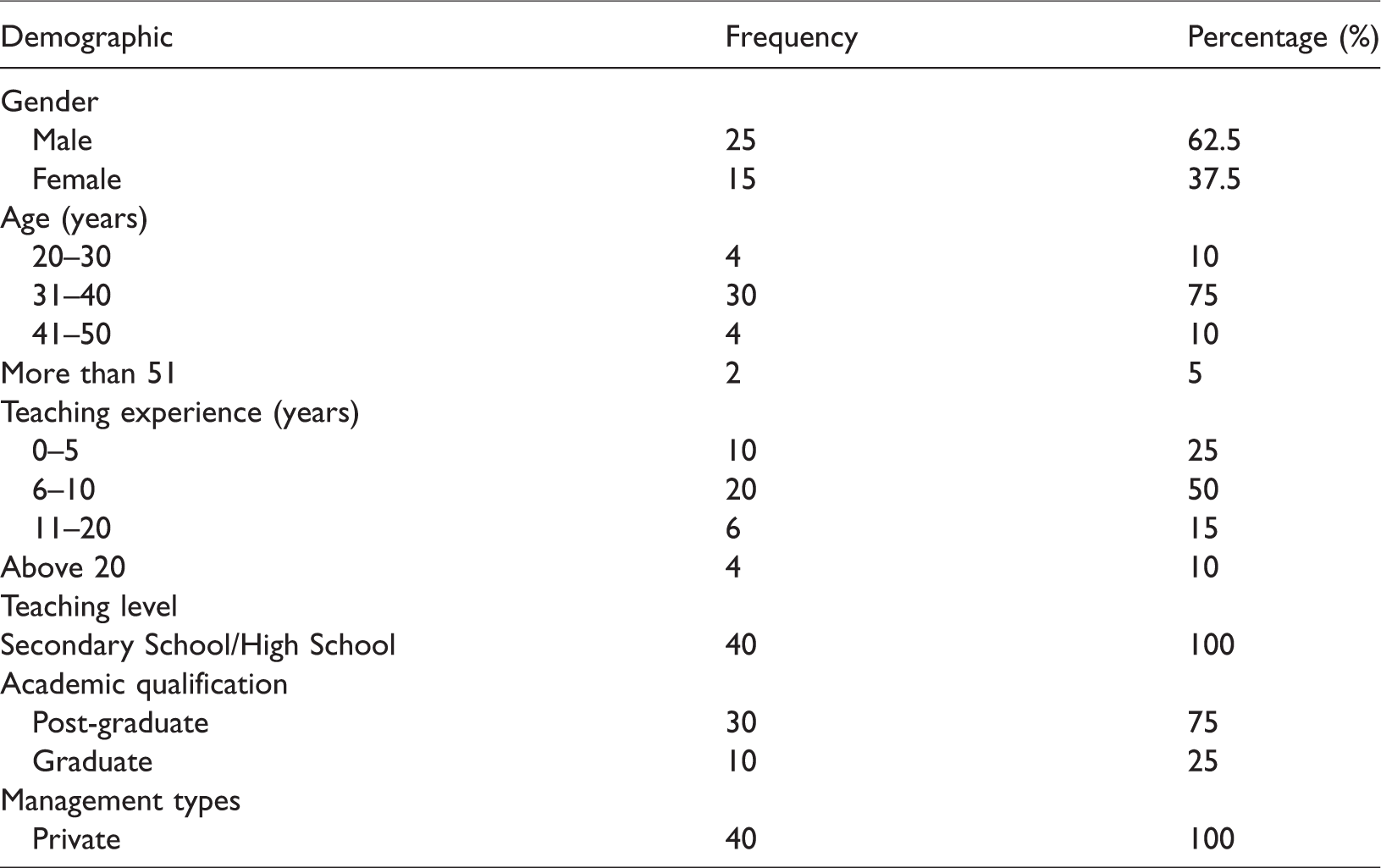
This survey was conducted within twenty private high schools in India having good reputations among guardians following a heterogeneous purposive sampling method within the limited time and resources. We selected two teachers from each school and a total of forty teachers including 10 headmasters participated in the survey. Three-four days visit to each school were made to complete the process of data collection. The actual names of the schools and the study participants were withheld to follow research ethics, and the remarks of the teachers are presented with codes ranging from T1 to T40, and concerned schools are identified with codes ranging from S1 to S20. Every participant was briefed about the research purpose and interview protocol before the interview. The demographic details of the participants are furnished in the Table 1 below.
Research tool
Interview
A standardized interview protocol was set according to the research theme and distributed among the participants to collect their views in face-to-face mode. An interview protocol lists the questions or issues that are to be explored in the course of an interview (Patton, 2015). All forty teachers were interviewed by the researchers to gain an in-depth understanding of ICT integration in their respective schools. The participants were allowed to choose their preferred venue for an interview to ensure their comfort and all preferred schools. Interviews were audio-recorded and then transcribed. Member checking was also used to check the accuracy of the data collected. The transcripts of the interviews were taken back to the relevant respondents to confirm the information they had given but no changes were made by all the respondents on the transcripts. The majority of the respondents confirmed that the transcripts represented a true reflection of what had transpired during the interview session and thus were contented with the transcripts.
Data analysis
The grounded theory approach was followed for data analysis which is an inductive methodology, designed to be usable with a very wide range of research questions and in the context of a variety of meta-theoretical approaches (Potter, 1998). Originally introduced by sociologists Barney Glaser and Anselm Strauss (Haig, 2010), GT is used extensively in educational research. Three stages of analysis namely, open coding, axial coding, and selective coding was adopted in this study. The first stage was mainly done to identify the key concepts where initial codes were assigned to chunks of data, the next stage was axial coding where the researchers had to put data together by making connections between categories, and the final stage selective coding involved selecting the central or essential codes that most effectively illustrate the vital concept of the research study (Bezuidenhout and Cronje, 2014). Thus the process involves scanning the data and scanning previous codes. The core concepts are then used as a guiding principle in selecting related concepts, making comparisons and contrasts leading to a thematic approach in the presentation of the findings. For analysis of data MAXQDA 20 was used.
Findings
Findings of the study aimed at understanding the current status and factors influencing the integration of ICT in school pedagogy to ensure quality teaching-learning. Data gathered through interviews were analyzed based on the following themes:
Teachers’ technological knowledge. Teachers’ pedagogical beliefs. Teachers’ attitude to ICT integration. School Policies promoting ICT integration.
Theme 1: Teachers’ technological knowledge
From the theoretical frameworks as mentioned earlier, it is important to note that for effective ingestion and integration of ICTs in school pedagogy teachers need the necessary knowledge of how to use the technological tools at their disposal effectively. This Technological knowledge (TK) involves understanding the different types of ICT resources that the teacher can use. If the TK of teachers is of high level it is most probable that they will adopt and use ICTs in their classroom since they will be confident to use them. But findings of the study revealed that participant teachers didn’t have the necessary TK for work in an ICT integrated environment and the majority of teachers (52%) did not have adequate knowledge in Office software (Microsoft Office, Open Office, etc.), to perform basic picture/graphic editing or give a PowerPoint presentations. One of the participants openly admitted that she has limited skills to efficiently integrate technology in curriculum delivery. She said: [My] ICT skills are not sufficient for effective integration in pedagogy as I didn’t have the computer as a subject nor get a scope to train myself. (T1) I have ICT knowledge but not of that level to make e-contents or power-point presentation and I feel with the training I may improve myself. (T5) [It’s] true that our teachers lack technological skills in handling ICT tools but we are working in this direction by inducting teachers in school- based training. (T15)
Theme 2: Teachers’ pedagogical beliefs
Teachers’ attitudes, efficacy, and pedagogical beliefs have been identified as a crucial contributing factor in the integration of ICTs in the classroom; therefore, teachers’ pedagogical belief has been taken up as a research theme in this study. It is imperative to point out that in the majority of cases the teachers join the teaching profession with preconceived beliefs of teaching based on their previous experiences. The study of Nkula and Krauss (2014) stated that a teacher’s previous teaching practice and his/her professional background influences his/her beliefs. Therefore, the teacher’s beliefs about teaching and learning in general plays a crucial role in determining whether the teacher will adopt and use the available ICT resources in the classroom. The teachers who believe in teacher-centered lessons are understood as having little interaction with their learners simply because it is believed that they pass on knowledge through the “chalk and talk” approach (Nkula and Krauss, 2014: 247). Thus the teacher-centered approach is linked to traditional methods of teaching which focuses on information reproduction rather than knowledge construction where the teacher is the main transmitter of knowledge to the learners in the classroom. In this study, the majority of teachers (80%) revealed that they support the adoption and use of ICTs for curriculum delivery because they believe that technology enhances learners’ achievement level and promotes a learner-centered environment although 61% teachers do not use ICT regularly in their classrooms while 52% did not feel confident in ICT integrated teaching and they are unable to use social networking services (i.e., Facebook, Twitter) for educational purposes or cannot share instructional materials online (via e-mail, Dropbox, Google Drive, etc.) with students. In this context one of the participants said: [The] use of ICTs in the classroom eliminates the teacher-centered approach as the learners can be more actively involved in the lessons which may end up improving their understanding of the concepts being taught. (T3) I feel the 21st century learners are technologically equipped and it would be easier and effective for ICT integrated teaching-learning. (T10)
One headmaster reported: [Visual memories are the best memories], and ICT provides learners with visualization of academic contents that help their memorization. (T8) It brings a financial burden on us to take online classes during school closure for hours as we are not paid the internet costs. (T24)
Theme 3: Teachers’ attitude to ICT integration
The study found the overall attitude of teachers towards ICT integration in pedagogy was positive. The majority of teachers (71%) felt it effective and efficient than traditional teacher-centered pedagogy though they were not found satisfied with the current ICT infrastructure of their schools. In this context, the remark of a teacher is worth mentioning who reported: [Whether] one is a pupil, a teacher, an employee or simply a citizen, we should all have the right – and the means – to be resilient users of ICT. (T12) [It’s] a fact we cannot deny that many of us don’t have adequate skills or attitude and this is a situation mirrored throughout the world as the rapid development in digital technologies has left many teachers struggling to keep up. (T13) [If] 20% of teachers in an Indian school reported themselves to be comfortable users of ICT; fewer again felt they knew how to apply it effectively in their teaching. (T34) Resistance can be a result of a lack of confidence or fear of using ICT for teaching. Teachers often worry that their knowledge level does not match those of their ‘digitally native’ students. (T35) [Sometimes] we are not convinced of the benefits ICTs can bring to our teaching and hence the classroom has not been as quick to embrace technology’s advances as other workplaces have. (T21) [If] you take a shining surgeon from the 1950s and placed him in an operating theatre today, there is nothing he could do; nothing he could contribute from his skill base. Similarly, if you take a teacher who graduated in the 1990s and pops him into an ICT integrated classroom of today, it is natural that he would feel helpless. (T25)
Theme 4: School policies promoting ICT integration
Government policies that are meant to promote the ingestion and integration of ICT in schools are meant for government schools in India and private schools mainly depend on their policies. Most participants in this study confirmed that there are very few programs in their schools that are geared towards promoting the integration of ICTs in pedagogy and only 41% respondents gave a positive response that their schools stress on creating ICT integrated teaching culture, 44% found satisfied with the institutional encouragement, 38% found satisfied with ICT training policies for teachers. Worse still, teachers’ suggestions that are meant to improve technology integration in their classrooms are not seriously considered as ICT resources are seen as excess expenditure. In this context remark of a headmaster should be mentioned that: [Being] a headmaster in a private school, I do not have significant authority over ICT policy-making for my school. The Secretary of the management committee/the owner is the one responsible for decision-making when it comes to deciding over such matters. (T18) [It’s] discouraging to say that we get a meager financial allotment for the maintenance of our ICT infrastructure and in such a situation we cannot think of new installation. (T39) [O]ur teachers require extensive, on-going training of ICT to be able to evaluate and select the most appropriate resources. However, the development of appropriate pedagogical practices is seen as more important than technical mastery of it. (T17) [O]ne-off training is not sufficient, schools need to invest in and implement long term ongoing training and continuous professional development to keep up with rapidly evolving digital technologies. (T21) [Although] our school is a private school, I think the business community has a part to play regarding promoting all the activities that are done by the school because our learners are just like any other learners in a public school. (T9)
Discussion
The findings of this study revealed that the majority of teachers in Indian private schools have limited scope and abilities regarding the integration of ICTs in their classrooms though they harbor a positive attitude towards it. There could be varied reasons for the low aptitude level for the teachers in these private schools when integrating technology in their curriculum delivery. Therefore, the findings of this study can lead one into concluding that while teachers appreciate the value of integrating ICTs in their classrooms the ground reality is that they are facing serious challenges in living up to their dream of effectively using ICTs in their classrooms.
The integration of ICTs in the private schools in India is still at lower levels since the teachers restrict themselves to Power-point presentations and a few other basic computer literacy skills. Effective ICT integration entails combining of the “three principles that make the implementation process legitimate to develop higher levels of thinking” (Ndlovu and Lawrence, 2012: 10). These principles include; the lesson content, the teaching and learning (pedagogy) as well as the use of ICTs (technology), and are similar to what the TPACK framework advocates. This implies that ICTs can be effectively used in the classrooms when they are “incorporated into the well-structured lessons; most powerful explanations; demonstrations and examples a teacher gives that make it easy for learners to understand new knowledge and skills and manipulate them to extend their learning independently” (Ndlovu and Lawrence, 2012: 10). “This requires a very different set of classroom management skills to be developed, together with innovative ways of using technology to enhance learning and encourage technology literacy, knowledge deepening and knowledge creation” (Hennessy et al., 2010: 43). It is at this stage that teacher development becomes a crucial component. The quality of these traits indicates the height at which learners engage with knowledge.
The findings also revealed that most of the private schools in India experience a shortage of computers and other ICT infrastructures for both teachers and learners. The effective integration of ICTs into teaching in schools depends mainly on the availability and accessibility of ICT resources such as hardware and software (Haolader and Faruque, 2013). Some teachers in these private schools are expected to share ICT resources since the resources are not installed in their classrooms. It was discovered that the sharing of ICT resources also amounts to another problem as it may cause some conflict between teachers over the use of such resources. This process, therefore, discourages teachers from integrating ICTs in their classrooms.
In general, it is believed that most private schools are well equipped with resources and learners can afford to buy their ICT resources such as laptops and tablets. But this was not the case with most of the private schools that were selected for this study rather these schools were also facing several problems like government schools as several past studies noted. Instead, it was revealed that in some cases computers are only installed in the staffroom and it is hard for teachers to integrate ICTs in their teaching and learning process because going up and down looking for ICT resources may be time-consuming and discouraging as well. This makes the location of the ICTs in schools a key aspect when it comes to accessing technology for teaching. In some private schools, there are no computer labs for learners. As a result, educators become the only ones who have access to computers while the learners are lagging. This makes it difficult for learners to continue from where the teacher left. To make matters worse the few computers available in some schools are outdated, both in terms of hardware and software although these are showcased in their places, thus making it difficult for the teachers to effectively implement ICT programs in their classrooms. There is no doubt that access to computers; updated software and hardware are key elements to the successful integration of technology in teaching and learning because without these resources it is almost impossible to integrate technology in curriculum delivery.
Additionally, it was also noted that the maintenance and upgrading of these computers are not done on time as most of the private schools are experiencing financial constraints. The situation is aggravated by the internet and/or Wi-Fi connections which present another serious challenge in these private schools. The participants indicated that the network is in most cases slow and sometimes unavailable. Mathevula and Uwizeyimana (2014) echo the same sentiments when they say “in an era where schools and teachers should be communicating electronically, the absence of the internet poses a serious problem”. Therefore, one can conclude that without proper maintenance of the available ICT resources as well as the continuous upgrading of the hardware and software, effective ICT integration in the classroom will be hard to achieve.
Proposed theoretical model
The hallmark of grounded theory is the generation of theory abstracted from or grounded in data generated and collected by the researcher (Birks and Mills, 2015). The current study concluded waving the fractured concepts that ICT integration in pedagogy among Indian private high schools was not of satisfactory advance level and also proposed a theoretical model that we termed as 3E-Model to add further efficiency (see in Figure 4).
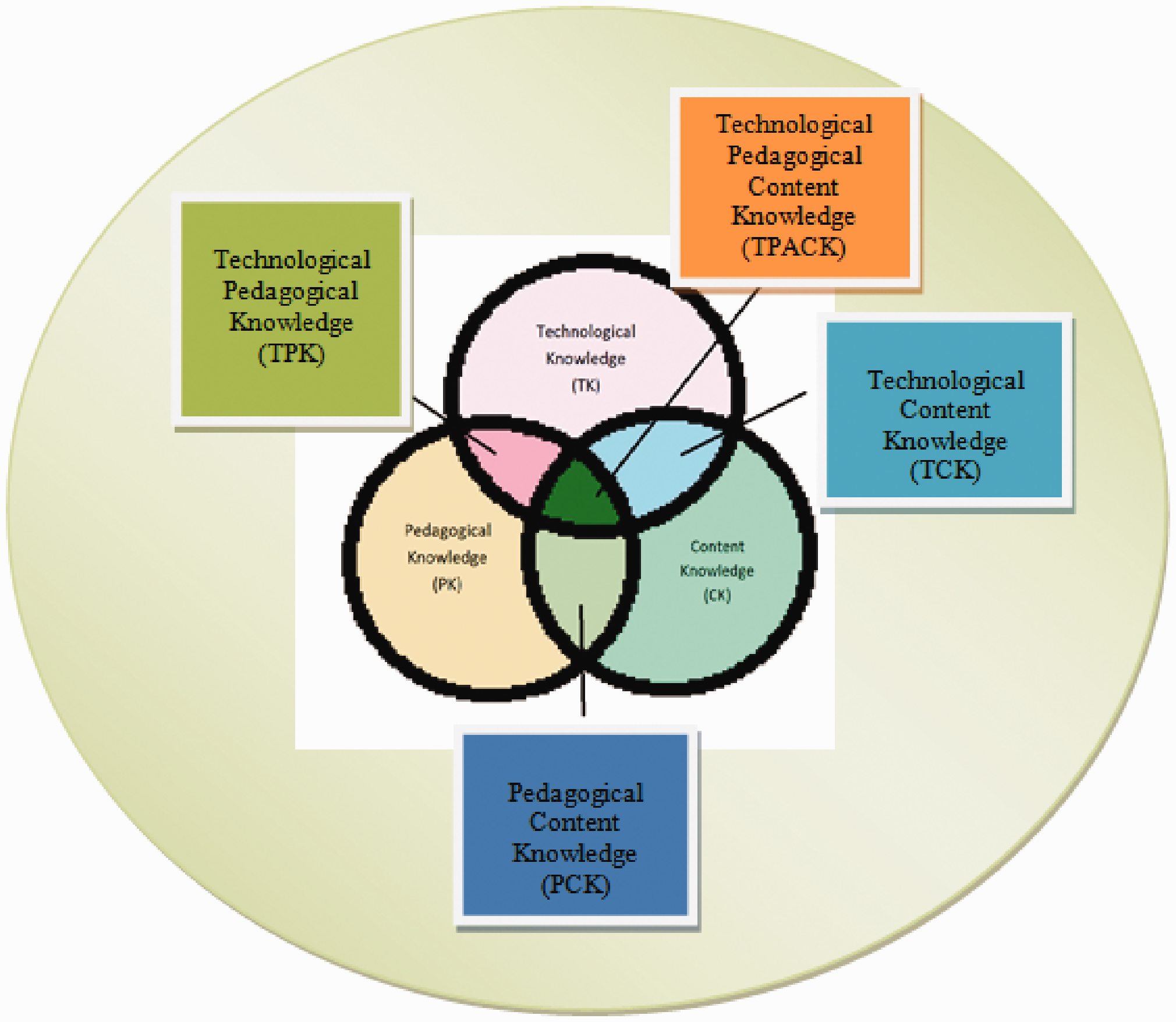
The TPACK Framework (cited in Koehler & Mishra, 2008).
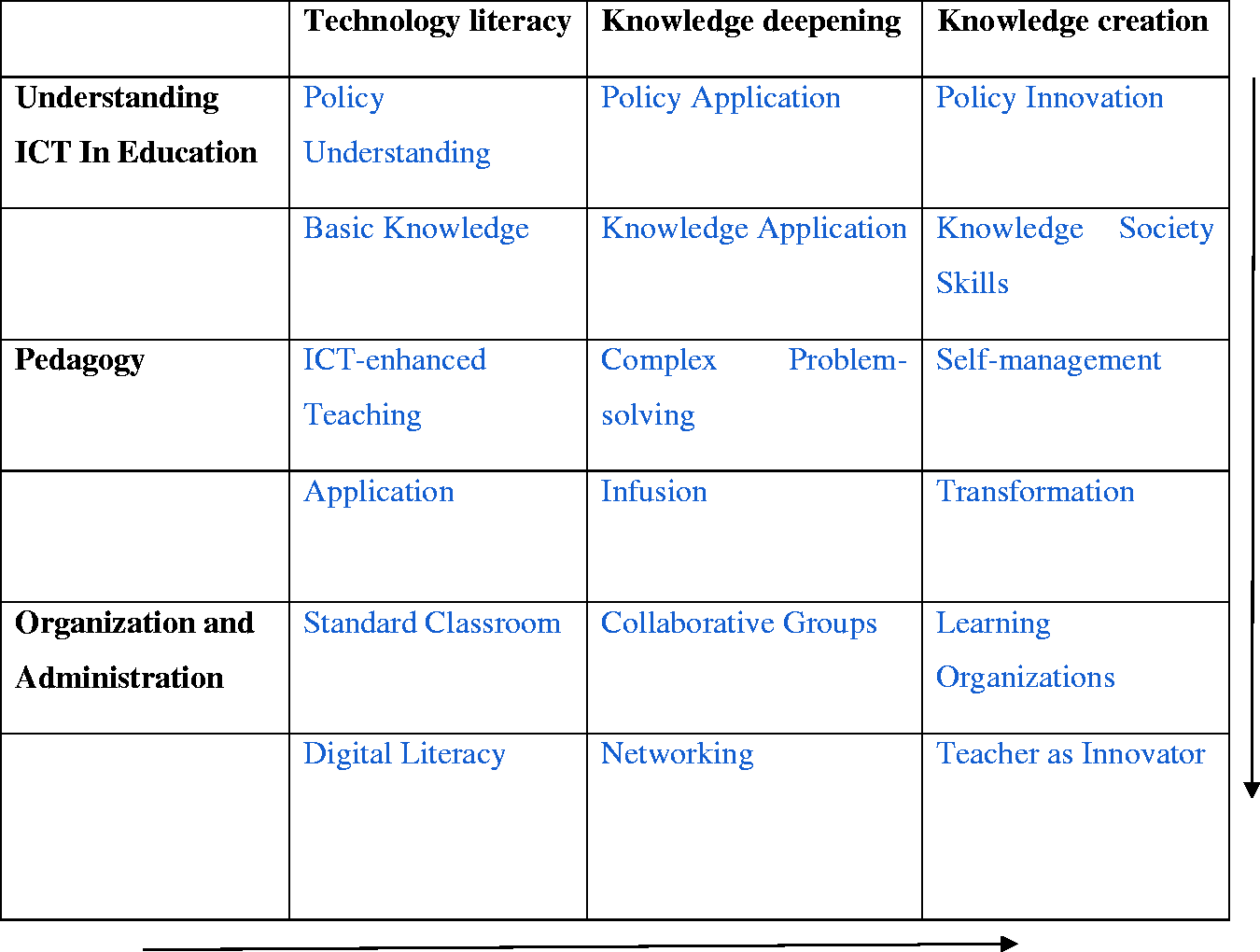
ICT Competency Framework for Teachers (ICT-CFT) (UNESCO, 2018).
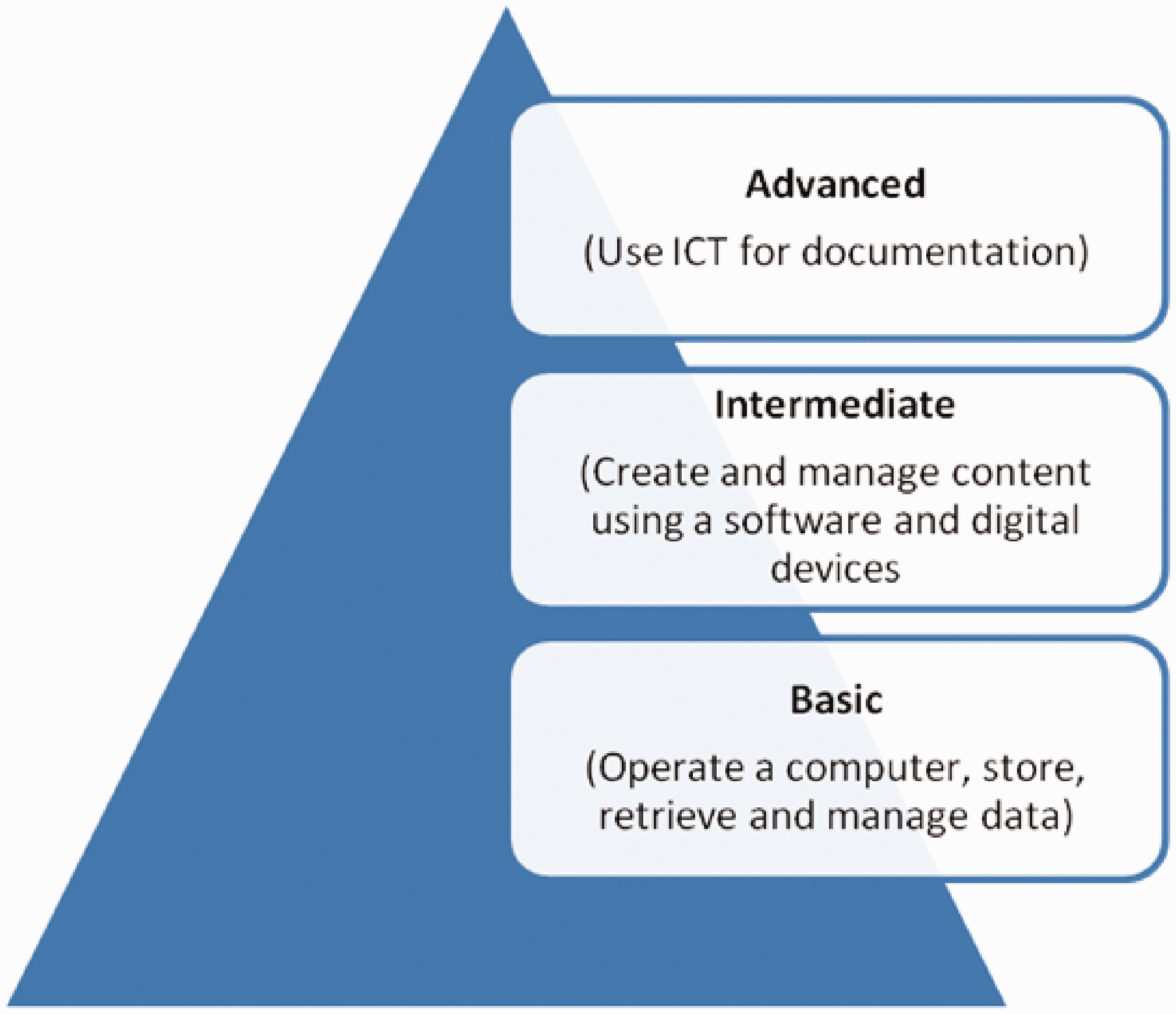
Model Curriculum for ICT in Education (MHRD, 2012).
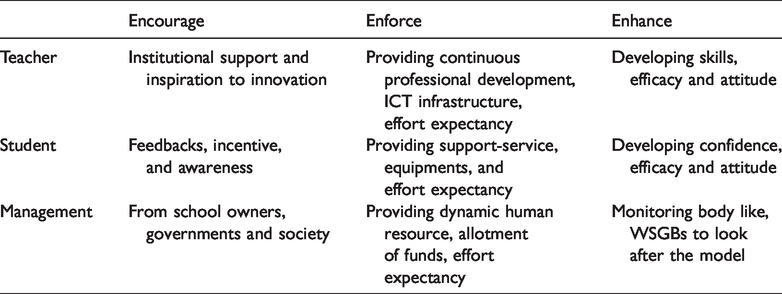
ICT integration is an intricate practice and is a combination of several influencing factors affecting its stakeholders. The proposed 3E Model is comprised of three factors- Encourage, Enforce, Enhance- affecting for all three vital stakeholders- teachers, students, school management. An action plan is also proposed (see Table 2 below) for the implementation of the model with the course of actions designated to each stakeholder. The model also recommends every school to establish an independent body like, Working School Governing Bodies (WSGBs) that should look after the implementation of the proposed model and will be empowered to bring context-specific changes in the model to suit the model to the grass-root needs.
Demographic details of the participants.
Proposed program of action for 3E-model.
Conclusion
Change is essential and key in promoting the teaching-learning process and all stakeholders should be encouraged to embrace it, and make sure the integration of ICTs in the classroom is enhanced. This research has revealed that various factors have been affecting the ingestion of ICTs in the private schools of India and to dampening down the problems the 3E-Model has been proposed to enhance the effectiveness of the stakeholders. As the global village is putting more emphasis on the use of ICTs in every sphere of life, it is important for the school authorities to continuously organize policies that will equip the teachers with the necessary skills for them to be at par with technological developments. The ingestion of ICT in the curriculum delivery is more than just the use of computers as it demands the knowledge of how to incorporate these technologies in their specific learning areas and successful implementation of ICT programs to take place in private schools, teachers should be the main motivator and initiator. Thus, ICT professional development programs should take place in a workplace setting and it should be done as a component of lifetime and peer learning. This can be done by ensuring that the teachers remain the main point of contact even when ICT integration is promoted. Additionally, the training initiatives should be organized in such a way that they cater for all the teachers including the novice teachers to motivate them to partake in the training initiatives the organizers of the training should consider issuing professional development certificates to all the teachers who attend the workshops or the training sessions.
Contribution to knowledge
This is an exclusive investigation of private schools in India and the outcomes of the study show that the level of ICT integration in these schools is not of the satisfactory level and there is little truth in the perception that these schools were efficient in ICT integration for pedagogy as claimed in several past studies as well like, EQFI(2015). Based on the challenges evolved during the investigation the study proposed a theoretical 3E-Model along with a program of action for its implementation for effective integration of ICT that will help as a ready reference for all the stakeholders of education especially in the Indian context and to the upcoming researchers.
Footnotes
Declaration of Conflicting Interests
The author(s) declared no potential conflicts of interest with respect to the research, authorship, and/or publication of this article.
Funding
The author(s) received no financial support for the research, authorship, and/or publication of this article.
