




Abstract
Pre-laboratory practices and online pre-laboratory resources have been implemented in laboratory courses through various instructional approaches. This study seeks to elicit information about how online multimedia resources are embraced and used in the course system and which factors might affect the adoption of the resources in this context. This research was designed as a case study in order to explore the enablers and barriers of online multimedia resource adoption and associated problems in the system through two resources developed in video and simulation formats. Interviews, observations, and documents were applied so as to provide a detailed perspective of the course and the phenomenon. The findings of the study revealed that the multimedia components of the resources attracted the students’ interest and engagement, and affected the users’ preparation routines; however, attitude toward the course and resources, lack of policy practices and support, quality of the resources, problems in classroom practices, and administration were found to be prominent issues that challenged the adoption of online resources. The study offers suggestions concerning how to adopt the online resources into laboratory courses, and insights about the implications of online resources and their different multimedia features are also presented.
Introduction
Laboratory instruction unifies conceptual and procedural knowledge, and constitutes an important part of chemistry education practice at the higher education level (Reid and Shah, 2007). In the application of laboratory instruction, science laboratory activities are one of the main components of science education that enable learners to improve their learning and abilities, as well as their practical skills (Hofstein, 2004). In addition to in-class activities and experimentation, out-of-class activities are also considered important for laboratory instruction. These activities may take many forms when enriching laboratory instruction in terms of pre- and post-laboratory experiences, as text-based or computer-mediated, videos, films, and computer simulations (Reid and Shah, 2007). Pre- and post-laboratory practices serve different instructional activities to support laboratory instruction. Specifically, while pre-laboratory activities provide a means of preparation for the laboratory experience, post-laboratory activities support the interpretation and reflection process of the students in expository style laboratories (Domin, 2007).
Traditional pre-laboratory exercises refer to reading manuals and demonstrations (Nadelson et al., 2015) and short-lecture presentations at the beginning of the class (Limniou et al., 2009). Different studies elucidated the importance of the role of preparation in laboratory instruction by indicating the experiential enhancement of the laboratory environment (Chittleborough et al., 2007), reaching the aims and covering the required content of laboratory work, flexible study means that promote engagement with practices (Jolley et al., 2016), and in specifying what the experience offers to students (Windberg et al., 2007). From the literature, online resources with multimedia components and online discussions were found to be effective for preparation (Veiga et al., 2019), and online environments enhanced with videos, simulations, and pre-quizzes were considered useful for students’ perceived preparedness. For example, in a study by Chittleborough et al. (2007), pre-laboratory exercises presented a better preparatory experience for students in terms of promoting their understanding, receiving feedback, and having a flexible studying experience. However, the application of online resources alone did not provide significant results in terms of preparation and planning processes (Van de Heyde and Siebrits, 2019).
Related with the pre-laboratory exercises, different approaches were applied, which generally comprise conceptual information in text-based materials, demonstrations and questions that could be supported by electronic resources (Nadelson et al., 2015; Reid and Shah, 2007). Agustian and Seery (2017) summarized pre-laboratory activities under three categories; addressing chemical concepts, laboratory techniques, and affective dimensions. Quizzes and pre-lectures were used to present conceptual knowledge, whereas videos and simulations referred to the improving of skills and procedural knowledge. The pre-laboratory categories mostly focused on experimental procedures on how to perform and experiment rather than purely theoretical considerations (Moozeh et al., 2019). However, in recent years, the distinction has been less apparent, and some studies have emphasized online resources to be used for both content and procedural practices (Agustian and Seery, 2017).
Laboratory materials are categorized into four media types; as printed, audio, video, and electronic (static or interactive) (Tsekleves et al., 2013). Videos have become an important part of classroom practices and appear in many forms in chemistry education as films/video clips, demonstrations, recorded lectures, and recorded laboratory experiments. Most studies focus on videos taken within science laboratories, which can then be used as a form of recorded step-by-step instruction and for pre-laboratory lectures to demonstrate to students how to apply a certain procedure. Videos have been found as effective tools for pre-laboratory instruction according to users’ perceived understanding (Long et al., 2016), and considered as a means that enable more effective pre-laboratory instruction than laboratory instruction from teaching assistants (Jordan et al., 2016).
The arrival of new technologies, such as virtual (simulated) and remote laboratories have gained interest in the field of science education, especially with financial restrictions having compelled educators to find alternative means for laboratory-based teaching (Scalise et al., 2011). Simulations provide an effective environment for students to discover situations which real laboratories cannot provide (Hofstein and Lunetta, 2004); thus, virtual laboratory simulations can be used to help students overcome the practical challenges of engaging in experiments (Barros et al., 2008), which may be considered dangerous and expensive, or involve long periods of durations (Hofstein and Lunetta, 2004). It has been reported that simulations can positively affect students’ motivation and attitudes toward chemistry (Tüysüz, 2010). Other studies have revealed positive outcomes from using virtual laboratories or simulations in terms of the enhancement of students’ techniques and conceptual understanding (Martinez-Jimenez et al., 2003), aiding a better understanding by associating theory and practices (Woodfield et al., 2005), and supporting learning within the inquiry-based laboratory through appropriate design situations (Finkelstein et al., 2005).
In the literature, many studies investigated the use of online resources in chemistry laboratories in terms of their effects on teaching and learning activities, and some studies focused on how to integrate the online resources into education. The current study represents an initial attempt to explore how the online resources developed for general chemistry laboratory courses for undergraduates attending a university in Turkey were embraced by the students, teaching assistants, and faculty members.
In the current study, while the resources were developed as OER, it was decided to refer to them as online resources since the open characteristic of the resources were not the subject of interest or investigated. Thus, two online resources (videos and simulations) provided as pre-laboratory activities under the university’s OCW platform were explored. The resources were developed for the General Chemistry Laboratory Course (GCLC) for non-major undergraduates whose student profiles may differ from chemistry major students; thus, the assumption was made that the study might broaden the perspectives of online resource adoption for different majors. Perceptions concerning the quality and different features of the videos and simulations were added so as to broaden the perspective regarding online resource adoption in laboratory-based education. The primary research question and associated sub-questions of the research are:
To what extent are online resources adopted by students, teaching assistants, and faculty members in a general chemistry laboratory course?
– Which factors represent the enablers and barriers to the adoption of online resources by the students and teachers? – In what ways are the barriers and associated problems related to the adoption of online resources?
Methodology
Case study was the research method chosen for the current study, and was selected in order to provide a detailed perspective of the adoption of online resources in chemistry laboratory courses, and thus understand the primary phenomenon (online resource adoption) through the GCLC case (Yin, 2009).
Within the university, the GCLC is offered to both major and non-major chemistry students, and is generally provided over two semesters with six classes (and six experiments) held in each semester. For the non-major GCLC, two online resources were developed for each experiment to introduce and demonstrate the materials, equipment, and the experimental procedures. Each were prepared in video (approx. 5–10 min) (see Figure 1) and interactive simulation (step by step application of part of the experiments) (see Figure 2) formats, and were offered as optional through the university’s OCW platform.
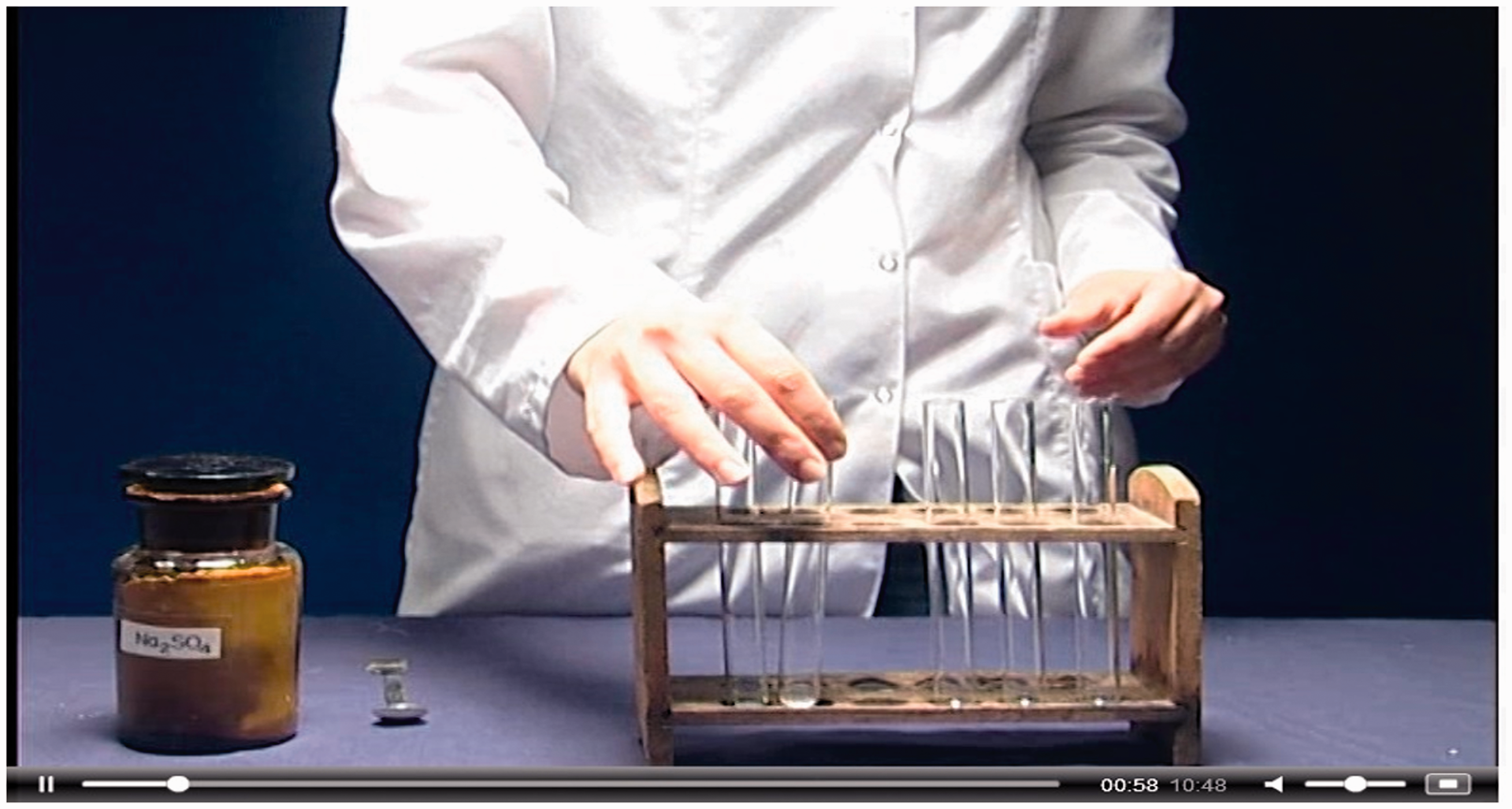
Screenshot of recorded chemistry laboratory experiments (video length approx. 5–10 min).
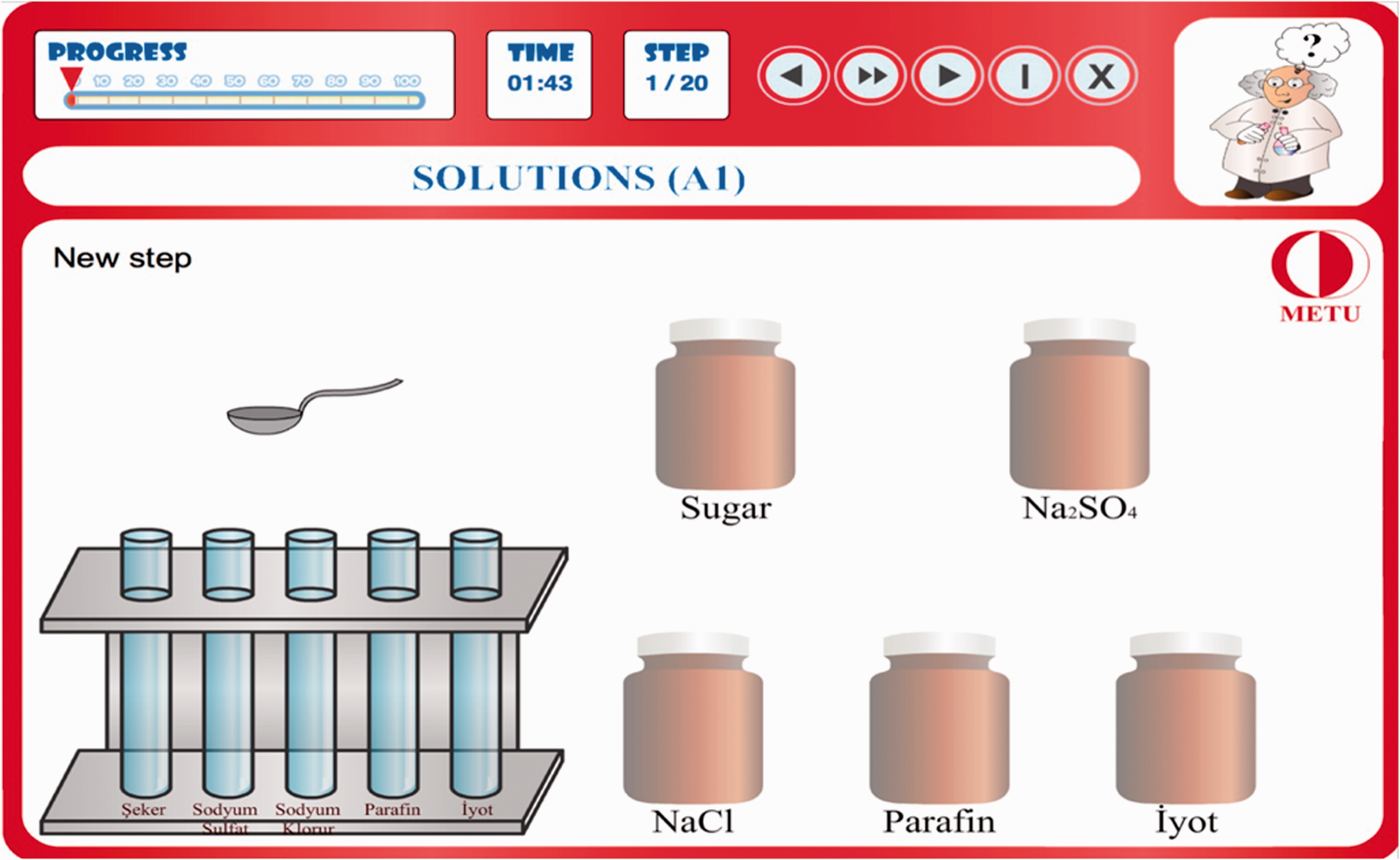
Screenshot of interactive virtual laboratory experiment (simulated step-by-step experiment). Note: For resources, please visit http://ocw.metu.edu.tr/course/view.php?id=99.
Participants and data collection
The research design is presented in Figure 3, which shows the paths followed for each semester.
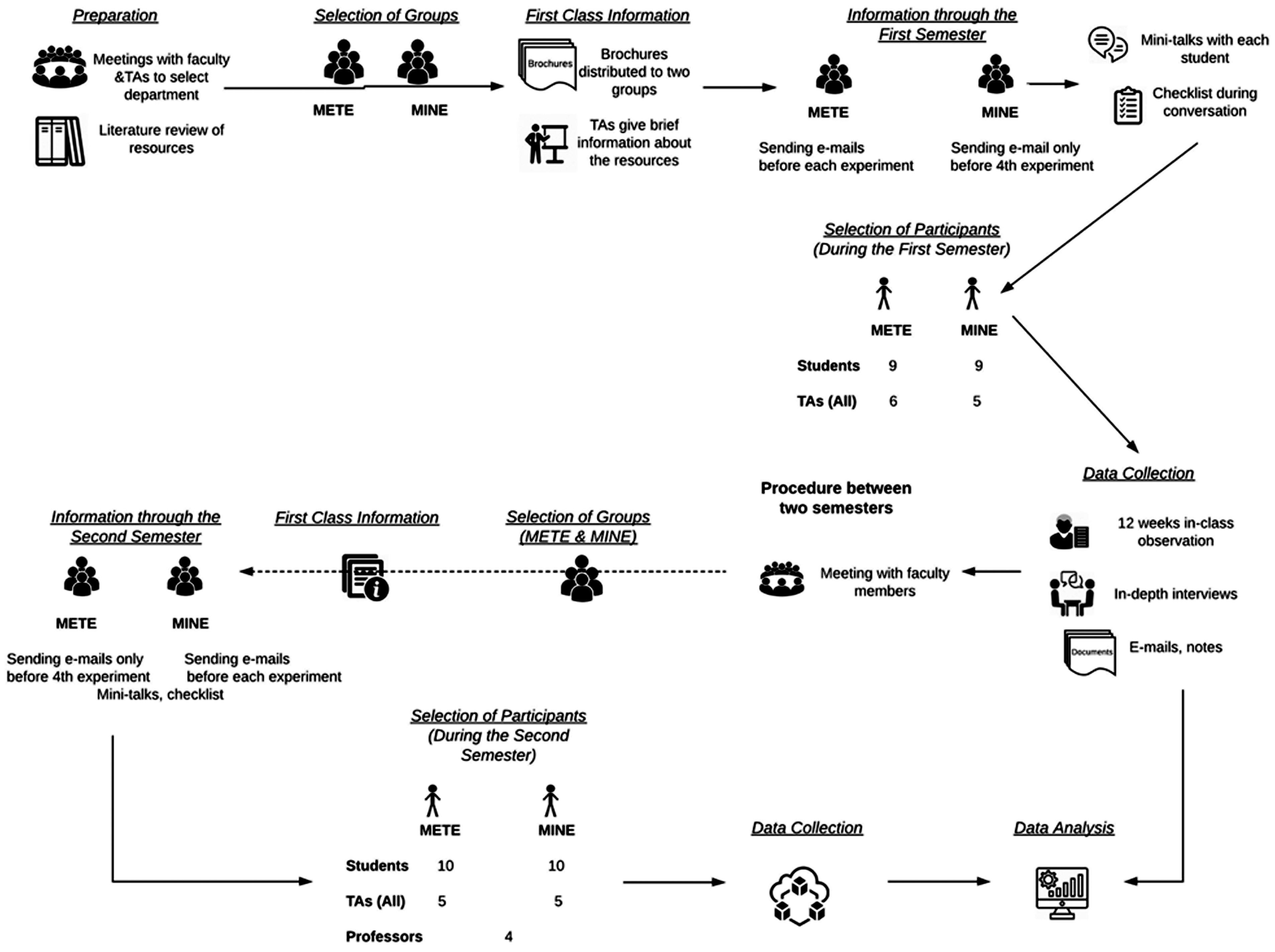
Design of the study: first and second semesters.
Data were collected over two semesters from two departments (Metallurgical and Materials Engineering [METE], and Mining Engineering [MINE]) using the following procedure: First, the departments were selected based on expert opinion from the Chemistry Department in order to identify similar groups in terms of their discipline, course performance, and university exam score. Second, at the beginning of each semester, all students were informed about the resources; then, one group was selected to be informed regularly while the other group was only given information about the resources on two occasions. In the second semester, the group that was regularly informed group was swapped so as to explore whether or not the regularity of being informed was linked to usage of the resources. Third, a total of 202 students from the two departments who attended the course over the two semesters were observed during their classes. In addition, the students, teaching assistants’ activities, laboratory behaviors and experiences with the resources were also all observed. Fourth, at the end of two semesters, a total of 38 students were selected for interview based on their resource usage patterns, their classroom behaviors, and the feedback given in the classroom during observation. In addition to the students, the teaching assistants responsible for the two departments participated in the interviews (see Table 1).
Denomination across participant groups.
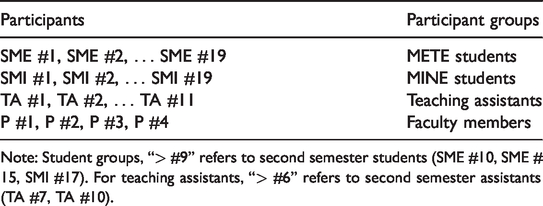
Note: Student groups, “> #9” refers to second semester students (SME #10, SME # 15, SMI #17). For teaching assistants, “> #6” refers to second semester assistants (TA #7, TA #10).
Moreover, the researcher selected four faculty members who each had a minimum of 5 years’ departmental experience and prior administrative experience (see Table 2). Lastly, the researcher attended two meetings with teaching assistants and faculty members during the data collection period in order to discuss any concerns or problems and the course activities.
Participants and data collection process.
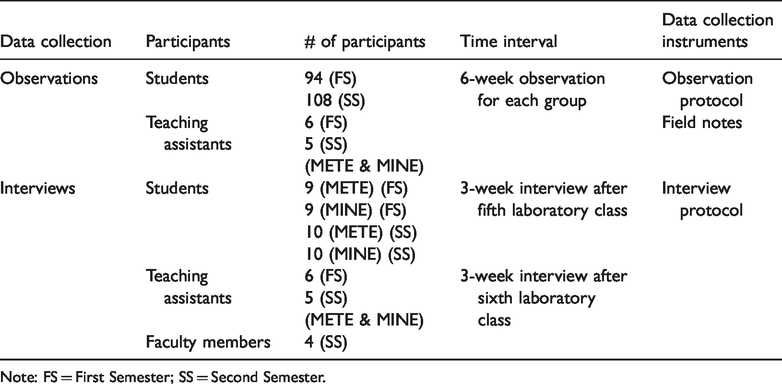
Note: FS = First Semester; SS = Second Semester.
Data analysis and quality of the research
Qualitative data analysis was conducted to analyze the interview, observation and document data. In the current study, multiple data sources, multiple data collection methods, and multiple data types were used to corroborate the evidence for the coding scheme (see Table 3).
Coding scheme based on conceptually clustered matrix: Use and adoption of resources (Adapted from Miles and Huberman, 1994).
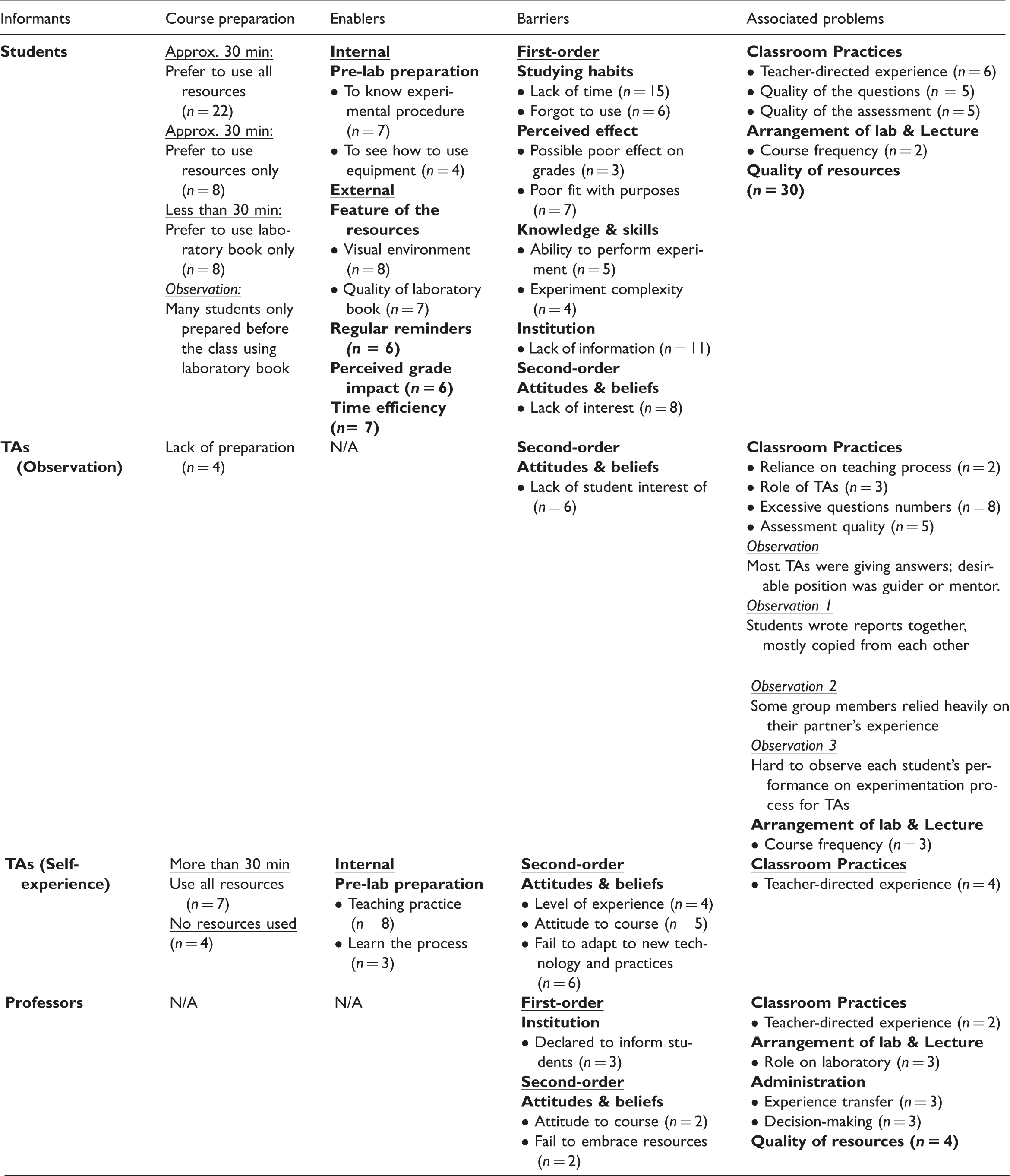
Results
Usage patterns of resources
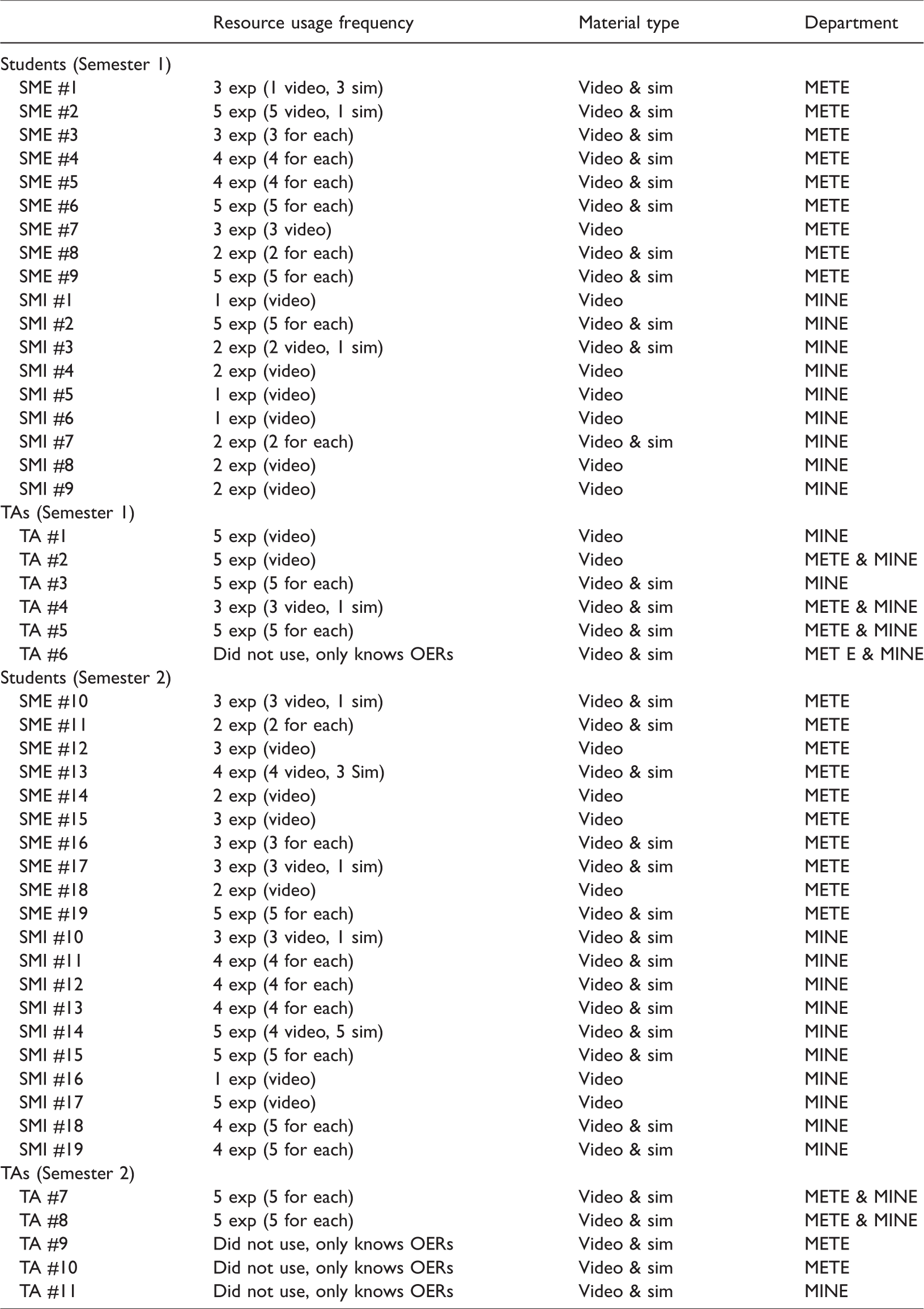
From the two departments (METE and MINE), a total of 57 students in the first semester and 68 students in the second semester used the resources on at least one occasion. Considering the teaching assistants, for the two semesters, seven out of 11 preferred to use the resources at the beginning of the semesters, whereas four teaching assistants had limited or no information about the online multimedia resources. In addition, the usage patterns of those students selected for interview were provided for the two semesters (see Figures 4 and 5). Also, detailed information on the students’ and teaching assistants’ usage patterns is presented (see Table 4). Combined, these results show that most participants preferred the usage of videos over simulations. Furthermore, the regularly informed groups indicated more sustainable usage pattern than the irregularly informed groups.
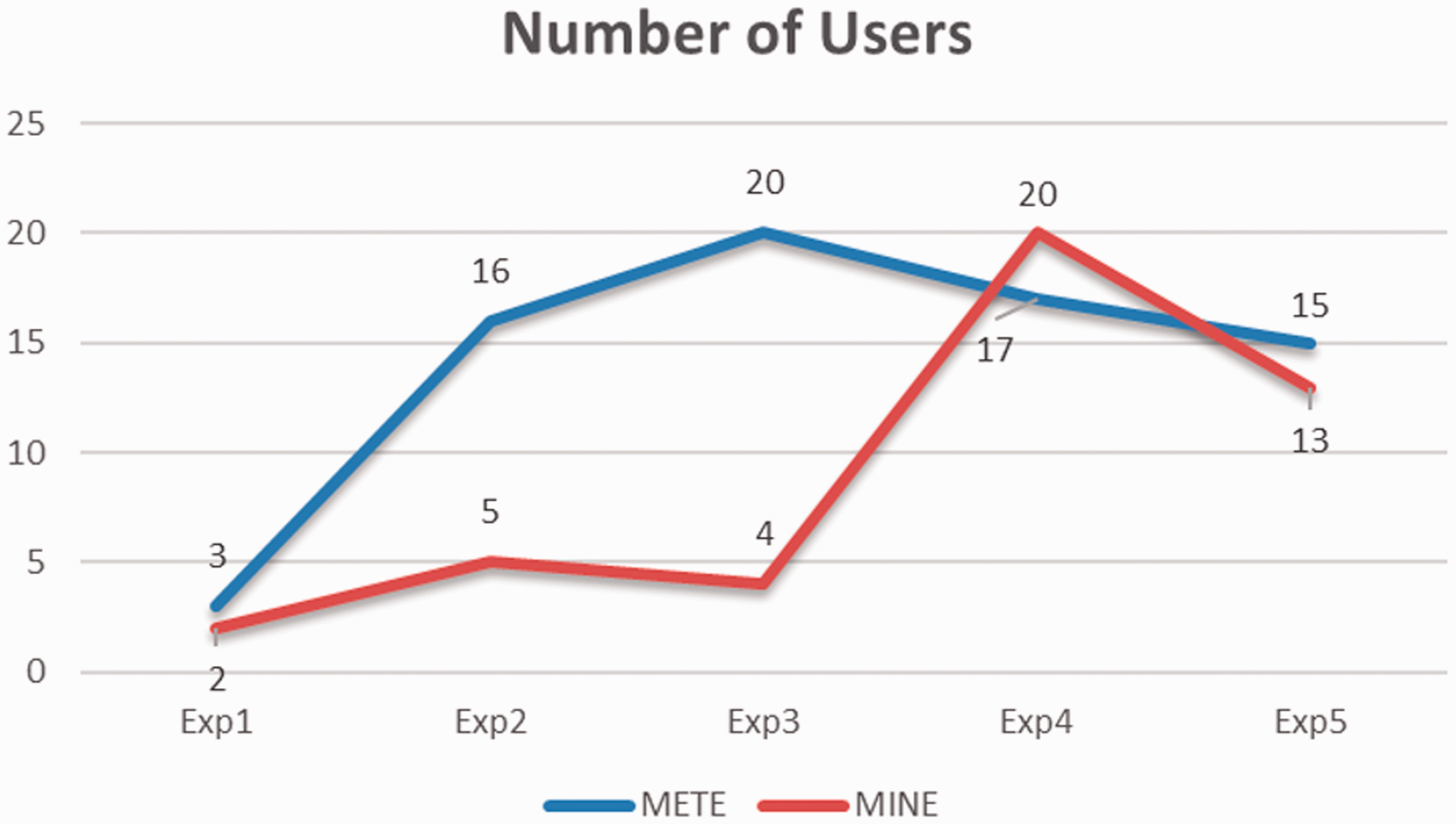
Number of users (selected students: first semester). Note: First semester; METE group regularly informed prior to each experiment, MINE group informed only before first and fourth experiment.
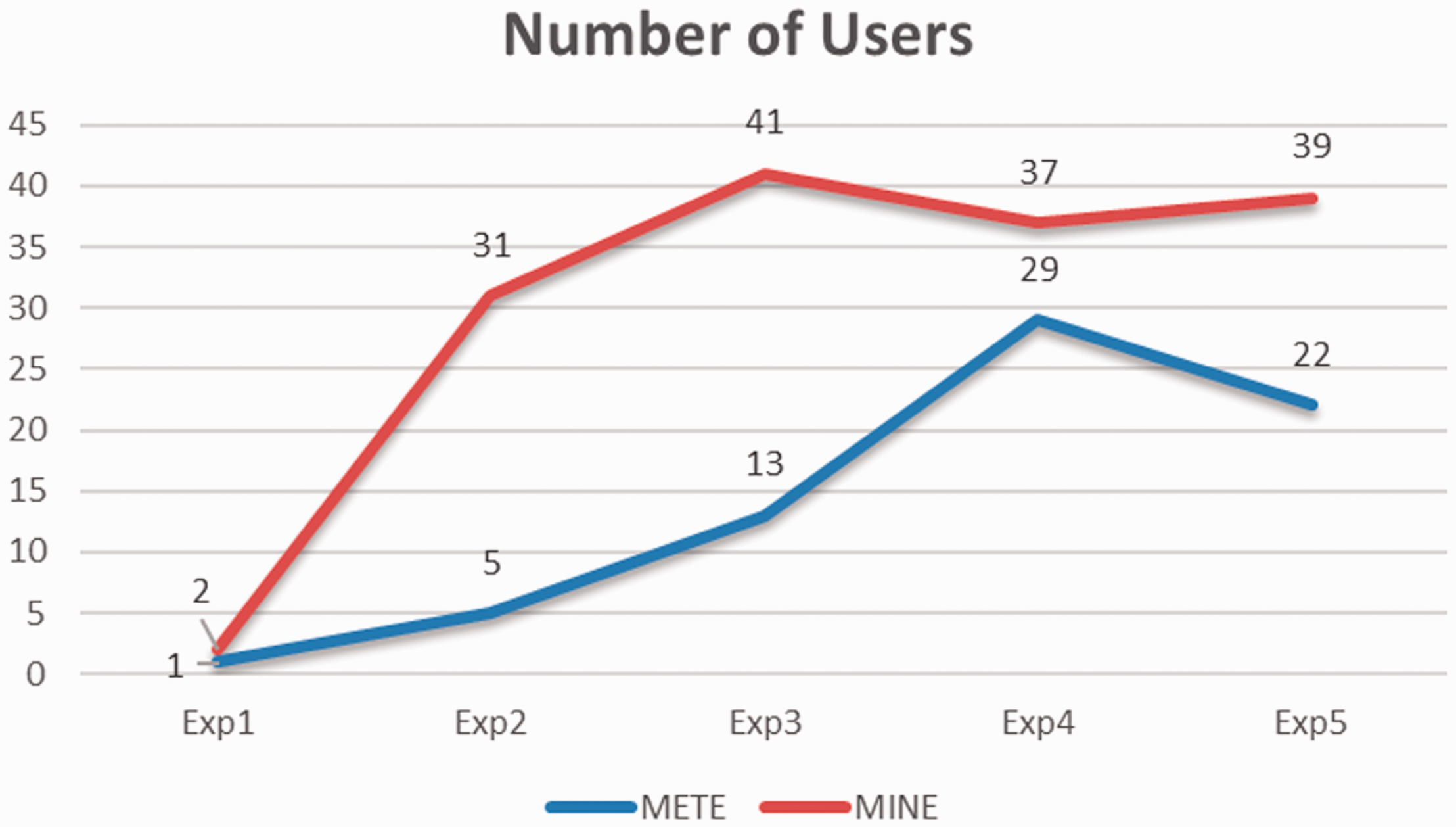
Number of users (selected students: second semester). Note: Second semester; MINE group regularly informed prior to each experiment, METE group informed only before first and fourth experiment.
Frequency of using resources in experiments: Two semesters, with selected participants.
Enablers
Enablers were defined as those factors that positively affected the adoption of the resources, and were categorized as “internal” or “external.” Internal enablers refer to the underlying personal motives to use the resources, whereas external enablers are extrinsic factors over which people have less individualized control.
Internal enablers
Pre-laboratory preparation
Some students mentioned that they used the resources in order to be prepared for the course. Among them, seven students preferred to use the resources so as to become familiar with the procedure of the experiment in advance: “At first, I used them for the purposes of giving me information about what I am going to do in the lab, learning something that I am going to do in advance, helping me during the experiment” [SMI #3]. Some students also used the resources to see how to use chemicals and equipment during the class.
As well as the students, the teaching assistants indicated their engagement with resources either for enhancing teaching practices or laboratory experiences. While some assistants had many years of experience in laboratory courses, more than half were new to this experiment. Thus, newly appointed teaching assistants used the resources for both teaching and learning activities, whilst their more experienced colleagues looked at the resources only for teaching purposes so as to understand how to transform content into an actual laboratory setting.
External enablers
Feature of resources
For some students, the features of the resources were one of the reasons why they selected them. The visual and interactive environment played a key role in some students’ preference for the resources, rather than the printed material (a laboratory coursebook in this case). One student explained her rationale as: “Because I always love watching things with videos in the computer environment, for example, in the formal course, I watch the videos of MIT or other universities or look at the problem-solving videos before the exams” [SME #9].
In relation to this issue, the students were asked to analyze the laboratory coursebook concerning the complaints they had made in reference to complicated content knowledge and language.
Regular reminders
Some students mentioned the importance of being informed properly at the beginning of the course by an assistant and also by the researcher; to remind the students to use the resources each week.
Perceived impact on grades
Some students mentioned using resources to gain higher grades in the course: “The biggest reason is thinking that it could help for the pre-quiz, and indeed, it did” [SME #7].
Time efficiency
The students found the 2.5–3 hours duration of the class challenging, and this led to them seek alternative ways to reduce the experimental process time by using the resources to finish the experiment earlier: “At least we know the process, so we will be able to take care of it more quickly. Because we write a report at the end of the course and it takes a long time, so I used the resources to shorten the period of handling the experiment” [SME #5].
Barriers
Barriers were defined as factors challenging the adoption of online multimedia resources into the course system, and were categorized as “first-order” (external factors) and “second-order” (personal issues, such as attitudes, values, and perceptions). Ertmer (1999) first presented these categories to describe the challenges which could be possibly faced during the integration of technology, and these were applied in the current study as a means to explaining the barriers to adoption of the developed online resources.
First-order barriers
Studying habits
A total of 15 students commented that a perceived lack of time limited their engagement with the resources. When asked to explain the underlying issues on time constraints, they highlighted personal problems and primary priorities in their academic life. Since the GCLC was not perceived as important to their academic life, some students simply forgot to make use of the resources. In addition, the frequency of the laboratory courses eliminated the need for regular course preparation: “Since the chemistry lab sessions are every 2 weeks, I don’t actually remember to prepare the day before” [SMI #8].
The students were also asked to elicit their preparation process for the laboratory. A total of 22 participants adopted the routine of reading the coursebook and watching the video and simulation the night before the laboratory class, whilst eight of the participants only used the resources. The students had different strategies, such as taking notes while watching the videos, reading the laboratory coursebook many times over, and watching different language versions of the resources. For those employing these strategies, the resources led to an increase in their preparation time. On the other hand, derived from the observations, many students prepared for the experiments just 30 minutes prior to attending the class, with their focus mainly on the quizzes rather than procedural information.
Perceived effect
Contrary to the explanation in the enablers section, insufficient perceived effects on grades restrained the user behavior: “If it has an effect on a lab grade, I would review it again; for example, if it is associated with quizzes or if it helps me in preparing the report, I would certainly look at it” [SMI #5].
Additionally, some students commented that the resources did not offer any substantial change in their understanding of the content in the experiments. The resources only contained procedural information on how to perform the experiment and detail about the chemicals, rather than about the content knowledge. As this point, it is important to note that the experimental procedure was not that significant to the assessment process as the theoretical information. Thus, the resources did not fit well with the students’ grade expectations or content knowledge to be acquired from the course.
Knowledge and skills
For some students, the use of additional resources was considered unnecessary because they perceived themselves as already being able to perform the experiments within the laboratory. For them, the need for additional resources was only deemed necessary if they needed to better understand the content or to know how to implement a certain procedure. During the second semester, some of the students were more comfortable in performing their experiments since they had gained increased familiarity with the chemicals, environment, and classroom practices. Aligned with the previous issue, the complexity of the experiment also clarified how it was interrelated with the comprehension of the experiment: “If I wasn’t able to do (the experiments) and I could understand neither my teacher nor instruction; I would definitely need extra resources…” [SMI #5].
This situation was similar to that of some of the teaching assistants who also stated that they did not need to use the resources if they had sufficient experience of the course.
Institution
Some students stated that they were not aware of the availability of the resources, and that some information should have been given at the beginning of the semester to encourage/increase their usage of the resources. Some faculty members asserted that they had informed their students about the resources when they were first prepared, but that they had not informed the students subsequently about the resources in the following years. Therefore, besides a lack of awareness about the resources, insufficient encouragement was received from some faculty members and teaching assistants, which was confirmed by the complaints of students and also teaching assistants about the lack of departmental announcements.
Second-order barriers
Attitudes and beliefs
The most highlighted barrier was the students’ attitude to the general chemistry course since for most of them, the GCLC did not majorly affect their academic life. Teaching assistants also remarked that this issue was a general problem faced in the GCLC. Furthermore, the attitude of students, faculty members and teaching assistants to the GCLC was explicitly related to motivation for and interest in the course and resources. Some participants described the general atmosphere in the department pertaining to the course as: “Most people think general chemistry is a burden on the students’ shoulders. Service courses are the unwanted ones. So, they have no benefit for us… I observed some of the lecturers saying, ‘We are dealing with general chemistry [GCLC] in vain, so why should we make an effort?’” [P #3]. When asked to articulate the underlying reasons for this attitude, the response was that it did not offer any academic reward for faculty members or teaching assistants, which detrimentally affected course development.
Some faculty members and teaching assistants were criticized for not adapting to the new developments and practices. Especially, the longer serving faculty members were considered not to be familiar with the newer practices, and tended to maintain traditional methods of teaching. Additionally, some faculty members seemed not to embrace the new resources because they did not attend the development or production meetings in which the resources were discussed and explained. Furthermore, concerns about the content and quality of the resources were also mentioned as alienating the faculty members to the new resources.
Associated problems
This part aims to highlight the problems in the system which are not directly associated with the adoption of the resources, yet it could shed light on the implicit issues aligned with the barriers.
Classroom practices
Teaching, experimentation, and assessment were the main components of laboratory course classroom practices. The faculty members and the teaching assistants had some concerns about the teaching process in the laboratory, and mentioned that following the “cookbook” style of teaching resulted in an unsatisfactory teacher-directed experience. This process led to a lack of preparation considering the reliance on the teaching process in the laboratory and the role of teaching assistants during the course. The students expected that the assistants would explain all of the procedures during the experimentation, and some teaching assistants mentioned students asking them to explain the whole procedure. The interviews and observations revealed that the students were able to perform their experiments with the help of the teaching assistants, and that most students tended to ask questions about every detail in the procedure. Since the students were aware that the teaching assistants would help them to complete the experiment, this led to a decrease in the students’ own preparation time. Most teaching assistants were aware of this problem, but given the lack of time and the number of students, they did not know how to resolve this situation. Most of the non-major chemistry students also stated that they adopted the attitude of completing the procedure as soon as possible, regardless of the theory that underpinned the practical element. This was reflected in the comment of one student: “Many engineering students want to finish the experiment and go; they are not very concerned with the course I guess” [TA #11].
Assessment exposed some problems in relation to the quality of quizzes and reports. The students were familiar with the possible questions in quizzes, which were mainly created based on the laboratory coursebook. Some students said that they only looked at and memorized the bold or underlined sentences in the book. Based on the observations, the students worked collaboratively on their reports on the completion of the laboratory experiment. However, while cooperation between groups was considered an effective learning process, in this situation it resulted in report completion through peer assistance, which could undermine the students’ own course preparation.
Timing and frequency of laboratory sessions and lectures
Another problem in the system was the frequency of the laboratory course. Each department took the course every 2 weeks; therefore, some students were not that familiar with the laboratory: “The students don’t become used to the labs as they attend only once or twice a week. So, they don’t remember what it was like 2 weeks earlier, and how it is like now. They don’t even remember the assistants” [TA #10].
In addition, it was the teaching assistants that mainly managed the GCLC, with faculty members having minimal involvement and impact on the course. The faculty members did not have much information about the GCLC, especially in terms of the resources, and also did not seek feedback from the students in order to improve the quality of the course: “When it comes to the experiences of the students about labs, we don’t get much feedback; and we don’t even ask how it could be better or if they are pleased with them” [P #1]. Thus, the faculty members had become alienated from the course environment and practices.
Administration
Rotation of faculty members allocated to the GCLC was scheduled each academic year, and when the responsible faculty members changed, there was no mechanism in place to inform the incoming faculty members or teaching assistants about any new practices or developments pertinent to the course. Thus, the awareness and announcement of the developed resources were criticized by students and teaching assistants alike. Additionally, even if the current faculty members were familiar with the new practices, they mostly failed to transfer the information to their peers as future instructors for the course. Therefore, the new instructors generally continued with the traditional teaching methods with which they were familiar for the laboratory course.
Since there were a large number of faculty members and teaching assistants in the chemistry department, this led to difficulties in scheduling meetings, and some decisions took a long time to enact. In addition, the faculty members had not comprehensively discussed the resources at the meetings; so, they were unable to achieve complete and agreed policy practices on how to adopt and integrate the resources.
Quality of the resources
As the usage patterns of the resources revealed, the videos were highly preferred over the simulations. The participants did not directly associate the quality of the resources with the barriers; however, when asked to evaluate the resources in general terms, some issues emerged considering the adoption of the resources. Some users criticized the resources in that they failed to provide sufficient theoretical knowledge in order to better understand the experiments. Most users found the videos to be successful in presenting procedural information or knowledge, and also in visualizing the procedure. However, there was less enthusiasm concerning the simulations which the students felt failed to provide an intellectual procedure; rather, they illustrated a simple follow-up process without any user engagement: “The simulations are a bit simple. We don’t do it but it makes us do it. Go to the next step. The mouse goes and clicks on the stick. It’s already obvious. It’s like an exam in which the answers are already given to us” [SME #10].
Some users also argued that the virtual environment consisted of visuals, an interface, and also characters that were considered juvenile. There were also technical problems that prevented the students from engaging with the environment. However, some users stated that simulations had an attractive interface which allowed users to manipulate the environment and explore the procedure at their own pace. Overall, the participants mostly preferred to use the videos, but considered that both the videos and simulations should be offered in order to accommodate different learner types (n = 30).
Discussion and implications for teaching
This study seeks to investigate the adoption of online resources developed for General Chemistry Laboratory course. In terms of enhancing the outcomes and to elaborate on the discussion, Figure 6 illustrates the relationship between the identified barriers and their association with the problems in the system. The barriers are related in nature (Hew and Brush, 2007); that is, it is important to utilize ways of reforming second-order barriers (Ertmer et al., 2012) where the first-order barriers are correlated.
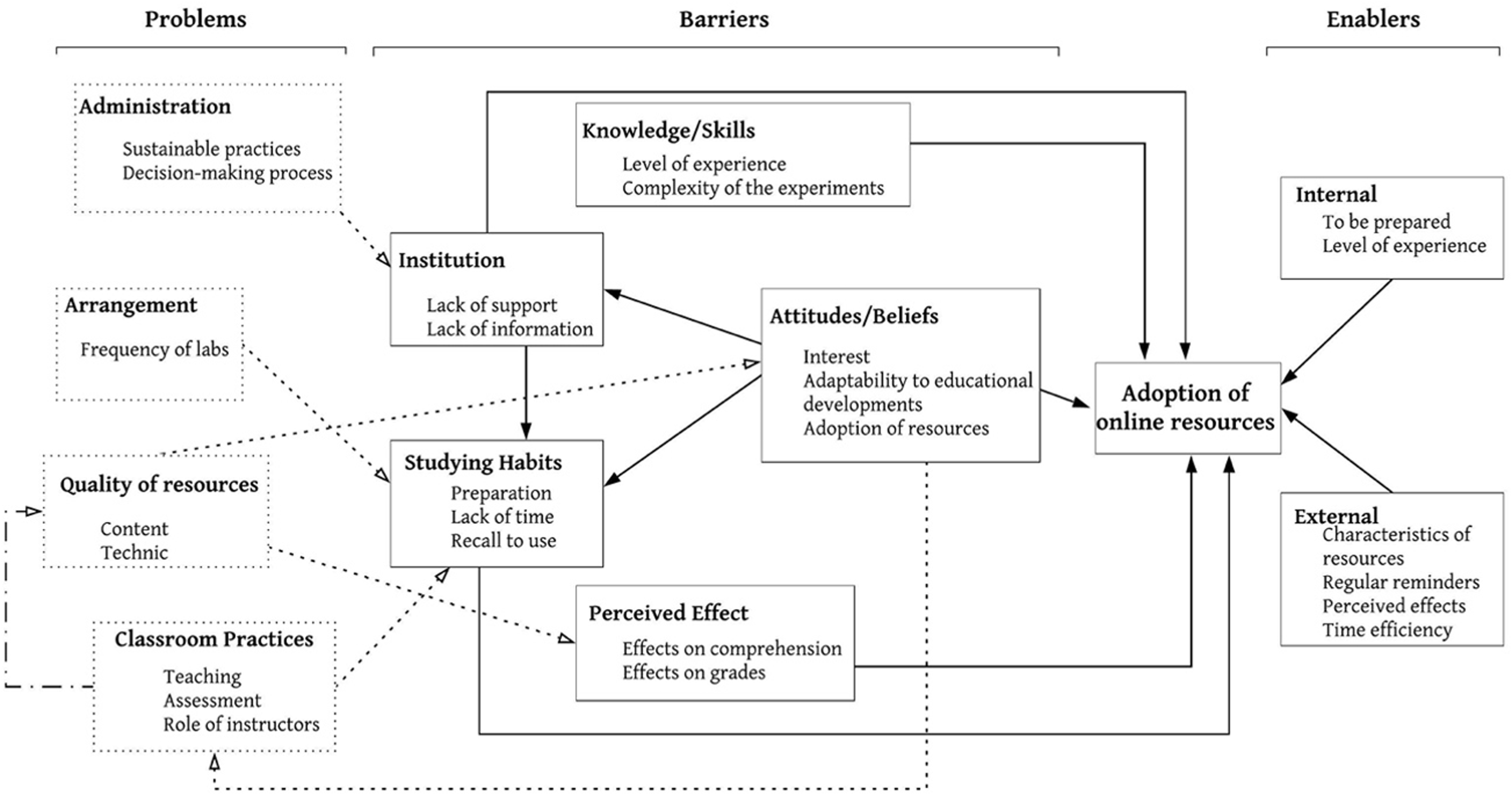
Relationship between barriers and associated problems.
Preparation as an integral part of classroom practices
The resources in the current study were found to increase the preparation time of students who sought out alternative ways of studying before class, which is a consistent finding with that of Jolley et al. (2016). Pre-laboratory activities have been claimed to address certain problems related to laboratory-based courses (Moozeh et al., 2019); thus, online resources integrated into pre-laboratory activities could offer solutions to some problems regarding laboratory-based instruction. However, the current study found that few students spent time on their pre-laboratory preparation. In addition, for novice learners, while videos and simulations offered good alternatives to the laboratory coursebook, as suggested in the literature, supplementary materials, such as mini-lectures, pre-quizzes, and presentations may be provided to emphasize conceptual knowledge. However, pre-laboratory practices should elicit meaningful learning, critical thinking, and the objectives of the experiment, which require careful development and pedagogical orientation; that is, from the researchers’ experience, only focusing on the development and presentation of online resources might create many more challenges that in turn need to be overcome.
Pre-laboratory activities, including multimedia components that provided procedural information of the experiments were found to support some users’ preparation routines and needs. In a study by Veiga et al. (2019), online pre-laboratory tools with interactive, audio and visual characteristics were options chosen by more than half of the students; however, highly experienced students preferred to use traditional approaches compared to those students with lower or medium levels of experience. In the current study, the level of experience was significant for some students but more particularly for the teaching assistants new to working on laboratory courses; therefore, this kind of multimedia could be more beneficial to the novice learner than the expert (Najjar, 1996). The researchers in the current study assert that the videos offered opportunities for the teaching assistants to increase their own familiarity with the experiments and the environment, which aligned well to the recommendations made in the study of Schmidt-Mccormack et al. (2017).
A direct effect on classroom practices in relation to the adoption of resources was not presumed by the researchers; however, traditional approaches have been highly criticized in the literature, and their relation with the components of the system obscure. Therefore, in the current study, observations mostly focused on how the laboratory environment was maintained in terms of the instructors and students. The study’s results showed that traditional teaching methods and the role of the instructors were key issues to the students’ laboratory class preparations. Reliance on the teaching process and the role of teaching assistants could inhibit the students’ preparations for their laboratory work. The students were mostly criticized for being passive, and for only following directions according to the laboratory manual. Different strategies can be employed in laboratory teaching, such as inquiry laboratories which aim to increase students’ engagement with experiments and environment (Chen, 2010; Donnelly et al., 2013) and scaffolding approaches for effective inquiry activities in online resources (Moore et al., 2013). This in turn could transform the role of instructors in the laboratory environment, which is considered important for students to learn the core concepts and procedures for experimentation (Högström et al., 2010). However, it has been shown that students in traditional labs defined the role of instructors as “leaders” rather than “guides” (Cooper and Kerns, 2006), especially for those relying on the instructions of the teaching assistants. Thus, examining the role of teaching assistants might influence the students’ perceptions toward the use of online resources.
Assessment was also inferred as a key variable for some students in triggering their studying habits. Research has revealed promising results in which assessment was not seen as a direct motivator to the usage of online resources (Jones and Edwards, 2010). On the other hand, the current study showed that achieving a satisfactory grade to pass the course or to finish a course early seemed important in the engagement of students. Most students preferred to study quizzes based on conceptual knowledge given in laboratory coursebooks where pre-laboratory activities were not employed. Experiences in the current study showed that online resources might comprise some knowledge and skills for those seeking to successfully engage in the course as a means to preparing them for the actual performance, and that this knowledge should be aligned with the course assessment. In order to successfully integrate resources, video instructional models and approaches associated with successful in-lab activities are essential (Stieff et al., 2018). Thus, problems experienced in the laboratory might be considered as related to the need to first transform classroom practices, aligning them with online resources for meaningful preparation.
Attitude as an overlapping issue
Attitude and beliefs were explored so as to determine the influence of the adoption of resources considering the interest in the laboratory course. However, it was found that attitude also emerged in connection with the relationship with other barriers. Faculty members’ interest in the course and their academic concerns could influence their support for the resources’ usage. Correspondingly, students’ interest in the course could affect the fluctuation in their studying habits. In the literature, non-major students were determined to be the less interested group in terms of their focus on the experimental process, which Hofstein and Lunetta (2004) described as the students’ profile concentrating on procedural practices. The participants in the current study did not mention, in particular, the perceived value of the course as a barrier, but the presence of the attitude was noted in the students’ preparation routines, the limited time that faculty members devoted to the resources, and the faculty members’ academic studies.
The instructors’ adaptability to technology was also an essential issue, with some faculty members apathetic to the adoption of online resources within the existing course system. Although the instructors’ pedagogical and conceptual knowledge on technology competence was out of scope for the current study, it is evident that their need for professional development on Information and Communication Technology (ICT) competence (Gil-Flores et al., 2017) and their technology values and practices (Mama and Hennessy, 2013) were highly associated with the use of ICT in the classroom. The current study also addressed the aspect that attitude to the course was not only a problem for the students, but that the faculty members’ interest and their academic concerns should also be noted by policymakers as an issue worthy of investigation.
Role of the department and policy practices
The role of the department and their policy orientations undoubtedly shape the current applications and practices. In the current study, insufficient support and lack of information were considered to be important barriers; however, their relationship with the course system seemed to be sufficiently substantial to be worthy of consideration. The current study showed that the GCLC had a settled ongoing process mainly operated by teaching assistants, in which the new practices failed to be transferred from one semester to the next. The responsible teaching assistants seemed to maintain the set course order, whereas the faculty members diverged from the laboratory activities. The resistance of certain instructors to new developments was pointed out, and their attitude to the GCLC was not promising, new teaching methods and learning models were mostly ignored and/or less practiced by many instructors (Hofstein and Lunetta, 2004). Furthermore, no policy of agreement was developed in terms of how to integrate the new resources into the existing classroom practices. Faculty members and teachers should be change agents to conceive and implement new practices; for example, finding ways of supporting the students in recalling the information in the laboratory courses or investigating ways of changing the timing of the course. The current study emphasized that all stakeholders should be aware of the resources, and to embrace them to guide the students and to integrate the resources into the system.
Awareness problems were addressed by some studies (e.g., Schmidt-Mccormack et al., 2017), which was consistent with the current study. Some of the documented approaches were to implement the integration of optional resources into learning management systems (LMS) (Schmidt-Mccormack et al., 2017) or making the usage of additional resources compulsory (Chaytor et al., 2017). In some studies, when online resources were provided as optional, the majority of students (71%) preferred not to utilize them (Dalgarno et al., 2009), or where preserving the use of optional online resources was seen as a challenging issue (Raman et al., 2014). In the current study, the researchers regularly informed some groups prior to each laboratory class, which resulted in significant usage patterns and sustainable user profiles. However, this approach is not sustainable; rather, the integration of an LMS is the more sensible option. While obligatory preparation might be beneficial for those who have failed to develop appropriate study habits or for those experiencing difficulties finding lesson preparation time (Rollnick et al., 2001), the current study embraced the idea of adapting the resources aligned with some pre-laboratory exercises offered through an LMS.
Perceived effects as a key barrier aligned with the quality of resources
The current study addressed the issue that the laboratory coursebook did not provide sufficient instruction for procedural knowledge to illustrate the required process. The students tended to elicit knowledge through multimedia resources which attracted their attention, and were mostly satisfied with the visual and interactive environment of the prepared resources. It was also significant to note that most users preferred to use the videos rather than simulations, with simulations found to be lacking due to the interface, technical abilities, and the teaching process. The lack of explanation in the experimental procedure steps could affect the students’ perceptions about the quality of the developed simulations. The written explanations in the laboratory coursebook were not found to correspond to the procedures of the experiments in the same space (spatial contiguity principle) and at the same time (temporal contiguity), whereas videos offered simultaneous visual and narration in order to explain the procedure of the experiments. In addition, learners with less prior knowledge could benefit from well-designed multimedia designs (Mayer, 2009), which was also mentioned in concern with the level of experience of laboratory courses. Thus, procedural knowledge-based videos and the poor design features of simulations could affect the user preference of the resources.
Besides these concerns, although most of the students agreed to accept both resources, they argued that simulation did not offer a different experience, whereas the videos provided procedural knowledge. Two types of simulations are defined in the literature: “operational simulations,” which focus on procedural knowledge and skills; and “conceptual simulations,” which comprise of conceptual knowledge for inquiry-based learning environments (Clark and Mayer, 2011). In the current study, the virtual laboratories were designed as an operational type, which could possibly interfere with the procedural knowledge in the videos. In a study by Velázquez-Marcano et al. (2004), videos and animations were found to preserve students’ effective performance when used together. In the current study, besides the quality of the resources, there was a lack of guidance and scaffolding on how to use the resources properly, which prevented the students experiencing a more meaningful experience. In this situation, having two types of resource that focused on procedural information might be considered unnecessary. In this case, careful design and guidance are required so as to associate the resource content with the course components by triggering cognitive activity with appropriate guidance, specific learning goals, and an appropriate level of complexity (Clark and Mayer, 2011).
The content of the resources focused on the experimental procedure rather than theoretical information; that is, the extent of the questions in the assessment did not particularly match the content of the resources. Conceptual knowledge was briefly provided by the teaching assistants at the beginning of the laboratory class, but this procedure was claimed to possibly restrain the students’ cognitive activities (Johnstone, 1997). Although the students may not have cognitive expectations from the course, the comprehension of the experiment was a key factor to implementing procedures within the laboratory setting. Thus, the researchers in the current study presume that examining the students’ needs and their expectations from courses may provide data on the perceived effects of course-specific resources. Additionally, online resources could be designed that comprise of conceptual and theoretical information aligned with classroom practices; that is, pre-laboratory activities and resources could be compiled within a single platform in order to furnish a more meaningful learning experience.
Videos and simulations could provide different opportunities for learners. Videos are already preferred resources used for recorded lectures and for demonstration of experimentation in flipped classroom activities to elaborate in-class instruction. According to Smaldino et al. (2014), they have also been used successfully for the demonstration of experimentation as well as to present conceptual knowledge within an authentic environment as a means to prepare students’ minds to benefit from the learning process. Simulations are also used for pre-laboratory exercises, and they could also be used as a platform which comprises the whole laboratory experience, including investigation, observation, reporting, discussion platforms, and online resources. Many platforms offer these simulation systems for chemistry laboratory education; e.g., ChemCollective, Merlot Simulation Collection, and PhEt Interactive Simulations which offer complete virtual experimentation.
Conclusion and implications for research
The current study explored the adoption of online resources within a laboratory course system through the perspectives of students, teaching assistants, and of faculty members. The results of the study have shown that the adoption of online resources was challenged by many elements of the course.
With the developed resources provided as optional, the students had mostly positive perceptions; however, only half of the students preferred to use the resources. To elicit this issue, where most barriers and problems were considered connected, some highlights emerged. The attitude of the students to the course was related to their studying habits and their usage of the resources. On the other hand, the faculty members and teaching assistants’ attitudes to the course revealed their lack of support and encouragement in the use of the resources, which also connected to the insufficient policy practices aimed at improving both the course and the resources. The lack of support also affected the students’ awareness and their usage of the resources, whereas regular reminders were found effective in sustaining user activity. Teaching traditions and the role of instructors and assessment were related to barriers which pointed to the course preparations and the perceived effects obtained from the resources.
The quality of the resources was also considered in that those employing multimedia features attracted users the most; however, occasional technical problems and some students’ lack of conceptual knowledge were related to the perceived limited effect of the resources. The study showed that while internal and external issues affected the adoption of the resources, to successfully adopt and integrate the resources, first, the purpose of the resources, the students and faculty members’ expectations, knowledge, experiences and attitudes to online resources, and the course should be well-defined. Second, how the resources could be implemented and associated with classroom practices should be formulated. Third, to encourage and sustain the usage of resources, support should be received from both the department and the faculty members, and that policy issues should be formulated that embrace the resources department-wide.
In the case of the current study, students from two departments were examined, each with similar characteristics. However, the researchers highly recommend carefully investigating the students’ profiles in terms of differentials based on pre-knowledge, experience, ability, and academic performance. The students’ reasons for attending the course and their expectations of the course possibly shaped their attitudes toward the courses and their perceived performance. Correspondingly, to what extent the online resources could be successful in meeting the aims and expectations of the students could be better evaluated. The current study addressed certain aspects concerning the quality of the videos and simulations, but for future studies, it would be valuable to provide an insight into the different multimedia features of online resources and their affordances for educational settings. Longitudinal studies might also be conducted in order to investigate the sustainability and usability of online resources when provided for optional use. Therefore, the studies mixing qualitative and quantitative data might also be applied to explore the integration of online resources into laboratory instruction. This study showed that the development of online resources did not assist in improving the course; however, the researchers hope that the study’s results provide a roadmap, showing which components might be considered in the future to advance the integration of online resources.
Limitations
This study is limited with the general chemistry laboratory courses that offered through OCW platform in Middle East Technical University. The courses are also for non-major chemistry students who might have different experiences, attitudes and perspectives than major chemistry groups for general chemistry courses.
Footnotes
Acknowledgements
We would like to thank the Chemistry Department of Middle East Technical University, which provided support for this study. To add, students, research assistants and faculty members who helped to enlighten the problems of this study by sharing their valuable experiences and knowledge are also appreciated.
Declaration of Conflicting Interests
The author(s) declared no potential conflicts of interest with respect to the research, authorship, and/or publication of this article.
Funding
The author(s) received no financial support for the research, authorship, and/or publication of this article.
