




Abstract
Social Media (SM)’s use as pedagogical tools in Higher Education (HE) institutions is gaining robust momentum among researchers from different disciplines. While most universities implemented Learning Management Systems (Blackboard Learn, Moodle, etc.) as essential instruments in their teaching and learning(T&L) methods, the adoption of SM platforms such as Facebook, YouTube, etc., as in-class educational and communication tools is still in its infancy. Despite the numerous available studies on SM’s adoption as T&L instruments in HE, little has been made to develop a standard framework for SM’s integration as effective educational tool in classroom environments. This paper followed a thematic review of 19 relevant studies to analyse and identify common practices and findings on SM’s inclusion as T&L tools in HE. Subsequently, the findings formed the basis in developing a conceptual framework for SM’s integration as pedagogical tools in HE classrooms. This framework introduces SM’s adoption process as a formal educational tool, the development of SM implementation processes, and assists in understanding the influence of SM on education environments. The research outlines major findings in current literature, thereby, providing valuable insights on SM’s use in education, besides forming the basis for future quantitative and qualitative researches in this area of study.
Introduction
Recently, integrating popular SM platforms such as YouTube, Facebook, LinkedIn and others, as pedagogical tools in HE classrooms has increasingly become a subject of interest for many researchers as well as practitioners. SM with its characteristic as a highly interactive online tool is a perfect communication and collaborative channel, especially in an education environment. Hence, universities are known to have promptly adopted SM platforms in addressing various institutional needs. Though, universities’ adoption of SM as formal T&L tools remains very limited and subject to myriads of restrictions, as well as lacking broad acceptance and adoption. Nonetheless, current research in this study area are limited to isolated case studies; including self-reported studies that primiraly examines perceptions and experiences of major classroom stakeholders (students and instructors), rather than addressing the practicality and effectiveness of SM as an educational tool i.e. performance measurement and quality of T&L practices. In addition, the literature lacks a common framework for SM’s integration as pedagogical instrument in HE classroom environment. The absence of such framework contributes to the growing number of isolated studies that seeks an effective integration of SM in HE’s T&L practices. A common integration framework is integral for guideing practitioners seeking an effective integration of SM in HE’s T&L approaches. Whilst promoting a targeted approach to address both, the challenges and needs of SM in education. The availability of miscellaneous self-reported studies in the scholarly reveals a manifold of determinants that contributes to the success of SM’s adoption within classroom environments. Hence, analysing relevant studies to extract common determinants and drivers for effective SM’s adoption as educational tool is a viable approach for developing a conceptual adoption framework that can support its integration process.
This paper identified relevant case studies and research papers addressing SM’s use as T&L tools in education at HE classrooms’ level. The analysis of such sources is anticipated to support our level of understanding of SM’s practicality as T&L tools; in addition, it is expected to help in identifying key determinants for its effective integration in HE environments. The paper attempts to extract and integrate common determinants and drivers of SM in HE in an initial framework that forms the basis of a comprehensive framework for SM’s adoption as T&L tool in HE.
Background
There is a consensus that the emergence of web 2.0 technologies, resulted in major changes, not only in the leaning goals within HE, but also in course delivery methods adopted by universities. As Bransford et al. (2000) puts it, “a fundamental tenet of modern learning theory is that different kinds of learning goals require different approaches to instruction”. Thereby, innovative learning approaches, including integrating SM in HE’s classrooms’ settings is viewed as a need rather than a choice to effectively address the changes in universities’ learning goals, particularly by supporting student-centred learning environments. The widespread embracement of Learning Management Systems (LMS) by universities as well as the emergence of contemporary learning approaches such as Blended Learning (BL), Massive Open Online Courses (MOOCs) and SM mediated courses are all seen as promising initiatives to address the changes in learning goals within universities (Graham, 2006; McAuley et al., 2010; Pappano, 2012). This change in learning goals and needs, especially for the “digital learner” student base, as well as the continues advocacy and initiatives by researchers and practitioners in HE to capitalise on innovative technologies for educational use (Greenhow et al., 2009), makes integrating SM as supplementary educational tool in HE a logical step forward. Hence, research on SM’s adoption for educational use is growing with more studies are yet to surface. Recent research such as Aldahdouh et al. (2020); Al-Rahmi et al. (2018); Anderson (2019); Rahman et al. (2020); and Stathopoulou et al. (2019) suggested that additional research/studies are needed to address the issues of effective SM’s adoption in HE, which was instigated by its reported affordances as an innovative educational tools and its potentials to support student-centred learning environments (see Table 3).
Nonetheless, the literature fells short in providing a standard comprehensive SM adoption framework in HE. In her book titled “Using social media in the classroom: A best practice guide,” Poore (2015) provided an extensive guide to integrate SM in classrooms. Although Poore’s (2015) guide included a step-by-step approach to integrate major SM platforms in general classrooms (schools, high schools, etc…), it did not focus on HE classroom settings which have different specifications and characteristics than the HE classroom. Poore’s (2015) book is perhaps the most notable best practice guide available in current literature, though, it does not specify a standard framework for SM’s inclusion in HE’s T&L practices. Even though Poore’s (2015) guide does not address SM’s implementation in HE classroom at a granular level, it does otherwise provide valuable recommendations and SM lessons’ learnt which lay the groundwork for its use as part of constructivist learning approaches. In addition, Poore’s (2015) guide described sensitive aspects of SM’s use in education, such as privacy concerns and control and monitoring issues which were corroborated by findings of other researchers’ work (see Table 4).
Currently, very limited research papers have been conducted to propose a common SM adoption framework in HE such as Al-Rahmi et al. (2015). Al-Rahmi et al.’s (2015) framework was built to address one specific pedagogy approach, that is collaborative learning and engagement, and put a great effort in linking theory (constructivism theory and Technology Acceptance Model (TAM)) with practice (SM adoption), thus, establishing solid theoretical basis for SM’s inclusion in HE classrooms. However, their framework is primarily based on a self-reported method, in which the authors used results from a survey questionnaire completed by 323 HE students to propose a SM adoption framework in HE. Despite the evident research effort and analysis of data gathered from the survey, the findings (and the proposed framework) were merely based on HE students’ experiences and expectations. Although, students are at the centre of any SM integration framework, it is essential for a comprehensive framework to address the needs of major HE classroom’s stakeholder, namely, instructors and students. In addition, an effective adoption framework is ought to comprehend lessons learnt from previous studies (real-world case studies), especially SM’s inclusion as T&L tools, and build on the knowledge (findings) acquired from past experiments, since its ultimate purpose is to be transformed into practice. This has been addressed in the paper’s proposed framework (Figure 2).
This paper aims to investigate available evidence on how SM platforms have been used as formal pedagogical tools, especially in HE classroom environments in the past 10 years (2010–2018), in order to integrate them into a SM adoption framework. The review examines prominent studies conducted on various SM platforms as part of T&L tools in HE classrooms and attempts to analyse their findings and outcomes. The sampled studies were analysed to examine the strengths and weaknesses of using SM platforms as T&L tools (delivering course’s learning materials, educational knowledge and information). The paper lays down valuable insights on the integration of SM in educational institutions, universities, and its anticipated outcomes on the overall T&L environment. It further assists in developing an adequate understanding of how SM platforms are being used in practice as formal educational tools (tactics and approaches for SM’s inclusion in HE classrooms). Nonetheless, the paper attempts to apply recently acquired knowledge of benefits and challenges of SM’s adoption in education in support of developing the conceptual integration framework.
Specifications of the proposed framework
The originality of the proposed research framework stems from the fact that it explicitly addresses the adoption of SM in HE classrooms, which distinguishes it from other scarce literary frameworks such as Poore (2015). The proposed framework (Figure 2) incorporates major determinants of SM’s integration process and key HE elements as per the analysis in Table 5. The proposed framework provides a targeted approach to address predefined goals and objectives of T&L in HE environments as well as a practical clear solution for educators seeking to implement SM in their T&L approaches in a HE classroom. In addition, educators can refer to it as a decision-aiding framework in identifying effective practices and processes when integrating SM in their overall T&L approaches. The outlined stages of the framework follow a straightforward design, which makes it both, comprehensible and affordable to apply in real-world scenarios (HE classrooms).
The 19 analysed papers shown in Table 5 examined SM’s integration in HE classrooms without following a predefined framework and solely based on the researchers’ views and expertise in setting up general T&L guidelines in a classroom. In other words, the SM integration processes followed in the analysed studies along with the assessment of results were not framework-based. While most reviewed paper provided solid evidence of positive impacts following the integration of SM in HE’s T&L practices, the parameters and determinants for such results were not specified in a clear framework that when applied can ensure an effective and successful integration process.
Methods
Search strategy
The paper followed a thematic analysis of relevant published literature. The scholarly papers included in this review were entirely identified through online research databases accessed via Charles Darwin University (CDU)’s library and Google Scholar. The peer-reviewed academic papers were primarily published in scholarly journals in e-learning, educational technology, broadcasting and electronic media, computing, economics and business, communication and management. In searching for selected articles, specific search terms were used including, SM in education, HE, classrooms, e-learning and m-learning and their variations.
Research’s selection methods
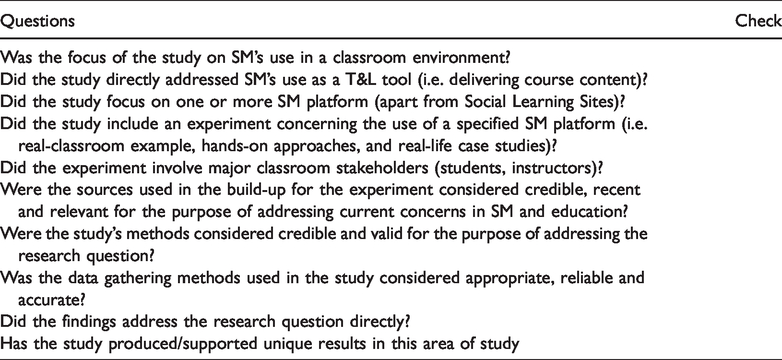
Figure 1 provides a summary of the search methods followed in this study. Initially, the search returned over 500 relevant sources including online books, articles and reports based on the title and searched keywords. The sources were further examined to eliminate any duplicates and isolate explicitly relevant papers to the topic of interest. A sample of shortlisted studies was produced and further analysed to draw common practices, besides identifying key determinants for its inclusion in the proposed framework. Eligibility of shortlisted studies was determined following a predefined criteria list exhibited in the following Table 1.
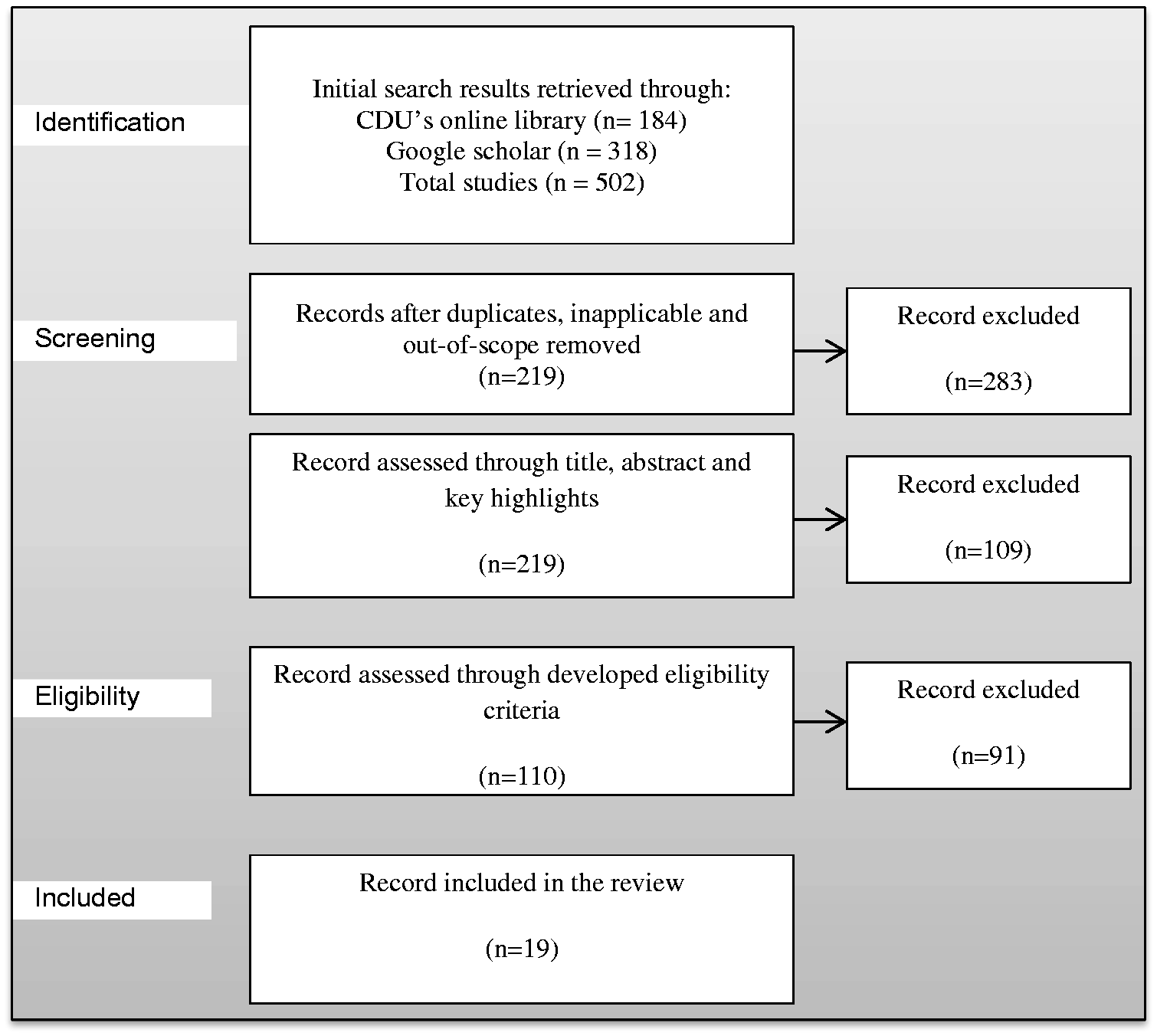
Flow diagram of the research’s search methods used in identifying relevant academic sources.
Eligibility criteria for sampled research.
Search outcomes
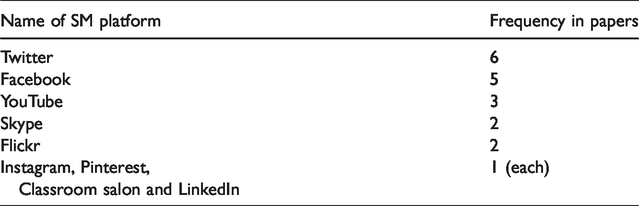
Upon further examination and screening, over a 100 paper were excluded based on their research focus, research context, methods used, education settings and research limitations, in addition, duplicate papers were identified and marked as excluded. Further, titles and abstracts along with key highlights of the papers were examined to identify most related studies. Finally, the identified papers were assessed following our pre-defined eligibility criteria for inclusion of related papers. The included sources involved experiments (real-world examples and case studies) on different SM platforms and were not limited to one SM platform. In total, 9 distinct platforms were studied by selected papers as seen in above Table 2.
Frequency of SM platforms studied in selected research papers.
Results
Major benefits of SM’s adoption in education
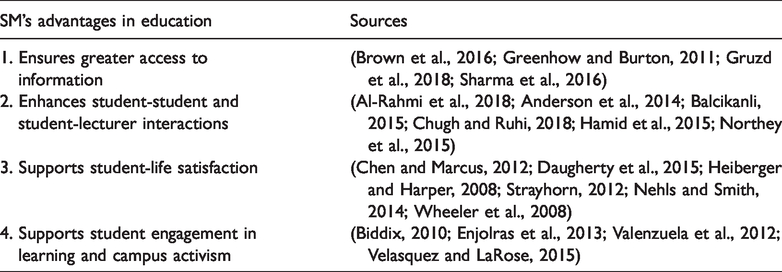
A shortlisted sample of academic papers has previously been reviewed, and the underlying positive impacts for SM’s integration in education were identified. In what follows, a list of four most common major SM benefits is outlined along with sources supporting each finding (Table 3).
Common findings of SM’s benefits in education.
Major challenges and barriers to SM’s adoption in education
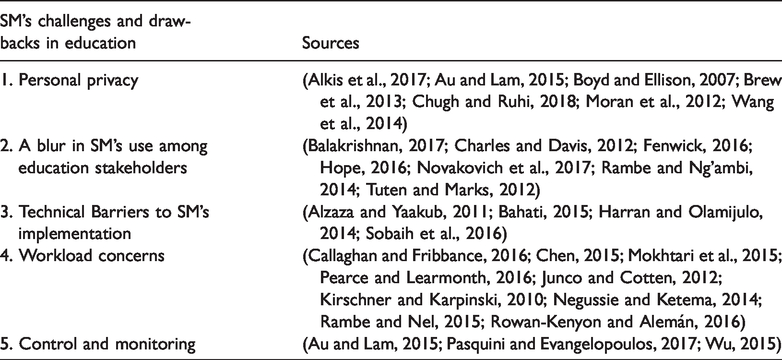
Critics of SM and its influence on both, users and the overall organisation, put forward concerns and challenges to its adoption, especially when being examined from an education perspective. In summary, challenges to SM’s integration in a classroom environment can be classified into three major categories: user challenges, technical risks/challenges and administrative challenges. Hence, an evident major debate is prevalent in this area of study, albeit other controversial aspects of SM in education especially in HE, are continuing to be challenged and examined for their significance on the overall learning environment i.e. “utilizing SM platforms as principle or supplementary tools in delivering HE courses?” Table 4 provides a summary of major findings on challenges, barriers and risks of SM in education:
Common findings of SM’s challenges and drawbacks in education.
The following Table 5 presents a summary of a thorough examination and analysis of selected papers, showing references, examined platforms, study location, student samples, methods used, and a discussion of results and lastly identified determinants for each experiment in the studies. The examined papers involved different samples of university students, who were the primary target of the completed experiments. In addition, surveys and questionnaires were used as primary sources for gathering data from the sampled students. The data mainly included reflections, perceptions, feedback, experiences and recommendations from students.
Summary of the analysis of selected academic papers.

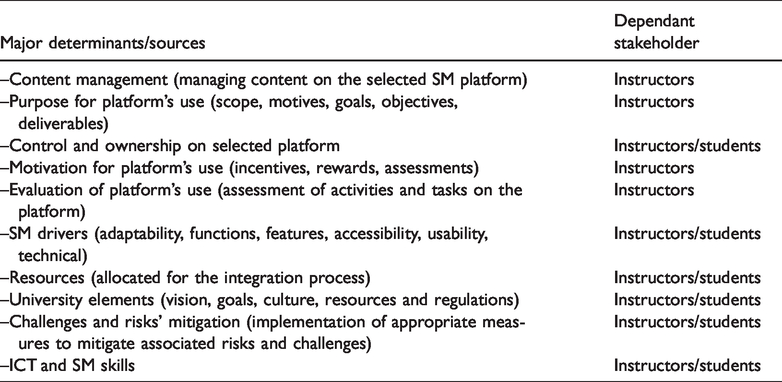
As shown in Table 5, most of the studies had positive outcomes (in T&L) which were directly associated with the inclusion of a selected SM Platform in various teaching approaches. Many of the noted outcomes were replicated amid selected studies. To further understand the recurrence of common positive outcomes in the examined papers, we examined the methods applied in each study (experiments’ methods). Nonetheless, common activities and practices used in the studies’ methods were detected and identified. Thereby, the noted activities and practices reflected common determinants that are associated with positive outcomes of SM’s integration. These common determinants were subsequently extracted and presented in Table 6. The table was structured in a basic format, as to show each determinant identified in the analysis, with brief description, along with the respective education stakeholder that has major control over its conduct.
Extracted determinants for effective SM integration process.
Key determinants of an effective SM integration
As identified in the analysis of selected sources, common determinants for an effective SM integration process have been identified as shown in Table 6. The determinants are associated with one or more education stakeholder and have been outlined accordingly in Table 6. Later, in the discussion part of the research, each determinant will be further explained as included in the proposed framework.
Discussion
The framework
The proposed initial framework (Figure 2) defines major determinants and key phases for an effective integration process of SM as T&L tool in a HE classroom environment. The defined determinants are critical success factors for SM’s integration as educational tool in HE classrooms, as found earlier in the analysis of sampled studies (Table 6). The framework attempts to mitigate common challenges and barriers to SM inclusion in education and proposes an approach to address respective challenges in various stages of the integration process. The relation between each of the identified challenges and the respective stages of the integration process is presented by a solid-line arrow directed at the indicated stage of the process. In addition, target attributes (or common advantages of SM in education) are identified to steer the integration process. The process consists of five essential stages: Scope, Administration, Incentives, Content Management and Evaluation. These stages are directly associated with main classroom stakeholders, namely, the instructors and students (classroom actors). Typically, a university classroom (traditional or online/virtual) involves instructors (lecturers, tutors, practitioners, etc…) and students (or learners) who are, ultimately, at the centre of this integration process.
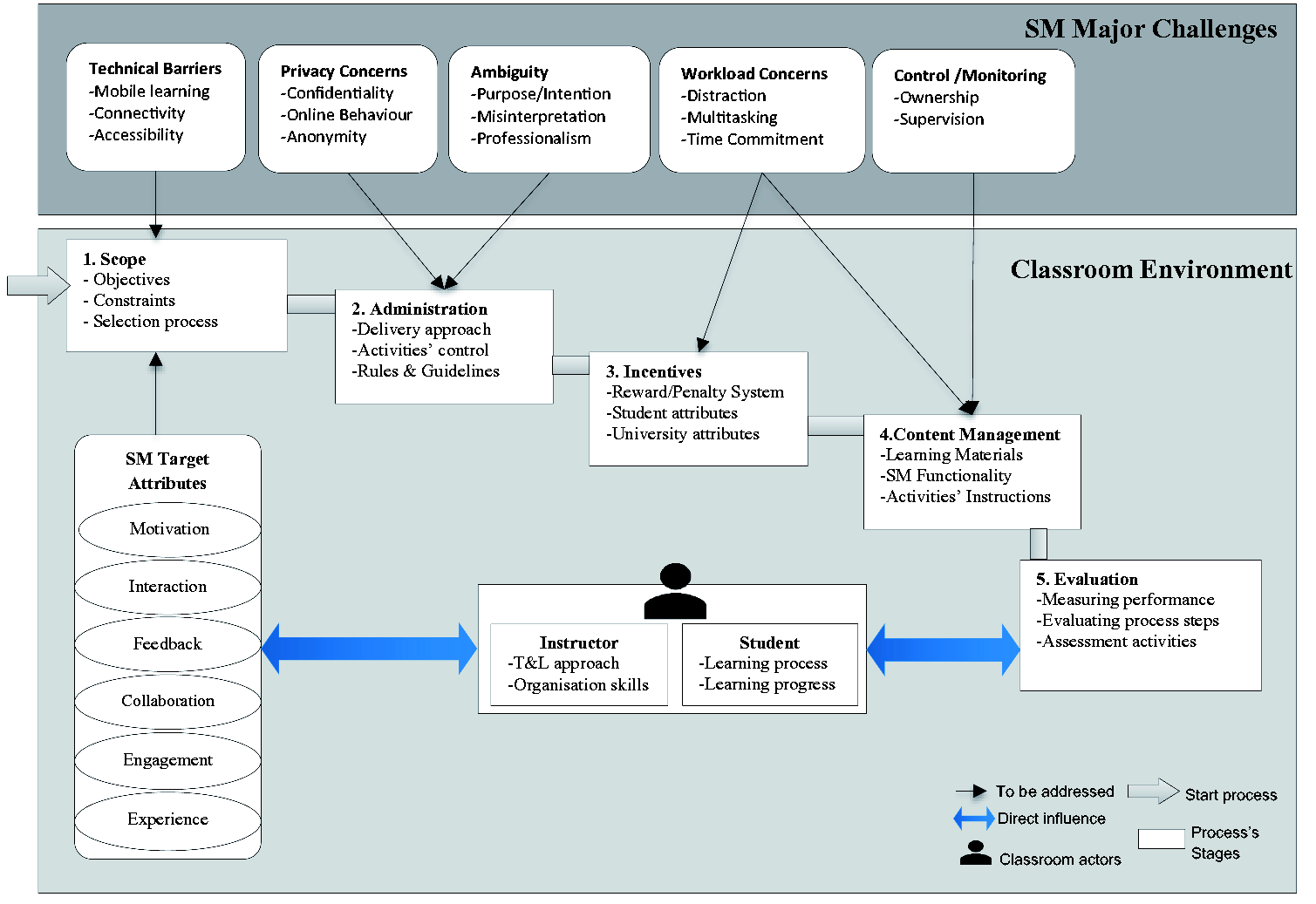
Proposed framework showing relationship of SM and its relevant factors in HE.
The framework depicts the relationship between classroom actors and the evaluation stage of the process with a solid double-headed arrow symbol, signifying a direct influence relationship. Ultimately, the integration process is validated during the evaluation stage of the process. In this stage, the outlined attributes of students and instructors are assessed and evaluated. Nonetheless, the integration process is designed to promote specific aspects (target attributes) of classroom’s T&L as displayed in ellipses. The identified SM target attributes have a direct influence on students and instructors’ attributes; hence, the relationship is depicted with a solid double-headed arrow symbol.
In what follows, the layout of the framework will be explained in-depth, and the relations between its components are illustrated.
Scope
The proposed framework outlines the “scope” as a first stage in the integration process. As shown in Table 6, major research such as McCorkle and McCorkle (2012); Rahman et al. (2020); and Poore’s (2015) guide emphasized on the importance of having clear objectives and goals as an initial step in the integration process (Determinant outlined as: Purpose for platform’s use). Establishing unambiguous objectives which are defined clearly in the scope stage would effectively steer and facilitate the integration process, rather than just having an “us too!” mentality in adopting SM. The scope stage describes the fundaments of SM’s inclusion in education. In simpler words, it answers four elementary questions of “Why is it being used (significance)?”, “What will it achieve (anticipations)?”, “What are the constraints (limitations)?” and “What is the selection criteria of an appropriate SM platform?”. Typically, the inclusion of a selected SM platform, as part of the overall T&L initiatives in a HE classroom, aims to enhance students’ overall learning, as well as aligning students’ learning with the course’s learning objectives. In addition, the literature reveals various advantages to SM’s inclusion in formal T&L approaches. Hence, the identified common advantages (SM target attributes) are perceived as key motives for SM’s integration in HE classroom teaching. Nonetheless, SM’s integration motives are not limited to the outlined common advantages, thereby; educators must ensure that the objectives and grounds for their SM’s integration are clearly depicted in the scope. Each of the identified target attributes has a direct influence on classroom actors, especially, on their T&L properties including students’ learning process and progress as well as instructors’ organisation skills and overall T&L approach.
Accordingly, it is the role of instructors, (teaching staff), to determine the scope of their planned SM’s integration process. Though, staff can involve students in the selection process of the platform, as to promote positive relations and encourage collaboration. This can also ensure that the selected platform is most suited, and students are familiar and eager to use it for educational purposes. Educators should ensure that the proposed approach in course delivery is aligned with the university’s vision and is conducted in-line with its overall mission and goals. Further, it is the responsibility of staff to attain the required approvals and provisions from the university to initiate the integration process. Typically, universities develop and maintain SM policies and protocols regularly; hence, it is essential for staff to adhere to SM policies and regulations set by their respective universities. The selection process of an appropriate platform involves various determinants, including nature of deployment, type of (anticipated) activities, users’ acceptance, relevance to learning materials, usability (also regulations by providers) and functionality (of the platform). In addition, internal policies and regulations by the institutions, as well as the competency of instructors (to use and monitor- “know-how”) have a major influence on the selection process as shown in below Figure 3.
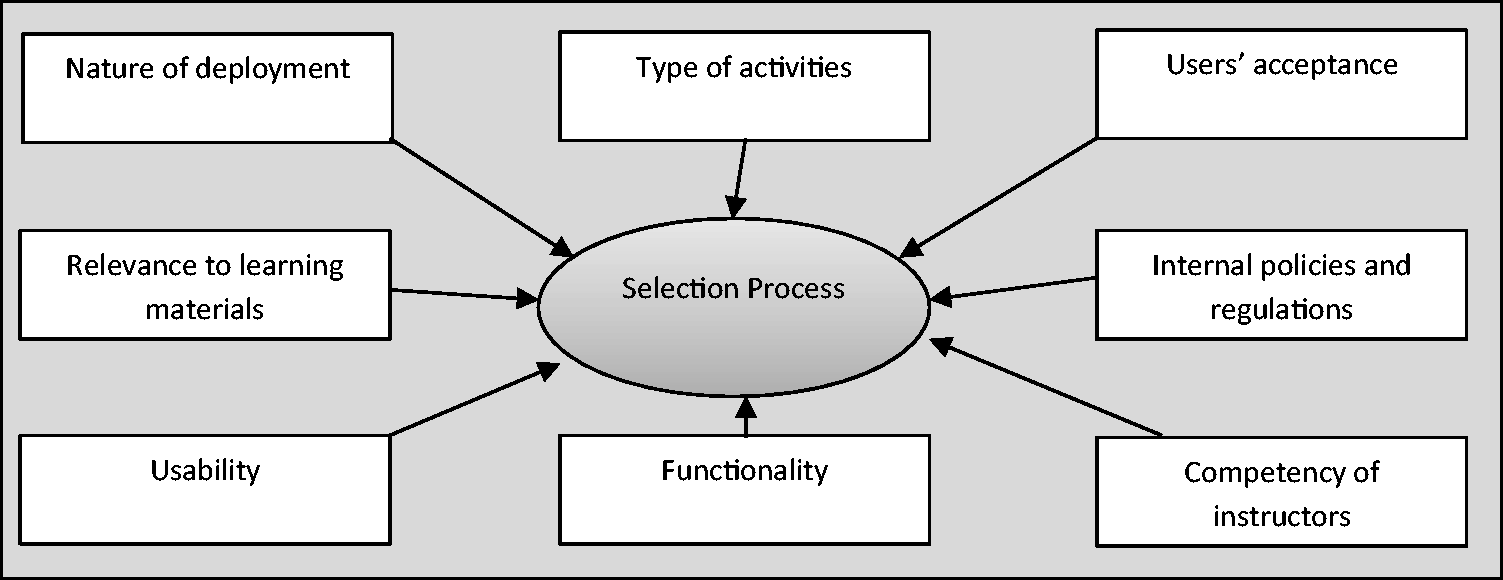
Major determinants of SM platform selection process within a classroom environment.
Besides the defined determinants in Figure 3, it is essential to develop clear and comprehensive understanding of the unique functions and uses of the selected platform. Despite having significant similarities in terms of functionalities, different SM platforms have unique characteristics and features that make them most effective in specific settings or contexts (also relevant to the learning materials and the identified target attributes). In addition, the popularity and ubiquity of major platforms makes them more favoured and easier to adopt and use, especially among younger age groups. Hence, it is necessary to examine the unique attributes of the selected platform. To aid in the selection process, the following Table 7 (matrix) was developed based on the findings of the performed analysis on 19 selected sources. It lists various SM platforms along with their matched attributes. This matrix can assist in identifying an appropriate platform by associating its matched attributes with the intended learning objectives of the specified course unit.
Selection matrix based on the performed analysis of 19 selected sources.
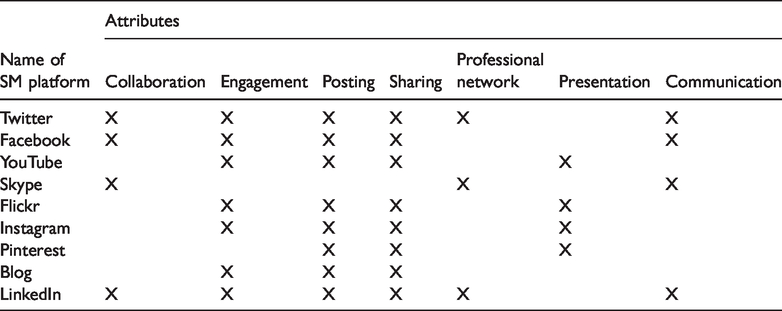
Addressing technical barriers to SM’s integration is best achieved during the scope stage of the process. Following the selection of a platform, instructors are to define key constraints to its implementation in classroom teaching. These constraints are associated with the platform’s connectivity, accessibility and mobile learning aspects; and must be defined in the scope stage prior to their transformation into delivery guidelines in the administration stage of the process.
Administration
After defining the scope, it is essential to examine the administration side of the integration process. Primiraly, when implementing a selected platform, educators should specify the accessibility approach, in which a SM platform can be utilized as a standalone tool or via an existing Learning Management System-LMS (embedded). It is recommended however, despite the selected accessibility approach, to include a link on the provided LMS to facilitate and maintain ease of use. Thereby, instructors must develop a delivery approach and implement necessary measures for administering and controlling the activities on the selected platform. In this context, key determinants of an effective administration design include the following: Delivery approach guidelines (or methods of delivery: when, where and how-the 3 W’s), controls on activities (controls and restrictions) and specifying rules and guidelines as shown in Figure 4.
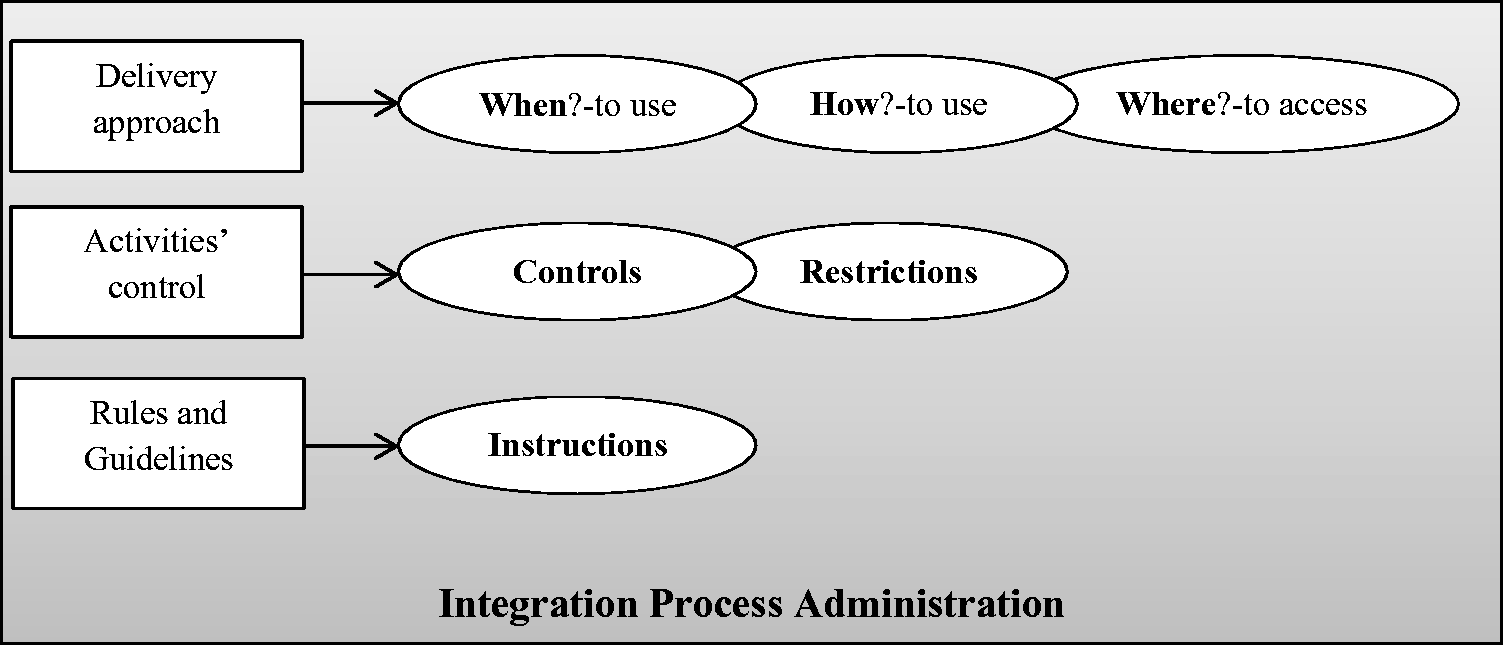
Key determinants for the integration process’ governance.
As outlined in Table 6, a common determinant for a successful SM adoption in education was “challenges and risks mitigation”. As found by researchers such as Al-Ali (2014); Cain and Policastri (2011); Dyson et al. (2015); Evans (2014); and Q. Wang et al. (2012), mitigating associated risks and challenges in education can promote an effective implementation of SM. Throughout the integration process, instructors must develop clear understandings of the risks and challenges associated with the use of selected platforms, especially privacy and ambiguity concerns. Recent researches have provided valuable insights, as well as solutions to mitigating the risks and challenges in education (Hamadi et al., 2019). Accordingly, instructors are required to raise awareness among students and work closely to implement appropriate measures for mitigating identified risks. Rules and guidelines in the administration stage should address key privacy concerns, particularly, confidentiality, anonymity and online behaviour concerns. The delivery approach, activities’ control and guidelines should involve an effective mitigation approach that addresses each of the identified privacy concerns. Most popular SM platforms enable users to create closed “groups” or “accounts” that can be set to private as opposed to the publicly available and accessible “accounts”. The availability of such alternative can facilitate the adoption of SM platforms in closed classrooms. A private “account” can be created for designated classes and made only accessible and available for enrolled students. This can protect the confidentiality and privacy of classroom activities that will be initiated on the selected platform. It will also support effective monitoring of online behaviour. Besides, ambiguity concerns can be moderated in this stage through developing pre-defined guidelines and rules that sets clear description of intent and purpose for creating designated “accounts”. The pre-defined guidelines and rules must also cover professionalism aspects and provide examples and templates to clear any misinterpretations that may occur during the conduct of SM activities.
Incentives
An important determinant for a successful SM adoption as shown in Table 6, was “Motivation for Platform’s Use”, signifying incentives for its implementation within HE classrooms. The analysis of selected sources (presented in Table 5), as well as other prominent research such as Poore’s (2015) guide, stressed on the importance of adopting appropriate incentives to effectively conduct the SM integration process, and ensure adequate participation by students. From a HE education perspective, incentives for T&L play a big role in promoting educational activities among students. Incentives for SM’s use by students for educational purposes have a substantial influence on the success of the integration process. Most of the reviewed academic sources stress on the importance of having an unambiguous effective reward system in place to promote and encourage full participations of students in educational SM activities. Hence, an effective integration process is correlated with effective reward system that can both promote and foster students’ participation in the intended SM activities. Although, this can be achieved through following a traditional marks-oriented approach (i.e. assessed SM activities), it can further be achieved via other innovative approaches (i.e. score point approach). Nonetheless, a reward system can also be coupled with a penalty system (participation & attendance points).
The inclusion of a reward system alongside the implementation process can motivate students to participate and engage more in the proposed SM learning activities. Hence, instructors should develop an appropriate system (relevant to the proposed learning activities) that is associated with key student learning attributes such as collaboration, engagement and interaction. In defining an appropriate reward system, instructors should also investigate relevant university attributes, such as resources, to prescribe the nature of the “reward” that will be coupled with the completion of proposed activities by students. Moreover, the instructors should reflect on workload concerns that may arise from the inclusion of SM activities in the overall T&L approach. Primiraly, workload concerns are associated with multitasking, distraction and time management aspects while using the selected platform. While the specified aspects can be well governed during face-to-face classrooms, it is rather challenging to control them outside the boundaries of the classroom. Hence, instructors must continually raise awareness among students to minimize the adversities that can be caused by these factors.
Content management
A major determinant for a successful SM adoption, which was corroborated by many researchers such as Al-Ali (2014); Anderson (2019); Elavsky et al. (2011); Evans (2014); Irwin et al. (2012); Junco et al. (2011); McCorkle and McCorkle (2012); and Stathopoulou et al. (2019), was “Content Management” . Accordingly, content management was incorporated as an integral part of the developed framework shown in Figure 2. This stage of the proposed framework holds its major components together and establishes the connections between its different stages. Though, managing content on the selected SM platform requires cooperation from both, instructors and students. Primiraly, a selected SM platform is an interactive online resource that can be utilized during designated class time, as well as outside class hours. Thus, content must be managed and directed in accordance with class learning materials and allocated hours to each unit. Above all, instructors should have higher levels of control on content to be posted, shared or created on the platform. Hence, instructors are required to act as mentors on the platform, directing activities for students and providing needed support. Nonetheless, instructors should aim to address and achieve identified (earlier) goals and objective of this process. It is best for them to prepare a clear SM task-activity list to include in their teaching methods (delivery).
An effective content management plan involves high levels of planning and understanding of the functionality of selected platforms. In addition, instructors should respond to the challenges and risks associated with SM by selecting and implementing needed measures in their content management plan. All whilst providing clear instructions for students to follow and advise them on the expectations of the proposed activities. A list of major determinants of an effective SM content management plan is as follows: Content type (multimedia/videos/pictures/blogs/others), nature (informative/call-for-action/engaging), challenges and risks, consistency and functionality and usability of selected SM platform as shown in Figure 5.
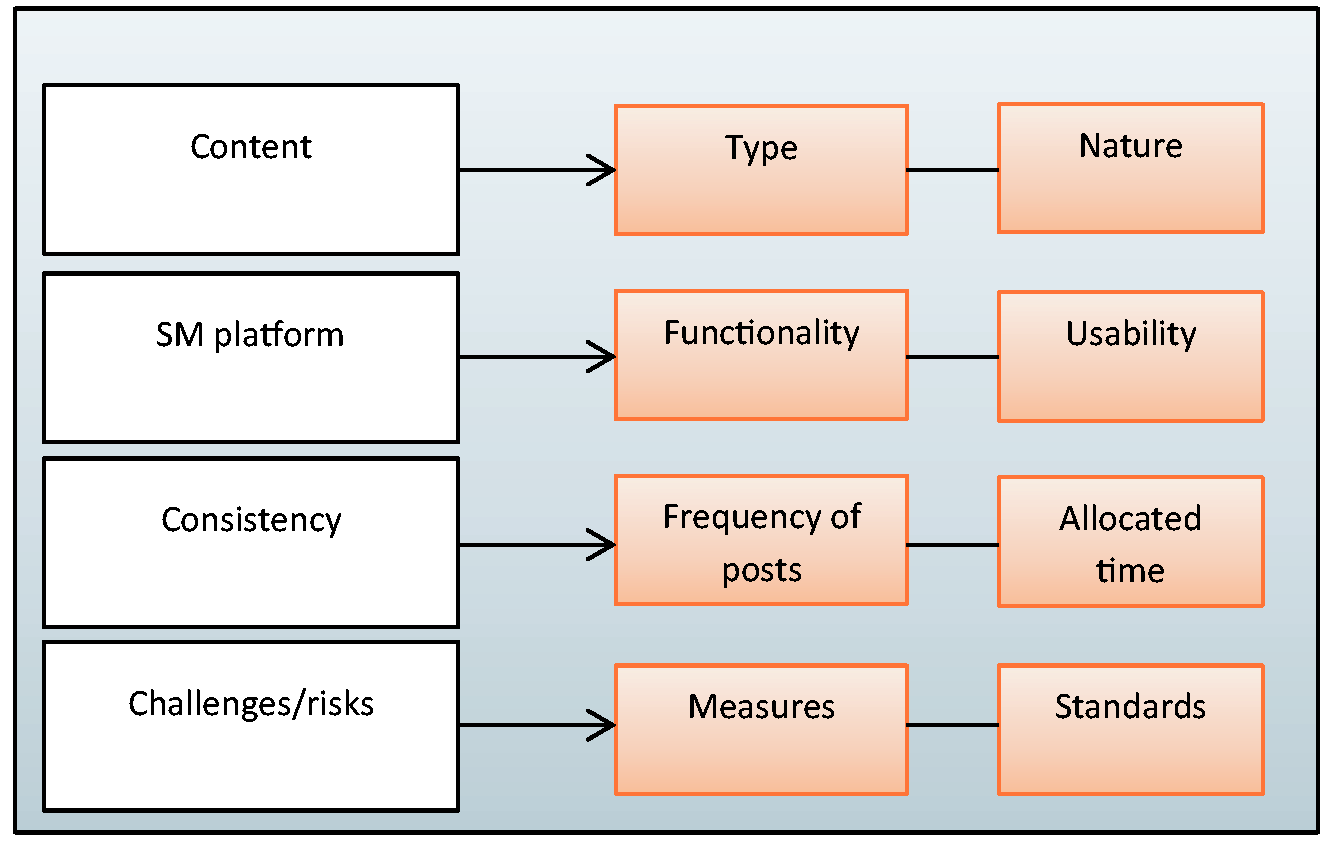
Key determinants for an effective content management plan.
In this stage of the process, instructors must work to mitigate associated challenges and risks that may occur during the conduct of SM learning activities. Workload and monitoring/control concerns should be addressed continuously throughout the teaching period. The proposed SM learning activities should have clear instructions that highlight what needs to be accomplished by students (intents/objectives) while describing the ownership and supervision aspects related to each task or the overall activities.
Evaluation
The final stage is evaluating (and assessment) of the overall activities and stages of the integration process. As suggested by different researchers including Clifton and Mann (2011); Tian and Wang (2010); and Zhu et al. (2020), an effective evaluation process would have two dimensions; first, measuring the overall academic performance of the students throughout or at the completion of the implementation process, and secondly, evaluating and assessing the completed stages of the integration process.
The evaluation of the different stages of the integration process is best achieved by measuring the fulfilment of previously set goals and objectives. The list of objectives, covering different aspects of the integration process along with anticipated outcomes are to be reviewed and assessed accordingly by instructors in an elaborate manner. This includes measuring the identified learning outcomes of SM’s inclusion against a set of standards (metrics) and expectations. In addition, assessing SM activities through observation and marking responses of students can aid the overall evaluation process. Hence, instructors must have discussed extensively the anticipated SM learning outcomes earlier in the “Scope” stage of the integration process. Consequently, evaluating the fulfilment of the set deliverables becomes a straightforward step and ultimately, a conclusive review of the overall integration process. In addition, instructors can opt to seek constructive feedback and reflections (surveys, questionaries, others) from students throughout the process, while making necessary changes to conform to the overall vision and goals of SM’s adoption in education. Below Figure 6 shows major steps for achieving an effective evaluation process.
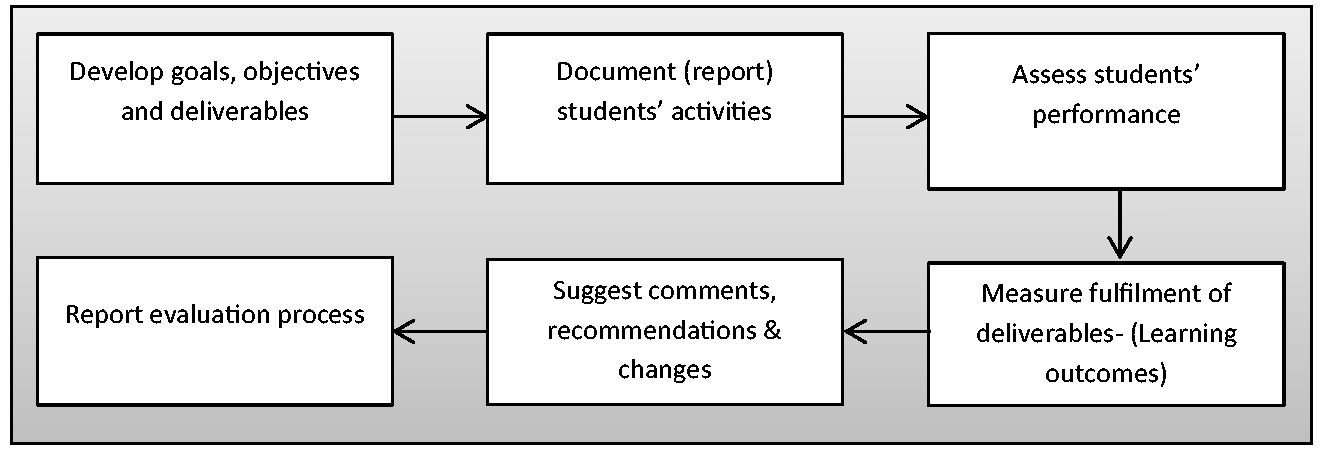
Flow diagram of an effective evaluation process.
Measuring students’ overall academic performance
The proposed framework aims to facilitate and support the inclusion of SM as a supplementary educational tool to enhance the overall students’ learning process. Intrinsically, SM’s integration as part of the overall T&L approach is directed at enhancing student learning as well as supporting their progress throughout the duration of the teaching period (semester). Accordingly, evaluating the integration process includes measuring students’ overall academic performance after SM’s implementation. Yet, since the motives for SM’s inclusion may vary depending on classroom settings and designs, as well as units’ learning materials and objectives, measuring students’ performance is highly correlated with predefined learning attributes which can be set by educators. Commonly, three major students’ learning attributes are measured throughout and/or at the completion of the integration process, namely, students’ knowledge, comprehension, and retention. Since there is no uniform process for measuring these attributes, it can be accomplished using various methods depending on the allocated resources and overall T&L approach. As an example, a pop quiz approach can be adapted to assess the identified attributes. Pop quizzes are associated with educational SM activities delivered throughout the teaching period. Other approaches to assess the outlined attributes include surveys, questionnaires, and observation.
The following Figure 7 presents a flow diagram for implementing SM mediated evaluation activities. The diagram outlines key planning stages of a T&L approach within a classroom environment. It starts with the learning materials for the specified course unit. The learning materials along with the T&L objectives are correlated with the selection process of a SM platform. Developing SM activities as part of the overall T&L approach comes as an important step when defining T&L activities for the specified course unit. SM is primiraly utilized as a supplementary educational tool; hence, SM activities may be included in educational support activities, as well as in formal lectures and tutorials. Lastly, SM mediated evolution activities can be included as part of the overall non-marked assessments, including formative, summative, students’ self-assessment and informal observations.
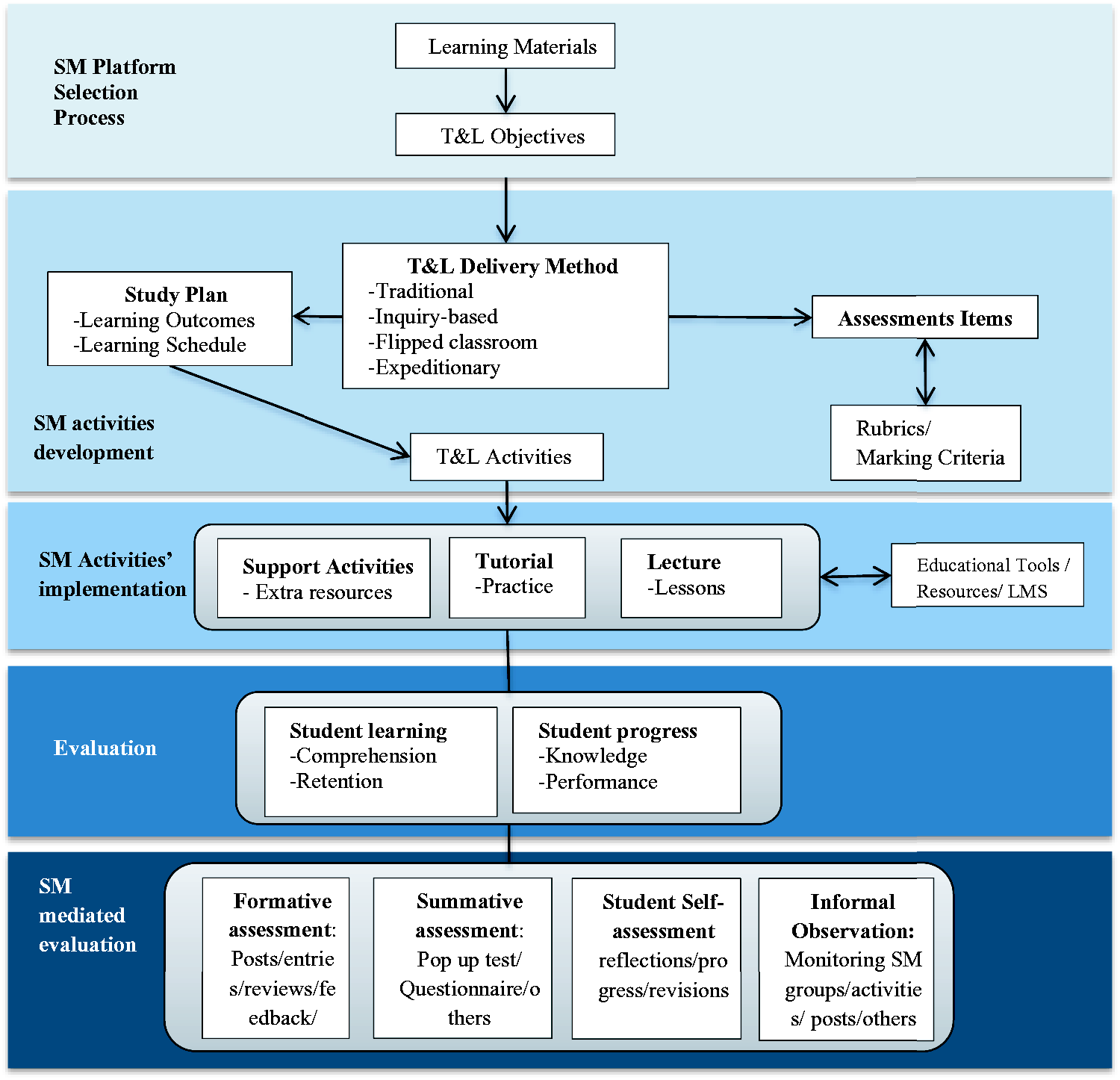
A flow diagram for implementing SM mediated evaluation activities.
Summary and future work
The use of SM as educational tools within different academic disciplines have been excessively examined by researchers. SM’s adoption is not limited to one academic discipline, thought, it was most notably used in literacy education, medical, marketing and social sciences disciplines. Nonetheless, SM’s use in academic disciplines was predominantly associated with positive aims such as promoting information sharing, enhancing interaction and engagement, boosting collaboration and cooperation, as well as supporting general-life satisfaction for the concerned practitioners, learners and/or academic staff (see Table 3). Albeit, it is noted that SM’s adoption for educational use was significantly high in courses that put more importance on practice (training) rather than theory, such as in medical education where it is being as part of student-centred learning approaches i.e. flipped classrooms, cooperative and collaborative learning methods (Alenazy et al., 2019; Cankaya and Yunkul, 2017; Cheston et al., 2013; Dyson and Casey, 2016; George and Dellasega, 2011; Lin and Hwang, 2019). On the contrary, many researchers remained sceptical of SM use and impact on users in education settings and have raised several concerns. These concerns were identified as major challenges or “resistance” to SM’s inclusion in academic disciplines, which include personal privacy, ambiguity concerns (and workload issues), technical barriers and control and monitoring concerns as seen in Table 4.
The paper addressed the literature’s gaps in current literature by proposing a solid framework for SM’s integration in HE classroom environments. As stated earlier, current research in this study area are limited to isolated case studies; including self-reported studies that primiraly examines perceptions and experiences of major classroom stakeholders (students and instructors), rather than addressing the practicality and effectiveness of SM as an educational tool i.e. performance measurement and quality of T&L practices. The proposed framework supports SM’s integration within classroom teaching by enabling a targeted approach in T&L. The paper followed a comprehensive review of current major scholarly on SM’s use as a pedagogical tool in education. The paper also identified and then analysed similar current literary practices and findings. As a result of a detailed search approach, 19 major studies were selected for a thorough analysis, and several key determinants for an effective SM integration process were identified. The outlined SM determinants were then used to support the development of a conceptual framework for SM’s integration within a university classroom environment. This framework intends to facilitate the adoption of SM as a formal pedagogical tool, the development of SM implementation processes (within classroom environments) and would assist in studying the effects of SM on education (especially, major education stakeholders). It is essentially a decision-aiding framework that works to support the overall decision-making process of educators seeking an effective integration of SM platform in their T&L approaches. In addition, the research outlined major findings in current literature, providing valuable insights on SM’s use in education and further forming the basis of future quantitative and qualitative research in this area of study.
The proposed framework is a conceptual framework that requires further testings and validation, preferably following a real-world experiment in a HE classroom environment. Future researches will focus on applying the developed framework in a real-world scenario, in which empirical data will be gathered and analysed to validate and contribute to the advanced development of this conceptual framework. The unambiguous stages of the proposed framework support a smooth and practical implementation of the framework within existing learning management system.
Footnotes
Declaration of Conflicting Interests
The author(s) declared no potential conflicts of interest with respect to the research, authorship, and/or publication of this article.
Funding
The author(s) received no financial support for the research, authorship, and/or publication of this article.
