




Abstract
The aim of this study is to examine mobile games in the context of their content and to evaluate the situations faced by children through document analysis in terms of age-rating, game score, access permissions, the inclusion of advertisements, in-game purchases, encouraging consumerism, the inclusion of violence, bad habits, and educational value. The review and rating data of the games which can be found in Common Sense Media and Google Play Store were included in the study. These data were analyzed by descriptive content analysis using frequency (f) and percentage(%) values. According to our findings, it was revealed that 92% of the games involved in the study included in-game purchases and 75% of them included advertising. As a result of the investigations, it was also found that mobile games requested a lot of access permissions during installation. In addition, it was concluded that 90% of mobile games encouraged consumerism and 50% contained violence and fear elements. We think that the results are important in the way that they reveal the possible risks encountered by young people while they are playing mobile games and also in terms of increasing the awareness on the subject for both the users and their parents.
Introduction
Rapid developments in the digital world change the habits and needs of individuals. One of these habits is the use of mobile devices. In our era as the technology has become a part of people’s daily lives (Lee et al., 2014), children now mostly prefer mobile devices. In the United Kingdom, it was found that one in four children aged 0–2 and one in three children aged 3–5 have tablets and used tablets for at least one hour a day (Livingstone, 2016). Kabali et al. (2015), in their research, found that almost all children under 4 years of age use mobile devices and almost three-quarters of 4-year-olds have their own mobile devices. It is seen that the most popular devices in early childhood are touch screen mobile devices and this trend is increasing rapidly (Papadakis et al., 2017). Several reasons can be cited for this such as ease of use, ease of access, and parents’ frequent use of such devices with their children.
The interest in mobile devices has brought about an increase in the number of mobile applications. It is estimated that the number of mobile applications downloaded in 2019 is approximately 205 billion and in 2022 it will be about 260 billion (Statista, 2019b). According to the 2019 report, the category in which the most mobile applications were downloaded is the mobile games category (We Are Social, 2019). The fact that the children in the United States are spending more time with mobile games than watching television (Kris, 2015) is the proof of the increasing interest in mobile games. In research, it was observed that digital games are the most preferred applications over smartphones and users pay the most amount for gaming applications. (Özkoçak, 2016). Similarly, 72% of mobile internet users in Turkey play games at least once a month (We Are Social, 2019). This indicates that mobile games attract the attention of people in all age groups. It is stated that mobile games are easier to use, more fun and make social interaction easier (Fung, 2016; Omori and Felinto, 2012). Wei and Lu (2014) state that mobile devices are popular for entertainment purposes because they are portable and provide short breaks for entertainment.
In order to understand how digital games are increasingly gaining coverage in children’s daily lives, we might look into the changing parenting behaviors. As a matter of fact, there are researches stating that mothers use digital games as a distraction tool for their children (Toran et al., 2016) and parents use mobile devices as digital pacifiers to appease and distract their children in order to be able to do house chores in the home environment (Kabali et al., 2015). Hirsh-Pasek et al. (2015) who reached similar findings described mobile applications as digital candies while Haake et al. (2015) stated that adults play a major role in children’s playing digital games. Levine et al. (2019) also state that there is a linear relationship between media use of families and mobile device use of their younger children.
The demand for mobile devices directly affects the lives of individuals and can create various disadvantages as well as advantages. It is thought that children are the most vulnerable group regarding the negative effects of mobile devices because they are prone to be easily affected by the media, compared to adults (Gentile and Stone, 2005). When the literature is examined, it can be seen that the negative effects of technology include the addiction to the internet, smartphone use and digital games (Yıldız-Durak, 2018). According to Ng and Wiemer-Hastings (2005), internet addiction and digital game addiction are inter-related. As a matter of fact, Kim and McClung (2010) argue that as internet addiction increases, digital game addiction and naturally its negative effects increase as well. The results of studies showing the increase of stress along with the increase of duration of mobile game playing support this situation (Kumar, 2020). In their research, Chen and Leung (2016) found that the mobile game Candy Crush Saga is mostly played in the bedrooms and there is a correlation between the lack of free time and mobile game usage and gaming addiction. It is revealed that children who play digital games have lower academic success when compared to others who do not (Anand, 2007; Wright, 2011). On the other hand, there are also studies showing that there is no correlation between digital gaming and academic performance (Drummond and Sauer, 2014). Of course, we can not expect all studies to produce similar results. However, as Koivula et al. (2017) stated, it is a known fact that the educational value of some games is very low since it lacks of principles of game-based learning and pedagogical design.
It is also claimed that children neglect basic values in order to achieve goals in these digital games (Müller et al., 2014). The basic values are intentional, social conflict-free and social cohesion. Apart from addiction, many other risks are introduced into our daily lives with mobile games (Lazarinis et al., 2020). Anderson and Dill (2000) found that digital games with violence are positively associated with aggressive behavior and guilt. It is seen that playing violent digital games is associated with psychosocial problems such as tendency to violence (Williams et al., 2011), a decrease in positive social behavior (Greitemeyer and Mügge, 2014), attention problems (Gentile et al., 2012) and insensitivity towards violence (Montag et al., 2012). The scarcity of digital games aiming at social emotional competence (Koivula et al., 2017) shows it is not surprising. Barlett et al. (2008), in a study they did on the game Mortal Kombat: Deadly Alliance, found that games including bloody scenes significantly increased the individual’s attitude towards aggression and physiological arousal. Similar studies (Anderson and Carnagey, 2009; Bluemke et al., 2010; Madran and Cakilci, 2014; Olson et al., 2009) found that aggression is associated with violent digital games. The fact that the best-selling digital games are usually violent games (Dill et al., 2006) and that children mostly prefer violent games (Allahverdipour et al., 2010) is an issue that should be taken seriously.
It is a known fact that as mobile games can have adverse effects, they also provide some skills for the individuals who play them. Mobile games improve children’s problem solving, reasoning, analysis and decision-making skills (Kim and Smith, 2017). Mobile devices turn into learning and entertainment tools thanks to thousands of applications developed for them. (Papadakis et al., 2018). Papadakis et al. (2018) emphasize that well-designed mobile apps can actually contribute to children’s development and their engagement in social interactions. Digital games can have benefits such as improved hand-eye coordination, spatial skills, imagination and mathematical thinking (Horzum et al., 2008). It is stated that digital games reduce fatigue and stress, enable leisure time, keep people distracted from the effects of complex urban life, busy work schedule and stressful environments allowing them to relax, help to cope with problems, improve self-confidence and provide visual-attention skills (Green and Bavelier, 2003; Griffiths, 2005). In addition, it has been found that educational games increase success in courses (Malahito and Quimbo, 2020; Prot et al., 2014) and support children’s academic skills (Charlier et al., 2016). Digital games help children learn concepts (Huber et al., 2016). Papastergiou (2009) states that games have the potential to develop knowledge, skills, attitudes, and behaviors.
The increasing popularity of mobile games and reaching millions of users are becoming important to investigate the risks and opportunities it poses. The widespread use of mobile games can be explained by providing a successful flow experience to its users. According to Csikszentmihalyi and Csikzentmihaly (1991), the flow indicates a full participation in any activity and high-level control. During this experience, individuals are so focused on the targeted activity that nothing distracts their attention. Despite the fact that at a first glance it seems very negative, there are also studies showing that flow experience has positive effects on learning (Webster, Trevino & Ryan, 1993). Thanks to flow experience they offer in mobile games, it provides highly important opportunities for individual development. This is naturally related to the contents and educational values of mobile games, as well.
As mentioned above, when literature is examined, it is seen that the demand for mobile devices is increasing day by day. However, the increase in mobile applications also causes a significant acceleration in the trend towards mobile games. All these developments make research on mobile games important. Generally, researchers are not interested in whether the content of digital games is for educational purposes (Koivula et al., 2017). It appears that although mobile games improve some motor/intellectual skills, they also pose risks for children in particular. To minimize these risks, countries use age and content rating systems such as PEGI, ESRB, USK, GRAC and ClassInd, to inform users and help them make the right choices. In addition to these systems, there are many organizations that provide guidance for children, young people and parents about the effective and conscious use of the media. Among such organizations is Common Sense Media, a US-based service. The problem status of the research consists of making a comparative analysis of the most played free mobile games as of 2019 in Turkey by using data of PEGI, Google Play Store and Common Media. In this context, it is aimed to examine situations that children encounter in mobile games in terms of age rating, game score, access permissions, the inclusion of advertisement, in-game purchases, encouraging consumerism, violence, bad habits and the educational value. For this purpose, answers to the following research questions (RQ) were sought.
What is the distribution of the most played mobile games in the Google Play Store in terms of the following variables? RQ 1. Age rating and game score, RQ 2. Access permission, ad inclusion, and in-game purchase features, RQ 3. Potential risks involved in encouraging consumerism, violence, and bad habits, RQ 4. Educational value elements
Method
Research design
This study which consists of the evaluation in terms of the context of 52 of the most popular mobile games found in the Google Play Store in Turkey is a qualitative research conducted through document review. The document review method is a systematic method that can be used to review or evaluate materials presented in print, on computers or online (Bowen, 2009).
Research sample
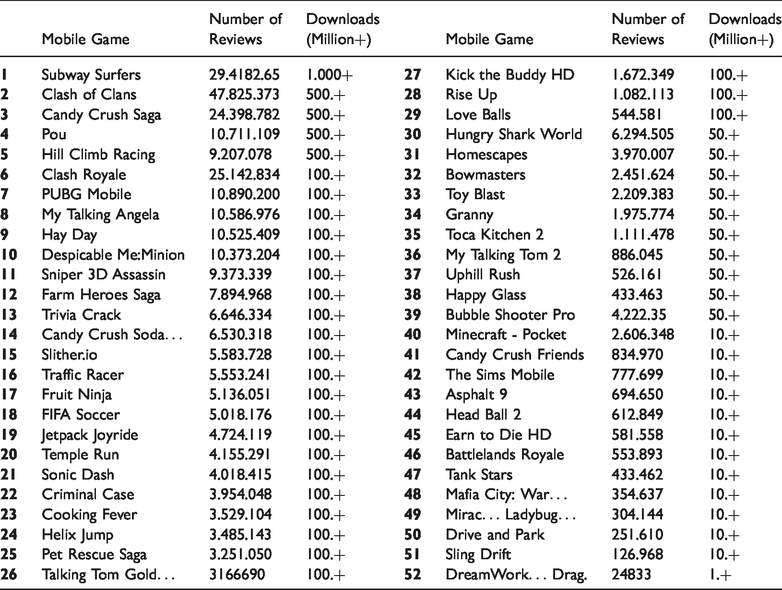
The mobile games (N = 52) included in the study are the ones that are among the most popular free games that can be found in Google Play Store in Turkey as of 2019 (N = 150) and are also the ones that are rated via Common Sense Media (see Table 1). Since the research literature is generally focused on the App Store (Martin et al., 2017), we, in this study, preferred the games in the Google Play Store instead.
Mobile games included in the study.
Data collection process
Evaluation and rating data on the games included in the research were collected from Common Sense Media and Google Play Store. In this research, it is preferred to use the review data of Common Sense Media which is accepted internationally. It can be seen in other studies in the literature that Common Sense Media data are usually preferred (Rideout, 2016) based his research on the survey data collected by Common Sense Media in his research conducted regarding the media usage times of young people. Rideout (2016) states that despite its faults, this kind of data provides valuable information. The data collection process for the games is presented below:
Identifying the top 150 games in the popular free games list in the Google Play Store and identifying those reviewed by Common Sense Media (N = 52). Mobile games are selected by clicking on the links Games-> Top-ranked-> Most Popular Free Apps in Google Play Store via (Resource: https://play.google.com/store/apps/category/GAME/collection/topselling_free) Collection of review and rating data from Google Play Store for selected games (PEGI age rating, game score, access permissions, the inclusion of advertisements, in-game purchases) Collecting the review and rating data on the Common Sense Media website for the selected games (game score, age rating, age rating for adults, age rating for children, educational value, violence & horror, sexy stuff, bad language, consumerism, drinking and drugs & smoking)
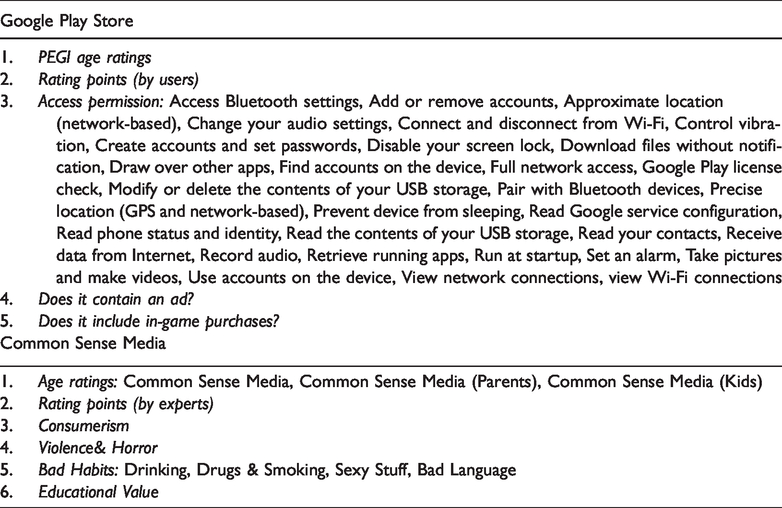
A form was developed in order to collect data needed to answer research questions about mobile games more systematically and reliably. The rating process of PEGI and Common Sense Media was examined and the headings in the form developed by the researchers were summarized in Table 2.
Mobile game content rating form.
Common Sense Media
Common Sense Media is a non-profit organization that aims to improve the lives of children and families and to ensure the development of children with 21st-century skills by providing independent reviews, age ratings and similar information on all types of media (Common Sense Media, n.d.). It is recommended that parents should investigate and benefit from such mobile platforms whose effectiveness is tested and reviewed by experts (Dua and Meacham, 2017). Common Sense Media is also known as a rating system (Papadakis et al., 2017). Hirsh-Pasek et al. (2015) state that such rating systems are widely used in the field although they do not make scientific evaluations.
On the Common Sense Media platform, mobile games are reviewed by experts and parents are advised accordingly. The reviewed mobile games are rated in nine different categories (educational value, positive messages, positive role models & representations, violence & horror, sexy stuff, language, consumerism, drinking, drugs & smoking) with detailed information, and also a rating between 1 and 5 stars is given to each game. This rating is based on the developmental relevance of the content in the game (Subject and Skills) and reflects the overall quality and learning potential of the game (Common Sense Media, n.d.). The subject includes both academic areas and extracurricular activities (Language & Reading, Math, Science, Social studies, Arts, Hobbies). Skills include thinking, reasoning, creativity, self-direction, emotional development, communication, collaboration, responsibility, ethics, tech skills, health and fitness. The Common Sense Media platform also allows parents and children to rate and comment on the related games.
PEGI rating system
PEGI which is used in more than 35 countries (PEGI, 2020) uses five different age labels (3, 7, 12, 16, 18) and eight different content descriptors (violence, bad language, fear, gambling, sex, drugs, discrimination, etc.) for the evaluation of games (Pan European Game Information, n.d.). All the games that can be found on the Google Play Store in Turkey and the ones included in this study have PEGI labels.
Data analysis
The data related to the headings in Table 2 were collected by the researchers and analyzed via descriptive content analysis using frequency (f) and percentage (%) values within the frame of the research questions. Content analysis is defined as the process of organizing the data related to research questions into categories (Bowen, 2009). According to Fraenkel et al. (2012), content analysis is a technique that allows researchers to indirectly examine people’s behaviors by analyzing their thoughts, ideas, and products.
Results
Age limit and game score
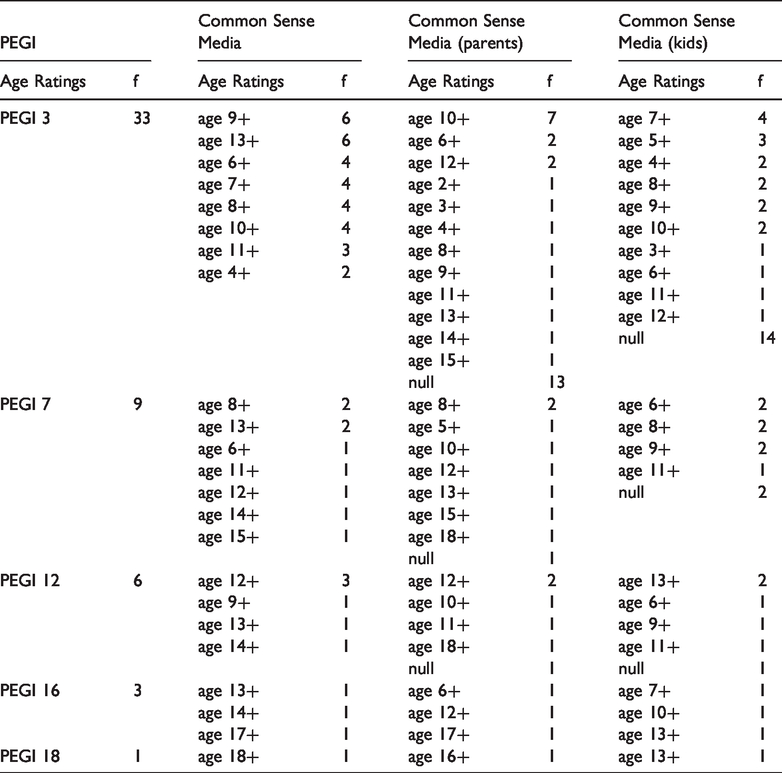
PEGI and Common Sense Media age rating and game score data of 52 games were examined and presented in Table 3. Accordingly, it can be seen that most of the games selected (f = 33) have PEGI 3 label. It is followed by PEGI 7 (f = 9) and PEGI 12 (f = 6). This shows that in Turkey, games with a PEGI 3 rating are mostly preferred. When Table 3 is examined, it can also be seen that none of the games with the PEGI 3 label matches the age rating of Common Sense Media. At this point, it is noteworthy that Common Sense Media recommends a higher age limit. It is also worth noting that parents and children who are Common Sense Media users make similar recommendations. When the games with PEGI 7 label are examined, a similar situation can be seen.
Age rating comparison of mobile games.
When the game scores in Table 4 are examined, it can be seen that the Google Play Store scores of all games within the scope of the research are 4.2 points or above. According to evaluations made by Common Sense Media experts, more than half of the games are rated with 3 points or less. In only 4 mobile games (Asphalt 9, Jetpack Joyride, Fruit Ninja, and FIFA Soccer), Common Sense Media has a higher game score than the Google Play Store. On the other hand, in 28 mobile games, the Common Sense Media score seems to be much lower.
Mobil game ratings comparison.
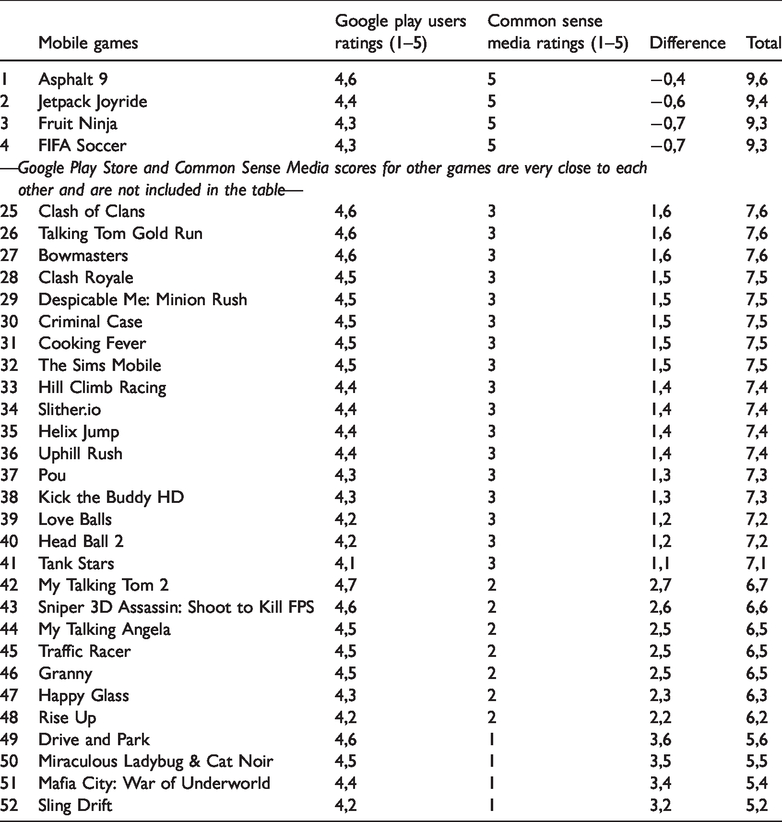
As a result of the analysis, it was found that 24 of the 52 games reviewed scored more than 3 according to the Common Sense Media rating system. According to Common Sense Media, five stars mean the best and four stars mean really good. When Table 1 is examined, the following games which are among the most preferred games in Turkey, The Clash of Clans, Pou, Hill Climb Racing, Clash Royale, My Talking Angela, Despicable Me: Minion, Sniper 3 D Assassin, Slither.io and Traffic Racer do have lower Common Sense Media scores as seen in Table 4. In addition, although Asphalt 9 has the highest score in Common Sense Media, it is less preferred than the other games according to Table 1. Figure 1 shows a comparison of the Google Play Store and Common Sense Media scores for mobile games.
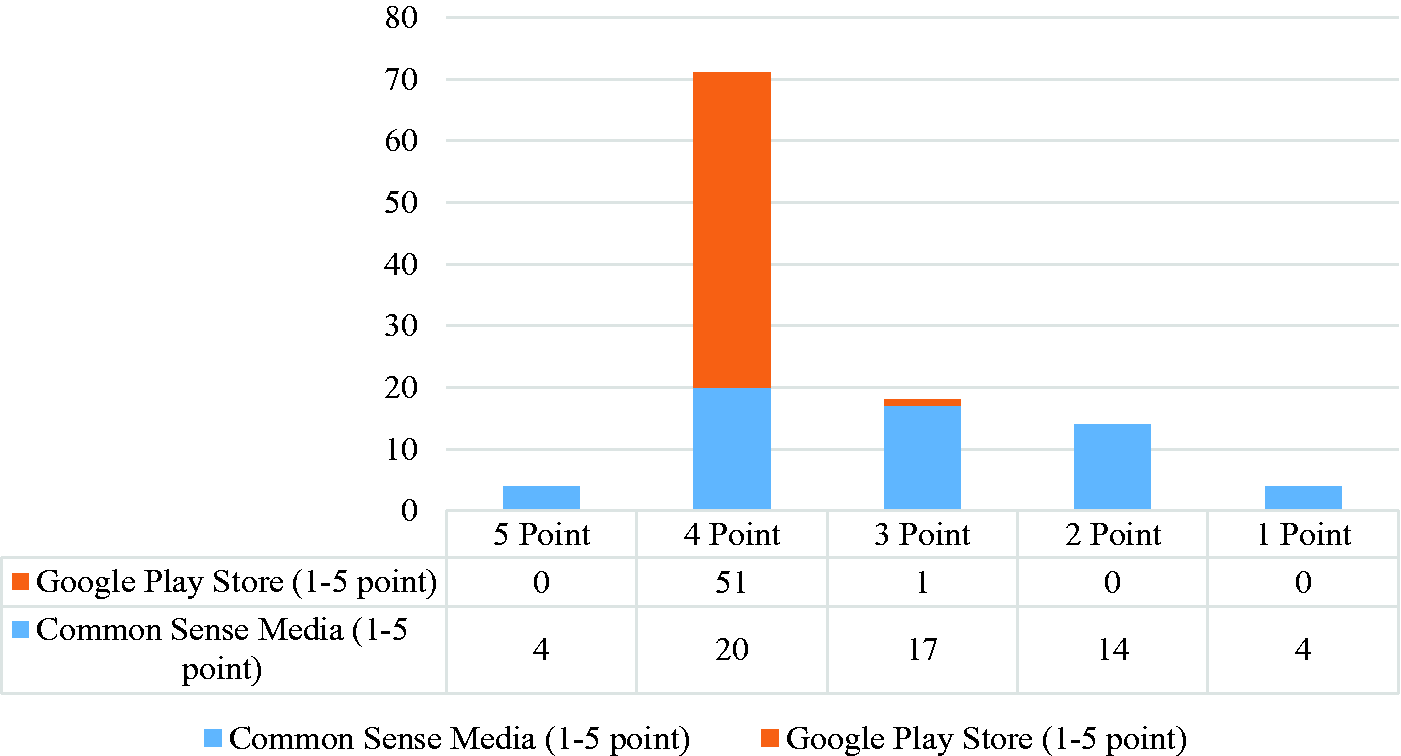
Comparison of Google Play Store and Common Sense Media.
Access permissions, inclusion of advertisements, and in-Game purchases
The requested access permissions during installation, the inclusion of advertisements and in-game purchases of the games were examined for 52 mobile games and the findings were given in Table 5. According to this, almost all mobile games (f = 48, 92.31%) include in-game purchases. It is also understood that most of the games (f = 39, 75%) contain advertising. As seen in Table 5, it is understood that 15 different access permissions were requested during the installation of mobile games.
Access permissions, inclusion of advertisements and in-game purchases.
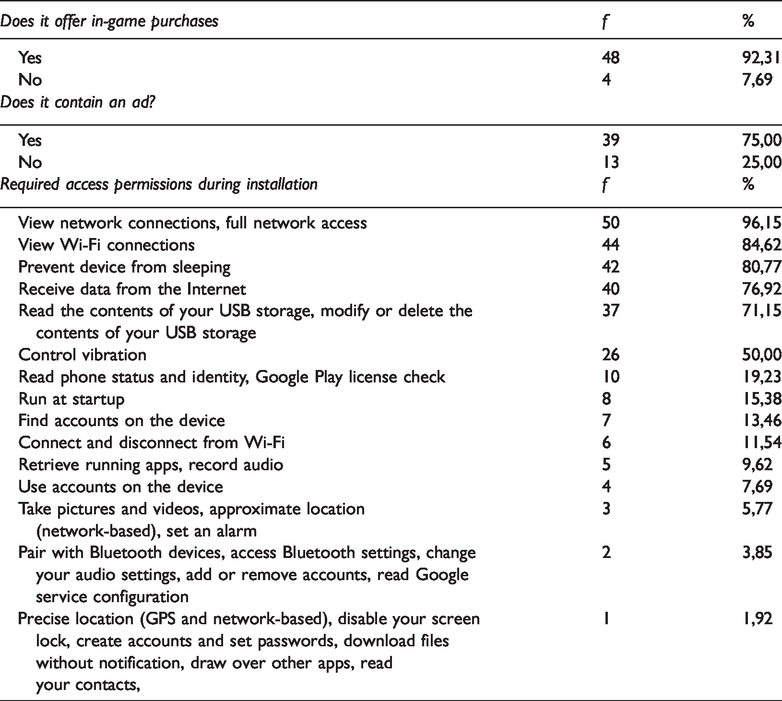
Access permissions such as viewing network connections and complete network access are the most requested access permissions (f = 50, 96.15%). Viewing Wi-Fi connections (f = 44, 84.62%), waking the device from sleep mode (f = 42, 80.77%), retrieving data from the Internet (f = 40, 76.92%), reading, editing or deleting data on the USB memory (f = 37, 71.15%) and controlling vibration (f = 26, 50%) are also requested in most games. Permissions such as Google Play license check with phone status and ID, initial query, finding accounts on the device, connecting/disconnecting to wi-fi, accessing active apps and recording audio, using accounts on the device, taking photos or videos, location access, pairing with Bluetooth devices are also requested by some mobile games.
Encouraging consumerism, violence and bad habits
Another disadvantage that children may encounter while playing mobile games is the inclination to consumerism, resorting to violence and adopting some other bad habits. In this context, Common Sense Media data of 52 mobile games were analyzed and presented in Table 6.
Encouraging consumerism, violence and bad habits.
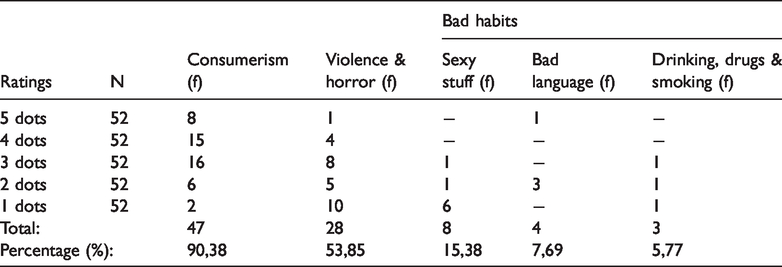
When Table 6 is examined, it is seen that the majority of mobile games (f = 47, 90.38%) encourage consumerism. It was also revealed that more than half (f = 28, 53.85%) have violent and horrifying content. Sexual content (f = 8, 15.38%), bad language use (f = 4, 7.69%) and bad habits such as drinking, gambling, and smoking (f = 3, 5.77%) were also detected in some mobile games.
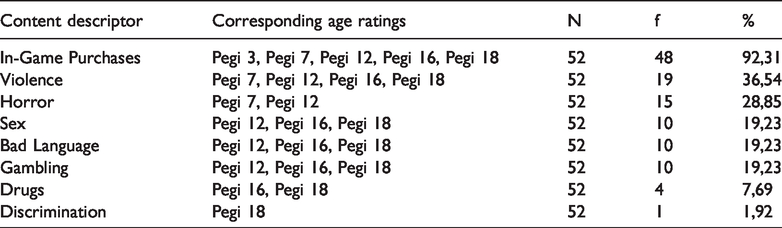
The findings of the content evaluation of mobile games based on the PEGI rating system are presented in Table 7. Accordingly, in-game purchasing status was evaluated according to the PEGI rating system and the result was found to be the same as in Table 5 (f = 48, 92.31%). According to the PEGI content assessment, a significant portion of the games include violence (f = 19, 36.54%) and horror (f = 15, 28.85%). Ten of the games (19.23%) include Pegi 12, Pegi 16, and Pegi 18 labels indicating sexuality, bad language, and gambling according to the PEGI rating system. However, it is seen that there are also mobile games with themes of drugs (f = 4, 7.69%) and racism (f = 1, 1.92%). It is noteworthy that PEGI also defines racism and gambling and distinguishes between violence and fear, unlike Common Sense Media when evaluating mobile games.
Content rating of mobile games (PEGI).
Educational value
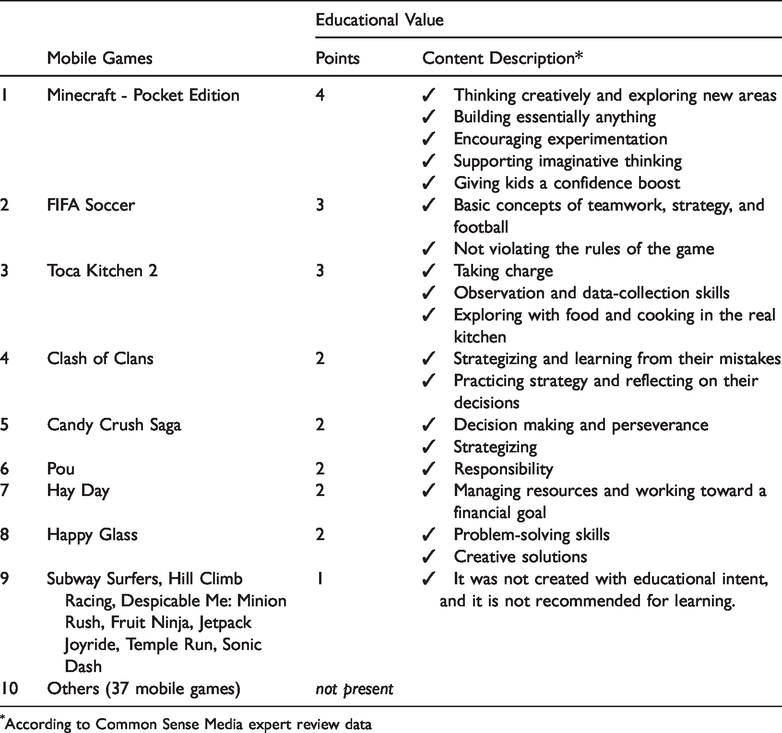
Although mobile games have a number of risks, they are important entertainment tools and have the potential to develop many skills. In this context, the evaluation of the educational values of mobile games examined within the scope of this study is presented in Table 8.
Educational content in mobile games.
According to Common Sense Media expert review data
When Table 8 is examined, it can be seen that very few mobile games have educational value. According to Common Sense Media expert reviews, out of the 52 games examined in this study, only Minecraft - Pocket Edition, Fifa Soccer, Toca Kitchen, Clash of Clans, Candy Crush Saga, Pou, Hay Day and Happy Glass mobile games have some educational value. It can be said that these games have the educational content including taking responsibility (Toca Kitchen 2, Pou), creative thinking (Happy Glass, Minecraft), self-confidence (Minecraft), problem solving (Happy Glass), managing resources (Hay Day), following rules (FIFA Soccer), decision making and stability (Candy Crush Saga, Clash of Clans), strategy (FIFA Soccer, Candy Crush Saga, Clash of Clans), learning from mistakes (Clash of Clans), data collection skills (Toca Kitchen 2), discovering food (Toca Kitchen 2) and learning the rules of football (FIFA Soccer) and individuals playing these games can develop relevant skills. It was found that seven of the mobile games included in the study were not designed with educational content and cannot be proposed for learning purposes. In addition, Table 8 shows that the remaining 37 mobile games do not have any educational content (not present) at all.
Discussion and conclusion
In this research, Google Play Store and Common Sense Media data of 52 mobile games were collected and analyzed in accordance with the research questions. As a result of the analysis, a difference between PEGI and Common Sense Media evaluations regarding age limit and the game score was found. Out of a total of 52 games, there were 33 games with the PEGI 3 label, and Common Sense Media recommended a higher age limit for almost all of these games.
Common Sense Media experts evaluate the relevant scores in the context of the impact of the game on the development of children while the game score in the Google Play Store consists of the scores given by general users. Therefore, it can be said that the game score in the Google Play Store is more shaped by fun the game provides for the user. The score of the games affects the game preference of the individuals. It was found that the number of stars other players gave to the mobile game is the most influential factor for the players while selecting mobile games (Altuntaş and Karaaslan, 2017). Since the labels used by PEGI contain a general assessment of the content, it cannot be fully understood what content is included in which game. The labels PEGI uses in terms of age rating are thought to affect the preference of games by children, adults, and parents. However, letting children choose games that are only suitable for their age rating is not enough to protect them (Cranwell et al., 2016).
In the research, it was revealed that almost all mobile games include in-game purchases. It was also concluded that three out of every four games containe advertising. Addiction to mobile gaming is the most influential variable in the intention of in-app purchases (Hsiao and Chen, 2016). It is seen that individuals who play digital games remember the advertisements they see in these games more than the advertisements and product placement messages they have seen in other communication tools (Kim and McClung, 2010). Kuşay and Akbayır (2015) stated that players do not usually look at the screen when in-game ads appear, but ads may still have an effect on players. Mobile advertising is the delivery of a message about products, services, and opinions for promotional purposes through mobile devices (Hairong and Stoller, 2007). Interactive, fun and reliable advertising affects the attitude towards mobile advertising (Avcilar et al., 2018). It is considered that the risk of in-game purchases and exposure to advertisements in mobile games is an issue to be considered and in this context, it will be important for individuals, especially children, to act consciously and to develop their media literacy skills properly. It is stated that as children’s media literacy skills improve, they will be more sensitive to these commercial messages (Grossman and Paulsen, 2018). In this context, educational institutions and researchers need to take responsibility for it. Educational institutions can engage in various activities towards improving students’ media literacy skills. Researchers also can reveal the need at this point by examining especially the level of children’s media literacy in various dimensions.
It is known that mobile games require access permissions during installation. As a result of analysis, it appeared that permissions that could pose a serious risk in mobile games were requested. In order to fully utilize mobile games, the relevant access permissions are approved, which technically leads to a number of negative consequences. The findings indicate that the majority of mobile games require permission to have network access, view Wi-Fi connections, wake up the device and access the Internet. In addition, some mobile games require access to account information, voice recording, location access, photo and video permissions, which may expose users to certain risks. The possibility of getting personal information by third persons because of application permission endangers privacy of personal data and private life. (Karlı et al., 2018). As a matter of fact, Yalçınkaya et al. (2017) pointed out that there may be a number of malicious software in paid or popular mobile applications and found that the Pokemon Go APK application, which can be downloaded from an unknown source other than the Google Play Store, asks for suspicious access permissions during the installation phase and contained malware. This suggests that mobile devices have become the target of attackers and that mobile applications are potential tools used in such attacks. In this regard, it is important that children and parents act consciously in the choice and installation of gaming applications. The effective guidance of parents about mobile games for their children is quite critical to minimize potential risks. This guidance will both enable children to benefit from the opportunities offered by mobile games and to face the risks at the minimum level and will affect positively their psychological development.
The most of mobile games examined in the study were found to encourage consumption. Kuşay and Akbayır (2015) state that digital games can affect children and direct them to consumerism. Considering the frequency of use of smartphones, the fact that gaming applications are so popular shows the importance of the gaming industry (Holmgren, 2016). As of April 2019, the top 10 grossing games in the USA were Candy Crush Saga, Fortnite, Clash of Clans, Toon Blast, PUBG MOBILE, Clash Royale, ROBLOX, Homescapes, Matchington Mansion and Pokemon Go (Statista, 2019a). In this study, the fact that the rate of mobile games which encourage consumerism (90.38%) and the ratio of the in-game purchase (92.31%) are close to each other reveals that mobile games are intertwined with in-game purchases. This shows that mobile games that offer in-game purchases encourage individuals to consume more.
According to both PEGI and Common Sense Media data, a significant proportion of mobile games appeared to contain violence and horror elements. Violent video games were found to reduce empathy and pro-social behavior (Anderson and Dill, 2000; Greitemeyer and Mügge, 2014). Violent mobile games are likely to have the same effect. Allahverdipour et al. (2010) stated that young people prefer violent games more. It is seen that the most sold digital games are the ones containing violence (Dill et al., 2006). They stated that violent games increase aggression and there should be a concern that playing such games will have harmful effects (Hollingdale and Greitemeyer, 2014). Similarly, Yalçın-Irmak and Erdoğan (2016) revealed that those who play violent games become more angry and aggressive.
Harmful content was found inside some of the mobile games. The results show that there are mobile games that have the potential to cause bad habits with sexual content, bad language use, drinking, gambling, and smoking. Müller et al. (2014) suggested that children neglect basic values in online gaming environments. At the end of the analyses based on PEGI data, the content about drugs was found in four different games and racism in one game. Although contents regarding alcohol and tobacco use are present in the most popular video games, it has been revealed that this has not been identified by PEGI (Cranwell et al., 2016). It is stated that PEGI should include both alcohol and tobacco among its content descriptors (Cranwell et al., 2016). According to Common Sense Media data, approximately 15% of mobile games have sexual content. In their research, Haninger and Thompson (2004) described sexy stuff as sexual themes and described them as “behaviors (eg, provocative touching or moaning) or dialogues related to sex, as well as depictions of exposed breasts, buttocks, or genitals”.
Regarding the games which were analyzed in terms of their educational value, Common Sense Media data were used and it was found that very little educational value was included in the games preferred. These educational values were found to be responsibility, creative thinking, self-confidence, problem-solving, resource management, adherence to rules, decision making, determination, strategy, and learning from mistakes. According to Horzum et al. (2008), digital games can have benefits such as teaching spatial skills, imagination, and mathematical thinking. In addition, educational games may support children’s academic skills (Charlier et al., 2016; Prot et al., 2014). Kim and McClung (2010) suggested that games can encourage children’s problem-solving practices and improve learning. Kim and Smith (2017) found that mobile games support children’s problem-solving, reasoning, analysis, and decision-making skills. Similarly, it was suggested that digital games help individuals to cope with their problems, increase their self-confidence and develop visual-attention skills (Green and Bavelier, 2003; Griffiths, 2005). In this context, application stores may encourage mobile game developers to involve educational values in mobile games that people of all ages can play. However, game designers and parents should not ignore that psychological needs such as competence, relatednes and motivation are important and should pay attention to these factors (van Roy and Zaman, 2019). In addition, game developers should remember that child development is influenced by socio-cultural factors as well as many different factors (e.g. education, family, peers) (Chung and Wu, 2017). Therefore, it can be said that socio-cultural compatibility should be sought in mobile games. Indeed, it is important to include educational and social-culturel values in mobile games to be developed. In case of the increasing educational values of digital games, entertainment offered for users decreases (Koster, 2004). This can negatively affect flow experience offered successfully by mobile games. Thus, while the contents of mobile games are enriched in terms of educational and socio-cultural, the elements of entertainment and motivation should not be also ignored besides the flow theory.
In terms of looking children’s preference on mobile games, it is seen that they prefer games involving negatives effects. In addition, it is revealed that PEGI rating system is inadequate with regards to age rating and content definition. Thus, both children and parents should consider this situation and also it is said that it makes them a major contribution to monitore the reports and reviews of organizations such as Common Sense Media. Even though a number of legislative regulations and legal practices on online risks have been recently carried out, it is seen that they are not enough (Aslan and Karakuş Yılmaz, 2016). In addition, it can be said that there is a need for platform like Common Sense Media instead of PEGI ratings system, which examines all kind of media by the help of experts and reflects cultural values. Indeed, although mobile games contain some risks, they also offer important opportunities for children’s development. Therefore, parents need to take some precautions to minimize the risks they may encounter while parents ensure that their children benefit from the opportunities offered by mobile devices at the maximum level (Karuppiah, 2015). Parents should read reviews about apps and even try it out before children (Dua & Meacham, 2017). Providers can recommend services such as PBS Kids, Sesame Workshop, and Common Sense Media which will help with the age rating, educational content rating and media selection (Radesky, Schumacher, & Zuckerman, 2015).
The study is limited to 52 games that are reviewed by Commen Sense Media among the most popular 150 mobile games from Google Play Store. In research context, the games were evaluated in terms of both risks and skills by moving on from the mobile gaming preferences in Turkey in order to identify status faced by individuals. However, it is thought that conducting research in which the opinions of children or their parents who play the related games are obtained and the observation of the behaviors of those who play the games will contribute to the literature.
Footnotes
Declaration of Conflicting Interests
The author(s) declared no potential conflicts of interest with respect to the research, authorship, and/or publication of this article.
Funding
The author(s) received no financial support for the research, authorship, and/or publication of this article.
