




Abstract
An effective classroom is where there are various forms of interactions: student-student and teacher-student. Unfortunately, most of the interactions that go on in our lecture theatres are minimal. This paper reports an innovative method of engaging students through the use of an Audience Response System (ARS) in a university course. The ARS was used to explore the possibility of improving the interactions in the lecture theatres. The overarching research question was: How best does ARS support lecturer-student interactions in the lecture theatre? A questionnaire and interview were used to elicit students’ views on the use of ARS as an instructional tool. Students reported that they enjoyed using ARS as it facilitated class interaction and collaboration. Internet onnectivity and incompatibility issues on some devices made teaching with the ARS a bit challenging. It is therefore recommended that lecturers can make use of ARS to improve interactions in their lecture rooms.
Introduction
Undergraduate education in most countries is characterized by teacher-centred instructional strategies where students are treated as passive recipients of information. This phenomenon is more prevalent in developing countries where class sizes are large and there seemed to be limited infrastructural support in most tertiary institutions. Students therefore pass through university without attaining the appropriate knowledge, skills and attitudes expected of bachelor degree holders. In order to curtail the unfortunate situation where students will not benefit from their schooling experiences Chickering and Gamson (1987) argued that good college education should promote student-faculty interaction, cooperation among students, active learning, prompt feedback, time on task, high expectations, and respect for diverse talents and ways of learning in their efforts to learn. As noted by Gillies (2007), learning is a social, collaborative and group efforts as advocated by cooperative learning. In this sense, students do not see themselves as competitors but rather collaborators. The principle of collaboration is emphasised by the framework for 21st century learning which advocates critical thinking, communication, collaboration, and creativity under the learning and innovation skills component (Pacific Policy Research Center, 2010; Scott, 2015).
Unfortunately, the traditional lecture method of teaching in the universities has not been able to meet these principles. Lecturers in most developing countries including Ghana use the lecture method as the preferred mode of instructional delivery. In this approach, lecturers present the lesson in a uni-directional “sage-on-stage” format while students passively receive the information through listening and note-taking. This approach assumes that students are able to assimilate information and integrate it into their existing understanding of a topic and are also able to adjust their understanding of related concepts (Preszler et al., 2007). Lecturing leaves the flow and content of the class in the hands of the instructor, who maintains control by monopolizing speaking time. Regardless of the good intentions of the instructor, lecturing provides few opportunities for students to evaluate critically, discuss, or apply what they are learning during class (Hoekstra, 2008). Despite the desire to interact, many students sometimes feel self-conscious and might be reluctant to participate in class discussions or to answer questions posed by instructors (Glassman, 2015). When the lecture-method is used in teaching, students tend to lose interest after few minutes and fidget with their handheld devices. Students in large classes are often hesitant or unwilling to speak up because of fear of public mistakes or embarrassment, fear of peer disapproval and fear of grammatical errors. Questions often pressurize students and can make them feel uncomfortable. Whether in a large lecture hall or smaller classroom, when educators do not provide opportunities for active engagement with course concepts during class, they effectively train students to act as passive recipients of knowledge (Hoekstra, 2008). Moving away from a “sage-on-stage” style and instead using a collaborating interface provides learners with a shared learning understanding (Cranston and Lock, 2010).
Teachers have tried countless creative methods to prompt student participation such as calling on student volunteers, calling student names from a roll book, and assigning a different set of “special volunteers” who are designated participants each day. These options maintain participation but by their nature only elicit participation from a fraction of the class. Teaching episodes whereby students engage with the material presented in class via discussion with teachers and classmates, solving problems interspersed with group activities with episodes of listening tend to encourage students involvement in a class (Hassard, 2005). As noted by Cranston and Lock (2010) a more collaborative approach to learning helps create an active learning environment and inspires students to understand and therefore gain more from their lecture experience.
Active learning involving learner participation and engagement has proven effective and essential across educational settings (De Gagne, 2011). Teachers have therefore been advised to use low-tech methods to ask the entire class a question and collect responses by “show-of-hands” votes, applause or other audible feedback, and prefabricated response cards that indicate a vote with various colours, shapes, or words (Heward et al., 1996) with the hope of facilitating student engagement. However, these low-tech methods, although less expensive, have several disadvantages. The lack of privacy during voting may prevent honest votes, time constraints may preclude accurate estimates, and (aside from the applause method) the overall trend of student responses is only truly apparent to the teacher.
Even when more progressive teaching methods are employed, it is often difficult to gauge student involvement, interest, and level of comprehension (Greer and Heaney, 2004). These shortcomings are directly addressed by Audience Response Systems (ARS) technology, which not only allows private votes, but also accurately tallies and displays them very quickly. The teacher can identify immediately the responses of all students through a display on a computer. This creates possibilities for instructor-class interaction that have not been feasible before (Fitch, 2004). When coupled with constructivist, student-centred learning strategies in physics, the use of wireless student response systems has been associated with measurable conceptual gains (Preszler et al., 2007).
Audience Response System technology has been effectively used in mixed course designs, ranging from voluntary tutorials (d’Inverno et al., 2003) to regular lectures and cooperative learning involving peer instruction (Nichol and Boyle, 2003). Audience Response System has been praised as an effective teaching tool, primarily because it transforms a lecture into an interactive learning experience (Freeman and Dobbie, 2005). As found by Russell (2008) the use of ARS has shown increases in learning through interaction, dialogue and improvements in assessment due to instant response. Students’ interest and attention are increased which encourages them to engage more fully (Cranston and Lock, 2010).Similarly, Liu et al. (2019) discovered that interactive flipped classes with the student response system were effective in improving students’ learning achievement in English as a Foreign Language course as well as impacting significantly on students’ learning motivation. A classroom response system provides a new dimension for collaboration in the classroom and can change the way students and instructors interact in the classroom.
Again, ARS just like other technological tools have been beneficial to pedagogical practices and supplemented classroom experience in higher education for many years (Banks, 2006). Siau et al. (2006) believe that interactivity is important in different types of learning and can have significant impact on pedagogy. Given the importance of interactivity in teaching and learning, efforts have been made by educators to increase classroom interactivity. Camacho-Miñano and del Campo (2016) found out that enjoyment in using clickers by students is in line with pedagogical theories in order to effectively teach and learn. Under the right conditions, ARS can be a useful pedagogical tool for both teaching and learning in large-enrolment courses (Baumann et al., 2015). Liu et al. (2003) upheld that adopting ARS helps teachers to enhance students’ learning during group cooperative learning. In addition, they concluded that when interactivity is present in the classroom, students are not only more motivated to learn, but also more attentive, more participative, and more likely to exchange ideas with instructors and fellow students. Audience Response System’s use facilitates a shift towards learner-centric approaches through reopened channels of communication (Middleditch and Moindrot, 2015). Audience Response System was aimed primarily at managing interaction with large groups, for formative assessment “sessions”, for “revision classes, small group tutorials, and peer assessment sessions (Draper, 2002; McCabe et al., 2001).
Baumann et al. (2015) remarked that clickers allow students to register answers to questions posed by the instructor throughout a lecture. Thus, clickers can measure student comprehension of course concepts, can take attendance or can facilitate discussion. Furthermore, clickers help learners pay attention and engage with classroom material. Clicker can be very effective in enhancing student engagement and learning. Students using clickers learn to work cooperatively in teams and to think under pressure. Gok (2011) notes that full classroom discussion is initiated following clicker questions. Also, students liked the interaction with other students that their instructors encouraged with regard to clicker questions. In addition, students felt that being able to make peer comparisons and being able to validate their understanding of the course content were also benefits of the use of clickers. Interactions between students and instructors and among students can be facilitated by educational technology (Preszler et al., 2007).
With the use of clickers, learning becomes an active and fun process (Lucas, 2009). Most commonly, ARS are used to pose interactive multiple choice questions interspersed within the lecture content. Through setting the multiple choice questions and examining how students have voted, gaps are bridged in understanding and differences of opinion can be illuminated (Middleditch and Moindrot, 2015).
Some teachers who use ARS tend to focus on privacy (Draper et al., 2002), reduction of peer pressure and fear of embarrassment (McCabe et al., 2001). Boyle and Nicol (2003) identified aspects of the quality of the feedback of ARS as being immediate and public proving to be more efficient dealing with large numbers than a show of hands. Draper (2002) asserted that ARS use allows comparison of performance among students if they had made the same error, or if everyone had got it correct. Simpson and Oliver (2007) believed using ARS is more likely to encourage active learning and positively influence students.
The use of ARS has been found to increase attendance, participation and learning (Mollborn and Hoekstra, 2010). When a teacher can query and collect responses from every individual in his or her classroom, the teacher can gauge instantaneously what students understand, and more importantly, which concepts they are failing to grasp (Greer and Heaney, 2004). The ARS brings such attributes to the classroom so that the teacher is able to undertake immediate remediation. Responses are always anonymous to peers, but the teacher can associate ARS devices with individual students for testing purposes (Kay and LeSage, 2009). Siau et al. (2006) discovered that anonymity is one of the advantages provided by the classroom response system. With the classroom response system, every student has the chance to answer every question without being embarrassed if his or her answer is wrong. Also, anonymity feature of the classroom response system increases students’ willingness to participate in the class.
Findings from numerous studies involving ARS have attested positive learners’ perceptions about learning (Guthrie and Carlin, 2004). Student response systems are a creative, alternative strategy for reinforcing concepts, evaluating the understanding of concepts, or testing (Patterson et al., 2010). A further benefit of ARS is the permanent and individualized record of student votes that can be accessed after the class. These records can be used later for attendance records, student tutorials, lesson planning, or educational research. ARS brings a new dimension to teaching, allowing the students to beneficially engage with the lecturer in a manner which would not be possible in the more traditional style (Cranston and Lock, 2010).
Although ARS has been found to possess great benefits, there are some associated difficulties with the technology. For an ARS to be a successful learning tool, the technology has to function consistently and efficiently implying that every student should possess a device that works well. This places financial burden on the students and their parents. Possible solution to the above-mentioned technology problem includes supplying students with remote devices in every class rather than relying on students to bring them (Reay et al., 2005). Siau et al. (2006) revealed that the main disadvantages of the classroom response system (the clickers) that were identified by the students were that sometimes the clickers do not function properly. Also the question types were limited to multiple choice questions and true/false questions. Furthermore, sometimes using clickers can be distracting; and answering using clickers takes up class time. Students experienced increased in-class problems using clickers in these courses due to compatibility problems between eInstruction and Macintosh systems (Preszler et al., 2007).
A switch of teaching methods from teacher-centred to student-centred using ARS questioning can lead to resistance, stress and frustration, in the beginning (Beatty, 2004; Boyle, 2006; Fagan et al., 2002). Students indicate that there is limited coverage of content when ARS is used in teaching (Allen and Tanner, 2005). As noted by Lucas (2009) the primary problem is that lecture time is reduced when ARS is used so that students may have to invest more time in reading their textbooks to comprehend material. Trees and Jackson (2007) argued that more cognitive energy and cooperation is required from students when using an ARS. Also, not all students readily accept this type of extended effort, especially those who are contented and more comfortable with relatively passive lectures. Writing good ARS questions can be a demanding task for teachers (Allen and Tanner, 2005; Boyle, 2006). Teachers have to develop original questions, a process that is very time consuming.
Overall, the benefits accrued from the use of ARS far outweigh the disadvantages associated with the technology. Thus, advocating for its usage in the tertiary level is a right decision. Again, integrating ARS will not be out of place among university students because digital technologies have become integral to the lives of young people and new technologies have been such a defining feature in the lives of younger generations that they are more at home with technology (Prensky, 2001). Most first-year college students now arrive on campus with their own personal computer, digital music player, cell phone, and other digital devices (Salaway and Caruso, 2008). Many students expect instructors to integrate Internet technologies, such as online learning management systems and collaborative Internet technologies into traditional face-to-face classes to enhance learning experience, believing those tools make the educational experience more convenient and educationally effective (Salaway and Caruso, 2008).
Educators must therefore utilize technology as a lever to promote student engagement in order to maximize the power of computers and information technology as a catalyst for student success in college (Ehrmann, 2004). In Ghana, Owusu and Ayebi-Arthur (2015) found that university students especially preservice students have positive attitudes towards the use of ICT in teaching and learning. Therefore the use of ARS in such a context will not be uncommon and unfamiliar to the students. Thus, considering the benefits ARS bring to the teaching and learning process, it will be prudent and necessary that it is incorporated in tertiary institutions in Ghana. In order to improve the connection and interaction between students and teachers an ARS was integrated into the teaching and served as a focus for this study.
This research sought to identify how effective ARS can be as an instructional tool to explore the possibility of improving the interactions that go on in the lecture theatres by incorporating the use of hand-held devices into teaching, the positives that it could add to the teaching and learning process and the difficulties that may arise with the use of ARS. The study explored the perceived effectiveness of ARS technology in enhancing both student learning and teacher teaching. The free version of Socrative app, both teacher and student versions were installed on smartphones. The smartphones thus became ARS tools which were then used for the lessons in this study.
Research questions
The overarching research question was: How best does ARS support lecturer-student interactions in the lecture theatre? Specifically, the research sought to find answers to the following questions:
How effective is ARS as a tool to improve class interactions? What are the students’ interest in ARS as instructional tool? To what extent does ARS foster classroom collaboration? What are the challenges that may arise with the use of ARS?
Methodology
Design
The case study was deemed appropriate for this study because the use of ARS was a complex educational phenomenon (Simons, 2009) in a developing country where the integration of technology in institutions of higher learning is at a budding stage. In this study, as noted by Stake (1995) a comprehensive look at how ARS can foster effective classroom interaction and maximise students’ learning in a typical university lecture context was delineated logically. The case study allowed the use of multiple perspectives to explore into details the uniqueness of ARS in the university lecture hall (Simons, 2009).
An exploratory case study (Yin, 1984) research design was used for the study specifically because the phenomenon being investigated had not yet been studied in the country. This form of case study is very often applied as a preliminary step of an overall causal or explanatory research design exploring a relatively new field of scientific investigation in which the research questions have either not been clearly identified and formulated or the data required for a hypothetical formulation have not yet been obtained (Streb, 2010). The research explored how effective the use of ARS will be in a Ghanaian university lecture theatre context. Since a detailed analysis of the affordances the ARS could provide to the effectiveness of the teaching and learning process was needed, the case study approach was deemed an appropriate research design for the study. The contemporariness of the use of ARS in Ghanaian context during the teaching and learning process also contributed to the choice of case study for the research.
Participants
Students in a Methods of Teaching Biology course served as the participants for this study. An intact class was used for the study as students who participated in the study had registered for the course. As an intact group was used, no selection was needed. Although the students had registered for the course, their consent was sought. The point was made that those who are not interested in the research do not need to download the app that was used but can still participate in the discussion. However, all the students agreed to participate in the research. There were 30 students in the class which composed of 22 males and eight females. Since the focus of the research was not to collect students’ scores for assessment purposes, students willingly participated without any apprehension.
Data collection instrument
A questionnaire, interview and reflective journal were the three research instruments used for the study. The questionnaire used to elicit responses from students was designed by the researchers. The questionnaire was multidimensional in nature with “interaction”, “interest”, “collaboration”, and “student challenges” as the four distinct subscales. Items were written to measure these four constructs. There were nine items for the “interaction” subscale; nine for “interest”; ten for “collaboration” and nine for “student challenges”. The questionnaire used was a 5-point Likert scale. To ensure that the questionnaire was fit for purpose, the reliability coefficients for the subscales using Cronbach alpha were 0.78 for interaction, 0.81 for interest, 0.77 for collaboration and 0.85 for student challenges.
The second instrument was an interview schedule used to record students’ voices to probe deeper into their sentiments with regards to the use of ARS in class through focus group interview as well as to triangulate the responses of the students in the questionnaire. An inherent weakness of questionnaire is its inability to gauge in-depth reactions and responses from respondents. The interview was therefore conducted to eliminate this apparent weakness of questionnaire. Lastly, the researchers kept a reflective journal to document their experiences during the study. The study was conducted in a lecture theatre used by the Department of Science Education. The participants connected to a Wi-Fi hotspot and were then assisted to download the Socrative app and installation.
Description of the intervention
The Socrative app is designed by MasteryConnect and comes in two subscriptions. The free subscription which has some limitations and the paid subscription that has the full package. Again, the app can be used either through the web or on a smart device. There are the Teacher and the Student versions of the app. Registration is not required for students. In Socrative, the questions can be grouped into Quizzes.
The teacher gets a room number after an account has been created. Students will use this room number to access quiz questions posed by the teacher. In Socrative, the teacher has five options to choose on the home screen: Start a Quiz, Quick Question, Space Race, Exit Ticket, and Manage Quizzes. Options to create a quiz, import quiz, view previously created quizzes, and generate reports are available under Manage Quizzes (see Figure 1).
A teacher can develop multiple choice, true/false, and short questions through the teacher app or on the website. Immediate feedback with the necessary explanation can be provided to students as soon as they provide their choices. In addition to creating a predefined set of questions, Socrative allows teachers to ask quick questions on the fly. In order to monitor individual students performance Socrative allows students to enter their names when responding to a quiz. However, the teacher can enable the ‘Disable Student Names’ setting to keep responses anonymous. The app also allows the teacher to design, edit, and manage a library of student assessments.
There is an Exit Ticket at the end of a teaching session where students can use the fixed questions in the app to express their feelings of the session. These questions are: “How well did you understand today’s material?” (multiple choice), “What did you learn in today’s class?” (open-ended), and an open-ended question of the teacher’s choosing (see Figure 2).
In this study, a free account on Socrative was created where different multiple choice and true/false items on Methods of Teaching Biology were designed.
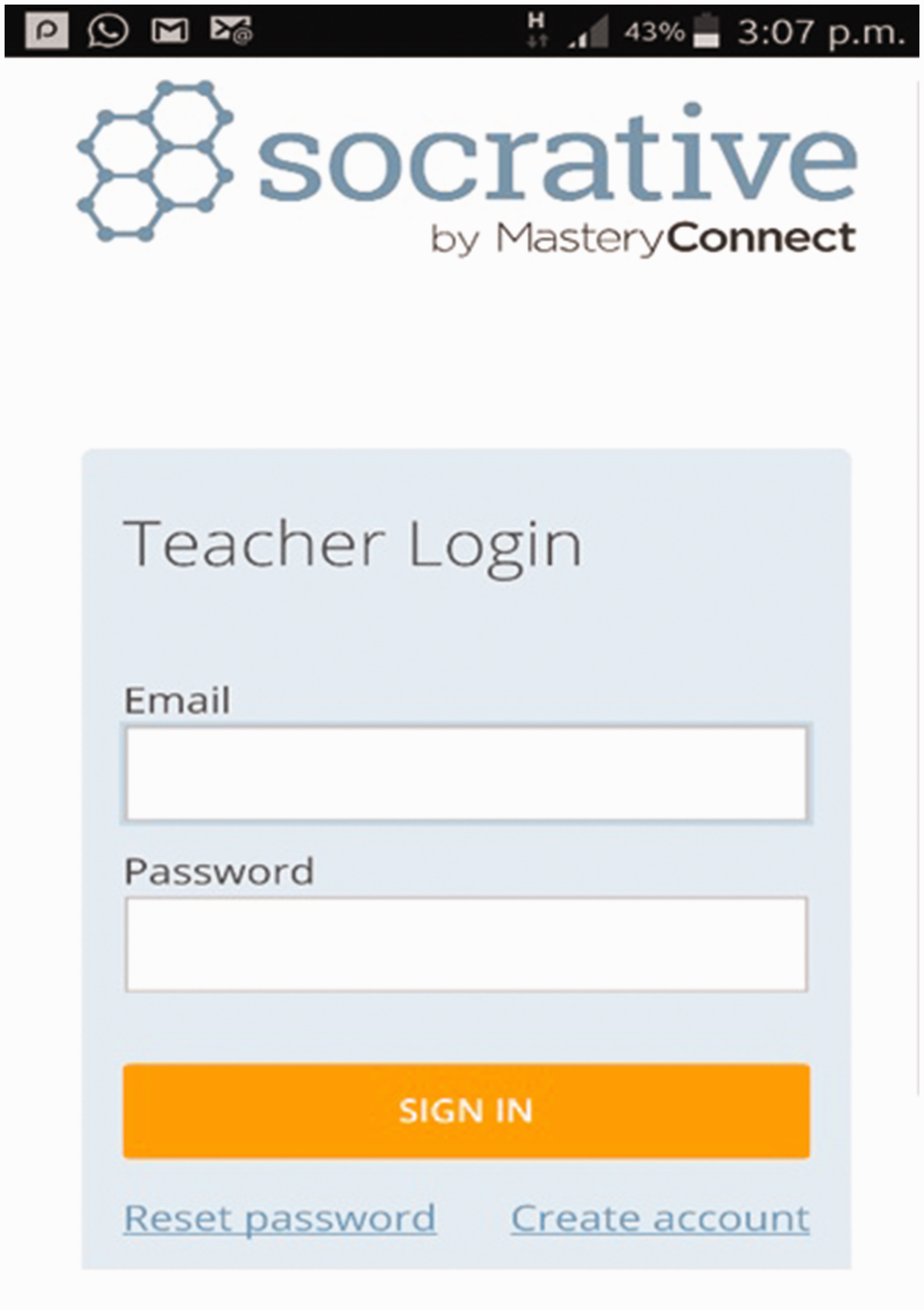
Teacher login.
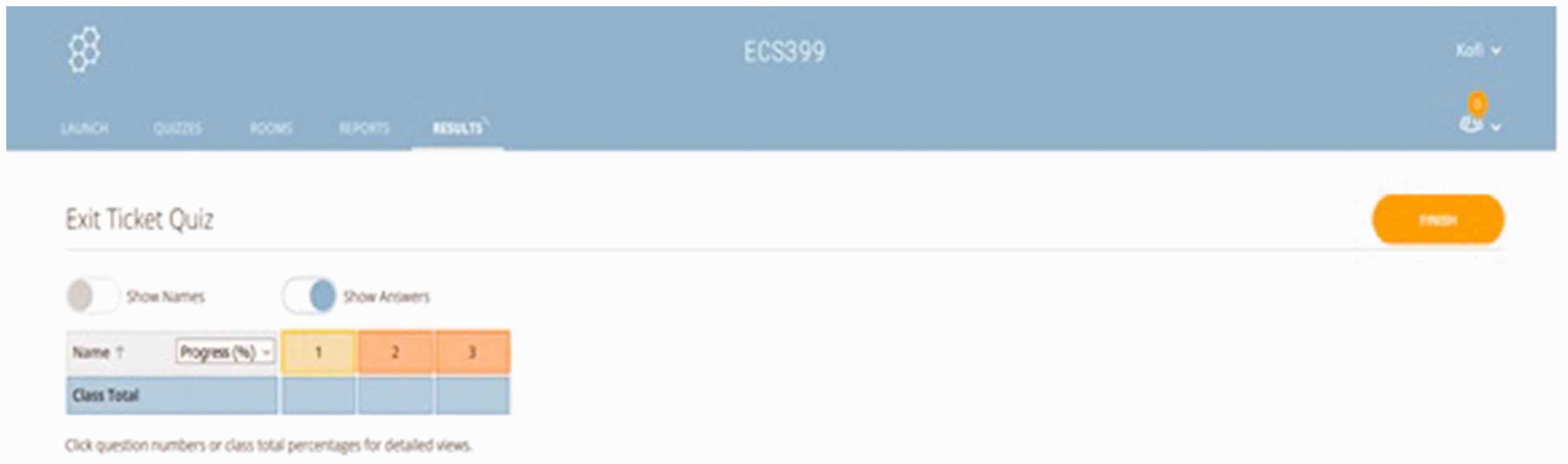
Screenshot of Exit Ticket quiz.
Students were then tasked to install the student version of Socrative app on their smart devices after which the room number to the created account by the teacher was given to students (see Figure 3). During teaching, the questions were launched and students activated their apps and responded to the questions. Students then answered the question on their smart devices (see Figure 4).
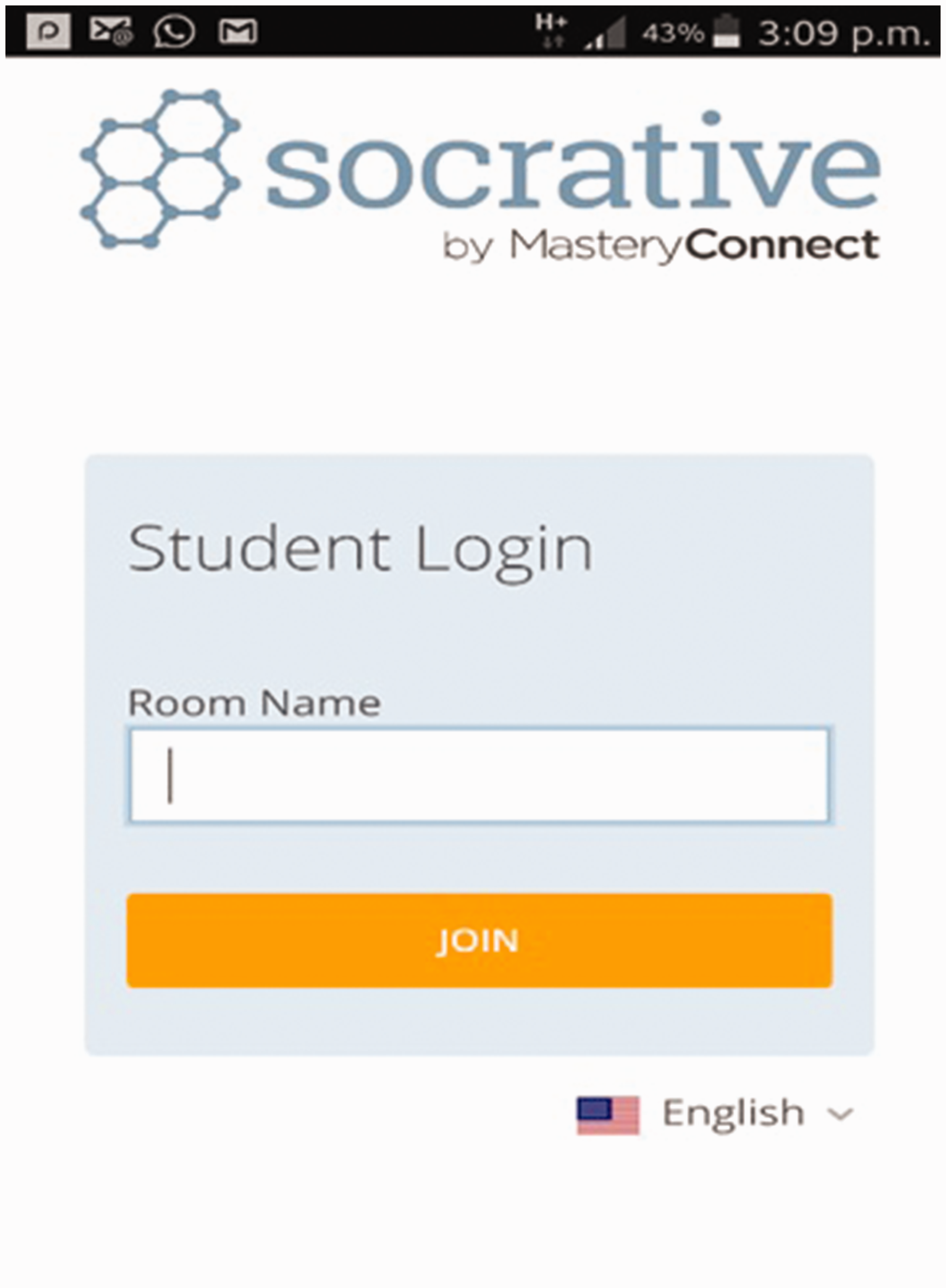
Student login.
The responses were then discussed either individually or in groups. The use of the Socrative app during lectures went on throughout the semester (see Figure 5).
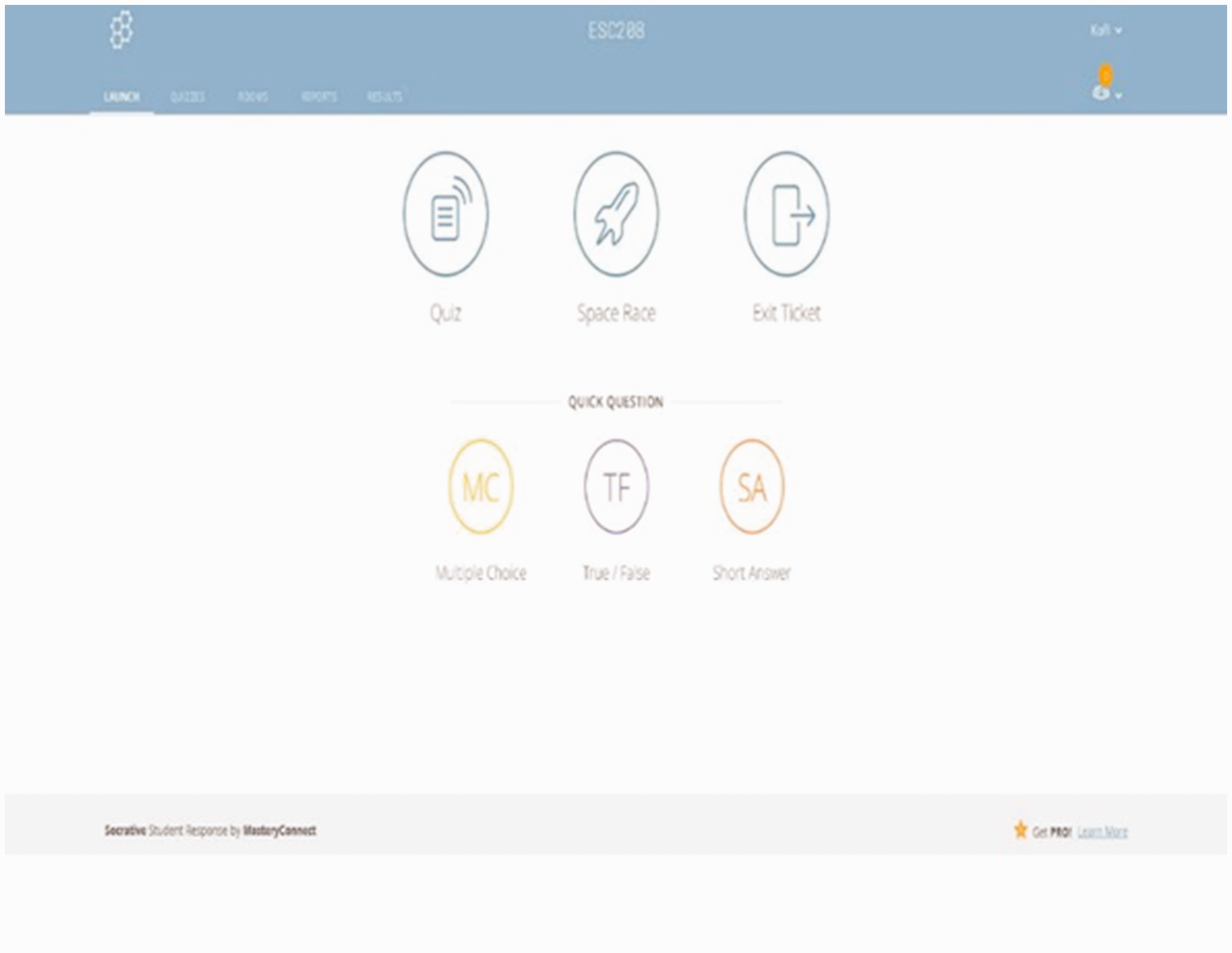
Types of tests.
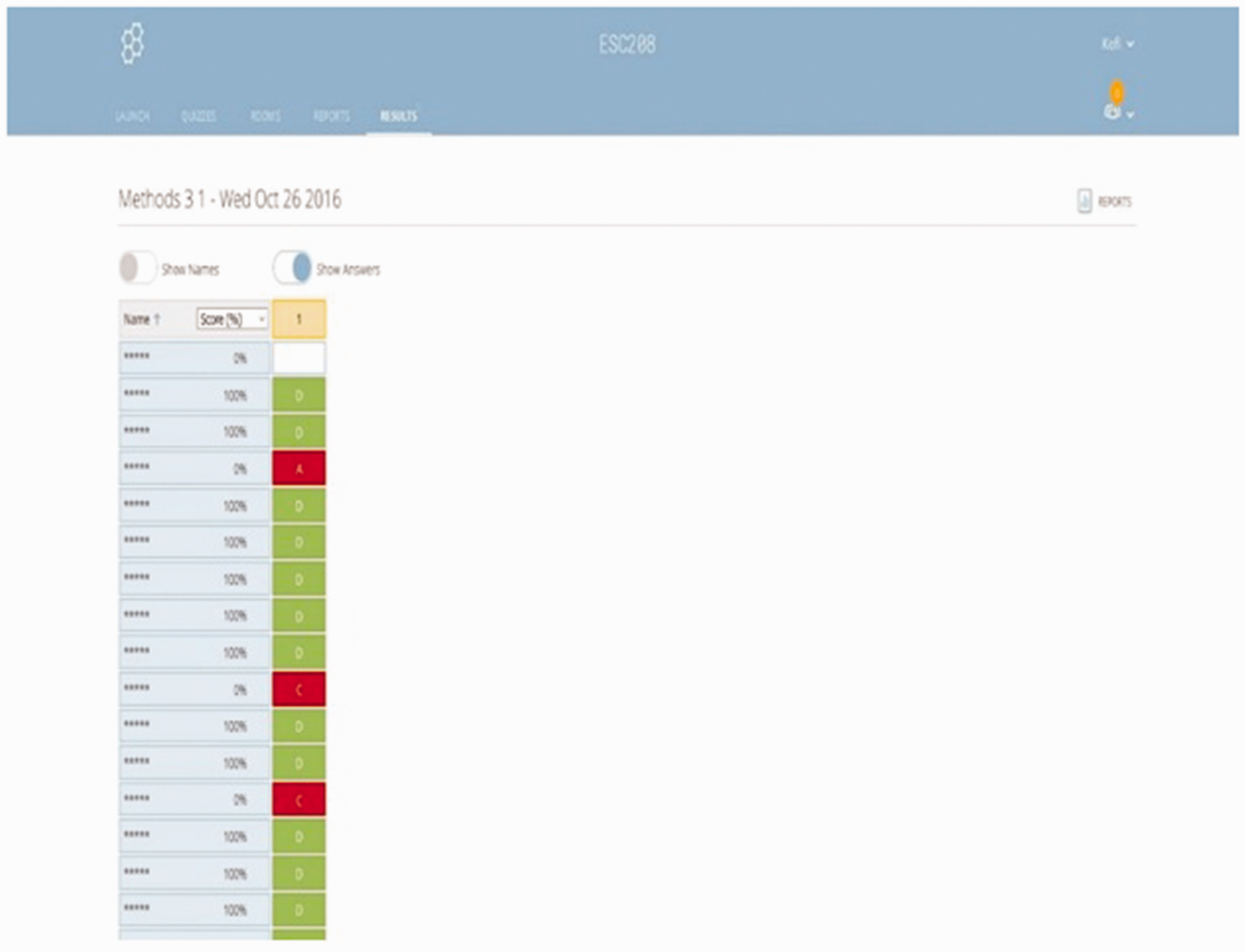
Screenshot of student responses.
Data collection procedures
The questionnaire was given to the students at the end of the semester. Students responded to the items on the questionnaire anonymously. There were six focus groups composed of five students in a group for the interview. The interviews were conducted after the students had responded to the questionnaire. In addition to the questionnaire and the interview, the researchers kept a journal that documented the experiences they encountered in the course of this research.
Data processing and analysis
The data from the questionnaire were analysed with means and standard deviations. The means were used to identify how the students perceived the use of ARS in the teaching and learning process. The 5-point Likert scale was coded as 5 for ‘strongly agree’, 4 for ‘agree’, 3 for ‘neither agree nor disagree’, 2 for ‘disagree’ and 1 for ‘strongly disagree’. This scale allowed interpretation of the mean values. Thus, mean values of above 3 were considered as positive and those below 3 were negative.
The focus group interviews were analysed thematically. The research questions formed the themes around which students’ responses were analysed and discussed. The experiences the lecturers went through have also been presented. The means and responses from the interviews were discussed together.
Results and discussion
The first research question sought to identify how effective ARS will be as an instructional tool to foster class interactions. As can be seen in Table 1, the mean score for the ‘interaction’ scale was 4.0 which translates as agree on the Likert scale. This implies that students felt that the ARS was able to encourage interactions in the classroom. Aside the mean value, responses from the interviews indicated that the ARS improved class interactions. Students were of the view that the ARS “made them active in class”. “We were able to contribute to class discussions which was not the usual way other lecturers have been teaching us”. “This system allowed us to share our explanations on the answers we selected”. “I personally think the approach helped to contribute in class discussion because at the first instance no other student will know the answer you selected”. The views of the students coupled with their mean score on the questionnaire as far as the interactivity of ARS is concerned is in consonance with earlier research findings that the use of an ARS increases the quantity and quality of class discussions (Draper and Brown, 2002; Beatty, 2004; Nichol and Boyle, 2003). Camacho-Miñano and del Campo (2016) affirmed students’ perception that clickers help them to learn, to get feedback and to understand the theoretical questions of the subject being studied. Cranston and Lock (2010) asserted that students who took part in the lecture felt that their learning experience had been enhanced by the use of ARS. They added that an increase in the percentage of students who recommended that the technology be used more often, an indication of the success of the lecture and the benefits of ARS as a teaching tool. Similarly, Tregonning et al. (2012) concluded that using ARS in a lecture format is an effective teaching tool and emphasises the value of audience interaction and participation. In the current study, the students were able to respond honestly without fear of exposing their uncertainty or lack of knowledge to either the teachers or their classmates, and thus were not hesitant to participate.
Mean score for the various subscales of the ARS.
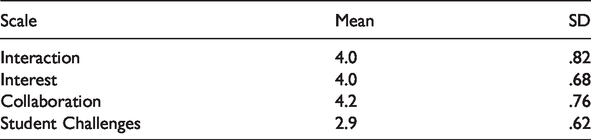
On the issue of whether students will show interest in ARS as instructional tool, it came to the fore that majority of the students showed positive interest in the use of ARS as an instructional tool as can be seen in Table 1. Students corroborated the mean with their responses during the focus group discussions: “The app was interesting to use because it took the apprehension of answering questions through paper and pen away”. “Using your device in the class for learning purposes was very unique and interesting”. “The use of this app gave us something different from the traditional lectures we have been having”. “Although we were answering questions, the app made it look more like a game which was very interesting and appealing”. This finding supports research by Greer and Heaney (2004) that daily lecture attendance rates of students were as high as 90% in the middle of the semester with ARS deployed in class. They also reported that the majority of students surveyed in each section (65-77%) felt that the ARS helped them gauge their level of understanding of course material. Qualitative observations reported by Greer and Heaney (2004) showed that students were effusive positive about the use of ARS in class. Siau et al. (2006) also reported from their study that ARS can effectively enhance interactivity in the classroom. In addition, they report that students are more engaged, more attentive, and more involved in the class. Tregonning et al. (2012) claimed that students enjoyed obtaining immediate feedback and allowing them to pick up misunderstandings made during the lecture. Khan et al. (2019) stressed that student engagement and participation improved as a result of introducing clickers into the classroom. Siau et al. (2006) added that students perceived the ARS to be easy to use and useful for their learning. Baumann et al. (2015) concluded that clickers may play a particularly important role to those students who are hesitant to participate or who do not feel comfortable discussing difficult topics. Tlhoaele et al. (2014) also upholds that building interactive activities using ARS into lecture rooms supports learning and ultimately improves students’ performance. Students thought using clickers made a positive difference to their understanding of the subject and that they are very motivated towards their usage of clickers (Khan et al., 2019). Also, student participation as well as attainment improved with the use of clickers suggesting a possible link between increasing interactivity during lectures, increased participation and student attainment in a more challenging subject.
Collaboration is seen as an integral component of the learning and innovative skills of the 21st century skills. Thus, learners in this dispensation are expected to acquire and demonstrate collaborative skills. It is in the light of the importance of collaboration to the demands of this age that the research sought to identify how ARS can facilitate the development of collaborative skills in students. Therefore, the third research question assessed the potential of ARS to develop collaborative skills among students. The mean score for students on the collaboration subscale was 4.2 which was the highest mean score. It depicts students’ perception of the potential ARS has to develop classroom collaboration. In this research, students had the opportunity to respond to a question via the ARS after which they were asked to share their views with a colleague why they chose an option. At certain times, students were given the opportunity to select another option after they had discussed their options with a colleague. Such discussions were viewed by students as being helpful during the focus group discussion. “I liked the fact that we could discuss our answers with our colleagues which made me realize the different views others hold”. “The fact that we could discuss and agree on an answer before selecting it was very nice”. “Some of the students I had not spoken to before but the discussions we had made me to work with them”. This corroborates the findings from Russell (2008) and Liu et al. (2019) that ARS provides learners with unique opportunity to collaborate and dialogue during the teaching and learning process. Similarly, Liu et al. (2003) inferred that the use of ARS facilitated students’ participation during group activities.
To improve upon the use of ARS, the fourth research question sought to identify possible challenges that were encountered in the use of ARS. The challenges have been categorised into two: student challenges and researcher challenges. With regards to possible challenges student encountered during the use of ARS, the questionnaire and the focus group interview provided answers. A mean of 2.9 meant that the students did not consider the issues they encountered as challenges likely to affect the use of ARS. Students maintained that the challenges were not enough and strong to dissuade them from the opportunity to use ARS again. “I had initial problem when downloading the app, but after that everything went well”. “Initially I thought the use of ARS was going to be difficult but I was very happy when it turned out not to be so”. “Aside internet connectivity issues, the ARS was easy to use”. “Questions popped up on the device easily”. “My personal device couldn’t download the app and therefore made use of what you presented”. The researchers provided smart devices to students whose devices were incompatible with the Socrative app. Tregonning et al. (2012) reported that some students expressed concern that ARS slowed the lecture especially while waiting for other student responses and that this would lead to less material being delivered. This was not encountered in this research. It is possibly due to the fact that questions were set up before coming up so that during the lecture it took few minutes to activate them.
Although the students seemed to have taken the ARS in their strides and thus did not encounter any frustrating challenge, same cannot be said of the researchers. The researchers kept a reflective journal which helped them to document their experiences. The major challenge encountered was poor internet connectivity. The lecture theatre used for the research was in a blind spot of the wireless access point so wireless connectivity to the internet was poor.
A decision was made to run an Ethernet cable from the fibre switch in the building to the lecture room. A Wi-Fi hotspot was set up by connecting the Ethernet cable to the wireless device. The participants connected to the hotspot and were then assisted to download the Socrative app and installation. There was disruptions in the internet connectivity which were sometimes internal connectivity issues. In other instances the disrupted services was from the Internet Service Provider. Although the University has fibre internet connectivity from the Internet Service Provider, there is inefficient distribution resulting in low bandwidth to end-users. This resulted in students having to wait for a while for the Socrative app to be downloaded to their smart devices. In addition, there was lag between the posting of questions on the platform and when they were pushed to students to respond thus taking up valuable instructional time.
Another challenge encountered was lack of devices as well as incompatibility of students’ devices with the app. In the first instance, some students did not have smart devices they could use to access the app. This happened because the research followed a ‘bring your own device’ approach where students’ used their personal devices. There were also some students who had smart devices which had old operating systems which were not compatible with the app. These challenges were rectified when the researchers provided smart devices to the affected students.
Conclusion
The research sought to explore the possibilities that ARS hold for encouraging and improving classroom interactions at the university. In doing so, it sought to identify the good, bad and ugly aspects of the experience. The good aspects of the ARS was that it holds great potential in improving class interactions. Students found the ARS very appealing and interesting which aided classroom collaborations among students. The ARS is therefore capable of facilitating the development of appropriate skills needed for future survival in the 21st century. These students who are being trained as teachers are likely to incorporate the ARS and associated technology in their future teaching since they were interested and felt motivated in using the tool.
Few students did not have smart devices that were needed for effective participation in the class deliberations. This constituted a bad experience that needed to be rectified. Students lacking the required device in such a ‘bring your own device’ environment is common but efforts were made to salvage the situation. Altogether, although students were experiencing ARS for the first time, they encountered minimal difficulties and challenges.
The ‘ugly’ part of the research had to do with infrastructural support in terms of internet connectivity. The inability to get easy access to internet connectivity was heart wrenching. The technical support was not forth coming even though requests were made for assistance. The quest to speed up the process necessitated that the researchers bore the cost of equipment needed to access internet connectivity. The low internet bandwidth also made the process difficult at certain points. Thus, although the whole process of the use of ARS was satisfying, there were challenging barriers that should be addressed.
Recommendations
This research has brought to the fore how class interactions can be improved in increasing large lecture theatres. Due to the expressed experiences of the students, it is believed that if lecturers and to a large extent universities adopt the use of ARS technology student-lecturer interactions can be improved. In order to make the use of ARS effective, internet infrastructure should be improved across the university. Although this may come at a cost, it is hoped that the benefits will outweigh the deficits. More importantly, students will develop the skills needed to maximize their potentials in this dispensation.
Again, since there is the possibility of some students’ devices not being compatible with the app, institutions may consider acquiring devices that students can use during lecture periods and leave them when lectures are over. In such a situation, no student will lose out due to lack of device or device incompatibility issues.
Footnotes
Declaration of Conflicting Interests
The author(s) declared no potential conflicts of interest with respect to the research, authorship, and/or publication of this article.
Funding
The author(s) received no financial support for the research, authorship, and/or publication of this article.
