




Abstract
This article presents the Blended Learning Virtual Reality Inquiry Framework, an original framework for creating virtual reality inquiry-based lessons for the modern technology-driven classroom. The framework shared in this article invokes research on blended learning , experiential learning, and inquiry-based learning to structure a virtual reality-specific lesson model. The authors present the theory and research behind each aspect of the framework before explaining how the framework is used. The article concludes by providing practitioners with a standard-aligned Blended Learning Virtual Reality Inquiry Framework lesson example.
Technology is changing, and with this change, so too are classrooms. The popularization of the one-to-one technology model in which each student and teacher is provided with an Internet-connected mobile device (Greaves and Hayes, 2008) is pivoting the role of teachers. The integration of technology into schools has fundamentally changed the instructional strategies used in daily learning activities, namely with the introduction of blended learning (Kehrwald and McCallum, 2015). Teachers’ responsibilities are shifting away from being the arbiters of knowledge. Teachers in the modern classroom may find themselves pivoting between orchestrating roles in student-inquiry-led lessons and guiding student technology usage (Lakala et al., 2005; Littleton and Kerawalla, 2012). Commonplace uses of technology in classrooms throughout the past decade such as passive Internet research or video viewing are becoming outdated due to an expanding availability of technologies that offer students more meaningful and active learning experiences. Supporting active learning activities in the classroom is the theory of Constructivism, which Mayrose explains as, “a nearly universally accepted learning theory which holds that learning activities that are active, effective, and meaningful, result in superior learning versus those that are passive and non-engaging” (2012: 13). Recently, affordable virtual reality (VR) platforms are presenting instructors with high levels of technology integration and students with meaningful, active, and previously unreachable possibilities for experiential learning.
A combination of factors has phased out the authentic experiences—often referred to as experiential learning—that students of past generations have enjoyed through field trips and similar excursions. Experiential learning transpires when students visit locations outside their classrooms or take part in experiences that link to the content they are learning in their courses (Galizzi, 2014; Kolb, 1984). Not only are field trips costly, consequently making them an addition to the chopping block of shrinking school district budgets, but they present genuine safety and logistical concerns for educators, as well (Whitmeyer and Mogk, 2013). The pervasiveness of affordable technologies already in students’ hands through schools’ one-to-one or bring-your-own-device initiatives combined with the emergence of high-quality VR content already available on these devices necessitates a deeper analysis into the ways in which VR technologies can be leveraged to provide students with more meaningful technology use and learning experiences.
Within this described context, a comprehensive search was performed by the authors in 2018 to find VR lesson frameworks backed by literature that practitioners could use in the modern blended learning classroom. This review of literature was performed in the EBSCOhost, ERIC, and Google Scholar databases using the search terms “blended learning,” “virtual reality,” and “framework” in order to locate relevant articles. The search parameters of peer-reviewed and full text journal articles were used. While these searches netted general results, none of the articles included applicable research-based VR-specific blended learning lesson frameworks. After reviewing the available literature, the authors proposed the Blended Learning VR Inquiry Framework as a model with which practitioners can design active, experiential, and inquiry-driven VR lessons for the blended learning classroom. This article addresses a gap in the literature by providing a scalable, research-based framework for assisting practitioners as they integrate VR into their blended learning classrooms.
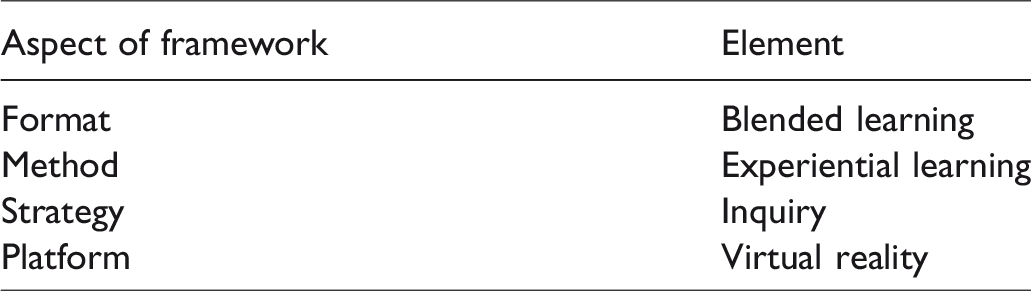
The Blended Learning VR Inquiry Framework is a new contribution to the literature that reimagines prominent educational research for modern VR instruction and combines this research with teaching pedagogy, technology integration, and blended learning classroom orchestration. As illustrated in Table 1, teaching strategy, learning theory, instructional delivery, and technology are joined together to form the Blended Learning VR Inquiry Framework. Each element described in the subsequent sections has a direct responsibility within the framework. Blended learning provides the format, technology integration, and overarching organizational structure of the lesson’s differentiated activities. Experiential learning is the theory on which the lesson is based and is the method employed to give students meaningful educational experiences that they will then further investigate and reflect upon. Inquiry is the learning strategy which guides this framework and is present in all its steps. VR is the technology which provides the experiential learning opportunities for students in this framework. Each of these elements works in concert with each other in the Blended Learning VR Inquiry Framework to provide students with deep, enriching, reflective, and differentiated educational experiences.
Lesson framework elements.
Blended learning
The term blended learning has become ubiquitous in contemporary technology-driven education. The term may be one of the more confusing words in the EdTech lexicon because its definition has changed over time and is open to multiple interpretations and models (Driscoll, 2003; Friesen, 2012; Johnson and Marsh, 2013; Owston, 2018; Smyth et al., 2012; ). In the term’s earliest known usage, a computer training certification company used the term to describe their courses which combined traditional content with the availability of live instruction and collaboration all through an online learning environment (Friesen, 2012). However, as technology has become a larger part of different educational experiences since the late 1990s, the definition of blended learning has consequently transformed. Some contemporary interpretations of blended learning center on the modality of instruction, like the combination of face-to-face instruction with online instruction (Garrison and Vaughan, 2008). Other interpretations focus on the amount of online time that replaces direct instruction (Allen et al., 2007; Parsad et al., 2008). Further, there are interpretations that focus on the chronology and modality of instruction, like using technology to combine aspects of synchronous and asynchronous instruction (So and Brush, 2008). Driscoll’s (2003) research into blended learning found that the commonality between the different contemporary interpretations of blended learning was the notion of combining technology with classroom instruction in order to foster achievement in a student population. Accordingly, in this article, the term blended learning is operationalized as the combination of in-person classroom instruction and technology—specifically mobile hardware and VR software in this context—in order to foster understanding (Figure 1).
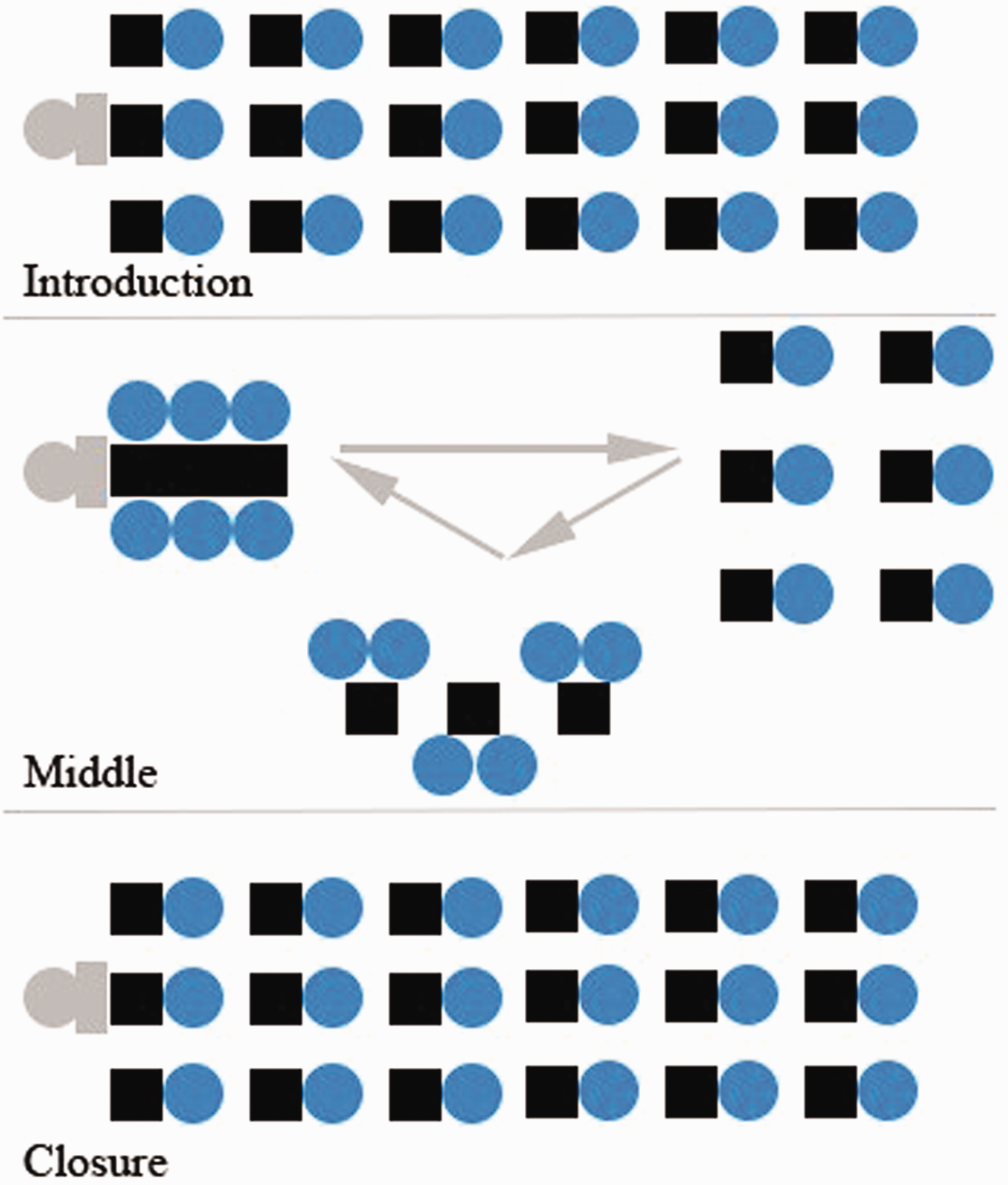
The Three Centers model rotates students between small group, collaborative, and independent digital learning activities in the middle of the lesson.
In addition, the framework described in this article utilizes a station rotational model commonly used in face-to-face blended learning classrooms. In a station rotational model, students follow pre-defined workflows and rotate from one station and activity to another after a set period (Horn and Staker, 2014; Maxwell and White, 2017). Specifically, this framework utilizes the Three Centers rotational model wherein students rotate between teacher-led small group, collaborative, and independent digital activities during class (Education Elements, 2015). The Three Centers rotational model was selected for the framework presented in this article based on its cyclical nature and compatibility with the cycle of Kolb’s (1984) experiential learning theory model. The function of each of the three centers in this framework is explained in Figure 2.
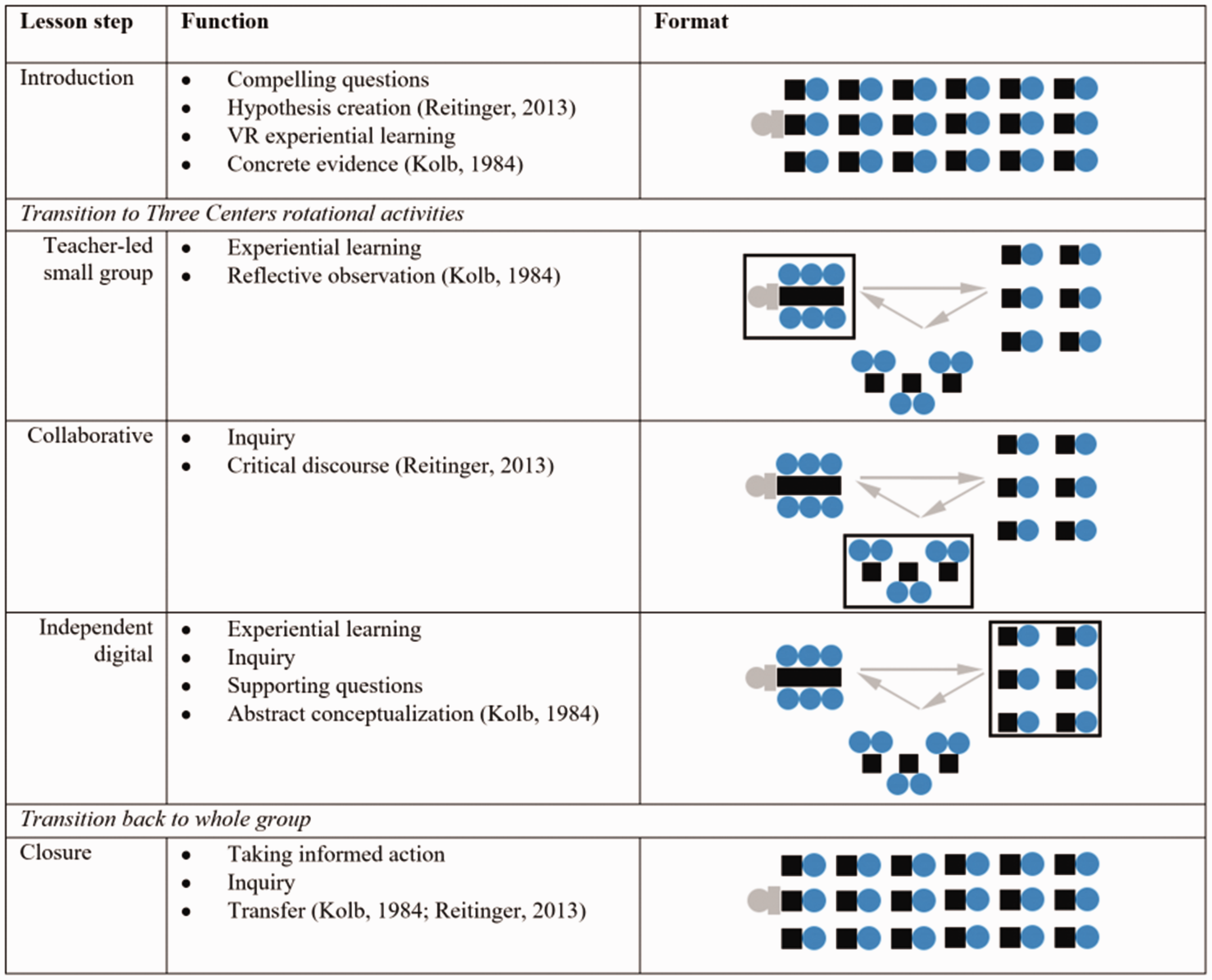
The function of each step of the Blended Learning VR Inquiry Framework organized within the Three Centers rotational model.
Experiential learning
Kolb’s (1984) experiential learning theory model, based on the works of Dewey (1897, 1938), explains that well-designed experiential learning starts with an experience that is followed by reflective observations on what has occurred. Abstract conceptualization, or learning from the experience by creating mental models, is next (Kolb, 1984). Finally, the new and old knowledge are combined to produce the testing of developed concepts in new contexts (Kolb, 1984). It is upon Kolb’s (1984) outline for well-crafted experiential learning that the lesson framework presented in this article is primarily designed (Figure 3).
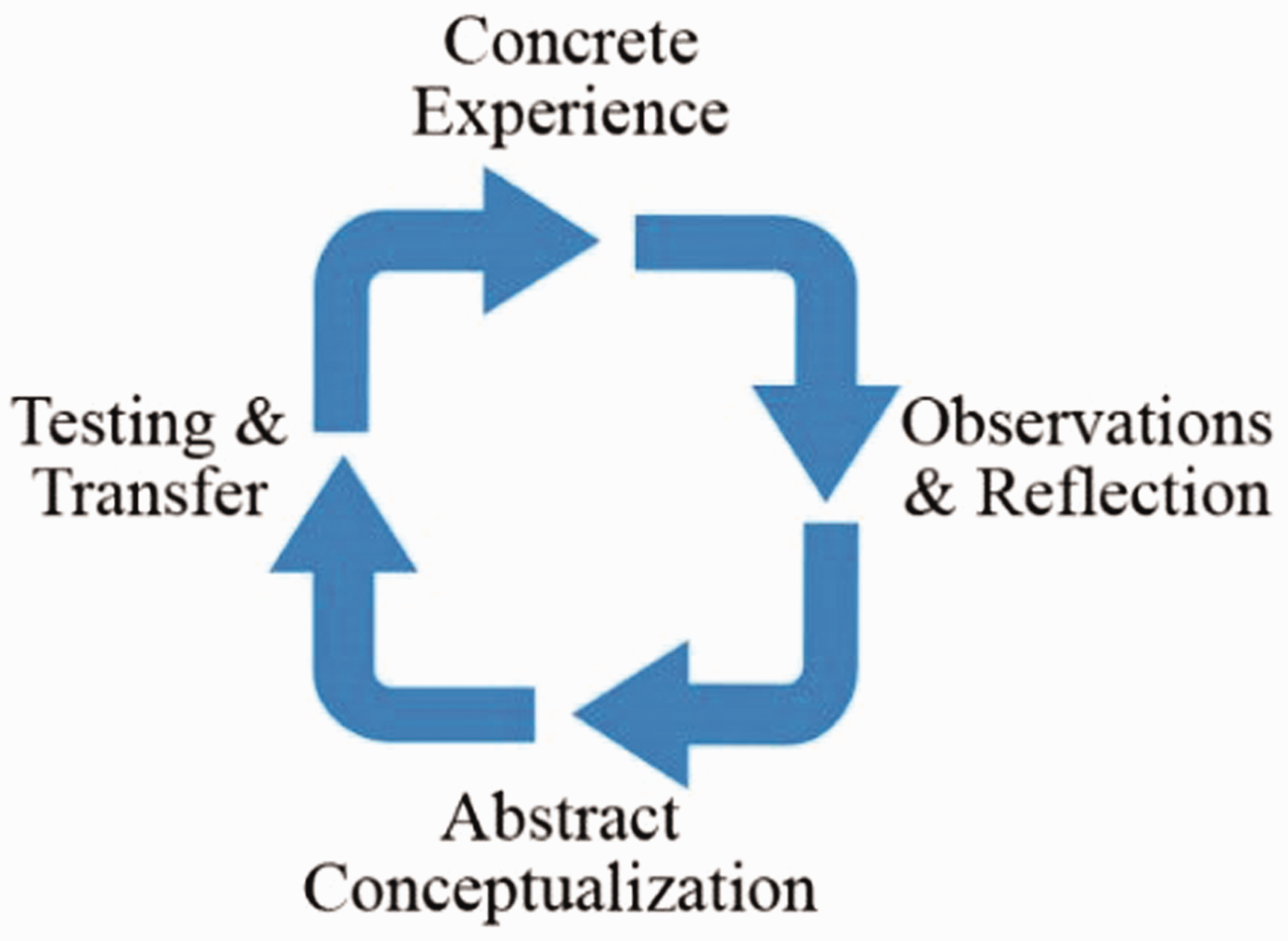
Kolb’s (1984) experiential learning model.
Research suggests that experiential learning has both positive motivational and learning impacts (McManus and Thiamwong, 2015; Smeds et al., 2015). Among these impacts, active authentic experiences that involve more than merely the minds of students have been shown to impact memory on a level beyond that of passive learning modalities (Galizzi, 2014). Experiential learning also has the potential to increase motivation when compared to more passive learning modalities because of the immersive experiences and comradery students and instructors build through these experiences together (Di Blas and Paolini, 2014; Mayrose, 2012).
Research by Kwon (2019) has indicated that experiential learning using VR is possible, as users internalize their virtual experiences as direct experiences. Virtual experiential learning has been suggested to have comparable positive motivational and learning impacts to real-world experiential learning (Chen et al., 2005; Virvou et al., 2005). Therefore, the term experiential learning in our framework refers to immersive group experiential learning—including observation, reflection, conceptualization, and transfer—fostered by VR technology in the classroom. Experiential learning with VR technology satisfies the same instructional goals as class trips, but with fewer financial, safety, and logistical hurdles. The framework presented in this article supports teachers who are combining inquiry, experiential learning, and blended learning in their classrooms.
Inquiry
Inquiry-based learning challenges the behaviorist tradition of teaching in which students are not active participants in the learning process unless called upon to contribute (Khalaf and Zin, 2018). Inquiry is an active learning method which involves creating questions, critical thinking, and problem-solving (Savery, 2006). In inquiry-based learning, student knowledge is continually re-written as students build understanding (Roth and Roychoudhury, 1993). Crafting compelling and supporting questions are integral to inquiry learning and these two inquiry pillars are based on important skills for citizens in civic discourse and decision-making (Croddy and Levine, 2014). According to Lee et al., compelling questions are “academically rigorous” questions which frame inquiry in relevant and interesting ways (2015: 1). Supporting questions focus students down different paths of inquiry (Lee et al., 2015). Through the inquiry process, students develop compelling and supporting questions to guide their investigations. In conjunction, students develop their research skills as they learn where to search for answers to their questions.
Compelling questions, hypotheses, evaluating research, as well as forming conclusions are common aspects of inquiry learning. When initially utilizing inquiry in the classroom, teachers ask students compelling questions which hook students’ interest and guide their learning. Then, students hypothesize what the answers to the compelling questions could be and embark on journeys to find answers to those questions (Cherner and Fegely, 2017; National Council for the Social Studies, 2013). As students advance their understanding of inquiry, the onus is put on students to formulate their own compelling and supporting questions. After the question phase, students may use previous knowledge and new researched knowledge to begin to form conclusions. Then, students evaluate their findings in order to develop and support their claims. At the final step, students are asked to share what they have found with the class, and if possible, with the larger community outside the classroom.
The National Science Foundation (1996) was an early endorser of inquiry learning combined with direct experience for the STEM subjects. Since then, different models of inquiry have been fit into many other school subjects (Lacina, 2007; Shriner et al., 2010). The National Council for the Social Studies’ C3 Inquiry Arc (National Council for the Social Studies, 2013), for example, is a social studies inquiry-based learning model which fosters student creation of strong compelling and supporting questions. The C3 Inquiry Arc (National Council for the Social Studies, 2013) is an inspiration for the framework described in this article because it compliments Kolb’s (1984) definition of experiential learning. Although more traditional classroom teaching strategies may be characterized by textbook reading and lectures, the C3 Inquiry Arc contrasts this style by encouraging teachers to lead students in active learning through disciplinary lenses and thought processes which develop students’ civic and global understanding. Reitinger’s (2013) inquiry learning framework is also an inspiration to the Blended Learning VR Inquiry Framework because much like Kolb’s (1984) experiential learning cycle it is devoid of sequential steps, and instead it is oriented around the concepts of general discovery interest, method affirmation, experience-based hypothesizing, authentic exploration, critical discourse, and conclusion-based transfer.
VR is a new technology to the classroom and thus, inquiry-based learning. Research suggests that VR can be used as a substitute for concrete experience in Kolb’s (1984) experiential learning model (Chee, 2001; Chen et al., 2005; Jensen et al., 2002; Kwon, 2019). Further, numerous studies have led researchers to conclude that there is importance in integrating technology into inquiry-based learning and recommend technology-supported learning environments for inquiry lessons (Barab and Luehmann, 2003; Edelson et al., 1999; Kim and Hannafin, 2009; Kim et al., 2007). While inspired by aspects of C3’s compelling and supporting questions, as well as aspects of Reitinger’s (2013) cycle of exploration, hypothesizing, critical discourse, and transfer, this article presents a new inquiry-based, technology-driven framework designed to be generalizable to fit numerous subject areas while incorporating experiential learning, blended learning, and VR. At each step of the Three Centers rotational model in this framework, students will modify their hypotheses based on the instructional activities they have taken part in during each rotation.
Virtual reality
VR is a three-dimensional simulation of either a real world or computer-generated world wherein users can navigate through and interact with the environment (Chandrasekera and Yoon, 2018). VR is becoming mainstream as previous generations of high-priced VR technologies are overtaken by contemporary, affordable, and consumer-targeted devices that provide equal—and often higher—levels of immersion than their costly forefathers (Slater, 2018). The arrival of VR in consumers’ hands through mobile devices has allowed individuals to become immersed in environments that provide them with the perspectives previously inaccessible to the average person. Based on projections from the technology industry, investment by public consumers in VR devices will amount to over $700 million by 2025 (Johnson, 2019). Moreover, according to a study conducted by Orbis Research, the total VR market—including educational, commercial, and military applications—could surpass the $40 billion mark by 2020 (Costello, 2017). Products such as Google Cardboard have been adopted into education with over 10 million devices shipped to consumers and classrooms all over the world (Vanian, 2017).
Puentadura’s (2010) Substitution, Augmentation, Modification, and Redefinition (SAMR) scale assists teachers with contextualizing the impact technology will make on their instruction when compared to the previous method or tool they were using. Starting with Substitution as its lowest level of impact and finishing with Redefinition as its highest level of impact, the SAMR scale rates the upgrade a new piece of technology would have if introduced into an educational environment. There are brief criteria operationalized by descriptions of changes to instructional possibilities at each level of the SAMR scale. With these criteria teachers can evaluate if the introduction of a new technology into instruction will simply substitute one tool for another, augment the learning task with the new tool through a functional improvement, modify the learning task significantly, or redefine the learning task altogether in a way not possible with a previously used tool (Romrell et al., 2014). It is important to note that SAMR is a scale of a technology’s functional impact on a learning task and not a model for how to integrate technology into one’s teaching. The SAMR scale does not include variable educational factors, like the abilities of learners or the context of the unit of instruction integrating the technology.
Merely substituting one tool for a new tool or improving the functionality of an older tool with a new tool does not accomplish the idyllic goal of technology integration in the classroom as a transformative learning instrument (Hamilton et al., 2016). Moreover, swapping a traditional tool for a newer technology tool often is not a financially justified choice, either. As illustrated by Hamilton et al. (2016), the goal of SAMR is for teachers to introduce technologies into their classrooms that qualify for the Modification or Redefinition levels. Unfortunately, technology in classrooms is often mistakenly used as a substitute to perform the same learning tasks as were performed previously without technology (Romrell et al., 2014). For example, research by Chou et al. (2012) showed that their population of ninth grade teachers mainly used iPad apps that achieved the levels of Substitution or Augmentation on the SAMR scale. In another example, a study by Cherner et al. (2019) indicated that most common language learning technologies only fulfilled the Substitution and Augmentation levels of SAMR. If the ideal for technology integration in education is to reach the top two tiers of SAMR—Modification and Redefinition—then VR technologies and the previously inconceivable experiences VR gives to students achieve the highest level of technology integration.
There are two main types of VR experiences instructors can choose for students: 360-degree-camera-produced VR experiences and fully computer-generated VR experiences. Milgram et al.’s (1994)Reality–Virtuality (R–V) Continuum is used to compare completely real environments with completely virtual ones. Based on Milgram et al.’s (1994) R–V Continuum, artificial and fully computer-generated VR environments would be placed on the far-right side as Virtual Environments. As explained in Figure 4, it can be argued that the Virtual Environment pole on Milgram et al.’s (1994) continuum can be divided into two subsections. The 360-degree-camera-produced copies of real-world environments would be situated immediately next to artificial computer-generated VR environments, but slightly more toward reality and the center of the continuum. Even though 360-degree-camera-produced VR experiences are created by computers, they are immersive copies of real-world environments.
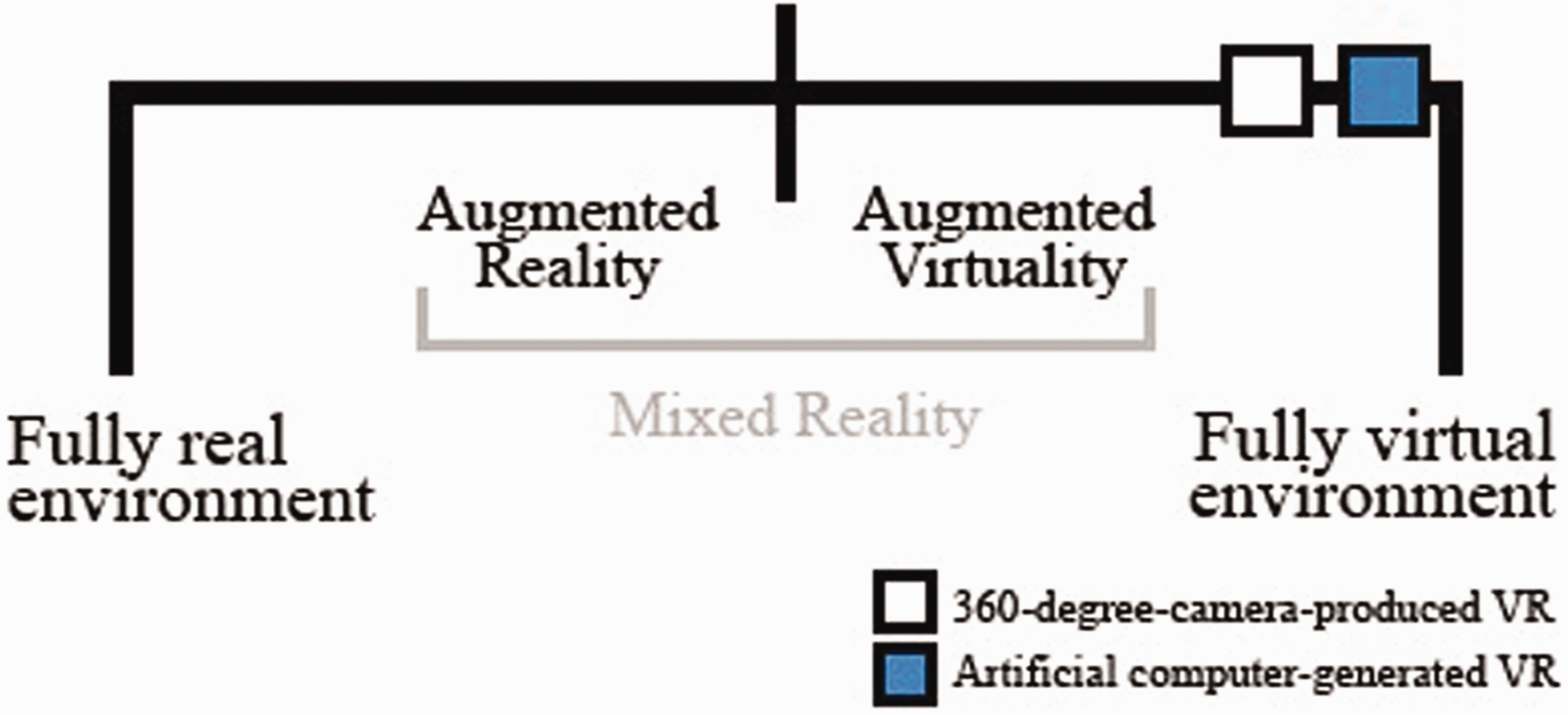
The 360-degree-camera-produced and artificial computer-generated VR environments situated on Milgram et al.’s (1994) Reality–Virtuality Continuum.
Each of these VR environments can be used by instructors for different lesson goals. Computer-generated VR environments can enhance instruction by introducing possibilities to experiential learning not previously available to students. For example, a computer-generated VR experience may shrink students down to the size of red blood cells and allow students to take an immersive trip through the different systems of the human body. Similarly, when studying a past time period like ancient Egypt, or a difficult to reach location like Pluto, a computer-generated VR experience may be the only option for students to experience that time period or reach that remote location given the inherent limitations of time and space. To contrast, in instances where students are required to make specific observations and reflect upon real, concrete objects or lived experiences, like critiquing museums’ galleries or touring famous landmarks, a computer-generated environment may not be appropriate for answering the compelling questions. A combination of the two different types of VR environments may also be an option in some learning contexts.
VR can be a powerful teaching tool for a variety of reasons. Foremost, when students participate in VR experiences that include real people and places it allows students to develop feelings of immersion and presence in the VR environment (Slater, 2018), which is an active learning and experiential learning upgrade over students reading textbooks or watching videos to learn about a topic. As introduced in the paragraph above, VR provides an avenue for a variety of different experiences that would not ordinarily be possible in the physical world. For example, with VR, students in history lessons can have experiences that place them in the time period being studied in order to enhance their understanding of the lesson topic, and thus aid understanding and transfer into long-term memory (Domingo and Bradley, 2018). Further, VR applications allow students to become immersed in experiences that develop their sense of empathy for the people and events depicted in the VR environments, like the reasons why historical figures made their decisions given the context of the historical events (Van Loon et al., 2018). VR experiences can mimic the social aspects of traditional experiential learning activities, as well. Research suggests that simultaneous group VR experiences with multiple students stimulate students’ sense of community and collaboration in contrast to parallel learning experiences (Di Blas and Paolini, 2014).
Presenting the Blended Learning VR Inquiry Framework
This section provides instructors with a framework for creating VR lessons grounded by Kolb’s (1984) experiential learning theory, structured by the Three Centers rotational model, and driven by aspects of the C3 Inquiry Arc (National Council for the Social Studies, 2013) as well as Reitinger’s (2013) inquiry framework. Kolb’s experiential learning theory and associated experiential learning cycle includes four main parts, each of which is reflected in different parts of the blended learning framework below. Inquiry is integrated into this blended learning framework within its different steps through the C3 (National Council for the Social Studies, 2013) concepts of compelling questions, and Reitinger’s (2013) inquiry framework aspects of experience-based hypothesizing, authentic exploration, critical discourse, and conclusion-based transfer.
Pre-planning
Though much of the planning process is like typical lessons, specific considerations arise when designing VR-driven inquiry. To begin, instructors must identify the standards, objectives, and compelling questions with which to pair a VR experiential learning activity. Then, instructors must identify the specific VR app and VR experience needed based on their instructional objectives and compelling questions.
During the VR experience identification process, instructors must decide if the use of 360-degree-camera-produced VR environments is necessary, or if computer-generated VR environments will be satisfactory for the learning goals. The use of one type of VR environment over the other does not fundamentally change the functionality of the framework. However, teachers should strive to present students with the most-realistic experiential learning possible when deciding between two different VR experiences employing the two different types of environments. It is important to note that instructional objectives or even compelling questions that require students to compare two different ideas may dictate the need for more than one VR experience for students to use throughout a lesson.
VR apps can be experienced on different platforms through mobile devices that students are either provided with through schools’ one-to-one initiatives or already own as part of bring-your-own-device policies. Deeper levels of immersion are tied to stimulating the senses (Schmeil and Eppler, 2009; Steur, 1992). Immersion can be improved by blocking out external sensory inputs (Gadelha, 2018). Therefore, the authors recommend using goggles and headphones when possible. While head-mounted goggles can be the most expensive and lead to simulator sickness which can detract from the VR experience (Draper et al., 2001; Maraj et al., 2017) they do present the highest levels of immersion for students. While not required for VR, a plethora of lower-cost specialized headsets and goggle accessories for mobile devices exist. Some of these accessories have slots for students’ mobile devices in order to attach the devices close to students’ eyes and create more immersive experiences. Similar to kaleidoscope goggles, low-cost cardboard accessories for students’ mobile devices have side blinders to concentrate students’ vision on mobile devices inserted in the viewing slots. Accessories like these are held up to the eyes. The authors recommend these handheld goggle accessories for their ability to offer low-cost immersion and comfort to students as they can be quickly removed from the eyes if students begin to feel sick. As the lowest-cost option and most flexible to different mobile device types, students can simply hold their mobile devices in front of them in order to explore the VR worlds. This lowest-cost option also represents the lowest form of immersion and least-realistic experiential learning because students’ vision is not focused by goggles. The use of headphones at this level is even more important in order to focus the senses and block out external sensory input.
Blended learning VR inquiry lesson structure
An example blended learning VR inquiry lesson
This blended learning VR inquiry-driven lesson plan example demonstrates how VR experiences can be used for experiential learning revolving around compelling questions and state standards. The purpose of this lesson is for students to experience drought and water scarcity in Africa, then reflect upon this experience, converse with peers and their instructor, and further research the impacts of scarcity on gender roles in African societies. By taking part in each rotational activity in the blended learning Three Centers design, students will edit and improve their hypotheses as they advance through the lesson, reporting what they learned to their classmates as the culmination of the lesson.
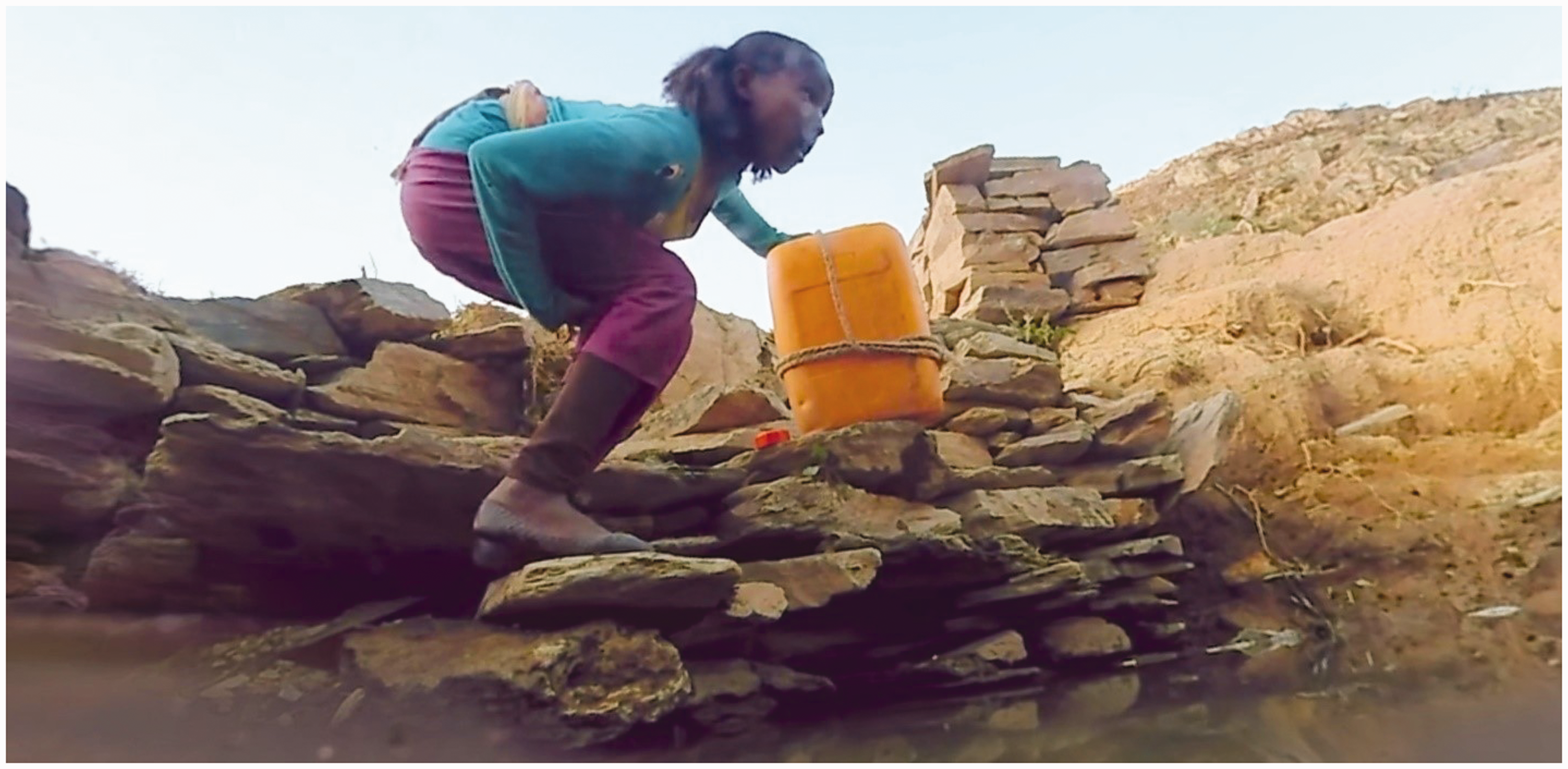
Students’ 360-degree view as they accompany Selam on her journey to find fresh water in the WITHIN – VR (2016) app.
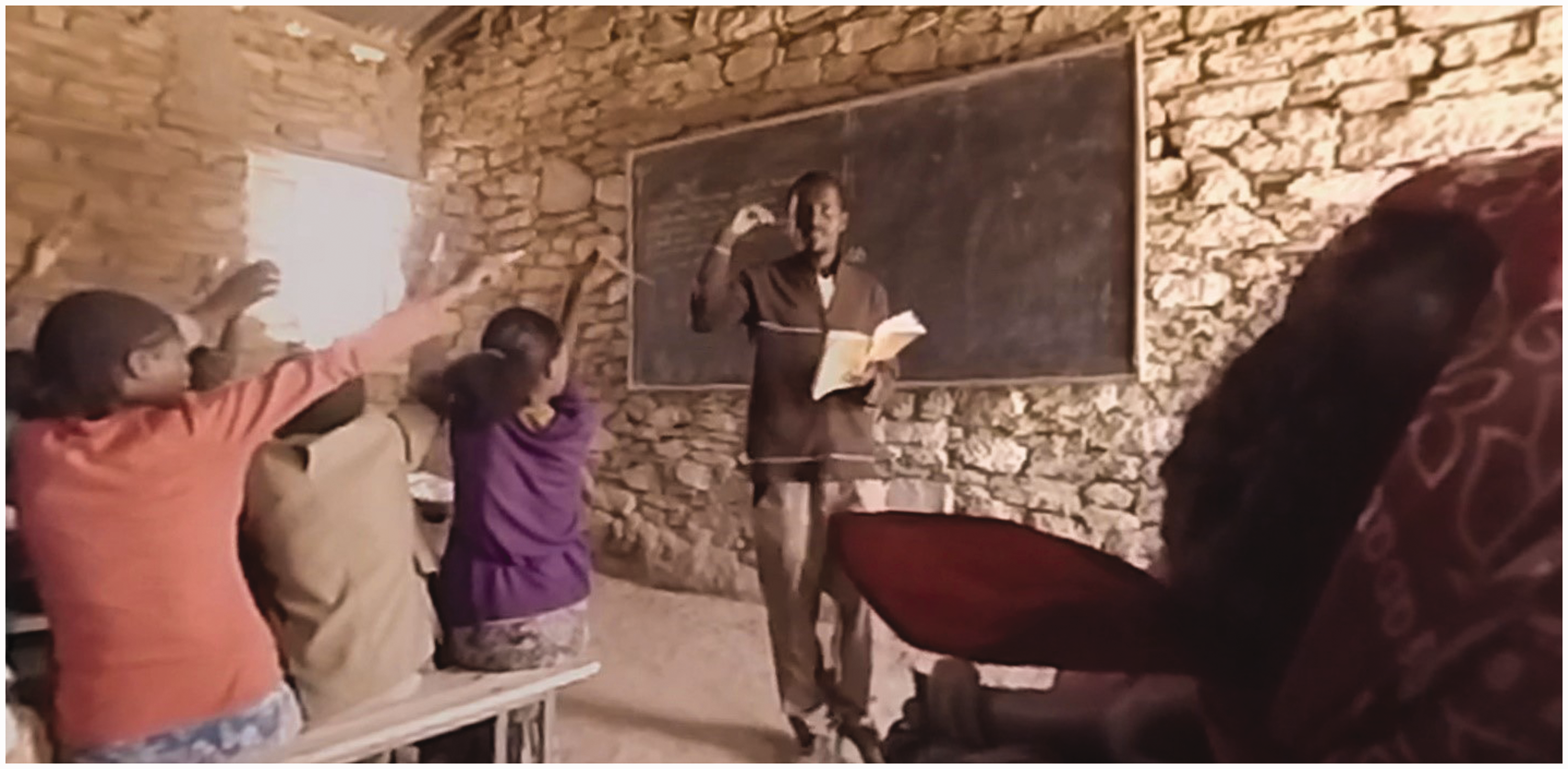
The teacher will encourage students to reflect on outcomes of Selam not needing to journey for water, such as more time for her education (WITHIN – VR, 2016).
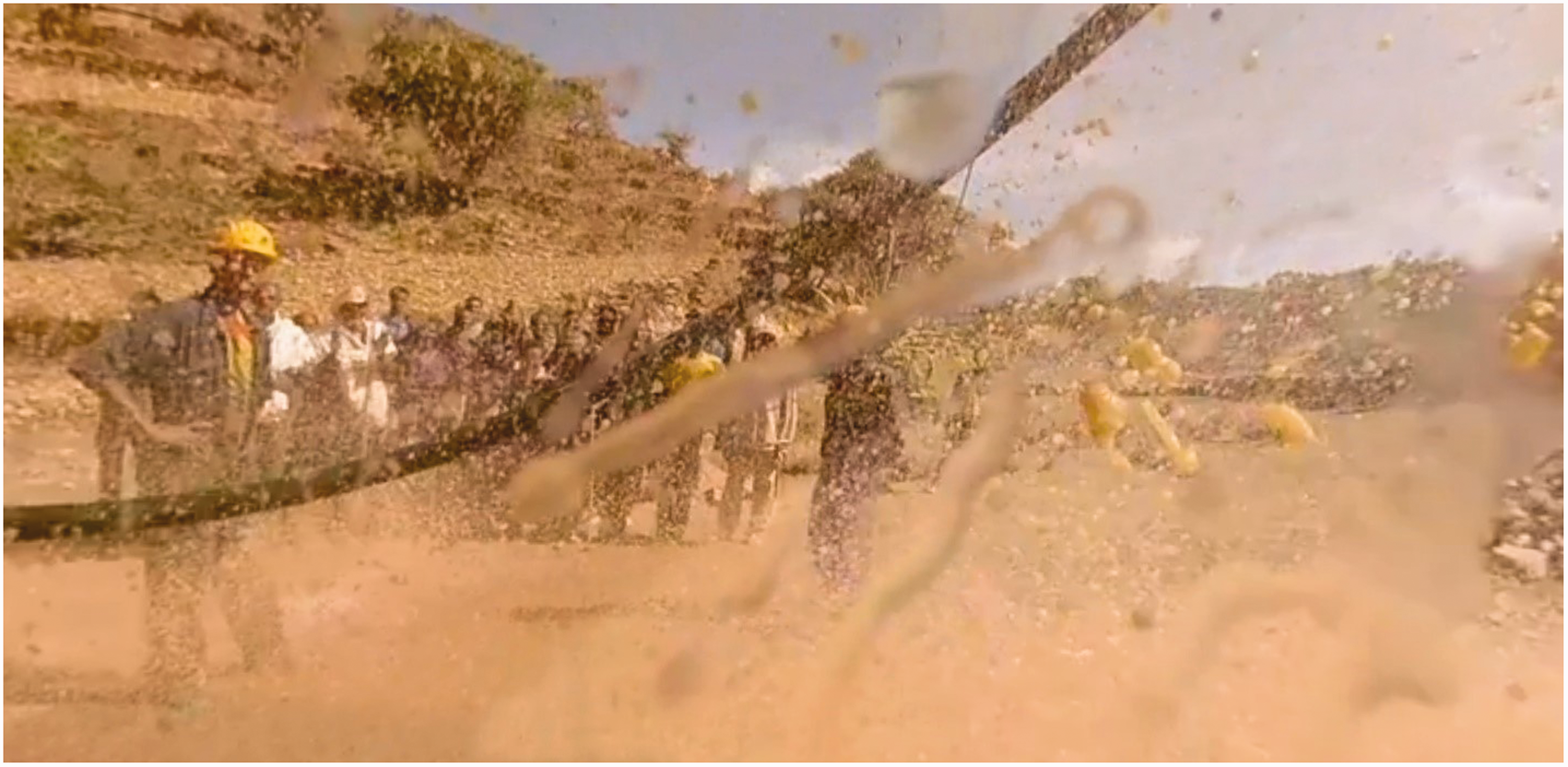
Students will experience the moment the well is built and analyze how it impacts rural Ethiopians’ way of life (WITHIN – VR, 2016).
Implications for practice and future research
Money is pouring into VR development, and the market for VR in consumer, commercial, and educational settings is expected to boom in the coming years (Costello, 2017; Johnson, 2019). As VR becomes a larger part of education, specialized lesson frameworks to guide instructors through the planning process will become more necessary. Frameworks such as this ensure that VR is not used as a sideshow and that lessons institute educational research and theory in order to improve students’ higher order thinking, reflection, and ability to make connections.
When beginning to use the Blended Learning VR Inquiry Framework—especially in younger grades—the authors recommend that instructors start with VR apps that can be led by a chaperone through a synchronous touring system, like Google Expeditions (2019). As students become more comfortable with VR experiential learning and understand the expectations for the VR portion of the lesson, instructors can branch out to asynchronous VR experiences which require step-by-step directions and more classroom management. Instructors must plan detailed directions and points of emphasis for asynchronous VR experiences. The authors recommend that instructors rehearse asynchronous VR activities multiple times before enacting in the classroom, making special note of rendezvous points for the students in the class to wait in before advancing as an entire class to the next areas of the VR experiences.
The authors recommend that researchers conduct case studies examining this framework being used in classrooms in order to qualitatively and quantitatively analyze the implementation of these lessons in practice. Additionally, the authors present researchers with an intriguing line of study into an inherent limitation of this framework, the usage of VR lesson frameworks in hybrid and distance settings. In turn, researchers’ insights and recommendations can be used to improve this framework as the literature on VR in the classroom expands.
Conclusion
VR is a powerful tool for students which can be used to experience things previously inconceivable in the classroom. As authentic experiential learning disappears from education, low-cost VR solutions are likely to become a popular alternative. However, without structure and direction, VR only activates students’ learning at a shallow level. Inquiry provides the backbone for instructors to teach students to go deeper. The inquiry processes outlined in this framework provide the critical thinking, research, debate, and reflection skills needed for students to become more college and career ready. Blended learning’s Three Centers model works as a blueprint to organize inquiry learning activities while integrating technology. Combining purposeful instructional strategy, method, learning theory, format, and platform together, the Blended Learning VR Inquiry Framework can be used to guide educators through planning and enacting meaningful VR lessons. Throughout the Three Centers rotational activities, students develop their hypotheses with input from their instructors, peers, and outside research before testing their hypotheses or sharing with the class. The authors believe that VR technology, inquiry, and blended learning aspects of this framework provide students with technological, analytical, and active learning experiences which will better prepare students for civic engagement and careers outside the classroom. The framework presented in this article presents instructors with a much-needed, flexible approach for a multitude of subjects which instructors can use to plan and implement meaningful VR lessons in the classroom.
Footnotes
Declaration of Conflicting Interests
The author(s) declared no potential conflicts of interest with respect to the research, authorship, and/or publication of this article.
Funding
The author(s) received no financial support for the research, authorship, and/or publication of this article.
