




Abstract
The increase in remote work in the Information and Communication Technology (ICT) industry has introduced the need for research into team collaboration platforms and education using a project-based blended learning approach. This study investigates the perceptions of ICT engineering students (N = 56) at Lapland University of Applied Sciences in Finland regarding the social, cognitive, and teaching presences in a blended setting using the Community of Inquiry (CoI) framework. The CoI questionnaire data were analyzed using the Rasch Rating Scale Model, and team collaboration and development platform logs were used to explore platform usage. The results suggest that the students’ overall perception of blended learning was highly positive. Questions associated with discussing through the online medium were relatively harder for the students to agree with, although the online medium was perceived as excellent for social interaction by the students. The results may help institutions develop an understanding of the factors that may improve the quality of blended learning experiences in project-based digital ecosystems.
Introduction
The content and implementation method of the curriculum in engineering education are largely guided by industry and business needs. In Information and Communication Technology (ICT), the project approach is prevalent, and in multinational companies, project teams work in a decentralized manner using remote and teamwork tools. It could be argued that the industry’s community practices, methods, and collaboration platforms should also be applied to teaching and learning. In addition to technical skills, social and interpersonal competencies are required to communicate, collaborate, and establish social connections with other individuals and teams (Fitsilis et al., 2018). Collaboration and communication can be seen as key skills for engineers (Kamp, 2016), and teamwork skills are required by the industry (Chowdhury and Murzi, 2020; Hogarth, 2010: 3). These skills can be developed through project-based learning (PjBL) methods in real-life projects (Mativo et al., 2017). In addition, agile strategies facilitate project management and are useful in improving students' collaboration (Noguera et al., 2018; Sakulviriyakitkul et al., 2020).
The Community of Inquiry (CoI) framework introduced by Garrison et al. (1999) in higher education is based on the idea that education is both a collaborative and an individual learning experience. The framework provides a perspective for understanding blended learning experiences, including e-learning experiences in campus-based learning (Garrison, 2016: 103). The CoI constitutes a framework for the creation of a collaborative learning community with three core elements: the teaching, cognitive, and social presences. The overlap of these three elements provides a structure for understanding the dynamics of e-learning experiences (Garrison et al., 2010). Students’ e-learning perceptions concerning three core elements of the CoI framework are widely measured by a CoI survey developed and validated by Arbaugh et al. (2008). CoI research is typically used as a means of researching, evaluating, comparing, and improving learning environments (Stenbom, 2018).
This article is part of broader design-based research (DBR) conducted at Lapland University of Applied Sciences (Lapland UAS) that aims to fit current project-based and face-to-face (FTF) ICT engineering education within the blended learning environment in the context of the methods and tools used by the industry. Students’ blended learning experiences are evaluated through the CoI framework, and the main research questions for this study are as follows:
How do students experience blended learning in terms of the teaching, social,and cognitive presences?
How do students use the team collaboration and developer platforms in a blended learning context?
Related Literature
Blended learning integrates FTF and online learning activities (Graham, 2006: 4–6), and its purpose is to engage with innovative ways of presenting ideas and to expand thinking and discussion across time and space (Vaughan et al., 2013: 9). Students should be involved in critical discourse and reflection, which can be achieved by creating research communities where students are responsible for constructing meaning and reinforcing their understanding through active participation in the research process (Vaughan, 2010). According to Vaughan et al. (2013: 4), successful blended learning is dependent upon the creation of a collaborative CoI and an understanding of the principles of teaching presence. Learning is situated within purposeful inquiry, where students collaboratively assume a shared responsibility and control to design, facilitate, and direct inquiry. CoI starts from the idea that education is both a collaborative and an individual constructivist learning experience (Vaughan et al., 2013: 10), and its foundation is the interaction needed in the higher educational experiences to foster understanding (Garrison and Vaughan, 2008: 13–30). According to Vaughan et al. (2013: 19–44), the CoI framework contains three elements: the teaching, social and cognitive presences, as shown in Figure 1. The CoI by Garrison (2016: 25). Image source: https://www.thecommunityofinquiry.org/framework (licensed under CC BY-SA 4.0).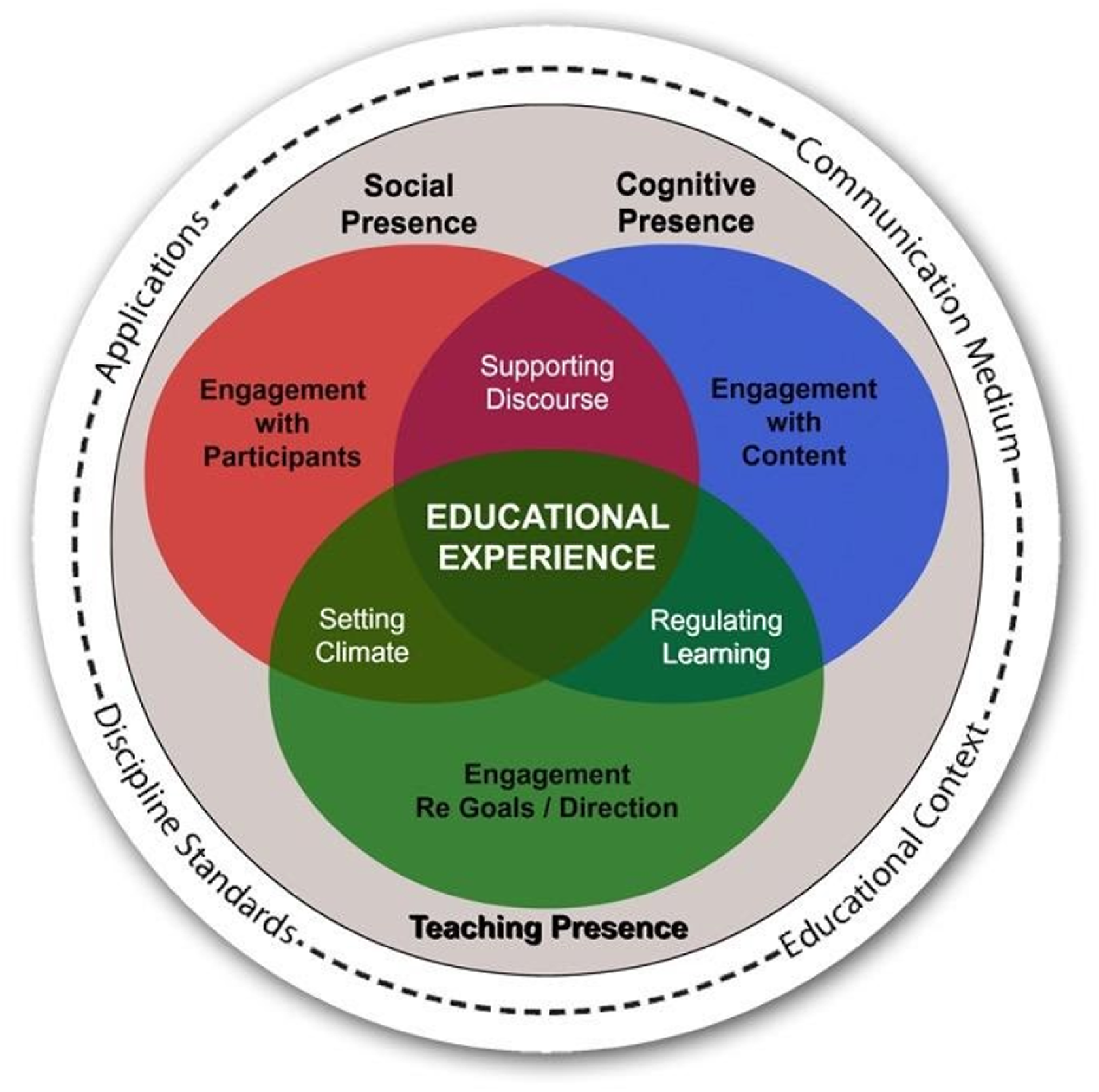
Garrison et al. (1999) define the Social Presence (SP) as the ability of participants in a CoI to project their characteristics onto the community and to present themselves to others as real people. The SP is implemented in three categories: open communication, group cohesion, and affective/personal expression. Garrison and Vaughan (2008: 11–30) explain that the SP assumes that students have the freedom to express themselves freely in a safe environment and can develop their commitment and belonging to the community. The Cognitive Presence (CP) is the most basic factor in the success of higher education, which, according to Garrison et al. (1999), refers to the extent to which participants in a particular CoI can construct meaning through sustained communication. The CP moves from defining the problem to exploring and integrating solutions, as well as testing the validity of the learning outcome by certain categories, such as triggering event exploration and resolving the problem through collaboration. Lastly, Anderson et al. (2001) define the Teaching Presence (TP) as “the design, facilitation, and direction of cognitive and social processes to realize personally meaningful and educationally worthwhile learning outcomes.” The TP maintains the activities in the community by categories such as design and organization, facilitation of discourse, and direct instructions. The key overlaps among the three presences include setting the climate, supporting discourse, and monitoring and regulating learning. Engagement of the overlaps must facilitate both FTF and online learning (Vaughan et al., 2013: 47).
Arbaugh et al., (2008) developed and validated a CoI framework-based survey tool that comprises 34 question items in total, reflecting the educational experiences of the CP, SP, and TP. The questions are classified into subcategories under each presence, and each item is evaluated using a Likert scale. As an ordinal scale, the mean or standard deviation are not meaningful to calculate (Jamieson, 2004) because it cannot be assumed that the distance between each level of the rating scale, e.g., from “agree” to “strongly agree” and from “agree” to “neutral,” is equal. (Cohen et al., 2007: 605). Abbitt and Boone, (2021) recommend applying Rasch measurement techniques to CoI data, as they both provide unique insights from the survey data, including person measures and item difficulty visualizations, and they address the properties of the CoI data, such as the ordinal and non-linear nature of the rating scale and items being of different difficulties. The Rasch Rating Scale Model (RSM; Andrich, 1978) is a measurement model suitable for rating scale data.
PjBL is an innovative approach based on the idea of learning by doing (Dewey, 1997; Krajcik and Blumenfeld, 2006: 317), where subjects are learned through authentic, engaging, and complex real-world problems (Almulla, 2020; MacLeod and van der Veen, 2020). PjBL has been applied to engineering education mostly in single courses (Chen et al., 2021), e.g., in Intana, (2020) and Sanchez-Romero et al., (2019), but also in interdisciplinary environments (e.g., MacLeod and van der Veen, 2020; Warr and West, 2020) and integrated curriculum (e.g., Edström and Kolmos, 2014). Cyders and Hilterbrane, 2016 found that a team collaboration platform (TCP) both improved interaction within student teams and between teachers and students and enabled students to communicate, collaborate, and seek peer support before requesting help from an instructor. Moreover, such indicators as the frequency of posts, students’ activity, and forum interactions can be useful for predicting student course completion, as noted by Yau and Ifenthaler, (2020).
Methodology
Design-based research
The present study is part of broader research aimed at elucidating the design principles for a digital ecosystem model that meets stakeholders’ requirements and adapts the degree program into a blended learning model. The digital ecosystem includes stakeholders, such as students, instructors, and industry representatives; communication media and platforms; the educational context, curriculum, and applications; methods and discipline standards; and the pedagogy applied. The broader research is conducted by following the principles of DBR (McKenney and Reeves, 2018; Hall, 2020), the goal of which is to connect educational research to real-world problems (Amiel and Reeves, 2008). DBR is a mixed-method approach for applied and theory-building techniques (Reimann, 2011). The research cycle includes four core phases: analysis and exploration, design and construction, evaluation and reflection, and implementation and spread (McKenney and Reeves, 2018).
The project-based curriculum of Lapland UAS was first analyzed and explored according to the DBR methodology (Mielikäinen, 2021). In the analysis and exploration phase, context analysis and literature reviews are used to address the origins, observations, and causes of phenomena. This phase defines the problem and the basis for the design requirements to understand the context. The analysis, experiences, and expectations of the curriculum, as well as the learning methods were collected. The study was conducted using semi-structured interviews and online surveys among third-year ICT engineering students (N = 27), instructors (N = 15), and industry representatives (N = 3) at Lapland UAS. The stakeholder experience was based on the current project-based curriculum model of education, in which the learning process is implemented through FTF learning. Learning was implemented onsite and based on the semester projects, including holistically integrated subjects. The results of the content analysis show that students thought project-based learning was a successful approach, and collaboration increased motivation and deeper learning. The agile method Scrum (Abrahamsson et al., 2017; Rising and Janoff, 2000), with regular reviews as a phasing method for the multidisciplinary semester project, was considered important for outlining the posture and milestones of the learning progress. From the instructors’ viewpoint, successful implementation requires close teamwork and collaboration of instructors. Students were concerned that the loss of sociality and connection with the instructors would adversely affect efficiency when moving from traditional on-campus learning to an online environment, as support and guidance were seen as the starting point for progress and motivation.
Learning was transferred to a blended model, mainly an online TCP-supported process, with special attention paid to the SP, CP, and TP. The students were physically present during the FTF lessons on laboratory work, as well as possibly during self-regulated project work. Sociality and guidance were mainly organized via TCP, and special attention was paid to the availability of support based on the results of the previous study. This study explores students’ blended learning experiences in this new setting through the theoretical lens of CoI. The students’ behavior regarding the TCP and developer platforms is also explored.
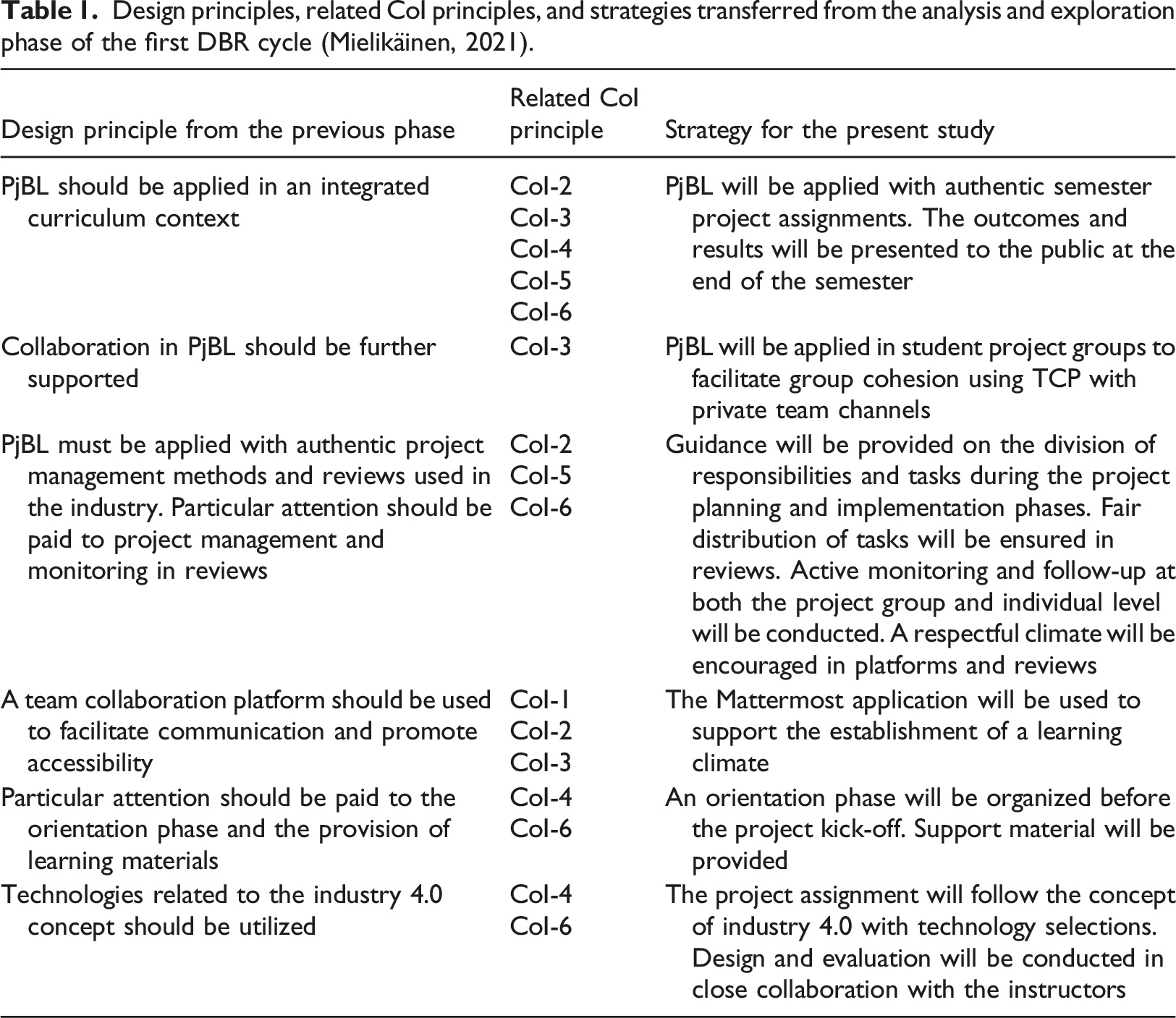
The results of the previous phase serve as a basis for the design and construction phase described in the present study, which concludes the first cycle of DBR. The blended learning approach was introduced following Garrison’s (2016: 112) seven design principles of CoI: CoI-1) Plan for the creation of open communication and trust CoI-2) Plan for critical reflection and discourse CoI-3) Establish community and cohesion CoI-4) Establish inquiry dynamics (purposeful inquiry) CoI-5) Sustain respect and responsibility CoI-6) Sustain inquiry that moves to resolution CoI-7) Ensure assessment is congruent with intended processes and outcomes
Design principles, related CoI principles, and strategies transferred from the analysis and exploration phase of the first DBR cycle (Mielikäinen, 2021).
Research setting
The educational context consisted of the integrated curriculum for ICT engineering education at Lapland UAS throughout the semester project period between September 1, 2019, and December 12, 2019. The integrated curriculum in ICT engineering education at Lapland UAS consisted of 30 European Credit Transfer and Accumulation System (ECTS) semesters, which in turn comprised five ECTS courses and a project study unit integrating the disciplines. All second-and third-year students (N = 63) were invited to participate in the study. The students were aged 20 years and up, and most were male. The first-year students studied mainly onsite and were excluded from the present study as FTF interaction is essential for grouping in the early stages (Garrison and Vaughan, 2008: 34). One of the researchers of the present study acted as an instructor. The study’s aim and processes were explained to the students, who were told that participation in the study was voluntary and would not affect their grades. In Finland, ethical review in human sciences is only required for certain research designs (TENK, 2019). In this case, the research does not include any of the factors that require an ethical review.
Aspects of the learning experience were studied in the context of Industry 4.0 in project-based learning. Key elements of the Industry 4.0 concept (Rosin et al., 2020; Bartodziej, 2017), such as the Internet of Things (IoT), robotics, data analytics, 3D printing, augmented reality, and cloud computing, were applied to the integrated curriculum setting. The 2019 fall semester for second-year students consisted of the following courses integrated into the Game Development and Embedded Systems semester project: Software Engineering, Game Engines, Embedded Systems, and Game Physics. During the semester, students implemented games and wireless game controllers based on their ideas. The third-year studies consisted of the following courses integrated into a Mobile Systems project: Mobile Programming, Automation Technology, Cloud Computing, Information Management, and Event-driven Programming. The semester project included building a camera stabilizer and a mobile application that utilizes not only the stabilizer’s capabilities but also cloud services and machine learning solutions. For example, big data technologies such as pattern recognition and dashboards were included in the Basics of Mobile Systems and Event-Driven Programming study units, and technologies related to autonomous robots, such as Proportional Integral Derivative (PID) controls, Kalman filters, and mechanics for stabilizers, were learned and applied in the Automation Technologies and Mobile System Project study units. The semester project comprises 30 ECTS units, including six five-credit units.
The study-year groups were divided into self-regulated project teams of three-to-four students. In the project planning phase, the teams designed the lead-through and phasing following the agile method Scrum. Prioritized backlogs created by the teams define the contents and goals of each two-week sprint. During the sprints, students received support from other teams or instructors to aid progress, including responsible teachers and staff from the research and development laboratory. The teams also followed quality assurance practices, including internal code reviews. Sprint reviews were organized FTF at the end of each sprint, involving the student team and teachers responsible for the integrated courses. Students also self-evaluated the success and challenges of the sprint in Scrum retrospectives. All project groups presented their projects at the closing seminar, and teachers evaluated the parts of the projects related to their courses. The team-specific closing reports included a comprehensive analysis of the project implementation.
Blended methods were applied throughout the projects. The TCP was used to deliver lectures, lessons, and support, including videos and example codes. Mattermost and GitLab were selected as the TCP and development platforms, respectively, because they can be installed on a self-managed server, and they provide authentication via Active Directory. GitLab is an open-source DevOps application that serves as both a version control system and a social programming environment. GitLab version 12.5 was used. Mattermost is an open-source messaging platform, and the free trial version 4.2.3 of Mattermost was used in the setting. For Mattermost, project teams had private channels to which the instructors did not have access. Discussions, peer support, and technical support worked through a common channel, and there was a dedicated channel for informal conversations.
Data collection and analysis
The CoI questionnaire by Arbaugh et al., (2008) was translated from English to Finnish and adapted to the PjBL context. The students’ responses to the translated and adapted CoI questionnaire were collected anonymously using the Webropol 2.0 survey tool. The questionnaire was sent to all 63 second and third-year students, and data were obtained from 56 students, yielding a response rate of 89%. No demographic data were collected along with the survey. The CoI questionnaire included 34 items adapted to fit the project-based context by the author. The rating scale used for all 34 items included the following categories: Strongly Disagree, Disagree, Neutral, Agree, Strongly Agree, and Not Applicable. The categories, from Strongly Disagree to Strongly Agree, were re-coded to the numeric values 1–5, respectively, for further analysis, and Not Applicable was treated as missing. The CoI questions can be seen in Appendix A.
The Rasch RSM (Andrich, 1978) was used to analyze the CoI data, as recommended by Abbitt and Boone, (2021). Each CoI presence was analyzed separately, as each is considered to represent a distinct latent attribute. For each presence, the Rasch model fit was evaluated using the infit mean-square (Infit MNSQ) and outfit mean-square (Outfit MNSQ) for both items and students. MNSQ values of less than 1.4 were treated as acceptable, as recommended by Wright and Linacre, (1994). Elements exhibiting possible misfit with the Rasch model were excluded from the analysis, and the models were re-built with the resulting subset of persons and items. The Rasch item measures in logit units were calculated for each item in the CoI questionnaire to explore the item difficulty in terms of ordering and spacing. Finally, data visualizations of the item difficulty estimates inspired by Wright maps were conducted. As with the Wright maps, the items that are easier to agree with are at the bottom, and the items that are harder to agree with are at the top.
The usage data of TCP and developer platforms, i.e., Mattermost and GitLab, were also collected to provide information on student behavior and productivity throughout the project. The data comprise the number and contents of public messages and commits submitted by the students over the four-month semester project period. The data were extracted from JavaScript Object Notation (JSON) files and aggregated by date, weekday, and hour. The number of messages and commits on each platform was visualized based on the aggregated data.
All data were analyzed in R version 3.6.2 using RStudio version 1.2.5033. The RSMs were conducted using TAM version 3.7 for R (Robitzsch et al., 2021).
Results
(RQ1) Blended learning experience
The number of responses by CoI presence.
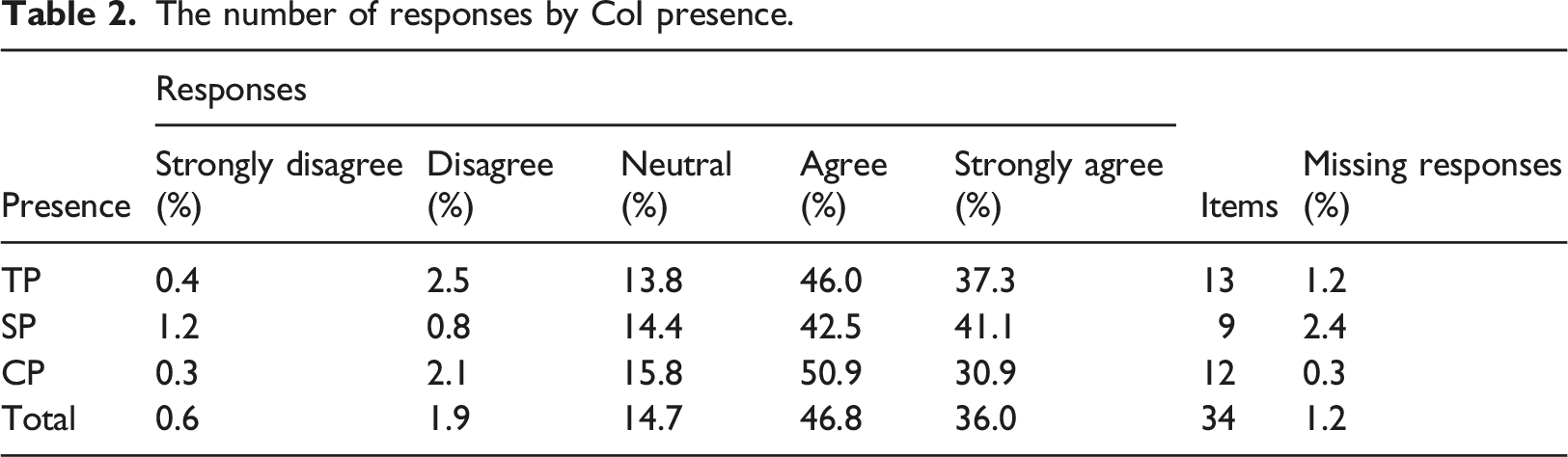
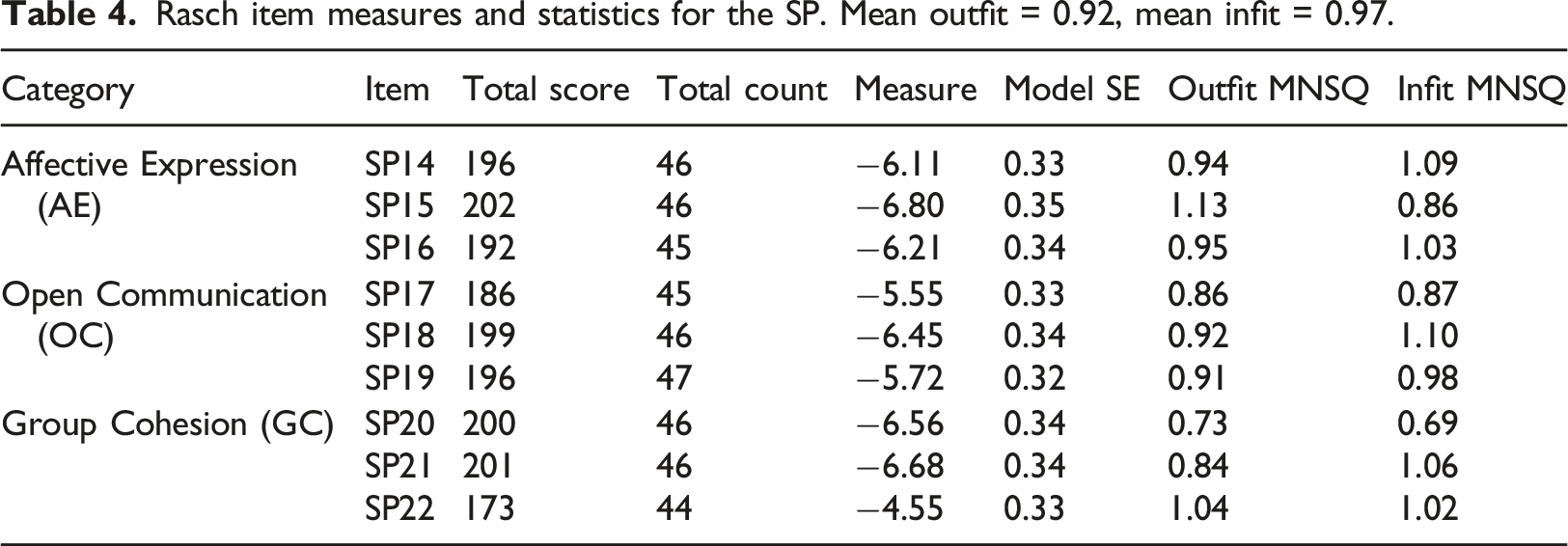
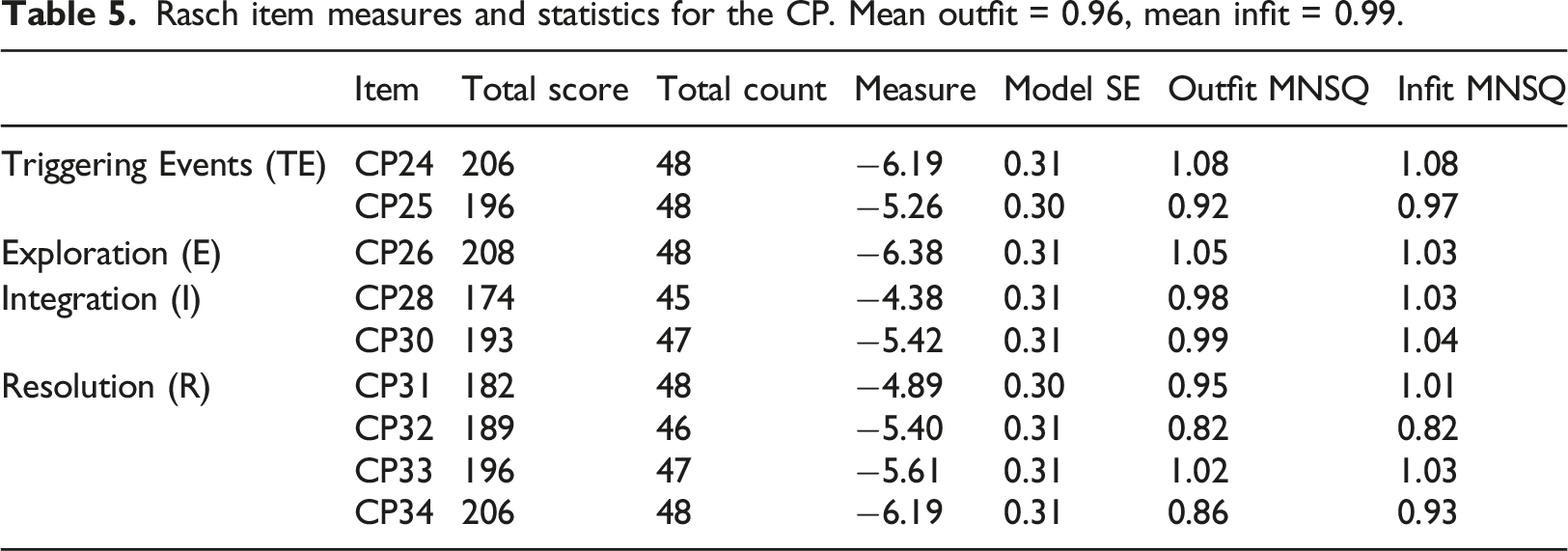
All CoI survey responses were used to build the three Rasch RSMs. The initial models were built using all 56 responses and all items present in each CoI presence. Altogether, six, nine, and eight students exhibited possible misfit with the Rasch model based on the Outfit MNSQ values and were excluded from the final TP, SP, and CP models. The Outfit MNSQ values tended to be higher for students with more negative responses (Disagree or Strongly Disagree) when compared to the other students in the TP (Z = 2.9, p < 0.05), SP (Z = 3.4, p < 0.05), and CP (Z = 3.7, p < 0.05). Moreover, three items (CP23, CP27, and CP29) exhibited possible misfit in the CP and were excluded from the final CP model, and there were no misfitting items on the TP or SP. The final models yielded a person separation reliability of 0.88, 0.86, and 0.87 and an item separation reliability of 0.90, 0.90, and 0.88 for the TP, SP, and CP, respectively.
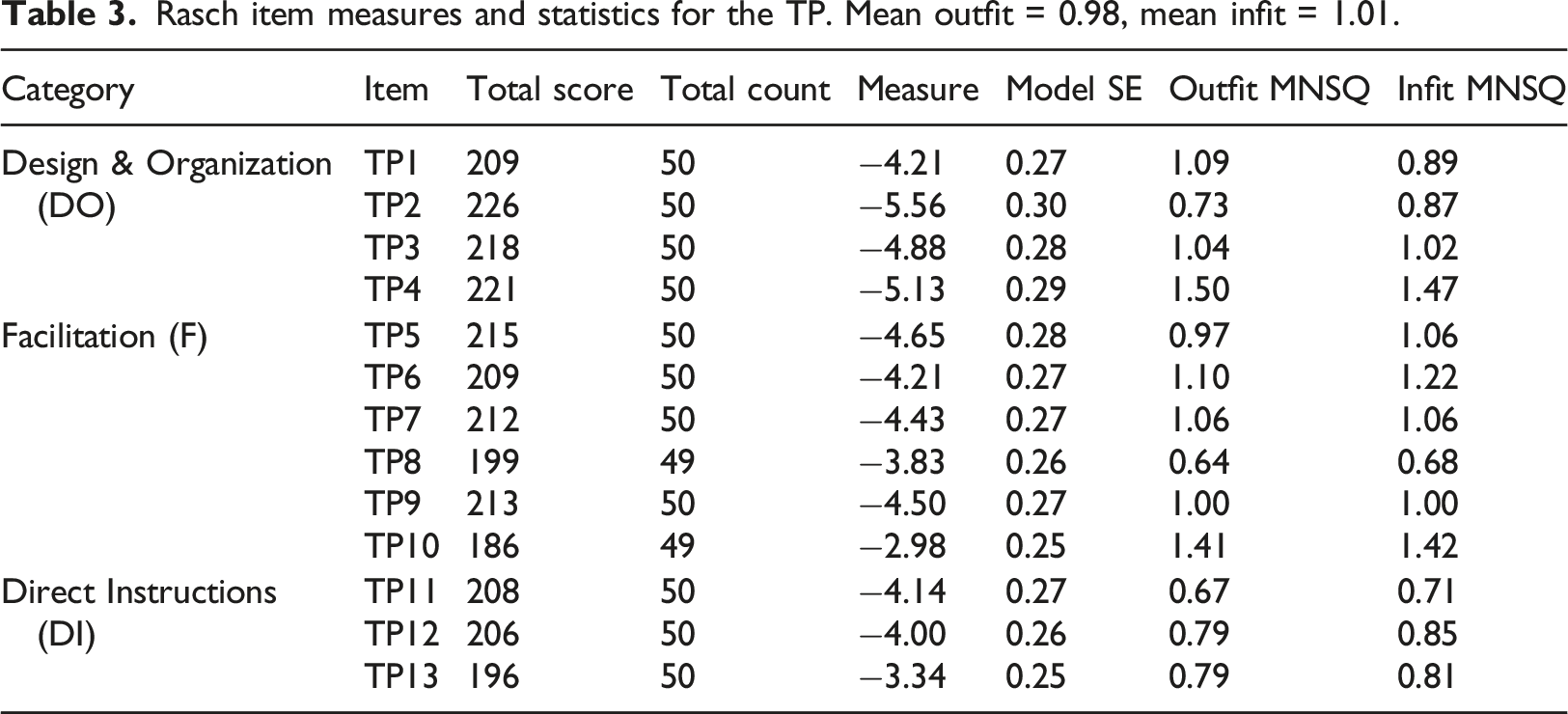
Rasch item measures and statistics for the TP. Mean outfit = 0.98, mean infit = 1.01.
Rasch item measures and statistics for the SP. Mean outfit = 0.92, mean infit = 0.97.
Rasch item measures and statistics for the CP. Mean outfit = 0.96, mean infit = 0.99.
Teaching presence
Figure 2 presents the order of item difficulty in the TP. Items that were easiest for the students to agree with, i.e., items with lower item difficulty on the logit scale, were primarily associated with the category DO, related to instructor communication. Items relating to the instructors’ actions and feedback were harder to agree with by the students. The items that were the easiest (TP2) and the hardest (TP10, TP13) for the students to agree with were somewhat separate from the other items on the continuum. Item difficulty in the TP. DO = Design & Organization, F = Facilitation, DI = Direct Instructions.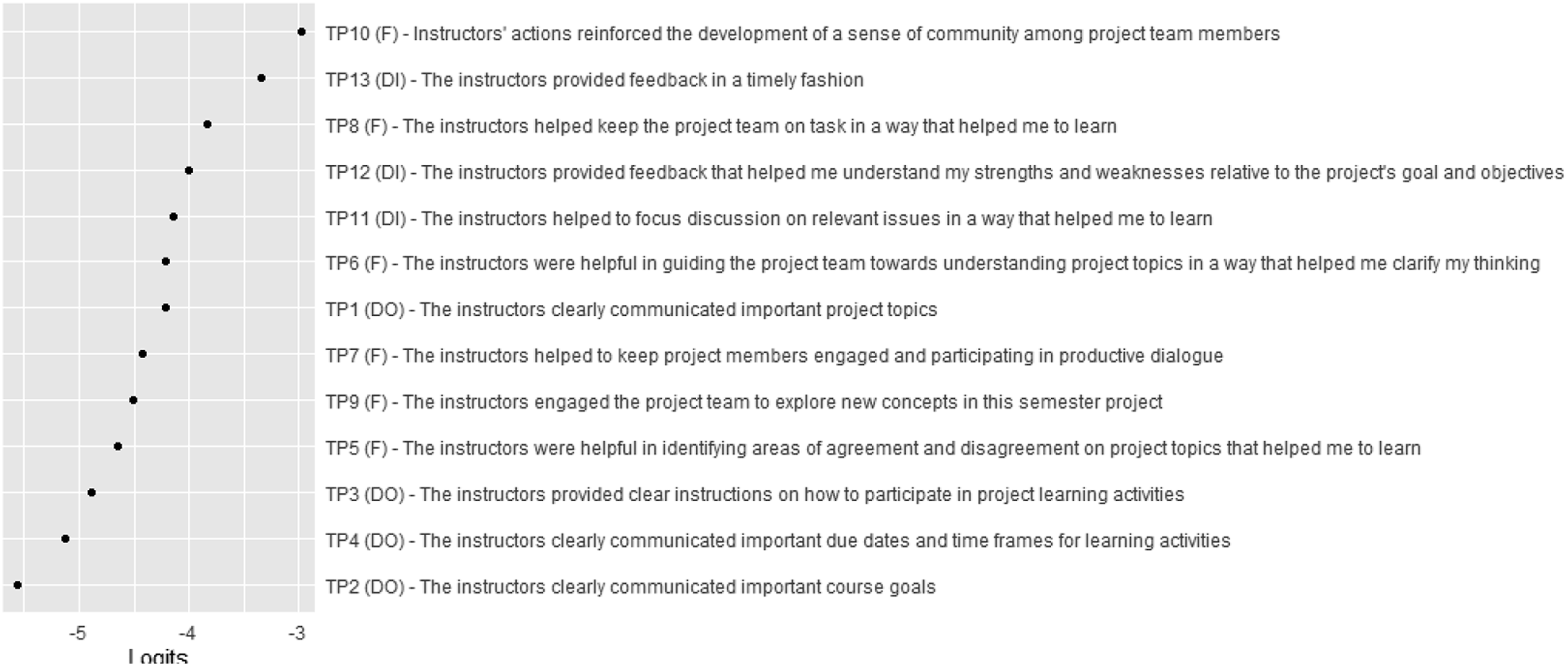
Social presence
Figure 3 shows the item difficulty in the SP. Items related to conversing and collaborating through the online medium were the hardest for students to agree with. Item SP22 (“Online discussions helped me develop a sense of collaboration”) was the most difficult for the students to agree with and was separate from the other items on the item difficulty scale. Item SP22 also had the most missing responses. However, the online medium was perceived as an excellent medium for social interaction by the students (SP16), with 89% positive responses. Meanwhile, the items associated with interacting with their team members were the easiest for the students to agree with. Item difficulty in the SP. AE = Affective Expression, OC = Open Communication, GC = Group Cohesion.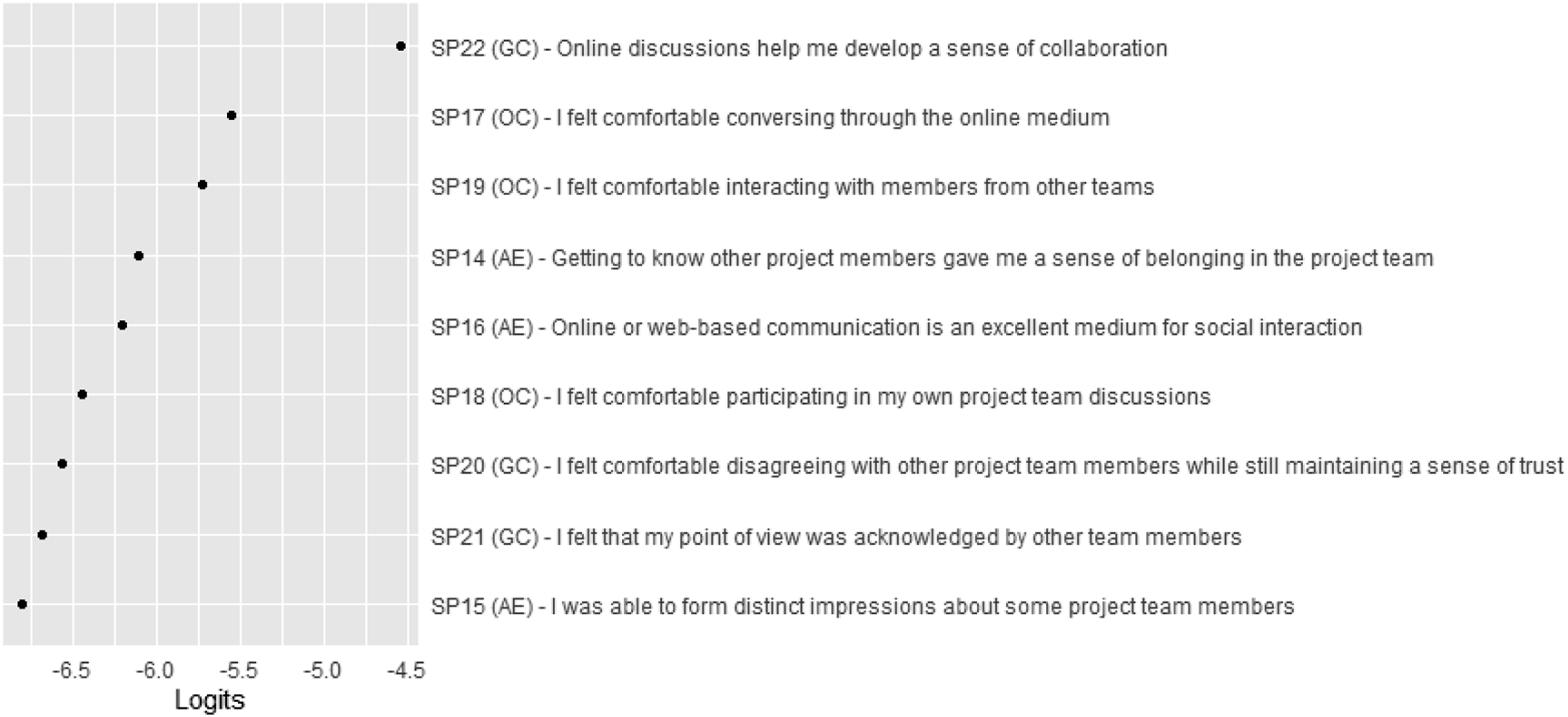
Cognitive presence
The order of item difficulty can be seen in Figure 4. Items CP23, CP27, and CP29 were excluded from the Rasch model based on the Outfit MNSQ values, as stated previously. Items CP26, CP24, and CP34 form a cluster on the low end of the logit scale and were the easiest for the students to agree with. Item Q28, relating to online discussions as a medium for appreciating different perspectives, was the hardest for the students to agree with. Item difficulty in the CP. TE = Triggering Events, E = Exploration, I = Integration, R = Resolution.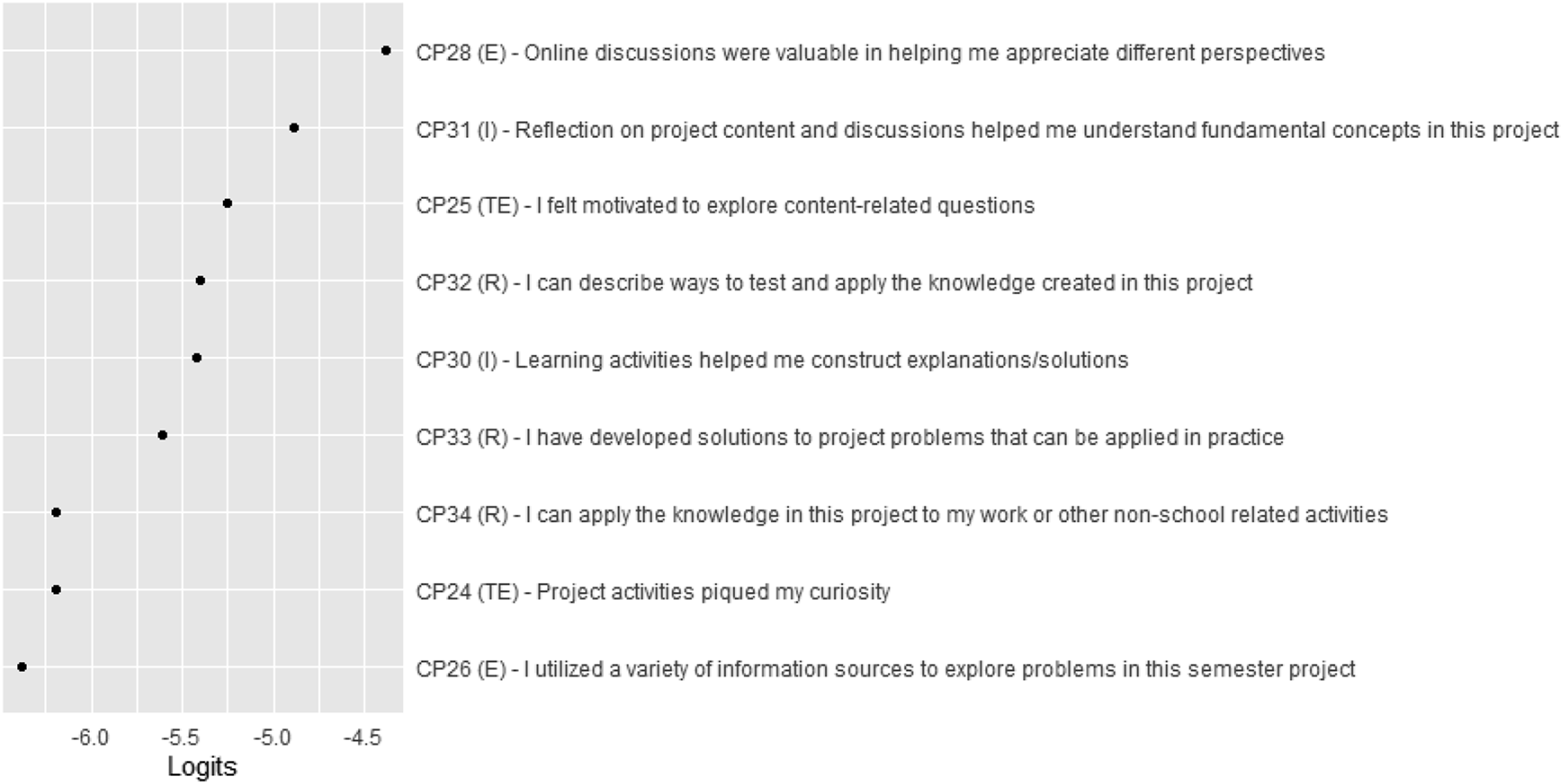
(RQ2) Use of TCP and Developer Platforms
The analysis of the data produced by GitLab during the semester project is shown in Figure 5. The data contained 1,154 commits in total, a number that visibly increased towards the end of the semester. The number of commits was the lowest during the fall vacation in week 42, although there were plenty of commits in the previous week. Most commits were made during the two days preceding a project deadline, and a few commits were submitted after the deadline. Commits were made mostly during the weekdays, but some commits were also submitted on the weekends. Commits took place mainly during office hours, and the number of commits was highest at noon. Some commits were also done late at night. The contents of the subject field left in connection with the commits included both professional messages, as well as non-descriptive comments, such as “stuff” or “fix.” GitLab usage statistics.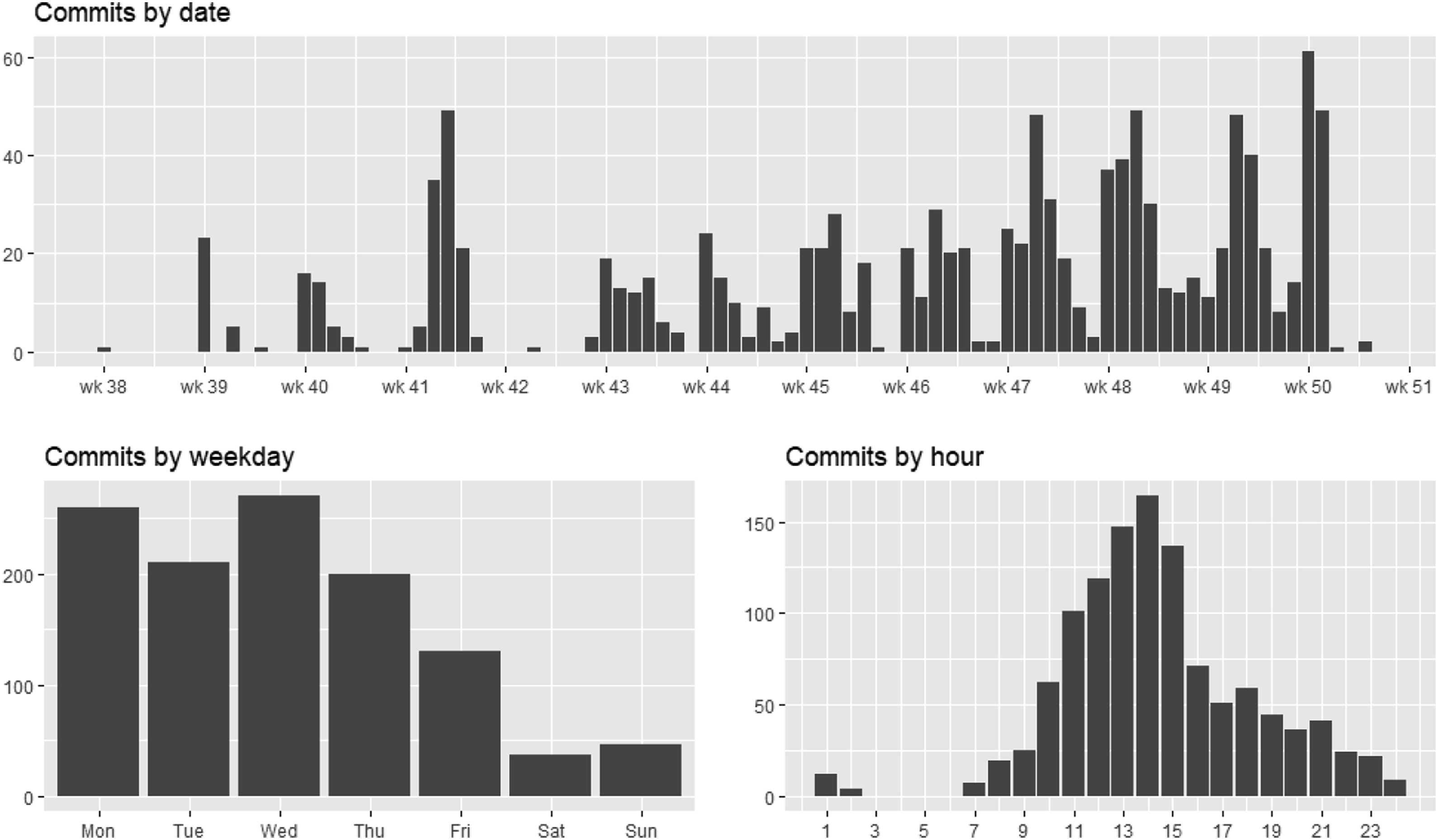
The message data from the Mattermost TCP are presented in Figure 6. Overall, 297 messages were sent to the public communication channels by 35 users, including five teachers. Given that 56 students were enrolled in the integrated semester project, many did not send any messages to the public channels. The fall holiday was reflected by a low number of messages, as with the GitLab data. Communication mainly took place during office hours and on weekdays. Mattermost usage statistics.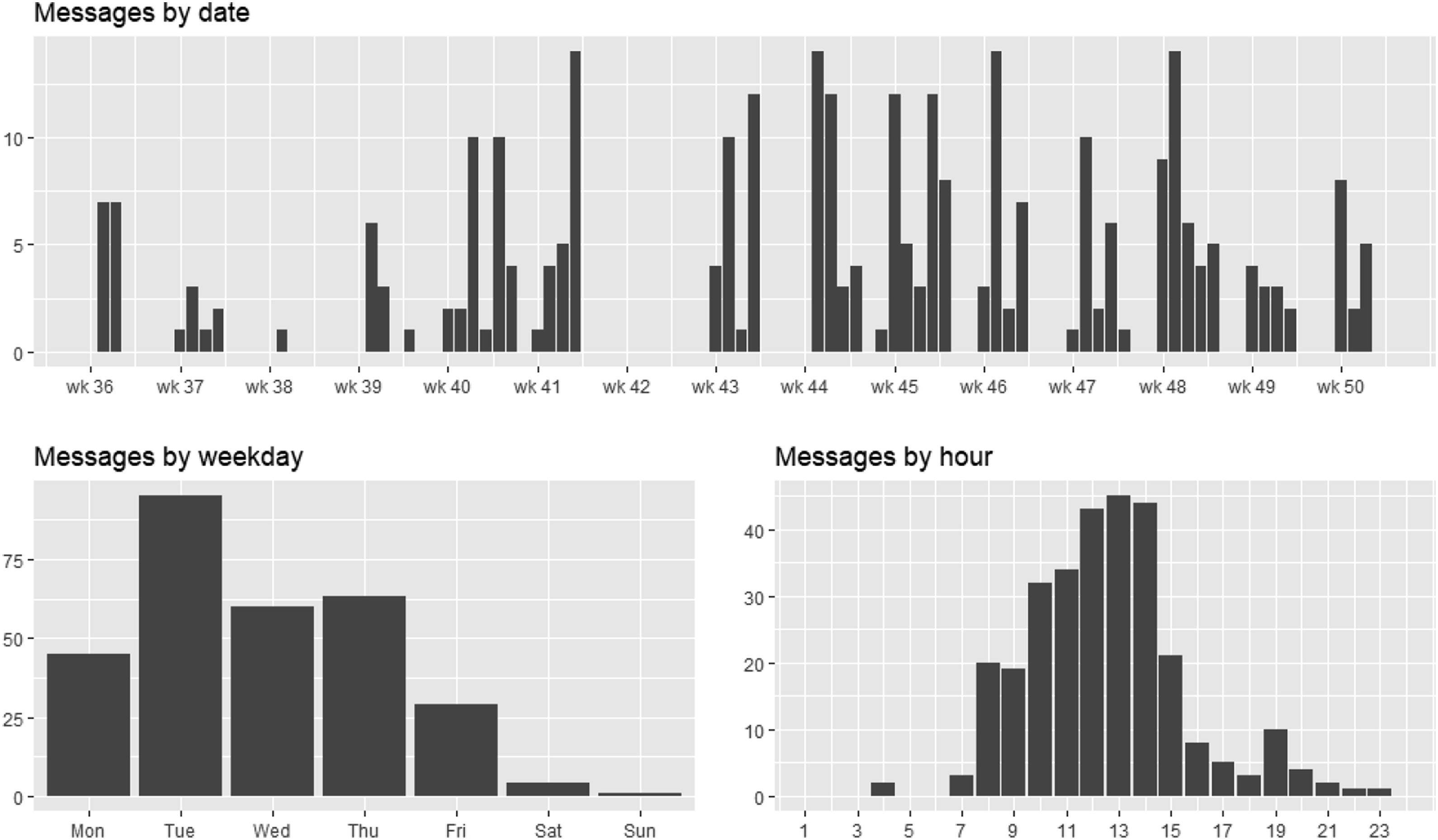
Discussion
The purpose of the present study was to examine students’ blended learning experiences with project-based learning through the TP, SP, and CP dimensions of the CoI framework. The students mainly agreed with the items in all three presences, suggesting an overall positive learning experience. As such, the differences observed through the Rasch RSMs were relatively small, and even items that were the most difficult for the students to agree with were largely agreed upon. Moreover, the item difficulty visualizations based on the Rasch model may represent the viewpoint of students with a more positive view of the blended learning approach, as students excluded from the Rasch model based on Outfit MNSQ had a higher proportion of negative responses when compared to the other students. Negative experiences may have been, for instance, because the students did not experience belonging with the group as much as other respondents or because PjBL or blended learning was perhaps an inappropriate learning approach for them. The final Rasch models had relatively high separation reliability in terms of both items and persons, suggesting that the model fit the data well.
Students’ responses to items related to the TP were mainly positive, and items related to teacher communication were the easiest for the students to agree with. The most difficult items to agree with were related to the instructors’ actions in developing a sense of community among project team members (TP10) and providing timely feedback (TP13). Cubric, 2013 found that receiving regular feedback from the instructor was a key factor in group cohesion, reinforcing the importance of the TP. The agile framework Scrum was utilized, including sprint reviews in which the instructors participated. One of the advantages of the Scrum approach in PjBL is receiving regular feedback from the instructor (Fernandes et al., 2021). In addition to regular feedback, timing is also essential and could possibly be improved by deploying learning analytics. For instance, Rios et al. (2019) present a data processing pipeline that collects information from the Git repository to understand a learning experience. The pipeline could provide new indicators and triggers for instructors to provide timely feedback. Hepburn et al. (2021) propose a strategic framework to provide continuous feedback through automated, ongoing, peer-led, and teacher-led feedback. In addition to the instructors’ feedback, other media could be further utilized to support group cohesion and enable more timely feedback. Lam, 2015 suggests an extension of the CoI model by introducing a fourth presence called the autonomy presence, in which the students take over the instructor’s role in deciding and sharing the content and initiating and directing the discourse.
The results of the SP model indicate good group cohesion among project teams, and they highlight challenges related to online communication. Items related to communicating with other team members were the easiest to agree with by the students. Social skills and collaboration can be seen as valuable from the perspective of both industry requirements and student wellbeing. Effective communication is the starting point for business-to-university collaboration and business-oriented student projects, as Chen et al., (2013) noted in their research on the impact of collaborative platforms on academia and industry. Moreover, according to Camarinha-Matos et al., (2017), collaboration is essential to most challenges in Industry 4.0. The results of the earlier analysis and exploration phase of the present DBR indicated that students were concerned about losing sociality and disconnecting from instructors when transitioning into a blended learning model (Mielikäinen, 2021). However, the present study suggests that blended learning did not negatively affect sociality, although the SP should be considered when introducing more online-based learning. Even though online communication was stated to be an excellent medium for social interactions by a vast majority of students, items related to their experiences in online discussions were the most difficult to agree with. In addition, very few messages were sent to the public channels of the TCP. One possible explanation is that the students may have opted to use private channels or other online communication platforms in their team communication if they were, for instance, dissatisfied with the TCP provided by the UAS. Switching between means of communication is now a rule rather than an exception (Lee et al., 2021), and using a variety of tools should be relatively easy for ICT students. In addition, the students had the opportunity for self-regulated onsite work during office hours, in which case chat-mediated communication would not be necessary.
Design principles to be transferred for the overall DBR study.
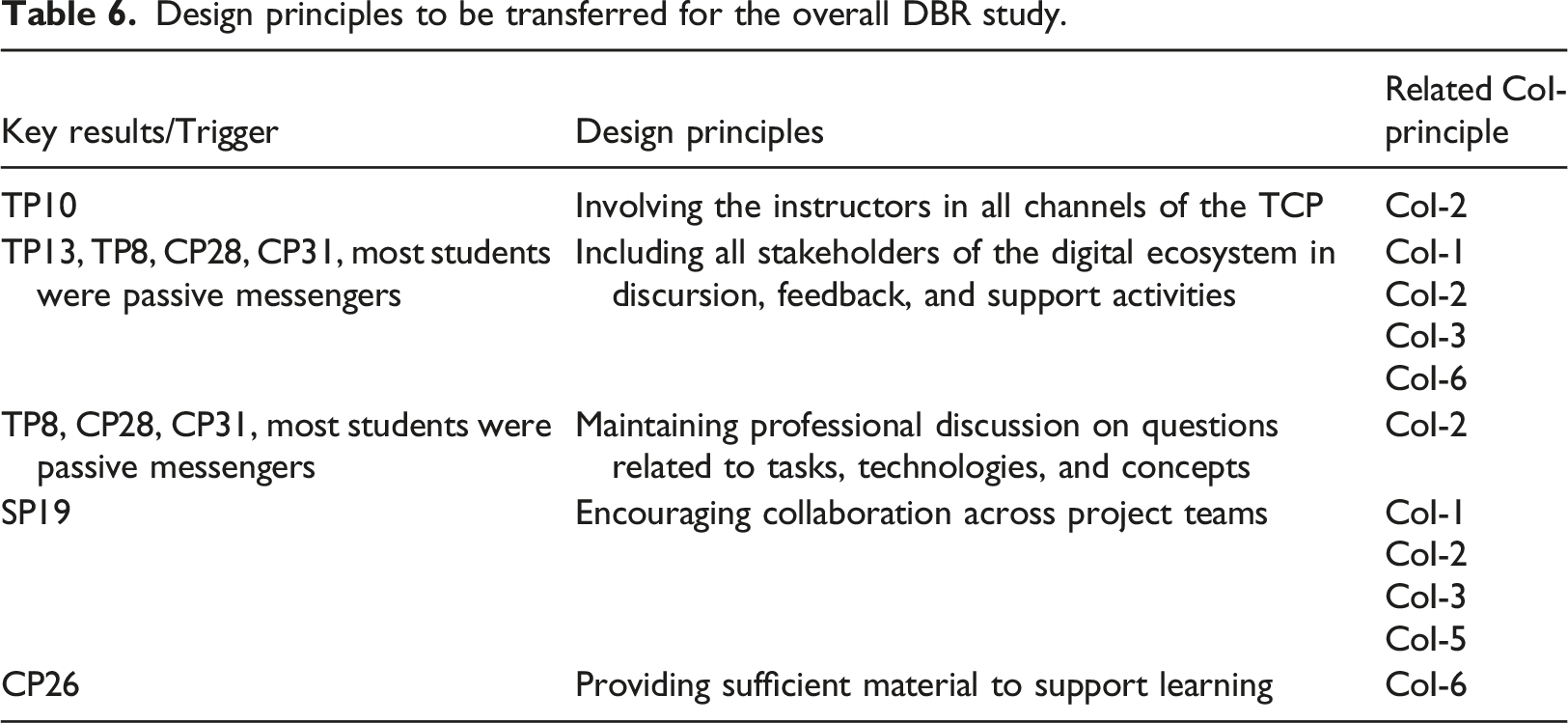
First, the involvement of instructors in all TCP channels may foster cohesion. The results in TP10 suggest the need to strengthen the instructor’s role in terms of project team cohesion. Instructors should also have access to the private channels of the project teams. Garrison (2016: 121) suggests that instructors should be less formal and use, e.g., humor to lighten the atmosphere. Second, activating all stakeholders in the digital ecosystem to TCP’s discussion, feedback, and support functions could help provide feedback. The results of TP13, “The instructors provided feedback in a timely fashion,” indicate that the amount and frequency of feedback should be increased, whereas the potential for additional input by the facilitator may be limited. The results in TP8: “The instructors helped keep the project team on task in a way that helped me learn,” CP28: “Online discussions were valuable in helping me appreciate different perspectives,” and CP31: “Reflection on project content and discussions helped me understand fundamental concepts in this project,” as well as the Mattermost log data analysis result, in which the vast majority of students proved passive messengers in public channels, suggest the need to encourage conversation about tasks, technologies, and concepts. Bringing all stakeholders together in the same community in the TCP can encourage students to engage in ongoing professional discussion, as well as the critical reflection and discourse described by Garrison (2016: 112). Further, the results of SP19 indicate a threshold for communicating with other teams, suggesting the need to encourage collaboration across project team boundaries. Establishing a community connected to the digital ecosystem using TCP and developer tools following DevOps’ collaborative principles and philosophy (Lopez-Fernandez et al., 2021) could, after orientation, dismantle silos. Finally, the results in CP26: “I utilized a variety of information sources to explore problems posed in this semester project,” were positive, triggering the design principle to provide sufficient digital material to support learning. Open educational resources and massive open online courses (MOOCs) enable the support of independent learning (Gürdür Broo et al., 2022) alongside the core course material.
There is a clear need to incorporate remote work and industry practices into teaching and learning. More research is needed on blended and project-based learning with the increasing amount of online learning. Further studies are also needed to explore how learning experiences change when a setting such as that in the present study is implemented increasingly online, even completely.
The findings of the present study should be interpreted in consideration of certain limitations. First, the results cannot be directly attributed to blended learning or PjBL alone, as many factors may have influenced the students’ learning experience and no verbal or textual feedback was collected. Second, the items on the CoI survey were translated and adapted to fit the PjBL context, distinguishing the survey from the original CoI survey. This may have introduced challenges related to reflecting the results directly on the CoI framework, as well as comparing the results with other CoI studies. Third, the students’ experiences of blended learning and PjBL may have differed depending on whether they were faced with it for the first time or whether they have already developed a related routine, but data on year of study were not collected. Finally, the study was conducted in a single UAS, limiting the generalizability of the results.
Conclusions
Remote work practices and modern working methods in the industry have enlightened engineering education about the need to adapt e-learning solutions and move from traditional contact lessons to blended learning. Learning working life skills is essential already during higher education studies. The present study provides insights into students’ use of TCP and developer platforms, as well as results from the students’ individual learning experiences through the CoI model. The CoI framework was used to elucidate the learning experiences of ICT engineering students from the perspective of the TP, SP, and CP in the context of TCP-supported blended and project-based learning. The results show that students were widely satisfied in all three CoI subcategories, and differences among the CoI categories, as well as between individual items in the questionnaire, were relatively small. Items related to teacher instruction, interacting with team members, and applying knowledge to real-world problems were the easiest to agree with by the students, and items related to the teachers’ actions in developing a sense of community, timely feedback, and online communication were the most difficult to agree with.
Footnotes
Declaration of conflicting interests
The author(s) declared no potential conflicts of interest with respect to the research, authorship, and/or publication of this article.
Funding
The author(s) received no financial support for the research, authorship, and/or publication of this article.
Disclosure
No potential conflict of interest was reported by the authors.
APPENDIX A
Table A1. CoI questionnaire (published and licensed under CC BY-SA 4.0 in https://coi.athabascau.ca/coi-model/coi-survey/) adapted from Arbaugh et al. (2008). Reprinted from The Internet and Higher Education, 11, Arbaugh et al., Developing a community of inquiry instrument: Testing a measure of the Community of Inquiry framework using a multi-institutional sample, 133-136. Copyright (2008), with permission from Elsevier.
Survey item
Statement
TP1
The instructors clearly communicated important project topics
TP2
The instructors clearly communicated important course goals
TP3
The instructors provided clear instructions on how to participate in project learning activities
TP4
The instructors clearly communicated important due dates and time frames for learning activities
TP5
The instructors were helpful in identifying areas of agreement and disagreement on project topics that helped me learn
TP6
The instructors were helpful in guiding the project team towards understanding project topics in a way that helped me clarify my thinking
TP7
The instructors helped to keep project members engaged and participating in productive dialogue
TP8
The instructors helped keep the project team on task in a way that helped me learn
TP9
The instructors encouraged the project team to explore new concepts in this semester project
TP10
Instructor’s actions reinforced the development of a sense of community among project team members
TP11
The instructors helped focus discussion on relevant issues in a way that helped me learn
TP12
The instructors provided feedback that helped me understand my strengths and weaknesses relative to the project’s goals and objectives
TP13
The instructors provided feedback in a timely fashion
SP14
Getting to know other project members gave me a sense of belonging in the project team
SP15
I was able to form distinct impressions about some project team members
SP16
Online or web-based communication is an excellent medium for social interaction
SP17
I felt comfortable conversing through the online medium
SP18
I felt comfortable participating in my own project team discussions
SP19
I felt comfortable interacting with members from other teams
SP20
I felt comfortable disagreeing with other project team members while still maintaining a sense of trust
SP21
I felt that my point of view was acknowledged by other team members
SP22
Online discussions help me to develop a sense of collaboration
CP23
Problems posed increased my interest in project issues
CP24
Project activities piqued my curiosity
CP25
I felt motivated to explore content-related questions
CP26
I utilized a variety of information sources to explore problems posed in this semester project
CP27
Brainstorming and finding relevant information helped me resolve content-related questions
CP28
Online discussions were valuable in helping me appreciate different perspectives
CP29
Combining new information helped me answer questions raised in project activities
CP30
Learning activities helped me construct explanations/solutions
CP31
Reflection on project content and discussions helped me understand fundamental concepts in this project
CP32
I can describe ways to test and apply the knowledge created in this project
CP33
I have developed solutions to project problems that can be applied in practice
CP34
I can apply the knowledge created in this project to my work or other non-school related activities
APPENDIX B
Table B1. Distribution of answers for each item in the CoI questionnaire.
Item
Total
Strongly disagree
Disagree
Neutral
Agree
Strongly agree
Count
%
Count
%
Count
%
Count
%
Count
%
TP1
56
0
0.0
1
1.8
6
10.7
33
58.9
16
28.6
TP2
56
1
1.8
1
1.8
3
5.3
19
33.3
33
57.9
TP3
56
0
0.0
0
0.0
8
14.3
24
42.9
24
42.9
TP4
56
0
0.0
1
1.8
3
5.4
25
44.6
27
48.2
TP5
56
0
0.0
1
1.8
6
10.7
21
37.5
28
50.0
TP6
56
0
0.0
2
3.6
6
10.7
24
42.9
24
42.9
TP7
56
0
0.0
0
0.0
7
12.5
27
48.2
22
39.3
TP8
55
0
0.0
2
3.6
7
12.7
33
60.0
13
23.6
TP9
56
0
0.0
0
0.0
10
17.9
22
39.3
24
42.9
TP10
55
0
0.0
4
7.3
18
32.7
20
36.4
13
23.6
TP11
56
1
1.8
1
1.8
8
14.3
29
51.8
17
30.4
TP12
56
1
1.8
3
5.4
6
10.7
28
50.0
18
32.1
TP13
56
1
1.8
2
3.6
12
21.4
29
51.8
12
21.4
SP14
55
1
1.8
0
0.0
9
16.4
18
32.7
27
49.1
SP15
55
1
1.8
1
1.8
2
3.6
25
45.5
26
47.3
SP16
54
0
0.0
0
0.0
6
11.1
27
50.0
21
38.9
SP17
54
0
0.0
0
0.0
8
14.8
29
53.7
17
31.5
SP18
56
1
1.8
1
1.8
9
16.1
18
32.1
27
48.2
SP19
56
0
0.0
1
1.8
12
21.4
23
41.1
20
35.7
SP20
55
2
3.6
0
0.0
4
7.3
26
47.3
23
41.8
SP21
55
1
1.8
1
1.8
8
14.5
17
30.9
28
50.9
SP22
53
0
0.0
1
1.9
13
24.5
26
49.1
13
24.5
CP23
56
0
0.0
2
3.6
8
14.3
23
41.1
23
41.1
CP24
57
0
0.0
0
0.0
5
8.8
29
50.9
23
40.4
CP25
56
0
0.0
1
1.8
11
19.6
27
48.2
17
30.4
CP26
56
0
0.0
0
0.0
5
8.9
26
46.4
25
44.6
CP27
55
0
0.0
7
12.7
12
21.8
23
41.8
13
23.6
CP28
53
0
0.0
2
3.8
16
30.2
27
50.9
8
15.1
CP29
56
2
3.6
2
3.6
7
12.5
34
60.7
11
19.6
CP30
55
0
0.0
0
0.0
8
14.5
33
60.0
14
25.5
CP31
56
0
0.0
0
0.0
10
17.9
33
58.9
13
23.2
CP32
54
0
0.0
0
0.0
7
13.0
33
61.1
14
25.9
CP33
55
0
0.0
0
0.0
8
14.5
28
50.9
19
34.5
CP34
56
0
0.0
0
0.0
8
14.3
22
39.3
26
46.4