




Abstract
The study aimed at finding out the adoption of digital marketing in estate agency companies in Malawi. The key issue in this study is to check if the companies have embraced the current dominating use of online advertising of the services that they offer to the community they serve through digital marketing. Specifically, the study focused on finding out the digital marketing channels that are used in the industry, the challenges and the strategies in place to achieve the digital marketing goals. The study targeted 10 major real estate companies in Lilongwe city, the capital of Malawi. Out of these 10, six (60%) companies responded to the questionnaire. The study established that estate agency companies in Malawi have adopted online use of digital marketing in selling their services. The channels that are currently in use include Email, Affiliate Marketing, Website and Social Media. On social media, the companies are using Facebook, Instagram, Twitter and WhatsApp. Further, the study revealed that the companies face numerous challenges in their digital marketing drive. These include expensive purchase costs for digital gadgets, lack of well-trained personnel in digital marketing, high operating cost on data usage from Internet service providers and unreliable Internet connectivity. Considering these challenges, some organizations have put in place measures aimed at minimizing the current situation and increasing their customer base through development of mobile apps, linking of websites to other news websites for broader access and frequent updates of their respective websites. Lastly, the study therefore recommends that organizations should aim at equipping their personnel with digital marketing skills, investing more finances in purchase of digital gadgets to increase the level of interaction with the consumers on the property market.
Introduction
The expansion and prevalent use of Internet technologies have greatly transformed the way society connects both in their daily and expert life. In today’s world, much of the business is carried out over digital networks that connect people and companies (Armstrong et al., 2015). Digital marketing is defined as the practice of promoting products and services using digital distribution channels to reach consumers in a timely, relevant, and personal and cost-effective manner (Merisavo and Raulas, 2004; Morgan et al., 2009). Different Internet platforms are occasioned to connect people and companies. Technology is constantly changing and the evolution of marketing has drastically changed the way marketers reach their consumers. It is argued that the adoption of e-business in many companies has been seen to improve efficiency and productivity (Sun and Ifeanyi, 2014).
The benefits that the Internet is expected to deliver will not be realized unless a company adapts its organization structure and methods to meet the fundamental new ways of working that this new technology makes possible (Jackson and Harris, 2003). The availability of Internet has given individuals and companies chance to interact without the need for physical meetings. Consumer socialization theory predicts that communication among consumers affects their cognitive, affective and behavioural attitudes (Ward, 1974). According to Bart et al. (2005), digital marketing may use the Internet and Information Technology to extend and improve traditional marketing functions.
Problem statement
Human communications have changed considerably due to engagement on social networks. According to Boyd and Ellison (2007), social network is any web-based application that allows an individual or group profiling to connect systematically with others who are on the same platform. Similarly Chu and Kim (2011) argues that social network is part of Information and Communication Technology based application, using Internet communication technology which allows creation and exchange of generated content. The rapid growth of web platforms has facilitated behavioural changes related to activities, habits and interactions (Tiago and Veríssimo, 2014). Malawi’s population growth rates trend has shown that the population is constantly increasing from 4,039,583 in 1966 to 17,563,749 in 2018 (NSO, 2018). This has led to increased pressure for purchase and how to market the needed or available real estate services.
Changes in consumer behaviour require organizations to strategize their marketing activities in line with the changes in the digital space. Companies are fighting with the changing customer values, and orientations, increased global competition, environmental decline, economic stagnation, political and social problems (Kotler, 2011). Much work has been done in developed countries to identify the factors affecting e-business adoption (Peltier et al., 2009), comparatively few studies have been conducted in the context of developing countries. This has not spared the real estate industry in Malawi, hence need for the companies to develop strategies and measures that will work towards minimizing the stated challenges by adoption of e-business. Therefore, this research aims at investigating if the companies have adopted the digital way of marketing their services in order to reach out to their clientele. Against this background, therefore, this study seeks to investigate the adoption rate of digital marketing and the channels used, identification of challenges and strategies that are in place towards e-business adoption by the estate agency firms in Malawi.
Research questions
There has been a diverse response from the real estate industry and real estate agency in particular by the practitioners and consumers on the new trend of the digital world. This study tries to find more on the use of digital marketing in Malawi from the organization perspective. In order to achieve the main objective of the study, researchers focus on the following specific questions:
Literature review
Digital marketing channels
The current Internet boom has transformed marketing tools and its strategies. The Internet has become one of the ways of maximizing different stages and services for companies. Online communities offer an opportunity to organizations to have a better customer relationship management systems (Ridings and Gefen, 2004), for example giving a rise in new developments where business can improve. According to Lu and Hsiao (2010) on platforms where consumers have social interaction, members become familiar to one another thereby providing source of trust. Organizations can reach out to consumers as shown in Table 1 through several digital marketing channels.
Online digital marketing channels.
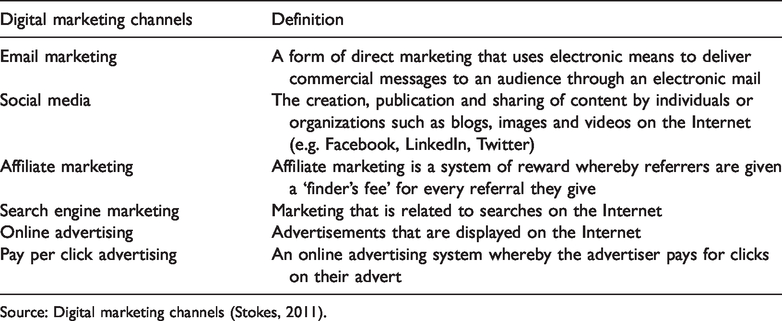
Source: Digital marketing channels (Stokes, 2011).
Many countries in Asia are taking advantage of e-commerce through opening up (Waghmare, 2012). Opening up is essential for the promotion of competition and diffusion of Internet technologies. Shoppers in metropolitan India are being driven by e-commerce; these consumers are booking travels, buying consumer electronics and books online (Gangeshwer, 2013). Recent advances on the Internet and the development of social media have facilitated the interconnectivity of consumers (Hajli, 2014).
In order to be successful in social media marketing, companies need to create a buyer persona and then develop and constantly adjust the online marketing strategy according to the interests of the customers for long-term success (Vinerean et al., 2013). Managers should recognize the importance of social media sites in influencing online shopping by intensifying and targeting different types of customers and taking initiatives to recognize the highlight of customer interests. The Internet is a formidable tool for marketing (Furrer and Sudharshan, 2001).
Consumer impact
The rise of the Internet access has provided a new channel for consumer and brands to connect, and also it has provided consumers with more choice, influence and power (Stokes, 2011). The Internet has enabled organizations to reach consumers on a worldwide scale, whereby consumers survey, select and purchase products from organizations around the world (Al Kailani and Kumar, 2011).
Lately many organizations are capitalizing in digital marketing in order to expose the consumers to their products or services. According to Stone and Woodcock (2013), digital marketing is used throughout the consumer lifecycle, from brand awareness creation to encouragement to purchase, brand usage assistance and management of after sale consumer service. Findings by Hassan et al. (2015) indicates that social media is a powerful marketing channel which attracts and influences consumers' purchasing decisions.
Consumer buying behaviour and characteristics
There are several factors which make a consumer behave in a certain way (Khaniwale, 2015). These factors come into play when a consumer is trying to find answers to the questions of: what to buy, why to buy, when to buy, how to buy, to buy or not questions are the ones which influence the behaviour. According to Khaniwale (2015), the factors can be classified as external (Cultural and Social) and internal (Personal and Psychological) factors. Figure 1 illustrates the important external and internal factors affecting consumer buying behaviour.
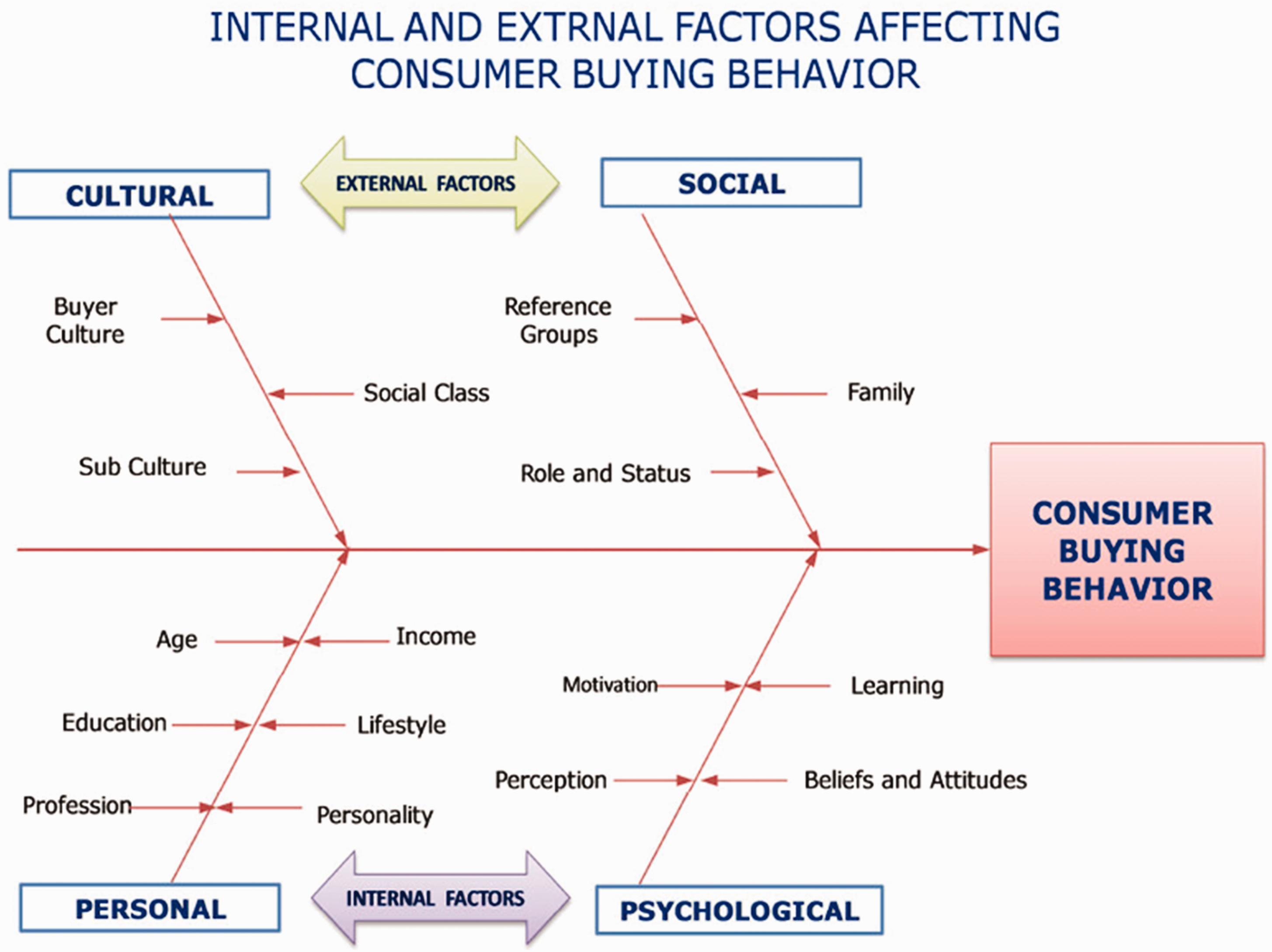
Fish bone diagram illustrating the important external and internal factors affecting consumer buying behaviour. Source: Khaniwale (2015), Consumer buying behaviour.
Cultural, social and personal factors determine a consumer’s behaviour on his or her purchasing trends. A consumer’s wants and behaviours are influenced by culture (Ruediger Kaufmann et al., 2012). In many scenarios, a consumer’s culture is influenced by the values and perceptions learnt from family members or the society to which a consumer is exposed (Reddy and Reinartz, 2017). Organizations must be familiar with their target audience considering that in a society they have roles and status, which influences their purchasing behaviour.
Geographic regions, nationalities, religion and racial groups are subtitles of culture (Khaniwale, 2015). These provide details of their identification in the socialization of the consumers. An example could be a group of consumers who belong to a religion that does not allow consumption of some food. In this case, an organization’s digital marketing channels design should target specific market, as individuals will relate to such content differently.
Social factors include reference groups, families’ roles and status. Most of the behaviours demonstrated by the consumers are influenced by reference groups, namely family, friends, colleagues at work places or religious groups (Khaniwale, 2015). It is important for organizations to note that reference groups drive consumer’s lifestyle. Opinion leaders are the most influential consumers in many groups. Tomczak et al. (2018) define an opinion leader as a consumer who offers advice and information on products in the societal groups. In this situation, it is important for organization in estate agency to be in cognisant with opinion leaders when developing digital marketing content.
The other concept on consumer characteristics is the personal factors, namely age, and life style, occupation, and also economic circumstances, personality and self-concept, and lifestyle values (Khaniwale, 2015). Age and stage in one’s life cycle determines consumption behaviour. When one reaches a certain age in life, he or she will no longer be willing to be staying single. This in turn will mean that the preference in the type of a housing unit will also change to suit the current needs and situation. Therefore, any organization should ensure that they develop digital marketing content adapted to these behaviours to achieve the ultimate goal.
Occupations of individuals determine their spending behaviour. When consumers economically expand or retract, the spending patterns follow suit since this has direct impact on the amount of disposable income. Personality incorporates the psychological characteristics of the consumers that respond to environmental stimuli and impact buying behaviour (Reddy and Reinartz, 2017). These include adaptability, sociability, autonomy, differences and defensiveness.
Introduction to digital marketing
The present technology provides means of accessing, storing and sharing information, thus enormous volumes of data consumption. This is because we are living connected and digitized. Figure 2 shows the Internet users in the world by their geographic regions.
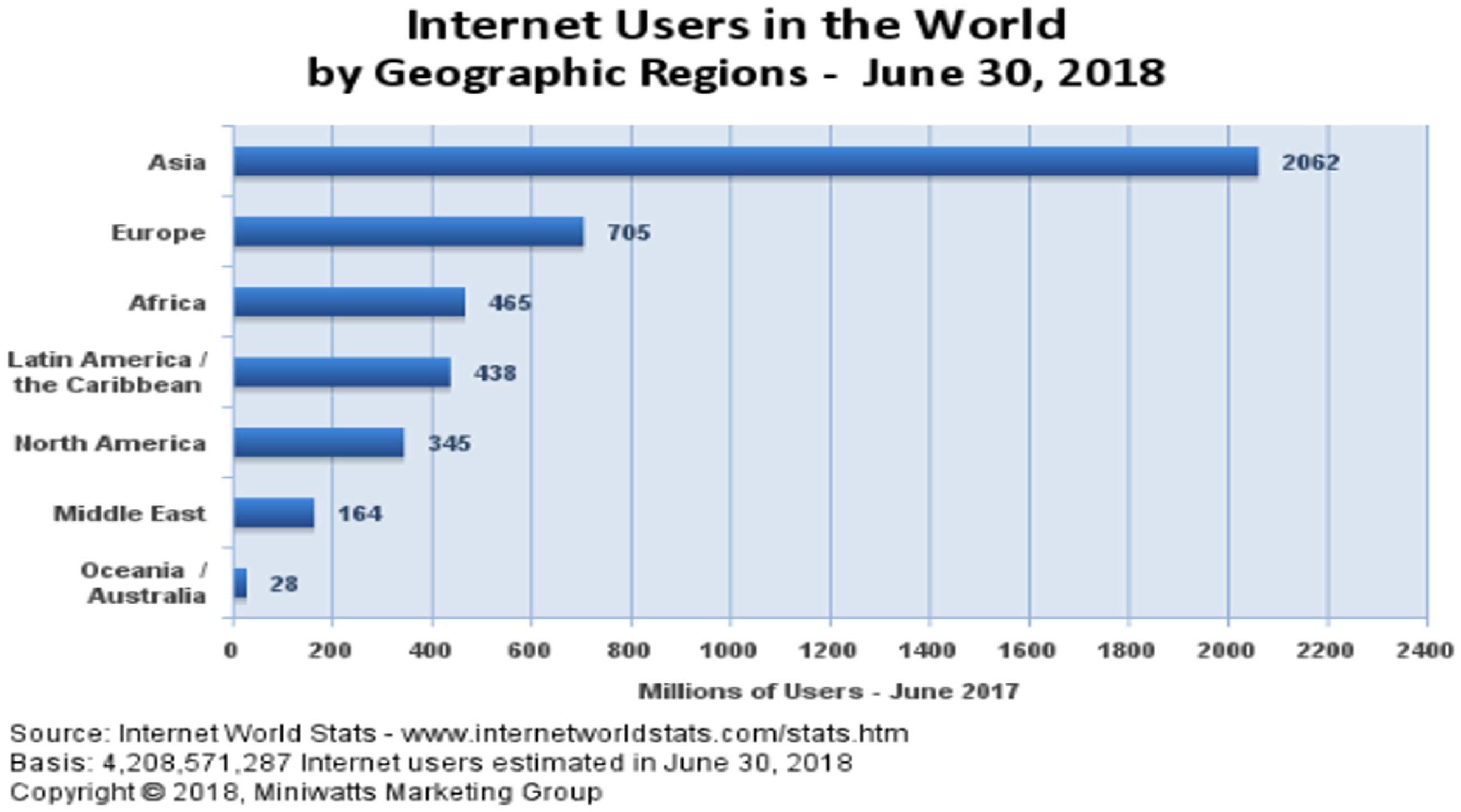
Internet users by geographic regions.
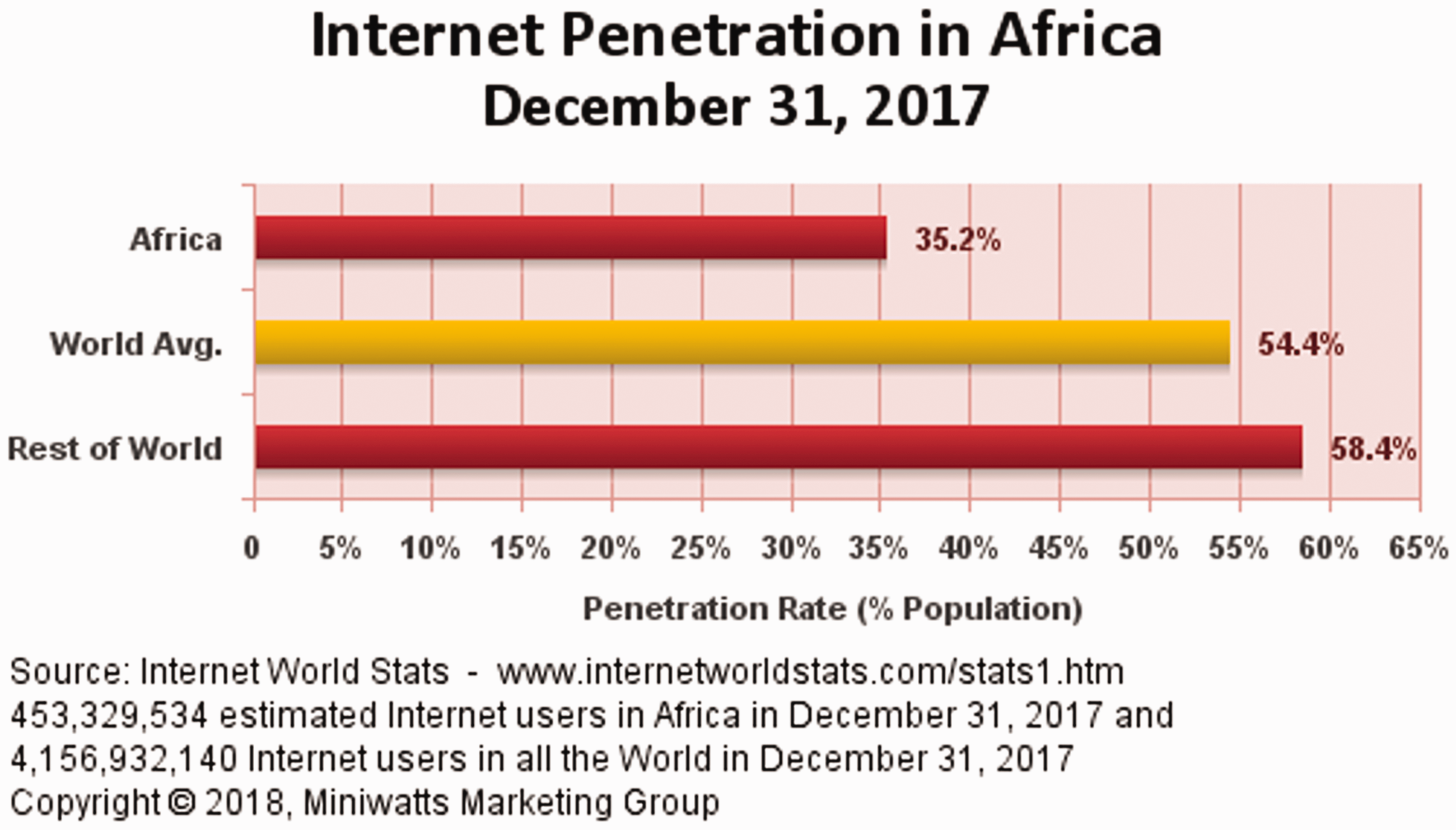
Internet penetration in Africa.
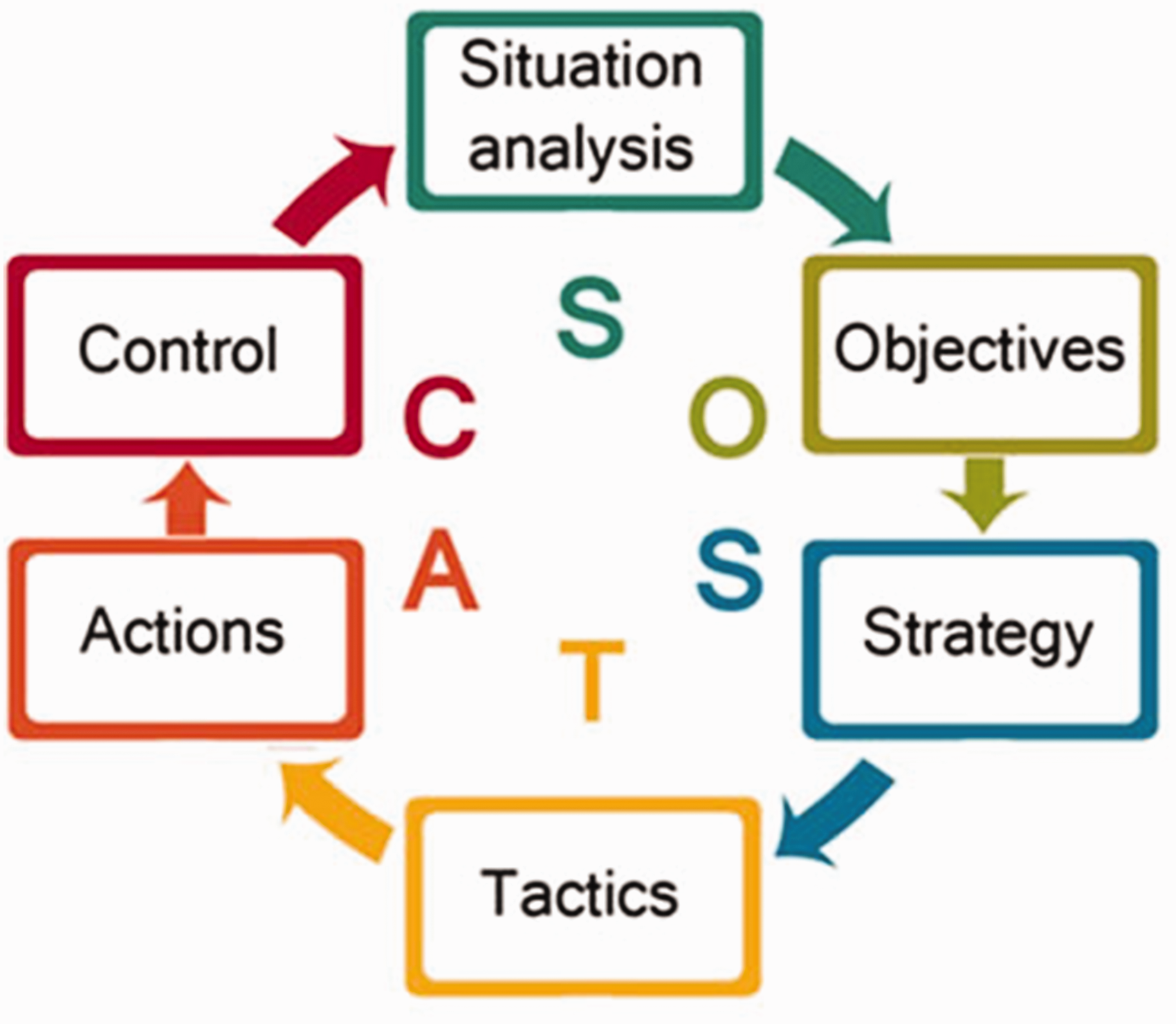
SOSTAC model. Source: Chaffey and Smith (2013).
Internet penetration in Africa
Africa has experienced a rampant increase in use of Internet. Figure 3 shows internet penetration in Africa. In Malawi, the total number of Internet users is at 1,828,503, that is 9.5% of the total population (Ryan, 2014). The current penetration rate is 3.8%. Today companies acknowledge the power and influence of digital marketing, its great potential and opportunities, allocate more budget to that area and incorporate it into standard practice (Ryan, 2014).
Culture and technology adoption
Culture is one of the key elements that enables people to develop and launch innovative ideas (Fauscette, 2010). People’s resistance to new ideas, influenced by fear, absence of knowledge, religious and cultural beliefs and other traditional practices have often been strong, hence slow accumulation of information (Naimi and French, 2010). Cultural conditions determine the adoption ways of existing innovation (Herbig and Dunphy, 1998). Cultures that value creativity, technological ability and higher education are more successful at adopting innovations (Lekhanya, 2013). For countries to be innovative, cultural environment is of paramount importance (Fernandes et al., 2013). Culture is considered to be the general expression of humanity and the expression of its creativity (Lekhanya, 2013). Cultural differences may explain differences in perceptions of the adoption and diffusion of information technologies.
Digital marketing overview
According to Chaffey and Smith (2013), digital marketing integrates the usage of Internet or digital machinery such as Internet, web or mobile for the marketing drives in order to attain the marketing aims. Digital marketing refers to the marketing function that takes place in electronic market place and achieves the definition of marketing to identify, anticipate and satisfy customer needs profitably and efficiently in the online environment (Chaffey and Smith, 2013).
Digital marketing refers to the marketing purpose that takes place in the automated marketplace and fulfils the meaning of marketing to identify, anticipate and satisfy customer needs profitably and knowledgeably in the online environment (Magrath and McCormick, 2013). Digital marketing allows companies to capture and attract online prospective by providing value-adding content and customers to the brand. Through an interactive approach, digital marketing allows to connect with a wider audience, while at same time it allows a precision targeting of specific niche segments with valuable content (Pike and Page, 2014). Therefore, digital marketing is interactive, targeted, dynamic and sophisticated means of customer engagement and retention, marketing communication, customer service, product promotion, brand building, relationship management as well as source of customer value formation that takes place in a digital environment.
Digital communication model
Digital marketing communications serve to involve customers and create exceptional digital customer experiences, whether it is raising brand awareness, communicating or interacting with customers, promoting products or maintain relationships with the customers. Digital communication can happen in different online contexts, such as Business-to-Business, Business-to-Consumer, Consumer-to-Consumer and Consumer-to-Business (Chaffey and Smith, 2013). In different contexts, communication flow addresses to different recipients. Internet technology provides a multi-stage digital communication model, where people are connected and share feedback, experiences, knowledge and interact with each other. It is a trialogue among the sender, an opinion leader and other customers.
When consumers form communities to share opinions and talk to each other, the flow of communication becomes a web of conversations revolving around a topic (Chaffey and Smith, 2013). Therefore, to be closer to their customers companies should facilitate and encourage digital communication, which in the end helps in developing strong relationships with customers (Chaffey and Smith, 2013).
Digital marketing ensues in three forms of channels. There are three general types of media classes specifically: owned media, paid media and earned media. Owned media refers to digital properties of a brand, such as website, blogs and social presence. Paid media is online advertising that needs investment, while earned media is publicity spawned by partner networks, such as publishers, bloggers, influencers, campaigners and word-of-mouth (Chaffey and Smith, 2013).
Strategic digital marketing planning
It is tough, if not likely to make incorrect decisions and embark on right decisions without proper strategy. By understanding that digital marketing has huge potential, a company can achieve great success. Studies have shown that 46% of organizations do not have digital marketing strategies resulting in missing opportunities and encounter challenges (Chaffey and Smith, 2013). Therefore, proper digital marketing use is important for its effectiveness. Organizations should have established priorities, goals and road map of planned activities that support the digital marketing efforts. The online context is very competitive and therefore needs good planning and a clear marketing strategy so that the organization remains competitive.
Ryan (2014) emphasizes that a well formulated and coherent digital marketing strategy is necessary for achieving business goals, making the right decisions and focusing on the right element. Therefore, digital marketing strategy implies the use of digital marketing tools to a well-defined strategy with the aim of reaching the company objectives. Organizations having effective digital marketing strategies are able to filter out and prioritizes’ most important and relevant marketing tools, hence a successful digital marketing strategy defines how the digital communication tools can be used and applied effectively for digital communications (Labrecque et al., 2013). The following section presents the detailed newest strategic digital marketing planning tools.
SOSTAC strategic model
A digital plan is to support a digital orientation of an organization, and specifically to align its goals, strategies and tactics. SOSTAC acronym stands for Situation, Objectives, Strategy, Tactics, Action and Control steps (Chaffey and Smith, 2013). SOSTAC developed by Paul Russell Smith in the 1990s is one of the useful tools for structuring the online marketing strategy. Figure 4 illustrates the SOSTAC model.
The SOSTAC model by PR Smith is a rational and extensively used tool for the strategic marketing planning. It is a system for developing and managing marketing strategies, creating marketing plans and campaigns (Chaffey and Smith, 2013). SOSTAC outline is predominantly applicable to the digital marketing context, as it aids to evaluate structure and manage the key strategies, tactics and activities of a firm combined with digital marketing communication techniques (Chaffey and Smith, 2013). The main planning stages for a digital marketing strategy are the following:
Additionally, a plan needs three key resources, referred to as 3Ms, which are human resources, budgets and timescales (Chaffey and Smith, 2013).
Methodology
Researchers in this study used a quantitative survey. Research data were gathered using a questionnaire that contained closed-ended questions. Questionnaires and a cover letter explaining the purpose of the research were sent to 10 participants via email and WhatsApp. Follow-ups were done using telephone calls. The questionnaire aimed at sourcing information on the use of digital marketing considering the SOSTAC strategic model in the background. The questionnaire was structured to solicit data according to the following research questions: what are the digital marketing channels used in online advertising by estate agency companies in Malawi?; what challenges are encountered by the estate agency organizations in digital marketing use?; what strategies have companies put in place to advance the digital marketing agenda?. Researchers used Microsoft Excel and the Statistical Package for Social Sciences to analyse data.
Research participants
The study employed purposive sampling in the identification of the study participants. Once the companies were identified, a telephone call and WhatsApp message was made to each company’s senior management to explain the purpose of the study and to create rapport. Researchers only targeted 10 well-established practicing licensed estate agency firms in Lilongwe, the capital city of Malawi. It should be known that at the time researchers were conducting the study there were only 10 well-established licensed estate agency firms in Lilongwe. +The study selected estate agency sector due to increased consumer demand of its services on the market. In addition, the competitive globalized market place due to unregulated penetration of unqualified and unlicensed individual calls for strategies to improve business efficiency in estate agency companies in Malawi. Considering the nature of the study, research ethics were followed by attaching a covering letter to each questionnaire which sought consent from participants to answer the questionnaire. The covering letter served to inform the participants that it was voluntary to participate in the study and further provided assurance for confidentiality of their identification. The cover letter further assured participants that the information provided was going to remain confidential and to be used for coming up with a research article to be published in a peer-reviewed journal as a mode of disseminating the study results.
Findings
In this section, researchers present and expound the findings in relation to the data we collected through questionnaires. We present and expound the findings in relation to the research questions supporting this study as follows: what are the digital marketing channels used in online advertising by estate agency companies in Malawi?; what challenges are encountered by the estate agency organizations in digital marketing use?; what strategies have companies put in place to advance the digital marketing agenda?. We sent a questionnaire to 10 participants, 6 (60%) out of 10 responded.
Digital marketing use in real estate organizations
Digital marketing channels
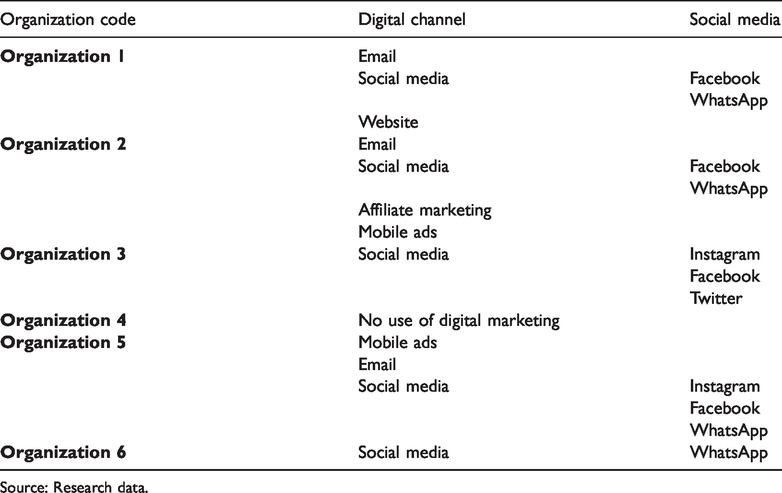
Out of the six organizations that responded, five representing 83.33% showed that they use digital means to market their products and services. The notable marketing channels include email, social media (Facebook, WhatsApp, Instagram and Twitter), website, affiliated marketing and mobile adverts. Table 2 presents the digital marketing channels used by real estate organizations.
Digital marketing channels in estate agency organizations.
Source: Research data.
Challenges of using digital marketing
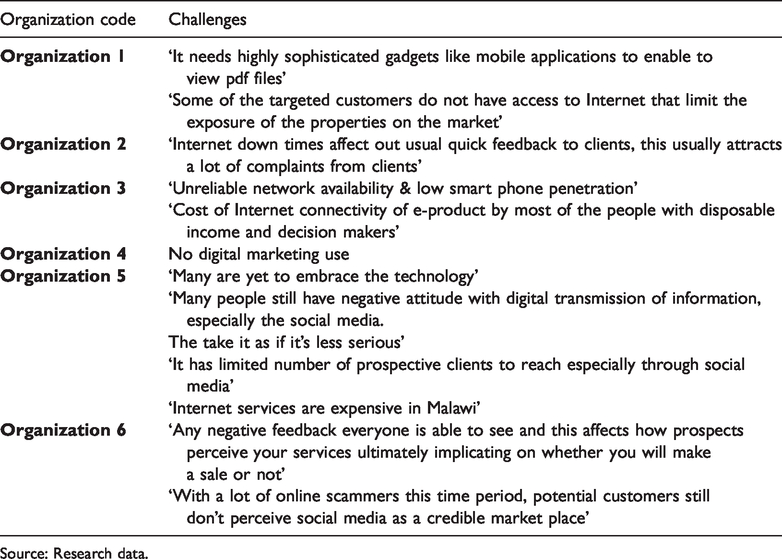
The study revealed that organizations are facing so many challenges in the digital marketing. The challenges recorded through the questionnaire responses were of different magnitude. Out of the five organizations that have adopted digital marketing, all of them indicated that they do meet challenges in their day to day business. Organization 1 indicated that the challenge that they meet is the need for sophisticated gadgets in order to be able to view some of the files. On the same, the organization also indicated that not all targeted customers do have access to Internet such that it limits the exposure of the properties on the market. For Organization 2, the main challenge is the frequent Internet disconnection and this results in increased complaints from the customers as they are unable to get new information pertaining to their needs. This is as result of them not having access to what is being offered by the estate agents on the market.
Organization 3 also argued that there are challenges in network availability and low penetration of Internet access gadgets such as smart phones. This therefore prevents customers from accessing the services on offer through the digital means. It also revealed that the cost of Internet is exorbitant which limits access as most users do not have enough disposable income. Therefore, organizations may choose to create adverts that are smaller in size so that the cost of downloading is minimized on the target clients.
Organization 5 indicated that one of the challenges that they notice is the unwilling character by the society to embrace technology as a mode of marketing. There is also a negative perception from the people on the use of digital transmission of information, especially the social media as mostly it is filled with fake news which in the end reflect bad on the posted adverts. On the same, the organization indicated that it has limited number of clients that can be reached through social media hence it is expensive to use digital marketing. In this argument it shows that social media is one of the cheapest digital mode of transmitting information. Having noted that Internet is very expensive in Malawi, it is a challenge to maintain their online presence.
Having noted that there are several challenges affecting the adoption of digital marketing in estate agency, it is therefore important that organizations should not fully migrate from other traditional methods of advertising but rather to combine with the digital mode in order to have full exposure on the real estate market. Table 3 presents the challenges encountered in summary.
Digital marketing challenges in estate agency organizations.
Source: Research data.
Strategies in digital marketing use in estate agency organizations
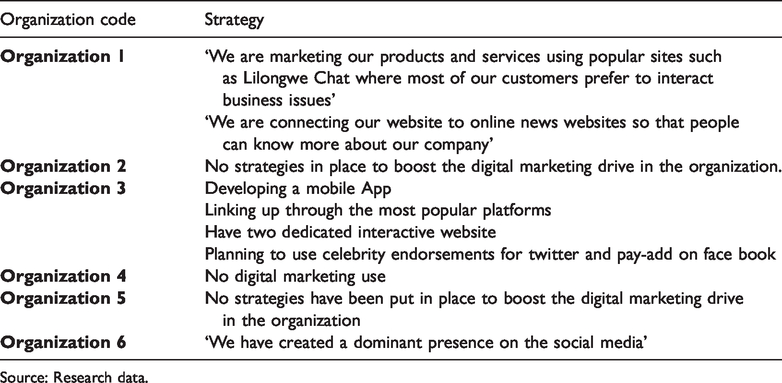
In every business endeavours it is necessary to have strategies that may result in enhanced output. This can be achieved by fully embarking on exposing the services on offer to the target customers. The study established that estate agency organizations have put in place measures and strategies in order to benefit from the digital channels of marketing their products. Some of the strategies that have been considered are the marketing of products and service on popular social media chat forums. Organizations are also linking their websites to other online news websites in order to extend their availability on the market.
However, 40% of the organizations indicated that they have not set any strategies towards digital marketing. This means that no solutions have been developed in order to minimize the challenges that they are encountering. Much as others have no strategy, some organizations have developed mobile apps as a medium for interfacing with their customers. Celebrity endorsement for some social media platforms is also one of the strategies that has been set by some organizations. Table 4 presents the strategies set out by estate agency organizations.
Digital marketing strategies in estate agency organizations.
Source: Research data.
Summary of findings
Based on the results, organizations are using SOSTAC strategic model in their efforts to achieve their goals. As shown in the ‘Digital marketing use in estate agency organizations’ section, majority (60%) of those who took part in the study indicated that digital marketing has an influence on their daily activities. This is attributed to realization of their current position in marketing of their services. In line with their objectives of increasing the profit margin, digital marketing has been adopted so that they increase their presence on the market. Out of the six, only one indicated that it is not using digital media in its marketing drive. This is due to unavailability of well-trained personnel in digital marketing use. The other reason provided was that the company does not have the sophisticated gadgets used in digital marketing. The study revealed that the organization does not have plans or strategies to adopt online digital media as one of its means of marketing its products or services. Despite many organizations adopting online digital media marketing, the organizations are facing enormous challenges. The common challenges include the expensive charges from the network providers and the cost for the gadgets used in digital media marketing, unreliable network availability and attitude of consumers as some consider use of digital means of marketing age (social media) as lack of seriousness. With the increased Internet use, the scammers have also taken advantage; organizations are facing challenges in which some create fake accounts on different platforms bearing organization names and logos, which has reduced some consumer trust in digital marketing use.
Digital marketing use in estate agency organizations
Based on the study, 83.33% have adopted online digital presence as a way of marketing their services. Those that are not using digital marketing are due to unavailability of well-trained personally and digital marketing gadgets. The channels used by the estate agency organizations include emails, affiliate marketing, mobile ads and social media. On social media, the organizations use Facebook, WhatsApp, Instagram, Twitter and LinkedIn. In every undertaking there are pros and cons. The real estate industry has challenges associated with the adoption of online digital use in the marketing of the services on offer. The common challenges that estate organizations are facing are unreliable network connectivity, higher cost of data charges by network providers and cost of purchase for the digital gadgets. Organizations also raised issues on increased levels of online scammers, which are negatively affecting the response from the consumers. This is due to unavailability of policing measures on the abusers of Internet. This has made the attitude of consumers to bias towards the negative.
Theoretical and managerial implications
Theoretical implications
Theoretically, the implication of this study is the link between a Technology Acceptance Model with digital marketing adoption in businesses. Technology Acceptance Model mainly examines the social factors (perceived usefulness, ease of use, compatibility, peer influence, superior’s influence, self-efficacy, resource facilitating condition and technology facilitating condition) in e-commerce adoption. As revealed by the study, the results show the relevance of the theory from the information systems perspective and marketing disciplines to digital media studies. In agreement with prior research on the socialization of consumers through social media (Wang et al., 2012), the study reveals that the social interaction of individuals influences consumer attitude towards a product or service.
Managerial implications
Estate agency firms should embrace the digitization of the consumer behaviour in order to enhance their ability to compete in the market. The increased adoption rate of the digital channels among the firms in this digital era opens up new market opportunities for real estate services. The existence of companies on the digital world may also help to increase the territory that firms operate.
The study has revealed that estate agency firms have adopted digital marketing such that necessary investments have been made in order to fully utilize the set tools. As demonstrated by the study, digital marketing requires enormous financial resources. On the other hand, the study depicts the need for provision of necessary personnel skills so that the firms fully realize the benefits of their investments in purchasing and use of digital marketing tools.
The study revealed that all the companies that have adopted digital marketing use social media as one way of marketing their services. Considering the importance of using social media in estate agency firms, consumers have little interest in building social ties with online brands, all they seek is just the information about the products and good deals (Freeman et al., 2012). The understanding that digital age is about the dialogue between the consumer and the firms will bring a key change in business practices. This is due to the fact that customers have expectations to be heard, listened to and taken notice of which mostly is a challenge in many companies to be centred on the customers.
Conclusion
The results of the study are organization-centric that fulfils the organizational needs, hence creating customer values. The study established the prioritization areas of digital marketing communications that are relevant to the companies and consumers, applicable current situation and how they have affected the consumer decision-making process.
The study reveals that real estate organizations in Malawi have adopted online advertisement through digital marketing use. The results showed that organizations have adopted digital marketing by using different online platforms in marketing their services. This has increased their presence on the market; they are reached at any time of the day despite the unreliable network connectivity, which is the dominant challenge among the estate agency organizations. For companies, digital presence is crucial, whereas effective digital presence is a key success factor. Company’s original website remains as a key information resource, a communication hub for the company, the brand and the product; however, this should be linked to the social media as consumers mostly use social media as their source of information. Social media platforms are key for boosting company presence and reputation on the market.
Recommendations
The implementation of digital marketing requires significant resource investments. Though financial investments are minimal as digital marketing initiatives are cost-effective, human and time investments have to be substantial. Consequently, it is essential for management of the real estate companies to set accurate schedules and short-term objectives, and allocate human resources accordingly. Organizations should ensure that right people with adequate skills and capabilities manages the development and implementation of digital marketing strategy tasks. Organizations resorting to outsourcing the core team perform digital marketing; however, careful attention should be put on identification of own weaknesses, strengths and competencies so that the engaged companies are able to help in achieving the organizations’ goals.
In this case, the managerial roles are important in making of decisions, coordinating actions, controlling the execution and performance monitoring to ensure that the digital marketing communications run smoothly. It is also organizational management role to ensure proper efficient implementation of digital marketing tactics and proper use of digital tools for maximum output. The managerial roles and functions are very important to make decisions, coordinate actions, control the execution and monitor the performance to ensure that the digital marketing communication runs smoothly, digital tactics are implemented efficiently and digital tools are used to their full potential.
Although some organizations have put in place comprehensive strategies, it is not to be accurate due to unforeseen conditions and therefore may be subject to revisions and updates as circumstances change. Availability of new data and emergence of new customer and organizational needs may necessitate some changes. Strategic plan provides guidelines of a course of actions that supports the organizations’ goals. However, organizations should have flexible approaches to digital marketing strategy implementation as they may be subject to change when new challenges arise. This needs organizations to dedicate enough resources for necessary adjustments.
Presently, it is hard to predict where digital marketing will be in next few years since it is continually changing. Innovations are a daily happening now, consequently it is very necessary to keep a closer look on how digital field is progressing. Organizations should follow the trends and keep track of latest digital updates and news. It is worthwhile mentioning that competitor benchmarking provides additional sources of information and ideas.
Study limitation
The results of this study should be interpreted in the light of some key limitations. The first limitation is that the study only focused on limited context of estate agents in one city (Lilongwe, Malawi) and that there are generally few licensed estate agents in Malawi; hence, small sample size, this means that the results cannot be generalized to other contexts. The second limitation is that the study used company interviews; the limitation comes into play considering that the interviewees in this study were responsible for marketing activities in the companies which might also have impacted the results. Since majority of the companies have indicated that they use social media as one of the digital marketing channels, further studies could focus on a specific social networking site’s impacts on consumer purchase behaviour.
Footnotes
Declaration of Conflicting Interests
The author(s) declared no potential conflicts of interest with respect to the research, authorship, and/or publication of this article.
Funding
The author(s) received no financial support for the research, authorship, and/or publication of this article.
