




Abstract
In this digital era, educational websites have become one of the important learning resources which facilitate children’s learning experiences. Although the use of educational websites in supporting children’s learning has progressively increased in Qatari schools, these websites are used without being evaluated in terms of their appropriateness for children. The aim of this study is to evaluate children’s educational websites used in Qatari schools based on the developmental perspective. It also intends to describe what children think about these websites and what types of online activities they undertake. A developmental scale was designed to evaluate how developmentally appropriate these websites are for children. Later, semi-structured interviews were conducted with 50 children to achieve a better understanding of their perceptions about the educational websites used in their schools. Findings of this study revealed that children’s educational websites are moderately appropriate. The websites were the most developmentally appropriate in the domains of “easy to navigate” and “technical design”, while “accessibility” and “instructional design” were the least appropriate domains. Moreover, there were significant differences in the appropriateness of children’s websites due to websites source and school types. Most children involved in the study expressed their satisfaction with some elements of the websites they use. Finally, academic activities were found to be the most common type of activities children participate in while using these websites. Recommendations for developing children’s educational websites in Qatar are discussed.
Introduction
Recent times have seen the Internet quickly penetrate many aspects of our life. Today’s children spend an increased amount of time online (Marsh, 2010). A recent statistical report found that 50% of Qatari children aged 8–15 own a smartphone; 76% of them had accessed the Internet, and spend more than three hours a day on the Web (The Peninsula Qatar, 2016). Studies have continually emphasized the positive effects of Internet usage on children’s development in diverse areas – whether these be cognitive, language, emotional, or related to social development (DeBell and Chapman, 2006; Greenfield and Yan, 2006; Feldman, 2009; Tarpley, 2001; Rideout et al., 2010).
It could well be the case that going online is a favourite activity for many children who have grown up in a digital media-saturated environment (Austin and Reed, 1999). The Internet can be used by children for several purposes (Ihmeideh and Shawareb, 2014). Children can use the Internet for recreation, communication, information, and/or education (Johnson, 2011; Livingstone, 2003). Despite the importance of Internet usage in entertainment and communication, integrating the Internet into the education of young children is becoming increasingly prevalent at all levels of the current educational systems. Consequently, diverse educational websites have been designed and introduced to children with the aim of developing their learning (Haugland, 2005). The Internet provides four unique categories of learning opportunities including (a) information gathering, research, and virtual field trips, (b) global communication, (c) publishing, and (d) interactive sites (Gerzog and Haugland, 1999).
Educational websites are one of the most important information resources when it comes to facilitating children’s learning experience. Educational websites are placed on the Internet and have applications, which can be accessed for a free or at a cost. When designing children’s websites, many features should be taken into considerations. For instance, websites should include appropriate graphic design elements, such as size, adequately sized text, and vibrant colours, in addition to the use of sound, and amount of white space-help; indeed, all of this enhances instructional motivation (Tillman, 1997). Other organizational design elements should include frames, image maps, tables, and metaphors (Ohl and Cates, 1997). Researchers identified three crucial factors which must be considered when websites are being selected for children’s use in classrooms. Based on these factors, websites should match the goals or standards identified by the school, district, or state, avoid violence, and be developmentally appropriateness (Haugland, 2005).
The study reported here aimed at evaluating children’s educational websites that are used in Qatari schools based on the developmental perspective. It also sets out to explore children’s perceptions on these websites and to identify the type of online activities they engage with.
Literature review
Literature pertaining to the assessment of websites has emphasized the importance of evaluating children’s websites based on developmental perspectives (Dodge et al., 2010; Gerzog and Haugland, 1999; Haugland and Ruı’z, 2002). This is crucial in order to enhance children’s learning and development in all various areas. The concept of developmentally appropriate websites has been used to refer to websites that include features which are in line with children’s interests, abilities and developmental age (Siraj-Blatchford and Whitebread, 2003).
The concept of developmentally appropriate websites is derived from the definition of “developmentally appropriate practice”, which was first articulated by the US National Association for the Education of Young Children (NAEYC) in 1986. This body argued that young children should be exposed to learning experiences that are congruent with their development levels so as to help and support their learning (NAEYC, 2009). Developmental appropriateness takes into considerations three features of appropriateness: age appropriateness, individual appropriateness, and cultural appropriateness (Rosen and Jaruszewicz, 2009). Thus, any Information and Communication Technology (ICT) tools, including websites, should be appropriate to the children’s age, meet individual differences among children, and reflect the cultural background and context of the country in which the children live (Dodge et al., 2010). According to the views of Haugland et al. (2002), developmental websites spark children’s curiosity and offer an exciting opportunity for children to foster their learning. A study by Nielsen (2010) found that older children react negatively when they used a website that designed for a different age group (young children); the author suggested that websites designers must take age-appropriate design into their consideration.
A scale called “Developmental Scale for Websites” was developed by Haugland and Gerzog in 1999 to evaluate websites designed especially for early childhood settings (Gerzog and Haugland, 1999). This evaluation scale was very similar to the Haugland Developmental Software Scale which was designed to evaluate children’s educational software and originally published in 1998 (Haugland and Shade, 1990). The criteria for evaluating children’s websites in this scale are well structured and are listed in 10 categories including age appropriateness, child in control, clear instructions, expanding complexity, independence, nonviolence, process orientation, real-world model, technical features, and transformations. Other criteria for evaluating children’s websites have been found in other researchers’ work and they included accuracy, authority, objectivity, currency, and coverage (O’Sullivan and Scott, 2000). Lazaris (2009) suggested a number of conventional and unconventional best practices for designing websites for children to ensure keep children interested and stimulated. Based on his framework, conventional best practices include creating elements that are large and visually memorable, using bright, vivid colours that stimulate the senses, incorporating elements from nature, creating depth in the design, adding navigational elements that are large and easy to find, using video, including printable elements, breaking the grid, and making modifications based on usability testing. However, Lazaris’s unconventional best practices contain creating a happy mood, using animated character, using graphic-heavy navigation bars, using flash animation abundantly, embedding motions and sounds that trigger on page load, including a “games” section, changing the cursor to contribute to the theme, adding voices to navigation rollovers, be accountable to both children and parents.
Simon and Nemeth (2012) offered an approach to evaluate children's software, apps, and websites. This approach was designed specifically for evaluating early childhood technology applications, including software, websites, and apps. This approach recommended that all technology applications including websites must have some criteria, such as be age appropriate, provide clear on-screen instructions and prompts, allow children to use it with or without adult guidance, be free of depictions of violence and sexuality materials, etc. Previous studies with a focus on the content of websites are few and far between. For instance, Westlake et al. (2016) examined the content of child sexual exploitation websites. Through analysing the content of 634 websites distributing child sexual exploitation material, they found that these websites did not try to hide their intended purpose, and the common structure of these websites was to provide direct access to the material related to child exploitation that consumers were seeking. Blackwell et al. (2014) carried out a study to explore the developmental implications of children’s websites preferences; they sampled 442 children during middle childhood and found that websites preferences were consistent with children’s emotional, social, and cognitive development. Wang (2014) conducted an experimental study to examine the relationship between visual complexity, aesthetic preferences and gender differences and their effect on children’s websites. The study took place in Taiwan and included 45 boys and 45 girls. The results indicated that visual complexity had an impact on children’s aesthetic preferences with regard to children’s websites. It was also found that boys preferred a high level of visual complexity in children’s websites, whereas girls preferred a medium level of this complexity. Haugland (2005) evaluated children’s websites in the USA and found that only around 20% of the websites available were developmentally appropriate.
With regard to the Arab Context, Ismail (1998) reviewed children’s Arab websites and suggested four evaluation criteria to be considered: (1) objectives appropriateness, (2) content appropriateness, (3) technical features and design, and (4) natural of use. After reviewing these websites, she recommended that children’s Arab websites ought to be designed and reviewed by experts. After reviewing these Arab websites, Ismail (1998) recommended that children’s Arab websites need to be designed and reviewed by experts. In a study conducted by Al-Batal (2010), children’s Arab websites were evaluated. The study found that although children’s websites that display content in Arabic are easy to use and have many references, they suffer from a number of problems such as lack of multimedia and information. In addition, the study called for clarity regarding stakeholders’ interests in evaluating and updating these websites, as their aims are unclear. More recently, Ismail et al. (2013) carried out a study to identify design styles used in children’s websites and their relationship with children’s use. The study consisted of 200 children and found that a statistically significant correlation existed between the design styles used in children’s websites and satisfying children’s needs.
In this new Internet-based world of education, additional roles for early childhood teachers have begun to emerge, such as evaluating, creating, and maintaining a list of educational websites which are suitable for learning purposes in the classroom (Dodge et al., 2010). Teachers should practice the skill of evaluating websites before introducing them to children because poor website design could make children less motivated. For instance, Loh and Williams (2002) pointed out that educational websites with lots of accurate information (web pages after web page) could make students feel that materials are boring or uninteresting. Another issue that could affect children’s motivation is the fact that most websites pay less attention to presentation methods, as the majority focus mainly on content (Small, 1999).
Study context
Since the initiation of Qatar’s educational reform policy in 2001, early childhood education has grown vastly, resulting in the development of strategies to support early learning (Supreme Education Council, 2011). One of these strategies was Integrating ICT into education. In 2011, the Supreme Education Council (SEC) (converted currently to the Ministry of Education and High Education (MEHE)) has signed an agreement with Al-Jazeera Children’s Channel (JCC), giving all independent schools (working under the auspices of SEC) access to all educational websites called “Taalam TV”, which means “Learn TV”, and was launched by JCC in 2010. Taalam TV is a website which includes audio-visual materials that are extracted from the channel’s library and furthermore enriched with curricula-based tutoring documents to assist educators in offering subjects that are more stimulating and engaging for classes (The Peninsula Qatar, 2011). In fact, independent schools (government-funded schools) had access to this educational portal’s database, while the JCC provided teachers working in these schools with training programmes. With this said, however, no attempt was made to evaluate these websites.
In the Qatari educational context, children are exposed to educational websites through different resources. The first type is “Taalem TV”, which was launched in Arabic by JCC and is used in Qatari independent schools. The second type of resource consists of certain educational websites suggested by Qatar National Library (QNL), a Member of the Qatar Foundation. These educational websites have been introduced by QNL as Internet resources for children and include free Arabic and English websites, such as Al-Bustan, Islam Web for Children, Hiya, and Kids know it (Qatar National Library, 2014). Falling under the third type of resource are commercial children’s websites, which are used in certain private schools. Some of these websites are not recommended by educational experts and depend on being selected by teachers who have not been evaluated and whose qualities may not be suitable for learning purposes. These websites are implemented in the schools in two ways: (1) to fit within the curriculum or (2) additional activities. Examples of the types of websites being currently used in Qatari schools are presented in Figure 1. In fact, these available educational children’s websites seem good, but how do we know that they are developmentally appropriate? Due to a lack of current research on this important area of investigation, the present study will fill this gap. It will do so by trying to evaluate the appropriateness of websites for children’s development and extending the quality of current websites used in Qatari schools. Examining the types of activities in which children engage with online is a timely and very important research theme, as some websites may not include motivational aspects, but could well contain violence or inaccurate information, or may be culturally inappropriate.
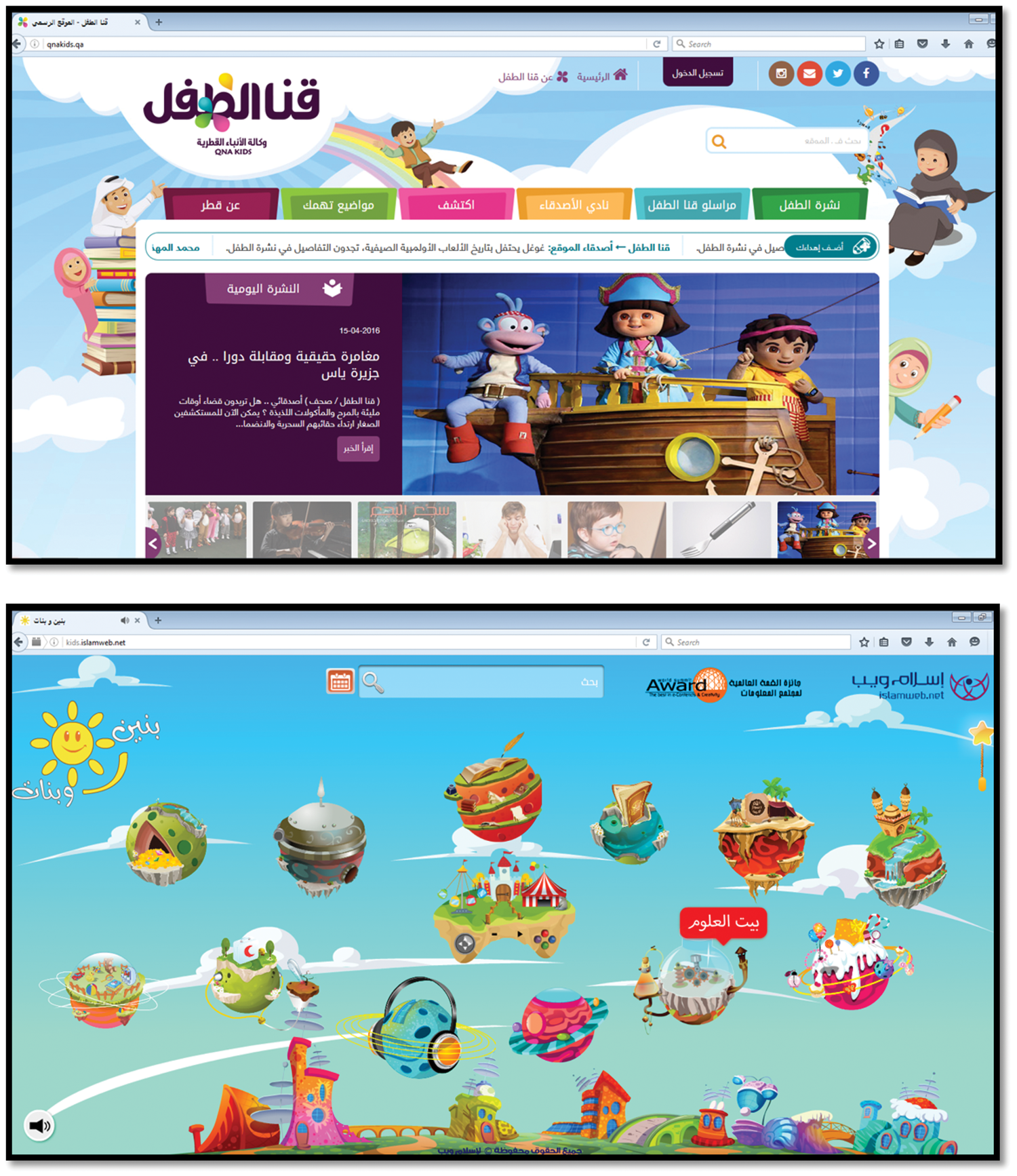
Sample of children’s educational websites utilized in Qatari school.
Aims of the study
The main purpose of this study is to evaluate children’s educational websites that are used in Qatari school settings. The specific aims of the study are to: (1) examine to what extent children’s educational websites used in Qatari schools are developmentally appropriate; (2) determine whether the appropriateness of these websites varies in terms of children’s age, website source, and school types; (3) explore children’s perceptions of the educational websites used in their schools; and (4) determine the different types of activities children engage with while using these websites.
Significance of the study
In the absence of any study in Qatar dealing with the development of children’s educational websites, this study, being the first of its kind in Qatar, is designed and carried out to assess children’s educational websites. This study is particularly important as it provides a research-based evaluation framework which helps in assessing the quality of children’s educational websites and determining the criteria of developmentally appropriate websites being used in Qatari schools. Moreover, this study is in line with the MEHE’s increased focus on the integration of ICT into students’ learning experiences across all educational stages, including early childhood education. Not only does this study determine if children’s websites are developmentally appropriate from the developmental perspective but it also determines what children think about these websites. Furthermore, the study findings will be used to provide MEHE officials in charge with knowledge regarding the developmentally appropriateness for children’s websites used in Qatari schools. Finally, the findings will also be used to give suggestions and recommendations for the selection, design, evaluation, and updating of children’s educational websites.
Method
Population and sample
This research included three types of primary schools (N = 30), namely independent, private, and international schools. They were randomly selected from the established population frame. Educational websites, which are used in these schools, were selected to determine their appropriateness for children. These websites were assessed after being suggested by MEHE as well as the QNL and other educational institutions and companies. Moreover, 50 children enrolled in primary school grades 1–3 (aged 6–8 years old) were randomly selected to be interviewed. The purpose of this interview was to explore their perceptions of these websites and the types of online activities they engage with.
Research instruments
Developmental scale for assessing children’s websites
The aim of this scale was to assess the appropriateness of educational children’s websites. The scale was developed by the researcher after an extensive review of the related literature (i.e. Al-Batal, 2010; Gerzog and Haugland, 1999; Haugland, 2005; Ismail, 1998; Jackson, 2000; Lazaris, 2009; O’Sullivan and Scott, 2000). The final draft of the scale consisted of 12 domains, as described in Figure 2.
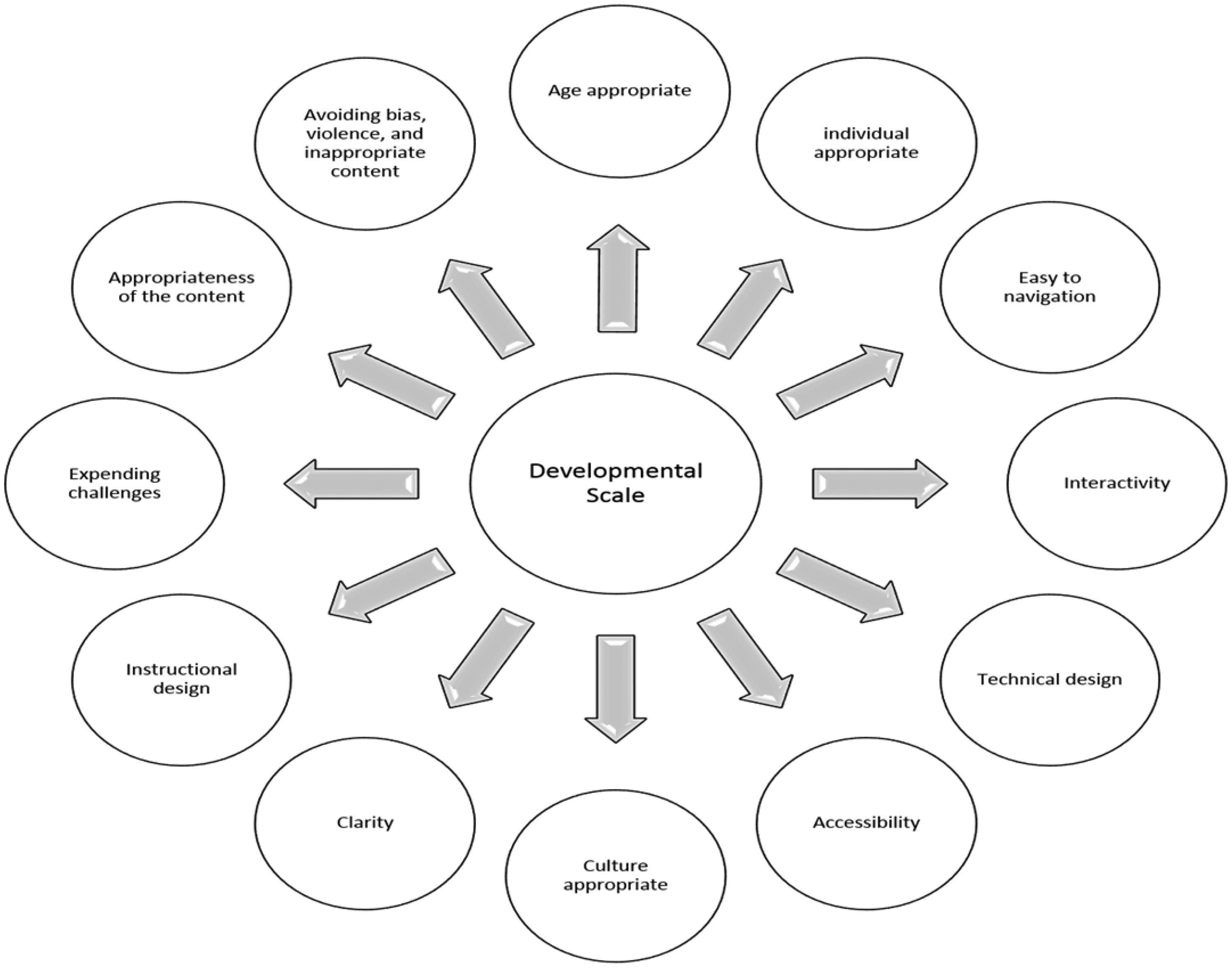
The content of developmental scale used in assessing children’s websites.
The scale items were assessed on a five-point scale, with 5 indicating “excellent” and 1 indicating “unacceptable”. The criteria used to assess the children’s educational websites against the developmental scale are presented as follows: excellent from 5.00 to 4.00; good from 3.99 to 3.50; fair from 3.49 to 2.50; poor from 2.49 to 1.75; and unacceptable 1.74 to 1.00.
The validity of the scale
In order to test the validity of the scale, it was handed out to eight judges who are early childhood education and instructional technology professors working at different universities in Qatar, Jordan, and the USA. Their role was to confirm whether the content of the scale was accurate and adequate in terms of language clarity, to check the relevance of each item to the main domain in the scale, to provide any additional comments or corrections, and to indicate whether each item (in the scale) is considered to be a developmental website criterion and is suitable for the cultural background in Qatar. In light of their modifications, some items were added to the questionnaire, while others were excluded, and some were refined.
To examine the reliability of the scale, the researcher and three research assistants piloted six websites which were not included in the actual sample of this study. These six websites were assessed based on the developmental scale. It was found that the level of agreement between the researcher and his research assistants was satisfactory at 0.88.
Semi-structured interviews
This kind of interviews was conducted with 50 children, who use these educational websites. Those children were randomly selected from the Qatari independent and private schools. A semi-structured interview method was adopted as it is more flexible than other interview methods and “it allows depth to be achieved by providing the opportunity on the part of the interviewer to probe and expand the interviewee’s responses” (Rubin and Rubin, 2005: 88). The main reason for using the semi-structured interview in this research is to explore children’s perceptions of the websites they use and to determine the different types of online activities they engage with. The researcher developed an interview schedule with open-ended questions so as to encourage natural answers. The interview questions were likewise validated. Researchers indicated that by using open-ended questions within the interview, the participants are allowed to share ideas and understanding with greater richness and spontaneity (Oppenheim, 2000). The interviews questions explored children’s views on the content and the features of websites they use, their preferences, and the extent to which these websites attract their attention.
Ethical consideration
Consent was sought from the MEHE to carry out this research. The principals of the schools, as well as the parents of the children, were met and be informed of the aims of the study before being given the opportunity to discuss the research project with the researcher and his team. Moreover, verbal consent was sought from children prior to interviews. Children were also given the right, throughout the study, to withdraw at any time and will be free to decline to answer a particular interview question. The participants were ensured confidentiality and anonymity.
Data collection
The researcher trained three research assistants to assess each website based on the developmental scale. Each assessor rated all children’s educational websites included in this study separately. Following this, the percentage of agreement between each assessor was calculated. In addition, the three research assistants visited the school and interviewed 50 children. The interviews took place in the schools and ranged in length from 20 to 30 min.
Data analysis
The current study utilized quantitative and qualitative data analysis approaches. To determine the developmental appropriateness of children’s websites, means for each item included in the developmental scale were used. Moreover, t-test and one-way analysis of variance (ANOVA), followed by the eta2 (η2) were used to explore the statistical differences based on the study’s variables. Since this analysis was exploratory in its nature, the Scheffe post hoc test was carried out (if the ANOVA main effect was significant).
With regard to the results obtained from interviews, all interviews were tape-recorded. The transcribed data were read precisely so as to identify the topic area related to the aims of the study. The researcher developed categories of responses to each question and relevant data were assigned to each category. The responses were described in terms of the topics or categories, and quotes were used to illuminate them.
Results
Results obtained from the developmental scale
The developmental appropriateness of children’s websites used in Qatari schools
The first aim of the study was to examine the extent to which children’s educational websites are developmentally appropriate. Means were used to achieving this aim. As shown in Figure 3, the mean score for the total scale was 3.34, which represents a moderate degree of appropriateness.
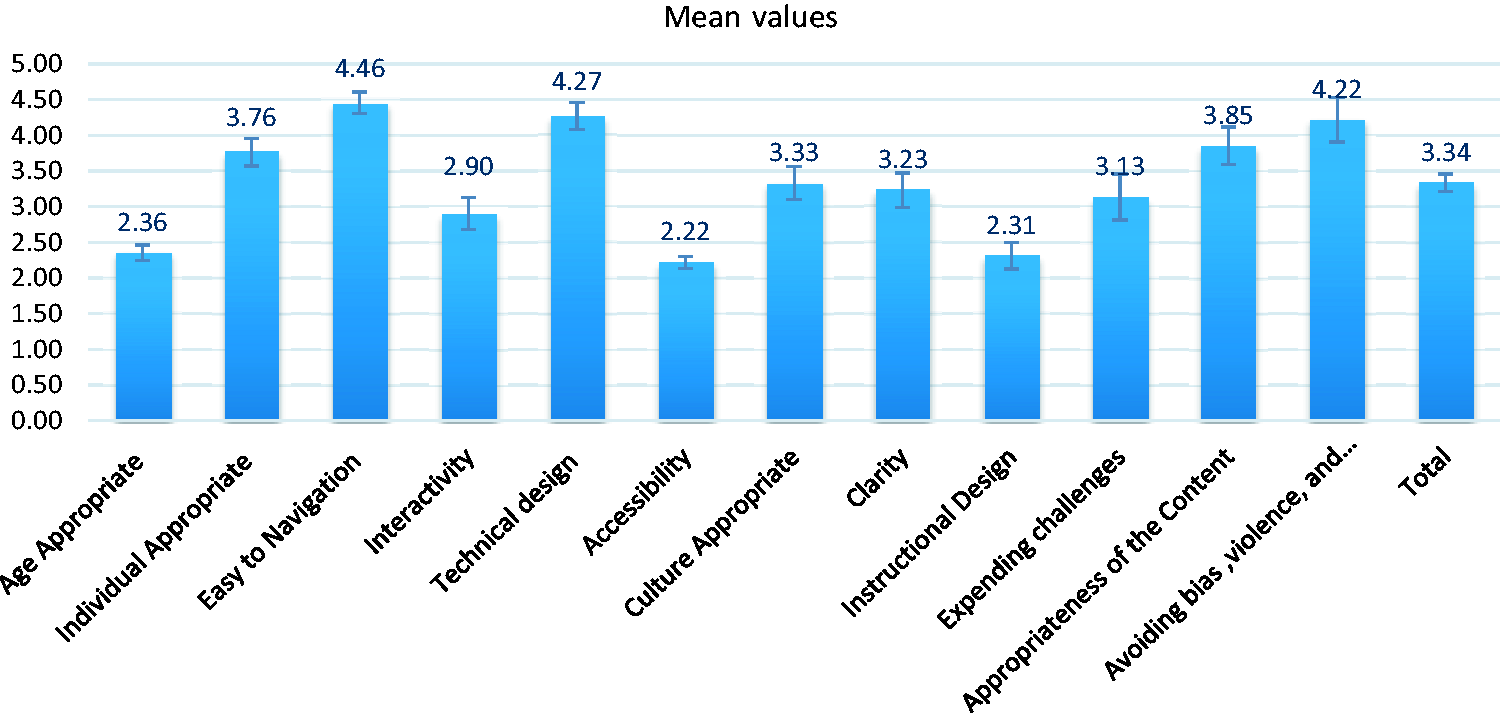
The mean values for the developmental scale.
The most developmental domain found in children’s educational websites was “easy to navigate”. This domain had the highest mean value (4.46), representing an excellent degree of appropriateness, followed by the domains “technical design” and “avoiding bias and violence”, with mean values of 4.27 and 4.22 and a ranking of “excellent”. In addition to this, the domains “appropriateness of the content” and “individual appropriate” had mean scores of 3.85 and 3.76, respectively, falling within the “Good” classification. Moreover, four domains were classified as “fair”, including “cultural appropriateness”, “clarity”, “expanding challenges”, and “interactivity”, with mean scores of 3.33, 3.23, 3.13, and 2.90, respectively.
However, accessibility was classified as “poor”, representing the least developmentally appropriate children’s website criterion (mean value of 2.22), followed by the “instructional design” domain with a mean score of 2.31 and “age appropriateness”; both of these domains were classified as “poor”.
Differences in children’s educational websites due to the study’s variables
Children’s age
Children’s age was used as an independent variable to determine whether the appropriateness of children’s educational websites differed based on the age of children for whom these websites were designed. The evaluated children’s websites were designed for three age ranges: 6 years old (38%), 7 years old (28%), and 8 years old (34%). These age ranges represent three primary school grades (1–3). Figure 4 illustrates the differences in the children’s educational websites based on the ages of children. There were no differences among children’s websites in all domains and in the total that are attributed to ages of children. For age appropriate F (2, 47) = 2.17, p = .125, η2 = .085; individual appropriate F (2, 47) = 1.33, p = .273, η2 = .054; easy to navigation F (2, 47) = .962, p = .390, η2 = .039; interactivity F (2, 47) = 1.64, p = .204, η2 = .065; technical design F (2, 47) = .176, p = .839, η2 = .007; accessibility F (2, 47) = .186, p = .835, η2 = .008; cultural appropriate F (2, 47) = 1.72, p = .189, η2 = .068; clarity F (2, 47) = .493, p = .614, η2 = .021; instructional design F (2, 47) = .885, p = .419, η2 = .036; expanding challenges F (2, 47) = .56, p = .574, η2 = .023; appropriateness of the content F (2, 47) = .396, p = .675, η2 = .017; avoiding bias, violence, and inappropriate content F (2, 47) = .440, p = .647, η2 = .018; and the total F (2, 47) = .091, p = 0.914, η2 = .008.
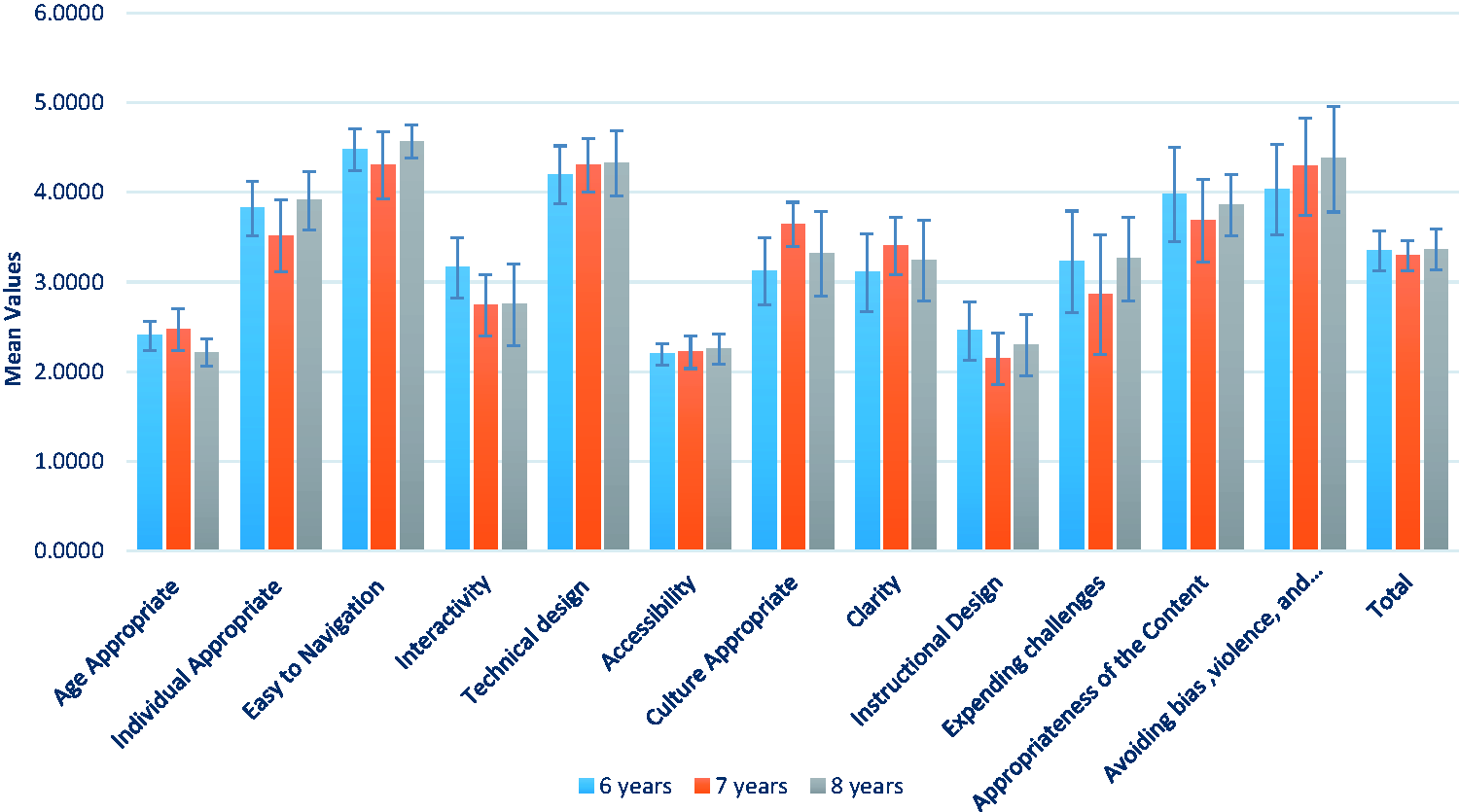
The mean values for evaluating children’s websites according to children’s age variable. Error bars represent SEs.
Websites source
Websites source was used as an independent variable to determine whether the appropriateness of children’s educational websites differed based on the source of the websites. In this study, children’s websites were divided into two sources: (1) Arabic source (60%) and (2) English source (40%). Figure 5 illustrates the differences in the children’s educational websites based on the website’s source. There were differences among children’s websites in the total t(48) = –3.829, p = .000,
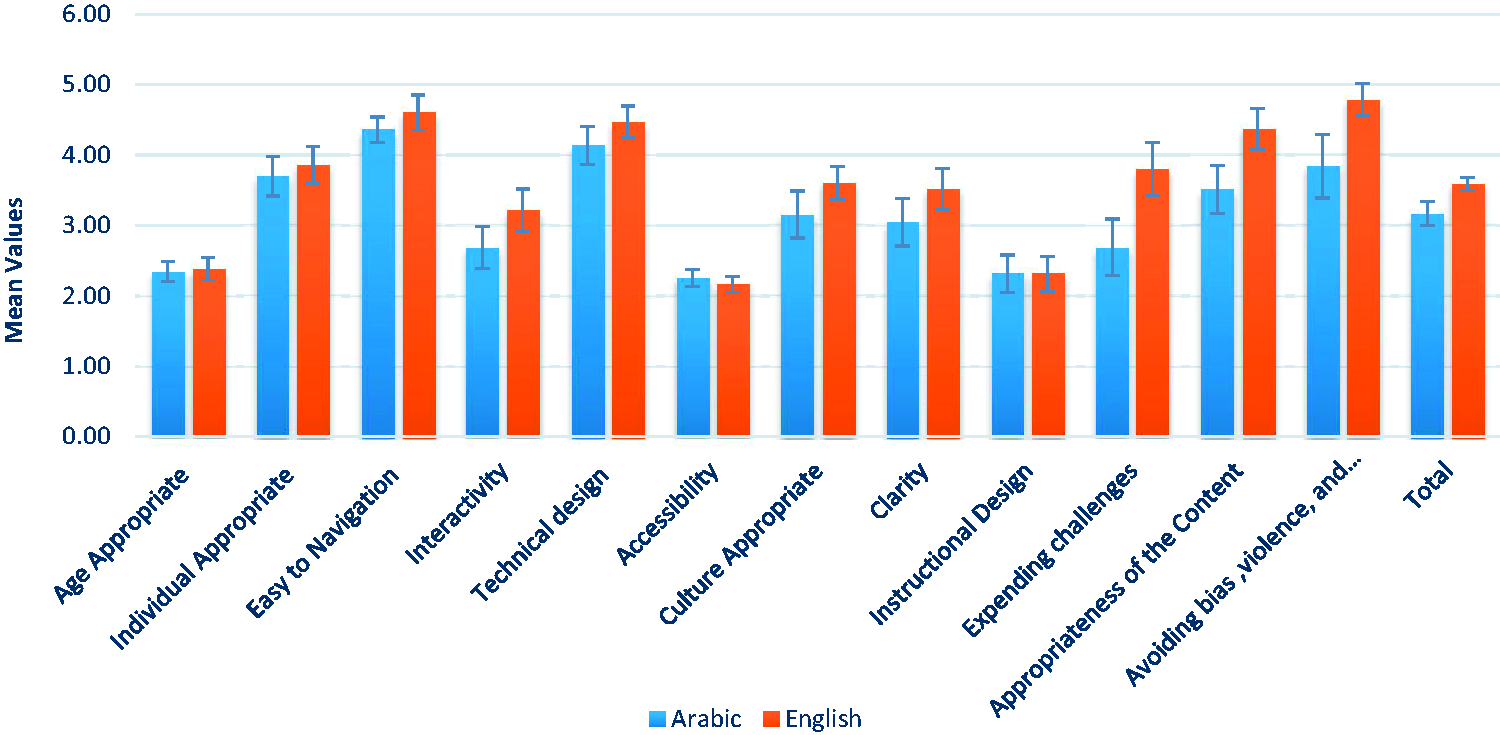
The mean values for evaluating children’s websites according to website source variable. Error bars represent SEs.
However, no differences were found in the following domains: age appropriate t(48) = –.368, p = .714, η2 = .00; individual appropriate t(48) = –.793, p = .431, η2 = .01; easy to navigation t(48) = –1.583, p = .120, η2 = .05; technical design t(48) = –1.740, p = .088, η2 = .05; accessibility t(48) = 1.007, p = .319, η2 = .02; cultural appropriate t(48) = –1.960, p = .056, η2 = .07; clarity t(48) = –1.988, p = .052, η2 = .07; and instructional design t(48) = –.017, p = .986, η2 = .00.
School types
This variable was used as an independent variable to determine whether the appropriateness of children’s educational websites differed based on the type of school: (1) independent schools (32%), (2) private schools (46%), and (3) international schools (22%). Figure 6 illustrates the differences in the children’s educational websites based on the type of school. There were differences among children’s websites in the total F (2, 47) = 18.21, p = .000, η2 = .43, and in the domains related to individual appropriate F (2, 47) = 6.17, p = .004, η2 = .20; technical design F (2, 47) = 7.31, p = .002, η2 = .23; cultural appropriate F (2, 47) = 5.30, p = .008, η2 = .18; expanding challenges F (2, 47) = 9.24, p = .000, η2 = .28; appropriateness of the content F (2, 47) = 7.77, p = .001, η2 = .24; and avoiding bias, violence, and inappropriate content F (2, 47) = 14.35, p = .000, η2 = .37.
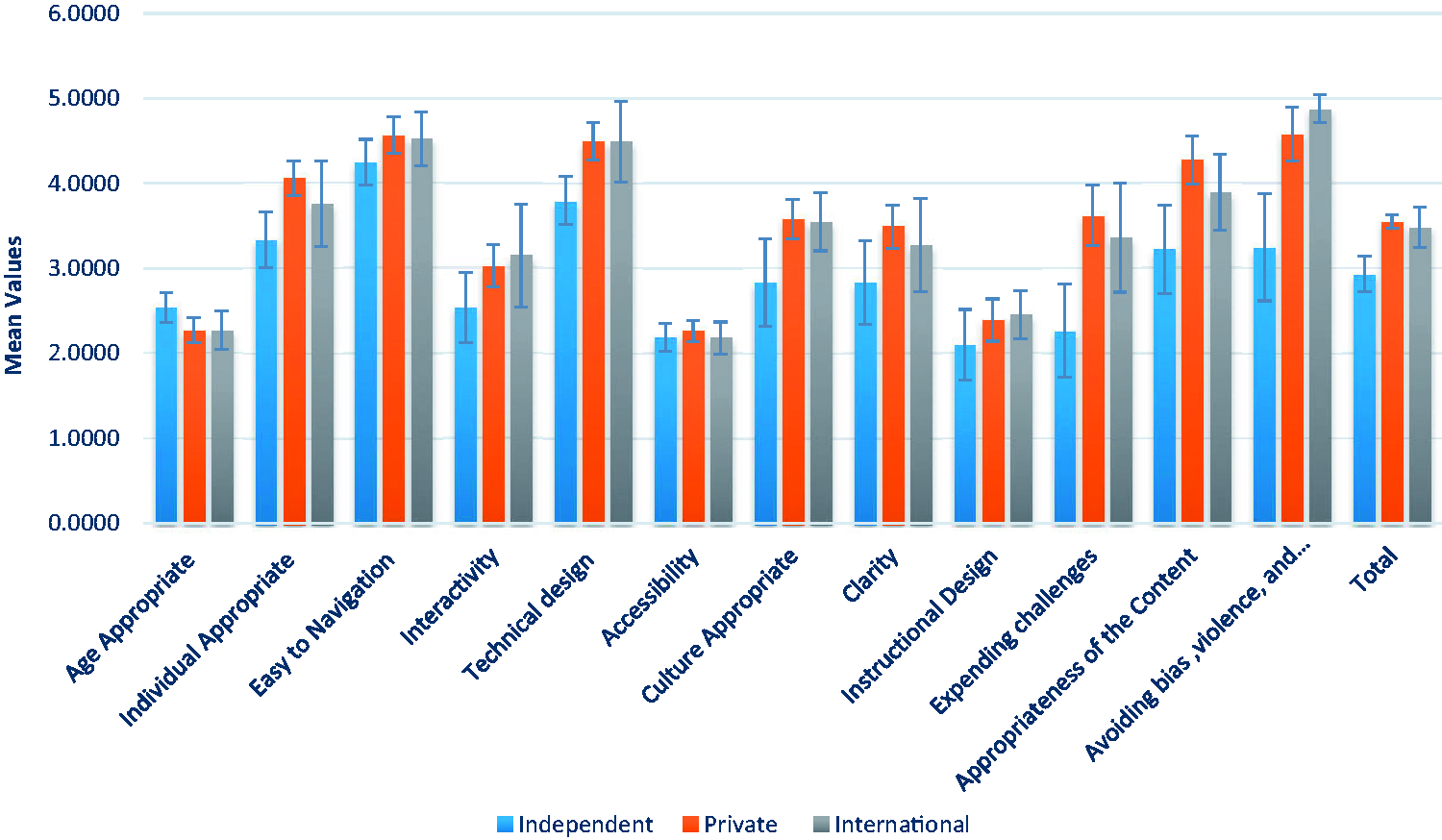
The mean values for evaluating children’s websites according to type of school variable. Error bars represent SEs.
Based on the analysis of Scheffe post hoc test, the differences were significant between children’s websites used in the independent schools and those used in the private schools on the one hand and between the independent schools and the international schools on the other hand in favour of both private and international schools.
However, no differences were found in the following domains: age appropriate F (2, 47) = 3.012, p = .059, η2 = .11; easy to navigation F (2, 47) = 1.83, p = .171, η2 = .07; interactivity F (2, 47) = 2.62, p = .083, η2 = .10; accessibility F (2, 47) = .372, p = .691, η2 = .01; clarity F (2, 47) = .312, p = .053, η2 = .11; instructional design F (2, 47) = 1.25, p = .296, η2 = .05.
Results obtained from the interviews
Children’s perceptions of the educational websites used in Qatari schools
The second objective of the study was to examine the perceptions of children regarding the educational websites used in Qatari schools. In order to achieve this objective, 50 children aged 6–8 years old were interviewed at their schools.
The results of the interviews indicated that 60% of the sampled children use educational websites outside of school. Children mentioned that teachers asked them to use websites as part of their homework, preparation for lessons, or for extra-curricular activities. They added that teachers suggested some websites to be used at home. One of them said:
The school gives us some websites and we use them at home from time to time. I try to visit these websites when I do my homework.
We go every week to the computer lab to learn from websites. It is most common for Math and Science teachers to ask us to work on websites while other teachers do not ask us to learn from websites.
I like websites that include simple videos and include clear instructions. There are some websites that include inactive icons and do not work well.
Our class uses the “Sanad Kids” website. This website includes written stories which are not spoken. I do not like it at all. When I use it alone I leave it and would rather go on “YouTube”.
The types of activities children engage while using websites
The third objective of the study was to examine the different types of activities children engage with while using websites. The results of the interviews indicated that children use different types of websites, as shown in Table 1.
The frequency and percentage of the type of activities children use through websites.
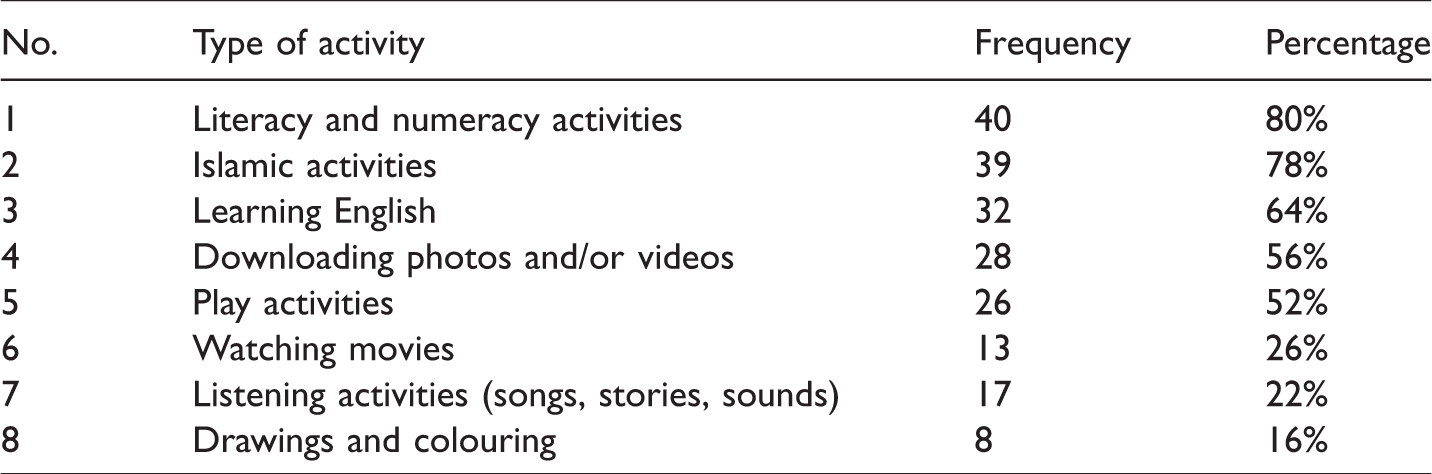
Table 1 shows that the two most common website activities used by children were literacy and numeracy activities (80%) and Islamic activities (78%), followed by learning English (64%). Next came downloading photos/videos, play activities, and watching movies, which received percentages of 56%, 52%, and 26%, respectively. However, drawings and colouring (16%) were the least popular website activities used by children.
When asked about what they learned from these educational websites, most children (32 out of 50) indicated that they find these websites helpful in developing their math and science skills. One of the second graders expressed his opinion by saying:
I sometimes use Starfall website to practice what I have learned in the class. It helps me understand 2D and 3D shapes quickly.
We use Taalem website in the science lesson and I learned from this website many things such as solar system planet as well as light and shadow.
I prefer doing my homework through using my textbooks because the website I use always loads slowly, and I found many of its icons inactive. It really wastes my time.
Discussion
The results of the study revealed that children’s educational websites represented a moderate degree of appropriateness. The mean score of the total of the developmental scale was 3.43, which was categorized in this study as fair. It is obvious that many of today’s schools are relying on educational websites as part of their curriculum. The number of companies producing these types of websites is increasing day by day. Thus, it is not surprising for website developers to be aware of the criteria used in designing educational websites based on the educational and psychological perspectives. In Qatar, there are different sources for websites used in Qatari schools, whether these be private orindependent. These sources could be local, regional, or international. Some of these websites are designed by educational experts, while others are designed by commercial companies without specific consideration of the specific needs of the children, and the remaining sites are designed by international organizations without being reviewed by educational experts. As such, these different sources may produce different website criteria when designing their websites.
The domain found to be most developmentally appropriate in children’s educational websites was “technical features”, which received a mean value of 4.46, followed by “technical design”, which received a mean value of 4.27. These domains are described, based on the developmental scale’s criteria, as “excellent”. This result could be due to the fact that today’s website designers are taking advantage of the updated technological features which can be reflected on the websites. Developing educational websites requires technology specialists who should work closely with educators. For that reason, the domains easy to navigate and technical design, including sound, animation, graphics, colours, installation, and speed were taken into account while designing children’s educational websites (Tillman, 1997).
The results also indicated that “avoiding bias and violence” received a high mean value of 4.22. The availability of this domain, as urged by Haugland (2005), reflects a developmentally appropriate aspect in designing websites. Website developers become aware of the importance of freeing websites from any bias, violence or inappropriate content which may affect children’s development and well-being.
Moreover, children’s websites used in Qatari schools were found to be developmentally appropriate in terms of individual appropriateness and the appropriateness of the content, as these domains fall within the “Good” classification. Educators (e.g. Gerzog and Haugland, 1999; Haugland and Ruı’z, 2002) emphasized the importance of providing appropriate content in children’s software. According to the view of Dodge et al. (2010), software and websites need to respond to the interests and needs of each individual child in the group.
A poor degree of appropriateness was found in domains related to “accessibility”, “instructional design”, and “age appropriateness”. These domains were the least developmentally appropriate items. The reasons for this could be attributed to the fact that these items need educational experts who are aware of children’s development and growth. This explanation is supported by Ismail (1998), who recommended that children’s websites need to be designed by experts. Nielsen (2010) found that older children react negatively when they use a website that is designed for a different age group (young children). Indeed, the author suggested that website designers must take age-appropriate design into consideration. According to the views of Loh and Williams (2002), poor website design could make children less motivated.
The results revealed no significant age-related differences in children’s websites used in Qatari schools. This means that all websites designed for children aged 6–8 showed the same degree of appropriateness. This could be because they are produced mainly by the same companies. However, differences were noticed in variables which are related to the type of school and website source. These differences are in favour of private and international schools and English source. As such, it can be concluded that children’s websites used in private schools are more developmentally appropriate than those implemented inindependent and international schools. Furthermore, websites from an English source are more developmentally appropriate than websites from an Arabic source. Websites from an English source were designed in countries like the US and UK, where the ideology of developmentally appropriate practice is widespread and appreciated (NAEYC, 2009). Unsurprisingly, most private and international schools in the study implement websites from an English source.
It seems that websites are not regularly used in Qatari schools, nor are they considered as a part of the teaching and learning process. Indeed, most children in the study use these websites outside the school as a kind of extra-curricular activity. This is because MEHE has no clear regulations regarding the use of websites in the school. MEHE leaves the choice of using websites to the school administration. The results obtained from the children’s interviews support the results of the developmental scale, as children were satisfied with the websites they use. Children viewed websites as an enjoyable experience because of their features and designs. This is not surprising, as these features increase children’s motivations and make them more engaged in website-related activities (NAEYC and Fred Rogers Center for Early Learning and Children’s Media, 2012). However, the results indicated some dissatisfaction concerning certain websites which have difficult features or load slowly. This may be because some age-inappropriate websites are still used in Qatari schools. This result, however, supports the results of the developmental scale.
Finally, the results indicated that school homework and literacy and numeracy activities were most popular with children while using websites. In addition, most children do Islamic activities and learning English activities. These activities reflect the fact that the focus of using websites is on developing children’s academic skills. This is because these activities are used to support the curriculum which has already been implemented. In addition, children considered the activities-based sites as beneficial in learning these academic skills because of the interactive features of these sites (Gerzog and Haugland, 1999). Surprisingly, activities related to downloading photos/videos, entertainments activities, and watching educational movies, did not receive as high a percentage as the researcher expected. This could be because teachers may place more emphasis on academic skills while guiding children to use websites rather than engaging in entertainment and play activities. Drawing and colouring were the least popular website activities used by children, possibly because most children involved in this study are at school age, and are thus more involved in academic activities.
Conclusion
In this current study, children’s websites used for educational purposes by schools in Qatar were evaluated using qualitative and quantitative measures. It can be concluded that children’s educational websites are moderately developmentally appropriate. There were significant differences in children’s websites due to website source in favour of English source and due to the type of schools in favour of private schools; moreover, no differences were found due to children’s age. Most children involved in the study expressed their satisfaction with certain elements of the websites they used. Moreover, academic activities were found to be the most common type of activities used among children while on websites. Based on these conclusions, several practical and theoretical recommendations are provided. From a practical standpoint, the children’s websites which are currently implemented in Qatari schools should be used with caution. It is recommended that the MEHE should supervise schools in reviewing the appropriateness of children’s educational websites, particularly in theindependent schools. This can be done by setting regulations to avoid subscribing to commercial websites and depending on developmental criteria when assessing children’s educational websites. As children learn from the websites, it is recommended for the curriculum designers to develop more enjoyable and easy to use web-based learning activities. Website providers in the Arab world should be encouraged to produce websites in Arabic. It is also recommended that decision makers in the MEHE should encourage educational experts to participate in the website design process. This is important, as educational experts need to work closely with technology specialists to ensure that websites are in line with the principals of developmentally appropriate website criteria. In addition, websites designers who are interested in developing and evaluating websites worldwide could benefit from the criteria of the developmentally appropriate websites used in this study.
From a theoretical standpoint, more studies should be carried out in order to paint a complete picture of children’s educational websites by exploring more individuals who are involved in these sites, such as technology specialists, website designers, educators, curriculum designers, and parents. Further studies should be conducted to compare children’s educational websites in different contexts, especially in developed countries. Finally, it is hoped that this study might provide valuable insights for decision makers in the MEHE regarding websites targeted at children. This may, in turn, lead to the promotion of developmentally appropriate websites.
Footnotes
Acknowledgements
The author would like to thank Ghaida Tahimar, Takwa Afify, and Ghada Afana for their help in collecting the data of this study.
Declaration of Conflicting Interests
The author(s) declared no potential conflicts of interest with respect to the research, authorship, and/or publication of this article.
Funding
The author(s) disclosed receipt of the following financial support for the research, authorship, and/or publication of this article: This study was made possible by an Undergraduate Research Experience Program (UREP) grant #17-089-5-028 from the Qatar National Research Fund (QNRF: a member of The Qatar Foundation). The statements made herein are solely the responsibility of the author.