




Abstract
The study aims to explore university-level foreign language learners’ perceptions of the content-based flipped classroom approach and factors influencing their perceptions. The research questions guiding the study are three-fold. (a) What attitudes and perceptions do students have about language and knowledge acquisition in the content-based flipped classroom? (b) What learning processes and strategies do students employ in the process? (c) What themes emerge from the content-based flipped classroom experience? The findings reveal that by humanizing the classroom through rich interaction between students using the flipped classroom concept, students show improvement in communicative skills, confidence, and content knowledge development. However, students differ in their perceptions of its effectiveness due to their varying epistemological beliefs about the certainty of knowledge, authority and the sources of knowledge, what learning really means, and the importance of measurability in learning outcomes.
Keywords
Introduction
The idea of the flipped classroom is not new (Davies et al., 2013), but has been well received in recent years due to advances in technology and increased access to computers and mobile devices. The concept of “flipping” the classroom with resources such as pre-recorded multimedia and online tools (e.g. Khan Academy; Khan, 2012) has recently emerged in kindergarten grades and the 1st grade to the 12th grade, and higher education. Massive open online courses and free online university course units seem to have intensified the trend toward flipping the classroom (Forsey et al., 2013). In the flipped classroom, instead of having the teacher lecture in class, students are expected to view video resources and other materials at home and learn the content on their own. The idea is to allow learners to develop independence, to learn at their own pace at a location convenient to them, and to meet individual learning needs (Davies et al., 2013). This approach frees up class time for higher-level application and problem solving and allows teachers to use class time more effectively by centering on the areas in which students are having most difficulty, providing remedial assistance and individual help to those who need it (Davies et al., 2013), and engaging students in discussions and project development (Davies et al., 2013; Demetry, 2010).
The flipped classroom paradigm is based on a student-centered approach and focuses on the application of knowledge during class time (Pluta et al., 2013). Thus, by pushing the lectures into out-of-class homework, it leaves more class time for quality face-to-face learning with more interactive activities that promote higher-order thinking and the application of knowledge (Azemi, 2013; Bishop and Verleger, 2013; Lucke et al., 2013). By replacing the standard in-class lecture format, the flipped classroom pedagogical model has the following unique characteristics: (1) it transforms learning from a passive to an active process; (2) it facilitates learning by technology; (3) it shifts class time into homework time, thus freeing up class time for more individualized guidance and practice; (4) it allows more in-class time to apply theoretical concepts and relates the learning content to real-world scenarios; and (5) it focuses on more challenging concepts and fosters critical thinking and problem-solving skills (Davies et al., 2013).
With the ongoing advances in technology and Internet resources, knowledge has become so accessible that teachers are no longer the only or necessarily the best source of knowledge and information (Wilson, 2013). The teacher’s role is transformed from a knowledge or information provider to a guide and a facilitator, helping students to apply knowledge to real-world contexts. The flipped classroom approach also allows teachers to engage in more diverse pedagogical styles and empowers students with problem-solving skills (McLaughlin et al., 2014). The research findings indicate that students make greater gains academically and perceive the instruction more favorably (Davies et al., 2013).
Content-based instruction
In contrast to form-based instruction, which intends to induce language learners into attending to linguistic forms (Valeo, 2013), adopting a second language as the medium of instruction in the teaching of academic subjects is a curricular alternative that has gained prominence over the past three decades (Lo, 2014). The term content-based instruction (CBI) is an umbrella term that can refer to numerous instructional and curriculum models. It is used to capture the essence of integrating language with disciplinary content in the syllabus design (Lo, 2014; Lyster and Ballinger, 2011). In the CBI approach, an emphasis is placed on meaning-based context. Teachers can develop learners’ grade-level knowledge in content areas and simultaneously build their language proficiency (Schleppegrell et al., 2004). Integration of both language and content in CBI is a complex process that requires robust attention to both language and discipline-specific learning (Lyster, 2007; Pica, 2008). At one end of the spectrum is incidental, rather than intentional, language instruction, which prioritizes content over language acquisition (Lyster, 2007). At the other end of the spectrum is the prioritization of language learning over the growth of subject matter knowledge (Baecher et al., 2014).
Challenges for CBI
Several studies have suggested that the development of language proficiency and content knowledge can only be simultaneously achieved under certain conditions, and not all CBI programs will successfully meet the dual aims (Hoare et al., 2008; Lyster, 1987; Marsh et al., 2000; Yip et al., 2003). Factors such as curriculum constraints, student–teacher ratios, and political context may have a powerful influence in determining the degree to which the mother tongue is used in the learning situation (Hoare et al., 2008). The most commonly cited difficulty in implementing CBI is the lack of available curricular materials designed specifically to task (Cammarata, 2009). Also, studies show that a lack of knowledge in subject content is another barrier for the teachers to implement CBI. Institutional constraints, such as the scarcity of interdisciplinary exchange among teachers, may limit the potential for developing broader expertise beyond language-teaching skills (Baecher et al., 2014; Troncale, 2002).
Regarding evaluation, balancing dual instructional goals simultaneously is an additional challenge in CBI (Klee and Tedick 1997). Additionally, teachers’ beliefs about their roles in preparing students for exams make evaluation in CBI even more complex. As Tan states, “Curricular and exam pressures, coupled with time constraints, contributed to teachers adopting teaching practices that were time efficient but that restricted opportunities for student language production” (Tan, 2011: 336). In addition, teachers’ beliefs and comfort level (Cammarata, 2009; Markee, 1993) as well as preparation and the availability of support (Cammarata, 2009; Dupuy, 2000; Troncale, 2002), are crucial to the success or failure of CBI innovation.
Education and learning is a shared responsibility between students and instructors. The flipped classroom provides a meaningful learning opportunity that fosters independence, empowerment, and responsibility within the learners and enhances the teaching efficacy of the instructors. Unfortunately, to date, there is still limited evidence in terms of its effectiveness. In addition, little, if any, research focuses on the flipped classroom in language-learning contexts. Thus, the research questions guiding the study are three-fold.
What attitudes and perceptions do students have about language and knowledge acquisition in the content-based flipped classroom? What learning processes and strategies do students employ in the process? What themes emerge from the content-based flipped classroom experience?
Method
A case-study research method was employed to explore the learning benefits of flipping a content-based language classroom in English as a Foreign Language (EFL) college-level setting. The data collected and analyzed included: (1) a questionnaire on students’ perceptions of the course; (2) face-to-face interviews; (3) students’ online written reports and inquiries; and (4) teachers’ observation reports. Due to the small sample size of the study, the use of descriptive statistics serves to apply a layer of data triangulation to the qualitative evidence.
Participants
There were 30 Taiwanese undergraduate students enrolled in the course (17 males and 13 females). Of these, 12 were seniors, 14 were juniors, and four were sophomores. Their fields of study ranged widely, with 17 from science, technology, and engineering, three from management, and 10 from the humanities. Except for one international student from Holland, the rest of the students cited Mandarin Chinese as their mother tongue and were learning English as a foreign language. The Taiwanese students had been receiving formal EFL education since the third grade in elementary school, so their total time in English education ranged from 11 to 13 years. Their English proficiency levels were roughly determined as high-intermediate to advanced based on the local standardized General English Proficiency Test (GEPT). Most participants passed the high-intermediate level GEPT.
Course design
The participants in the study are required to take six to eight credit hours of English, depending on the colleges they are affiliated to, if they fail to meet the required threshold of English proficiency specified by the university (e.g. Test of English as a Foreign Language (TOEFL) iBT 92 and above allows them to waive all English courses and TOEFL iBT 79 and above allows them to waive four credit hours of freshman English courses).
Since the study is situated in an EFL context, students tend to lack opportunities to use English in an authentic and purposeful way. In addition, the pressure to obtain high scores in nationwide high school and college entrance examinations makes teachers, parents, and even students put extreme focus on test performance and language accuracy rather than fluency. Thus, English tends to be learned as a subject rather than as a tool or skill for communication, and grammar–translation and vocabulary memorization are still the most predominant ways of learning English. With students under pressure to ace their tests, it is commonly believed that the teacher-fronted instructional approach, followed by numerous drills and mock exams, is the most “efficient” way of transferring knowledge and ensuring desirable learning outcomes (i.e. high test scores). Understandably, in this learning environment, students tend to sit passively in the classroom and “absorb” the knowledge presented to them by their teachers.
For the above reasons, the content-based and flipped classroom approaches were adopted to bridge the gaps in the following ways: (1) making language learning more than a subject – that is, a tool with which to acquire and exchange knowledge; (2) making language learning more than a series of isolated skills (e.g. grammar, vocabulary, and listening) – that is, integrated skill development; and (3) moving language learning from passive absorption to active and autonomous learning by having students work (search, read, and write) at home and bring their acquired knowledge to the classroom to share, present, and discuss.
Procedures
Learning matrix in the content-based flipped language course.
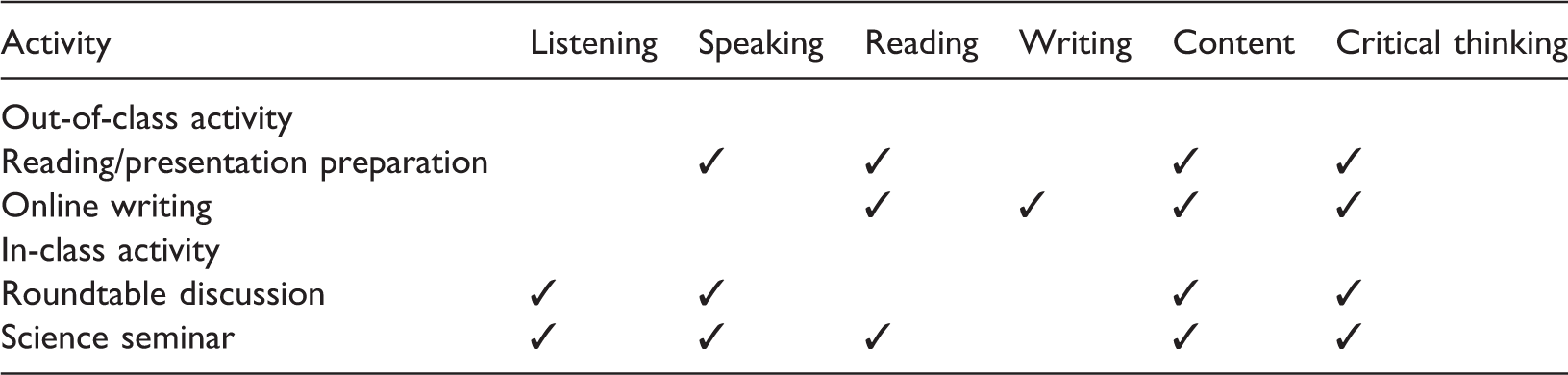
The students had the freedom to choose the specific content they wanted to focus on, as long as the topics were related to issues of cutting-edge science development. The instructor served as a facilitator to guide students through their research, comprehension, presentation, and discussion by discussing with them the difficulties they encountered in the process and providing comments and suggestions. In order to help students prepare for their roles, a weekly task-assignment sheet was distributed to the students after the add/drop deadline to allow students to prepare in advance.
Online science inquiry platform
A science inquiry website was developed to allow students to write down summaries of their reading, ask questions, and comment on other classmates’ summaries once a week. During a semester, they had to complete 15 summaries, post 15 questions, and write 24 comments. Figure 1 presents a screenshot of the platform.
Screenshot of the reading summary and comment platform.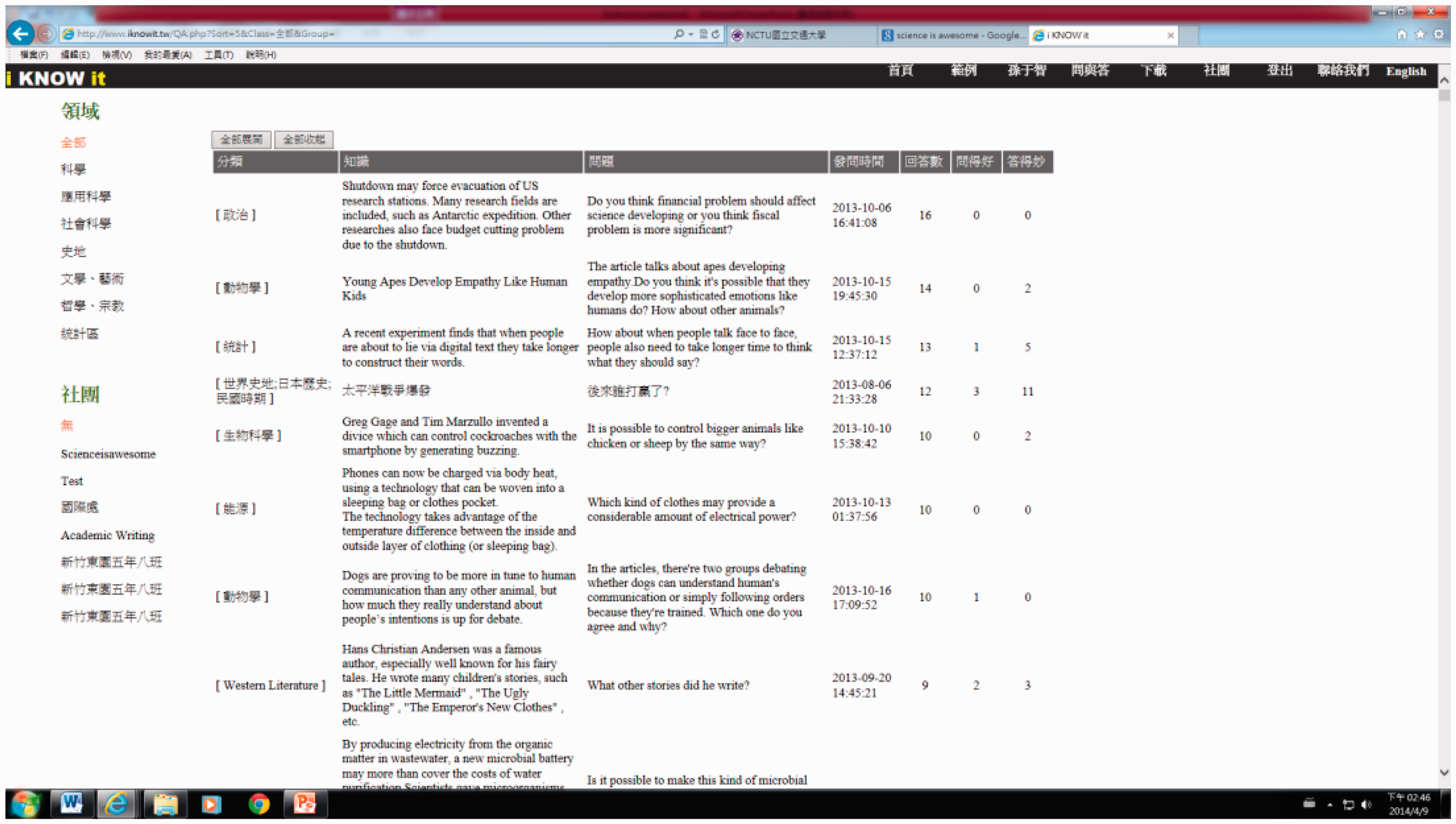
Survey
A course survey was developed consisting of 30 five-point Likert scale questions and ten open-ended questions (see Appendix). The five-point Likert scale questions included 13 questions on self-perceived progress in language skills, critical thinking, asking questions, and communication skills, and 17 questions on attitudes toward the flipped course design, such as students’ motivation to learn English and science, autonomous learning, and time spent on the course. Participants were asked to rate their agreement on the scale (1 = strongly disagree, 2 = disagree, 3 = undecided, 4 = agree, and 5 = strongly agree). The final, open-ended question asked about the online resources they chose. The survey was presented in the students’ first language (Chinese) to ensure that they understood the questions and was administered after the semester had ended and grades had been announced.
Interview
A stratified sampling procedure was adapted to select the interview participants in order to ensure that they were representative of the student sample in the study and to gain a broad and in-depth perspective on students’ learning processes and perceptions toward the teaching innovation. The researcher interviewed four participants. The following characteristics were taken into account as they are commonly identified as crucial demographic factors: gender; field of study; year of study; and performance on the project.
Of the four participants, one was female and the other three were male; one was a sophomore, two were juniors, and one was a senior. The interview participants majored in mechanical engineering, management, computer science, and electro-physics. The interviews were conducted one-on-one in the students’ mother tongue (Chinese), which enabled them to express their thoughts fluently. Each interview lasted between 40 and 60 minutes. The interviews were recorded in digital audio then professionally transcribed for further content analysis.
Results
Sample presentation topics chosen by the students.
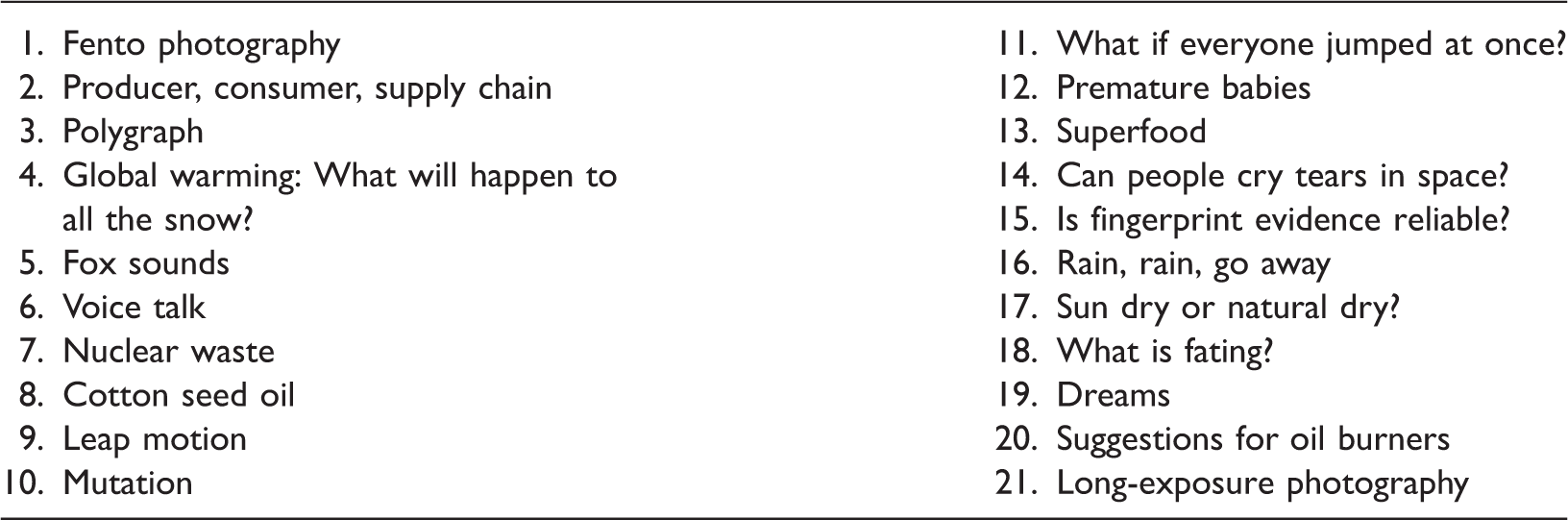
Research question 1: What attitudes and perceptions do students have about language and knowledge acquisition in the content-based flipped classroom?
The findings indicate that students in the study differ in their attitudes toward the flipped CBI classroom, and in their perceptions of their progression in language acquisition and content knowledge acquisition.
Attitudes toward the CBI flipped classroom
Learners’ attitudes toward the content-based flipped classroom approach.
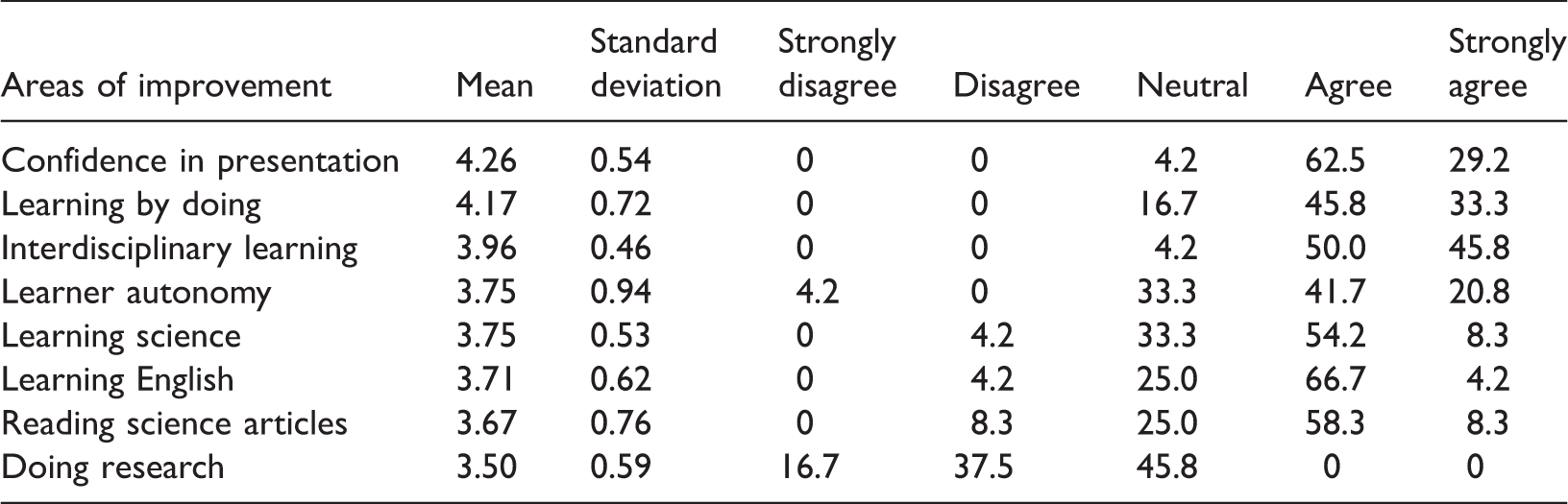
Language gains
Learners’ perceptions of their improvements in language and content knowledge.
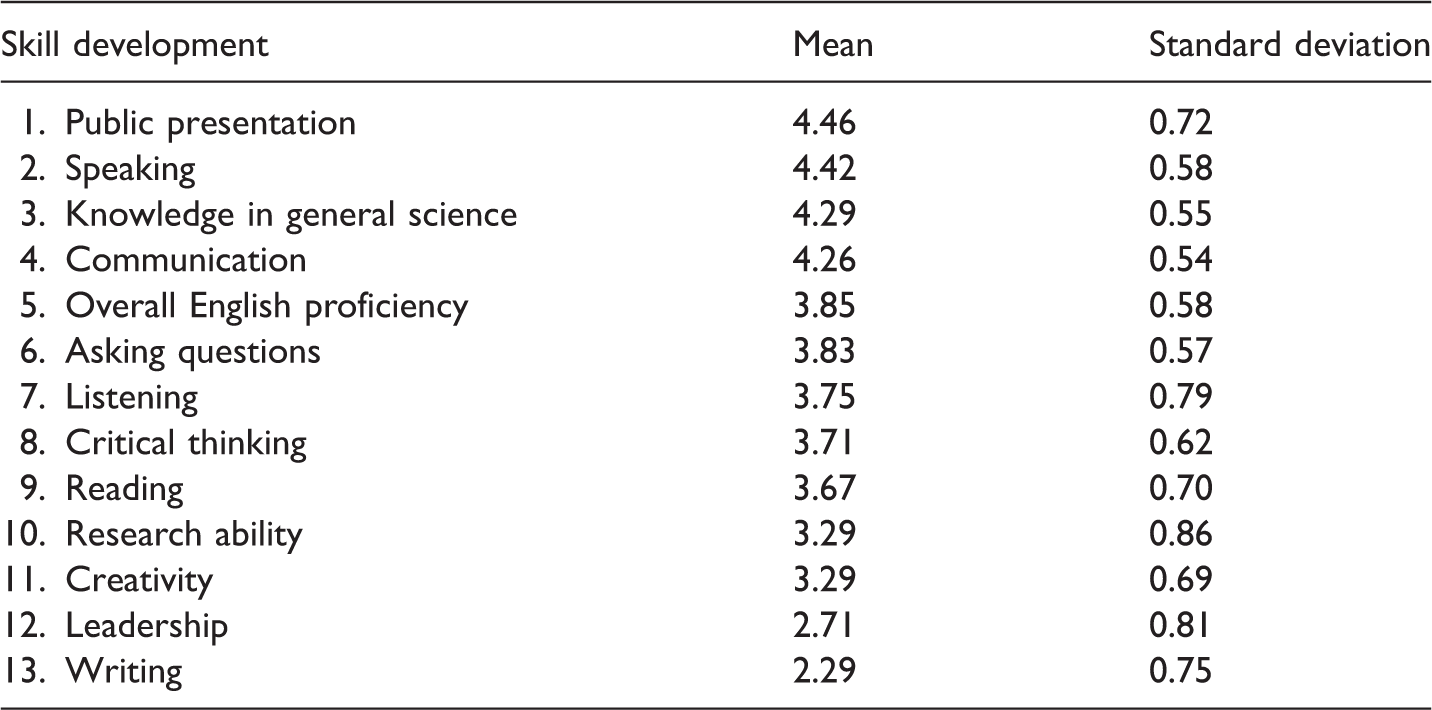
Students observed their progress in public speaking in English through extensive practice in class and through sharing and discussing: “To reiterate the meaning to others, you have to make sure that you know the meaning and pronunciation of uncertain words first” (Student H in the survey). The same student also commented, “Making presentations can help internalize the knowledge and language usage and leads to longer-lasting effects, whereas tests usually only have short-term learning effects”. Furthermore, the free selection of online reading material helps students to learn English from content that carries more meaning to them and apply the knowledge in actual practice. As one student put it, “Since I am learning from material that I am interested in, the learning content is more useful to me because I am more likely to use it in the future” (Student L in the interview).
However, some students find the traditional recitation approach more useful in learning English, even though they may not enjoy it. For example, Student L noted in the interview: I am the kind of learner who doesn’t set high expectations for oneself. I usually need something to push me to keep learning – e.g., giving me a vocabulary list to memorize and then testing me to evaluate if I am learning anything. I don’t like it but it is actually more useful to me.
Knowledge gains
Students appreciate the content-based learning approach in the way that it provides them opportunities to actually use the language in an authentic context. As one student put it, “The objective of learning English should be learning how to use the language for authentic purposes” (Student A in the survey). Besides, students also recognize the benefits of broadening their knowledge in terms of the potential research scope and ways of conducting research in science, as one put it, “It is the experience of breaking my original stereotypes about what research can be done” (Student C in the interview). Furthermore, the content-based learning approach motivates students to learn English. As one stated, “This approach makes learning English more interesting and sometimes I am so immersed in the topic I forget that I am actually learning English” (Student H in the survey).
Research question 2: What learning processes and strategies do students employ in the process?
The findings of the survey indicate that 75% of the students usually (50%) or always (25%) read several articles before they decide on which article to share. 87.5% of the students think they spend more time on the content-based flipped classroom course than on other general education courses, and 60.8% of the students think they spend more time on the course than on other language courses.
Students in the study used a variety of strategies to cope with the demands of the flipped classroom. One pointed to the “rehearsal” effect in preparing for the presentation in class: In order to present in the “Science Is Awesome” seminar, I have to rehearse my presentation by carefully reorganizing the content to make sure it flows smoothly. By rehearsing over and over again, it enhances the depth of my understanding and boosts my desire to perform well on the stage (Student C in the interview). I usually pick one article, read, and think about the quality and interest level of the article. If I am not satisfied, I will continue to search for another one until I find an ideal article to present. So, I end up reading a lot more than I expect to (Student M in the interview). Usually, right after our weekly class meeting at noon, I will start searching for next week’s article on my cellphone during lunchtime because I am afraid that I might find articles that I am interested in but won’t know how to express well or end up having to present something I am capable of presenting but not that interested in (Student C in the interview).
In terms of cognitive strategy, due to the required discussion and question and answer session in the lesson design, students learn to anticipate potential questions and “prepare beforehand for those questions before coming to the class” (Student H in the survey).
For some students, it takes several hours for them to prepare for one short presentation. As one put it, “It usually will take me a few minutes, three to four days before bedtime, to go through the word lists. But to prepare something to share with others orally, it usually will take me two to three hours” (Student C in the interview). Another student also mentioned that research can be quite time-consuming: “I sometimes have to spend two to three hours just finding an article to present in the class” (Student F in the survey).
Research question 3: What themes emerge from the content-based flipped classroom experience?
Being friendly versus being critical
Compared with traditional classes that emphasize the recitation of knowledge, several students find that the new approach encourages them to think critically and develop their organizational skills. However, not all students find it helpful in developing their critical-thinking skills. As one student reflected: I usually will presume what types of questions other classmates are capable of answering and only focus on those.…I usually try to be nice and don’t give others a hard time by pushing for follow-up questions (Student M in the survey). If I ask questions my classmates cannot answer, I will feel like I am embarrassing them and both of us will feel embarrassed and awkward. So, I usually just let go of difficult questions.… We spend too much time trying to understand each other’s ideas in English and end up talking about more superficial content, such as how much we enjoyed the article. I don’t feel comfortable giving a newly met friend a hard time (Student C in the interview).
Efficiency vs. autonomous learning
One student shared his passion about “performing” in class. As he put it, “I expect myself to perform better each time I stand on the stage. The stage is such a charming platform and it is up to us to prepare for the performance,” and he summarized, “Doing is the shortcut to learning” (Student U in the survey).
Another student recognized the advantages of emphasizing presentation and interaction in class by comparing Asian and American business practices: Asians tend to be shy, whereas Americans are better at making presentations and have better social skills. The results are very obvious. Most of the top 100 businesses are American enterprises. So, based on the outcome, presentation and social skills are areas we need to work on. We need to practice more from an early age (Student L in the interview).
However, the findings also indicate that not all students consider it to be very effective. Some argue that the test-oriented approach may prove to be more efficient in transferring knowledge from teacher to students. As one put it: It all depends on the characteristics of the students. Some prefer to use tests as motivators to push them to study, others prefer to freely learn things that interest them. As for myself, I hate tests and enjoy learning on my own. Even though I might not understand everything others present, by asking questions I become more open and make lots of new friends (Student E in the survey).
Degree of teacher involvement and the teacher’s role
Regarding to what extent teachers should dominate their classes by lecturing and providing comments or corrections, students differ in their perceptions. Several students expect a higher degree of teacher involvement in the class. As one student put it, “having someone guide you is always faster than finding the path on your own. [By] having the teacher teach you, one hour may cover ten pages of content. But if you read it on your own, maybe you only cover three pages in an hour” (Student L in the interview). Another student explained, “The teacher’s involvement is like [someone] providing comments on your writing. If no one comments on your piece, it will be very difficult to make improvements” (Student C in the interview).
However, other students believe that learning how to learn by oneself is more important than having someone teach you something: “The self-teaching skill is something missing among students here and it is crucial for us to gain it… because the teachers don’t trust students to learn on their own” (Student L in the interview).
Discussion
Regarding learners’ attitudes and perceived gains in language and content knowledge, the findings of the study indicate that, generally speaking, learners hold positive attitudes toward the content-based flipped classroom approach in terms of language and content knowledge gains. These findings echo earlier research that found that learners are more motivated when they can focus on something other than language and display increased language proficiency (Valeo, 2013), growth in content knowledge (Edwards et al., 1984; Hoare et al., 2008), and greater satisfaction (Kasper, 1995). However, the findings also reveal that learners vary in their perceptions of gains in the flipped classroom approach. Those students who hold the belief that learning is best achieved by using the language directly tend to have more positive attitudes toward this approach, whereas for those who believe that real learning exists only when the outcome is measurable by test scores and there is a clear scope of content coverage, the traditional test-driven approach is more effective.
Regarding the learning process and strategies employed, the findings indicate that the flipped classroom approach fosters learners’ use of diverse learning strategies, including rehearsing several times before class, searching for material to learn, exercising time management, and polishing their cognitive strategies. The findings corroborate those of Schleppegrell et al. (2007) that content-based instruction is based on the premise that the conjunction of language and content provides learners with comprehensive input and opportunities for meaningful use of academic language. In addition, the findings also echo Krashen’s (1982) notion of comprehensible input, in which language is best acquired incidentally through extensive and meaningful exposure to comprehensible inputs.
Finally, the findings reveal that by humanizing the class, allowing extensive sharing and interaction, the CBI approach helps students to explore the subject matter deeper and benefit from each other’s comments. The cooperative nature of the course design helps students develop sensitivity in communication. The findings are in accordance with earlier studies that have found that learners using the language as a means of acquiring information can best enhance their communicative competence by participating in authentic and purposeful communication (Hymes, 1974).
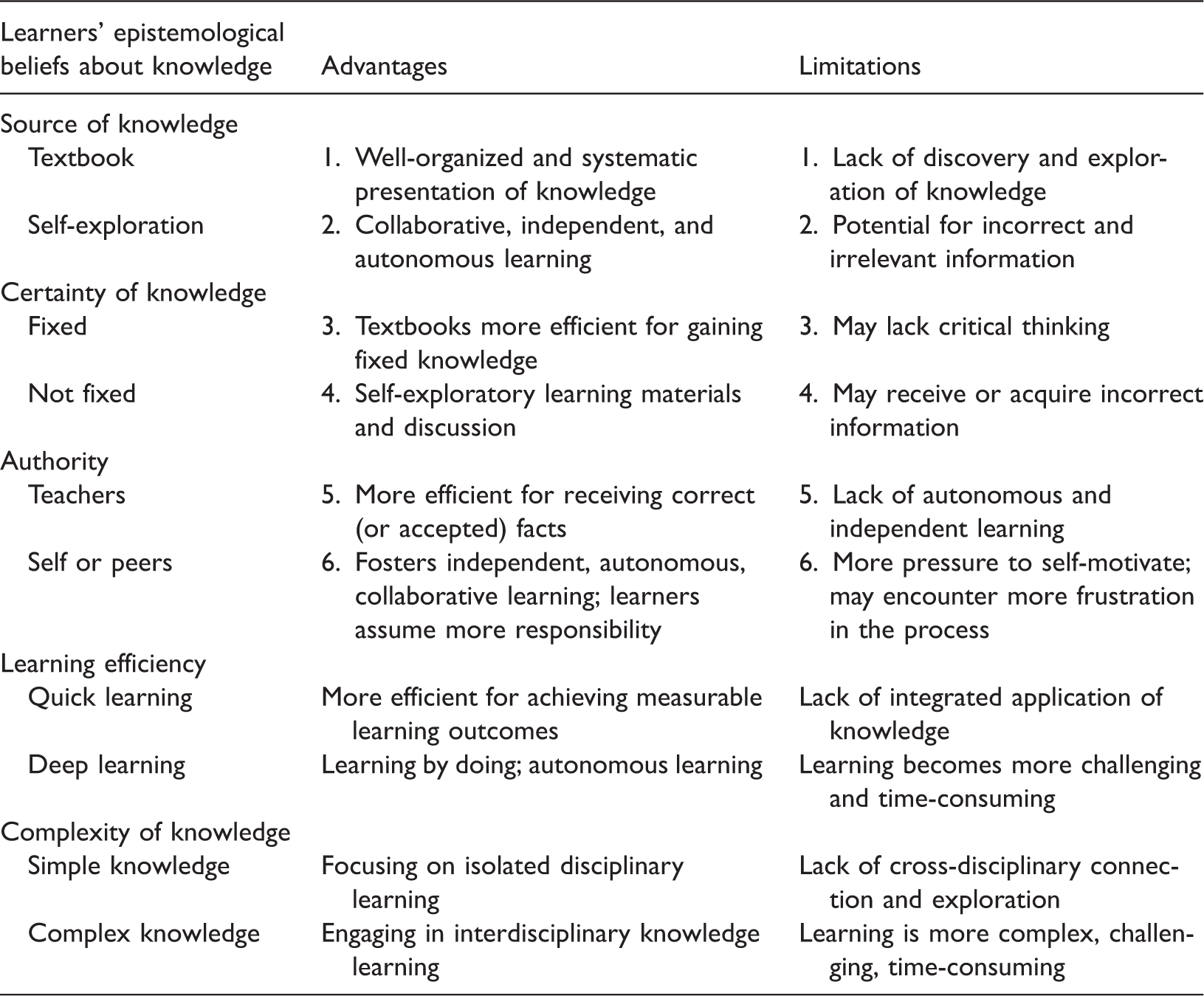
However, the findings show that learners perceive and respond differently to the highly interactive nature of the course design and its emphasis on critical thinking and reflection. Several students reflected upon the dilemma of being friendly versus being critical during their interaction with classmates. To some of them, asking “critical questions” means giving peers “a hard time” and could have a negative influence on their newly developed friendships. In addition, not all students reacted positively to the autonomous learning opportunities presented in the flipped classroom concept. Some students voiced their concern about the possibility of being exposed to “incorrect” or “irrelevant” knowledge and the lack of organization and systematic presentation on the Internet. Some students also shared their preference of “traditional” language classes that focus on the memorization of vocabulary and grammar, since they offer more easily measurable learning outcomes. Besides, not all disciplines are suitable for the flipped classroom approach, such the natural sciences or disciplines that require solid theoretical foundations.
Factors contributing to learners’ perceptions of the content-based flipped classroom.
Conclusion
As Nodoushan (2009) states, when students see themselves as members of a community, they behave in ways that fit “that culture’s distinctive ways of doing things, of valuing things, and of knowing things” (Shaffer and Gee, 2005: 10). The current study presents a model for the content-based flipped classroom and illustrates how learners’ epistemic fluency emerges within the flipped classroom learning community. Epistemic fluency is termed as … being active and participating fully in collaborative activities with others that have a shared interest in the task at hand and are more adept in performing these activities through understanding the structures, goals, rules, strategies, and constraints that bound the activities (Zenios, 2011: 261).
Limitations and recommendations for future research
Firstly, the findings of the study reveal that the more students believe in “quick” learning, the more they are likely to prefer the traditional lecture-dominant approach, and the more students believe that knowledge is certain, the more they are likely to prefer learning from textbooks rather than searching for learning materials on their own. This sets the stage for further investigation into the relationship between learners’ epistemological beliefs and how they engage in learning in the flipped classroom, where learner autonomy and collaborative learning are encouraged.
Secondly, the findings help shed new light on how epistemic fluency can be fostered in higher education. Future research that aims to explore the connection between epistemic fluency and learners’ ability to participate fully in the generation of cross-disciplinary knowledge could give us more insights into the development of online collaborative learning and teaching.
Thirdly, as Lo (2014) indicates, the focus on content knowledge may sacrifice learners’ development in language accuracy and output. Lyster (2007) further suggests that CBI needs to place more emphasis on language teaching and promote a higher level of accuracy by providing corrective feedback (e.g. recasts or explicit correction). Therefore, future research that formulates explicit goals and objectives in content and language in the planning phase is crucial for the design and implementation of the CBI approach (Hudson et al., 2006). Furthermore, comparison between content orientation and language orientation in the flipped classroom – in terms of learner motivation, acquisition, and the longitudinal effects on learning – could shed new light on how the flipping the classroom approach may alter the dynamics of how learners go about learning.
Finally, the current study also indicates that not all students react favorably to the flipped classroom approach. In McLaughlin et al. (2013), some students found themselves failing to master the content. Some also found the approach redundant or the poor presentation quality of the lecture videos unhelpful. Moving the lectures outside the classroom can also be an extra time burden to some students (Smith, 2013). In Wilson’s (2013) study, students in flipped classrooms would fail to read the assigned textbook on a regular basis. Some students, given the lack of lectures in class and the increased expectation for individual responsibility, regarded it as unfair or unreasonable to have to pay tuition to teach themselves. Similar findings were also observed in the current study. Thus, future research exploring individual differences in learning styles and epistemological beliefs about learning could also shed more light on the demographic and individual variables in the acceptability of the flipped classroom approach. In addition, the instructor in the study served as a facilitator to guide students throughout the process; it may affect the learning outcome, then, if the teacher plays a different role. It is worth further investigation to see how different teacher roles impact student learning in the content-based flipped classroom and in what way. Also, it is of interest how learners with different demographic backgrounds, learning styles, learning strategies, and beliefs about learning respond to the teacher’s role.
Footnotes
Declaration of Conflicting Interests
The author(s) declared no potential conflicts of interest with respect to the research, authorship, and/or publication of this article.
Funding
The author(s) received no financial support for the research, authorship, and/or publication of this article.