




Abstract
Addressing widespread polarisation requires understanding how attitudes relate to identification and ingroup favouritism. Two studies employ interactive paradigms to examine whether attitude congruence produces behavioural consequences in addition to identification. In Study 1, participants (N = 375) responded to four novel attitude statements in groups of five and were randomised to either see the responses of the other participants, or to be blind. Ingroup favouritism was measured by token allocation. In Study 2, N = 413 participants in groups of six observed responses to one of three statements supporting an ethnic group before completing collective action measures. Findings illustrated that observing attitudes in small group contexts can foster identification. Participants demonstrated favouritism to those with whom they aligned on three neutral attitudes (Study 1) and showed greater support for the target group when others’ attitudes aligned (Study 2). This illustrates how identification and intergroup dynamics can emerge in online contexts.
Introduction
Considering widescale political polarisation and the prominence of attitude sharing on social media, it is important to understand how attitudes relate to social identification. Addressing urgent social issues requires coordinated agreement on the nature of, and solutions to, the issue. Attitudes are often embedded within social categories or identities (e.g., Republican or Democrat in the United States), which drives polarisation and potentially limits society’s ability to unite under shared agreement (Durrheim & Quayle, 2025).
The minimal group paradigm (e.g., Tajfel et al., 1971) examined the conditions under which arbitrary social categorisations lead to meaningful social distinction, such as identification and ingroup favouritism. These studies have frequently demonstrated people’s tendency to enhance group distinctiveness, sometimes at the expense of ingroup gains (Otten, 2016). In most minimal group studies, however, the basis for social categorisation is made explicit, with participants assigned to groups based on a single attribute. In real social settings, people encounter multiple potential bases for social categorisation, and must infer how, if at all, to draw intergroup boundaries. Our first study demonstrates a version of the minimal group paradigm measuring practical treatment of ingroup and outgroup members to determine how these intergroup boundaries are drawn based on multiple attributes.
Moreover, research investigating the emergence of identification in interactive contexts remains scarce. Experiments involving social interaction have, in fact, declined. Indeed, the influence of social interaction has often been considered a factor to be statistically controlled, rather than an essential component of social phenomena worthy itself to be studied (Haslam & McGarty, 2001). However, people actively construct meaning in situ. Some studies have captured this dynamic, interactive social meaning construction experimentally. Durrheim et al. (2016), for example, developed the Virtual Interaction APPLication (VIAPPL) platform to study factors influencing ingroup favouritism in group interactions. O’Reilly et al. (2022; O’Reilly, Maher, Smith, et al., 2024; O’Reilly, Mannion, et al., 2024) examined how observing attitude congruence promotes attitude-based identification. In the current research, we bridge these bodies of research to test whether attitude sharing influences the development of ingroup favouritism (Study 1) and fosters social change (Study 2). The social identity model of deindividuation effects (SIDE) argues that the deindividuating nature of online interactions increases sensitivity to group membership cues and creates the conditions for social influence (Postmes et al., 2002). Moreover, social identity and norms can be inferred during communication in small groups (Postmes et al., 2005). As such, we examine whether attitude congruence can produce practical behavioural consequences in addition to psychological identification, to illuminate how polarisation dynamics emerge in online contexts.
In Study 1, we explore, through repeated interactions based on minimal social cues such as attitude agreement, (1) how group identification emerges and (2) whether observed attitude agreement translates into ingroup bias. Study 2 is pre-registered and examines whether a single attitude-sharing interaction about a social issue can similarly foster emergent identification and whether observing attitude agreement can go beyond ingroup favouritism and facilitate collective action in solidarity with an outgroup.
Ingroup Favouritism and Social Identity Theory
Ingroup members’ preferential treatment of other ingroup members has been recorded for over half a century. Sherif’s (1966) pioneering studies introduced the idea that people act in favour of an ingroup when resources are perceived as scarce. The Social Identity Paradigm demonstrates that favouring the ingroup increases intergroup distinctiveness and collective self-esteem. The minimal group paradigm (Tajfel et al., 1971; see also, Turner et al., 1979) illustrated ingroup favouritism in minimal group contexts when group comparisons are implied. The emergence of ingroup favouritism in interactive contexts in which intergroup boundaries are not explicit remains underexamined. In Study 1, we investigate how an emerging ingroup identity can manifest as preferential treatment towards more similar individuals. Study 2 corroborates the emergence of ingroup identification from online attitude congruence and examines whether observing attitudes can foster solidarity with a minoritised ethnic outgroup.
Attitude-Based Groups and Novel Attitudes
Literature on opinion-based groups (Bliuc et al., 2007, 2015; McGarty et al., 2009) underscores that social identification can arise from shared attitudes and is closely tied to behavioural intentions. O’Reilly et al. (2022) demonstrate that perceiving others as sharing one’s attitudes cultivates shared identification. In addition, O’Reilly, Mannion, et al. (2024) highlight that individuals are motivated to align their attitudes with others, suggesting that strategic and cooperative attitude expression can facilitate ingroup acceptance. We extend these findings by assessing how attitude congruence on multiple attitudes fosters identification in small-group settings, testing effects on three identity categories: identification with the interaction group, with members of the interaction group who share one’s attitudes, and with others in society who share one’s attitudes, to assess whether effects generalise beyond the interaction. We also examine how this influences behaviour towards other group members (albeit with symbolic tokens in Study 1), and how sharing a positive outgroup attitude can promote solidarity-based collective action (Study 2). This allows us to investigate how both ingroup favouritism and outgroup support emerge from interaction.
To examine whether attitudes per se can be psychologically relevant bases for social identification beyond pre-existing social groups, our first study uses ‘novel’ attitudes: statements which participants are unlikely to have previously encountered (O’Reilly, Maher, & Quayle, 2024). In uncertain social situations, people look to relevant ingroups to guide their attitudes and behaviour (Abrams & Hogg, 1988; Sechrist & Stangor, 2007). As underlying intergroup boundaries associated with novel attitudes are not evident, attitude congruence/incongruence will likely be a salient comparative intergroup context for making sense of the novel situation. Attitudes forming the core of opinion-based groups in prior literature are usually socially meaningful in the context of collective action. As socially relevant attitudes likely have stronger social influence, our second study focuses on support of a marginalised ethnic group in Ireland. We hypothesise that these attitudes may be associated with pre-existing identities which are strengthened through shared agreement. We test this idea in Study 2.
Study 1
In the first study, we investigate how identification emerges from attitude congruence (measured variable), and how this affects giving behaviour. We examine this in a dynamic interactive setting where participants observe responses to four novel attitudes in groups of five. In the experimental (seen) condition, participants can see whether others agree or disagree with them; in the control (blind) condition, they are not shown this information. After interacting on a series of attitudes, participants allocate tokens (i.e., points) to each other.
We hypothesise that:
Methods
Participants
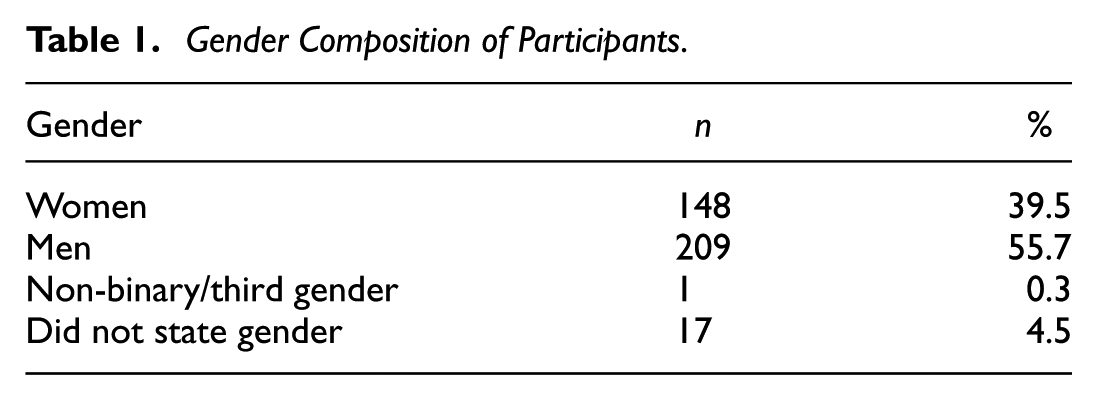
Participants were recruited from Prolific Academic (Ncompleted = 375). The study was made available to participants from all countries. Participants were included if they stated English as their first language, had at least a 95% Prolific approval rate, and had completed >50 studies on Prolific. Participants were paid £3.50 for their participation. The participants’ age ranged from 18 to 76 (M = 38.42, SD = 11.84), with a detailed gender breakdown shown in Table 1. Regarding educational attainment, 63.2% had obtained or were studying for a Bachelor’s degree or higher.
Gender Composition of Participants.
Transparency and Openness
The hypotheses were formulated prior to data collection but not pre-registered, as the study was originally intended as a pilot. As data collection became unexpectedly time-consuming and expensive, we expanded the sample as a single study without previously analysing the results. More participants started the study (Nstarted = 720 approx.), but many entire groups were excluded (e.g. if a participant left the study before completion, or technical errors within VIAPPL). We do not expect dropouts to be systematic. All participants received fair remuneration. A power analysis conducted using G*Power 3 (Faul et al., 2007) determined that the final sample size provides adequate power to detect moderate-small effect sizes (partial eta-squared > .02), as seen in O’Reilly, Maher, and Quayle (2024). Data and analysis files are available from https://osf.io/7c6es/overview?view_only=540a21bab5de4eba98dd738ae8e340f8.
Design and Procedure
The study consisted of an interactive experiment in groups of five. The study was published on Prolific and directed to Qualtrics, where they provided informed consent, and read instructions before entering a virtual waiting room until five participants joined. They were then given 30 seconds to chat with the other players. This ensured participants understood they were matched with real people. The game began once five participants entered the Virtual Interaction APPLication (VIAPPL) platform, which facilitates the investigation of dynamic and emergent processes in small-group interactions (http://www.viappl.org).
Two practice rounds introduced participants to attitude-sharing and token-sharing. Four attitude-sharing rounds were then completed. In each round, they selected whether they agreed or disagreed with a novel attitude (e.g. ‘The circle is a noble shape’ and ‘Pencils are charming’). These types of attitudes were previously confirmed to be considered novel by participants (O’Reilly, Maher, & Quayle, 2024). Participants in the experimental (‘seen’) condition were shown each player’s responses and reviewed their answers before proceeding to the next round (see Figures 1 and 2 for illustrations). In the control (‘blind’) condition, the participants were not shown each other’s responses. Instead, the screen progressed automatically to the next round.
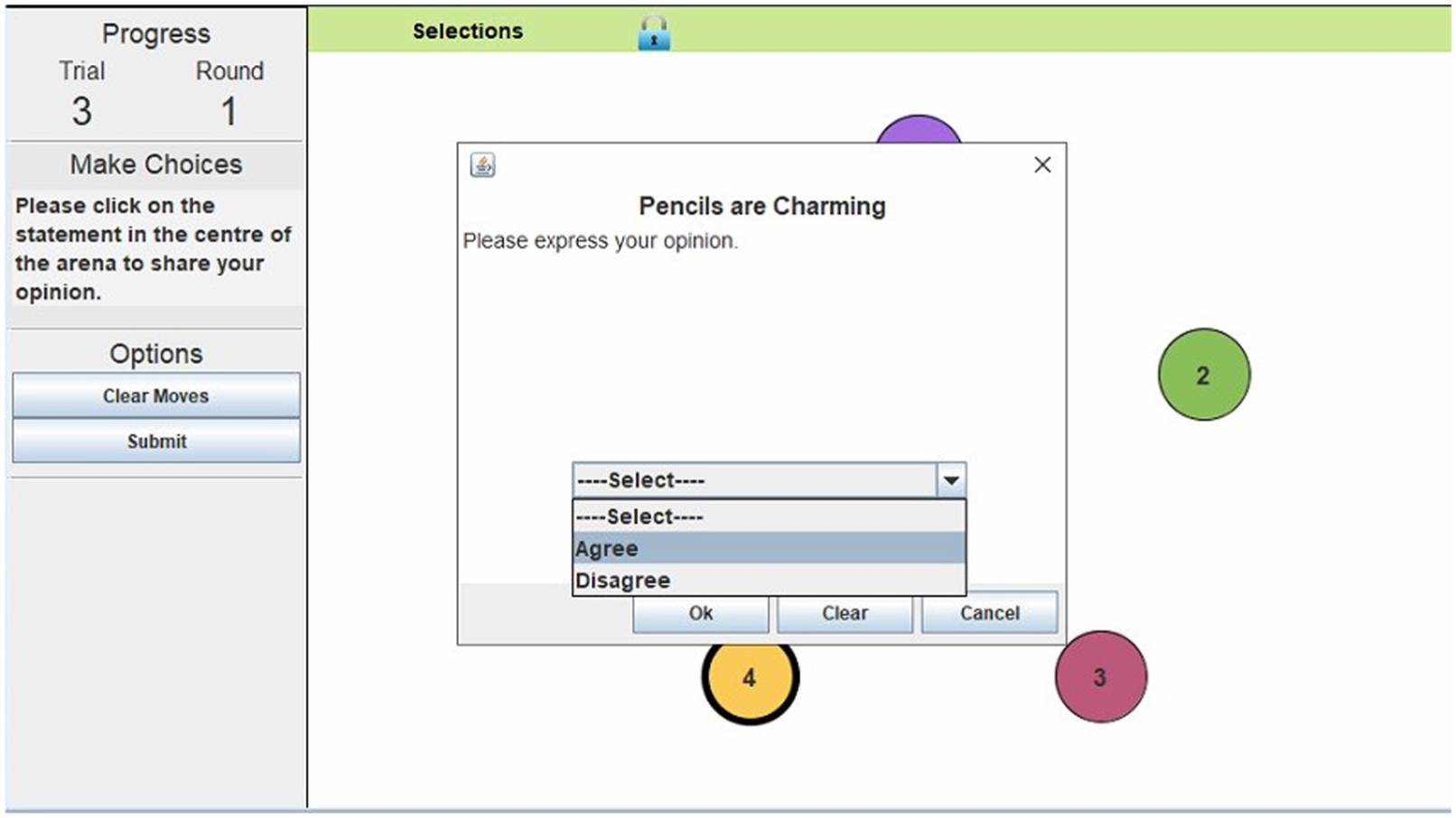
Illustration of VIAPPL Environment During Attitude Selection From the Perspective of Participant 4 (Circle in Bold).
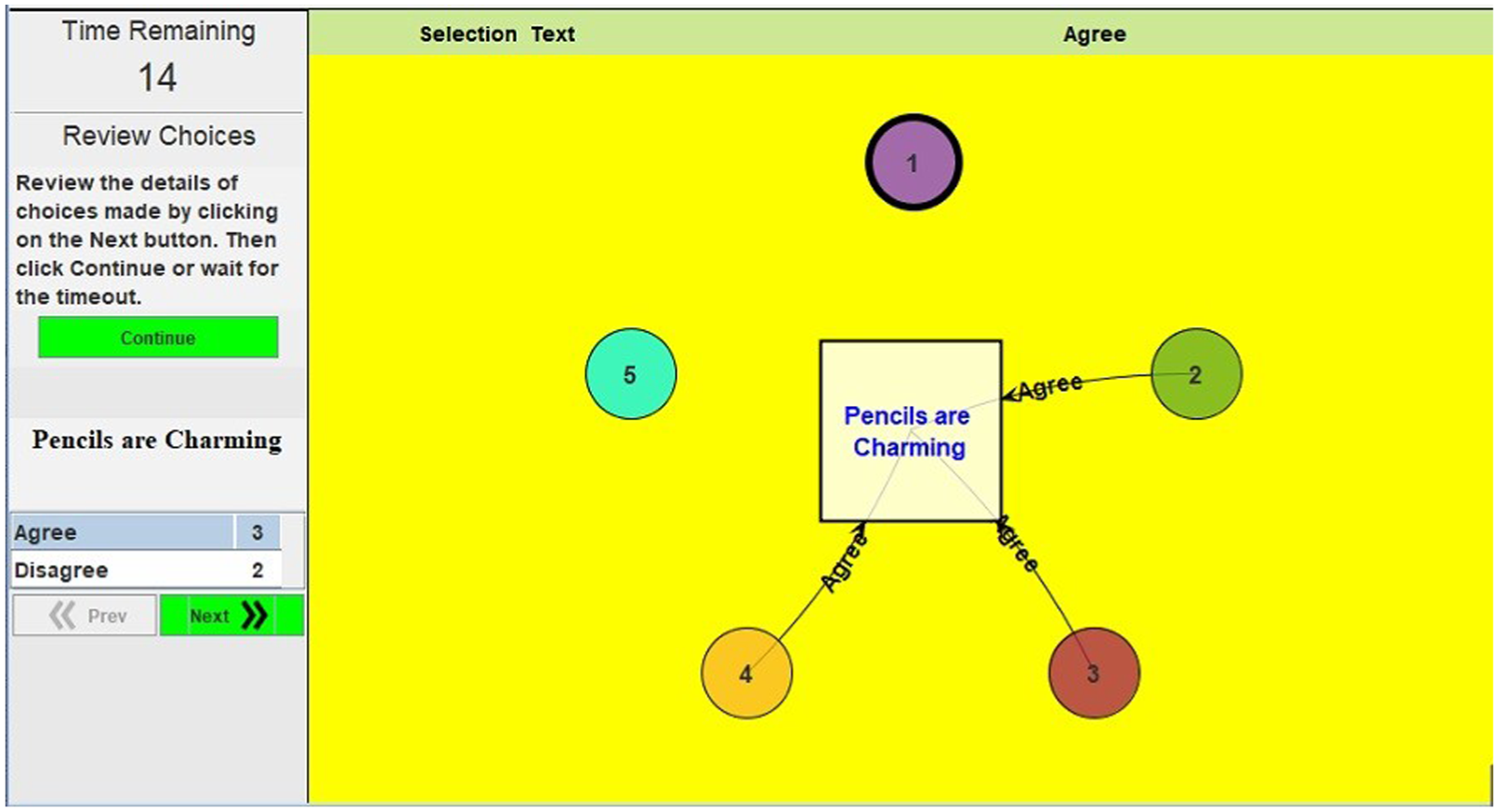
Illustration of VIAPPL Environment During Attitude Sharing Rounds (Seen Condition Only) From the Perspective of Participant 1 (Circle in Bold).
Afterwards, participants rated their identification with the group, and with those in their group and society who shared their attitudes. 1 Finally, participants were given ten tokens and asked to distribute them among the group.
Materials
Novel Attitudes
The four novel attitudes were: ‘The circle is a noble shape’, ‘Pencils are charming’, ‘Concrete blocks are problematic’ and ‘Paper is trustworthy’. During the attitude sharing rounds, their response to each attitude was measured as a binary ‘agree’ or ‘disagree’.
The following constructs were measured on a 5-point Likert-type scale from ‘strongly disagree’ (1) to ‘strongly agree’ (5).
Group Identification
Identification with the other players was measured with nine items after the interaction. Five were adapted from Leach et al. (2008): ‘I identify with all the other players as a group’, ‘I am similar to the average player in the game’, ‘The players in the game are similar to each other’, ‘I am glad to be part of this group of players’, ‘I feel a bond with the other players in the game’. Three items were created to capture group entitativity: ‘This group has a clear identity’, ‘This group has a view of its own’, ‘This group has its own personality’ and ‘It is clear what this group stands for’ (Cronbach’s alpha = .89).
Attitude-Based Group Identification
Participants’ attitude-based group identification was measured with the item ‘I identify with the players who shared my opinions about the four statements’, adapted from Postmes et al. (2013). This item was only presented to participants in the experimental condition.
Attitude-Based Societal Identification
Societal attitude-based identification was measured with ‘I identify with other people in society who share my opinions about the four statements’ (Postmes et al., 2013).
Attitude Congruence
To calculate attitude congruence, first, the modal response (‘agree’ or ‘disagree’) within each group to each of the four attitudes was calculated (i.e., the mode per round). Then, four dichotomous variables were created in which participants were assigned a value of 1 if their response matched the mode for the respective attitude. These four variables were summed to indicate how many times each participant’s response matched their group mode, ranging from 0 to 4. This was dichotomised where participants received a value of 2 if their responses matched the group mode 3 or 4 times (i.e., they were in an attitude majority more than half of the time, n = 265), and a value of 1 if they were in an attitude minority at least half of the time (n = 110). See Supplementary Materials (Table 1S) for the full distribution of attitude congruence with the group.
Giving Behaviour
Giving behaviour was assessed with a token-sharing round in the VIAPPL platform. Participants had ten tokens to distribute among the five players (including themselves).
Data were analysed using R in RStudio (V4.3.2).
Analysis Plan
After descriptive statistics, ANOVAs are used to examine the effects of condition and attitude congruence on identification. As interaction data is relatively unusual in social psychology, when examining giving behaviour, the data were first rearranged to fit a multinomial regression model which accounts for agreement with multiple others across multiple attitudes.
Results
Descriptive Statistics
Table 2 shows descriptive statistics for all variables measured on a Likert-type scale.
Means and Standard Deviations for All Likert-type Variables.
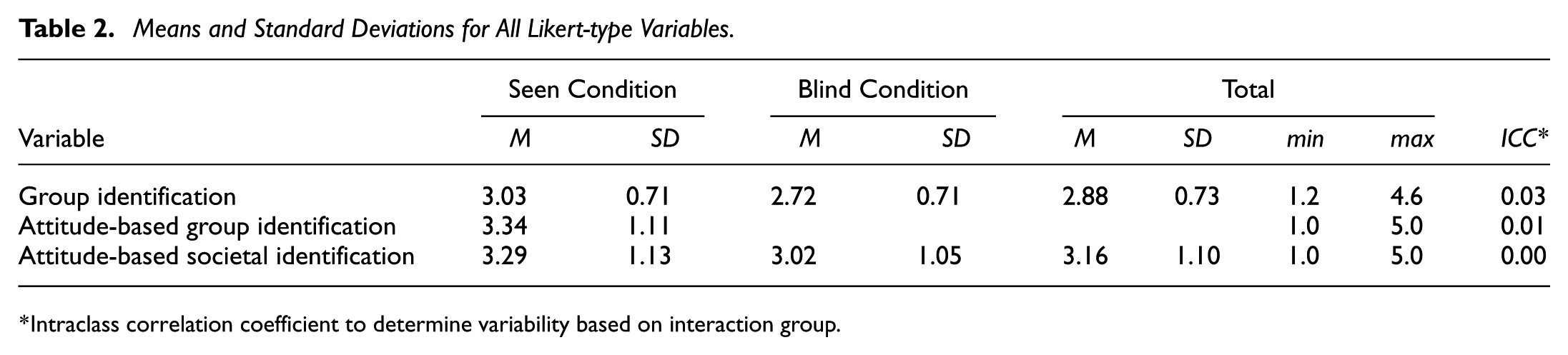
Intraclass correlation coefficient to determine variability based on interaction group.
Condition and Identification
Two one-way ANOVAs tested whether condition predicted identification with the group and societal attitude-based identification respectively. The results revealed that those in the seen condition reported significantly stronger identification as predicted (see Table 3). Thus, both H1 and H3 are supported.
Results of One-Way ANOVAs.

Attitude Congruence and Identification
A two-way ANOVA tested the interaction between condition and attitude congruence on both relevant identification measures. There was no significant interaction effect on group identification (p = .091). H2 was therefore not supported. There was, however, a significant main effect of attitude congruence, F(1, 350) = 7.70, p = .006, n2p = .02, where participants who were coded as being in an attitude majority tended to report stronger group identification (M = 2.95, SD = 0.74) than those coded as being in an attitude minority (M = 2.72, SD = 0.68).
For societal attitude-based identification, there was a significant interaction between condition and attitude congruence, F(1, 350) = 5.00, p = .026, n2p = .014. Participants in the seen condition who tended to be in an attitude majority reported significantly higher societal attitude-based identification (M = 3.42, SD = 1.11) than those in the blind condition who tended to be in an attitude majority (p = .002, M = 2.99, SD = 1.08) or compared to participants in the seen condition who tended to be in an attitude minority (p = .009, M = 2.96, SD = 1.12). H4 was supported.
To assess the effect of attitude congruence on attitude-based group identification, a one-way ANOVA was conducted among participants in the seen condition. There was a significant effect of congruence on attitude-based group identification, F(1, 185) = 9.04, p = .003, n2p = .05, with those who tended to be in an attitude majority exhibiting stronger identification (M = 3.49, SD = 1.06) than those who tended to be in an attitude minority (M = 2.96, SD = 1.13). H5 was supported.
Giving Behaviour
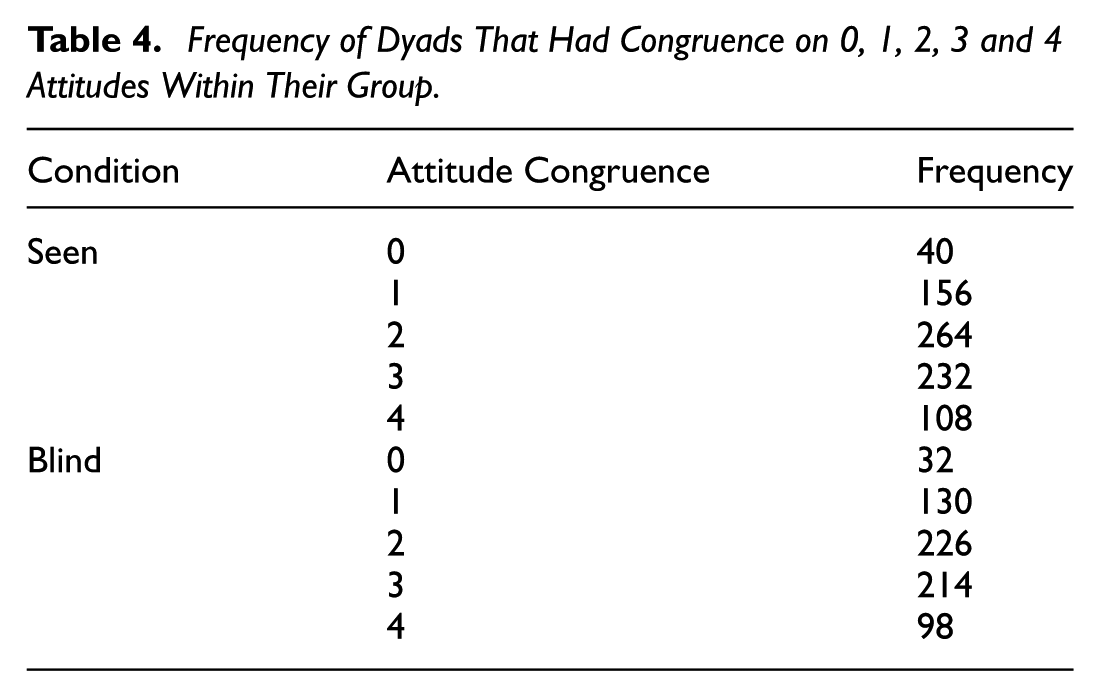
A multinomial regression examined whether attitude agreement influenced tokens given to other players, and whether this was moderated by condition. Agreement is included as five dummy-coded variables indicating agreement level with a given player, with agreement on two of four attitudes as the reference category. Therefore, the β coefficient of each dummy variable describes differences in token allocation for different agreement levels compared to agreeing on two attitudes. The dependent variable is the number of tokens given to players at each agreement level, with self-giving as the baseline. Note that agreement on none or all items was less common than agreement on some, resulting in unequal cell sizes and lower power for some effects (see Table 4).
Frequency of Dyads That Had Congruence on 0, 1, 2, 3 and 4 Attitudes Within Their Group.
As seen in Table 5, the significant interaction between condition and agreement on three attitudes suggests that when attitudes are visible, agents are more likely to give to agents with whom they agree on three attitudes (p = .002), supporting H7. Participants were also significantly less likely to give to agents with whom they disagreed on all attitudes compared to the reference category when attitudes were visible, though the difference between conditions was not significant (p = .061). Figure 3 describes the pattern of giving tokens to agents based on level of agreement, or to oneself, for both conditions.
Multinomial Regression Results Illustrating Effects of Attitude Congruence and Condition on Giving Behaviour.
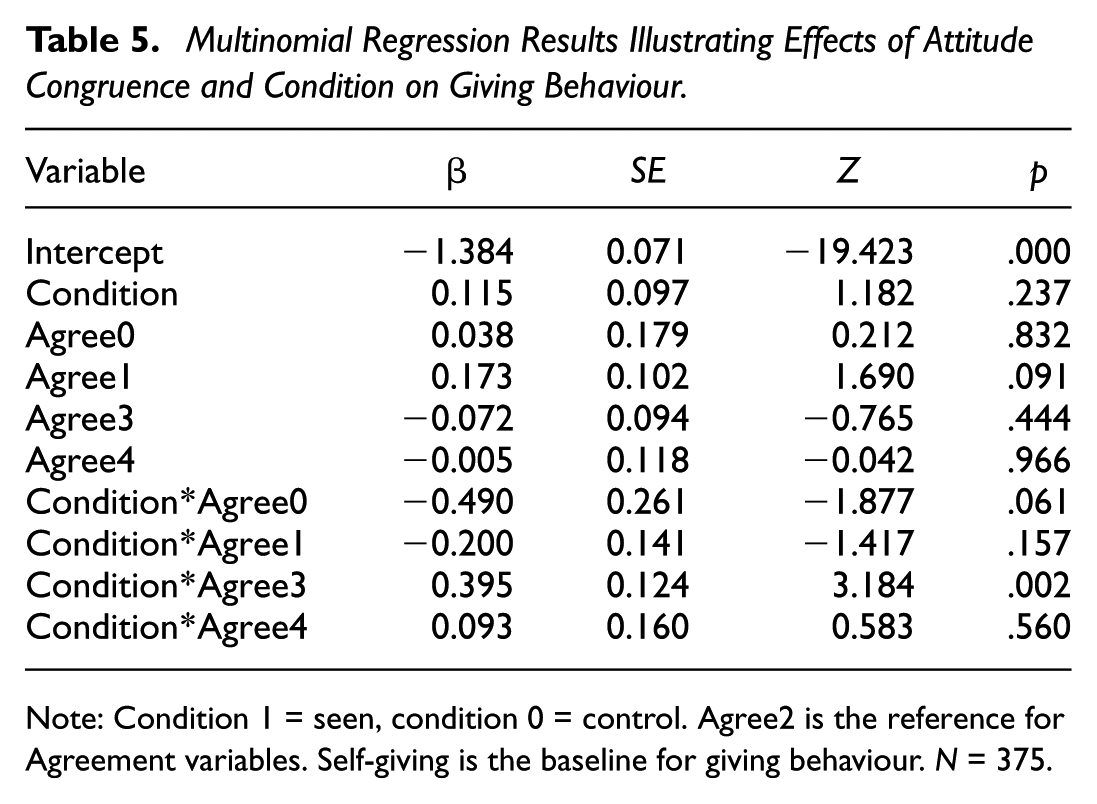
Note: Condition 1 = seen, condition 0 = control. Agree2 is the reference for Agreement variables. Self-giving is the baseline for giving behaviour. N = 375.
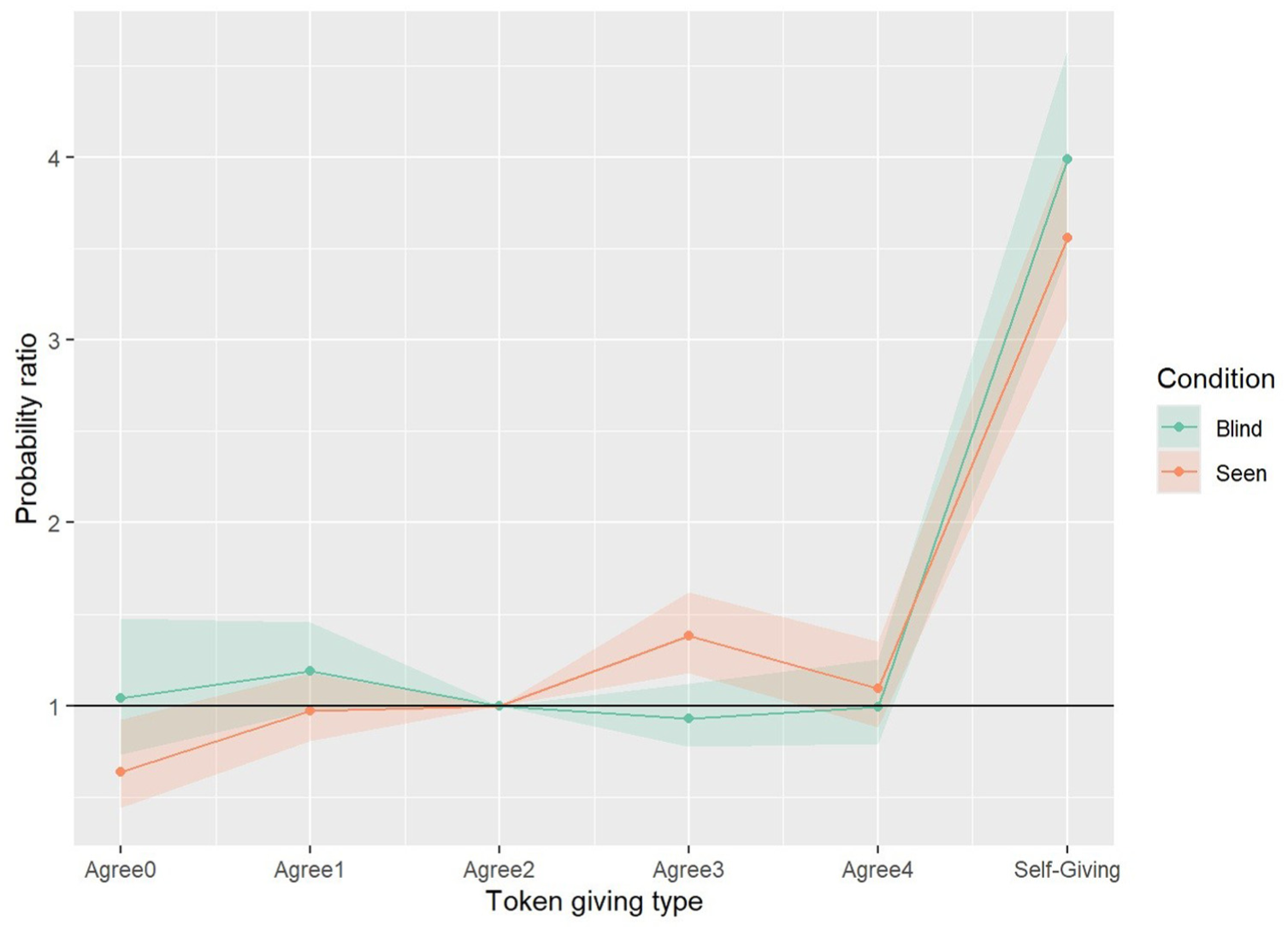
Probability Ratio of Giving Tokens Depending on Agreement Level.
A likelihood ratio test comparing this model to one that excludes the interaction indicates that the overall effect of condition is statistically significant (p < .001), supporting H6.
Finally, regressing the number of tokens given to the self on group identification indicated that the more participants identified with the group, the less they engaged in self-giving, β = −0.19, SE = 0.05, p < .001.
These results demonstrate that attitude congruence on novel attitudes predicts identification and ingroup favouritism in the form of token allocation to those with greater attitude congruence. Study 2 builds on these findings by corroborating the relationship between observed attitude agreement and identification in the context of a single socially relevant attitude, and further examines whether attitude congruence can be harnessed to facilitate prosocial behaviour towards an outgroup.
Study 2
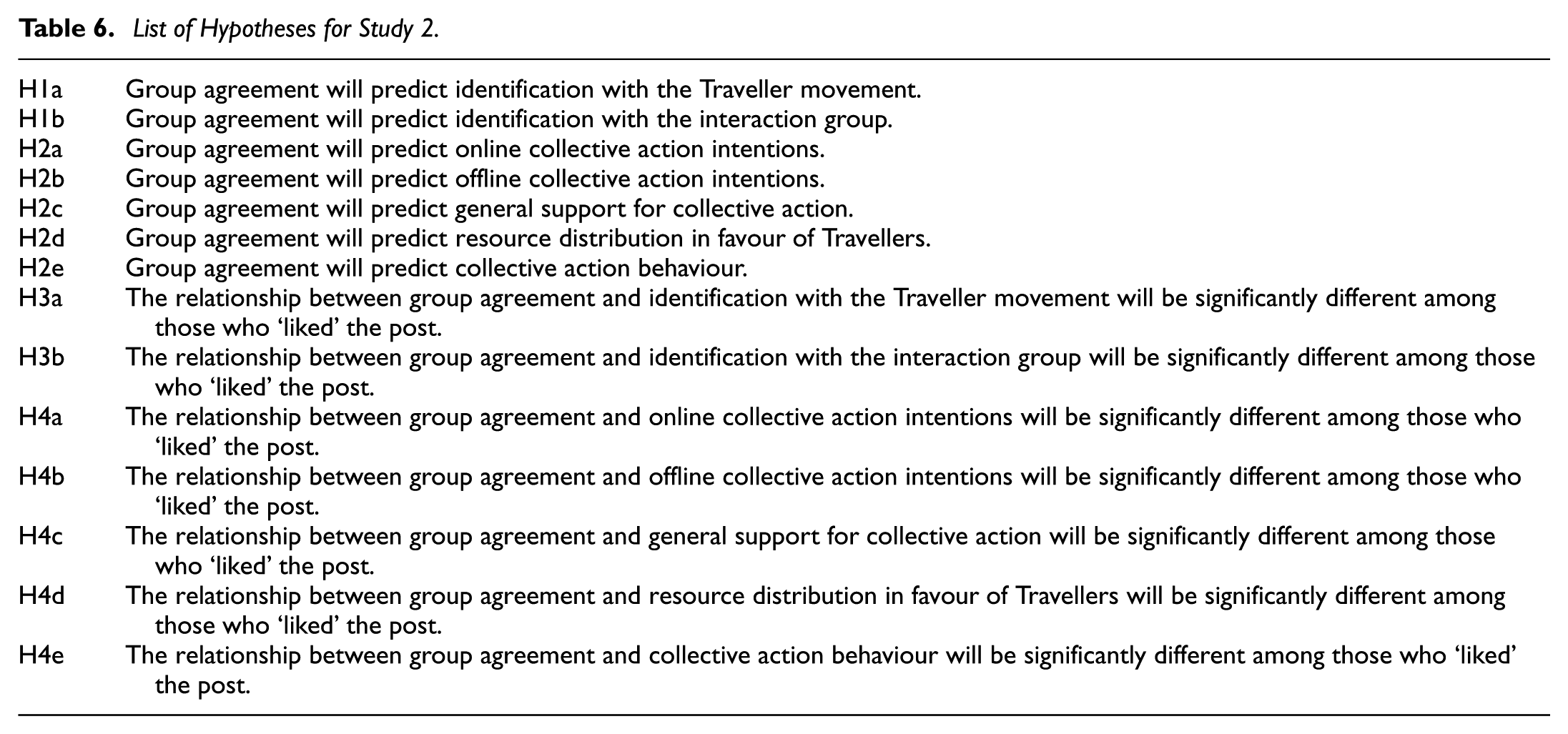
Travellers (also known as Mincéirs) are a marginalised minority ethnic group who experience high levels of discrimination in Ireland (McGinnity et al., 2018). Motivating (settled) Irish people to support pro-Traveller protests may aid social cohesion and reduce prejudice. Using a similar interactive paradigm as the previous study, Study 2 examines whether observing agreement with a statement supporting Travellers can foster identification with the interaction group and with the pro-Traveller movement, and motivate solidarity-based collective action intentions. The pre-registration can be found here (https://osf.io/nraxj/overview?view_only=cc75487c1a874a67b2fcf572a67d07c5). The hypotheses relevant to this study, which relate to group agreement, are outlined in Table 6. These have been re-numbered for clarity (originally H5a-H8e).
List of Hypotheses for Study 2.
Method
Participants
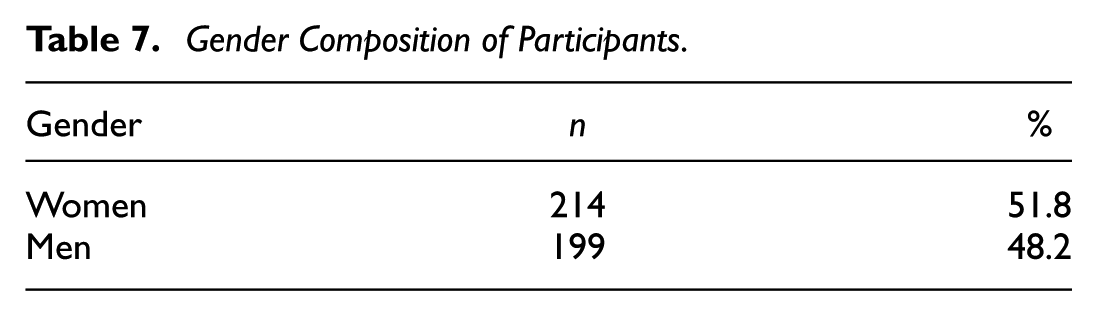
Using an online panel in Ireland provided by Pureprofile, 413 participants completed the study. Participants were included if they reported being white settled Irish. Those who failed two attention checks and incomplete cases were excluded. The gender breakdown is shown in Table 7. The sample’s age ranged from 18 to 84 years (M = 42.27, SD = 13.93). The majority (57.87%) had a Bachelor’s degree or higher.
Gender Composition of Participants.
Transparency and Openness
The sample size was determined by a power analysis with G*Power, using a standard .05 alpha error probability and .80 power to detect small-moderate effect sizes (Cohen’s f∼ .15). Data and analysis files are available from (https://osf.io/jb48c/overview?view_only=c4caab189fd942838aaede0b3c462220).
Design and Procedure
The study involved an interactive experimental design implemented with Qualtrics (Molnar, 2019). Participants first waited until six participants joined. If this took longer than 90 seconds, the remaining places were occupied by ‘bots’. Participants next entered a chat for 1 minute in which they were asked to write something that characterised Irish people. This served to remind participants they were interacting with real people and to make national identity salient. Next, participants were told that one among them had been chosen to select a message to post in a fictional Facebook group for Irish people. In fact, the poster was a non-existent player, and one of three possible posts were shown at random (see Table 8). Participants stated whether they would ‘Like’ or ‘Dislike’ the post, and were subsequently shown the other players’ responses. If bots were present, or if a participant became inactive, a response was randomly generated for that player. Following this, participants completed outcome measures.
Content of Social Media Post. a
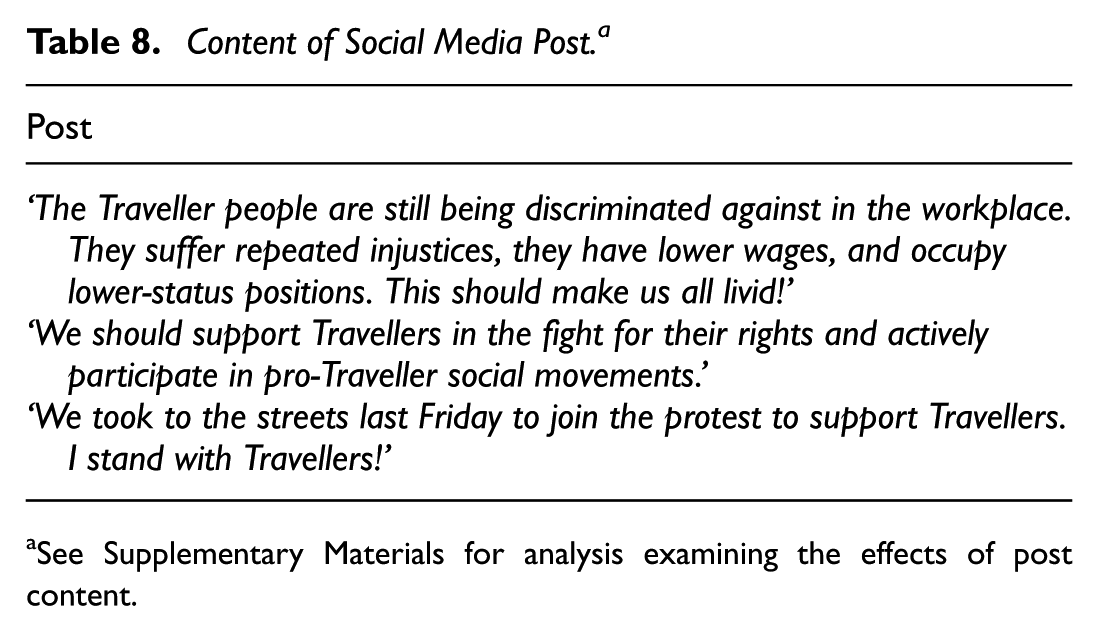
See Supplementary Materials for analysis examining the effects of post content.
Materials 2
Group Agreement
The extent of group agreement was operationalised as the sum of ‘Like’ responses seen by each participant in their group.
Group Identification
Six Likert-type items taken from Leach et al. (2008, see also Álvarez et al., 2024) measured identification with the interaction group (1 = strongly disagree, 5 = strongly agree), for example, ‘I feel a bond with the group I was matched with’, Cronbach’s alpha = .912.
Movement Identification
Identification with the pro-Traveller movement was measured with six Likert-type items similar to Group Identification (1 = strongly disagree, 5 = strongly agree), for example, ‘I feel committed to the objectives pursued by the Irish Traveller movement’, Cronbach’s alpha = .930.
Collective Action Intentions
Three items each measured online and offline collective action intentions (adapted from Gale et al., 2025). Participants were asked the extent to which they would be willing to use social media or attend a protest to promote the rights of Travellers, protest against the discrimination of Travellers, or support the cause of Travellers (1 = not at all willing, 5 = very willing). Cronbach’s alpha = .915online and .897offline.
General support for the Traveller Movement
General support for the Traveller movement was also measured with one 5-point Likert-type item (1 = not at all, 5 = extremely) asking the degree to which participants support social movements, actions, or protests performed by Travellers.
Resource Distribution Intentions
Resource distribution intentions were measured with one item. A vignette detailed a government plan to provide additional monetary benefits to low-income earners. Participants were asked to select one of three choices: to offer more aid to Traveller people, to offer more aid to settled Irish people, or to offer the same to both groups.
Online Collective Action Behaviour
Online collective action behaviour was measured at the end of the survey. Participants were thanked for participating and presented with an informational poster about discrimination towards Travellers. They were given the opportunity to share the poster on social media (Facebook, Instagram, or X) or exit the survey. A binary variable distinguishes those who opted to share the poster from those who didn’t.
Analysis Plan
The planned analyses were pre-registered on OSF (https://osf.io/nraxj/overview?view_only=cc75487c1a874a67b2fcf572a67d07c5). As many of the interaction groups had only 1 (real) participant, models accounting for clustering could not be conducted. Post content was controlled for in all analyses.
Results
Effect of Group Agreement
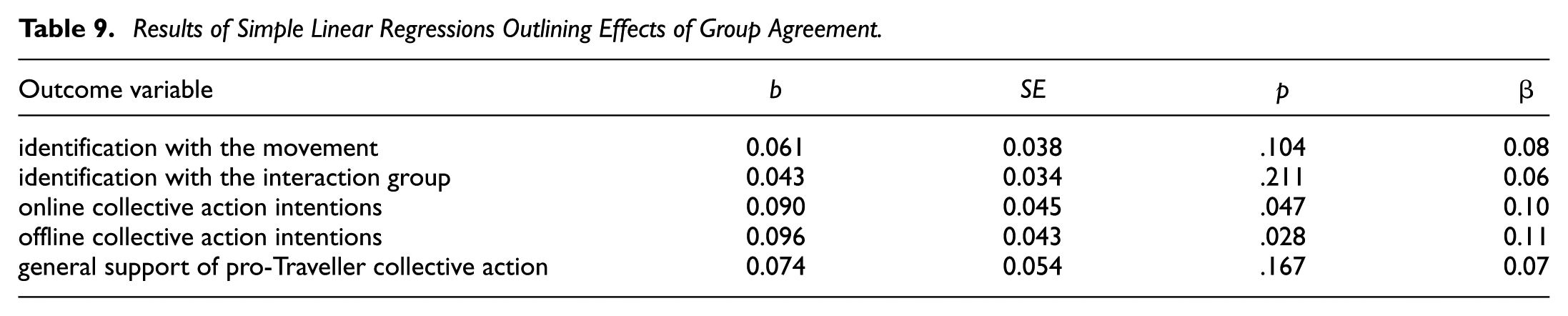
A series of linear regressions revealed that group agreement significantly predicted collective action intentions but not identification or general support for the Traveller movement. H2a and H2b were supported, but H1a, H1b and H2c were not (see Table 9).
Results of Simple Linear Regressions Outlining Effects of Group Agreement.
A multinomial logistic regression demonstrated that group agreement did not significantly predict resource distribution intentions (p = .198in favour of settled, p = .331in favour of Travellers). H2d was not supported.
A binomial logistic regression demonstrated that group agreement did not significantly predict online behaviour (p = .212). H2e was not supported.
Attitude Congruence
A series of multiple linear regressions was conducted to examine whether group agreement, participant response and their interaction predicted identification and collective action outcomes. The interaction between response and group agreement (attitude congruence) was significant for identification with the movement (β = −0.296, SE = 0.081, p = .006), where group agreement significantly predicted greater identification among those who ‘disliked’ the post (p = .001), but not among those who ‘liked’ the post (p = .764, see Figure 4), supporting H3a. Attitude congruence was also significant for identification with the interaction group (β = 0.307, SE = 0.086, p = .015), where greater group agreement was associated with increased identification for those who ‘liked’ the post (p = .032) but not for those who ‘disliked’ the post (p = .091, see Figure 5), supporting H3b.
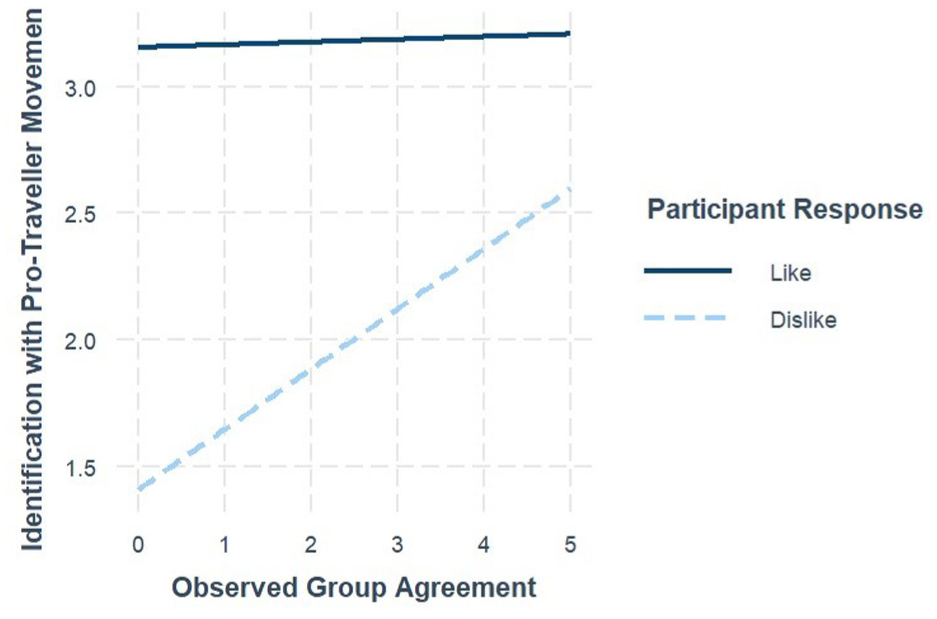
Attitude Incongruence Predicts Increased Identification With Pro-Traveller Movement for Those Who Disliked the Pro-Traveller Message.
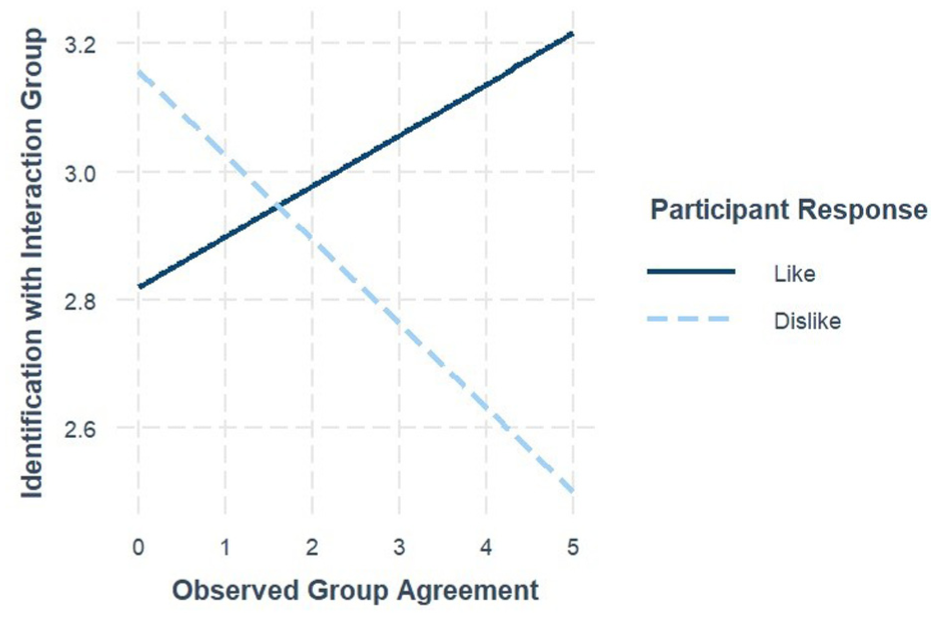
Attitude Congruence Predicts Increased Identification With Interaction Group for Those Who Liked the Pro-Traveller Message.
A multinomial logistic regression was conducted to determine whether group agreement, participant response and their interaction predicted resource distribution intentions. There was a significant interaction, exp(B) = 2.822, SE = 0.345, p = .003, where those who agreed with the message were more likely to give to settled Irish than to both groups equally when they observed more pro-Traveller support (p = .006), supporting H4d.
A binary logistic regression was conducted to determine whether group agreement, participant response and their interaction predicted online behaviour. There was no significant interaction (p = .193). H4e was not supported. For all other outcomes, p > .05 for the interaction effect.
Discussion
These studies explore the underpinnings of group identification based on observing attitude (dis)agreement online. The findings demonstrate how observing attitude agreement in small-group online contexts fosters identification with the group as a whole, with others in society who shared one’s attitudes (Study 1), and with a relevant social movement (Study 2). Study 1 showed that attitude congruence can impact behaviour towards those who share one’s attitudes, suggesting that perceived attitude similarity can be a basis for ingroup favouritism. Study 2 demonstrated that greater observed agreement with an attitude supporting the Traveller movement motivated greater solidarity-based collective action intentions. This illustrates that the normative context also influences how emerging identification may manifest behaviourally.
The finding that attitude congruence predicted identification in both studies corresponds with research by O’Reilly et al. (2022; O’Reilly, Maher, Smith, et al., 2024; O’Reilly, Mannion, et al., 2024) that attitudes can form the basis for social categorisation. We extend these findings by demonstrating that even novel attitudes can become socially meaningful when agreement is observed. Furthermore, we show that aligning with a group on multiple attitudes can lead to stronger identification with that group, and with others in society who hold those attitudes, even without explicit intergroup categorisation. In day-to-day life, people interact with others and become exposed to their opinions on a range of unrelated attitudes. In online contexts, attitudes are particularly prominent, and interactions often lack information about other social categories (Lüders et al., 2022). These findings indicate that intergroup relations may develop from these interactions.
We also illustrate that giving behaviour can be influenced by observed attitude congruence on novel attitudes (Study 1) and socially relevant attitudes (Study 2). Unlike in previous minimal group research, which often measured ingroup favouritism when intergroup categories were explicitly defined (Tajfel et al., 1971), Study 1 demonstrated that individuals can infer intergroup dynamics when these boundaries are not explicit. Participants demonstrated favouritism to those with whom they aligned on three attitudes, indicating they could track participants with more similar attitudes and act on this knowledge, implying burgeoning ingroup favouritism dynamics. In novel contexts, people search for information to guide their behaviour (Abrams & Hogg, 1988). These findings indicate that attitude congruence on arbitrary attitudes was sufficient to instigate ingroup favouritism in this minimal context. Study 2 demonstrated that while observed agreement with a pro-Traveller message predicted greater solidarity-based collective action intentions, for supporters, observing greater agreement predicted increased willingness to distribute resources to settled Irish people compared to equal distribution. It is possible that observing majority support for Travellers triggered perceived realistic or symbolic threats (Stephan et al., 2009), or a sense of dispersed responsibility, which decreased the perceived imperative to divide resources equally (Darley & Latané, 1968). For opponents of the pro-Traveller message, on the other hand, these effects may have competed with perceived pressure to conform to the pro-Traveller norm, resulting in no overall effect on resource distribution. Together, these results indicate that attitude congruence predicts ingroup favouritism in neutral attitude contexts (Study 1), while in the context of socially relevant attitudes, observed agreement alone can often promote outgroup solidarity but may stifle behavioural support for a disadvantaged outgroup when resources are seen as competing (Study 2). This suggests a complex interplay between observing prosocial norms and attitude congruence in contentious intergroup contexts.
Limitations and Future Directions
The question remains why we did not observe significant favouritism when participants aligned on all four attitudes in Study 1. A possible answer is that there were insufficient instances of total congruence. Alternatively, total congruence in this setting may not facilitate a salient intergroup context compared to congruence on three attitudes. Future studies should replicate the finding with more attitudes, to test whether the relationship between attitude congruence and favouritism is linear, or indeed quadratic, and evident across contexts. Nonetheless, the pattern of results indicates that attitude agreement may be sufficient to cue intergroup contexts in which ingroup bias is sensible.
The second study illustrates that merely observing attitude agreement on socially relevant attitudes increased solidarity-based collective action intentions, beyond the effects of attitude (in)congruence, which was significant for identification with the Traveller movement. This indicates that normative influence can be sufficient to promote solidarity, and incongruence with prosocial norms invokes normative pressure, increasing identification with the movement. This aligns with previous research that those with more prejudice show greater attitude change towards egalitarian norms (Walker et al., 2015). Notably, in both studies, attitude congruence predicted greater identification with the interaction group. While attitude congruence aids identification at the local level, it is attitude incongruence that increases identification with the Traveller movement. We can surmise, therefore, that attitude congruence is a vehicle for developing ingroup bonds and favouritism, but when pre-existing intergroup contexts are made explicit, wider prosocial norms may have a stronger influence. Further research should strive to determine the respective limits of the influences of attitude congruence and norms.
In conclusion, these studies build on recent findings that attitudes are a relevant basis for social identification (O’Reilly et al., 2022; O’Reilly, Maher, Smith, et al., 2024; O’Reilly, Mannion, et al., 2024; O’Reilly, Maher, & Quayle, 2024; Quayle, 2025). We demonstrate that this holds when sharing multiple attitudes with multiple people simultaneously, and that while attitude congruence can provoke ingroup favouritism in neutral attitude contexts, its effects are more nuanced when the attitude in question relates to intergroup relations. These results indicate the importance of observing agreement on attitudes – even novel, arbitrary attitudes – as a basis for intergroup differentiation and intergroup behaviour. This sheds light on how effective polarisation can emerge in online contexts, and its consequences for social change.
Supplemental Material
sj-docx-1-spp-10.1177_19485506251410971 – Supplemental material for Attitude (In)congruence in Group Interactions Predicts Social Identification and Favouritism Behaviour
Supplemental material, sj-docx-1-spp-10.1177_19485506251410971 for Attitude (In)congruence in Group Interactions Predicts Social Identification and Favouritism Behaviour by Elaine M. Smith, Kevin Burke, Caoimhe O’Reilly, Michael Quayle, Orla Muldoon and Roberto González in Social Psychological and Personality Science
Footnotes
Handling Editor: Shenel Husnu

Funding
The authors disclosed receipt of the following financial support for the research, authorship, and/or publication of this article: Financial support was provided by the European Union’s Marie Sklodowska-Curie Actions [grant number 101109976] and the European Research Council [grant number 802421].
Declaration of Conflicting Interests
The authors declared no potential conflicts of interest with respect to the research, authorship, and/or publication of this article.
Supplemental Material
The supplemental material is available in the online version of the article.
Notes
Author Biographies
References
Supplementary Material
Please find the following supplemental material available below.
For Open Access articles published under a Creative Commons License, all supplemental material carries the same license as the article it is associated with.
For non-Open Access articles published, all supplemental material carries a non-exclusive license, and permission requests for re-use of supplemental material or any part of supplemental material shall be sent directly to the copyright owner as specified in the copyright notice associated with the article.
