




Abstract
Plant-based meat alternatives could play an important role in reducing global meat consumption. We argue, however, that psychological obstacles related to masculinity perceptions and sexist beliefs may hinder the acceptance of meat alternatives. Across two experiments (Experiment 1, N = 216 U.K. students; Experiment 2, N = 1,182 U.S. residents), omnivores rated identical images of dishes more negatively when labeled as plant-based rather than as regular meat. Furthermore, plant-based labels led to lower perceived masculinity of the dishes and evoked psychological avoidance reactions, which, in turn, were associated with more negative evaluations. Importantly, these effects were especially pronounced among individuals higher (vs. lower) in hostile sexist beliefs. The findings indicate that symbolic associations (meat-masculinity link) and sexist beliefs contribute to resistance toward plant-based meat alternatives. We discuss our findings in the wider field of sexism research and raise implications for marketing strategies aiming at increasing the appeal of meat substitutes.
Food groups differ vastly in their environmental impact. Animal-based food production disproportionately contributes to ecosystem degradation and greenhouse gas emissions (Godfray et al., 2018; Poore & Nemecek, 2018). Beyond environmental concerns, it poses substantial ethical challenges regarding the treatment of sentient beings (Bastian & Loughnan, 2017; Dhont & Hodson, 2020) and public health risks (e.g., antibiotic resistance, infectious disease outbreaks; Phillips, 2003; Rohr et al., 2019). Hence, from sustainability, ethical, and health perspectives, there is growing consensus that a shift to plant-based products is urgently needed (Poore & Nemecek, 2018; Willett et al., 2019).
However, many meat-eaters remain strongly attached to meat and are reluctant to adopt plant-based alternatives (Graça et al., 2015; Siegrist & Hartmann, 2019). While people often justify eating animals by ascribing them lower moral value (Caviola et al., 2019; Dhont et al., 2020; Krings et al., 2021), they may also experience psychological losses when giving up meat. One potential barrier to the acceptance of meat alternatives is the symbolic masculine value of meat, representing strength, health, and virility (Rosenfeld, 2023; Rozin et al., 2012; Salmen & Dhont, 2023). Yet, this has received little research attention to date. Here, we investigate how masculinity perceptions of meat alternatives may distort evaluations of these alternatives and willingness to consume them, as well as the moderating role of sexist beliefs.
Meat, Masculinity, and Negative Views of Vegans
Food groups often carry symbolic meanings, including gender stereotypes. Meat is arguably the food group most strongly associated with power, strength, and masculinity (Rozin et al., 2012; Ruby & Heine, 2011). Historically, this may stem from the widespread but contested view that men primarily hunted and that meat was selectively distributed to men more than women (Adams, 2015; Rozin et al., 2012; cf. Haas et al., 2020). Although the practice of reserving meat for men is no longer imposed, gender differences in meat consumption persist, particularly in Western contexts. Men consume more meat, in larger quantities, and are less likely to become vegetarian or vegan than women (Nezlek & Forestell, 2024; Rosenfeld, 2018, 2023).
This meat-masculinity association endures and is reinforced through advertisements and media representations of meat as manly and necessary for strength (Rosenfeld, 2023; Rothgerber, 2013; Vrijsen et al., 2025). In contrast, those who avoid meat consumption (vegetarians or vegans) are perceived as less masculine (Ruby & Heine, 2011; Thomas, 2016). The meat-masculinity link is also reflected in gendered anti-vegan biases. While both vegan men and women are subject to bias, vegan men tend to be evaluated more negatively, likely because they violate traditional masculine norms (MacInnis & Hodson, 2017; Rosenfeld, 2023). However, it remains unclear whether these gendered perceptions extend to evaluations of vegan meat alternatives, even when these closely resemble regular meat.
Plant-Based Meat Alternatives
Plant-based meat alternatives are made from textured plant protein and designed to imitate the texture, flavor, appearance, and nutritional value of meat. These products are typically more sustainable to produce than meat and could facilitate global meat reduction without pervasive dietary changes (Bryant, 2022). However, despite the high similarity of several plant-based alternatives to regular meat, consumer evaluations of these alternatives are often more negative (Krings et al., 2022; Rosenfeld et al., 2024). We argue that this is partly because they lose the symbolic masculine value afforded to regular meat products.
To our knowledge, no research has investigated the perceived masculinity of plant-based meat alternatives. Their production requires no killing or butchering of animals, practices that arguably contribute to meat’s symbolic value, representing masculinity and dominance over animals (Adams, 2015; Rosenfeld, 2023). In contrast, meat substitutes may evoke the symbolic feminine value associated with veganism, triggering avoidance reactions such that people may not want to be associated with them (Ruby & Heine, 2011). Hence, we expect that people will perceive meat dishes as less masculine and want to distance themselves from them when labeled as plant-based rather than as regular meat. Furthermore, because people value meat for its symbolic masculinity and hold negative views of veganism, we expect that the more plant-based (vs. regular) meat is perceived as lacking masculinity, the more people will distance themselves from it and the more negatively they will evaluate it. Moreover, we expect these associations to be particularly pronounced for individuals who endorse sexist beliefs.
Hostile Sexism
Given the gendered nature of perceptions surrounding meat and vegan products, sexist beliefs likely shape evaluations of meat and meat alternatives. Individuals higher in sexism tend to reject people and policies that challenge traditional gender ideologies and the dominant status of men and masculinity (Barreto & Doyle, 2023; Glick & Fiske, 2011). Sexism comprises negative evaluations of women and femininity as well as perceiving women as inferior to men, as captured by the hostile sexism dimension of ambivalent sexism (Glick & Fiske, 1996, 2011; Salmen & Dhont, 2021). Given the cultural status and masculine symbolism of meat, individuals higher in hostile sexism may show stronger attachment to meat and greater resistance to plant-based alternatives, which are associated with ideologies that challenge the dominant meat-eating culture (e.g., veganism). Previous research shows that higher sexism, among both omnivorous men and women, is associated with greater prejudice against veg(etari)ans, increased social distancing, and reduced willingness for interpersonal contact (e.g., friendships or romantic relationships; MacInnis & Hodson, 2017). Moving beyond previous work, sexist beliefs may be implicated in people’s perceptions and evaluations of meat alternatives, such that those higher in hostile sexism may be more likely to distance themselves from plant-based alternatives and evaluate them more negatively. Furthermore, this may partly be because they attribute greater masculine value to meat (and lower to plant-based alternatives) and consider masculinity an important criterion in their evaluations. Specifically, we expected hostile sexism to moderate the effect of perceived masculinity of plant-based (vs. regular) meat, such that lower masculinity predicts more negative evaluations, particularly among those higher (vs. lower) in hostile sexism.
The Present Research
We investigated whether meat-eaters perceive plant-based meat dishes as less masculine and, in turn, evaluate them more negatively than regular meat dishes, as well as the moderating role of hostile sexism. In Experiment 1, we compared perceptions and evaluations of plant-based, regular, and additionally, cultured meat, using identical photos of food dishes which were either labeled as plant-based, regular, or cultured meat. In Experiment 2, a highly powered, preregistered study, we also investigated whether meat-eaters would show stronger self-distancing from dishes labeled as plant-based versus regular meat. We tested the following hypotheses:
Dishes labeled as plant-based meat are perceived as less masculine, evoke stronger self-distancing, and are evaluated more negatively compared to when the identical dishes are labeled as regular meat. Furthermore, the effect of dish label on dish evaluation is mediated through perceived masculinity and, in turn, self-distancing tendencies.
Hostile sexism serves as a moderator such that the association of perceived masculinity with dish evaluations of plant-based (vs. regular) meat and with self-distancing tendencies from plant-based (vs. regular) meat is stronger for those higher (vs. lower) in hostile sexism. We also tested whether the effects of dish label on perceived masculinity, food distancing, and dish evaluations are stronger for those higher (vs. lower) in hostile sexism.
More exploratorily, Experiment 1 also investigated perceptions of cultured (vs. regular) meat dishes. This exploratory comparison allowed us to examine whether responses to plant-based alternatives extend to another emerging meat substitute that retains animal origins but eliminates animal slaughter (Bryant & Barnett, 2018; Post, 2012). Both studies received ethical approval, and materials and datafiles used for the studies are available at https://osf.io/f6ytk/.
Experiment 1
Method
Participants
Participants were 246 U.K. university students who participated for course credit. Given the focus of the study, only meat-eaters were included in the analyses, leaving 216 participants (81.9% women, 17.6% men, 0.5% selected “prefer not to say,” age range 17–29, M = 19.09, SD = 1.75). Sensitivity analysis in G*Power revealed that we had 80% power to detect a small interaction effect (f 2 = .03). Participants evaluated food images, followed by completion of a larger questionnaire that included the measure of hostile sexism. 1
Materials and Design
Participants were presented with nine images, including three images of regular meat dishes (i.e., burger, meatballs, tacos), three images of plant-based meat dishes closely resembling regular meat, and three images of cultured meat dishes (see Online Supplement; Krings et al., 2022). Critically, to test the effect of dish label, while controlling for what was shown in the photos, the label assigned to each dish varied across participants. For all participants, three dishes were labeled as “regular meat,” three as “plant-based meat,” and three as “cultured meat.” These labels were counterbalanced across participants with each dish presented as “regular meat,” “plant-based meat,” or “cultured meat” to a third of participants, respectively.
Participants rated the dishes in terms of appeal (1, extremely appealing; 7, extremely repulsive), smell (1, smells extremely good; 7, smells extremely bad), taste (1, tastes extremely good; 7, tastes extremely bad), and likelihood of eating (1, extremely likely; 7, extremely unlikely) if offered on a buffet. They also rated the masculinity of the dishes on a 7-point scale ranging from extremely masculine to extremely feminine. Following prior work (Ruby & Heine, 2011; Thomas, 2016), we used a single dimension capturing the relative symbolic masculinity of food items. This approach aligns with previous research emphasizing the cultural coding of meat as masculine relative to feminine rather than treating perceived masculinity and femininity as independent dimensions. For each label condition, items were reversed and averaged across images into an evaluation score and a perceived masculinity score, with higher scores indicating more positive evaluations and higher perceived masculinity, respectively. 2
Hostile sexism was measured with Glick and Fiske’s (1996) 11-item scale (e.g., Many women are actually seeking special favors, such as hiring policies that favor them over men, under the guise of asking for “equality”). Participants responded on 7-point scales (1, completely disagree; 7, completely agree), and items were averaged into a single score, with higher scores reflecting stronger endorsement of hostile sexist beliefs (α=.89, M=3.13, SD=1.19).
Results
Effect of Dish Label
We first tested the effect of dish label on perceived masculinity and dish evaluation by conducting two repeated-measures analyses of variance (ANOVAs) with dish label (regular vs. plant-based vs. cultured meat) as the independent within-subjects variable, and perceived masculinity and dish evaluation as the dependent variables. The results showed a significant effect of dish label on perceived masculinity, F(2, 214) = 24.43, p < .001, η2 = .19. As expected, dishes labeled as plant-based meat were perceived as less masculine than dishes labeled as regular meat, F(1, 215) = 48.39, p < .001, η2 = .18 (Table 1). Plant-based meat was also perceived as less masculine than cultured meat, F(1, 215) = 22.61, p < .001, η2 = .10, while regular meat dishes were perceived as more masculine than cultured meat, F(1, 215) = 8.17, p = .005, η2 = .04.
Means and Standard Deviations of Dependent Variables for Each Label Condition in Experiment 1.
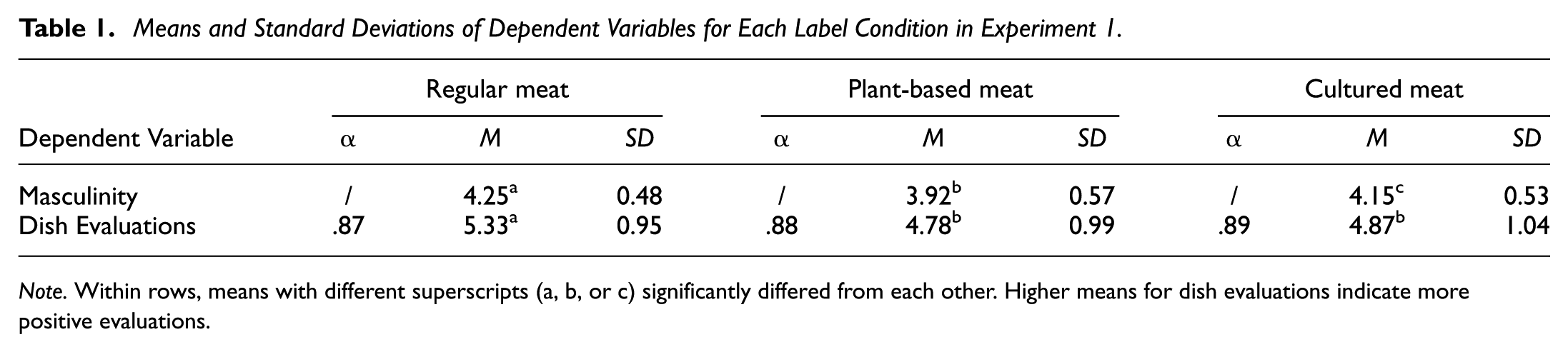
Note. Within rows, means with different superscripts (a, b, or c) significantly differed from each other. Higher means for dish evaluations indicate more positive evaluations.
The effect of dish label on dish evaluation was also significant, F(2, 214) = 27.61, p < .001, η2 = .21. As expected, participants evaluated plant-based meat dishes more negatively than regular meat dishes, F(1, 215) = 46.53, p < .001, η2 = .18. There was no significant difference between the evaluation of plant-based and cultured meat, F(1, 215) = 1.25, p = .265, η2 = .01, while cultured meat was evaluated more negatively than regular meat, F(1, 215) = 32.98, p < .001, η2 = .13.
The Mediating Role of Perceived Masculinity and the Moderating Role of Hostile Sexism
We tested whether the effect of dish label on dish evaluations was mediated by lower masculinity ratings of plant-based (vs. regular) meat, using mediation analyses for within-subjects designs (Montoya & Hayes, 2017) in Mplus (Version 8, Muthén & Muthén, 1998–2019). The results showed that across the entire sample, perceived masculinity of plant-based (vs. regular) meat was not significantly associated with evaluations of plant-based (vs. regular) meat dishes, β = .11, b = .18, SE = .12, p = .112, 95% confidence interval [CI] = [−.043, .411]. 3
However, including the moderating role of sexism (following Montoya, 2024), testing the perceived masculinity × sexism interaction on dish evaluations revealed a significant interaction effect, β = .18, b = .22, SE = .10, p = .025, 95% CI = [.028, .415]. Specifically, the association between perceived masculinity and dish evaluations was significant only for participants higher in sexism, b = .31, SE = .13, p = .018, 95% CI = [.054, .568], not for those lower in sexism, b = −.22, SE = .21, p = .300, 95% CI = [−.623, .192] (Figure 1).
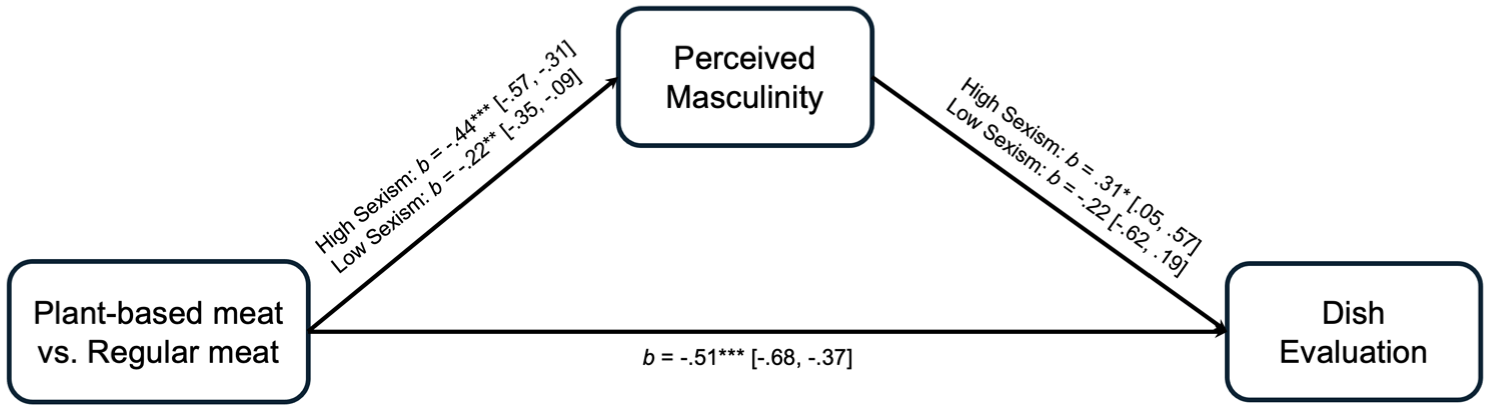
Results of the Moderated-Mediation Analyses Testing the Effect of Dish Label on Dish Evaluation at Higher (+1SD) and Lower (−1SD) Levels of Hostile Sexism, Mediated via Perceived Masculinity (Experiment 1, N = 216)
Next, testing whether the effect of dish label on perceived masculinity was moderated by sexism also revealed a significant interaction effect, β = −.16, b = −.10, SE = .04, p = .016, 95% CI = [−.172, −.018]. Plant-based meat dishes were perceived as less masculine than regular meat dishes, yet this effect was stronger for participants higher in sexism, b = −.44, SE = .07, p < .001, 95% CI = [−.573, −.313], than for those lower in sexism, b = −.22, SE = .21, p = .001, 95% CI = [−.347, −.088] (Figure 1). The interaction effect between dish label and sexism on dish evaluations was not significant, β = −.09, b = −.09, SE = .07, p = .209, 95% CI = [−.219, .048]. Finally, the indirect effect of dish label on dish evaluations via perceived masculinity was significant only for participants higher in sexism, b = −.14, SE = .06, p = .025, 95% CI = [−.258, −.017], not for those lower in sexism, b = .05, SE = .05, p = .323, 95% CI = [−.046, .140].
We also tested similar mediation and moderation models for the effects of cultured (vs. regular) meat. Perceived masculinity of cultured (vs. regular) meat dishes was not significantly associated with evaluations of cultured (vs. regular) meat dishes, and no significant moderating effects of sexism were found (see Supplemental File).
In sum, participants rated plant-based meat dishes as less masculine and less positively than regular meat dishes. Plant-based (vs. regular) meat was perceived as less masculine, which in turn was associated with more negative evaluations of plant-based (vs. regular) meat, yet this was only the case for participants higher in sexism, not for those lower in sexism.
Experiment 2
In Experiment 2, we aimed to replicate the results of Experiment 1 in a highly powered, balanced sample of men and women. Furthermore, we tested whether participants would be inclined to self-distance from plant-based (vs. regular) meat dishes and whether self-distancing from plant-based dishes could in part explain the relationship between lower perceived masculinity and negative evaluations. Our hypotheses and analysis plan were pre-registered at https://osf.io/689ct.
Methods
Participants
We aimed for 95% power to detect the smallest effect, which was the interaction between perceived masculinity and sexism in Experiment 1. To detect a small effect (f 2 = .02), power analysis in G*Power recommended a sample size of N = 543. We doubled this sample size to be able to test the models separately for men and women. To allow for approximately 10% exclusions, we recruited a sample of 1,200 adults based in the United States via Prolific, aiming for a balanced number of men and women. Only participants who eat meat were included in the analyses, leaving 1,182 participants (48.7% women, 48.2% men, 2.1% non-binary, 1.0% preferred not to say or to self-identify; age range = 18–82, M = 37.33; SD = 12.40).
Materials and Design
All participants were presented with the same six images, including three images of regular meat dishes and three images of plant-based meat dishes. As in Experiment 1, we used a within-subjects design where all participants saw three dishes labeled as regular meat and three dishes labeled as plant-based meat. Critically, we counterbalanced dish labels across participants, with each dish presented as “regular meat” to half of the participants and as “plant-based meat” to the other half.
Similar to Experiment 1, participants evaluated each dish in terms of appeal, smell, and taste and rated the perceived masculinity of each dish. In addition, we measured food distancing using three items on a 7-point scale (1, strongly disagree; 7, strongly agree): I would not want to be seen eating this dish in public; I don’t want to be associated with this dish; and This dish represents me fairly well as a person. After recoding the third item, items were averaged across images into a single score for each label condition (α = .82 and .75, for the plant-based and regular meat conditions, respectively). Higher scores indicated more positive evaluations, higher perceived masculinity, and greater food distancing. Hostile sexism (α = .93, M = 2.81, SD = 1.36) was measured as in Experiment 1.
Results
Effect of Dish Label
First, three repeated-measures ANOVAs were conducted to test the effect of dish label (plant-based vs. regular meat as the independent within-subjects variable), on perceived masculinity, dish evaluation, and food distancing (the dependent variables). Replicating Experiment 1, participants rated dishes labeled as plant-based meat as less masculine and more negatively than dishes labeled as regular meat. Furthermore, participants also distanced themselves significantly more from the plant-based meat dishes than from the regular meat dishes (Table 2).
Means and Standard Deviations of Dependent Variables for Each Condition, and F-Test Results (Experiment 2).

The Mediating Role of Perceived Masculinity and Food Distancing
Next, as pre-registered, we tested a serial mediation model with perceived masculinity (Mediator 1) and food distancing (Mediator 2) as serial mediators of the effect of dish label (the independent variable) on dish evaluations (the dependent variable), following the analytic approach of Experiment 1 (Montoya & Hayes, 2017). The results confirmed that lower perceived masculinity of plant-based (vs. regular) meat dishes was associated with stronger tendencies to distance oneself from plant-based (vs. regular) meat dishes, which in turn were associated with more negative evaluations of plant-based (vs. regular) meat dishes (Figure 2). Furthermore, the serial indirect effect of dish label on dish evaluation via both perceived masculinity and food distancing was significant, as were the simple indirect effects of dish label on dish evaluation separately via perceived masculinity and food distancing (Table 3).
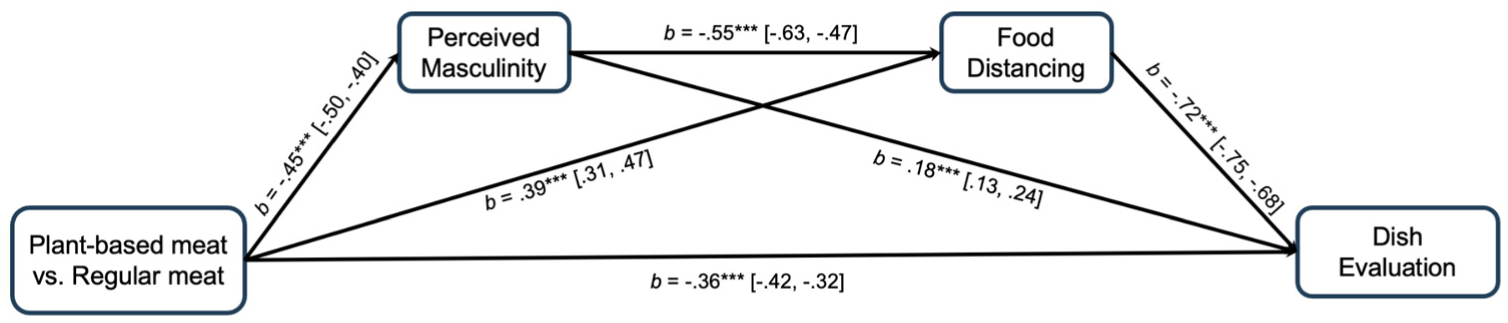
Results of Serial Mediation Model Showing the Effect of Dish Label on Dish Evaluation via Perceived Masculinity and Food Distancing (Experiment 2, N = 1,182)
Indirect Effects of Dish Label (Plant-Based vs. Regular Meat) on Food Distancing and Dish Evaluation (Experiment 2).

The Moderating Role of Hostile Sexism
Perceived Masculinity × Hostile Sexism on Dish Evaluation and Food Distancing
Next, as preregistered, we tested whether lower masculinity ratings of plant-based (vs. regular) meat were associated with more negative dish evaluations, and stronger tendencies to self-distance from the food, especially among those higher (vs. lower) in sexism. The results showed that lower perceived masculinity of plant-based (vs. regular) meat dishes was significantly associated with more negative evaluations of plant-based (vs. regular) meat dishes, β = .36, b = .52, SE = .04, p < .001, 95% CI = [.431, .602], and with greater food distancing from plant-based (vs. regular) meat dishes, β = −.28, b = −.42, SE = .05, p < .001, 95% CI = [−.511, −.332].
The interaction between sexism and perceived masculinity on dish evaluations was not significant, β = .01, b = .01, SE = .03, p = .748, 95% CI = [−.041, .057]. The association between perceived masculinity and dish evaluations was significant both for those higher in sexism, b = .53, SE = .04, p < .001, 95% CI = [.443, .611], and for those lower in sexism, b = .51, SE = .07, p < .001.
Critically, the interaction between perceived masculinity and sexism on food distancing was significant, β = −.08, b = −.06, SE = .03, p = .029, 95% CI = [−.108, −.006]. Specifically, the association between perceived masculinity and food distancing was stronger for those higher in sexism, b = −.49, SE = .05, p < .001, 95% CI = [−.587, −.441], than for those lower in sexism, b = −.34, SE = .07, p < .001, 95% CI = [−.478, −.210].
Dish Label × Hostile Sexism on Perceived Masculinity, Food Distancing, and Dish Evaluation
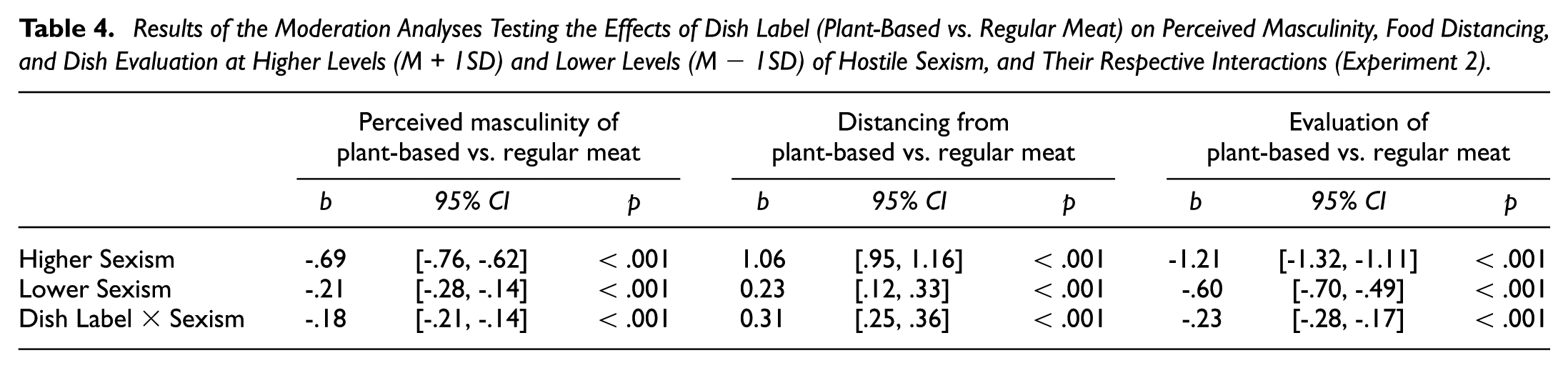
We extended the pre-registered analyses by testing whether the effect of dish label on perceived masculinity, food distancing, and dish evaluation was moderated by sexism. We found significant interactions between dish label and sexism on all three outcome variables (Table 4). Participants perceived plant-based (vs. regular) meat as less masculine, showed stronger tendencies to self-distance from plant-based (vs. regular) meat, and evaluated plant-based (vs. regular) meat dishes more negatively, yet this effect was significantly stronger for those higher in sexism than for those lower in sexism (Table 4 and Figure 3).
Results of the Moderation Analyses Testing the Effects of Dish Label (Plant-Based vs. Regular Meat) on Perceived Masculinity, Food Distancing, and Dish Evaluation at Higher Levels (M + 1SD) and Lower Levels (M − 1SD) of Hostile Sexism, and Their Respective Interactions (Experiment 2).
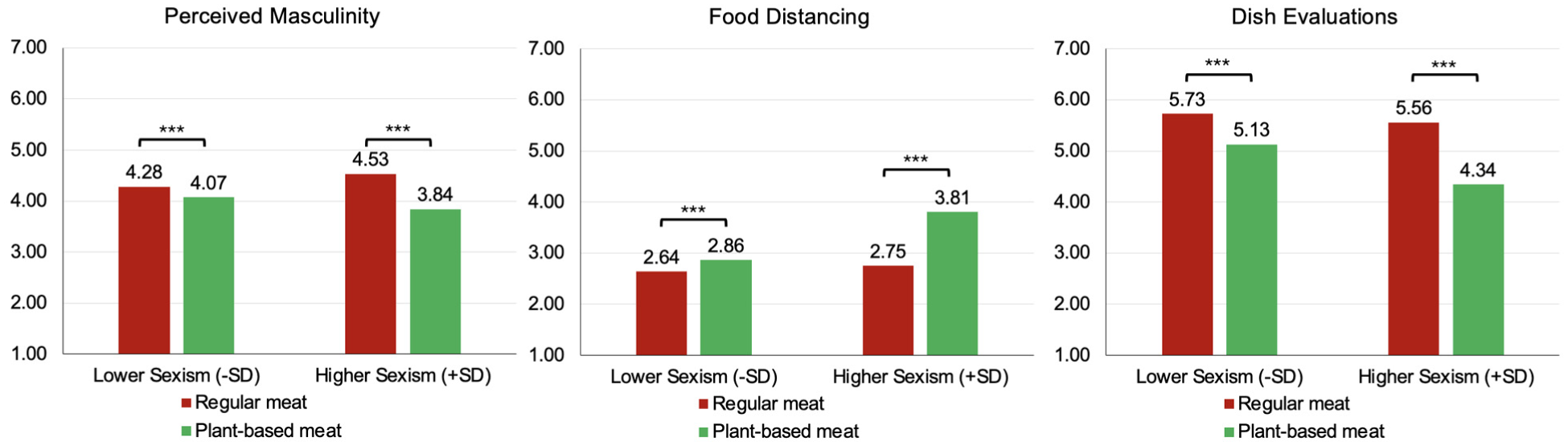
Point Estimates of Perceived Masculinity, Food Distancing, and Dish Evaluation for Dishes Labeled as Plant-Based and Regular Meat Dishes, at Lower Levels (M − 1SD) and Higher Levels (M + 1SD) of Hostile Sexism (Experiment 2, N = 1,182)
Moderated Serial Mediation Model
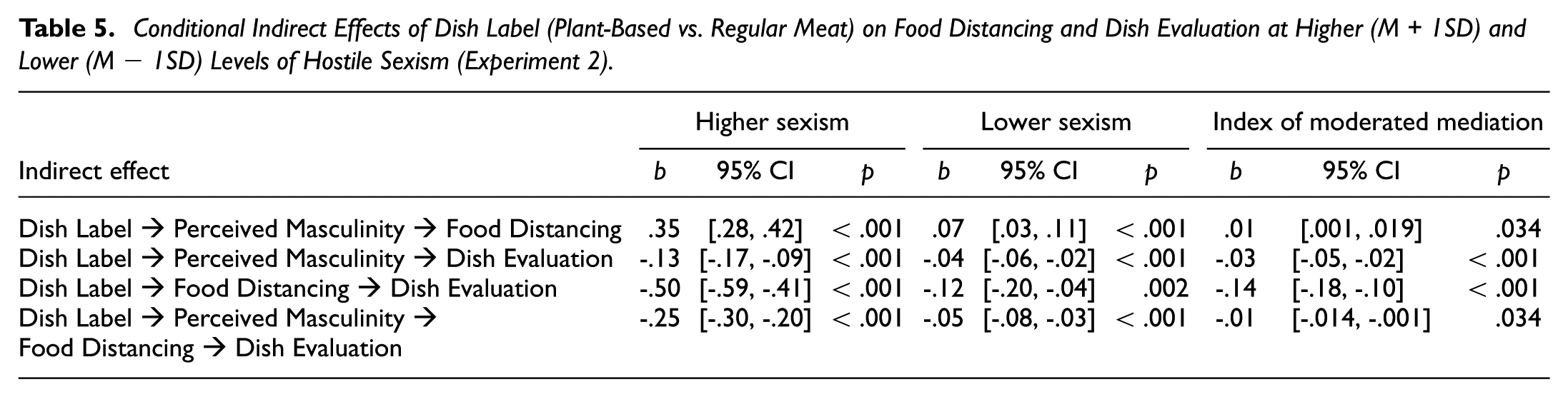
In a final model, we combined the mediation and moderation models and tested a moderated serial mediation model, with perceived masculinity and food distancing as serial mediators of the label effect on dish evaluation, and the moderating role of sexism. The results (Figure 4) of the moderated serial mediation model showed that all model paths were significant. Furthermore, sexism significantly moderated the dish label effect on perceived masculinity and food distancing, β = −.27, b = −.18, SE = .02, p < .001, 95% CI = [−.214, −.141] and β = .19, b = .19, SE = .03, p < .001, 95% CI = [.132, .254], as well as the effect of perceived masculinity on food distancing, β = −.06, b = −.06, SE = .03, p = .026, 95% CI = [−.108, −.006], but no longer the direct effect of dish label on dish evaluation, β = .03, b = .03, SE = .02, p = .155, 95% CI = [−.010, .061]. Estimating the indirect dish label effects on both food distancing and dish evaluation indicated that all indirect effects were significant for both participants higher and lower in sexism but were stronger for those higher in sexism (Table 5). Taken together, the results confirmed that participants perceived plant-based (vs. regular) meat as less masculine and, in turn, showed stronger tendencies to self-distance from plant-based (vs. regular) meat and evaluated plant-based (vs. regular) meat more negatively. However, this was especially evident for those higher (vs. lower) in sexism.
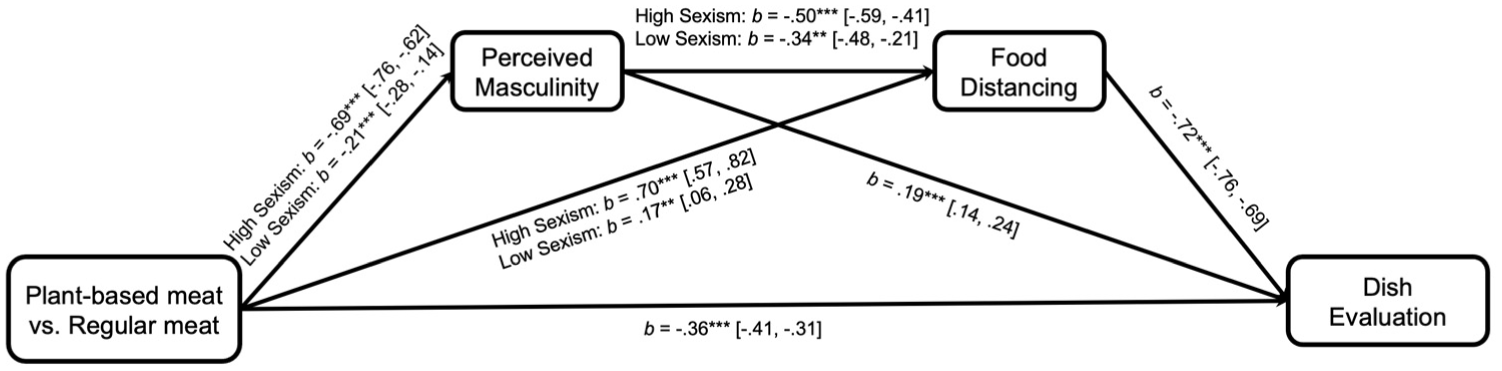
Results of Moderated Serial Mediation Model Showing the Effect of Dish Label on Dish Evaluation With Perceived Masculinity and Food Distancing as Mediators and Hostile Sexism as Moderator (Experiment 2, N = 1,182)
Conditional Indirect Effects of Dish Label (Plant-Based vs. Regular Meat) on Food Distancing and Dish Evaluation at Higher (M + 1SD) and Lower (M − 1SD) Levels of Hostile Sexism (Experiment 2).
We also verified whether the model results held for both men and women. The results showed a consistent pattern for both groups compared to the main findings, confirming the mediation effects of perceived masculinity and food distancing and the moderation effect of sexism (see Figure S1 and Table S1 in the Supplemental File). Among both men and women, higher sexism amplified the effects of dish label on the dependent variables. Among women, the association between perceived masculinity and food distancing was also moderated by sexism, such that for women higher, but not for those lower, in sexism, lower perceived masculinity of plant-based (vs. regular) meat was associated with stronger tendencies to self-distance from plant-based (vs. regular) meat. However, among men, this association was significant for both those higher and lower in sexism, suggesting that once food is perceived as less masculine, men tend to distance themselves from it regardless of their sexism level. This pattern may reflect a broader tendency among men to distance themselves from options that do not align with masculine norms.
General Discussion
Global meat consumption poses several challenges, including contributions to climate change, threats to human health, ethical concerns about mass farming and animal slaughter, and increased risks of zoonotic diseases and antimicrobial resistance. Alternatives to regular meat could play an integral part in global meat reduction (Bryant, 2022). However, our findings indicate that such efforts may be hindered by the interplay between the symbolic masculine value attached to meat and a core social-ideological factor outside the actual food product, namely sexist beliefs.
Participants evaluated identical images of meat dishes more negatively when labeled as plant-based rather than regular meat. That is, participants found these dishes more repulsive, attributed less positive sensory qualities to them, such as taste and smell, and were less willing to try them. Moreover, participants evaluated dishes labeled as plant-based (vs. regular) meat as significantly less masculine and were more inclined to distance themselves from them. These label effects were particularly pronounced among those higher (vs. lower) in hostile sexism.
Importantly, we used the same images across label conditions (i.e., counterbalanced design), allowing for a direct test of the labels and ruling out possible confounds of visually appealing cues or the type of meat was presented in the images. As such, our findings convincingly highlight the importance of the symbolic masculine value of meat and the role of hostile sexist beliefs for the perceptions and evaluation of meat alternatives and resistance to them.
Theoretical Implications
In Western diets, meat has long been associated with masculinity, symbolizing strength and dominance, partly because meat production involves dominance over and violence toward animals (Adams, 2015; Monteiro et al., 2017; Rozin et al., 2012). Consistent with this theorizing, our findings suggest that plant-based meat replacements are perceived as less masculine, not because they visually differ from “real” meat dishes, but simply because they are not made from animal flesh, stripping them of their symbolic masculine status. Furthermore, our results show that the societal stigma surrounding plant-based diets and veganism (i.e., lacking masculine value) negatively affects evaluations of plant-based meat alternatives. Importantly, this resistance is especially strong among individuals who endorse traditional masculinity and are more hostile toward women and femininity (i.e., higher on hostile sexism). As such, negative attitudes toward plant-based products are shaped not just by the food itself but also by broader social-ideological beliefs about gender and the symbolism attached to meat.
Our results contribute to a growing body of research showing how sexist beliefs can shape a wide range of attitudes beyond gender relations alone. While sexism is commonly associated with issues such as gender-based violence and workplace harassment (Agadullina et al., 2022; Bareket & Fiske, 2023), recent work has expanded its scope to include perceptions and social judgments about bodily autonomy (Morgenroth, Ryan, Arnold, & Faber, 2025; Morgenroth, Ryan, Click, & Faber, 2025), treatment of non-human animals (Salmen & Dhont, 2021), environmental protection and climate change policy (Kaul & Buchanan, 2023), and dietary choices, including meat consumption (MacInnis & Hodson, 2017; Monteiro et al., 2017). In other words, sexist ideology not only devalues women but also serves to maintain masculine dominance across a broad range of social domains by disparaging what is perceived and culturally coded as feminine. Our findings support this broader account, demonstrating how even food evaluations can become entwined with ideological beliefs about gender and power.
Practical Implications
Practically, our findings provide useful insights for marketing meat alternatives. Simply making plant-based meat alternatives resemble regular meat may be insufficient to promote meat reduction and plant-based diets. A promising strategy could involve framing these products in ways that align with masculine ideals such as autonomy and self-reliance, encouraging men to view plant-based choices as acts of independence rather than conformity (Rosenfeld, 2023; Rothgerber, 2013).
Marketers could also emphasize product features that appeal to men. However, recent work found little evidence that associating plant-based foods with stereotypically masculine traits, such as athleticism, effectively improves attitudes toward plant-based diets (Fonseca et al., 2025). Instead, promoting more modern and flexible notions of masculinity, those that integrate traits traditionally considered feminine, may be essential to shifting attitudes (de Backer et al., 2020; Rosenfeld, 2023; Salmen & Dhont, 2023).
Recent research suggests that childhood may represent a crucial period for shaping attitudes toward plant-based meat alternatives, as children tend to be more opposed to eating meat and reason more critically about its consumption than adults (McGuire et al., 2023, 2025). As such, developing marketing strategies that appeal to both children and their parents could be a promising way to promote openness to plant-based diets early in life.
Limitations and Future Research
Some limitations should be noted. First, we measured perceived masculinity rather than manipulating it. Therefore, we cannot conclude that masculinity has a causal effect on the evaluation of plant-based meat alternatives. Future studies could experimentally manipulate the masculinity of such products. Furthermore, we assessed perceived masculinity on a single bipolar scale, conceptualizing it as inversely related to femininity. Future research could test whether foods can convey both masculine and feminine associations when these dimensions are measured separately.
It is possible that some participants had previously tried and not enjoyed plant-based meat, which may have influenced their evaluations. Future research could consider a wider range of variables, including participants’ familiarity with plant-based products, frequency of meat consumption, and attachment to eating meat (Graça et al., 2015). Participants could also taste and evaluate plant-based meat dishes with randomized labels (plant-based vs. regular meat), providing an even more robust test of our hypotheses.
Conclusion
Plant-based products are becoming increasingly accepted and hold the potential to facilitate global meat reduction. However, the belief that “meat is manly,” along with sexist ideologies, complicates efforts to promote meat substitution. Although the availability of meat alternatives is crucial for promoting plant-based diets, the current research highlights the importance of addressing symbolic values (i.e., the meat-masculinity link) and gender-based prejudice.
Footnotes
Handling Editor: Shenel Husnu

Funding
The authors received no financial support for the research, authorship, and/or publication of this article.
Declaration of Conflicting Interests
The authors declared no potential conflicts of interest with respect to the research, authorship, and/or publication of this article.
Handling Editor: Shenel Husnu