




Abstract
Humans care for the well-being of some animals (e.g., dogs) yet tacitly endorse the maltreatment of others (e.g., pigs). What treatment is deemed morally appropriate for an animal can depend on whether the animal is characterized as “food.” When such categorization of animals emerges and when a moral hierarchy of beings depending on their species membership (speciesism) develops is poorly understood. We investigate this development across samples of children (9–11 years old), young adults (18–21 years old), and adults (29–59 years old; total N = 479). Compared with young adults and adults, children (a) show less speciesism, (b) are less likely to categorize farm animals as food than pets, (c) think farm animals ought to be treated better, and (d) deem eating meat and animal products to be less morally acceptable. These findings imply that there are key age-related differences in our moral view of an animal worth that point to socially constructed development over the lifespan.
A fascinating aspect of the human mind is the ability for “moral acrobatics” (Rochat, 2021): People regularly hold ethical values that contradict each other and employ moral double standards. Humans divide the world into “us” and “them” and find a different treatment of our own and other groups morally acceptable. For example, several countries have legal procedures in place for fair trials of national citizens while simultaneously detaining immigrants without a trial or timeline for release (Croucher, 2019). One of the areas where moral acrobatics become most apparent is the human species’ relationship with nonhuman animals. Pet animals are treated with similar care and affection as human friends, and spending time with pets can feel more enjoyable than time with other humans (Lades et al., 2020). Furthermore, many people contribute to animal welfare charities and express concern for dangers to wild animals. Yet, many people also accept great harm to some animals. For example, people readily justify cruel treatment that often happens in factory farming (Piazza et al., 2015). Hence, people care strongly for some animal species and (at least tacitly) simultaneously endorse the maltreatment of others.
Individuals struggle with whether it is morally permissible to eat meat, and whole societies struggle with which legal status to give to animals (Staker, 2017). Reflecting this, different disciplines, including psychology (Dhont & Hodson, 2019; Loughnan et al., 2014), economics (Carlier & Treich, 2020), and philosophy (Singer, 1975), increasingly document moral double standards regarding animal treatment. Still, the origins of moral acrobatics relating to animals remain poorly understood. The present study seeks to provide some of the first evidence examining whether there are differences in the ways in which children and adults think about animal treatment.
It seems that as in other instances of moral conflict (Rochat, 2021), people solve their conflicted view of animals by engaging in deeply categorical thinking: People’s judgments related to animals largely depend on what animal they are thinking about. Researchers have used stereotypes about animals to unveil categories of companions, predators, pests, and prey (Sevillano & Fiske, 2016), while others still show that humans think about animal categories based on the threat or value different animals hold for humans (Hodson et al., 2014). Crucially, work has demonstrated that the same animal can be thought of differently depending on whether it is thought of as food or not (Bratanova et al., 2011). Relatedly, depending on whether a given animal is classified as food or not, people change their perceptions of how much “mind” an animal may have, even going so far as to disregard factual information about intelligence (Piazza & Loughnan, 2016). Together this evidence points to the importance of animal category membership. Think, for example, about pigs and dogs. Both are highly social and intelligent animals (Gerencsér et al., 2019) that do not differ in their ability to suffer. Yet, people treat these two animals very differently and perceive pigs to be less intelligent than dogs (Sevillano & Fiske, 2016).
The act of categorization as food also plays an important role in determining an animal’s moral value (Bratanova et al., 2011). Humans form a general moral hierarchy where some species are worthy of greater concern than others. There is a prevalent belief, speciesism, that the moral worth of individuals is determined by their species membership (Caviola et al., 2019; Singer, 1975). Here, people not only distinguish between humans and animals but also between different animal species (Caviola et al., 2019). For example, people show stronger acceptance of doing harm to pigs as compared with dogs, which is, in turn, related to their individual level of speciesism (Caviola et al., 2021). Crucially, different moral worth is attributed to different animal species despite participants being aware that these animals have the same intelligence and sentience (Caviola et al., 2019).
In sum, there are several interrelated psychological processes, both on the cognitive and motivational level, that are associated with moral acrobatics related to animals. First, such processes depend on categorizing animals depending on their species and second on the belief that membership of a particular species determines a living being’s moral worth. Where does this come from? It is unknown when animal categorization emerges and how speciesism is socially constructed throughout the developmental lifespan.
Like adults, children rely on social categories to understand the complexities of the world (Renno & Shutts, 2015; Shutts et al., 2013). From childhood on, humans identify the groups they belong to (e.g., gender and ethnic groups) and differentiate them from others (Nesdale, 2017). Furthermore, 4-year-old children use the physical features of animals to form distinct categories that different animals belong to (Meunier & Cordier, 2009), and 6- to 11-year-olds have been shown to group animals based on domesticity (Howard & Howard, 1977). In some cases, children’s categorizations are related to preferences for these animals (e.g., when animals are similar to humans; Borgi & Cirulli, 2015), and 6- to 10-year-olds begin to rely on factors like edibility and perceived intelligence to inform evaluations of animals (Henseler Kozachenko & Piazza, 2021). Therefore, one possibility is that in late childhood, children, like adults, grant moral worth based on species membership.
On the contrary, there is rich evidence that from an early age children are concerned with moral concepts including harm aversion (Decety & Cowell, 2018). Indeed, when asked about humans, children have been shown to prioritize moral concerns like fairness over category/group membership (Killen et al., 2013). Recent research suggests that children (5–9 years old) are less likely than adults to prioritize human over animal lives in moral dilemmas (Wilks et al., 2021). Given this evidence, it is also possible that, compared with adults, children’s make similar moral judgments about living beings independent of the category the animal belongs to.
Here we examine whether some of the psychological processes that make moral acrobatics possible in relation to humans’ treatment of animals are already apparent in childhood. In a preregistered series of tasks, we compare samples of children (9–11 years old), young adults (18–21 years old), and adults (29–59 years old). These age groups allow us to examine developmental differences between youth and adults, along with any potential social differences between young adults (a particularly environmentally aware population; Wallis & Loy, 2021) compared with older adults.
We examine age-related differences across four key dependent variables: (a) Animal categorization (the likelihood of categorizing a farm animal as food rather than as a pet), (b) Speciesism (measured on a standardized speciesism scale), (c) Animal treatment (evaluations of how farm animals ought to be treated as compared with pet animals and other humans), and (d) Food evaluation (morally permissibility of eating animals and animal products). Given minimal evidence regarding how children categorize animals (for exceptions, see Howard & Howard, 1977; Meunier & Cordier, 2009), we approached age-related differences in the animal categorization task as an open question. Based on existing evidence demonstrating higher aversion to harm toward animals in children (Wilks et al., 2021), we expected that children would demonstrate less speciesism than adults, state that farm animals ought to be treated better than adults would, and evaluate eating animals and their products as less morally acceptable. Potential age-related differences between young adults and adults were treated in an exploratory manner.
Method
Open Science
The study was preregistered on AsPredicted; http://aspredicted.org/blind.php?x=2uu8fd (children) and https://aspredicted.org/blind.php?x=xn63v7 (adults). Materials and data are available at https://osf.io/bea9m/?view_only=b9d75d7875464984bbc0f2190f5993cf. Our preregistration specified the research questions but not specific hypotheses. Our sample size was preregistered and met for our three age groups although, due to the coronavirus lockdown, we were unable to collect our prespecified adolescent sample. The measures used in the study were pre-specified. Our analyses were prespecified with one exception. Rather than a multinomial logistic regression for our categorization task (comparing farm animal categorization into food, pet, or object as a function of age group), we carried out a binary logistic regression (comparing farm animal categorization into food versus pet as a function of age group).
Ethics Statement
The research was approved by the University of Exeter Psychology Department ethics committee.
Sample
A total of 479 participants (female: n = 275, male: n = 198, other gender: n = 2, did not report gender: n = 4) were recruited for this study. Participants were from three age groups; children (n = 119, M±SD = 10.03 ± 0.72, 9 years old to 12 years old, female: n = 56, male: n = 60), young adults (n = 181, M±SD = 19.09 ± 0.85, 18 years old to 21 years old, female: n = 103, male: n = 76), and adults (n = 179, M±SD = 40.97 ± 8.18, 29 years old to 59 years old, female: n = 116, male: n = 62). Our sample was sufficient to detect a small effect size (f = .15) with an α of .05, power of .80, and four covariates (gender, diet, religion, and animal ownership). Children were recruited from schools in a metropolitan area in the South of England. Children participated with parental consent and their own assent. Young adults were students at English universities, and adults were members of the general population recruited using Prolific Academic. All adult participants consented and were paid for their time.
Participants’ ethnicity was as follows: White British (n = 382; 80%), Mixed Race/Dual Heritage (n = 27, 6%), South Asian British (including Bengali, Indian, and Pakistani, n = 16, 4%), Black British (n = 15, 3%), Chinese British (n = 2, 0.4%), and Other ethnicities (n = 26, 5%). Eleven (2%) participants did not report their ethnicity. Eighty-four (18%) participants were vegan, vegetarian, or pescatarian (within age groups; children—13%, young adults—22%, and adults—16%). The remaining 395 (82%) participants were omnivorous (within age groups; children—87%, young adults—78%, adults—84%). Three-hundred and thirty-nine (71%) participants reported they were not religious and 134 (28%) reported a religious affiliation. Three-hundred-and-one participants (63%) reported they had animals at home, whereas 176 (37%) participants did not have any animals at home. Analyses controlled for participant gender, diet, religious practice, and animal ownership. We ran analyses without these controls applied and observed the same results as reported.
Materials and Procedure
Children completed the survey either on a computer using online survey software Qualtrics or in paper form. Once participants had been briefed, they completed the survey on their own and had the option to ask clarification questions throughout the procedure. Young adults and adults signed up for participation through Prolific Academic and completed the survey on Qualtrics.
Speciesism Scale
To measure speciesism, we adapted the six-item Speciesism Scale originally developed for adults (Caviola et al., 2019) to use language accessible to children as well as adult participants (full scale can be found in the appendix). With this scale (α = .75) we measured participants’ belief that moral worth is determined by species membership (e.g., “it is okay to test new medicines on animals that we wouldn’t test on humans” 1 = strongly disagree, 7 = strongly agree). For children, this scale was anchored at 1 with a thumbs down graphic accompanying “strongly disagree” and at 7 with a thumbs up graphic accompanying “strongly agree.”
Categorization Task
Participants were presented with five pictures including one farm animal (pig, cow, and chicken), one companion animal (cat, dog, and hamster), one animal food product (burger, bacon, and chicken nuggets), one non-animal food product (banana, broccoli, and tomato), and one unrelated object (watch, book, and hat). They were asked to assign these items into one of three boxes labeled “food,”“pet,” or “object.” Here we deliberately used a forced-choice paradigm with broad categories to gather clear early evidence on children’s primary categorization of farm animals is when food is one possible category. Participants were given the prompt: On this page you will see some different pictures. We want you to tell us what group these pictures belong to. If you think people eat what is shown in the picture, drag it to the “Food” box. If you think people keep what is shown in the picture as a pet, drag it to the “Pet” box. If you think what is shown in the picture is an object, drag it to the “Object” box.
Animal Treatment Task
The treatment task asked participants to evaluate how a range of targets are usually treated by humans and how they should be treated by humans. These questions were designed to tap into participants’ perceptions of the current status of human treatment of animals (i.e., “usually”) versus their perceptions of how animals ought to be normatively treated (i.e., “should”). The targets were rats (pest animals), chimpanzees (wild animals), dogs (companion animals), pigs (farm animals), and other humans. Participants were asked, “how well do humans usually treat [target]?” and “how well should humans treat [target]?” (1 = not well at all, 5 = extremely well). Participants responded to these questions for each of the five targets. The results for the analysis of the “usually” treated questions as well as the rats and chimpanzees are included as Supplemental Information.
Meat and Animal Product Evaluation
Participants were asked, “How okay or not okay is it to eat animals?” and “How okay or not okay is it to eat things that come from animals, like eggs, milk, or cheese?” (1 = really not okay, 6 = really okay). Previous work examining the moral development of children and adolescents has asked about moral acceptability using scales of this type (e.g., Hitti et al., 2014).
Belief in Animal Minds
In addition, we used a belief in animal minds measure adapted from Hills (1995) that included four statements (e.g., “Most animals are unaware of what is happening to them”) that participants were asked to indicate their agreement with on a 6-point Likert-type scale from 1 (not at all) to 6 (definitely, yes). As the scale demonstrated low reliability in our samples (α = .53), we do not present results from this measure.
Data Analytic Plan
The categorization task was assessed using binary logistic regression to examine the likelihood of categorizing the food animal as “food” or “pet,” as a function of participant age. The speciesism and meat/animal products evaluation tasks were assessed using univariate analyses of variance (ANOVAs) with participant age as a between-subjects factor. The animal treatment task was assessed using a repeated-measures ANOVA examining differences in the within-subjects target factor (evaluations of dog, pig, and human) as a function of participant age group. Simple effects testing using t tests were carried out where appropriate.
Results
Animal Categorization
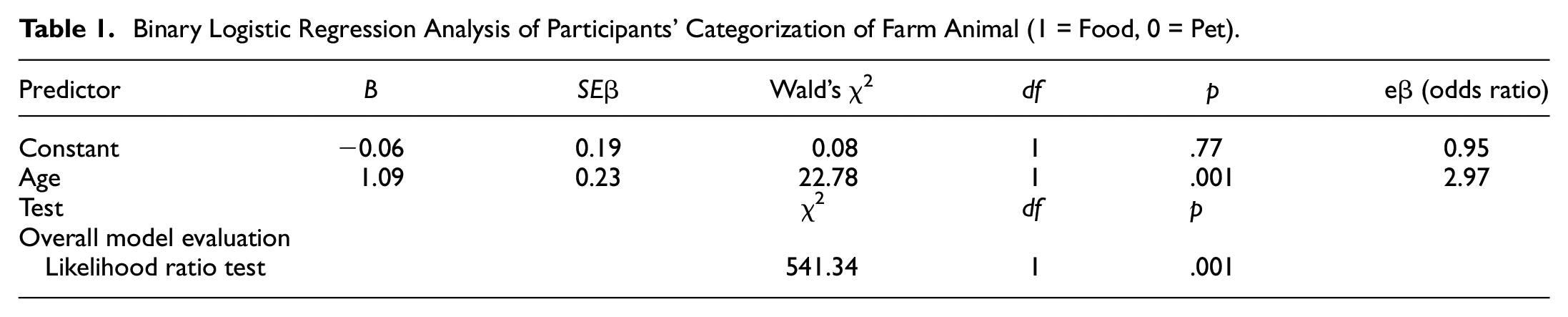
The binary logistic regression model with main effect of participant age was significant, χ2(1) = 22.78, p < .001, ϕc = .22 (see Table 1). Participant age (1 = children, 0 = young adults / adults) was related to categorizing a farm animal as food or as a pet, β = 1.09, Wald χ2(1) = 22.78, p < .001. To examine this further, we conducted a chi-square analysis to compare farm animal categorization as food or pet across our three age groups. The results showed significant differences based on age group, χ2(2) = 31.01, p < .001, ϕc = .19. Specifically, the difference between adults’ categorizations (categorized as food: n = 132, categorized as pet: n = 32), differed significantly from that of children (categorized as food: n = 56, categorized as pet: n = 53, p < .05) but not from that of young adults (categorized as food: n = 116, categorized as pet: n = 57, p > .05). Thus, with age, participants were more likely to categorize a farm animal as food than as a pet. The complete frequencies of each animal and their categorizations can be found as Supplementary Information, along with t tests that document differences in our other dependent variables as a function of whether the participant categorized the farm animal as food or pet.
Binary Logistic Regression Analysis of Participants’ Categorization of Farm Animal (1 = Food, 0 = Pet).
Speciesism
We observed a main effect of age group in responses to the speciesism scale, F(2, 459) = 14.03, p < .001, ηp2 = .06 (see Figure 1 and Table 2 for descriptive statistics). Children’s speciesism values were lower than young adults, t(293) = −4.70, p < .001, Cohen’s d = −.58, lower limit confidence interval (LLCI) = −.72, upper limit confidence interval (ULCI) = −.30, and adults, t(292) = −3.11, p = .002, Cohen’s d = −.38, LLCI = −.55, ULCI = −.12. There was no difference between young adults’ and adults’ responses to this scale, t(355) = 1.60, p = .11, Cohen’s d = .17, LLCI = −.04, ULCI = .38. Hence, children show less speciesism than adults.
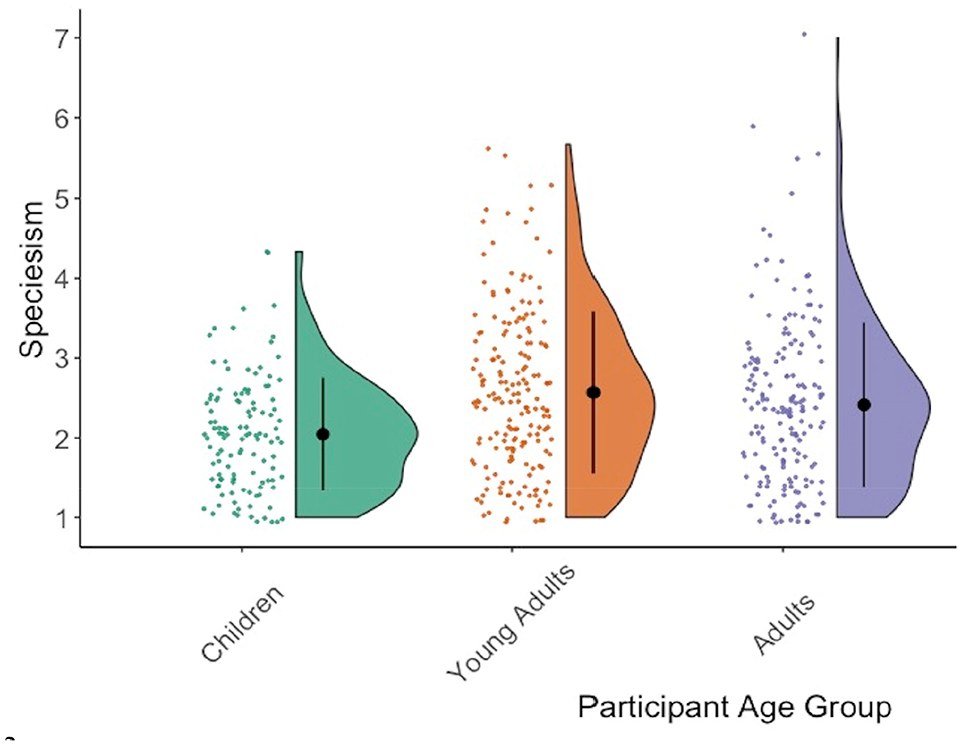
Speciesism Score as a Function of Participant Age Group (Black Dots Represent Mean Per Age Group, With Error Bars Representing 95% Confidence Intervals).
Speciesism Scale Descriptive Statistics as a Function of Participant Age Group.
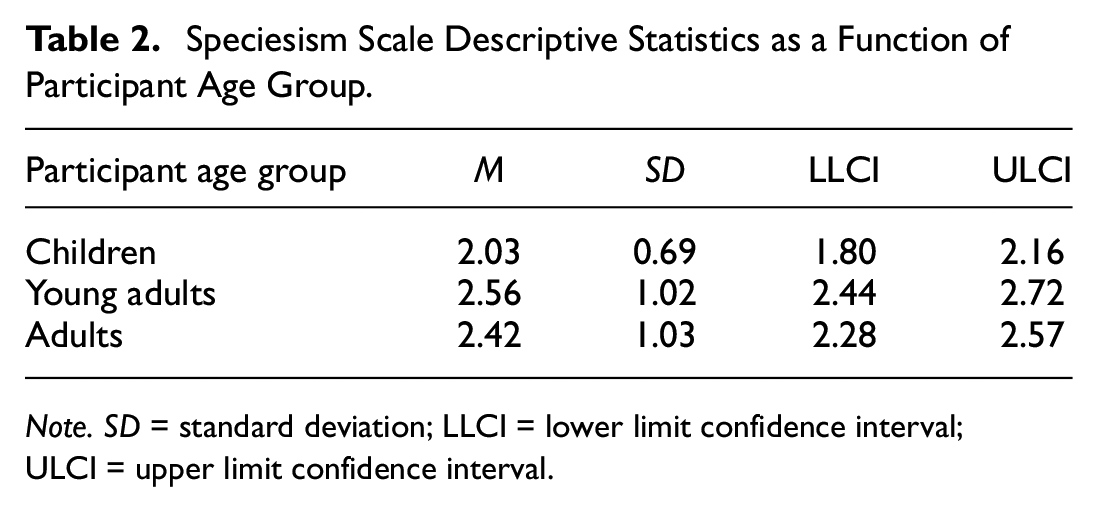
Note. SD = standard deviation; LLCI = lower limit confidence interval;ULCI = upper limit confidence interval.
Animal Treatment
Across-Age-Group Comparisons
When evaluating how humans should treat the targets, we observed a main effect of the target repeated measures variable, F(4, 1,804) = 24.54, p < .001, ηp2 = .05. This main effect was qualified by an interaction between the target and participant age group, F(8, 1,804) = 11.11, p < .001, ηp2 = .05 (see Table 3 for descriptive statistics).
Treatment Task Descriptive Statistics as a Function of Target and Participant Age Group.
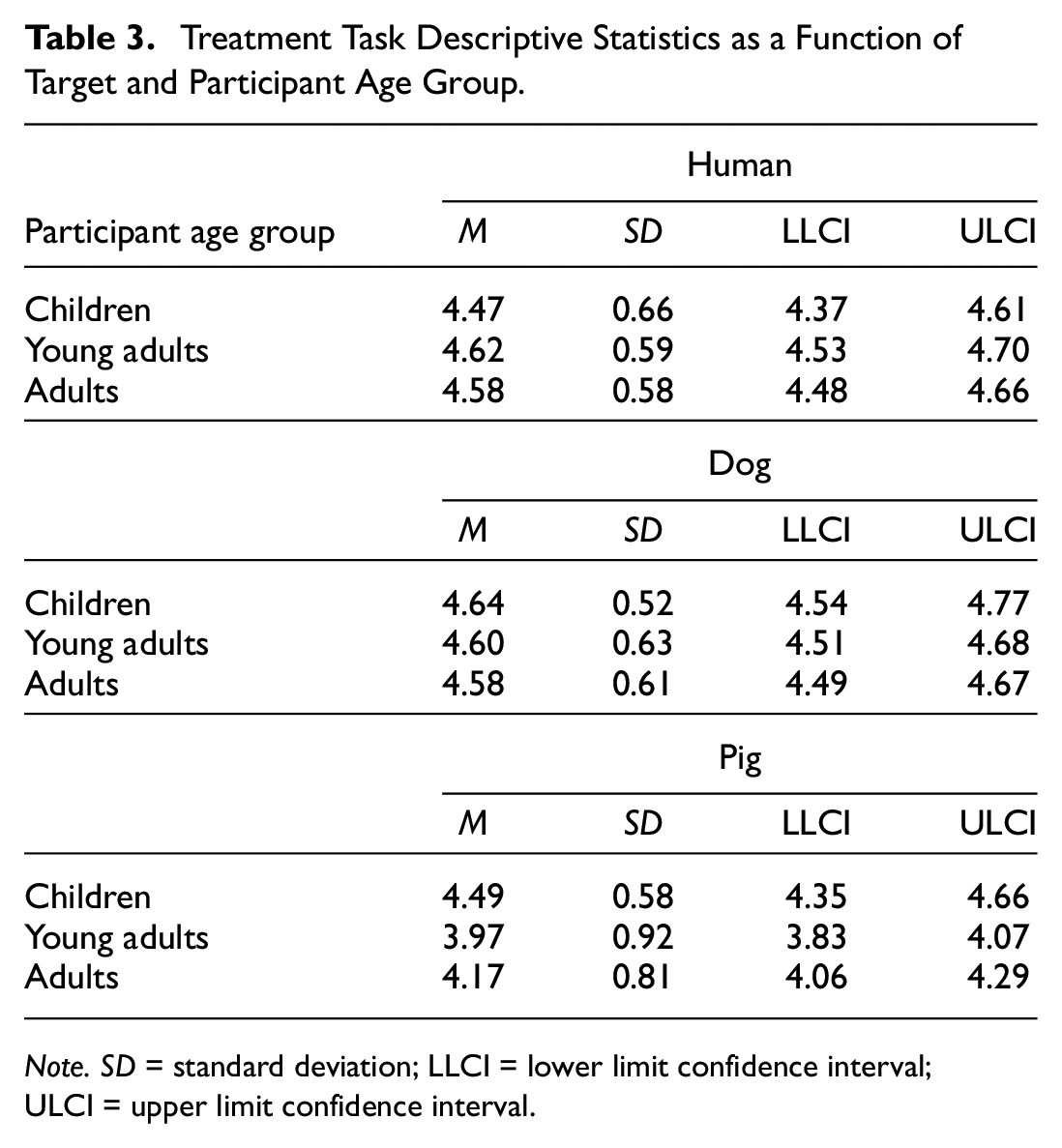
Note. SD = standard deviation; LLCI = lower limit confidence interval;ULCI = upper limit confidence interval.
Human
There was a difference between children’s and young adults’, t(290) = −2.16, p = .03, Cohen’s d = −.26, LLCI = −.31, ULCI = −.01, evaluations of how humans should treat other humans (see Figure 2). Young adults, compared with children, reported that humans ought to treat other humans better. There was no difference between children’s and adults’ reports, t(289) = −1.62, p = .11, Cohen’s d = .19, LLCI = −.26, ULCI = .03, nor between young adults’ and adults’ reports, t(355) = .67, p = .50, Cohen’s d = .07, LLCI = −.08, ULCI = .16.
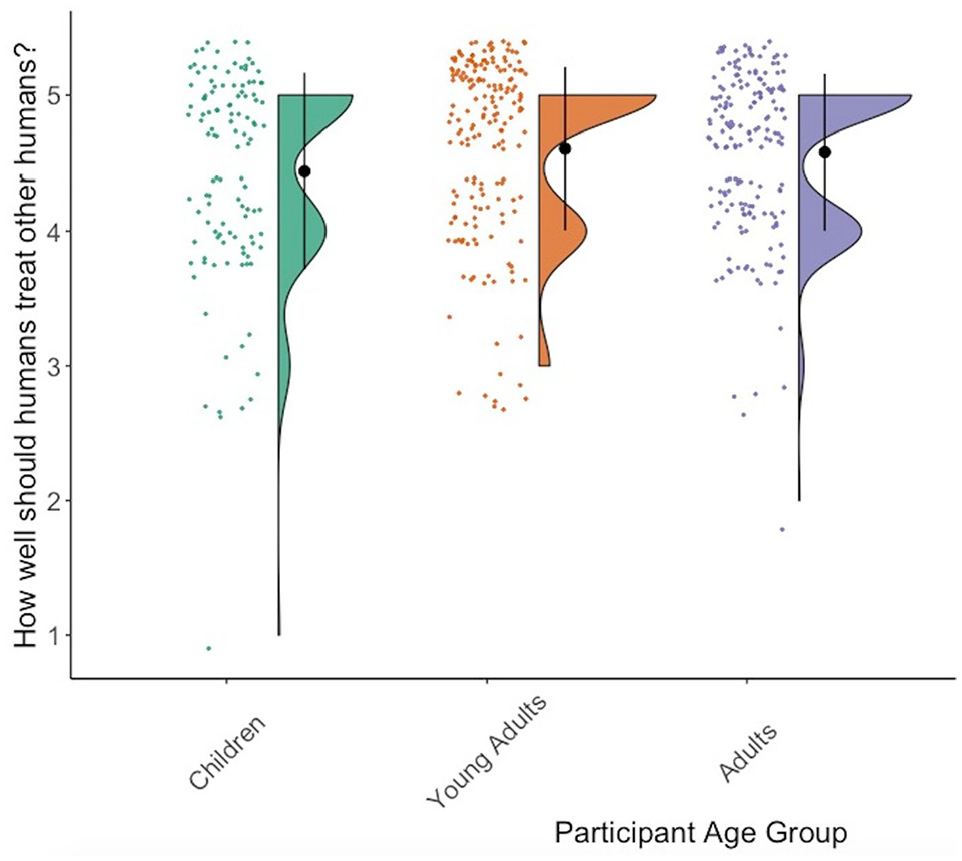
Evaluations of How Well Humans Ought to Treat Other Humans as a Function of Participant Age Group (1 = Not Well at All, 5 = Extremely Well; Black Dots Represent Mean per Age Group, With Error Bars Representing 95% Confidence Intervals).
Dog
There were no observed differences between children’s and young adults’, t(292) = .64, p = .52, Cohen’s d = .07, LLCI = −.09, ULCI = .19, children’s and adults’t(291) = .94, p = .35, Cohen’s d = .10, LLCI = −.07, ULCI = .20, or young adults’ and adults, t(355) = .29, p = .77, Cohen’s d = .03, LLCI = −.11, ULCI = .15, responses to how well humans should treat dogs (see Figure 3).
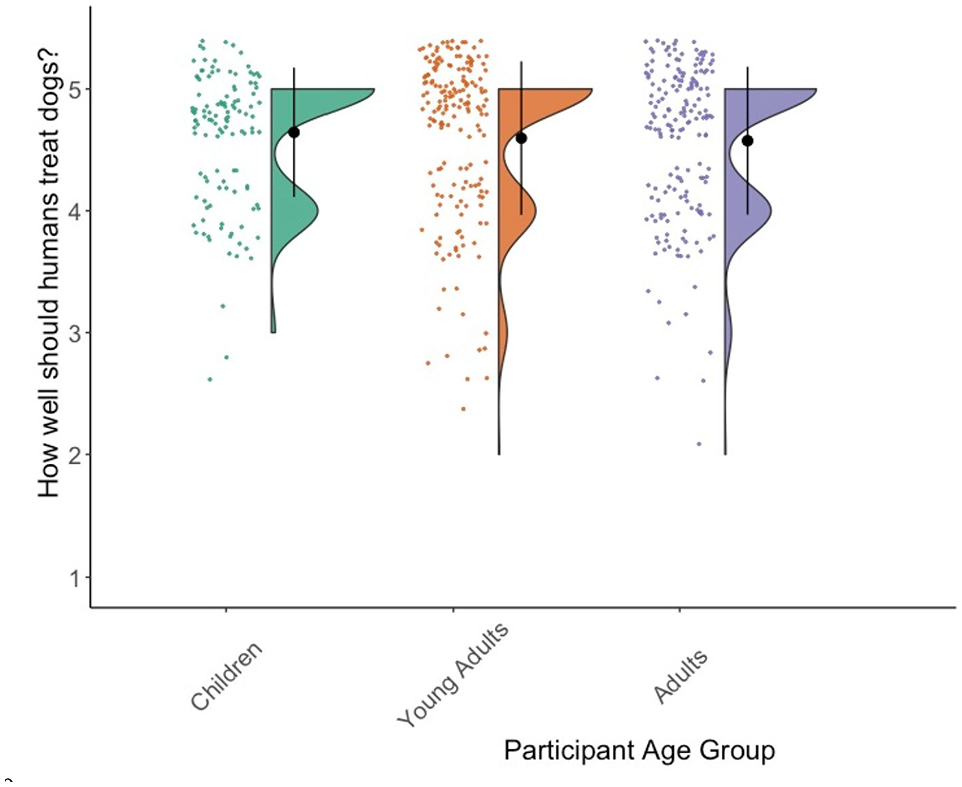
Evaluations of How Well Humans Ought to Treat Dogs as a Function of Participant Age Group (1 = Not Well at All, 5 = Extremely Well; Black Dots Represent Mean Per Age Group, With Error Bars Representing 95% Confidence Intervals).
Pig
Children’s evaluations of how humans should treat pigs were significantly higher than those of both young adults, t(290) = 5.42, p < .001, Cohen’s d = .69, LLCI = .33, ULCI = .71, and adults, t(289) = 3.76, p < .001, Cohen’s d = .47, p = < .001, LLCI = .16, ULCI = .50. Young adults’ evaluations were significantly lower than adults’ evaluations, t(355) = −2.15, p = .03, Cohen’s d = −.23, LLCI = −.38, ULCI = −.02 (see Figure 4). Hence, children perceived that farm animals ought to be treated better than both young adults and adults, whereas there are no age-related differences in how participants perceived companion animals and other humans ought to be treated.
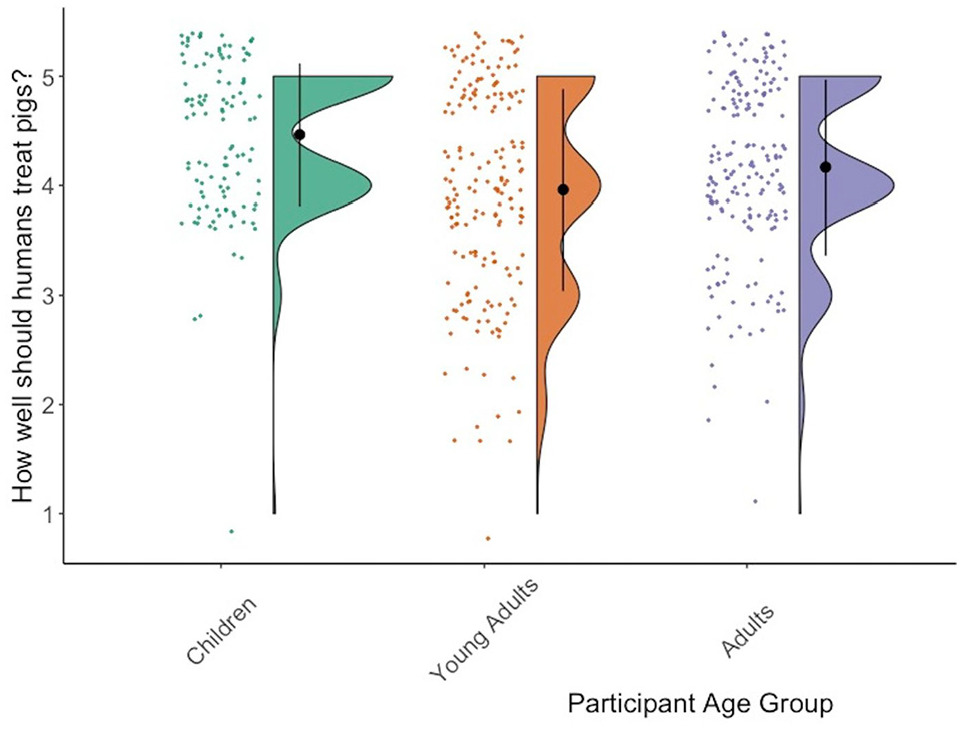
Evaluations of How Well Humans Ought to Treat Pigs as a Function of Participant Age Group (1 = Not Well at All, 5 = Extremely Well; Black Dots Represent Mean Per Age Group, With Error Bars Representing 95% Confidence Intervals).
Within-Age-Group Comparisons
Children
Children reported that dogs ought to be treated better than pigs, t(111) = −2.60, p = .01, Cohen’s d = −.27, LLCI = −.27, ULCI = −.04, and humans, t(111) = 3.26, p = .001, Cohen’s d = .30, LLCI = .07, ULCI = .30, but that pigs ought not to be treated differently from humans, t(110) = .40, p = .69, Cohen’s d = .05, LLCI = −.11, ULCI = .16.
Young Adults
Young adults reported that pigs ought to be treated less well than dogs, t(178) = −9.72, p < .001, Cohen’s d = −.80, LLCI = −.75, ULCI = −.50, and humans, t(178) = −9.01, p < .001, Cohen’s d = −.84, LLCI = −.79, ULCI = −.51, but reported no difference between how well humans and dogs ought to be treated, t(178) = −.40, p = .69, Cohen’s d = .03, LLCI = −.13, ULCI = .09.
Adults
Similarly, adults reported that pigs ought to be treated less well than dogs, t(177) = −7.89, p < .001, Cohen’s d = −.57, LLCI = −.51, ULCI = −.31, and humans, t(177) = −6.56, p < .001, Cohen’s d = −.58, LLCI = −.53, ULCI = −.29, but reported no difference between how well humans and dogs ought to be treated (mean was identical for each group). Hence, while children think that farm animals and humans ought to be treated equally well, by young adulthood and adulthood participants reported that companion animals and humans ought to be treated better than farm animals.
Meat and Animal Product Evaluation
We observed a main effect of participant age group on evaluations of how morally permissible it is to eat animals, F(2, 457) = 22.94, p < .001, ηp2 = .04 (see Figure 5 and Table 4). Children rated eating animals as significantly less permissible than both young adults, t(291) = −5.39, p < .001, Cohen’s d = −.65, LLCI = −1.14, ULCI = −.53, and adults, t(290) = −4.12, p < .001, Cohen’s d = −.50, LLCI = −1.03, ULCI = −.36. There was no difference between adults’ and young adults’ evaluations of eating animals, t(355) = .98, p = .33, Cohen’s d = .11, LLCI = −.15, ULCI = .44. Hence, children perceive eating animals to be less morally permissible than young adults or adults do.
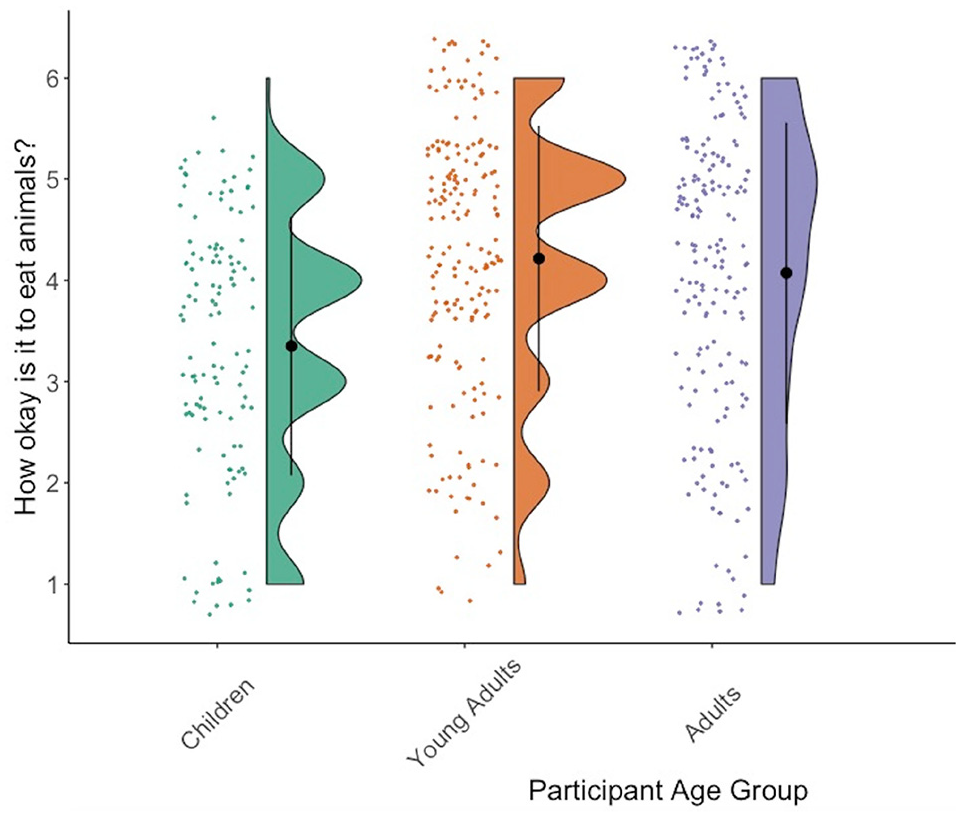
Moral Evaluations of Eating Animals as a Function of Participant Age Group (1 = Really Not Okay, 6 = Really Okay; Black Dots Represent Mean Per Age Group, With Error Bars Representing 95% Confidence Intervals).
Meat and Animal Product Evaluation Descriptive Statistics as a Function of Participant Age Group.
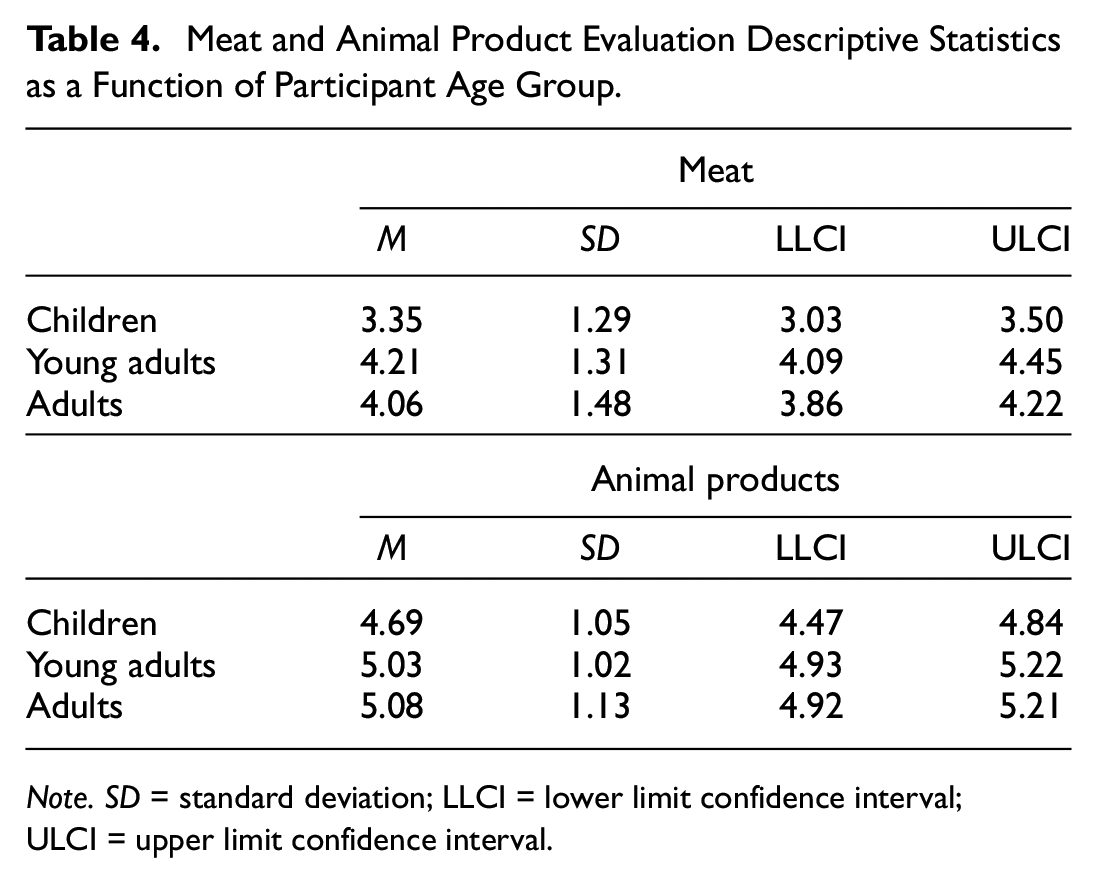
Note. SD = standard deviation; LLCI = lower limit confidence interval;ULCI = upper limit confidence interval.
Similarly, we observed a main effect of participant age group on evaluations of how morally permissible it is to eat animal products (e.g., eggs, cheese, and milk), F(2, 458) = 7.40, p = .001, ηp2 = .03 (see Figure 6 and Table 4). Children rated eating animal products as significantly less permissible than both young adults, t(292) = −2.90, p = .004, Cohen’s d = −.34, LLCI = −.61, ULCI = −.12, and adults, t(291) = −3.09, p = .002, Cohen’s d = −.37, LLCI = −.68, ULCI = −.15. There was no difference between adults’ and young adults’ evaluations of eating animal products, t(355) = −.44, p = .66, Cohen’s d = .05, LLCI = −.28, ULCI = .17. Hence, children perceive consuming animal products to be less morally permissible than young adults or adults do.
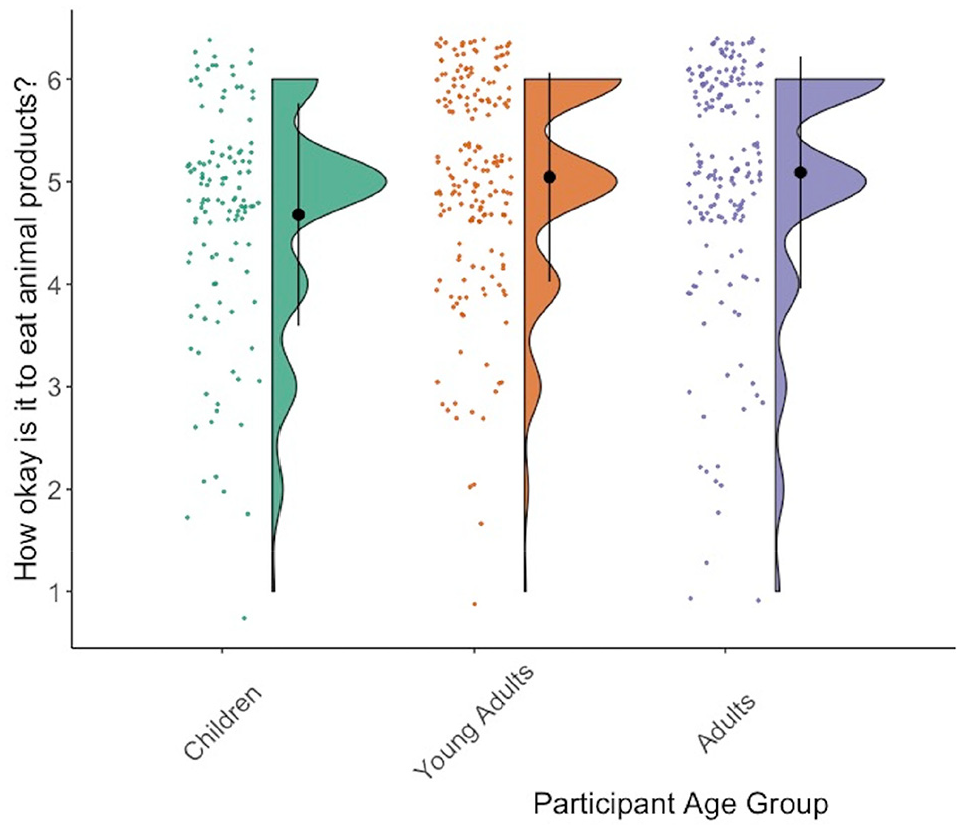
Moral Evaluations of Eating Animal Products as a Function of Participant Age Group (1 = Really Not Okay, 6 = Really Okay; Black Dots Represent Mean Per Age Group, With Error Bars Representing 95% Confidence Intervals).
Within-Subjects Correlations
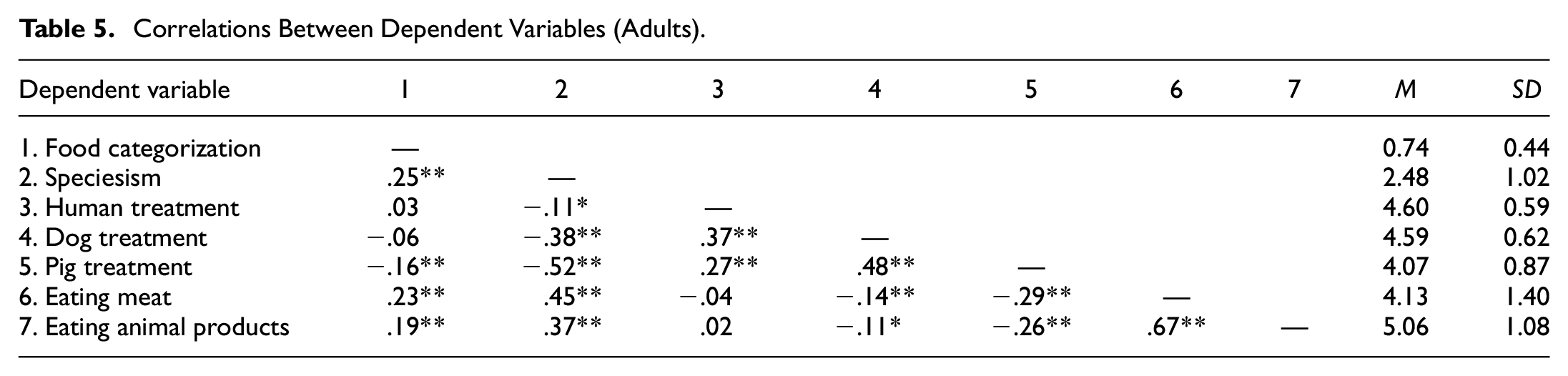
Correlations between our dependent variables are presented in Tables 5 and 6. For young adults and adults, categorizing a farm animal as food rather than as a pet was positively related to speciesism, negatively related to evaluations of how well humans ought to treat pigs, and positively related to moral evaluations of eating animals and eating animal products. Categorizing a farm animal as food was not related to evaluations of how well humans ought to treat other humans or dogs.
Correlations Between Dependent Variables (Adults).
Correlations Between Dependent Variables (Children).
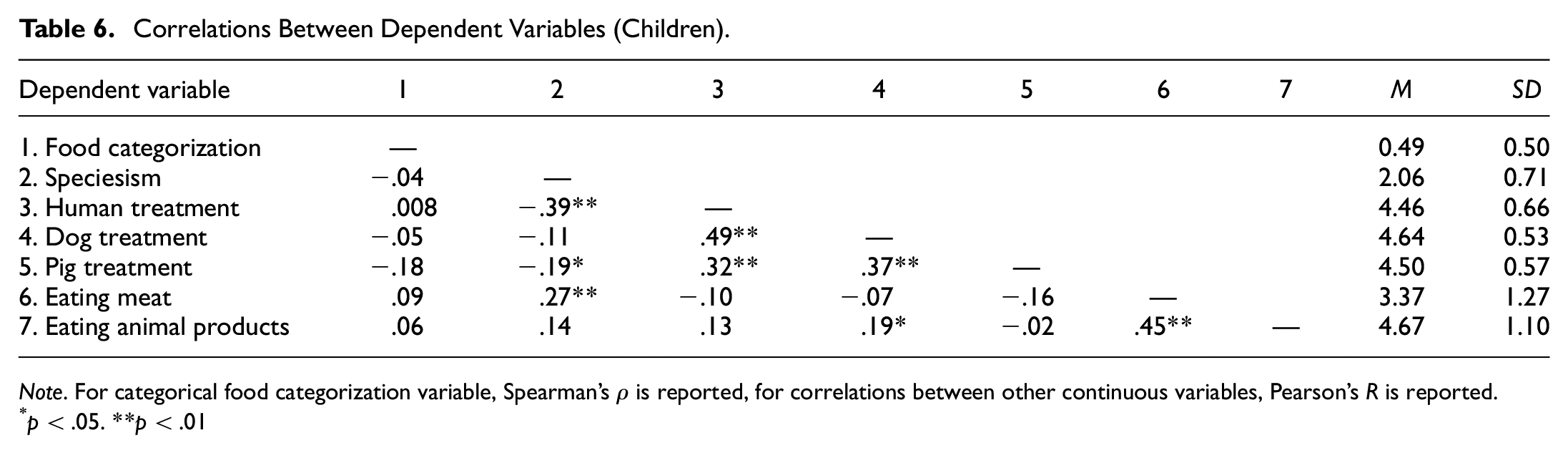
Note. For categorical food categorization variable, Spearman’s ρ is reported, for correlations between other continuous variables, Pearson’s R is reported.
p < .05. **p < .01
For children, categorizing a farm animal as food rather than as a pet was not related to speciesism, evaluations of how well humans ought to treat other humans, dogs, or pigs, moral evaluations of eating animals, or moral evaluations of eating animal products. In contrast to adulthood, in childhood, the categorization of animals as food was not yet related to views of morality depending on species membership, moral evaluations of food, or how well humans ought to treat different animals.
Discussion
Humans’ relationship with animals is full of ethical double standards: Some animals are beloved household companions, while others are kept in factory farms for economic benefit. Judgments seem to largely depend on the species of the animal in question: Dogs are our friends and pigs are food. We found age-related differences that are consistent with the idea that such moral judgments are learned across the lifespan. Children showed lower speciesism compared with adults, that is, a lower tendency to ascribe moral worth to individuals solely based on species membership. Moreover, with age participants were more likely to categorize a farm animal as food rather than as a companion animal. Furthermore, children did not perceive pigs ought to be treated any differently than humans or dogs, whereas young adults and adults reported that dogs and humans ought to be treated better than pigs. Relatedly, older participants evaluated both eating animals and eating animal products as more morally acceptable than children did.
Modern factory farming often involves animal suffering, and research (Dhont & Hodson, 2019; Loughnan et al., 2014) is beginning to understand how humans reconcile this with their moral principles. Our findings demonstrate that children differ from adults in their categorization of animals and subsequent moral judgments: The process of attributing moral value based on species membership has not yet emerged by late childhood. Hence, it is with age that humans become more likely to categorize farm animals as food and appear to reconcile their eating habits and moral concerns by reporting that food animals ought not to be treated as well as other animals.
Many adult consumers are averse to harm against living entities yet accept food production systems involving harm to maintain their eating practices. To solve this inner moral conflict, adults have been shown to objectify food animals (Bastian & Loughnan, 2017; Bratanova et al., 2011)—attributing less intelligence, sentience, and ability to suffer. Our data shows, in late childhood, children evaluate eating animals and animal products as less morally acceptable. Children may be less likely to objectify farm animals as demonstrated by their reduced likelihood of classifying animals as food. Hence, we can speculate that adults learn effective strategies to solve inner moral conflicts regarding animal treatment. This, however, does not warrant the conclusion that children simply see all animals as equal. To assess that possibility, we asked participants about animals that we could argue have particular moral standing in society, namely, humans great ape cousins on the one hand (chimpanzees) and pests (rats) on the other (see Supplemental Information for results). We found that children think that chimpanzees ought to be treated better than pigs, and pigs better than rats. An important step in the research will be to establish at what age, and why, children start to form moral hierarchies.
Along with examining the role of knowledge about food systems, future research is required to examine the emergent role of motivated cognition. Recent evidence has documented young children are less aware of which animals are eaten by humans (Henseler Kozachenko & Piazza, 2021). Research with adults has shown that motivations play an important role in whether people engage with information about animal sentience. For example, vegetarians and vegans see less difference between the intelligence of dogs and pigs (Bilewicz et al., 2011). Conversely, when omnivores are asked to justify their eating of animals, they view traits like intelligence as less morally relevant (Piazza & Loughnan, 2016). Future research is called to investigate how these different elements relating to animals’ perceived moral value, that is, categorization as food, emergent knowledge of food systems, and motivated cognition relate to each other in a causal chain in children’s cognition.
Here, our key age-related differences fell between childhood and young adulthood. Adolescence is possibly a developmental window where knowledge, social cognition, and moral judgments coalesce to form the view that moral worth is determined by species membership and motivated cognition practices emerge. Extending the present examination into adolescence will provide further support for the hypothesis that these categorization processes are socially constructed.
It is important to recognize the culturally bound nature of the present data. All data were collected in the United Kingdom among a predominantly White British sample. While consistent cross-cultural findings have been found regarding perceptions of animals’ mental capacities (Ruby & Heine, 2012), cultural norms regarding animal treatment vary across the globe, and work is needed that recognizes this. This is especially pertinent in relation to development, as differences in the impact of social norms on the evaluation of eating meat and animal products ought to be measurable in childhood when comparing samples from different cultural contexts. Relatedly, widening the scope of the animal exemplars used in the study would be an interesting future research direction—for example, do children make the same judgments about cows and chickens as they do about pigs? Similarly, do children see dogs as a subtype of the “pet” category worthy of even more moral concern than cats or hamsters for example? From a methodological perspective, it will be important to extend the current categorization task to allow for multiple categorizations (e.g., seeing a chicken as both a pet and food). This will provide important evidence regarding when children’s own knowledge of food systems begins to emerge and potentially conflict with their moral concerns.
Our research is a first attempt to understand the lifespan development of thinking about animals and food. Our findings demonstrate differences and emerging commonalities in the way children, compared with adults, think about nonhuman animals. Further understanding these differences will play a crucial role in discussions regarding food, animals, and our environment in educational settings. Human food production and consumption are related to timely global issues like climate change (Gowri & Danielle, 2008). Attempts to mitigate these global problems might benefit from open dialogues regarding our relationships with animals. The evidence presented here suggests these dialogues ought to begin in youth when the social construction of the way humans think about animals begins.
Supplemental Material
sj-docx-1-spp-10.1177_19485506221086182 – Supplemental material for The Development of Speciesism: Age-Related Differences in the Moral View of Animals
Supplemental material, sj-docx-1-spp-10.1177_19485506221086182 for The Development of Speciesism: Age-Related Differences in the Moral View of Animals by Luke McGuire, Sally B. Palmer and Nadira S. Faber in Social Psychological and Personality Science
Footnotes
Appendix
Speciesism scale (adapted from Caviola et al., 2019)
1 = strongly disagree, 7 = strongly agree.
Acknowledgements
The authors would like to thank the members of the PHAIR Society for their helpful feedback during the process of writing the paper, as well as the members of the Social Behaviour and Ethics Lab for their helpful advice on raincloud plots.
Handling Editor: Igor Grossmann
Declaration of Conflicting Interests
The author(s) declared no potential conflicts of interest with respect to the research, authorship, and/or publication of this article.
Funding
Funding was provided to Nadira Faber from the University of Exeter to support the collection of the adult data presented in this paper.

Supplemental Material
Supplemental material is available in the online version of the article.
Author Biographies
References
Supplementary Material
Please find the following supplemental material available below.
For Open Access articles published under a Creative Commons License, all supplemental material carries the same license as the article it is associated with.
For non-Open Access articles published, all supplemental material carries a non-exclusive license, and permission requests for re-use of supplemental material or any part of supplemental material shall be sent directly to the copyright owner as specified in the copyright notice associated with the article.
