



Abstract
Stereotype content research identifies groups at risk of being negatively stereotyped. The present research investigated the dimensionality of the facets of social evaluation (ability, assertiveness, friendliness, morality) as well as their sociostructural predictors (status and threat) and consequences (intergroup emotions and behavioral intentions) based on the SCM/BIAS map. We tested our predictions in two different societal domains: occupations and migrants from different countries of origin. Across two preregistered studies (Study 1: N = 720, Study 2: N = 688) with samples representative of the German population regarding age and gender, results revealed comparatively domain-independent predictions of status and threat, but domain-dependent predictions of the facets on the downstream variables. We highlight the value of integrating the facets into the SCM/BIAS map for research on prejudice and discrimination within and across societal domains.
Stereotype-based intergroup bias in the form of prejudice and discrimination can impair social interactions (Binder et al., 2009). The sociostructural predictors status and threat influence the content of stereotypes about social groups (Kervyn et al., 2015). Stereotypes in turn have potentially harmful emotional (i.e., prejudice) and behavioral (i.e., discrimination) consequences toward the evaluated groups (Cuddy et al., 2007). An adversarial collaboration of representatives of established models of social evaluation (Abele et al., 2021) proposed two fundamental dimensions with respective facets of social evaluation, namely the horizontal dimension with the facets morality and friendliness, as well as the vertical dimension with the facets ability and assertiveness. Yet, no research connected the facets, the sociostructural predictors, and intergroup bias and examined the facets’ and their predictions’ generalizability across societal domains. This article fills these gaps by reporting two studies in different societal domains, thus investigating whether intergroup bias unfolds similarly across domains.
Mapping Stereotypes
Due to the impact of negative stereotypes (i.e., prejudice and discrimination; Kite et al., 2022), researchers developed models to distinguish the content and valence of stereotypes. The stereotype content model (SCM; Fiske et al., 2002) maps social groups on a two-dimensional stereotype content space of warmth and competence. Social structure predicts stereotype content: Status predicts competence, whereas competition/threat predicts warmth (Kervyn et al., 2015). According to the Behaviors from Intergroup Affect and Stereotypes (BIAS) map (Cuddy et al., 2007), stereotype content in turn predicts intergroup bias (i.e., intergroup emotions and behavioral intentions) in a differential pattern: Groups evaluated as warm receive less active harm (e.g., attack) and more active facilitation (e.g., help). Groups evaluated as competent receive less passive harm (e.g., exclude) and more passive facilitation (e.g., cooperate). The univalent emotions of admiration (predicted by high warmth/high competence) and contempt (predicted by low warmth/low competence) in turn predict active/passive facilitation or harm, respectively. Regarding ambivalent emotions, envy (predicted by low warmth/high competence) predicts passive facilitation and active harm, whereas pity (predicted by high warmth/low competence) predicts active facilitation and passive harm.
The evaluation of groups, however, may be more facetted than the two-dimensional space of warmth and competence suggests. Abele and colleagues (2016) developed and validated subordinate facets of social evaluation in their model of the Big Two (agency, comparable to competence; and communion, comparable to warmth), disentangling aspects of the two superordinate dimensions. In an adversarial collaboration (Abele et al., 2021) integrating different approaches to social perception, researchers agreed on a four-facet structure: Ability (skilled and capable) and assertiveness (confident, determined) are facets of the vertical (i.e., agency/competence) dimension, whereas friendliness (warm and friendly) and morality (honest, sincere) are facets of the horizontal (i.e., communion/warmth) dimension. However, other researchers reported diverging evidence regarding the relevance, number, and constitution of facets (e.g., Cambon, 2022; Connor et al., 2024). Regarding the horizontal dimension, discussions predominantly focused on the primary or even distinct role of morality (Brambilla et al., 2021; Carmona-Díaz et al., 2024). Regarding the vertical dimension, diverging findings are more fundamental, questioning not only the facets’ relevance but also the facets themselves. Besides assertiveness and ability, researchers proposed conscientiousness as an additional or alternative vertical facet (Cambon, 2022; Stanciu, 2015). Following the integrative efforts of the adversarial collaboration, adequately mapping stereotypes remains a key topic in stereotype research.
Connecting Facets, Sociostructural Predictors, and Intergroup Bias
Recent studies investigated how the facets differentially predict emotional and behavioral consequences, extending earlier research on the superordinate dimensions’ emotional and behavioral consequences (Cuddy et al., 2007). Koch et al. (2024) showed that the facets predicted unique hypothetical behaviors in economic games. Bick et al. (2022) showed that the facets predicted emotions and behavioral intentions toward different student groups in higher education. However, these studies did not include the sociostructural predictors of status and threat and thus did not fully integrate the facets of social evaluation in the BIAS map.
Methodologically, we argue that structural equation modeling (SEM) is well-suited to investigate the integration of the facets in the BIAS map (Friehs, Kotzur, et al., 2022). SEM has two major strengths: First, it enables latent variable modeling. Most variables in social psychology are unobservable (e.g., the facets of social evaluation) and approximated by measuring several indicators (i.e., items). Latent modeling estimates each relationship between an indicator and the latent (i.e., unobserved) construct and accounts for measurement error. Latent modeling is thus more appropriate for analyzing psychological constructs and their interrelations than analyses with manifest means (Cole & Preacher, 2014). Furthermore, latent modeling enables testing measurement invariance (i.e., the comparability of latent constructs across groups; Vandenberg & Lance, 2000). To test measurement invariance, researchers pose restrictions on the equality of estimates across groups. The desired analysis dictates the necessary level of measurement invariance (configural, metric, or scalar). Only (partial) scalar measurement invariance—restricting factor structure, factor loadings, and intercepts to be equal across groups—allows valid mean comparisons of different groups on a latent construct like a facet (Asparouhov & Muthén, 2014).
Second, SEM enables the simultaneous consideration of multiple predictor, mediator, and outcome variables and their interrelations (e.g., Hair et al., 2021). An investigation of the facets, their predictors, and intergroup bias with SEM would thus allow an accurate representation of how facets relate to their predictors and intergroup bias. Furthermore, such analyses could unveil interrelations between the facets and associations of facets with their predictors and intergroup bias overlooked in earlier research without SEM (e.g., the prediction of status and threat on both dimensions; Froehlich & Schulte, 2019).
Investigating the Facets in Different Societal Domains
Traditional SCM/BIAS map research investigated the social evaluation of general societal groups including multiple diversity aspects like race, gender, occupation, migration history, or education (Cuddy et al., 2007; Fiske et al., 2002). Research on subgroups in specific societal domains revealed a differentiated picture of social evaluation within the domain of investigation (Bick et al., 2022; Friehs, Aparicio Lukassowitz, & Wagner, 2022; Kotzur et al., 2019; Lee & Fiske, 2006). It further shows that predictions of the sociostructural predictors, stereotypes, and intergroup bias within a specific societal domain partially differ from the patterns observed in the traditional literature on general societal groups (e.g., Froehlich & Schulte, 2019), especially when considering facets instead of the superordinate dimensions (Bick et al., 2022; Constantin & Cuadrado, 2020). Despite these differences and theoretical reasoning suggesting limits to generalizability of stereotypes’ behavioral consequences (Cundiff et al., 2025), no research has yet examined the generalizability of the facets and their associations with their predictors and intergroup bias.
The Present Research
We introduced three research gaps: mapping stereotypes, connecting the facets with the sociostructural predictors and intergroup bias, and investigating generalizability across domains. To address these gaps, the present research investigates subgroups within the domains of occupations and migrants from different countries of origin. We chose these domains because first, occupational stereotypes are diverse, impact daily life (He et al., 2019; Imhoff et al., 2018), and shape career choices, social identity, and social interactions (Friehs, Aparicio Lukassowitz, & Wagner, 2022; Koenig & Eagly, 2014). Second, stereotypes about migrant subgroups vary depending on the country of origin (Froehlich & Schulte, 2019; Kotzur et al., 2019; Lee & Fiske, 2006; Ramsay & Pang, 2017). The political shift toward anti-immigrant right-wing parties in many European countries (Armstrong, 2023), the salience of migration worldwide (International Organization for Migration, 2024), and the negative evaluation of migrants compared to occupational groups (Eckes, 2002) make the topic of migration and the comparison of these two domains even more pressing.
Based on the identified research gaps, we investigate three main questions: Which facets of social evaluation are most relevant for stereotypes about occupational and migrant groups? How are predictors and consequences of stereotypes associated with the facets of social evaluation? And how generalizable are the facets and their associations with the sociostructural predictors and intergroup bias across these two domains? We formalized these questions in two preregistered research goals (RG) and hypotheses (H), respectively.
Regarding the first research question on the facets’ relevance, we conducted confirmatory factor analysis (CFA) to investigate which combinations of four or five factors fit the data best. Based on current debates (e.g., Abele et al., 2021; Brambilla et al., 2011; Cambon, 2022), we tested: (a) five-factor models with two horizontal (morality, friendliness) and three vertical facets (ability, assertiveness, conscientiousness); (b) four-factor models with the same horizontal facets and the vertical facets ability and assertiveness; and (c) four-factor models with conscientiousness replacing assertiveness. With each of these options, we aimed to achieve a measurement model applicable to most target groups (RG1a) that showed measurement invariance (Asparouhov & Muthén, 2014) within each study (RG1b). Concerning the constitution of stereotypes about occupational and migrant subgroups, we drew on previous work (e.g., Friehs, Aparicio Lukassowitz, & Wagner, 2022; He et al., 2019) to hypothesize significant latent mean differences regarding the facets between the groups (H1).
Addressing the second research question on the facets’ association with sociostructural predictors and intergroup bias, we expected status and threat to predict the facets of social evaluation, which should in turn predict intergroup emotions and behavioral intentions in both domains, in line with earlier reasoning (Cuddy et al., 2007). We expected threat to negatively, and status to positively predict the facets (Froehlich & Schulte, 2019). We hypothesized that admiration positively predicts active/passive facilitation and negatively predicts active/passive harm. We expected contempt, pity, and envy to positively predict active/passive harm and to negatively predict active/passive facilitation (H2). Given the scarcity of previous comparable work, we explored all further relations (i.e., from the facets to intergroup emotions and behavioral intentions) without specific expectations. Addressing the third research question on generalizability, we preregistered the same hypotheses and research goals in both domains.
The present research thus provides a comparison of measurement models differing in their vertical facets and stereotypes about occupational and migrant subgroups. It further investigates the sociostructural predictors’ and the facets’ predictions on intergroup bias in two societal domains, providing the first examination of their generalizability across domains.
Method
Transparency and Openness
A joint preregistration for both main studies, codebook, data, and scripts are on the OSF: https://osf.io/nu8m7. We report sample size estimation, reasons for exclusions, all measures, and follow JARS (Appelbaum et al., 2018; Kazak, 2018). We deviated from the preregistration by collecting larger samples than preregistered (n = 120 and n = 88 participants more in Studies 1 and 2, respectively), reversing the numbers assigned to the two studies, and the naming of the item “sincere”, which we incorrectly referred to as “good-natured”, without affecting data collection or analyses. We prepared data with IBM-SPSS Statistics Version 29 (IBM Corp., 2023) and analyzed them using Mplus Version 8 (L. K. Muthén & Muthén, 1998). We conducted measurement model specification with an R-based automated model optimizer (ACAMIA; Schemmerling et al., 2025).
Pilot Studies
Following Fiske et al. (2002), we conducted two pilot studies for group selection (N = 60 and N = 47, not preregistered). For Pilot Study 1, we asked participants to freely report all occupational groups perceived as relevant from a societal (German) perspective. Based on the relative frequency of mentions in Pilot Study 1 and earlier work (Friehs, Aparicio Lukassowitz, & Wagner, 2022), we selected the following groups: teachers, politicians, bankers, physicians, child care workers, hospital and elderly care nurses, police officers, firefighters, judges, craftspeople, farmers, retail workers, engineers, pensioners, unemployed people.
In Pilot Study 2 we asked participants to freely report migrant groups perceived as relevant to the German society to identify target groups for Study 2. We defined migrant groups as “all groups that share a common national origin due to their migration background. A migration background exists if a person or at least one parent was not born with German citizenship.” We selected migrant groups applying the same criteria as in Study 1 and included migrants from Afghanistan, Albania, Arab countries, Bulgaria, China, Italy, Morocco, Poland, Romania, Russia, Spain, Syria, Turkey, and Ukraine.
Participants and Procedure
We conducted a Monte Carlo simulation-based a priori power analysis for parameter estimation in SEM with the R package pwrSEM (Wang & Rhemtulla, 2021) with effect sizes based on Bick et al. (2022) and Cuddy et al. (2007): Factor loadings: .75, correlations between facets: .35; regression weights: .35; residual (co)variances: .35. Power analyses with 1,000 simulations, α = .05 and sample sizes of N = 160 (measurement model CFAs) and N = 600 (SEM) per study resulted in 1 −β > .99 for all target effect sizes. Sample size differences for measurement model CFAs and SEM resulted from the design (we asked participants to rate a random selection of 4 of the 15 groups to avoid fatigue).
We asked an online panel provider to collect two samples (Study 1: N = 734, Study 2: N = 712) as representative of the adult German population regarding gender and age. As preregistered, we excluded participants who did not consent (Study 1: n = 11; Study 2: n = 13), self-reported no serious participation (Study 1: n = 2; Study 2: n = 11), or did not respond to any of the main variables (Study 1: n = 3; Study 2: n = 2). We additionally excluded one participant who was assigned to Study 1 but received Study 2 questionnaires. The final sample of Study 1 included N = 720 participants (50.0% female, 49.6% male, 0.4% nonbinary, Mage = 45.97 years, SDage = 15.20, range 18–75), the final sample of Study 2 included N = 688 (50.2% female, 49.5% male, 0.3% nonbinary, Mage = 46.88 years, SDage = 14.99, range 18–75).
After providing informed consent and indicating age and gender, required for quota to collect population-representative samples, we randomly assigned participants to Study 1 or Study 2 and provided information about the respective target groups. Afterward, participants evaluated four randomly chosen groups. The measures per group appeared in the following order: facets, intergroup emotions, behavioral intentions, status, and threat. In Study 2, participants answered items regarding the facets five times: four randomly selected migrant groups and Germans as a reference group for the facets only. Then, participants in both studies responded to demographic questions (i.e., highest academic degree, occupation, country of residence, and migration background) including an attention check. Finally, participants indicated the seriousness of participation, consented to data use, received the debriefing, and received the compensation according to panel provider regulations.
Measures
We used 7-point Likert-type scales ranging from 1 = not at all to 7 = extremely for all variables, unless specified otherwise. Participants rated the presented groups from the perspective of most Germans (Fiske et al., 2002). We presented items within a construct in randomized order.
We measured the facets of social evaluation based on Bick et al. (2022): (“[Group] are [Trait]”). Items were: Friendliness (good-natured, cooperative, likable, and friendly), morality (honest, trustworthy, well-intentioned, and sincere), ability (capable, competent, efficient, and intelligent), conscientiousness (conscientious, reliable, well-organized, and hardworking), and assertiveness (assertive, dominant, self-confident, and independent). We derived the items from research on the facets or the SCM/BIAS map (Bick et al., 2022; Friehs, Kotzur, et al., 2022; Yzerbyt et al., 2022).
We developed items for intergroup emotions based on Fiske et al. (2002), Krohne et al. (1996), Landmann and Hess (2017), and our own unpublished work. We asked: “To what extent do most Germans tend to experience the following emotions towards [Group]?” to assess pity (pity, compassion, and sympathy); envy (envy, jealousy, and disfavor); admiration (admiration, respect, and appreciation); and contempt (contempt, disgust, and hate).
We measured behavioral intentions based on Cuddy et al. (2007): “The following questions are about how most people in Germany generally behave toward [Group]”: active facilitation (assist, help, and protect), passive facilitation (associate with, cooperate with, and unite with), active harm (attack, fight, and harass), and passive harm (exclude, ignore, and neglect).
Based on Bye et al. (2014), we measured status following the question “To what extent do the following statements apply?”: “[Group] have a prestigious occupation”, “[Group] are economically successful”, and “[Group] are well-educated.” We assessed threat based on Kervyn et al. (2015) following the introduction “Thinking of [Group], to what extent do the following statements apply?”: “If resources go to them, this takes away resources from the rest of society” and “Their values and beliefs are NOT compatible with the beliefs and values of most people in Germany.”
Additional items related to intergroup emotions (anger, fear, guilt, pride: three items each), intergroup contact (two items), and the estimated gender ratio of each occupation (one item, Study 1 only) are not relevant to the present manuscript. We report complete materials in the codebook.
Results
Measurement Models
We used ACAMIA (Schemmerling et al., 2025) to investigate the dimensionality of the facets of social evaluation (RG 1a). ACAMIA compares and adjusts potential measurement models according to predefined parameters, for instance, by deleting items or allowing residual correlations to identify the ideal measurement structure across multiple groups. The main model specification criteria were (a) adequate model fit for as many groups as possible and (b) less than four implausible parameter estimates (i.e., Heywood cases; Kolenikov & Bollen, 2012). Supplement 1 provides details on all specification criteria.
Addressing RG 1a, we developed three measurement models: The model with five facets (morality, friendliness, ability, assertiveness, conscientiousness; MFAAC) showed numerous implausible parameter estimates, which we could not eliminate with model modifications (Supplement 2 and OSF). We therefore continued with comparing four-facet models with morality, friendliness, ability, and either assertiveness (MFAA; e.g., Abele et al., 2016) or conscientiousness (MFAC; e.g., Stanciu, 2015). Table 1 presents the measurement models with their performance on these specification criteria, showing that MFAA was superior to MFAC. We thus proceeded with the MFAA model in both studies. Figure 1 shows the final measurement models. Table 2 reports model fit indices for all groups. Supplement 3 describes both best-fitting MFAC models.
Performance of Four-Factor Models on Main Specification Criteria
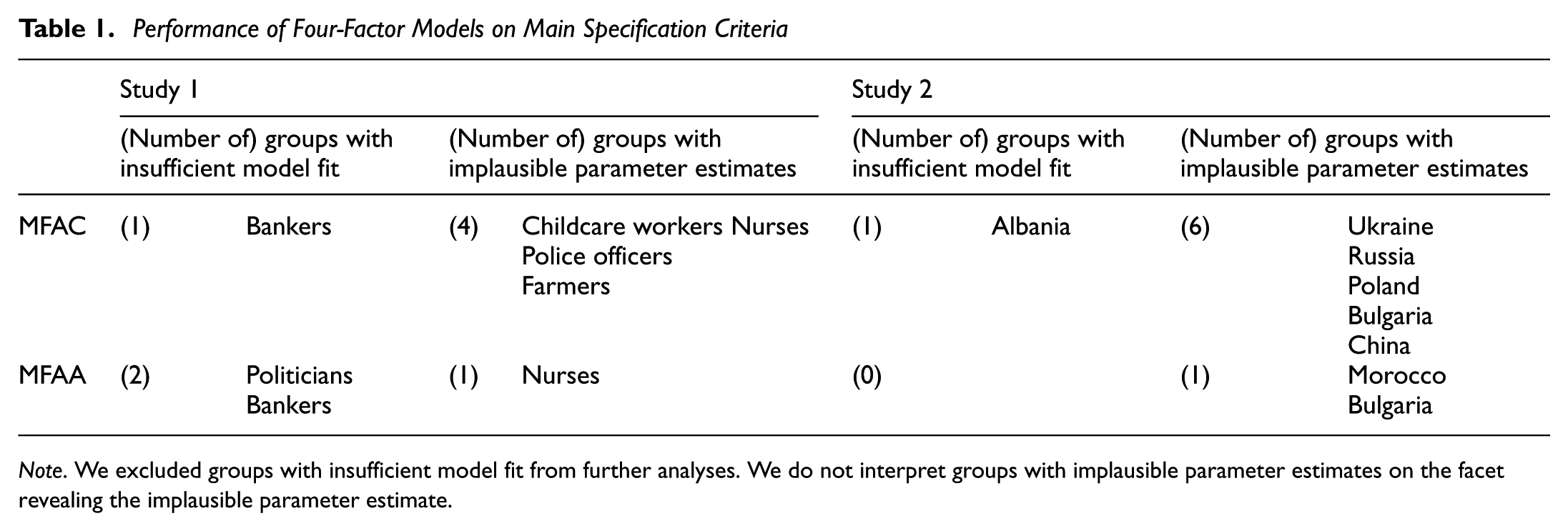
Note. We excluded groups with insufficient model fit from further analyses. We do not interpret groups with implausible parameter estimates on the facet revealing the implausible parameter estimate.
Target Groups in the Main Studies and Respective Measurement Model Fit
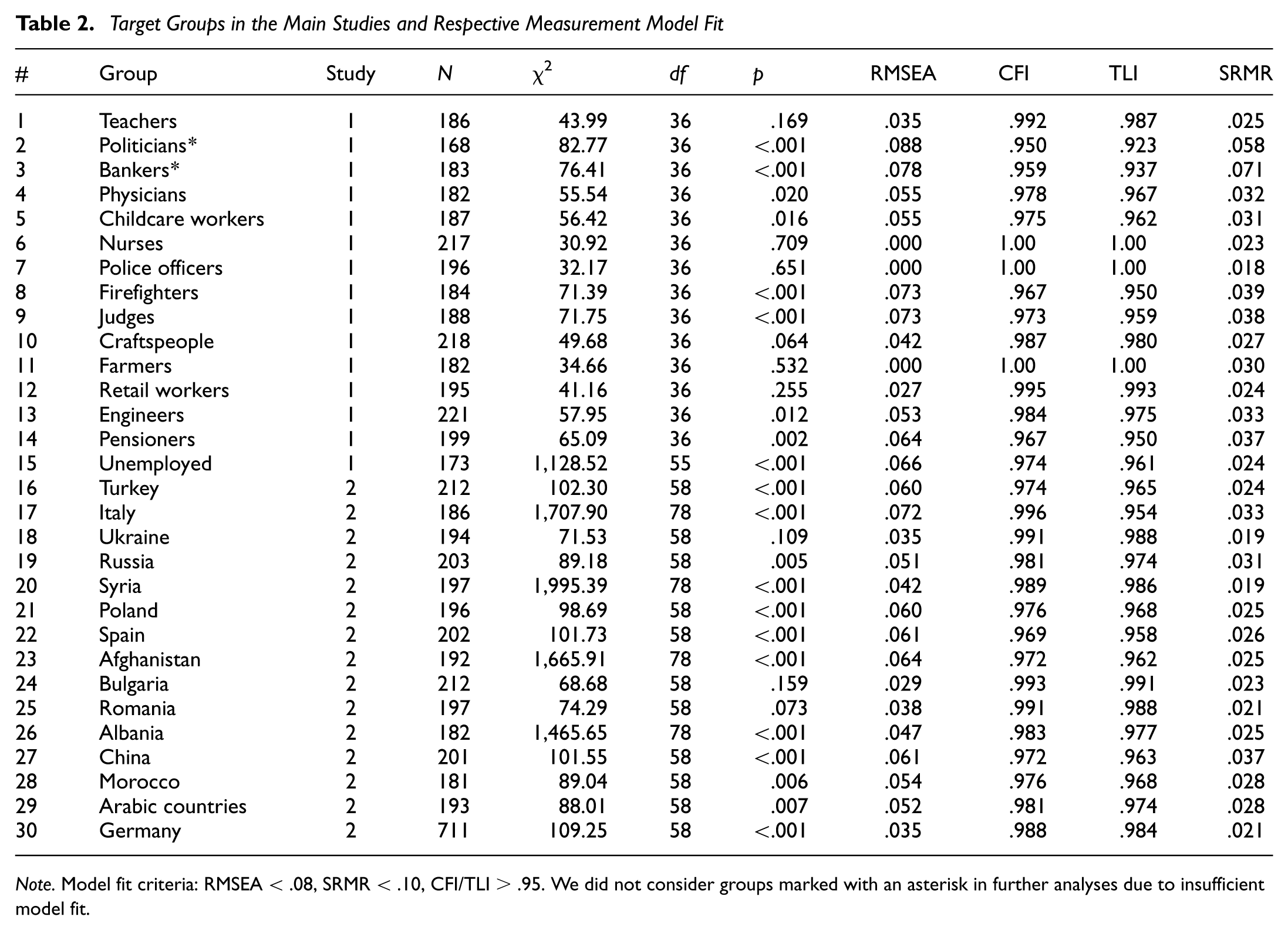
Note. Model fit criteria: RMSEA < .08, SRMR < .10, CFI/TLI > .95. We did not consider groups marked with an asterisk in further analyses due to insufficient model fit.
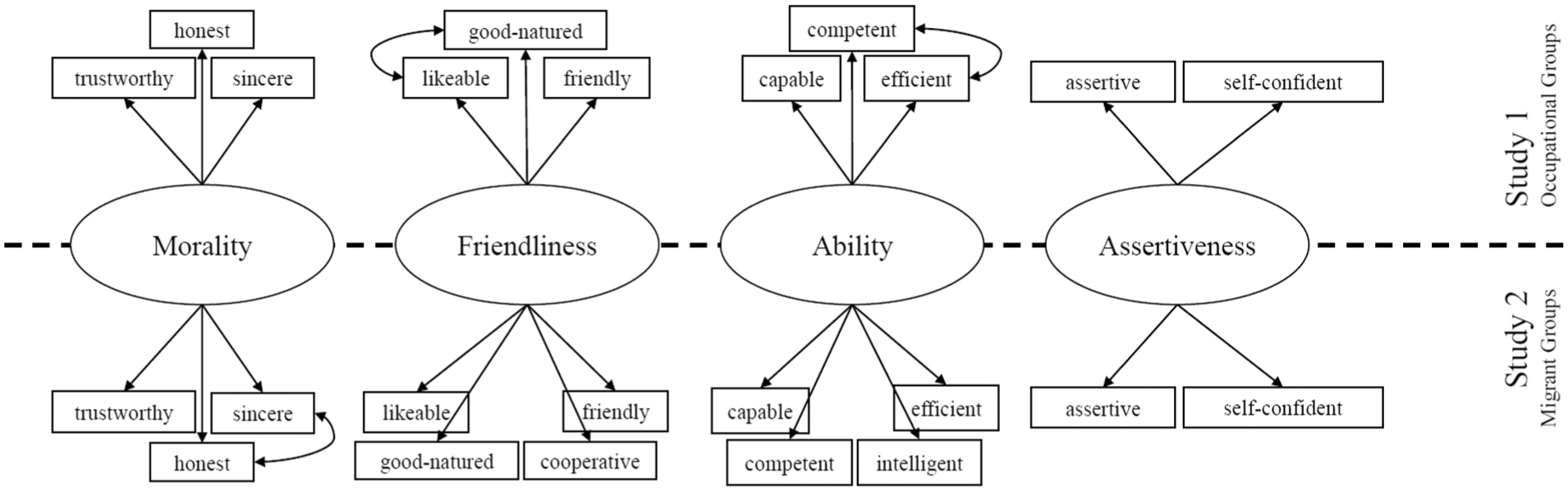
Measurement Models Studies 1 and 2
Alignment Optimization and Measurement Invariance
Addressing RG 1b, we tested measurement invariance as a precondition for comparing latent means on the facets of social evaluation. Configural models showed adequate fit, Study 1: χ2(468) = 665.94, root mean square error of approximation (RMSEA) = .05, comparative fit index (CFI) = .99, Tucker–Lewis index (TLI) = .98, standardized root mean square residual (SRMR) = .03; Study 2: χ2(870) = 1,368.83, RMSEA = .05, CFI = .98, TLI = .98, SRMR = .03. We thus proceeded with alignment optimization (Asparouhov & Muthén, 2014), which provides approximate measurement invariance testing for an intermediate-to-large number of groups. In Study 1, 3 of 286 parameters were non-invariant (<1% of all parameters; full metric and partial scalar measurement invariance). In Study 2, 16 of 390 parameters were non-invariant (<4% of all parameters; partial metric and partial scalar measurement invariance). As the number of non-invariant parameters in both studies did not exceed 25% (B. Muthén & Asparouhov, 2014), we concluded that preconditions for latent mean comparisons were met and proceeded with testing H1.
Latent Mean Comparisons
Figure 2 and Supplement 4 show the latent means. Results supported the hypothesized differences between groups in both studies (H1). In Study 1, unemployed people scored low on all facets, whereas teachers, craftspeople, and nurses scored moderately and firefighters and physicians scored high on all facets. All other groups received ambivalent ratings, with ranks diverging on one facet (e.g., pensioners and salespeople scored high on friendliness, or police officers scored high on assertiveness, but moderate-to-low on the other facets) or two facets (e.g., engineers scored low on warmth-related but high on competence-related facets; judges scored low on friendliness but high on assertiveness).
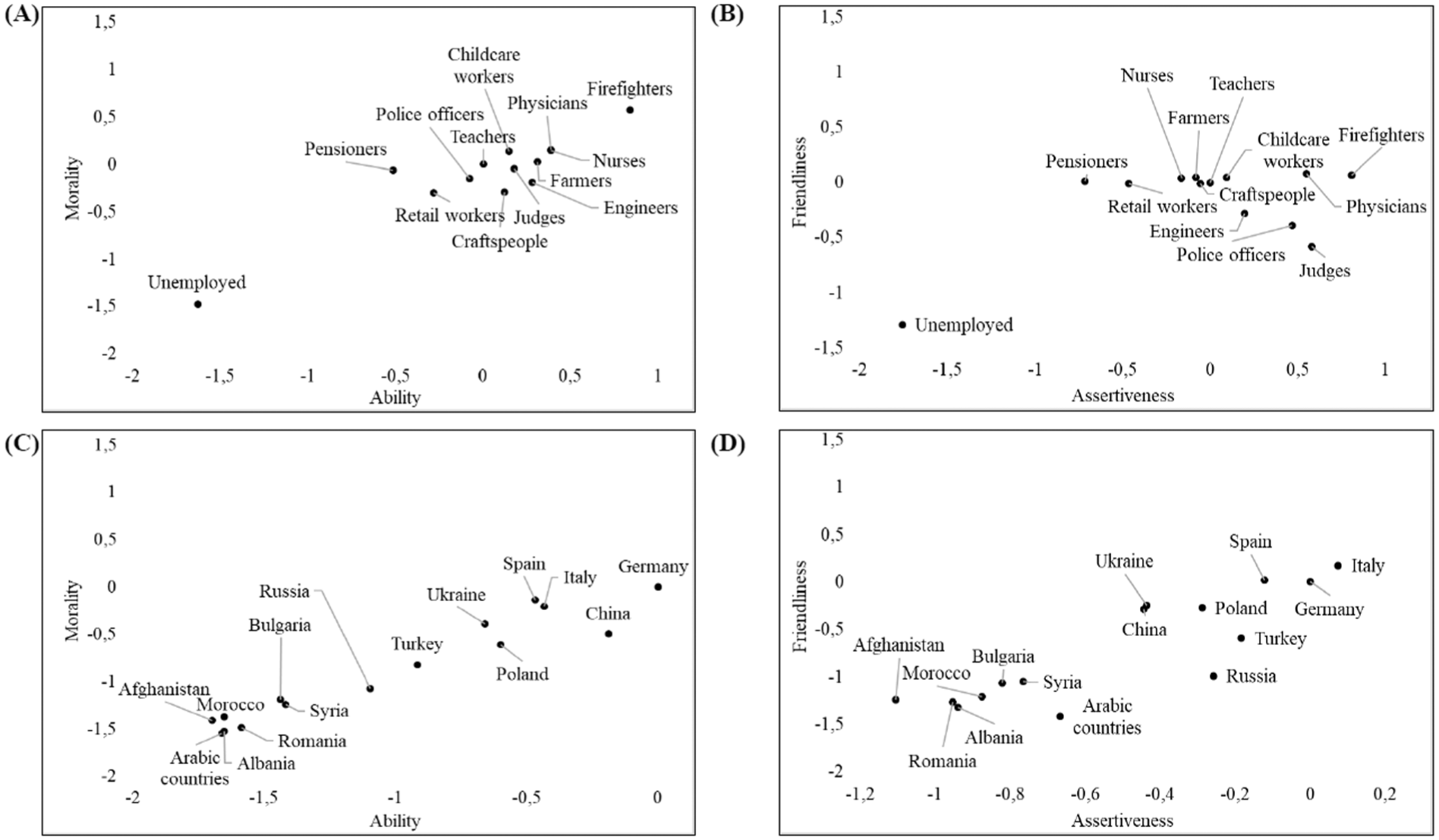
Latent Means in Studies 1 and 2
In Study 2, migrant groups differed significantly on the facets, providing additional support for H1. However, most groups received univalent ratings as high on all facets (Germans, migrants from Italy and Spain), moderate (migrants from Poland, Russia, Turkey, and Ukraine), or low on all facets (migrants from Afghanistan, Albania, Morocco, Romania, and Syria). Two groups received ambivalent ratings (migrants from China: high on ability and moderate-to-low on the other facets; migrants from Arabic countries: moderate on assertiveness and low on the other facets).
Structural Equation Modeling
We tested H2 regarding the predictors and consequences of the facets with SEM across groups (i.e., with mean values of each item for all groups evaluated by a participant). Figures 3 and 4 depict the results, and Supplement 5 reports intercorrelations of all latent variables. Although preregistered in line with Fiske et al. (2002), models with status and threat predicting only the facets did not converge. Therefore, we allowed status and threat to predict all downstream variables (facets, intergroup emotions, and behavioral intentions). The final SEM included all possible paths in the structural part but did not allow item cross-loadings in the measurement part. Supplement 6 provides the measurement models of both SEM.
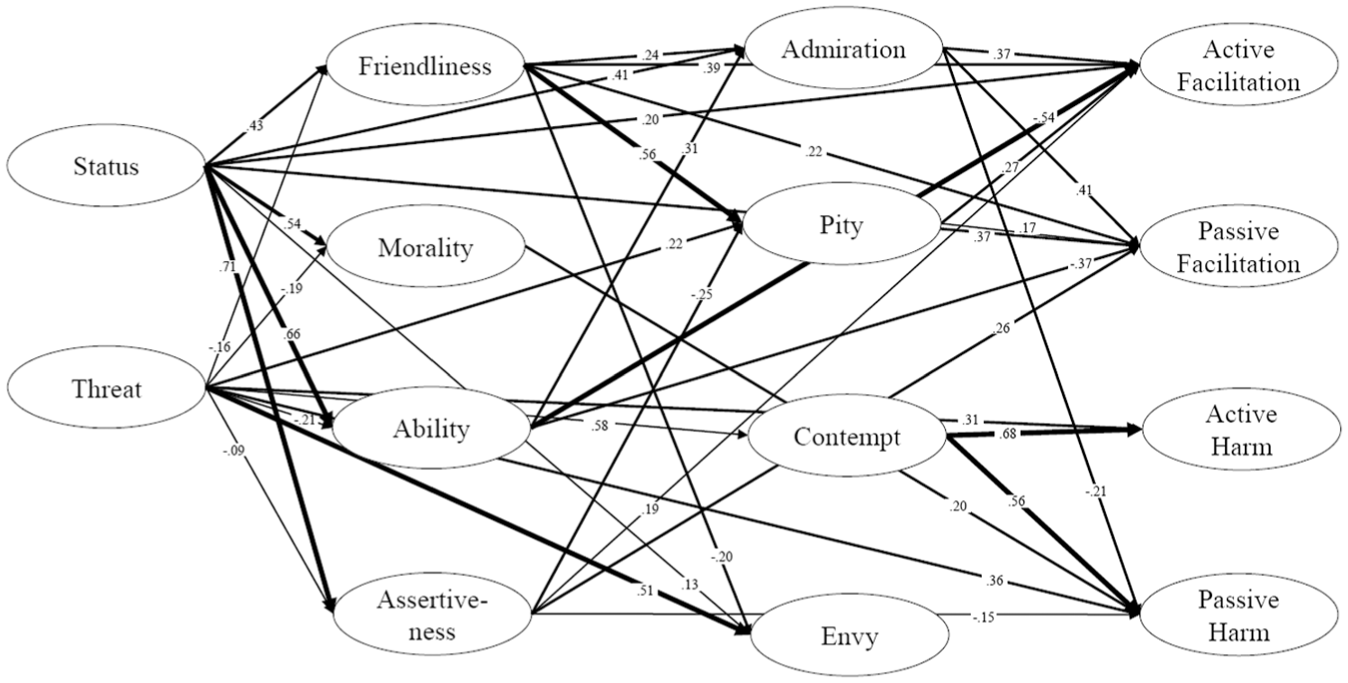
Structural Equation Model for Study 1: Modeling Predictors and Consequences of the Facets of Social Evaluation for Occupational Groups
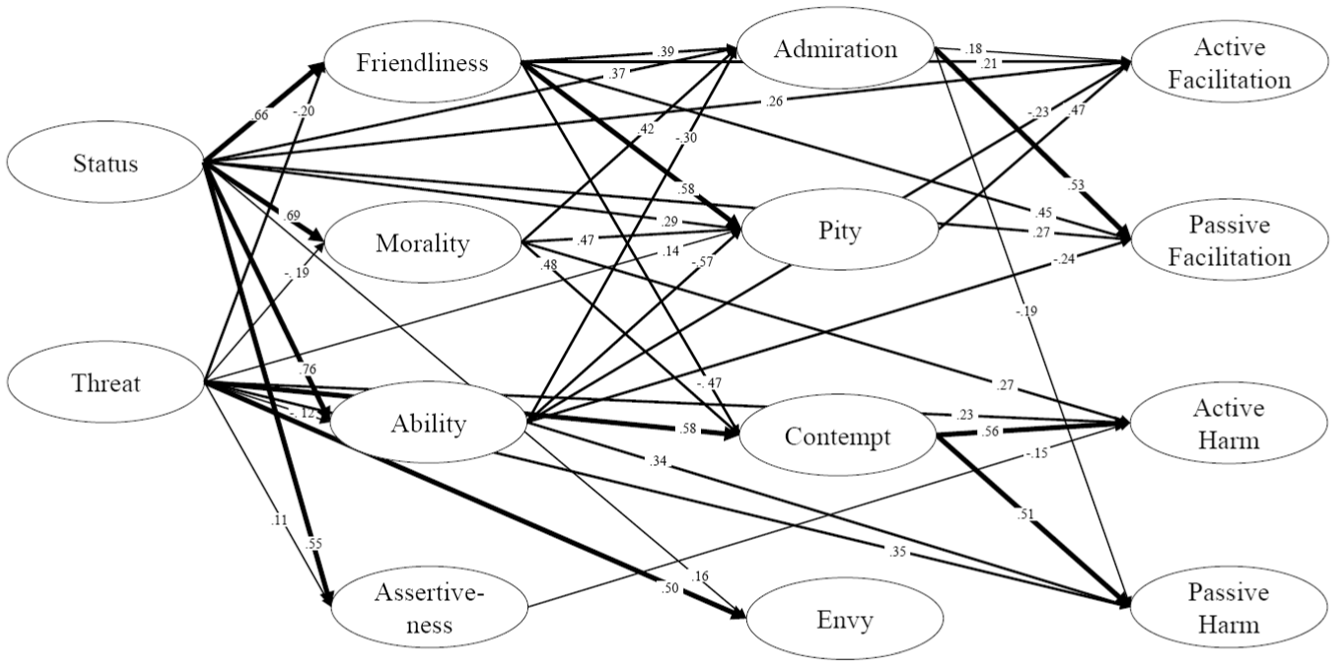
Structural Equation Model for Study 2: Modeling Predictors and Consequences of Facets of Social Evaluation for Migrant Groups
In Study 1, status positively predicted all facets and threat negatively predicted all facets (Table 3). Diverging from H2, indirect effects via morality or envy/contempt had relatively low relevance in the occupational domain. In Study 2, status positively predicted all facets, whereas threat negatively predicted all facets except assertiveness, which it positively predicted (Table 4). In contrast to H2, assertiveness was the least relevant facet for predicting intergroup bias, and envy did not predict behavioral tendencies in the study on migrant groups. Robustness checks (models without status/threat, models with serial mediation of status/threat predicting behavioral intentions via the facets and intergroup emotions) are available on the OSF and replicate these results.
Results of the Structural Equation Model With Occupational Groups
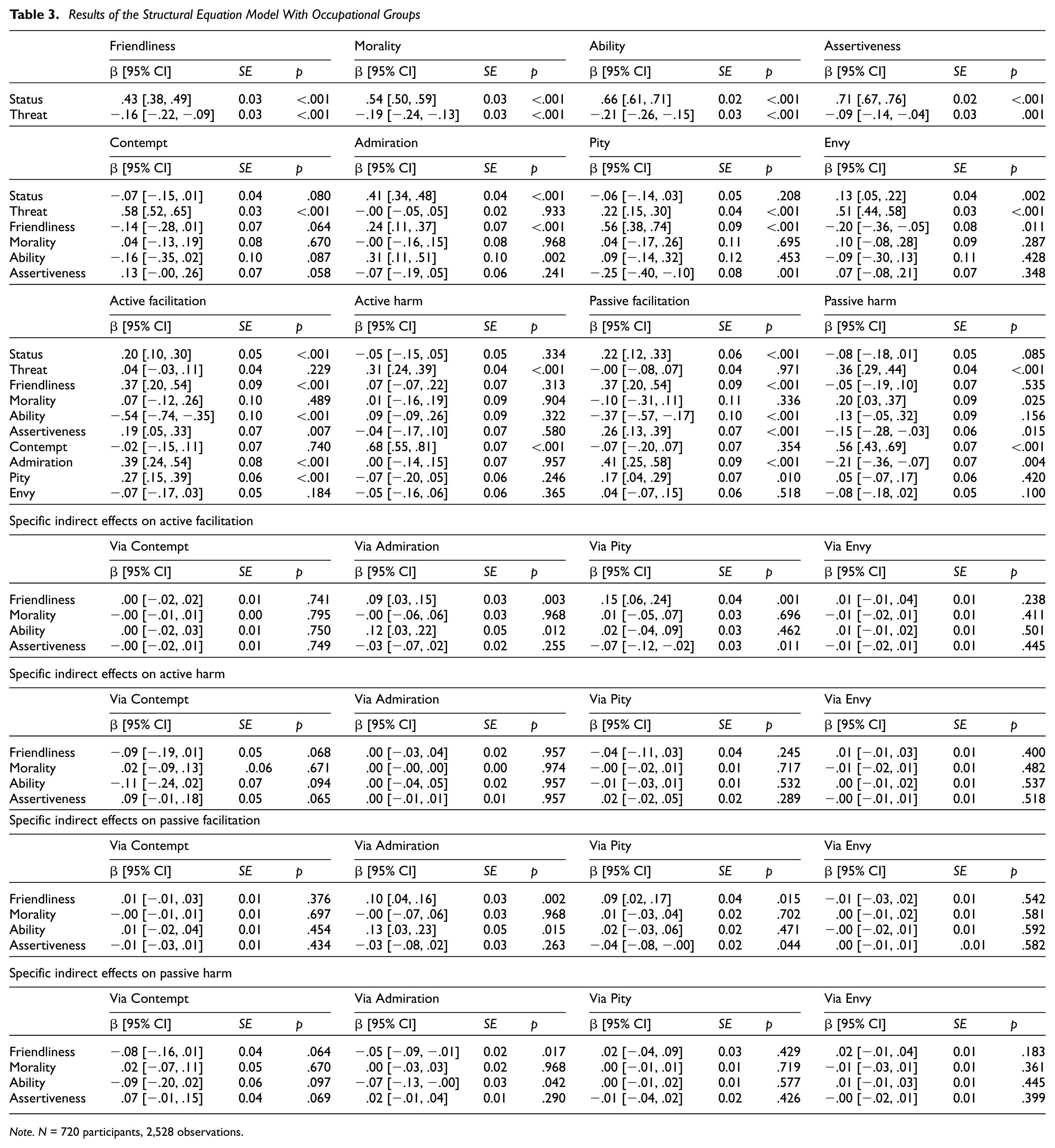
Note. N = 720 participants, 2,528 observations.
Results of the Structural Equation Model with Migrant Groups
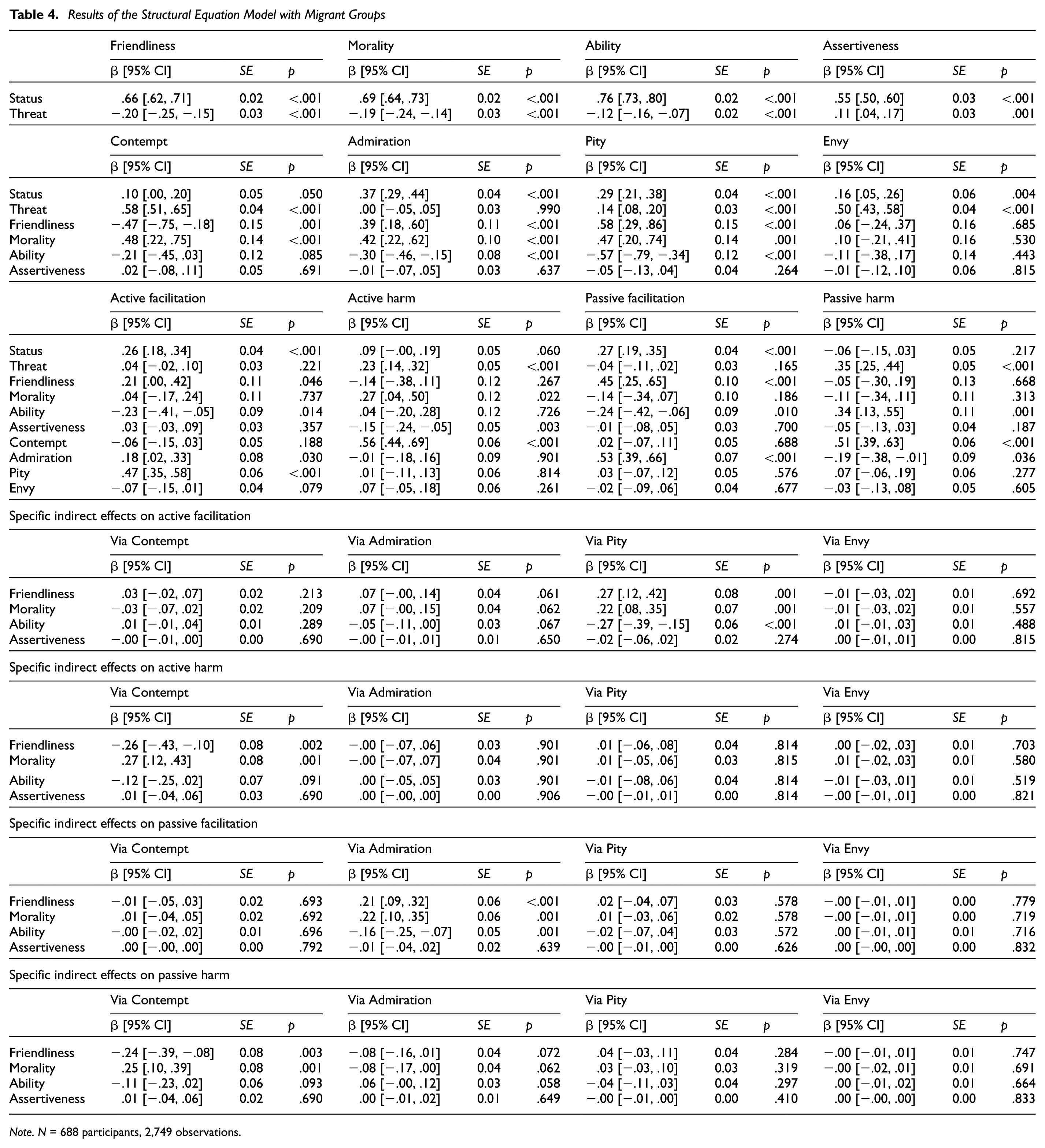
Note. N = 688 participants, 2,749 observations.
In both studies, the largest standardized regression weights included a positive prediction of friendliness on pity as well as positive predictions of contempt on both harm intentions. Figures 3 and 4 depict further similarities and differences in direct effects. Indirect effects (Tables 3 and 4) showed comparable patterns across studies regarding active and passive facilitation. In detail, friendliness predicted active facilitation via pity. Friendliness and ability predicted passive facilitation via admiration. Most other indirect effects differed between domains. For instance, friendliness predicted active harm via admiration in the occupational domain but via contempt in the domain of migrants from different countries of origin.
Discussion
This research investigated the facets of social evaluation, their sociostructural predictors, and emotional and behavioral consequences in two domains, addressing three research gaps in stereotype research. We showed that morality, friendliness, ability, and assertiveness adequately map stereotypes about occupational and migrant groups. Intergroup bias toward target groups varied between domains. Subsequently, we discuss the results considering the research questions: Which facets of social evaluation are most relevant for stereotypes about occupational and migrant groups? How are predictors and consequences of stereotypes associated with the facets of social evaluation? And how generalizable are the facets and their associations with the sociostructural predictors and intergroup bias across these two domains?
The Facets of Social Evaluation
Across two studies applying SEM and measurement invariance testing, we substantiated the four facets that earlier research has empirically separated through factor analyses (Abele et al., 2016; Barbedor et al., 2024; Chawinwit & Koch, 2025). Our findings diverge from prior research, which identified conscientiousness as a relevant facet in the educational domain (Bick et al., 2022). In line with Cambon (2022), who identified conscientiousness as less relevant than assertiveness in Western societies, we found that morality, friendliness, ability, and assertiveness best described the evaluation of occupational and migrant groups in Germany.
Recently, researchers questioned the comparability of similarly labeled facets in different models integrated in the adversarial collaboration by finding “overall disagreement on how theoretically equivalent constructs are operationalized” (Carmona-Díaz et al., 2024, p. 213). Contrarily, Chawinwit and Koch (2025) supported the facets’ coherence and the related brief scale (Koch et al., 2024). Our research bridges these diverging results. In line with Chawinwit and Koch (2025), we support the facets by identifying measurement models with morality, friendliness, ability, and assertiveness to best fit the data across groups in both domains. In line with Carmona-Díaz et al. (2024), we identified slightly different measurement models in each domain. We thus recommend latent modeling and measurement invariance testing when investigating the facets of social evaluation across domains. Together, these methods can uncover comparability of the facets and adjust for potential domain specificity.
Stereotypes About Occupational and Migrant Groups in Germany
We found that latent means differed significantly across occupational and migrant groups. Occupational groups with communal roles (firefighters, physicians, teachers, nurses) received high ratings, whereas unemployed received univalent low ratings. Other occupational groups received distinctive ratings on one or two facets, indicating a more differentiated role of single facets for specific occupational groups.
In line with Froehlich and Schulte (2019), ratings of migrant groups differed according to region of origin, migration history, and relative societal status. Migrants from Southern Europe (Italy, Spain) who migrated to Germany as guest workers decades ago received high ratings on all facets. Migrants from the former USSR and Turkey, who were also traditional guest workers (and migrants from Ukraine), received moderate ratings. Migrants from the Balkans and Northern Africa/ the Middle East who migrated to Germany more recently received low ratings.
Evidence of Generalizability and Domain Specificity
Comparing the role of sociostructural predictors and intergroup bias in the two domains revealed partly generalizable and partly domain-specific patterns. The predictions of status and threat were more similar across domains than the predictions of the downstream variables. Perceived status and threat predicted the stereotype facets, emotions, and behavioral intentions similarly across the domains (with exceptions in threat predicting assertiveness and in status predicting pity), indicating generalizability of their predictions. In line with earlier work (e.g., Fiske et al., 2002; Kervyn et al., 2015), low-status and high-threat groups were at risk of negative consequences.
The facets’ predictions on intergroup emotions and behavioral intentions, however, were predominantly domain-specific, unveiling evidence of their yet rarely explored generalizability across domains (Yzerbyt et al., 2025). Indirect effects showed that in each domain, different facets and emotions were relevant to predict behavioral intentions, with a general tendency of more negative intergroup bias toward migrants compared to occupational groups. For instance, contempt was relevant for the indirect effects when participants evaluated migrants, but not occupational groups. We thereby extend earlier research, which reported negative evaluations of migrants compared to occupational groups (e.g., Lee & Fiske, 2006), by providing evidence for domain specificity regarding intergroup bias. This empirically supports the assumptions of recent theoretical work about the consequences of stereotypes (Cundiff et al., 2025) and, in our opinion, makes the facets a strong resource in domain-specific prejudice and discrimination research.
Limitations and Future Directions
The present research encompassed cross-sectional self-report data representative in terms of gender and age for the German population. The specific country of investigation and the selection of domains may have influenced the results. Furthermore, according to Lickel et al. (2000), societal, intimacy, and task groups are evaluated differently. Participants might have perceived occupational groups as task groups and migrant groups as societal groups, distinguishing their evaluation and associated consequences (Barbedor et al., 2024). Despite the instruction to evaluate groups from a societal perspective, which should have minimized this impact, future research could replicate our work across different domains, languages, and social groups to detect such confounding effects (Abele et al., 2016; Koch et al., 2024).
We rarely found ambivalent stereotypes, especially regarding migrant groups. Yzerbyt et al. (2025) explained that, although not theorized in the SCM, the superordinate dimensions often correlate positively, explaining the predominance of univalent stereotypes. If contextual or temporal goals or goals driven by ideological beliefs exist, the dimensions’ association can turn negative. Given the positive correlations between the facets in both studies (Supplement 5), we assume that goals did not differ between domains, potentially due to the similar design in both studies.
Behavioral intentions, as measured in our research, can differ from actual behavior (e.g., Ajzen, 1985). Previous research addressed this research gap with economic games. They either investigated the dimensions, but not the facets (Jenkins et al., 2018), or the facets, but hypothetical behavior (Koch et al., 2024). A connection of both approaches might obtain insights into the facets’ behavioral consequences.
Future research might further ensure that order effects do not affect results. Although neither recent research on the facets (Folberg et al., 2022) nor the original study investigating the BIAS map with the superordinate dimensions (Cuddy et al., 2007) reported order effects, no research has yet tested whether order effects are influential when investigating the SCM/BIAS map with the facets.
Finally, because ACAMIA was not available at the time of the preregistration, we did not plan its application a priori. Future research should consider preregistering decision criteria for model modification to further support comparability and transparency in stereotype research.
Conclusion
Our studies provide the first evidence for the generalizable nature of the sociostructural predictors’ associations with the facets of social evaluation (morality, friendliness, ability, and assertiveness) and intergroup bias. They further demonstrate the value of integrating the facets into the SCM/BIAS map to unfold the particularities of societal domains regarding intergroup bias. We thus conclude that research on domain-specific stereotype-based intergroup bias is beneficial to identify target groups in need of support.
Supplemental Material
sj-pdf-1-spp-10.1177_19485506251399234 – Supplemental material for Facets of Social Evaluation Differentially Predict Intergroup Bias Toward Occupational and Migrant Groups
Supplemental material, sj-pdf-1-spp-10.1177_19485506251399234 for Facets of Social Evaluation Differentially Predict Intergroup Bias Toward Occupational and Migrant Groups by Nathalie Bick, Laura Froehlich, Maria-Therese Friehs, Patrick Ferdinand Kotzur and Helen Landmann in Social Psychological and Personality Science
Footnotes
Acknowledgements
We thank Natja Hirschberger and Ümit Celik for conducting the pilot studies and programming the main study, Kerstin Irmer and Leah Vahle for formatting the manuscript, and Moritz Schemmerling for providing access to ACAMIA and helping with identifying measurement models.
Handling Editor: Christian Unkelbach

Ethical Considerations
Ethics approval was not mandatory for the reported research. Survey participation was voluntary and in accordance with the ethical recommendations of the German Psychological Association, the German Federal General Data Protection Act, and the Declaration of Helsinki.
Author Contributions Statement
N.B.: Conceptualization, formal analysis, investigation, methodology, visualization, writing—original draft, editing. L.F.: Conceptualization, funding, methodology, project administration, supervision, writing—review and editing. M.T.F.: Conceptualization, methodology, resources, software, writing—review and editing. P.F.K.: Conceptualization, methodology, resources, software, writing—review and editing. H.L.: Conceptualization, writing—review and editing.
Funding
The authors received no financial support for the research, authorship, and/or publication of this article.
Declaration of Conflicting Interests
The authors declared no potential conflicts of interest with respect to the research, authorship, and/or publication of this article.
Supplemental Material
Supplemental material for this article is available online.
Author Biographies
References
Supplementary Material
Please find the following supplemental material available below.
For Open Access articles published under a Creative Commons License, all supplemental material carries the same license as the article it is associated with.
For non-Open Access articles published, all supplemental material carries a non-exclusive license, and permission requests for re-use of supplemental material or any part of supplemental material shall be sent directly to the copyright owner as specified in the copyright notice associated with the article.
