




Abstract
Previous research found that religious individuals report higher well-being when they live in a religious country—that is, when there is an objective match—or when they perceive their country as religious—that is, when there is a subjective match. Objective and subjective person-culture matches are typically considered different operationalizations of the same phenomenon. The present research, in contrast, suggests that objective and subjective matches are two conceptually distinct phenomena, each independently contributing to higher well-being: Across 24 countries (N = 10,195), individuals tended to experience higher global, psychological, and physical well-being when both objective and subjective matches were high. Notably, only objective (but not subjective) matches were related to higher social well-being and life satisfaction, whereas only subjective matches were related to positive affect. Thus, jointly investigating objective and subjective matches is crucial to avoid incomplete or even incorrect conclusions about person-culture match effects on well-being.
Individuals tend to experience higher well-being when their characteristics match those of their culture, a phenomenon known as the person-culture match effect (Fulmer et al., 2010; Gebauer et al., 2020). This effect has been well-documented for various match characteristics such as personality traits (Bleidorn et al., 2016; Fulmer et al., 2010), political orientation (Ebert et al., 2023; Stavrova & Luhmann, 2016), and human values (Du et al., 2023; Hanel et al., 2020). One of the most robust and best-documented findings in this area is that religious individuals report higher happiness and better health when they live in religious countries compared to secular ones (Diener et al., 2011; Stavrova, 2015).
Most research on person-culture match has focused on the well-being benefits that arise when individuals’ characteristics (e.g., personal religiosity) match with the average characteristics in their culture (e.g., the average of individuals’ personal religiosity within a country)—what we refer to as an objective match. Recently, however, two studies (Hoogeveen et al., 2023; Wolf et al., 2021) provided initial evidence that well-being also increases when individuals subjectively perceive the average characteristics in their culture as similar to their own (e.g., perceived average religiosity within a country)—what we refer to as a subjective match. 1 To date, no research has simultaneously investigated both objective and subjective person-culture match. This gap may stem from the prevailing assumption among person-culture match researchers that objective and subjective matches are equivalent and simply represent different measures of the same underlying phenomenon.
In the present research, we challenge this prevailing perspective and propose that objective and subjective matches are two conceptually distinct phenomena, each independently contributing to higher well-being. To empirically test our novel perspective, we are the first to examine the effects of objective and subjective person-culture match on well-being simultaneously. Moreover, we explore whether objective and subjective matches interact with each other, offering new insights into the complex dynamics of person-culture match and its impact on well-being.
Objective vs. Subjective Person-Culture Match
Existing person-culture match research has not conceptually differentiated between the effects of objective and subjective matches on well-being. Typically, researchers explain (objective and subjective) match effects using the same two principles: social norms and self-validation. For example, an objective match is seen as an indicator of norm conformity (Gebauer et al., 2017; Stavrova et al., 2013) and as validation of one’s own characteristics (Bleidorn et al., 2016; Ebert et al., 2023), both of which enhance well-being. This suggests that the positive effect of an objective match on well-being is driven by individuals’ perception of matching cultural characteristics. Accordingly, the effects of objective and subjective matches on well-being should be equivalent.
However, we propose that objective and subjective matches are distinct phenomena, each contributing to higher well-being. There are at least three key theoretical reasons supporting this conceptual distinction. First, individuals’ perceptions are often biased and do not necessarily reflect reality (Hanel et al., 2018; Murray, 1938), which can lead to discrepancies between objective and subjective matches. Second, related (but conceptually distinct) research in person-organization fit suggests that objective and subjective matches have different effects on job satisfaction, organizational commitment, and turnover intention (Kristof-Brown et al., 2005; Verquer et al., 2003). Although this research focuses on different outcomes and organizational contexts, which are typically spatially and socially closer than cultural units, it indirectly supports the idea that objective and subjective matches are distinct. Third, objective and subjective matches may capture different phenomena: Objective matches may rather capture environmental affordances (Locke, 1976; Pervin, 1992), fewer social conflicts (Getzels, 1969; Holland & Gottfredson, 1976), and greater social support and reward (Diener et al., 2011; Gebauer et al., 2012), while subjective matches may rather capture positive feelings of being right and conform with perceived cultural norms (Rosenberg, 1965; Zou et al., 2009), a shared understanding of the world (Echterhoff et al., 2009; Hardin & Higgins, 1996), and a sense of belonging (Baumeister & Leary, 1995; Easterbrook & Vignoles, 2013)—all factors known to enhance well-being (Diener & Seligman, 2002; Haslam et al., 2009; Higgins, 2010). Accordingly, if our novel perspective is correct, objective and subjective matches should simultaneously contribute to well-being.
Moreover, we believe that objective and subjective matches do not merely have additive effects on well-being but also interact with each other. For example, subjective matches might serve as an important boundary condition for experiencing the well-being benefits of an objective match. In other words, subjective matches may be necessary for individuals to truly benefit from the social support and rewards associated with an objective match (Diener et al., 2011; Stavrova et al., 2013). Therefore, individuals may need to perceive the shared characteristics with others in their culture to reap the well-being benefits of an objective match.
Present Research
The present research is the first to test whether objective and subjective person-culture matches capture the same phenomenon, as assumed by existing person-culture match research (e.g., Bleidorn et al., 2016; Fulmer et al., 2010), or whether objective and subjective person-culture matches are conceptually distinct, each contributing independently to higher well-being. Furthermore, it offers a novel contribution to the match research by examining the interaction between objective and subjective matches (i.e., three-way interaction between personal religiosity, objective cultural religiosity, and perceived cultural religiosity). Building on established person-culture match research, we used religiosity as a widely examined match domain (Diener et al., 2011; Gebauer et al., 2017) and countries as typical cultural units (Gebauer et al., 2020; Hanel et al., 2020).
In addition, existing person-culture match research has mostly focused on a single measure of well-being, making comparisons between different dimensions of well-being difficult. Indeed, previous research has tentatively indicated that objective and subjective match effects may vary across different well-being dimensions (objective matches: Hanel et al., 2020; subjective matches: Vogel et al., 2023). To address this, we assessed well-being both globally and separately across three dimensions: psychological, physical, and social well-being (WHOQOL Group, 1998). We further analyzed psychological well-being at the level of its three most commonly used facets among person-culture match researchers: life satisfaction, self-esteem, and positive affect (Gebauer et al., 2020; Stavrova et al., 2013). This breakdown of well-being into different dimensions and facets allowed us to investigate whether objective and/or subjective person-culture matches were more strongly related to one dimension and facet of well-being than to another. If this is the case, it further supports our novel perspective that objective and subjective matches capture different phenomena of a match. For example, objective matches might mainly reflect reduced social conflict and increased social support and reward (Diener et al., 2011; Gebauer et al., 2012), which are closely linked to social well-being. Conversely, subjective matches might be more closely tied to current emotional experiences such as positive affect (Diener et al., 2003; Larsen et al., 1985).
Method
Participants
We used data from the Many-Analysts Religion Project (MARP; Hoogeveen et al., 2023). The final sample included 10,195 respondents from 24 countries (55.9% female; Mage = 33.8 years, SDage = 0.14). 2 Online Supplement 1 includes the descriptive statistics of the demographics for each country separately.
Measures
After participants provided informed consent, they completed measures of religiosity, well-being, and demographics in that order. Online Supplement 2 includes an overview of all measures and descriptive statistics.
Well-Being
We measured respondents’ global well-being with items from the shortened version of the Quality of Life Scale (WHOQOL Group, 1998), covering the three dimensions psychological, physical, and social well-being (α = .89; for details, see Online Supplement 2). Psychological well-being was assessed with four items (α = .79), capturing the three facets: life satisfaction (2 items, α = .73; e.g., “How would you rate your quality of life?”), self-esteem (1 item, “How satisfied are you with yourself?”), and positive affect (1 item, “How often do you have negative feelings such as blue mood, despair, anxiety, depression?,” recoded). Physical well-being encompassed respondents’ satisfaction with their health and their everyday vitality (6 items, α = .83; e.g., “How satisfied are you with your health?”). Social well-being encompassed respondents’ satisfaction with their personal relationships (2 items, α = .73; e.g., “How satisfied are you with your personal relationships?”). All items were coded so that higher scores indicated higher well-being.
Personal Religiosity
Building on previous research (Berkessel et al., 2021; Gebauer & Maio, 2012), we measured personal religiosity with four items taken from the World Values Survey (Inglehart et al., 2022), covering the core aspects of individuals’ global religiosity: self-concept of religiosity, belief in God, church attendance, and private religious practices (α = .86).
Objective Cultural Religiosity
Following the standard way, we operationalized objective cultural religiosity by averaging participants’ personal religiosity scores within each country (Diener et al., 2011; Gebauer et al., 2017).
Perceived Cultural Religiosity
We measured perceived cultural religiosity with two items (Wan et al., 2007), covering participants’ perception of how important a religious lifestyle and the belief in God are to the average citizen in their country (α = .85).
Statistical Modeling
In line with the standard approach in person-culture match research, we conducted multilevel models in which respondents were nested within countries (Fulmer et al., 2010; Stavrova et al., 2013). We computed the multilevel models using the software Julia v1.1.1 (Bezanson et al., 2017) and its mixed-effects models package MixedModels v2.3.0 (Bates et al., 2020). Since the focus of our statistical analyses was on match effects (e.g., objective match effects operationalized as the interaction between person-level religiosity and culture-level religiosity), we followed established recommendations and group-mean centered all person-level predictors and grand-mean centered all culture-level predictors to ensure unbiased cross-level interaction coefficients (Aiken & West, 1991; Enders & Tofighi, 2007). Next, we z-standardized all variables to interpret the point estimates comparable to standardized regression weights (Snijders & Bosker, 2012). In all multilevel models, the intercepts and slopes of all person-level predicators were treated as random effects (Barr et al., 2013).
To thoroughly compare objective and subjective match effects on well-being, we conducted four statistical models per well-being dimension and facet: The first two models build on the common way to statistically model person-culture match and investigate objective and subjective person-culture match separately. The “Objective-Match Only Model” statistically models only the objective person-culture match (i.e., the cross-level interaction between personal religiosity and objective cultural religiosity). The “Subjective-Match Only Model” statistically models only the subjective person-culture match (i.e., the interaction between personal religiosity and perceived cultural religiosity). The other two statistical models go beyond those used in previous research and examine objective and subjective match effects on well-being jointly. The “Dual-Match Independent Model” statistically models objective and subjective match as independent effects on well-being. The “Dual-Match Interaction Model” statistically models the interaction between objective and subjective match effects on well-being (i.e., a three-way interaction between personal religiosity, objective cultural religiosity, and perceived cultural religiosity).
The four-model approach of our statistical modeling strategy allowed us to examine (1) whether objective and subjective match effects on well-being diminish when analyzed together, compared to the two established models (as assumed by existing person-culture match literature) and (2) whether objective and subjective match effects in the two novel models contribute independently to higher well-being or even interact with each other (as proposed by our novel perspective). We compared the power of matches by using standardized point estimates (zPE) and their 95% confidence intervals as well as simple slope analyses (Aiken & West, 1991).
All R scripts are publicly available at https://osf.io/yv6na/.
Results
Global Well-Being
Table 1 depicts the model results of the four statistical models for global well-being. In each model, higher personal religiosity was associated with higher global well-being. In addition, perceived cultural religiosity was also linked to higher global well-being. Objective cultural religiosity, in contrast, was not associated with higher global well-being.
Objective and Subjective Match Effects on Global Well-Being
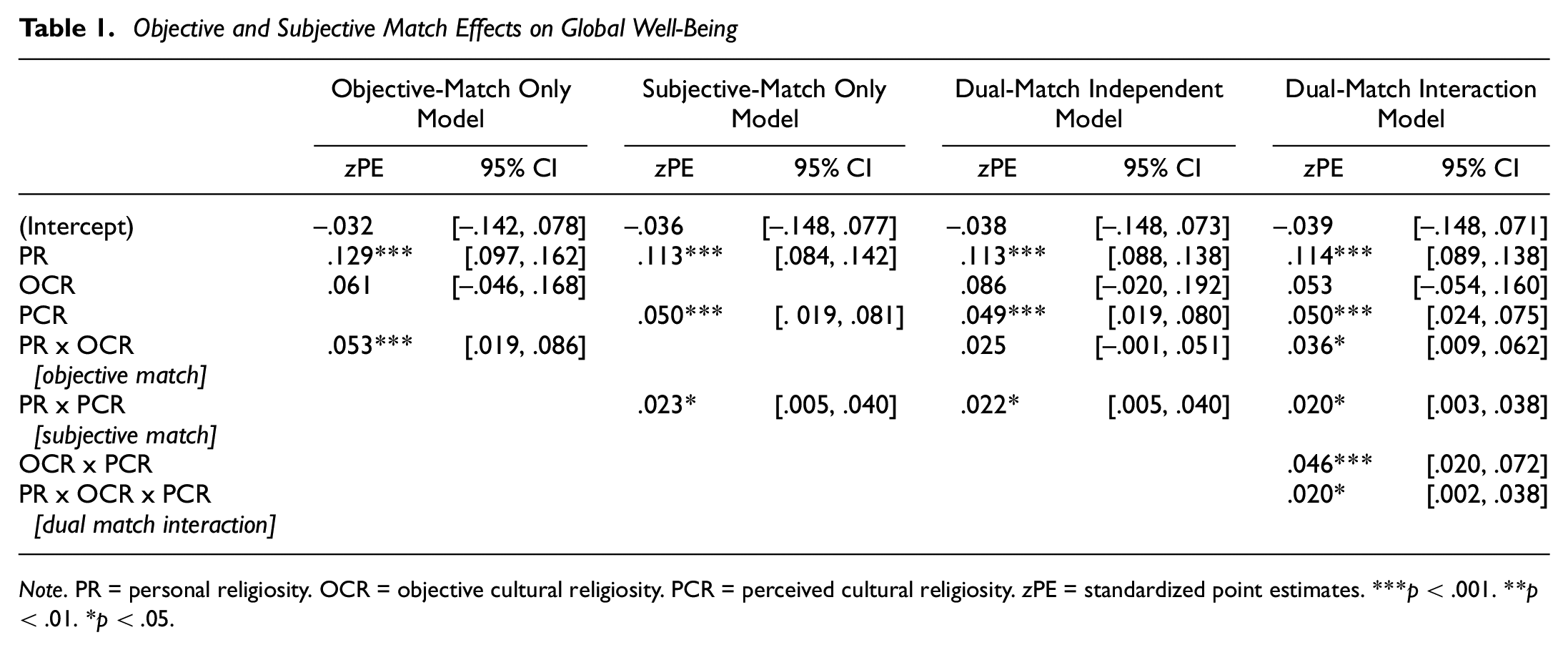
Note. PR = personal religiosity. OCR = objective cultural religiosity. PCR = perceived cultural religiosity. zPE = standardized point estimates. ***p < .001. **p < .01. *p < .05.
Most importantly, in the Objective-Match Only Model, there was a significant interaction between personal religiosity and objective cultural religiosity, indicating an objective person-culture match effect on global well-being, zPE = .053, 95% CI [.019, .086]. To decompose this interaction, we conducted simple slope analyses, which showed that the relationship between personal religiosity and global well-being was significantly more positive in more religious countries (+1 SD) than in less religious countries (–1 SD), ΔzPE = .105, 95% CI [.013, .197]. Thus, in line with previous research, religious individuals living in a more religious country experienced higher well-being than those in a less religious country (see Figure 1A).
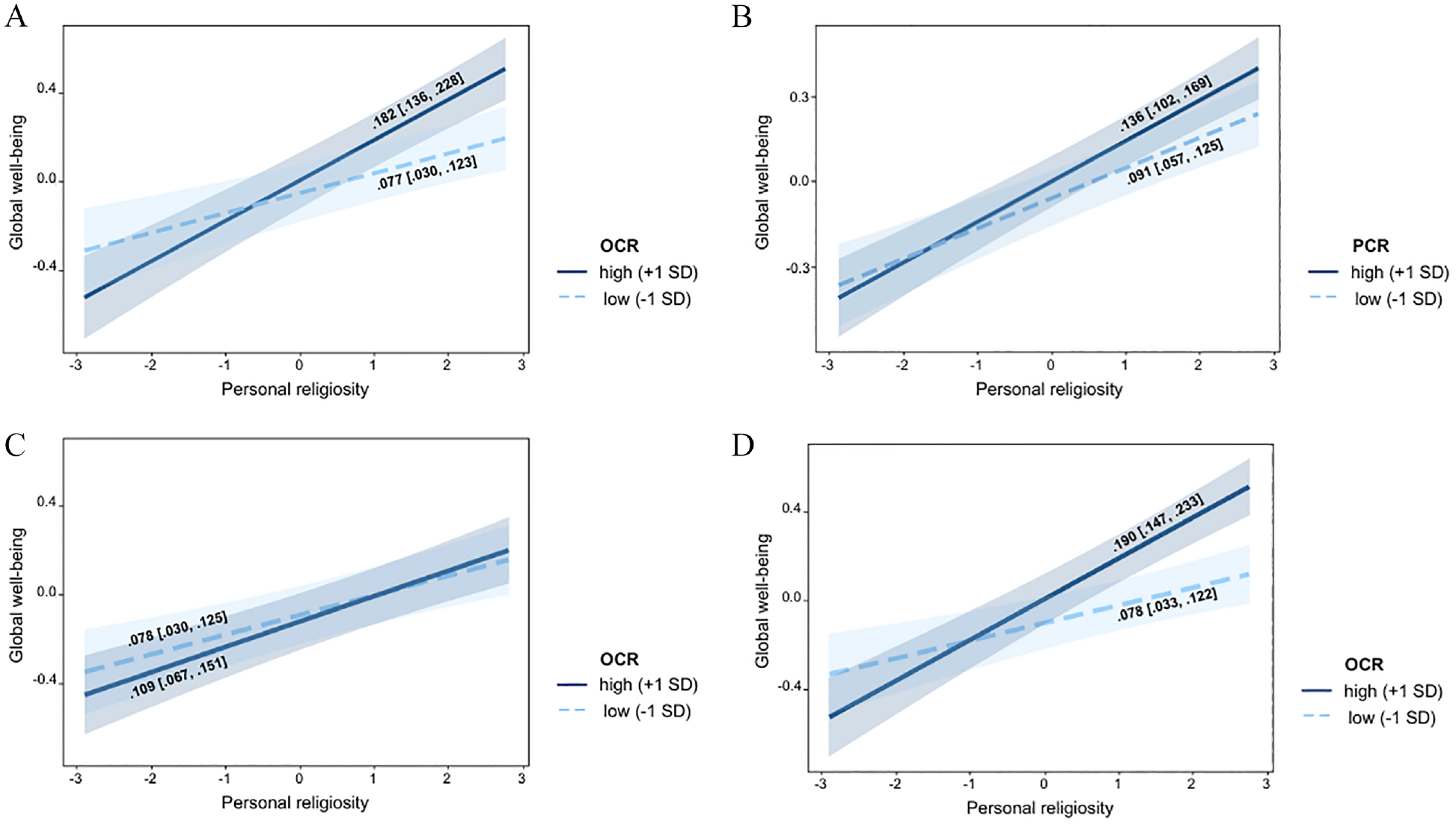
Illustration of Objective and Subjective Match Effects on Global Well-Being
Furthermore, in the Subjective-Match Only Model, there was a significant interaction between personal religiosity and perceived cultural religiosity, indicating a subjective person-culture match effect on global well-being, zPE = .023, 95% CI [.005, .040]. Thus, in line with recent research, religious individuals experienced higher well-being the more they perceived their country to be religious. However, the comparison of the standardized point estimates of objective and subjective match effects suggests that the subjective match effect tends to be smaller than the objective match effect. This notion is supported by results from the simple slope analyses, which showed that the positive relationship between personal religiosity and global well-being did not differ significantly when perceived cultural religiosity was high (+1 SD) vs. low (–1 SD), ΔzPE = .045, 95% CI [−.022, .113] (see Figure 1B).
In the next step, we examined whether objective and subjective match effects on well-being suppress or even cancel each other out when they are simultaneously included in a statistical model. To do this, we jointly included objective and subjective matches as independent predictors in the dual-match-independent model: while the subjective match effect remained significant, the objective match effect decreased and became only marginally significant, zPE = .025, 90% CI [.004, .047].
To test whether objective and subjective matches possibly interact with each other, we additionally included the three-way interaction between personal religiosity, objective cultural religiosity, and perceived cultural religiosity in the Dual-Match Interaction Model. Indeed, there was a significant positive objective match effect, zPE = .036, 95% CI [.009, .062], a significant positive subjective match effect, zPE = .020, 95% CI [.003, .038], and a significant positive three-way interaction effect between personal religiosity, objective cultural religiosity, and perceived cultural religiosity, zPE = .020, 95% CI [.002, .038].
The decomposition of the three-way interaction with simple slope analyses showed that the relationship between personal religiosity and global well-being only significantly differed between those who lived in high-religiosity versus low-religiosity countries (thus showing the objective match effect) when perceived cultural religiosity was high, ΔzPE = .112, 95% CI [.025, .121], but not when perceived cultural religiosity was low, ΔzPE = .031, 95% CI[−.058, .121]. This indicates that living in a religious country is particularly beneficial for the well-being of religious individuals only when they perceive their country as religious (see Figure 1C), thereby, supporting our alternative perspective that objective and subjective matches are not equivalent.
Different Well-Being Dimensions and Facets
Our global well-being measure could be decomposed into the following three dimensions: psychological, physical, and social well-being (WHOQOL Group, 1998). To compare the effects of objective and subjective matches across these dimensions, we repeated all analyses described so far separately for each dimension. Furthermore, most prior research has treated psychological well-being as a global construct and examined only one psychological facet at a time (e.g., happiness: Ugur & Aydin, 2023; self-esteem: Gebauer et al., 2017). To compare the different facets, we also repeated our analyses separately for the three most commonly used facets of psychological well-being: life satisfaction, self-esteem, and positive affect (Gebauer et al., 2020; Stavrova et al., 2013). Since we were primarily interested in whether objective and/or subjective match effects exerted stronger effects on one dimension and facet of well-being than on another, Table 2 depicts the standardized coefficients of the corresponding interaction effects. Figure 2 displays the same results graphically (for detailed results, see Online Supplement 3).
Objective and Subjective Match Effects Across Different Well-Being Dimensions and Facets
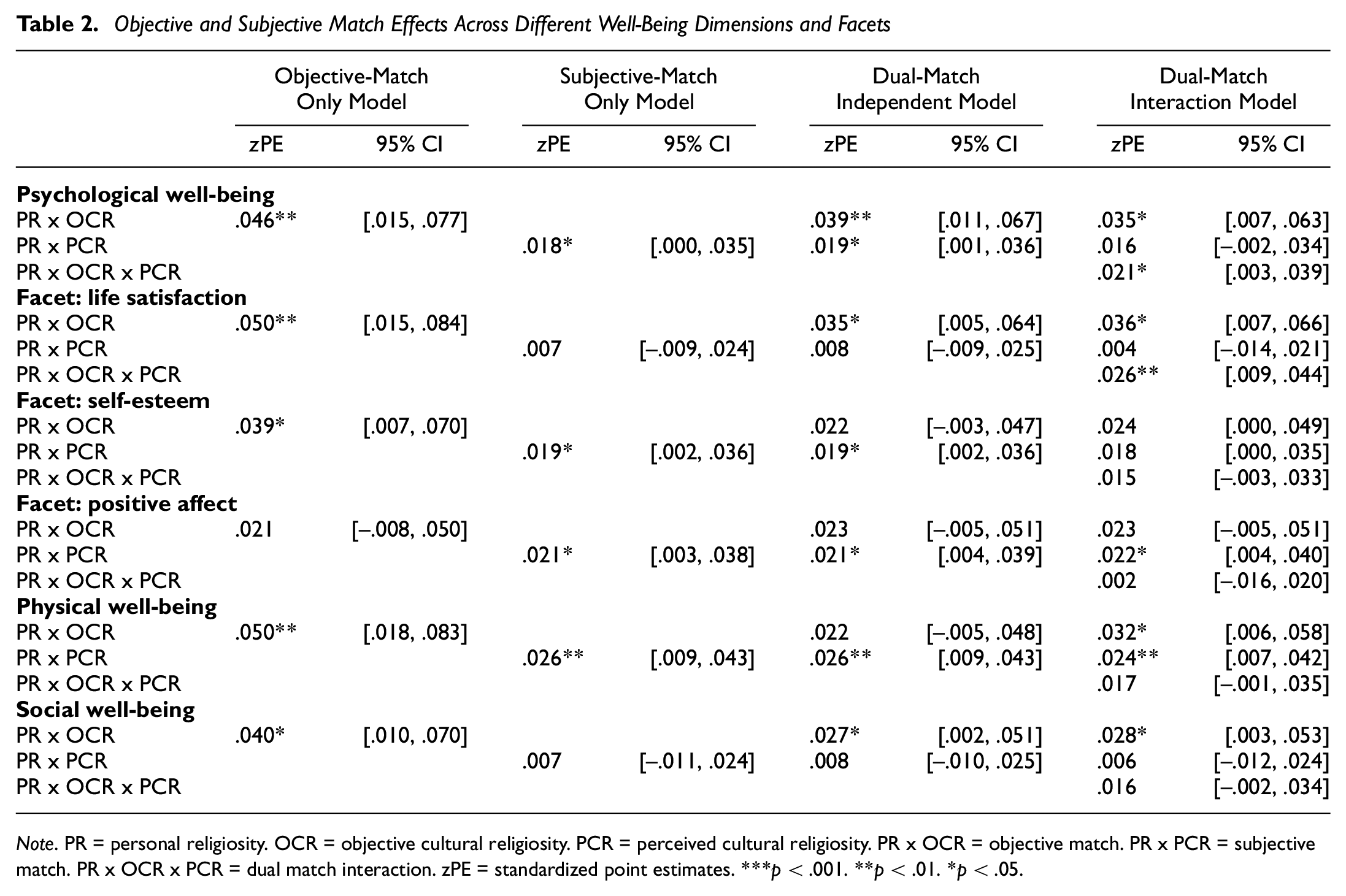
Note. PR = personal religiosity. OCR = objective cultural religiosity. PCR = perceived cultural religiosity. PR x OCR = objective match. PR x PCR = subjective match. PR x OCR x PCR = dual match interaction. zPE = standardized point estimates. ***p < .001. **p < .01. *p < .05.
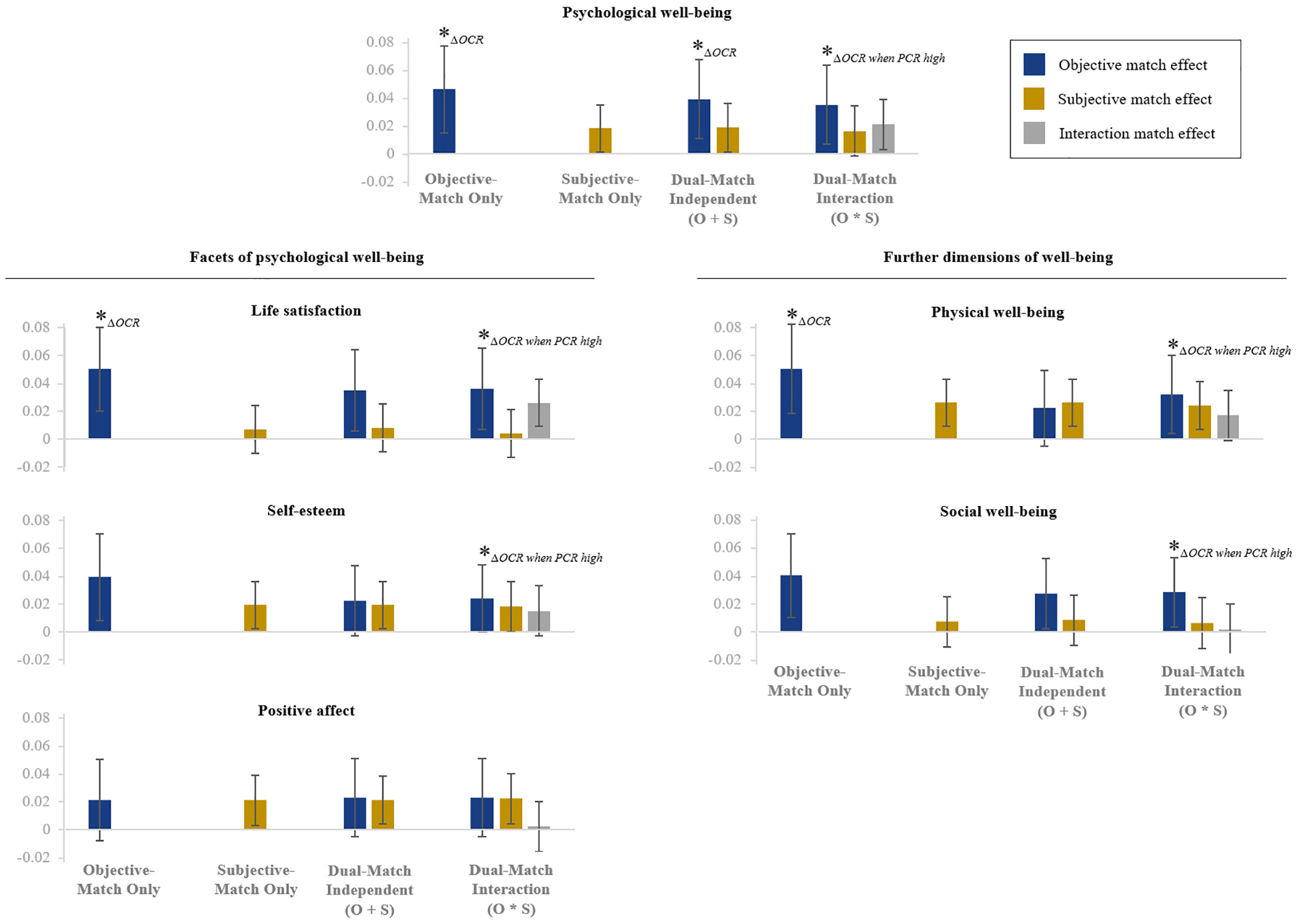
Match Effects Across Well-Being Dimensions
Psychological Well-Being and Its Facets
Across all four models, both objective and subjective matches were consistently related to higher psychological well-being (see Figure 2). Furthermore, there was also a significant positive three-way interaction between personal religiosity, objective cultural religiosity, and perceived cultural religiosity for psychological well-being and the facet of life satisfaction (see Table 2). Thus, the result pattern aligns with our novel prediction that objective and subjective matches are not equivalent.
Moreover, across the three facets, the result pattern differed regarding the relative importance of objective and subjective matches (see Figure 2). Across the four statistical models, only objective (but not subjective) person-culture matches were consistently related to higher life satisfaction. In contrast, only subjective (but not objective) person-culture matches were consistently related to higher positive affect. These differences in the presence of match effects further support our alternative perspective that objective and subjective matches capture distinct phenomena of a match.
Notably, however, for self-esteem, the classic objective-match effect appeared only in the Objective-Match Only Model. When subjective match was added to the model, the typically found objective match effect on self-esteem disappeared and only the subjective match effect remained significant. Thus, it seems that objective person-culture match effects on self-esteem are fully suppressed by subjective person-culture match effects.
Physical Well-Being
Consistent with psychological well-being, there were significant objective and subjective match effects on physical well-being, indicating that religious individuals benefit from living in religious countries and/or perceiving their country to be religious (see Table 2). The three-way interaction in the Dual-Match Interaction Model just missed significance; nonetheless, both objective and subjective matches simultaneously contributed to higher physical well-being (see Figure 2).
Social Well-Being
For social well-being, the result pattern was similar to that of life satisfaction (see Figure 2). Across the four statistical models, only objective (but not subjective) person-culture matches contributed to higher social well-being (see Table 2). This indicates that religious individuals are especially satisfied with their personal relationships when they live in religious countries (but not when they perceive their country to be religious).
To test the robustness of our results, we repeated all analyses by controlling for gender, age, socioeconomic status, and a country’s GDP (see Online Supplement 4). The correlations of the interaction coefficients without and with covariates ranged between .90 ≤r≤ .98 across all dimensions and facets of well-being, suggesting that our findings are robust. 3
Additional Analyses
We conducted three additional analyses to further test the robustness of our findings. First, we compared the four statistical models for each well-being dimension and facet based on the amount of explained variance of the fixed effects (Nakagawa & Schielzeth, 2013) and by Akaike weights (Burnham & Anderson, 2002). Overall, both model fit indices suggest that the dual-match models capture the match effects best (see Online Supplement 6), underscoring the importance of jointly considering objective and subjective match effects in future research.
Second, we used an additional approach to establish match effects by calculating multilevel polynomial regression analyses that included the quadratic terms of personal religiosity, objective cultural religiosity, and/or perceived cultural religiosity (Edwards, 2002). Altogether, the results remained conceptually identical to those from the linear multilevel analyses (see Online Supplement 7), further supporting the robustness of our results.
Third, we conducted multilevel-mediated moderation analyses to illuminate the extent to which objective match effects were mediated by subjective match effects. Overall, the results indicated that objective match effects on well-being were only partially mediated by subjective match effects (see Online Supplement 8). This further strengthens the interpretation of our results that objective and subjective matches are not equivalent but capture different aspects of a match.
Discussion
The present research challenges the prevailing view in person-culture match research, which suggests that objective and subjective matches are merely two ways of measuring the same phenomenon. Instead, we propose the alternative perspective that objective and subjective matches are distinct phenomena, each playing a unique role in enhancing well-being, and potentially even interacting with one another. Our findings support this novel perspective. We found that both objective and subjective matches simultaneously contributed to higher global well-being. Moreover, our results also indicate that the benefits of an objective match are realized only when individuals perceive their country as religious. Accordingly, subjective matches appear to be necessary for individuals to reap the global well-being benefits of an objective match.
When examining different dimensions of well-being separately, we found that psychological well-being and its facet life satisfaction had the same result pattern: subjective matches again appeared essential for experiencing the well-being benefits of an objective match. Furthermore, both objective and subjective matches provided incremental benefits for physical well-being. Specifically, religious individuals reported the highest physical well-being when they lived in religious countries (objective match) and simultaneously perceived their country as religious (subjective match). This co-occurrence of objective and subjective match effects may indicate that both types of match capture different aspects of a match. For example, objective matches might rather capture increased social support (Diener et al., 2011; Stavrova et al., 2013), while subjective matches might rather capture self-validation processes and a sense of shared reality (Higgins, 2010; Rosenberg, 1965). Variations in the existence of objective and subjective match effects on social well-being and positive affect further support this notion. Our findings show that only objective (but not subjective) matches were related to social well-being, indicating a strong relationship between objective matches and social interactions. In contrast, only subjective (but not objective) matches were related to positive affect, possibly suggesting that subjective matches may offer emotional comfort through personal affirmation.
In summary, our findings underline the importance of examining both objective and subjective matches together. The current standard in person-culture match research, which often focuses on just one type of match, can lead to incomplete or even misleading conclusions about their impact on well-being. Investigating only objective or subjective matches in isolation might lead to (a) an underestimation of match effects (e.g., especially for psychological and physical well-being, where both simultaneously contribute to higher well-being), (b) illusory match effects (e.g., in our analyses, the objective match effect on self-esteem, which is well-documented by previous research [Gebauer et al., 2017; Stavrova et al., 2013], disappeared when the subjective match effect was additionally included in the model, which remained significant), and (c) incorrect conclusions about the existence of person-culture match effects (e.g., in our analyses, only objective matches were related to higher social well-being).
Our dual match approach provides a clearer picture and may help to illuminate inconsistencies in previous research on person-culture match and well-being (Bleidorn et al., 2016; Hoogeveen et al., 2023). Considering both objective and subjective matches, along with the multidimensional nature of well-being, contribute to a deeper understanding of person-culture match effects on well-being. Thus, the present research can be seen as a blueprint that points toward a new avenue for future research and contributes to the advancement of the person-culture match literature beyond the context of religiosity. We speculate that our findings could apply to other substantial matching characteristics, such as political orientation (Ebert et al., 2023; Stavrova & Luhmann, 2016) and human values (Hanel et al., 2020; Wolf et al., 2021).
The Perception of Culture
The consistent link between objective matches and higher well-being across various dimensions, even when accounting for subjective matches, suggests that both types of matches are distinct phenomena. To address the possibility that objective and subjective matches differ because individuals under- or overestimate the level of religiosity in their country, we repeated our main analyses and re-centered perceived cultural religiosity at the group mean of objective cultural religiosity, with positive PCR scores representing an overestimation and negative PCR scores representing an underestimation of objective cultural religiosity (see Online Supplement 9). Nevertheless, the result pattern of the standardized interaction coefficients remained largely the same (r = .97, p < .001), supporting the robustness of our interpretation that objective and subjective matches might capture different aspects of match phenomena.
This interpretation also aligns with cross-cultural research emphasizing the need to unpack cultural influences at both the person and culture levels (Fischer, 2009; Na et al., 2010). For example, culture can be understood as objective culture (i.e., objective cultural characteristics at the culture level) or as subjective culture (i.e., perceived cultural characteristics at the person level; Zou et al., 2009). By demonstrating that both levels of culture jointly contribute to higher well-being, our research has substantial potential for broader areas of cross-cultural research. Future studies could explore how different combinations of objective and perceived cultural characteristics impact individuals’ feelings, thoughts, and behaviors.
Limitations
Although we used a large-scale sample and advanced analytical methods, several limitations should be noted. First, because of the correlational nature of our data, we cannot make causal inferences. Future research should employ experimental designs to explore the causal link between person-culture match and well-being by manipulating objective and/or subjective matches.
Second, the dataset we used is the only one encompassing the information to jointly investigate objective and subjective match effects on well-being (i.e., personal characteristics, objective cultural characteristics, and perceived cultural characteristics across many countries). However, the sample is a convenience sample that was selected to cover five continents and to include different ethnic and religious majorities. Nevertheless, we do not expect our results to be systematically distorted as (a) the objective cultural religiosity scores in our dataset substantially correlate with those from nationally representative samples, such as the World Values Survey and the Gallup World Poll (rs≈ .70) and (b) our results replicated previous findings on objective person-country matches (Diener et al., 2011; Stavrova et al., 2013).
Third, similar to existing person-culture match research in religiosity, our study focused on the match regarding the overall level of religiosity rather than on specific religious denominations (Gebauer et al., 2017; Hoogeveen et al., 2023). For example, religious Christians living in a predominantly Muslim country may match regarding their level of religiosity but mismatch regarding their religious denomination. This suggests that individuals from minority religious groups could experience different effects. Our sample predominantly consisted of respondents from majority religious groups, limiting our ability to explore how person-culture match effects might vary by religious denomination or minority status. Future research with larger samples that include a diverse range of religious denominations within countries is needed to address these questions.
Fourth, the dataset does not include measures of social support, self-validation, or shared reality. Although our findings offer initial insights into the nature of match effects, we could not investigate the underlying aspects directly. Thus, it is up to future research to empirically examine the mechanisms through which objective and subjective matches affect well-being.
Last, the reported match effects might appear small but are consistent with previous research on person-culture match effects and in social-personality psychology in general. Thus, we consider zPEs ≈ .05 as small but not negligible (Entringer et al., 2021; Schönbrodt, 2016). We believe that match effects and their relevance for individuals’ well-being might even increase when specific conditions are met. For example, match effects may increase (a) for allocentric individuals, who tend to be more sensitive to cultural norms (Triandis et al., 1985, cf. Gebauer et al., 2020), (b) in cultures with strong cultural norms and low tolerance for deviations (Gelfand et al., 2011), and (c) in psychologically closer sociocultural environments, such as neighborhoods, friends, and family (Montoya et al., 2008).
Conclusion
In summary, our findings suggest that objective and subjective matches represent conceptually distinct phenomena, contributing simultaneously to higher well-being. The variation of objective and subjective match effects across different dimensions of well-being provides initial, but promising insights into their distinct roles in individuals’ global well-being. The persistence of match effects across all dimensions of well-being underscores the importance of matching with one’s culture for both mental and physical well-being.
Supplemental Material
sj-docx-1-spp-10.1177_19485506241286548 – Supplemental material for When Reality Meets Perception: Well-Being Effects of Objective and Subjective Person-Culture Matches in Religiosity
Supplemental material, sj-docx-1-spp-10.1177_19485506241286548 for When Reality Meets Perception: Well-Being Effects of Objective and Subjective Person-Culture Matches in Religiosity by Vera Vogel, Paul H. P. Hanel, Alexandra Sarafoglou and Suzanne Hoogeveen in Social Psychological and Personality Science
Footnotes
Handling Editor: Yuri Miyamoto
Declaration of Conflicting Interests
The author(s) declared no potential conflicts of interest with respect to the research, authorship, and/or publication of this article.
Funding
The author(s) disclosed receipt of the following financial support for the research, authorship, and/or publication of this article: Alexandra Sarafoglou was supported by an Amsterdam Brain and Cognition project grant (grant ref: ABC PG 22—January 2022).

Supplemental Material
The supplemental material is available in the online version of the article.
Notes
Author Biographies
References
Supplementary Material
Please find the following supplemental material available below.
For Open Access articles published under a Creative Commons License, all supplemental material carries the same license as the article it is associated with.
For non-Open Access articles published, all supplemental material carries a non-exclusive license, and permission requests for re-use of supplemental material or any part of supplemental material shall be sent directly to the copyright owner as specified in the copyright notice associated with the article.
