




Abstract
Intergroup contact is regarded as one of the most effective ways to reduce prejudice. However, recent longitudinal studies using contemporary statistical techniques (e.g., random intercept cross-lagged panel models [RI-CLPMs]) have failed to find evidence of within-person changes in prejudice following contact fluctuations. We propose that past time-lags may have been too long to capture change and conducted three studies with shorter time-lags of single days, weeks, or months. We also considered effects of positive versus negative contact frequency. We consistently found that people who are less prejudiced have more contact (i.e., between-person effects); however, fluctuations in naturally occurring contact were not followed by corresponding within-person changes in prejudice, suggesting shorter-term contact fluctuations are detached from prejudice. With abundant support for contact in the field, we argue that prejudice may be impacted by major contact events, or through gradually acquired cumulative experiences, but effects are not apparent when examining “thin-slices” of time.
The contact hypothesis, which posits contact with outgroup members reduces prejudice toward the group as a whole, is one of the most influential and well-established ideas in social psychology (Allport, 1954; Hodson & Hewstone, 2013; Pettigrew & Tropp, 2006). However, recent studies applying new statistical modeling approaches have cast doubt on the causal nature of contact (Bohrer et al., 2019; Friehs et al., 2024; Hodson & Meleady, 2024; Sengupta et al., 2023). Specifically, several key studies have failed to find a longitudinal association between intergroup contact and prejudice at the within-person level that would be consistent with psychological change (Rohrer & Murayama, 2023). This may suggest that, rather than being a causal relationship (the key pre-requisite of contact-based interventions), contact simply correlates with prejudice at the between-person level (e.g., less prejudiced people engage in more contact). Here, we argue that the timescales used to track fluctuations in contact and prejudice in recent studies may have been too long to capture change. In what follows, we report a systematic test of whether fluctuations in naturally occurring ordinary contact are followed by corresponding fluctuations in prejudice in three 5-wave “shortitudinal” studies.
The Contact Hypothesis
Since proposed by Allport in 1954, the contact hypothesis has garnered extensive support (Dovidio et al., 2017), most notably in Pettigrew and Tropp’s (2006) meta-analytic review of over 500 studies. Much evidence has relied on cross-sectional studies which demonstrate that people who have more intergroup contact are less prejudiced. Critically, however, such methods cannot address the question of causality as they cannot establish whether changes in contact precede changes in prejudice (Christ & Wagner, 2013; Pettigrew & Tropp, 2006). Evidence from experiments and field studies suggests that contact does reduce prejudice, addressing causality requirements (Hsieh et al., 2022; Lemmer & Wagner, 2015); however, these studies often fail to reflect how contact occurs naturally in everyday contexts. In reality, a great deal of intergroup contact is unstructured—taking place while shopping, eating out, and in public places (Schäfer et al., 2021). Longitudinal designs that measure contact and prejudice over time in people’s ordinary lives are an important tool for ascertaining the efficacy of contact, given the high degree of ecological validity they afford.
Techniques such as the cross-lagged panel model (CLPM) have been used to test whether greater contact at a given time point predicts more positive intergroup attitudes at a subsequent time point. Most longitudinal evidence for contact relies on such CLPMs (Dhont et al., 2012; Hässler et al., 2019; Swart et al., 2011). However, these methods have recently been criticized because they confound between-person and within-person variance (Hamaker et al., 2015; Lucas, 2023). Specifically, if stable between-person differences between variables (e.g., contact and prejudice) are present, they are included in the estimated cross-lagged paths which are assumed to represent evidence that contact induces change within people that subsequently reduces their prejudice, but may instead only reflect stable differences between people whereby individuals who consistently engage in greater contact also consistently report lower prejudice.
Disentangling Within-Person and Between-Person Effects
Responding to this concern, several recent longitudinal contact studies have employed the random intercept cross-lagged panel model (RI-CLPM; Hamaker et al., 2015) which parses between-person and within-person variance (Bohrer et al., 2019; Friehs et al., 2024; Hodson & Meleady, 2024; Sengupta et al., 2023). All of these studies have revealed between person-associations, whereby people who have more contact express more positive intergroup attitudes. However, they have largely found no evidence of a within-person process whereby increases in contact are followed by improved intergroup attitudes.
For example, Sengupta et al. (2023) ran a large-scale, 7-year study with measurement lags of 1 year with New-Zealander adults of European descent. They found virtually no evidence that within-person changes in positive contact with Māori over 1 year was associated with within-person changes in political solidarity with Māori 1 year later, using two contact measures and three different outcome measures. Friehs et al. (2024) analyzed two large data sets—one with White/Asian-British high-school students and the other with German adults, finding that changes in contact (overall contact and friendship) with different ethnic outgroups were not associated with within-person changes in outgroup evaluations/feelings several months later. Hodson and Meleady (2024) later found that changes in the number of hours White-British adults spent interacting with foreigners in the previous week were not associated with changes in outgroup bias several months later (see also Bohrer et al., 2019; Górska & Tausch, 2023). Taken together, these studies suggest that after accounting for individual stability, changes in contact frequency do not predict intergroup outcomes several months or a year later. This has prompted skepticism regarding the central idea that intergroup contact is capable of changing attitudes.
We consider that complete skepticism may not be warranted, as we suggest that there are several ways in which contact may reduce prejudice: via major contact events (e.g., studying abroad), gradually accumulated experiences (e.g., living in a diverse neighborhood), and naturally occurring fluctuations (e.g., variations in contact due to one’s environment and experiences in ordinary life). Our research (like most contact studies using RI-CLPMs) specifically focuses on the third way, aiming to better understand the ability of ordinary contact fluctuations to produce within-person changes in prejudice (see section “General Discussion” for an in-depth description of the three ways).
A “Shortitudinal” Approach
In this research, we considered the possibility that time intervals in recent studies may have been too long to detect a causal relationship between contact fluctuations and prejudice. If contact’s causal impact on attitudes happens over a shorter time window, then the longitudinal effect would simply have been missed. To take an example from outside the contact literature: If food intake affects blood sugar 1 hr later, but researchers test the association between food intake over 1 month and blood sugar 1 month later, a longitudinal association would likely remain undetected. This is because the impact of food intake on blood sugar is far more immediate than a month-by-month assessment would capture. Similarly, contact may vary more over shorter timescales in ordinary life (e.g., 1 day a person might stay home and experience no intergroup interactions, the next day they might go to a busy office and have several), and the effects of these ebbs and flows in contact would likely be missed if lags were months or years apart. To address such issues, researchers in other fields have called for more “shortitudinal” studies, arguing that time-lags in most panel studies are often longer than optimal and risk underestimating within-person change (Dormann & Griffin, 2015; Dwyer, 1983). Indeed, meta-analyses across psychological science have found that effect sizes tend to reduce as time-lags between measurements increase (Holden et al., 1990; Riketta, 2008) consistent with the view that effects generally decline over time.
There is reason to consider that fluctuations in ordinary contact could predict subsequent levels of prejudice in the short-term. Prior research has highlighted how a single intergroup encounter can evoke episodic changes in emotions toward outgroup members (Kauff et al.,2017; Paolini et al., 2006). In addition, cross-sectional studies have found that casual contact (e.g., on the street, in shops) is associated with improved intergroup attitudes, indicating that even mundane intergroup interactions could be impactful (De Coninck et al., 2021; Green et al., 2020). However, as this work is correlational, it is unclear whether these findings merely reflect between-person differences. Other research has revealed that positive and negative contact fluctuates with prejudice at the within-person level in regular life. Specifically, Boin and colleagues (2024) examined simultaneous associations between contact and prejudice at three time points, 4 weeks apart. When participants reported more positive contact than their personal average, they also reported less prejudice than their average, with the opposite pattern for negative contact. Although this study isolated within-person associations, it crucially did not test for cross-lagged effects. These within-person associations could possibly be explained by contact effects unfolding in the short-term, but this remains to be tested. Fine-grained study designs that can capture more short-term contact effects are therefore essential.
If changes in prejudice are observed following variations at the within-person level with shorter time-lags, it would indicate that naturally occurring fluctuations in contact can predict changes in prejudice. It would also clarify the time-frame over which contact effects unfold in ordinary life. However, if no change is detected, it would imply that minor fluctuations in contact are insufficient to alter prejudice, suggesting that prejudice is generally rather stable and resistant to naturally occurring variations in contact, at least in the short- or medium-term.
The Current Research
The current research provided a rigorous test of whether fluctuations in ordinary outgroup contact precede fluctuations in outgroup prejudice. We conducted three 5-wave “shortitudinal” studies to systematically test the hypothesis that intergroup contact predicts reductions in prejudice over timeframes of single days (Study 1), weeks (Study 2), and months (Study 3). By applying the RI-CLPM framework, our work tests a specific interpretation of the contact hypothesis—that fluctuations in ordinary contact predict corresponding fluctuations in prejudice within thin-slices of time. This involves examining contact and prejudice over a specified time-limited period, without regard to particular events, to obtain snapshots of naturally occurring fluctuations between variables.
Our secondary aim was to provide a further test of the cognitive liberalization hypothesis (Hodson et al., 2018; Meleady et al., 2019). According to this hypothesis, as well as reducing prejudice, intergroup contact may trigger more generalized changes in how people process information, represented by a more flexible cognitive style (as previously observed for individuals who have engaged with a wide range of diversity experiences; Crisp & Turner, 2011). We also expanded upon recent RI-CLPM contact studies by examining the predictive influence of variations in positive versus negative contact. Research suggests that the detrimental effects of negative contact are often stronger than the beneficial effects of positive contact (for a meta-analysis, see Paolini et al., 2024; but see mixed findings, e.g., Schäfer et al., 2021). Measuring both positive and negative contact allowed us to test for this asymmetry and gain a more comprehensive understanding of the types of contact that may induce short-term change.
Each study used a standardized protocol and the same population group (White-British participants), and the target outgroup was ethnic minorities—the only difference was the time interval between measurements (either 1 day, week, or month), ensuring a highly controlled approach to testing “shortitudinal” effects. We preregistered our research questions, methods, and analytic strategy (Study 1: https://aspredicted.org/96ub7.pdf; Study 2: https://aspredicted.org/ag9p3.pdf; and Study 3: https://aspredicted.org/2mk7a.pdf).
We used RI-CLPMs to first test the longitudinal associations of overall intergroup contact frequency, as well as the frequency of positive and negative contact on prejudice (Models 1 and 2), and then on cognitive flexibility (Models 3 and 4). Figure 1 shows the graphical representation for the RI-CLPM for contact and prejudice, and Figure 2 for the RI-CLPM for positive contact, negative contact, and prejudice. The cross-lagged effects are of the most interest in these models, because these provide a critical test of how changes in contact predict changes in attitudes/cognition within-persons over time. A number of time-invariant predictors were later included (socio-political attitudes, personality facets, and demographics) to assess whether they explain potential between-person associations between contact and prejudice/cognitive flexibility (see Supplementary Information for details). We did not have data about participants’ average level of contact or prejudice prior to the studies. A detailed explanation of our analytic strategy is included in Supplementary Information. Analyses were conducted in the “lavaan” package in R statistical software with code adapted from Mulder and Hamaker (2021). The data and the syntax used to specify the models are available at https://osf.io/vtsyu/?view_only=7d13762f3ea84f8db18031e35a7a9488.
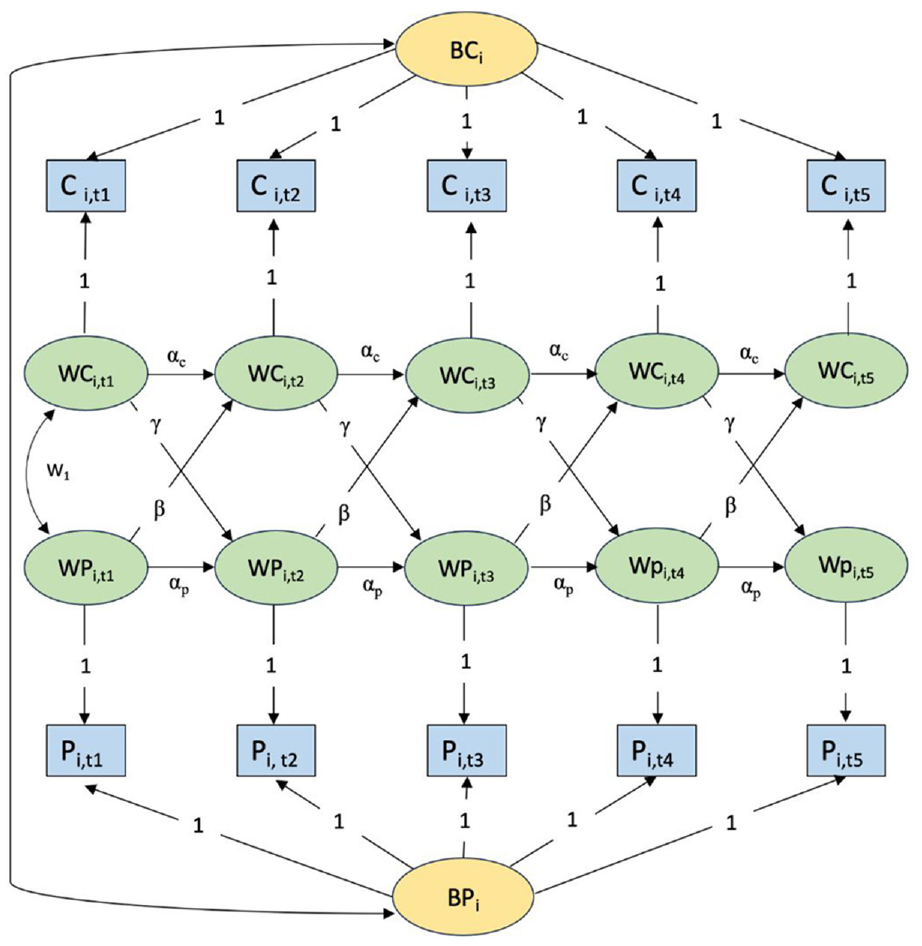
Graphical Representation of the RI-CLPM for Contact Frequency and Prejudice (Model 1)
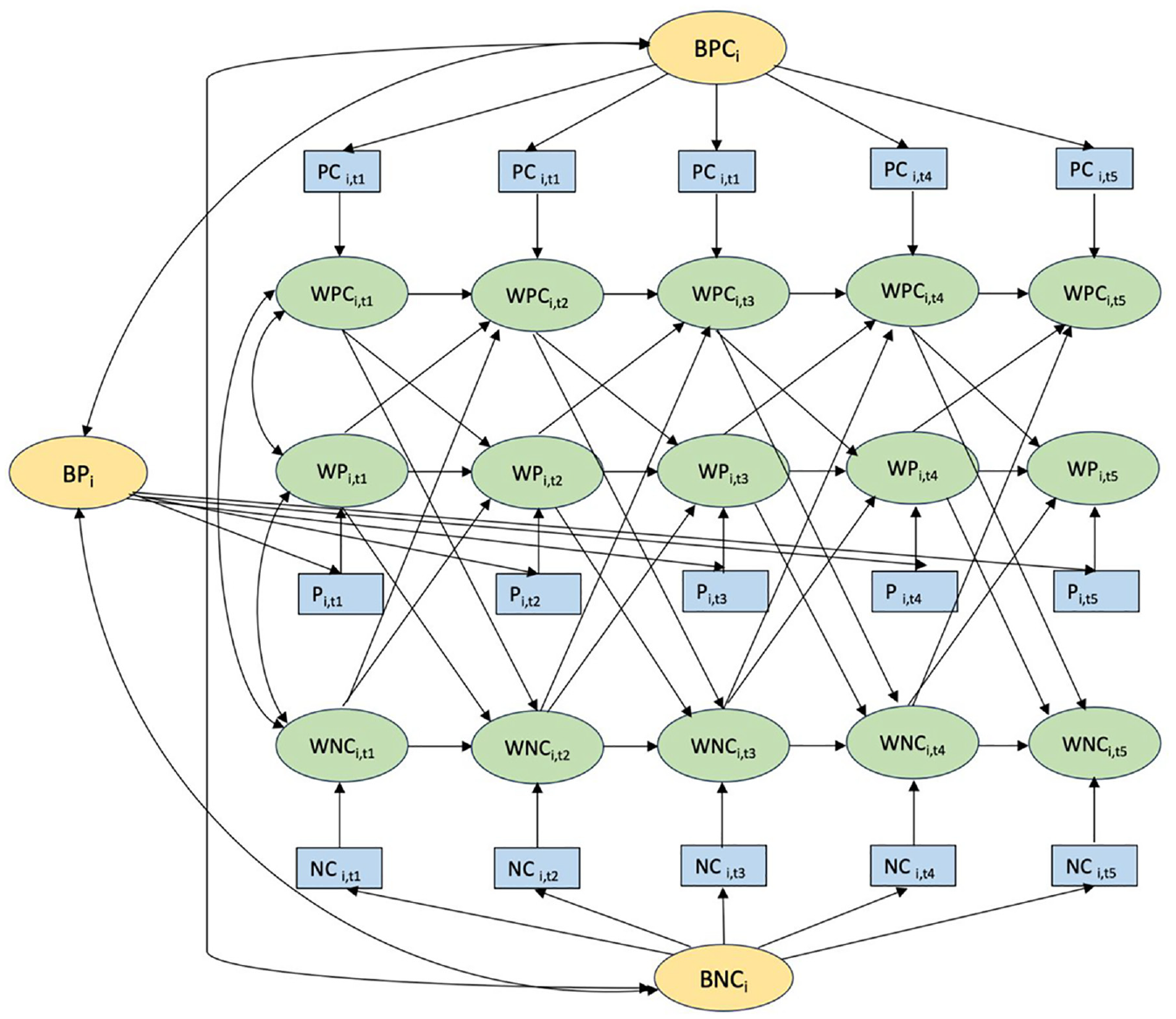
Graphical Representation of the RI-CLPM for Positive Contact Frequency, Negative Contact Frequency, and Prejudice (Model 2)
Method
Participants
In each study, we aimed to recruit 1000 participants via the online platform Prolific. Target sample size was determined by field norms and financial constraints and was preregistered. Participation was limited to White-British people using Prolific’s in-built screening tools.
Study 1
At Time 1, 1002 participants completed the survey (499 men, 494 women; 6 participants reported their gender as non-binary and 3 as “other”), aged between 18 and 85 (M = 43.31, SD = 13.77). All participants who completed the Time 1 survey were invited to complete four follow-up surveys, totaling five measurement time points across 5 days. Participants were contacted each afternoon (4:30 p.m.) and had until the following morning (9:00 a.m.) to complete the survey. Two participants who reported they were not British were excluded. The final sample sizes were NT1 = 1,000, NT2 = 930 (93% of NT1), NT3 = 936 (94% of the NT1), NT4 = 921 (92% of the NT1), and NT5 = 889 (89% of the NT1).
Study 2
At Time 1, 999 participants completed the survey (496 men, 493 women; 4 people reported their gender as non-binary and 2 as “other”), aged between 18 and 88 (M = 41.68, SD = 13.25). These participants were invited to complete surveys on the following four Fridays (at 12:00 noon) and had 1 day (until Saturday at 4:00 p.m.) to complete the survey, totaling five measurements across 5 weeks. Two participants were excluded who were not British and another two with identical Prolific ID numbers suggesting that they were the same person. The final sample sizes were NT1 = 995, NT2 = 861 (87% of NT1), NT3 = 875 (88% of NT1) NT4 = 846 (85% of NT1), and NT5 = 881 (89% of NT1).
Study 3
At Time 1, 1,002 participants completed the survey (500 men, 496 women; 4 reported their gender as non-binary), aged between 18 and 81 (M = 41.78, SD = 13.01). Participants were invited to complete four more surveys, one each consecutive month. For all five waves, participants were contacted on the first Wednesday of each month and had 3 days to complete the survey. Two participants were excluded who reported not being British. The final sample sizes were NT1 = 1,000, NT2 = 918 (92% of NT1), NT3 = 879 (88% of NT1) NT4 = 860 (86% of NT1), and NT5 = 857 (86% of NT1).
Measures
The same measures were used across studies, with the wording adapted in the contact and cognitive flexibility measures to reflect the respective time intervals between consecutive surveys. Reliability coefficients for all multiscale items and tests for measurement invariance are presented in Supplementary Table 2.
Intergroup Contact
Overall intergroup contact frequency was measured with one item: “Over the last day (24 hr)/week/month how many interactions have you had with people who are ethnic minorities?” (0 = none, 1 = 1, . . .10 = 10 or more). If participants reported one or more interaction, they were asked how many had been positive/good and how many had been negative/bad in the respective time period (on a scale from 0 to 10 or more). In this way, we assessed the frequency of positive and negative intergroup contact over days/weeks/months.
Prejudice
Participants responded to a feeling thermometer—a single-item measure to capture global affective evaluations of a specific target group. Participants indicated their feelings toward ethnic minorities on a scale, from colder/less favorable feelings (0) to warmer/more favorable (100) feelings. This was reverse-coded, so higher values represented higher prejudice.
Cognitive Flexibility
Participants responded to the following statements about their thoughts and behavior over the last day/week/month on a scale from 1 (never) to 5 (always): “I looked at situations from different viewpoints”; “When I encountered difficult situations I stopped and tried to think of several ways to resolve them”; “I considered multiple options before making decisions”; and “I tried to think about things from another person’s point of view” (Dennis & Vander Wal, 2010).
Individual Differences
In Time 1, participants provided demographic information (age, gender, education level, and political orientation) and completed the Big Five Inventory-2 (BFI-2) personality measure (Soto & John 2017); and measures for Social Dominance Orientation (SDO; Pratto et al., 2013) and Right-Wing Authoritarianism (RWA; Altemeyer, 1996; Duckitt et al., 2010).
Results
Descriptive statistics and correlations among variables for each study are reported in Supplementary Tables. All model fit indices are presented in Table 1. Parameter estimates for the associations between individual differences and between-person differences in contact/cognitive flexibility are presented in Tables S15 and S16, respectively.
Robust Model Fit Indices for RI-CLPMs
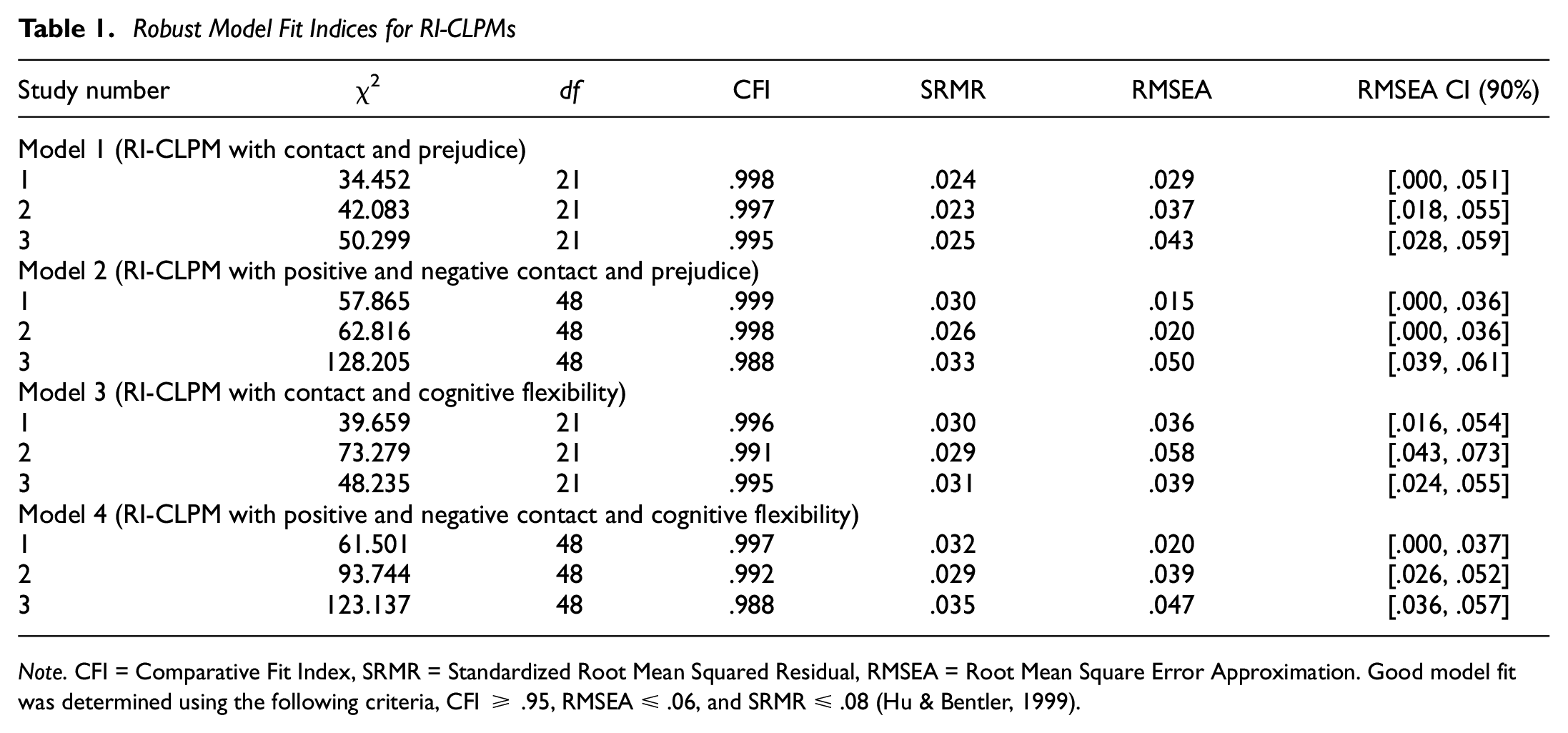
Note. CFI = Comparative Fit Index, SRMR = Standardized Root Mean Squared Residual, RMSEA = Root Mean Square Error Approximation. Good model fit was determined using the following criteria, CFI ≥ .95, RMSEA ≤ .06, and SRMR ≤ .08 (Hu & Bentler, 1999).
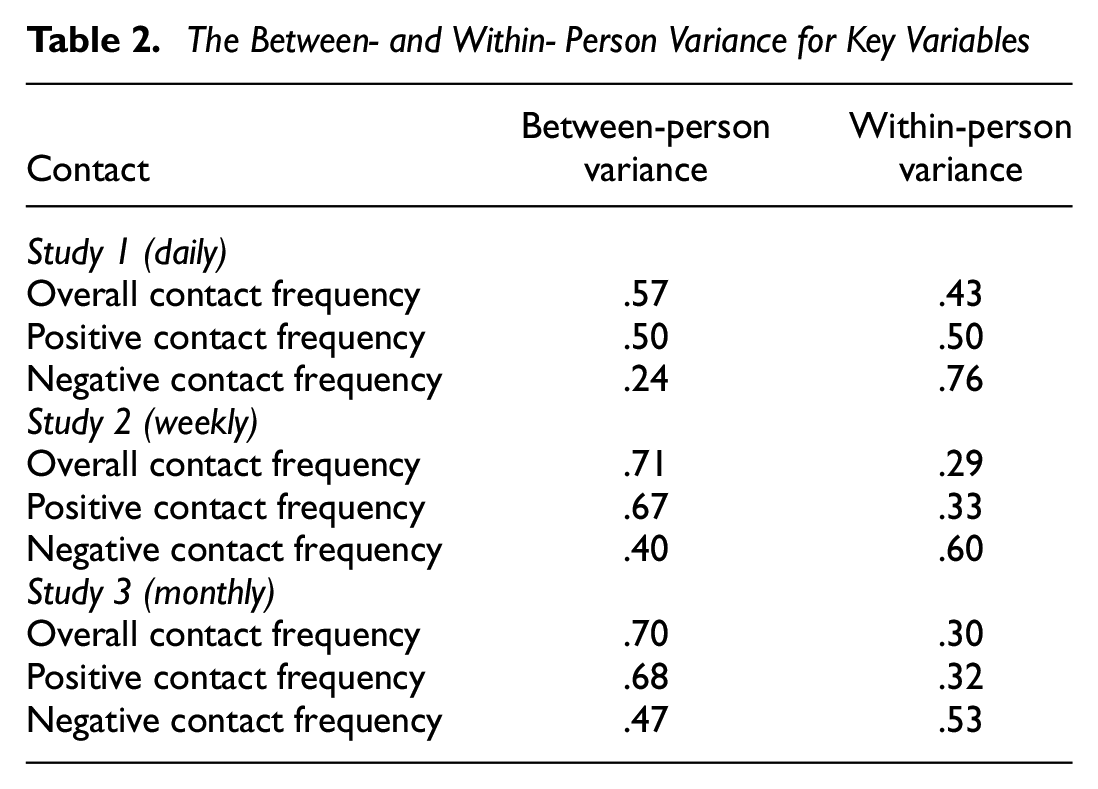
To gain a sense of the variability of contact, we calculated the intra-class correlation (ICC), decomposing total variance into between- and within-person components (Friehs et al., 2024) (see Table 2). Overall contact and positive contact generally showed greater between-person than within-person variance, whereas negative contact varied more within-people. Contact also varied more within-people on a daily basis, compared with weekly or monthly. Although contact was generally more stable, there was still considerable within-person variance to warrant the use of the RI-CLPM.
The Between- and Within- Person Variance for Key Variables
Model 1: RI-CLPM for Intergroup Contact Frequency and Prejudice
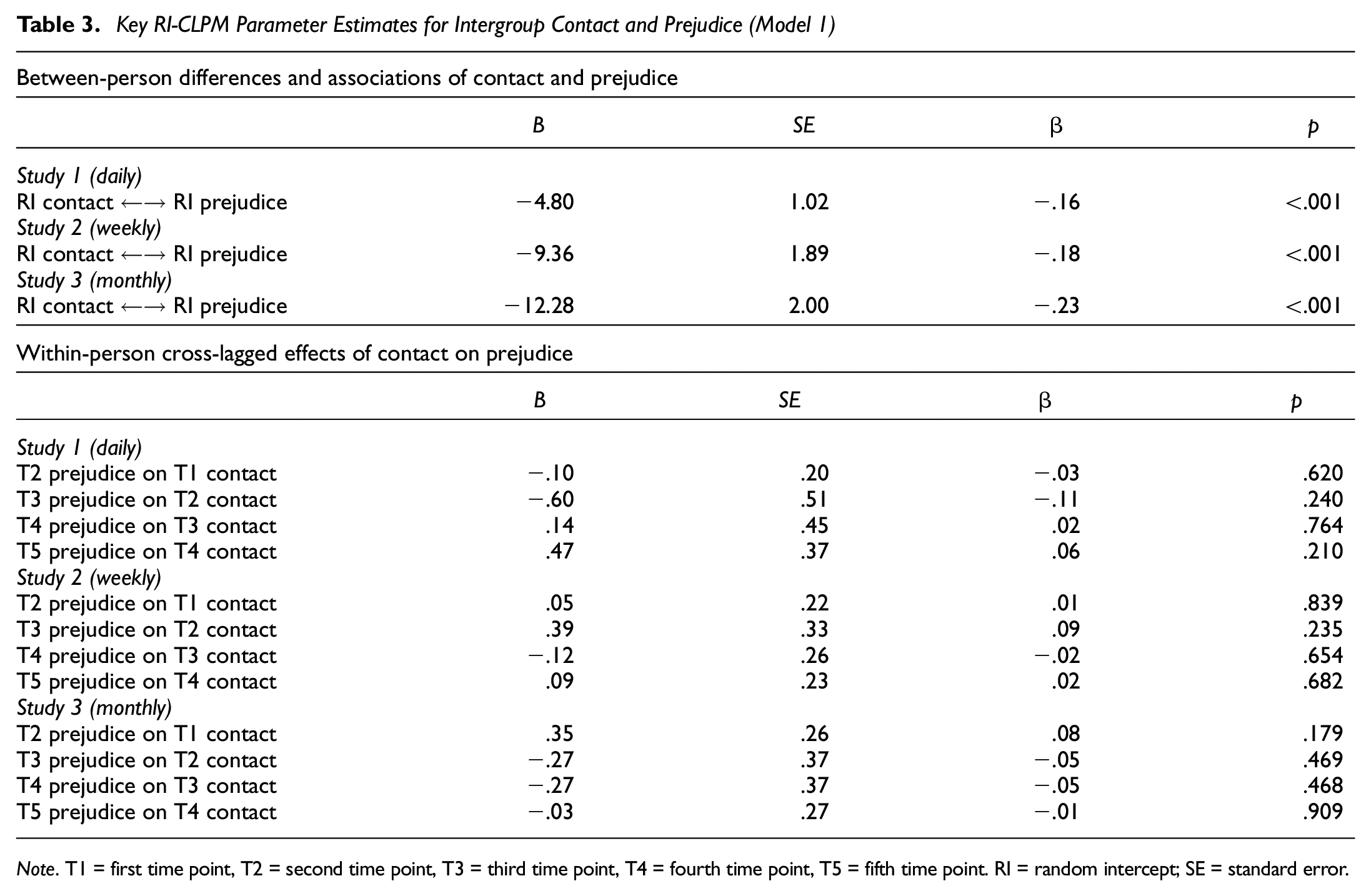
The first RI-CLPM examined the relationship between overall contact frequency and prejudice at intervals of 1 day (Study 1), week (Study 2), or month (Study 3). Between-person estimates and within-person cross-lagged effects of contact on prejudice are displayed in Table 3; full parameter estimates for Model 1, including auto-regressive effects, covariances, and reverse cross-lagged effects are presented in Supplementary Tables S3 to S5.
Key RI-CLPM Parameter Estimates for Intergroup Contact and Prejudice (Model 1)
Note. T1 = first time point, T2 = second time point, T3 = third time point, T4 = fourth time point, T5 = fifth time point. RI = random intercept; SE = standard error.
In all studies, there was a significant negative covariance between contact and prejudice, reflecting that those who had more contact also had less prejudice (correlation rmean = −.19). At the within-person level, there were no significant cross-lagged effects, meaning that fluctuations from participants’ usual level of contact were not followed by fluctuations from their usual level of prejudice, regardless of the time-lag.
Model 2: RI-CLPM for Positive and Negative Intergroup Contact and Prejudice
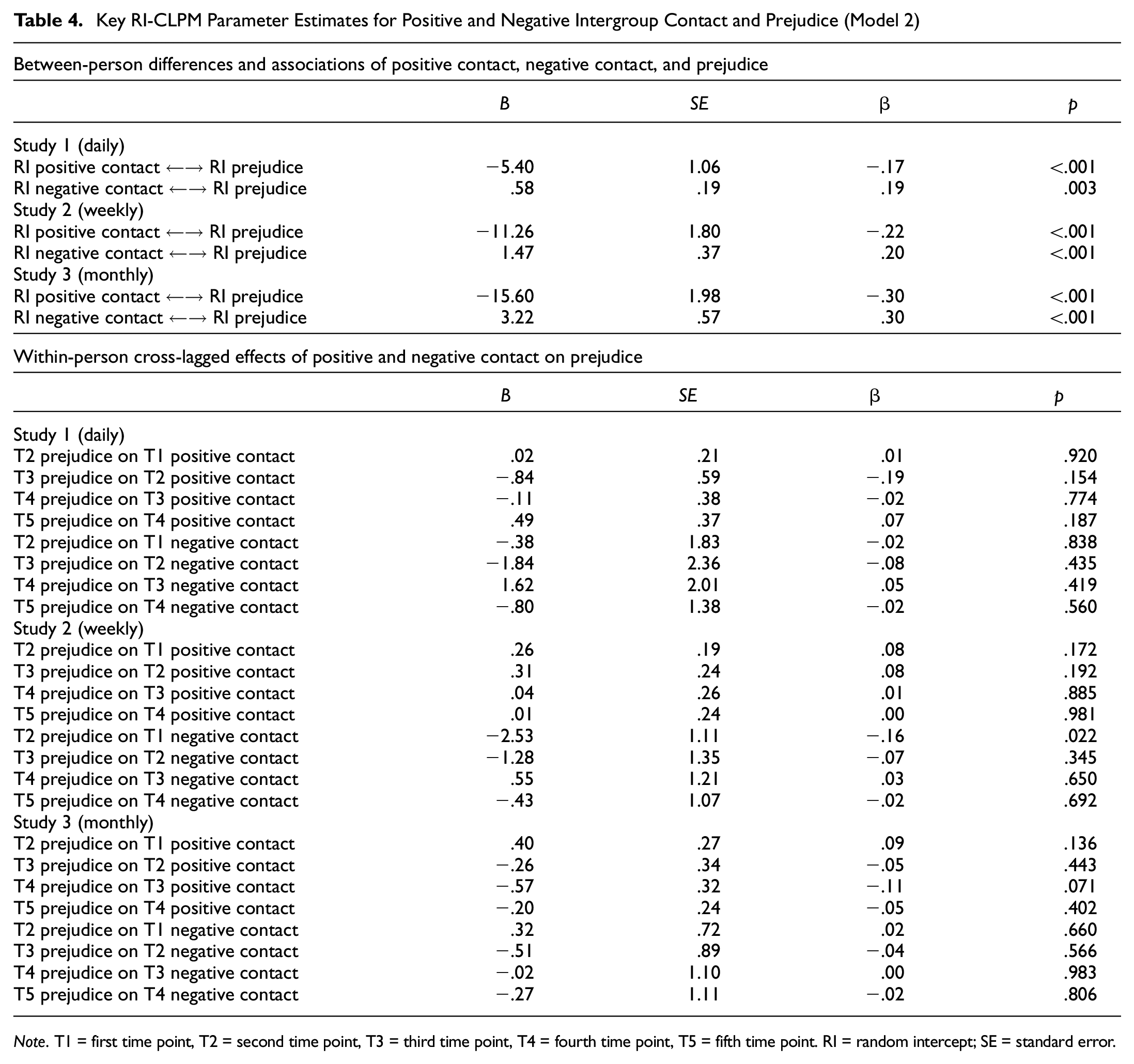
Although we found no cross-lagged within-person effects of overall contact frequency on prejudice, examining positive and negative contact frequency separately might reveal a different story. Positive contact may be particularly beneficial for reducing prejudice. At the same time, fluctuations in negative contact may have an even stronger effect than those of positive contact (Paolini et al., 2024). To explore separately the impact of positive and negative contact frequency, we tested trivariate RI-CLPMs, including positive and negative contact as simultaneous predictors. Between-person estimates and within-person cross-lagged effects of positive and negative contact on prejudice are displayed in Table 4, with full parameter estimates for Model 2 in Supplementary Tables S6 to S8.
Key RI-CLPM Parameter Estimates for Positive and Negative Intergroup Contact and Prejudice (Model 2)
Note. T1 = first time point, T2 = second time point, T3 = third time point, T4 = fourth time point, T5 = fifth time point. RI = random intercept; SE = standard error.
Across all studies, we found significant between-person associations, reflecting that people who experienced more positive contact expressed less prejudice (rmean = −.23), and correspondingly, those who consistently experienced more negative contact expressed more prejudice (rmean = .23). At the within-person level, there were no cross-lagged effects, except in Study 2, where negative contact at week 1 predicted prejudice at week 2. However, we are reluctant to interpret this singular effect, considering that 24 cross-lagged effects with positive or negative contact predicting prejudice were tested altogether. In sum, we found no robust pattern of within-person change, at intervals of 1 day, week, or month, following changes in positive or negative contact.
Model 3: RI-CLPM for Intergroup Contact Frequency and Cognitive Flexibility
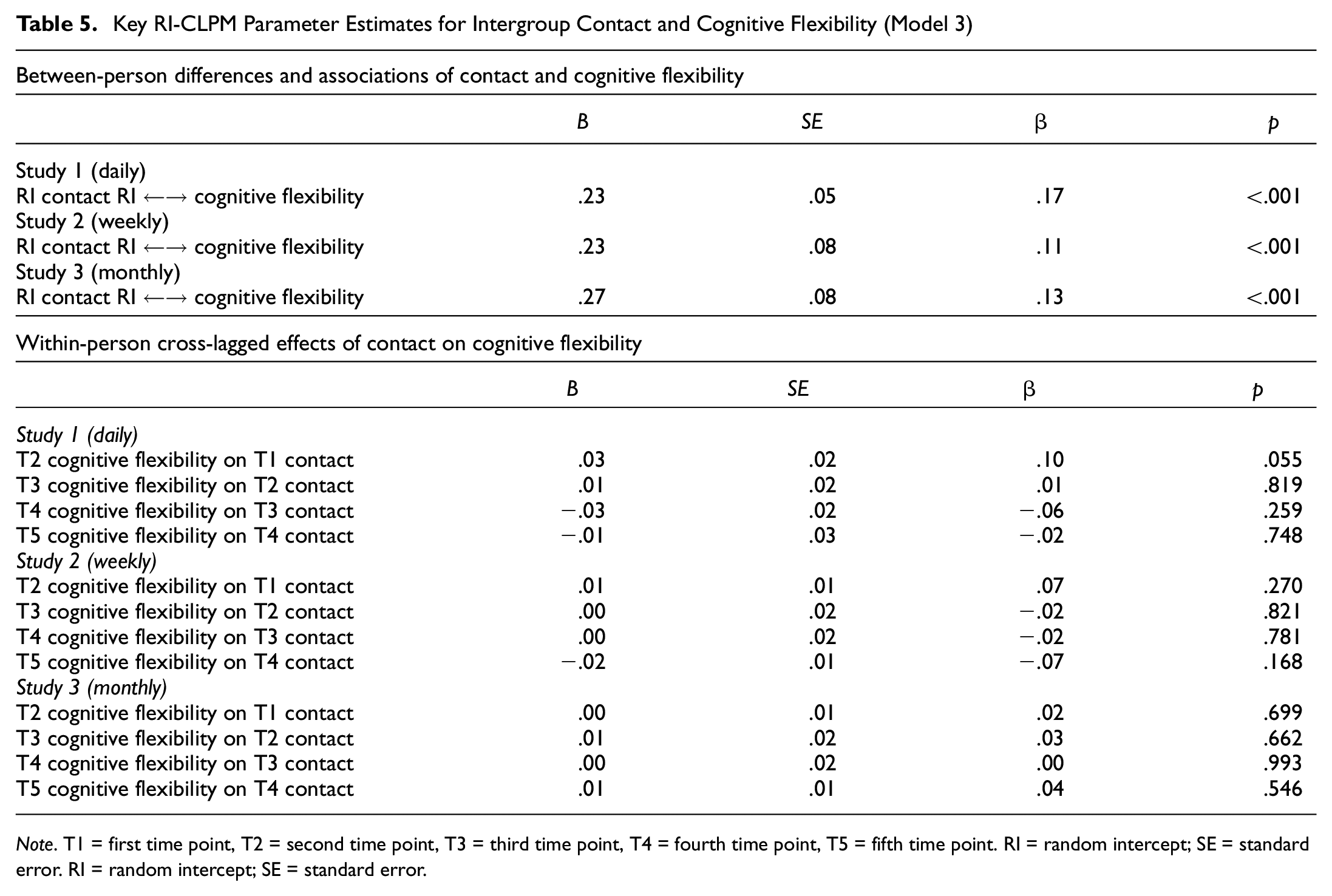
The next RI-CLPM tested whether changes in contact frequency predicted shifts in cognitive flexibility, if not prejudice. Between-person estimates and within-person cross-lagged effects of contact on cognitive flexibility are displayed in Table 5. Full parameter estimates for Model 3 are presented in Supplementary Tables S9 to S11.
Key RI-CLPM Parameter Estimates for Intergroup Contact and Cognitive Flexibility (Model 3)
Note. T1 = first time point, T2 = second time point, T3 = third time point, T4 = fourth time point, T5 = fifth time point. RI = random intercept; SE = standard error. RI = random intercept; SE = standard error.
In all studies, there was a significant between-person association between contact and cognitive flexibility indicating that people who generally have more intergroup contact are more cognitively flexible (rmean = .14). However, there were no cross-lagged effects showing changes in cognitive flexibility following contact. At lags of 1 day, week, or month, naturally occurring variations in contact did not induce change in cognitive flexibility within-people.
Model 4: RI-CLPM Contact Valence and Cognitive Flexibility
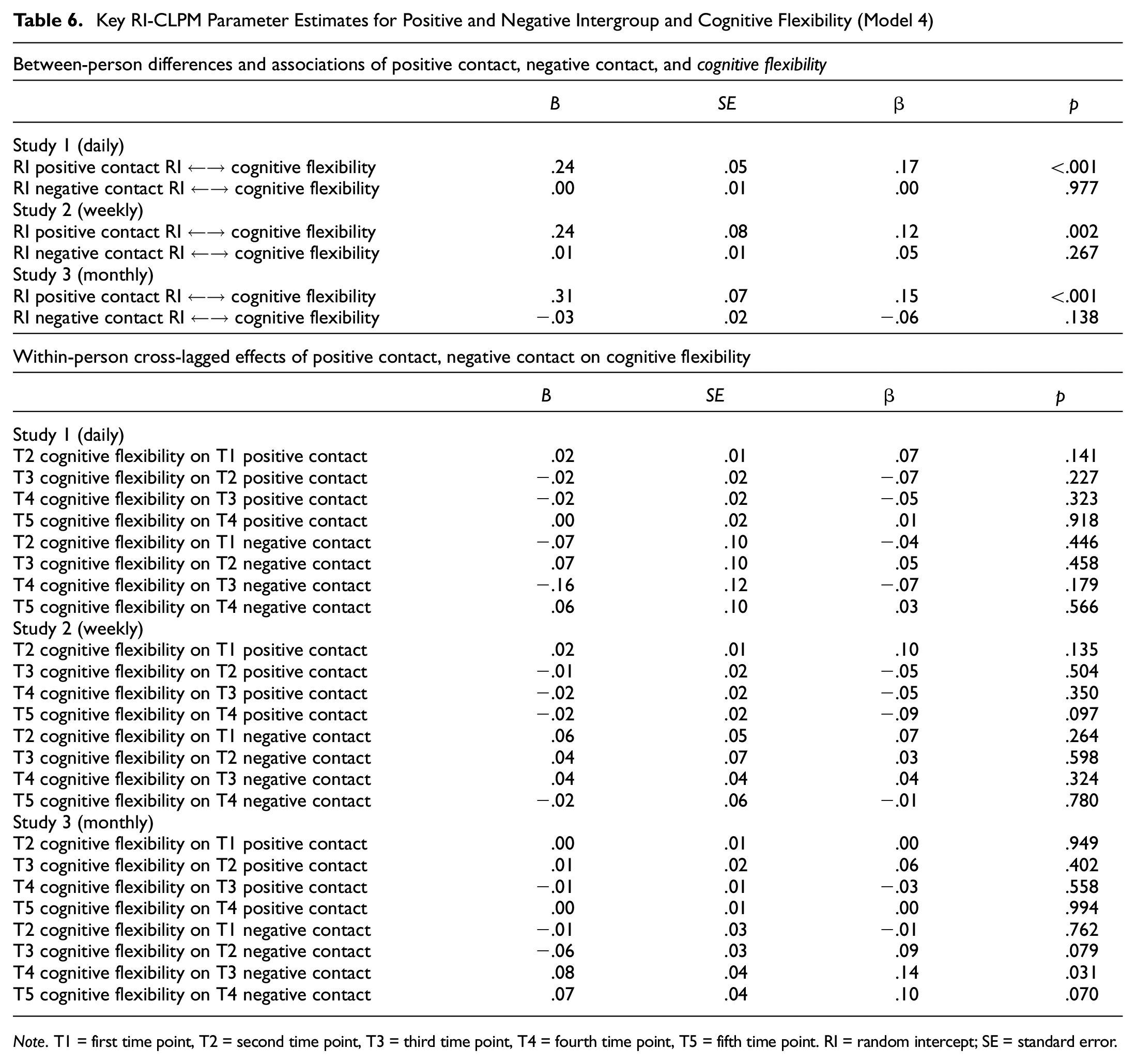
The fourth RI-CLPM examined the association between both positive and negative contact frequency and cognitive flexibility. Between-person estimates and within-person cross-lagged effects of contact on cognitive flexibility are displayed in Table 6, with full parameter estimates for Model 4 in Supplementary Tables S12 to S14.
Key RI-CLPM Parameter Estimates for Positive and Negative Intergroup and Cognitive Flexibility (Model 4)
Note. T1 = first time point, T2 = second time point, T3 = third time point, T4 = fourth time point, T5 = fifth time point. RI = random intercept; SE = standard error.
Across all three studies, those who generally reported more positive contact were also more cognitively flexible in general (rmean = .15). There were no corresponding associations in any of the studies between the random intercepts of negative contact and cognitive flexibility (rmean = .00). At the within-person level, there were no cross-lagged effects, except in Study 3, where there was an effect of negative contact at Month 3 on cognitive flexibility at Month 4. We refrained from interpreting this as meaningful as it was a singular finding. In summary, we did not find robust evidence of within-person changes in positive or negative contact predicting changes in cognitive flexibility.
General Discussion
The present research investigated whether within-person fluctuations in ordinary contact encounters with ethnic minorities were tracked by fluctuations in prejudice over intervals of single days, weeks, and months, in three 5-wave studies. We used up-to-date statistical modeling to parse stable between-person differences and within-person dynamics to capture fluctuations. Across all our studies, we found consistent between-person associations, such that those who reported having more contact also expressed less prejudice. This is in line with an abundance of work demonstrating a robust relationship between intergroup contact and reduced prejudice (Pettigrew & Tropp, 2006). However, we did not find effects that suggest that contact has a causal role in changing prejudice in thin-slices of ordinary life. Specifically, fluctuations in overall contact, positive contact, or negative contact were not followed by corresponding changes in prejudice in any measurement waves across studies, except for one instance (out of 12) where prejudice increased following an increase in negative contact.
This research also sought to provide a test of the relationship between contact and cognitive flexibility (the cognitive liberalization hypothesis, Hodson et al., 2018). We found that those who had more intergroup contact thought more flexibly; however, there was no consistent evidence of within-person changes in cognitive flexibility following contact changes, suggesting that cognitive flexibility is also resilient to ordinary contact fluctuations. However, we note that these studies did not measure the optimal conditions needed to observe cognitive liberalization [i.e., contact with multiple groups that challenge existing stereotypes and under conditions that motivate openness to experience (Crisp & Turner, 2011; Meleady et al., 2019)]. We also used a self-report measure of cognitive flexibility rather than performance-based measures. As such, these studies reinforce the need to test for cognitive liberalization under the identified optimal conditions.
What Does This Mean for the Future of Intergroup Contact Theory?
Although naturally occurring fluctuations in ordinary contact do not appear to predict corresponding fluctuations in prejudice within thin-slices of time, we caution against disqualifying contact as an avenue for improving intergroup relations. We liken our approach to studying several layers of an ice core to understand a time period in climate history. It provides valuable insights into a specific period, but will not reveal the full picture. Indeed, we suggest there are three distinct routes through which different types of contact could have a causal effect on prejudice, of which “thin-slice” fluctuations are but one. Figures 1 and 2 provides a conceptual framework illustrating three possible routes through which we suggest the causal relationship between contact and prejudice may be observed: Cumulative, Major, and Thin-Slice. Thus, even if contact fluctuations in everyday life do not have a detectable effect on intergroup attitudes a day, week, month, or even a year later, major contact events or accumulated contact experiences could still be impactful (see Figure 3).
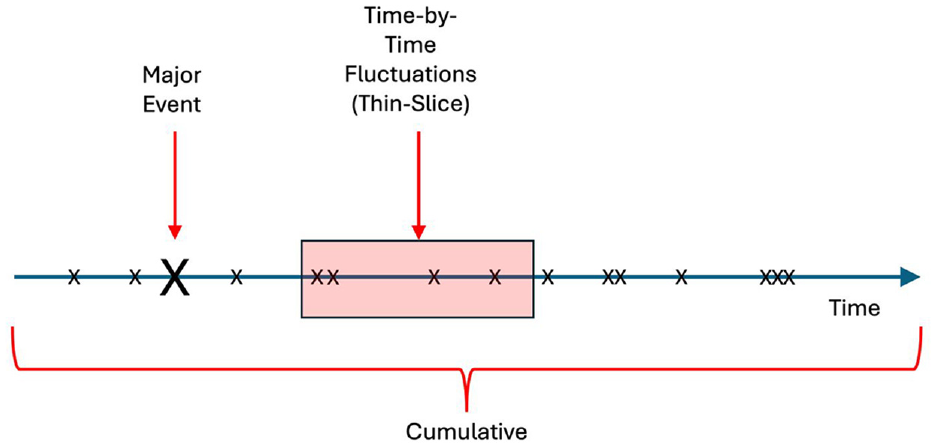
Conceptual Figure of Three Ways That Contact Might Influence Prejudice
With regard to major events, prejudice may be largely stable and shift only in response to particularly salient contact experiences. Researchers have typically assumed a degree of stability in attitudes (Eagly & Chaiken, 1993; Fazio, 1995; Petty & Cacioppo, 1981), with classic theories regarding attitudes as enduring dispositions, quite resistant to external pressures (Allport, 1935; Sherif & Cantril, 1947). Nonetheless, notable, out-of-the-ordinary contact encounters might lead contact to be consequential. Like an earthquake shapes an otherwise constant landscape, these rare yet substantial contact events may have the power to shift attitudes that are typically stable. Notably, the only previous RI-CLPM study that found within-person effects following contact focused on a slice of time that included a major contact event (i.e., a mass influx of refugees). Górska and Tausch (2023) surveyed Polish adults just after the Russo-Ukrainian war began and over 1 million Ukrainians entered Poland. Increases in cross-group friendship (but not overall contact) were associated with support for collection action for Ukrainians 2 week later.
People might only experience a few major contact events in their life (e.g., moving from a rural to urban setting, studying abroad, or attending an interfaith workshop), which could easily be missed in longitudinal designs that do not specifically aim to capture their impact within the time window employed. This may explain why, unlike studies exploring within-person effects in natural settings without any intervention or expected change, intergroup contact interventions that manipulate contact have been shown to reduce prejudice in diverse settings (see meta-analyses by Lemmer & Wagner, 2015; Paluck et al., 2019). For example, field studies have found that student exchange programs abroad (Dhont et al., 2011) or having a cross-race roommate (Albuja et al., 2024) improve intergroup attitudes and behaviors.
Another possibility is that contact has a cumulative effect (Kubota et al., 2017; Paolini et al., 2015). Our consistent cross-sectional finding that people who generally have more contact express less prejudice might be reflecting a gradual causal process that occurred prior to the studies (Friehs et al., 2024). Living in a diverse neighborhood, working in a diverse setting, or cross-group friendship and romances might all affect prejudice, but the effects of repeated outgroup interactions might accrue over long, often unspecified time periods. Such effects could be likened to physical strength training. Change is gradual—it will not usually be apparent after one or a few training sessions. In fact, muscles sometimes feel weaker immediately after training. However, with repeated and consistent training over time, muscles inevitably strengthen. Similarly, the effects of each ordinary contact encounter are likely very small (and sometimes might even be negative), but over time, these effects may build and cumulatively reduce prejudice. This gradual process would be very hard to pick up in relatively thin-slices of time typical of many longitudinal contact studies. It has indeed been proposed that contact has an asymptotic relationship with intergroup outcomes (MacInnis & Page-Gould, 2015; see also MacInnis & Hodson, 2019). Initial encounters with an unfamiliar outgroup may have potent (yet highly variable) effects on prejudice, followed by more reliable positive effects as contact experiences accumulate, before effects later stabilize. Accounting for these possibilities, which entail slow, long-term, and potentially non-linear and variable effects, would require different study designs. Contact experiences may also be particularly impactful during specific periods across the lifespan, such as in childhood, after which attitudes and ways of thinking may be more stable and difficult to change (Brauer, 2024; Crocetti et al., 2021; Dovidio et al., 2017; Henry & Sears, 2009; Merrilees et al., 2023). Measuring contact during the most formative years may be essential for identifying contact’s causal role.
As well as elucidating this broad framework for identifying different ways that contact might shape prejudice, our research suggests other important avenues for future work. First, researchers should more closely examine the characteristics of the contact being experienced. Although our work made a distinction between positive and negative contact, it may be that specific types of contact that more closely meet Allport’s optimal conditions (i.e., contact should be between groups with equal status, with common goals, include cooperation, and be institutionally supported) are necessary for, or would facilitate, prejudice reduction in the short- or medium-term. In addition, researchers could expand the outcome measures in terms of length and scope. We used established single-item measures for contact and prejudice, keeping our studies short and making them comparable with each other and other studies in the field. Although single-item measures for contact are not uncommon (e.g., Barlow et al., 2012) and feeling thermometers are frequently used for measuring prejudice (e.g., Maggio, 2024), they are less optimal than multi-item scales. We also focused on prejudice as the intergroup outcome, following the classic conception of the contact hypothesis (Allport, 1954; Pettigrew & Tropp, 2006). However, it is possible that variables more proximally related to contact, such as intergroup anxiety or empathy (Pettigrew & Tropp, 2008), are predicted by contact fluctuations.
Conclusion
We found no reliable evidence of within-person changes in prejudice or cognitive flexibility following fluctuations in contact frequency, including positive and negative contact frequency, across different short time intervals. Our findings, taken together with those of recent studies, suggest that when state-of-the-art methods are used to isolate within-person dynamics, evidence of change in ordinary life (e.g., in the absence of major change) is not being observed in the short- or medium-term. Rather, many of the effects seem to reflect more stable individual differences (e.g., those lower in prejudice engage in more outgroup contact). Indeed, we consistently found that those who had more intergroup contact were less prejudiced (i.e., between-person effects).
Nonetheless, we should not dismiss the causal role of contact in reducing prejudice, as the results of our studies and most of the other recent RI-CLPM studies do not speak to the effects of major contact events or accumulated contact experiences over the long-term. As the contact field moves forward, researchers should not only continue to distinguish between- and within-person effects, but also carefully consider how contact effects unfold over time, and use designs tailored to test their specific research questions. By addressing these methodological and conceptual issues, we can advance a more nuanced understanding of the dynamics between contact and intergroup attitudes.
Supplemental Material
sj-docx-1-spp-10.1177_19485506241284079 – Supplemental material for Fluctuations in Prejudice Do Not Track Fluctuations in Ordinary Contact in Three 5-Wave “Shortitudinal” Studies Examining Daily, Weekly, or Monthly Intervals
Supplemental material, sj-docx-1-spp-10.1177_19485506241284079 for Fluctuations in Prejudice Do Not Track Fluctuations in Ordinary Contact in Three 5-Wave “Shortitudinal” Studies Examining Daily, Weekly, or Monthly Intervals by Deborah Shulman, Rose Meleady, Gordon Hodson and Richard J. Crisp in Social Psychological and Personality Science
Footnotes
Handling Editor: Adam Hahn
Declaration of Conflicting Interests
The author(s) declared no potential conflicts of interest with respect to the research, authorship, and/or publication of this article.
Funding
The author(s) disclosed receipt of the following financial support for the research, authorship, and/or publication of this article: Financial support was provided by the Leverhulme Trust (R209595).

Supplemental Material
Supplemental material is available in the online version of the article.
Author Biographies
References
Supplementary Material
Please find the following supplemental material available below.
For Open Access articles published under a Creative Commons License, all supplemental material carries the same license as the article it is associated with.
For non-Open Access articles published, all supplemental material carries a non-exclusive license, and permission requests for re-use of supplemental material or any part of supplemental material shall be sent directly to the copyright owner as specified in the copyright notice associated with the article.
