



Abstract
Parenthood is often assumed to profoundly impact well-being. Yet, few studies have explored how the transition to parenthood relates to parent’s family-life satisfaction, and existing research has produced conflicting results. We propose that expected costs and rewards of having children (individual differences in the perceived value of children in one’s life) could explain the mixed findings. Following respondents in a nationally representative panel study from Germany up to 11 years (N total = 6,850, N parents = 1,196), we found that positive expectations (i.e., higher reward/lower cost) were associated with a higher likelihood of parenthood. Among parents, negative expectations were associated with lower family-life satisfaction as measured by parenting pleasure and family satisfaction; however, expectations did not predict the trajectory post birth. This study underlines the role of expectations about being a parent for the transition to parenthood and for family-life satisfaction once a parent.
When faced with the decision to have children, people often consider how parenthood will affect their life. Will I still be able to afford my lifestyle? Will I feel younger with my child? These cost and reward expectations of what children might bring are referred to as the Value of Children (VOC; Hoffman & Hoffman, 1973). Consistent with rational choice theory (Hechter & Kanazawa, 1997), the VOC framework posits that the expected psychological VOC predicts whether an individual pursues parenthood. In cross-sectional studies, individual differences in VOC measured after the transition have been associated with the desire to have more children (Mayer & Trommsdorff, 2010) and with larger family size (Nauck, 2007). Yet, empirical evidence on whether VOC expectation is associated with the parenthood transition, that is, the likelihood of becoming a parent, is scant (for one exception, see Liefbroer, 2005).
Beyond influencing the parenthood transition, expectations can also affect parents’ well-being during this transition, such as shaping satisfaction with childbirth (Preis et al., 2019) or relationship satisfaction (Mitnick et al., 2022). Existing research on parents’ well-being during the transition has focused on parents’ general life satisfaction (e.g., Pollmann-Schult, 2014), or on the couple’s relationship, such as relationship- or marital satisfaction (Mitnick et al., 2009; Twenge et al., 2003). In this research, we focus explicitly on family-life satisfaction, a domain most directly shaped by the arrival of a new family member. Furthermore, as childbirth is sometimes considered a “family-forming event,” family-life satisfaction might become more salient during this transition and shape the evaluation of other aspects of well-being (Krämer & Rodgers, 2020). Finally, in contrast to the narrower construct of relationship- or marital satisfaction, the focus on family-life satisfaction allows us to additionally incorporate the subjective experience of being a parent. Thus, we aim to investigate whether VOC expectations not only influence the parenthood transition but also parents’ family-life satisfaction.
VOC and the Parenthood Transition
The VOC framework (Hoffman & Hoffman, 1973) proposes that the expected psychological VOC affects one’s desire to have children and, in turn, the parenthood transition. Some studies have connected positive child-value expectations (higher reward/lower cost) with a stronger desire for and intention to have children (Beckman et al., 1983; Miller & Pasta, 1993) and higher fertility outcomes (Nauck, 2007). However, these studies relied on cross-sectional retrospective data that measured VOC after family planning was completed. Yet, people’s child-value belief can change as a result of having children, through learning from experiences and adjusting expectations (e.g., Lazarus & Rossouw, 2015). Only by measuring child-value expectations prior to the parenthood transition can we assess the role these expectations might play in determining whether the transition will take place. To our knowledge, only one existing study by Liefbroer (2005) has taken this approach of using prenatal VOC measures. Using a five-wave panel survey of Dutch young adults spanning 13 years, Liefbroer (2005) found that VOC expectations predict the parenthood transition. Following this literature, we expect that negative child-value expectation is associated with lower likelihood of the parenthood transition (H 1 ).
Parenthood Transition and Family-Life Satisfaction
Well-being has been shown to fluctuate in response to significant life events such as the parenthood transition. A meta-analysis found a significant decrease in life satisfaction after childbirth in 113 independent prospective samples (Luhmann et al., 2013), which was later replicated in other longitudinal studies across various countries (Aassve et al., 2021; Bernardi et al., 2017; Mikucka & Rizzi, 2020; Myrskylä & Margolis, 2014). Comparatively, the literature on parenthood and well-being in the family domain is scant. Existing research in this area has primarily spotlighted the couple, focusing on marital satisfaction (e.g., Kohn et al., 2012) or relationship satisfaction (e.g., Mitnick et al., 2009). However, having a child fundamentally expands the family unit beyond the dyad, rendering it particularly important to understand individuals’ experiences that go beyond the relationship with the partner. Here, family-life satisfaction offers a broader approach to assessing parents’ satisfaction in the family domain.
Although the existing literature is limited, the relationship between family-life satisfaction and parenthood remains conflicted. While Vanassche and colleagues (2013) documented a lack of relationship between the presence of younger children in the family and parents’ family-life satisfaction, the study neither employed a prospective design nor focused on the parenthood transition. On the contrary, using longitudinal data in a sample of 114 couples, Knauth (2000) observed a decrease in family-life satisfaction between pregnancy and 4-months post-birth for both mothers and fathers, with the decrease extending up to 8-months for mothers. Over 7 years, Kramer and Rodgers (2020) tracked life and 9 different domain satisfactions and concluded that family-life satisfaction increased pre-birth and decreased after. A reason for these mixed findings might be that parenthood affects individuals differently: some individuals’ satisfaction with their family life improves, while it deteriorates for others. This study focuses on one potential source of this interindividual variability: the role of VOC expectation.
VOC Expectation and Family-Life Satisfaction
Research on expectations and parenthood often focused on how violated expectations (i.e., when reality does not match expectation) affect parents’ well-being (e.g., Lazarus & Rossouw, 2015). However, expectation by itself can also influence subjective experiences (Villiger, 2022) in a variety of life domains (Almenberg & Dreber, 2011; Peerdeman et al., 2016). Drawing from different lines of research, we formulate two opposing predictions on the association between expectations and family-life satisfaction. Although we are unable to test the precise mechanisms, the theoretical arguments presented below allow us to draw concrete hypotheses about the relationship of interest.
Negative Expectations About Children Predict Lower Family-Life Satisfaction
People are known to search for and use information to confirm their existing beliefs and expectations, a phenomenon referred to as confirmation bias (Jones & Sugden, 2001; Nickerson, 1998). Parents of young children have been found to search for and overweigh health information regarding early-childhood vaccination that confirms their existing beliefs (Meppelink et al., 2019). Extending this to the experience of parenthood, parents who held negative expectations about children will tend to search for information confirming these expectations which will result in a negative perception of their parenthood experiences and family-life satisfaction. Here, we hypothesize that higher costs/lower rewards expectations predict lower family-life satisfaction (H 2a ).
Negative Expectations About Children Predicts Higher Family-Life Satisfaction
Cognitive dissonance theory posits that psychological discomfort occurs when one’s behavior is misaligned with one’s values or beliefs (Festinger, 1962; Harmon-Jones & Harmon-Jones, 2007). To reduce dissonance, one can change their behavior to opt out of the high-cost event. However, opting out of parenthood is not (really) an option as “[…] once the child arrives, there is no recourse to a resale market nor to a local humane society” (Turchi, 1975, p. 44). In this case, other dissonance reduction methods such as postdecision attitude change can be used (Annu & Dhanda, 2020). Specifically, to make the overall net VOC more positive and in line with their already-made decision of having children, parents might evaluate their parenting experiences as more pleasurable (Eibach & Mock, 2011). Following this literature, we hypothesize that higher costs/lower rewards expectations predict higher family-life satisfaction (H 2b ).
The Current Study
This study aimed to examine whether costs and rewards expectations about children are associated with parenthood outcomes. We examined whether positive VOC expectations predict a higher likelihood of parenthood transition (H 1 ) and whether VOC expectations negatively (H 2a ) or positively (H 2b ) predict family-life satisfaction in parents.
Methods
Dataset
We used data from the Panel Analysis of Intimate Relationships and Family Dynamics (pairfam), release 12.0 (Brüderl et al., 2021), launched in Germany in 2008. Detailed description of the study can be found in Huinink et al.’s study (2011). Data were collected annually from a nationwide random sample of more than 12,000 individuals (referred to as “anchors”) of three birth cohorts 1971–73, 1981–83, and 1991–93. We used anchor data from waves 1 to 11.
Participants
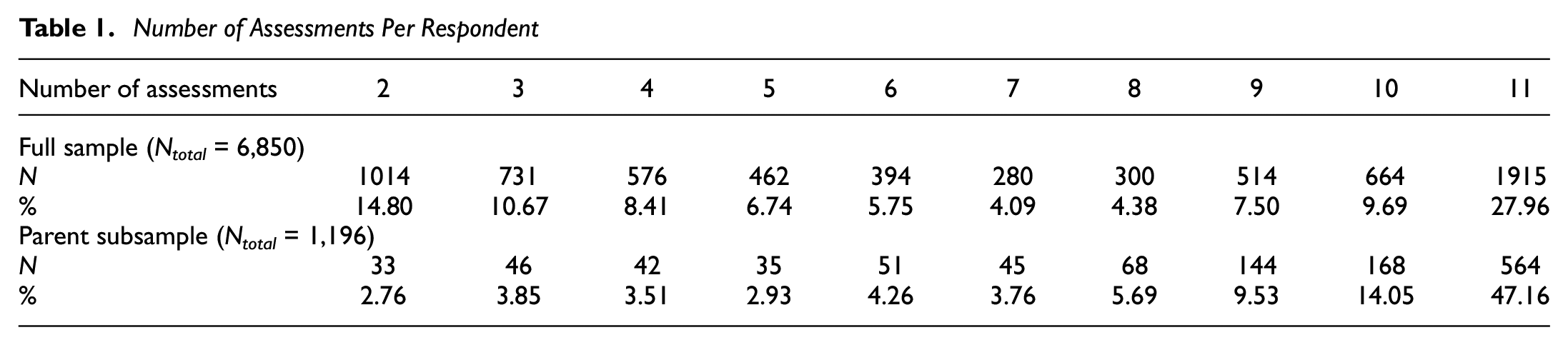
We selected respondents who had at least 2 assessment waves available, had no biological children at the first assessment, and completed the VOC scale at least once during the observation period (i.e., prior to parenthood transition for parents, or prior to drop-out or censoring at wave 11 for nonparents). For RQ1, we used the full sample (i.e., parents and nonparents), totalling 6,850 respondents of whom 1,196 made the parenthood transition during the observation period. For RQ2, we used the parent subsample. Table 1 summarizes the available number of assessments per respondent in the full- and parent subsample.
Number of Assessments Per Respondent
Measures
VOC
VOC expectations were measured using the VOC scale developed for the pairfam study. The 10-item scale consists of 2 subscales: VOC reward (e.g., “How strongly do you expect that with children you will stay young longer?”), and VOC cost (e.g., “How strongly do you worry that you will be able to afford less with children?”). Respondents answered the items on a 5-point scale from 1 (Not at all) to 5 (Very strongly). Items were presented in waves 1, 2, 4, 6, 8, and 10. The scale validity was independently validated in prior studies (Fitzner et al., 2007). The average Cronbach’s alpha was .80 for VOC cost and .66 for VOC reward. 1 We computed mean scores for each subscale to obtain a VOC cost and a VOC reward score for each participant at each assessment year.
Because we were interested in the effect of expectations, we used respondents’ most recently available VOC measures that were at least 2 years prior to the transition as our predictors for parents. The 2 years cut-off ensured that the measure captured the prospective parents’ expectations prior to the decision of having a child, as 92% of German couples had a successful pregnancy within 1 year of trying (Gnoth et al., 2003). For nonparents, the most recently available measures prior to drop-out or censoring were used.
Parenthood Transition
Parenthood was identified using the self-reported number of biological children born at the time of the assessment. Respondents who did not have biological children at the first assessment and had at least one biological child during the observation period were identified as having transitioned into parenthood, and the respective year was coded as the transition year. 2 For parents, observations from 2 years prior to the parenthood transition onward were included in the analysis, excluding observations after subsequent transitions (i.e., second childbirth onward) in cases where those took place.
Family-Life Satisfaction
We used two indicators of family-life satisfaction: family satisfaction and parenting pleasure. Family satisfaction is more commonly used and therefore assists in comparison with existing studies, while parenting pleasure provides a more direct measure tapping into the parenting role specifically.
Family Satisfaction
Family satisfaction was measured using the Satisfaction with Different Domains of Life scale (Thönninssen et al., 2021), with one item: “How satisfied are you with the following domains of your life?—Family.” Respondents answered the items on a 11-point scale from 0 (Very dissatisfied) to 10 (Very satisfied). This item was presented in all 11 waves.
Parenting Pleasure
Respondents answered 2 items: “When I am with my child/children there is nothing else I’d rather be doing” and “I look forward to spending time with my child/children” on a 5-point scale from 1 (Not at all) to 5 (Absolutely). The scale was presented in waves 2, 4, 6, 8, 9, 10, and 11 to parents with children younger than 16. 3 Mean score for the scale was computed for each participant at each assessment wave. The average correlation between the two items was 0.48 (ranging from 0.41 to 0.50).
Covariates
We accounted for respondents’ age (linear & quadratic), sex (0 = Male, 1 = Female), partners status (0 = No partner, 1 = With partner), (natural log of) net monthly household income, education (no degree, vocational degree, university degree, currently enrolled), and employment status (employed, unemployed, unemployed-student, unemployed-other) as they are potential factors influencing both family-life satisfaction (Diener et al., 2018) and VOC (Hoffman et al., 1978). Covariates were taken in the same year as VOC expectations.
Analytic Strategy
To investigate the effect of VOC expectations on the parenthood transition, we employed logistic regression with cost and reward expectations as independent variables and parenthood as the dependent variable.
To investigate parents’ family-life satisfaction, we explored two main outcomes: satisfaction at the transition year, and satisfaction trajectory post-birth. We did not have a prediction regarding whether VOC expectations will only have short-term or also long-term effect. Testing both allowed a more thorough exploration of the role of VOC expectations.
Satisfaction at the Transition Year
To examine the effect of VOC expectations on family-life satisfaction at the transition year, we used multiple linear regression with cost and reward expectations as independent variables, and parenting pleasure and family satisfaction measured at the transition year as dependent variables. For family satisfaction, in addition to the aforementioned covariates, we also included baseline family satisfaction (measured at the first assessment) and the number of years between the first assessment and the transition year as additional covariates.
Satisfaction Trajectory After the Transition
Parenting Pleasure
To investigate the effect of VOC expectations on parenting pleasure trajectory post birth, we employed multilevel modeling to account for the nested structure of the data with cost and reward expectations and time (0 at transition year, negative for the years before, positive for the years after) as independent variables, and parenting pleasure as dependent variable. We included random intercept of individuals and random slope of time.
Family Satisfaction
To examine the effect of VOC expectations on family satisfaction trajectory post birth and the baseline shift in average family satisfaction, we employed discontinuous change models (Singer & Willett, 2003) with cost and reward expectations as independent variables, and family satisfaction as dependent variable. The model also included the following time indicators:
Baseline shift: values of 0 for the years before transition and values of 1 in the years after. This coefficient reflects a baseline shift in family satisfaction post birth (i.e., difference in family satisfaction during the 2 years before transition versus all the years after the transition).
Time slope: values of 0 for the years before the transition and increasing for the years after. This coefficient reflects the linear change in family satisfaction following the transition.
We included random slopes of the baseline shift and time slope, and random intercept of individuals to account for individual differences in the estimates. In addition, interactions between VOC expectations and the baseline shift and time slope were tested.
Each model was specified with (a) only VOC cost, (b) only VOC reward, and (c) with both VOC cost and reward as predictors, and with and without covariates. For brevity, only the results from models with both VOC costs and VOC rewards as predictors are reported below. Model specifications yielded similar results unless stated otherwise, and details are included in the Supplementary Online Material.
The study materials and the data can be found at https://www.pairfam.de/en/. The study was preregistered; the preregistration and analyses script can be accessed at the project’s OSF page: https://osf.io/cpn76/. Deviations from the preregistration are indicated.
Sensitivity Analysis
A sensitivity power analysis using 1,000 simulations with the simr package (Green & MacLeod, 2016) showed that the current sample gave us 80% power (α = .05) to detect a VOC main effect of at least β = 0.075 and interaction effect of at least β = 0.09 (SD change per year) with family satisfaction, and main effect of at least β = 0.084 and interaction effect of at least β = 0.027 (SD change per year) with parenting pleasure (Table S1 in SOM).
Results
Descriptive Statistics
Table 2 presents the means, standard deviations, and correlations for all respondents at the first assessment. Around 94.04% of respondents had their first assessment in wave 1, 5.59% in wave 3, and 0.36% in wave 4. The full sample consisted of 46.14% female respondents with M age = 22.02 (SD = 7.22), and M income = 2,685.45 euro (SD = 1,488.98). About 41.76% of respondents reported that they currently have a partner, 37.23% have a vocational degree or higher, and 40.89% reported to be currently employed. The parent subsample consisted of 50.75% female respondents with M age = 26.02 (SD = 5.83), and M income = 2,618.28 euro (SD = 1,357.63). Around 76.34% of parents reported that they currently have a partner, 68.70% have a vocational degree or higher, and 68.57% reported to be currently employed.
Means, Standard Deviations, and Correlations at First Assessment
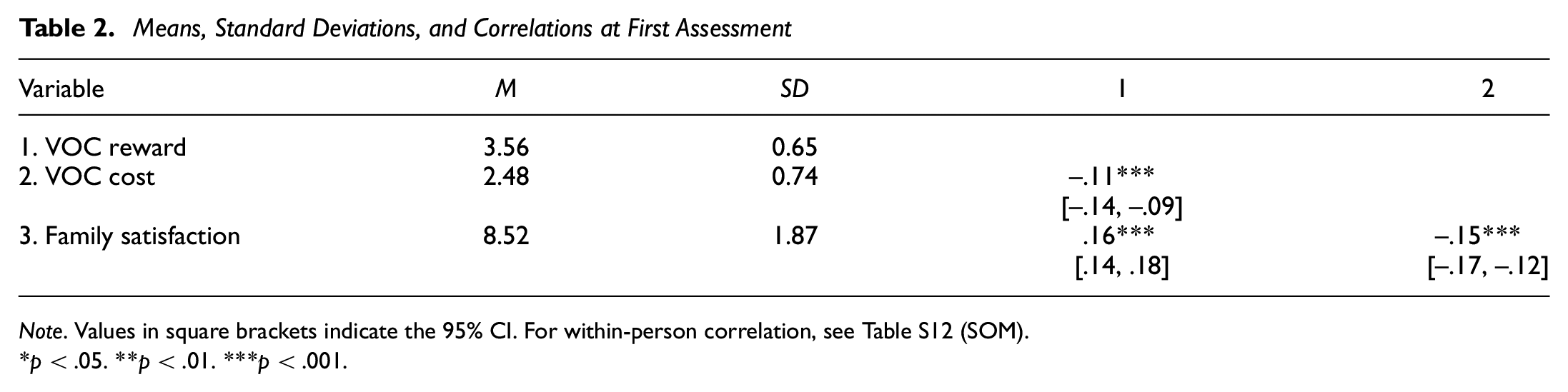
Note. Values in square brackets indicate the 95% CI. For within-person correlation, see Table S12 (SOM).
p < .05. **p < .01. ***p < .001.
Parenthood Transition
VOC expectations were significant predictors of the likelihood of the parenthood transition (Table 3). For one SD increase in cost/reward expectation, respondents were 0.77 times less (ps < .001)/1.20 to 1.23 times more (ps < .001) likely to enter parenthood. The results supported our hypothesis (H 1 ) that negative expectations predict lower likelihood of the parenthood transition.
VOC Expectations and the Parenthood Transition
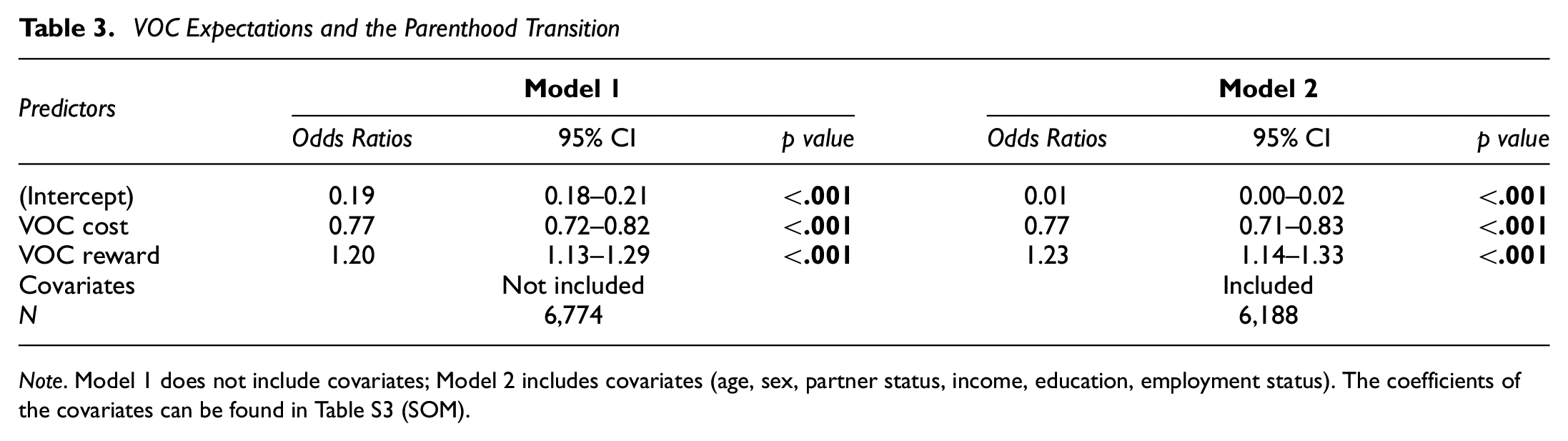
Note. Model 1 does not include covariates; Model 2 includes covariates (age, sex, partner status, income, education, employment status). The coefficients of the covariates can be found in Table S3 (SOM).
Satisfaction at Transition Year
Parenting Pleasure
VOC expectations were significant predictors of parenting pleasure at the transition year (Table 4). For one SD increase in cost/reward expectation, parents reported 0.14 to 0.15 SD lower (ps < .001)/0.09 to 0.10 SD (ps < .05) higher in parenting pleasure.
VOC Expectations and Parenting Pleasure at Transition Year
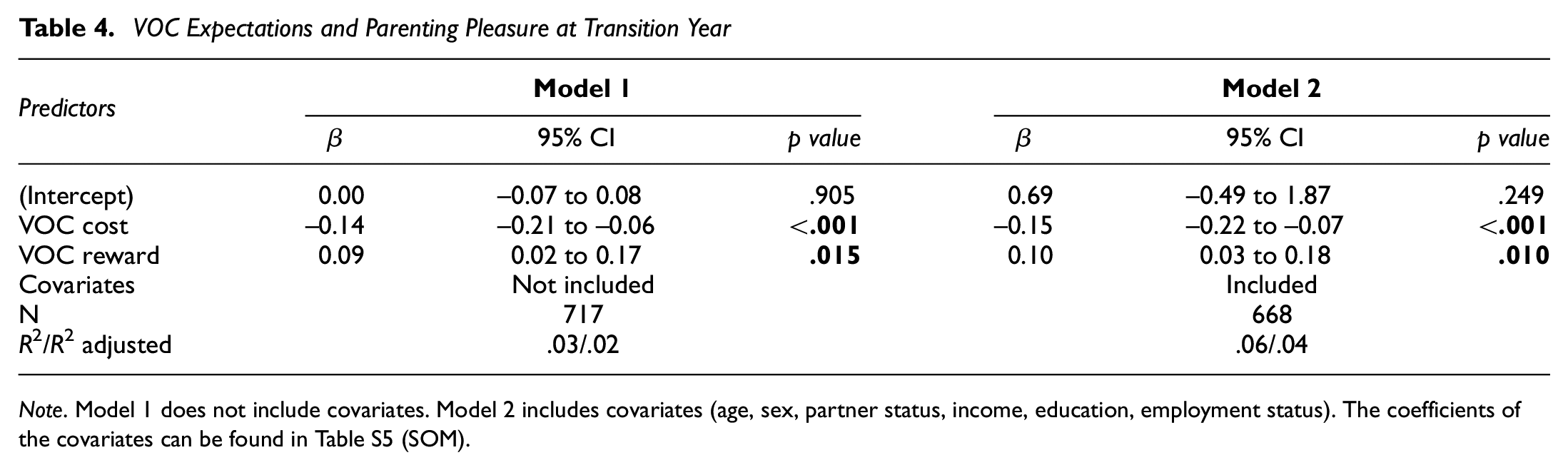
Note. Model 1 does not include covariates. Model 2 includes covariates (age, sex, partner status, income, education, employment status). The coefficients of the covariates can be found in Table S5 (SOM).
Family Satisfaction
In all models tested, cost expectation was a significant predictor of family satisfaction at the transition year. For one SD increase in cost expectation, parents reported 0.12 to 0.17 SD lower (ps < .001) in family satisfaction. In contrast, reward expectation was a less-consistent predictor, not reaching significance in the models without covariates. 4 Overall, for one SD increase in reward expectation, parents reported 0.06 to 0.11 SD higher (ps < .05) in family satisfaction. Model coefficients are in Table 5.
VOC Expectations and Family Satisfaction at Transition Year
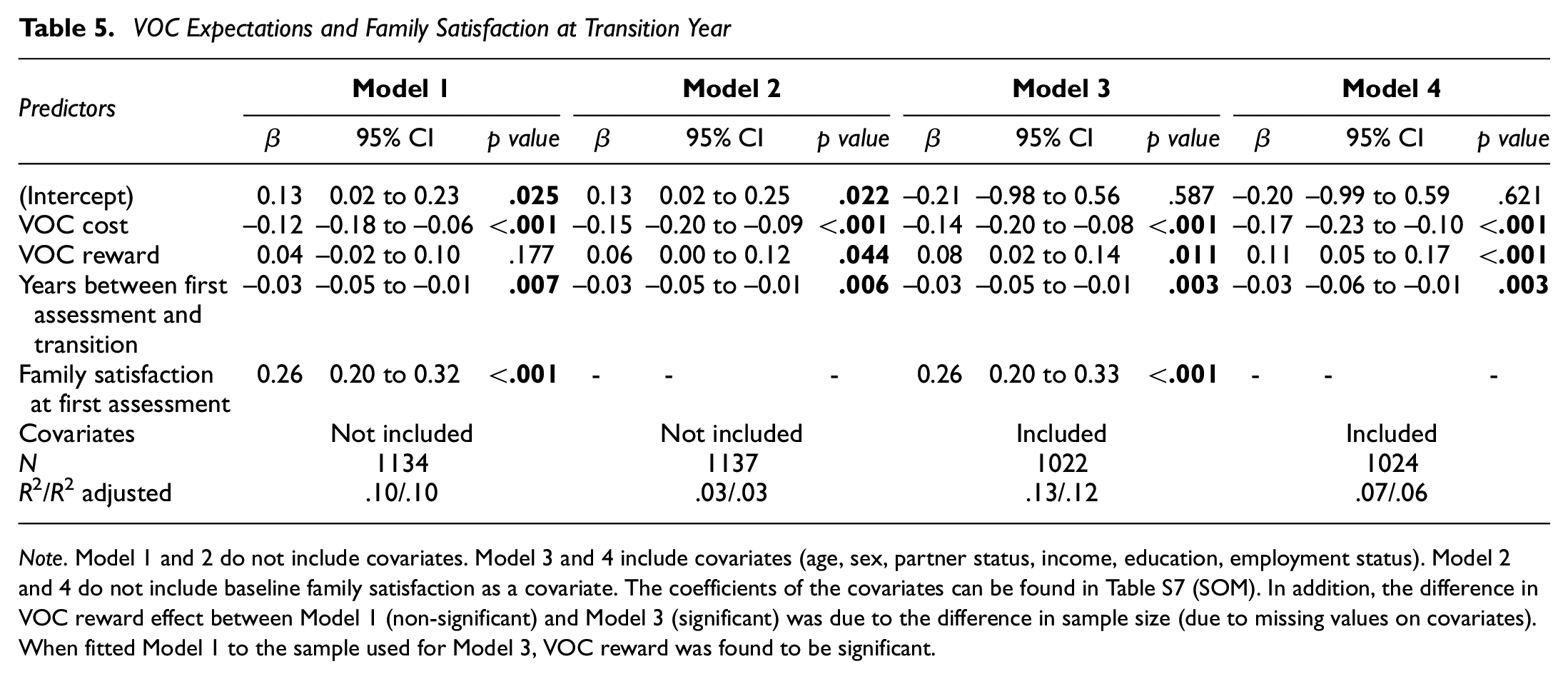
Note. Model 1 and 2 do not include covariates. Model 3 and 4 include covariates (age, sex, partner status, income, education, employment status). Model 2 and 4 do not include baseline family satisfaction as a covariate. The coefficients of the covariates can be found in Table S7 (SOM). In addition, the difference in VOC reward effect between Model 1 (non-significant) and Model 3 (significant) was due to the difference in sample size (due to missing values on covariates). When fitted Model 1 to the sample used for Model 3, VOC reward was found to be significant.
Satisfaction Trajectory After the Transition
A visual investigation of the raw data of mean family satisfaction per assessment year suggested a nonlinear trajectory of decline post birth (Figure 1). While the nonlinear trajectory is less evident with parenting pleasure (Figure 2), we still added the quadratic term of the time slope to all models specified. No further deviations from the preregistration were made.
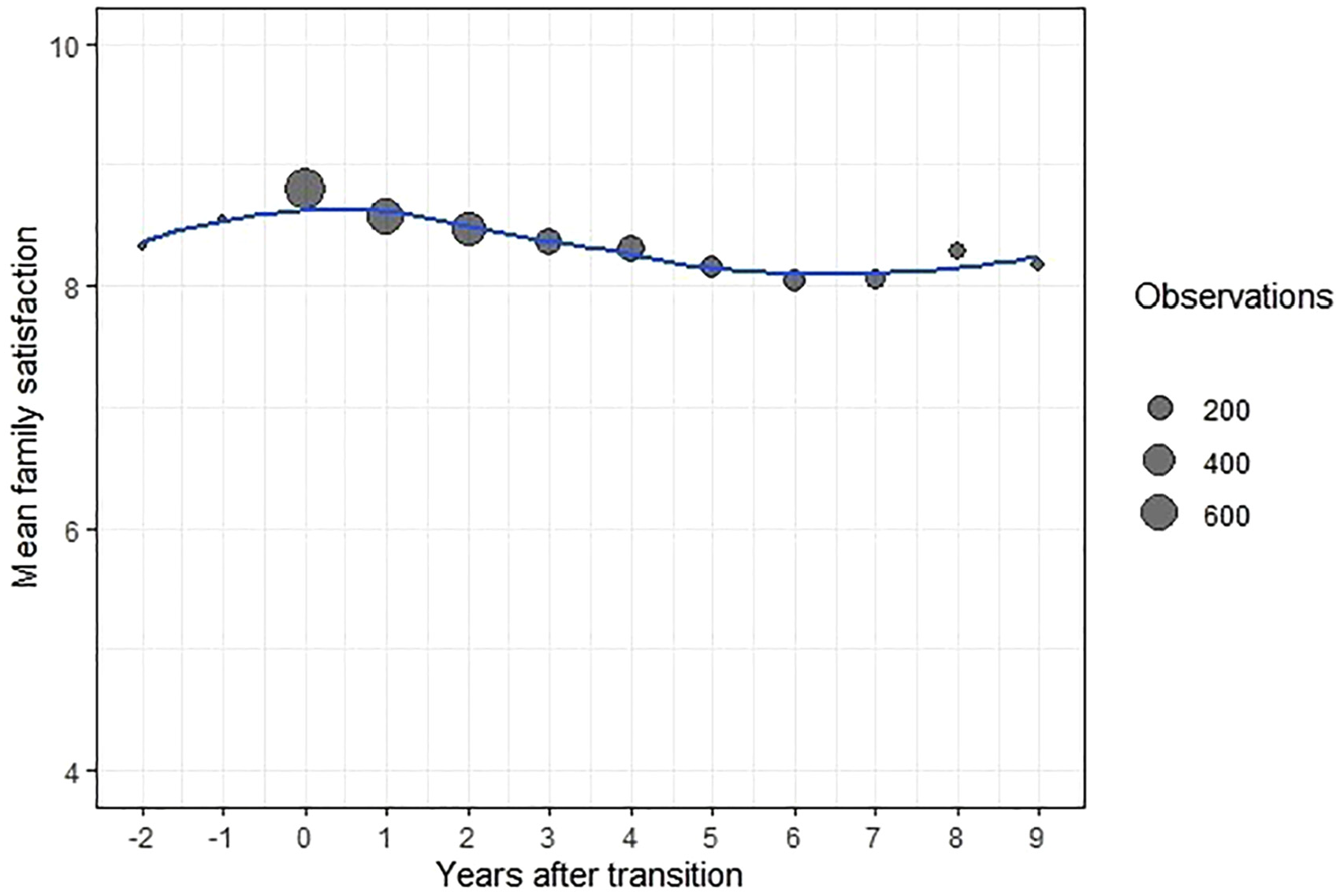
Average Family Satisfaction Across the Parenthood Transition (Raw Values)
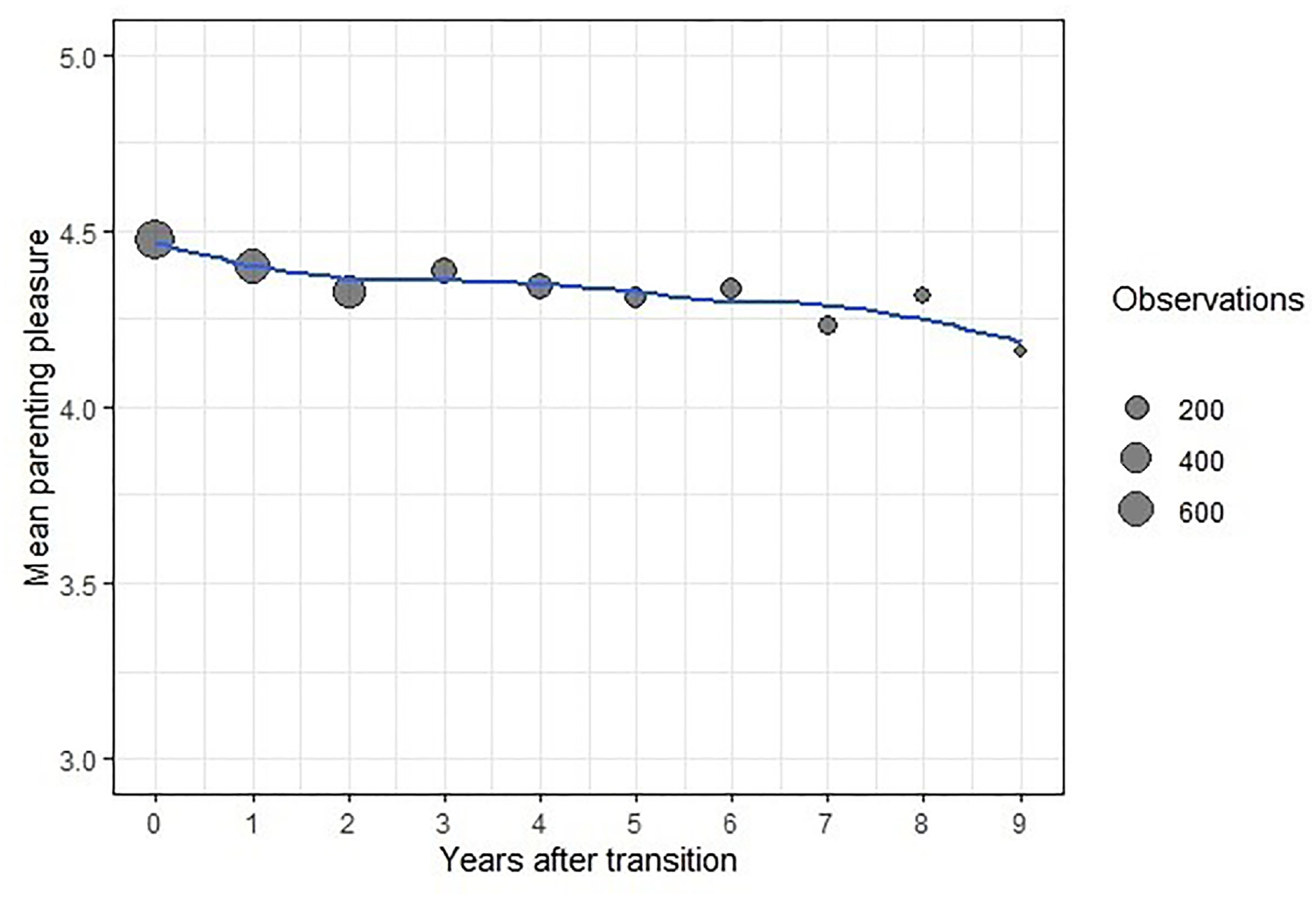
Average Parenting Pleasure After the Parenthood Transition (Raw Values)
Parenting Pleasure
After the transition, parents showed a significant nonlinear declining trajectory of parenting pleasure. We found significant effects of VOC expectations on parenting pleasure in the years following the transition, on average (Table 6). Parents with 1 SD higher cost/reward expectation reported 0.11 to 0.13 SD lower (ps < .001)/0.07 to 0.13 SD higher (ps < .05) in parenting pleasure. There was also a significant interaction between reward expectation and time, suggesting that the effect of reward expectations on parenting pleasure became less positive with time.
VOC Expectations and Pleasure in Parenting After Transition
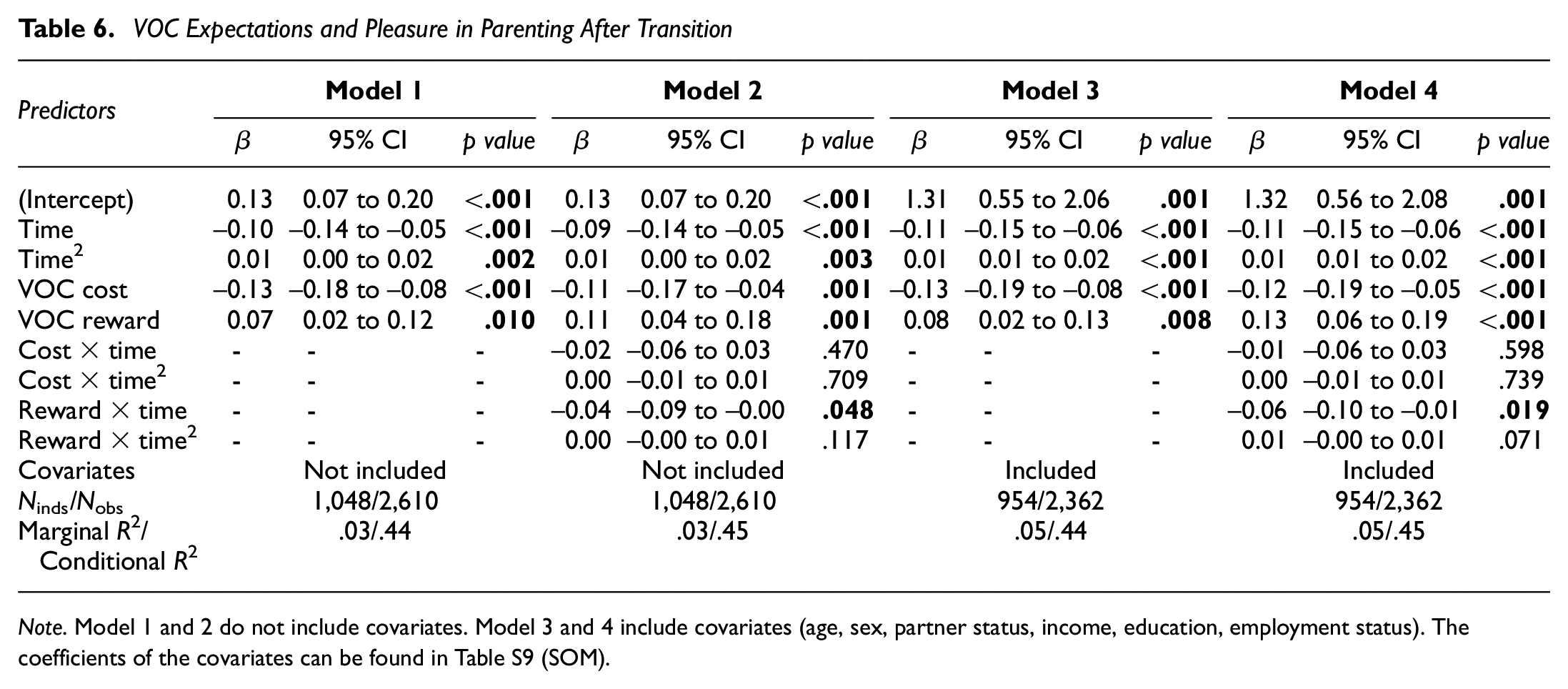
Note. Model 1 and 2 do not include covariates. Model 3 and 4 include covariates (age, sex, partner status, income, education, employment status). The coefficients of the covariates can be found in Table S9 (SOM).
Family Satisfaction
After the transition, parents experienced a significant nonlinear decline in family satisfaction similar to parenting pleasure. Again, we found significant effects of VOC expectations on family satisfaction (Table 7). Parents with 1 SD higher cost/reward expectation reported 0.13 to 0.15 SD lower (ps < .001)/0.09 to 0.19 SD higher (ps < .001) in family satisfaction.
VOC Expectations and Family Satisfaction After Transition
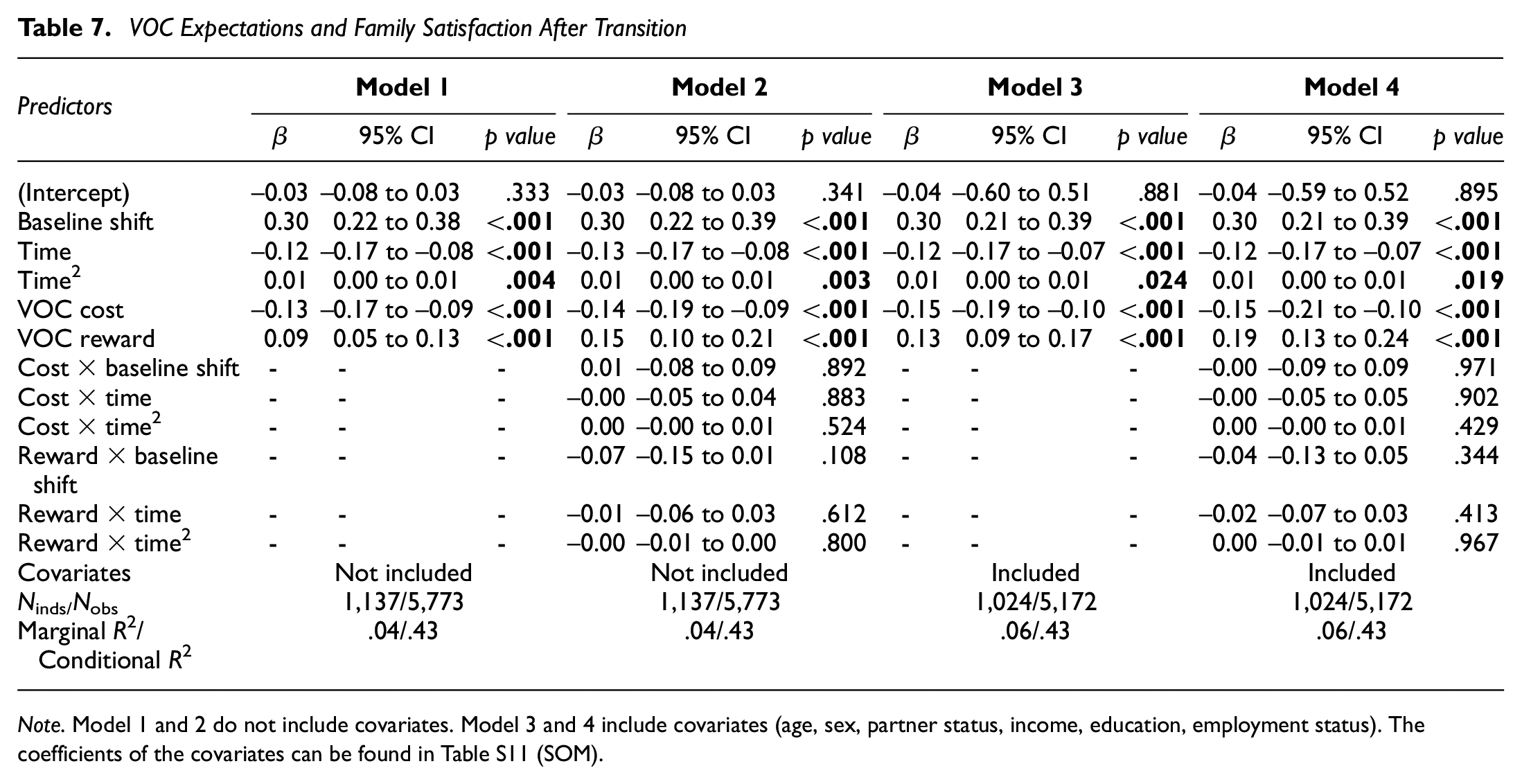
Note. Model 1 and 2 do not include covariates. Model 3 and 4 include covariates (age, sex, partner status, income, education, employment status). The coefficients of the covariates can be found in Table S11 (SOM).
At the same time, a comparison of the average family satisfaction in the years before versus after the transition (baseline shift) showed that parents reported on average 0.30 SD higher (ps < .001) in family satisfaction post birth compared to the 2 years before, indicating a positive shift in the baseline level of satisfaction. We found no significant effect of VOC expectations on the baseline shift or the trajectory of family satisfaction: The downward trajectory and the positive baseline shift in family satisfaction were similar for parents regardless of their expectations (Figure 3). Taken together, the results support our hypothesis (H 2a ) that negative expectations predict lower family-life satisfaction in parents.
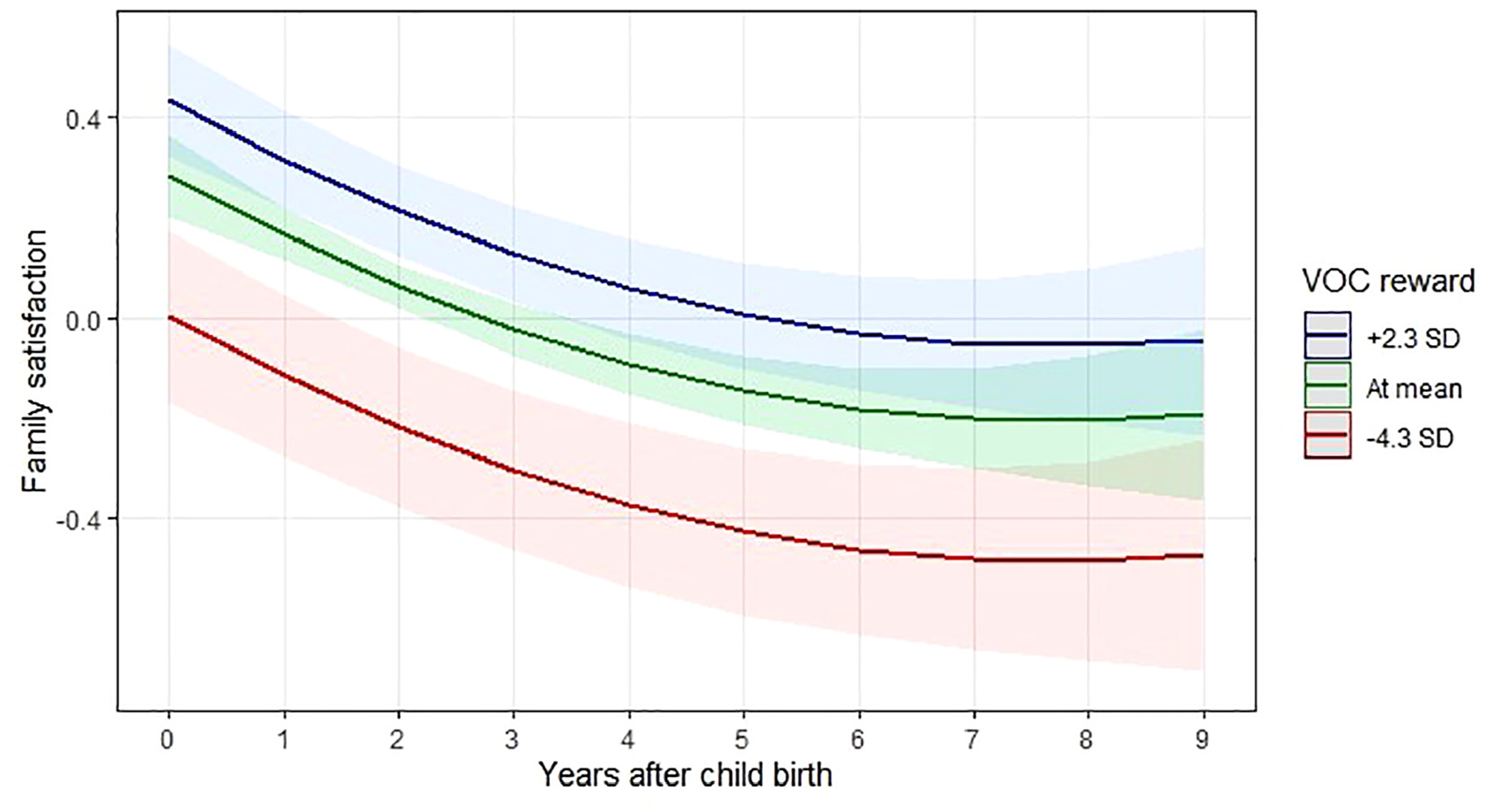
Predicted Values of Family Satisfaction After the Parenthood Transition
Robustness Check
A robustness check was performed by rerunning all analyses with VOC at the first assessment as predictors. This did not substantially change the results: like the preregistered analyses, VOC cost remained significant, and the effect of VOC reward differed across models (Table S13–S16 in SOM). The effects are somewhat smaller when we take the first measures compared to the measure 2 years prior to the transition. It is likely that individual characteristics might be generally more predictive of behavior when measured shortly before the behavior (Balbo et al., 2013).
Discussion
When faced with the life-changing decision of whether to have children, people often wonder about the potential costs and rewards. This study investigated the effect of these expectations on the parenthood transition. In addition, we explored two opposing predictions on how these expectations might affect parents’ family-life satisfaction using a large nationwide German sample.
Consistent with the VOC framework (Hoffman & Hoffman, 1973), we found that lower VOC cost and higher VOC reward expectations negatively predicted the likelihood of becoming parents. These findings, along with Liefbroer (2005), add to the somewhat limited empirical literature on the role of child-value expectations in fertility decisions. Adopting a broader societal perspective, our findings could explain the decreasing fertility in most European countries (Murray et al., 2018). The view on parenthood seems to become more negative in the recent decades. The shift in parenting norms—namely, the deepening of the intensive parenting attitude (Nomaguchi & Milkie, 2020)—has created a climate where parenting is becoming an increasingly costly activity. In addition, experts on the subject often concluded that parenthood is detrimental to one’s well-being by citing the findings that parents report lower well-being than nonparents and exhibit a decline trajectory after childbirth (Hansen, 2012). While often done to acknowledge the otherwise unnoticed struggles that parents (particularly mothers) go through, these depictions can contribute to the increasingly negative expectations of parenthood. As our study demonstrated, these are in turn related to a lower likelihood of becoming parent.
Consistent with the limited literature on parenthood and family-life satisfaction (Knauth, 2000; Krämer & Rodgers, 2020), we found a declining trajectory of family satisfaction and parenting pleasure post birth. However, we also found that parents on average reported higher family satisfaction (i.e., 0.3 SD higher) in the years post birth than in the 2 years before. This finding is somewhat surprising as previous meta-analyses have connected the parenthood transition with a decrease (marital satisfaction; Twenge et al., 2003) or no change in average well-being (life satisfaction; Bühler et al., 2024). The findings of higher average and declining trajectory paint a nuanced picture of the effect of parenthood on parents’ family-life satisfaction. Specifically, although parents experience a deterioration of family-life satisfaction post birth, this decrease does not fully nullify the satisfaction gain from parenthood, leading to a still higher average satisfaction compared to before, at least during the study’s observation period.
Beyond the parenthood transition, VOC expectations were also associated with parents’ family-life satisfaction. In line with H2a, we found that parents with more positive child-value expectations tend to be more satisfied with their family life. Child-value expectation not only is associated with the broader family satisfaction but also with the more direct measure of the parenthood, namely, parenting pleasure. These findings suggest that while parenthood is often described by parents as a transformative experience and nothing like they expected, expectations might serve as a sneak-peek for parents into their experiences of parenthood.
Finally, we found that VOC expectations did not predict the individual differences in family-life satisfaction trajectory and baseline shift. Parents appear to experience the same rate of decline and baseline shift in family-life satisfaction after the transition regardless of their expectations. This is somewhat surprising as a previous study reported a steeper rate of decline in marital satisfaction in parents with more positive expectations pre birth (Lawrence et al., 2007). This discrepancy could be due to the different type of expectations investigated (child-value versus diverse types of expectations), or due to a lack of power to detect the interactions of interest.
Although we documented an association between VOC expectations and parents’ family-life satisfaction, the mechanism underlying this relationship remains unknown. Individuals with more positive expectations might be better “prepared” for having children: they might be more likely to have a romantic partner, higher education and income, or have a more supportive social network. These parents can potentially experience the transition more positively because of their preparedness. In our analyses, we controlled for some of these factors but cannot fully exclude the possibility that other aspects might impact both VOC expectations and the experience of parenthood.
Drawing from the confirmation bias literature, we proposed that parents with positive expectations might actively seek out and interpret experiences with their child as rewarding, outweigh positive experiences, or selectively recall more positive experiences in retrospect. However, the data and methods used here did not allow us to pinpoint which of these processes explains the association observed, or whether confirmation bias is indeed the underlying mechanism. Other mechanisms could be at work as well. For example, according to the self-fulfilling prophecy research, individuals with more negative expectations may end up behaving in a way that would make their negative expectations come true (Coleman et al., 1999; Snyder, 1984). In other words, negative expectations might predispose parents to maladaptive behaviors and practices following the transition, resulting in lower family-life satisfaction. Shedding light on these processes represents a potentially important avenue for future research.
Our analyses focused on VOC measured at just one timepoint as a predictor of the parenthood transition and family-life satisfaction. Yet, VOC itself could exhibit changes across the transition. While our data included measures of VOC after the transition as well, their interpretation after childbirth was not straightforward. For example, “How strongly do you worry that you will be able to afford less with children?” could be interpreted by participants as either inquiring about their general perceived cost of children, the specific cost of their current child(ren), or the cost of their current child(ren) plus future (planned or unplanned) children. Due to this uncertainty, we focused narrowly on a snapshot of VOC expectation at least 2 years prior to the transition. A deeper dive into VOC expectations, such as tracking VOC trajectory across the transition or exploring factors predicting VOC, could be a fruitful avenue for future research.
Although the VOC scale was validated in prior research (Fitzner et al., 2007), reliability of the reward subscale was lower in our sample compared to original validation study, while the cost subscale showed good reliability. While cost expectations were found to be significant predictors across all models, reward expectations were less so, specifically in predicting family satisfaction. This could be due to some reward items referring to more long-term evaluations (i.e., two of five items refer to “adult children”), making them more abstract compared to the cost items which focused on short-term judgments. This could result in the reward subscale having less-predictive power in the shorter time span. Future studies can consider using a VOC measurement with a more reliable reward subscale to address this issue.
Our study contributes to different lines of research. It adds to the VOC literature on the parenthood transition. While the VOC framework assumes a prospective effect of VOC expectations on the parenthood transition, prior studies mostly focused on parents whose VOC measurements were taken retrospectively in studies using cross-sectional data (Nauck, 2007, 2014). By employing longitudinal methods and measuring VOC prenatally, our study tackles these limitations: even if becoming a parent might affect VOC expectations (which could be an interesting question for future studies), our study unequivocally shows that VOC expectations are associated with the transition to parenthood. In addition, we expand the current VOC literature which has so far focused on how VOC affects fertility (Nauck, 2014) or intergenerational relations (Oliveira, 2016) by investigating its role in predicting parents’ family-life satisfaction.
We also contribute to the literature of individual differences in parents’ well-being. Previous research on the parenthood transition from the field of psychology often focuses on broad personality traits (self-esteem; Bleidorn et al., 2016), while the field of sociology often investigates the impact of socio-demographic factors (Guzzo & Hayford, 2020). Much less is known about the role of between-individual differences in expectations. Except for the studies on violated expectations (e.g., Lazarus & Rossouw, 2015), the question of whether cost and reward expectations in and of themselves could color individuals’ experiences of the transition has not been addressed before in the context of a major life event.
Our study provides a novel finding showing that although parenthood is associated with a declining family-life satisfaction trajectory, parents are still on average more satisfied with their family life and with parenting post birth compared to before. By looking at the mean difference and the trajectory together, our findings support the perspective that parents are happier after having children, even though this “happiness gain” likely dissipates in the longer run given the declining trajectory in family-life satisfaction post birth.
Supplemental Material
sj-docx-1-spp-10.1177_19485506241260570 – Supplemental material for Transition to Parenthood: The Association Between Expectations and Family-Life Satisfaction
Supplemental material, sj-docx-1-spp-10.1177_19485506241260570 for Transition to Parenthood: The Association Between Expectations and Family-Life Satisfaction by Chau Tran, Katya Ivanova, Anne K. Reitz and Olga Stavrova in Social Psychological and Personality Science
Footnotes
Handling Editor: Lora Park
Declaration of Conflicting Interests
The author(s) declared no potential conflicts of interest with respect to the research, authorship, and/or publication of this article.
Funding
The author(s) disclosed receipt of the following financial support for the research, authorship, and/or publication of this article: This article was supported by the funding from the Herbert Simon Research Institute (HSRI) awarded to Dr Olga Stavrova, Dr Anne K. Reitz, and Dr Katya Ivanova for the project “The transition to parenthood as a critical developmental milestone: Unravelling the sources of individual variability in hedonic and eudemonic well-being”.

Supplemental Material
The supplemental material is available in the online version of the article.
Notes
Author Biographies
References
Supplementary Material
Please find the following supplemental material available below.
For Open Access articles published under a Creative Commons License, all supplemental material carries the same license as the article it is associated with.
For non-Open Access articles published, all supplemental material carries a non-exclusive license, and permission requests for re-use of supplemental material or any part of supplemental material shall be sent directly to the copyright owner as specified in the copyright notice associated with the article.
