




Abstract
Men’s hostile sexism predicts harmful behavior toward women. Yet, most investigations have relied on self-report assessments, and overlooked a critical, consequential behavioral outcome: responsive parenting. The current studies provide the first behavioral evidence of the associations between hostile sexism and parenting. Fathers higher in hostile sexism reported lower authoritative (warm, involved) and higher authoritarian (directive, controlling) parenting attitudes (Study 1). Observing mixed-gender couples and their 5-year-old child engaging in family interactions (k = 627), fathers and (unexpectedly) mothers higher in hostile sexism exhibited less responsive parenting irrespective of child gender (Studies 1 and 2). Fathers’ higher hostile sexism also was associated with less responsive behavior toward mothers during family interactions (Studies 1 and 2), but the associations with parenting were independent of couple-level behavior. These studies emphasize the importance of behavioral assessments and advance understanding of the harm both men’s and women’s hostile sexism may have for parents and children.
Gender inequality remains a global challenge despite concerted efforts to improve economic, educational, political, and health parity (World Economic Forum, 2022). Social psychological perspectives implicate sexist attitudes as a critical factor in reinforcing gender disparities even in relatively egalitarian contexts (Glick & Fiske, 1996). Hostile sexism—antagonistic beliefs toward women who are viewed as challenging men’s social power—reliably predicts workplace bias and discrimination, objectification and sexual harassment, and violence toward women (Agadullina et al., 2021; Connor et al., 2017). Although tempting to assume that these outcomes reflect day-to-day social interactions that accumulate to sustain broad inequalities, investigations examining the behaviors associated with sexist attitudes have almost exclusively relied on self-report assessments and/or responses to hypothetical scenarios (Bareket & Fiske, 2023). Consequently, there exists replicated evidence that sexist attitudes are associated with how people think they behave, but little evidence that sexist attitudes are associated with how people actually behave.
The current studies uniquely test whether hostile sexism is associated with parenting behavior observed during family interactions. The most pervasive effects of sexist attitudes likely involve behavior toward close others who are routinely affected across daily social interactions. Yet, most investigations have focused on behavior toward unfamiliar targets (e.g., discrimination of hypothetical or unacquainted women), with less attention toward family members (e.g., aggression toward intimate partners; Bareket & Fiske, 2023). Parenting is a pivotal but overlooked domain where sexism may have the most powerful impact. Parenting behavior creates the foundation of children’s development and well-being (e.g., Pinquart, 2017a, 2017b), and can reinforce problematic attitudes and behaviors across generations (Casey et al., 2022; Stith et al., 2000). Thus, establishing associations between sexism and parenting behavior has substantial implications for understanding the generational and long-term costs of sexism.
Men’s Hostile Sexism and Parenting Behavior
Hostile sexism stipulates that men should possess social power and women are unjustifiably competing to take men’s power (Glick & Fiske, 1996). Men’s hostile sexism is associated with a range of damaging consequences in heterosexual relationships (Hammond et al., 2020), including aggressive behavior to regain power (e.g., Cross et al., 2017, 2019). Hostile sexism is also likely to have broader consequences for families. Hostile sexism is founded on beliefs that men should hold social roles of power, including specifying that men should possess the authority in the family (i.e., be the “head of the family,” direct decision-making, deliver discipline; Chen et al., 2009; Gaunt, 2013). Thus, men’s hostile sexism likely routinely shapes behavior within family interactions. Expectations that children should recognize and obey their fathers’ authority without the need for fathers to explain, reason, or be involved in supportive caregiving, should lead men higher in hostile sexism to have a more distanced (less involved) and authoritarian (less democratic) approach to parenting that undermines parental responsiveness.
Preliminary self-report evidence indicates that men’s hostile sexism may predict poorer parenting. Fathers higher in hostile sexism report stronger desires to transmit values of conformity to children (Barni et al., 2022), and hold attitudes that express (a) low support of children’s autonomy (Aikawa & Stewart, 2020; Lipowska et al., 2016), (b) low involvement in caregiving, and (c) greater expectations that children should obey parents’ authority (Aikawa & Stewart, 2020). Fathers’ hostile sexism also longitudinally predicts more (self-reported) aggressive parenting behavior in high-stress contexts (Overall et al., 2021). Translating these findings to established parenting practices (Robinson et al., 1995), fathers’ hostile sexism appears to be associated with less authoritative (warm, involved, autonomy-supportive) and more authoritarian (directive, controlling) parenting attitudes and behavior.
The existing studies provide initial evidence that hostile sexism predicts fathers’ attitudes and thoughts about how they parent, but (as with most outcomes of sexism) offers little evidence that hostile sexism predicts parenting behavior (also see Schoppe-Sullivan et al., 2021). Self-reports are only weakly associated with observations of parenting behavior, likely due to social desirability biases and difficulties reporting on complex behaviors that involve diverse, contextually-sensitive responses (Hendriks et al., 2018). To illustrate, the principal behavioral assessment of parenting—parental responsiveness—includes an array of indicators, including warmth, involvement, autonomy-sensitive support, and responding contingently to children’s needs rather than being insensitive, directive, or controlling (Deneault et al., 2022; Locke & Prinz, 2002). Responsive parenting is pivotal to healthy child development (Bakermans-Kranenburg et al., 2003; Cooke et al., 2022; Pinquart, 2017a, 2017b; Rodrigues et al., 2022), but requires attentive engagement and flexible responding to children’s needs that fathers higher in hostile sexism are unlikely to enact. Accordingly, across two behavioral observation studies, we expected that fathers higher in hostile sexism would exhibit less responsive parenting behavior within family interactions.
Men’s Hostile Versus Benevolent Sexism
Our predictions align with other research showing that fathers with more traditional gender role attitudes report less involved parenting and more authoritarian parenting attitudes (e.g., Gowda & Rodriguez, 2019; Kaplan & Offer, 2022; Kuo et al., 2018). Yet, traditional gender-roles are supported by two distinct forms of sexism that have differential associations with behavior: hostile sexism defends traditional gender roles to uphold men’s social power, whereas benevolent sexism romanticizes gender roles by emphasizing virtues of men as providers and women as caregivers (Glick & Fiske, 1996). In the current studies, we examine both fathers’ hostile and benevolent sexism to isolate the type of gender role beliefs we expect will be associated with less responsive parenting.
Benevolent sexism prescribes traditional roles, including fathers being less involved in parenting, and desiring children to conform to and respect authority (Aikawa & Stewart, 2020; Barni et al., 2022). Unlike hostile sexism, however, benevolent sexism depicts men living up to the role of cherishing provider and protector rather than enforcing dominance and power (Chen et al., 2009). Accordingly, men’s benevolent sexism predicts less rather than more (self-reported) aggressive parenting (Overall et al., 2021). Perhaps then benevolent sexism might be associated with more responsive parenting as it is with warmth toward women partners (e.g., Overall et al., 2011). Yet, the paternalistic warmth benevolent sexism promotes has a patronizing tone that impedes responsiveness toward women partners, such as instructive, autonomy-inhibiting support that neglects recipients’ needs and undermines competence (Hammond & Overall, 2015; also Shnabel et al., 2016). Accordingly, we did not expect men’s benevolent sexism would be reliably associated with more or less responsive parenting behavior.
Women’s Sexism and Parenting Behavior
Our focus on fathers’ hostile sexism aligns with growing recognition of fathers,’ rather than only mothers,’ parenting (Deneault et al., 2022; Schoppe-Sullivan & Fagan, 2020). Yet, a complete analysis also requires examining mothers’ sexist attitudes. Women can agree with hostile sexism, although express lower agreement than men (Glick et al., 2000). Women higher in hostile sexism endorse power-differentiated gender roles, including supporting fathers’ authority and embracing mothers’ responsibility for caregiving (Chen et al., 2009; Gaunt & Pinho, 2018). Therefore, we did not expect mothers’ hostile sexism would be associated with less responsive parenting in the same way as fathers’ hostile sexism. Indeed, prior studies have found null associations between women’s hostile sexism and self-reported parenting attitudes and behaviors (Barni et al., 2022; Lipowska et al., 2016; Overall et al., 2021). Similarly, although women’s benevolent sexism predicts stronger desires to transmit conformity values to children (Barni et al., 2022), prior studies have found no links with self-reported parenting behavior (Overall et al., 2021). Accordingly, we did not generate a priori predictions regarding mothers’ benevolent sexism.
Present Research
Current understanding of the behavioral outcomes associated with sexist attitudes is based on self-report assessments, often toward unfamiliar targets, with behaviors in the consequential domain of parenting virtually ignored. The current studies offer the first behavioral investigation testing whether sexist attitudes are associated with parenting. Two studies test whether fathers higher in hostile sexism exhibit lower parental responsiveness observed during triadic lab-based interactions involving fathers and mothers interacting with their 5-year-old child (Study 1, 95 family interactions; Study 2, 532 family interactions). Our principal aim focused on fathers’ hostile sexism, but our tests controlled for fathers’ benevolent sexism to isolate attitudes that promote gender role hierarchies via dominance and authority (hostile sexism) versus cooperation and familial intimacy (benevolent sexism). For completeness, we also examined mothers’ sexism, expecting fathers’ rather than mothers’ hostile sexism to be associated with less responsive parenting.
Finally, we tested whether the predicted associations were independent from couple-level behaviors. Men’s hostile sexism is reliably associated with more destructive behavior toward intimate partners (Hammond & Overall, 2017), including three rare behavioral studies showing men higher in hostile sexism exhibit less warmth and more hostility during couples’ conflict interactions (Cross et al., 2017, 2019; Overall et al., 2011). Unresponsive, hostile behavior toward intimate partners can spill over to undermine responsiveness toward children (e.g., Stroud et al., 2011). Thus, rather than directly affecting parenting, hostile sexism may be associated with less responsive parenting by disrupting the coparenting environment (i.e., how responsive fathers are to mothers). However, Overall et al. (2021) found that men’s hostile sexism was independently associated with self-reported aggression toward children and intimate partners. Similarly, we expected that prioritizing power and authority within the family would result in fathers’ hostile sexism being directly associated with less responsive behavior toward children in addition to intimate partners.
Study 1
To replicate prior self-report findings, parents first completed measures of authoritative (warm, autonomy-supportive) and authoritarian (directive, controlling) parenting attitudes. To gather more objective behavioral assessments, married/cohabiting parents attended a research session with their child involving a video-recorded family interaction. Trained coders rated how much each parent exhibited responsive behavior toward their child and their intimate partner.
Method
Participants
The sample included 95 mixed-gender cohabiting couples (85% married) and their 5-year-old child. Children’s average age was 59.59 months (SD = 3.67); 52 (55%) were boys. Table 1 presents parents’ demographic variables. The Supplemental Materials detail recruitment, target sample size, prior use of sample, and power. Of the 104 participating families, nine were excluded due to incomplete measures (e.g., no observational assessments due to recording equipment failure or parents not speaking in English). Power sensitivity analyses indicated .875 power for the smallest effect of hostile sexism (partial r = .31) in the current study (see Supplemental Materials).
Parents’ Demographic Information
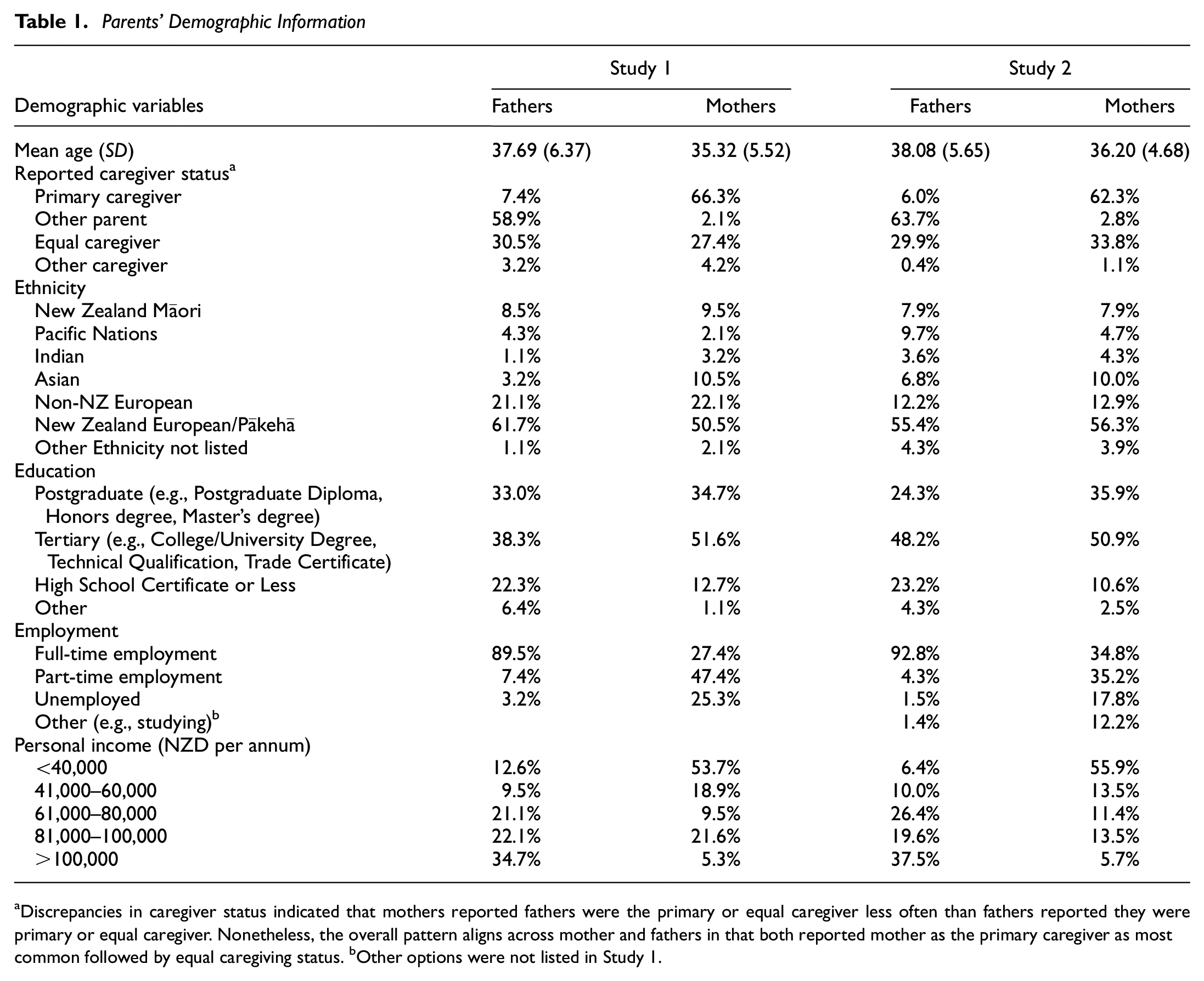
Discrepancies in caregiver status indicated that mothers reported fathers were the primary or equal caregiver less often than fathers reported they were primary or equal caregiver. Nonetheless, the overall pattern aligns across mother and fathers in that both reported mother as the primary caregiver as most common followed by equal caregiving status. bOther options were not listed in Study 1.
Procedure
Both parents independently completed an online questionnaire assessing demographic information and parenting attitudes. During a subsequent laboratory session, parents completed a questionnaire assessing sexist attitudes and families engaged in a 10-min video-recorded family activity. Families were given paper materials and were asked to work together as a family to build the best tower they could. This semi-structured activity aligns with parent–child tasks commonly used to assess parental responsiveness (Locke & Prinz, 2002) extended to triadic interactions to assess parental responsiveness as both parents and their child work together (e.g., Karreman et al., 2008; Schoppe et al., 2001 see Supplemental Materials). Trained observational coders blind to the aims of this study rated how much each parent exhibited responsive behavior toward their child and intimate partner during the family interaction. Mothers and fathers were coded in separate viewings (order counterbalanced). Families received $100NZD.
Measures
Parenting Attitudes
Parents completed established measures of parenting attitudes (O’Reilly & Peterson, 2014). Six items assessed authoritative (e.g., “A child should be allowed to question the authority of their parents”; 1 = strongly disagree, 4 = strongly agree) and six items assessed authoritarian (e.g., “My child should not tell me I’m wrong”) parenting.
Sexist Attitudes
Parents completed the Ambivalent Sexism Inventory (ASI; Glick & Fiske, 1996). Eleven items assessed hostile sexism (e.g., “Women seek to gain power by getting control over men”), and 11 items assessed benevolent sexism (e.g., “Women should be cherished and protected by men”; −3 = strongly disagree, 3 = strongly agree).
Responsive Parenting Behavior
We assessed the central behaviors incorporated in composite measures of parental responsiveness (Biringen et al., 2000; Landry et al., 2008), which produce more reliable effects (Cooke et al., 2022). Three trained coders independently rated how much each parent exhibited: Warmth (affection, warmth, support), Engagement (engagement, involvement with child), Contingent Responding (responding contingently to children’s cues/needs), and Respect for Child’s Autonomy (encouraging, acknowledging child’s perspective). Coders considered the duration, frequency, and intensity of relevant verbal and non-verbal behavior across the 10-min interaction (1 = low, 7 = high). Coders’ ratings were reliable (ICCs = .90–.96) and were averaged within and across categories. See Supplemental Materials for further detail.
Responsive Behavior Toward Intimate Partners
Applying observational assessments of coparenting (Schoppe-Sullivan, 2007, 2017; see Supplemental Materials), a different team of coders rated responsive behavior toward intimate partners (1 = low, 7 = high). Coders rated how much each parent exhibited (1) warmth, support, and positive regard (ICC = .83), and (2) pleasure and approval (ICC = .82) toward their partner, which were averaged.
Results
Table 2 displays descriptive statistics and reliabilities. Tests of distinguishability (Kenny, 2015) confirmed that mother and father data were distinguishable due to unequal means in the focal variables, χ2(7) = 47.45, p < .001. We applied the SPSS MIXED procedure to run dyadic models for distinguishable dyads treating fathers’ and mothers’ scores from the same family as repeated measures (Kenny et al., 2006). 1 These two-intercept models simultaneously estimate parameters for fathers and mothers while accounting for nonindependence (see Overall et al., 2021). As is typical, hostile and benevolent sexism were tested in the same model to account for the shared variance in these related but distinct attitudes (see Table 3). See https://osf.io/tkchf for syntax and data.
Descriptive Statistics for Measures in Study 1
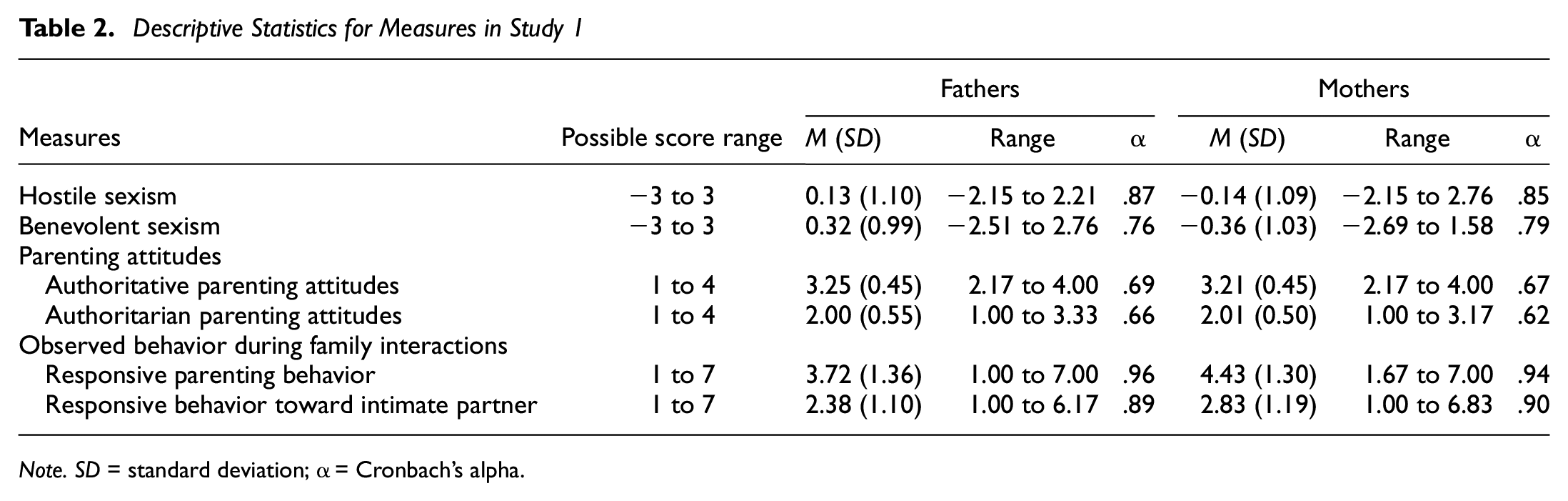
Note. SD = standard deviation; α = Cronbach’s alpha.
Correlations Across Measures in Study 1
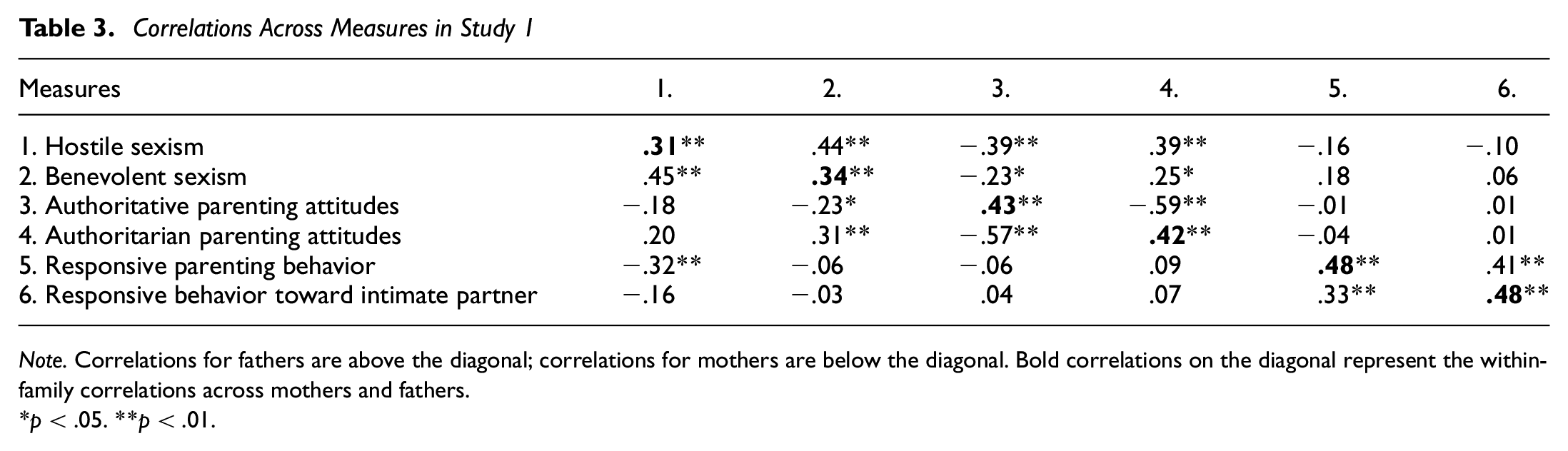
Note. Correlations for fathers are above the diagonal; correlations for mothers are below the diagonal. Bold correlations on the diagonal represent the within-family correlations across mothers and fathers.
p < .05. **p < .01.
Hostile Sexism and Self-Reported Parenting Attitudes
To replicate prior self-report findings, we modeled authoritative and (in a separate model) authoritarian parenting attitudes as a function of hostile and benevolent sexism. Table 4 displays the results. Fathers’ (but not mothers’) higher hostile sexism was significantly associated with lower authoritative (warm, involved) and higher authoritarian (directive, controlling) attitudes. Supplemental analyses revealed these associations did not differ according to whether children were boys or girls (see Supplemental Materials).
Associations Between Fathers’ and Mothers’ Hostile and Benevolent Sexism and Parenting Attitudes (Study 1)
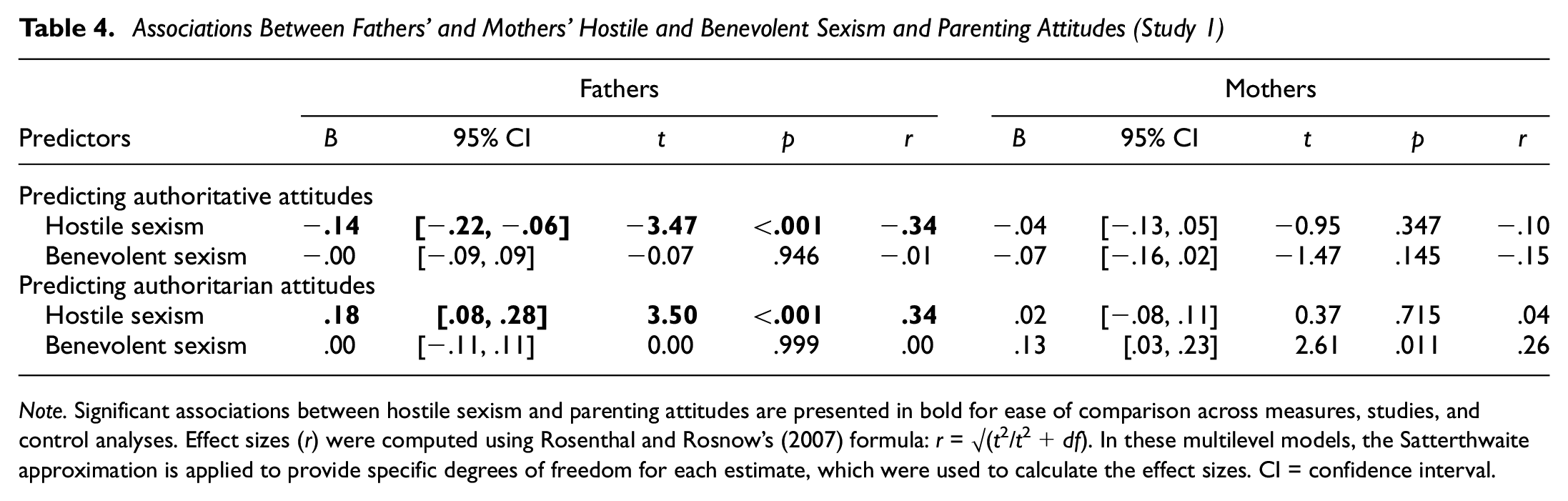
Note. Significant associations between hostile sexism and parenting attitudes are presented in bold for ease of comparison across measures, studies, and control analyses. Effect sizes (r) were computed using Rosenthal and Rosnow’s (2007) formula: r = √(t2/t2+df). In these multilevel models, the Satterthwaite approximation is applied to provide specific degrees of freedom for each estimate, which were used to calculate the effect sizes. CI = confidence interval.
Hostile Sexism and Observed Parenting
Providing the first behavioral tests, we modeled observed parenting as a function of sexist attitudes. The results in Table 5 (top section) revealed that fathers’ and unexpectedly mothers’ hostile sexism were associated with less responsive parenting. These associations did not differ according to child gender (see Supplemental Materials). To test whether the associations between hostile sexism and observed parenting were independent of couple-level dynamics, we first tested whether sexist attitudes were associated with responsive behavior toward intimate partners. The results in Table 5 (middle section) illustrated that fathers’ (but not mothers’) higher hostile sexism was associated with less responsive behavior toward partners. However, controlling for these couple-level associations did not alter the significant links between fathers’ or mothers’ hostile sexism and responsive parenting (Table 5, bottom section).
Associations Between Fathers’ and Mothers’ Hostile and Benevolent Sexism and (1) Responsive Parenting and (2) Responsive Behavior Toward Intimate Partners During Family Interactions (Study 1)
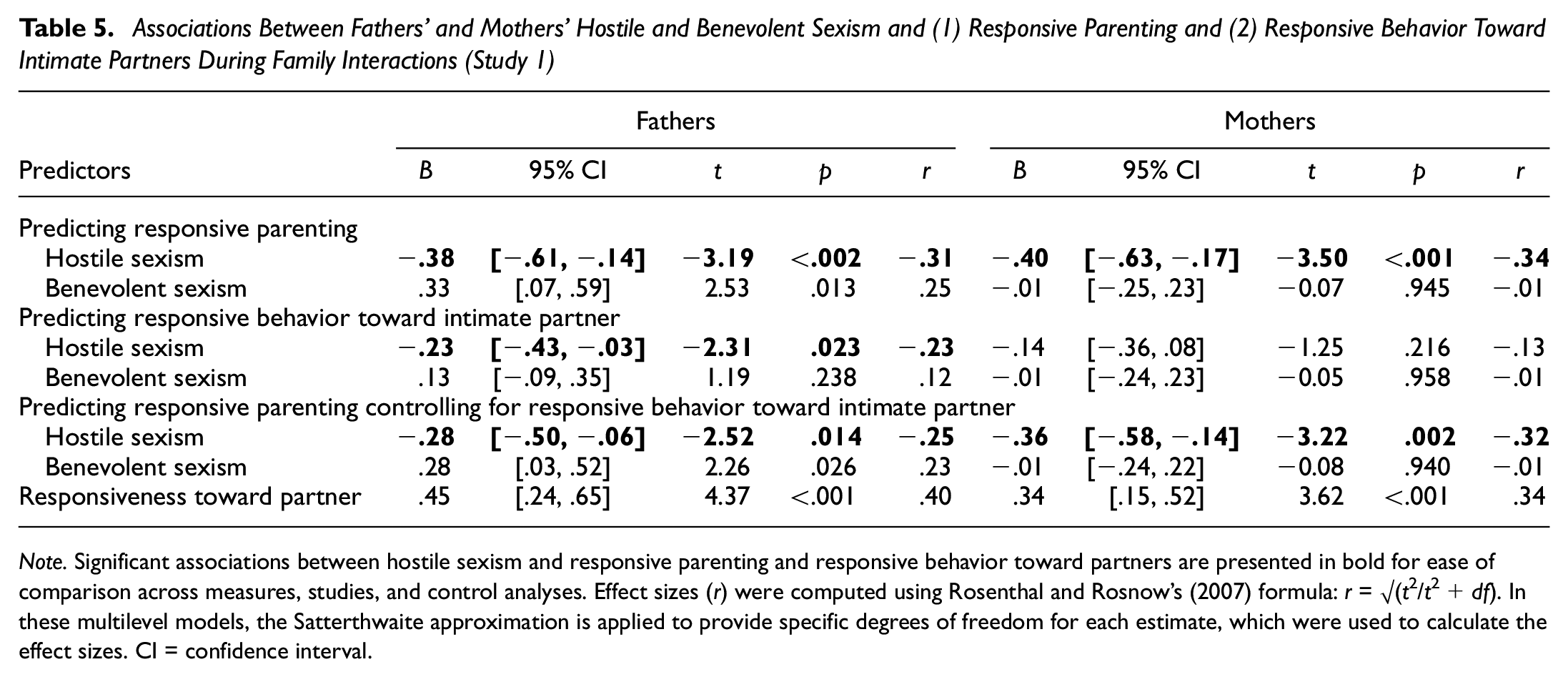
Note. Significant associations between hostile sexism and responsive parenting and responsive behavior toward partners are presented in bold for ease of comparison across measures, studies, and control analyses. Effect sizes (r) were computed using Rosenthal and Rosnow’s (2007) formula: r = √(t2/t2+df). In these multilevel models, the Satterthwaite approximation is applied to provide specific degrees of freedom for each estimate, which were used to calculate the effect sizes. CI = confidence interval.
Benevolent Sexism
Two significant associations emerged (irrespective of child gender; see Supplemental Materials). Mothers’ benevolent sexism was associated with higher authoritarian attitudes (Table 4), and fathers’ benevolent sexism was associated with more responsive parenting behavior (Table 5).
Study 2
Study 2 was collected after establishing the results of Study 1. We aimed to replicate the predicted association between fathers’ hostile sexism and observed parenting, and test the reliability of the unexpected links between mothers’ hostile sexism and fathers’ benevolent sexism with parenting behavior. Extending Study 1, we assessed parenting behavior in two contexts: a free-play interaction assessing parents’ unstructured interactions with their child, and the semi-structured family activity used in Study 1 assessing parents’ behavior when families worked toward a goal. Parental responsiveness in semi-structured and unstructured free-play interactions reliably predict child outcomes (Cooke et al., 2022), and examining both types of interactions offers greater generalizability to naturalistic parenting behavior (Gardner, 2000). Moreover, the repeated family interactions increased statistical power and allowed tests of whether the associations replicated across interaction contexts.
Participants
The sample included 281 mixed-gender cohabiting couples (84.3% married) and their 5-year-old child. Children’s average age was 54.21 months (SD = 3.30) and 141 (50.2%) were boys. Table 1 presents parents’ demographics. The original sample included 285 families, but four families had no observational data due to not speaking in English or other children being present. In addition, observational data was missing for 23 families in the free-play and seven families in the family activity due to equipment failure, siblings present, or language issues. The interactions for analysis (258 families for free-play, 274 for family activity) provided >.99 power to detect the effect sizes of hostile sexism in Study 1 and >.80 to detect the smallest effect in Study 2. See Supplemental Materials for further sample and power information.
Procedure
Upon arrival at the laboratory, research assistants guided families to an area with various toys and indicated families could play together as final preparations were made for the study. Families were left unattended for 5 min, and their free-play interaction was video-recorded. Couples and children then participated in a series of tasks in separate rooms, including parents completing measures of sexist attitudes, before reuniting for a video-recorded family activity involving building a tower together as in Study 1. Coders blind to the current aims rated how much each parent exhibited responsive behavior toward their child and their partner during the free-play and family activity. Families received $180NZD.
Measures
Sexist Attitudes
Parents completed the ASI as in Study 1.
Responsive Parenting Behavior
Similar to Study 1, trained coders independently rated how much each parent exhibited Warmth (affection, warmth, support), Engagement (engagement, involvement with child), and Contingent Responding (responding contingently to children’s cues/needs; 1 = low, 7 = high). Different pairs of coders rated the free-play (ICCs = .80–.88) and family activity (ICCs = .85–.88). Ratings were averaged within, and then, across categories. See Supplemental Materials for coding protocols.
Responsive Behavior Toward Intimate Partners
In a separate viewing, the pair who coded responsive parenting during the free-play also rated each parent’s behavior toward their partner, including warmth (ICC = .84) and engagement (ICC = .82), averaged to assess responsive behavior. A different team of three coders rated responsiveness toward the partner in the family activity, including warmth (ICC = .76) and pleasure (ICC = .82), using the Study 1 protocol.
Results
Tests of distinguishability confirmed that mother and father data were fully distinguishable due to unequal means, χ2(8) = 212.21, p < .001, and variances, χ2(8) = 105.30, p < .001; see Table 6. We extended the model for distinguishable dyads in Study 1 to account for the repeated assessments of behavior across the two family interactions by applying a multilevel dyadic model that treated parental responsiveness during the free-play and family activity as repeated measures nested within each parent and family. This approach has several advantages. Nesting the interactions accounts for dependence in behavior across the two family interactions (see Table 7). This analytic strategy also ensured all analyses included the full sample (285 families), even for the small proportion of families whose behavior was only able to be coded for one family interaction (n = 23 missing free-play, n = 7 missing family activity). The multilevel analyses enable modeling with missing data and weight the model estimates according to the number of data points provided by each family (Kenny et al., 2006). Furthermore, this multilevel strategy allowed direct tests of replication across the two family interactions by adding coefficients testing whether the associations significantly differed across interaction contexts (free-play −1, family activity 1). See https://osf.io/tkchf for data and syntax.
Descriptive Statistics for Measures in Study 2
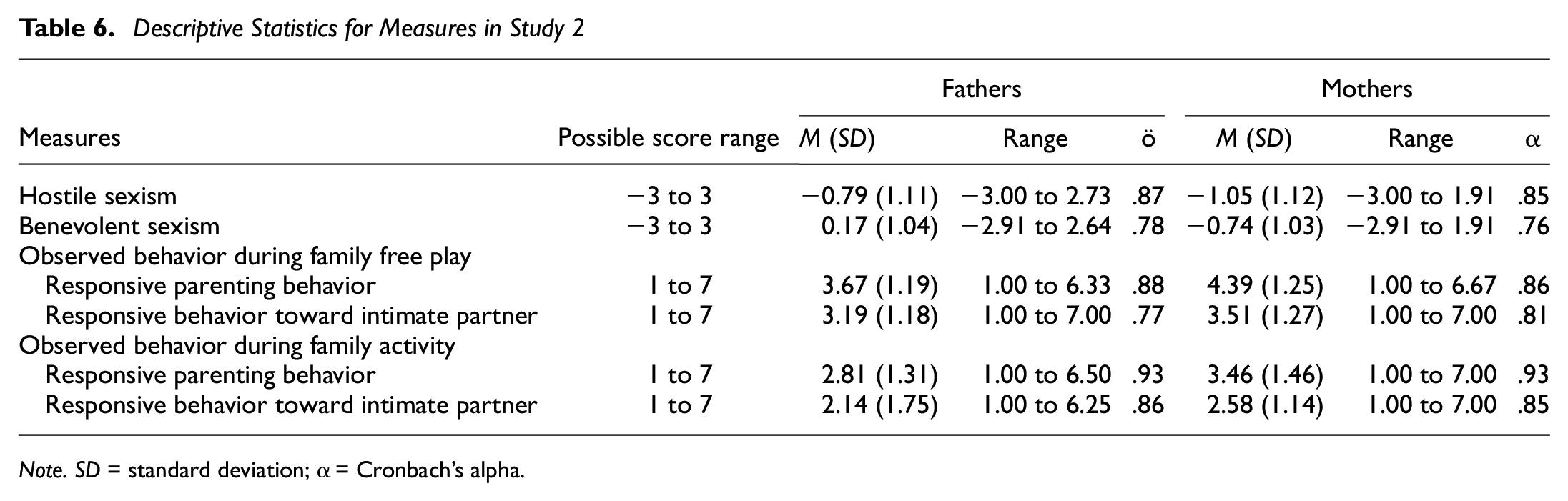
Note. SD = standard deviation; α = Cronbach’s alpha.
Correlations Across Measures in Study 2
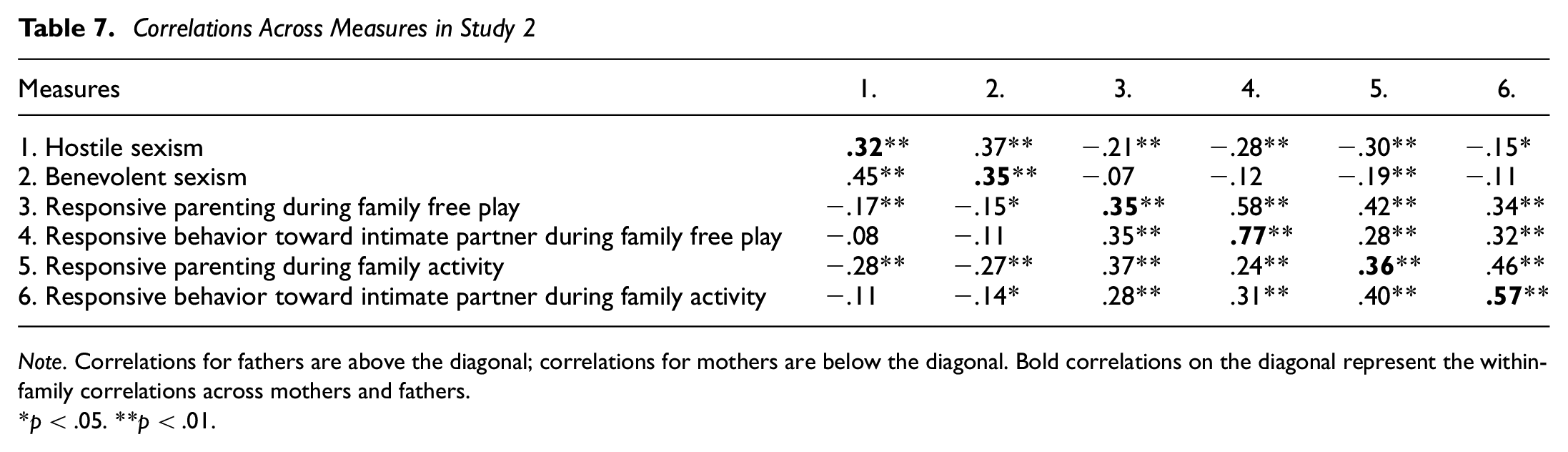
Note. Correlations for fathers are above the diagonal; correlations for mothers are below the diagonal. Bold correlations on the diagonal represent the within-family correlations across mothers and fathers.
p < .05. **p < .01.
Hostile Sexism and Observed Parenting
The results replicated Study 1. Fathers’ and mothers’ hostile sexism were significantly associated with less responsive parenting (see Table 8, top section). The associations between fathers’ (t = −0.19, p = .853) and mothers’ (t = −1.01, p = .309) hostile sexism and responsive parenting did not differ (i.e., replicated) across the free-play and family activity (see Supplemental Materials for results within each context), nor did they differ according to child gender (see Supplemental Materials).
Associations Between Fathers’ and Mothers’ Hostile and Benevolent Sexism and (1) Responsive Parenting and (2) Responsive Behavior Toward Intimate Partners During Family Interactions (Study 2)
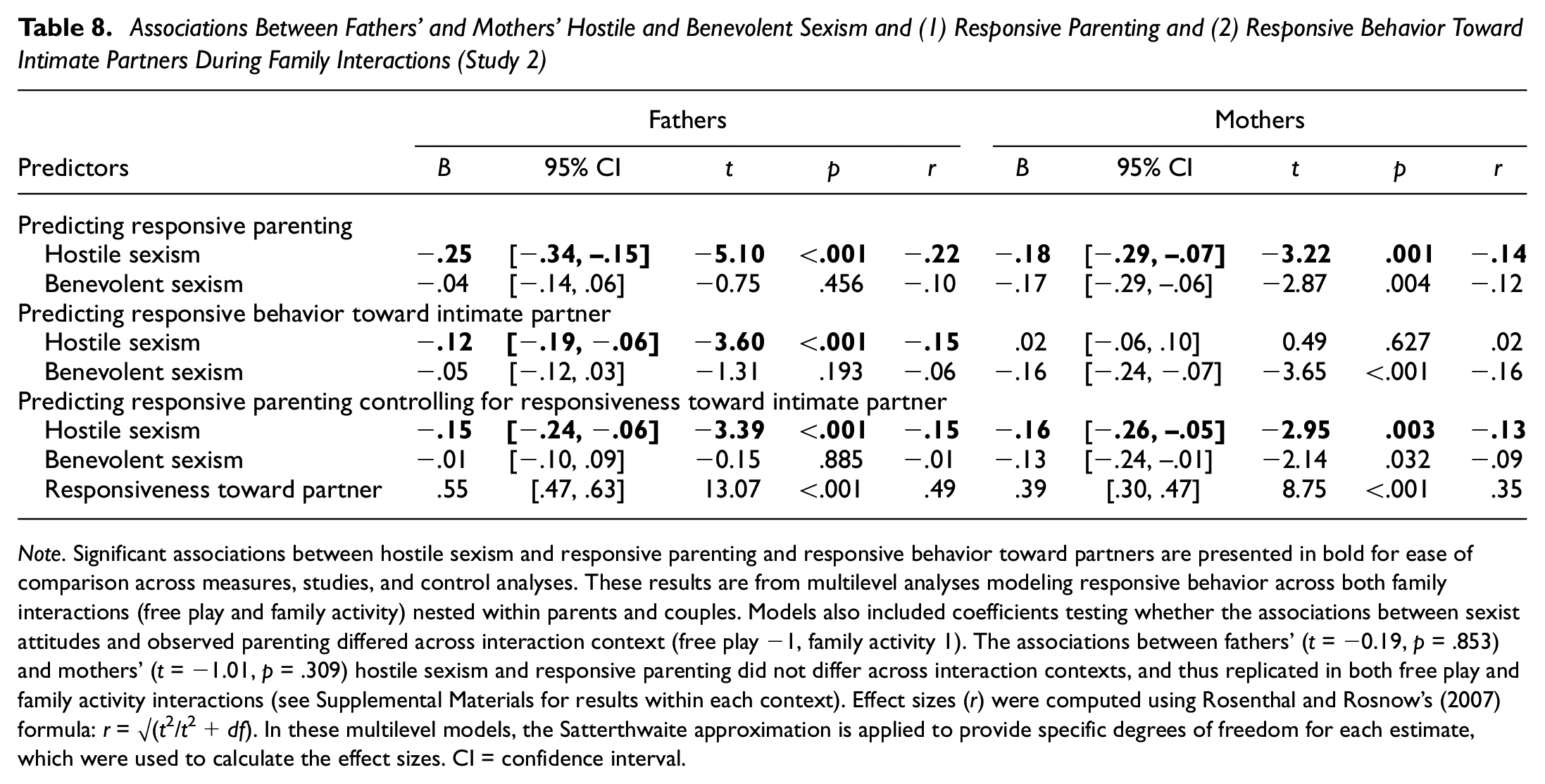
Note. Significant associations between hostile sexism and responsive parenting and responsive behavior toward partners are presented in bold for ease of comparison across measures, studies, and control analyses. These results are from multilevel analyses modeling responsive behavior across both family interactions (free play and family activity) nested within parents and couples. Models also included coefficients testing whether the associations between sexist attitudes and observed parenting differed across interaction context (free play −1, family activity 1). The associations between fathers’ (t = −0.19, p = .853) and mothers’ (t = −1.01, p = .309) hostile sexism and responsive parenting did not differ across interaction contexts, and thus replicated in both free play and family activity interactions (see Supplemental Materials for results within each context). Effect sizes (r) were computed using Rosenthal and Rosnow’s (2007) formula: r = √(t2/t2+df). In these multilevel models, the Satterthwaite approximation is applied to provide specific degrees of freedom for each estimate, which were used to calculate the effect sizes. CI = confidence interval.
Replicating Study 1, additional analyses testing whether the links between hostile sexism and parenting were independent of couple-level dynamics revealed that fathers’ (but not mothers’) hostile sexism was associated with less responsive behavior toward intimate partners (Table 8, middle section). Nonetheless, controlling for responsive behavior toward intimate partners did not alter the significant associations between fathers’ or mothers’ hostile sexism and less responsive parenting (Table 8, bottom section).
Benevolent Sexism and Observed Parenting
One significant association emerged. Mothers’ benevolent sexism was associated with less responsive parenting (Table 8, top section), which was not accounted for by mothers higher in benevolent sexism also showing lower responsive behavior toward intimate partners (Table 8, middle and bottom sections).
General Discussion
A mass of studies have documented the harmful behavior associated with men’s hostile sexism, but have primarily provided self-report evidence and overlooked a critical, consequential behavioral outcome—responsive parenting. The current studies provide the first behavioral evidence that hostile sexism is associated with poorer parenting by observing parental responsiveness as mixed-gender couples and their 5-year-old child engaged in family interactions (k = 627 interactions). As predicted, fathers higher in hostile sexism reported less authoritative and more authoritarian parenting attitudes (Study 1) and exhibited less responsive parenting (Studies 1–2) irrespective of child gender. Unexpectedly, although not associated with self-reported parenting attitudes, mothers’ higher hostile sexism also was associated with less responsive parenting behavior. We outline how these expected and unexpected findings advance understanding of the broad costs of hostile sexism.
Predicted Associations: Men’s Hostile Sexism and Parenting Behavior
Men’s hostile sexism involves the protection of traditional gender role hierarchies, and so maintaining authority within the family should be as important as preserving men’s power outside the home (Chen et al., 2009; Hammond & Overall, 2017). Moreover, although prior work has almost exclusively focused on how sexist attitudes may affect behavior toward women, men’s role as authority in the home should be recognized by women partners, daughters, and sons (Overall et al., 2021). Accordingly, fathers higher in hostile sexism reported and exhibited less responsive parenting irrespective of child gender. This pattern illustrates that the associations between men’s hostile sexism and less responsive parenting is not simply due to fathers projecting hostile views of women onto their daughters, but most likely arises from expectations that daughters and sons should recognize and obey fathers’ authority without the need for explanation, reasoning, or supportive caregiving.
Fathers’ higher hostile sexism was also associated with less responsive behavior toward mothers, extending the established links between men’s hostile sexism and harmful behavior within couple relationships to coparenting within family interactions and subsequent outcomes. Less supportive coparenting undermines both parents’ responsiveness to their children and children’s socio-emotional development (e.g., Caldera & Lindsey, 2006; Nandy et al., 2021; Schoppe et al., 2001). Nonetheless, the associations between men’s hostile sexism and less responsive parenting were independent of couple-level behaviors, providing additional support that a focus on maintaining men’s power is associated with less responsive parenting alongside poorer behavior toward intimate partners.
Fathers’ benevolent sexism evidenced a different pattern of associations, illustrating the results are not simply due to endorsing traditional gender roles. Although fathers’ benevolent sexism was associated with more responsive parenting in Study 1, null associations occurred in the larger, more highly powered Study 2. Prior work examining adult rather than parent–child interactions may help to explain these mixed, unreliable associations. Benevolent sexism romanticizes paternalistic family roles, which may mean that men’s benevolent sexism promotes warmth that facilitates responsive parenting, but also prompts autonomy-inhibiting caregiving (Hammond & Overall, 2015; Shnabel et al., 2016) that could interfere with responsiveness to children’s needs. 2 Nonetheless, the distinct pattern for fathers’ hostile versus benevolent sexism illustrates that the less responsive parenting associated with hostile sexism is specific to attitudes that preserve gender role hierarchies by enforcing men’s authority.
The results highlight the important outcomes associated with men’s hostile sexism beyond harmful behavior toward women. Parental responsiveness is the cornerstone of healthy child development, playing a fundamental role in long-term socio-emotional, cognitive, and behavioral functioning (Bakermans-Kranenburg et al., 2003; Cooke et al., 2022; Pinquart, 2017a, 2017b; Rodrigues et al., 2022). Moreover, the poorer parental responsiveness associated with men’s hostile sexism occurs alongside other parenting dynamics, including less cooperative coparenting (Studies 1 and 2) and more self-reported punitive parenting attitudes and behaviors (Study 1; Overall et al., 2021), that not only harm child development but may collectively contribute to the generational transmission of sexism. Cross-sectional studies suggest that exposure to parents’ sexism relates to adolescents’ and adults’ sexist attitudes (Klann et al., 2018; Montañés et al., 2012), likely due to parents’ modeling of gender role attitudes and behavior in the family (Casey et al., 2022). Thus, the links between hostile sexism and parenting behavior may help sustain gender inequality via the transmission of detrimental attitudes and behaviors.
Unexpected Associations: Women’s Sexist Attitudes and Parenting Behavior
Mothers’ hostile sexism was not associated with self-reported parenting attitudes, consistent with prior self-report studies (Barni et al., 2022; Lipowska et al., 2016; Overall et al., 2021), but was reliably associated with less responsive parenting behavior exhibited in family interactions. This contrasting pattern emphasizes the value of behavioral assessments that bypass participants’ biases and perhaps modest insight into nuanced behaviors (like responsive parenting). Prior research relying on self-reports has shown null, weak, or unreliable associations between women’s hostile sexism and various outcomes (Bareket & Fiske, in press). The current studies provide novel, replicated behavioral evidence that women’s hostile sexism predicts important behaviors that self-reports may not reveal.
Women’s hostile sexism involves supporting fathers’ authority and prioritizing mothers’ caregiving responsibility (Chen et al., 2009; Gaunt & Pinho, 2018), and so is unlikely to be associated with less responsive parenting for the same reasons as men’s hostile sexism. One possible explanation is that accepting fathers’ authority means mothers higher in hostile sexism follow fathers’ lead in directing family interactions, producing less engaged, child-focused parenting. Another possibility is that mothers higher in hostile sexism guard their role as caregiver—their primary source of power—by restricting fathers’ parental involvement (gatekeeping), which detracts from being responsive to children (see Gaunt & Pinho, 2018; Schoppe-Sullivan & Altenburger, 2019). These explanations suggest mothers’ hostile sexism may have opposing effects on behavior toward fathers, such as mothers being more responsive (following fathers’ lead) or less responsive (gatekeeping), explaining the null associations between mothers’ hostile sexism and behavior toward fathers. However, both following fathers’ lead and gatekeeping may equally interfere with responsive parenting.
The unexpected associations between mothers’ benevolent sexism and parenting may involve a different pattern. Women higher in benevolent sexism have a romanticized view of gender roles: fathers as providers for (rather than authority of) the family, and mothers as revered managers of the family (Glick & Fiske, 1996). Thus, mothers higher in benevolent sexism may be less likely to follow fathers’ lead, and instead expect fathers and children to recognize mothers’ authority in the family. Providing support, mothers higher in benevolent sexism reported more authoritarian parenting practices (Study 1). Expecting respect for their role as manager also may promote gatekeeping behavior, possibly explaining why women higher in benevolent sexism exhibited less responsive behavior toward fathers (Study 2). Both processes may culminate to produce less responsive parenting as emerged in Study 2. The inconsistent associations across studies (including null associations in prior self-report studies; Gaunt & Pinho, 2018; Overall et al., 2021) may be because, as shown in couple relationships, women’s benevolent sexism motivates destructive reactions when promised reverence is unfulfilled (Hammond & Overall, 2017), and thus may predict less responsive parenting primarily when their role is not venerated by fathers or children.
Although not predicted a priori, the associations between mothers’ sexism and less responsive parenting behavior offers a critical advance given the substantial costs of unresponsive parenting. Our theoretical analysis offers new directions for identifying pathways underpinning the (very rare) replicated associations with mothers’ hostile sexism, as well as clarifying if, and when, mothers’ benevolent sexism relates to poorer parenting.
Caveats and Conclusions
Despite the strengths of observing behaviors within family interactions that have established long-term consequences, these correlational findings could be subject to third variable explanations. In additional analyses (see Supplemental Materials), hostile sexism had stronger independent associations with responsive parenting than alternative factors related to both sexism and parenting (attachment insecurities, power concerns, aggression). Future studies extending experimental designs to real-life processes could provide causal evidence and rule out additional third variables by testing whether reducing sexism improves responsive parenting and flow-on implications (children’s adjustment, sexism). In addition, lab-based interactions constrain harsh, controlling or punitive parenting, and thus understanding of aggressive parenting is primarily based on self-report evidence (Pinquart, 2017a, 2017b). Future observational studies using instructional or compliance-based tasks to impose greater pressure on parents and children may reveal additional insights, including whether fathers’ (but not mothers’) hostile sexism prompts more punitive parenting (given the different mechanisms involved) and when fathers’ benevolent sexism might promote autonomy-inhibiting, intrusive parenting. Despite these caveats, the current studies emphasize the importance of understanding how, why, and when sexist attitudes affect parenting—a pivotal and overlooked domain that is intricately connected to the power-differentiated gender roles that reinforce gender inequality.
Supplemental Material
sj-docx-1-spp-10.1177_19485506231200296 – Supplemental material for Fathers’ and Mothers’ Sexism Predict Less Responsive Parenting Behavior During Family Interactions
Supplemental material, sj-docx-1-spp-10.1177_19485506231200296 for Fathers’ and Mothers’ Sexism Predict Less Responsive Parenting Behavior During Family Interactions by Nickola C. Overall, Emily J. Cross, Rachel S. T. Low, Caitlin S. McRae, Annette M. E. Henderson and Valerie T. Chang in Social Psychological and Personality Science
Footnotes
Handling Editor: Slatcher Richard
Declaration of Conflicting Interests
The author(s) declared no potential conflicts of interest with respect to the research, authorship, and/or publication of this article.
Funding
The author(s) disclosed receipt of the following financial support for the research, authorship, and/or publication of this article: This research was supported by a Royal Society of New Zealand Marsden Fund grant (UOA1712) awarded to Nickola C. Overall and Annette M.E. Henderson.

Supplemental Material
Supplemental material for this article is available online.
Notes
Author Biographies
References
Supplementary Material
Please find the following supplemental material available below.
For Open Access articles published under a Creative Commons License, all supplemental material carries the same license as the article it is associated with.
For non-Open Access articles published, all supplemental material carries a non-exclusive license, and permission requests for re-use of supplemental material or any part of supplemental material shall be sent directly to the copyright owner as specified in the copyright notice associated with the article.
