




Abstract
We address the long-standing confusion concerning the conceptualization and structure of subjective well-being (SWB) by examining daily variation in life satisfaction (LS), positive affect (PA), and negative affect (NA). A total of 911 participants provided daily ratings of LS, PA, and NA over 14 days. Between- and within-individual variations in daily SWB were simultaneously modeled using dynamic structural equation modeling and random intercept cross-lagged panel modeling. Parameter estimates were highly consistent across approaches. Strong loadings from LS, PA, and NA were observed on latent SWB factors, both between and within individuals; cross-lagged predictive effects among SWB components were small and inconsistent across adjacent days within individuals. Findings provide compelling new evidence supporting a hierarchical conceptualization of SWB as an underlying (latent) sense of well-being reflected in daily experiences of LS, PA, and NA. Implications for studying stable (trait-like) and dynamic (time-varying) aspects of other multidimensional constructs in social and personality psychology are discussed.
Keywords
Understanding the key factors or ingredients that contribute to a happy and satisfying life has been a long-standing topic of interest among researchers and lay audiences. According to Diener (1984), “subjective well-being” (SWB) pertains to how individuals evaluate and experience their lives in positive (vs. negative) ways and is what most individuals mean by “happiness.” SWB encompasses three main components: a global evaluation of one’s life, referred to as life satisfaction (LS), along with positive and negative affective experiences (PA and NA, respectively; Diener et al., 1999). Over the past 40 years, SWB has been examined in thousands of research studies and is among the most widely used approaches to studying well-being (Disabato et al., 2016; Martela & Sheldon, 2019). Yet despite its popularity, fundamental questions concerning the conceptualization and structure of SWB remain unanswered (Busseri & Sadava, 2011).
As with many other multidimensional constructs that are of interest to social and personality psychologists (e.g., attitudes, prejudice, personality traits, and self-esteem), SWB has been studied using a variety of approaches to address its multiple components. One prominent approach treats LS as the primary outcome of interest, and PA and NA are positioned as causes (or inputs) to LS (Luhmann & Kalitzki, 2018; Schimmack et al., 2002; Schimmack & Oishi, 2005). From this “causal systems” perspective, individuals use information about their moods and feelings as indicators of their overall well-being, consistent with “mood-as-information” models (Schwarz & Clore, 1983; see also Costa & McCrae, 1980). Accordingly, we can learn about SWB by studying LS on its own, as well as by examining the effects of PA and NA on LS. Notably, because LS is not thought to subsequently influence PA and NA, evidence of bidirectional effects among these components, particularly from LS to PA and NA, would provide evidence against the unidirectional flow of effects assumed by the causal systems model (Busseri & Sadava, 2011).
Also prominent is an approach in which SWB is studied as a latent factor, indicated by LS, PA, and NA. From this “hierarchical construct” perspective, SWB refers to an underlying sense of well-being, operationalized as a latent factor indicated by LS, PA, and NA. Notably, LS, PA, and NA are not considered redundant or interchangeable; rather, both the underlying commonality among, and the unique aspects of, each component is relevant to understanding SWB (Busseri & Sadava, 2011). Accordingly, knowledge about SWB involves understanding both the shared and unique aspects of LS, PA, and NA (Chmiel et al., 2012; Molnar et al., 2009; Olesen et al., 2015).
Critically, researchers typically adopt just one of these perspectives, often without explicit justification or acknowledgment that the various conceptualizations make conflicting assumptions about several key aspects of SWB (Busseri & Sadava, 2011), including with respect to the type of construct SWB is, how it should be studied and analyzed, and how knowledge about SWB can accrue across studies. Furthermore, of the few studies that have directly compared competing conceptualizations for SWB (e.g., Busseri, 2015, 2018; Busseri & Quoidbach, 2022; Metler & Busseri, 2017), findings indicate that the three primary components of SWB are moderately interrelated and that accounting for their shared associations can lead to different conclusions (e.g., about stability over time and predictive effects on SWB) compared to treating LS, PA, and NA as separate components. Also, a causal system in which PA and NA serve as inputs to LS (but not vice-versa) is not supported by the available longitudinal and experimental evidence. In addition, a latent SWB factor with positive loadings from LS and PA along with a negative loading from NA appears to be viable in samples around the world and across varying time frames, including over periods of days, weeks, months, and years. Together, this evidence supports a hierarchical conceptualization according to which SWB refers to an underlying sense of well-being, manifest in higher (vs. lower) LS, greater PA, and less NA.
Additional evidence is needed, however, to further inform the conceptualization and structure of SWB, particularly with respect to daily experiences of SWB. Most research on SWB examines global ratings of LS, PA, and NA using cross-sectional designs. Global ratings of LS, PA, and NA are positively correlated with, but distinct from, individuals’ experiences of SWB in their daily lives (Anusic et al., 2017; Lucas et al., 2021; Newman et al., 2021). In contrast to the large volume of research examining SWB based on global ratings, little is known about the structure of SWB based on individuals’ daily experiences of LS, PA, and NA. Also, previous studies comparing competing approaches have tested prominent structural models using different analytic models (e.g., Busseri, 2015), rather than testing competing notions within the same analytic model.
However, recent developments in the modeling of longitudinal data analysis and multi-level modeling now provide the opportunity for significant new advances to be made toward resolving the long-standing uncertainty concerning the structure of SWB, by simultaneously examining between and within-individual variation in daily experiences of LS, PA, and NA. Notably, such advances are also relevant to theory and research concerning other multidimensional or multipart constructs that can similarly be examined with respect to their trait-like and time-varying features, including self-esteem (Orth et al., 2018), prejudice (Kotzur & Wagner, 2021), and personality (Costa et al., 2019).
Recent Developments in Statistical Modeling
One new analytic approach is a random intercepts cross-lagged panel model (or RI-CLPM; Hamaker et al., 2015; Usami et al., 2019). This approach was developed to address short-comings with traditional cross-lagged panel models and is estimated using structural equation modeling (SEM) based on results from panel studies typically comprising a relatively small number of waves. A second new statistical approach is known as dynamic structural equation modeling (DSEM; Asparouhov et al., 2018; McNeish & Hamaker, 2020) and combines key features of multilevel modeling and SEM. Like multilevel models, DSEM permits researchers to decompose variation in repeatedly assessed variables into between- and within-individual components; like traditional “single-level” SEM analyses, DSEM can be used to examine associations among multiple variables simultaneously, both observed and latent, at both “between” and “within” levels of analysis. As detailed in Table 1, both approaches can be used to directly evaluate the main features of prominent competing structural conceptualizations of SWB within a single analytic model.
Features of a Random Intercept Cross-Lagged Panel Model and Dynamic Structural Equation Model Approach to Studying Daily Subjective Well-Being.
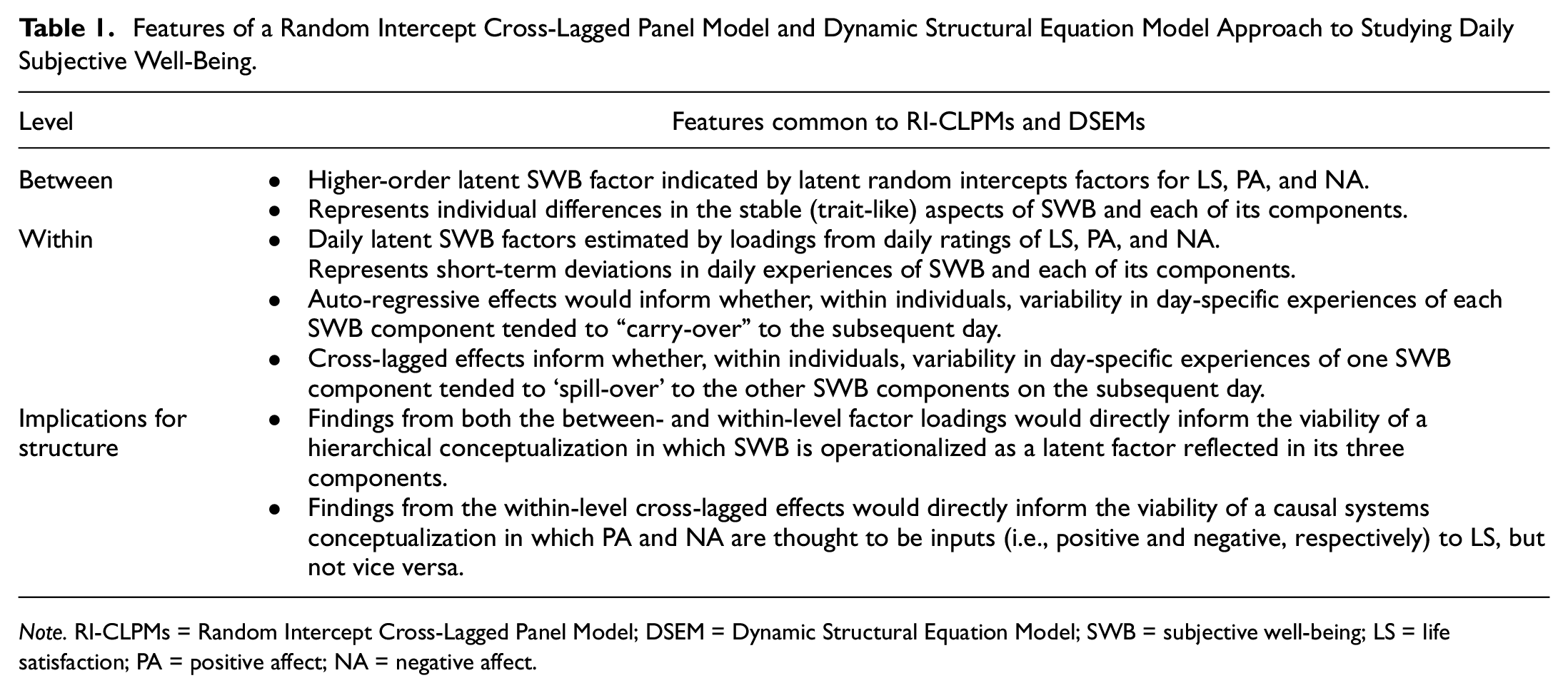
Note. RI-CLPMs = Random Intercept Cross-Lagged Panel Model; DSEM = Dynamic Structural Equation Model; SWB = subjective well-being; LS = life satisfaction; PA = positive affect; NA = negative affect.
Furthermore, the main model parameters of interest in an RI-CLPM can be freely estimated or constrained in various ways to test assumptions concerning stationarity in means, covariances, and predictive effects. This feature is particularly valuable in light of recent debates concerning whether the estimates of the cross-lagged effects derived using an RI-CLPM accurately capture the corresponding within-level effects derived using a multi-level approach (e.g., Lucas, 2022; Orth et al., 2018). The broader importance of this issue is underscored by the fact that RI-CLPMs are becoming increasingly popular as a means to study a variety of topics of interest to social and personality psychologists (e.g., personality and life experiences, e.g., Borghuis et al., 2020; personality and physical health, e.g., Luo et al., 2022; self-esteem and social relationships, e.g., de Moor et al., 2021; and interpersonal/intergroup functioning, e.g., Rau et al., 2019).
Thus, both for conceptual and empirical reasons, the ability to combine various features concerning between- and within-level effects within a single analytic model through using an RI-CLPM or a DSEM provides an important opportunity to clarify the structure of SWB, as well as other multidimensional or multicomponent constructs, based on jointly examining both stable between-individual differences and time-varying within-individual dynamics (Mulder & Hamaker, 2021). Note that the structure of SWB may differ at between- and within-person levels, as these levels of analysis are mathematically orthogonal and may represent distinct psychological processes (Affleck et al., 1999; Nezlek, 2001). Several studies have examined between- and within-individual associations involving LS, PA, and/or NA individually (e.g., Jayawickreme et al., 2017; Newman et al., 2018; Steger et al., 2008; Tov & Lee, 2016). In other studies, researchers have employed RI-CLPMs to investigate the components of SWB separately in relation to other variables of interest (e.g., traits, values, health; Fetvadjiev & He, 2019; Grosz et al., 2021; Hudson et al., 2019; Santos & Grossman, 2018; Santos & Grossmann, 2021; Stavrova & Denissen, 2021).
To date, however, only one study has used an RI-CLPM to directly inform the structure of SWB based on between- and within-level associations among all three components. In that study, Busseri and Quoidbach (2022) reported results from an experience sampling study of French adults who rated their LS, PA, and NA at random moments across multiple days. These authors found strong loadings for latent random intercept factors from LS, PA, and NA on a higher-order latent SWB factor, strong loadings from LS, PA, and NA on latent SWB factors at each assessment, and small and inconsistent cross-lagged effects across assessments. Together, such findings provide preliminary evidence in support of a hierarchical structural conceptualization of daily SWB. However, the RI-CLPM tested by Busseri and Quoidbach (2022) was estimated based on just four assessments per participant. Also, participants had the option to complete a given assessment (or not) when randomly prompted at various times each day; consequently, the separation between repeated assessments varied between and within participants. This design feature creates uncertainty concerning how to appropriately interpret the results concerning associations among LS, PA, and NA within and across time. An important next step, therefore, would be to evaluate the structure of SWB based on a larger number of repeated assessments of LS, PA, and NA collected using a consistent schedule.
The Present Work
In light of these issues, the goal of this study was to clarify the structure of daily SWB using two state-of-the-art analytic approaches. To do so, we examined daily ratings of LS, PA, and NA collected across 14-day periods based on a fixed assessment schedule from a large sample of participants. Both DSEM and RI-CLPM approaches were used to model between- and within-individual variation in daily ratings of LS, PA, and NA. We used both DSEM and RI-CLPM to inform the robustness and consistency of results concerning the structure of SWB across analytic approaches. This approach also provided important new methodological insights concerning the comparability of results based on single-level (RI-CLPM) and multilevel (DSEM) analytic approaches. Furthermore, multi-item ratings of daily PA and NA were examined (along with a single-item rating of LS), providing a more comprehensive sampling of daily affect (Diener et al., 2010) compared to the single-item ratings employed by Busseri and Quoidbach (2022). Together, these features provided a rigorous and robust examination of the structure of daily SWB based on stable differences between individuals and time-varying within-individual dynamics.
Method
Participants and Procedure
Data were drawn from 10 daily diary studies collected by the second author between 2013 and 2020. Participants were undergraduates from universities in two states (Virginia and California) who completed daily ratings of LS, PA, and NA across 14 consecutive days. Additional methods details are provided in Table 2. The data examined in this work comprised responses from 911 participants (Mage = 19.69 years, SD = 1.89; 74.8% female) who completed 11,198 daily reports (M = 12.29, mdn = 13, SD = 1.98, range = 5–14). Ethics clearance for each of the studies was provided by the host institutions; informed consent was provided by each participant. Post hoc analyses indicated high statistical power (.80 or greater) to detect as statistically significant (two-tailed, α = .05) small effects, both at the between (rs = .09 or greater) and within levels (rs = .04 or greater).
Additional Procedural Details, Data Cleaning Decisions, and Daily Measure Descriptions.
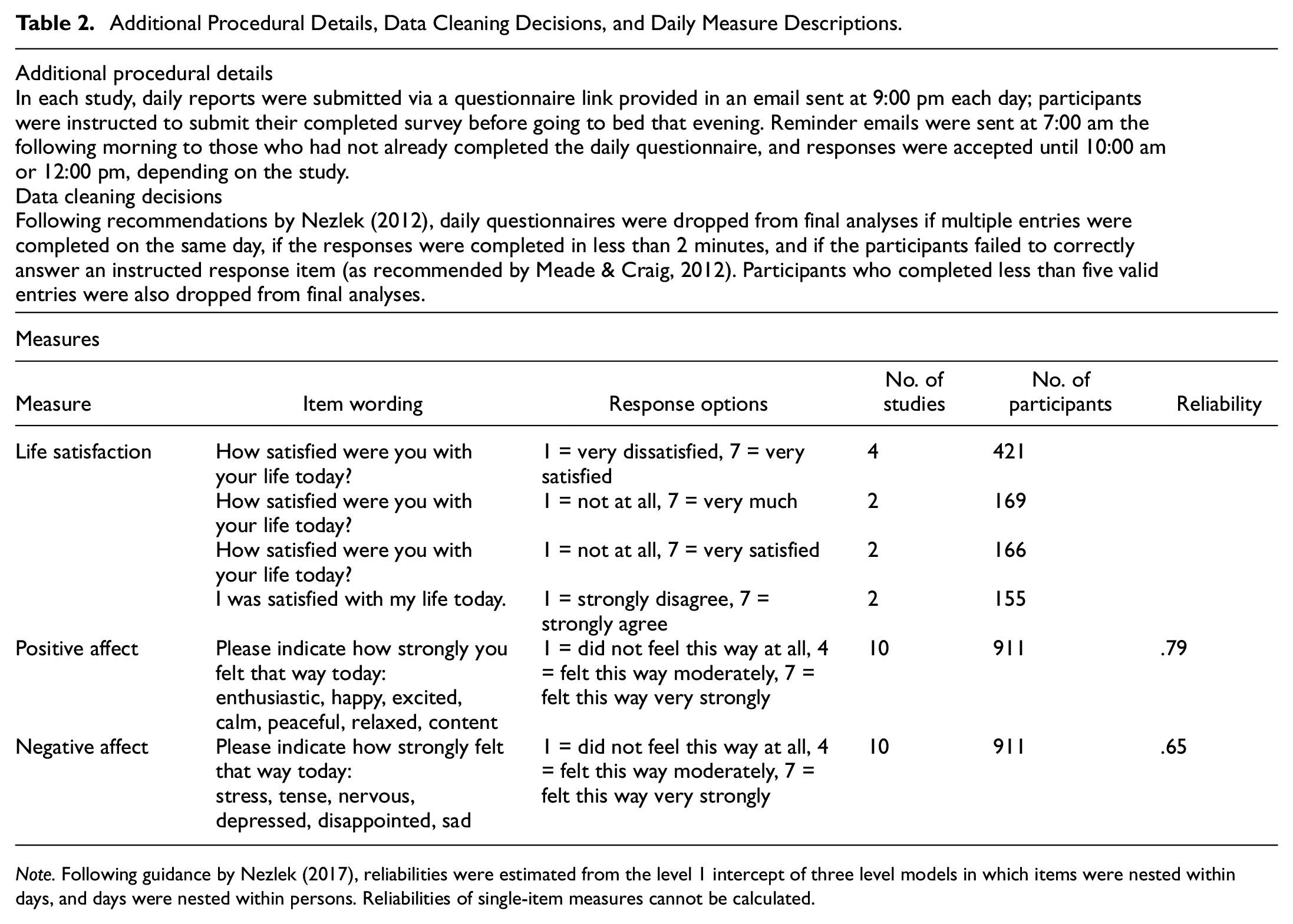
Note. Following guidance by Nezlek (2017), reliabilities were estimated from the level 1 intercept of three level models in which items were nested within days, and days were nested within persons. Reliabilities of single-item measures cannot be calculated.
Measures
Daily LS was assessed using one or two items, depending on the study. Common across studies was one item specifically referencing one’s satisfaction with their life on that day. Given their commonality in focus and response ranges, ratings were treated as comparable indicators of each participant’s daily LS. Daily PA and NA were assessed using multiple items. Daily ratings for 13 items common across studies were combined into composite (average) scores for PA and NA. See Table 2 for details.
Open Science Statement
This study was not preregistered. The data files and Mplus analysis code employed in the present work are available at: https://osf.io/6y5d9/?view_only=64f40ae661684887a3fa17a574ff96df
Each study included additional measures (e.g., rumination, nostalgia, emotion regulation, meaning in life, and gratitude), none of which were relevant to, or examined as part of, the present analysis. Details can be found in the original reports of the individual studies (Newman et al., 2019, 2020, 2021; Newman, Nezlek, et al., 2018; Newman, Schug, et al., 2018; Newman & Nezlek, 2019, 2022; Newman & Sachs, 2020, 2022; Nezlek et al., 2017). None of these previous studies examined all three SWB components in the same analysis or evaluated competing structural conceptualizations based on associations among LS, PA, and NA.
Data Analysis
Model 1 was a multivariate two-level DSEM (see Figure 1). Model 2 was an RI-CLPM (see Figure 2). Both models estimated variability in, and associations among, all three SWB components based on between-individual differences and within-individual variability in daily ratings of LS, PA, and NA.
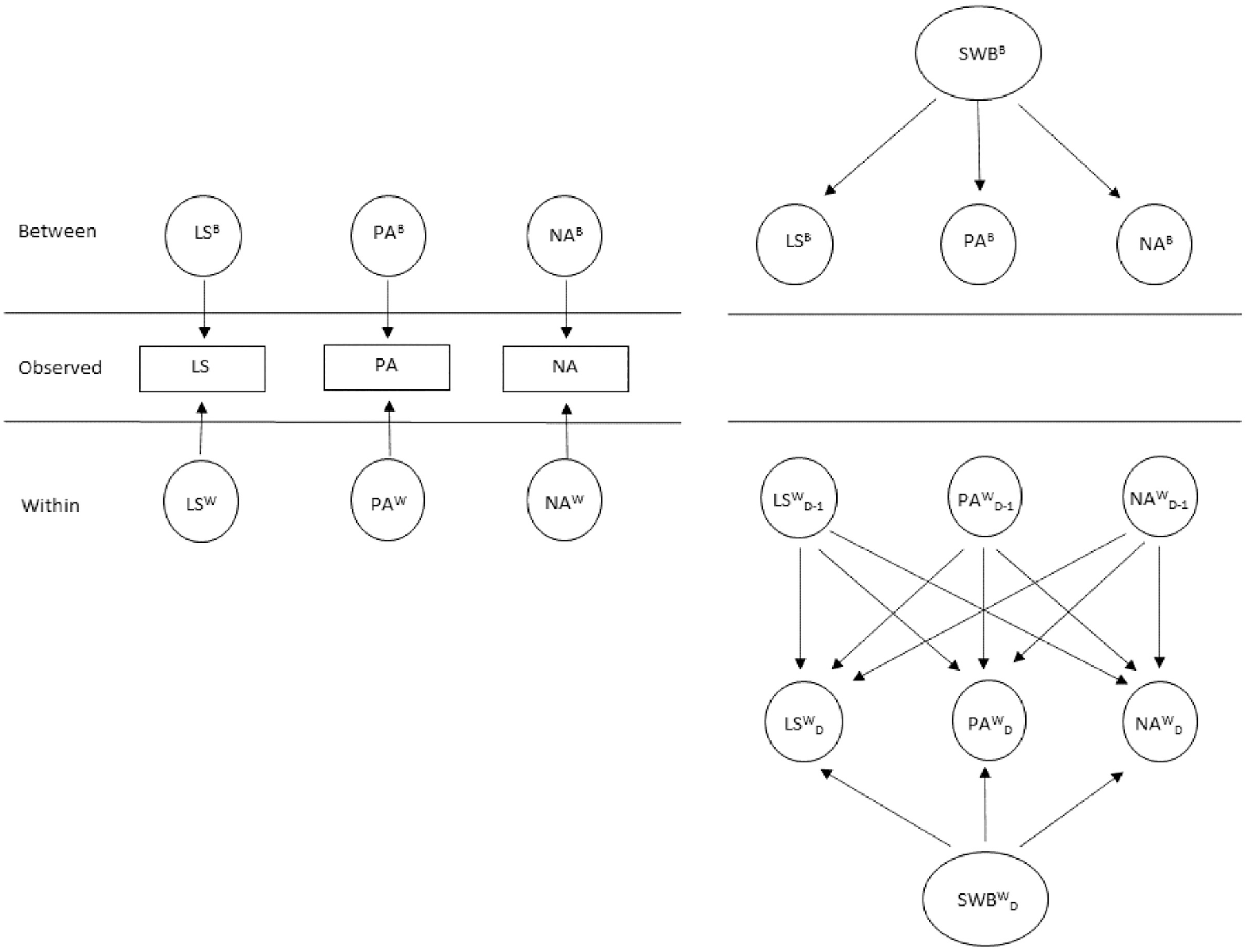
Two-Level Multivariate Dynamic Structural Equation Model (DSEM; Model 1).
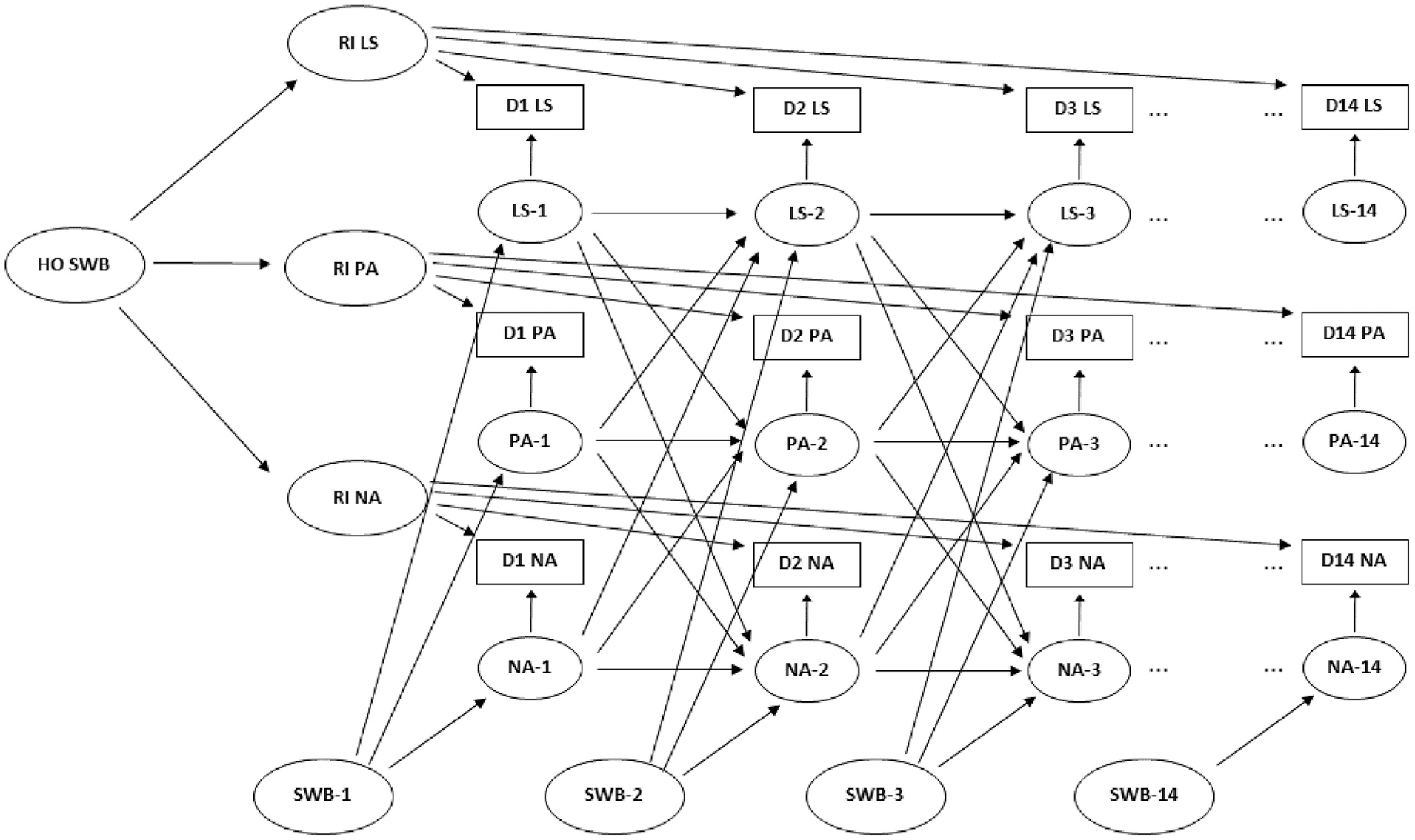
Random Intercept Cross-Lagged Panel Model (RI-CLPM; Model 2).
At the between level, a higher-order latent SWB factor was estimated based on loadings from the latent random intercept factors for LS, PA, and NA. At the within level, daily latent SWB factors were estimated based on loadings from the daily latent variables for LS, PA, and NA, along with auto-regressive and cross-lagged predictive effects among all three SWB components across adjacent days. Model estimation and specification details are provided in the Supplemental Information File. Note that with the model specifications and constraints in place, the RI-CLPM was statistically identical to the DSEM.
Results
Descriptive statistics for LS, PA, and NA are shown by level in Table 3, and by day in Table 4. Pairwise correlations among the daily SWB scores are provided in Supplemental Table 1.
Descriptive Statistics for Life Satisfaction, Positive Affect, and Negative Affect Scores, by Level.
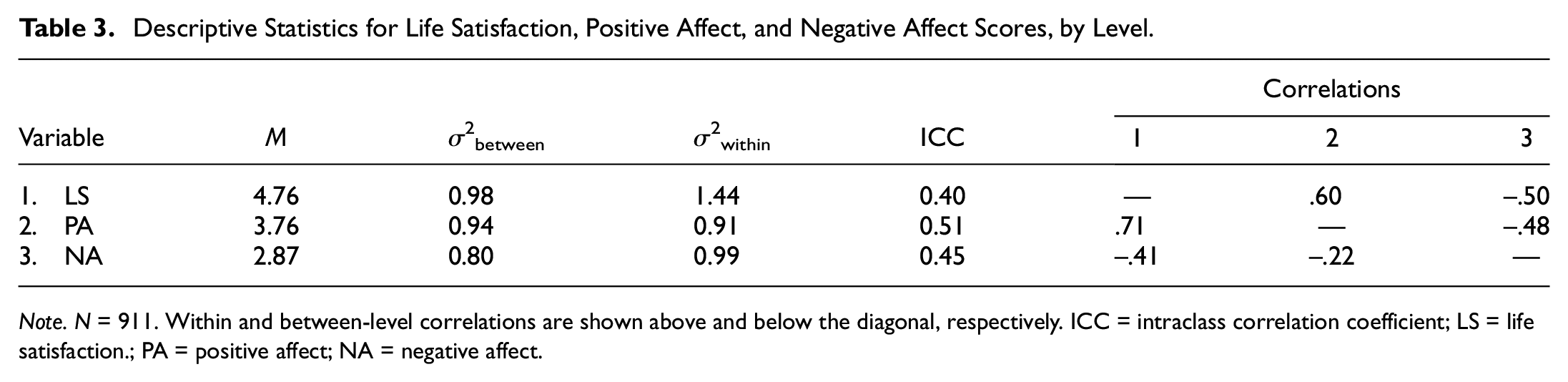
Note. N = 911. Within and between-level correlations are shown above and below the diagonal, respectively. ICC = intraclass correlation coefficient; LS = life satisfaction.; PA = positive affect; NA = negative affect.
Descriptive Statistics for Life Satisfaction, Positive Affect, and Negative Affect Scores, by Day.
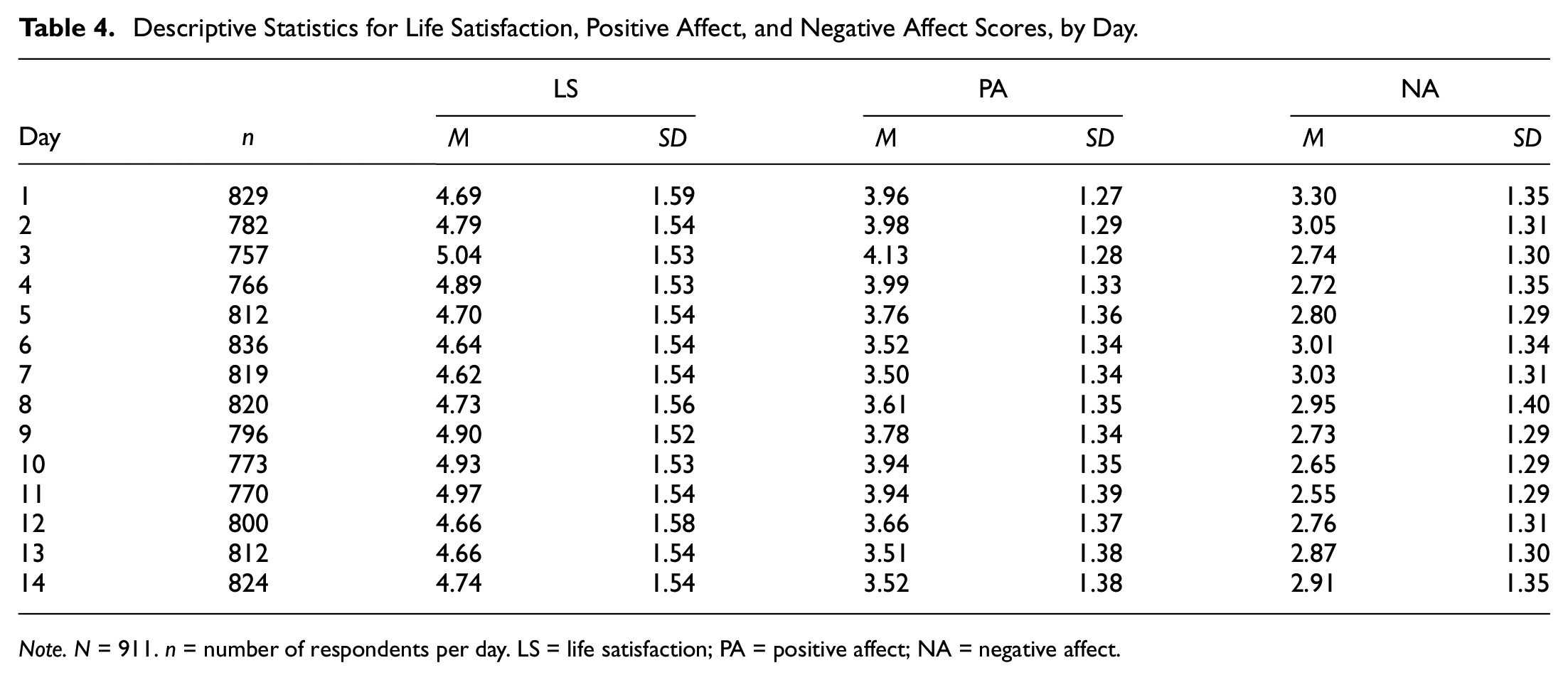
Note. N = 911. n = number of respondents per day. LS = life satisfaction; PA = positive affect; NA = negative affect.
For the DSEM (Model 1), DIC = 93908.82. Parameter estimates are shown in Table 5, Table 6, and Supplemental Table 2. The between-level results revealed moderate to strong loadings from the latent random intercepts for LS, PA, and NA (positive, positive, and negative, respectively) on the higher-order latent SWB factor. These loadings suggest that individual differences in the latent SWB factor explained a moderate amount of the individual differences in the stable (i.e., nontime-varying) aspects of LS, PA, and NA (i.e., the latent random intercepts). More specifically, squaring the standardized loadings reveals that the latent SWB factor explained 98%, 49%, and 14% of the between-individual variability in LS, PA, and NA, respectively.
Standardized Parameter Estimates From Dynamic Structural Equation Model (DSEM; Model 1) and Random Intercept Cross-Lagged Panel Model (RI-CLPM; Model 2).
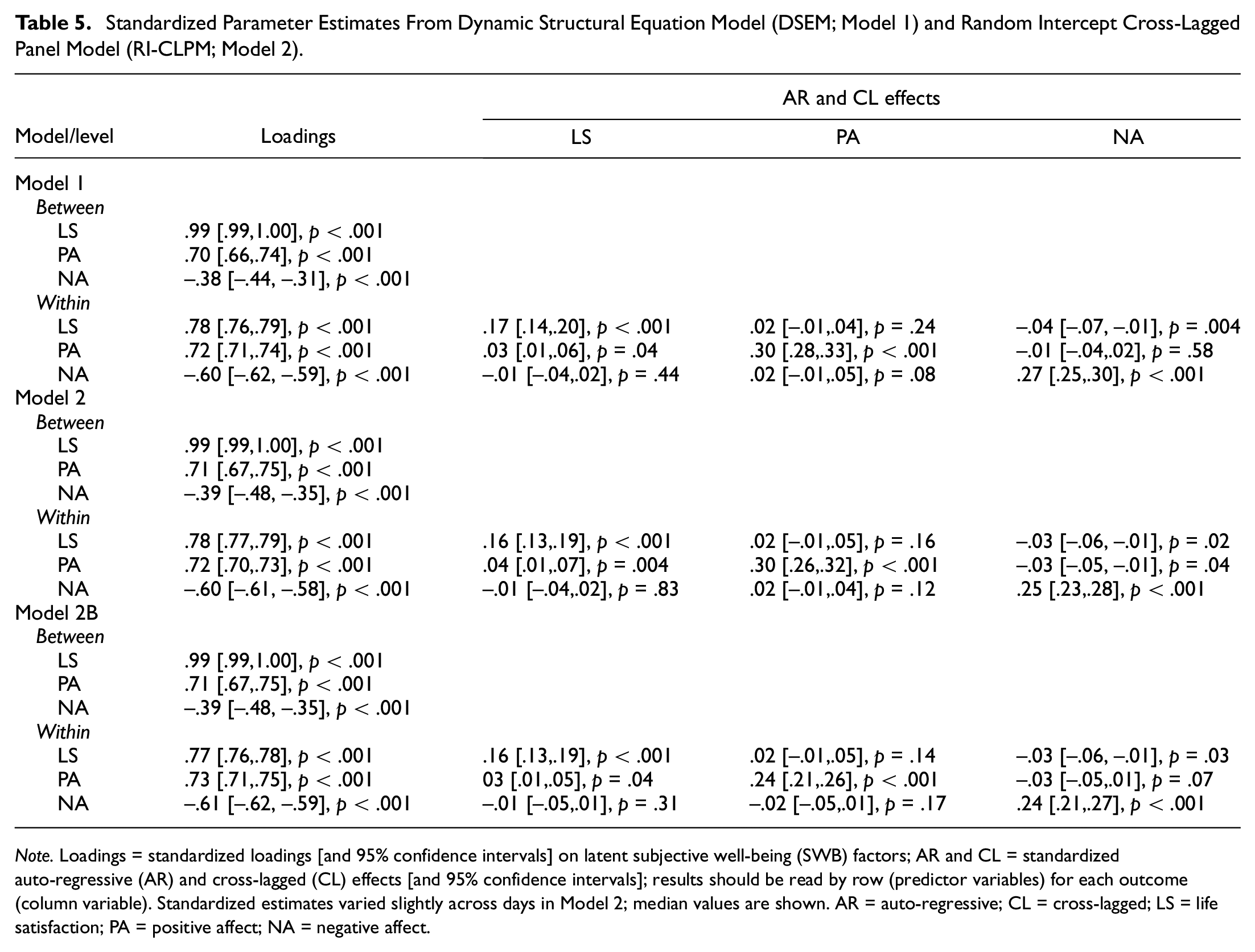
Note. Loadings = standardized loadings [and 95% confidence intervals] on latent subjective well-being (SWB) factors; AR and CL = standardized auto-regressive (AR) and cross-lagged (CL) effects [and 95% confidence intervals]; results should be read by row (predictor variables) for each outcome (column variable). Standardized estimates varied slightly across days in Model 2; median values are shown. AR = auto-regressive; CL = cross-lagged; LS = life satisfaction; PA = positive affect; NA = negative affect.
Additional Results From Dynamic Structural Equation Model (DSEM; Model 1) and Random Intercept Cross-Lagged Panel Model (RI-CLPM; Model 2).
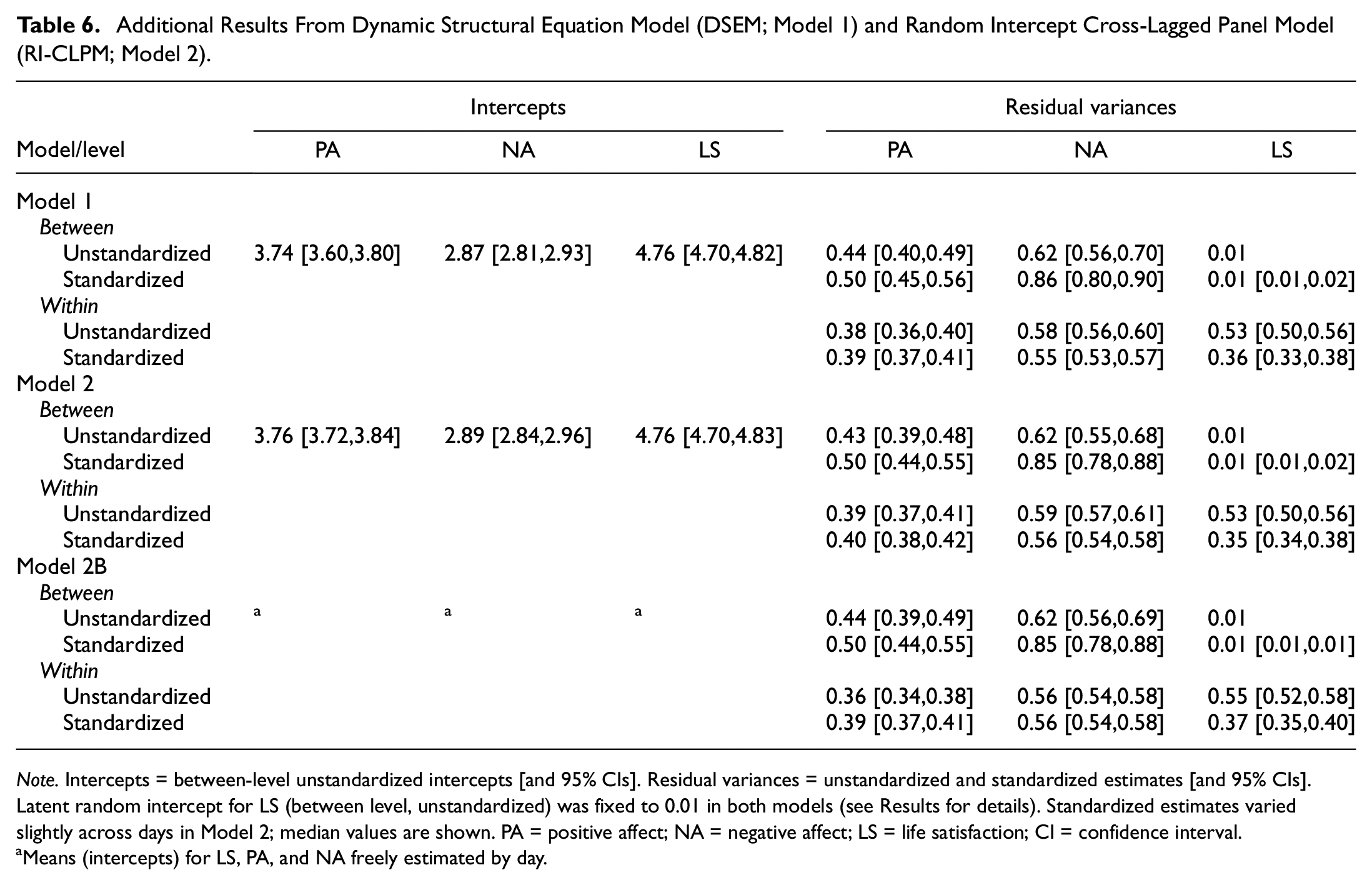
Note. Intercepts = between-level unstandardized intercepts [and 95% CIs]. Residual variances = unstandardized and standardized estimates [and 95% CIs]. Latent random intercept for LS (between level, unstandardized) was fixed to 0.01 in both models (see Results for details). Standardized estimates varied slightly across days in Model 2; median values are shown. PA = positive affect; NA = negative affect; LS = life satisfaction; CI = confidence interval.
Means (intercepts) for LS, PA, and NA freely estimated by day.
Within-level results revealed strong loadings from the daily latent LS, PA, and NA variables on the daily latent SWB factors (positive, positive, and negative, respectively). Squaring the standardized loadings indicates that the within-individual variability in the latent SWB factor explained 61%, 52%, and 36% of the within-individual variability in LS, PA, and NA, respectively.
The within-level auto-regressive effects were moderate and statistically significant. These estimates indicate a small to moderate degree of within-individual carry-over in the day-specific experiences of LS, PA, and NA. That is, days on which a given individual reported higher PA than was typical for that individual predicted higher than typical PA for that individual on the following day. The within-level cross-lagged effects were generally small in magnitude and inconsistent in direction and statistical significance. Nonetheless, there was some evidence of small directional predictive effects from higher PA to greater LS, and from greater LS to lower NA. These estimates indicate a small degree of within-individual spill-over among the day-specific experiences of LS, PA, and NA. More specifically, days on which a given individual reported higher PA than was typical for that individual predicted higher than typical LS on the following day; and days on which an individual reported higher LS than was typical for that individual predicted lower than typical NA on the following day.
For the RI-CLPM (Model 2), model fit indices were as follows: χ2 = 2401.99, df = 922, p < .001; CFI = .94, RMSEA = .04 (p for close fit > .99), SRMR = .05, BIC = 94423.68. Parameter estimates for the between- and within-level effects were nearly identical (i.e., ±0.01) to those obtained in Model 1 (see Table 5, Table 6, and Supplemental Table 2). Note that inspection of the Model 2 estimation residuals revealed several large residual means not accounted for by the model. Such findings suggest that the assumption of stationary (i.e., constant) means per SWB component may not be viable. Accordingly, we estimated a modified model (Model 2B) in which each of the means for LS, PA, and NA were freely estimated (resulting in 62 estimated parameters). This model provided excellent fit: χ2 = 1482.02, df = 883, p < .001; CFI = .98, RMSEA = .03 (p for close fit > .99), SRMR = .05, BIC = 93769.48. Parameter estimates were highly consistent with the fully constrained model (see Tables 5, 6, and Supplemental Table 2), suggesting that relaxing the assumption of stationarity on the mean ratings for LS, PA, and NA over time did not result in substantive changes (vs. the original model) concerning either the between- or within-level results.
Additional results concerning the within-individual correlations among LS, PA, and NA are reported in the Supplemental Information file.
Discussion
Support for a Hierarchical Conceptualization of Daily SWB
Despite the simplicity of Diener’s (1984) tripartite formulation of SWB comprising LS, PA, and NA, confusion remains concerning how SWB should be conceptualized and operationalized based on its three primary components (Busseri & Sadava, 2011). The present analyses provide valuable new evidence concerning the structure of daily SWB based on daily reports of LS, PA, and NA using a large sample of participants who completed assessments of all three components across a 14-day period. The loadings for the latent random intercepts for LS, PA, and NA on the higher-order latent SWB factor suggest that a moderate (NA, PA) to very high (LS) amount of the between-person variability in the stable aspects of the three SWB components was explained by the higher-order latent SWB factor. Similarly, the loadings for the daily-latent LS, PA, and NA variables on the daily-latent SWB factors suggest that a moderate (NA) to high (LS, PA) amount of the within-person variability in individuals’ daily experiences of LS, PA, and NA was explained by the daily-latent SWB factor. Furthermore, within-person spill-over effects between daily experiences of LS, PA, and NA were small in magnitude and did not suggest a consistent unidirectional flow of effects in which an individual experiencing greater PA and lower NA than typical for that individual on one day would tend to experience higher than typical LS on the subsequent day.
These results converge with the only other previous published study using an RI-CLPM to examine momentary ratings of LS, PA, and NA (Busseri & Quoidbach, 2022). Present findings are also consistent with a small series of studies comparing competing conceptualizations of the structure of SWB based on individual differences in LS, PA, and NA (Busseri, 2015, 2018; Metler & Busseri, 2017). Extending these findings, the present work provides new evidence concerning the structure of daily SWB based on a larger number of repeated assessments, multi-item measures of PA and NA, a fixed-response schedule, and (for the first time) a state-of-the-art statistical approach combining multilevel modeling and SEM approaches. Together, the present findings strongly support a hierarchical conceptualization for SWB, both with respect to stable individual differences and in terms of daily fluctuations in LS, PA, and NA (as reflected in the between- and within-level findings, respectively).
The present work is also the first empirical examination of the structure of daily SWB based on a two-level multivariate DSEM and a single-level RI-CLPM. Results were (nearly) identical across analysis methods, providing evidence of the robustness of the between- and within-individual effects derived using each approach. Such findings are particularly noteworthy in light of ongoing debates concerning the meaning and interpretation of cross-lagged effects estimated in RI-CLPMs—particularly with respect to the separation of between-person associations from within-individual effects (e.g., Lucas, 2022; Lüdtke & Robitzsch, 2021; Orth et al., 2021; Zyphur, Allison, et al., 2020). In particular, our findings demonstrate that a RI-CLPM can be used to recover (nearly) identical estimates of the fixed effects obtained using a two-level DSEM. The developers of the RI-CLPM have emphasized its utility for estimating both between and within-individual effects using a single-level (rather than multilevel) analysis (Hamaker et al., 2015; Usami et al., 2019). Here we demonstrate for the first time that an appropriately constrained RI-CLPM produces parameter estimates that are (nearly) identical to the corresponding fixed-effects estimates derived using a two-level DSEM. The implications of these findings extend beyond research questions concerning the structure of SWB. Indeed, advanced longitudinal data analytic techniques, including RI-CLPMs, have been increasingly used to examine between- and within-person variability in the context of a wide range of topics, including multidimensional or multicomponent constructs such as personality stability and change (Costa et al., 2019), dynamic links between self-esteem and depression (Orth et al., 2018), and psychopathic traits (Zettler et al., 2021).
Also noteworthy from a methodological perspective, the present work demonstrates that an appropriately constrained RI-CLPM can also be used to evaluate the adequacy of a DSEM. This insight is valuable, given that DSEM fit indices are limited at present (Hamaker et al., 2018; McNeish & Hamaker, 2020), and although useful for comparing between nested models (Asparouhov et al., 2018), do not directly inform the tenability of several key multilevel modeling assumptions related to constant means, variances, and covariances. In this regard, the present findings demonstrate that when model fit information from an RI-CLPM indicates that such assumptions are not tenable (e.g., if daily means are not constant over time), problematic constraints can be easily addressed (e.g., daily means can be freely estimated), providing greater flexibility than is currently available through DSEM applications such as Mplus.
Despite consistent support in the present findings for a hierarchical structural conceptualization of SWB, at the between-level, the latent random intercept for LS had a much stronger (and near perfect) loading on the higher-order latent SWB factor compared to the latent random intercepts for PA and NA. At the within level, loadings on the daily latent SWB factor were more comparable across components (albeit stronger for LS and PA vs. NA). Such differential patterns of loadings may suggest that the relative proportions of shared versus unique variance in three SWB components varies both across components and levels (between vs. within). Furthermore, substantial portions of variance in the SWB components, particularly PA and NA, were unexplained by the higher-order (between-level) and daily (within-level) latent SWB factors. The implications of such results for understanding daily SWB as an experience that is trait-like and varying between individuals, and yet also state-like and varying within individuals over time are in need of further clarification, including with respect to intervention efforts aimed at boosting individuals’ SWB (e.g., Bolier et al., 2013; Heintzelman et al., 2020).
Additional research is also needed to inform fundamental issues concerning the hierarchical structure of SWB that were not addressed in the present work. Such issues include factors that might explain different features of SWB as reflected in the various components of the models tested in the present work, such as: individual differences in (trait-like) levels of latent SWB; aspects of LS, PA, and NA that are independent of the higher-order latent SWB factor; fluctuations within individuals in daily latent SWB; and dynamic individual-level experiences in LS, PA, and NA that are independent of the daily latent SWB factors. We speculate that relevant factors are likely to include stable and dynamic external factors (e.g., socioeconomic conditions, and income), major life events, personal characteristics (e.g., personality and other stable traits), and daily experiences.
The present evidence in support of a hierarchical conceptualization has important theoretical and empirical implications. In particular, researchers interested in understanding SWB as a tripartite construct (as opposed to focusing on LS, PA, and NA as separate components or as a causal system) should assess all three components and use a latent variable modeling approach to account for both the shared and unique aspects of LS, PA, and NA. Such steps would be valuable even in (or particularly for) studies examining predictive effects of other variables on SWB, as well as studies testing predictive effects among LS, PA, and NA. Furthermore, tabulations and synthesis of SWB-related findings, which are typically done based on LS, PA, and NA as separate components (e.g., Anglim et al., 2020; Klug & Maier, 2015; Luhmann et al., 2012), are needed based on results concerning SWB as a latent factor along with specific links involving the unique (vs. shared) aspects of LS, PA, and NA (e.g., Busseri, 2015).
Looking beyond research concerning the structure of SWB, the present approach of (a) testing competing notions concerning associations among components of a multidimensional construct and (b) using longitudinal data analytic approaches to separate the between-level (trait-like) and within-level (dynamic) variability has much broader relevance. Indeed, many of the same issues examined in this work with respect to SWB could help inform other multidimensional or multicomponent constructs examined by social and personality psychologists, including (but not limited to) the structure of attitudes, generalized and specific forms of prejudice, self-concept (including self-esteem), and the structure of personality.
Limitations
In addition to the caveats discussed above, we note that the present findings are limited by exclusive reliance of daily ratings from undergraduate students from two American universities. Although the present results are consistent with recent findings based on a large-scale experience sample of French adults (Busseri & Quoidbach, 2022), it is unclear how results would differ if based on individuals from other parts of the country, or other cultures and countries (Henrich et al., 2010), as well as a function of socio-demographic factors such as age, socioeconomic status (SES), income, or living conditions (Diener et al., 2018).
Furthermore, only fixed effects could be estimated, given the number of parameters estimated at the within-level relative to the number of observations per participant (i.e., 15 and 14, respectively). Future research is needed based on a larger number of repeated assessments (e.g., 50 or more, Hamaker et al., 2018) to evaluate random (within-individual) effects concerning the structure of daily SWB.
Related, whereas our design comprised day-end ratings of LS, PA, and NA, additional insights would be gleaned by collecting multiple ratings of each SWB component within each day (i.e., experience sampling). Such an approach would permit examining the structure of SWB with respect to variability in LS, PA, and NA between individuals and within individuals in terms of both day-to-day and moment-to-moment fluctuations. Such an approach would provide important new insights concerning individuals’ experiences of SWB as they live their lives not only from day-to-day, but also from moment-to-moment.
We also note that even basic descriptive features and psychometric properties of measures used to assess psychological constructs that are studied jointly in terms of stable individual differences and time-varying experiences may vary across levels of analysis (Adolf et al., 2014; Brose et al., 2015; Wright & Zimmermann, 2019). Thus, although the measures we employed are widely used for such purposes, further work is needed to more closely evaluate both the between- and within-level psychometric properties of these scales.
Finally, we examined variation in daily ratings of LS, PA, and NA in terms of between- and within-level associations based on a single-level (RI-CLPM) and two-level (DSEM) frameworks to compare the robustness and consistency of results concerning the associations among the three SWB components. However, various other analytic approaches to analyzing results based on multivariate longitudinal designs could also be employed, including stable trait auto-regressive trait and state (STARTS) models (Usami, 2021; Usami et al., 2019; Zyphur, Voelkle, et al., 2020). To date, however, the multilevel DSEM framework has not been directly examined in relation to the various single-level approaches (Zyphur, Voelkle, et al., 2020). Thus, more research is needed to directly compare results from the same data across analytic frameworks, including with respect to corresponding between- and within-level parameter estimates derived from single- versus multilevel models. Accordingly, we caution against generalizing our findings beyond the two analytic frameworks and model constraints utilized in the present work.
Conclusion
The primary contribution of this work is in providing robust new evidence to help resolve long-standing confusion and uncertainty concerning Diener’s (1984) influential tripartite formulation of SWB. Results based on state-of-the-art multi-level (DSEM) and single-level (RI-CLPM) analytic approaches converged in supporting a hierarchical structure. Thus, it appears that variation in daily SWB—including differences between individuals and variation within individuals over time—can be conceptualized as an underlying sense of well-being, reflected in the common and unique aspects of individuals’ daily experiences of LS, PA, and NA. More generally, the approach employed in this work provides a valuable demonstration of how social and personality psychologists could advance our understanding of other multidimensional or multicomponent constructs using longitudinal designs to jointly examine stable (trait-like) individual differences and dynamic (time-varying) experiences within individuals.
Supplemental Material
sj-docx-1-spp-10.1177_19485506221125416 – Supplemental material for Happy Days: Resolving the Structure of Daily Subjective Well-Being, Between and Within Individuals
Supplemental material, sj-docx-1-spp-10.1177_19485506221125416 for Happy Days: Resolving the Structure of Daily Subjective Well-Being, Between and Within Individuals by Michael A. Busseri and David B. Newman in Social Psychological and Personality Science
Supplemental Material
sj-xlsx-2-spp-10.1177_19485506221125416 – Supplemental material for Happy Days: Resolving the Structure of Daily Subjective Well-Being, Between and Within Individuals
Supplemental material, sj-xlsx-2-spp-10.1177_19485506221125416 for Happy Days: Resolving the Structure of Daily Subjective Well-Being, Between and Within Individuals by Michael A. Busseri and David B. Newman in Social Psychological and Personality Science
Footnotes
Handling Editor: Richard Slatcher
Declaration of Conflicting Interests
The author(s) declared no potential conflicts of interest with respect to the research, authorship, and/or publication of this article.
Funding
The author(s) disclosed receipt of the following financial support for the research, authorship, and/or publication of this article: For D. Newman, this research was supported by NIMH (T32MH019391)

Supplemental Material
Supplemental material is available in the online version of the article.
Author Biographies
References
Supplementary Material
Please find the following supplemental material available below.
For Open Access articles published under a Creative Commons License, all supplemental material carries the same license as the article it is associated with.
For non-Open Access articles published, all supplemental material carries a non-exclusive license, and permission requests for re-use of supplemental material or any part of supplemental material shall be sent directly to the copyright owner as specified in the copyright notice associated with the article.
