




Abstract
Concept creep explains how established social concepts expand to incorporate new phenomena, with such expansions fundamentally changing conceptual definitions and contributing to a loss of a shared social understanding. However, the existing work has focused on concept creep within a small number of categories that are typically more salient for those on the political left. In this work, we examined whether concept creep is a predominantly leftist phenomenon, or whether the same conceptual expansion is present for typically conservative-salient categories, by exploring judgments of concept breadth for a range of social topics. We found evidence for such symmetry when considering concept breadth for categories such as sexual deviance, terrorism, and personal responsibility—with some nuanced exceptions. We discuss our findings in relation to growing political polarization, intergroup relations, and the study of partisan differences using a variety of politically salient stimuli.
Introduction
In a target article for the journal Psychological Inquiry in early 2016, Nick Haslam identified a tendency among psychology to broaden social categories, such that existing category labels begin to encompass a wider and more diluted range of exemplars (Haslam, 2016). Haslam (2016) invoked a range of concepts that have seemingly expanded in recent decades, such as trauma, mental illness, abuse, addiction, prejudice, and bullying. He argued that a coherent explanation about how concept creep occurs must simultaneously explain: (a) Why concepts appear to expand in size, rather than recede? (b) Why such an expansion is only observable for negative concepts? and (c) Why concepts expand both vertically (i.e., when less extreme examples of phenomena are incorporated into an existing category) and horizontally (i.e., when categories are conceptually redefined to encompass a new application or context).
There are a range of potential positive and negative implications of concept creep. For example, “concept creep runs the risk of pathologizing everyday experience and encouraging a sense of virtuous but impotent victimhood” (Haslam, 2016, p. 1). The sociologist Frank Furedi (2016) is sympathetic to these concerns, suggesting that concept creep gives a perception of legitimacy to a cultural trend toward the encouragement and sacralization of vulnerability and victimhood (see also Campbell & Manning, 2018). However, Niemi and Young (2016) argue that the expansion of concepts allow disadvantaged groups to express how cultural pressures lead to their overt and covert victimization. This subsequently opens the possibility of third parties being able to act on the behalf of disadvantaged groups to prevent harm (Cascardi & Brown, 2016; Cikara, 2016). There may also be opportunities to label previously confusing experiences, which affords greater access to health care and other support services (Haslam & McGrath, 2020).
The idea of concept definitions creeping to encompass a broader range of phenomena is suggested to be a normal human process (Brandt & Proulx, 2016). That is, as humans, our brains process vast amounts of information at any one time, and the use of cognitive heuristics to make information processing easier often necessitates the broadening of social concepts to enhance the utility of such mental shortcuts (Evans, 2008; Gigerenzer, 2008; Gilovich et al., 2002; Tversky & Kahneman, 1974). According to Brandt and Proulx (2016), conceptual creep sometimes leads to us making inferences that “are not always accurate, but they may be “good enough” for people to make functional judgments that reduce complexity and allow understanding” (p. 19). Just as in human cognition, psychological scientists and mental health professionals engage in concept creep to discover new ways of working their respective areas. In the mental health domain, several people have observed the dilution of diagnostic criteria for issues such as depression (which now does not exempt grief; Boelen et al., 2019; Hari, 2018) and posttraumatic stress disorder (PTSD; which now encompasses a range of potential triggers, including economic, social, and political hardship; McNally, 2016). While these may seem to be the excesses of concept creep, others have argued that these types of conceptual expansions provide an entry point for people gaining access to treatment where they otherwise may have suffered in isolation (Cascardi & Brown, 2016). In the research context, social psychologists studying concepts related to prejudice have found that expanding the range of target groups in their research has opened up the possibility to identify a range of politically-symmetric motivations for ingroup/outgroup biases (Brandt, 2017; Brandt & Crawford, 2019; Crawford & Brandt, 2020; Ditto et al., 2019; Mallinas et al., 2018). That is, while work into the nature of prejudice has historically only considered a small group of potential victim groups, expanding the potential range of individuals who could be subject to prejudice because of their group status produces a fuller understanding of the nature of prejudice.
While Haidt (2016) suggested that concepts inherently seem to creep in the direction of the political left, this may be a function of the types of concepts under investigation. In Haslam’s (2016) article, he identified the topics abuse, prejudice, bullying, mental health, trauma, and addiction as concepts that have crept beyond their traditional or historical boundaries. An explanation cited for creep in these domains was that they all tap into a moral impulse to care for those less fortunate or actively oppressed within society, which is a typically liberal one (Graham et al., 2009). Haslam et al. (2020) highlighted this leftward-looking nature as a potential limitation to the existing literature on concept creep, suggesting that the term could become enlisted as a tool in the “culture wars” to demean or reject moral concerns from the left as examples of so-called “snowflake” styles of thinking.
As acknowledged by a range of researchers, sampling attitudes and perceptions about a broader range of target concepts have the potential to identify symmetries in behaviors across the ideological spectrum (Clark & Winegard, 2020; Crawford & Brandt, 2020; Ditto et al., 2019; Elad-Strenger et al., 2019; Voelkel & Brandt, 2019). This is not something that has yet been done in relation to concept creep, rendering conclusions about its directional nature premature. However, there are plausible reasons to assume that the broadening of social concepts might be tied in a motivational way to ideological positions, including the epistemic need for groups to have internally-consistent perspectives (Frimer et al., 2017). That is, as concepts become less coherent, or examples become questionable, a sense of shared reality within ideological groups becomes more difficult to maintain. As such, concept definitions may become expanded to maintain clear categories. In addition to epistemic motives there may also be social motives related to the breadth with which concepts are defined. According to Tosi and Warmke (2016, 2020), the act of moral grandstanding involves processes including the ramping up of moral attitudes (expressing increasingly extreme views), trumping up social issues (identifying moral problems where they do not exist), and demonstrating excessive outrage as a way of communicating moral virtue. The trumping up of social issues is particularly relevant to the topic of concept creep, in that this process involves the dilution of social categories to include previously unconsidered examples (i.e., vertical creep), or bringing unproblematic behaviors as morally unjust or questionable (i.e., horizontal creep). In the political sphere, moral grandstanding linked to prestige motivations (i.e., the desire to be seen as morally inspiring to others) is associated with ideological extremism and affective polarization (Grubbs et al., 2020), which may act as a motivator for ideological and moral conflict within public discourse (Grubbs et al., 2019). Of particular importance, though, is that moral grandstanding effects were associated with ideological strength, rather than direction, in these studies. As such, we might expect to see expanded concept definitions (linked to the trumping up of social issues) across the ideological spectrum.
In this article, we apply the principle of ideological symmetry to the topic of concept creep. However, as truly measuring concept creep requires longitudinal work, we use the breadth of social concepts as a stand-in for this. That is, if concept creep is an example of motivated cognition (Haidt, 2016), then sampling a broader range of concepts that are applicable to both the political left and the political right may lead to symmetric responses across the ideological spectrum (Haslam et al., 2020). At the time of writing, those engaged in theoretical debates about ideological (a)symmetries have not explicated studied concept breadth across the ideological spectrum, and as such we are not suggesting that we are seeking to confirm the “rightness” or “wrongness” of any side of the debate. However, discussions about ideological (a)symmetries provide a coherent theoretical context within which to test whether self-labeled liberals and conservatives may engage in concept creep in a manner that supports a symmetric or asymmetric explanation.
Thus, in this work, we test competing hypotheses. The ideological symmetry hypothesis advanced by the aforementioned researchers is compared with the ideological asymmetry hypothesis, which suggests that liberals and conservatives are fundamentally different in their psychological characteristics and political expression (Baron & Jost, 2019; Jost, 2017; Jost et al., 2003). If the symmetric hypothesis is to be supported, we will find that liberals and conservatives differ in relation to the breadth of ideologically salient social concepts, with liberals’ and conservatives’ concept breadths being comparatively larger for concepts salient to their ideological views. If the asymmetric hypothesis is to be supported, we would only see enhanced concept breadth among more liberally-minded participants, and only for categories that are salient on the political left (see Haidt, 2016; Haslam, 2016). We present two studies in this paper (Study 1 in the United Kingdom and Study 2 in the United States). In doing so, we describe the results emerging from both samples, before presenting an over-arching general discussion of the data and their implications.
Open Science Practices
All materials, data, and analysis scripts are available open access via the Open Science Framework at https://osf.io/g9jxk/. The pre-registration for Study 2 is also available at this link.
Study 1
Method
Participants
In planning our sample, we were restricted by the availability of funding, which limited us to a maximum of 650 participants to be recruited via a Qualtrics panel. We recruited our sample of British community members using a Qualtrics panel between the dates of April 27, 2017 and May 11, 2017. In total, 628 people clicked on the survey link. We retained only those participants who completed the political conviction measure, leaving 592 participants in the sample (303 female, 283 male, and 6 other/prefer not to say; Mage = 35.1 years, SD = 13.9), with 63 choosing not to answer at least one question in the rest of the survey. All participants were resident in the United Kingdom at the time of data collection. Owing to the nature of the study, we asked Qualtrics to recruit an approximately even number of self-identified liberals (n = 189), political moderates (n = 202), and conservatives (n = 201) to allow for fair comparisons to be made between-groups.
Materials
Demographics
Participants were asked to provide information about their sex (male/female), age (in years), and education (lower than an undergraduate degree/undergraduate degree / higher than an undergraduate degree) as background demographic variables.
Political Orientation and Attitudes
We measured political beliefs in three ways. First, we asked participants to self-identify a political label (liberal/moderate/conservative). This allowed Qualtrics to fulfill its quota for each political grouping.
We next asked participants to complete the 12-item Social and Economic Conservatism Scale (SECS; Everett, 2013), which asks respondents to rate their views about various social issues (e.g., “Abortion,” “The military,” “Immigration”) on a scale anchored from 0 (very unfavorable) to 100 (very favorable). After recoding the liberal-oriented items, an average score was computed for each participant (higher scores indicated greater conservatism). This measure demonstrated lower than acceptable levels of internal consistency in the current sample, ω = .63, 95% confidence interval (CI) = [.50, 69]. However, this specific variable is not used directly in our analyses.
Finally, we asked participants to complete a measure pertaining to their political conviction. We asked participants to rate their level of agreement with eight statements. Four of these were consistent with stereotypically conservative viewpoints (e.g., “It is ridiculous that some people support increased welfare spending”), and four with stereotypically liberal viewpoints (“It is disgraceful that people would refuse the entry of more refugees into this country”). A 6-point scale was symmetrically scored, ranging from strongly disagree (scored 3) through disagree (scored 2), somewhat disagree (scored 1), somewhat agree (scored 1), agree (scored 2), to strongly agree (scored 3). Each item was framed using certain and definitive language stems (e.g., “It is disgraceful. . .,” “It is absolutely the right thing to. . .”) to explicitly measure political conviction. That is, more extreme responding leading to higher scores, irrespective of the direction of the responses provided. The stereotypically liberal items were reverse-scored to preserve the valenced nature of each item. These scores were then centered around the sample mean, such that more negative scores reflected increasingly strong liberal political convictions and more positive scores reflected stronger conservative convictions. This measure demonstrated acceptable levels of internal consistency in the current sample, ω = .70, 95% CI = [.65, .73].
Concept Breadth
We next measured the extent to which participants expressed the potential for concept creep by exploring the breadth of examples that they thought were representative of various social concepts. We first selected broad categories that have been invoked as salient for political liberals and conservatives in prior research and common political discourse, and then broke these down into subareas (to represent horizontal creep). We then formulated a range of examples of each of these subareas with different levels of severity (to represent vertical creep). The concepts that were chosen to form the basis of this work, and the examples used to measure the breadth of participants’ concepts, were drafted by the first two authors after consulting various sources. First, we selected liberal-salient concepts congruent with the existing concept creep literature (prejudice, bullying, and trauma; Haslam, 2016) alongside conservative-salient concepts that have previously been studied in the political context (sexual deviance, terrorism, and personal responsibility; for example, Elad-Strenger et al., 2019; Everett et al., 2021; Horberg et al., 2009). We then reviewed popular discourses related to these concepts to produce potential subareas within these concepts (e.g., “sexual deviance” could include illegal acts as one subarea, non-heterosexuality as another, and consensual kinks or fetishes as another). Five examples were then generated for each subarea.
Every participant rated all stimuli, with the order of category presentation being randomized by the survey software. Our chosen categories, subareas, and examples of more and less severe phenomena for each subarea are presented in Table 1. For each example, ratings were made by adjusting an on-screen slider between 0 (not at all representative of the category) and 100 (very highly representative of the category). Higher scores indicated greater concept breadth.
Details of Concept Breadth Measure.
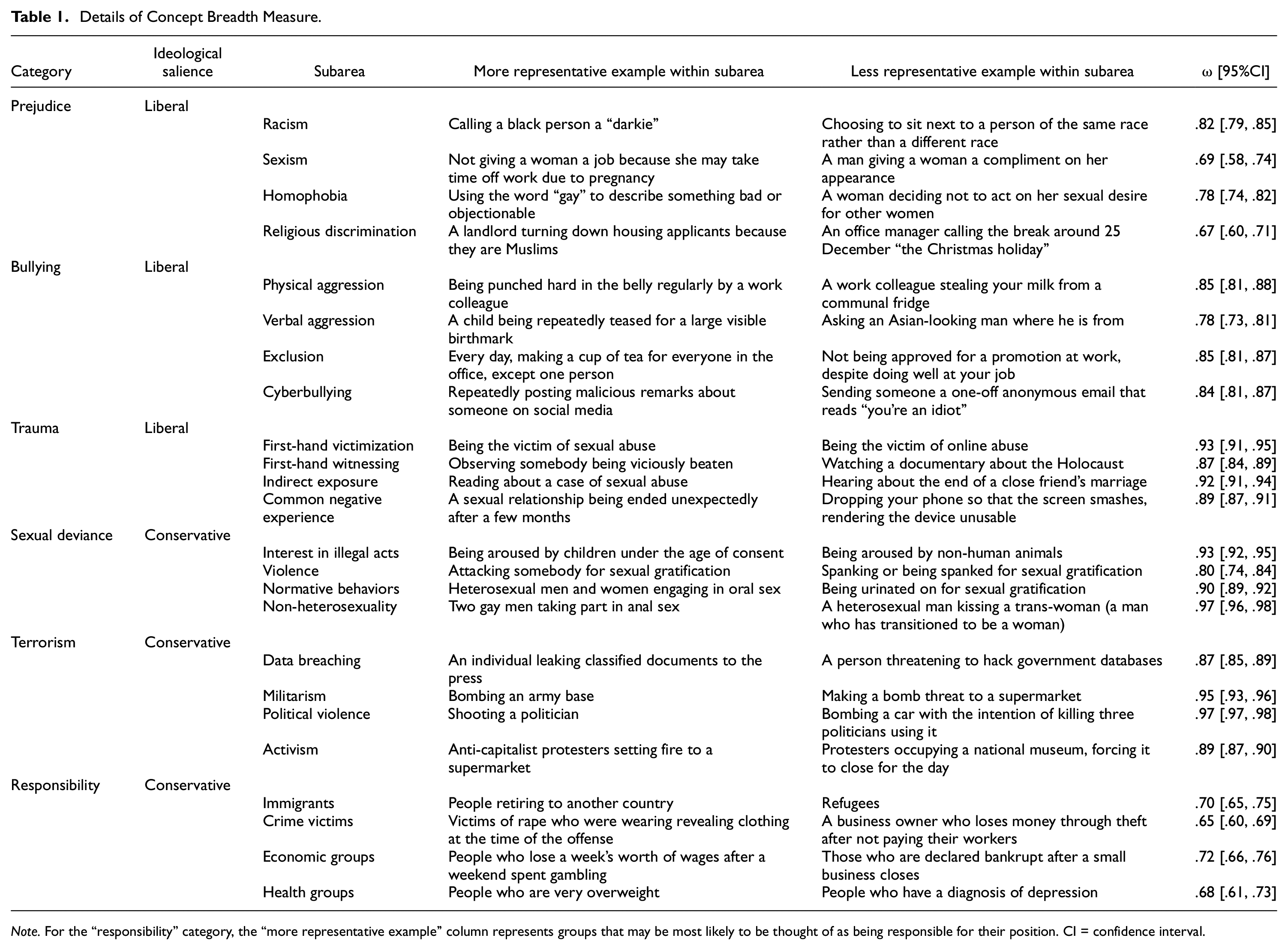
Note. For the “responsibility” category, the “more representative example” column represents groups that may be most likely to be thought of as being responsible for their position. CI = confidence interval.
For each of the examples provided, participants were asked to rate the extent to which the given example was indicative of the over-arching category. This rating scale ranged from 0 (not at all indicative) to 100 (extremely indicative). The only exception to this was for the ‘Responsibility’ category (assessing the extent to which participants felt different groups were responsible for their own plight), where the anchors were 0 (not at all responsible) to 100 (extremely responsible). In all cases, higher scores indicated more perceived representativeness of the example within the given category.
Procedure
All participant recruitment was undertaken by Qualtrics, who distributed the survey link among their panel of research participants until ideological quotas were filled. On clicking the survey link, participants were provided with information about the nature of the study to obtain their informed consent. Once this was confirmed, participants provided their demographic information and responded to the measures of political attitudes. Following this, they responded to the concept breadth assessment, with the order of categories being randomized for each participant to reduce the influence of order effects. All participants were subsequently debriefed and provided with sources of support, if required, after reading some of the examples of categories (e.g., sexual abuse, interpersonal violence). Each participant was paid approximately £4 (U.S. equivalent: US$5 at the time of data collection) for completing the survey. This procedure was approved by a school-level ethical review committee prior to data collection, and we followed the British Psychological Society’s code of ethics.
Results
For the final sample (N = 592), both Political Conviction (M = 3.35, SD = 0.71, scale range = 1 to 6) and Political Orientation (M = 60.00, SD = 11.48, scale range = 0 to 100) were broadly normally distributed, based on visual inspection of frequency plots. However, plotting the dependent variable for the concept breadth task revealed a tri-modal distribution, with peaks at 0, 50, and 100. Such distributions are well modeled by censored Gaussian (tobit) models, which explicitly modeled values of the dependent variable “above” 100 and “below” 0 in the model distribution. Therefore, the concept breadth data were analyzed with a multilevel tobit model, with Political Conviction and Ideological Salience (liberal/conservative) as between-participant factors, and participant and trial (i.e., the particular stimulus) as random intercepts. The Political Conviction score was used as a measure of how liberal or conservative each participant was, centered such that more negative scores reflected more liberal views, with more positive scores reflecting more conservative views.
Analyses were performed in R (R Core Team, 2019), using “brms” package (Bürkner, 2017, 2018) and 10,000 iterations, family = gaussian (link = identity) with some weak priors: student_t(3, 0, 10), class = “Intercept”) + prior(student_t(3, 0, 10), class = “sd”). Weak priors help regularize estimates, rendering analyses less sensitive to atypical observations and can improve generalization. The t distribution with low degrees of freedom, however, has heavy tails that allow for more scope for extreme parameter estimates than Gaussian/Normal, should they be a feature of the data (see Betancourt, 2017).
Descriptive statistics of the concept breadth task data are given in Table 2. For all effects, we report the credible intervals (CrI), which indicates a range that our model indicates has a 95% probability of containing the true parameter. For completeness, random effects are reported below, but they are not tests of any of our hypotheses; instead, they are formal estimates of the standard deviation of the random intercepts of model parameters that would be lumped together as “error” in non-Bayesian analyses such as analysis of variance (ANOVA). LOOIC (leave-one-out cross-validation [LOO] information criterion; Vehtari et al., 2020) is an estimate of model fit, with lower numbers indicating better model fit. They are mainly useful for comparing models, rather than for evaluating the fit of any single model in isolation.
Descriptive Statistics for the Concept Breadth Task (Study 1; U.K. Participants).
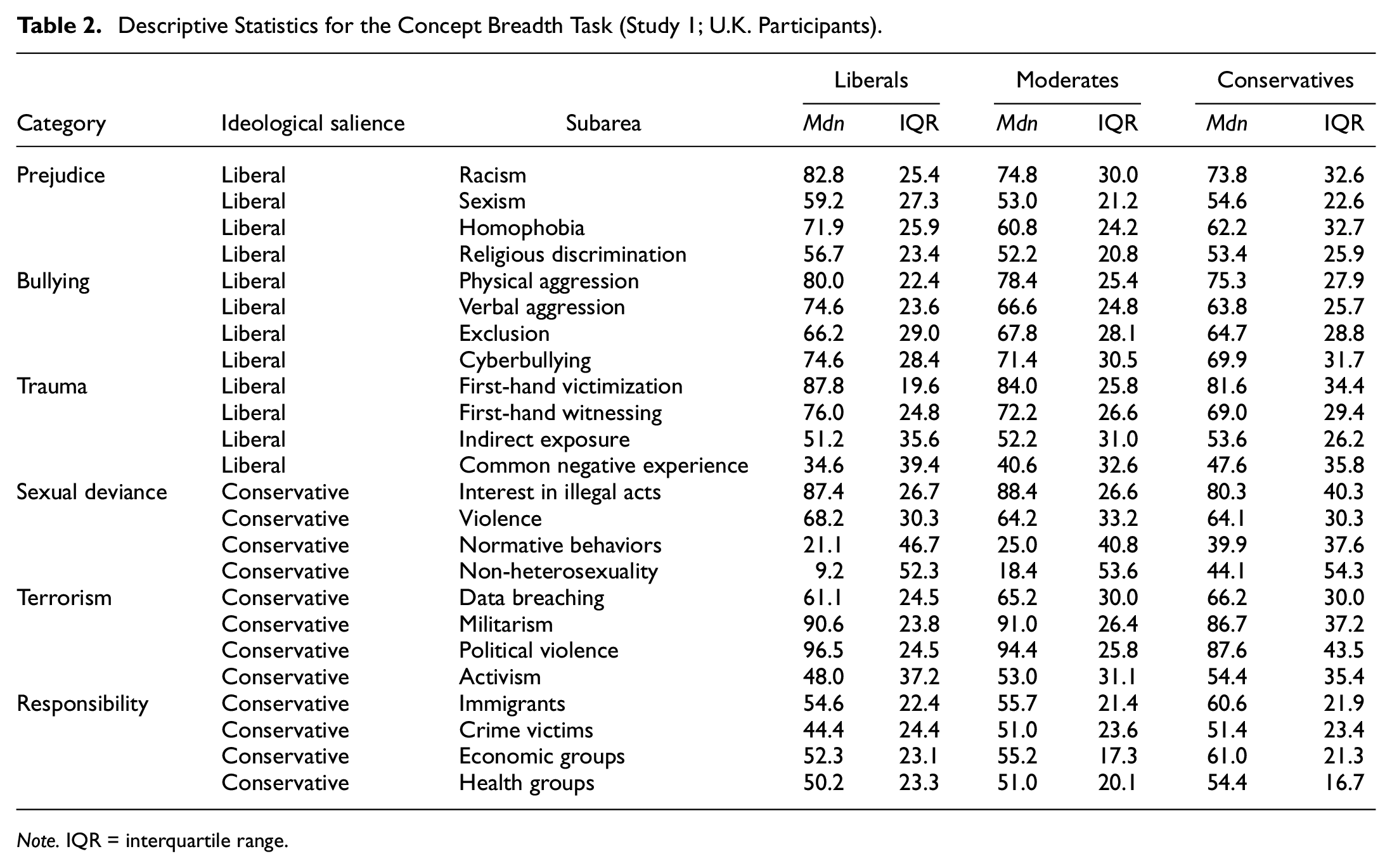
Note. IQR = interquartile range.
In the omnibus analysis described above, which was the test of our main hypothesis that greater liberality or conservatism, measured with the continuous variable Political Conviction, would be associated with greater concept breadth for ideologically salient categories, there were random effects of participant, SD = 18.32, 95% CrI = [17.22, 19.50], and item, SD = 22.42, 95% CrI = [19.81, 25.54] and a model fit LOOIC of 49,547 (SE = 845.5). There was no main effect of Political Conviction, β = −0.56, 95% CI = [−2.56, 1.73], nor of Ideological Salience, β = −3.79, 95% CrI = [−10.65, 2.52], but—consistent with our main hypothesis—there was an interaction of the two, β = 10.68, 95% CrI = [9.91, 11.46] (see Figure 1). This interaction was investigated by splitting the dataset into two, on the basis of Ideological Salience and then running analyses just like the omnibus one, except that Ideological Salience was not included as any factor. On the Ideological Symmetry hypothesis, oppositely valenced effects of Political Conviction were predicted: The analyses revealed just such effects; for the liberal-item analysis, there was a negative effect of Political Conviction, β = −5.32, 95% CrI = [−7.70, −2.97], with random effects of participant, SD = 20.65, 95% CrI = [19.39, 21.98], and item, SD = 19.04, 95% CrI = [15.92, 22.86] and a model fit LOOIC of 248115 (SE = 590.0); there was a positive effect of Political Conviction for the conservative-item analysis, β = 4.10, 95% CrI = [1.96, 6.28], with random effects of participant, SD = 18.39, 95% CrI = [17.23, 19.62], and item, SD = 25.66, 95% CrI = [21.52, 30.99] and a model fit LOOIC of 2,44,569 (SE = 618.3).
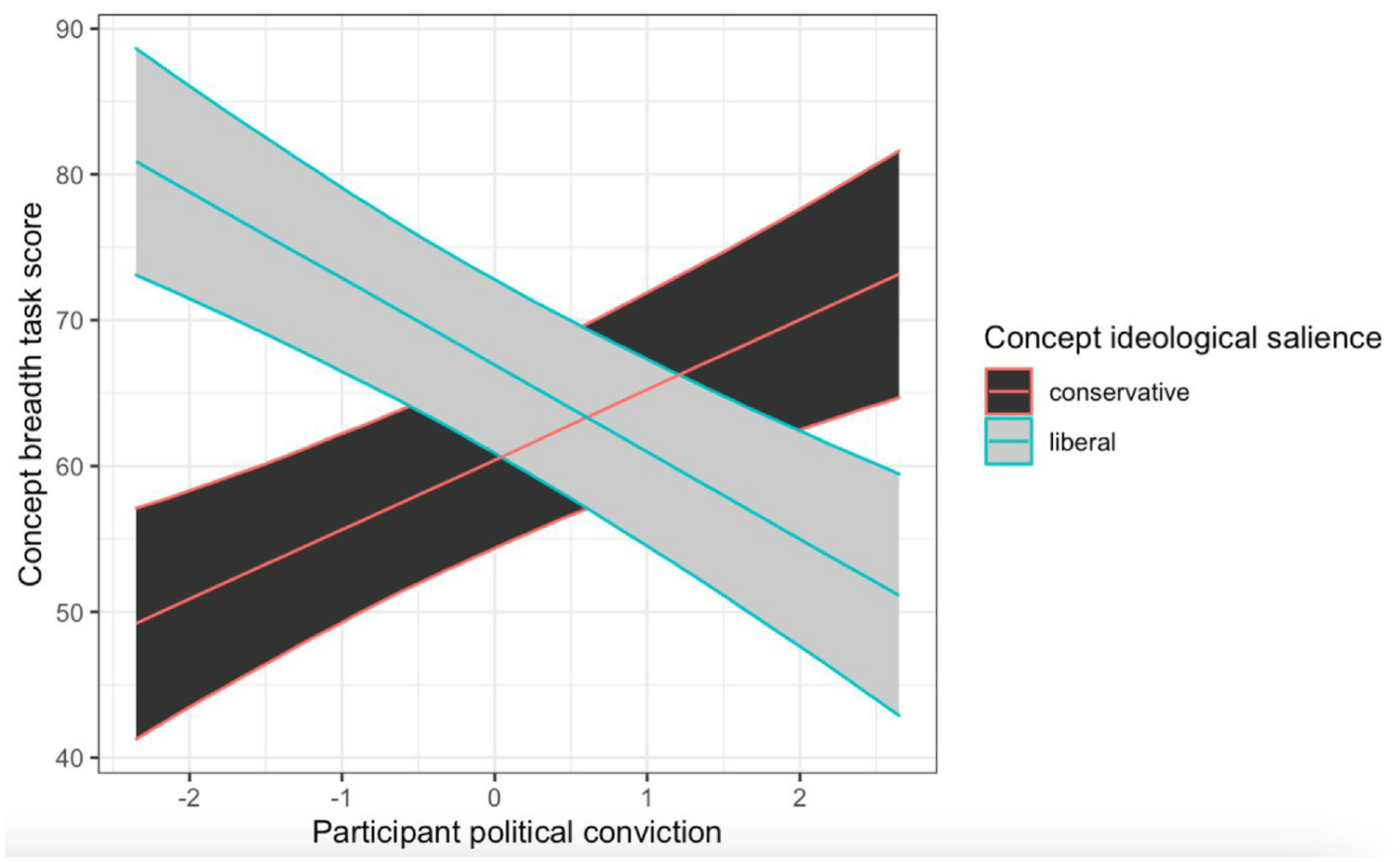
Interaction of Ideological Salience and Political Conviction. 95% CrIs Are Shown.
Unpacking these findings further, these same two analyses were repeated, except that subarea (see Figure 2) was added as a between-participant factor. For the liberal item analysis, there was a random effect of participant, SD = 20.66, 95% CrI = [19.42, 22.01], and item, SD = 15.62, 95% CrI = [12.58, 19.36], and a model fit LOOIC of 2,47,629 (SE = 592.5). For the conservative item analysis, there were random effects of participant, SD = 18.22, 95% CrI = [17.05, 19.46], and item, SD = 17.91, 95% CrI = [13.89, 22.88], and a model fit LOOIC of 243627 (SE = 624). Figure 2A and 2B details the results of these analyses.
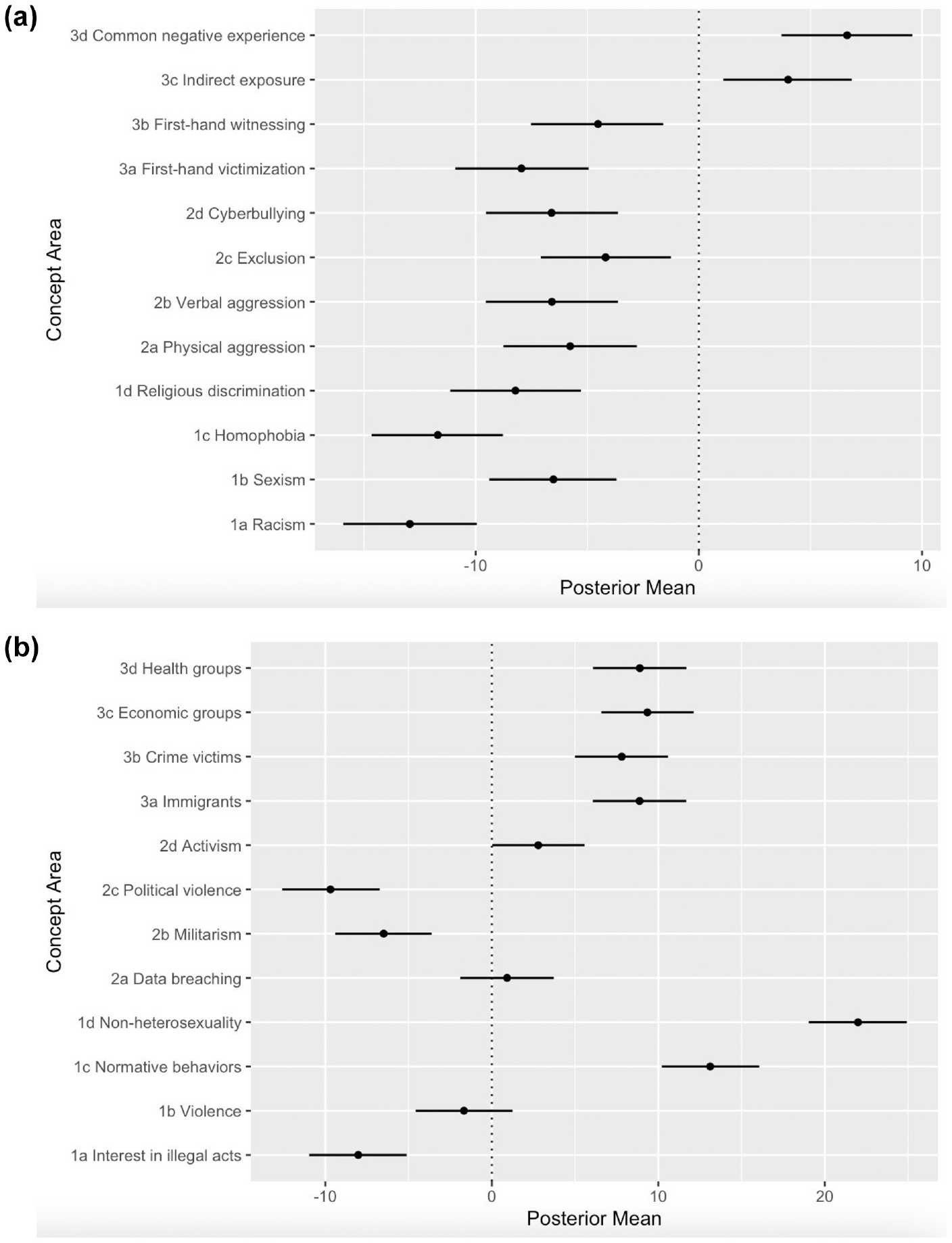
(A) Results of Liberal Item Analysis, by Concept Area. Posterior Means Are Slopes of the Concept Breadth Task Score Against Centered Political Conviction Score, Plotted With 95% CrI. That Is, Positive Posterior Means Suggest That the Given Concept Is Broader Among Ideological Conservatives, While Negative Posterior Means Indicate a Greater Concept Breadth Among Ideological Liberals. (B) Results of Conservative Item Analysis, by Concept Area. Posterior Means Are Gradients of the Concept Breadth Task Score Against Centered Political Conviction Score, Plotted With 95% CrI. That Is, Positive Posterior Means Suggest That the Given Concept Is Broader Among Ideological Conservatives, While Negative Posterior Means Indicate a Greater Concept Breadth Among Ideological Liberals.
Study 2
We sought to replicate the results of Study 1 using an independent sample of U.S. citizens. This is important to explore whether our initial U.K. sample was unique in its symmetrical breadth. Furthermore, most political psychology research uses U.S. samples, and so testing the generalizability of our data to this context—which is widely acknowledged as one of the most polarized western democracies (Brandt, 2017; Iyengar et al., 2019)—should add further credence to our conclusions.
Method
Participants
To approximately match the sample size of the first study, we set a target of 600 participants, divided approximately evenly between liberals and conservatives. Recruitment took place between November 19, 2021 and December 2, 2021. In total, 622 people clicked on the survey link. We retained only those participants who completed the political conviction measure, leaving 621 participants in the sample (355 female, 257 male, and 9 other/prefer not to say; Mage = 37.2 years, SD = 14.9), with 63 choosing not to answer at least one question in the rest of the survey. All participants were resident in the United States at the time of data collection. In the replication study, we asked for equal numbers of liberals and conservatives, but did not require an equal number of moderates, given that we were primarily interested in characterizing the political left and right. Participants were self-identified liberals (n = 283), political moderates (n = 61), conservatives (n = 274), and other (n = 3).
Materials and Procedure
The materials used in Study 2 were identical to those in Study 1, with the exception of including an “other” option to the political orientation demographic question to allow participants to self-identify with another label if they wished. Internal consistency coefficients are included in Table 3 which presents a summary of the descriptive statistics within this sample. The procedure used in Study 2 was also identical to that which was reported in Study 1, save for recruitment taking place via Prolific. On this site, we set up two tasks (one for self-identified U.S. liberals, and one for self-identified American conservatives). Inclusion criteria were an age of at least 18 years, residence and citizenship in the United States, and a self-declared ideological orientation of either “liberal” or “conservative” in the Prolific system. All participants were paid £1 for completing the survey (approximately US$1.35 at the time of data collection). This procedure was approved by a school-level ethical review committee prior to data collection, and we followed the British Psychological Society’s code of ethics.
Descriptive Statistics for the Concept Breadth Task (Study 2; U.S. Participants).
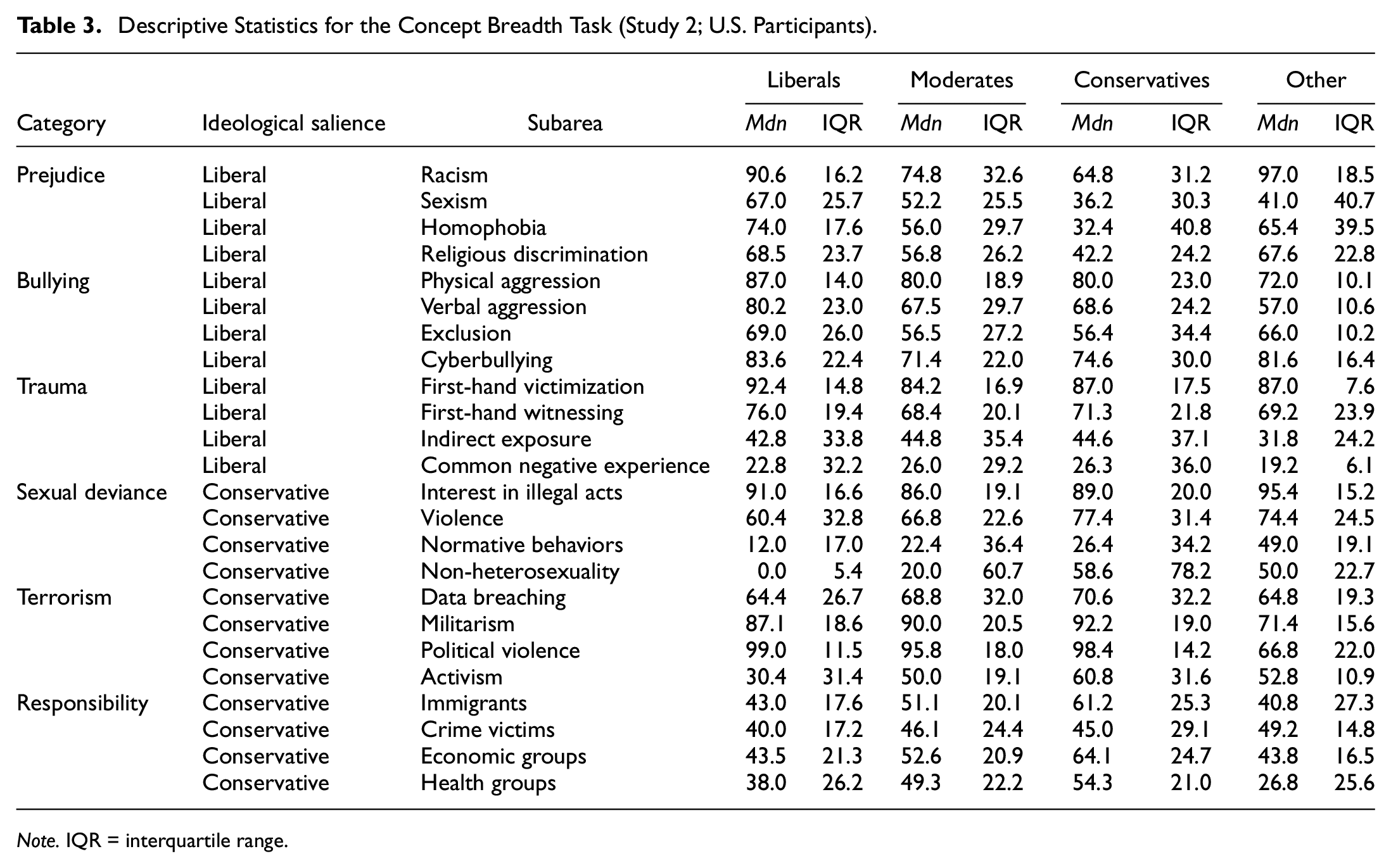
Note. IQR = interquartile range.
Results
For the final sample (N = 621), both Political Conviction (M = 3.35, SD = 0.71, scale range = 1 to 6) and Political Orientation (M = 60.00, SD = 11.48, scale range = 0 to 100) were both broadly normally distributed, based on visual inspection of frequency plots. Just as in the initial study, plotting the dependent variable for the concept breadth task revealed a tri-modal distribution, with peaks at 0, 50, and 100. The analyses were specified in exactly the same way as those in the “Results” section for the initial study.
In the omnibus analysis, which was the test of our main hypothesis that greater liberality or conservatism, measured with the continuous variable Political Conviction, would be associated with greater concept breadth for ideologically salient categories, there were random effects of participant, SD = 12.32, 95% CrI = [11.60, 13.09], and item, SD = 33.52, 95% CrI = [29.45, 38.36] and a model fit LOOIC of 5,05,574 (SE = 1,024.8). There was no main effect of Political Conviction, β = −0.06, 95% CI = [−0.92, 0.81], nor of Ideological Salience, β = −3.28, 95% CrI = [−11.65, 4.38], but there was an interaction of the two, β = 18.60, 95% CrI = [18.11, 19.08] (see Figure 3), consistent with our main hypothesis. This interaction was investigated by splitting the dataset into two, on the basis of Ideological Salience and then running analyses just like the omnibus one, except that Ideological Salience was not included as any factor. As in Study 1, the analyses revealed oppositely valenced effects of Political Conviction: For the liberal-item analysis, there was a negative effect of Political Conviction, β = −9.27, 95% CrI = [−10.42, −8.12], with random effects of participant, SD = 16.51, 95% CrI = [15.52, 17.57], and item, SD = 29.22, 95% CrI = [24.40, 34.97] and a model fit LOOIC of 255,843 (SE = 702.8); there was a positive effect of Political Conviction for the conservative-item analysis, β = 9.51, 95% CrI = [8.54, 10.48], with random effects of participant, SD = 13.42, 95% CrI = [12.57, 14.33], and item, SD = 37.33, 95% CrI = [31.52, 44.52] and a model fit LOOIC of 246,085 (SE = 751.3).
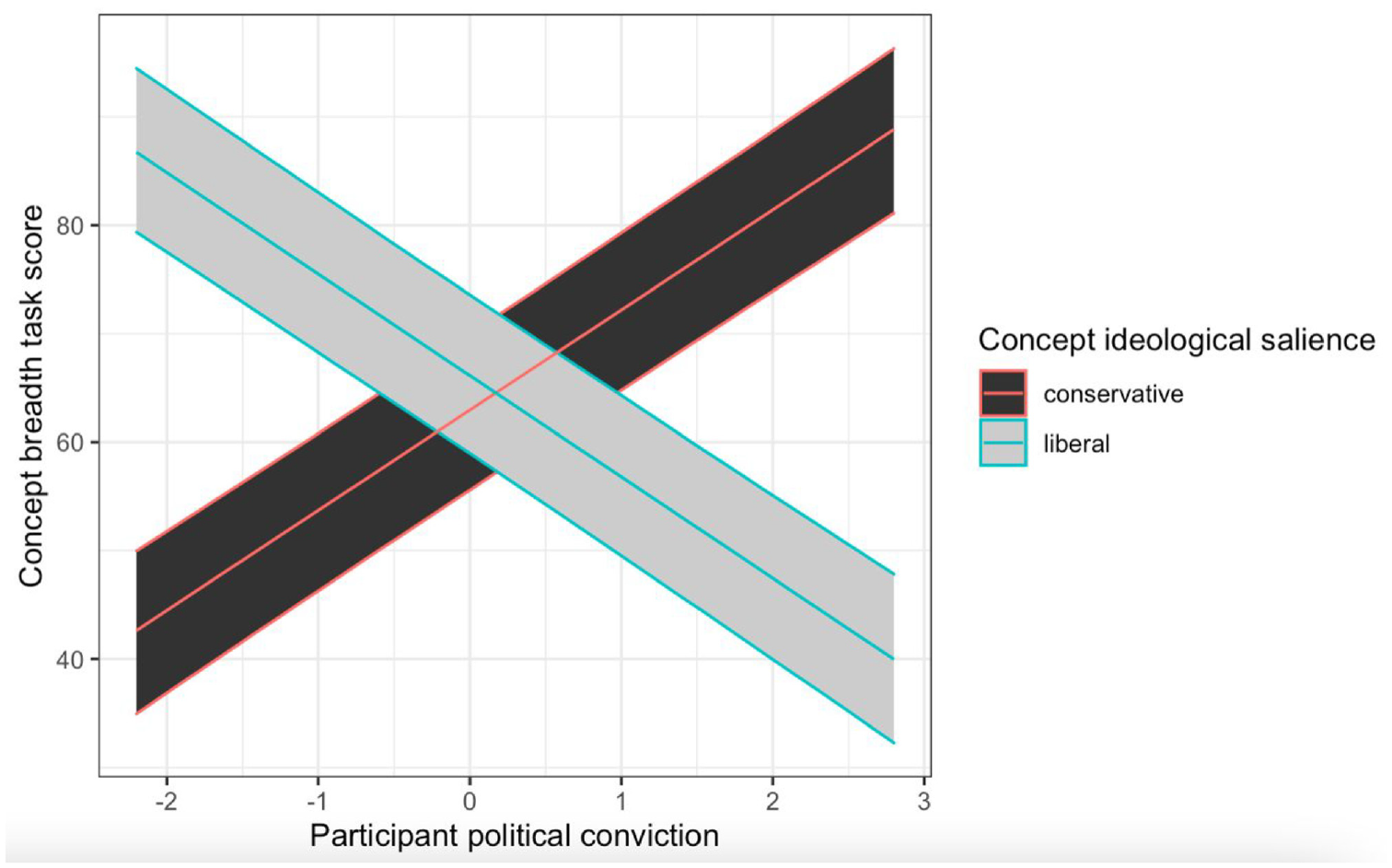
Interaction of Ideological Salience and Political Conviction. 95% CrIs Are Shown.
Unpacking these findings further, these same two analyses were repeated, except that subarea (see Figure 2) was added as a between-participant factor. For the liberal item analysis, there was a random effect of participant, SD = 16.48, 95% CrI [15.50, 17.50], and item, SD = 25.84, 95% CrI = [20.86, 31.76], and a model fit LOOIC of 253,247 (SE = 713.0). For the conservative item analysis, there were random effects of participant, SD = 13.35, 95% CrI = [12.51, 14.24], and item, SD = 30.82, 95% CrI = [24.78, 38.19], and a model fit LOOIC of 243,249 (SE = 758.0). Figure 4A and 4B details the results of these analyses.
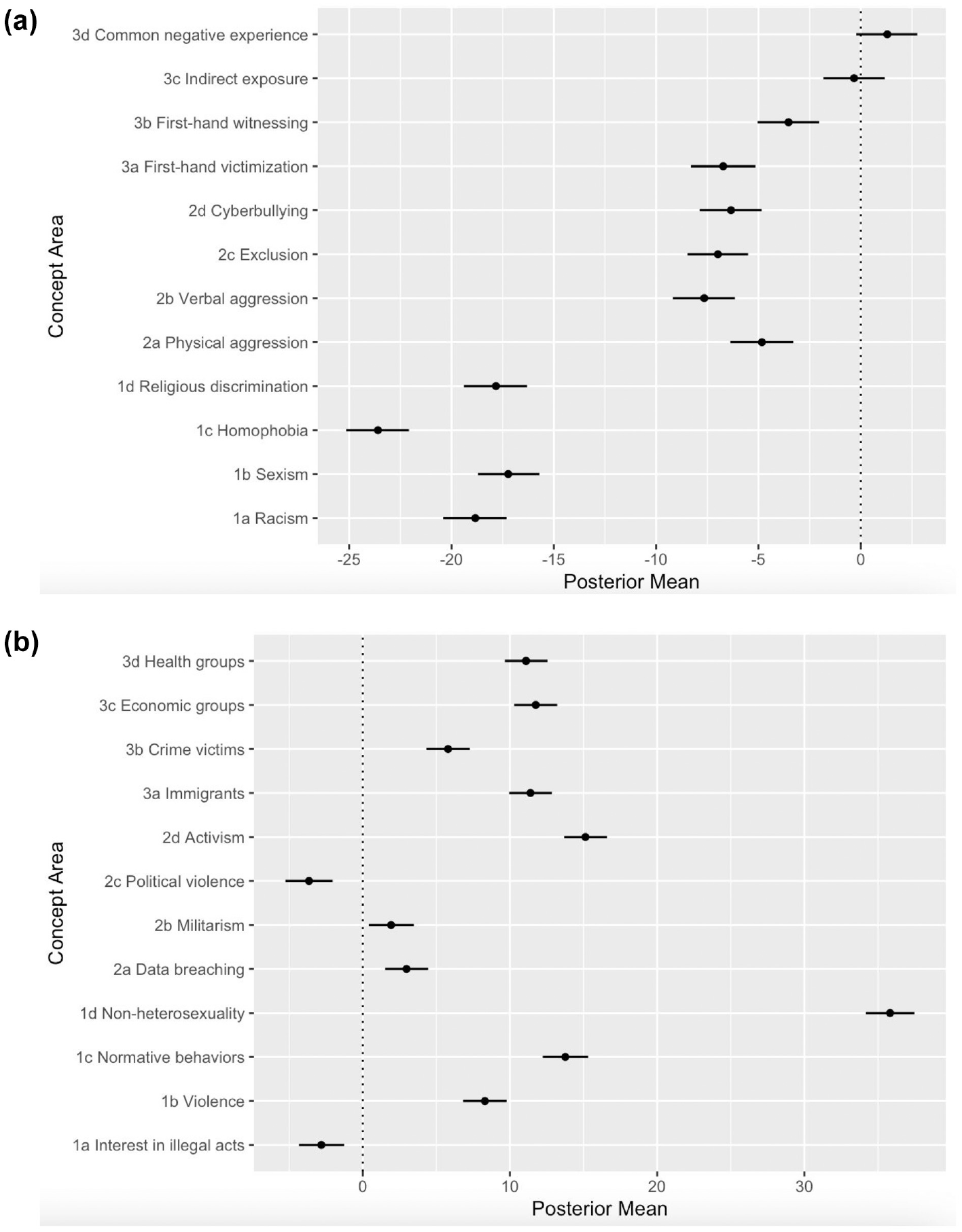
(A) Results of Liberal Item Analysis, by Concept Area. Posterior Means Are Gradients of the Concept Breadth Task Score Against Centered Political Conviction Score, Plotted With 95% CrI. That Is, Positive Posterior Means Suggest That the Given Concept Is Broader Among Ideological Conservatives, While Negative Posterior Means Indicate a Greater Concept Breadth Among Ideological Liberals. (B) Results of Conservative Item Analysis, by Concept Area. Posterior Means Are Gradients of the Concept Breadth Task Score Against Centered Political Conviction Score, Plotted With 95% CrI. That is, Positive Posterior Means Suggest That the Given Concept Is Broader Among Ideological Conservatives, While Negative Posterior Means Indicate a Greater Concept Breadth Among Ideological Liberals.
General Discussion
Our aim was to explore the extent to which an ideological symmetry model applies to the topic of concept creep by exploring the breadth of concept definitions across the political spectrum. Contrary to previous theorizing that explores concept creep on the political left (Haidt, 2016; Haslam, 2016; Schein & Gray, 2016; Sugarman & Martin, 2018), we developed stimuli that would be salient across the political spectrum to explicitly test our hypotheses. As such, our approach is more consistent with that of others who suggest that ideologically specific behaviors can only be determined by sampling responses to a broad range of topics (Brandt, 2017; Brandt & Crawford, 2019; Clark & Winegard, 2020; Elad-Strenger et al., 2019). Consistent with the ideological symmetry hypothesis, we found in two independent and temporally disconnected samples that partisans had broader category definitions for concepts that were salient to their ideological worldview, that this was consistent among liberals and conservatives, and that this propensity increased in line with participants’ ideological conviction. This symmetry appeared to become clearer in the second sample than the first, reflecting either a more polarized political context within the United States than the United Kingdom, or the potential for societal concept creep over time. However, there was some nuance to these general trends.
The picture is mixed for trauma, with liberal-valenced Political Conviction associated with larger categories of what counts as firsthand trauma, but relatively smaller categories of indirect exposure and common negative experiences. Although a post hoc explanation, this pattern might be explained by differences in the value placed on lived experience by liberals and conservatives: firsthand trauma is quintessential aversive lived experience, with indirect exposure not involving the person directly (Voronka, 2016). That is, those expressing a more liberal ideological worldview are more likely to place an emphasis on the importance of people’s lived experience when making moral decisions or judging social dilemmas. Given that indirect exposure is, by definition, not a lived experience but a secondhand reciting of somebody else’s, it is perhaps unsurprising that this particular subarea was not particularly endorsed as an example of trauma among liberals than was firsthand trauma (which does represent an aversive lived experience).
Sexual deviance categories reflected the predicted “creep” (characterized by broader concepts) of what counts as normative and non-heterosexual behaviors with greater conservative-valenced Political Conviction, but no difference in what counts as sexual violence and a contracted sense of what should count as illegal acts, potentially indicating a conservative impulse for reduced regulation of behavior. This may equally speak to a relatively broader concept of sexualized violence among those on the political left (i.e., that making sexualized comments might be seen as harassment, and therefore a form of offending behavior). Support for this view also comes from the temporal increase in the breadth of the definition of sexism among political liberals in Study 2, which may be a reflection of social discussions about #MeToo scandal and the ideological lens through which may view this (Franks, 2019). Within the Terrorism subarea, only activism showed the predicted broader concept definitions among conservatives (particularly in Study 2), with no clear effect for data breaching. Liberal-valenced Political Conviction was associated with broader concept definitions for political violence and militarism. These latter two unexpected effects might conceivably be explained by both a liberal tendency toward aversion to firearms (e.g., Brown, 2017) and a conservative aversion to the degradation of national symbols such as parliamentary or governmental offices (for a discussion of national loyalty and its moral importance to conservatives, see Graham et al., 2009). Testing these possibilities should be considered in future research into ideological concept creep. The responsibility subarea was consistent, however, with an expected rightward trend for broader concept definitions for all categories assessed.
It is important to note that although our work is couched within the literature on concept creep, we cannot directly show an expansion of concept definitions within our dataset. That is, concept creep as it is originally described by Haslam (2016) might be best conceptualized as a within-person (or within-group) growth of a concept definition, where more numerous and less obvious examples become incorporated into a concept definition over time. Given that our dataset contains cross-sectional data, we can only report that groups appear to express broader category definitions for concepts when a given topic is salient for their ideological lens. To test within-person concept creep, it would be useful to conduct longitudinal studies to explore the breadth of concept definitions over time, and to correlate changes with ideological affiliation and conviction. Furthermore, the nature of our data makes it very difficult to say whether broader concept definitions are the result of vertical concept creep (encompassing new subareas) or horizontal concept creep (encompassing less severe examples). Longitudinal work that allows for free-text responses might allow for a better test of this phenomenon, in that unrestrained data collection procedures might allow for the elicitation of new subareas within concept definitions, or the expansion of subareas to include a range of different example behaviors.
Nonetheless, the temporally distinct nature of our samples may provide evidence of definitional creep over time in relation to some concepts. For example, the effect of participant ideology (in a leftward direction) on the size of concepts related to prejudice (e.g., religious discrimination, homophobia, racism, and sexism) was much larger in the second sample than in the first. Similarly, ideology (in a rightward direction) had a larger effect on the size of concepts related to sexual deviance and activism as a form of terrorism in the second sample. These sample-level differences could be indicative of temporal shifts in concept definitions (as these samples were recruited approximately 4.5 years apart). They may equally, however, reflect cultural differences in political discourse between the U.K. and U.S. contexts, or be indicative of particularly salient political issues of the day (e.g., the re-emergence of the Black Lives Matter movement, and its associated activism, might affect the salience of issues in partisan minds). It is also not possible in our analyses to say whether such changes in the effect of ideology reflect expansions of concept definitions on one side of the ideological spectrum or constrictions of definitions on the other. We are also mindful to highlight that such shifts reflect cultural changes in definitional breadth, and that concept creep at the level of individuals should be studied using the types of longitudinal designs outlined above.
One interesting observation stemming from these data is the apparent importance of moral intuitions in guiding the expansion (or definitional size) of concepts. Among liberals, the moral weight given to harm-based moral violations appears to drive a propensity to engage in the broadening of definitions of concepts related to these kinds of topics (e.g., trauma, prejudice; Haidt, 2016; Haslam, 2016; McGrath et al., 2019). In contrast, an exaggerated conservative emphasis on purity- and loyalty-based moral violations may be responsible for the expansion of concepts such as sexual deviance and terrorism (specifically in relation to non-violent data breaching). Although we cannot test this effect of moral foundations in our dataset, it is an interesting avenue for future research. Indeed, previous tests of moral intuitions have suggested that such endorsements may be dependent upon the target of a decision (i.e., whether liberal-relevant or conservative-relevant target is the subject of a moral decision dictates which moral foundations are endorsed as important by partisans; Voelkel & Brandt, 2019). It is possible that concept creep possesses a similar quality, where judgments of sexual deviance or bullying (as examples) are dependent upon the actors depicted in scenarios. This would be another interesting future direction for concept creep research to explore.
These data lead to some interesting implications for intergroup relations—particularly in the current social climate that is typified by growing polarization and ideologically driven intergroup hostility (Crawford & Brandt, 2020; Mallinas et al., 2018). Such processes of polarization may be indicative of partisans not just differing in relation to the topics that they find to be most important from a policy perspective or moral standpoint, but they may literally be talking about different things when using the same terms. These divergent definitions, and potentially expanded concepts, can also be used to fuel increasingly moralized social discourse through the process of moral grandstanding discussed earlier (Grubbs et al., 2019, 2020; Tosi & Warmke, 2016, 2020).
Such a lack of shared definitions for ideologically salient and politically divisive concepts makes reducing political polarization difficult. Effective policy debate and constructive dialogue relies on a shared language, allowing actors on any side of an argument to contribute to discussions in good faith. This is a key theoretical contribution of our work. Our data might suggest that intergroup hostility and unproductive discussions in the political sphere are not simply the result of a mismatch in ideological preferences. Although these differences surely affect polarization, there are broader implications of concept creep and different concept definitions that go beyond the scope of our data. For example, varying definitions of concepts such as trauma, mental health, terrorism, and sexual deviance risk the potential for imbalances and inequities in service funding and provision (particularly in health, education, and criminal justice contexts). As such, one starting point when seeking to bring people back together may be to ensure clear definitions are in operation when debating, but divisive, policy topics.
Footnotes
Handling Editor: Danny Osborne
Declaration of Conflicting Interests
The author(s) declared no potential conflicts of interest with respect to the research, authorship, and/or publication of this article.
Funding
Funding for this research came from internal grants from Nottingham Trent University’s QR schemes.

Author Biographies
Craig Harper is a senior lecturer within NTU Psychology (School of Social Sciences, Nottingham Trent University). His principal research interests lie in social attitudes and decision-making about politically-contentious topics. He is a member of the Heterodox Academy, which advocates for increased viewpoint diversity and open inquiry in university and college curricula.
Harry Purser is a senior lecturer at NTU Psychology. He has research interests in lexico-semantics, figurative language, development, and the relationship between language and memory.
Thom Baguley is Professor of Experimental Psychology at NTU Psychology in the School of Social Sciences at Nottingham Trent University. His main research interests are in the areas of human memory and cognition and the application of statistical modeling to behavioural, social and forensic contexts.