




Abstract
This work builds on the conceptualisation of everyday life as the basic context for social transitions, where collective imagination is formed through performance and re-enactments of routines and relations. Routines reproduce norms by repeating certain actions over time. For this reason everyday life can be considered a primary terrain for social changes, as affecting everyday norms means disrupting a larger structured reality. Therefore, for radical imaginaries to gain momentum, we ought to better understand how to break down and disrupt routines. This paper contributes to the field of transition design with an experiential technique that, by interjecting into daily rhythms, aims at cultivating reflexivity, problematising the present and opening for alternatives. Recognising rhythms as the “visible moving parts” behind the larger machine at play in our society, I combine rhythm-analysis and transformative practices, with a futuring approach. I conducted an auto-ethnographic experiment where I intervened on and slowed down my daily rhythms to explore those naturalized routines to investigate the normative system driving my mundane daily actions. Slowing down mundane activities translated into redesigning material arrangements and social practices, which in turns affects, questions and transforms the underlying values and mindsets inscribed within daily routines. This work shows that disrupting rhythms fosters different ways of repeating, helping reshape people’s images of the future.
Keywords
Introduction
Transition design is a field of study that has the objective of supporting societal transitions towards more sustainable futures through design interventions, tools and capabilities (Irwin et al. 2020, 68). The abundance of information and awareness on environmental issues (and their future consequences) does not seem to sufficiently impact and steer policy-makers and citizens towards implementing more sustainable practices, systems and worldviews (Jönsson et al. 2021, 2). Thus, transition design operates diverse futuring techniques that can support people in imagining and experiencing those desirable and sustainable futures, as well as redefining their images of the future and opening space for action (Oomen et al. 2022).
In this paper, I approach futuring starting from the here and now, situating the investigation in the tension between present and future(s). According to Oomen et al. (2022), the present encapsulates images of the future through material arrangements and social relations, to the point that “visions of the ‘future’ shape and coordinate social action in the present” (255). Departing from this definition, I intervened on everyday rhythms to crack openings for alternative practices, however, without starting from a predetermined idea of the future. Systems change requires us to shift our deep-rooted values (Buch-Hansen and Nielsen 2023, 358), therefore I carried out an auto-ethnographic experiment of 7 days where I forced myself to live at an extremely slow pace to understand the hidden normative values fuelling my everyday rhythms and practices.
This work builds on the conceptualisation of everyday life as the basic context for social transitions (Irwin et al. 2020, 78) where collective imagination is formed through performance and re-enactments (Oomen et al. 2022, 256) of routines and relations (Garduño García and Gaziulusoy 2021, 8). Everyday life becomes relevant to transition studies as it is the space where the world becomes malleable and “open to being otherwise” (Jönsson et al. 2021, 2): by altering these re-enactments or changing materials, competencies and meanings (Irwin et al. 2020, 75) we can create new presents and therefore project new futures. Building on such pliability, this paper wants to contribute to the field of transition design with an experiential technique that, by interjecting into daily rhythms, helps cultivate reflexivity over one’s own complicity in the shaping of the present-future, and stimulates alternative thinking.
The next section serves as a general theoretical background for the experiment, linking everyday life with defuturing in order to bring post-extractivist and transition discourses together. Following, the methodology section describes the experiment conducted, building on rhythm-analysis, futuring techniques and transformative practices. The paper proceeds with showcasing the main findings, using decolonial theories to analyze the data. Finally, the discussion reflects on the method used and how it contributes to the field of transition design.
Everyday Life and Defuturing
Development discourses are to this day one of the main narratives employed by institutional organs and corporations to promote extractivism, 1 while “structuring unsustainability and defuturing 2 ” (Escobar 2018, 147). Modern ideas of well-being and progress, together with technological development, have promised to improve living conditions, legitimising extractivism. However, they disregarded the degradation and resource depletion that has plagued communities and lands where such extractions take place (Losada Cubillos et al. 2023, 93).
Exponential growth and accumulation are the driving forces fuelling the destruction of lands and livelihoods (biodiversity loss, deforestation, climate change, species extinction, water pollution, etc.), particularly in the Global South (see Acosta 2013; Chagnon et al. 2022). Considering the significant destructive and unjust consequences on all forms of life, post-extractivist imaginaries need to reach higher traction in transition discourses. Post-extractivism wishes to slow down extractions while creating alternatives to development, transitioning “from anthropocentric visions to socio-biocentric ones” (Acosta 2013, 82). By recentering life rather than capital accumulation, this framework helps us to build a more relational imagination that sees human beings as embedded in a larger ecological fabric (Chao and Enari 2021, 36–37).
In support of post-extractivist discourses, transition design requests us to undergo a process of self-reflection, to discover new ways of being in the world (Irwin 2015, 235). Recognising defuturing as entrenched with most human actions, norms and structures, it is paramount to focus our attention as designers on everyday life (Escobar 2018, 156–157).
Everyday life and lifestyles represent the space where people’s hidden values materialise and where needs (innate and constructed) are satisfied (Irwin et al. 2015, 3). In this paper, I approach everyday life following Rooted-South Feminisms’ invitation to re-learning to live in the world. Their invitation is to hack our desire for the accumulation of capital and rather cultivate the accumulation of social bonds, proposing another art of inhabiting the planet (Álvarez Villareal 2023). It is in everyday life that the Great Transition has to take place, decoupling values on well-being from growth and consumption, to cultivate new ones (Escobar 2018, 140–141). Daily life can become the workshop to re-educate our desire, to experiment with practices that can let us drift away from the emotional and ontological occupation of capitalistic accumulation. After all, “our normative account of what is good, or right, is subject to change” (Ekberg and Wågström 2023, 6). Everyday life can be considered a primary terrain for social changes, as affecting everyday norms means disrupting a larger structured reality (Federici 2018, 175); we could define norms as doorsteps to transitions. By disrupting norms, we might perform possible alternative futures (Hajer and Pelzer 2018, 224) and create opportunities for sustainable transformations (Irwin et al. 2015, 4). In order to affect norms and re-educate our desire (Ekberg and Wågström 2023), however, it is crucial to first surface those very deep beliefs that drive our daily actions. Norms are reproduced by repeating certain actions over time. Therefore, for radical imaginaries to gain momentum, we ought to better understand how to break down and disrupt routines (Hajer and Pelzer 2018, 224).
Methodology
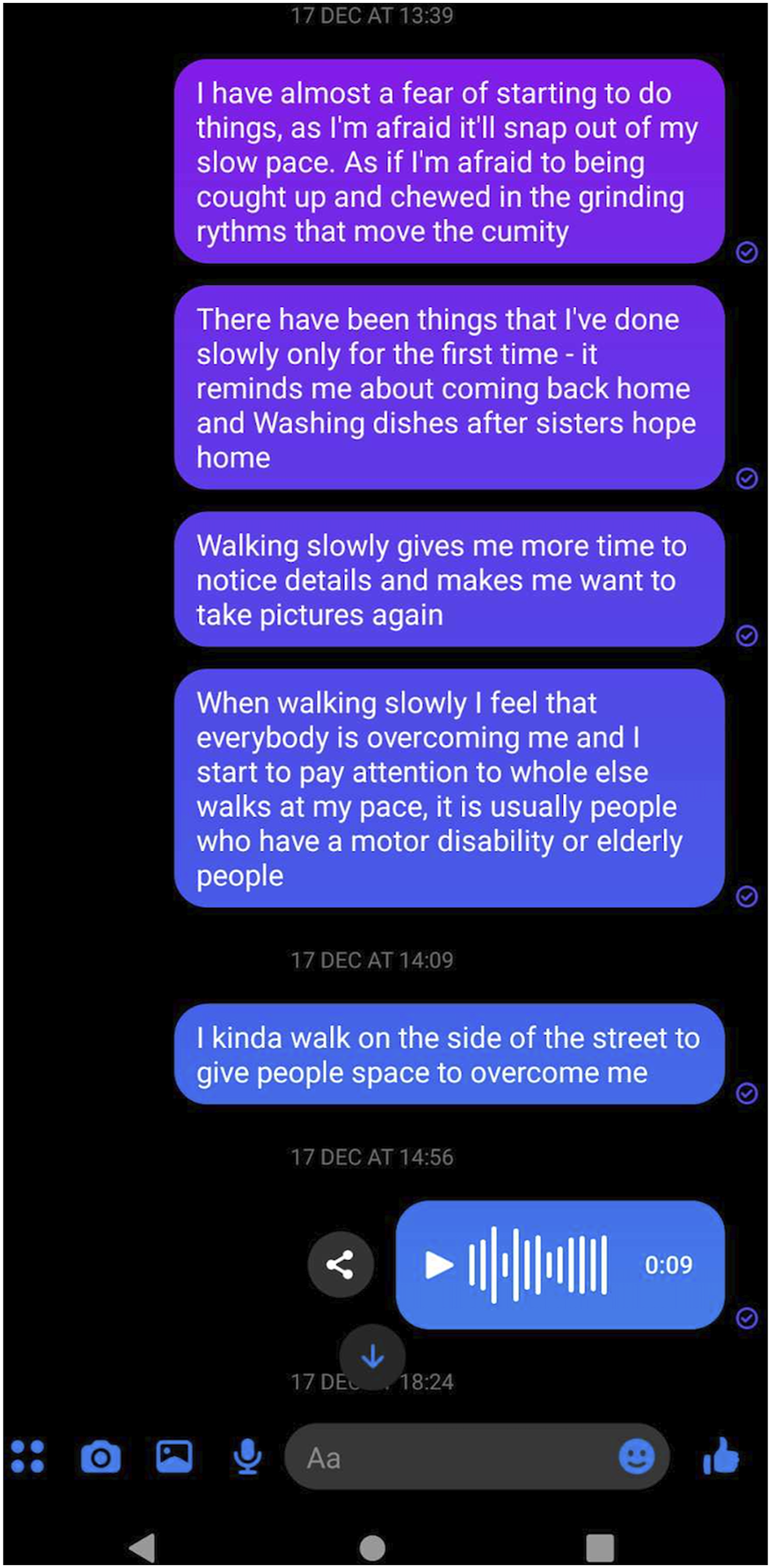
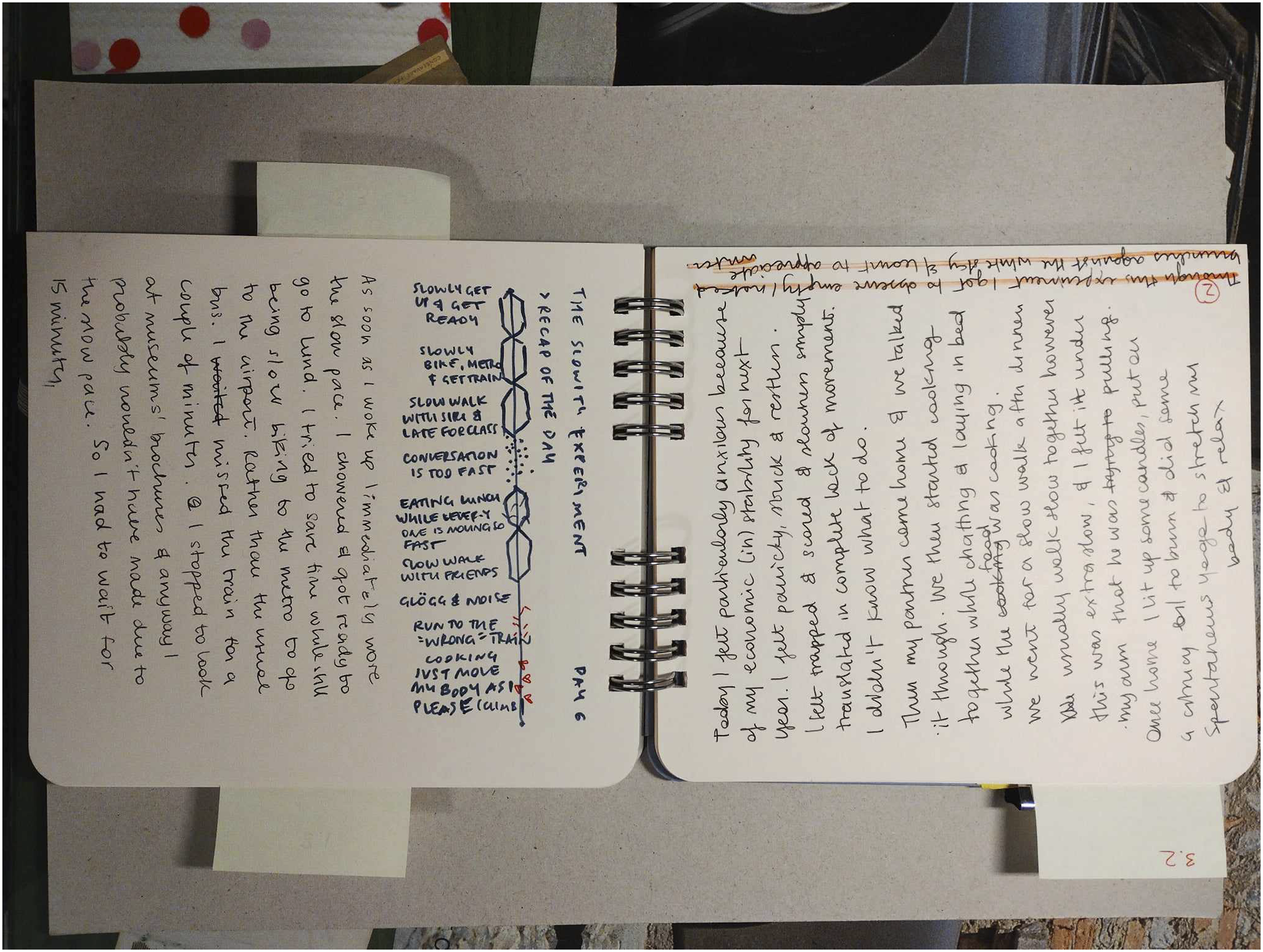
The approach used consisted of an auto-ethnographic experiment where for the duration of 7 days I carried mundane daily activities at an extremely decelerated pace. An example would be brushing my teeth and moving my hand very slowly, or going to the train station and walking in slow motion. During that week my daily activities would typically consist of commuting to go to classes, meeting up with friends, doing the grocery, going to the library, cleaning my house, sharing meals, walking in the city. An important aspect to mention is that I chose that particular week because my work contract had just terminated the week before and I did not have the obligation to work. Not having to attend a job in those days was a great advantage for being slow. In fact, slowing down is very much “a privilege of the time rich” (Davis 2023, 61). This choice also illustrates the strong link that the structures we are inscribed within have on our daily rhythms, as I was aware of how working slowly would have put me in a more vulnerable position. The experiment was thought of as something that other people could have repeated on their own, therefore a small template was designed with instructions (see Figure 1). There I indicate the period of time as well as the main activities I aimed to slow down. I thoroughly documented my experience keeping a digital log with myself sharing observations and sensations in the moment (Figure 2) as well as videos and pictures. Finally, at the end of the day, I would keep a physical diary of my day, reporting and contextualizing the notes I sent in the chat during the day, possibly adding some reflections (Figure 3). Experiment template. Sample of the chat used to record my field notes. A sample page from the auto-ethnography diary.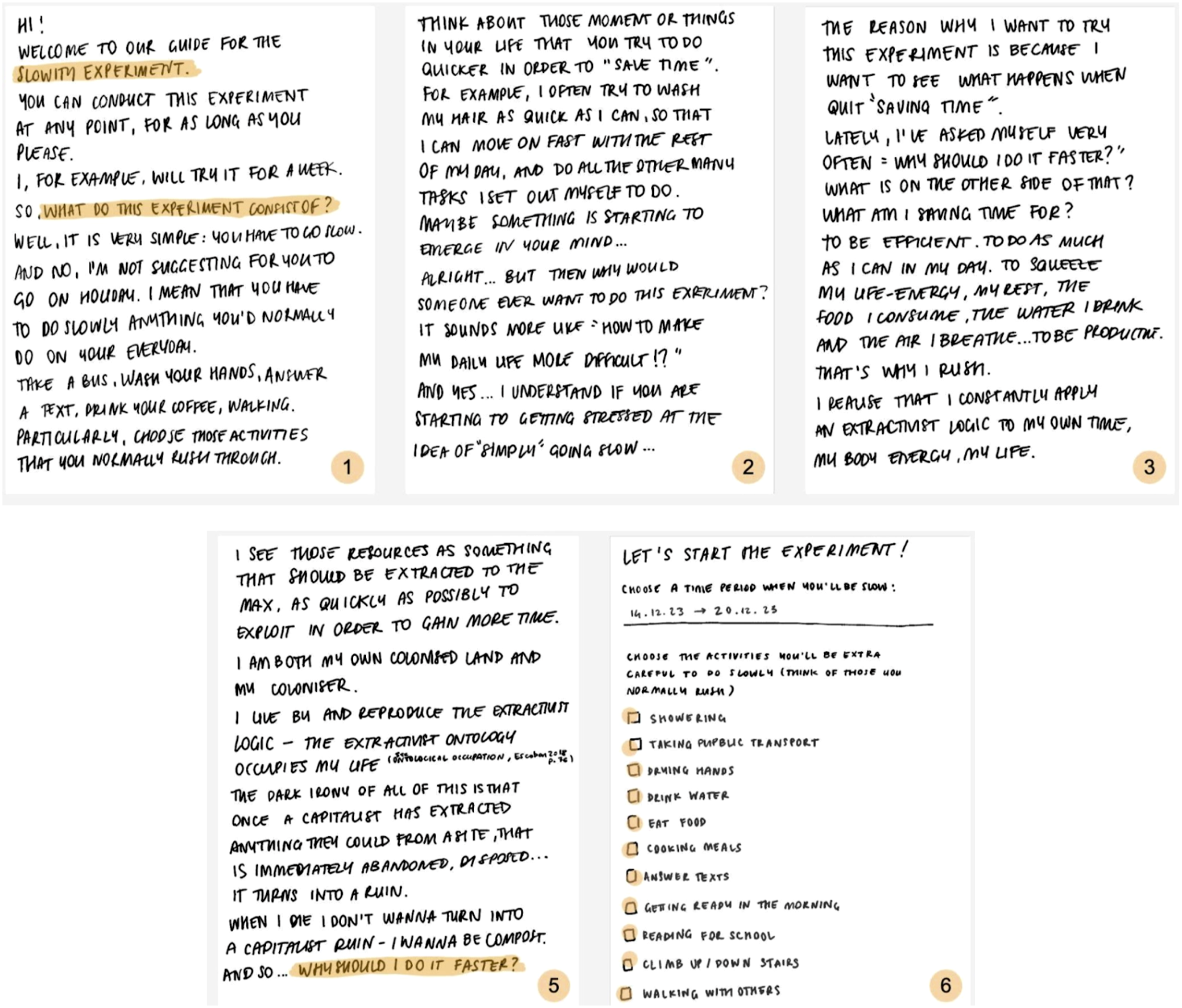
Rhythmanalysis: Using the Body as a Metronome
The method builds on Lefebvre’s theory of rhythmanalysis (Lefebvre 2004), a framework conceptualised by the author to investigate how capitalism organised people’s daily life in post-war France. According to Lefebvre’s, rhythms are not merely spontaneous, but are governed by implicit and measured projects (Lefebvre 2004, 8): under capitalism, where commodification reigns, time becomes time of the markets (Lefebvre 2004, 6). Recognising rhythms as the “visible moving parts” behind the larger machine at play in our society, I used rhythmanalysis to study the hidden values my daily rhythms are synced with. I particularly explore those routines I naturalised (and therefore normalised), to investigate the normative system driving my mundane daily actions (like walking, washing dishes, dressing up...).
By using the body as a metronome (Lefebvre 2004, 19), I recorded perceptions about the rhythms I was syncing with; as well as the ones I was discordant from. Decelerating my pace helped me to break out from my normalised patterns and sense the emotions arising due to the forced slowness (such as guilt or frustration). We can only perceive rhythms against other rhythms (Lefebvre 2004, 10): the slow pace allowed me to stay outside of the normative rhythm while still being able to grasp (and be grasped) by it (Lefebvre 2004, 27). The counter-rhythms used in this experiment could possibly be considered as ‘anti-environments’, which Lockton and Candy (2018) describe as expedients designed to establish “a sort of dialectical figure/ground relationship whereby the former highlights the unnoticed or taken-for-granted properties of the latter” (919).
Futuring Techniques and Transformative Practices
The method used in this paper draws upon futuring techniques however diverting from them. Futuring techniques are defined as imaginative interventions “studying exactly how actors perform visions in situ, and how such performances travel to redefine existing imagined futures and futuring practices” (Oomen et al. 2022, 261). The performative character of these techniques allows participants to carry the experience and its lessons further with them, by creating real memories of simulated events (Garduño García and Gaziulusoy 2021, 2). My approach builds on Experiential Futures (Candy and Kornet 2019, 5) in the sense that is interactive, embodied and explorable, however, it does not start from a given picture of the future, rather it affects the present to provoke and re-imagine it. It draws from speculative design tradition where objects or technologies are staged in a mundane paradoxical situation in order to provoke, confuse and prompt people “to realize that everyday life could be different” (Garduño García and Gaziulusoy 2021, 8). In the same fashion, my rhythm-intervention invited exploration, raising questions and critical thinking. Rather than “projecting into the future” (Coops et al. 2022, 5), my approach is inspired by experimental foresight methods and was used as an alternative thinking technique (Woodgate and Veigl 2020, 324), thickening the present to open up new stories and finding possibilities of doing otherwise (Jönsson et al. 2021, 11).
The method used in this study therefore moves beyond futuring and towards transformative practice theory. Using Hummels’s definition: “Designing for transforming practices (also indicated as TP) can be seen as an approach or methodology, but simultaneously, it is a repository, an attitude, an aspiration, a quest towards transforming existing and developing new alternative practices to engage with the world in co-responsible ways” (Hummels 2021, 102).
TP use a research-through-design approach to support the emergence of new knowledge and new practices via experimentation, navigating ambiguities, learning by doing, failing without judgment, in order to transform towards new paradigms (Hummels 2021, 116–119). Acknowledging that social relations are design materials, slowing down mundane activities should be viewed as redesigning material arrangements and social practices, which in turn affects, questions and transforms the underlying values and mindsets inscribed within them (Hummels 2021, 102).
Findings
This section illustrates the main themes that arose during the auto-ethnography, providing snippets of notes taken during the week’s experiment as a starting point, and then uses decolonial theories to unpack them.
The Imperative of Acceleration
“Around strangers, passers-by, I often felt like a burden or an obstacle. Like a boulder in a river bed, slowing down the water flow.” (field note from day 1)
Throughout the whole experiment, my walking in the streets became an issue for others. I felt people behind me breathing down my neck trying to overtake me on a narrow street. At times, my incredible slowness created awkward moments where I was an unreasonable bottleneck. In those moments I was a body defying the capitalistic moral law of ‘not wasting time’ (Hartmann 2019, 55–56; Sutherland 2019, 31–32). By not answering the call for efficiency to increase my capital (Sutherland 2019, 31), I slowed down the pace of production. This was particularly felt at supermarket checkouts, while trying to avoid eye contact: “I notice myself speeding up. I know that I am slowing down the busy queue, the worker selling their time, the capitalistic chain in the most important part: profit. It weighs on me, and I really have to engage to not do it quickly.” (day 3)
What was weighing on me was the normative framework that forces speed 3 upon us (Hartmann 2019, 45). I had to consciously resist the chrononormativity in contrast with my pace. According to Freeman (2010), chrononormativity is “a technique by which institutional forces come to seem like somatic facts” (3). I could feel the pressure in my body because I learned these normative habitual patterns myself, I knew what was expected of me: to be efficient, quick.
Not being able to follow the accelerated pace around me brought not only frustrations but also, unsurprisingly, guilty feelings. “Yesterday I had to decline a job offer, which s*cks. It of course gives me more pressure in wanting to be productive - I wish I could do more things in a day, so that I can look for a job.” (day 6)
I could feel the ghost of productivity howling at me, procuring me an angsty stomach pain. Instead of saving time and squeezing as much as possible in a day, I was squandering my possibility to accumulate capital. In this circumstance, the need to do more and be faster can be interpreted as nothing else than the capitalistic moral of efficiency, which makes you believe that if you manage your time more effectively you’ll live a spectacular life (Sutherland 2019, 37). This temporality of progress, conditions our psyche to believe that the past is left behind (Wright 2020, 305). It sells us the illusion of the future, and our “lazy reason” buys the belief that the future is linear and therefore already known and manageable (Suárez-Krabbe 2022, 134). The future becomes irrelevant (Suárez-Krabbe 2022, 134), some sort of ‘temporal drag’ (Farrier 2015, 1401), an extension of the past (Fitz-Henry 2020, 265). The grinding rhythms of productivity translate simply into a repetition of the present, an “acceleration for its own sake”, which in the end is a “liquidation of the future” (Sutherland 2019, 41).
One could say that acceleration is a form of ‘hegemonic temporality’ (Kidman et al. 2021, 27), closely linked to ideas of modernisation and industrialisation, spread through developmental extractivism in some parts of the world and reinforced through (and intertwined with) the daily moral duty for productivity in others.
Surrounded by “technological time-savers” that make us feel as if we did not have enough time, “the present feels more abbreviated than it used to” (Nixon 2011, 8). My quick daily rhythms are only possible through the computerization of life (like instant messaging, online banking, food delivery, task automation, using the metro, etc.), which allows sustained acceleration; while at the same time disregarding the devastating “exploitation at the other end of the process” (Federici 2008). The techno-ability to save time in my day, striving for efficiency, is only possible at the expense of time and space elsewhere in the world (Hornborg 2012). Therefore, the pursuit for improvement or “development” in my everyday life relies on power structures of inequality and would not be possible without the extractivist exploitation of social, economic and ecological resources somewhere else.
The Loss of Our Senses
Under the extractivist logic of capitalistic mass production, nature is considered an endless faucet of replaceable resources (Willow 2016, 2), or worthless, like forests cleared out to make space for industrial plantations (Losada Cubillos, Trujillo Quintero, and Lugo Perea 2023, 92). Nature, “othered” and objectified, is perceived as the backdrop of human life (Bastian 2012, 2), where the self is ontologically separated from it (Álvarez Villareal 2023, 15). This ontological separation enables extractivist destruction. As de Siqueira (2021, 39) explains, in dialogue with Indigenous Peoples living in the Amazonian Xingu region, corporations are able to come and razor down a forest because they are incapable of perceiving the encantados,4 of listening to and thereby respecting the entanglements of life.
Capitalist development was able to expand and exploit thanks to the parallel loss of pre-capitalist knowledge, like being guided by the stars or using herbal medical properties (Federici 2018, 191). This vital knowledge springs from the interactions between our senses and the natural world, by paying attention to our surroundings. During the auto-ethnography, the slow unproductive rhythm gave me the space to pay attention and engage my senses differently than when synced on the normative accelerated rhythm: “Today I tried for the first time spraying my plants extremely slow. I found myself noticing so many small details on the leaves, appreciating textures and enjoying my senses and perceptions.” (day 4)
In a system that appreciates us only for our contribution to the market, we have turned our bodies into labour-power machines. In order to get over our “rotting corpses” stripped of sociability and relationality, we need to get out of our heads and “reinsert ourselves into the world as part of its processes of becoming” (Suárez-Krabbe 2022, 140). Suárez-Krabbe, in dialogue with the Mamos, talks about our forgotten senses as “unused limbs” that ought to be awakened by practicing and knowing in different plural ways (Suárez-Krabbe 2022, 140). To finetune our senses to the rhythms of life there is a need for “a certain slowing down of thought and movement” (Chao and Enari 2021, 40). “I entered a park and all of a sudden being slow is very pleasant. I discovered that winter is beautiful. And that trees in winter are upside down and branches become roots.” (day 7, see Figure 4) “In winter trees are upside down and branches become roots” - picture and note from a wander-ous walk.
Walking slowly during this week had little in common with most typical “commuting” walks to move from A to B, which are goal-oriented and tunnel-visioned. During these walks I was allowed to have enough time to look around, observe, stop, notice, feel, listen and touch (while going where I had to go) (see Figure 5). For this reason, this type of slow walking while commuting will be addressed in the rest of this paper as “wander-ous walks”, for their wondrous and wandering character. “In winter on branches you find wet orange berries shivering” - picture and note from a wander-ous walk.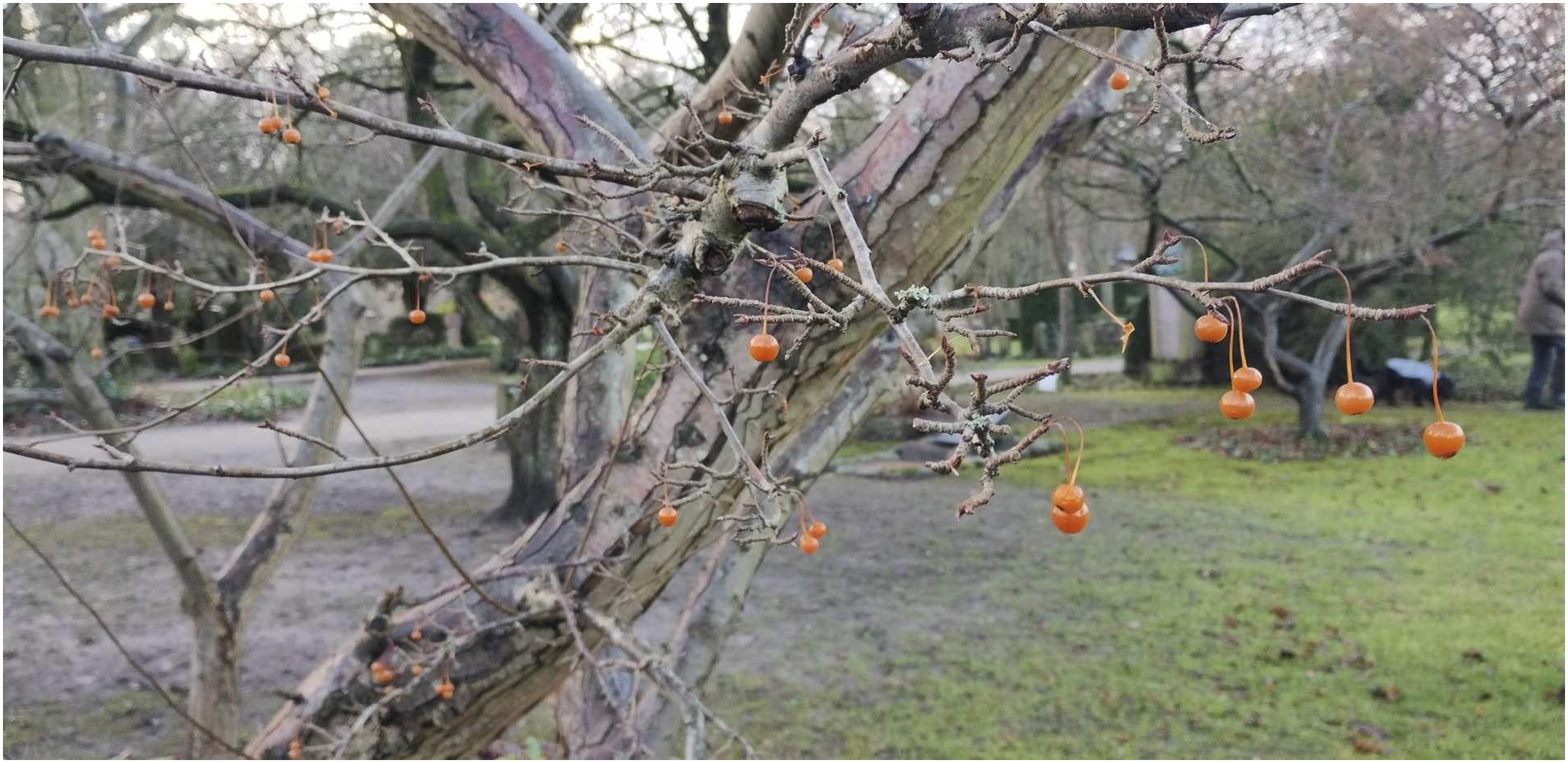
To overcome the extractivist logic that views nature as resources to exploit, we require a multi-sensory imagination to reshape our relationship with the ecological world. We ought to not simply “look ahead” but to learn and “look around” (Tsing 2014 quoted in Chao and Enari 2021, 40). “Got out of the train I met Agnes. I told her that she would have been rather late to class if she followed me, but she was happy to walk slowly. During the walk, she told me that she could notice way more things - and that she was sad for not noticing details in her everyday life.” (day 6)
Wander-ous walks had a transformative power on our attention. Sustained attention is essential to perceive the rhythm of climate change, which cannot be pinned down to a single event. It can help us avoid falling into (and hiding behind) the waiting state of our times, a metatemporal limbo where, at times, nothing seems happening, whereas at others, the whole globe seems on fire (Davis 2023, 54–56). Radical attention is needed as it enables us to stay in sync with the different timescapes of the environmental crisis; an ability significantly affected by high-speed digital time (Fitz-Henry 2020, 259). I thereby believe that chrononormative rhythms contribute to stripping us of our attention, syncing our bodies to the exhausting rhythms of capitalistic extractions.
The Lack of Relational Imagination
Re-activating and engaging our senses for radical attention is a fundamental step to perceiving beyond the human self. It cracks our imagination and creates paths for curiosity towards more-than-human lives and new ecologies of matter (see Figures 6 and 7). “A shift to a more holistic/ecological worldview is one of the most powerful leverage points for transition to sustainable futures” and overcoming the current “crisis in perception” infesting our worldviews (Irwin et al. 2015, 4). This relational imagination supports us in reframing the climate crisis and extractivism into entanglement issues, where our everyday actions have an impact on other dwellers, hence opening pockets of care (Chao and Enari 2021, 36–37). A worm moving at an even slower rhythm. The tiniest of mushrooms on a tree crack.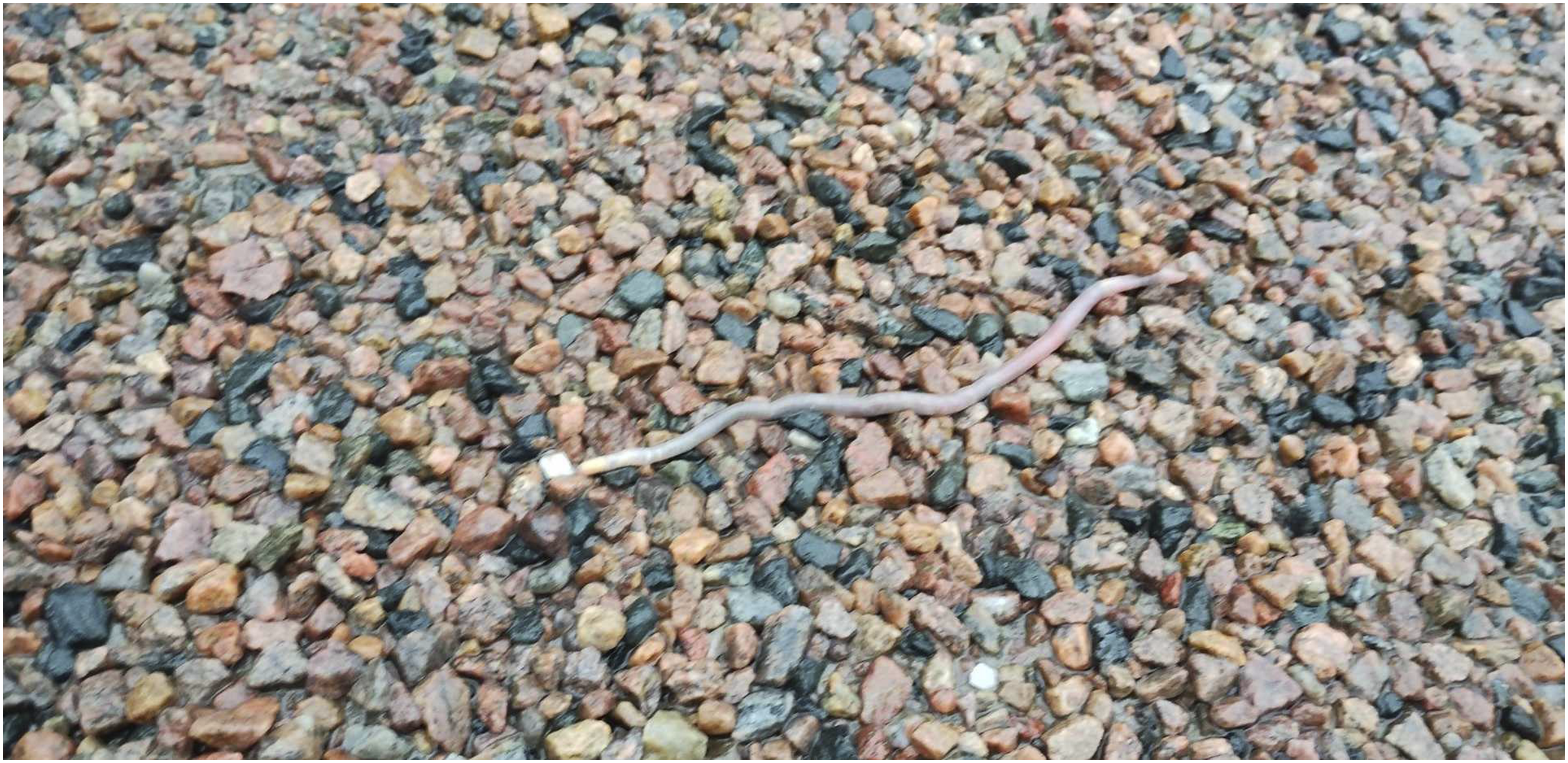

However, to care, you need to have time to care; time that we very often lack when following the moral duty of fitting as much as possible in a day (Sutherland 2019, 37). “During today’s workshop, I felt that the room conversation was moving very quickly, and I was dragged into different people’s universes at a very superficial level, without having my body participate in the understanding.” (day 6)
The field note refers to a collective sharing with my classmates, where everyone voiced their reflections. I found myself unable to truly follow the conversation due to its (normative) sped-up pace. I couldn’t engage my senses in the understanding, which inevitably stayed at a more superficial level. I did not have the time to enter their lifeworlds and truly relate. As a consequence feeling for the other (empathizing) was superficial, which I believe affected my ability to care.
To create new “rhetorics of value” we ought to hospice the project of accumulation of capital (Álvarez Villareal 2023, 3) in our daily lives. We ought to have the courage to do less. Dare not to squeeze as much as possible in 24 hours, facing the risk of “being left behind”. Perhaps, we might find that what we leave behind is the disease of egoism (Suárez-Krabbe 2022, 139) creating time and space to care.
To a very small extent, this is something that happened on a Saturday during my experiment, where due to the decelerated pace: “I automatically decided that I could do/“have” only one thing in my day: host a dinner. I knew that I could be slow: I had the whole day to clean, buy the groceries and cook lasagna. All of a sudden I had so much time.” (day 3)
I remember the soothing and peaceful feeling of (having the privilege of) spending the whole day just getting ready for my friends. My time was filled with attention and my day was blooming around our dinner together. It felt relieving not succumbing to the urge of doing more.
The slow rhythm allowed me to choose relationality. In the example above it was still a human-oriented relationality, however, it was a starting point to “get over myself” and choose “us” (Suárez-Krabbe 2022, 139). To listen to the ecological fabric of life, we need to activate a beyond-human imagination and practice humility to recognise the meaning and value of more-than-human lifeworlds (Chao and Enari 2021, 37–38). This process of “re-enchanting” the world asks us to repair the relationship between our bodies, the cosmos and each other(-than-humans) to nourish a relational collective imagination (Federici 2018, 189–190). An imagination that centers our personal, economic and political lives around the regeneration of life instead of the extraction of it (Álvarez Villareal 2023, 18). Relationality in our everyday life is a political fight for the “pluriverse” (Losada Cubillos et al. 2023, 98) that demands us to choose to give space(time) to radical care: “the refusal not to care and imagining otherwise” (Chao and Enari 2021, 45).
Discussion
Thickening the Present Fosters Reflexivity
The experiment with its counter-rhythms allowed for frustrations and guilts to emerge, surfacing the hidden imperative for productivity and acceleration governing my day-to-day. In that sense, slowing down my daily pace helped in thickening the present (Jönsson et al. 2021), surfacing the normative values hidden behind mundane practices. The auto-ethnography showed how acceleration becomes a tool to accumulate and exploit time, to reach the fake promise of improving our condition and living a fulfilling life.
Moreover, based on the auto-ethnographic embodied experiences, I reckon those sped-up rhythms can make us tunnel-visioned, singularly oriented towards our daily (productive) goals. Therefore, intervening in daily rhythms and breaking routines allowed me to shed light on my own complicity in the making and remaking of the systems I belong to, helping me build reflexivity on the structures I reproduce (Bussey 2017, 244).
Daily Rhythms as Elevators Between the Micro and Macro
To counteract the reality described by Bussey (2017) in which “we sleep walk into the future as both individual and collective surrender to unconscious temporal orders” (238), designers as well as futurists ought to disrupt practices and rhythms, mobilizing uncharted routes.
The slow pace of the experiment allowed for emergent spaces of conviviality, inviting people to slow down while commuting, and in doing so, experiencing and performing values in clear opposition to the imperatives for acceleration or accumulation. These wander-ous walks created opportunities for participants to downscale their daily life expectations and ambitions, accepting to do fewer things in their day. Affecting people’s daily rhythms can be considered in this case as a spontaneous yet tangible exploration of a de-growth worldview.
Slowing down mundane activities meant redesigning material arrangements and social practices, which in turns affected and questioned the underlying values and mindsets inscribed within them (Hummels 2021, 102). Hence, it is relevant to consider rhythms, pace and time as design materials to work with, where rhythmanalysis can become a relevant tool for transition designers. Indeed, working with time by altering normative rhythms can aid us in restructuring needs, becoming an instrument for social change (Fitz-Henry 2020, 260). Rhythms could work as “elevators” between the micro and macro levels, allowing for transitions to emerge.
Rhythms-Intervention Supports Alternative Thinking
Intervening in daily rhythms by artificially slowing down the pace of mundane activities worked as a defamiliarization technique. According to Powell et al. (2022), defamiliarization techniques are experimental approaches where familiar activities are tweaked (such as walking to the train station at an exceptionally slow pace) prompting a novel experience that sensitizes participants towards the space they inhabit (213). Defamiliarizing quotidian practices was key not only to enhancing one’s awareness of normative rhythms and actions but also to noticing the larger entanglements we partake in. Noticing one’s surroundings became easier thanks to the slower pace, which favoured the emergence of a more relational way of inhabiting the space (see Figures 4–7). Hence this performative intervention helped shake people’s mindsets pointing at how else things could be. Wander-ous walks allowed those who joined me (see Figure 8) to enact change by engaging with de-growth worldviews through a first-hand embodied experience (Dolejšová et al. 2021, 2). They had the opportunity to project themselves in alternative realities and viscerally engage, think and feel with them, experiencing alternative presents (Hajer and Pelzer 2018, 225; Lockton and Candy 2018, 919). In other words, through this experiment the present was problematised, showing paths not taken (Bussey 2017, 242). Disrupting time and timings encouraged new creativity and energies to arise (Bussey 2017, 242) and opened up different ways of repeating, which in turn reshaped people’s imagined futures (Oomen et al. 2022, 257). As Coops et al. (2022) write, alternative thinking is crucial for pressuring systems: it is when people start coming up with alternatives that paradigms shift (2). Friends who joined me during a wander-ous walk to commute in the city.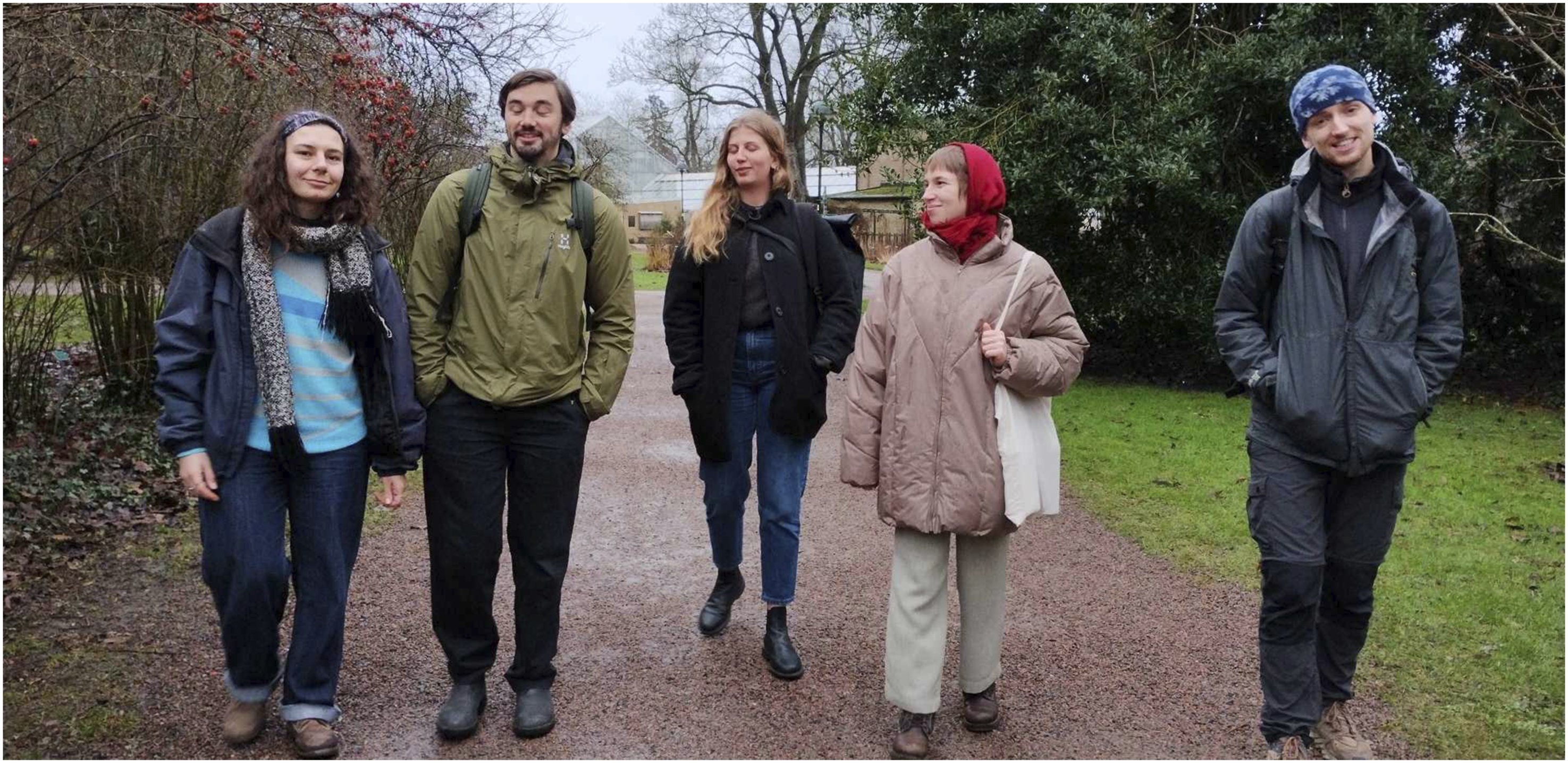
Ultimately, it is important to point out that the auto-ethnographic nature of the experiment poses a limitation to the study, as it does not allow for generalizations. We ought to acknowledge that the findings might very well change if the experiment was performed by someone else. The first nature of the intervention can lead to biases when interpreting experiences and interactions. Nonetheless, the approach used still proves to be relevant for transition design studies and could be valuable to explore it further in diverse contexts, expanding the technique of rhythm-intervention. It could be helpful for example to tailor this technique towards a more explicitly participative experiment and collect data on participants’ experiences, monitoring eventual values and mindset shifts.
Conclusion
Building on futuring techniques, speculative design and transformative practices, this paper uses rhythmanalysis and proposes the idea of intervening in everyday life rhythms to crack alternative thinking and imagine other possible presents. The method used was an embodied auto-ethnographic experiment where mundane activities were significantly slowed down. Using counter-rhythms as design materials helped to problematize and thicken the present, enhancing reflexivity. In fact, by defamiliarising daily actions one was encouraged to notice one’s surroundings as well as one’s own contribution in reproducing social practices, larger systems and mindsets.
Hacking daily rhythms is a way to explore the “how else”: rather than projecting an image of the future, this approach stimulates the emergence of alternative presents that subsequently project new pictures of the future.
Walking slowly (what I called wander-ous walks) was a clear example of transformation: performing a daily rhythm differently allowed for the awakening of the senses towards more radical attention. Attention is key for starting to care and reinvigorate a relational and beyond-human imagination.
To conclude, the way we use time in our everyday life is not apolitical (Bastian 2012, 7). Daily rhythms reinforce existing power relations (Reid-Musson 2018, 890) and through our everyday actions and choices, we strengthen larger structures (Suárez-Krabbe 2022, 135). This work is an invitation to futurists and transition designers to experiment with everyday life practices and rhythms and explore how these could become the sites to decolonise our imagination and transition towards post-extractivist presents-futures.
Footnotes
Declaration of Conflicting Interests
The author(s) declared no potential conflicts of interest with respect to the research, authorship, and/or publication of this article.
Funding
The author(s) received no financial support for the research, authorship, and/or publication of this article.
