



Abstract
Background:
Nasal nitric oxide (nasal NO) measurement is the most widely used screening tool for primary ciliary dyskinesia (PCD), but its accuracy may be affected by various factors. Based on our clinical experience, we hypothesized that nasal NO values vary across seasons, being lower in winter. This study investigates seasonal nasal NO variability in subjects referred for PCD screening.
Methods:
This retrospective study (2010-2023) analyzed 434 subjects with clinical symptoms suggestive of PCD who underwent nasal NO testing at Schneider Children’s Medical Center in Israel. Of these, 105 completed multiple measurements, yielding 578 nasal NO tests available for analysis. A separate cohort of 31 subjects diagnosed with PCD was analyzed independently. Seasons were defined based on the Mediterranean climate in Israel (according to Northern Hemisphere conventions).
Results:
Among 434 subjects (median age 9 years, 58.5% male), median nasal NO was lower in winter (123 nL/min) than in summer (167 nL/min, P = .002), with a higher proportion of abnormal values (<66 nL/min) in winter (29.7% in January vs 6% in August, P = .007). Seasonal differences were similar across age groups (below and above 5 years of age). This seasonal pattern persisted throughout the observation period, though winter nasal NO variability decreased during COVID-19 pandemic lockdowns (2020–2022). In subjects with PCD, nasal NO remained consistently low (median 14 nL/min), with minimal seasonal variation.
Conclusion:
Nasal NO levels exhibited seasonal variability, with statistically significant lower values during winter. Although most measurements remained within normal limits, there were many more abnormally low levels during winter, most of which normalized during summer. Therefore, repeat testing in another season, preferably summer, is recommended to ensure accurate PCD screening and avoid unnecessary invasive tests.
This is a visual representation of the abstract.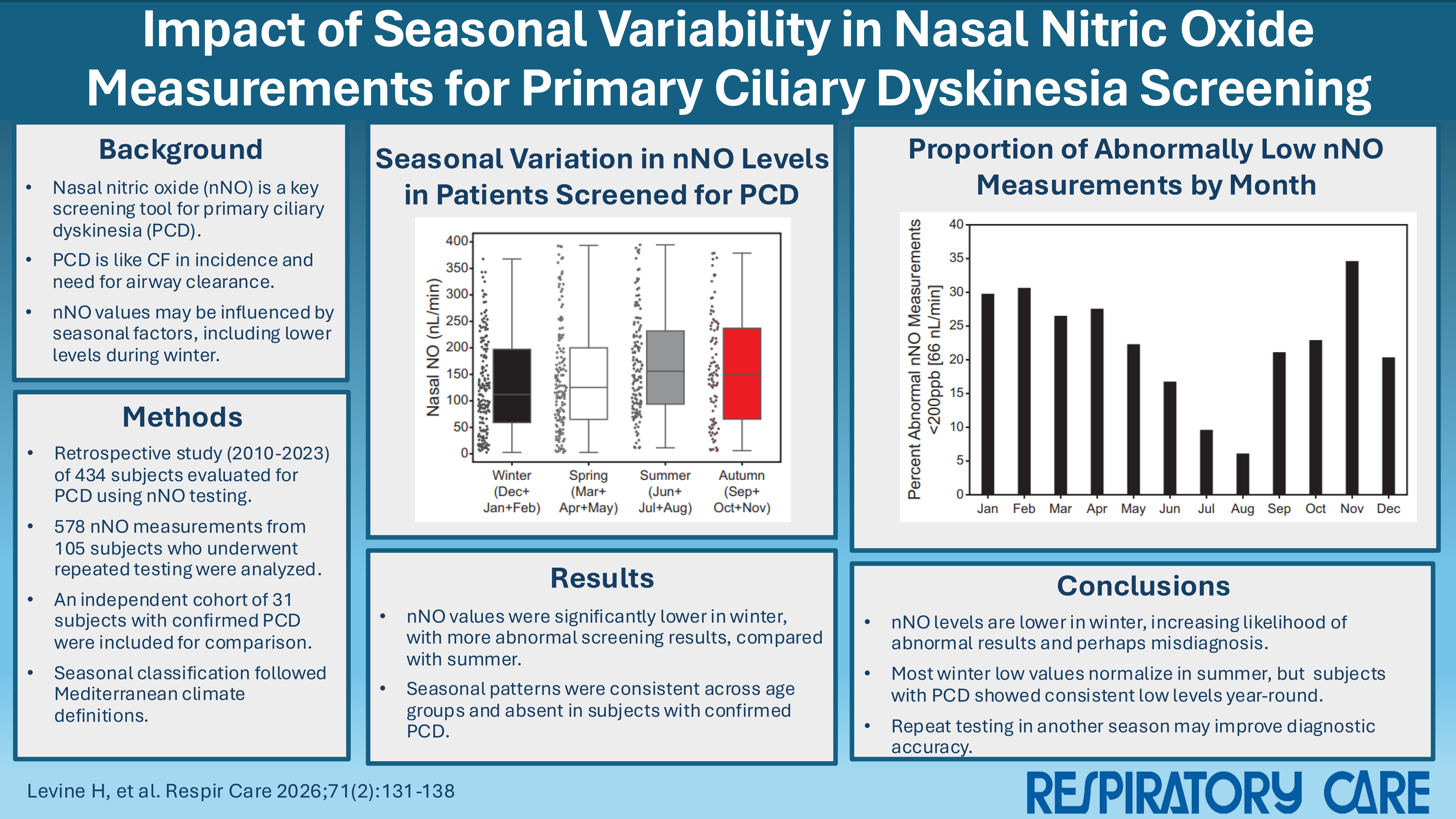
Keywords
Get full access to this article
View all access options for this article.