



Abstract
Misinformation poses a significant threat to the integrity of political systems, particularly in competitive authoritarian regimes (CARs), where it can distort public perception and undermine democratic processes. This study focuses on the 2023 Turkish general elections—a context characterized by widespread misinformation. While extensive research has been conducted on misinformation in democratic systems, where press freedom and digitalization foster a mix of reliable and misleading information, this investigation targets the unique challenges and media consumption patterns in CARs. Utilizing a nationally representative survey after the 2023 elections, we examine the association between media consumption (traditional and online) and susceptibility to misinformation among government and opposition voters. Our findings reveal that partisan news consumption significantly influences belief in misinformation, with individuals tending to believe claims aligning with their political affiliations while rejecting opposing claims. Moreover, television remains a dominant source of information in Turkey, unlike social media, which shows a limited impact on misinformation beliefs but possesses a conditional corrective potential for certain electorate segments. This study underscores the enduring influence of traditional media in CARs and suggests that while the theory of selective exposure and partisanship is applicable, the constrained information environment significantly shapes public perceptions and misinformation dynamics.
Keywords
Introduction
The rise of misinformation presents an increasing threat to liberal democratic governance worldwide (Dan et al. 2021), prompting an extensive scholarly investigation into the drivers of misinformation within these systems (e.g., Hameleers 2022; Jamieson and Albarracín 2020; Munger et al. 2022). However, the dynamics of misinformation within competitive authoritarian regimes (CARs) remain significantly underexplored. In autocracies, governments often deploy misinformation to maintain control, impeding opposition amid regular elections (Lu and Pan 2021; Munger et al. 2019; Roberts 2020). This study addresses critical gaps by examining citizens’ challenges navigating pervasive misinformation in CARs, such as Turkey, where regular albeit unfair elections exist alongside tightly controlled media. Focusing on the 2023 Turkish general elections, where misinformation was particularly rampant, we analyze how government and opposition voters are vulnerable to misinformation and how their media consumption patterns, including traditional and online media, influence this susceptibility.
A wide variety of outlets characterizes democracies’ free media markets, often reducing the cost of acquiring reliable information (Soroka and Wlezien 2022), allowing citizens to choose from a range of news sources—traditional or online, partisan or nonpartisan (Esser and Strömbäck 2014). However, this abundance of choices can also amplify susceptibility to misinformation, as partisan attitudes often drive selective exposure, leading citizens to favor news sources that reinforce their existing beliefs (Jerit and Barabas 2012; Luo and Zhao 2021). With approximately 95 percent internet penetration in Western societies (Newman et al. 2024), social media has become a primary conduit for misinformation (Guo and Vargo 2020; Hobolt et al. 2023; Pennycook and Rand 2019; Rhodes 2022). However, in developing markets where internet penetration is significantly lower (Newman et al. 2024), traditional media continue to dominate, providing a broader arena for information dissemination (Neyazi et al. 2022). Traditional media can also contribute to the spread of misinformation in democratic contexts (Ding et al. 2023; Tsfati et al. 2020), but CARs strategically use these outlets to distribute pro-government narratives and propaganda, often disseminating false information (Jamieson and Albarracín 2020; Levitsky and Way 2010).
Unlike in democracies, citizens in CARs face significant obstacles in accessing reliable information due to governments’ vital interest in suppressing opposition dissent (Levitsky and Way 2002). Critical media outlets often encounter coercion or intimidation (Bermeo 2016; Schnyder et al. 2024), leading these outlets to align with opposition parties, resulting in a media environment characterized by a notable parallelism between the press and political parties (Bulut and Yildirim 2020; Çarkoğlu and Yavuz 2010). This dynamic leaves citizens with few independent news sources and limited access to fact-checking bodies that are prominent in more democratic contexts (Nisbet and Kamenchuk 2019). Therefore, individuals in competitive autocracies navigate a highly constrained information landscape where exposure to biased media sources often stems more from necessity than choice. Pervasive misinformation exploits systemic vulnerabilities, further eroding the information environment and potentially accelerating democratic backsliding (Boese et al., 2022).
In this study, we draw on a nationally representative survey conducted in the summer of 2023, following the Turkish presidential and parliamentary elections held in May. Our primary aim is to examine the sources contributing to belief in misinformation in a CAR. Specifically, we investigate the association between news sources accessed through TV, newspapers, and social media and the extent to which individuals believe in misleading claims widely discussed during the election campaign.
Our study reveals a connection between partisanship, partisan news consumption, and belief in misleading election-related claims in the context of Turkey. Supporters of the two primary electoral alliances tend to believe the claims made by their preferred party while expressing disbelief in those from the opposing side. Additionally, exposure to television media sources is linked to the perception of these claims. Unlike in democratic contexts, however, social media does not significantly impact citizens’ susceptibility to misinformation in Turkey. Instead, we uncover its conditional but “corrective” potential on specific segments of the electorate. We argue that although the theory of selective exposure and partisanship adequately explains the Turkish case, unlike in democratic contexts with relatively freer information environments and an abundance of choices, traditional media retains its dominance, primarily driving the dissemination of misinformation.
Partisanship, Selective Exposure, and Misinformation
In democratic contexts, cognitive processes, especially motivated reasoning—largely driven by partisanship and ideology—have been the primary framework used to explain selective exposure (Kunda 1990; Lodge and Taber 2013; Schulte-Cloos and Anghel 2023; Wojcieszak et al. 2019). Ample evidence indicates that partisanship activates various cognitive processes, notably politically motivated reasoning (PMR), leading individuals to interpret information in ways that align with their political beliefs (Chinn and Pasek 2021; Gaines et al. 2007; Vegetti and Mancosu 2020). Within the broader scope of PMR, other cognitive processes, such as confirmation bias, play essential roles in processing information, prompting partisans to selectively accept information that conforms to their existing beliefs while rejecting contradictory information (Taber and Lodge 2006).
Due to PMR, individuals may be particularly susceptible to negative information or rumors about opposing parties, which can directly influence their voting behavior (Jennings and Stroud 2023; Morris et al. 2020; Weeks and Garrett 2014). The impact of partisanship extends to misinformation, with individuals more likely to believe questionable claims that resonate with their partisan leanings and dismiss those that do not (Flynn et al. 2017; Jennings and Stroud 2023; Vegetti and Mancosu 2020). Furthermore, partisans may resist abandoning these beliefs, even when presented with corrective information (Nyhan and Reifler 2010; Thorson 2016).
The aggravating role of selective exposure in misinformation susceptibility is also noteworthy (Nikolov et al. 2021; Rao et al. 2022; Rhodes 2022). Partisanship and cognitive processes not only influence how individuals process information but also guide their selection of media sources. Strong political attitudes drive media consumption patterns, leading to selective exposure where partisans primarily engage with media that confirms their pre-existing beliefs (e.g., Dejean et al. 2022; Peterson et al. 2021). Selective media consumption reinforces cognitive biases and deepens partisanship, fostering echo chambers where individuals are mostly exposed to information that supports their partisan views (Peterson and Kagalwala 2021). In politically polarized but democratic contexts, these media consumption habits increase susceptibility to misinformation. Media outlets often reinforce these biases by presenting agreeable information that is accepted without scrutiny, a phenomenon especially prevalent among viewers of FOX News and Breitbart in the United States (Feldman et al. 2012; Motta et al. 2020).
Traditional Versus Social Media Exposure
Within the framework of selective exposure and belief in misinformation, an important factor in the type of media individuals consume is the availability of different online and offline options (Clay et al. 2013). The rapid expansion of online media has spurred extensive research into the relationship between its use and the dissemination of misinformation (e.g., Anspach and Carlson 2020; Pennycook and Rand 2019; Valenzuela et al. 2019). While social media platforms offer unparalleled reach, they often lack the editorial oversight of traditional media, creating fertile ground for false information to proliferate (Garrett 2019; Wu et al. 2022). The ease of distribution on these platforms, coupled with the pursuit of engagement metrics, amplifies the spread of deceptive content, especially emotionally charged and polarizing material that garners attention regardless of its accuracy (Allcott et al. 2019; Avram et al. 2020; Bode and Vraga 2015). Individuals with strong partisan inclinations may gravitate toward such content, finding it more appealing than fact-checked news stories lacking emotional appeal (Horner et al. 2021; Pretus et al. 2023).
While the prevalence of misinformation on social media is well documented, traditional media’s role as a source has received less scrutiny (e.g., Ding et al. 2023; Neyazi et al. 2022; Tsfati et al. 2020). However, there are compelling reasons to consider the impact of traditional media. First, despite growing relevance of social media, television, and other legacy, media remain primary sources of news consumption in many societies (Newman et al. 2023). Second, while traditional media outlets typically adhere to journalistic standards and fact-checking practices, they are not immune to the spread of misinformation. In politically polarized environments, mainstream media may prioritize sensationalism over objectivity to maintain audience engagement (Jamieson and Albarracín 2020; Motta et al. 2020; Steppat et al. 2022). Furthermore, efforts to keep pace with the immediacy of social media and budget constraints may compromise journalistic integrity (Sivek and Bloyd-Peshkin 2019).
Media in CARs
Misinformation is a multifaceted societal issue that varies significantly depending on the political context (Koçer et al. 2022). In CARs, where controlling the media is crucial for regime stability, the interplay between partisanship and media consumption becomes particularly complex. CARs like Turkey are characterized by the existence of formal democratic processes, such as regular elections, which superficially provide opportunities for opposition challenges (Levitsky and Way 2002). Yet, these regimes are characterized by a political landscape, including their media systems, tightly controlled by the regime, erecting significant barriers to reliable information (Stier 2015).
In such environments, traditional media often falls under the sway of pro-regime forces, perpetuating regime-friendly narratives while stifling opposition voices (Levitsky and Way 2010). The regime employs various tactics to capture mainstream media outlets, including business deals and intimidation, whereas independent media may face censorship and coercion (Schnyder et al. 2024). Additionally, the government may flood the public sphere with propaganda, further restricting the flow of information (Bermeo 2016).
Social media, although a powerful tool for political mobilization, also serves as a medium for misinformation in these regimes (Tucker et al. 2017). Governments manipulate social media through tactics like clickbait, fake news, and censorship to control the information ecosystem (King et al. 2017; Lu and Pan 2021; Munger et al. 2019; Roberts 2020). Despite its potential as a platform for opposition, social media faces significant government-imposed obstacles (Gunitsky 2015; Tucker et al. 2017; Tufekci 2017). For example, cyber troops are deployed by regimes to target specific opinion leaders and suppress dissent online, stifling political discourse and undermining democratic values (Bradshaw and Howard 2017).
Moreover, the scarcity of independent news sources in CARs leaves citizens particularly vulnerable to regime narratives, a stark contrast to democratic societies where credible media and independent fact-checking bodies actively combat misinformation (Nisbet and Kamenchuk 2021). For example, studies focusing on Indonesia’s regime illustrate how traditional media like television and newspapers significantly influence susceptibility to misinformation due to a distinctive hybrid media system and low internet penetration (Neyazi and Muhtadi 2021; Neyazi et al. 2022).
The extent of misinformation exposure for citizens in CARs is significantly shaped by structural factors, such as the availability of alternative media and the content accessible through traditional and social media. Typically, pro-regime businesses control most of the press, offering regime supporters multiple traditional media outlets that reflect their political views. Conversely, opposition supporters have limited traditional outlets and are often exposed to pro-regime content, regardless of their preferences. As a result, opposition supporters frequently turn to social media or other online sources to find information that aligns with their political views, highlighting the role of digital platforms in countering pro-regime narratives prevalent in traditional media. Still, the uneven media landscape and the effect of partisanship on misinformation beliefs in authoritarian regimes remain poorly understood. Specifically, it is unclear how the regime-controlled traditional media affects belief in anti-regime misinformation and to what extent opposition supporters encounter and accept pro-regime misinformation. This study examines these issues within a CAR, exploring media influence and partisan biases on misinformation beliefs.
Misinformation in the 2023 Turkish Election Campaign
Over the past 2 decades, Turkey has faced democratic backsliding alongside increasing party system polarization (Arat 2022; Aydın-Düzgit and Balta 2019; Gümrükçü 2022; Somer 2019). This period saw the government tighten its control over traditional and social media, with pro-government entities now controlling about 90 percent of the media landscape (Schnyder et al., 2024), making access to reliable information challenging (Yanatma 2021). The remaining media outlets also lack independence, reflecting tight press-party parallelism (Bulut and Yildirim 2020; Çarkoğlu and Yavuz 2010; Yıldırım et al. 2021).
While social media offers limited access to alternative viewpoints, it also exposes citizens to government propaganda and misinformation (Andı et al. 2020). Additionally, there is ample evidence of the ruling party’s authoritarian measures, including online censorship tactics (Çarkoğlu and Andı 2021) and trolls targeting opposition individuals (Bulut and Yörük 2017). Finally, in 2023, internet penetration stood at 85 percent in Turkey, lagging behind Western countries, and traditional media was utilized by 56 percent of the population and social media by 45 percent as news sources, amidst a low trust level of 35 percent (Newman et al. 2023).
Press freedom in Turkey declined notably from 99th to 165th out of 180 countries between 2002 and 2023 (RSF 2024). This decline aligns with the Justice and Development Party’s (AKP) rule, which has included an electoral alliance (Cumhur İttifakı, People’s Alliance, PA) with the Nationalist Movement Party (Milliyetçi Hareket Partisi, MHP) since 2018. During the first half of its tenure, the government reshaped the patrimonial-clientelistic media structure in its favor, taking over opposition-owned outlets like the Uzan and Ciner groups. In 2009, the Doğan Media Group, Turkey’s largest media conglomerate, faced a $2.5 billion tax penalty, leading to the selling of some media properties. In 2018, under growing pressure, the group, including its flagship Hürriyet and the Doğan News Agency, was sold to the pro-government Demirören Group (SCF 2018).
Today, the Turkish media landscape is dominated by conglomerates aligned with the regime, while social media, although comparatively more open, is subject to ongoing regulation and censorship (Andı et al. 2023; Kocer and Bozdağ 2020). Digital outlets also face significant challenges. In 2018, the amendment of Law No. 6112 shifted internet regulatory authority to the Radio and Television Supreme Council (RTUK), controlled by AKP and MHP members. More recently, the 2022 Disinformation Law criminalized “spreading disinformation,” a vague term used to censor critical voices.
The Turkish general elections in May 2023 occurred in a competitive authoritarian setting with a heavily compromised information environment. These elections offered the opposition a chance to gain ground amidst growing dissatisfaction with the ruling AKP and its leader, Recep Tayyip Erdoğan. Key to the discontent was ongoing economic turmoil, largely attributed to the administration’s policies, including the President’s insistence on maintaining low interest rates despite market realities. This led to monetary imbalances, currency devaluation, and soaring inflation rates. Additionally, the government’s ineffective initial response to two earthquakes in the southeastern provinces, home to nearly 10 percent of Turkey’s population, further damaged its reputation. The opposition hoped voters would attribute the persistent economic distress and flawed earthquake response to the incumbent party and its leader.
To challenge the ruling coalition, the opposition Nation Alliance (Millet İttifakı, NA) now came to include six parties, presenting a joint presidential candidate and orchestrate a unified campaign for a majority in the assembly. The alliance nominated Kemal Kılıçdaroğlu, leader of major opposition Republican People’s Party (Cumhuriyet Halk Partisi, CHP). Although the robust campaign led to a runoff, Kılıçdaroğlu was defeated by a margin of 2.3 million votes, and the alliance failed to achieve a majority in the TBMM.
Amidst the incumbent’s struggles with economic challenges and earthquake relief efforts, a key question arises: How did President Erdoğan’s campaign manage to retain the support of disillusioned voters for the AKP-led alliance? Similarly, how did the opposition keep its voter base united behind Kılıçdaroğlu despite internal coalition disagreements? A partial answer might lie in the strategic use of negative campaigning by both sides, often leveraging misleading information to galvanize their respective supporters.
For instance, a widely circulated video during the campaign purportedly showed Kemal Kılıçdaroğlu encouraging people to vote, followed by an endorsement from Murat Karayılan, a co-founder of the Kurdistan Workers’ Party (Partiya Karkerên Kurdistanê, PKK), recognized as a terrorist organization in Turkey, the European Union (EU), and theUnited States. 1 President Erdoğan even presented this video at a rally, questioning whether the public would support a candidate backed by a terrorist group. However, it was later revealed that the video was fabricated by combining two unrelated clips. 2
Moreover, supporters of President Erdoğan, following his statement, claimed on social media that an astounding 1.7 million people attended a rally in Istanbul before the presidential election’s first round. These assertions were contested by several platforms, notably Teyit, a Turkish fact-checking website, which conducted an independent analysis and determined that attendance ranged between 520,000 and 865,000, significantly lower than the AKP’s claim. 3
Conversely, the opposition alliance was also accused of spreading false information to incite negative stereotypes about refugees and migrants. Leading up to the second round of the presidential election, opposition candidate Kılıçdaroğlu shifted his campaign strategy from a conciliatory tone to a more aggressive, nationalistic approach to appeal to voters swayed by President Erdoğan’s assertive campaign. Kılıçdaroğlu accused his opponent of bringing 10 million refugees into Turkey, despite the UN High Commissioner for Refugees (UNHCR) reporting approximately 4 million refugees currently residing in the country. 4
Additionally, the Turkish Presidency’s Communications Directorate played a significant role in the dissemination of information. This Directorate emphasized combating disinformation, evidenced by the publication of weekly misinformation bulletins since October 2022. 5 During the campaign, these bulletins addressed issues related to refugees and migrants, the February 2023 earthquakes, and relief efforts, among other topics. The bulletins primarily contained simple negations of claims rather than providing proofs or refutations of false information, which the incumbent administration viewed as a list of misinformation campaigns orchestrated by opposition circles. These examples from Turkey suggest that misinformation often originates from the “top.” 6
Thus, the Turkish information landscape is notably saturated with false and misleading content, frequently propagated by political actors attempting to sway voters on both sides. However, the incumbent regime’s control over mainstream newspapers and TV channels, coupled with internet restrictions and the influence of bodies like the Directorate of Communications, indicate the AKP’s advantage in shaping public discourse and its greater effectiveness in disseminating misinformation.
Research Design
This study explores this information ecosystem and its impact on individuals’ beliefs. We ask the following research questions to guide our analysis:
We conducted a nationwide representative survey in Turkey, involving face-to-face interviews with 1,529 voting-age respondents between August and October 2023. The sampling procedure began with the Turkish Statistical Institute’s (TUIK) NUTS-2 regions. Due to the February 2023 earthquake, which made it difficult to conduct interviews, our target population excludes registered voters in one of the 26 NUTS-2 regions (Hatay, Kahramanmaraş, and Osmaniye). Therefore, we distributed the targeted sample size of 1,500 proportionally across the remaining 25 NUTS-2 regions, based on the urban and rural voter populations determined by the most recent eligible voter counts from the May 28, 2023 elections, published by the Supreme Election Council and based on the Address-Based Population Registration System (ADNKS).
After determining the desired number of interviews, we requested that the Turkish Statistical Institute provide us with household addresses with a block size of 150. Ten voting-eligible respondents were targeted from each block, and no substitution was used. The probability-proportionate-to-size principle was used to distribute the address blocks to the NUTS-2 regions. Individuals in the visited addresses were selected according to the lottery method and based on the reported number of eligible individuals in each household. If, for any reason, the selected individual could not be interviewed on our first visit, the same household was visited up to three times until the interview was conducted successfully. No incentives were provided to the respondents.
Measures
Dependent Variable: Belief in Misleading Election Claims
We examined six prominent election claims disseminated by the incumbent government and opposition during their campaigns. These claims were frequently cited by politicians from both alliances throughout the campaign and covered by the media and fact-checking websites. 7 We asked participants how believable they found these claims. For instance, we inquired about claims by President Erdoğan, who, on multiple occasions during his campaign rallies, accused the opposition of allying with terrorist groups—a claim broadly disseminated in state and pro-government media. 8 We also asked about opposition claims accusing the government of collaborating with FETO, a domestic terrorist organization. 9
Table 1 presents the responses to the assessments of assertions made throughout the election campaign. These items have varying levels of accuracy, with some claims labeled as misleading by fact-checkers or media organizations, while others cannot be confidently debunked. For example, the regime’s claim that the opposition collaborates with terrorists was debunked by Teyit, a fact-checking organization. 10 However, the regime’s claim that the opposition alliance supports the LGBTQI movement cannot be fully refuted, as the opposition alliance never took an official position on the matter. Some politicians within the alliance did declare support for individual rights by participating in protests or pride events. 11 Similarly, the claim that the Central Bank of Turkey has wasted billions is partially true.12,13
How Close to the Truth do You Think These Claims from the 2023 May Election Campaigns Are?
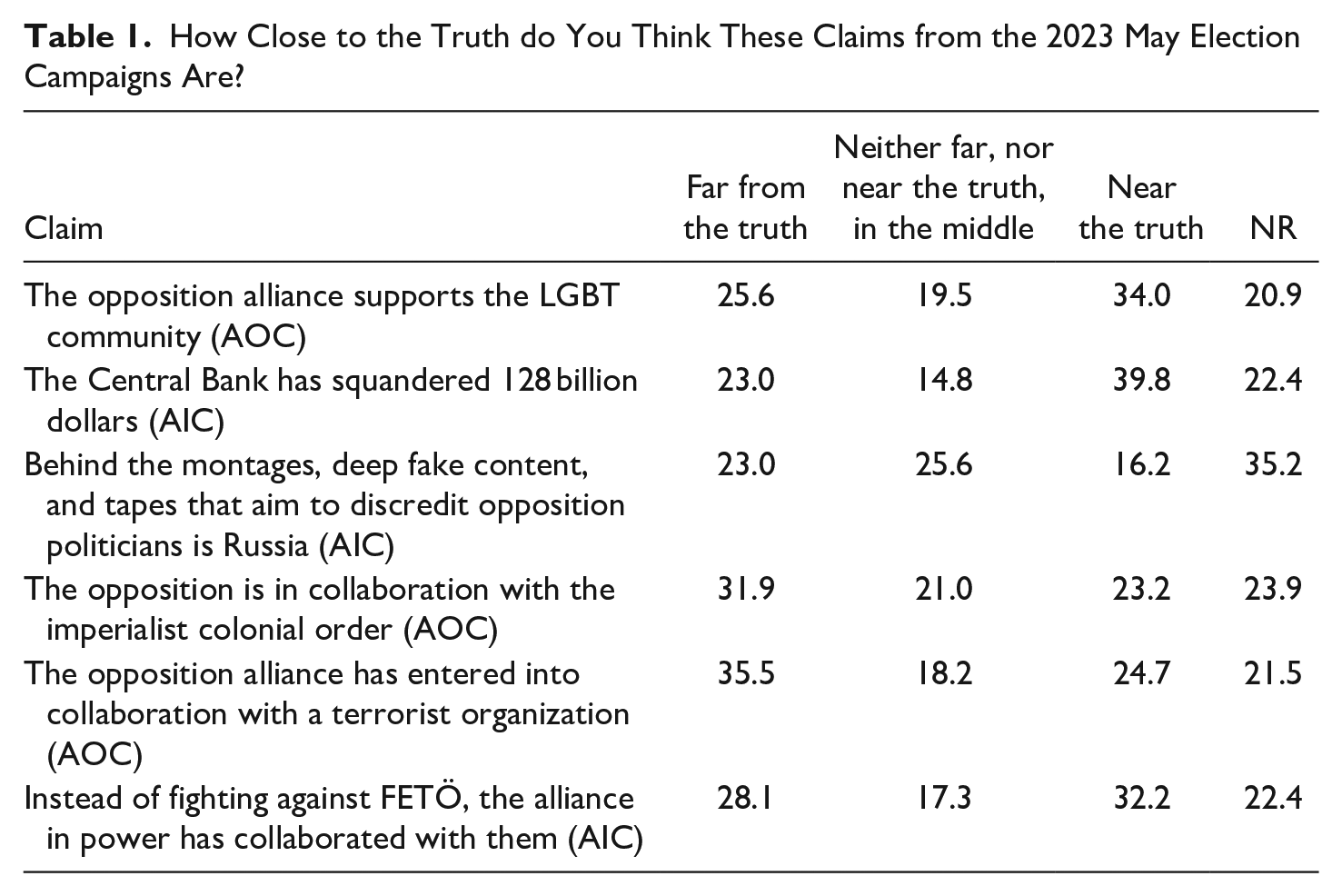
The nonresponse rates varied from 21 to 35 percent, indicating notable uncertainty regarding these assertions. Specifically, the allegations about the opposition’s support for the LGBTQI community (anti-opposition claim, AOC), the Central Bank’s alleged misuse of substantial funds (anti-incumbent claim, AIC), and the incumbent alliance’s purported collaboration with FETO (AIC) are among those perceived as relatively credible, with 32–40 percent of respondents considering them close to the truth.
Approximately, one-third of the participants perceived the accusations of the opposition alliance cooperating with a terrorist group and aligning with imperialist forces as implausible and distant from reality. This indicates that while two assertions regarding the incumbent alliance and one concerning the opposition are viewed as believable, two other allegations against the opposition are considered highly dubious. The allegation of the opposition’s ties with a terrorist organization originates from the government’s campaign claims, explicitly linking the opposition with the PKK through the pro-Kurdish HDP.
Table 2 presents the results of the exploratory factor analysis of these claims’ evaluations. Two factors emerged, separating anti-opposition claims (AOC) from anti-incumbent claims (AIC). Interestingly, respondents, regardless of their perception of the veracity of AOCs, tended to give similar evaluations of the claim that Russia is behind the deep fake content. Despite being the opposition’s attack against the government, many likely perceived this as a negative claim about the opposition, hence evaluating it similarly to AOCs. Conversely, the AICs concerning the Central Bank’s squandering and collaboration with FETO form a distinctly separate dimension.
Factor Analysis of Misinformation Claims.
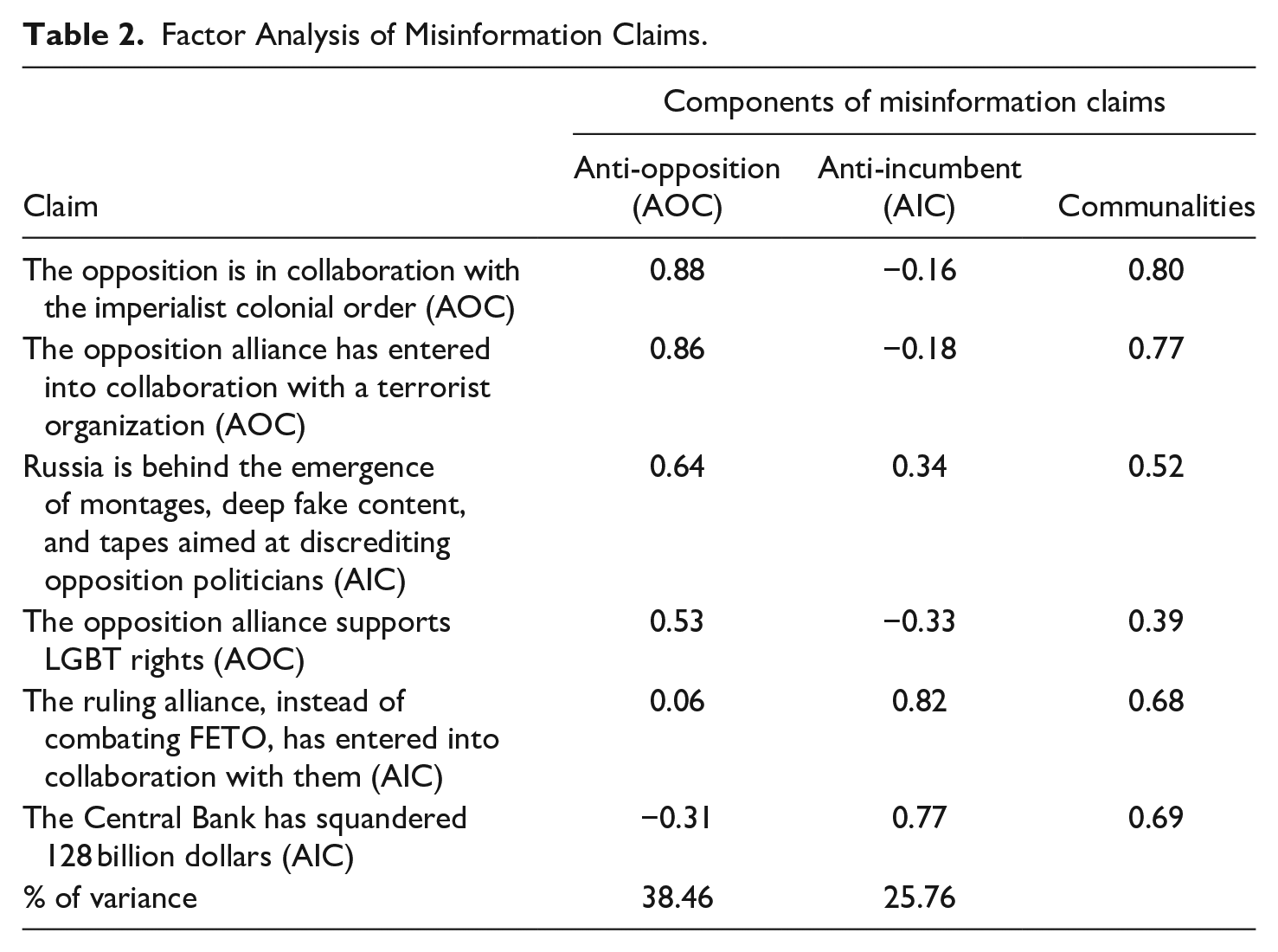
For the ensuing analyses, instead of using the factor scores from this two-dimensional analysis, we created an additive evaluation scale ranging from 0 (farthest from truth) to 1 (closest to truth) for the two dependent variables. The four misinformation claims under the antiopposition dimension were used in an additive form within a range of zero to one. The other two AICs were used on another additive scale within the same range.
Independent and Control Variables 14
To address RQ1 on the role of party support in endorsing misleading claims, we measured voting preference as a declared vote for either the People’s or Nation Alliance in the May 2023 parliamentary election. For RQ1a, we examined the association between self-reported left-right ideological orientation on an eleven-point scale (from left-most [0] to right-most [10] and belief in misinformation) (All of our variables and descriptive statistics can be found in the Supplemental Information—Table A2).
To answer RQ2, our survey included items measuring how frequently respondents used newspapers, TV channels, and six social networks, including Facebook, Instagram, Twitter, WhatsApp, YouTube, and TikTok, for political news and information. These variables, measured on a seven-point scale ranging from 1 (never) to 7 (more than 10 times a day), were used to form a composite score of social media exposure (Figure 1).
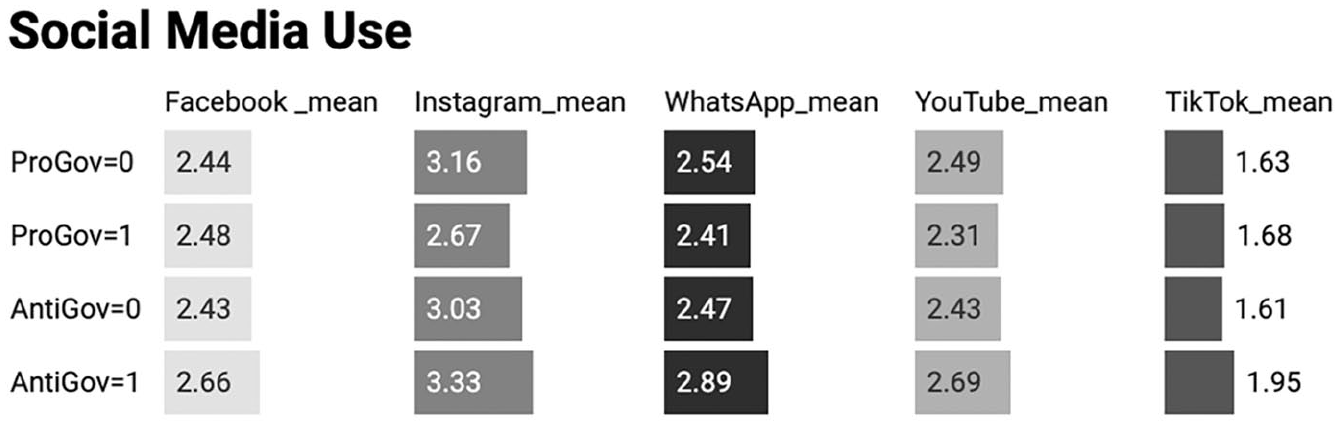
Mean social media usage by political alliance. 1 Social media usage measured as 1 (Never) to 7 (more than 10 times a day).
This decision to use a composite score rather than focusing on each social media platform separately was due to two key reasons. First, as summarized in Figure 1, below, none of the platforms stood out as being frequently used by the respondents for political information seeking (for each platform, around 50% of the respondents reported never using them). Additional robustness checks did not reveal systematic differences between platforms regarding their relationship with the dependent variables. Second, given that we did not have prior expectations about how misinformation would be more prevalent in a specific social media platform, we followed previous approaches (e.g., Goyanes et al., 2021; Wu et al., 2024) within which social media exposure was measured an index of frequency of use of different social media platforms.
In addition to the independent variables described above, our analysis included demographic variables listed in the Supplemental Information (Table A2) as control variables in our models. We also utilized a misinformation prevalence index based on responses to a question about the perceived frequency of encountering incorrect or misleading content in the May 14 election. We used this variable to control for misinformation awareness. 15
Results
Descriptive Summary
First, we descriptively present the data. Females accounted for 53.3 percent of participants. The age distribution skews younger, with 19.2 percent aged 18–25 and 7.3 percent aged 65 or older. Education levels varied: 35.1 percent had 11 years of education, 25.0 percent had 5 years, and 0.1 percent had 19 years. Politically, 43.3 percent identified with the 6–10 range on a left-right scale, suggesting moderate-to-extreme right-leaning tendencies, while 37.8 percent fell in the 0–4 range, indicating a left-to-moderate stance.
Media consumption patterns indicate the importance of traditional media in Turkey. While newspapers are less regularly used, with 63 percent reporting never reading them, TV remains the most popular news source, with over 50 percent using it daily. The proportion of those who never use newspapers ranges from 56 to 64 percent, while those who never watch TV channels ranges from 11 to 16 percent. Additionally, 18 to 34 percent never use social media sources for political information.
When comparing news consumption patterns across political groups, television remains the leading medium for political news, especially among government supporters, with 61 percent tuning into TV channels for political updates. This preference is slightly less pronounced among HDP supporters, at 57 percent. By contrast, individuals without party affiliations (50%) and opposition supporters (49%) showed a lower inclination towards TV for political news (Figure 2). Newspapers and TikTok were the least favored sources of political information across all political groups.
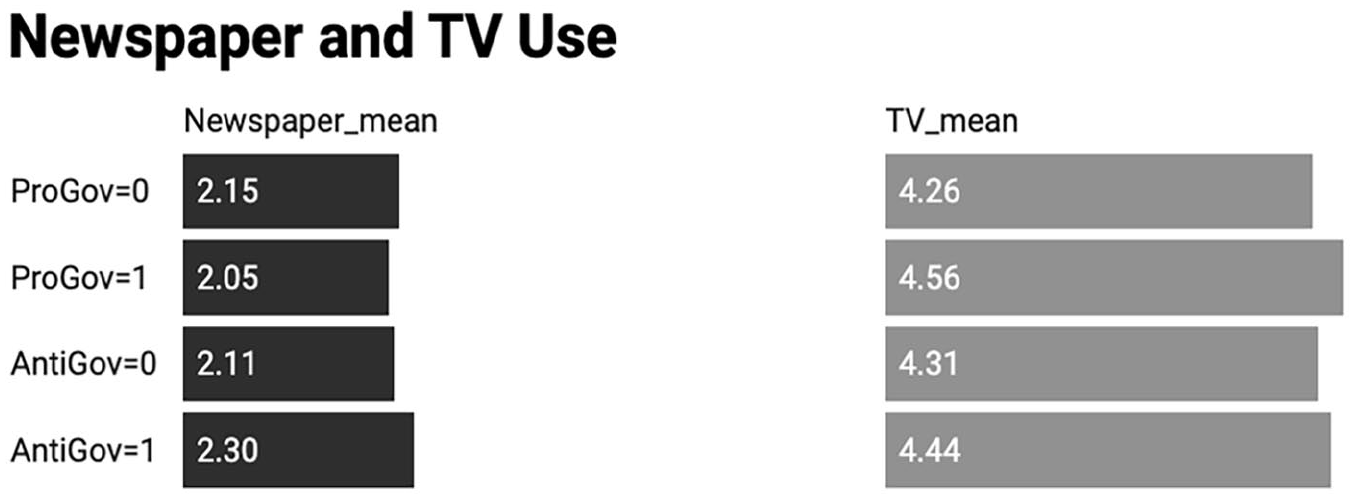
Mean traditional media usage by political alliance. Traditional media usage measured as 1 (Never) to 7 (more than 10 times a day).
Instagram was the second most popular news source, notably among HDP supporters (38%) and those without party affiliations (31%). Opposition supporters distinctively reported high usage of WhatsApp for news consumption, with 31 percent accessing this messaging platform over ten times daily for news updates (Table A2).
In this section, we delve into the specifics of news consumption through TV and newspapers within Turkey’s media landscape. We classified TV channels and newspapers into three categories: (1) pro-regime, (2) opposition, and (3) neutral. We adopted the methodology outlined by Yıldırım et al. (2021) and updated the classification to reflect recent changes, such as the acquisition of Hürriyet by pro-regime conglomerates. A comprehensive list of media outlets included in our analysis is detailed in the Appendix (Tables A4–A5). 16
Despite their overall lower popularity, most political groups predominantly use pro-regime newspapers for news. This trend is evident among nonaffiliated individuals (46%) and opposition supporters (40%). Similarly, in TV news consumption, 38 percent of nonpartisan individuals prefer pro-regime channels. As expected, government supporters predominantly consumed news from pro-government newspapers (70%) and TV channels (80%). In contrast, HDP supporters consistently preferred opposition-aligned newspapers (53%) and TV channels (81%).
Several factors could explain these findings. In a politically polarized climate, party supporters often avoid media outlets affiliated with opposing views due to negative perceptions (Peterson and Kagalwala 2021). Additionally, the accessibility and prevalence of pro-government sources may influence these consumption patterns. Regardless of the causes, certain groups, especially government supporters, tend to gravitate exclusively toward TV channels and newspapers that reflect their political beliefs.
Regression Predicting Belief in Misinformation
Next, we use OLS (ordinary least squares) regression models to analyze how respondents perceive the six misinformation items presented above. Anti-incumbent and anti-opposition models both use dependent variables that range between the two extremes of the items in consideration, being “far from the truth” (zero) and “near the truth” (one), with the middle point where the respondent is unsure whether the claim reflects the truth or not. We incorporated four demographic controls into each regression: age, gender, education, and rural residency.
RQ1 pertains to the relationship between individuals’ ideological and party identification and their endorsement of misinformation prevalent in the election campaign. Left-right self-placement has a statistically significant negative association with belief in AICs while positively impacting belief in AOCs. As respondents move from the left-most to the right-most position on the left-right scale, they tend to find AICs less believable. In contrast, as respondents move from the left to the right end of the ideological spectrum, they find AOCs closer to the truth. Similarly, in Model 1, those who vote for the opposition alliance find AICs closer to the truth, while in Model II, those who vote for the government find AOCs closer to the truth (Table 3).
Belief in Misinformation—Regression Analysis.
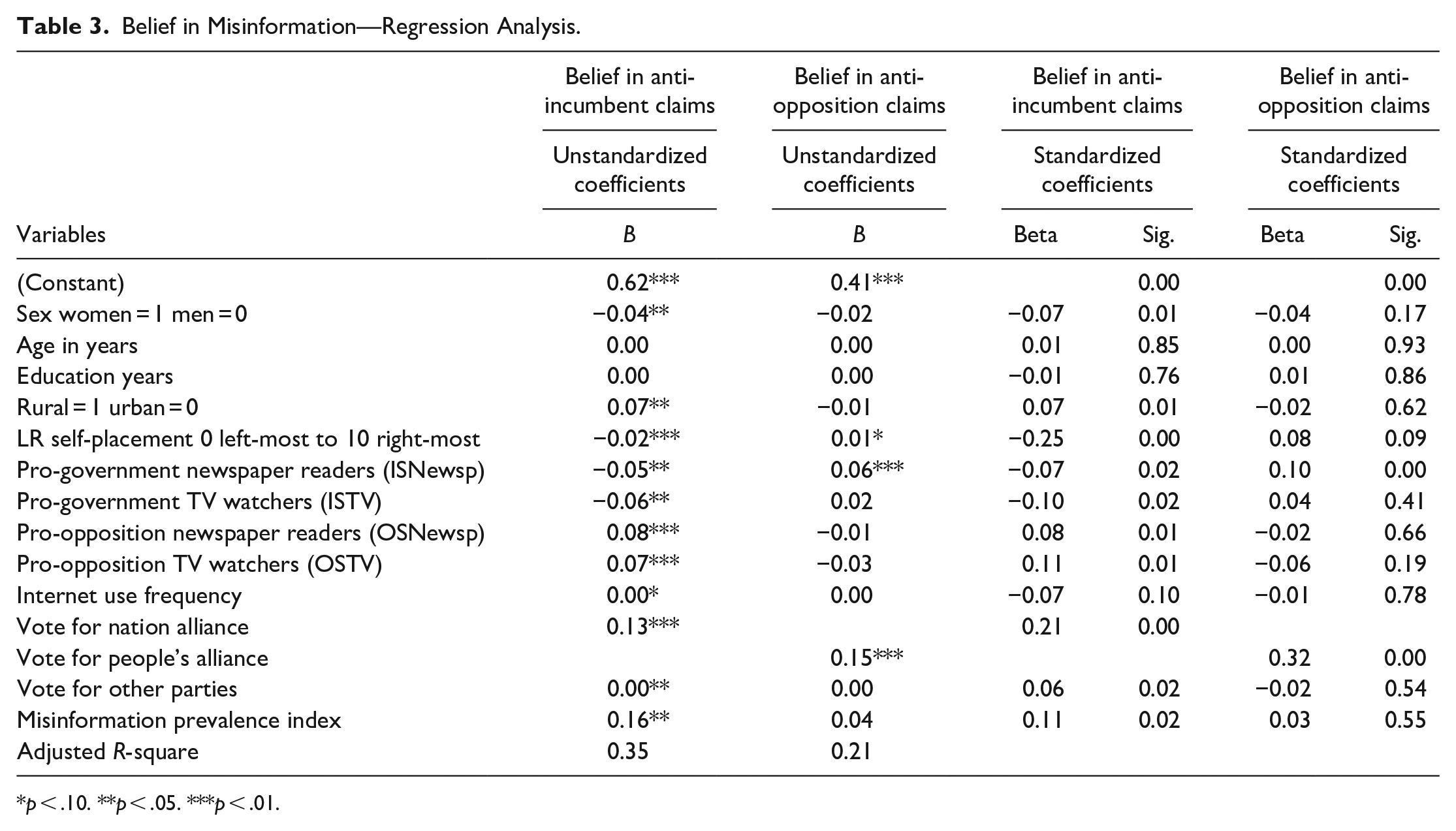
p < .10. **p < .05. ***p < .01.
Our second research question examines the relationship between the consumption of various media channels (newspapers, TV, and internet sources) and the endorsement of misleading campaign claims. Readers of pro-incumbent newspapers are more likely to dismiss AICs as untrue while viewing AOCs as more credible. For AICs, all other media variables are statistically insignificant. However, consumers of both pro-incumbent newspapers and TV channels are less inclined to believe these claims as truthful. Similarly, those who consume media from opposition-aligned newspapers and TV channels are significantly more likely to perceive AICs as closer to the truth. Unfortunately, we cannot determine the specific internet sources our respondents follow, preventing us from categorizing them as pro-incumbent or pro-opposition. We only have data on the frequency of internet use, which shows no significant impact on their perceptions of the misinformation claims.
Finally, we also examine demographic variables that appear to have some influence on the anti-incumbent but not on the anti-opposition evaluations. While rural residents appear to find AICs closer to truth, women have the opposite tendency. Men, rather than women, are more inclined to find AICs closer to the truth.
Decision Trees Predicting Belief in Misinformation
To fully understand the relationship between media use and belief in misinformation, it is essential to consider the complexity of electoral alliances, particularly the opposition (NA). The NA is ideologically heterogeneous, with many supporters closer to the right wing but incumbent AKP than the opposition but left-leaning CHP (Baruh and Çarkoğlu, 2024). Consequently, with the government’s increasing grip on traditional media, party choice may not always align with media use. This results in combinations of partisanship and media consumption that increase susceptibility to either AICs or AOCs. For example, right wing and social democratic-centrist NA voters may differ in their media use patterns and beliefs in misinformation. Without testing all possible interactions and nonlinear relationships, the linear regressions summarized above cannot detect pockets of susceptibility to misinformation (i.e., combinations of media use patterns and political ideology).
Given these considerations, we used Classification and Regression Trees (CART) to explore pockets of misinformation susceptibility regarding AICs and AOCs. CART is a decision tree algorithm used to construct a piecewise constant estimator for both classification tasks (Berk 2016; Gey and Nedelec 2003). The algorithm involves creating binary tree-structured partitions based on a penalized criterion, which helps select the most effective tree-structured estimators from a vast collection of possible trees. Decision trees like CART are particularly fitting for this purpose because of their ability to model nonlinear relationships. They recursively partition the data to capture complex interactions and nonlinear relationships between variables that linear regression may not effectively address (Quan and Valdez 2018). Furthermore, decision trees are nonparametric, meaning they can be used when assumptions underlying linear regression are not met, which was the case in this study, particularly for skewed media use variables (Streeb et al. 2022; Quan and Valdez 2018).
Figure 3 summarizes the CART analysis predicting respondents’ perceived veracity of AOCs. Right-wing voters (scored above 6.5, Node 2) were more likely to believe in AOCs than those closer to the center or left-leaning (Node 1). Among right-wing voters, reading pro-incumbent newspapers further increased their belief in AOCs (Node 6). Among less right-wing voters (Node 1), a split was observed along coalition lines, with NA supporters (Node 3) less likely to believe in AOCs than PA and other (mostly HDP) voters (Node 4). While this finding aligns with the regression results, it is important to note the curvilinear effect of internet use. Those with very low internet use were less likely to believe in AOCs (Node 7) than moderate-to-high users (Node 8). However, those with higher internet use (Node 12) were also less likely than moderate users (Node 11) to believe in AOCs.
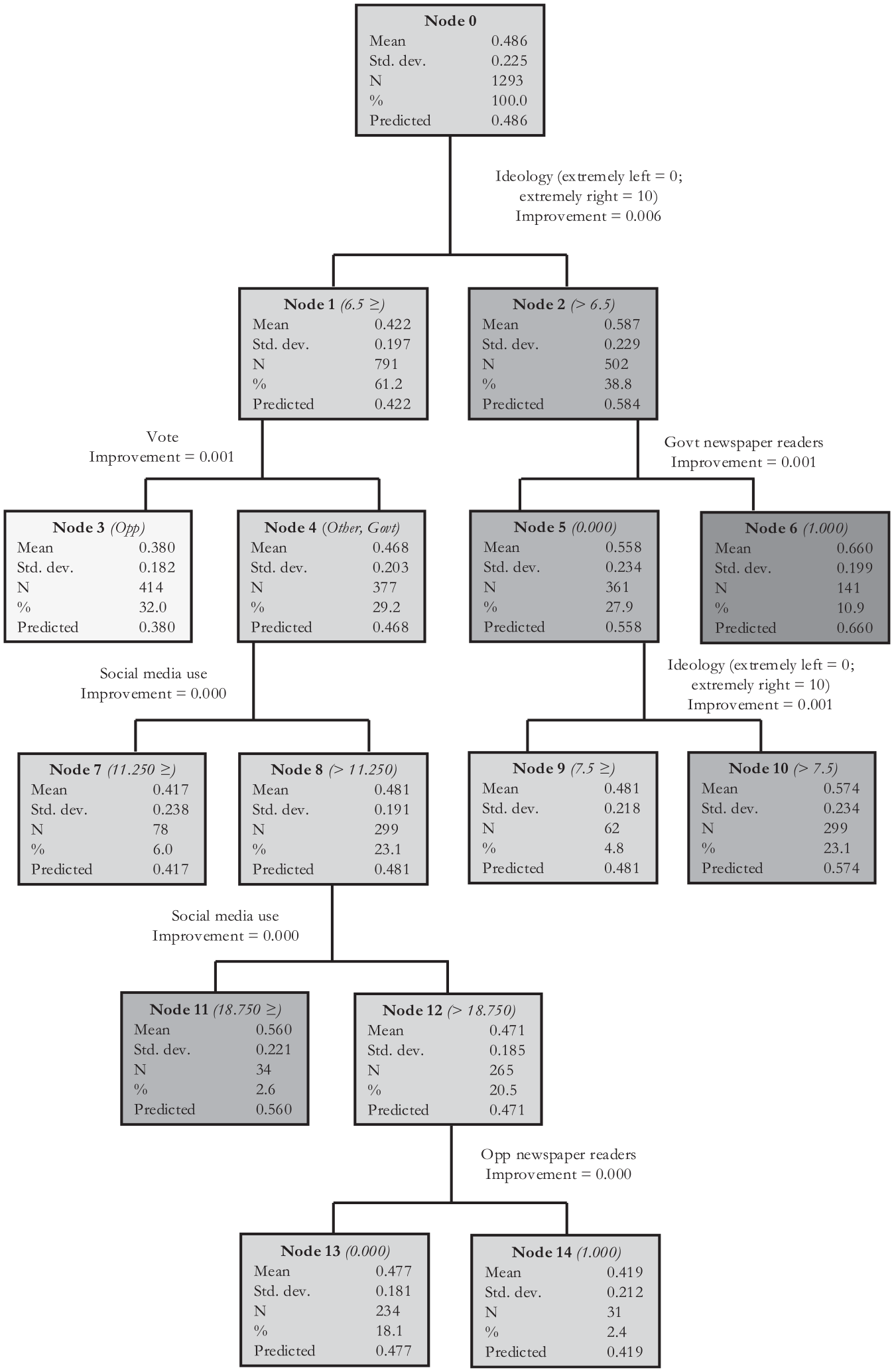
Decision tree predicting perceived veracity of AOCs.
Figure 4 summarizes the CART prediction of respondents’ perceived veracity of AICs. PA voters (Node 2) are less likely to believe these claims than NA and other voters (Node 1). After this initial split, respondents were further divided based on their viewership of pro-opposition TV channels. Those who watch pro-opposition TV channels (Node 4) are more likely to believe in AICs than those who do not (Node 3). This result aligns with the regression findings, but two important observations emerge. First, using pro-opposition traditional media increases belief in AICs (Node 8). Second, higher social media use (Node 12) tends to weaken the link between using traditional pro-opposition media and believing in AICs, similar to the pattern seen with belief in AOCs.
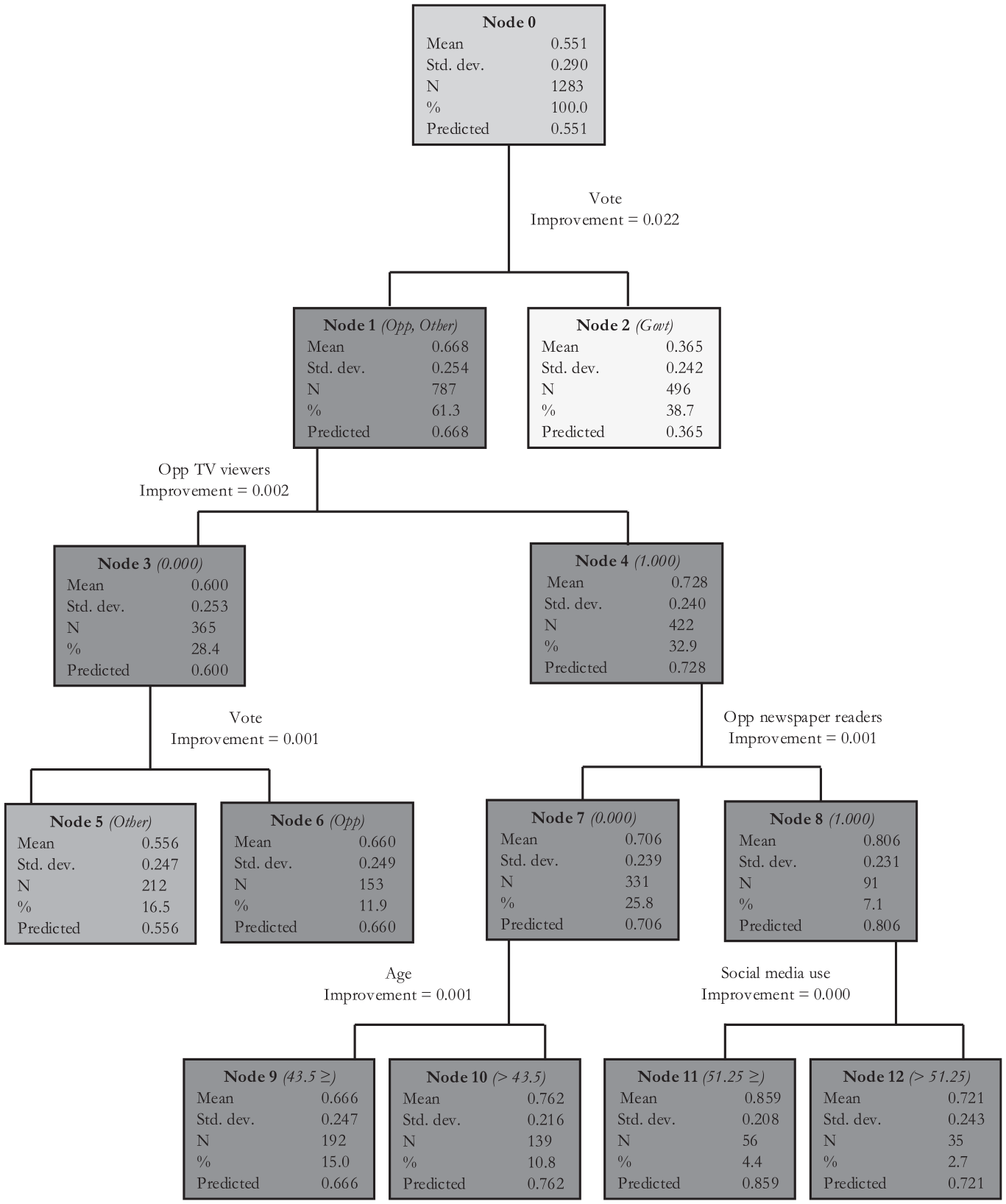
Decision tree predicting perceived veracity of AICs.
Figure 5 displays the normalized importance of the predictors for both AOC and AIC. For both AOC and AIC, the party that participants voted for, ideology, and TV exposure were the most important predictors of belief in misinformation. In general, TV exposure (both opposition and incumbent) was relatively more important predictors of belief in AIC than AOC. Conversely, newspaper readership and social media use were relatively more important predictors of AOC than AIC.
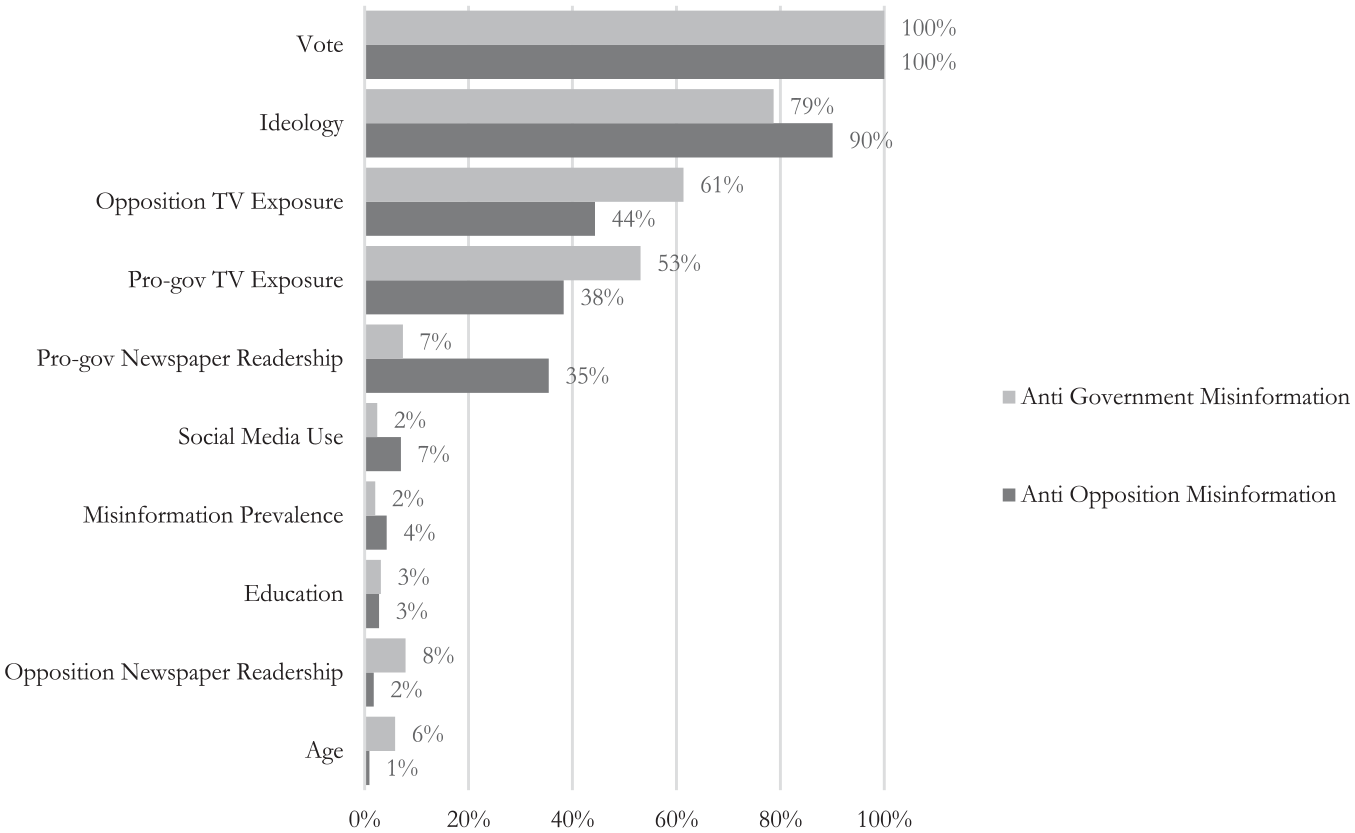
Normalized importance of predictors of belief in AIC and AOC.
Conclusion
Misinformation is becoming an integral part of political campaigning. As noted in a recent scoping review (Broda and Strömbäck 2024), despite growing academic interest, research has primarily focused on the Global North, with notable exceptions such as China, India, and Brazil. Furthermore, most studies on misinformation examine social media and the internet, with only 10 percent using mainstream media data. This gap in research highlights the need for more comprehensive studies on misinformation in diverse political contexts, particularly in CARs. Exploring the role of traditional media in these settings could provide valuable insights into how misinformation spreads and influences public opinion in nondemocratic systems. Additionally, understanding the interplay between social media and mainstream media in dissemination of misinformation across different political landscapes could offer a more nuanced perspective on information disorder.
As we argued in the literature review, focusing on nondemocracies, including competitive autocracies, is essential. First, while social media use is rising globally, traditional media remains pivotal in shaping politics in developing economies, many of which are CARs. Our findings about media use patterns during the election campaign in Turkey likewise indicates that despite growing prevalence of social media, mainstream media (television and newspapers) continue to be the primary source of information about politics in Turkey. Second, authoritarian governments capture most traditional media to maintain electoral success, further limiting citizens’ access to diverse information sources. Third, compared to democratic incumbents, these governments are more likely to use state resources to disseminate misinformation about the political opposition.
The process of media capture described above may play a critical role in increasing press-party parallelism, as the remaining pockets of opposition within mainstream media increasingly adopt an anti-incumbent tone. This dynamic can lead to greater polarization within the media landscape, with government-aligned outlets promoting pro-incumbent narratives while opposition-aligned media adopt anti-incumbent stances—though not necessarily in support of a specific opposition party (Yildirim et al. 2021). Such polarization may further intensify political divisions within society and contribute to the erosion of democratic norms, particularly concerning political civility (Stier et al. 2024) and the equitable coverage of candidates and political parties. As discussed in the literature review, during the 2023 Turkish general elections, both the incumbent and the main opposition party extensively employed negative campaigning strategies, which included the dissemination of misleading claims.
Given these considerations about the context within which political campaigns take place in CARs, particularly in relation to the potentially more central role that mainstream media play as a source of information, this study aimed to investigate voters’ perceptions of common misleading claims during elections in a competitive authoritarian regime. Specifically, we examined the relationship between news use, partisanship, and belief in misinformation in Turkey. We utilized a nationally representative postelection survey conducted after the Turkish general elections in May 2023, revealing noteworthy patterns in misinformation susceptibility.
Our results confirmed the strong influence of partisan motivations in evaluating campaign claims with heavy misinformation content. First, it is noticeable that both the authoritarian incumbent, who captures large segments of media in a CAR, and the opposition parties and candidates use similar campaign tactics to keep their voters aligned with their arguments, regardless of the bias and manipulation in the content. Second, misinformation that aligns with one’s ideology and party preference is significantly more likely to be found credible. A distinct partisan divide exists in the evaluation of misinformation: opposition supporters generally find claims made by the opposition credible, while supporters of the incumbent alliance tend to believe statements made by incumbents.
Several key patterns emerged regarding the potential influence of media exposure on beliefs in misleading claims made by the incumbent and opposition. First, as expected, selective exposure appears to be a key driver of belief in misinformation. Exposure to pro-government media was negatively associated with believing AICs, whereas exposure to pro-opposition media was positively associated with believing AICs. Similarly, exposure to pro-government newspapers increased respondents’ tendency to believe AOCs.
While these findings align with existing research on selective exposure and misinformation, we also found that exposure to pro-government media was not associated with beliefs in AOCs. This highlights the unique media dynamics in CARs, where incumbents commonly capture mainstream media. Consequently, newspapers and broadcasters widely disseminate the incumbent’s misleading claims, reaching even opposition voters and increasing their exposure to misinformation—though they do not necessarily fall for these claims. Unfortunately, our survey did not include questions about the frequency of prior exposure to the specific misleading claims we examined.
The second key finding pertains to the use of social media as a source of political information. Our results indicate that traditional media, particularly television, remains the main source of political information in Turkey. In contrast to Western democracies, social media (e.g., Facebook, Twitter) and chat applications (e.g., WhatsApp) are used much less frequently than television. This finding supports recommendations that more emphasis on mainstream media is needed in misinformation research (Broda and Strömbäck 2024). This is particularly relevant for developing states, where internet reach, while growing, lags behind developed countries and is unevenly distributed within the population. This finding underscores the importance of considering regional differences in media consumption patterns when studying misinformation. In countries like Turkey, where traditional media still dominates, efforts to combat misinformation should prioritize television and other mainstream channels. Additionally, this highlights the need for tailored approaches to media literacy and fact-checking initiatives that account for the primary sources of information in specific cultural and socioeconomic contexts. These findings are also important in terms of informing debates about regulation of platforms for addressing misinformation. In CARs like Turkey where state apparatus plays a central role in systematic dissemination of misinformation, the merits of statutory regulations should be evaluated in ways that consider the authoritarian reflexes that could influence such regulations. Indeed, the so-called “disinformation law” passed by the Turkish parliament in 2022 has introduced several draconian measures with direct implications for freedom of speech (York 2022).
Third, and related to our second finding, our linear regression analysis showed that social media use was not associated with belief in misleading AIC or AOC claims. The dominance of mainstream media in setting the agenda for political campaigns in countries with authoritarian regimes such as Turkey might contribute to the observed results. Relatedly, it is worth noting that the false claims that were selected for the survey were all claims that were widely covered in mainstream television and newspapers, which could reduce the likelihood of observing the potential additional influence of social media use on exposure and belief in these false claims. To gain a deeper understanding of the respective impact of mainstream media and social media in the dissemination of misinformation, it would be necessary to study different types of false claims that vary in terms of the extent to which they were disseminated in various mainstream and/or social media channels.
At the same, our decision tree analysis, better suited for uncovering nonlinear relationships and interactions, suggested a curvilinear relationship between social media use and belief in misinformation for some voters. Specifically, belief in misleading claims increased with social media use up to a point, after which higher social media use reduced the perceived veracity of these claims. This may indicate that unlike occasional and moderate users, heavy users of social media may come across a broader spectrum of viewpoints that transcend the algorithmically constructed echo chambers or may possess a higher degree of digital literacy that enhances their capacity to detect deceptive information. Our dataset, which is cross-sectional in nature and lacks variables related to digital literacy, prevents us from drawing more definitive conclusions regarding these various explanations. Further investigation is needed to examine the intricacies of the nonlinear relationship we observed, while simultaneously concentrating on the specific subset of users who are likely to encounter it and the contributing variables that influence it.
Our study has several limitations that require caution. First, reported beliefs may differ from actual beliefs, and our study relies on self-reported data. Self-reported beliefs may be influenced by factors such as recall errors regarding news sources and party affiliation. Individuals might also engage in “partisan cheerleading” affirming misleading information from their preferred political party, even when aware of possible inaccuracies (see Peterson and Iyengar 2021).
Second, the scope of misinformation captured by our dependent variable may not fully represent the misinformation landscape in Turkey. This study focused on a limited number of misleading claims from each political perspective. We acknowledge that including a broader range of claims could potentially alter the results. In a nondemocratic setting, we intentionally limited the number of items to reduce the risk of exposing participants to further misinformation. Additionally, similar to Rossini and Machado (2023), our study was conducted postelection to avoid contributing to the dissemination of misleading claims.
Third, due to the observational nature of the data, no causal inferences can be drawn from the study. Although several control variables were introduced to adjust for potential confounding factors, they did not fully overcome the limitations of the nonexperimental design. Future research could explore experimental or quasi-experimental designs to more accurately determine the influence of partisanship and media consumption on belief in misinformation within CARs and other nondemocracies, while accounting for the characteristics of information ecosystems in such countries.
Fourth, we cannot determine if participants were exposed to the specific claims prior to the survey. While we measured their general exposure to misinformation, we cannot confirm whether the content they encountered matches the claims we investigated. Future research should measure both exposure to misinformation and the channels through which it is encountered.
Despite these limitations, our study enhances the understanding of misinformation by demonstrating the link between belief in misinformation and consumption of partisan news in a controlled but competitively charged information environment. This insight is valuable in the context of CARs and other hybrid regimes. Our findings align with those of studies in similar authoritarian settings (e.g., Nisbet and Kamechuk 2021) but are based on a single case. Future research should broaden the scope by conducting comparative analyses between various nondemocracies to understand how misinformation dynamics differ across governance structures. Such research is essential for developing effective strategies to combat misinformation and support democratic processes in transitioning or fragile political contexts.
Supplemental Material
sj-docx-1-hij-10.1177_19401612241307812 – Supplemental material for Authoritarians Do It Better? Belief in Misinformation in Turkey
Supplemental material, sj-docx-1-hij-10.1177_19401612241307812 for Authoritarians Do It Better? Belief in Misinformation in Turkey by Simge Andı, Ali Çarkoğlu, Lemi Baruh and Zsofia Bocskay in The International Journal of Press/Politics
Footnotes
Author’s Note
Zsofia Bocskay is now affiliated to Democracy Institute, Central European University, Budapest, Hungary.
Declaration of Conflicting Interests
The author(s) declared no potential conflicts of interest with respect to the research, authorship, and/or publication of this article.
Funding
The author(s) disclosed receipt of the following financial support for the research, authorship, and/or publication of this article: This study was funded by The Scientific and Technological Research Council of Türkiye (TÜBİTAK) 1001-121K206.

Supplemental Material
Supplemental material for this article is available online.
Notes
Author Biographies
References
Supplementary Material
Please find the following supplemental material available below.
For Open Access articles published under a Creative Commons License, all supplemental material carries the same license as the article it is associated with.
For non-Open Access articles published, all supplemental material carries a non-exclusive license, and permission requests for re-use of supplemental material or any part of supplemental material shall be sent directly to the copyright owner as specified in the copyright notice associated with the article.
