



Abstract
There is increasing evidence that citizens consume the news because it arouses them. However, to explain the motivated processing of news messages, research usually focuses on negative discrete emotions or the valence dimension of affect. This means that the role of arousal is largely overlooked. In this experiment, conducted in 2019 in Austria, I exposed 191 citizens to a televised news item about immigration—varying the level of threat, while taking physiological measures of negative valence and arousal, followed by self-reported indicators of motivated reasoning. The results indicate that combining the valence and arousal dimensions of affect is the preferred way to understand citizens' reactions to political news. While negative affect predicted motivated reasoning, these effects were much more pronounced for those who experienced high arousal at the same time. Not only does this illuminate some of the black box behind motivated reasoning, the consequences for journalism are profound: the way that journalists cover the news might unwittingly drive citizens apart.
Citizens enjoy arousing news. They zoom out when they are no longer aroused (Lang et al. 2005), and they like sensationalist news because it arouses them (Vettehen et al. 2008). Negative news also elicits arousal (Soroka and McAdams 2015; Soroka et al. 2019), and is often preferred by consumers over neutral and positive news (Trussler and Soroka 2014). Over time, the news has become increasingly negative (Patternson 1993; Soroka 2012) and sensationalist (Vettehen et al. 2005), and the ability of these types of news to elicit arousal, and therefore attract an audience, might be a reason that journalists report in this manner in the first place (Soroka and McAdams 2015). Arousal thus seems inherent to modern-day news, but research into news processing has mostly focused on the role of negative emotions and the valence dimension of affect. However, if journalists purposefully elicit arousal in news consumers to attract an audience, it is imperative to incorporate arousal in existing theories of news processing.
One theory that has overlooked the role of arousal is motivated reasoning. According to motivated reasoning theory, citizens boost their scrutiny of news that threatens their prior beliefs (e.g., Taber and Lodge 2006) or social identity (e.g., Slothuus and De Vreese 2010), leading to policy attitudes and behavior that bolster their identity. While discrete emotions seem related to motivated reasoning (e.g., Marcus et al. 2011; Redlawsk et al. 2010), affective states—the preconscious, physiological part of emotion (Marcus 2013)—are more likely to cause the process (Lodge and Taber 2013). However, motivated reasoning theory has mostly focused on the valence dimension of affect: threatening news causes negative affect, which causes increased scrutiny (Lodge and Taber 2013).
I argue that a circumplex model of affective states, combining negative valence and arousal (Russell 1980), could lead to a more comprehensive understanding of motivated reasoning, and can illuminate the consequences of arousing news. As motivated reasoning is an active process, in which more cognitive effort is spent on counterarguing threatening news than bolstering news (Jain and Maheswaran 2000; Taber and Lodge 2006), mostly high-arousal negative affective states should lead to increased scrutiny and attitudinal backlashes. Journalists' inclination to produce arousing news might thus exacerbate motivated reasoning and cause societal cleavages.
To test this assumption, I conducted a randomized laboratory experiment in Austria (N = 191), where participants were exposed to televised news about immigration—varying levels of threat. I employ direct physiological measures of negative valence and arousal and relate them to self-reported measures of scrutiny, policy attitudes, and behavioral intent. In doing so, I present evidence that news-induced arousal exacerbates motivated reasoning, offering a novel way to differentiate emotional responses to political news that precede cognitive biases, with important consequences for the role of journalism in democracy.
Emotions in News Processing
News media serve democracy by enabling citizens to make informed and rational decisions. However, scholars have increasingly found that, to a certain extent, citizens may be able to “believe what they want to believe because they want to believe it” (Kunda 1990: 480). As such, partisans often continue to believe their party's stance—or even become more extreme in their beliefs—in the face of counterevidence (Bolsen et al. 2014; Hart and Nisbet 2012; Leeper and Slothuus 2014; Taber and Lodge 2006). Besides political attitudes, motivated reasoning can affect the application of stereotypes (Kunda and Sinclair 1999), perceived public opinion (Nir 2011), and legal decision making (Braman and Nelson 2007). This process of motivated reasoning inevitably divides partisan groups, and is considered an important cause for political polarization (e.g., Lebo and Cassino 2007). As political information is primarily consumed through news media, motivated reasoning is also considered a key factor for the minimal media effects that communication scholars often face (Cacciatore et al. 2016). Citizens are not as rational as theory presumes, but tend toward motivated reasoning when processing the news.
One explanation for motivated reasoning is that news that threatens citizens' prior attitudes invites more scrutiny than news that bolsters them (e.g., Druckman and McGrath 2019; Leeper and Slothuus 2014; Taber and Lodge 2006). However, the current paper focuses on another prominent explanation. A number of studies have shown motivated reasoning as caused by social identification (Kahan 2010). Social identification denotes the perceived membership in a social group, and can lead citizens to feel and act as a member of a group, rather than an individual (Tajfel and Turner 1979). A social identity is more often relevant for those who identify with this group more strongly, but also in situations in which there are clear distinctions between the ingroup and outgroup and when these groups are (presented as) acting according to expectations or stereotypes (Huddy 2001; Turner et al. 1994). Social identities can cause ingroup favoritism, where citizens are motivated to favor the ingroup or derogate the outgroup to satisfy a fundamental need for self-esteem (Abrams and Hogg 1988; Iacoviello et al. 2017).
Sometimes called identity-defensive cognition, the identity-as-motivation hypothesis is supported by the findings that party identification drives persuasion more strongly than ideology (Cohen 2003), and that citizens show more support for a policy if their party explicitly supports it (Slothuus and De Vreese 2010), or when an opposing party rejects it (Bolsen et al. 2014). In addition, this motivation also applies to non-partisan social identities such as race (Feldman and Huddy 2018; Shoda et al. 2014), gender (Boyer et al. 2020), religion (Landrum et al. 2017), and cultural identities (Kahan et al. 2007, 2008). Citizens are motivated to evaluate identity-threatening arguments as weaker than identity-bolstering arguments, which causes more identity-defensive policy attitudes and more negative attitudes toward outgroups.
The mechanism of motivated reasoning relies heavily on emotional responses. Cognition is not based on “cold” rationality, but stored in the mind together with emotional evaluations about it (Abelson 1963). This “hot cognition” hypothesis states that coming across information activates the associated emotional evaluations, which influences one's emotional state (Redlawsk 2002). Because such states develop before conscious awareness (Marcus 2013), they preconsciously determine someone's motivation to reason in a certain direction (Lodge and Taber 2013). Any reasoning outcomes are, in this view, post hoc rationalizations of emotional reactions, triggered by the emotional associations that are linked to any piece of information.
Accordingly, emotions are crucial for motivated reasoning. Motivated reasoning is associated with implicit emotion regulation (Westen et al. 2006), and more pronounced in citizens with a stronger need to seek out emotions (Arceneaux and Vander Wielen 2013). Specifically, motivated reasoning seems to be related to anger (Marcus et al. 2000, 2011): anger is correlated with motivated reasoning in response to negative candidate information (Redlawsk et al. 2010), arguments about political policies (Suhay and Erisen 2018), and misinformation in the news (Weeks 2015). Similarly, a combination of anger and counterarguing best describes reactance—the state in which citizens resist persuasion (Rains 2013). Similar to motivated reasoning, reactance is a combination of emotion and cognition. However, while motivated reasoning conceptualizes affect as preceding cognitive patterns (Lodge and Taber 2013), reactance literature considers anger and counterarguing “intertwined to such a degree that their effects on persuasion cannot be disentangled” (Dillard and Shen 2005: 147). In order to understand news processing, we should thus understand the emotions that underlie it.
While discrete emotions are important in news processing, they are only part of the larger concept of emotion. In contrast, affect denotes the preconscious, physiological experience of emotion (Keltner and Gross 1999). Affective states precede discrete emotions, which are interpretations of such states. Conscious appraisals of emotion can align with affective states (Bradley et al. 2001), but this is not necessarily the case (LeDoux and Pine 2016). In contrast to reactance (Dillard and Shen 2005; Rains 2013), motivated reasoning theorizes that reasoning is influenced by emotion before conscious awareness (Lodge and Taber 2005, 2013; Redlawsk 2002). Studying affect in addition to discrete emotions can therefore test the theory more accurately and simultaneously rule out reactance as an alternative mechanism.
Moreover, affective states are less susceptible to problems of causality than discrete emotions. Discrete emotions require conscious processing and can be dependent on citizens' political motivations (Brader 2006). Therefore, any correlation between discrete emotions, counterarguing and attitudes could indicate either the hypothesized mediation through emotion, or simply another result of motivated reasoning. Because affect is a preconscious physiological experience (Marcus 2013), affective states cannot be influenced by motivated reasoning and must precede measures of counterarguing, attitudes, and behavioral intent.
Motivated reasoning theory has incorporated the valence of affect—whether the experience of affect is positive or negative: identity-threatening news leads to negative affective states, which lead to scrutiny, identity-defensive attitudes and identity-defensive behavior (Lodge and Taber 2013). Accordingly, politically incongruent information leads to more negative affective states (Bakker et al. 2020). Moreover, research has shown that identity-threatening news leads to (1) worse evaluations of the strength of its arguments, (2) less support for policies that are advocated for (Taber and Lodge 2006), and (3) more tendencies to harm outgroups (Seate and Mastro 2017). This leads to the first two hypotheses.
News, Arousal, and Motivated Reasoning
What role do news media play in this process of motivated reasoning? Over time, the news has become increasingly negative (Patternson 1993; Soroka 2012), and sensationalist (Vettehen et al. 2005). And both negativity and sensationalism of the news have similar effects on news citizens' affective states: they cause arousal (Soroka et al. 2019; Vettehen et al. 2008), although the effect of negativity might mostly be driven by men (Grabe and Kamhawi 2006). What is more, news consumers actually prefer arousing news because it arouses them (Trussler and Soroka 2014; Vettehen et al. 2008), and tune out when their arousal decreases (Lang et al. 2005). This might be a reason that journalists report in this manner in the first place (Soroka and McAdams 2015). Arousal therefore seems inherent to modern-day news.
Since arousal is such an important affective response to political news, it is surprising that motivated reasoning theory has largely overlooked this dimension of affect. Moreover, a two-dimensional product of valence and arousal is a common conceptualization of affect (Russell 1980). As depicted in Figure 1, this circumplex model of affect results in four quadrants, where the arousal dimension reflects how active (aroused) or inactive (sleepy) someone's affective state is. Positive and negative low arousal affective states are summarized as “relaxation” and “depression,” respectively, while high arousal affective states can be called “excitement” and “distress.”
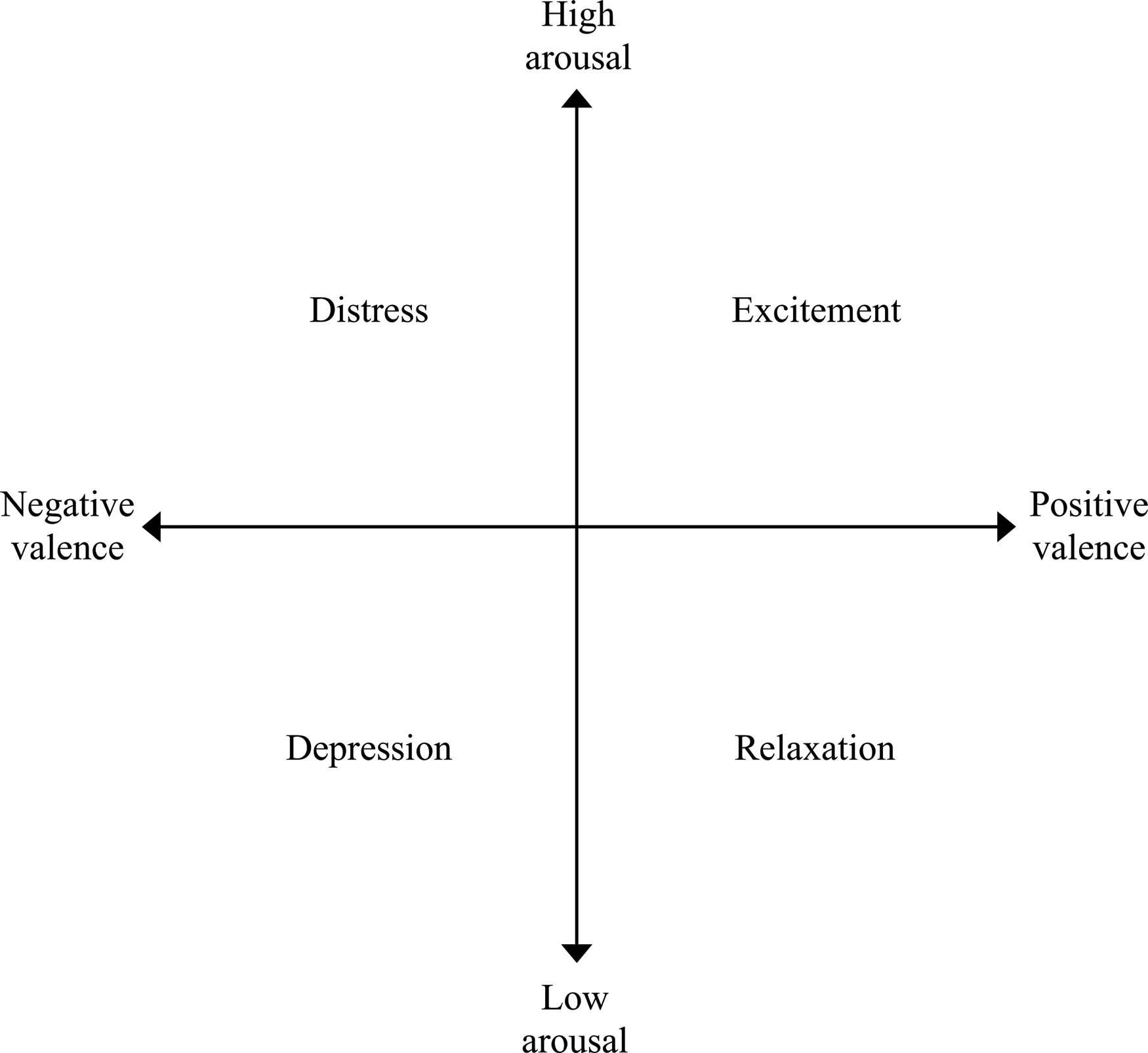
A circumplex model of affective states, figure slightly adapted from Russell (1980).
Fundamentally, arousal could play a crucial role in motivated reasoning. Arousal should not elicit a direct effect on motivated reasoning, because it can signal either positive emotion (excitement) or negative emotion (distress) (Russell 1980). However, in combination with negative valence, arousal can play a crucial part in the processing of news. Motivated reasoning is an active process, in which citizens employ cognitive energy to scrutinize threatening information (Jain and Maheswaran 2000). While low-arousal negative affective states could motivate citizens to reduce this state, their low level of activation would inhibit them to spend cognitive energy. In contrast, high-arousal negative affective states provide both the motivation and activation to scrutinize identity-threatening news, leading to the asymmetrical formation of attitudes and identity-defensive behavior.
It can therefore be expected that threatening news specifically leads to high-arousal negative affective states, which are exactly the affective states that cause motivated reasoning. This is in line with previous findings on emotion in motivated reasoning, as anger is considered a high-arousal negative emotion (Russell 1980). I thus expect an interaction between the valence and arousal dimensions, in which the link between negative affective states and motivated reasoning is stronger in combination with high arousal than with low arousal.
Method
Design and Sample
In a double-blind laboratory experiment, I randomly expose participants to one of two TV news items, varying the level of threat. The news item concerns a group of immigrants that differ from majority native citizens in terms of nationality, ethnicity, and religion. Immigration serves as a fitting case for this study, as research has shown that news about immigration causes social identity threat to citizens' national identity (Mangum and Block 2018), ethnic identity (Wright et al. 2012), and religious identity (Ben-Nun Bloom et al. 2015). Immigration poses both an economic (real) threat and a symbolic threat (Brader et al. 2008; Esses et al. 2001; Sides and Citrin 2007), and this threat is stronger when groups are more dissimilar to the native majority (Ben-Nun Bloom et al. 2015; Brader et al. 2008). Social identity threat based on immigration leads to more support for aggressive policies against outgroups (Maoz and McCauley 2008), and immigration news has effects on emotions, attitudes, and intergroup behavior (Seate and Mastro 2017). These effects are dependent on political knowledge (Schemer 2012), which might indicate motivated reasoning effects.
During exposure to the stimulus material, I take physiological measures to gauge participants' affective states and after exposure, participants rate the strength of arguments in the news item, their attitude toward the proposed policy, and their intention to engage in helping or harming behavior toward the immigrants in the news item. The sample consists of 191 participants at a large university in Austria. 1 As is to be expected, this student sample is skewed in some accounts. Women are overrepresented (68 percent) and the sample is relatively young (M = 23.41, SD = 5.02). In addition, the sample is skewed on ideological identification, as participants scored an average of 3.46 (SD = 1.71) on a scale from 0 (very left-wing) to 10 (very right-wing). Although this is not a representative sample, random assignment to the conditions ensures internal validity (Shapiro 2002). Moreover, one could argue that young, left-wing college students are least likely to experience threat by immigration news and that I might therefore rather underestimate than overestimate effects.
Stimulus Material and Procedure
The stimulus material consists of two nearly identical constructed TV news items, which were created using a professional voice actor and video editing studio, and in consultation with an editor of the Austrian public service newscaster to ensure experimental realism. 2 Because physiological measures react to a wide range of stimuli, including storytelling (Schneider et al. 2004) and background music (Carpentier and Potter 2007), a control condition regarding a different topic would not be informative, and is not employed in this experiment.
The news items state that in following of international agreements: (1) Austria has to take on an additional (50/5,000) refugees from certain African countries, (2) this will cost the taxpayer (nothing extra/150 million euro's), and (3) that these refugees will (not/likely) obtain Austrian citizenship. These manipulations are designed to pose both a real threat (number of refugees, additional cost to the taxpayer) and a symbolic threat (people with other ethnicities become Austrian citizens) (Brader et al. 2008). Both news items last 54 s, and are identical in their footage, except for a manipulated graph depicting the number of refugees.2 The first 8 s of the news items are identical.
Upon arrival in the laboratory, participants are told that they are taking part in a study into “the way citizens react to the news.” They are informed of the physiological measures and the electrodes that have to be placed on their finger and face—including make-up removal and skin preparation. After signing an informed consent form, participants answer a pretest questionnaire. When finished, their skin is prepared and the electrodes are placed. Participants watch a gray screen for 30 s in order to give the electrodes time to settle in and give reliable measures, followed by a 10-s countdown to avoid startling them when the stimulus material begins. After the news item, the posttest questionnaire is automatically displayed, and participants finish all remaining questions without researcher interference. Once finished, participants are detached from the equipment and thoroughly debriefed, before receiving their compensation. The procedure lasts under half an hour (see Figure 2).
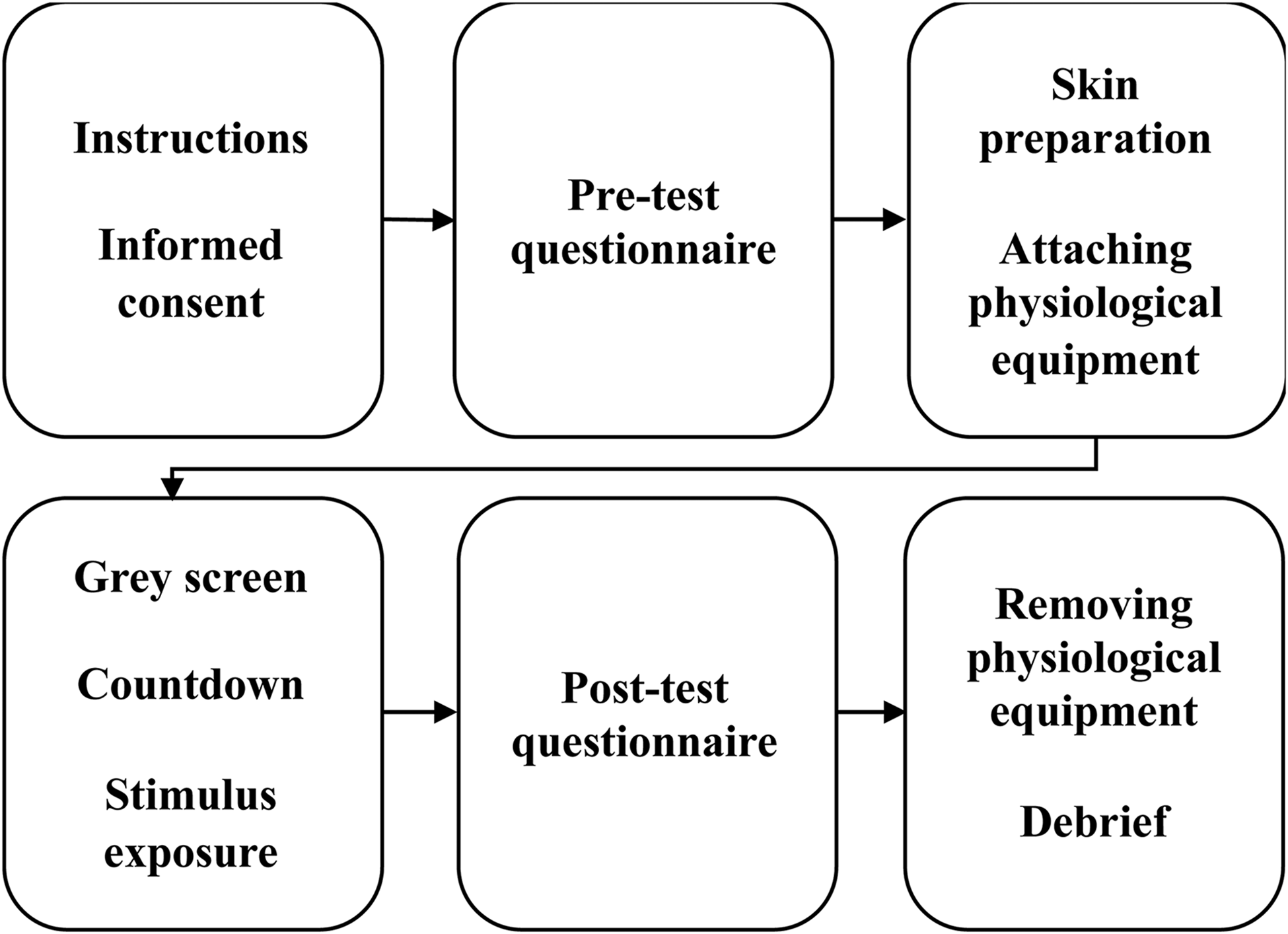
Experimental procedure.
To check whether participants took notice of the number of refugees in the stimulus material, they were asked to select one of four multiple choice categories: 50, 100, 5,000, and 15,000. Participants largely identified the correct number (low threat: 84 percent, high threat: 89 percent), χ2(3) = 142.10, p < .001.
Physiological Measures
I use physiological measures to approximate the valence and arousal dimensions of affective states (Potter and Bolls 2012). 3 As the first 8 s of the stimulus material are identical between the two conditions, participants' average score in this period is used as the baseline on both the skin conductance level (SCL) and facial electromyography (EMG) measures. Comparing effects to the baseline measure ensures that different skin types and placement of electrodes do not influence the results. Using the first part of the stimulus for this baseline, I consider the differential effect of the increased threat, as opposed to the effect of immigration news as such.
Negative valence
As a measure of negative valence, I followed the guidelines of Van Boxtel (2010) and used EMG over the area surrounding the Corrugator Supercilii muscle, which is located at the medial side of the eyebrows and is used to frown. Corrugator Supercilii activity is correlated with the experience of negative affect (Cacioppo et al. 1986), and increases in response to negative words (Wexler et al. 1992), images (Cacioppo and Petty 1979), and specific negative affective cues (Hietanen et al. 1998). It increases in response to more complex emotional stimuli too, like negative radio advertisements (Bolls et al. 2001) and attitudinally incongruent political information (Bakker et al. 2020).
Arousal
As a measure of arousal, I use participants' SCLs in the fingertips, following the procedure as described by Potter and Bolls (2012). Measuring arousal, SCL increases in response to negative information, like negative political advertisements (Bradley et al. 2007) and negative news (Soroka and McAdams 2015; Soroka et al. 2019). Likewise, SCL correlates with positive stimuli, such as preferred political parties (Petersen et al. 2015), politicians (Wagner et al. 2015), and football teams (Potter and Keene 2012).
Survey Measures
Scrutiny of the news
Scrutiny is operationalized as the perceived argument strength of the news item, using two nine-point semantic differentials. This is a common measure in motivated reasoning research (e.g., Taber and Lodge 2006). Participants are asked to rate the argumentation in the news item—specifically that Austria should accept the refugees “because of international agreements,” on two different criteria: whether the argumentation is strong and whether it is valid. The first semantic differential ranged from 1 (very weak) to 9 (very strong), and the second ranged from 1 (completely invalid) to 9 (completely valid). I took the average of the items, such that a higher score means more perceived argument strength (M = 6.84, SD = 1.65, min. = 1, max. = 9, Cronbach's alpha = 0.78).
Policy attitudes
Attitudes toward the immigration policy are measured by asking participants for their opinion, instead of the strength of the news item's argument. The scale consists of three statements on a Likert scale ranging from 1 (completely disagree) to 9 (completely agree), stating that “it is good that Austria accepts the refugees,” “Austria should adhere to international agreements to take in legal refugees” and “Austria should have negotiated to take in fewer refugees” (reversely coded). These items formed a reliable scale, Cronbach's alpha = 0.77, and the mean score was formed such that higher scores mean more agreement with the policy to accept refugees (M = 7.47, SD = 1.50, min. = 2.67, max. = 9).
Willingness to help
Willingness to help was measured using six items gauging the likelihood of participants engaging in behaviors that would harm or help the refugees in the stimulus material, on a scale from 1 (very unlikely) to 9 (very likely). The items concerning intent to harm the refugees were “join a demonstration against taking the refugees,” “donating money to an anti-immigration group,” and “convince others that it is not a good idea to accept the refugees,” and were inverted such that a higher score means less intent to engage in this behavior. The items of intent to help the refugees were “volunteering in a refugee center,” “donating money to a refugee supporter group” and “signing a petition for better living standards of refugees.” The final score of willingness to help is the mean score of the six items (M = 6.69, SD = 1.30, min. = 1, max. = 9, Cronbach's alpha = 0.67).
Data Analysis and Robustness Checks
Because this experiment focuses on the interaction between SCL and EMG levels, I leave the data disaggregated per second, such that each unit of analysis is 1 s of one participant. This has the advantage that we consider whether participants experience negative valence and arousal at the same time. However, this poses some difficulties in the analyses. Firstly, SCL has a delayed response time of around 1 s (Dawson et al. 2000). Therefore, all analyses where SCL and EMG are combined, are conducted with a 1-s lag on the EMG measure. Moreover, using multiple data points per participant requires certain correction in the analyses. To produce more accurate measures around individual-level indicators, all analyses use panel-corrected standard errors (PCSEs). In order to remove any trend from the data, all analyses are controlled for dummy variables for each second of the stimulus material. Finally, there is considerable autocorrelation in the physiological measures. However, in a highly controlled experiment, there is little chance of omitted variable bias. Moreover, all analyses include a time-invariant key independent or dependent variable, and using change scores would cause substantial loss of the interpretability of the results. Therefore, like in other seminal work using physiology in communication research (e.g., Soroka and McAdams, 2015), I opt to refrain from modeling the autocorrelation in the main analyses, and interpret the results with caution. Instead, I run multiple robustness checks, which, unless explicitly mentioned in the main text, lead to the same results. 4
Results
Initial inspection of the physiological data reveals some interesting insights in the experiment. The average EMG levels remain fairly similar between the low-threat and high-threat condition for most of the news item, but EMG levels rise at the end of the news item in the low-threat condition (see Figure 3). Participants in the low-threat condition experienced negative valence at the moment of the symbolic threat, where the refugees are not eligible for Austrian citizenship. As is usual, average SCL slowly decreases over time. However, in the high-threat condition, the decrease is slower than in the low-threat condition and even rises around 35 s into the stimulus material.
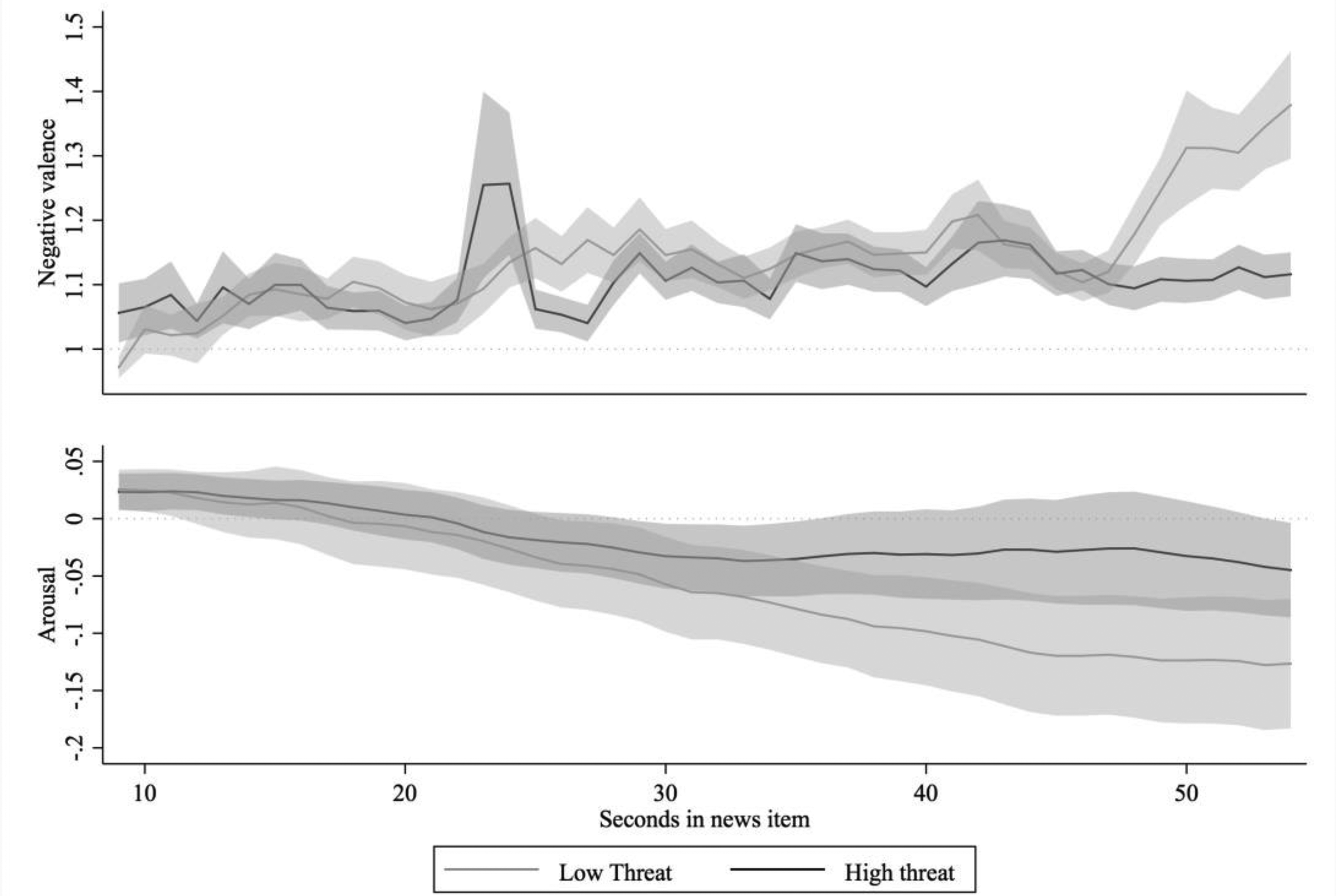
Mean scores and standard error margins of negative valence (EMG) and arousal (SCL) over the course of the news item.
Negative Valence (H1 and H2)
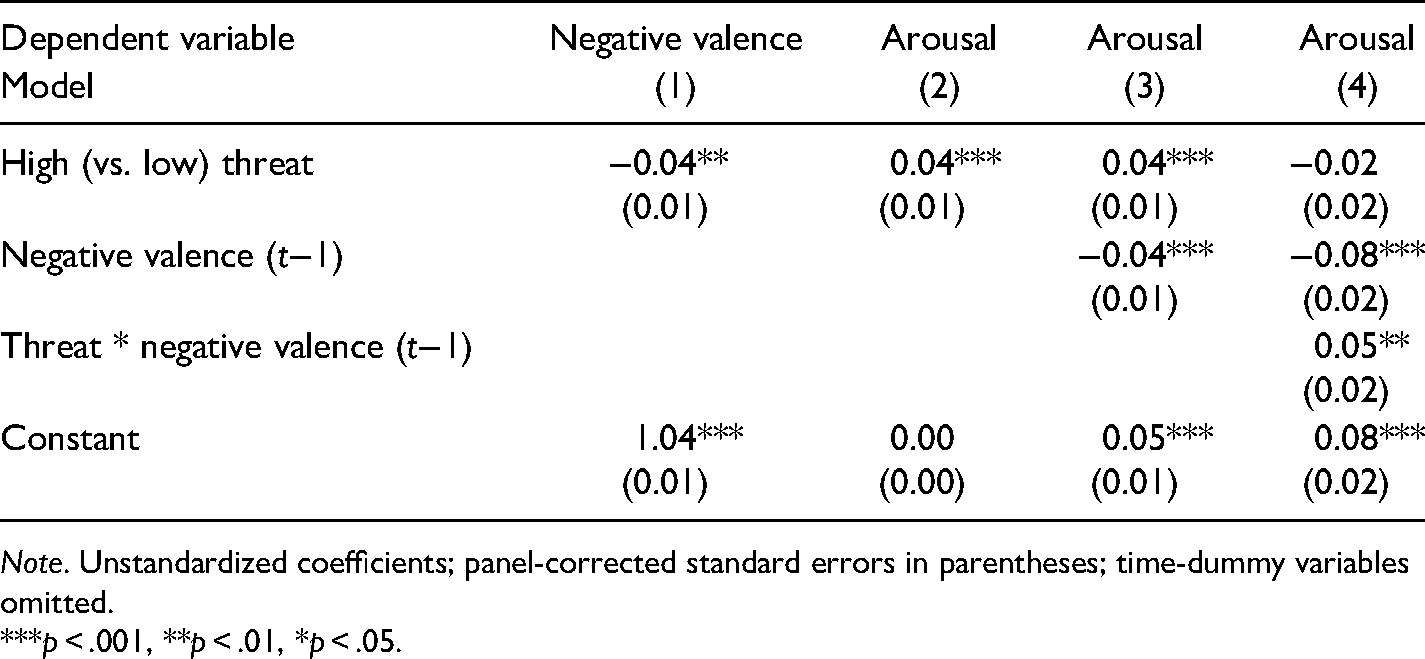
In this section, I inspect the role of negative valence, regardless of levels of arousal. First, I look at the prevalence of negative valence in the low-threat and high-threat condition. As model 1 in Table 1 shows, there is a significant, negative effect of the high-threat condition on negative valence, b = −0.04, PCSE = 0.01, p = .003. In other words, contradicting H1, the high-threat condition elicited less negative affective states than the low-threat condition.
Regression Models With Panel-Corrected Standard Errors, Predicting Participants' Negative Valence Per Second.
Note. Unstandardized coefficients; panel-corrected standard errors in parentheses; time-dummy variables omitted.
***p < .001, **p < .01, *p < .05.
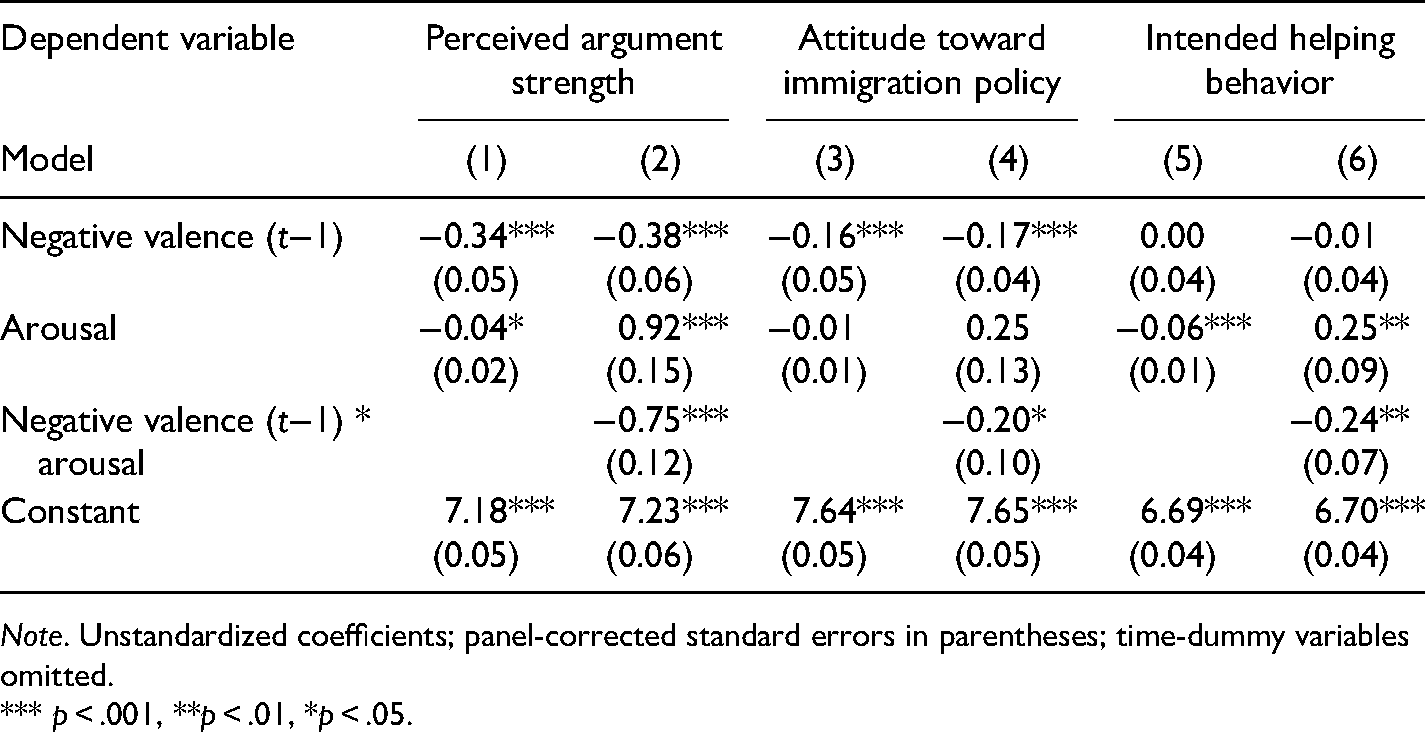
Next, I focus on the effect of negative valence on the three indicators of motivated reasoning. 5 As expected, there is a significant negative effect of negative valence on perceived argument strength, b = −0.48, PCSE = 0.05, p < .001 (Table 2, model 1), and participants' attitude toward the immigration policy, b = −0.29, PCSE = 0.05, p < .001 (Table 2, model 3). However, there was no effect of negative valence on participants' willingness to help the refugees, b = 0.01, PCSE = 0.04, p = .786 (Table 2, model 5). The experience of negative affect led to less perceived argument strength and support for the immigration policy, but not to less willingness to help refugees. The findings thus only partly support H2.
Regression Analyses With Panel-Corrected Standard Errors, Predicting Participants' Perceived Argument Strength, Attitudes Toward the Immigration Policy, and the Intention to Help Refugees.
Note. Unstandardized coefficients; panel-corrected standard errors in parentheses; time-dummy variables omitted.
*** p < .001, **p < .01, *p < .05.
High-arousal Negative Affective States (H3 and H4)
In this section, I analyze the interaction between negative valence and arousal to gauge the role of high-arousal negative affective states in motivated reasoning. Firstly, model 2 in Table 1 shows that the high-threat condition elicited more arousal than the low-threat condition, b = 0.04, PCSE = 0.01, p < .001. Secondly, model 3 shows that there is a negative correlation between arousal and negative valence, b = −0.04, PCSE = 0.01, p < .001. In other words, participants mostly experienced low-arousal negative affective states. H3 states that more threatening information will cause more high-arousal negative affective states. Therefore, I explain arousal with the interaction between threat manipulation and negative valence. Model 4 in Table 1 shows that the negative correlation between arousal and negative valence is stronger in the low-threat condition than in the high-threat condition, b = 0.05, PCSE = 0.02, p = .001 (see Figure 4). In other words, even though the high-threat condition caused less negatively valenced affective states, it did lead to more high-arousal negative affective states. Conversely, negative valence in the low-threat condition consisted mostly of low-arousal negative affective states. However, this finding should be interpreted with caution, as two of the robustness checks did not reproduce this finding (see Appendix C in the Supplementary Information file, Tables A1 and A6).
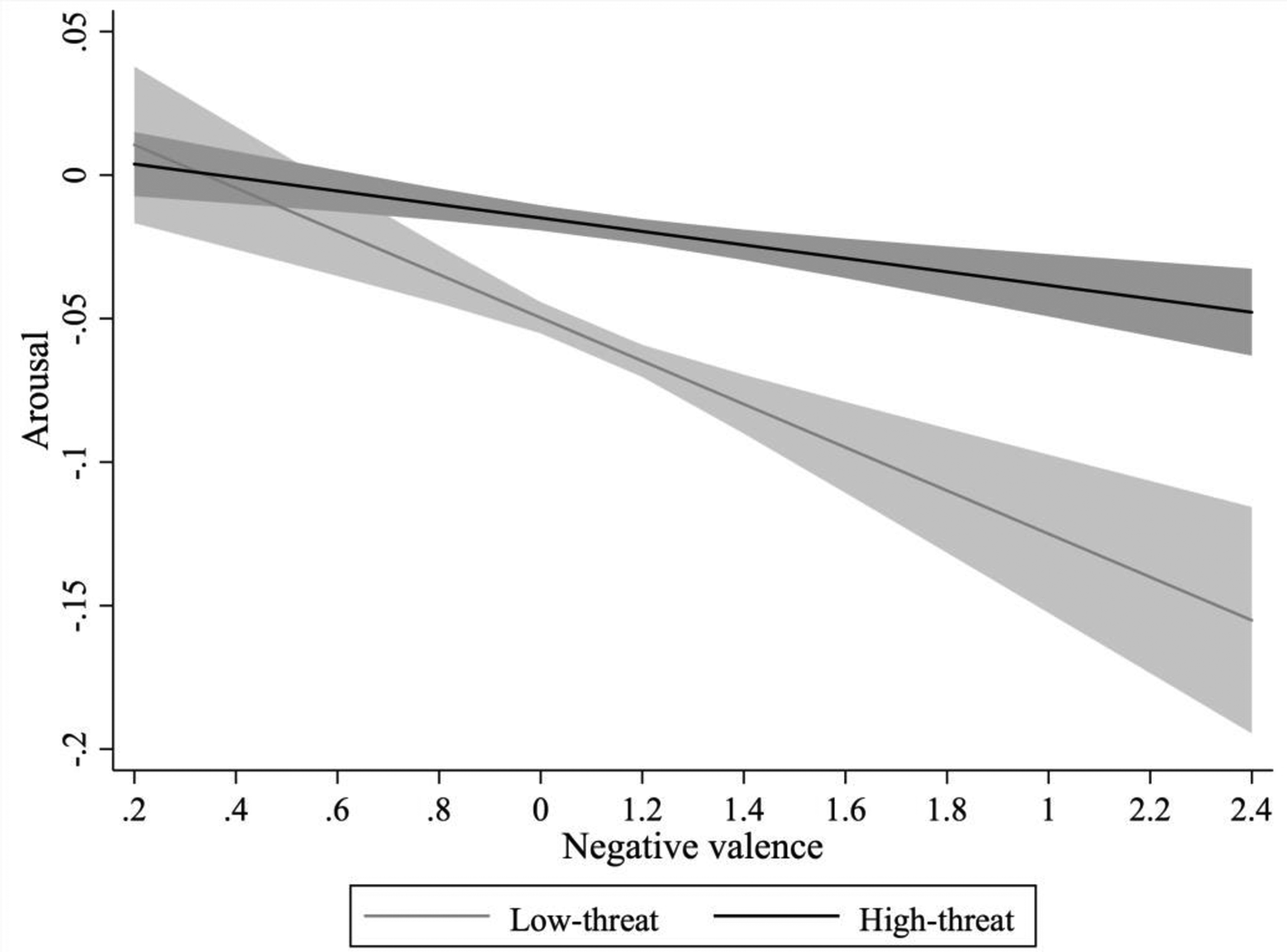
Predicted values and 95 percent confidence intervals for arousal (SCL), as a function of negative valence (EMG) in the low-threat and high-threat conditions.
Finally, I expect that high-arousal negative affective states lead to: (a) less perceived argument strength, (b) less support for the immigration policy, and (c) less willingness to help the refugees (H4). Therefore, I model the interaction effect of negative valence and arousal on these indicators of motivated reasoning. Indeed, there is a significant interaction effect of negative valence and arousal on perceived argument strength, b = −0.75, PCSE = 0.12, p < .001 (Table 2, model 2), attitudes toward the immigration policy, b = −0.20, PCSE = 0.10, p = .045 (Table 2, model 4), and willingness to help the refugees, b = −0.24, PCSE = 0.07, p = .001 (Table 2, model 6). As Figure 5 shows, the effect of negative valence on perceived argument strength and policy attitudes is stronger in combination with high arousal (M + SD) than in combination with low arousal (M − SD). Moreover, as expected, Figure 5 shows that for high levels of arousal, negative valence leads to less willingness to help the refugees. In contrast, for low levels of arousal, negative valence leads to more willingness to help the refugees. Arousal thus seems to be an important catalyzer in the motivated reasoning process.
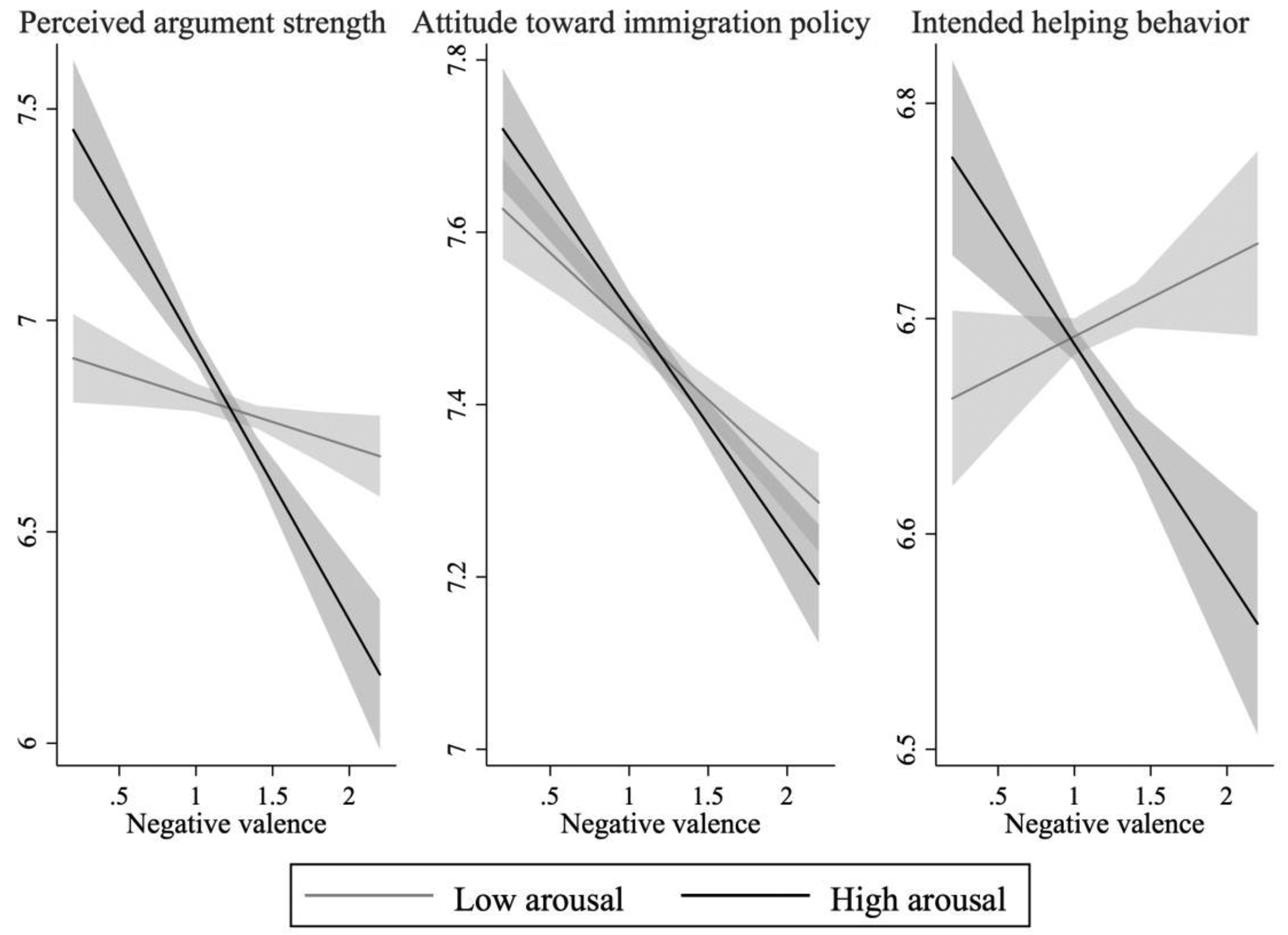
Predicted values and 95 percent confidence intervals for perceived argument strength, attitudes toward the immigration policy and the intention to help refugees, as a function of negative valence (EMG), at low (M − SD) and high (M + SD) levels of arousal (SCL).
In conclusion, against my expectations, I find that threatening immigration news can lead to less negative affective states than less-threatening immigration news. However, negative valence might more often be accompanied by low levels of arousal for less-threatening news than threatening news. Moreover, I confirm the hypothesis that high-arousal negative affective states lead to less perceived argument strength, negative attitudes toward the immigration policy, and less willingness to help outgroups. High-arousal negative affective states seem to play a crucial part in motivated reasoning responses to political news.
Discussion
This study set out to explore the consequences of news-induced arousal for the motivated processing of political news. Unexpectedly, the findings show that more threatening news about immigration leads to less negative affective states, among Austrian citizens. However, combining negative valence with arousal showed some initial evidence that citizens might experience low-arousal negative affective states in response to low-threat immigration news, but high-arousal negative affective states in response to threatening news. Subsequently, the results showed that, to some extent, negative valence led to counterarguing and opposition against accepting refugees, but not to less intent to help them. Again, combining valence and arousal showed that it was mostly high-arousal negative affective states that led to counterarguing, negative attitudes toward a proimmigration policy and less intent to help refugees. In contrast, low-arousal negative affective states had much smaller effects on counterarguing and policy attitudes, and even a reverse effect on the willingness to help outgroup members. These findings can contribute to media effects and motivated reasoning research in at least four ways.
Firstly, the results add a new dimension to the literature on the impact of news use in information-rich societies. Increasingly, communication scholars have shown that news consumers like and select news that is arousing (Lang et al. 2005; Trussler and Soroka 2014). This arousal may be grounded in negativity (Soroka and McAdams 2015; Soroka et al. 2019), digitalization (Kruikemeier et al. 2018), or sensationalism (Vettehen et al. 2008). Accordingly, the news seems to become more sensationalist (Vettehen et al. 2005) and negative (Patternson 1993; Soroka 2012). The increasingly competitive news environment thus seems to encourage journalists to produce arousing news. However, the results of this study show that arousing news does not just have the potential to increase the size of a medium's audience. News-induced arousal also exacerbates motivated reasoning. Therefore, the arousal that negative and sensationalist news cause in their readers, may contribute to political polarization and societal cleavages. While citizens prefer arousing political content in the news, this type of content might not be what is best for democracy. This poses society with a crucial conundrum. What is the value of citizens using news media to inform themselves, if it only drives them towards polarization? While market pressures may encourage news media to reach larger audiences, they might also push news media to polarize and divide the electorate.
Secondly, this study shows that the valence dimension of affect might not fully describe the role of affective states in motivated reasoning. Applying a circumplex model of affect (Russell 1980) to motivated reasoning shows that physiological arousal functions in combination with negative affect in specific ways. Importantly, this study cautiously shows initial evidence that threatening news does not just lead to more negative affect, but to more high-arousal negative affective states. However, this study is only the first step in this direction, as not all robustness checks validate this finding and future research is needed to confirm this effect. This study also shows that high-arousal negative affective states lead to the strongest motivated reasoning effects. Since anger is considered a high-arousal negative emotion (Russell 1980), this is in line with previous findings that show that anger is the main driver of motivated reasoning (Marcus et al. 2011). However, this theoretical advancement has some important implications for motivated reasoning theory.
Because motivated reasoning is based on the active scrutiny of threatening information (Lodge and Taber 2013), it makes sense that low-arousal affective states lead to less counterarguing of political information than high-arousal negative affective states. People with equivalent discrete emotions—who are sad or depressed—are better described as inactive and should be expected to ignore or zone out of threatening information instead of actively engaging with them. Arousal was even more important in the effect on the willingness to help refugees since low-arousal negative affective states led to more willingness to help the outgroup. Possibly, participants in low-arousal negative affective states wanted to help the refugees because they felt sad for them. Indeed, the willingness to help others has long been thought to be motivated by negative-state relief too, albeit low-arousal negative affective states (Cialdini et al. 1987). Without incorporating discrete emotions, though, this is merely speculation, and future research should investigate the interplay between affective states and discrete emotions in motivated reasoning.
Notably, low-arousal negative affective states still caused some polarizing effects by, for instance, leading to some counterarguing and somewhat more negative attitudes toward the immigration policy. This finding seems crucial in the current debate of whether motivated reasoning is (always) the mechanism through which threats lead to polarization. Instead, citizens might also merely take on the expected stance of their group (Han and Federico 2018). Perhaps the arousal dimension can explain such differential cognitive mechanisms. After all, processes like self-stereotyping cost less energy than motivated reasoning. Studying the differential cognitive mechanisms caused by low-arousal and high-arousal negative affective states in political information processing would thus be a fruitful future endeavor.
Thirdly, this paper validates the causal path that is assumed in previous research about emotions in motivated reasoning. Several studies have found that anger mediates motivated reasoning effects, based on correlational evidence between self-report measures (Redlawsk et al. 2010; Suhay and Erisen 2018; Weeks 2015). Such studies assume that there is a causal direction in which emotions are experienced before counterarguing, attitudes and behavior. However, the expression of emotions is subject to motivation too (Brader 2006). The use of physiological measures in the current study shows that preconscious experiences of emotion affect the reasoning patterns that we observe in other research. These results thus validate the causal path of studies that use self-reported measures of emotion in motivated reasoning research.
Finally, this paper shows how we can combine physiological measures to study a circumplex model of affect in motivated reasoning research. Research incorporating physiological measures in political science has usually focused on only one dimension—most commonly arousal (e.g., Soroka and McAdams 2015; Soroka et al. 2019), or analyzed arousal and valence as two separate entities (e.g., Bakker et al. 2020). Yet, the two dimensions are inherently connected. As the results in this paper underline, both positive and negative affective states are very different in combination with low or high arousal. And, conversely, arousal has very different effects for citizens in positive or negative affective states. Modeling the two dimensions together as interaction effects allows researchers to take all four quadrants of the circumplex model of affect into account (Russell 1980). This is important because, as my results show for motivated reasoning, adding the arousal dimension to affective states can illuminate differential effects. This study may thus inspire researchers to move beyond simplified unidimensional models and analyses of affective states when studying political information processing, leading to more nuanced results.
Yet the results in this study are not without caveats. Firstly, the results showed that threatening news leads to less negative affective states. Some might say that this finding contradicts research showing that Corrugator Supercilii activity is caused by negative information (e.g., Bakker et al. 2020; Cacioppo and Petty 1979; Hietanen et al. 1998; Wexler et al. 1992). The results in this study, however, suggest two explanations that are likely combined. The first is that only considering the valence dimension of affect is simply not enough. A closer examination of the data reveals that the low-threat condition elicited more low-arousal negative affective states, but less high-arousal negative affective states. The second explanation is that the predominantly left-wing sample in this study felt bad for the refugees in the low-threat condition because they would not get Austrian citizenship. This is supported by the finding that the difference in negative valence is driven by that part of the stimulus material. Because arousal did not increase in the low-threat condition, a combination of these explanations arguably makes most sense. The mostly left-wing sample experienced low-arousal negative affect when the news item announced that the refugees would not get citizenship. While this shows that using sensitive physiological measures in studying complex societal issues can be challenging, it also shows that incorporating a more comprehensive model of affective states can help understand citizens' emotional reactions better. Future research could use a more diverse sample to incorporate moderation by ideology.
A second challenge posed by this experiment is how to interpret these results with regard to previous findings of discrete emotions in motivated reasoning. After all, a downside of physiological measures is that it is not always evident which emotions people relate to them. The question therefore remains, as what emotion(s) are the affective states in this experiment interpreted by those experiencing them and how does this interpretation affect information processing. The theory of affective intelligence states that anger leads to motivated reasoning, while anxiety leads to information-seeking behavior (Marcus et al. 2011). As those are both high-arousal negative affective states (Russell 1980), the results of this experiment cannot distinguish between these emotions. Yet, anger and anxiety also often exist simultaneously, and can have similar effects on immigration attitudes as well (Brader et al. 2008). The goal of the current experiment, though, was not to differentiate discrete emotions but to address the physiological process preceding them. As mentioned before, it would be fruitful for future research to investigate the interplay between affect and discrete emotions in motivated reasoning.
Thirdly, the manipulation check in this experiment measured whether participants noticed the number of immigrants in the news item. However, it did not explicitly measure the experienced social identity threat. Therefore, it is assumed that larger groups of immigrants cause more social identity threat. According to previous literature, this is a safe assumption. Salient immigrant groups cause perceived group competition for resources which causes opposition to immigration (Esses et al. 2001), and the perceived threat of immigration is even stronger for dissimilar immigrant groups than for similar immigrant groups (Brader et al. 2008). However, it remains unsure which social identity is threatened exactly. Immigration can threaten ethnic/racial identity (Wright et al. 2012), religious identity (Ben-Nun Bloom et al. 2015), and national identity (Mangum and Block 2018). Even though these identities often overlap, it is important to note that we cannot distinguish between them in the current study.
Finally, the finding that the high-threat condition led to more high-arousal negative affective states should be interpreted with caution. As there is considerable autocorrelation in the physiological measures, the error terms of the regression coefficients might be biased. Even though the direction should be valid, this is only initial evidence that threatening political information leads to high-arousal negative affective states. In order to further confirm this finding, future research should use more diverse samples and compare different kinds of threats (e.g., real and symbolic social identity threats).
In conclusion, the evidence presented in this paper indicates that news-induced arousal exacerbates motivated reasoning effects. This is in line with theories of “hot cognition” (Redlawsk 2002) and motivated reasoning (Kunda 1990; Lodge and Taber 2013), and could be uncovered by combining physiological measures of negative affect and arousal in a circumplex model of affect (Russell 1980). Even though this study was only conducted in Austria, motivated reasoning has been shown in a multitude of countries and contexts. These findings therefore improve our understanding of the role of emotion in news processing, as well as our understanding of the consequences of sensationalist and negative news for democracy.
Supplemental Material
sj-pdf-1-hij-10.1177_19401612211010577 - Supplemental material for Aroused Argumentation: How the News Exacerbates Motivated Reasoning
Supplemental material, sj-pdf-1-hij-10.1177_19401612211010577 for Aroused Argumentation: How the News Exacerbates Motivated Reasoning by Ming M. Boyer in The International Journal of Press/Politics
Footnotes
Declaration of Conflicting Interests
The author declared no potential conflicts of interest with respect to the research, authorship, and/or publication of this article.
Funding
The author disclosed receipt of the following financial support for the research, authorship, and/or publication of this article: this work was supported by the University of Vienna (Förderungsstipendium).
Supplemental Material
Supplemental material for this article is available online.

Notes
Author Biography
References
Supplementary Material
Please find the following supplemental material available below.
For Open Access articles published under a Creative Commons License, all supplemental material carries the same license as the article it is associated with.
For non-Open Access articles published, all supplemental material carries a non-exclusive license, and permission requests for re-use of supplemental material or any part of supplemental material shall be sent directly to the copyright owner as specified in the copyright notice associated with the article.
