



Abstract
This paper explores how political information can be told in such a way that news users experience it as captivating. More specifically, it seeks to move beyond Irene Costera Meijer’s “double viewing paradox” and bridge the gap between what attracts and satisfies viewers by developing bottom–up, user-defined, quality criteria for current affairs TV. Items from two Dutch current affairs shows were watched and discussed with fifty-four viewers. A key finding is that participants greatly appreciated feeling enabled to better understand how politics work and impact society. This suggests that what viewers want from political journalism might differ from what journalists produce yet is perfectly compatible with their democratic remit.
Introduction
The democratic relevance of political news has been widely noted. Not only are journalists expected to hold those in power accountable, political news and information are also supposed to enable citizens to make informed political decisions, and help them understand the world around them, including how democracy itself works (Schudson 2008). Yet, many scholars are concerned about journalism’s ability to fulfill these democratic functions due to the public’s apparent lack of interest in political news and other “public affairs” news (e.g., Blekesaune et al. 2012; Mindich 2005; Patterson 2007). One genre in particular news users seem to be tuning out of is (serious) current affairs TV (Turner 2005; Wonneberger et al. 2012; Young 2009). Turner (2005: 156) suggests this is problematic because “the value of an independent, reliable and ethical means of interrogating the news of the day, while providing informed and expert comment, is fundamental to an open democratic society.” Current affairs TV appears to be caught in a dilemma: to have a raison d’être, it has to be watched, but attracting viewers might come at the expense of its democratic value.
Despite these concerns, people’s apparent lack of interest in current affairs TV and the genre’s potential to engage viewers have received limited scholarly attention. Political communication scholars typically focus on effects of general news, particularly various “popular” forms of television news such as infotainment, human interest, and horse-race news, on public opinion, political knowledge, attitudes, and (intended) behavior (e.g., Baum 2002; Boukes et al. 2015; Cappella and Jamieson 1997). Television reception studies have studied the effects of form and content manipulations on the cognition and the evaluation of television news (e.g., Grabe et al. 2000; Grabe et al. 2003; Hendriks Vettehen et al. 2008; Lang et al. 2005). A third strand of research has focused on people’s experience of television news, finding, for instance, that young people tend to gravitate toward less officious formats including popular talk shows and satire because they experience mainstream news as boring and repetitive (Costera Meijer 2007; Marchi 2012). Although such formats may be valuable in their own right—for example, satire has a positive effect on political participation (Hoffman and Young 2011) and soft news on exposure to public issues (Baum 2002)—we are interested in how, from a user perspective, the traditional genre of currents affairs TV might be experienced as worth watching. This paper, therefore, explores how, without turning into a hybrid or popularized genre, current affairs TV can bring serious political information in such a way that viewers experience it as captivating. Ultimately, our aim is to develop user-defined quality criteria for current affairs TV.
Literature Review
User research confirms the conventional wisdom that news users are attracted to “popular” approaches to political news. For instance, in an oft-cited study, Iyengar et al. (2004: 162) found that “horserace news” received more page visits from users than news about political issues. Yet, several other studies have suggested that although popular news might attract and hold users’ attention, it does not necessarily lead to satisfaction. Put differently, people’s selection and judgment of news do not always overlap. Trussler and Soroka (2014) found that people’s stated (dis)preference for negative or horse-race news did not predict their selection of news stories, whereas Lang et al. (2005) found that viewers’ evaluations of newscasts did not predict which news they watched. Stanca et al. (2013) found that although sensational content (“verbal violence”) in political talk shows led to longer viewing time, it also led to a less satisfactory overall viewing experience. Grabe et al. (2003) and Grabe et al. (2000) even found a difference between people’s bodily and affective reactions to news with a “tabloid” production (e.g., sound effects, music, flash frames): It increased physiological measures of attention and arousal, but had, respectively, no significant effect or a negative effect on self-reported interest or enjoyment, and a negative effect on objectivity and believability. In a focus group study by Richardson et al. (2012: 120), participants criticized one political TV show’s “entertainment-based logic, characterized as a marked tendency toward sensationalism or overstated negativity to pull in more viewers, rather than privileging a more edifying or informative perspective,” and yet many did enjoy a clip of the show and chose it as the most interesting one. Costera Meijer (2007) labeled this asymmetry between attention and satisfaction, or selection and judgment, the “double viewing paradox”:
. . . [young people’s] satisfaction about and even interest in “serious” news does not automatically cause them to watch it, while, vice versa, their contempt for light news programs (“stupid,” “junk”) does not keep them from watching. . . . (p. 106)
The studies cited above suggest that although people might gravitate toward selecting popular news, they have at least a potential interest in watching news with a “more edifying or informative perspective” (Richardson et al. 2012: 120). Indeed, other user research supports the notion that people are interested in serious information about politics—just not in the way it is typically approached in the news. For instance, Henderson (2014: 146) found that young people miss contextual knowledge needed to understand political news, particularly running conflicts, and therefore see no point in watching: “If you haven’t kept up with what’s going on and then . . . it’s quite specific about a really complicated issue, you just switch it off.” The desires these participants expressed for political news are markedly similar to those expressed by focus group participants in Coleman and Moss’s (2016: 10) study on election debates: a less formal, more modern style, more constructive and contextual information, more audience participation and representation, and less typical “politicians’ answers” (Henderson 2014). Although not specifically concerned with political news, Costera Meijer (2007: 113) suggested that to attract and satisfy young people, news should not lower its standards (i.e., popularize) as journalists often assume but make it more captivating by including “questions of relationships, emotions, friendship and respect”—because these are important matters to young people even if they are not limited to the public sphere—as well as incorporating variations in style and multilayered storytelling. Concerning the latter, experiments show that news stories with exemplars evoke such emotions as empathy and compassion (Oliver et al. 2012) and stimulate cognitive responses (McGoldrick and Lynch 2016; Shen et al. 2014).
A useful lens through which to approach people’s potential interest in political information might be the distinction between hedonism and eudaimonism. Whereas hedonism refers to the commonplace notion of entertainment as fun and pleasurable (“enjoyment”), eudaimonism is described by Oliver and Bartsch (2010) as “appreciation,” or a meaningful, moving, and thought-provoking experience. Using eudaimonism to make sense of user experiences of political talk shows, Roth et al. (2014) found that eudaimonic experiences contribute significantly more to feeling informed than hedonistic experiences, whereas Bartsch and Schneider (2014: 390) found that “eudaimonic forms of emotional involvement” increased respondents’ reflective thoughts about and interest in political issues.
While on one hand, then, users are attracted to popular approaches to news, on the other, there is a hesitation toward this news as well as a potential interest in more meaningful, moving, or thought-provoking news. Mutz and Reeves (2005: 13–14)—who found that uncivil political discourse attracts viewers but has negative effects on their political trust—leave us with the challenge of “how to create political programming that is both interesting and exciting to watch yet not likely to damage public attitudes in a significant way.” We seek to move beyond the “double viewing paradox” (Costera Meijer 2007) and bridge the gap between attention and satisfaction by exploring how serious political information can be told in such a way that viewers experience it as captivating. Our aim, again, is to develop user-defined quality criteria for current affairs TV.
Method
To develop a rich understanding of what viewers experience as captivating political information, we watched—and immediately thereafter discussed—current affairs items with a total of fifty-four participants. We selected two Dutch shows: EenVandaag, a daily current affairs show (DS) and Buitenhof, a weekly political interview show (WS), both aired by public broadcasters. DS airs Mondays to Saturdays from 06:15 to 06:45 p.m. and presents its items in a varied, lively, and often “narrative” style. It seeks to reach a broad audience by bringing information in an understandable way: “not going down on your knees [but] it has to be palatable: make me care” (personal communication, 2015). 1 WS airs Sundays from 12:10 to 01:10 p.m. and consists of lengthy in-studio interviews. It seeks to “inform” a relatively higher educated, politically interested audience “and make them think,” and while open toward attracting a younger audience, it “does not have to popularize [or] reach a bigger audience that is less well educated” (personal communication 2015). 2 The selected items reflected the variety of styles within both shows: DS items included various degrees of narrativity (e.g., exemplar stories versus “talking heads”) and production features (e.g., infographics, music). WS items included various types of guests (e.g., politicians, experts) and interview setups (e.g., one-on-one interview, debate). Figures 1–5 provide an impression of both shows. Although current affairs TV may include a wider range of topics, we chose to select only items related to politics.
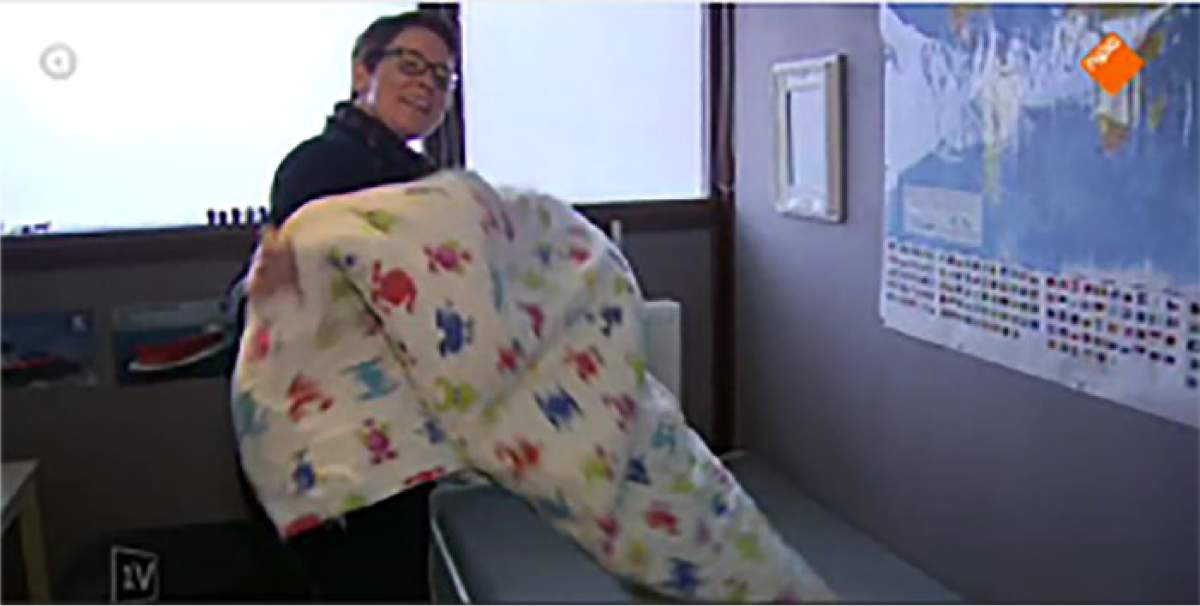
Exemplar in EenVandaag.
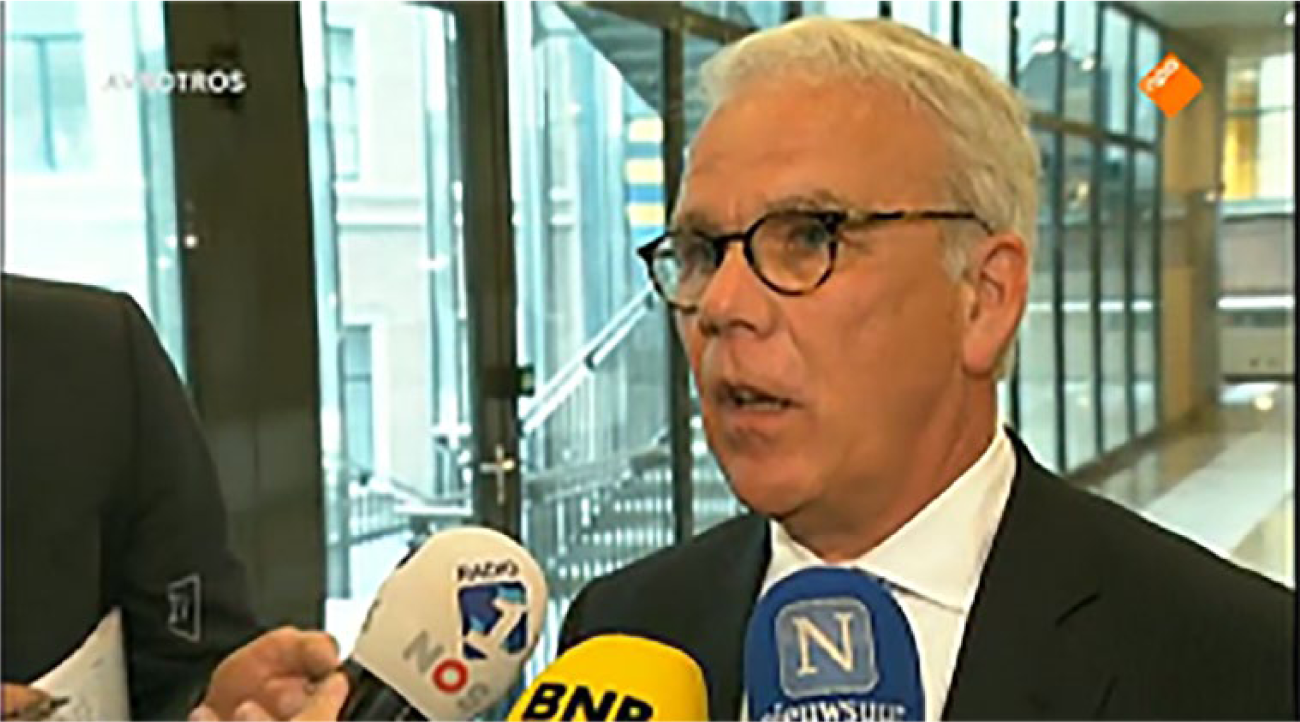
Talking head in EenVandaag.
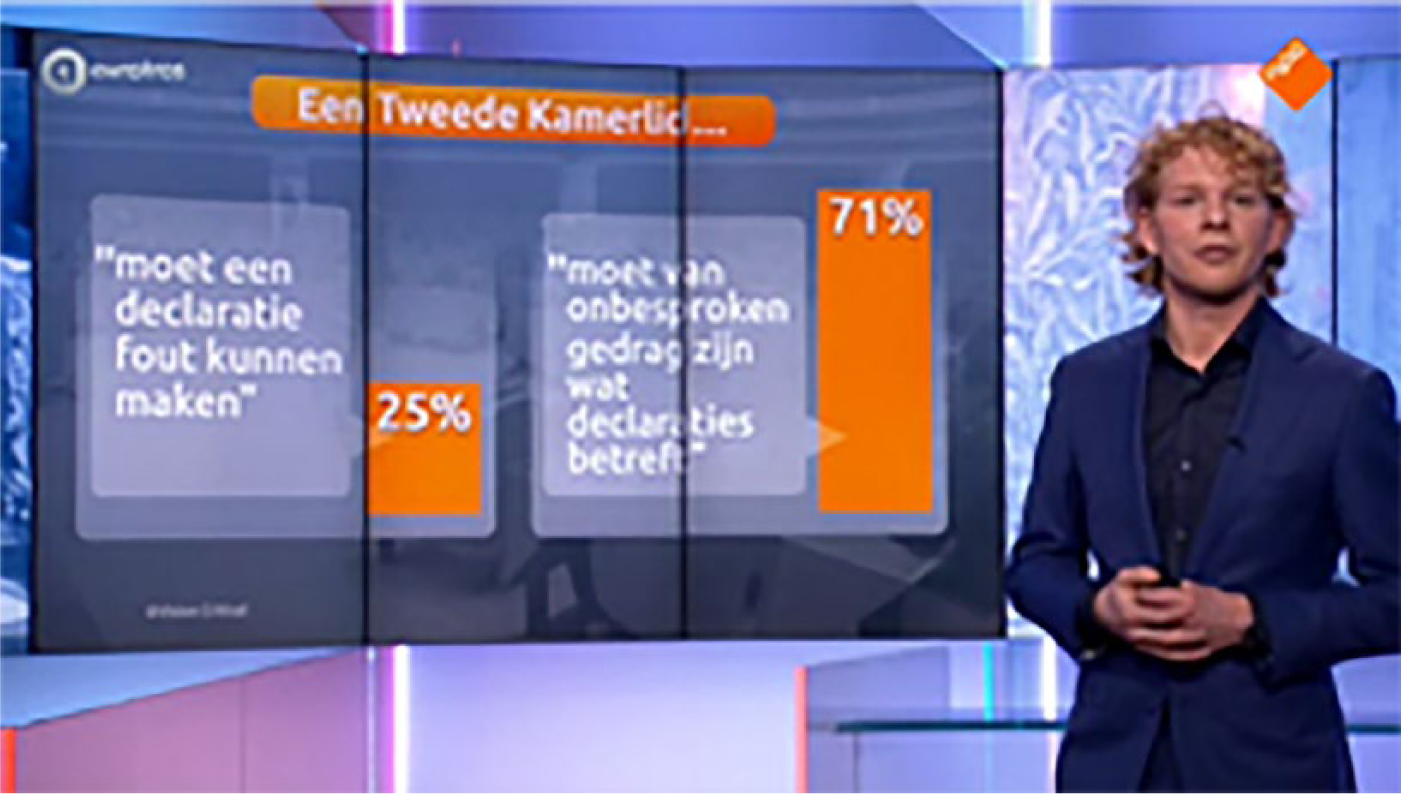
Infographic in EenVandaag.
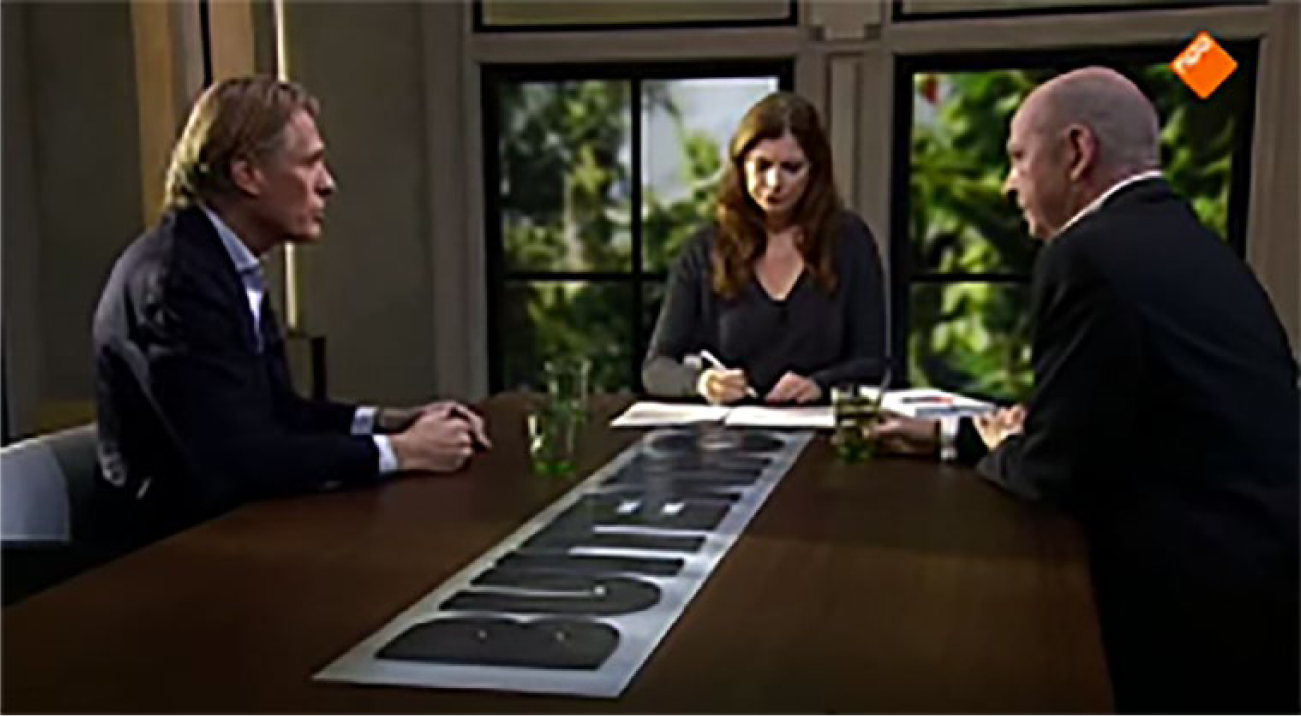
Debate in Buitenhof.
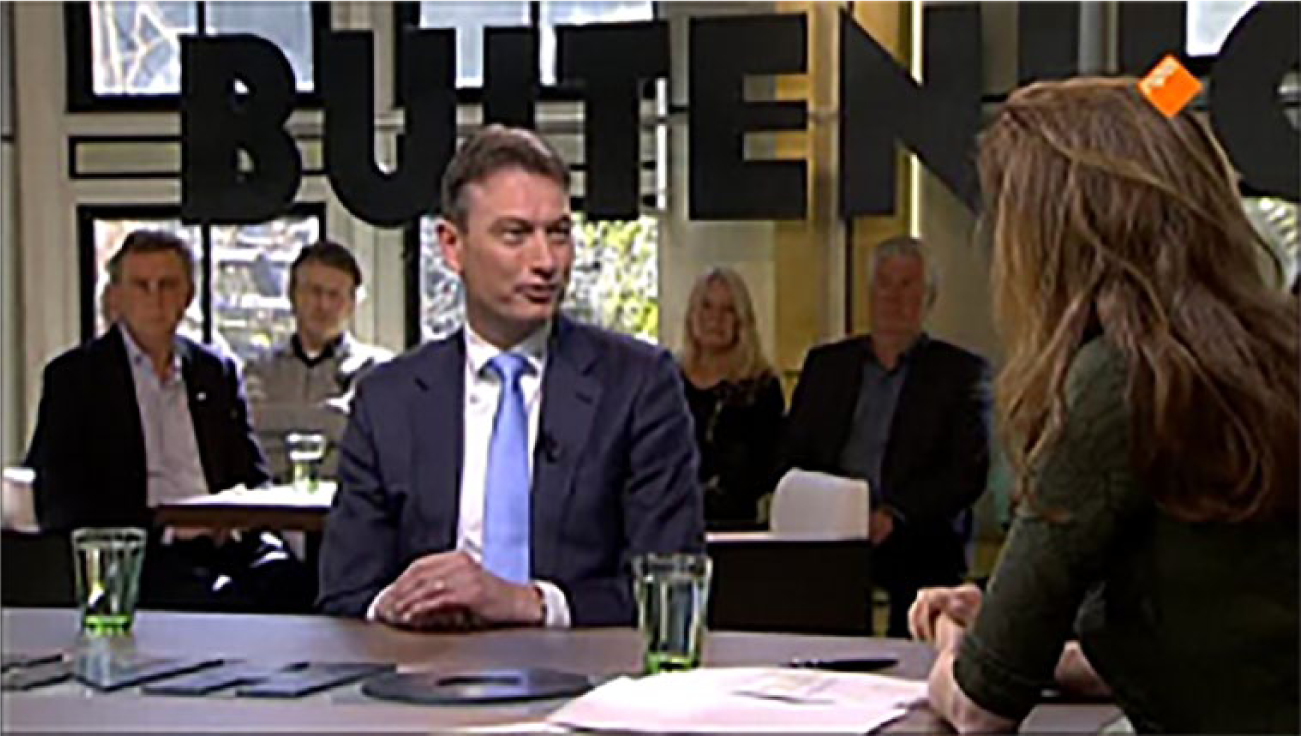
One-on-one interview in Buitenhof.
Seeking to know what makes current affairs TV worth watching from a user perspective, we opted for the term captivating rather than engaging. First, engagement refers to connecting with audiences from a production perspective (Batsell 2015), regardless of their actual experiences. Second, from an audience perspective, engagement is generally operationalized as a form of “political participation” (Ekman and Amnå 2012). We argue that by taking an open approach toward captivation (watching and discussing items with participants) rather than checking it through closed propositions in surveys, our results provide more detailed and comprehensive insights into the experience of watching current affairs TV.
As we sought to explore how both shows can be experienced as more captivating without turning into a hybrid or popularized genre, we used theoretical sampling to select participants based on their (potential) affinity with each show (Lindlof 1995). We argue it would be less fruitful to interview people outside of the shows’ target audiences, as illustrated by one poorly selected participant in the DS study. During the interview, she emphasized she was “not at all” interested in politics and had no intention of watching a current affairs show unless it became more like a satirical, provocative show she enjoyed, infamous for ridiculing politicians, that is, unless it became a different genre altogether. Taking into consideration the different aims of each show (as outlined above), for WS, we selected eighteen participants who claimed to be politically interested and to watch the show at least occasionally. For DS, we selected thirty-six participants who were not necessarily politically interested or regularly watched the show, but at least expressed potential interest in watching it. To limit potential social desirability, rapport (Lindlof 1995) was improved by selecting participants from the social circle of the interviewers. Participants in both groups were roughly equally divided along gender lines and included varying ages (nineteen to ninety-two). For WS, eight participants were under forty, and ten were over fifty. For DS, twenty-one participants were under forty, and fifteen were over fifty. Both groups included varying levels of education (low to high), but on average were fairly well educated. This is a limitation of the DS study, as this show aims for a broader audience.
The interviews took place in February and March 2015 and typically lasted thirty to sixty minutes. In each semistructured interview, two or three items from either DS or WS were watched and discussed. The interviews included open questions such as, “Could you tell me in your own words what you just saw?” “How would you describe the difference between this item and the last one?” and “What did you find most (or least) captivating about the item?” It deserves emphasis that the Dutch word for captivating (boeiend) is more self-explanatory than its English counterpart. Most interviews were conducted in the participants’ living rooms. For pragmatic reasons, the items were usually played on laptops. Nine M.A. students in journalism (Vrije Universiteit Amsterdam) were trained intensively to perform the interviews. This training included reflection on their own viewing experiences and comparing them with fellow students and watching and analyzing the selected items to help them decide when to carefully probe. Students performed trial interviews and received extensive feedback after each interview round. All interviews were recorded, transcribed, and analyzed using thematic analysis, an “iterative process” consisting of going back and forth between the stages of “identifying substantive statements” and “deciding on categories” (Gillham 2005: 137). Because we wanted to enlarge the vocabulary about the experience of journalism, we focused on variety, depth, and patterns of user experiences rather than frequency or representativeness.
Results
Distinct Viewing Modes
During the interviews, the participants described distinct viewing modes for the two current affairs shows. DS was typically described as part of the routine of lean-back TV viewing around dinnertime, as Carmen (25) illustrated,
Usually when I get home I turn on the TV and usually it begins at 06:30 p.m., I think. And then it’s on in the background, but then I’m also cooking and [unpacking] the groceries, so doing all kinds of things at home, and then if it’s really interesting I will watch a bit, but it’s not like I think “Now I’m gonna sit down for it and now I’m really gonna watch DS.”
Illustrative for how viewing DS is an act intertwined with dinnertime activities is that even regular DS viewers did not know its exact time of broadcast, referring to it as being on “after the 6 o’clock news” (Tina, 62) or “between 6 and 7” (Anthony, 60). The participants praised how viewing DS did not require a great amount of cognitive effort. Maggie (32) said, “For me it’s the moment just before dinner. . . . It’s not brought too heavy with all kinds of calculations and things you really have to pay attention to in order to follow it.” She enjoyed the “pleasant” tone of one item and compared it with more serious talk shows such as WS, “You see images, you see [the city], you see water. That gives a different atmosphere, that’s a lot different from a table where six men in suits are . . . talking.” The DS viewers seemed to prefer items that they could easily make sense of and that frequently offered new entry points for captivation by having a considerate pace and a variety of elements, such as different sources (experts, laypersons), infographics, and outdoor shots.
WS, on the contrary, was described as appointment television by the viewers: They consciously sit down for it in a concentrated lean-forward mode. WS viewers were willing to put time and effort in watching the show in exchange for learning something new about politics. They were also outspoken about how they did not expect politics to be discussed in a light or entertaining way. Indeed, as Gianni (25) suggests, while its sober format and lengthy interviews sometimes make the show “teeter on the brink of becoming boring,” this is exactly what one “sign[s] up for when you watch WS.” The WS viewers described how they watch the show attentively as their default mode, and only when an item truly bores them, they temporarily shift their attention toward their newspaper, tablet, or smartphone, and back to the show when their interest is piqued again. Tom (28) described how when losing interest due to guests’ lack of expertise about a topic, he keeps listening with “half an ear,” receptive to having “a good question” refocus his attention. Boredom, in this case, is not caused by lack of visually pleasant, easy-to-process material, but by not being cognitively stimulated.
Election Talk
Despite the distinct viewing modes and expectations, viewers from both groups—across the board—said they were least captivated by one phenomenon: predictable, self-serving election talk of politicians, or, as described by Coleman and Moss’s (2016: 10) participants, “politicians’ answers”:
And if it becomes really political, really that campaign-like baloney, then I tune out. Then I think yeah, I already know all of that. (Will, 22, WS) Sometimes they also have politicians who talk neatly, are totally preprogrammed . . ., so who don’t say anything at all. (Albert, 66, WS) Everyone is going for their own party. It is not about what is true or not, it is about: what is convenient [for them] right now. And that’s predictable. (Anthony, 60, DS) “The government is not doing it right, because we want to ensure more jobs, more security.” Yeah sure! Election talk, election talk. So that [opposition leader] with his obligatory quote, that doesn’t add much for me. (Annalise, 57, DS)
The DS viewers recognized such “election talk,” especially “obligatory” quotes from opposition politicians, as the default format for political news. When asked to explain their dislike, most said they simply found it predictable and boring to watch. The WS viewers, in turn, disliked election talk because it was unproductive: It did not enable them to understand politics better. Rather than just criticizing, our method of watching and discussing several items with a variety of styles made it easier for the participants to point out or suggest formats or elements they did find captivating. The suggestions of each group form the remainder of this paper.
EenVandaag (daily current affairs show, DS)
The distinction between attraction and satisfaction found in earlier research (e.g., Costera Meijer 2007; Stanca et al. 2013) came up repeatedly in the DS interviews. Multiple viewers argued that DS tends to report about politicians or people in powerful positions in a suggestive manner. Some downright disapproved of this, such as Christopher (22), who branded one item “prejudiced” about the performance of a minister: “It’s not that I now think ‘what a bad minister,’ more like ‘what a bad item’ or ‘what a subjective item.’” However, for most DS viewers, such items generated a paradoxical experience. They were quick to point out when items did not adhere to journalistic criteria such as objectivity and showing both sides of a story, and were, therefore, not “good journalism,” but could separate this from what made “good TV.” Walter (27) said of one item that “you could question” if it were even journalism because no one from the government was asked for a reaction, but when asked whether this impacted his “captivation,” he answered, “That actually doesn’t have much to do with it. . . . I think at least television-wise it’s well done, and as a result I paid attention.” Trudy (61) branded one item “tendentious” because she felt a (gay) politician was framed as “that weird gay,” but argued she still preferred this over typical items with sound bites from talking heads: “[It makes me] a bit annoyed, like ‘Geez, you can’t do that,’ [but] that’s better than when you think ‘Hello, boring, predictable.’”
If being boring is the worst offence for DS, suggestive or sensational items were not experienced as entirely satisfying either. While discussing the items, the participants proposed a set of alternative journalistic approaches where captivation and satisfaction did seem to overlap. These patterns were found across ages, levels of education, interest in news, and frequencies of watching the show. We labeled the approaches empathetic, explanatory, and constructive.
Empathetic Approach
Corresponding to their strong dislike of “election talk,” the DS viewers appreciated approaches that allowed politicians to show a more human, relatable side of themselves, a look “beyond the plastic sheet” (Coleman and Moss 2016: 11) that invited feelings of “relatedness” (Ryan and Deci 2000) or empathy or compassion (Oliver et al. 2012). In one item about the lack of secretary assistance for the Department of Defense, a former minister said, “I have failed in my efforts for the . . . soldiers and I’m terribly sorry about that. I felt a lot for them and was strongly committed to them, and I couldn’t sufficiently live up to that.” This self-critique impressed Jamie (27), who noted that this “actually grabs me more than those very bureaucratic interviews [shown] before.” Likewise, Eveline (27) noted,
That he himself also says, “I could have done a better job and done [my job] to more satisfaction if I’d had [a secretary] next to me.” Well, that does have impact. That’s more interesting to me than an item about two fighting party members.
It appears the DS viewers want to see politicians more as “real” people, rather than as flat characters, firmly set up by journalists in a strict role as adversarial politicians. Being more “human” also includes using accessible language that makes complicated political matters understandable. Ida (79) noted how instead of hearing “only that dry political talk,” she wants “a nice comparison that makes you think, ‘that’s exactly how it is.’” Politicians should use the clear language of “normal people” who in vox pops “just tell it like it is.”
The DS viewers also praised hearing larger political issues through exemplars of “normal” people. For instance, Molly (23) was grabbed by an item about the impact of an earthquake caused by the government-controlled gas winning. She was especially struck by the small detail of how a man numbered planks of a damaged church so he would be able to restore the building:
I thought it was really beautiful to see that those people care so much that he even says he will number the planks so he can put them back the same way. . . . You notice that those people really have a lot of heart for the place they live in. So that’s why maybe I have more attention for it.
The small but telling detail invoked feelings of empathy and made her pay attention, arguably resulting in “transportation” (Green and Brock 2000) into the story. Bonnie (25) described similar feelings after watching an item about parental contribution to child psychiatry told from a mother’s perspective:
I could follow it better because it also captured [my] imagination, . . . that you really see it happening, that it could really be about the neighbor who has a child with a disorder, or your aunt with a niece.
Jaden (26) became so immersed that he wanted to know how the story ended:
Because that woman explains it, you are sucked in the story much more and it grabs you much more. . . . Because of that I find it easier to concentrate. . . . You hear that woman talk and then you’re kind of curious about how it’s going and maybe [you] hope there’s sort of a closure to it.
Jaden acknowledged the subjectivity of the mother’s perspective, but this did not interrupt the pleasant experience of transportation: “I don’t know if because of that it’s still very objective, but I do think it’s nice.”
However, other DS viewers did miss hearing the policy or politician’s side of exemplars. Regarding an item about a man left with cancer after he worked with poisonous chrome-6 paint for the Defense Department, Ronny (32) lost his attention because the victim angle was too dominant:
At some point you start to notice that they mention carcinogen for the tenth time and “hundreds of people,” “lethal substances,” “chrome-6” . . . and then I think, yeah, that it loses its credibility a bit. And then you start to look at it differently. Then it’s not “gosh, I’m curious to see where this is going” [laughs] then you’re turned off a little bit because you think, “Yeah, yeah, yeah, sad, sad, sad, death death blablabla.” And then you only get gripped a bit toward the end when they let that [minister] Hennis speak and then it’s so underexposed that you think, “oh, then just leave it” [laughs].
The lack of different perspectives hindered Ronny’s captivation and made him critically assess the story. While not defending the minister, Ronny said he wanted to hear from her “how it really is,” arguing that her side of the argument might be more rational or justifiable than the item suggests. Nancy (27) criticized the same story for casting the minister as “a kind of bogeywoman” in a predetermined conflict frame, in effect disabling her to judge for herself if this portrayal was justified. Mathilda (36) likewise criticized the archetypical representation of events: “The minister quickly becomes the big bad witch.”
Regarding the item about the mother and her sick child, Carmen (25) noted that the “explanation” of the policy “did not come to fruition”:
Maybe it’s me, but I got the impression that it didn’t become so clear . . . why [the state secretary] wanted this. And what the proponents of this policy think. I always understand that the money for these kinds of problems has to come from somewhere.
Joanne (63) said she mentally tuned out during an item about a town affected by European Union (EU)-imposed restrictions on fishing. The victim angle was clear enough, but the law was not adequately explained:
Especially when those [inhabitants] themselves were talking, “Yeah we voted PVV [Dutch right-wing populist party] because there’s all kinds of rules and changes that dupe us,” well OK, but it stays a bit unclear how that works exactly and why they prohibit that fishing.
Although the DS viewers did enjoy and value the show’s empathetic attitude toward “normal” people, some noticed the same courtesy was not extended to the politicians involved. This lack of attention to the possible reasonableness or justifiability of political decisions not only made these viewers rate the items lower in terms of journalistic quality but, as illustrated by Ronny and Joanne, also made them less captivating.
Explanatory Approach
Most DS viewers did not find politics particularly interesting. We were therefore surprised to learn that their interest could be awakened by an explanatory approach to politics. That is, the viewers described feeling captivated when they felt items increased their understanding of how politics work and how it matters. Regarding the topic of European elections, Harry (61) said he did not want to hear “about how the European Commission is imposing fines again,” but about “what these people do for Europe, what benefits we get from that.” Annalise (57) similarly appreciated getting a basic understanding of how politics work. When asked which of the three items she watched was most captivating, she pointed to a “refresher” of how the Dutch system of provincial politics works:
Actually [this topic is] the most boring to me, but how our country is governed, that was the most informative to me, because I knew that the least. I had realized the least how exactly it fits together.
Remarkably considering the “most boring” character of these provincial politics, she became captivated when their workings were explained. Likewise, when asked how he would go about making an item about provincial politics if he were a journalist, Harry replied,
I would make an item . . . to show what those people actually do in that building, you know. What is it exactly, the “States-Provincial,” what do they do for the country, what do they do for the province, and is it actually important what they do?
Similarly, when asked how she would improve the item she found least captivating, Bonnie (25) suggested,
Maybe they should have zoomed in more on what [criticism of a politician’s functioning] really means in practice. . . . Then you also understand it better, then you don’t have to make that translation yourself from: what does this talk about his abilities actually mean for, say, you and me?
To be captivated, many DS viewers needed to understand the significance and impact of the news development. After viewing an item about two politicians battling for party leadership, Eveline (27, DS) argued that the focus on “the power game” and “who is [doing] the best in the polls” takes for granted more fundamental information about politics that she needed to comprehend the bigger picture,
With politics we always pretend like everyone knows exactly what parties stand for, or what people within that party stand for individually, but actually we don’t really know. That would be interesting, . . . to make small profiles of the two people [aiming for party leadership] and to show: this is so and so, background so and so, this is what she wants to do with that party. . . . Then at least I’d get an idea of that person instead of only getting to know that number one and two are fighting with each other.
However, this does not necessarily mean that Eveline would stop watching this item about bickering politicians: “It is fun TV, in principle I would watch it, but it’s not like I learned something or think ‘that’s how it is.’” Just because she appreciates learning about politics does not mean she does not enjoy the dramatics of these items. Yet, while the focus on the competition element may not be a reason to tune out, it did not give her the aha-erlebnis that the item about the self-critical minister (mentioned earlier) gave her. This is a very crucial distinction: Unlike the one about the bickering politicians, this item left her wanting more and, so she claimed, stimulated her to look for more information.
Constructive Approach
Finally, in a step beyond explanation, some viewers were interested in constructive, solution-driven approaches. Regarding an item about corrupt politicians, Monique (60) said,
When will I hear that the municipalities actually did something about this? That’s what I want to hear. It always remains a bit vague for me, these kinds of items. . . . It’s an item that solves nothing.
Monique argued that the item “does not add much” because it only addresses a known problem rather than give insight into a possible solution. What is more, she suggested that due to journalism’s [over]emphasis on corruption and misconduct, her “trust in politics goes down every year.” Regarding the same item, Ramon (32) even argued that EenVandaag adds fuel to the fire: “They say trust in politicians isn’t very high and . . . then they even exaggerate it a bit, and I’m like, you’re not helping.” While he did label the item “tasty sensation,” he argued that it missed an action perspective,
Sure, it’s tasty. Uh yeah, I think I would’ve preferred if it . . . had more of a prospect, like: OK, all politicians are not to be trusted, but what are we going to do about it?
Importantly, Ronny did enjoy and laugh at the sensational parts of the item, but it offered no recourse. As he summarized, “It’s catchy, but it gets you fucking nowhere.” Mathilda (36) similarly admitted this item was “tasty” and “captivating” because there was “malicious pleasure” in it. Yet, she had a bit of an inner struggle with this: “That can be very fun, but that’s not what I’m looking for in a show like this . . . I get the feeling that I’m manipulated instead of informed honestly.” She claimed to be most captivated by an item that explained the background and the consequences of a policy measure regarding health care. Trudy (61) proposed a constructive alternative to predicable quotes from opposition politicians: Reporters could ask “what would you have done better?” or provide analysis: “They said this and this in their party program . . . and for this and this reason they did or did not achieve that.”
It appears most DS viewers can both “enjoy” a fun, sensational item and “appreciate” a meaningful, moving, or thought-provoking item (e.g., Oliver and Bartsch 2012). This means that although sensational news—even if not considered good journalism—is enjoyable to watch, DS viewers appreciate items more if they explain basic workings of politics and their impact on society in an entertaining, accessible, constructive manner. Indeed, Christopher (22) became almost jubilant when watching an item that included alternating shots, interviews with different types of sources, tempo, and some funny moments, and explained why the subject mattered:
It’s chill, like, it’s edited nicely . . . There’s just a nice dynamic in it. . . . I’ll keep watching, they bring the subject in an interesting way and they also make it relevant, like: . . . why those elections are so important, because now as a viewer you understand: OK, so that’s what it’s about, OK . . . so that’s what’s nice about the item.
Buitenhof (weekly political interview show, WS)
Unlike the DS viewers, the WS viewers are intrinsically interested in politics and want to understand complex political matters. This explains why they so strongly disliked election talk. As Will (22) suggested in his quote (“I already know all of that”), predictable self-serving talk is a mental “tune out” moment because it does not add new insights to their existing political knowledge. Their desire to understand politics is illustrated, first, by their appreciation of critical one-on-one interviews with appropriate political guests. While the DS viewers applauded the inclusion of popular opinion or vox pop, the WS viewers emphasized the essential expertise of the guests: “people who have sufficient authority to fill an in-depth background item” (Tom, 28). Albert (66) praised an interview with “a very knowledgeable person who gives good answers and [an] enlightening vision,” and who was interviewed “critically” and whose arguments were “countered” by the interviewer.
Second, although the WS viewers wanted guests to be questioned critically, these counters had to generate thoughtful, informative responses. Ideally, politicians would be “contemplative and reflective” and “show the human [side] a little more, the[ir] convictions, not the flat story” (Yvette, 71), but multiple viewers acknowledged the difficulty of getting politicians into this “space.” Maria (24), who referenced an item in which the presenter questioned the chief of the Dutch national police aggressively, illustrates how not allowing enough space for explanation resulted in a less than informative interview,
Very attacking questions were asked to [chief police], . . . where [he] constantly had to be on the defensive rather than really being able to say what he wanted to say. So instead of being asked triggering questions [inviting him] to explain [things] in detail, it was actually a bit of attack-defense.
Similarly, Johnny (31) missed hearing “the other side of the story” in a one-on-one interview with a guest who was in conflict with a large organization. Remarkably, because of its dominance in journalism, the debate format would not have been a solution, so Johnny argued. That likely would have resulted in “an endless discussion where you still don’t actually get to hear any information, but just a yes-no game.” Instead, Johnny said he preferred hearing the full story through the presenter. He did want to learn the considerations and reasons of the other party, but putting them up against each other would not have enabled a better understanding of the situation. Confirming Costera Meijer’s (2001) previous findings about the limitations of the debate format, Sean (26) said he “would’ve never watched” a debate between two guests from opposite sides of the political spectrum,
Because you know you’re not going to learn anything, you’ll never get new insights, it’s not going to change your own conceptions, and it is the pretense of balance by putting two extremes together.
Even viewers who did prefer debates to one-on-one interviews did not appreciate conflict in itself. Ada (59): “It shouldn’t become a quarrel, they have to stay respectful. Ideally you’d want one [guest] being able to convince the other.” Yvette (71) similarly argued that she “finds it captivating when they disagree with each other when they also substantiate that in a good way.”
The WS viewers’ desire to better understand politics is further reflected by their enthusiasm for fresh perspectives or surprising angles. As noted by Will (22), “Recently they had this young leader or something from Syriza, you know, that Greek party, and I thought, ‘Wow, that is interesting, that is a new perspective.’” Fourth, the WS viewers became disappointed when interviews did not reach their potential due to presenters “not doing their job.” They expected presenters to facilitate their learning process by clearly introducing and rounding off topics, summarizing the guests’ main points, clearing up terms that might be confusing, and keeping the conversation “on topic.” Maja’s (56) last remark is telling. She became disappointed because she had not learned anything from the interview, which left her unsatisfied:
She [the anchor] lets him talk for a long time and at some point she starts talking about something else, like “OK well, we will see. Now [onto] something else . . .” Well, I find that unsatisfactory, like, what will we see? This has left me none the wiser.
Tim (32) was also dissatisfied. He was unable to keep up with an interview about the health care system because the presenter did not clarify complex terms,
They quickly go into content we don’t know much about, like all kinds of premiums. I heard something about contracted and non-contracted care policies . . . that’s like “Hello, wait a second.” . . . They didn’t ask what it was, they didn’t say what [it was], so I was still curious [what it was] when he was already going on about it.
Whether learning something new or informing their opinion, for WS viewers, there has to be a takeaway from the viewing experience—it has to have been worth watching the show. They do not watch WS as a mood elevator or to hear “background noise” (Lull 1990: 36), but invest time and effort into the viewing experience on the condition of getting new perspectives and a deeper understanding of politics in return. The WS viewers do find politics intrinsically interesting but can be turned off by an approach that does not yield enlightenment.
Conclusion
This paper explored how political information can be told in such a way viewers experience it as captivating. In particular, we sought to move beyond the “double viewing paradox” (Costera Meijer 2007) and bridge the gap between what attracts the attention of viewers and what satisfies them. While our results show what viewers describe as captivating current affairs TV, additional research is necessary to find out whether people actually tune in when shows cater to these experiences. Our user-centered approach has resulted in two sets of bottom–up, user-defined, quality criteria for current affairs TV. For DS viewers, attraction and satisfaction overlapped when items were empathetic to all sides of the story, explained how politics work and impact society, and had a constructive, solution-driven angle. To be captivating, these approaches must be combined with a varied and easy-to-follow production style, including different perspectives, outdoor shots, considerable pacing, and a clear storyline. For WS viewers, attraction and satisfaction overlapped when they felt they learned about and understood complex political issues. This was achieved through presenters who guarded the structure of the interviews, through critical interviews with relevant and knowledgeable guests who provided insightful answers, and through new and inspiring perspectives.
The patterns within each group were found across age, level of education, frequency of watching, and interest in news, although it should be noted that participants were not systematically selected based on these characteristics. Additional research is needed to establish why, for instance, some viewers felt transported into exemplar stories while others criticized their one-sidedness. The fact that between the groups, participants were alike in age and level of education but differed in (self-proclaimed) interest in politics might point to the importance of the latter characteristic. Alternatively, differences between the groups might also be due to the distinct viewing modes and accompanying expectations the shows invite (lean-back viewing versus lean-forward appointment television). Future research could have the same (homogeneous) group of viewers watch several different shows rather than select viewers based on their (potential) affinity with each show. Although this research was done in a Dutch context, we might reasonably expect that the DS experiences might be more generally valid for general interest shows, whereas the WS experiences might be valid for serious (interview) shows aiming for a more politically interested audience.
Our finding that both groups of viewers greatly appreciate a learning experience deserves emphasis; in particular, we want to underline the pleasure they derived from it. As the aha-erlebnis illustrates, finally understanding something is experienced as a true moment of delight. Our results also suggest that what viewers want from political journalism might differ from what journalists produce yet is perfectly compatible with their democratic remit. Viewers’ appreciation of meaningful, inspiring, thought-provoking items and their willingness to learn suggests that there is a demand for the journalistic function Schudson (2008) called “publicizing representative democracy.” This function of journalism is about explaining how political institutions work and when necessary, criticizing them in a constructive way. Constructive criticism is experienced as captivating when it also asks solution-oriented questions and elicits understanding for all sides of an event instead of providing an “us versus them” perspective. Items that fail to make the “political” side of the story comprehensible do not only “other” politicians (Richardson et al. 2012) but also miss an informative and captivating variety of perspectives. Future research should further explore how news organizations could best explain the workings of politics to both less and more informed audiences. Following Coleman and Ross (2010: 149), we argue that providing such explanation is not “dumbing down” but rather “a form of hospitality.”
It should be emphasized that the method employed depends on participants’ own reflections on their captivation. Although our participants’ openness about their enjoyment of sensational aspects suggests they felt relatively at ease to talk about their experiences, interviewing people about something as normatively loaded as current affairs bears the risk of social desirability. While the interviews took place in the participants’ homes, exposure to the viewing material was forced in the sense that participants were asked to sit through full items. In addition, rather than watching entire episodes of the current affairs shows, participants were shown a selection of items. Future research might explore how viewers experience the composition of a full show and try to establish, for instance, how many explanatory items viewers can handle and whether every story should be catchy and constructive.
Footnotes
Acknowledgements
The authors would like to thank the 2014–2015 M.A. students in journalism at the Vrije Universiteit Amsterdam for contributing to this research. The authors would also like to thank the anonymous reviewers, Editor-in-Chief Rasmus Kleis Nielsen, and The New News Consumer research members Martijn Kleppe, Marcel Broersma, Anna Van Cauwenberge, and Joëlle Swart for their valuable and constructive feedback.
Declaration of Conflicting Interests
The author(s) declared no potential conflicts of interest with respect to the research, authorship, and/or publication of this article.
Funding
The author(s) disclosed receipt of the following financial support for the research, authorship, and/or publication of this article: This article is part of the research project “The New News Consumer: User-Based Innovation to Meet Paradigmatic Change in News Use and Media Habits,” supported by The Netherlands Organisation for Scientific Research (NWO) [314-99-103] and ten Dutch journalism organizations (see  ).
).