




Abstract
This paper explores the role of intersectional reflexivity in conducting an autoethnographic exploration of personal transformation within academic research. Using autoethnographic data from regular journaling, I illustrate my shift from a profoundly ingrained positivist research mode toward embracing alternative theoretical traditions that foreground the researcher’s active role in knowledge production. These traditions emphasize the researcher’s involvement as a social actor who actively influences the processes they study and challenges the conventional notion of objectivity and neutrality. Incorporating the concept of life capital, I infuse my positionality and lived experiences into the research process to enrich the depth and complexity of the analysis. Engaging reflexively in this qualitative exploration has profoundly unsettled my previous paradigmatic thinking to drive a continuous reconfiguration of my perspectives, identities, and scholarly practices. I argue that embracing reflexivity enhances the quality of research, fosters the renewal of the researcher’s self, and serves as a critical tool in research training across various educational settings.
Introduction
Reflexivity is a crucial practice for adult education researchers employing autoethnography, as it further deepens the understanding of how personal experiences intersect with broader social, cultural, and political contexts (Ellis et al., 2011; Poulos, 2021). In this vein, Mizzi’s (2010) discussion of multivocality in autoethnography illustrates that researchers do not speak with a single, fixed voice. Instead, multiple—and sometimes competing—voices shape how the researcher navigates social and institutional contexts, an insight that emphasizes the importance of reflexive inquiry. Autoethnography blends autobiography and ethnography, positions personal narratives as legitimate forms of data, and offers valuable insights into identity, power, and culture (Adams et al., 2014; Ellis & Sims, 2022). Specifically, engaging in this process can demonstrate and emphasize the significant impact of reflexivity on evolving research methodologies and practice.
In adult education, where learners’ backgrounds and experiences significantly influence learning processes, reflexivity allows researchers to critically examine their positionality and its impact on research and practice (Brookfield, 2010; Mezirow, 1997). Adult education in this context emphasizes the transformative nature of learning, acknowledging the interplay between learners’ sociocultural identities and their educational trajectories. In addition, adult education researchers can enhance the quality of their work and foster personal and professional transformation by embracing reflexivity through autoethnography (Brookfield, 2010; Taylor, 2008). Moreover, reflexivity allows researchers and educators to navigate various variables that are inherent in adult learning contexts by questioning initial assumptions (Forbes, 2008; Pillow, 2003).
In this study, I used reflexive journaling and self-observation to explore my transition from a positivist research paradigm—common in Iran, my home country—to embracing alternative theoretical traditions that recognize the researcher’s active role in knowledge production (Pérez-Milans, 2016). This transition required me to critically interrogate my prior assumptions, particularly those shaped by a post-positivist orientation, and examine how my intersecting identities informed my evolving research practices. The shift is particularly significant where practical challenges such as addressing diverse learner needs and fostering inclusive environments necessitate a reflexive approach (Merriam & Bierema, 2013).
Incorporating Consoli’s (2020, 2022) concept of life capital, I drew upon my experiences as a plurilingual 1 individual with intersectional identities to enrich the analysis and representation of research findings. Consequently, this approach addressed research gaps in understanding how educators and researchers can navigate the interconnectedness of language, identity, and power in multicultural settings (Cranton & Roy, 2003; Tsang, 2023). This study contributes to the discourse by illustrating how reflexive practices can lead to more equitable and responsive adult education methodologies. In the following sections, I elaborate on my journey toward conceptualizing and practicing reflexivity in relation to my research project.
Purpose, Pathway, and Potential
This paper demonstrates how intersectional reflexivity, grounded in autoethnography, deepens our understanding of adult education research and praxis. Specifically, I demonstrate how reflexive journaling and self-observation reinforce researchers’ ability to recognize and reframe their intersecting identities within multicultural contexts. The paper proceeds by outlining key theoretical frameworks, detailing the autoethnographic methods, presenting emergent themes, and offering implications for socially just research. This approach is significant in illustrating a transformative path toward more nuanced and inclusive inquiries in adult education.
Theoretical Framework
To enhance the theoretical foundation of this investigation, I used the concepts of positionality, intersectionality, and intersectional reflexivity (Bourke, 2014; Rose, 1997).
Positionality
Positionality acknowledges that researchers are not neutral observers; their social and cultural backgrounds influence their perspectives and interactions within the research context (Bourke, 2014; Rose, 1997). Building on this concept, Anthias (2008) introduced a translocational lens, which situates identities within dynamic and contextual hierarchies shaped by factors such as migration, power, and mobility. This perspective attends to the spatial, temporal, and scalar aspects within which intersections of power are embedded, as well as the broader social context. It enhances the understanding of positionality as fluid and context-dependent, ensuring that researchers critically engage with their axes of identity—such as race, gender, class, and language—and the broader systems of power that influence the research process (Anthias, 2012, 2021; Norton & McKinney, 2011). In the context of this study, understanding my positionality as a plurilingual researcher in the field of second language education from an ethnic minority background was crucial, as recognizing this positionality allowed for more authentic engagement with the research process and helped mitigate potential biases.
Intersectionality
Intersectionality, a term coined by Crenshaw (1997), originated as a framework developed by and for Black women to critique the single-axis framework often used to analyze discrimination, which argues instead for a multidimensional approach that examines how overlapping systems of oppression—such as race, gender, and class—interact. Through an intersectional lens, I recognized that the lived experiences of marginalized groups are shaped by interlocking systems of oppression, which cannot be fully grasped by examining a single axis of identity (Crenshaw, 1997). Similarly, Anthias (2012) contributed to this discourse and advocated for a translocational approach that considers how spatial, temporal, and relational factors shape intersecting identities.
Collectively, these viewpoints enhanced understanding of how intersectionality operates throughout broader socio-political contexts and at the individual level. Applying intersectionality to this research provided a lens to explore how my multiple identities interacted within various social and cultural contexts. As a racialized minority whose neurodivergence has been pathologized, along with a range of personal experiences, I contribute a unique lens to this study. Being an ethnic minority and a non-native language teacher and researcher affected my experiences in my home country and Canada. It influenced the ways I navigated across academic and social spaces. This positionality also shaped my interactions with my research participants, my interpretations of data, and the overall approach to the research. In addition, using a translocational positionality framework allowed for an in-depth understanding of identity negotiations among plurilingual individuals from various backgrounds and the power dynamics inherent in language hierarchies, as per Anthias (2012, 2021).
Intersectional Reflexivity
Intersectional reflexivity involves critically examining how one’s intersecting identities influence the research process (Collins & Bilge, 2020). In this respect, Anthias (2021) argued that this reflexivity must account for the translocational dimensions of identity, which are not fixed but are contextually situated across different locations and times. It must also acknowledge that power relations and social positions are fluid and context-dependent. Additionally, Crenshaw’s (1989) intersectionality framework emphasizes the need to interrogate how overlapping systems of privilege and oppression shape the researcher’s and participants’ lived experiences and secure a more nuanced and socially responsive research process. This perspective is particularly relevant for researchers who, like myself, have navigated multiple cultural and linguistic landscapes. I could gain a more comprehensive understanding of the impact of my social positions on my research and aspire for greater authenticity and ethical engagement by viewing it through this lens.
Integrating Theoretical Perspectives: A Conceptual Synergy
These theoretical frameworks fortified the study and provided a robust foundation for exploring the interplay of language, intersectional identity, and power dynamics. It allowed for a more comprehensive examination of how my experiences as a plurilingual individual with intersecting identities influence the research process. Acknowledging positionality helped me critically reflect on my biases and assumptions and, in turn, enhanced the credibility and trustworthiness of the research. Furthermore, intersectionality provided a perspective through which to investigate the multifaceted experiences of the participants and myself and to acknowledge that identity is not a monolithic entity but rather influenced by various interconnected factors. In an ongoing process of self-examination and adaptation, I ensured that the research remained sensitive to the nuances of participants’ experiences and the broader social contexts by using intersectional reflexivity, as suggested by Thornton Dill and Enid Zambrana (2019). This approach aligned with the goals of transformative research methodologies that seek to address power imbalances and promote social justice (Figure 1).
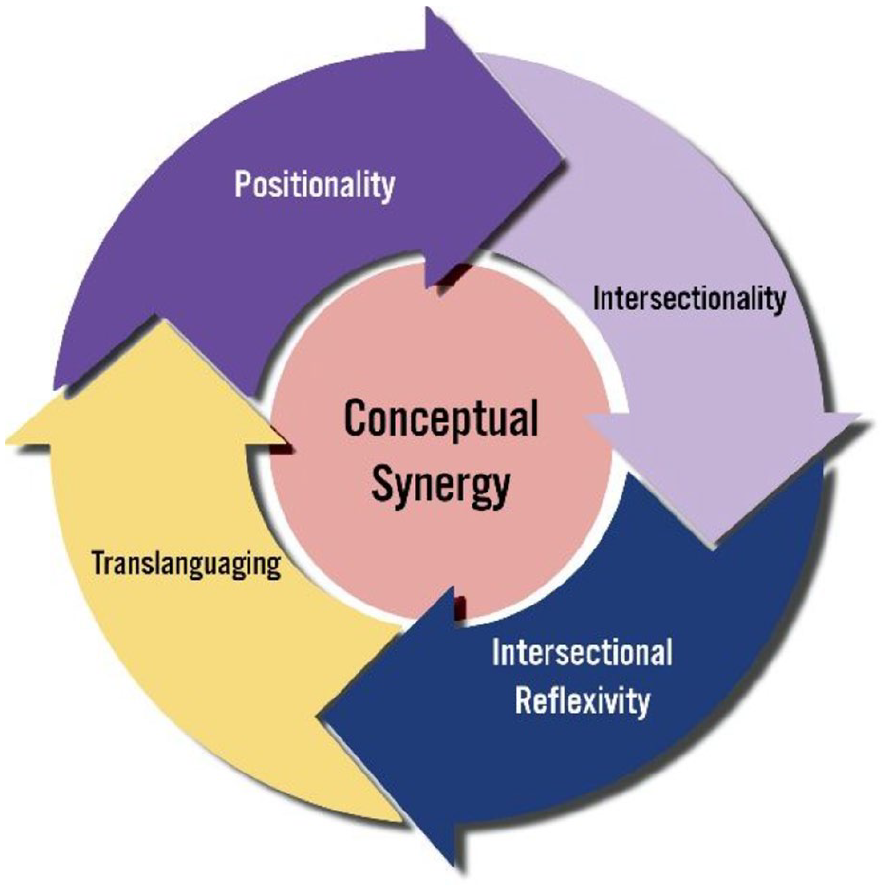
Conceptual synergy of positionality, intersectionality, intersectional reflexivity, and translanguaging.
By weaving these theoretical perspectives into a conceptual synergy—positionality, intersectionality, intersectional reflexivity, and translanguaging 2 —a more holistic lens emerges that emphasizes the multidimensionality of identity and the myriad power relations embedded in sociolinguistic contexts. Together, these approaches converge to illuminate the ways researchers’ situated knowledge, informed by complex axes of identity, intersects with the broader structural forces to guide participants’ experiences (Anthias, 2021; Crenshaw, 1989). In this regard, Rodriguez and Ridgway (2023) argued that by situating intersectional reflexivity at the core of research design and implementation, scholars are better equipped to recognize how positionality informs the co-construction of meaning and to ensure that methodological choices are continuously examined and refined.
Translanguaging, although rooted in applied linguistics, further complements these insights and highlights how language practices reflect and reinforce power hierarchies (Garcia & Li, 2015). A translanguaging perspective underscores the socially constructed nature of language boundaries and reveals the means through which plurilingual speakers can negotiate and assert their intersecting identities. Thus, translanguaging connects directly with intersectional reflexivity, as it prompts researchers to critically explore how their own linguistic repertoires, biases, and assumptions shape the research process (Seltzer & García, 2020). In adult education, where learners’ experiential knowledge often challenges dominant discourses, an integrative approach that merges these frameworks offers practical pathways for cultivating inclusive, transformative spaces. By weaving positionality, intersectionality, intersectional reflexivity, and translanguaging into a unified theoretical scaffold, it becomes possible to address the nuanced interplay of language, identity, and power, thereby advancing socially just practices that honor the full complexity of learners’ and participants’ lived realities.
Reflecting on My Journey
Understanding my positionality as a researcher was necessary to explore the ways my intersecting identities have informed my research approach and defined my experiences. Drawing upon the concept of intersectionality (Crenshaw, 1989), I recognized that my social identities—such as ethnicity, language, neurodiversity, and other facets of individuality—intersect to create unique experiences of marginalization and privilege. In this respect, my interest in reflexivity and alternative research traditions arose from deeply personal experiences shaped by my cultural and linguistic background and my professional life as a researcher and a teacher of English and French.
As an ethnic Azeri man from Iran who migrated to Canada, I recognize that my social identities—such as being a visible minority, language, neurodiversity, and other facets of individuality—intersect to create unique experiences of marginalization and privilege and influenced the reflective practices that became central to my research. These intersecting identities place me in a unique position to understand the challenges faced by individuals who, like me, negotiate their identities across diverse sociocultural contexts. As a non-native English and French teacher navigating various countries and cultures, I often found parallels between my experiences and those of newcomers, who sense dislocation and marginalization due to the incongruence between multiple intersecting identities and the various geographical and sociopolitical contexts I inhabited.
In Iran, my home country, I was compelled to speak Farsi, the country’s official language, despite it not being my mother tongue. I primarily spoke Azerbaijani, a Turkic language distinct from Farsi, spoken by the Azeri people—Iran’s most significant ethnic minority. At a later stage, I became cognizant of the fact that it was a form of linguistic oppression that enforced hegemonic power structures and marginalized my mother language and identity, which in turn fostered resistance and resilience in me for asserting my identity. This journey shaped my early understanding of language as a communication tool and a marker of identity and marginalization. Later, I expanded my linguistic repertoire by learning French, English, German, and Turkish, driven by the necessity to survive and adapt in multilingual contexts. This accumulation of linguistic capital, according to Bourdieu (1991), provided me with certain privileges and symbolic capital, yet my ethnic, neurodivergent, as well as other identities, continued to position me within marginalized groups. Intrigued by French literature, I learned French out of personal interest, and my ambition to study in Germany motivated me to learn German during my undergraduate years. These plurilingual capabilities provided me with unique cultural capital and afforded me certain privileges that contrasted with my status as a marginalized individual in other aspects of my life. Teaching and speaking powerful languages such as English and French allowed me to access forms of power that connected and separated me from others simultaneously. Hence, this privilege was double-edged; it provided opportunities and concurrently perpetuated social inequalities and reinforced language hierarchies. In addition, I observed all the discourse surrounding equity and inclusivity revealed itself to me as tokenistic and optical. My lived ontologies illuminated the critical significance of intersectional reflexivity in discerning and addressing the nuanced needs of minor and adult learners and research participants from marginalized backgrounds.
Understanding Reflexivity
Embracing reflexivity is a hallmark of the broader reflexive turn sweeping through the social sciences (Archer, 2012, 2010; Foley, 2002; Selleck & Barakos, 2023; Venkatesh, 2013) and is often cited as an essential component of interpretivist approaches (Duffy et al., 2021). Despite its rapid ascension within current academic discourse, the practice of reflexivity can be traced back to early philosophical schools of thought in the East (e.g., Confucianism) and the West (e.g., Socratism), where reflection and self-examination were extolled as humanizing virtues (Kim, 2003). Over the years, influences from various intersecting schools of thought and scholarly traditions have resulted in the literature on reflexivity characterized by such terminological richness that there are subtle definitional nuances, making it “complex to define and deploy effectively” (Blasco, 2012, p. 476). Therefore, this textured dynamism necessitates distinctions between traditional reflexivity and emerging approaches, such as intersectional reflexivity, which address overlooked systemic inequities.
Existing theoretical debates often juxtapose reflexivity with reflection by clarifying the ontological and epistemological distinctions between these two related concepts. (Tsang, 2023). In this respect, reflexivity is defined as a cognitive act of a subject “turning inward to examine its thoughts and actions.” (Steier, 1995, p. 63), with a kind of “subject-object-subject gaze” (Blasco, 2012, p. 476). In contrast, reflection is a subject engaging in “in-depth consideration of events or situations outside of” itself. (Bolton, 2010, p.13). Along a temporal continuum, reflection may be defined as consideration after the event, while reflexivity entails sustained self-awareness. Nevertheless, traditional reflexivity often overlooks how intersecting social identities and power structures influence this self-awareness, which echoes the critical value of intersectional reflexivity. (Anthias, 2021; Crenshaw, 1989).
In this respect, intersectional reflexivity extends traditional reflexivity by critically examining how multiple social positions—such as race, ethnicity, neurodiversity, and language—interact to shape the researcher’s perspective and interactions (Anthias, 2021; Rodriguez & Ridgway, 2023). Consequently, this approach emphasizes self-reflection and the proactive acknowledgment of institutional barriers and systemic exclusions that influence the research and its participants (Castro, 2021; Rodriguez & Ridgway, 2023). In particular, researchers confronting systemic inequities often encounter unique challenges navigating power asymmetries during fieldwork, which indicates the significance of applying intersectional reflexivity to address such dynamics effectively (Rodriguez & Ridgway, 2023). Through this process, researchers critique the purportedly objective nature of traditional methodologies, which frequently fail to address the power dynamics inherent in researcher-participant interactions. Intersectional reflexivity, as noted by Castro (2021), demands such critiques to focus on structural inequalities, namely when working with plurilingual participants whose lived experiences might be shaped by linguistic hierarchies and potentially other intersecting oppressions.
This dynamic approach integrates theoretical distinctions into practical applications by exploring prospective reflexivity—how researchers influence their studies—alongside retrospective reflexivity—how studies impact the researchers themselves (Attia & Edge, 2017). Critics argue that reflexivity can sometimes reinforce biases, devolve into narcissism, or romanticize self-awareness (Blasco, 2012; Lynch, 2000). However, intersectional reflexivity mitigates these risks by situating self-awareness within broader social and structural contexts, promoting a power-conscious and socially just research approach (Fernández-Sánchez, 2023). This practice supports methodological rigor, transparency, and inclusivity in research by directly addressing systemic inequities (Jootun et al., 2009; Rodriguez & Ridgway, 2023). Accordingly, researchers ensure that their work reflects the lived realities of participants and addresses structural inequalities by engaging in intersectional reflexivity, which involves navigating the complexities of intersecting power relations and identities (Baz, 2024). This process reframes reflexivity as a multifaceted and dialogical practice that aligns personal insights with broader social justice objectives, providing a transformative lens for applied research (Anthias, 2021).
Methods
I employed an autoethnographic approach to chronicle my practice of intersectional reflexivity throughout the research process. This methodology was particularly suited to exploring the nuances of intersecting and marginalized identities, as it allows for an in-depth examination of how my positionality influences and is influenced by the research (Chang, 2016; C. Ellis et al., 2011). Autoethnography, described by C. Ellis et al. (2011) as a broad perspective, enabled a comprehensive exploration of the multifaceted aspects of becoming a researcher in the field of second language education.
My commitment to a reflexive praxis interacted dynamically with the concurrent development of expertise and knowledge within what Schön (2017) terms an indeterminate zone where learning and practice continuously inform one another. To this end, reflexive journaling served as a methodological tool to provide a space to reflect on power dynamics and positionality in relation to the participants and the research environment (Baz, 2024). To implement this approach, I relied on my research diary, maintained from late 2020 (the planning phase of my project) to mid-2022 (the data analysis phase). The research diary became a crucial tool to facilitate a dialogue between theory, experience, and identity, as per Mann (2016).
The diary entries included (a) regular, unstructured reflections on methodological issues and ethical dilemmas encountered at various stages of the study and (b) sporadic, semi-structured reflections related to positionality, bracketing, intersectionality, and the attitude of collaborative empowerment towards ethnolinguistic minority students. By engaging in intersectional reflexivity within these entries, I could critically analyze the ways in which my multiple identities influenced my research decisions and interactions. In writing my diaries, I engaged my entire communicative repertoire and created translingual texts that combined semiotics and various languages that I use to express myself. This translingual practice reflected my intersectional identity and aligned with the goal of acknowledging and verifying the complex linguistic identities of the participants. For this paper, I translated these texts into English to align with the presentation of autoethnographic entries. Table 1 provides a detailed overview of how reflexivity was integrated into distinct phases of the research process, including the specific activities and reflexive practices employed at each stage. I analyzed both types of diary entries by first reading them holistically and paying close attention to recurring keywords and phrases. I then coded and categorized the entries to identify emergent patterns, which were distilled into thematic categories.
Integration of Reflexivity Across Phases of the Research Process.

Note. Table 1 outlines the sequential phases of the research process—Before, During, and After fieldwork—along with their associated research activities, schedules, and reflective practices. The reflective practices are categorized into unstructured reflections, such as spontaneous journaling, and semi-structured reflections, guided by specific themes, such as positionality, bracketing, and relational ethics.
These themes provided an integrated perspective on (a) the evolution of reflexivity as the research process unfolded and (b) my lived experiences of practicing reflexivity as I underwent personal transformations on multiple fronts. Through this intersectional lens, the analysis elucidated the ways my positionality influenced data interpretation and interaction with participants and emphasized the centrality of reflexivity in addressing power imbalances. Furthermore, drafts written during the research process—such as research plans and reports—were included to triangulate my experience, ensuring that the reflexive insights were not isolated but interwoven with the overall research trajectory.
I first engaged in a holistic reading of all diary entries to identify recurring keywords, concepts, and emotional undertones and to analyze my reflexive journal entries and the corresponding thematic evolution. Next, I performed inductive coding to cluster these patterns into broader themes aligned with positionality, intersectionality, intersectional reflexivity, and translanguaging. Once these central themes emerged, I revisited the original diary entries and systematically selected excerpts that most vividly represented pivotal moments or turning points within each theme. These excerpts were chosen based on their ability to illuminate my personal journey—highlighting the challenges, emotional shifts, and methodological insights gained throughout the research process. In the final step, I organized these excerpts chronologically and contextually to ensure each one illustrated the “what” of the experience and also “why it mattered” and “how it felt” in order to offer a coherent, narrative-driven presentation of my lived experiences.
Results and Discussions
Prior to introducing the major themes, I situated them within the timeline of my lived experiences. In doing so, I constructed a narrative scaffold that moved from my early encounters with positivist research paradigms in Iran through my transitional period in Canada and culminated in the reflexive insights I gained as an emerging education researcher. This structure clarifies how each thematic episode—marked by personal struggles, epiphanies, and methodological pivots—contributes to my evolving identity and methodological stance. The forthcoming sections weave a narrative of growth, emotional depth, and intellectual discovery and demonstrate how each theme constitutes critical junctures in my journey and how it felt to navigate these transcendent moments.
To further contextualize the themes explored in this study, it is essential to recognize that reflexivity is not a static achievement but an evolving process that enabled me to navigate my research as an indeterminate zone where personal development, knowledge production, and ethics intersect and interact, as per Tsang’s (2023) framework. Moreover, the use of autoethnography and reflexive journaling, informed by intersectional reflexivity, allowed for a profound understanding of the complexities of identity construction and the influence of social structures on personal experiences, which is in line with Thornton Dill and Enid Zambrana (2019). This ongoing reflexive practice supported my transformation into a researcher whose identity, understanding, and methodological choices are continuously reconfigured and redefined. While the subsequent themes highlight major shifts in my thinking, each shift is part of a continuous narrative. My early struggles reconciling quantitative and qualitative paradigms set the stage for a deeper appreciation of reflexivity. Each theme shows what prompted the shift, why it mattered, and how it influenced my emotional well-being and research approach—creating a cohesive story of my learning process.
One recurring theme concerned my journey towards a more comprehensive conception of reflexivity in case analyses and my lived experience as a plurilingual individual. This transition marked a shift from initially neglecting the significance of reflexivity to embracing it as a dynamic and essential part of my research process. I began understanding how my intersecting identities influenced my perspectives and interactions within the research. My journey began with attempts to understand reflexivity in case analyses and my lived experiences as a plurilingual individual:
Extract 1
My initial task is identifying and compiling the relevant sources to guide this review. [In this excerpt, I reflect on my struggle with approaching the literature review for my research work. This marks a pivotal moment where I grapple with the complexity of integrating qualitative methods into my research framework.] Surprisingly, I see that most of the literature is mainly about adult experiences, with a significant gap in understanding the children’s world. I am considering how phenomenology might enrich my research, particularly through phenomenological interviews with children and adults, but I am still grappling with how to develop age-appropriate data collection techniques in this context. What steps can I take to ensure the reliability and validity of phenomenological interviews with children, especially young ones who cannot read and write? How can I adapt bracketing to mitigate my biases while engaging with young participants? Are there methodologies for capturing children’s perspectives in a way that honors their unique experiences and voices? (June 11, 2020)
In Extract 1, I recorded my attempt to grapple with a dimension of my project—specifically, selecting appropriate data collection tools to study plurilingual individuals and identities. Applying intersectional reflexivity, I recognized that children’s experiences can also be sculpted by their identities, which necessitates using an inclusive and flexible data collection method, such as the Mosaic Approach (Clark & Moss, 2017), to empower them to assert their identities and capture their lived and potentially untold stories. During this process, I realized this approach could also be beneficial for eliciting insights from plurilingual adults who were not yet proficient in English but wished to communicate their thoughts more clearly, and this corroborated the adaptability of these qualitative data collection tools.
Reflecting on my positivist educational background, where research in applied linguistics in my home country mainly relied upon quantitative approaches that did not align with my intentions to conduct a more exhaustive investigation into the phenomenon under investigation, I came to the realization that autoethnography and bracketing were crucial. As a plurilingual individual from a disadvantaged background, mastering multiple languages was a survival technique in the Middle East for me, whereas, for the children I planned to research, it was their parents’ agency that shaped their experience, providing them with the privilege of being plurilingual in Canadian society.
Extract 2
But I was trained to use quantitative methods, even in applied linguistics, to get clear, measurable outcomes for the sake of reliability and to avoid backlash. And to assume a strict separation between me [researcher] and participant[s]. But when exploring plurilingualism and identity, this separation doesn’t work. Integrating my reflexivity and subjectivity is a big deal to understand their worlds. (June 25, 2020)
This excerpt examines professional training in quantitative research methods, a constitutive element of adult education, as it reflects how scholars, including myself as a researcher from Iran, would address the epistemological dissonance between paradigms rooted in Oriental traditions and the dominance of Western intellectual frameworks. It appears to reflect a hermeneutic process of adaptation and negotiation, where non-Western epistemologies contend with hegemonic structures of knowledge production that privilege Western methodologies and perspectives.
Extract 3
How can I write about my preconceptions and biases without coming off as a biased researcher? This makes me think about how to honestly acknowledge my assumptions and how they shape my data interpretation throughout the research project. (June 26, 2020)
In Excerpt 3, I explore the interpersonal development of adult learners in social science research as a researcher from a country where critical thinking was historically suppressed in favor of positivist paradigms. This excerpt reflects on how learners navigate complex research paradigms, engaging in practices that underscore the transformative role of critical reflection in achieving intellectual autonomy amidst challenging academic environments. In addition, Excerpts 2 and 3 reveal my struggle to reconcile qualitative approaches in applied linguistics with the quantitative methods to which I was accustomed. Coming from a positivist educational background, I was trained to prioritize objectivity, measurability, and detachment in research. This mindset conflicted with the exploratory and subjective nature of qualitative research, particularly when examining complex constructs such as identity negotiation. By engaging in intersectional reflexivity, I recognized that my intersecting identities influenced my research approach, and therefore, acknowledging these influences could enhance the depth and authenticity of the study.
As an educator, I used reflection to improve my pedagogical practices. However, transitioning this reflective practice into my research paradigm required me to confront pervasively internalized beliefs about the role of a researcher. I realized that maintaining a strict separation between the researcher and participants was impractical and counterproductive when exploring research’s personal and social dimensions. This concept deepened when I encountered a work by Jensen-Hart and Williams (2010), noting that reflexive practices could explore social work knowledge and its implications to generate critical reflection. Their emphasis on the researcher’s subjectivity as a valuable asset resonated with me and prompted me to reconsider my stance on researcher involvement.
Therefore, acknowledging these disparities was essential in understanding how my biases could shape data interpretation and participant interaction. For instance, my experiences as a plurilingual individual who learned additional languages out of necessity differed significantly from participants who viewed plurilingualism as an asset or privilege. Recognizing this, I aimed to bracket my assumptions to prevent them from overshadowing the participants’ voices. I also recognized that my positionality was not devoid of preconceptions and prejudices, particularly given the disparities between my research participants and me.
Extract 4
Definitely, Jessica’s course on Interpersonal Communication [that I took at the Peace and Conflict Studies Department] really gets me thinking about how important it is to be self-aware and to notice my own biases and emotions during any interactions. I should get better at interpreting the stories and experiences of others. (June 27, 2020)
Extract 4 marks a pivotal moment when I recognized the importance of self-awareness in my role as a researcher. I became conscious of how my biases and emotions could affect interactions with participants, particularly when addressing sensitive topics such as gender, identity, and language that surfaced in their stories. This realization aligned closely with insights gained through my graduate coursework, which would validate the value of academic programs in fostering reflexive practices and interpersonal skills.
This awareness motivated me to adopt a more reflexive approach and develop a structured framework to guide this effort. Intersectional reflexivity became an essential tool that enabled me to critically evaluate how my intersecting identities shaped my interpretations and interactions. I gained a broader perspective on how these factors might influence my engagement with participants and the way I perceived their narratives. This deliberate self-examination was instrumental in reducing the impact of personal biases on data interpretation and significantly enhanced the authenticity and credibility of my research.
Initially, I placed reflexivity within the broader context of reflective practice, noting its overlap with reflectivity. However, I soon realized that reflexivity involves a deeper, more critical engagement with my positionality and the power dynamics inherent in the research process. To achieve this, I engaged in unstructured and semi-structured reflections on key research topics, such as positionality, integrating them throughout various stages of my project. This systematic approach allowed me to continuously interrogate my assumptions and adjust my methodologies accordingly. Additionally, I formalized the role of self-awareness as a strategy to ensure quality in phenomenological research involving minors and their parents. I also appreciated the importance of creating an empathetic and respectful research environment. This approach aligned with ethical research practices that prioritize the well-being and agency of participants, as advocated in the manuscript’s principal arguments.
Understanding Personal Perspectives and Embracing Self-Discovery
In this work, the significant theme is how practicing reflexivity has enabled me to examine my subjectivities and recognize various aspects of myself as strengths. Intersectional reflexivity became essential in my journey to meet the methodological requirement of bracketing. This hermeneutic research technique involved a reflective process where my opinions and prejudices were suspended to focus on the essence of the phenomena being studied (LeVasseur, 2003). By operationalizing bracketing in my research project, I developed an openness to research questions and a willingness to reflect on my subjectivities. This approach was particularly crucial in my study of identity and plurilingual education development among Iranian-Canadian individuals, who were the central actors in my research. Recognizing the intersecting identities of the participants facilitated the negotiation of empowering research relations and transformed each interaction into a research performance that contested and redefined the dominant societal power dynamics that shaped the experiences of children and adults.
Extract 5
I find that bracketing is way more helpful for me to connect with my research participants because I also had to learn multiple languages. At the same time, bracketing helps me relate to them while distancing myself from my preconceptions. They don’t see knowing multiple languages as a privilege to survive as I did (July 10, 2021)
I implemented bracketing as a systematic procedure by allocating space in my diary notes to facilitate streamlined access and retrieval throughout the project. I perceived bracketing as a methodological concern that could be addressed through unstructured and semi-structured reflections. Therefore, I focused on interrogating my presuppositions on identity and plurilingual education. This helped me manage my biases and fostered a research attitude characterized by openness and curiosity, particularly when following up with the participants’ parents.
Extract 6
[By using bracketing,] I am growing more doubtful about the nature of identity. It’s like I’m finally beginning to understand how complex the issue can be for children who negotiate between school and home and for parents to support plurilingual education. But who are the main actors who have the main roles? Parents who have agency over their children’s education, or children who manage to learn and make a balance across these spaces? What about the policies and rules these children need to be mindful of? The deeper my reflection on my assumptions, the greater my uncertainty becomes.
Reflexivity satisfied the phenomenological requirement of bracketing and prompted a re-evaluation and alignment of my role as a knower within the research process. Through reflective consideration of my experiences, I gained insights into my intersecting affiliations with various marginalized groups in Canadian society. This realization enabled me to acknowledge and affirm my identity and the diverse capital I contribute to the research process while being critically aware of the power dynamics involved.
Facilitating Translanguaging Spaces for Plurilingual Individuals
Translanguaging, broadly conceptualized as a dynamic process wherein multilingual individuals flexibly draw upon their entire linguistic repertoires, challenges the notion of discrete language boundaries (Garcia & Li, 2015). Through this perspective, a “translanguaging space” emerges (Li, 2011), referring to a socially constructed environment in which language users fluidly and intentionally shift among various linguistic codes to express themselves and negotiate meaning. Although translanguaging has its roots in the field of applied linguistics, its theoretical underpinnings resonate with broader disciplines concerned with identity, power, and social interactions (Kleyn & García, 2019). For readers outside of applied linguistics, it is crucial to understand that translanguaging enriches communication and also challenges linguistic hierarchies by enabling speakers to assert their entire linguistic identities. Hence, translanguaging spaces foster inclusivity, empowerment, and equity and offer researchers and educators alike a practical lens for examining how language use intertwines with social structures, identity formation, and power relations (Seltzer & García, 2020).
Throughout the various stages of this empirical research, my commitment to reflexivity advanced the resolution of methodological issues and allowed me to confront and navigate challenges encountered during the lifespan of the study. Systematic journaling functioned as a platform to interrogate, resolve, and/or mitigate these challenges, especially given the technical complexities of becoming an independent researcher (Draissi et al., 2021). At the initial stage of research conceptualization (mid-2020 to early 2021), my efforts were focused on understanding bracketing and mastering a constellation of qualitative methodologies to capture minors’ and their parents’ perspectives.
Extract 7
For some reason, perhaps because of the heavy emphasis on reliability and neutrality in research back in my past academic life, I used to think that the researcher’s personal self should be wholly excluded from research. I feel that any personal input should be kept well away. But the more I reflect, the more I disagree with this notion of muting the self. The self, expressed through the researcher, is vital and deserves recognition. My thirst for knowledge drives me to spend countless hours on online platforms and in libraries, and it fuels my participation in workshops and seminars around the world related to my research topics. My deep understanding of the socio-political context of different Canadian provinces helps me to collect data effectively and gain strategic access. Being a language teacher keeps me connected with my target groups, and occasionally, I find myself in the position of a counselor as I listen to my participants’ stories. My past experiences, listening to stories of hurt and discrimination from minority students and participants alike, shape my empathy and convince me of the need to adopt a transformative approach to research. So, ignoring my own self would mean there would be no project at all! (November 2, 2021)
This excerpt examines counseling practices for adults and signifies how adult education can involve the provision of emotional and interpersonal support, particularly in multicultural and multilingual contexts. Moreover, the praxis of intersectional reflexivity emphasized the essential role of the self in the research process and illuminated the intricate connection between personal experiences, attitudinal factors, and the research endeavor itself. This approach countered warnings from prominent methodologists against the uncritical naturalization of interviews, which are often misconstrued as an inherently authentic and unproblematic way of representing human interactions (Brinkmann, 2022). To navigate this, I used some of the qualitative multimodal data collection techniques that recognize diverse means of capturing lived stories.
During the process of piloting research instruments, another significant methodological concern emerged—conducting research translingually in multilingual settings (Polo-Pérez & Holmes, 2023) using multimodal tools. It became clear that using English exclusively as the medium of communication could pose challenges and even act coercively towards plurilingual parents and children, which would ultimately undermine the quality and ethics of the research.
Excerpt 8
Language indeed impacts data collection, particularly with language minority participants. Imposing only English can be problematic, especially since some of them are familiar with some abstract concepts and value-laden terms to express their thoughts. I need to broaden my approach to their sense-making processes. Moreover, using only English ensures uniformity when I provide them with research materials such as surveys or questionnaires, but it undermines the quality and the ethics of my work. It fails to consider how language shapes their expression of experiences—lived experiences are deeply intertwined with language! It also poses an ethical challenge by limiting their ability to express themselves fully. It confines them to a simplistic mode of language use. Clearly, changes are needed. Additionally, some parents lack fluency in English and resort to Farsi to articulate their thoughts. (July 1, 2021)
Reflecting on these facets, I actively encouraged participants to use their entire linguistic and non-linguistic resources by creating their own translanguaging spaces—a socially constructed environment where individuals use their linguistic repertoires in creative and critical ways (Li, 2011). In this context, excerpt 8 would shed light on the significance of inclusive communication in educational settings, particularly in mixed-ability classes where learners bring diverse communicative competencies and sociocultural backgrounds. It illustrates how adult education would empower individuals to engage effectively across varied contexts and underscores the ethical responsibility to accommodate learners’ linguistic and cultural needs. Therefore, revisiting the neurodiversity and plurilingual aspects of my identity, I hold that I made a transformative decision. As such, translanguaging spaces yielded significant advantages, notably in alleviating cognitive demands by enabling participants to articulate their thoughts in the languages they found most accessible. Simultaneously, these spaces cultivated avenues to enhance their expressive capabilities as they were able to articulate their experiences using multimodal resources such as languages, illustrations, signs, symbols, and gestures. In addition, several participants were able to share their lived stories associated with sensitive topics, such as discrimination and harassment, in modes of expression they felt most at ease.
Excerpt 9
Just completed some interviews this week. I felt a huge relief as there was no necessity to do interviews solely in English! I’m glad that I allowed participants to use translanguaging, especially as some young children or some adults with limited English discussed sensitive topics like discrimination and harassment through this method. Reflecting on my past, I also recall struggling to express deep feelings in Farsi, a language that was not native to me. Ignoring my own experiences would have meant no project at all! Considering how affirming the minority people’s wealth of knowledge can transform the interview process and my own understanding. Allowing them to portray and share their world of languages with me […] I genuinely look forward to more such interactions! It’s truly transformative! (August 18, 2021)
This experience reinforced the importance of intersectional reflexivity in addressing the multi-layered power imbalances stemming from the symbolic power and hegemonic status of some individuals’ first or dominant languages, which can be privileged over study participants’ ontologies, especially in contexts where the language of communication—such as English in research interviews—affords certain speakers greater ease in expressing their thoughts. By incorporating translanguaging into my research, I attempted to prioritize social justice and equity in data collection, which was essential for authentically capturing participants’ lived experiences.
Reflecting on my past struggles to express deep emotions in Farsi—a language that was not native to me—I recognized how language barriers can stifle self-expression, hinder authentic dialogue, and perpetuate systemic exclusion. This personal insight heightened my sensitivity to the participants’ needs and echoed that imposing English-only interviews could marginalize their voices and re-entrench existing power structures. Moreover, allowing participants to engage their translanguaging instincts to articulate their perspectives and experiences enabled them to operate these intersections comfortably, stimulate their engagement, and generate authentic, multifaceted qualitative data.
Excerpt 10
Today’s experience has shown me the importance of being clear in how I define terms and use language, especially in areas prone to misunderstandings. While these concepts might be clear to me, thanks to my familiarity with the topic, they might not be as obvious to those who don’t know the context as well. I don’t want this to become an echo chamber; I see it as a place for sharing and discussing different ideas, and I’m ready to stand up for my views. (November 14 2022)
Excerpt 10 was extracted from a reflective entry in my diary, and it demonstrates the importance of clear communication and awareness of how my positionality and knowledge influence interactions with others. Recognizing that identities affect understanding and interpretation, I realized that concepts and terms familiar to me might not be accessible or meaningful to those who do not share the same background or expertise.
My lived experiences, coupled with the research I was conducting, solidified my conviction regarding the validation of plurilingual learners’ identities in socio-educational spaces. However, I noticed that my advocacy for these perspectives sometimes clashed with the prevailing views of my colleagues in academia. This stressed the urgency to consider how diverging positionalities and intersecting identities can lead to misunderstandings or resistance to new ideas. I recognized that my colleagues’ interpretations were also shaped by their backgrounds and experiences, which may not align with mine. Although this stance contrasted with some views voiced by my colleagues in academia, I perceived that my arguments introduced perspectives that were not fully aligned with their current frameworks. Nonetheless, the reflections and reflexivity I engaged in empowered me to remain steadfast in my perspectives.
Excerpt 11
Being someone often labeled as a non-native speaker and language instructor whose English has received harsh criticism and lower wages in the past because of a non-native accent, I feel quite uneasy about writing and sharing my works, especially with, who seems to favor native speakers and their ability to engage an audience with their native pronunciations. Awareness of these insecurities through my participation in various groups helps me confront and hopefully overcome them. But I need to remind myself, my plurilingual students, and even my research participants that we are head and shoulders above because our ability to engage in translanguaging offers us unique insights and communication skills that are extremely useful in a connected world. (December 1, 2022)
This excerpt illustrates how intersectional reflexivity helped me recognize the impact of linguistic discrimination intersecting with other aspects of identity and how embracing these intersecting identities can empower myself and others. Confronting linguistic prejudice and financial inequities due to my non-native accent mirrored systemic biases in academic and pedagogical contexts and the commercialized framework of language education. Moreover, I realized that my insecurities were reflections of broader sociolinguistic power dynamics. This awareness allowed me to reframe my perspective, seeing my plurilingualism and translanguaging abilities as valuable assets rather than liabilities. Furthermore, the affirmation of translanguaging’s strengths empowers me, my students, and my research participants. It reinforces the idea that our linguistic diversity offers unique insights and communication skills essential in a connected world, as per Garcia and Li (2015)
Excerpt 12
Today, I acknowledged for the first time my own intersectionality while counseling, and she felt uncomfortable speaking Farsi with a regional accent. She expressed discomfort over speaking Farsi with a distinct accent because it is not her mother tongue. She shared her experiences of being bullied and discriminated against in social and professional settings in [Iran]. Even an employer had asked her to drop her accent. This justifies her intense focus on her son’s language education and her preference for native-speaker teachers. I have had similar experiences in Iran and here. Even pointed out my recognizable accent at the beginning of the interview. But I am no longer concerned about it. it doesn’t bother me, but for sure, there is considerable potential for awareness-raising.” (December 10, 2022)
Intersectional reflexivity allowed me to connect my experiences with those of the participant, understanding how intersecting identities influence experiences of discrimination and shape attitudes toward language education. Recognizing our shared struggles with linguistic discrimination mirrored the pervasive impact of societal norms privileging certain language forms. This reflection also echoes the link between the broader dimensions of emotional resilience and identity negotiation and the counseling practices for adults. Such learning initiatives can play an imperative role in creating spaces where individuals can make sense of their experiences of marginalization and begin to envision pathways toward personal empowerment.
The reflections documented in these extracts manifested the indispensable role of intersectional reflexivity and its connection to positionality and symbolic power in my research and educational development. Moreover, these reflexive entries propelled the development of advanced self-awareness in methodological and socio-emotional dimensions. This advanced self-awareness involved a dynamic process of appraisal, evaluation, and translanguaging practices, wherein the self acted as an internal consultant to address the power imbalances and hegemonic structures encountered throughout the research process. Through this role, I sought strategies to mitigate linguistic and social exclusion, such as acknowledging participants’ linguistic agency and translanguaging instincts to harness the generation of genuine and unfiltered narratives. This reflexive engagement optimized the research results, aided my integration into the academic community, and fostered a critical understanding of the role of intersectional identities, linguistic justice, and social equity in academic inquiry. Viewed holistically, these thematic reflections trace my shift from adhering to quantitative methods toward becoming a reflexive researcher who would regard positionality, intersectional reflexivity, and translanguaging as integral tools of inquiry. This storyline illuminates the emotional contours of my learning—from initial uncertainty to the relief of embracing alternative paradigms—and portrays how responsibility to marginalized voices molded my evolving identity and methodologies.
Conclusion
This article has illuminated my journey of engaging in reflexivity as a researcher in applied linguistics beginning in 2018, employing an autoethnographic approach based on insights outlined by Tsang (2023). I have offered a meta-reflection where the findings indicate that reflexivity—conceptualized as a continuous self-aware process—encompasses internal, external, and temporal dimensions. Autoethnography, as demonstrated in this study, served as a transformative practice for researchers as it allowed for an immersive exploration of personal experiences and broader cultural phenomena and made it a powerful tool for investigating interdisciplinary concepts such as identity, which can be analyzed through educational and applied linguistics perspectives. Future researchers can draw from the flexibility and richness of autoethnography to enhance their understanding of the self and its role in shaping research outcomes.
Implications for Adult Education Research and Reflexive Autoethnography
This study draws attention to the importance of conducting intersectional reflexivity in autoethnography, particularly in the spheres of applied linguistics and adult education. Using intersectional reflexivity in research, it is conceivable to critically evaluate our positionalities and the biases that may influence our interpretations and interactions with participants by incorporating reflexivity into our research practices. This is particularly relevant in contexts that implicate marginalized communities, as power dynamics and societal pressures can have a substantial impact on researchers and participants.
For adult education researchers, reflexivity encompasses discerning the interplay between our personal histories and professional practices in informing our research practice and interactions with participants. This awareness can result in fostering and using more ethical and empathetic methodologies, which can create spaces in which participants experience a sense of recognition and acknowledgment for their contributions. Accordingly, this can contribute to the development of more inclusive educational practices and transform our strategies in response to the changing societal power structures through integrating ongoing reflexivity. Moreover, the autoethnographic reflections demonstrate the fundamental interconnections between identity negotiation, language acquisition, and cultural capital. To this end, when these dynamics are affirmed and acknowledged, educators can broaden their understanding of learners, particularly those whose identities are located at intersections and who encounter obstacles during their educational journeys as a consequence of disempowerment. In practical terms, the reflexive approach of this study encourages the creation of inclusive, translingual spaces in educational and research environments. These spaces allow researchers and participants to assert their identities by utilizing their vast communicative competence to reduce the coercive effects of heteroglossic ideologies.
Concomitantly, educators can also encourage the creation of inclusive spaces for adult learners to reflect and share their diverse linguistic, cultural, and social experiences by considering their dynamics. Rather than treating these backgrounds as peripheral, educators can explicitly design curricular activities, discussions, and assessment strategies that validate and leverage learners’ multilingual repertoires, diverse cultural knowledge, and varied life trajectories.
Furthermore, at a practical level, reflexivity can also involve consistent self-assessment tools, collaborative lesson planning with students, or reflective journaling where instructors and learners alike critically question prevailing educational structures and ideologies. Thus, forming affirmative learning spaces where learners’ voices and experiences inform both the teaching process and the content is of paramount importance. Ultimately, reflexive approaches in education would strengthen ethics and empathy in pedagogy, create inclusive dialogue, enhance engagement, and build pathways that affirm and validate diverse identities and lived ontologies of learners across distinct age groups.
Footnotes
Acknowledgements
I would like to express my sincere gratitude to all those who supported and guided me throughout this research journey. Special thanks to my advisors, colleagues, and the participants who generously shared their experiences.
Declaration of Conflicting Interests
The author(s) declared no potential conflicts of interest with respect to the research, authorship, and/or publication of this article.
Funding
The author(s) disclosed receipt of the following financial support for the research, authorship, and/or publication of this article: This research was supported by Mitacs Accelerate Entrepreneur and the University of Manitoba Graduate Fellowship (UMGF).
Ethical Approval and Informed Consent
This study was approved by the Research Ethics Board of the University of Manitoba (Approval Number: HE2021-0075). Informed consent and assent were obtained from all individual participants included in the study.

Data Availability
The data that support the findings of this study are available from the corresponding author upon reasonable request.
Additional Information
No additional affiliations or changes in institutional affiliation to report.