




Abstract
Fear of COVID-19 has been understandably widespread, given continual exposure to dire information from pandemic media coverage and interpersonal communications. The present study addresses a limitation of the extended parallel process model in predicting fear of COVID-19 by inclusion of the concept of emotional contagion. The main gap in the literature is filled by the study’s distinctive contribution that broadens and upgrades the extended parallel process model. The model is extended by its integration with the theory of emotional processing. The study is based on a national panel of adults (N = 206). The methods include path modeling by SmartPLS. In addition, multigroup analyses examine overall model differences between gender classifications. Findings and conclusions can be used to minimize excessive fear, and at the same time to promote confidence in following official public guidance and protective regulations to cope with the pandemic.
Introduction
Recent years have witnessed waves of research, fueled by the COVID-19 pandemic, geared to understanding disease fear. Selective influences that generate fear have included uncertainty stress, coping strategies, and precipitous reactive rearrangements of lifestyles. Factors that further exacerbate fear include misinformation, and emotional regulation of the populace.
Given the spate of research in this domain, several key questions remain unanswered, and motivate the present study: What part does emotional contagion (EC) play in COVID-19 fear generation? How do threat appraisal variables impact COVID-19 fear when moderated by EC? Which threat appraisal components are most important for directly predicting fear of COVID-19?
The concept of fear, in itself, makes no reference to its specific context. Fear invariably involves associations to signs and patterns representing a focal danger and its potential impact. Various types of fear emerge as a result of a pandemic. These include fear of the unknown, and social isolation (Coelho et al. 2020). Dealing with fear in a pandemic results in protracted coping, as opposed to reflexive short-term defensive actions with respect to fear. Sustained fear stems from the inability to tolerate uncertainty, especially under conditions of isolation and movement restrictions. This is frequently associated with remote working arrangements, and self-imposed quarantines.
Anatomy of Fear of COVID-19
The subject of an investigation by Yasin (2020) concerned the existence, intensity, and dynamics of COVID-19 fear in a general population. Principal themes that emerged included general fear of the disease itself. Additional themes reflected the fact that there was no cure at the time, and awareness that the disease might be spread to loved ones, whose lives might be lost. Further, there was the fear of isolation or quarantine—being away from family or having to live alone.
Males and females have offered contrasting fear themes (McLean and Anderson 2009). Females were mostly fearful about losing loved ones or had a general fear of dying. Males have been more concerned with the impact of unfavorable economic conditions, job loss, and failure to provide for their families. Women reported higher fear levels than did men. Women offered substantially more thematic and detailed responses when queried about the nature of their fears. The worldwide mean fear of COVID-19 was higher among women than among men. This is consistent with the explanation offered by Bakioğlu, Korkmaz, and Ercan (2021) about greater acceptability for women to express their fears of illness. This review and meta-analysis did not include information about the impact of COVID-19 vaccination on fear levels associated with the disease.
Fear of COVID-19 is regarded as a highly significant concern. It interferes with logical protective decision making. This includes refusal of medical care and misinterpretation of felt symptoms (Ahorsu et al. 2022; Coelho et al. 2020; Wong et al. 2020). A panel study during the Chinese COVID-19 epidemic was conducted to analyze factors affecting disease fear. Disease fear referred to peoples’ “worry levels” for the COVID 19 infection. The study was conducted by obtaining measurements from five waves of data extending over a month. Disease fear exhibited a significant downward trend. Preventive behaviors at the same time registered a significant upward trend. Uncertainty stress was positively predictive of disease fear. Self-efficacy and prevention behaviors were negatively associated with uncertainty stress (Peng et al. 2021). Uncertainty stress is a powerful stressor, possibly leading to cognitive confusion (Brown 2020; Greco and Roger 2003; Yang 2018; Zandifar and Badrfam 2020).
Misinformation about COVID-19 disseminated to the public has been found to lead to excess fear and possibly deleterious consequences. Research conducted by Lăzăroiu, Horak, and Valaskova (2020) investigated the impact of fake news and consequential anxiety. In principle, this may have diluted decision-making quality with respect to COVID-19. Social media and exaggerated reporting heightened fear levels and aroused negative emotions. A pessimistic accounting was excessively focused on the incidence of COVID-19 infections and related fatalities. A lack of trust in most news sources was revealed. Worsened mental conditions were attributed to exposure to these information sources. The public was aware of false claims about the efficacy of available treatments for the disease. In sum, fake news generated anxiety and panic, amplifying psychological disorders and social discomfort.
Risk communication involves the exchange of information, advice, and opinions directed toward individuals who face a threat. The objective is to enhance situational awareness and threat specifically leading to informed decisions. The role of media with respect to risk communication has been extensively reviewed (Winograd et al. 2021). The review targeted communication of interventions to mitigate risk from viruses. The review incorporated 31 articles specifically focused on coronavirus research. The review concluded that risk communications efficacy maximized the reduction of risk anxiety from viruses. Positive results followed from improvements in (1) cognitive risk perception, (2) cognitions about behaviors, (3) behavioral intentions, and (4) behaviors.
A study predicted fears of COVID-19 based on the frequency of media and interpersonal communications involving the topic (Li 2022). The study analyzed the fear control process by emotional regulation. Emotion regulatory strategies included (1) counter-argumentation, (2) avoidance, (3) reappraisal, and (4) suppression. Counterarguing consisted of evaluation of outside communications as exaggerations of negative reports about coronavirus. Avoidance was enacted by ignoring negative outside communications. Reappraisal involved adopting fatalistic attitudes about coronavirus, and suppression entailed a lowering of the salience of coronavirus in one’s mind. All elements of emotional regulation may be operative in the process (Dillard and Yang 2019; Gross 2002; McQueen, Vernon, and Swank 2013). Counter-argumentation and fear were mutually attenuating. In addition, counter-argumentation was supportive of by avoidance motivation. In sum, counter-argumentation is most prominent among emotional regulation strategies for fear reduction.
A study conducted in Japan investigated fears and worries related to COVID-19. This was a study among full-time workers aged 20 to 59 years. The measure of global fear and worry over COVID-19 involved concerns over self and family members becoming infected, as well as coping capabilities, and lifestyle changes (Hidaka et al. 2021). This study found a progressive temporal increase of global fear and worry about COVID-19. Major components of the increase in fear were the possibility of individual or family infection or lifestyle restrictions. Understandability of the disease and lack of knowledge and insecurity about the availability of protective products decreased fear levels.
Rationales for fear levels concerned the increasing number of cases of COVID-19 infections in Japan. Insufficient knowledge and decreased availability of hygiene products may exaggerate fear. Levels of fear over time may reflect severity or laxity of governmental decisions and sanctions aimed at fighting the pandemic (Lippold et al. 2020). COVID-19 death rates have varied over time. This phenomenon may have affected the impact of constant reminders of death and immersion in mortality salience. For a discussion of this subject, see Menzies, Neimeyer, and Menzies (2020).
Semiotics of the fear of COVID-19 were studied metaphorically from a database of images extracted from news articles or blobs (Riaz 2020). The study revealed that fear is stimulated by perceived vulnerability to COVID-19. Factors affecting fear generation include psychological response to protective restrictions, insufficient or misleading information about COVID-19 immunization, and shortages of essential products, including food supplies.
Threat Appraisal
Threat appraisal is based on subjective estimates of the severity posed by a health threat and the felt vulnerability to that same threat (Floyd, Prentice-Dunn, and Rogers 2000). These attitudes and beliefs as well as expectations of future events are major determinants of self-protective behaviors (Munro et al. 2007). Extended parallel process theory includes sources of information, cognitive mediating processes, and coping modes. One source of information is persuasive messages disseminated through the media.
Cognitive processes of extended parallel process involve threat appraisal and coping appraisal, which lead to extended parallel process. Threat appraisal is based on subjective estimates of the severity posed by a health threat and the felt vulnerability to that same threat (Floyd et al. 2000). The assumptions, attitudes, beliefs, and expectations of future events are major determinants of self-protective behaviors (Munro et al. 2007).
EC
Unlike cognitive processes, emotions are generally either positive or negative. Basic categories of emotions are love and joy (positive) or anger, sadness, and fear (negative). Fear itself comprised subordinate categories such as horror or worry (Fischer, Shaver, and Carnochan 1990). The emotion of fear is associated not only with subjective feelings but also with a characteristic unsettling physiological state. Cognitive triggers of fear involve perceptions and appraisals of personal or group dangers. Fear emotions may be transmitted interpersonally by a process conceptualized as EC. Such contagion results from a complex of stimuli that precipitate mimicry and impressions of others’ emotional expressions. EC is an automatic process that directs attention and behaviors in an adaptive mode.
Discussion of the research literature implications
The preceding literature review details the nature of fear as it relates to COVID-19. It also incorporates the appraisal of the threat posed by the disease. Finally, it concerns the notion of EC as it relates to both fear and threat appraisal in this context. The present research synthesizes aspects of these concepts, as well as implications that are inferred.
The extended parallel process model
The extended parallel process model (EPPM) has been used to predict preventive actions of the public in the health context. The theory asserts that threat appraisal is a response to fear appeal messages. In turn, fear is viewed as an outcome of threat appraisal. Ultimately, this results in the activation of a fear control process, that is, defensive motivation. The EPPM is limited, in that it does not include communicative interactions with individuals or groups that trigger negative emotions. Nor does it include the drive exerted by EC which issues from such interactions. EC in the context of this study is directly generative of fear levels. Further, EC is a likely mediator of indirect effects of perceived threat, as indicated by expectations of susceptibility and severity to COVID-19.
Research Hypotheses
Evidence and inference of fear level states are given in several articles (Foa and Kozak 1986; Rachman 2002; Rachman and Whittal 1989a, 1989b). Exposure to a continuing fear-inducing situation leads to development of fear-laden memory structures that underlie emotions. However, additional information may be integrated over time for processing this information. It leads to a patterned cognitive representation relevant to a fear memory structure, correctives to which may be experienced along the way, leading to changes in its elements. Changed fear structures become salient and, if persuasive, lead to variations in emotional responses to fear stimuli. Support for determinants of fear level processes has been investigated (Rachman and Cuk 1992; Rachman and Lopatka 1988).
The emotional state of fear is theorized to raise attention, thus increasing the likelihood of coping appraisal (Tanner, Hunt, and Eppright 1991). Subjective probabilities of severity and vulnerability with respect to COVID-19 may generate fear arousal under the EPPM theory (Rippetoe and Rogers 1987). In short, threat appraisal is linked to fear arousal.
Threat appraisal
The threat appraisal process elicits a sense of danger. Fear arousal has been measured by mood arousal adjectives, such as frightened, tense, nervous, anxious, uncomfortable, and nauseous. Fear has served as a mediator in EPPM theory. It has been positively positioned as a function of threat (Rippetoe and Rogers 1987). In turn, fear generates avoidance thinking and indirectly behavioral intentions. Fear of contracting COVID-19 involves disgust, insensitivity, and other aspects of the broader immune system. Fear stems in part from physical concerns, moderated by emotional reactions (McKay et al. 2020; Teasdale et al. 2012). In another study of behavioral intentions of hospitality industry customers with respect to COVID-19, it was found that the feeling of fear is positively influenced by perceived vulnerability to the virus. Furthermore, findings ascertained that feelings of fear are positively influenced by perceived severity (Kim et al. 2021). Fear was found to be a mediator of perceptions of virus vulnerability and severity, as well as behavioral intentions. The latter consisted of hygienic behavior, support of local establishments and engagement in conscious consumption.
The aforementioned is synthesized into a model that epitomizes relationships relating to threat appraisal and EC (see Figure 1).
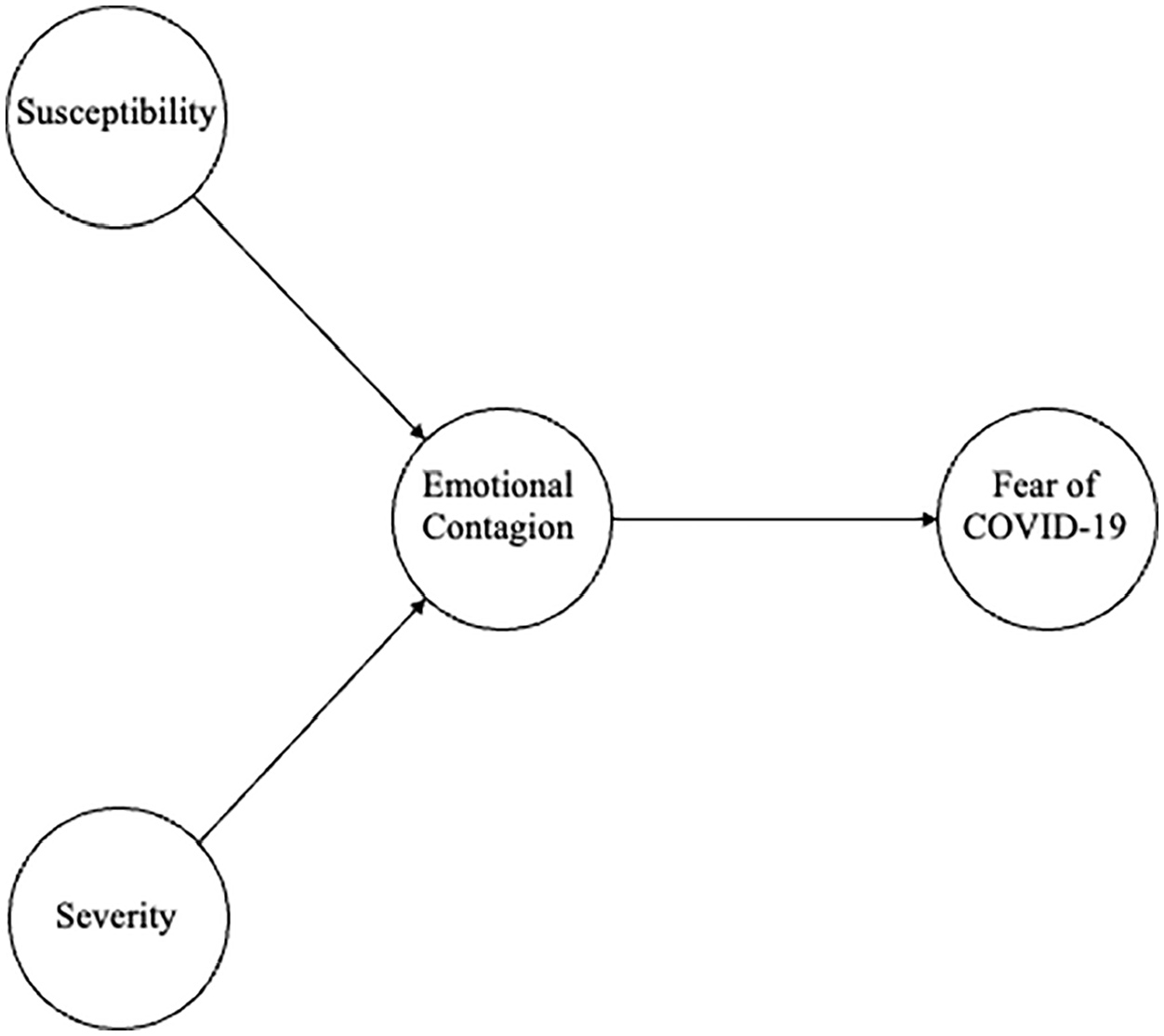
Conceptual framework of fear of COVID-19.
Emotional processing
The theory of emotional processing provides insights about fear arousal. Emotional processing involves the underlying forces that result in a return to undisturbed behavior (Edelstein and Gillath 2008; Foa and Kozak 1986). In principle, perpetuation of disturbing emotional experiences generally will be absorbed over time when sources of disturbance are removed. After a weakening of the impact of an emotional disturbance, the completion of emotional processing is signaled by (1) returning to engagement in routine behavior, (2) decline in disturbance factors, and (3) restoration of normality (Edelstein and Gillath 2008; Lipp et al. 2020; Rachman 1980, 1994; Rachman and Lopatka 1986; Rachman and Whittal 1989b).
Initiation of difficulties in emotional processing involves stimulus factors that are sudden, intense, or dangerous. These stimuli may be uncontrollable, irregular, and complex, minor or dangerous resulting in difficulties for emotional processing. These assessments are key to perceptions and evaluations of threat appraisal and response efficacy, both of which are determinants of fear levels.
EC is conceptualized as the transfer of emotions and behaviors between persons. The process involves copying or harmonizing with the behavior of others (Doherty et al. 1995). It is labeled contagious because individuals use emotions of others to adapt to their environment (Hatfield, Cacioppo, and Rapson 1993). The present study concerns continual collective exposure to event histories associated with the COVID pandemic that trigger physiological fear responses. Cognitive salience of these responses leads to the genesis of recognition of emotions. In turn, these emotions radiate between individuals within their networks of associations. This theoretical perspective on emotions derives from Schachter and Singer (1962).
The velocity of conscious or subconscious EC is greater when negative emotions are in play. Individuals vary in their susceptibilities to emulate others’ emotions. The between transfer of emotions may be based on empathy or mimicry (Banerjee and Srivastava 2019).
EC also was found to exacerbate concerns about personal exposure to COVID-19. This involved induced perceptions of threats posed by the disease. The upshot was heightened concerns about the individual or family members’ susceptibility to the disease and the severity of its consequences (Wheaton, Prikhidko, and Messner 2021).
Generally speaking, EC is a nonintentional process. In principle, the psychological climate of the pandemic profoundly affected levels of EC negatively between individuals. Consequently, EC is a key concept for prediction and explanation of COVID-19 threat and fear levels.
Moderating effects of gender
Moderating effects of gender on susceptibility have been studied. Evidence to date suggests a greater susceptibility of EC and its impact on behaviors by women as compared with men (Doherty 1997). These results are based on experimental controlled research. Gender differences in EC are explored in the context of a natural field study in this research.
Method
Participants and Procedure
To test our proposed hypotheses, we conducted an online survey using an online panel recruited via Mechanical Turk (MTurk) in exchange for a small monetary reward. The survey was conducted during the month of February 2021. During this time, participants were invited to complete the survey at their convenience. The use of an online panel provided a convenient and efficient means to reach a diverse pool of potential participants.
To ensure data quality and adhere to ethical considerations, we implemented specific participant selection criteria. Only MTurk workers with high reputations (above 95 percent approval ratings), and a significant number of Human Intelligence Tasks (HITs) approved (greater than 500) were included in the study (Peer, Vosgerau, and Acquisti 2014). The primary objective of this stringent selection process was to uphold the integrity and ensure the reliability of the collected data.
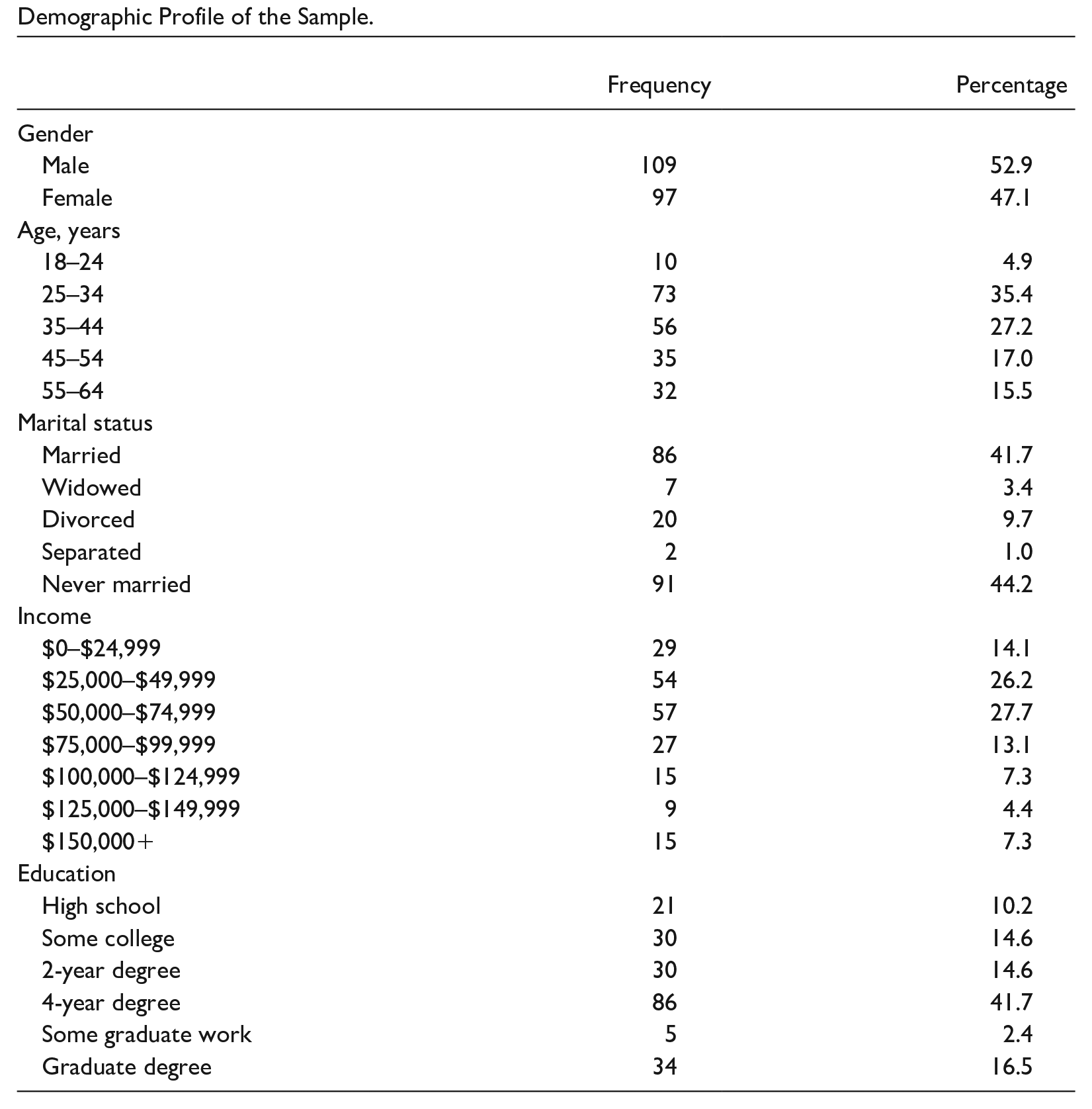
The sample consisted of 206 participants (47.1 percent females; Mage = 40, SD = 11.28). Approximately 60.6 percent of the sample had at least a bachelor’s degree, while another 14.6 percent of the respondents had some college education. About 68 percent of respondents had household incomes of less than $75,000. Appendix shows the demographic profile of the participants.
Prior to the survey, participants were provided with a standard informed consent procedure. They were informed about the nature of the study, its purpose, and the types of data collected. Participants were assured that their participation was strictly voluntary, and they had the right to withdraw from the study at any time without any penalty. Confidentiality and anonymity of the participants’ responses to the questionnaire were ensured, in that all collected data were treated anonymously and stored securely. To protect the identity of individual participants, only aggregated findings were reported.
Measures
All the measurement instruments were prepared in reference to existing literature. Perceived susceptibility was measured by asking participants to indicate on 5-point Likert-type scales, ranging from 1 (extremely low) to 5 (extremely high): “Compared to most people my age, I understand that my risk of getting COVID-19 is” and “The likelihood of my getting COVID-19 is” (Rimal and Real 2003). To assess perceived severity, participants were then asked to answer two questions on a 5-point Likert-type scale, ranging from 1 (strongly disagree) to 5 (strongly agree): “COVID-19 is a serious disease” and “COVID-19 is more deadly than most people realize” (Rimal and Real 2003).
Fear of COVID-19 was measured by asking respondents to indicate how the thoughts of developing COVID-19 make them feel based on four items, 1- (not at all frightened, not at all anxious, not at all worried, and not at all scared) to 5- (very frightened, very anxious, very worried, and very scared) point scales (α = .97) (Miline, Orbell, and Sheeran 2002).
Finally, EC was measured using the subset of items from Doherty’s (1997) EC scale. Participants were asked to answer three questions (α = .83) on a 5-point Likert-type scale, ranging from 1 (strongly disagree) to 5 (strongly agree):
Watching the fearful faces of victims on the news makes me try to imagine how they might be feeling.
I notice myself getting tense when I am around people who are stressed out.
Listening to the shrill scream of a terrified child in a dentist’s waiting room makes me feel nervous.
Analysis and Results
Partial Least Squares Path Modeling
Partial least squares (PLS) path modeling was used to predict levels of fear of COVID-19. A single PLS model was developed. After testing hypotheses, further evaluation involved a multigroup analysis (MGA). The objective was to verify the moderating potential of gender in the relationships included in this study. According to Henseler, Ringle, and Sarstedt (2016), before proceeding to perform the MGA, it is necessary to study the MICOM. The objective of this MICOM study is to confirm that the differences between the two gender groups are, in fact, due to differences between the latent variables and not to other issues.
We proceeded to assess whether there are significant differences between the group of male vs female using two nonparametric methods: the permutations test and Henseler’s MGA (Henseler et al. 2016).
Results
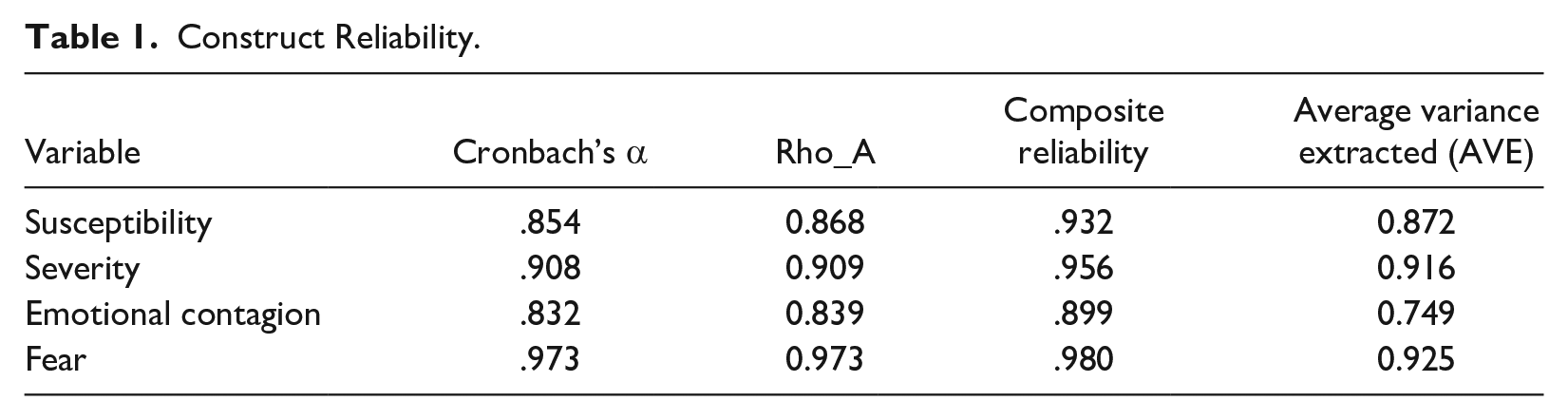
Reliability of study constructs in the model proved to be acceptable. Cronbach’s measures of internal reliability ranged from .832 to .973. Analyses of average variance extracted (AVE) further confirmed construct reliabilities. This is because all AVE values exceeded a threshold of 0.5, confirming convergence validity. Rho_A values also exceeded a prescribed standard of 0.7, demonstrating acceptable reliability (see Table 1).
Construct Reliability.
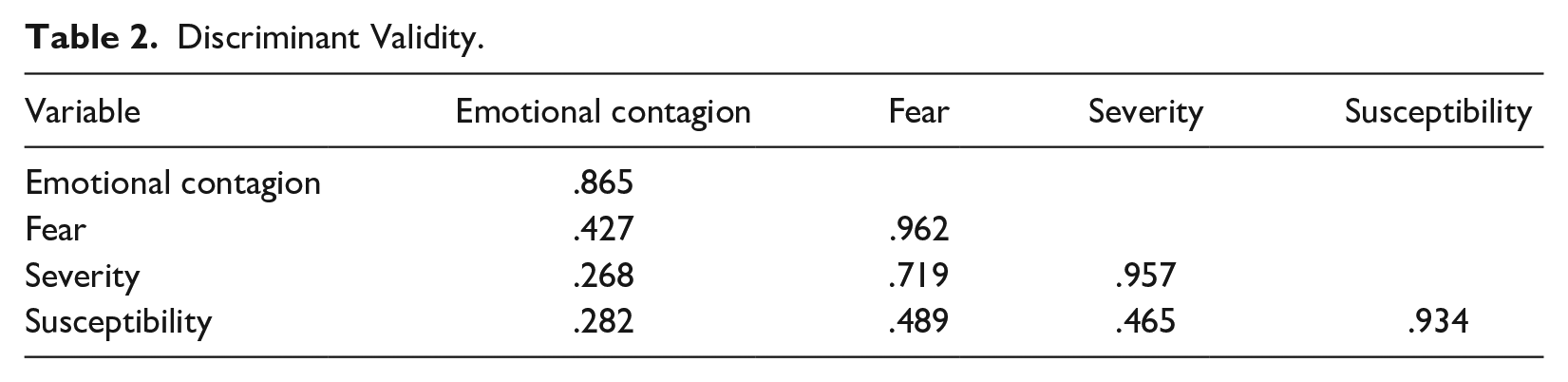
Discriminant validity was established by using the Fornell-Larcker criterion. For each individual construct, the square root values of AVE consistently exceeded values of correlations with remaining constructs. In this study, discriminant validity was verified. For example, the fear concept value is .962, while the correlation between fear and EC is only .427 (see Table 2).
Discriminant Validity.
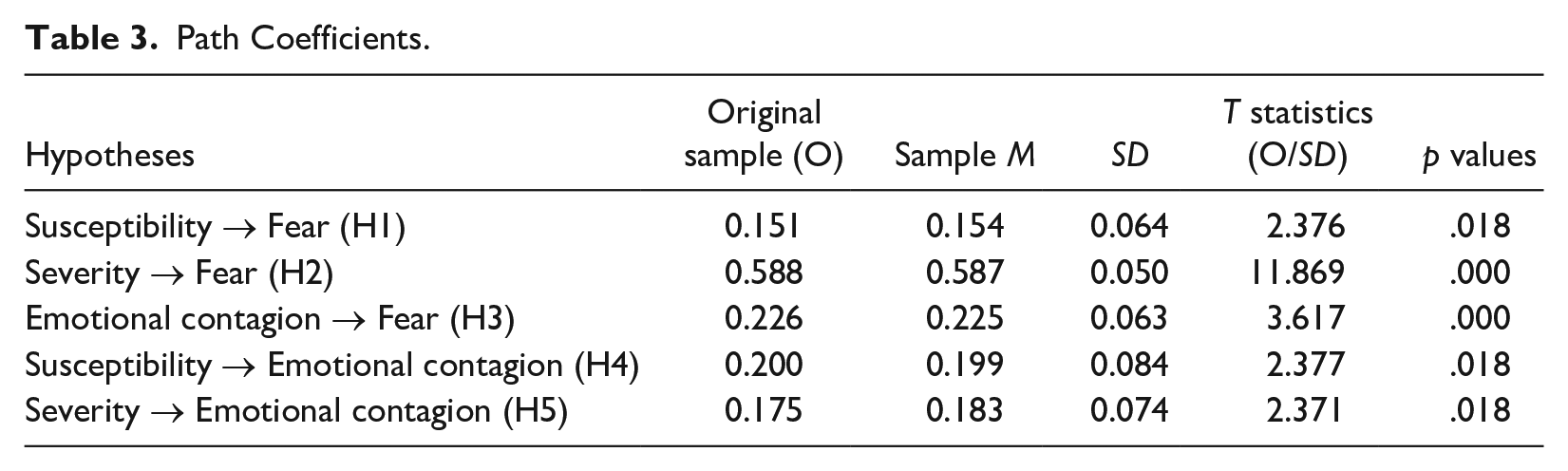
Path coefficients of the model are displayed in Table 3. The path of greatest magnitude is from severity to fear (0.588). All other model paths ranged from 0.151 to 0.226. Regardless of magnitude, all paths in the model exhibit significant p values (see Figure 2). Thus, all hypotheses for model paths in the total sample (H1–H5) are confirmed.
Path Coefficients.
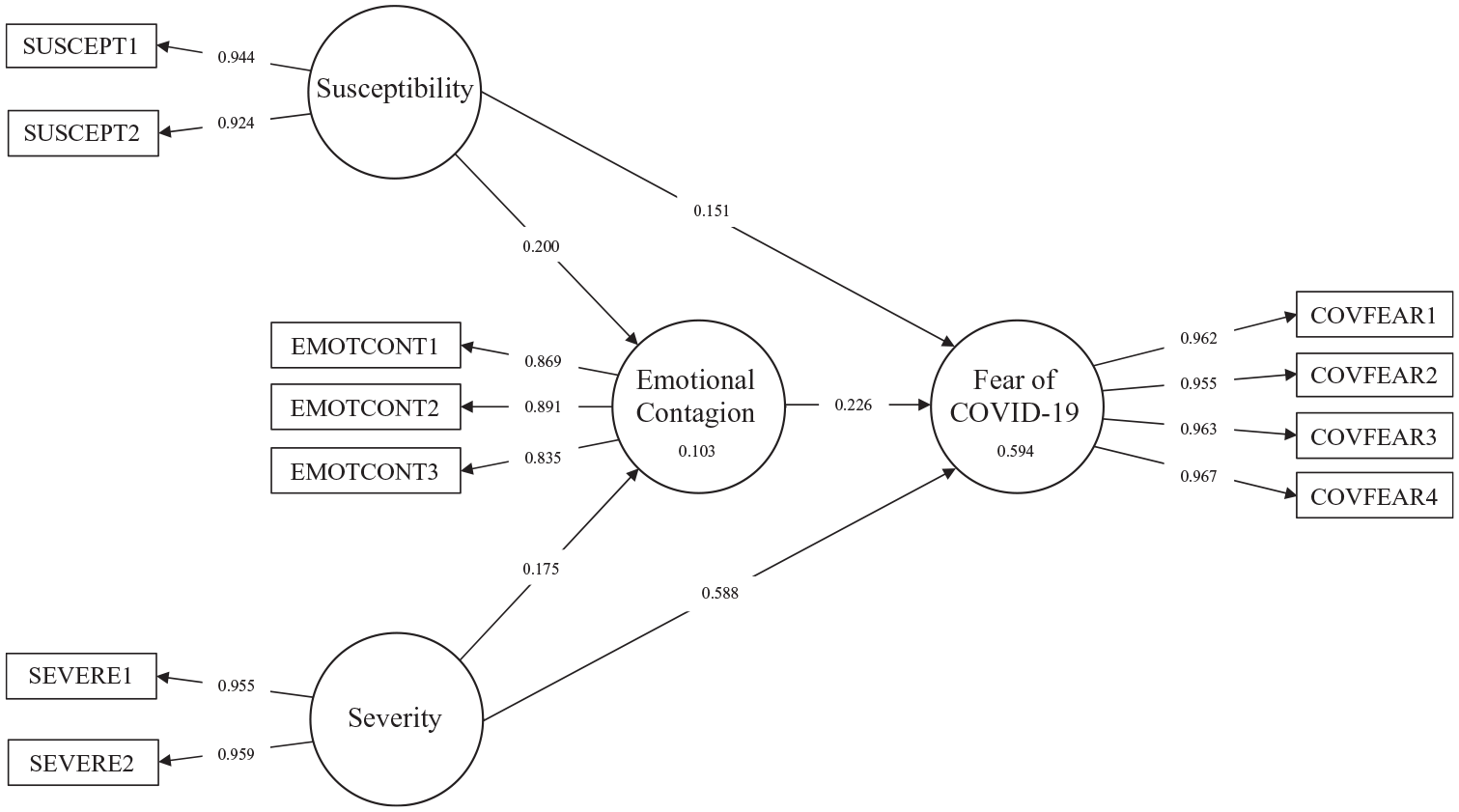
Structural equation of fear of COVID-19.
Results of path analyses on the entire sample were subjected to multigroup testing. Groups involved enabled comparisons of model path coefficients between males and females. Invariably such tests show differences between groups (see Table 4). These differences may or may not be supported based on significance testing. Multigroup testing was performed under two distinct algorithms: Henseler’s MGA and permutation testing. All paths showed no significant differences between males and females, regardless of the specific multigroup test involved. Consequently, H6 was not supported, that is, the original model of the total sample applies equally to males and females.
Results of Multigroup Hypothesis Testing.
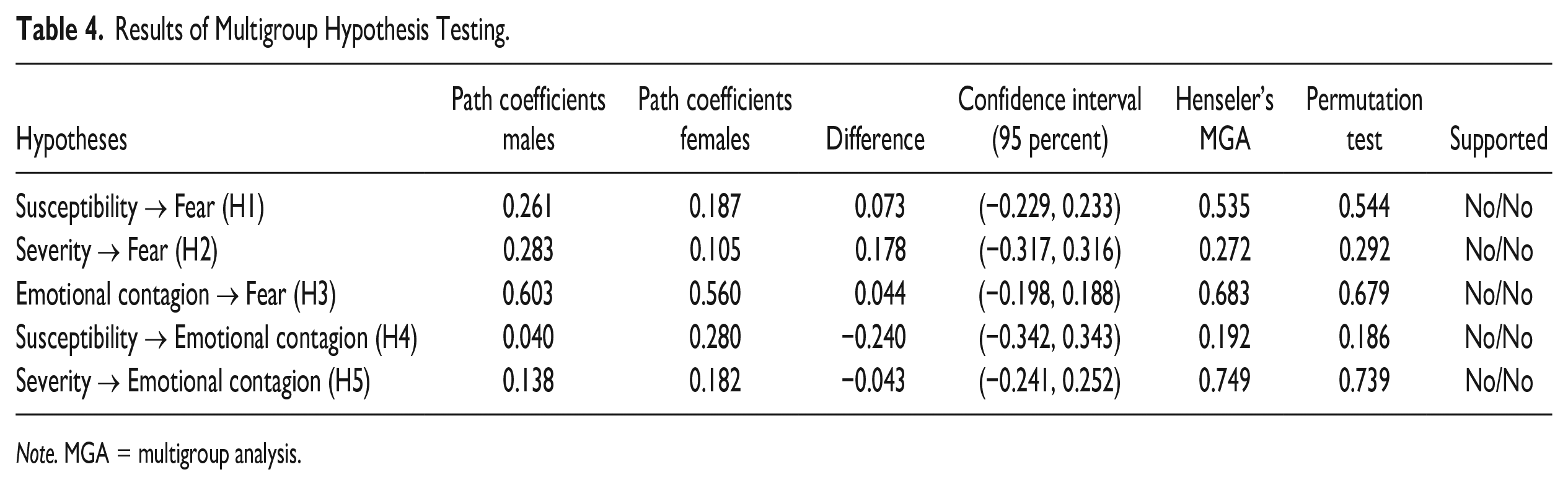
Note. MGA = multigroup analysis.
Discussion and Conclusion
The EPPM has been widely used to enhance communications strategies that strengthen and fine-tune fear appeals. For example, an ordered extended parallel process motivation paradigm has been advanced to explain outcomes of fear appeals. In this model, threat leads to fear when both severity of threat and probability of occurrence are perceived as high. Drawing on EPPM theory, threat has been operationalized as perceived susceptibility to COVID-19 and perceived severity of outcomes once the disease is acquired. Findings from the present study show the direct impact of COVID-19 perceived threat on fear levels of COVID-19. Perceived severity of COVID-19 illness was more predictive of fear levels than was perceived susceptibility. The dangers associated with COVID-19 when envisioned generate fear arousal. However, fear levels are further augmented by EC processes. EC was found to have a direct effect on COVID-19 fear levels as well as a moderating function for threat appeals.
The current study is the first investigation that involves the spread of emotions interactively as a major fear-inducing factor under a pandemic. Susceptibility to EC was found to be significantly impactful under such an environment, where fear-inducing information is widely diffused. The prevalence of COVID-19 disease and its dire consequences support a continuous state of EC and the rapidity of its dissemination (Delvaux, Meeussen, and Mesquita 2016).
Contagion effects are traceable to empathetic imagery conveyed by individuals, groups, and media (Rempala 2013). In addition to cognitive modeling, there is an affective component of empathy which jointly drives EC (Doherty 1997). Reactions to emotional experiences of others have been described by cognitive models. Shared recollections of similar experiences and feelings play an important role in the intensity of fear emotions.
Theoretical Implications
Prior research that broadens or upgrades the EPPM of threat response is nonexistent. This called for a revised theoretical framework that advances understanding of response to threats posed by a deadly and contagious virus. The present theoretical and conceptual contribution combines the EPPM with the theory of emotional processing. It generates an understanding of the interplay between cognitive and emotional responses on the effect of fear and resulting motivations. The article’s contribution provides a foundation for understanding behaviors that are unexplainable under the current basic EPPM.
Fear arousal triggers extreme interest in means of coping with risky situations. Excessive fear can lead to suboptimal behaviors, while the relative absence of fear can result in indifference or careless behaviors (Rachman 1974). Moderate levels of fear may be most adaptive. To further complicate matters, the impact of fear may vary by individual psychological traits, for example, fearlessness, or fearfulness. Other effects, such as discomfort or psychological disturbance, also can depend on fear arousal variations. Finally, a segment of individuals may voluntarily immerse themselves in fear-seeking behavior. An example might be engaging oneself in the company of COVID-19 at-risk individuals despite awareness of the danger involved. In contrast, others who seek fear avoidance will take precautionary actions to avoid contracting the virus.
Greater susceptibility to EC has been generally associated with intensive concern about the spread of COVID-19. Media consumption of COVID-19 has been similarly associated. EC has been weakly but significantly associated with daily media consumption and specific consumption of media related to fear of COVID-19. However, in one study, relationships between media exposure and concern about COVID-19 were not moderated by EC predispositions, as was expected (Wheaton et al. 2021). Further research is needed to identify the differential impact of segments of media outlets and communication strategies that lessen the EC of fear of COVID-19. In turn, the public may be directed to appropriate media to heighten salience and raise concerns of the public.
Fear of COVID-19 can be reduced by effective communications of COVID-19 coping alternatives, such as vaccination, masking, or selective exposure to risky situations or persons. Communication of benefits of such protective measures can be advanced for both individuals and their communities. Communication guidelines may include identification of vaccine outcomes, supporting evidence with main points advanced, combined with communication effectiveness pretests (Fischhoff, Gamble, and Schoch-Spana 2021). A communications objective may include the maintenance of trust as regards the communication. Building public confidence in COVID-19 vaccines will be easier with community partnerships and selection of spokespeople who have a favorable community image.
The management of COVID-19 fear may be affected by communication execution strategies. When communications about the virus are clear and unambiguous, excessive fear may be minimized. The reason is that, in part, fear is generated by uncertainty (Mertens et al. 2020). Fear levels may also be reduced if individuals are advised to avoid continuous and compulsive exposure to media messages about the virus crisis news, and possibly to avoid select media that feature sensationalism in their news.
Ways of protecting one’s loved ones will reduce fear since such messages induce conformity with regulations and a sense of security. Media should proceed cautiously with the use of fear appeals relative to COVID-19 coping opportunities. Improperly done, fear appeals may serve only to heighten and prolong fears.
This study found that the same process of fear generation through EC is at work for males and females. The message for both segments may be somewhat similar, and there will be expected variations in trust of information. However, risk communication objectives may be achieved largely based on executional factors. These factors may involve effective spokesperson selection, with women and men focused on different reference groups and individuals.
Future Research
Longitudinal research on maintenance of changes in fear of COVID-19 is urgently needed. Fear levels need not remain constant. Levels can be reduced or increased over time. Signs of fear reduction are found in the resumption of behavioral normality. Processes that may be involved in fear reduction include systematic desensitization, or imagination of increasingly fearful events that is transferable to real situations. Desensitization may be generalized to other fears. Another fear-reducing mechanism is flooding, or sustained exposure to intense fear-arousing stimuli. A third phenomenon, modeling involves imitation learning aimed at increasing an individual’s perceived self-competence. The amount of fear under this mechanism involves the total time spent in fear stimuli exposure (Rachman 1974). Fear reduction processes will vary in effectiveness among individuals, as well as by the levels and types of fears involved.
Changes in fear levels may involve habituation and desensitization. Habituation implies repetitive stimulation by fear-inducing experiences. Habituation predisposes increases in sensitivity to stimuli, as well as readiness to respond (Rachman 1974). Two processes—habituation and desensitization or their lack of invocation—may be involved in the decline or increase of acquired fear. A moderating factor is the activity level of an individual, and especially engagement in modes of relaxation. Repeated exposure to fear-related stimuli or the lack thereof affects habituation and fear levels. Rates of stimulation, mode of stimulus presentation, frequency, and simplicity of stimulation tend to affect fear levels and habituation processes (Rachman 1974).
Footnotes
Appendix
Demographic Profile of the Sample.
| Frequency | Percentage | |
|---|---|---|
| Gender | ||
| Male | 109 | 52.9 |
| Female | 97 | 47.1 |
| Age, years | ||
| 18–24 | 10 | 4.9 |
| 25–34 | 73 | 35.4 |
| 35–44 | 56 | 27.2 |
| 45–54 | 35 | 17.0 |
| 55–64 | 32 | 15.5 |
| Marital status | ||
| Married | 86 | 41.7 |
| Widowed | 7 | 3.4 |
| Divorced | 20 | 9.7 |
| Separated | 2 | 1.0 |
| Never married | 91 | 44.2 |
| Income | ||
| $0–$24,999 | 29 | 14.1 |
| $25,000–$49,999 | 54 | 26.2 |
| $50,000–$74,999 | 57 | 27.7 |
| $75,000–$99,999 | 27 | 13.1 |
| $100,000–$124,999 | 15 | 7.3 |
| $125,000–$149,999 | 9 | 4.4 |
| $150,000+ | 15 | 7.3 |
| Education | ||
| High school | 21 | 10.2 |
| Some college | 30 | 14.6 |
| 2-year degree | 30 | 14.6 |
| 4-year degree | 86 | 41.7 |
| Some graduate work | 5 | 2.4 |
| Graduate degree | 34 | 16.5 |
Declaration of Conflicting Interests
The author(s) declared no potential conflicts of interest with respect to the research, authorship, and/or publication of this article.
Funding
The author(s) received no financial support for the research, authorship, and/or publication of this article.
Ethical Approval
This study was approved by Southern Connecticut State University office of research protection.
Informed Consent
Respondents were exposed to a standard informed consent procedure before their questionnaire presentation.
