



Abstract
Around 300 species of the family Lamiaceae, belonging to the genus Teucrium, occur in temperate zones. The species of Teucrium are traditionally used in the treatment of various diseases, such as gastrointestinal disorders, inflammation, diabetes, and bacterial infections. The species have a rich phytochemical profile, which is most notably marked by a number of secondary metabolites like flavonoids, diterpenes, phenylpropanoids, iridoids, and essential oils, which are important due to their ethnomedicinal significance. Because of their intricate chemical composition (monoterpenes, i.e., α-pinene, β-pinene, limonene, sesquiterpenes, and other oxygenated compounds that maintain their biological activities), essential oils isolated from the plants of Teucrium species have been extensively explored. In recent research, multiple bioactive constituents have been reported by phytochemical studies, further attesting to the medicinal significance of the genus. Notably, plant species in the genus Teucrium possess great promise as pesticides. Teucrium essential oils and extracts offer great potential for bioecological systems of pest management since they have come forward with eminent insecticidal, larvicidal, antifeedant, and antifungal activity. The present review presents a comprehensive overview of the traditional information, phytocompounds, essential oil chemistry, and pesticide usage of Teucrium species to present a view of their pharmaceutical importance to readers. In addition, it points to the lacunae in present research and provides suggestions for future work to investigate novel bioactive compounds, to purify and elucidate modes of action, and to examine aerotherapeutics and agricultural applications of Teucrium species.
Keywords
1. Introduction
Current drugs are largely drawn from nature, and a huge number of (semi)synthetic medications have been generated by investigating bioactive compounds isolated from plant extracts and used in the traditional medicine of many countries. 1 There is a consensus that medicinal plants provide a substantial source of novel compounds with potential therapeutic use. Important knowledge on natural medicines may be found in traditional medical systems. Medicinal plants are a rich source of bioactive compounds, including alkaloids, terpenoids, flavonoids, and phenolics, which contribute to plant defense and exhibit multiple pharmacological and pesticidal properties. 2 Essential oils, formed by the secondary metabolism of aromatic plants, usually consist of low molecular weight constituents.3,4 Finding new drug leads is greatly aided by medicinal plants, which are substantial sources of novel compounds with possible therapeutic benefits. Lamiaceae, with 236 genera and 6900-7200 species worldwide, is one of the largest and most prominent flowering plant families. 5
The large and polymorphic genus Teucrium, which is a member of the Lamiaceae family, is mostly represented by perennial, bushy, or herbaceous plants that usually thrive in sunny conditions. Teucrium species thrive in regions with warm climates, especially those in Central Asia and the Mediterranean basin. Europe is thought to be the primary site of genus divergence because the species is widespread throughout its southern, southwestern, and southeastern regions. Furthermore, many species have been discovered in North Africa, southwestern Asia, southwestern South America, and southern North America. Regarding Australia, species of the genus Teucrium may be found on certain adjacent islands as well as in the southern regions of the continent. Studies of Teucrium species’ non-volatile components have revealed an abundance of neo-clerodane diterpenoids, which are thought to be chemotaxonomic markers of the genus. The incidence of neo-clerodanes has been extensively investigated, and 279 have been found thus far. The genus Teucrium requires focused scientific attention because it combines exceptional chemical diversity with a broad and clinically relevant spectrum of bioactivities that remain incompletely characterised. Species within the genus are rich sources of neo-clerodane diterpenoids, flavonoids, iridoids, and volatile constituents, and essential-oil chemotypes show high inter- and intra-specific variability that both enables chemotaxonomic study and increases the likelihood of discovering novel compounds.6,7 Systematic studies and species-level surveys reveal consistent antioxidant, antibacterial, anti-inflammatory, antidiabetic, and insecticidal properties across many Teucrium species, suggesting promise for medicinal and agro-biological uses. 8 Significantly, various bioactive compounds, particularly neo-clerodane diterpenes, exhibit species-specific pharmacological effects and complex mechanisms of action that remain insufficiently explained, thereby necessitating focused mechanistic and structural activity research instead of extensive, non-targeted screenings within already extensively researched genera. 6 Finally, the genus presents an urgent dual research need: investigating its potential as a source of novel bioactive compounds while thoroughly characterising safety concerns, such as documented herb-induced hepatotoxicity (e.g., germander-associated hepatitis). This highlights the significance of integrated pharmacology-toxicology studies in advancing Teucrium species for application.
By 2080, the world’s population is predicted to reach 10.3 billion people. 9 On the other hand, food production will decline for several reasons, such as dangerous pests and a reduction in agricultural acreage. 10 Utilizing algae and plants to control pests is not a novel approach. Biopesticides, which are derived from plants, algae, and fungi, are less hazardous to the environment and less prone to generating insect and disease resistance. Targeting specific pests and preventing or eliminating them without endangering humans or beneficial organisms is why biopesticides are so effective. Pests have a significant role in agricultural output declines, which have an impact on food production and economies. Biopesticides are environmentally benign and biodegradable. Because they may have better effects on human health and agriculture, biopesticides made mostly from plants and algae have drawn interest and publicity. 11 Botanical pesticides are a type of plant-based pesticide that is frequently made from plants or plant parts. 12 This review provides a comprehensive synthesis that links Teucrium’s phytochemistry to applications in plant protection. This review uniquely integrates the phytochemical diversity and pharmacological potential of the genus Teucrium, with a particular emphasis on bioactive compounds. It highlights species-specific bioactivities, variability in essential oil, and underexplored mechanisms of action. Additionally, the review addresses the critical balance between therapeutic potential and safety concerns, including hepatotoxicity, thereby emphasizing the need for integrated pharmacological and toxicological investigations for future drug development.
1.1. Methodology
In the literature review for this investigation, the electronic databases Google Scholar, PubMed, Science Direct, Scopus, and Web of Science were used. All selected publications were examined for publication year (2005-2025), study region, plant part, isolated chemical compounds, assessed biological activity, and traditional uses of Teucrium species. A search was conducted using terms such as Teucrium, botanical nomenclature of various plant species, essential oils, ethnobotanical applications, bioactivity, phytochemistry, mechanisms of action, antifeedant and pesticidal activities the to get literature data as well as with no restrictions on publication year. Consequently, an EndNote library of studies with the specified keywords was established.
2. Species Occurrence, Distribution, and Traditional Uses
Teucrium is a genus including mostly shrubs, small flowering shrubs, and perennial plants characterised by creeping rootstocks, thriving in open, arid, rocky environments, on slopes, and in disturbed regions, often inhabiting exposed habitats. Teucrium flowers exhibit an atypical characteristic within the Lamiaceae family due to the absence of the upper lip of the corolla. The genus has eight parts based on the plant’s general habit, leaf morphology, calyx configuration, and inflorescence structure. The largest part, T. polium, encompasses about fifty percent of the Teucrium species and has five subsections.13,14
Teucrium is the second-largest genus in the subfamily Ajugoideae of the Lamiaceae family, with a subcosmopolitan distribution and about 430 species recorded.
15
Many Teucrium species have been employed for millennia in diverse traditional remedies, demonstrating a broad spectrum of potential uses, spanning from the food sector to pharmaceuticals. Primarily attributed to their high concentration of specialised metabolites exhibiting substantial biological activity. Many of the chemicals identified from Teucrium species exhibit antipyretic, diuretic, diaphoretic, anti-proliferative, antioxidant, antibacterial, antifungal, antiviral,
16
genotoxic, cytotoxic,
6
hypoglycemic, anti-malaria, spasmolytic, anti-inflammatory, and antifeedant effects
17
(Figure 1). Teucrium species have been widely recognized in traditional medicine for their diverse therapeutic applications
Ethnobotanical Uses, Traditional Applications, and Reported Properties of Teucrium Species Across Different Regions

3. Composition of Essential Oils
Major Compounds Found in the Essential Oils From the Teucrium Genus

Complex blends of sesquiterpenes, oxygenated terpenes, and terpenoid hydrocarbons make up essential oils (Figure 2). Alkaloids, flavonoids, sterols, tannins, saponins, coumarins, volatile oils, and cardiac glycosides have several medicinal applications, including as ingredients in pharmaceuticals and cosmetics.
50
More than 134 active chemicals have been isolated and identified from T. polium’s roots, seeds, and aerial parts. These consist of caffeic acid and its derivatives, steroidal chemicals, diterpenoids, and flavonoids. According to their findings, the primary constituents of T. polium are β-caryophyllene (52%), germacrene D (8.7%), and limonene (5.9%).
51
The important compounds in T. polium include 2,4-ditert-butylphenol (10.81%), limonene (37.70%), and p-cymene (8.20%). T. polium essential oil has high levels of terpinen-4-ol (6.6%), α-pinene (33.2%), and α-thujene (8.1%).
52
The main constituents of T. polium are β-caryophyllene (7.68%), α-pinene (5.02%), and carvacrol (56.06%). α-bisabolol (24.6%), β-caryophyllene (9.08%), and 1,1-acetoxyeudesman-4-α-ol (26.3%) were the primary components of T. polium’s essential oil in another study.
53
Chemical structures of key phytochemicals found in Teucrium species
3.1. Polar Compounds
Flavonoids are polyphenolic compounds present in numerous medicinal and dietary plants that exhibit a diverse range of biological activities. Numerous flavonoids, including luteolin, rutin, cirsiliol, cirsimaritin, apigenin, eupatorin, and salvigenin, are present in the aerial portions of plants, roots, and inflorescences. 54 Plants naturally contain a kind of steroid alcohol called phytosterols. In several sections of T. polium, several staleroidal compounds have been identified, including β-sitosterol, stigmasterol, campesterol, brassicasterol, and clerosterol.
Sterols, triterpenic alcohols, abeo-abietanes, phenylethanol glycosides, phenolic compounds, abietane diterpenoids, phenylpropanoid glycosides, iridoid glycosides, flavonoids, and neo-clerodane diterpenoids were among the 172 substances found. Along with the plant’s aerial parts, these compounds were also isolated from the roots, leaves, stems, and seeds. The solvents n-hexane, water, petroleum ether, acetone, chloroform, MeOH, EtOAc, and CH2Cl2 were used to isolate these compounds. The most often isolated components were flavonoids, such as rutin, cirsimaritin, luteolin, and apigenin. Teulamifin B (neo-clerodane diterpenoid), caffeic acid (phenolic compound), verbascoside (phenylpropanoid glycosides), poliumoside, and teucardoside (iridoid glycoside) were also often seen. 55
3.2. Terpenoids
Terpenoids are a large class of naturally occurring substances that are widely distributed in the Teucrium genus’s aerial portions. Terpenoids are also reported to be present in the roots of this plant. Sesquiterpenes, diterpenoids, triterpenes, and monoterpenes (mainly in the glycosidic form known as iridoids) are among the subclasses of terpenoids found in Teucrium. Numerous sesquiterpene compounds have been found in the essential oils and extracts of different Teucrium species. Two trinorsesquiterpenoids, one sesquiterpene lactone, and two germacrene sesquiterpenoids were purified using an antiplasmodial bioguided method. 26 Guaiane sesquiterpenoids, which may be a unique indicator of T. viscidum, are present in the plant and indicate a tight relationship between these three species. From the aerial portion of T. polium, Elmasri and associates identified four sesquiterpenoids of the germacrene class in 2014 that can prevent biofilms. The most common genus, Teucrium, has a lot of diterpenoids, primarily in two classes: rearranged abietane diterpenoids and highly oxidized clerodane diterpenoids.29,56,57 The abeo-abietane framework is the consequence of a frequent rearrangement in certain abietane diterpenoid derivatives. The roots of T. fruticans and T. polium ssp. vincentinum contained these diterpenoids. It was later discovered that teuvinones A-H compounds in Teucrium lanigerum roots. The origins of T. polium from South Italy, which reported six novel abeo-abietane, were also investigated. 56 Over the past 20 years, more than 30 Teucrium species have yielded more than 150 neo-clerodane diterpenoid compounds that have been extracted and characterized for metabolite components. Teupolins VI–XII are among the eight new neo-clerodane diterpenoids that were found in this plant. 58 A novel naturally occurring high acetylated neoclerodane, 20-O-acetyl-teucrasiatin, was discovered and isolated from Iranian T. polium. 59
After T. polium, Teucrium chamaedrys is the species that researchers have focused on the most. T. chamaedrys has developed three new nor-neo-clerodane glucosides, namely chamaedryosides A–C. 60 Teucrium alyssifolium contains two intriguing rearranged neo-clerodane chemicals that have been previously identified: Alysines A and B. Teucrium yemense was also found to contain several novel neo-clerodane compounds, such as fatimanols A–E, fatimanone, 61 and fatimanols Y and Z 62 These plants can be regarded as chemotaxonomic markers for neo-clerodanes since they are a rich natural source of furanoid diterpenes with neo-clerodane and 19-nor-neo-clerodane skeletons. The diterpenoids found in authentic T. polium ssp. polium are unique and do not occur in any other T. polium species. The importance of changing taxonomy identifications for T. polium was stressed. The range of secondary metabolites present in Teucrium species is one of the main biochemical bases for their extensive spectrum of biological activities. Knowing these substances and their structural differences is very important because many of them are the main sources of the therapeutic effect of the genus. The following chapter introduces the pharmacological activities associated with the bioactive constituents.
4. Biological and Pharmacological Activities
For the Teucrium genus, several biological and pharmacological activities have been reported (Figure 3). Although the reductionist paradigm-attributing specific bioactivity to the mixture’s main phytocomponents or one of the major constituents for which a particular activity has been shown in its pure form is more widely accepted, the complexity of phytocompounds’ chemical composition complicates interpretation of the results in terms of interactions with cellular and molecular targets. Key biological activities exhibited by Teucrium species
4.1. Antioxidant Activity
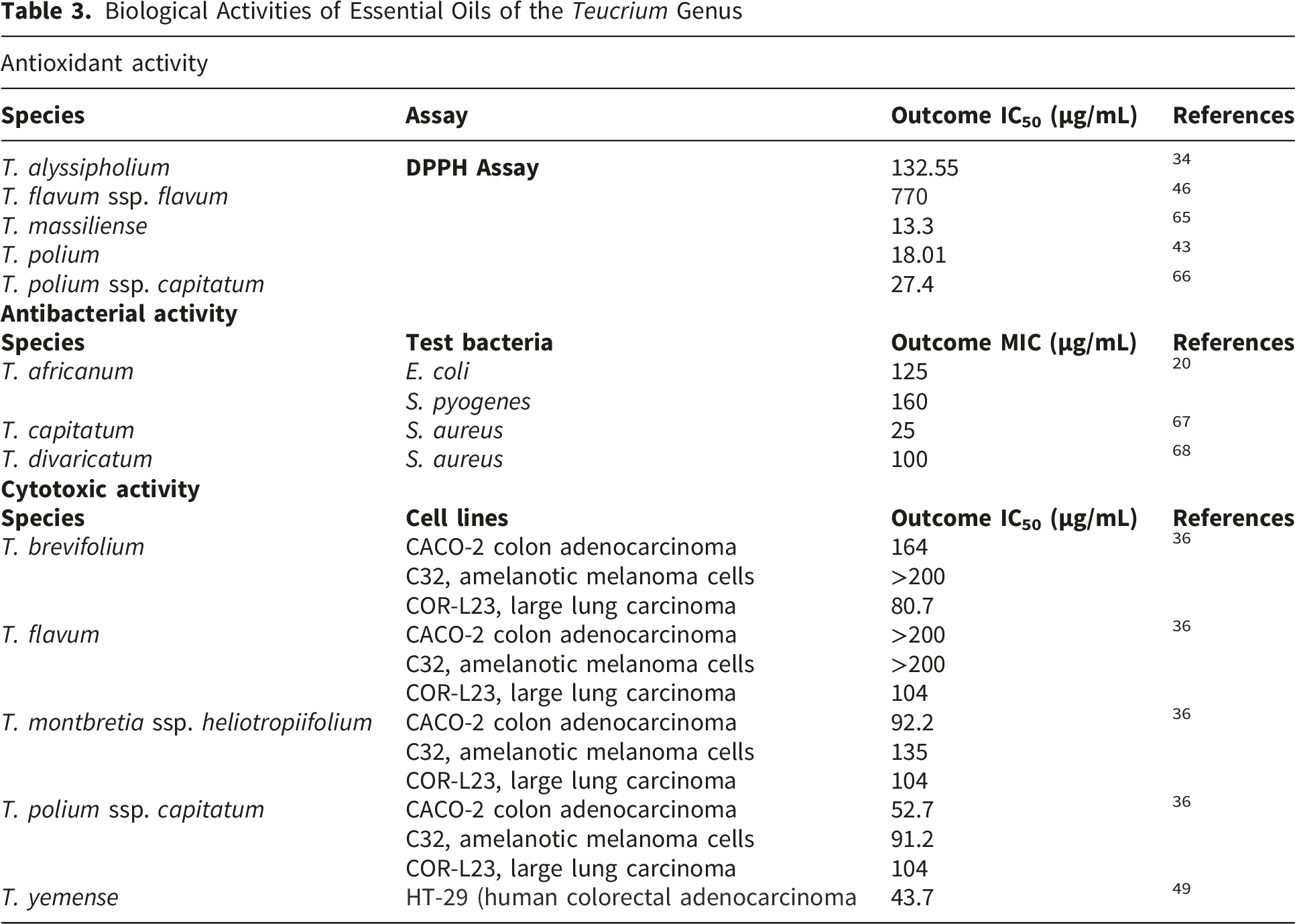
Biological Activities of Essential Oils of the Teucrium Genus
4.2. Antimicrobial Activity
The antibacterial properties of essential oils derived from Teucrium plants have been extensively studied. Teucrium essential oils have antibacterial and antifungal properties. The primary processes involve membrane disruption (increased permeability, leakage) by monoterpenes and phenolic essential oil ingredients, along with possible interactions with microbial enzymes; the activity of essential oils is frequently dose-dependent and species-specific. 69 As can be observed, the MIC values range from around 10−1 to 102 mg/mL, falling within three orders of magnitude. For the sake of clarity, the efficacies described could be arbitrarily and qualitatively classified as weak (>10 mg/mL), medium (between 1 and 10 mg/mL), and good (up to 1 mg/mL). Greece’s T. polium, 70 Algeria’s T. polium ssp. aurasiacum, 66 Corsica’s T. flavum ssp. Glaucum, 52 and Yemen’s T. yemense 49 are among them. The emergence of multidrug-resistant microbial strains in hospitalised patients is a growing problem in the field of clinical infection management. The utilisation of novel natural products and plant-based essential oils appears to be promising in this regard. Lahmar et al. 71 published an intriguing study on this subject in 2016. They isolated lactamase-producing Escherichia coli strains and multidrug-resistant Acinetobacter baumannii from patients and evaluated the antimicrobial activity of the essential oil of three species of Tunisian flora, including T. ramosissimum. The findings demonstrated that T. ramosissimum essential oil’s minimum inhibitory concentrations (MICs) against methicillin-resistant Staphylococcus aureus (MRSA) colonies ranged from 0.25 to 1 mg/mL. 71
4.3. Cytotoxic Activity
Like other types of bioactivities, the cytotoxicity of Teucrium essential oils to cancer cells was linked to the presence in a mixture of a significant number of molecules with a known anti-proliferative effect. For example, the oil extracted from T. alopecurus contains α-bisabolol and (+)-epi-bicyclo-sesquiphellandrene,21,72 and the leaf essential oils of T. yemense contain relevant concentrations of (E)-caryophyllene, α-humulene, δ-cadinene, caryophyllene oxide, and α-cadinol. 49 Additionally, it is known that essential oils and many of their constituents can influence the response to TNF-induced inflammation by lowering IκBα phosphorylation, preventing NF-κB activation, and preventing the translocation of p50/p65 units. Such data present a positive outlook for the potential use of essential oils as anti-proliferative treatments in tumours that overexpress NF-κB. Remarkably, it was demonstrated that T. alopecurus essential oil did not exhibit cell-specific suppression of TNF-induced activation of NF-κB. 21 Additionally, the essential oil was able to increase the apoptotic effect of the anticancer medications capecitabine, 5-fluorouracil, and thalidomide. 21
4.4. Anti-Inflammatory Activity
Several techniques were used to assess the anti-inflammatory properties of the essential oils of several Teucrium species. 36 Menichini and coworkers 36 discovered that the essential oils of T. flavum, Teucrium montbretii ssp. heliotropiifolium, and T. polium ssp. capitatum significantly reduced the release of nitric oxide in macrophages when stimulated by inflammatory agents. All three species exhibited strong anti-inflammatory effects, with IC50 values ranging from 7.1 to 41.4 µg/mL, which is higher than that of the positive control, indomethacin (52.8 µg/mL). This finding was attributed to the presence of sesquiterpenes, including spathulenol, δ-cadinene, caryophyllene, caryophyllene oxide, α-humulene, and torreyol in the oils. 36 Furthermore, the essential oil of Palestinian Teucrium pruinosum, obtained using a microwave device, was found to be highly effective in inhibiting the activity of COX-1 and COX-2 enzymes, with IC50 values of 0.103 and 0.208 µg/mL, respectively. The COX-2/COX-1 ratio of this oil was comparable to that of the Non-Steroidal Anti-Inflammatory Drugs (NSAID) etodolac. 73
4.5. Anti-Phytoviral Activity
Researchers evaluated the anti-phytoviral effects of four endemic Croatian species, T. polium, T. flavum, T. montanum, and T. chamaedrys, against the cucumber mosaic virus, which was inoculated into Chenopodium quinoa Willd. 51 All the essential oils showed varying degrees of activity in reducing lesion numbers. This activity closely correlated with the oil compositions, especially the percentage of β-caryophyllene. This explains the results for all species except T. montanum, which displayed better antiviral activity despite having the lowest β-caryophyllene content. The significant presence of germacrene D, β-pinene, and limonene likely contributed to T. montanum’s relatively high antiviral activity. 51
4.6. Antidiabetic Activity
Several studies have proved T. polium’s anti-hyperglycemic and hypolipidemic qualities, and several in vitro and in vivo investigations have indicated that T. polium lowers glucose levels. A decrease in blood glucose levels and an increase in serum insulin levels was observed in diabetic rats when they were administered the extract of T. polium. This suggests that the regeneration of pancreatic β-cells and the stimulation of insulin production occurred. 74 The Teucrium species influence AMPK signalling and antioxidant defence mechanisms, resulting in enhanced glucose utilisation and safeguarding of pancreatic β-cells. 6 An aqueous decoction made from the aerial portions of T. polium significantly decreased blood glucose levels in streptozotocin-induced diabetic rats four hours after intravenous treatment and twenty-four hours after intraperitoneal injection. Instead of an increase in insulin release, this impact may be ascribed to T. polium’s peripheral glucose metabolism; however, no supporting data (such as insulin concentration levels or histological results) were presented. 22
5. Pesticidal Activity
Pesticides can be produced by the leaves, roots, bark, seeds, fruits, and bulbs of plants. Bioactive chemicals are extracted from the dried plant components.
75
Biopesticides are made from various plant components, and their possible effectiveness is evaluated using extracts.
12
Some neo-clerodane diterpenoids found in Teucrium species show biological action, which makes them intriguing as antifeedants for insects (Figure 4). Numerous studies examined the impact of neo-clerodane on Spodoptera littoralis. Synthetic and natural neo-clerodane diterpenes from Teucrium species were investigated using SAR against Colorado potato beetle larvae. The neo-clerodane compounds of T. tomentosum exhibited a favorable antifeedant effect at 10 mg/cm2 of leaf area and prevented the development of Plutella xylostella.
76
Major phytochemicals in Teucrium species with pesticidal activity
Synthetic and natural neo-clerodane diterpenes from Teucrium species were investigated against Colorado potato beetle larvae. 77 The oil showed activity with an LC50 of 80 µg/mL when combined with feeding material. Following the dissection and removal of the larvae’s midguts, the inhibitory activity against many digestive enzymes was assessed, and this was shown to be the mechanism of action. Reduced activity of digestive enzymes such as α-amylase, triacylglycerol lipase, general protease, serine proteases (trypsin and chymotrypsin-like), carboxypeptidases, and aminopeptidases was linked to this larvicidal action. The oil had a slightly hazardous LC50 of around 25 µL/L; at 2 µL/cm2, it showed exceptional repellency, offering protection for 292 minutes. The relationship between the activity and the content of this oil is still unknown. With LC50 values ranging from 16 to 24 µg/mL, the essential oil extracted from Teucrium leucocladum shows efficacy as a larvicidal agent against Ceratitis capitata, M. domestica, and C. pipiens. 78 The monoterpene and alcohol components of the oil were linked to this kind of effect. The potential application of the same species’ essential oil as a fumigant pesticide and antifeedant against Tribolium castaneum Herbst, a pest that poses a serious risk to harvested cereals, was examined. 17 In all modalities of usage, the oil demonstrated efficacy that was dependent on both time and dosage. There were no hypothesized components that were largely responsible for the reported insecticidal activity or possible mechanisms of action. It was demonstrated that the Greek Teucrium capitatum essential oil has a low fumigant toxicity (LC50 of 37.9 µL/L) against Sitophilus oryzae adults. 79 This was attributed to the oil’s primary constituent, sesquiterpenes. In Iran, an essential oil derived from T. polium subsp. capitatum was evaluated as a fumigant and repellent against Callosobruchus maculatus and Tribolium castaneum, two pests of stored commodities. 80 The activity seen is caused by a large quantity (25.9%) of caryophyllene oxide, which has insecticidal action against T. castaneum, and the main component (46.2%), α-canidol, which is known to be active against various insect species. Teucrium quadrifarium essential oil from India was tested for pesticidal activity against Spilarctia obliqua. 81 Larval and pupal weight and adult emergence decreased when the oil was applied topically to third-instar larvae; larval and pupal durations increased; and larval mortality and adult abnormalities increased.
An effective insecticidal action against Liposcelis bostrychophila was demonstrated by the essential oil extracted from the same plant that was growing in China. With an LC50 of 0.22 mg/L as a fumigant and an LC50 of 95.1 µg/cm2, the oil showed effectiveness as a contact toxic agent. The data and the found bioactivity did not appear to be related, although the oil composition was assessed in this study. The insecticidal efficacy of the essential oil produced by the species T. montanum ssp. jailae, which was obtained in Slovakia, was investigated using the insects Spodoptera littoralis, Culex quinquefasciatus, and M. domestica. 40 The insecticidal effect was substantial against the other targets, with LD50 values of 56.7 µg per larva for S. littoralis and 180.5 µg/mL for C. quinquefasciatus, while it was modest against M. domestica. The relatively high concentrations of (E)-caryophyllene and germacrene-D, both of which are effective against a range of pests, may be responsible for the mixture’s overall action, but the authors recognized the inherent challenge of connecting the biological activity to the essential oil composition. The essential oil extracted from an Iranian species of T. polium was tested for its acaricidal properties using fumigant and leaf-dipping bioassays against the spotted spider mite Tetranychus urticae. Corresponding LC50 values of 1.784% and 5.395 µL/L were obtained from the two tests. 82
5.1. Mechanism of Action of Biopesticides
There is no established mechanism of action for any of the several types of phytochemical pesticides.
83
Insects, nematodes, and plant pathogens can be affected physically or biologically by the bioactive chemicals present in plants, depending on the type of molecule and the pathogen.84,85 Plant extracts have detrimental or lethal effects on the physiological functions of insect pests, such as reducing oviposition and hindering feeding.
86
Antifeedant plant extracts prevent larvae from eating by destroying the flavor of the food, resulting in their death due to starvation.
87
The botanical pesticides damage the electron transport chain and prevent energy production by poisoning the mitochondria of insects that infest stored goods.
88
They damage the pathogen by reducing or inhibiting its developmental stages (Figure 5).
89
Mechanism of action of Teucrium-based biopesticides: Phytochemicals affect pests through various physiological and biochemical pathways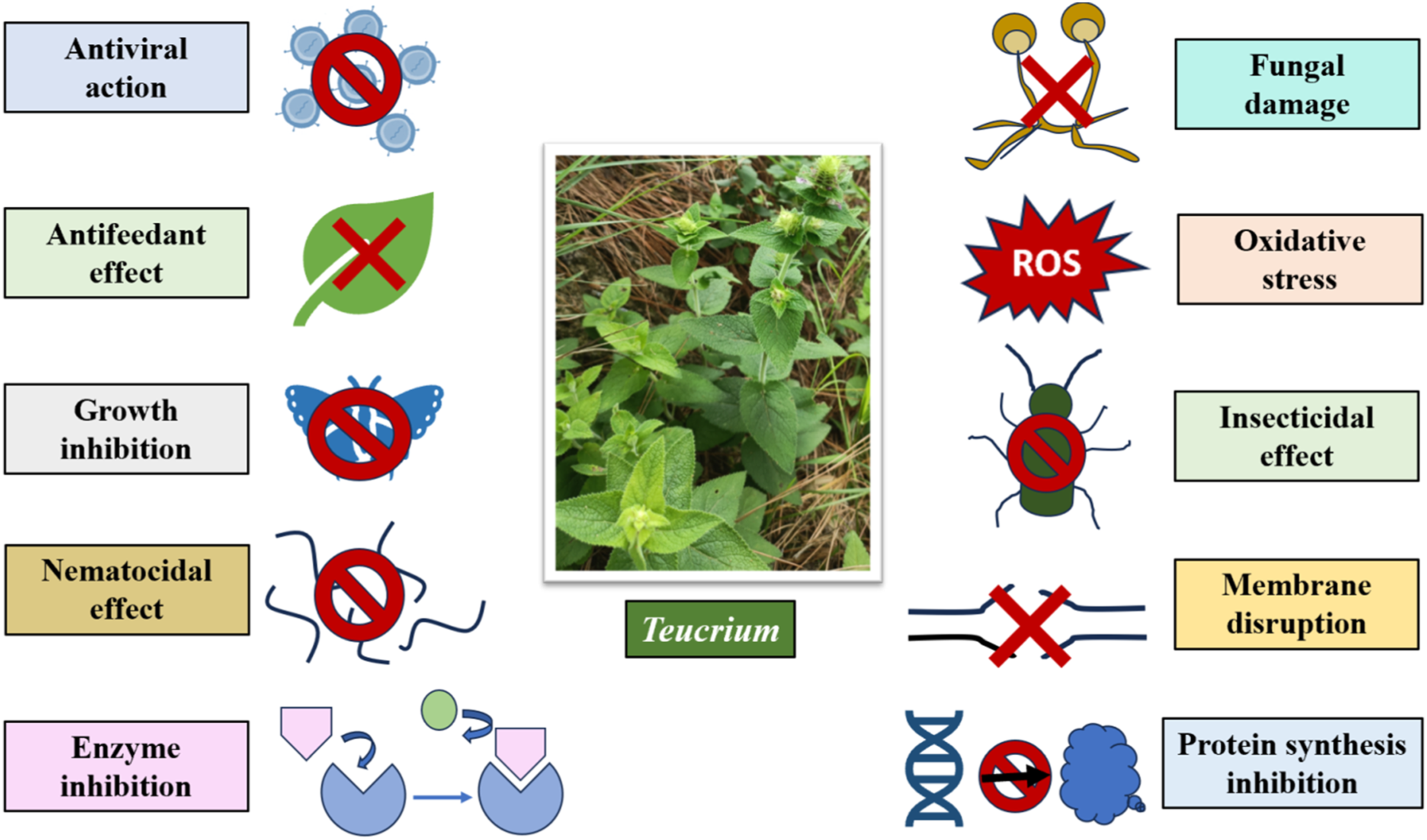
The essential oils of T. quadrifarium limit the development of Spilarctia obliqua, resulting in morphological and physiological consequences that decrease larval and pupal weight and increase mortality. 81 Exposure to botanical pesticides affects bacterial growth, especially in Gram-negative species, by affecting cellular metabolism, including protein synthesis. Increased plasma membrane permeability brought on by pesticide exposure results in microbial mortality. 90 Pseudomonas syringae and Clavibacter michiganensis ssp, particularly Xanthomonas campestris, are among the multidrug-resistant bacteria that may be killed by hydroalcoholic extract. 91 By increasing glutathione peroxidase activity, decreasing glutathione reductase, and generating reactive oxygen species, parthenolide inhibits Xanthomonas oryzae pv. Oryzae. 92 By generating host resistance and blocking virus penetration and reproduction, some phytochemicals inhibit viral infection. 93
6. Limitations and Future Perspectives
Studies have validated the efficacy of essential oil-based pesticides in managing various plant pests and diseases. Nonetheless, their utilisation encounters many limitations, including significant volatility and instability, limited aqueous solubility, pronounced impacts on organoleptic characteristics, and phytotoxicity. Consequently, the primary hurdles in the extensive use of essential oils are identifying the mechanism of action and the suitable formulation. The formulation of suitable essential oils and integration techniques enhances efficacy and reduces volatility for improved field application. 94 Essential oils have application issues due to deterioration and oxidation resulting from their heightened susceptibility to light radiation and elevated temperatures. 95 Moreover, the phytotoxic effects of essential oils constrain their application, since they comprise a complex combination of biologically active compounds capable of exerting broad-spectrum effects on microorganisms, including non-target beneficial species.
Environmental circumstances are the primary determinants of chemical composition. Significant fluctuations in chemical compositions and polymorphism are influenced by environmental variables affecting gene expression. 96 The evident disparity noted among chemotypes may be ascribed to the existence of chemical polymorphism at infraspecific tiers. The polymorphism of essential oils in T. capitatum is influenced by genetic variables. Diversity of flavonoids was observed in T. polium, demonstrating infraspecific differences. 97 This research demonstrates that the majority of chemical compounds in the T. polium accessions significantly vary from those reported in other investigations. This disparity is likely attributed to genetic variability, phenology, and plant structures. The acquired results indicated that habitat height influenced chemical variations and augmented flavonoid levels. Prior studies indicated the substantial influence of altitude on the fluctuations of essential oils in T. polium. 98 Chemo-differentiation has been correlated with the species’ geographical distribution. Consequently, ecological factors likely prompted the synthesis of several chemical compounds within the Teucrium genus. It may be deduced that the adaptive reaction may have produced several chemical substances. Certain chemical constituents exhibited ecological adaptation of chemotypes, with factors such as genetic variability, irrigation practices, seasonal fluctuations, and geographical isolation possibly contributing to the formation of these chemotypes. 99
The future of Teucrium research is integrating chemical variety with safety assessment and practical applications. Nencini et al asserted that the case reports highlight the necessity for additional information regarding the safety and quality of these natural products. 74 They further noted that the extract ingested by the patients exhibited a higher concentration of teucrin A, diminished antioxidant activity, and reduced polyphenol content in comparison to the traditional decoction, indicating an inverse correlation between teucrin A levels and antioxidant capacity. The results necessitate comprehensive dose–response and mechanistic toxicity investigations before therapeutic use. 74 The future of Teucrium research depends on integrating conventional knowledge with new molecular techniques, standardising processes, and directly addressing safety problems. Future studies must, however, fill important voids in safety, standardization, and commercial feasibility if we are to fully maximize its advantages.
7. Conclusion
The genus Teucrium has garnered significant scientific attention due to its extensive ethnobotanical applications, diverse phytochemical profile, and promising bioactivities. From ancient times, the Teucrium species have been used in folk medicine to cure a variety of conditions, including metabolic imbalances, inflammation, infections, and gastrointestinal problems. These traditional uses validate the therapeutic significance of the genus based on present-day pharmacological findings. Flavonoids, diterpenes, iridoids, phenylpropanoids, and constituents of essential oils comprise most of the massive diversity of phytochemicals in Teucrium, confirming its wide-ranging biological effects. Teucrium species contain, among their most interesting characteristics, an essential oil content and composition that greatly varies based on the species, region of origin, and the extraction method. Some essential oils contain oxygenated components with a variety of biological effects as well as sesquiterpenes and bioactive monoterpenes, and there are many Teucrium species have shown antibacterial, antioxidant, anti-inflammatory, and insecticidal properties, which highlights a potential for medicinal and industrial uses. Neo-clerodane diterpenoids are regarded as the main bioactive constituents of Teucrium species. Most importantly, the potential for Teucrium essential oils and extracts for their pesticide properties is an environmentally friendly alternative to synthetic pesticides. Strong insecticidal, larvicidal, acaricidal, and antifungal activities of Teucrium species make them attractive candidates for integrated pest management projects. Unlocking the full potential of Teucrium species in both medicine and agriculture will depend on multidisciplinary studies combining ethnobotany, phytochemistry, toxicity, molecular biology, and agronomy.
Footnotes
Acknowledgements
We acknowledge the Chancellor and Vice-Chancellor of Shoolini University of Biotechnology and Management Sciences. This research did not receive any specific grant from funding agencies in the public, commercial, or not-for-profit sectors.

Author Contributions
Funding
The authors received no financial support for the research, authorship, and/or publication of this article.
Declaration of Conflicting Interests
The authors declared no potential conflicts of interest with respect to the research, authorship, and/or publication of this article.
Data Availability Statement
Data will be made available on request.