



Abstract
Postmenopausal osteoporosis (PMOP) poses substantial health risks, motivating interest in natural therapies. Here we systematically evaluated Eucommia ulmoides cortex (EUC), a traditional Chinese medicinal plant, in PMOP animal models. Meta-analysis of 14 studies comprising 343 ovariectomized rats showed that EUC markedly increased bone mineral density (standardized mean difference (SMD) = 2.16, 95% confidence interval (CI) = 1.63-2.69) and improved trabecular microarchitecture, including bone volume fraction (SMD = 1.39, 95% CI = 0.85-1.94), trabecular number (SMD = 4.33, 95% CI = 3.22-5.44) and trabecular thickness (SMD = 2.25, 95% CI = 0.87-3.62), while reducing trabecular separation (SMD = −4.87, 95% CI = −6.08 to −3.67). EUC also enhanced biomechanical strength (SMD = 1.14, 95% CI = 0.68-1.60) and lowered serum alkaline phosphatase (SMD = −1.66, 95% CI = −3.26 to −0.06), whereas serum osteocalcin was not significantly altered (SMD = −0.42, 95% CI = −1.94 to 1.10). Several outcomes exhibited moderate-to-high heterogeneity. Collectively, these findings suggest that EUC mitigates estrogen-deficiency–associated bone loss in preclinical PMOP models by preserving bone mass, structure and strength, plausibly through coordinated effects on bone resorption and formation. As a botanical derivative, EUC may hold promise as a dietary supplement or adjunctive approach for PMOP management; however, mechanistic studies and more standardized preclinical protocols are needed to strengthen translational relevance.
Systematic Review Registration
https://inplasy.com/inplasy-2022-11-0093/, identifier [INPLASY2022110093].
Introduction
Postmenopausal osteoporosis (PMOP) is a prevalent skeletal disorder in older women, driven by the decline in ovarian function and estrogen production. This hormonal deficiency results in diminished bone strength and an increased fracture risk. 1 Around 200 million women globally have osteoporosis, and 30% of all postmenopausal cases occur in the United States (US) and Europe.2,3 Vertebral fractures are the most prevalent clinical symptom of osteoporosis, with an incidence of 15% in Chinese women over 50 and 36.6% in women over 80. 4 Although there may be significant differences between individuals based on factors such as age, region, and ethnicity; morbidity and risk of osteoporosis-related fractures of female patients with PMOP are significantly higher than in men. 5 Consequently, treating patients with PMOP is a great priority. However, as a chronic disease, it is difficult to manage. Long-term treatment for PMOP may compromise treatment adherence and satisfaction, thereby affecting emotional health, quality of life, work capacity, and social relationships.
Currently, calcium and vitamin D supplements, dietary therapies, and exercise therapy are the fundamental options for patients with OP.6,7 Hormone replacement therapy (HRT) is more suitable for women with PMOP and menopausal symptoms. 8 Strengthening regular gynecologic assessment for patients with HRT is considered necessary to prevent the consequent risks, including breast and endometrial cancer.9,10 Possible substitutes to conventional HRT include selective estrogen receptor modulators (SERMs) like tamoxifen and raloxifene. However, SERMs elevate the risk of venous thrombosis.11,12 Given the risks of hormone-based therapies, non-hormonal strategies have been explored for osteoporosis management. Among these, natural plant-based therapies, long used for bone health, may offer an alternative for patients unsuitable or unwilling to receive hormones.
Eucommia ulmoides cortex (EUC) is one of the earliest tonics used in traditional Chinese medicine. 13 China, Japan, and Korea have commonly utilized the leaf, stem, cortex, and staminate flower of EU to treat various disorders. Among these, the cortex is the most widely used. 14 In China, Eucommia ulmoides cortex (EUC) has been commonly utilized in famous botanical tonics and antirheumatic supplements for over 2000 years. According to traditional Chinese medicine, it can be used alone or combined with other substances to medicate several diseases, such as osteoporosis, menopause syndrome, hypertension, and lower back pain. 15 Pharmacological studies have suggested that crude extracts and total glycosides derived from Eucommia ulmoides may exert protective effects against osteoporosis in preclinical settings. 16 Aucubin, geniposide, and niposidic acid are representative components of EUC, which have frequently been used to investigate potential anti-osteoporotic mechanisms. The lignans in EUC can inhibit osteoclast formation by increasing osteoprotegerin (OPG) and lowering the expression of receptor activator of nuclear factor-κB ligand (RANKL). 17 Eucommia extract can change the composition of intestinal microflora in mice, increasing short-chain fatty acids synthesis and inhibiting the formation of osteoclasts. 18 EUC extract can inhibit the expression of TRAP, CTSK, and H + ATPase, inhibiting the osteoclast differentiation of RAW264.7 cells and reducing bone resorption activity. 19 However, these beneficial effects observed in those studies have not yet been fully translated into clinical benefits. However, the mechanisms underlying EU's effects and its potential adverse reactions remain incompletely understood. To consolidate existing preclinical evidence, we conducted a systematic review and meta-analysis of EUC in PMOP animal models, aiming to evaluate its efficacy on bone density, microarchitecture, strength, and biochemical markers, and to inform future research and potential clinical application.
Methods
This systematic review and meta-analysis was conducted in accordance with the Preferred Reporting Items for Systematic Reviews and Meta-Analyses (PRISMA) guidelines and followed recommendations from the SYRCLE risk-of-bias tool for animal studies.
Literature Retrieval
EMBASE, PubMed, Web of Science, Cochrane Library, Chinese National Knowledge Infrastructure (CNKI), Chinese VIP Database (VIP), Chinese Biomedical Literature Database (SinMed), and Wanfang Database were searched electronically.There were no restrictions on language, and the literature search was conducted from database inception to August 2025. The search strategy combined terms related to Eucommia ulmoides and osteoporosis using Boolean operators. The following search string was adapted for each database: (“Eucommia ulmoides” OR “Du-zhong” OR “Du zhong”) AND (osteoporosis OR “bone loss” OR “postmenopausal osteoporosis” OR “osteoporotic”) AND (rat OR mouse OR animal OR ovariectomized OR OVX). Furthermore, Google Scholar and references included in the literature were searched to retrieve potentially relevant studies.
Inclusion Criteria
Studies were included if they met all of the following:
Used an animal model of postmenopausal osteoporosis (typically ovariectomized rodents); (2) Administered EUC as a monotherapy in the experimental group, with a control group receiving placebo, vehicle, or no treatment; (3) Reported at least one outcome of interest (see Section 2.4); (4) Were original experimental studies (any design).
Exclusion Criteria
Studies were excluded if they:
Lacked usable quantitative data (eg, mean ± standard deviation); (2) Were duplicates or overlapping publications; (3) Were reviews, meta-analyses, conference abstracts, case reports, editorials, or letters.
Outcome Measurements
Herein, the primary finding was bone mineral density (BMD), and the secondary outcomes were bone volume/total volume (BV/TV), trabecular number (Tb.N), trabecular thickness (Tb.Th), trabecular separation (Tb.Sp), maximum bone load, serum osteocalcin (S-OCN), and serum alkaline phosphatase (S-ALP).
Data Recovery
Two authors independently recovered data, which a third author then examined. The authors of these papers were contacted as necessary to acquire pertinent data. All results were recovered for every research author, publication date, animal species, age, gender, body weight, sample size, OP modeling techniques, anesthetics procedure, and therapeutic regimen for control and experimental groups. The mean and standard deviation (SD) for continuous variables were extracted. The correct term crude drug equivalent would be adjusted if EUC extract was utilized in the trial. If multiple doses of EUC were utilized, only the highest dose data would be recorded. If image-based data were not provided by the authors, values were extracted using GetData Graph Digitizer (v2.25.0.32).
Data Analysis
Data were analyzed utilizing the Stata program (Stata SE, version 16). A sensitivity analysis was conducted to determine the potential reason when significant heterogeneity (I2 ≥ 50%) was found. When I2 > 50%, a random-effects model was applied. While a fixed-effects model was utilized when heterogeneity was undiscovered (I2 < 50%) or when the effects of significant clinical heterogeneity were eliminated. P < 0.05 was judged statistically significant. Furthermore, Egger's test was applied to evaluate publication bias impacts. We estimated the pooled estimate for continuous outcomes as a standard mean difference (SMD) with a 95% confidence interval (CI).
Results
Literature Selection
After scanning 8 databases, 1921 articles were selected, of which 832 were discarded due to duplication. After analyzing the titles and abstracts, an additional 362 publications were discarded. The remaining 263 articles were read in entirety, and 249 were rejected for the next reasons: lack of corresponding blank control group, lack of appropriate data, case report, review article, and abstract. Eventually, 14 articles were chosen, including 1 published in English 20 and 13 published in Chinese21–33 (Figure 1).

Literature selection.
Basic Information of Involved Studies
Table 1 depicts the characteristics of 14 included articles. All articles were published between 1999 and 2025, and 343 animals were involved, 165 in the experimental group and 178 in the control group. Sample sizes of the involved articles ranged from 12 to 40 (median = 27.5). Herein, all rat models were used, and three studies23,32,33 used Wistar rats, while eleven studies20–22,24–31 used Sprague-Dawley (SD) rats. Methods of PMOP animal models were established by bilateral ovariectomy (OVX) for all studies. In twelve studies20–23,25–31,33 rats were given oral EUC at doses ranging from 0.5007/kg B.W·d to 24 g/kg.d, based on their body weights, and the remaining two24,32 were dosed individually, the dosage of EUC was 10 g/kg.d for each rat. Regarding the main finding, BMD was detected in eleven articles,20–23,25–31 while six articles20,21,24,26,31,32 quantified maximum bone load. Additionally, we detected the BV/TV value in five articles,20,21,23,28,33 trabecular number
Basic Information of the Included Studies.

(1) BMD, (2) bone maximum load, (3) BV/TV, (4) Tb.N, (5) Tb.Th, (6) Tb.Sp, (7) S-OCN, (8) S-ALP.
NG: not given, OVX: ovariectomy, SD: Sprague-Dawley, CMC-Na: carboxymethylcellulose sodium salt.
Bias Risk
Study quality was assessed using the CAMARADES 10-item checklist, with minor adaptations for osteoporosis studies34,35 (Table 2): Items covered peer-reviewed publication, temperature control, randomization, blinding, appropriate anesthesia, animal model relevance, sample size calculation, welfare compliance, and conflict of interest declaration. Scores ranged from 0 to 10. The range of study quality scores was from 2 to 5 (mean ± SD: 3.93 ± 1.10).
Risk of Bias of the Included Studies.

(1) publication in a peer-reviewed journal; (2) statement of control of temperature; (3) randomization of treatment or control; (4) blinded induction of model; (5) blinding of outcome assessment; (6) use of anesthetic without proven protective measures that may have toxic effects on bones; (7) appropriate animal model (aged, diabetic, or hypertensive); (8) sample size estimation; (9) compliance with animal welfare regulations; (10) declared any potential conflict of interest.
BMD
In 11 studies,20–23,25–31 14 comparisons demonstrated significant impacts of EUC for improved BMD values contrasted with control groups (SMD = 2.16; 95% CI = 1.63 to 2.69; heterogeneity Chi2 = 46.96, df = 13, P < 0.001, I2 = 72.3%, Figure 2). Due to the significant heterogeneity of the incorporated research, the random-effects model was utilized.

Bone mineral density.
Bone Histomorphometric and Biomechanical Parameters
BV/TV
Five studies20,21,23,28,33 demonstrated significant impacts of EUC for improved BV/TV compared with control groups (SMD = 1.84; 95% CI = 1.00 to 2.68; heterogeneity Chi2 = 10.52, df = 4, P = 0.033, I2 = 62%). Sensitivity analyses identified that the source of the heterogeneity was mainly from one study, 21 and the I2 value was reduced to 6.1% when this study was eliminated. The fixed-effects model revealed that EUC treatment increased BV/TV significantly more than control intervention (SMD = 1.39; 95% CI = 0.85 to 1.94; p = 0.362, heterogeneity Chi2 = 3.2, df = 3, Figure 3).

Bone volume over total volume.
Tb.N
Tb.N20,28 was reported in two studies, and the finding revealed that EUC therapy significantly improved Tb.N measures when contrasted with the control group (SMD = 4.33; 95% CI = 3.22 to 5.44; heterogeneity Chi2 = 0.83, df = 1, P < 0.001, I2 = 0%, Figure 4).

Trabecular number.
Tb.Th
Tb.Th20,21,28 was reported in three studies, and the finding revealed that EUC therapy significantly improved Tb.Th measures when contrasted with the control group (SMD = 2.25; 95% CI = 0.87 to 3.62; heterogeneity Chi2 = 9.00, df = 2, P = 0.011, I2 = 77.8%, Figure 5).

Trabecular thickness.
Tb.Sp
Tb.Sp20,21,28 was reported in three studies, and the findings revealed that EUC therapy was linked to a significant decline contrasted with the control group (SMD = −3.635; 95% CI = −6.214 to −1.056; heterogeneity Chi2 = 18.99, df = 2, P < 0.001, I2 = 89.5%). Sensitivity analyses identified that the source of the heterogeneity was mainly from one study, 21 and the I2 value was reduced to 0% when this study was eliminated. The fixed-effects model revealed that EUC treatment decreased Tb.Sp significantly more than control intervention (SMD = −4.87; 95% CI = −6.08 to −3.67; heterogeneity Chi2 = 0.05, df = 1, P < 0.001, I2 = 0%, Figure 6).
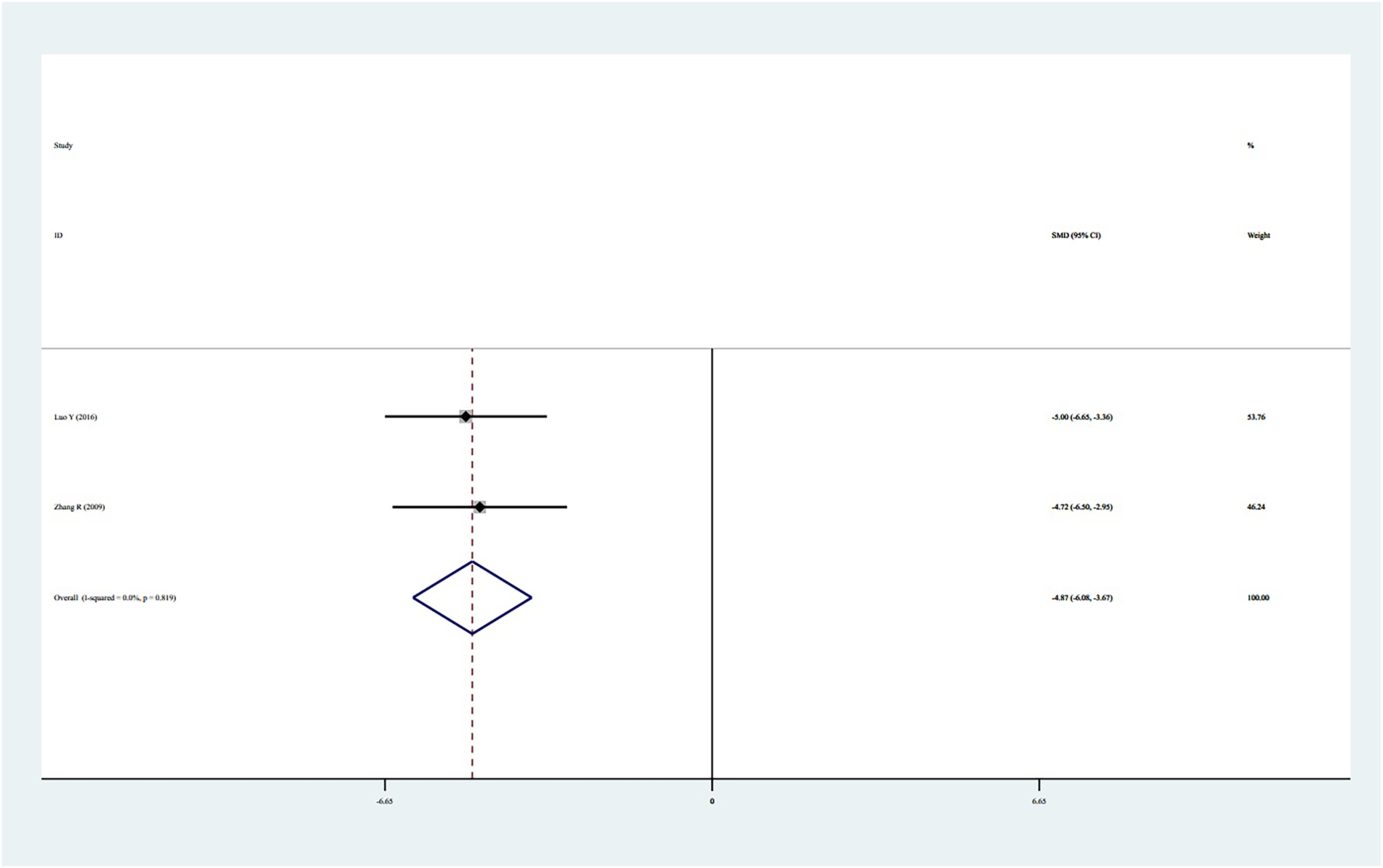
Trabecular separation.
Maximum Bone Load
Six studies20,21,24,26,31,32 examined maximum bone load, and the finding revealed that EUC therapy significantly improved it contrasted with the control group (SMD = 1.14; 95%CI = 0.68 to 1.60; heterogeneity Chi2 = 10.41, df = 5, P < 0.001, I2 = 52%, Figure 7).

Bone Maximum load.
Bone Biochemical Markers
Serum Osteocalcin(S-OCN)
Four studies20,21,26,32 declared S-OCN findings indicated that EUC therapy did not result in a significant difference relative to the control group (SMD = −0.42; 95% CI = −1.93 to 1.10; heterogeneity Chi2 = 41.17, df = 3, P = 0.588, I2 = 92.7%, Figure 8).
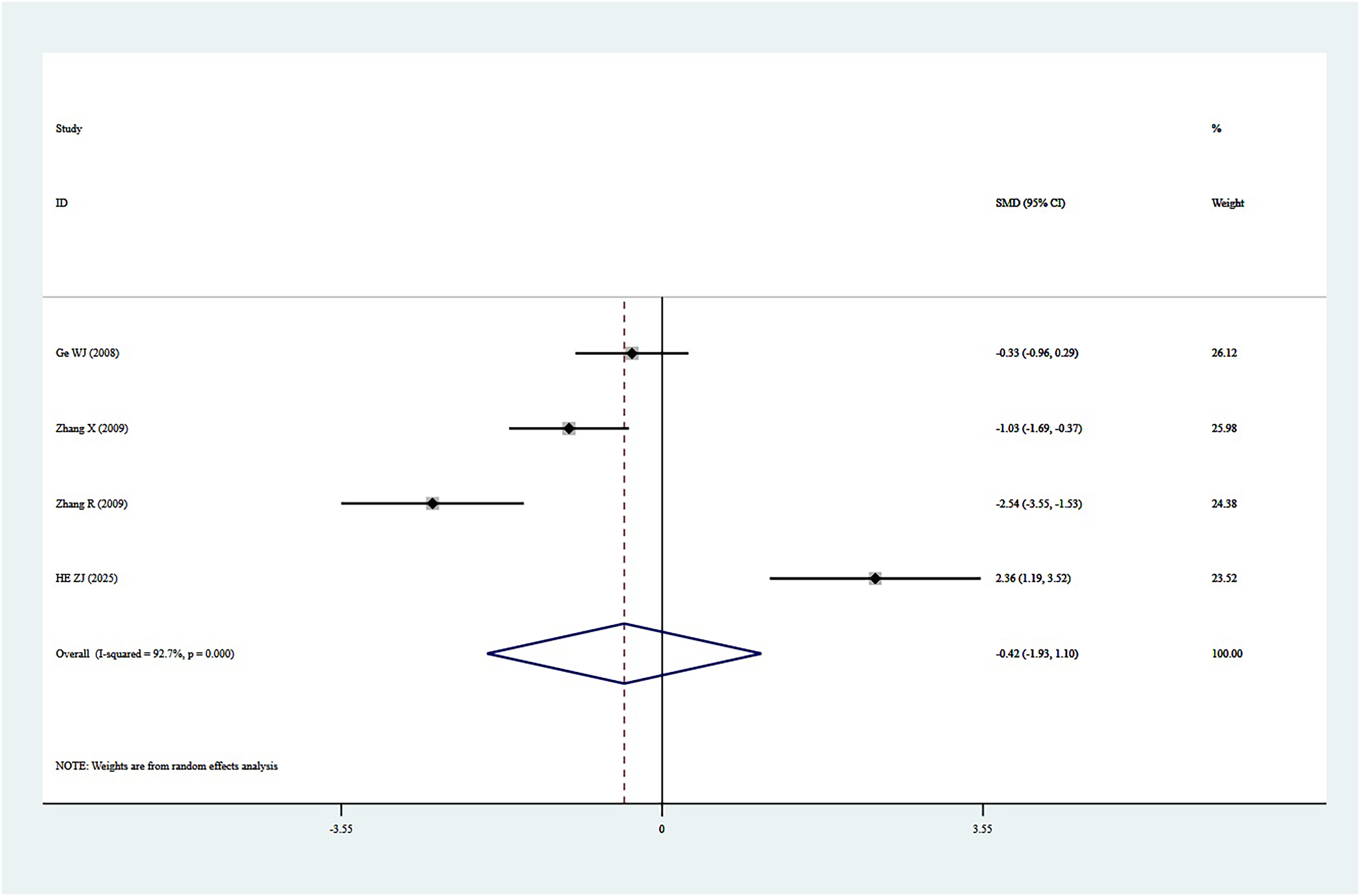
Serum osteocalcin.
Serum Alkaline Phosphatase(S-ALP)
Eight studies20,21,24,25,28,30,32,33 on S-ALP showed a significant decrease in the EUC treatment group relative to the control group (SMD = −1.66; 95% CI = −3.26 to −0.06; heterogeneity χ2 = 134.62, df = 7, P < 0.001, I2 = 94.8%, Figure 9).

Serum alkaline phosphatase.
Publication Bias and Sensitivity Analysis
Herein, Egger's test was employed to evaluate the publication bias possibility, revealing a publishing bias (P = 0.019, Figure 10). Additionally, sensitivity analyses were conducted by deleting each trial, and no noticeable effect was discovered (Figure 11).

Egger's test.

Sensitivity analysis. (A–H) represent the sensitivity of BMD, BV/TV, Tb.N, Tb.Th, Tb.Sp, Maximum bone load, S-OCN, and S-ALP, respectively. The sensitivity analysis was conducted by omitting single studies one by one, and no study with critical influence was found.
Discussion
This research is the first preclinical systematic review and meta-analysis of the anti-osteoporosis effectiveness of EUC. Across 14 studies involving 343 ovariectomized rats, EUC significantly increased BMD, BV/TV, Tb.N, and Tb.Th, while reducing Tb.Sp and S-ALP. EUC was also associated with improved maximum bone load. Serum osteocalcin (S-OCN) did not differ significantly between groups.
A systematic review of preclinical data facilitates a thorough understanding of disease pathways and the pharmacological actions of medications. The following summarizes the potential EUC pathways that mediated anti-OP actions in the reviewed investigations: (1) by up-regulating the level of serum E2 and increasing the content of IGF-1, EUC administration was associated with improved bone remodeling–related outcomes in ovariectomized rat models. Meanwhile, the results of HE staining showed that long-term administration of EUC had no obvious stimulating effect on the uterus weight of rats. 27 (2) EUC treatment was associated with changes in bone turnover–related markers, including serum ALP and osteocalcin, suggesting a potential modulatory effect on bone metabolism. 25 (3) The observed anti-osteoporotic effects of EUC may be mediated by multiple bioactive compounds, although definitive causal pathways remain to be validated. The anti-osteoporosis effects of EUC may be mediated by multiple bioactive compounds, but mechanistic pathways require further experimental confirmation. Glycine, lysine, tryptophan, docosahexaenoic acid, and glucose may serve as potential metabolic biomarkers, which were analyzed by GC-MS metabolomics technology used in osteoporosis rat serum by oral EUC administration. 31 Glycine is a constituent amino acid of endogenous antioxidant reduced glutathione (GSH) of the body. GSH significantly increases BMD in osteoporotic rats. 36 Lysine is an essential component of bone collagen synthesis, which prevent osteoporosis by enhancing NO generation and type I collagen synthesis by osteoblasts in both normal and osteopenic bone. 37 Moreover, lysine changes the physical properties of bone collagen fibers, helping the intestinal tract absorb calcium, reducing renal excretion of calcium, and preventing bone loss. 38 As a product of hydroxylation and synthesis of tryptophan, 5-HT stimulates the proliferation of osteoid cells by inhibiting the release of prostaglandin E2 or binding to osteoblasts. 39 Docosahexenoic acid (DHA) can improve the biomechanical properties of ovariectomized rat bone and reduce the incidence of osteoporosis-related fracture by regulating osteoblast, blood alkaline phosphatase activity, and prostaglandin synthesis to maintain a high bone mass.40,41 The inhibitory effect of osteoporosis rats on lipase in adipose tissue decreased, with the decrease in estrogen levels, prompting the increase of fat synthesis, which is one of the reasons for postmenopausal obesity in women. 42
Osteoporosis is a systemic bone disorder characterized by a loss in bone mass, damage of bone microarchitecture, and an elevated risk of fracture, posing a serious threat to the health of the elderly, especially postmenopausal women. In menopausal women, estrogen insufficiency may result in raised bone remodeling and excessive bone loss. 43 Osteoporosis-induced fractures impose a large financial, disability, and death impact on older men. Moreover, only half of them could return to normal life functions before the onset of symptoms among those aged ≥65 years. 44 The animal experiment is essential, which means that the ongoing disease process contributes to the overall clinical condition and leads to clinical disease. Animal models of OP include several animals and experimental techniques. OP animal models can be classified into two categories based on their pathogenesis: models with diminished bone formation (senile osteoporosis, senescence accelerated mouse strain P6, and glucocorticoid) and models with increased bone resorption (ovariectomized osteoporosis, disuse osteoporosis, and nutritional osteoporosis). Ovariectomized rat models had the advantages of simple manipulation, good technique repeatability, short cycles, and fewer ethical restrictions, which were considered the gold standard animal models for postmenopausal osteoporosis. 45
Osteocalcin (OCN) is formed by non-proliferative osteoblasts and is the main component of non-collagen in bone tissue. 46 Mature OCN is mainly deposited in the interstitial cells of bone tissue and dentin, and a small part is released into the blood circulation. 47 Some in vitro and in vivo experiments have revealed that OCN is involved in osteoblast differentiation, matrix mineralization, and bone resorption regulation.48–51 In our study, ovariectomized rats exhibited elevated serum OCN levels, which showed a non-significant decrease following EUC treatment. Although we performed the subgroup analysis according to the different factors of rat: age, drug dose, and time of drug intervention, no obvious difference was seen.
ALP is a widely distributed enzyme found in several tissues, and its low density is evaluated in normal human serum. 52 Moreover, ALP activity is commonly used as a marker of early osteoblast differentiation, and this enzyme is a product of osteoblast activity. 53 Previous studies have suggested that increased bone ALP activity after ovariectomy may indicate a high bone turnover state, with increases in both osteoblastic and osteoclastic activity; however, relatively greater osteoclastic activity can lead to net bone loss. In our meta-analysis, EUC supplementation was associated with lower S-ALP levels compared with control, suggesting a potential effect on bone turnover. However, this pooled effect was marginal, with the upper confidence interval approaching zero, which limits the certainty of this finding.
Limitations
This study has multiple shortcomings. First, we missed a few results, although we searched eight databases with no language constrain. Second, since research with unfavorable outcomes may be less likely to be published, selection bias may exist. Third, the heterogeneity of EUC by crude preparation or extraction methods or even by origin should be regarded, as this may jeopardize the validity of our findings. We call for standardization of expert consensus on the crude or extraction methods of different varieties of TCM in the experiments of osteoporosis management. Such a benefit can save drug resources and ultimately increase the preclinical research evidence credibility for TCM treatment of osteoporosis.
Conclusion
EUC therapy promoted BMD, bone microarchitecture, bone biomechanics, as well as biochemical bone markers in PMOP animal models. These findings suggest that Eucommia ulmoides cortex may exert protective effects against estrogen deficiency–induced bone loss in preclinical models However, because of the limited available animal research and the low quality of their studies, future studies should focus on standardized extract preparation, dose-response relationships, and mechanistic validation using molecular and genetic approaches before clinical translation can be considered.
Footnotes
Acknowledgements
None.

Ethics Considerations
Not applicable.
Consent to Participate
Not applicable.
Consent to Publication
Not applicable.
Author Contributions
Conceptualization: Daming Wang.
Data curation: Shen Wang, Yang Liu.
Formal analysis: Shen Wang, Yang Liu.
Funding acquisition: Li Wang.
Investigation: Yifeng Yuan.
Methodology: Shen Wang, Yang Liu, Daming Wang
Software: Simiao Chen.
Supervision: Liliang Zou.
Validation: Shen Wang, Yang Liu.
Writing – original draft: Shen Wang.
Funding
The authors disclosed receipt of the following financial support for the research, authorship, and/or publication of this article: This work was supported by the Zhejiang Provincial Natural Science Foundation of China, Zhejiang Key Laboratory of Intelligent Rehabilitation and Translational Neuroelectronics, Clinical Research Program of Zhejiang Provincial Administration of Traditional Chinese Medicine, Traditional Chinese Medicine Inheritance and Innovation Talent Support Program of Zhejiang, (grant number No: ZCLQ24H2701, No: 2024E10108, No: 2026ZL0459, No: 2023ZR104).
Clinical Research Program of Zhejiang Provincial Administration of Traditional Chinese Medicine (2026ZL0459). Traditional Chinese Medicine Inheritance and Innovation Talent Support Program of Zhejiang (2023ZR104). Zhejiang Key Laboratory of Intelligent Rehabilitation and Translational Neuroelectronics (2024E10108). Zhejiang Provincial Natural Science Foundation of China (ZCLQ24H2701)
Declaration of Conflicting Interests
The authors declared no potential conflicts of interest with respect to the research, authorship, and/or publication of this article.
Data Availability
All data generated or analysed during this study are included in this published article