



Abstract
Chromolaena odorata (L.), is a perennial shrub growing in the central and southern part of America that has spread to many other tropical Asian, Austrian, and West African countries. It usually creates dense thickets in the invaded ranges, which decrease the diversity and quantity of native species. It is included in the top 100 worst invasive alien species in the world and is regarded as a noxious weed in commercial plantations and agricultural fields. The ethnopharmacological qualities of this plant are observed against painful swelling, antioxidant, antimicrobial, analgesic action, wound healing, skin infections, stomach issues and many other pertinent therapeutic features, which have been documented in the literature on a significant scale. It has been found that the root and leaf extracts of plants contain a variety of active secondary metabolites, including phenolic, essential oils, flavonoid chemicals, saponins, and alkaloids. These metabolites can work alone or in concert to mediate the diverse biological activities. This article's objective is to give a summary to provide an overview of the phytochemical ingredients, bioactivities, and pharmacological properties of C. odorata, all of which are important for the potential future development of contemporary medications. This approach may unlock the full potential of C. odorata, creating new opportunities for modern drug discovery and practical applications in both medical and agricultural fields.
Diversity of secondary metabolites and pharmacological activities of Cromolaena odorata
Introduction
This plant is previously known as Eupatorium odoratum, which is commonly referred to by several names such as triffid weed, bitter bush, communist weed, Siam weed, and French weed.1–3 It is an invasive weed native to tropical and subtropical Americas.
4
The plant has spread quickly over time to other tropical southern and eastern Asian countries, as well as Australia, where it is now one of the most common agricultural weed species.
5
It has also spread to various countries in southern and western Africa. The plant, a noteworthy weed, travels from America to Asian nations such as Bangladesh, China, India, Indonesia, and others. Its widespread transmission across multiple continents demonstrates its high ecological adaptability and substantial ability to disrupt native biodiversity and agricultural productivity worldwide. This plant grows in different parts of India, but somehow has not been the research tool to explore secondary metabolites for human benefits in India. According to records by Lowe et al (2000), C. odorata was one of the worst weed invaders in the world, and the second most prevalent invasive plant species in South Africa.
6
Chromolaena odorata grows well in a variety of ecological settings, depending on a few variables like the plant's high rate of nutrient absorption, high rate of reproduction, suppressive allelopathic impact on other species of plants, and adaptability to different soil types and climates.7,8 A taxonomic diagram for Chromolaena odorata (L.)

From a morphological perspective, Chromolaena odorata is a shrub that can reach a height of 2-3 metres. It has straight, pithy, and brittle stems with numerous branches, and leaves that resemble arrowheads (3-7 cm in width and 6-12 cm in length, respectively), with veins that resemble folk art. 9 Additionally, the stem's leaves and branches are paired in opposing directions, and the roughly 15 to 25 florets range in colour from blue to pink to white to purple. 9 It is supported by subterranean swelling stems and has a fine root system with many branches.10–12 The seeds are 5-6 mm long, with a pale brown pappus and a brown, grey, or black colour. The roots are thin and fibrous, and they can extend up to 0.3 km into the ground.9,13 Capitula are produced in panicles at the tips of the twigs, and each capitulum has between 15 and 35 florets. The florets’ corollas range in colour from white to light purple. This plant can be found growing in all kinds of well-drained soil with a minimum yearly rainfall of 1500 mm and temperatures between 20 and 37 °C.14,15 However, open, sunny locations like riverbanks, roadsides, and deserted terrain are ideal for C. odorata growth.16,17
C. odorata grows in different types of natural vegetation in the savanna bordering large forests and in between dry deciduous forests. 18 It was discovered that the species lowers the population and biodiversity of the introduced plants.19,20 After infestation, it grows as a dense thicket, expanding its many branches and twisting them around the existing vegetation. The average number of plant species decreased by 31% in C odorata-infested areas. 21
C. odorata also infests as a weed in agricultural regions, including crop fields, deserted agricultural fields, coconut, banana, oil palm, rubber, cocoa, and coffee. It invades the agricultural fields and shows toxicological implications. 22
C. odorata has potential uses against pains, in the treatment of wounds, skin infections, stomach related problems. It has been found that the root and leaf extracts contain a variety of active secondary metabolites, including phenolic, essential oils, flavonoid chemicals, saponins, and alkaloids. These metabolites can work alone or in concert to mediate the diverse biological activities. Ethnobotanical uses, which highlight the intimate connection between humans and the natural world, are the practical application of plants by indigenous cultures for cultural, therapeutic, spiritual, or commercial goals. 23 The main objective of the study is to unfold various active secondary metabolites that are correlated with various pharmacological properties of C. odorata (Figure 1).

Effects of Chromolaena odorata on human health.
Pharmacological Activities
Together with being a rich source of bioactive chemicals, Chromolaena odorata has important therapeutic effects on a number of clinical disorders.24–26 A single component of the plant or a combination of its bioactive chemicals acting in concert to induce the physiological response can be responsible for its effects, as shown in Table 1. The presence of diverse bioactive chemicals highlights the phytochemical synergy of the plant. This characteristic may be particularly valuable in the development of multi-target therapeutic approaches for complex diseases.
Bioactive Constituents of C. odorata and Their Bioactivity.

Antibacterial Activity of Chromolaena odorata
It has been observed that C. odorata plant stem extract is useful in treating skin infections, especially those brought on by Propionibacterium acnes. 37 It is a promising natural remedy for skin problems because of its antibacterial qualities. The phytochemicals present in C. odorata extracts inhibit the proliferation and growth of pathogens by disrupting their cell walls. Moreover, considerable antibacterial action against a variety of pathogens was demonstrated by 5-hydroxy-37,4′-trimethoxyflavone, (±)-4′,5,7-trimethoxyflavanone, pectolinaringenin, and 35,7-trihydroxy-4′-methoxyflavone, all of which were isolated and showed low toxicity to human and animal cells. These results signify a fresh discovery in South African weed research, suggesting the potential of chemicals from C. odorata as lead compounds for the development of preventive medications against urinary tract infections (UTIs).24,38
In aqueous methanol leaf extracts, C. odorata dramatically inhibited Lasiodiplodia pseudothobromae and Lasiodiplodia theobromae colony growth. 39 The ethanol plant extracts of C. odorata inhibited the growth of soil-borne disease fungi, Fusarium oxysporum Schlecht et al and Phytophthora colocasiae Racib. 40 Acetone extracts of C. odorata were effective against Pythium ultimum, Fusarium oxysporium 41 and Pyricularia oryzae. 42 Exserohilum turcicum, Rhizoctonia solani, Sclerotinia sclerotiorum, Fusarium graminearum, Exserohilum turcicum and Botrytis cinereal were all inhibited in growth by the essential oil of C. odorata. 43 These findings validate the broad-spectrum antimicrobial activity of C. odorata, highlighting its potential as a promising candidate for phytopharmaceutical development.
Wound Healing Activity of Chromolaena odorata
Previous research has demonstrated that C. odorata can heal damaged tissue. 44 One of its key constituents, Eupolin, has been authorised in Vietnam for the treatment of soft tissue burns and wound healing.27,45 The analgesic and wound-healing properties of C. odorata leaf extracts are largely attributed to its phenolic components that serve as antioxidants. These substances promote wound healing without having a negative impact by increasing keratinocyte, endothelial cell and fibroblast development, while simultaneously upregulating the production of extracellular matrix proteins. The extracts facilitate tissue regeneration and wound closure through the stimulation of collagen synthesis, cell proliferation, and angiogenesis. Furthermore, they enhance the adhesion complex components and prevent collagen from contracting. Antioxidant qualities promote cell proliferation at the wound site, while antimicrobial activity helps the lesion heal more effectively Research indicates that a 5% weight/weight concentration considerably accelerates the closure of wounds as compared to controls. Furthermore, aqueous extracts have demonstrated the ability to modulate gene expression related to thromboxane synthesis and to reduce the levels of matrix metallopeptidase 9. These molecular interactions further support the potential of C. odorata as a natural wound-healing agent in experimental models, such as those involving rats.9,37,46 (Figure 2).
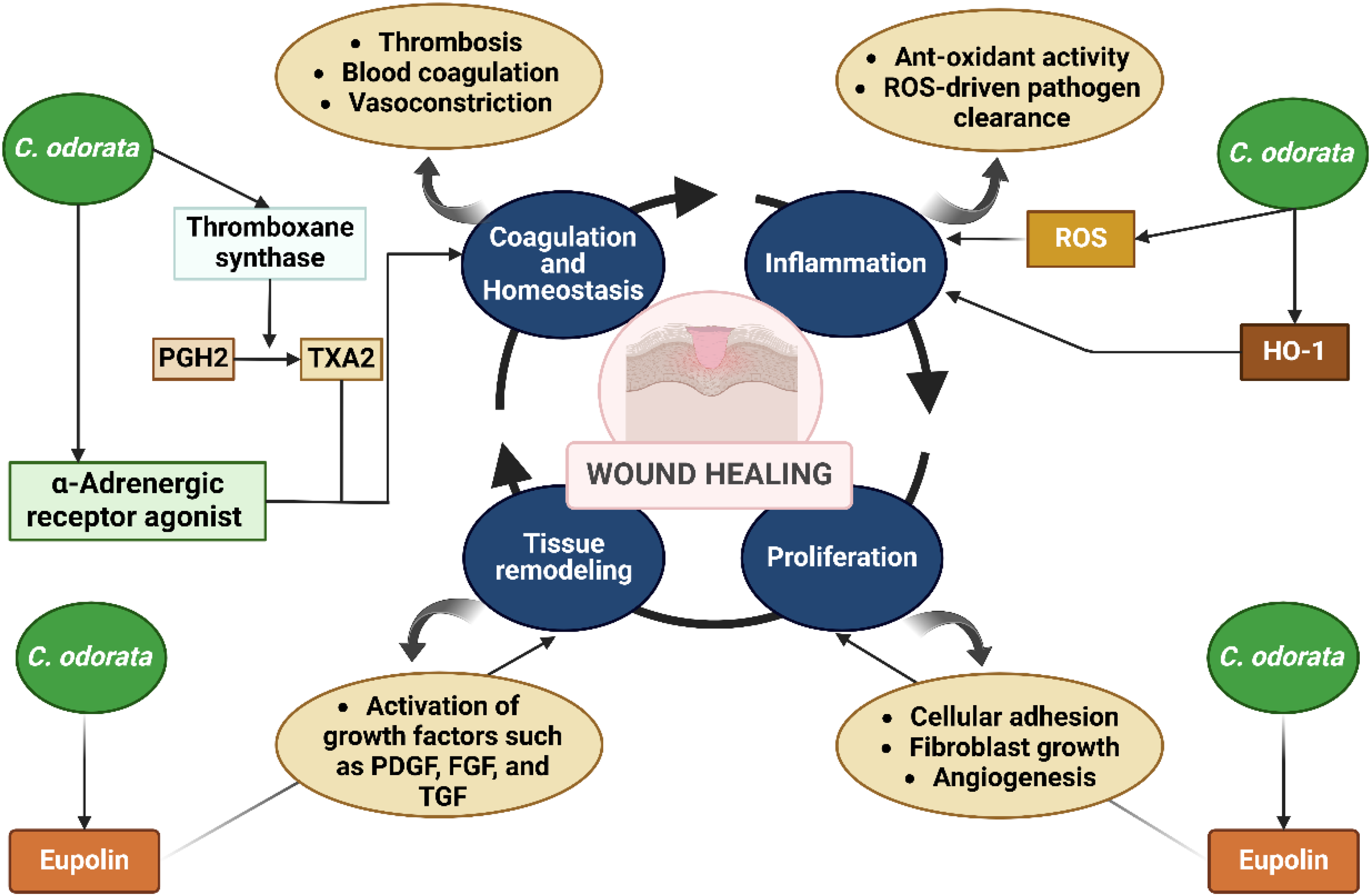
Wound healing activity of Chromolaena odorata extract.
Anti-Oxidant Activity of Chromolaena odorata
Phenolic substances such as vanillic, p-hydroxybenzoic acid, ferulic acid, protocatechuic acid and derivatives of benzoic and cinnamic acids are essential components of C. odorata. These substances have antioxidant qualities that guard against oxidative damage to skin cells. Studies have demonstrated their efficacy in preventing oxidative damage caused by H2O2 and superoxide radicals in human dermal fibroblasts and epidermal keratinocytes. HPLC and LC-MS are methods for identifying the strongest antioxidants. Topical administration of these chemicals emphasises their therapeutic potential in skin care and wound management by boosting wound recovery and curbing oxidative damage in burn injuries. 29 Such compounds, which are prevalent in various plants and the byproducts of their degradation, are synthesised by the shikimic acid pathway. Their allelopathic properties have been explored in multiple plant species, where they disrupt cell membrane electrochemical potential, thereby altering ion flux and membrane structure. This alters a number of physiological functions, including the production of phytohormones, enzyme activity, and respiration. A derivative that exhibited suppression against the blue-green algae Microcystis aeruginosa was also isolated: chlorogenic acid. These outcomes illustrate the multitude of biochemical pathways that underlie the allelopathic effects of C. odorata besides its possible ecological utility in plant protection.29,47
Anti-Inflammatory Activity of Chromolaena odorata
Inflammation is a biological response triggered by the body in reaction to the presence of poisons, infections, injuries, and other damaging factors. This results in the release of chemical mediators such as chemokines, cytokines, and reactive oxygen species that help with tissue regeneration and pathogen removal. Differential anti-inflammatory medications have been created over time to address the difficult problem of hyper-inflammation. Although some have noted a variety of negative effects, this highlights the necessity to investigate medicinal plants as potential alternative therapeutic agents. 48
Both in vitro and in vivo studies have investigated Chromolaena odorata as a potential anti-inflammatory agent. Researchers have been motivated to confirm the plant's anti-inflammatory qualities due to literature evidence supporting the traditional usage of the plant in treating inflammation and wounds 49 (Figure 3).

Anti-inflammatory, antipyretic, and antinociceptive mechanisms of Chromolaena odorata leaf extract.
Anti-Cancer Activity and Hypoglycemic Activity of Chromolaena odorata
C. odorata has anti-cancer activity against various cancer cell lines, such as liver, cervical, and breast cancer. The cytotoxic potentiality of the ethyl acetate extracts of C. odorata was revealed against the breast cancer cells MCF7 and T47D.
The cell viability was determined by MTT colorimetric assay. The experiment was conducted in 96-well microplates containing 1 ×10⁴ culture cells / 100 µL and then incubated at 37° temperature and 90% humidity with 5% carbon dioxide for 24 h. Cancer cells MCF7 and T47D were treated with ethyl acetate extract of C. odorata, and Vero cells acted as a control. 10 µL of MTT solution was added to each well, followed by 4-h incubation in a carbon dioxide incubator at 37° temperature until the purple formazan crystals were formed. 10% SDS stop solution in 0.1 (N) hydrochloric acid was added. After overnight incubation, absorbance was measured by using a microplate enzyme-linked immunosorbent assay (ELISA) reader at 595 nm.
The IC50 value was determined by using the percentage of viable cells. Then the Selective Index (SI) was calculated by using the IC50 values: SI ratio = IC50 Vero cells / IC50 of cancer cells.
The concentration of 500 µg/mL of ethyl acetate extract of C. odorata reduces the viability of the MCF7, T47D and viable cells of Vero to 1.2%, 5.4% and 61.3%, respectively. The IC50 values for MCF7, T47D and Vero cells were 218.78 µg/mL, 307.61 µg/mL and 279.5 µg/mL, respectively. The ethyl acetate extracts of C. odorata worked selectively against the breast cancer cells, with SI values against MCF7 and T47D of 12.77 and 9.08, respectively. An SI ratio of more than 3 indicates the ethyl acetate extract of C. odorata has a selective effect only on the breast cancer cells (MCF7 and T47D).
C. odorata showed anti-cancer activities due to the presence of various phenols and flavonoid compounds against several cancer cell lines. These compounds are essential in the modification of the scavenging enzyme activity of ROS, preventing the cell cycle by inducing apoptosis and autophagy to suppress invasion and cancer cell proliferation (Figure 4). 50

Anticancer mechanisms of Chromolaena odorata.
In a study, methanol root extracts of Chromolaena odorata was administered to alloxan-induced rat at two different concentrations, both reflected a significant decrease in blood glucose levels along with an inhibition of alpha-amylase and glycosylated hemoglobin. 51 Fresh leaf extract administered to in vivo model consuming a cholesterol enriched diet exhibited a marked decrease in blood glucose level and an improved lipid profile. 52 Thus, the promising hypoglycemic effects of Chromolaena odorata observed in preclinical models, along with other benefits, solidify the position of Chromolaena odorata as a potential natural therapeutic source that can be used in combination with the standard treatment regimens to enhance patient outcomes (Figure 5).

Hypoglycemic activities of Chromolaena odorata extract.
Diversity of the Secondary Metabolites in C. odorata
A pharmacological analysis showed that C. odorata is a rich source of secondary metabolites that belong to a wide range of chemical classes, including tannins, phenolic acids, flavonoids, saponins, and terpenoids. These compounds are responsible for the plant's diverse pharmacological effects, like antioxidant, analgesic, antipyretic, anti-inflammatory, and anti-diabetic properties (Figure 6

Different secondary metabolites found in Chromolaena odorata.
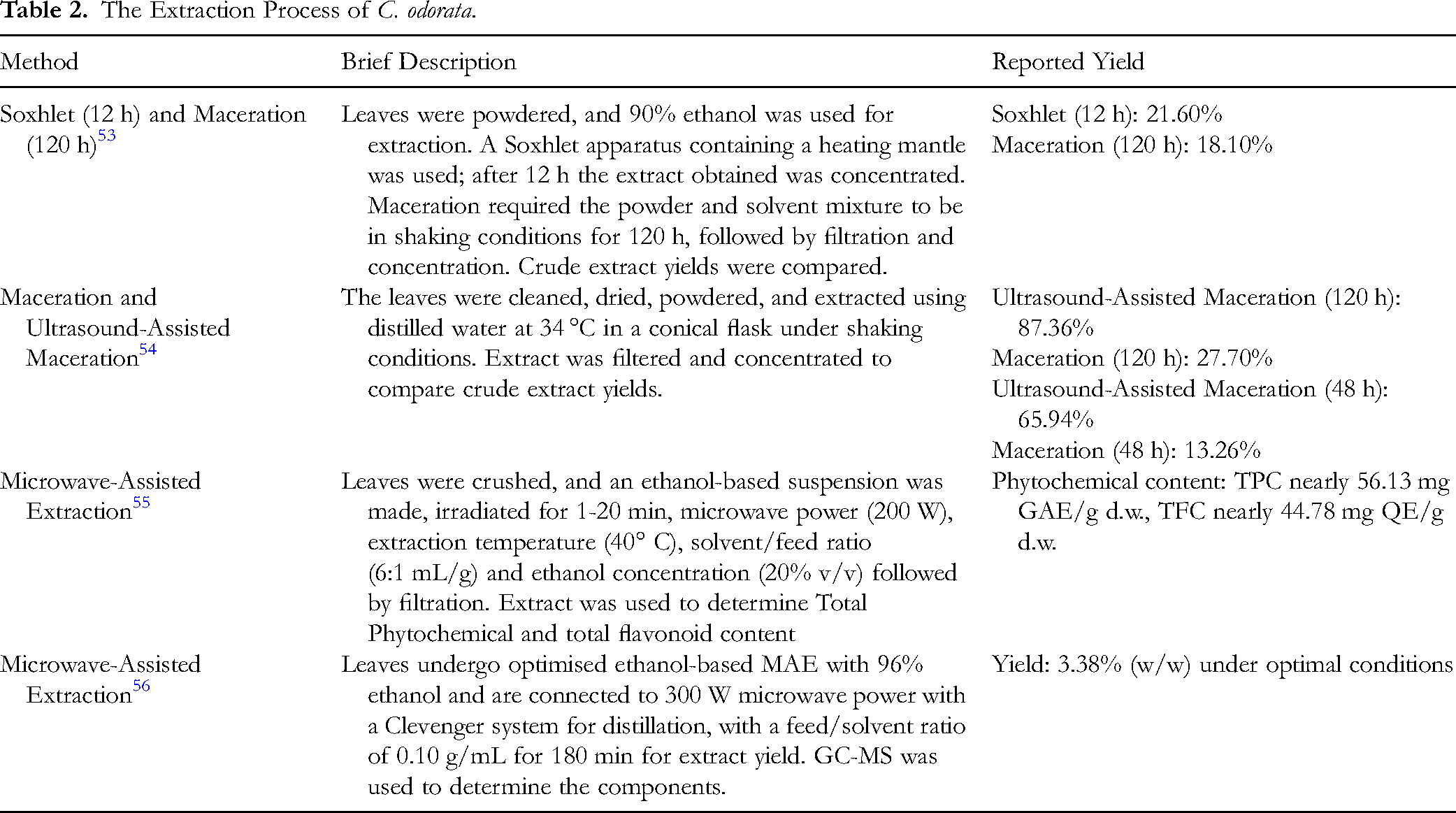
The Extraction Process of C. odorata.
Benzoic acid and its derivatives, such as p-hydroxybenzoic acid, protocatechuic acid, and p-coumaric acid, were found to be the primary composites in C. odorata leaves. 29 The shikimic acid pathway is used to create these composites.57,58
Numerous flavonoids including polyphenolic compounds and chalcone derivatives with heterocyclic benzene ring have been extracted from C. odorata leaf.38,59,60 Kaempferol and quercetin were also obtained from the leaf extracts of C. odorata61,62 having allelopathic properties. Numerous plant species were reduced in their development by quercetin.63,64
Pyrrolizidine alkaloids of different types like rinderine and its derivatives have been obtained from the flower and root of C. odorata. 65 Additionally, intermedine N-oxide and rinderine N-oxide have been found in the roots. 66 The pyrrolizidine alkaloids, a family of amino alcohols esterified with mono- or dicarboxylic acids, 67 serve as chemical defences against herbivores, such as mammals and insects.68,69 The substances disrupt multiple cell metabolisms and are extremely hazardous, including hepatotoxic.70,71 Thus, the anti-insect action of C. odorata is mediated by pyrrolizidine alkaloids.
Leaf extracts of C. odorata contain monoterpenes namely α-pinene and 1,8-cineole, among other terpenoids. 72 The allelopathic activity was demonstrated by 1,8-cineole and α-pinene, whereas a combination of the two substances demonstrated a synergistic effect on Solanum elaeagnifolium Cav. Growth. 73 1,8-cineole significantly prevents the growth of Liliaceous plants including Allium cepa L. 74 The wide range of terpenoids found in C. odorata highlights the species’ adaptability to its environment and defensive mechanisms against herbivory and competition. These findings highlight the intricate roles that terpenoids play in plant physiology and ecosystem dynamics, supporting the species’ capacity to adjust to various environmental conditions.47,75
Furthermore, the essential oil profile of C. odorata varies seasonally. Leaves harvested during summer contain significant amounts of β-caryophyllene, α-pinene, α-humulene, β-cubebene, δ-cadinene, germacrene D, and pregeijerene. In contrast, winter-harvested leaves exhibit higher concentrations of α-humulene, bicyclogermacrene, δ-cadinene, α-cadinol, β-pinene, and viridiflorol, with other constituents present at concentrations below 1%. 37 Some major compounds of essential oil of C. odorata were identified: alpha-pinene, beta pinene, geijerene, pregeijerene, E caryophyllene by using the Gas chromatography flame ionisation detection/mass spectrometry (GC FID MS) analysis, which are mainly responsible for antioxidant, anticytotoxicity, antimicrobial and antidiabetic activity. 76
Additionally, the aerial portions of C. odorata contain volatile components, which include roughly 10% oxygenated monoterpenes, 30% sesquiterpene hydrocarbons, 15% phenyl derivatives, 7% monoterpene hydrocarbons, and 31% oxygenated sesquiterpenes 77 (Figure 7).

The chemical structures of certain phytochemicals found in Chromolaena odorata.
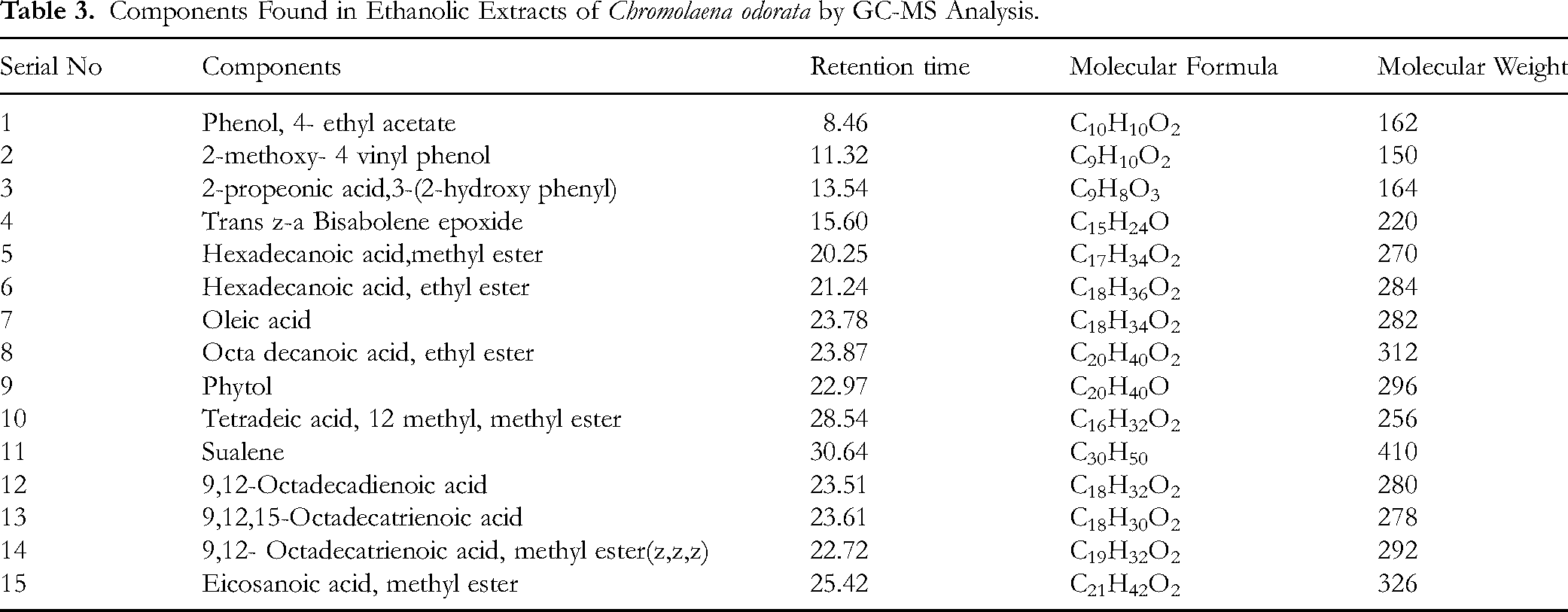
A study analysed the ethanolic extract of C. odorata using GC-MS and detected 24 compounds, some of which were tabulated in Table 3. 78 LC-MS/MS done using the extract from leaves of C. odorata in methanol solvents revealed the presence of alkaloids, tannins, flavonoids and steroids. 79
Components Found in Ethanolic Extracts of Chromolaena odorata by GC-MS Analysis.
Future Prospects
The utilisation of C. odorata extends beyond its current applications and offers opportunities in pharmaceutical development and sustainable agriculture. C. odorata is rich in bioactive secondary metabolites, representing a crucial natural reservoir for therapeutic innovation. 80 The growing global interest in plant-based compounds underscores the potential of C. odorata to play a pivotal role in the development of novel pharmacological agents, particularly for diseases where conventional therapies are ineffective or have adverse effects. 81
Pharmaceutical research would greatly benefit from the isolation and characterisation of the diverse constituents of the plant. 82 The antimicrobial, antioxidant, anti-inflammatory and wound-healing properties of the plant offer a strong basis for the discovery of novel therapeutic approaches. 83 For example, the flavonoids and phenolic acids present in the plant can be further investigated for their potential to mitigate oxidative stress and modulate inflammation. 84 The anti-cancer properties demonstrated by the phytochemicals present in the plant highlight the need for comprehensive molecular investigations and preclinical studies to understand the mechanism of action and pharmacokinetic characteristics.
Dermatological science recognises the strong potential of C. odorata for applications in wound healing and skin regeneration. Extracts from the plant can be incorporated into advanced topical formulations to promote tissue repair in cases of burns, ulcers and chronic wounds. 83 The efficacy of such applications can be further improved by designing targeted delivery systems that ensure controlled release and enhanced efficacy of the active compounds.
C. odorata shows excellent wound-healing properties. Therefore, green extract technology is useful for cosmeceutical product development. Palm oil and soybean oil are used as the solvent with high chlorophyll removal efficacy and show the highest recovery of TPC and TFC and the highest antioxidant activity of C. odorata extract 85
Potential antidiabetic and antihyperglycemic properties found in the root and leaf extracts of C. odorata present a promising area for further study. 86 The discovery and validation of natural agents that regulate blood glucose levels are necessary, considering metabolic disorders are on the rise. 87 Future research should aim to uncover the molecular mechanisms at play and thoroughly evaluate the safety, absorption and long-term efficacy of the compounds in clinical settings.
C. odorata also holds significant promise in the agricultural sector. The natural allelopathic properties of the plant are due to the release of volatile organic compounds and phenolic substances that indicate its potential as a botanical herbicide. 88 This can provide an eco-friendly alternative to conventional chemical herbicides, supporting more sustainable crop management practices. Successful utilisation of this potential depends on well-designed trials that optimise application methods and dosage levels while minimising environmental harm.
The seasonal fluctuations in the essential oil composition of C. odorata offer a crucial opportunity to optimise harvest strategies for specific industrial needs. 37 Detailed phytochemical profiling across various growth stages would be beneficial in establishing optimal cultivation and extraction practices. 37 This, in turn, would enhance yield consistency and product quality.
C. odorata has numerous pharmacological properties in in vitro and in vivo animal studies, but there were no FDA-approved purified compounds for clinical trials, which is an existing challenge of this plant in future natural product-based drug discovery. Further investigation is needed to separate the active compounds of C. odorata that demonstrate high biological activity during screening using bioassay-guided fractionation.
Conclusion
This comprehensive review highlights Chromolaena odorata as a highly promising yet underutilised medicinal plant, evidenced by its diverse array of pharmacologically active secondary metabolites. Compounds such as flavonoids, terpenoids, phenolic acids, and pyrrolizidine alkaloids collectively contribute to its wide range of bioactivities, such as antimicrobial, anti-inflammatory, antioxidant, wound-healing, and allelopathic effects. The significance of C. odorata extends beyond its therapeutic applications, as it plays a pivotal role in ethnopharmacology, offering a rich source of traditional remedies across different cultures.
C. odorata is distinguished by its dual functionality that combines medicinal properties with ecological benefits. It exhibits allelopathic properties attributed to volatile oils and phenolic compounds, presenting a natural solution for weed management that supports sustainable agricultural practices. This ecological adaptability reinforces its importance in both environmental and economic contexts, particularly within integrated pest management strategies. However, despite its broad spectrum of beneficial properties, the plant remains underexplored in scientific research. A significant proportion of existing studies are confined to in vitro or preclinical models, highlighting the need for rigorously designed in vivo investigations and human clinical trials. It is crucial to validate safety profiles, determine appropriate dosages, and assess potential toxicity before its pharmacological applications can be widely implemented. There is a pressing need for more systematic and detailed investigations into its secondary metabolites and their mechanisms of action. Future research should focus on clinical trials and safety evaluations to fully establish the pharmacological efficacy and potential therapeutic applications of these compounds. This approach may unlock the full potential of C. odorata, creating new opportunities for drug discovery and practical applications in both medical and agricultural fields.
This call for further study is supported by recent data indicating that many plant-derived drugs in the market have yet to be fully utilized or understood, suggesting a vast landscape of phytochemicals awaiting discovery in C. odorata. As research progresses, it is anticipated that C. odorata will contribute significantly to the fields of pharmacology, ethnobotany, and sustainable agriculture.
Footnotes

Author Contribution
Funding
The authors received no financial support for the research, authorship, and/or publication of this article.
Declaration of Conflicting Interests
The authors declared no potential conflicts of interest with respect to the research, authorship, and/or publication of this article.
Data Availability and Transparency Statement
All authors have read and approved the final version of the manuscript. CORRESPONDING AUTHOR had full access to all of the data in this study and takes complete responsibility for the integrity of the data and the accuracy of the data analysis. The lead author affirms that this manuscript is an honest, accurate, and transparent account of the study being reported; that no important aspects of the study have been omitted; and that any discrepancies from the study as planned have been explained.
The sources of data used for the preparation of the manuscript has been mentioned in the references. No new data generated for this manuscript.