



Abstract
Leontice is a genus of perennial, tuberous herbs belonging to the Berberidaceae family, comprising four species: Leontice leontopetalum, Leontice ewersmanni, Leontice armeniaca, and Leontice incerta. These plants are found primarily in mountainous regions and are widely distributed across parts of Asia, including Turkey, Lebanon, Armenia, Syria, China, and Central Asia. Although the Leontice genus has long been recognized for its medicinal uses and the presence of potent therapeutic compounds, a comprehensive review of this genus is still lacking in the current literature. Therefore, this review aimed to summarize the traditional uses, phytochemistry, and pharmacology of this genus. Relevant scientific literature was gathered from various databases, such as Google Scholar, Scifinder, ScienceDirect, PubMed, Scopus, ResearchGate, and Web of Science. Traditionally, the tubers of this genus have been used to treat epilepsy in various regions. To date, a total of seventy compounds has been identified, with alkaloids being the most prevalent (62.9%). Forty-four alkaloids have been identified in total. Additionally, two flavonoids, two flavonol glycosides, two glycosides, seven esters, one saponin, two terpenoids, two phytosterols, four hydrocarbons, and one fatty alcohol have been identified from this genus. Several biological studies have described a range of pharmacological (both in vitro and in vivo), including antioxidant, anti-inflammatory, antimicrobial, anticancer, cardiovascular, antidiabetic, muscle relaxant, anti-cholinesterase, convulsant, anti-convulsant, and wound healing activities. The present review offers an updated insight into the ethnopharmacology, chemical makeup, and pharmacological effects of the genus Leontice. It provides guidance for future research focused on isolating bioactive compounds to facilitate the drug development process. Collectively, the evidence establishes Leontice as a promising medicinal genus rich in therapeutically active metabolites that warrant further pharmacological and clinical exploration.
Introduction
Plants provide a rich source of natural compounds, characterized by extensive structural and functional diversity, making them highly promising for modern drug discovery. For decades, they have been a primary source of medicinal agents used across the globe. 1 Moreover, they have long been integral to traditional healthcare systems worldwide, with their medicinal use widely recorded across cultures. Approximately 20,000 species are classified as medicinal plants. In recent years, increasing scientific focus on these plants and their active constituents has fueled renewed interest in their role in contemporary medicine. 2 A World Health Organization (WHO) survey reports that 80% of the population in Asia and Africa currently relies on plant-based medicines for various healthcare needs. With nearly half of the global population unable to afford conventional allopathic drugs, herbal remedies provide a more accessible and economical alternative, often cultivated at home or sourced from the wild at minimal cost. 3 Over thousands of years, the use of medicinal plants to treat illnesses has evolved into a distinct branch of medicine known as ethnomedicine. Initially based on trial-and-error, this field now encompasses a vast body of traditional knowledge on the therapeutic uses of plants. 4 In addition to this, the transmission of ethnomedicinal wisdom has long relied on verbal communication between generations within families. Today, the rise of modern lifestyles and diminished interest among youth have contributed to a decline in traditional plant-based healing practices. Nonetheless, this ancestral knowledge has significantly contributed to the development of numerous contemporary pharmaceuticals. 5
The genus Leontice comprises perennial herbaceous plants belonging to the Berberidaceae family, renowned for their medicinal value. It was first classified as a genus by Linnaeus in 1753. The name Leontice is derived from Greek, meaning “Lion's Leaf” or “Lion's Foot”.6,7 These plants typically thrive in mountainous regions, with some species adapted to arid environments. The genus includes four species: L. armeniaca, commonly found in Armenia, Lebanon, Syria, and Turkey; L. ewersmanni, native to Central Asia; L. incerta, located in China's Xinjiang province and Kazakhstan; and L. leontopetalum, which is distributed from the eastern Mediterranean to Central Asia (Figure 1).8,9 Most species within the genus Leontice are characterized by a bitter flavor and a strong, pungent smell. Their rhizomes are rich in starch but are toxic. The primary chemical components of Leontice species are quinolizidine alkaloids and flavones, which are significant for their chemotaxonomic classification. Additionally, these plants contain tannins, phenolic compounds, flavonoids, saponins, esters, and various other bioactive substances.10–12 The genus Leontice has a long history of use in traditional folk medicine, particularly for treating epilepsy in countries like Turkey and Jordan. Additionally, in Iran, the tuber has been employed as an antidote for snakebites and opium poisoning, as well as used in soap formulations to treat rheumatism, joint pain, and inflammation.13–15 Many pharmacological studies have revealed that Leontice possesses antioxidant, anticholinesterase, antidiabetic, convulsant, anticonvulsant, cardiovascular, cytotoxic, antiradical, and smooth muscle contractile activities.14,16,17 This review focused on summarizing the traditional uses, pharmacological properties, and phytochemical constituents of Leontice, given its diverse range of chemical compounds. Furthermore, it aimed to compile these constituents, assess their pharmacological activities, and identify promising candidates for future drug development, thereby serving as a valuable resource for ongoing research.

Distribution of Leontice species.
Traditional Uses
Historical records indicate that Leontice has been utilized by humans since ancient times, as evidenced by cuneiform inscriptions on clay tablets, where the Assyrians reportedly used it as a form of soap. A similar use was observed in Kashmir, where the plant was employed to remove stains from clothing. Ibn al-Baitar (around 1240) also recorded its use in Syria under the name ‘Uslu,’ and in Upper Mesopotamia as ‘Sul'a,’ where it was traditionally used to whiten woolen and linen fabrics. These historical uses align with modern findings that identify the presence of saponins in Leontice tubers, compounds known for their cleansing properties. 18 Leontice tubers have also been excavated in several places and consumed as a snack by children. During times of scarcity, these tubers, like Bongardia tubers, have been eaten for nourishment. Furthermore, in the Caucasus, these tubers have traditionally been fermented to make liquor.15,18,19 Additionally, they have been used traditionally as a treatment for sciatica, snakebite antidote, and even for opium overdoses.15,20,21 The tubers of L. leontopetalum, known for their high starch content and sweet, carrot-like taste, have been traditionally valued for both their nutritional and medicinal benefits. Beyond their role as a food source, the tubers possess significant ethnopharmacological importance. They have been traditionally used in folk medicine to manage epilepsy in regions such as Turkey, Syria, and Palestine, highlighting their role in traditional healing practices. Additionally, in southeastern China, they have been utilized for over 2000 years to treat rheumatism and gastric ulcer-related hemorrhages, demonstrating notable therapeutic efficacy.10,17,21,22
Phytochemistry
Over the past decade, the genus Leontice has garnered significant attention in natural product research, largely due to its remarkable medicinal properties, diverse bioactive compounds, and nutritional benefits. Alkaloids, accounting for 62.9% of the identified constituents, represent the predominant class of compounds in this genus. In addition to alkaloids, various other classes such as flavonoids, flavonol glycosides, glycosides, esters, saponins, terpenoids, phytosterols, hydrocarbons, and fatty alcohols have been isolated and characterized from Leontice species. A summary of these compounds, their respective classes, and their sources is provided in Table 1. Figure 2-6 provides chemical structures of phytochemicals identified from the Leontice genus.
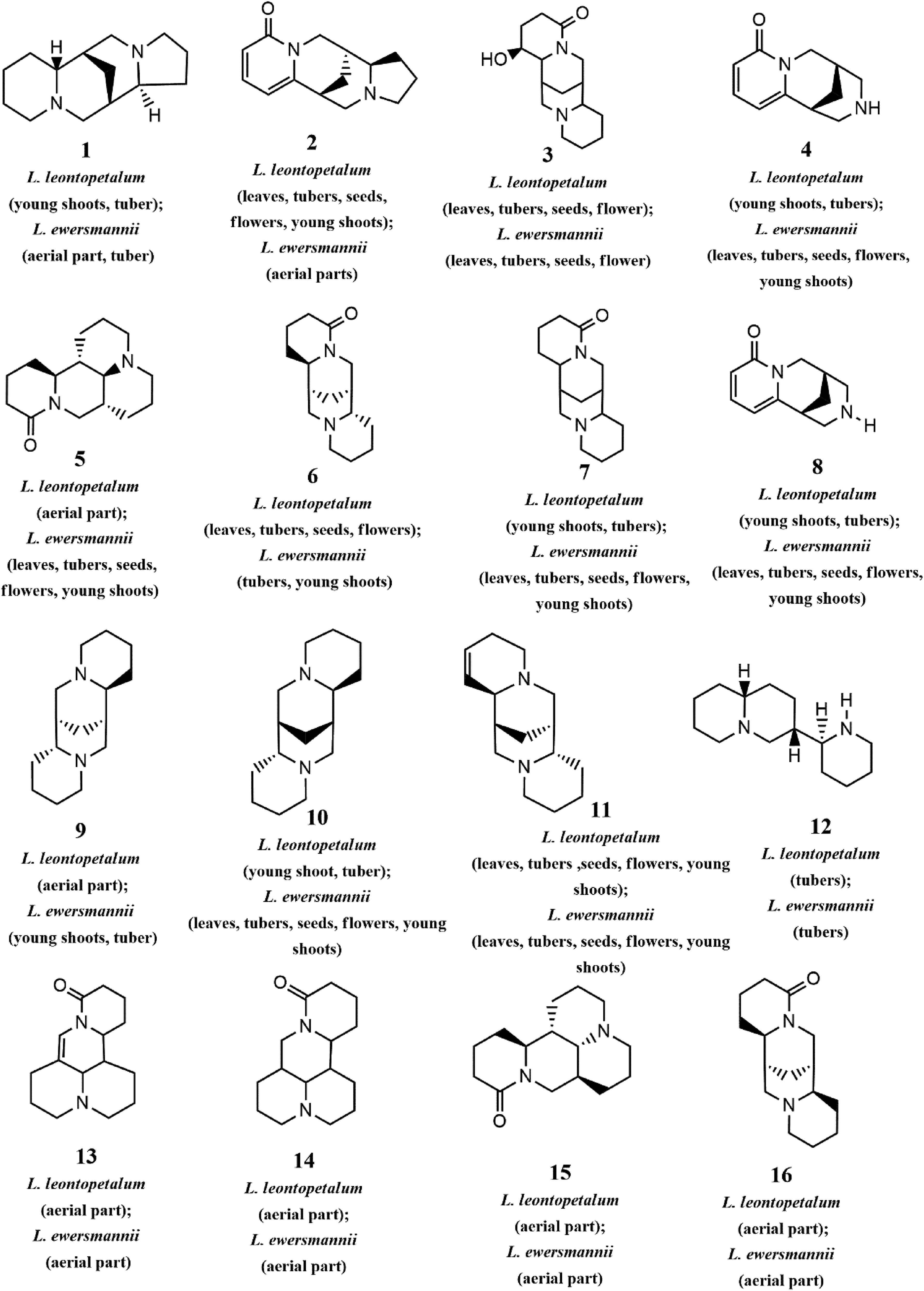
Chemical structures of phytochemicals (1–16) of Leontice species.

Chemical structures of phytochemicals (17–34) of Leontice species.

Chemical structures of phytochemicals (35–48) of Leontice species.

Chemical structures of phytochemicals (49–63) of Leontice species.

Chemical structures of phytochemicals (64–70) of Leontice species.
Phytochemical Compounds of the various species of the Medicinal Plants of Genus Leontice.

Alkaloids
Alkaloids are a major class of nitrogen-containing heterocyclic compounds commonly derived from plants. They are highly valued among natural products due to their vast structural diversity and complex chemical nature. 30 A total of 44 alkaloid compounds have been identified from the genus Leontice, predominantly from two species: L. leontopetalum and L. ewersmanni. The first sixteen compounds (1-16) were detected in both species. Compounds 17–36 were found exclusively in L. leontopetalum, while compounds 37–44 were only identified in L. ewersmanni. Identified alkaloids from leontice genus are: leontidine (1), camoensine (2), 3-β-hydroxylupanine (3), cytisine (4), leontine (5), lupanine (6), α-isolupanine (7), N-methylcytisine (8), pachycarpine (9), sparteine (10), 11,12-dehydrosparteine (11), leontiformidine (12), darvasine (13), darvasamine (14), D-sophoridine (15), isolupanine (16), 13α-hydroxy lupanine (17), 3-α-hydroxylupanine (18), α-isosparteine (19), dehydrolupanine (20), (+) dihydrosecoquettamine (21), (+) O-methyldihydro secoquettamine(22), 10,17- dioxosparteine (23), 13α -acetoxylupanine (24), 17-oxolupanine (25), 17-oxosparteine (26), 5,6-dehydrolupanine (27), 5,6-dehydro-α-iso-lupanine (28), beta-isosparteine(29), D-leontiformine (30), hydroxylupanine (31), leonticine (32), oblongine chloride (33), petaline (34), petaline chloride (35), leontiformine (36), matrineisomer (37), tapsine (38), D- lupanine (39), isoleontine (40), matrine (41), N-methyltetrahydrocytisine (42), tetra hydrorhombifoline (43), and α-pyridone (44).12,21,24,25,27
Flavonoid
Flavonoids are natural compounds with diverse phenolic structures, commonly found in fruits, vegetables, grains, bark, roots, stems, flowers, tea, and wine. Renowned for their health-promoting properties, they are now essential ingredients in nutraceuticals, pharmaceuticals, medicines, and cosmetics.31,32 Two flavonoids, dihydroquercistin (45) and rutin (46), were identified. Dihydroquercistin (45) was found in the tubers of both L. leontopetalum and L. ewersmanni, while rutin (46) was detected in the tubers of L. leontopetalum, L. ewersmanni, and L. incerta. 28
Flavonol Glycoside
From the leaves and stems of L. leontopetalum, two flavonol glycosides, namely isorhamnetin-3-rutinoside (47) and quercetin-3-glucoside (48), were isolated. 29
Glycoside
Glycosides, which consist of sugar units bonded to aglycones, are important secondary metabolites with substantial commercial relevance in the food and pharmaceutical sectors. They contribute to flavor enhancement, function as natural sweeteners, and help maintain the stability and quality of food products. 33 Two glycosides, namely salidroside (49) and β-sitosterol-3-O-β-D-glucopyranoside (50) were identified from the Leontice genus. Salidroside (49) was found in the rhizomes of L. leontopetalum, L. ewersmanni, and L. incerta, 28 while β-sitosterol-3-O-β-D-glucopyranoside (50) was identified in the aerial parts of L. ewersmanni. 23
Ester
A total of seven ester compounds, namely butyl linoleate (51), ethyl oleate (52), ethyl palmitate (53), dimethyl dodecanedioate (54), methyl cerebronate (55), methyl linoleate (56), and methyl palmitate (57), were identified in the aerial parts of L. ewersmanni. 23
Others
Saponins like sapogenin (58) have been isolated from the roots of L. leontopetalum. 19 Terpenoids, including diterpene alcohols such as phytol (59) and triterpenoids like lupenone (60), have been found in the aerial parts of L. ewersmannii. Phytosterols such as stigmast-7-en-3-ol (61), stigmasterol (62), and β-sitosterol (63) are also present in the aerial parts of L. ewersmannii. Additionally, hydrocarbons, including saturated types like hentriacontane (64), pentacosane (65), and 11-decyl-tetracosane (66), as well as unsaturated hydrocarbons such as 17-pentatriacontene (67), have been isolated from its aerial parts. Fatty acids like palmitic acid (68) and oleic acid (69) were identified in the aerial parts of L. ewersmannii, alongside fatty alcohols such as 1-heptacosanol (70). 23
Pharmacological Activities
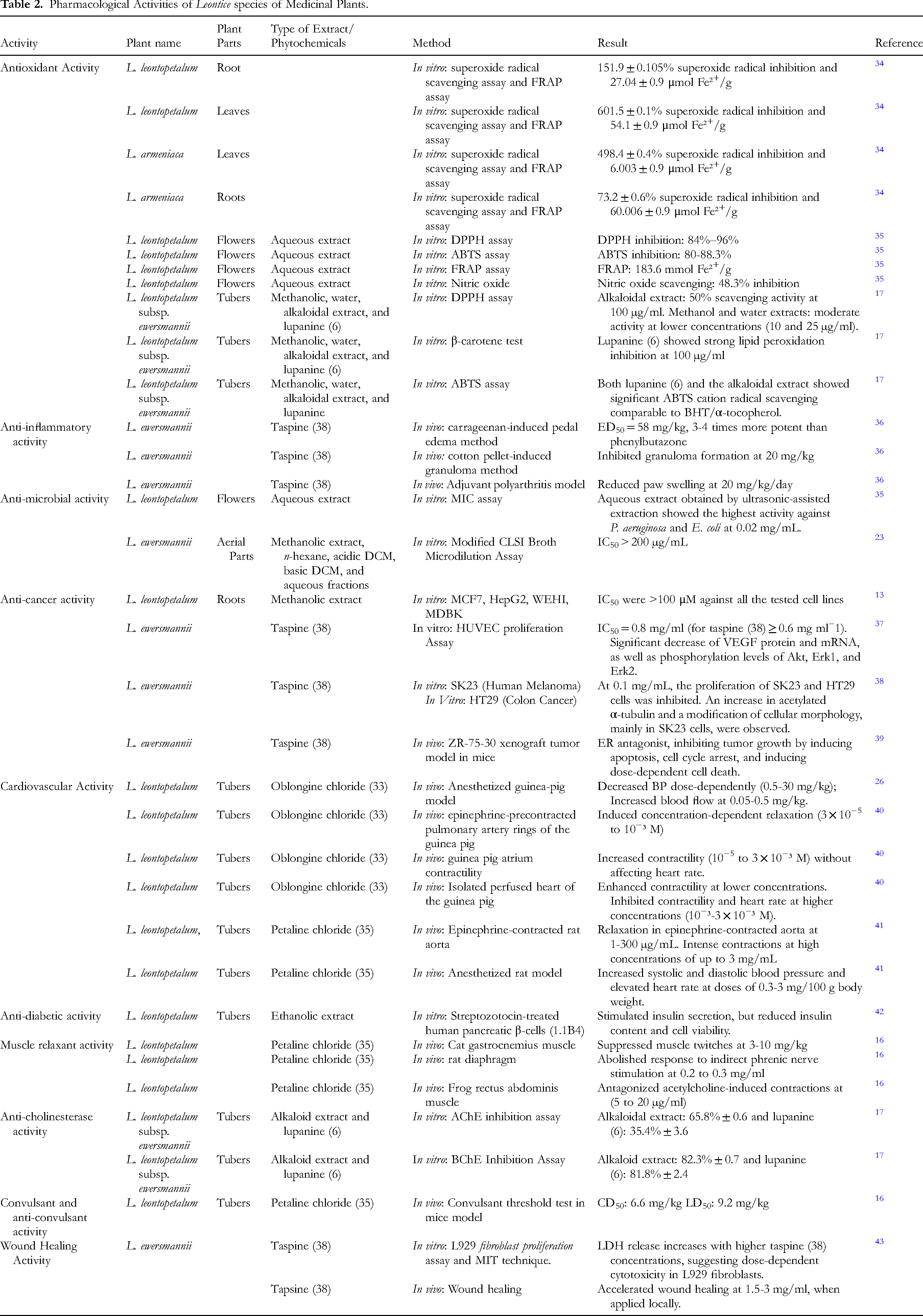
Recent studies have demonstrated that species of Leontice, particularly L. leontopetalum, exhibit a wide range of significant pharmacological activities, including antioxidant, anti-inflammatory, antimicrobial, anticancer, cardiovascular, antidiabetic, muscle relaxant, anti-cholinesterase, convulsant, anti-convulsant, and wound healing effects (Table 2).
Pharmacological Activities of Leontice species of Medicinal Plants.
Antioxidant Activity
Free radicals are generated through internal cellular activities, including both enzymatic and non-enzymatic reactions, as well as from external sources such as cigarette smoke, environmental pollution, ionizing as well as ultraviolet radiation, pesticides, and industrial chemicals. 44 Free radicals are generally divided into four primary groups according to the element or atom they contain: (1) Reactive oxygen species such as O2•− and •OH, (2) Reactive nitrogen species such as NO• and NO2•, (3) Reactive sulfur species such as RS• and RSSR•−, and (4) Reactive chlorine specie such as Cl•. 45 To mitigate the damaging effects of free radicals, the body relies on an array of internal defense mechanisms known as endogenous antioxidants. These include enzymatic antioxidants such as superoxide dismutase, catalase, and glutathione peroxidase, as well as non-enzymatic antioxidants like glutathione, ubiquinone, uric acid, and metallothioneins.46,47 However, when the generation of free radicals surpasses the body's ability to counteract them, oxidative stress ensues. 48 This imbalance is linked to numerous health conditions, ranging from cancer to cardiovascular diseases. As a result, there is growing interest in plant-derived natural antioxidants, which act as bioactive compounds. The role of antioxidant-rich plant materials in promoting health and preventing disease is increasingly being recognized by researchers, the food industry, and consumers, especially as the demand for functional foods with targeted health benefits continues to rise. 49 Shokatyari et al conducted a study that highlighted the antioxidant potential of the leaves and roots of L. leontopetalum, utilizing Ferric Reducing Antioxidant Power (FRAP), reducing power, and superoxide radical scavenging assays. Additionally, the study included an evaluation of the antioxidant activity of the leaves and roots of another species from the same genus, L. armeniaca. Among all tested samples, the root extract of L. leontopetalum exhibited the highest reducing power, with an absorbance value of 107.7 ± 4.4 at 700 nm, followed by the leaf extract of L. armeniaca (68.4 ± 4.4). Regarding superoxide radical scavenging activity, the root extract of L. leontopetalum also demonstrated the greatest inhibition (105. 9 ± 0.1%), whereas the leaf extract of L. armeniaca showed the lowest inhibition (36.4 ± 0.5%). Furthermore, when antioxidant activity was assessed in terms of micromoles of ferrous iron per gram of dry weight, the leaf extract of L. leontopetalum exhibited the highest activity (1.1 ± 0.1 μmol Fe²+/g). 34 Moreover, the aqueous extract of L. leontopetalum flower showed significant free radical scavenging activity, with DPPH inhibition rates ranging from 84% to 96%, and ABTS inhibition rates between 80% and 88.3%. The FRAP assay further highlighted its strong reducing potential, with the highest value observed at 183.6 mmol Fe²+/g. The nitric oxide scavenging assay revealed moderate activity, with the extract showing 48.3% inhibition. 35 Kolak et al conducted a study to evaluate the antioxidant potential of three distinct extracts (methanol, water, and alkaloidal) derived from the tuber of L. leontopetalum subsp. ewersmannii, as well as the isolated quinolizidine alkaloid, lupanine (6). Lupanine (6) showed strong lipid peroxidation inhibition at 100 µg/ml in the β-carotene test, while methanol and water extracts exhibited moderate activity at lower concentrations (10 and 25 µg/ml). In the DPPH assay, only the alkaloidal extract displayed 50% scavenging activity at 100 µg/ml. Both lupanine (6) and the alkaloidal extract demonstrated significant ABTS cation radical scavenging, comparable to standard antioxidants like BHT and α-tocopherol. 17
Anti-Inflammatory Activity
Inflammation is a crucial biological response triggered by the body to combat harmful stimuli such as infections, tissue damage, or immune disturbances. This protective process is typically marked by symptoms including pain, redness, heat, swelling, and functional impairment. 50 Inflammation may be classified as either acute or chronic, each with distinct implications. Acute inflammation occurs over a short duration, typically from minutes to a few days. In contrast, chronic inflammation persists over a longer period and is associated with the onset of various health conditions, including gout, rheumatoid arthritis, diabetes, cardiovascular disorders, inflammatory bowel diseases, cancer, and neurological illnesses. 44 Taspine (38), an alkaloid previously isolated from Leontice ewersmannii 20 has been evaluated for its anti-inflammatory potential in various models. In the carrageenan-induced pedal edema method, orally administered taspine hydrochloride at effective doses of 125 mg/kg and 250 mg/kg demonstrated a dose-related inhibition of edema with an ED50 of 58 mg/kg, showing 3–4 times greater potency than phenylbutazone. In the cotton pellet-induced granuloma method, taspine hydrochloride at a dose of 20 mg/kg significantly inhibited granuloma formation, with effects comparable to indomethacin. In the adjuvant polyarthritis model, daily administration of taspine hydrochloride at 20 mg/kg/day significantly reduced paw swelling, similar to the effects of indomethacin. 36
Antimicrobial Effects
For thousands of years, microbes have thrived and dominated the Earth, successfully adapting to diverse environmental challenges. However, the discovery of antibiotics brought a dramatic shift in this dynamic. Yet, the continuous evolution of bacteria, coupled with the misuse and overuse of antibiotics, has led to the emergence of antibiotic-resistant pathogens, gradually undermining the effectiveness of antibiotic therapy. 51 Phytochemicals have emerged as promising agents against microbial infections due to their diverse modes of action. These include inhibiting the synthesis of microbial cell walls, proteins, and nucleic acids, interfering with metabolic processes, and compromising the integrity of the cell membrane. 52 The antimicrobial effects of the aqueous extract of L. leontopetalum flower were investigated against gram-positive bacteria (S. aureus (ATTCC6538)), (B. subtilis (ATCC6633)), and Gram-negative (E. coli (ATCC6538)), (P. aereuguinosa (ATCC 9027)). The aqueous extract was obtained by ultrasonic-assisted extraction (UAE; 15 min, 50 ◦C) and microwave-assisted extraction (MAE; 15 min, 180 and 270 W). As seen, the antibacterial activity of the samples was as the following orders: CdSe NPs (UAE)> CdSe NPs (MAE; 270 W)> CdSe NPs (MAE; 180 W)> Aqueous extract (UAE)> Aqueous extract (MAE; 270 W)> Aqueous extract (MAE; 180 W). Using UAE, the aqueous extract and its associated CdSe nanoparticles showed maximum antibacterial potency against P. aeruginosa and E. coli at 0.02 mg/mL. However, their activity against gram-positive strains (S. aureus and B. subtilis) was minimal, with inhibition only occurring at a concentration of 0.05 mg/mL. Using the WDM method, the antifungal activity of CdSe NPs and aqueous extracts was evaluated in vitro against A. oryzae and C. albicans. The antifungal activity increased with higher doses, according to the results. The highest inhibition was seen by CdSe NPs made with UAE extract, specifically against A. oryzae at 25 mg/ml. Higher antifungal activity was also demonstrated by CdSe NPs from the MAE extract compared to the extracts alone. CdSe NPs based in the UAE had the strongest antifungal activity overall. The CdSe NPs based on MAE performed better than the extracts as well. 35 The methanolic extract and n-hexane, acidic DCM, basic DCM, and aqueous fractions of the aerial parts of L. ewersmannii were screened. At the tested concentration ranging from 8 to 200 μg/ml, they exhibited no inhibition of the growth of A. fumigatus, C. albicans, C. neoformans, E. coli, methicillin-resistant S. aureus, P. aeruginosa, K. pneumonia, and Vancomycin-resistant Enterococci, where they showed IC50 values higher than 200 µg/mL. 23
Anti-Cancer Activity
Cancer remains a significant global health concern, affecting populations in both developed and developing regions. In 2018 alone, approximately 18.1 million new cancer cases were reported worldwide, and this number is projected to rise to 23.6 million annually by 2030.53,54 Current therapeutic approaches primarily include surgical excision and radiation therapy, often followed by systemic chemotherapy. However, chemotherapy is associated with notable limitations, including tumor recurrence, the development of drug resistance, and toxicity to healthy tissues. These challenges have prompted ongoing efforts to discover novel anticancer agents that offer improved efficacy and reduced side effects.55,56 Methanolic extract of the roots of L. leontopetalum has low activity against cytotoxicity, which was studied against different cancer and normal cell lines, ie, MCF7 (human breast carcinoma), HepG2 (hepatocellular carcinoma), WEHI (fibrosarcoma), and MDBK (cow's normal kidney cell). The results illustrate that IC50 (μM) values of the crude methanol extract of the roots of L. leontopetalum were >100 against all the tested cell lines, assumed to have low cytotoxic activity. 13 Taspine (38), a bioactive alkaloid from L. ewersmannii, 27 possesses potent anticancer properties. Taspine (38) notably inhibited human umbilical vein endothelial cells (HUVECs) proliferation dose-dependently at concentrations ≥ 0.6 mg/ml (IC50 = 0.8 mg/ml). Besides, at 0.4 mg/ml, taspine (38) did not significantly affect normal HUVEC proliferation but strongly inhibited VEGF165-induced cell growth (inhibition rate = 35.7%, p < 0.05). Moreover, taspine (38) inhibited the PI3 K/Akt (by 67.5%) and MAPK/Erk1/2 (by 70% and 50.8%) signaling pathways, as shown by a decrease in phosphorylation. 37 Another study by Montopoli et al demonstrated that taspine (38) (0.1 mg/mL) suppressed the proliferation of SK23 and HT29 cells. Additionally, at a higher concentration (0.5 mg/mL), taspine (38) led to an increase in acetylated α-tubulin and induced morphological changes, particularly in SK23 cells. 38 Taspine (38) also exhibited significant in vivo suppression of estrogen receptor-positive breast cancer. In mice xenografted with ZR-75-30 tumors, taspine (38) reduced tumor weight and volume in a dose-dependent manner. It inhibited cell proliferation, promoted the G1-to-S phase transition, and induced dose-dependent cell death. Additionally, taspine (38) suppressed mRNA and protein expression of the progesterone receptor (PR) and estrogen receptor (ER). These findings suggest that taspine (38) functions as an ER antagonist, inhibiting tumor growth by inducing apoptosis and cell cycle arrest. 39
Cardiovascular Activity
Cardiovascular diseases (CVDs) continue to be the leading cause of mortality globally, as reported by the World Health Organization and the American Heart Association. 57 These conditions pose a significant socioeconomic burden worldwide. Prevention strategies for CVDs heavily emphasize lifestyle modifications, particularly in dietary patterns. In recent years, growing interest has emerged around plant-derived bioactive compounds for their potential role in reducing cardiovascular risk, drawing attention from both scientific researchers and clinical practitioners. 58 Oblongine chloride (33), a quaternary alkaloid from L. leontopetalum, raised heart rate and decreased systolic and diastolic blood pressure in a dose-dependent manner (0.5-30 mg/kg, i.v.) in anesthetized male albino guinea-pigs. Pretreatment with propranolol (5 mg/kg) did not prevent the blood pressure-lowering effects of oblongine chloride (33) but significantly attenuated the heart rate increase observed at lower doses (0.5-6 mg/kg). Additionally, oblongine chloride (33) increased blood flow at doses ranging from 0.05 to 0.5 mg/kg. Higher doses (1.5, 4.5, 15, and 30 mg/kg) initially caused a transient decrease in blood flow, followed by an increase. The net effect of cumulative doses was an overall blood flow increase, suggesting significant hemodynamic effects independent of β-adrenergic receptor stimulation. 26 Another study investigated the effects of Oblongine chloride (33) (3 × 10⁻⁵ to 10−³ M) on guinea-pig isolated smooth muscle and heart. In isolated segments of the guinea pig ileum, oblongine induced concentration-dependent relaxation, which was not blocked by adrenergic antagonists (propranolol, prazosin) or cyclooxygenase inhibition (indomethacin). Similarly, in epinephrine-precontracted pulmonary artery rings, oblongine chloride (33) caused concentration-dependent relaxation, which was potentiated by quinacrine (10−5 M), an inhibitor of arachidonic acid metabolism, and attenuated by ATP (3 × 10⁻⁵ M) pretreatment. In the guinea pig atrium, oblongine chloride (33) (10−5 to 3 × 10−³ M) increased contractility in a concentration-dependent manner without affecting the heart rate. Similarly, it enhanced the contractility of the isolated perfused heart at lower concentrations, while at higher concentrations (10−³ and 3 × 10−³ M), it inhibited both contractility and heart rate. The inotropic effects of oblongine chloride (33) on the atrium were not blocked by propranolol or indomethacin but were significantly inhibited by quinacrine. 40 A quaternary alkaloid, petaline chloride (35), isolated from the tubers of L. leontopetalum, exhibited cardiovascular effects in both in vitro and in vivo models. At low concentrations (1-300 µg/mL), it induced relaxation in epinephrine-contracted aorta, caused contraction of the ileum, and had no effect on the trachea. Additionally, it enhanced the contractions of both the spontaneously beating atrium and the isolated perfused heart in a concentration-dependent manner. These effects remained unchanged in the presence of propranolol but were significantly reduced by quinacrine, indicating the involvement of arachidonic acid metabolism. At higher concentrations (up to 3 mg/mL), petaline chloride (35) triggered transient, intense contractions in the aorta and trachea while also amplifying the phasic contractions of the ileum. These contractile effects were not inhibited by atropine. In anesthetized rats, intraperitoneal administration of petaline chloride (35) (0.3-3 mg/100 g body weight) led to increases in both systolic and diastolic blood pressure, as well as an elevation in heart rate. 41
Antidiabetic Activity
Over the past 30 years, diabetes mellitus (DM) has become a major public health concern, particularly in developing countries. DM encompasses a group of metabolic disorders and is broadly categorized into type I diabetes mellitus (T1DM), type II diabetes mellitus (T2DM), and gestational diabetes mellitus.59,60 T2DM is characterized by chronically elevated blood glucose levels resulting from pancreatic dysfunction, specifically the body's inability to effectively utilize insulin. This condition can lead to several serious complications, including progressive kidney failure, cardiovascular disease, diabetic neuropathy, vision impairment, and diabetic foot ulcers. 61 The ethanolic extract of L. leontopetalum tuber demonstrated antidiabetic properties in streptozotocin (STZ)-treated human pancreatic β-cells (1.1B4). The extract, tested at concentrations of 1, 10, 100, and 1000 µg/ml, was administered both independently and in combination with STZ (10 and 20 mM). A dose-dependent decline in cell viability was observed, while cell proliferation was significantly suppressed at both the lowest (1 µg/ml) and highest (1000 µg/ml) concentrations in STZ-treated cells. Interestingly, co-treatment with L. leontopetalum extract stimulated insulin secretion, mitigating the suppression induced by STZ. However, despite promoting insulin release, L. leontopetalum treatment reduced insulin content in diabetic beta cells and negatively impacted cell viability. 42
Muscle Relaxant Activity
Muscle relaxants are pharmacological agents that reduce muscle tone. 62 Their action may occur peripherally at the neuromuscular junction, centrally within the cerebrospinal axis, or directly on the muscle's contractile elements. Clinically, these drugs are primarily used as adjuncts in surgical anesthesia to induce relaxation of skeletal muscles—especially in the abdominal region and lower limbs—to facilitate surgical procedures. 63 Petaline chloride (35), an alkaloid from L. leontopetalum, demonstrated significant muscle relaxant activity in the cat gastrocnemius muscle, rat diaphragm, and Frog rectus abdominis muscle. On the cat gastrocnemius muscle, Petaline chloride (35) (3.0 to 10.0 mg/kg) reduced the height of muscle twitches, with recovery in 15 to 20 min, and the effects of petaline chloride (35) were reversed by edrophonium (1.0 mg/kg) or neostigmine methylsulphate (0.10 mg/kg. In the rat diaphragm preparation, petaline chloride (35) (0.2 to 0.3 mg/ml) abolished the response to indirect phrenic nerve stimulation. In the Frog rectus abdominis muscle, petaline chloride (35) (5 to 20 µg/ml) antagonized acetylcholine-induced contractions, showing 50% of the potency of gallamine triethiodide, a known muscle relaxant. 16
Anti-Cholinesterase Activity
Acetylcholinesterase (AChE) breaks down the neurotransmitter acetylcholine (ACh), which is essential for cholinergic signaling through ionotropic nicotinic and metabotropic muscarinic receptors. Inhibiting AChE prevents the degradation of ACh, thereby enhancing cholinergic transmission. 64 Cognitive decline is closely linked to reduced ACh levels, largely due to its enzymatic breakdown by AChE. As a result, attention has focused on anticholinergic agents capable of inhibiting AChE and increasing ACh levels. Targeting AChE remains one of the most promising strategies for developing drugs that enhance cognitive function. 65 The alkaloidal extract of the tubers of L. leontopetalum subsp. ewersmannii, and its isolated compound, lupanine (6), have shown potential as a natural anticholinesterase agent. The alkaloidal extract (200 µg/mL) showed the strongest inhibition against both acetylcholinesterase (AChE) and butyrylcholinesterase (BChE), with inhibition percentages of 65.8% ± 0.6 and 82.3% ± 0.7, respectively. Lupanine (6) (200 µg/mL) exhibited moderate inhibition of AChE (35.4% ± 3.6) but showed remarkable activity against BChE, with an inhibition percentage of 81.8% ± 2.4, comparable to that of the standard drug galantamine (92.5% ± 0.6). 17
Convulsant and Anti-Convulsant Activity
The alkaloid petaline chloride (35) from L. leontopetalum was evaluated for its convulsant and anti-convulsant properties in mice. An aqueous solution of petaline chloride (35) was injected into the tail vein in mice at doses of 4, 6, 8, 10, and 12 mg/kg, respectively, while Leptazol was administered at doses of 30, 40, 50, 60, and 80 mg/kg. The study revealed that petaline chloride (35) has a CD50 of 6.6 mg/kg and an LD50 of 9.2 mg/kg in mice, making it a more potent convulsant than leptazol, which had a CD50 of 40 mg/kg and an LD50 of 56 mg/kg. Lower doses (2.5 and 5 mg/kg) appear to provide some protection against electrically induced seizures and may lessen the convulsant activity of a subsequent leptazol dose. 16
Wound Healing Activity
The extract from L. ewersmannii contains the active alkaloid taspine. Taspine (6) affects the growth of fibroblasts and wound healing. 66 Taspine's (6) effect on skin wounds was seen in vivo. After adding varying concentrations of taspine hydrochloride to L929 fibroblasts grown in vitro, lactate dehydrogenase was found, and the MTT technique was used to examine the impact of taspine (6) on fibroblast proliferation. The skin wounds healed more quickly when taspine (6) (3 mg/ml) and 1.5 mg/mL were applied locally. The changes in lactate dehydrogenase activity and fibroblast proliferation were unaffected by 0.01~0.5 μg/mL of taspine hydrochloride in vitro. 43
Future Directions
Although the Leontice genus comprises only four species, current literature, as summarized in this review, highlights their noteworthy pharmacological potential and the presence of various potent bioactive compounds. However, further research is essential to fully explore and understand the health benefits associated with this genus. Firstly, the chemical composition of these plants, particularly their tubers, remains insufficiently characterized. Comprehensive analyses using techniques such as GC-MS and LC-MS are needed, along with the isolation and identification of key bioactive constituents through advanced spectroscopic methods. These compounds should also be validated through both in vitro and in vivo assays. Secondly, aside from L. leontopetalum, other species within the genus have not been thoroughly studied, despite their traditional medicinal applications. Thirdly, efforts must be intensified to bridge the gap between in vitro and in vivo findings. Both toxicological and pharmacological profiles should be assessed at the molecular level to ensure a deeper understanding of their mechanisms of action. Finally, clinical trials are crucial for evaluating the safety and therapeutic potential of these plants in human subjects.
Conclusion
This review highlighted the medicinal significance of the genus Leontice, a small group within the family Berberidaceae, comprising four species. These species were reported to be rich in bioactive constituents such as alkaloids, flavonoids, flavonol glycosides, glycosides, saponins, terpenoids, phytosterols, hydrocarbons, and fatty alcohols, all of which possessed notable pharmacological potential. The plants demonstrated a broad spectrum of biological activities, including antioxidant, anti-inflammatory, antimicrobial, anticancer, cardioprotective, antidiabetic, muscle relaxant, anticholinesterase, convulsant, anticonvulsant, and wound-healing effects. Overall, the review concluded that the genus Leontice had great potential in phytomedicine and warranted further detailed investigation.
Footnotes
Acknowledgments
None.
ORCID iDs

Credit Authorship Contribution Statement
Jannatul Fardaus Ispa: Data curation, Visualization, Writing – original draft. Monir Khan: Data curation, Writing – original draft. Saima: Writing – original draft. Tasfiq Al Amin: Writing – original draft. Md Kholilur Rahman: Writing – original draft. Md Yeasin Arafat: Writing – original draft. Md Liakot Ali: Methodology, Conceptualization, Writing – original draft, Writing – review & editing. Md Jahirul Islam Mamun: Writing – original draft, Writing – review & editing. Mohammed Kamrul Hossain: Project administration, Writing – review & editing. Nawreen Monir Proma: Supervision, Project administration, Writing – review & editing.
Funding
The authors received no financial support for the research, authorship, and/or publication of this article.
Declaration of Conflicting Interests
The authors declared no potential conflicts of interest with respect to the research, authorship, and/or publication of this article.
Declaration of Generative AI and AI-Assisted Technologies in the Writing Process
During the writing of this article, AI or AI-assisted technologies were used exclusively for correcting grammar and simplifying sentences. The authors have carefully reviewed and edited the material and accept full responsibility for its quality and accuracy.
Data Availability Statement
The data that support the findings of this study are available on the manuscript.
Figures
All figures presented in this article were created by the authors.