



Abstract
The global incidence of diabetes is rising rapidly, necessitating the identification of new dietary strategies to manage the disease effectively. One crucial aspect of managing diabetes is controlling postprandial glucose (PPG) levels, which is essential for preventing several chronic complications. This review aims to critically examine barley-derived functional foods and their effectiveness in modulating the glycemic response, thus improving metabolic health in diabetic individuals. Barley (Hordeum vulgare L.) belongs to the family Poaceae, is a rich source of dietary fibers, such as β-glucan and arabinoxylan, which, in conjunction with bioactive peptides and phenolic compounds, contribute to a comprehensive approach in glycemic management. The glycemic response, defined as the change in blood glucose levels following the consumption of carbohydrate-rich foods, is a key factor in diabetes control. Barley consumption significantly impacts PPG reduction and enhances insulin sensitivity. Furthermore, the review delves into how barley undergoes gastrointestinal fermentation to produce volatile short-chain fatty acids, which promote glucagon-like peptide-1 (GLP-1) secretion and improve glucose tolerance. A detailed analysis of barley's nutrient composition highlights its abundance of essential minerals, antioxidants, and bioactive compounds, which contribute to its health benefits. Evidence shows that barley helps lower blood glucose, enhance lipid profiles, and alleviate postprandial hyperglycemia, as supported by clinical trials and meta-analyses. This review also addresses barriers to its widespread dietary adoption and suggests strategies to promote its consumption. It synthesizes previous research on barley's antidiabetic properties and offers practical recommendations for incorporating barley into diabetes management as a natural and effective approach to improving health and quality of life for diabetic patients.
Introduction
Barley (Hordeum vulgare L.), a member of the Poaceae family, has gained increasing attention due to its potential health benefits, particularly in the management of metabolic disorders such as diabetes. Barley-based functional foods, rich in bioactive compounds such as β-glucans, phenolic acids, flavonoids, and tocopherols, have demonstrated promising effects in modulating the glycemic response and improving insulin sensitivity.1,2 These bioactive components slow down carbohydrate digestion and absorption, leading to a lower postprandial glucose (PPG) response, making barley an effective dietary intervention for individuals with diabetes. As the prevalence of diabetes continues to rise globally, there is an urgent need to explore natural, dietary solutions that can complement conventional therapies.3,4
What is Diabetes?
Diabetes is a chronic metabolic disorder characterized by elevated blood sugar levels due to insufficient insulin production or action. This condition affects millions of people globally, with projections indicating an increase from 463 million cases in 2019 to 783 million by 2045. 5 Proper management and treatment of diabetes are essential to prevent complications and improve the overall quality of life. The following sections provide an overview of key aspects of diabetes management and treatment.
Diabetes Management Strategies
Education and self-management are critical components in empowering patients to take charge of their health. Diabetes self-management education equips patients with the necessary knowledge and skills to manage their condition effectively. 6 Monitoring of blood glucose levels is essential, with self-monitoring of blood glucose and continuous glucose monitoring (CGM) being vital tools for tracking blood sugar levels and adjusting treatment plans. Lifestyle modifications, including personalized dietary plans and regular physical activity, play a key role in managing diabetes and improving metabolic health 7
Treatment Options
The treatment approach for diabetes varies based on the type of diabetes. Type 1 diabetes typically requires insulin therapy, while type 2 diabetes mellitus (T2DM) may involve a combination of oral medications and insulin.8,9 In addition to conventional treatments, emerging therapies, such as herbal remedies, stem cell therapy, and gene therapy, are being explored for their potential to improve diabetes management. 10 Although conventional treatments remain standard, the integration of alternative therapies and the development of personalized management plans are gaining attention, emphasizing the importance of ongoing research and individualized care approaches.
Postprandial Glucose Control and Glycemic Variability in Diabetes Management
This is particularly relevant in real life, as effective blood sugar control is crucial for preventing complications associated with diabetes. These trends underscore the urgent need for public health interventions that prioritize increased investment in T2DM prevention strategies, aiming to reduce the global impact of this disease. 6 PPG control and glycemic variability are important components of diabetes management because they strongly influence diabetic complications and overall glycemic control. In fact, several studies have identified that, due to dysregulation in post-meal blood glucose levels, people with type 1 diabetes usually face challenges in achieving an ideal amount of sugar in the blood following a meal, which leads to results that are not satisfactory regarding glycemia.11–13 Empirical studies have also observed the relationship between macronutrient intake and variability in PPG excursions, therefore emphasizing the role of different meal macronutrient compositions in the management of glycemic variability among youth with type 1 diabetes. High interindividual variation in glycemic responses to varying amounts of carbohydrates might have a significant impact on glycemic variability and control; thus, personal diet approaches are needed to optimize glucose metabolism for precise diabetes management.14–17 Overall, managing PPG levels and glycemic variability is crucial in diabetes care to prevent complications and maintain an optimal quality of life.
Incidence of Diabetes
According to the International Diabetes Federation, in 2022, approximately 537 million adults aged 20-79 were living with diabetes worldwide, representing about 10.5% of the global adult population. This number is projected to rise to 643 million by 2030 and 783 million by 2045. 18 From August 2021 to August 2023, 15.8% of U.S. adults had diabetes, with 11.3% diagnosed and 4.5% undiagnosed. Diabetes was more common in men, with 18.0% of men having diabetes compared to 13.7% of women. Men also had a higher rate of diagnosed diabetes (12.9% vs 9.7% in women). Both diagnosed and undiagnosed diabetes were more common as people got older and heavier. People with higher education levels had lower rates of diabetes. Finally, the number of people with diabetes has increased from 1999-2000 to August 2021–August 2023. 19 From 1990 to 2022, global diabetes rates doubled in both men (6.8% in 1990 to 14.3% in 2022) and women (6.9% to 13.9%). With the additional impact of population growth and ageing, this equates to an estimated 828 million adults with diabetes in 2022, an increase of approximately 630 million people from 1990, when roughly 198 million adults were estimated to have the disease. Of the 828 million adults with diabetes in 2022, over a quarter (212 million) lived in India with another 148 million in China, followed by the USA (42 million), Pakistan (36 million), Indonesia (25 million) and Brazil (22 million). 20
Barley-Based Functional Foods
The incorporation of barley-based functional foods in diabetes management may be associated with several potential benefits. Barley dietary fiber, such as β-glucan and arabinoxylan, showed consistent beneficial effects on blood glucose and insulin levels, as detailed in Table 1. Besides these, a host of bioactive compounds from barley inhibit various enzymes in the glucose metabolic pathway that are capable of improving glucose homeostasis. 21 Previous study results showed that barley consumption can lead to a reduction in PPG levels and insulin responses, indicating its beneficial impact on managing diabetes. 22 However, a form of barley, barley microgreen, exerts positive effects on diabetes-induced complications and improves insulin levels while mitigating oxidative stress. Thus, it proves its potential in controlling T2DM. Dietary integration with functional food made from barley, such as barley grains and barley microgreen, will be a good strategy for diabetic people to maintain better management of the disease.23–26 Barley is very rich in dietary fiber such as β-glucan, phenolic compounds, and bioactive peptides, and the potential for blood sugar management with improved sensitivity to insulin therefore constitutes an important ingredient in diets meant for controlling diabetes. Feeding barley-based diets has been reported to reduce sugar levels in both blood and urine with improvements in the lipid profile in diabetic patients, thus confirming the potential of barley as antidiabetic food. 22
Role of Barley-Based Foods in Enhancing Glycemic Control and Reducing Inflammation in Type 2 Diabetes.

This table summarizes the effects of barley-based foods on the pathogenesis of Type 2 Diabetes (T2DM), focusing on their ability to improve glycemic control, enhance insulin sensitivity, and reduce inflammation and oxidative stress. Key factors involved in each aspect of diabetes management are highlighted, with particular attention to the role of barley's bioactive compounds, such as β-glucan. Barley's impact on insulin resistance, beta-cell function, inflammation, oxidative stress, and glycemic variability are detailed, showing its potential as a therapeutic dietary intervention in T2DM management.
Allopathic Therapeutics Versus Barley-Based Functional Foods
The comparison between allopathic therapeutics and barley-based functional foods in diabetes management highlights two distinct yet potentially complementary approaches. Allopathic treatments primarily rely on pharmacological interventions, while barley-based foods utilize natural bioactive compounds to regulate blood sugar levels. 27 Both methods have demonstrated effectiveness, but they differ in mechanisms, patient experiences, and long-term benefits. Allopathic therapeutics typically involve medications such as metformin, which enhance insulin sensitivity and reduce hepatic glucose production. While these drugs effectively lower blood glucose levels and HbA1c (Hemoglobin A1c), they may also cause side effects such as gastrointestinal disturbances and potential long-term metabolic complications. Despite their clinical efficacy, adherence to pharmacological treatments can be challenging due to these adverse effects.25,28
In contrast, barley-based functional foods offer a natural dietary approach to glycemic control. Barley is rich in β-glucan, a soluble fiber that slows glucose absorption and improves insulin sensitivity. 21 Studies suggest that barley-based products, such as high-amylose barley bread, significantly reduce PPG levels compared to traditional wheat-based alternatives. 29 Additionally, historical evidence supports barley's role in diabetes management, with traditional dietary practices recognizing its benefits as a low-glycemic substitute. 30 While allopathic treatments provide rapid pharmacological benefits, barley-based functional foods offer a holistic and sustainable alternative with minimal side effects. A combined approach integrating both pharmacological and dietary strategies may yield optimal outcomes in diabetes management. Further research is needed to explore the synergistic effects of these interventions, paving the way for more effective and personalized treatment strategies.
Aims and Objectives
This review aims to critically examine barley-derived functional foods and their effectiveness in modulating the glycemic response, thus improving metabolic health in diabetic individuals.
Pathophysiology of Diabetes
Perhaps one of the most important events in the pathogenesis of T2DM is insulin resistance combined with beta-cell dysfunction. Insulin resistance in pancreatic beta cells leads to an enlarging insulin-secretory response, which is compensatory in design; long-term failure of such compensation leads to cell dysfunction and low-grade production, with increased apoptosis.31–33 Factors such as inflammation and oxidative stress exacerbate this dysfunction, with markers like C-reactive protein and ROS contributing to beta-cell damage. 34 Barley-based functional foods have now emerged. There is some evidence of improvement in enhancing glycemic control and reducing inflammation in Type 2 diabetes as summarized in Table 1. A high dietary fiber intake, especially β-glucan, affects gastrointestinal physiology, leading to improved glycemic control and augmentation of insulin sensitivity. Some bioactive compounds present in barley could inhibit enzymes that take part in glucose metabolism; this could further support glucose homeostasis.21,23,35,36
In T2DM, chronic hyperglycemia increases glycemic variability, and a high PPG level is related to its chronic complications. The protective nature with respect to whole grains, especially barley, has been identified. The most protective of all whole grains is barley, which is a huge reservoir of dietary fibers and other bioactive components that reduce glucose metabolism by improving insulin sensitivity, thereby lessening the spike in PPG levels. For instance, high-amylose barley bread showed a much-reduced PPG level of up to 34% compared to wheat bread, thus holding promise for application in glycemic control.22,29 Moreover, viscous barley fibers such as β-glucan regulate gastrointestinal physiology and help maintain blood glucose levels. 21 Finally, the finding of decreasing MAGE (mean amplitude of glycemic excursions) values means a reduction in glycemic variability. 37 Thus, it may be a potentially useful approach for the management of hyperglycemia and overall improvement of glycemic control in T2DM subjects by incorporating barley-based functional foods into their diet. 21
It is involved in a high degree of pathogenesis in T2DM because the strong contributions of oxidative stress and inflammation to the development of insulin resistance cause metabolic dysregulation. Since chronic inflammation relates to a high level of ROS and lipid peroxidation, this worsens the damage in the tissues and quickens the pace at which diabetes develops in a patient. 38 Barley-containing functional foods have good dietary fiber and phytochemical content, which may hold very effective anti-inflammatory and antioxidant activities capable of mitigating these aspects. It would, therefore, be correct to say that the consumption of barley reduces lipid peroxidation while increasing the activity of antioxidant enzymes in diabetic models with better glycemic control and insulin sensitivity. Yet, the same barley bioactive compounds that are known to control blood glucose levels possess β-glucan and it may also inhibit enzymes of glucose metabolism, a fact that will further support the potential role in diabetes management.21,23,35,36
Diabetes and Glycemic Response
Glucose management and diabetes present an important aspect in the pathogenesis and management of illness. Diabetes is available in different forms: Type 1 Diabetes Mellitus, an autoimmune disease, gestational diabetes, an illness of duration only during pregnancy, and T2DM, which encompasses insulin resistance and beta-cell dysfunction. With all the differences, each needs certain glucose management because this impacts the course of the illness and treatments. The T2DM is a disease with a complex etiology, affected by both heredity and environmental factors. Insulin resistance, hyperglycemia, oxidative stress, and the pancreatic β-cell dysfunction are the hallmarks of T2DM. Overproduction of ROS (reactive oxygen species) along with mitochondrial dysfunction, endoplasmic reticulum stress, and low-grade inflammation forms an integral part of the pathogenesis of insulin resistance and β-cell failure in T2DM. 39 Besides that, the complications of T2DM involve vascular, visual, neurological, kidney, and liver diseases; these are complex and multiorgan diseases. 40 Previously, scientists outlined that the shared molecular features and signaling pathways associated with AD (Alzheimer's disease) include the complexity of the disease, which could perhaps predispose patients with T2DM to Alzheimer's disease. 39 Understanding such molecular mechanisms is important, as this leads to the development of therapies that could effectively manage T2DM and its complications. Targeting such pathways is suggested to improve the treatment and management of the disease. 40 Glycemic response refers to changes in blood glucose metabolism following the ingestion of carbohydrates as part of diabetes management. It's a vital piece of information for gauging how diet will affect blood sugar levels.23,35,36,41 Thus, it has become an important predictor of the therapeutic efficacy in individual patients with T2DM treatment, hence finding an important place in personalized therapy. Continuous monitoring of the glycemic response in diabetic patients should be done because it maintains blood glucose levels within the target range, which is particularly very important for those undergoing long-term insulin therapy. Novel glucose-responsive nanoparticle-based insulin delivery systems may be one of the most promising approaches to controlling postprandial blood glucose concentrations because of their controlled and responsive insulin release directly related to the glucose levels, thus improving diabetes management.21,28,42,43 Understanding and managing glycemic responses are critical for diabetic patients to achieve optimal blood sugar control and overall health outcomes.
Measuring the Glycemic Response
The techniques that quantify the glycemic response are the glycemic load (GL) and the glycemic index (GI). High GI foods result in a greater increase in blood glucose. The GI is calculated by comparing the blood glucose response to a test meal containing a known amount of carbohydrate with that of a reference food, typically glucose. While the GL takes into account the type and amount of the meal's carbohydrates. It provides a more realistic picture of the effect of the meal on blood sugar. 44 It is from these measurements that the understanding of how different types of meals impact blood glucose will come; low GI and GL values reflect a more leisurely, regulated rise in blood sugar, which may be useful in general health and also in disorders like diabetes. 45 The proportional-integral-derivative controller gains of an artificial pancreas system, which play a major role in maintaining blood glucose for diabetic patients by effectively administering doses of insulin, were tuned using a genetic algorithm (GA) and a firefly algorithm (FFA). 46 These algorithms optimize a control strategy, enhancing both the steady-state and transient performance of this controller compared to conventional methods of injecting insulin by reducing rise time, peak time, settling time, and overshoot. Therefore, a systematic approach toward diabetes management is proposed here using fuzzy logic control, neural network (NN), sliding mode controller, model predictive controller, and GA as control strategies that incorporate mathematical models and open and closed-loop insulin delivery systems with optimization of exogenous insulin rates. 47 Another important modality is CGM, which, in turn, allows people with diabetes mellitus to better manage their blood glucose levels with real-time measurements to make informed decisions regarding diet, medication, and lifestyle modifications that contribute to better blood sugar control among diabetic patients. 48
Nutritional Profile of Barley Grain
Barley is one of the nutritious cereals containing a variety of vital components. According to several studies in Ethiopia, barley contains significant amounts of Na, K, Mg, Ca, Mn, Fe, Cu, and Zn minerals. It was also regarded as a valuable source of soluble dietary fiber, especially beta-glucans, which have been considered as healthy due to their cholesterol-lowering activity and blood sugar control.49–52 The detailed nutritional profile of barley and its associated health benefits is summarized in Table 2. Barley is a nutritious ingredient that complements a healthy diet and may be associated with anti-inflammatory, antioxidants, and anti-cancer properties. It is rich in proteins, carbohydrates, lipids, vitamins, and antioxidants. Most importantly, the nutritional value of barley is enriched through the occurrence of important components such as magnesium, zinc, vitamin B1, and polyphenols within specific parts of waxy barley, such as the bran layer.25,26,52,53 The bioactive nutrients of barley, such as dietary fiber- specifically, β-glucan, phenolic compounds, and bioactive peptides, play a key role in enhancing health benefits in diabetic patients. The high dietary fiber content in barley, like β-glucan and arabinoxylan, aids in blood glucose and insulin management, improving glycemic control and insulin sensitivity. These benefits, along with other major nutritional components, are highlighted in Table 2. Phenolic compounds present in barley can inhibit enzymes involved in glucose metabolism, which further supports glucose homeostasis. 21 Moreover, due to its antioxidant properties, in addition to having a cholesterol-reducing action and blood sugar control, it is a very important dietary supplement for people who are at risk of cardiovascular diseases, including diabetic patients. Barley contains a wide spectrum of phytochemicals, such as flavonoids, tocopherols, and phenolic acid, which combine to offer health benefits, making barley a functional food and possibly useful for disease prevention and general well-being. 49
Nutritional Composition of Barley Functional Food Components and Their Health Benefits.
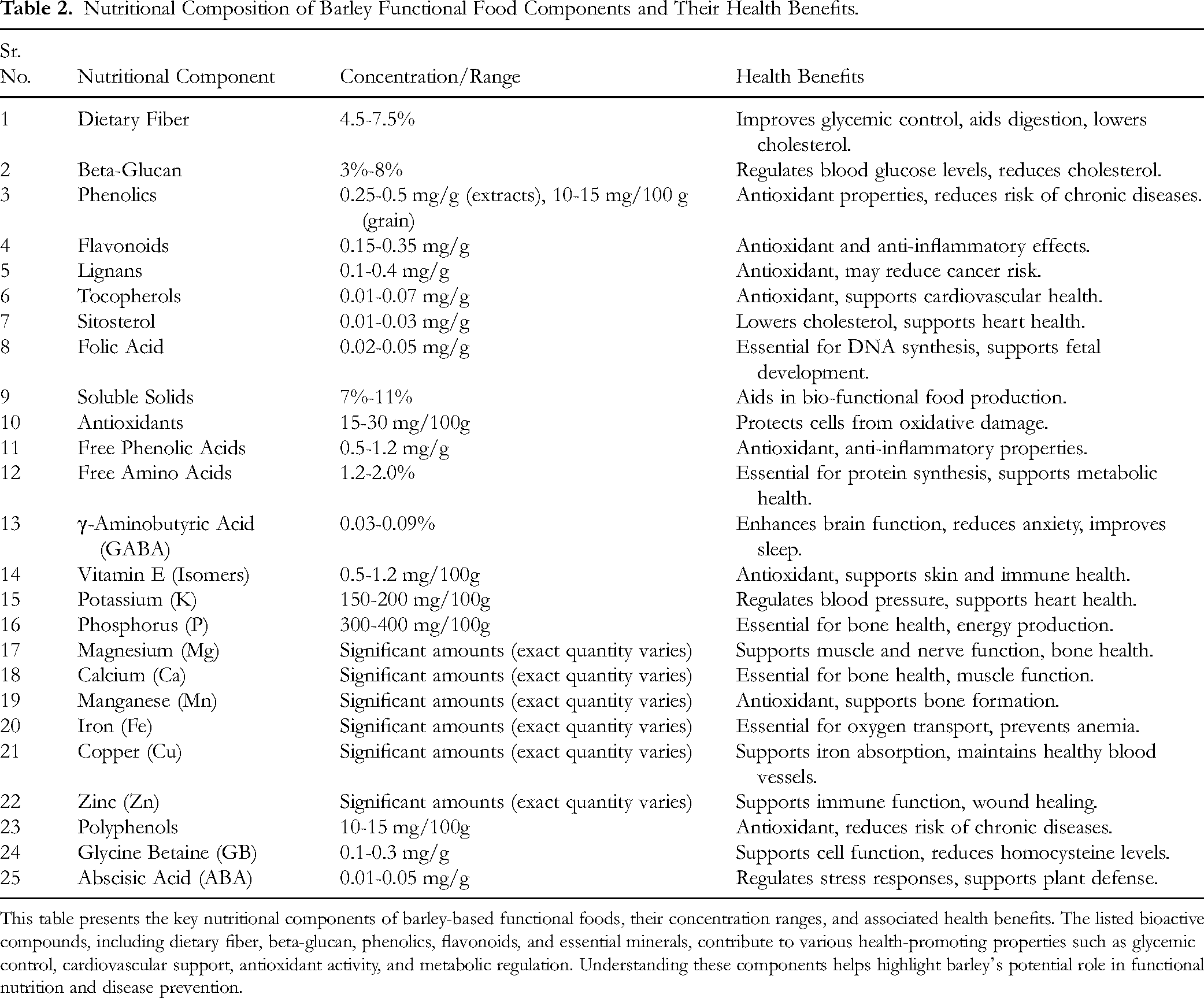
This table presents the key nutritional components of barley-based functional foods, their concentration ranges, and associated health benefits. The listed bioactive compounds, including dietary fiber, beta-glucan, phenolics, flavonoids, and essential minerals, contribute to various health-promoting properties such as glycemic control, cardiovascular support, antioxidant activity, and metabolic regulation. Understanding these components helps highlight barley's potential role in functional nutrition and disease prevention.
The foods made from barley are available in different forms and thus offer a wide choice for consumption. Table 2 presents the nutritional constituents of barley, which make it a food of choice for diabetic patients. Whole grain products made from barley include barley flour, barley bread, and barley flakes, which are commonly found in the market. Phytonutrients occur widely in barley extracts, including hydroethanolic extracts: β-glucan (2%-20%), phenolics (0.25-0.5 mg/g), flavonoids (0.15-0.35 mg/g), lignans (0.1-0.4 mg/g), tocopherols (0.01-0.07 mg/g), sitosterol (0.01-0.03 mg/g), and folic acid (0.02-0.05 mg/g), which confer numerous health benefits and alleviate the risk of chronic diseases like hyperglycemia, cancer, obesity, and cardiovascular diseases.25,54,55 Barley and its malts are also highlighted as one of the potential ingredients for the preparation of bio-functional foods due to their richness in soluble solids (7%-11%), antioxidants (15-30 mg/100 g), free phenolic acids (0.5-1.2 mg/g), free amino acids (1.2-2.0%), and γ-aminobutyric acid (GABA) (0.03-0.09%), suitable for the preparation of beverages with bio-functional properties. Also, the food, beverage, bread, animal feed, and cosmetic industries use barley or its food products for various purposes, which proves the adaptability of barley in value addition and nutritional worth in diverse contexts.25,51,56,57 Among all the cereals and functional foods, barley is rated as particularly unique due to its extraordinary nutritional profile. It is rich in dietary fiber (4.5-7.5%), β-glucans (3%-8%), phenolic antioxidants (10-15 mg/100 g), vitamins including vitamin E (0.5-1.2 mg/100 g), and minerals such as potassium and phosphorus at 150-200 mg/100 g and 300-400 mg/100 g, respectively. Accordingly, it offers various health benefits. On the other hand, barley contains bioactive ingredients that contribute to functional properties, such as GABA (0.03-0.09%). 56 In addition, barley contains different micronutrients, like various isomers of vitamin E (0.5-1.2 mg/100 g), polyphenols (10-15 mg/100 g), glycine betaine (GB) (0.1-0.3 mg/g) and abscisic acid (ABA) (0.01-0.05 mg/g) - compounds reported to have significant health-promoting aspects. 58 Compared to other major cereals, such as rice and wheat, barley, in general, outpaces them in nutritional content and, due to this, it is among the most promising candidates for the elaboration of functional foods capable of helping to prevent chronic diseases and improve quality of life. 59
Mechanisms of Barley-Based Functional Foods in Glycemic Control
Beta-glucan is the soluble fiber of barley, and the thick gel formed by this polysaccharide delays the digestion and absorption of carbohydrates along the gastrointestinal tract, which then modulates the level of blood glucose (Figure 1). More so, gut microbiota fermented beta-glucan into short-chain fatty acids (SCFAs), such as butyrate, propionate, and acetate, which enhance the secretion of glucagon-like peptide-1 (GLP-1) and insulin sensitivity.15,17,60 All these processes contribute to the improvement of glucose homeostasis and glycemic control in diabetic patients.49,61–63

Metabolic impact of barley-based functional foods on glucose regulation and insulin sensitivity in diabetic patients. This diagram illustrates the pathways through which the two primary components of barley, Arabinoxylan and β-Glucan, contribute to improved glucose regulation and insulin sensitivity. The figure highlights the effects on GLP-1 secretion and SCFA production, leading to various clinical benefits relevant to diabetes management. GLP-1: glucagon-like peptide-1.
This figure illustrates the complex metabolic pathways through which barley-based functional foods exert their glycemic control effects in diabetic patients. The diagram is divided into three main sections, each representing key processes involved in glucose regulation and insulin sensitivity in diabetic patients:
Gastrointestinal Digestion and Absorption
The upper section highlights how barley's soluble fiber, primarily β-glucan, forms a viscous gel within the gastrointestinal tract. Because this gel slows down the breakdown and absorption of carbs, blood glucose levels rise more gradually and more slowly overall. This effect helps in maintaining PPG control, which is critical in diabetes management.64,65
Fermentation and SCFAs Production
The fermentation of β-glucan by gut microbiota, which produces SCFAs such butyrate, propionate, and acetate, is demonstrated in the center part. Through stimulating the release of GLP-1, a hormone that enhances glucose tolerance and insulin production, these significantly increase insulin sensitivity.27,66–69
Systemic Effects on Glucose Homeostasis and Insulin Sensitivity
The lower section of the figure shows the downstream effects of the processes described above. The modulation of glucose absorption and increased insulin sensitivity contribute to improved overall glucose homeostasis. Additionally, the figure outlines the beneficial impacts of these mechanisms on reducing the risk of long-term diabetic complications, including cardiovascular diseases and nephropathy.21,25,49
Role of Dietary Fiber, Particularly Beta-Glucan, in Regulating Blood Glucose
Dietary fiber, particularly beta-glucan found in barley, plays a significant role in regulating postprandial blood glucose levels in diabetic patients. Research indicates that beta-glucan enhances glycemic control through multiple mechanisms. It inhibits key enzymes such as α-glucosidase and the SGLT1 (sodium-glucose cotransporter 1) transporter, which slows starch digestion and glucose absorption. 70 Additionally, the fermentation of beta-glucan by gut microbiota produces SCFAs, which are associated with improved insulin sensitivity and reduced inflammation. 71 A systematic review demonstrated that daily intake of barley fiber decreases PPG significantly and hence can be used as functional food for diabetes management. 72 It is suggested that the viscous nature of beta-glucan contributes to its effectiveness in modulating gastrointestinal physiology, hence enhancing glucose homeostasis. 21
Mechanisms through which Beta-glucan delays glucose absorption and reduces the glycemic spikes include several. It acts mainly by inhibiting crucial protein molecules that are involved in the metabolism of glucose. These include SGLT1 transporter and α-glucosidase enzyme integral to the intestinal absorption of glucose and digestion of starch. 73 In the gastrointestinal system, beta-glucan forms a viscous gel that delays glucose absorption and slows the rate of postprandial glycemic responses. 74 Additionally, the fermentation of beta-glucan by gut microbiota produces SCFAs, which enhance the secretion of GLP-1, an incretin hormone that increases insulin sensitivity and improves glucose regulation. 70 Whereas traditionally, the viscosity of beta-glucan has been emphasized, recent studies suggest that its interaction with glucose transporters and enzymes is more significant regarding its glycemic effects. 75
Intake of barley-based foods containing beta-glucan as part of a diet has been shown to have a favorable effect on long-term glycemic control in diabetes. Rich in dietary fiber, particularly β-glucan, barley is of great importance in blood glucose management and in the improvement of insulin sensitivity. The concentration and specific health benefits of these components are described in Table 2. Studies have evidenced that β-glucan can lower the glycemic responses, which is supported by its medium GI and “second meal effect” that lowers blood glucose after meals.74,76–78 Furthermore, barley bioactive compounds include phenolic compounds that contribute to glucose homeostasis through inhibition of digestive enzymes such as α-amylase and α-glucosidase. 21 A case study also showed that a diet based on barley reduced fasting and postprandial blood sugar levels while improving the lipid profiles. 79 In summary, dietary inclusion of barley seems to be a good approach for diabetes management, and for this, there is clinical and mechanistic evidence.16,25,80,81
Impact on Insulin Sensitivity
Intake of barley-based functional foods has been evidenced to exhibit positive changes in insulin sensitivity in patients with T2DM. It contains dietary fibers, more precisely β-glucan, which imparts modulation effects on gastrointestinal physiology and thereby aids in controlling blood glucose and insulin levels. 21 One study reported that a barley-based diet significantly reduced fasting and postprandial blood sugar levels while also improving lipid profiles in diabetic individuals. 79 Besides, there are some barley breads, especially those with high amylose content, which have been claimed to lower PPG up to 34% compared to conventional wheat bread; this would suggest a possible positive effect on glucose control. 29 Additionally, it was indicated that barley consumption stimulates the synthesis of both GLP-1 and SCFAs; these have been associated with improved insulin sensitivity. 82
Various physiological alterations that barley beta-glucan can induce within insulin receptors and their signaling pathways, essentially modulate gut microbiota and produce SCFAs. Indeed, some studies have reported the rise in levels of SCFAs from the consumption of barley. This turns on the GPR43 (G-Protein Coupled Receptor 43) receptor, increasing the secretion of GLP-1; thus, it enhances the sensitivity of insulin and metabolism of glucose. 82 The role of SCFAs and their effects on insulin sensitivity are shown in Figure 1. Further, barley consumption is also indicated to repress the expression of lipogenic genes and to lower blood cholesterol and triglycerides. 83 A systematic review has identified that barley fiber significantly enhances postprandial blood glucose, although it has not caused a statistically significant variation in insulin levels. 72 The physiological effect of barley's beta-glucan on insulin receptors and signaling include increased SCFAs production, enhanced GLP-1 secretion, and improved lipid metabolism. 84
Improvement in insulin sensitivity with barley consumption has helped further in glycemic control and prevention of complications related to diabetes. Barley is rich in dietary fiber, especially β-glucan, that enhances the function of the gastrointestinal tract and modulates blood glucose by slowing the absorption of carbohydrates and improving insulin sensitivity. 21 Many studies have identified that the intake of barley is related to an increase in SCFAs inside the gut, which in turn can activate the GPR43 receptor and stimulate GLP-1secretion; which could contribute to enhancing insulin sensitivity further. 82 Clinical research has demonstrated that dietary inclusion of barley reduces postprandial hyperglycemia in T2DM patients; hence, it represents a potential dietary intervention for glycemic control. 37 Its antioxidant property is one of the most beneficial factors in the management of diabetes as it reduces oxidative stress, improves lipid profiles, and increases insulin production. Barley is thus variably useful and hence a very good dietary component in managing diabetes and its complications. 79
Fermentation Effects in the Gut and Their Influence on Glycemic Response
Fermentation of dietary fiber, especially barley β-glucan, in the gut decisively influences the pattern of SCFAs produced. These SCFAs, on the other hand, are of immense importance in glycemic response in diabetic patients. This process and its influence on glucose metabolism are represented in Figure 1. Gut microbiota breaks down barley β-glucan into SCFAs, such as propionate and butyrate, which play a crucial role in gut health and metabolic processes. 85 Short-chain fatty acids enhance insulin sensitivity and glucose metabolism, thus possibly improving glycemic control in diabetic individuals. 86 Besides, the changes in gut microbiota composition due to the fermentation process promote beneficial bacteria associated with improved metabolic outcomes. 87 However, specific effects of various structural forms of β-glucan on SCFAs production and its subsequent metabolic responses call for further investigation before full elucidation of their dietary interventions in diabetes management. 88 Overall, the interplay between dietary fiber fermentation, SCFAs production, and glycemic response underscores the importance of gut health in diabetes care.
Although the exact mechanism is not fully understood, the effects of barley on insulin sensitivity and glucose metabolism are partly mediated by changes in the gut microbiome. Indeed, whole grain barley consumption has been shown to improve insulin sensitivity and glucose tolerance, particularly among individuals with impaired glucose metabolism benefits are detailed in Table 3. This effect has been linked to changes in gut microbiota composition, including increased levels of health-promoting bacteria such as Akkermansia and Bifidobacterium, which have been associated with improved metabolic health.89–91 Furthermore, eating barley increases the body's synthesis of SCFAs, which activate the G-protein coupled receptor 43 receptor and enhance insulin sensitivity and GLP-1 release. 82 Personalized dietary treatments might potentially boost metabolic health outcomes, as each consumer's distinct gut flora influences the inter-individual variability in response to barley. 92
Barley-Based Foods Improve Glycemic Control, Insulin Sensitivity, and Lipid Profiles, Making Them a Natural Solution for Diabetes Management.
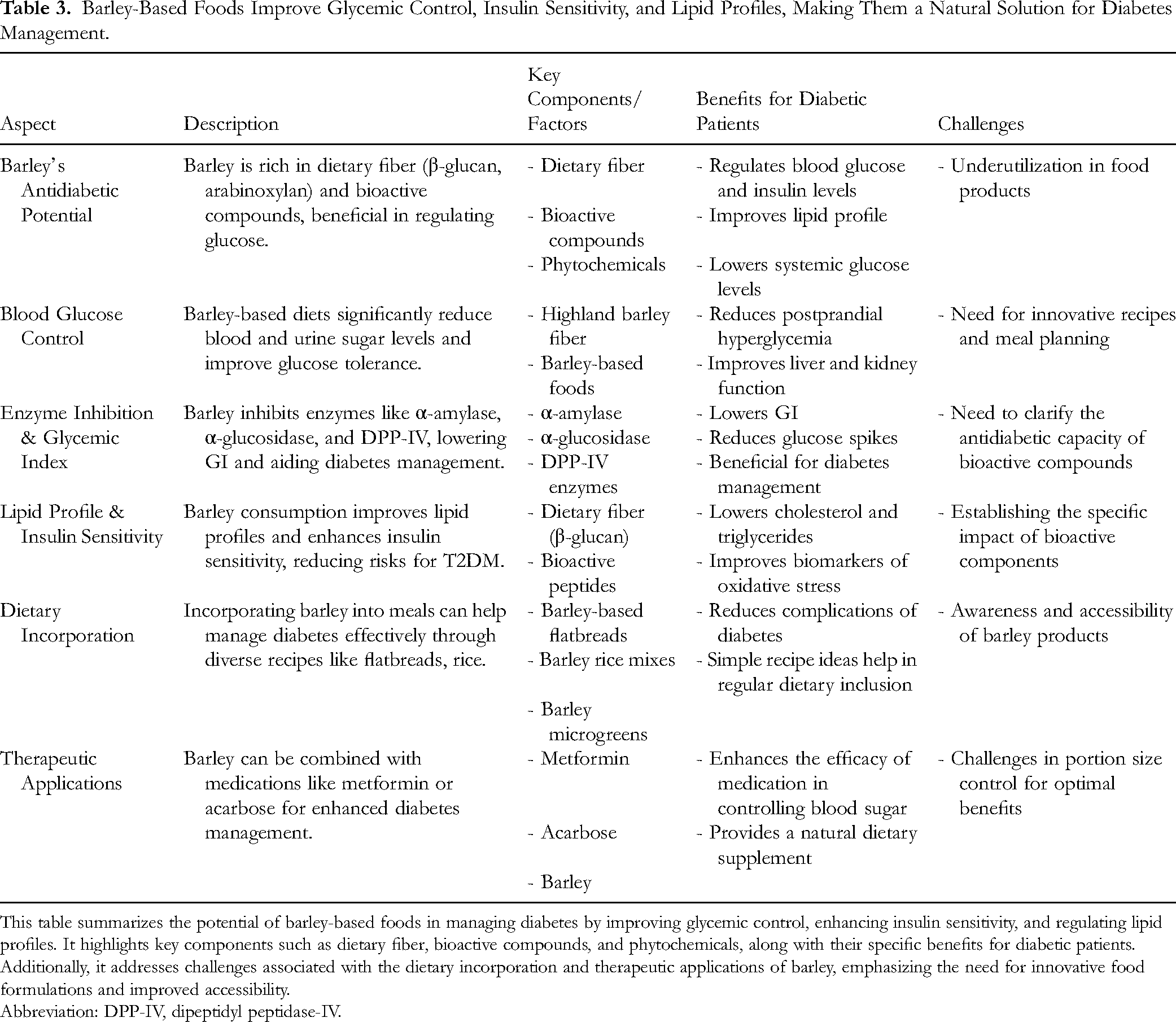
This table summarizes the potential of barley-based foods in managing diabetes by improving glycemic control, enhancing insulin sensitivity, and regulating lipid profiles. It highlights key components such as dietary fiber, bioactive compounds, and phytochemicals, along with their specific benefits for diabetic patients. Additionally, it addresses challenges associated with the dietary incorporation and therapeutic applications of barley, emphasizing the need for innovative food formulations and improved accessibility.
Abbreviation: DPP-IV, dipeptidyl peptidase-IV.
Barley-based functional foods exhibit significant prebiotic properties that contribute to improved glycemic control in diabetic patients through gut health modulation. The high dietary fiber content, particularly β-glucan and arabinoxylan, enhances gastrointestinal physiology, leading to better regulation of blood glucose and insulin levels. 21 Furthermore, it has been demonstrated that consuming barley increases the quantity of good gut bacteria, such as Bifidobacterium and Akkermansia, which are linked to enhanced glucose metabolism and decreased inflammation. 89 The production of SCFAs from the fermentation of barley enhances insulin sensitivity and promotes the secretion of GLP-1, both of which are crucial for glucose homeostasis. 82 In addition, prebiotics can enhance the action of hypoglycemic medications by allowing a healthier gut microbiome that will improve metabolic outcomes in T2DM. 93
Through a series of mechanisms, dietary fiber, more precisely, the beta-glucan in barley, has a crucial regulatory role in maintaining blood glucose levels. Beta-glucan, a type of soluble fiber in barley, changes gastrointestinal physiology in a way that it delays carbohydrate digestion and absorption from the stomach and small intestine, slowing the rise of blood glucose and insulin. 21 Several studies have indicated that the intestinal fermentation of barley beta-glucan produces SCFAs such as acetate, propionate, and butyrate. These SCFAs stimulate GLP-1 secretion, a hormone that stimulates insulin secretion, enhancing glucose tolerance and, as such, influencing postprandial blood glucose concentration after a meal. 84 Also, it has been observed that environmental factors such as weather conditions interact with the beta-glucan content of barley grains. Hence, the low temperature during tillering and specific rainfall conditions are associated with higher beta-glucan level, pointing out the role of exogenous factors on positive features of barley fiber. 94 In addition, European Food Safety Authority recognizes beta-glucans for their hypoglycemic feature, hence helping in the management of blood glucose in T2DM patients through the retardation of gastric emptying and increasing the sensitivity of insulin.. 80 The dietary fiber content of barley, along with its bioactive peptides and phenolic compounds, exerts a more positive influence on the sensitivity and secretion of insulin in diabetic patients, enhancing glycemic control. It has also been proved that barley helps to improve insulin sensitivity and regulate blood glucose levels because it contains dietary fiber, bioactive peptides, and phenolic compounds. 21 In addition, active compounds of chlorogenic acid and β-glucan existing in highland barley have been identified as potentially ameliorating pancreatic β-cell dysfunction by enhancing insulin secretion and inhibiting β-cell apoptosis to eventually improve insulin sensitivity. 95 It has also been shown that adding high β-glucan barley to the diet of type 2 diabetic patients decreases postprandial insulin and plasma glucose levels, indicative of improved insulin sensitivity and decreased insulin secretion. 96 These findings provide evidence that inclusion of barley improves insulin secretion and sensitivity, thereby playing an important role in dietary diabetic management. Fermentation of barley in the gut not only results in the production of SCFAs but also in the activation of receptors like G-protein coupled receptor 43. This latter effect is important for the glycemic response, subsequent secretion of GLP-1, and thereby improving glucose tolerance. Various fractions of barley, including β-glucan and arabinoxylan, are fermented by gut bacteria into SCFAs, which, in turn, stimulate the secretion of GLP-1 to help regulate blood glucose levels after a meal. Improvements in glucose intolerance by barley eating depend on the availability of SCFAs and the activation of G-protein coupled receptor 43. 82 Fermentation of barley, with its arabinoxylan, also enhances SCFAs, GLP-1 secretion, and improves glucose tolerance, indicating the value of barley for its role in modulating glycemic responses via gut fermentation processes. Short-chain fatty acids produced from the fermentation of barley play an important role in glucose metabolism since they regulate insulin sensitivity and GLP-1 secretion. 82 Short-chain fatty acids, such as acetate, propionate, and butyrate, are major metabolic products of fermented dietary fiber by gut microbiota.97–99 These enhance insulin sensitivity, regulate glucose homeostasis, and improve glucose intolerance through the activation of GPR43 receptors in the intestinal tract. 82 Furthermore, which include acetate, propionate, and butyrate, are important modulators of gut integrity due to the role they play in the maintenance of luminal pH, the elaboration of mucus, and as a source of fuel for epithelial cells, hence their beneficial effect on metabolic health and glucose metabolism. 97 Overall, fermented barley makes a significant contribution to the improvement of glucose metabolism through its effects on both insulin sensitivity and GLP-1 secretion. As a result, it represents an important metabolite in metabolic health, with potential implications for managing conditions such as T2DM.
Effects of Barley-Based Functional Foods in Diabetic Patients
Indeed, the effect of barley-based food on glycemic response shows some promise through various clinical trials and studies. In fact, one has pointed out that barley consumption considerably reduces PPG levels. Figure 1 summarizes how barley affects glucose regulation and insulin sensitivity in the diabetic patients. Compared to wheat bread, the bread made with 50% high-amylose barley flour and 75% hull-less barley flour exhibited lower levels of PPG, thus showing its potential beneficial effect on the mechanism responsible for T2DM control. 22 The active biological compounds of barley, like β-glucan and arabinoxylan, have been identified to play an important role in regulating blood glucose and insulin, thereby contributing to improved metabolic control of blood sugar. 21 Furthermore, the consumption of barley has been associated with suppression of elevation in blood glucose after subsequent meals, partly from the production of SCFAs and increased GLP-1 secretion, showing barley can positively affect glucose metabolism.84,100,101 These findings represent the possible inclusion of barley-based foods in dietary approaches to prevent and manage T2DM. Most of the clinical studies of barley include demographics and symptoms of participants by retrospective analysis of medical records, as seen in the study by Lee et al. 102 Most of these studies focus on children, as can be realized from the research on barley allergy among Korean children in that same study. The methodologies involve the assessment of specific immunoglobulin E (sIgE) levels to barley in diagnosing the allergy, and a significant difference can be ascertained in levels of barley-sIgE between allergic and tolerant groups. Additionally, cross-reactivity or co-sensitization between barley and wheat is commonly observed clinically. While specific methodological details are not provided in all cases, clinical studies on barley allergies often focus on demographic characteristics, symptoms, and immunologic parameters, particularly in pediatric populations.
Whole grains (WGs) have been demonstrated in several studies to have favorable effects on insulin sensitivity and glycemic response. By controlling the pathways involved in the hepatic metabolism of glucose, WG-derived bioactive compounds increase glycemic response and insulin resistance by enhancing glucose uptake, glycolysis, and glycogen synthesis while suppressing gluconeogenesis. 103 Meta-analyses have shown that when whole grain is consumed in comparison to non-WG consumption, there are substantial decreases in fasting glucose, fasting insulin, glycated hemoglobin (HbA1c), and homeostasis model assessment of insulin resistance. Glycemic indicators are significantly lower in oats. Furthermore, it has been demonstrated that adding a combination of whole grains, such as amaranth and pearl millet, to snack items can cause stable PPG responses, reduce GI readings, and increase antioxidant enzyme activity, all of which are advantageous for the management of diabetes.28,60,104,105 Comparatively, domestically cooked non-cereal starchy foods like dried lily bulb and lotus seed have also demonstrated low GI values and reduced carbohydrate digestion rates, suggesting their potential for glycemic management in diabetic and pre-diabetic individuals. 106 The regular consumption of barley-based functional foods exerts a promising long-term effect on the glycemic control of diabetic patients. In general, dietary fiber ingredients like -glucan and arabinoxylan in barley contribute to managing insulin and blood sugar levels. 21 The studies show that adding barley to the diet can lower postprandial hyperglycemia in T2DM patients, including those taking antidiabetic medication, such as metformin or acarbose. 37 The detailed summary of major components of barley and their associated health benefits is provided in Table 2. Consumption of barley has been reported to reduce blood sugar and urine sugar level, and also improves lipid profile in diabetic patients, which may be considered as signs of its potency in the management of diabetes. The “second meal effect,” attributed to the suppression of glycemic response due to barley, is because of its soluble fiber content, mainly that of β-glucan and arabinoxylan. Stimulating GLP-1 and SCFAs secretion, these fibers regulate blood glucose levels in subsequent meals. 84 These results demonstrate the potential of barley-based foods as a beneficial dietary intervention for improving long-term glycemic control in persons with diabetes.
Data aggregated from different studies, including that on barley and its effects on glycemic control, show that barley-based foods are an important ingredient in managing the level of glycemic level, especially among people affected by T2DM. Barley contains high amounts of dietary fiber, including arabinoxylan and β-glucan, which influence gastrointestinal physiology and regulate insulin and blood sugar levels.21,107 Short-chain fatty acids, produced during digestion upon the consumption of barley, stimulate the secretion of GLP-1. 84 Besides, the barley diet has been proven to be efficient in reducing blood sugar and urine sugar levels, improving lipid profiles, and alleviating various symptoms that result from diabetes, thus pointing out its potentiality to be considered an anti-diabetic food. Further support for the efficacy of barley in improving insulin sensitivity due to SCFA-induced GLP-1 secretion has also been provided by meta-analysis. 82 The statistical analyses conducted on the effectiveness of barley in glycemic control include measurements for postprandial hyperglycemia in patients with T2DM who are taking metformin or acarbose. The barley-mixed rice intervention significantly lowered PPG concentrations and reduced the MAGEs. 37 The mouse studies also showed that the two major soluble fiber components of barley, arabinoxylan and β-glucan, suppressed post-second meal blood glucose elevation by increasing the SCFAs level and stimulating GLP-1 secretion. 84 The experiments on healthy subjects with the incorporation of high β-glucan-containing barley into white rice improved postprandial blood glucose, evidenced by reduced glucose after dietary loads and by a lowered 24-h mean blood glucose and standard deviation. 108 These statistical analyses thus have collectively presented evidence for the beneficial role of barley in glycemic control.
Various studies on barley and glycemic response manifest a number of strengths and weaknesses. One strength for barley is the identification of specific fractions, such as the presence of β-glucan and arabinoxylan, which, through SCFAs production and enhancing the release of GLP-1, further control blood glucose levels. 84 Besides, the high levels of dietary fiber and bioactive compounds in barley, such as phenolic compounds, might contribute to an improvement in glucose homeostasis and/or inhibit the activity of certain key enzymes participating in glucose metabolism.21,98,99 However, one of the limitations of the research is that it would be beyond the scope of this study to delineate the precise mechanism by which different barley components interact with intestinal enzymes and glucose transporters in lowering post-prandial glycemic responses.73,109 Moreover, further studies are needed to establish a clear relationship between the bioactive components and the antidiabetic potential of barley, which could also lead to new methods of incorporating barley into daily dietary practices. 21 Meta-analyses and systematic reviews have provided insight into the glycemic effect of barley by compiling various studies. Its high dietary fiber content assists in lowering the blood glucose and hence helps improve glycemic control among T2DM patients.21,110 It was evidenced in several studies that the inclusion of barley in the diet slows postprandial hyperglycemia in patients with T2DM, especially in comparison to white rice consumption, and may be a potential dietary therapy for improved glycemic control. 37 Moreover, metabolic beneficial effects of barley were associated with an individual response in view of difference of gut microbiota composition, underlining the role of intestinal environment in such mediation.92,111–114 The peculiar chemical profile of barley, containing beta-glucans and antioxidants, has helped not only in the management of blood glucose but also in reducing cholesterol and has exhibited potential anticancer, anti-inflammatory, and antioxidant activities. 49
Dietary Recommendations of Barley-Based Functional Foods
Various antidiabetic potentials make barley-based diets effective in diabetic diets. Barley is rich in dietary fiber, including both β-glucan and arabinoxylan, which show great potential in regulating blood glucose and insulin levels.21,115,116 Other studies have demonstrated that the barley-based diet resulted in decreases of blood sugar and urine sugar, with an improved lipid profile in diabetic subjects.79,117 Apart from this, it was reported that highland barley fiber-rich powder significantly reduces blood glucose and improves glucose tolerance in diabetic rats, indicating its ability to alleviate the symptoms of diabetes and improve the function of the liver and kidney. 118 It has also been documented that barley-based foods with a low GI have, among others, demonstrated inhibitions against α-amylase, α-glucosidase, and DPP-IV (dipeptidyl peptidase-IV) enzymes, all of which would lower systemic glucose levels and, therefore, become beneficial in the management of diabetes.119,120 Incorporating barley-based foods into the diet of diabetic patients can, therefore, provide an effective and natural way of dealing with diabetes. It is recommended to consume barley by diabetic patients for its potential benefits in managing diabetes. It has been observed that barley provided a potential benefit in glycemic control and improvement of insulin sensitivity, improvement in lipid profile, which makes it a food worth adding to the diet. It is further supported by ancient Indian physicians as a low glycemic dietary substitute in cases of diabetic patients, hence signifying the role of barley in dietary management for diabetes.121–125 These studies found that barley-based diets reduced blood sugar levels, reduced urine sugar levels, and lowered lipid profiles. Diabetic patients can reduce postprandial hyperglycemia by adding barley to their daily diet in the form of barley-mixed rice. For diabetes treatment, dietary therapy can be combined with medications such as metformin or acarbose. Barley can be added to the daily diet of diabetic patients in order to lead an effective life by managing diabetes, as long as the portion size is appropriate.37,49,101
Barley inclusion in a diabetes-friendly diet might be facilitated through simple recipe ideas and meal planning. Bioactive compounds and phytochemicals present in barley are subjects of interest and have potential in the management of T2DM. Meal options can range from flatbreads made from barley to rice mixes, which have shown effectiveness in reducing blood sugar levels and improving lipid profiles in diabetic individuals. 79 Addition of barley microgreen to the diet has also been shown to diminish complications arising due to diabetes and to improve biomarkers of oxidative stress in rats, evidencing its potential use as a functional food for diabetes management. Some studies have also indicated that barley consumption may be associated with a significant reduction in blood glucose levels, cholesterol, and triglycerides, which acts protectively against diabetes. 126 By including barley in various forms like flatbreads, mixed rice, or barley microgreen, individuals can benefit from its antidiabetic properties while enjoying diverse and nutritious meals.
Adding barley-based foods to the diets of diabetic patients can be considered both advantageous and challenging. Barley is rich in dietary fiber, bioactive phytochemicals, and bioactive peptides that may exert benefits on glycemic control by improving insulin sensitivity and modulating lipid profiles, which could prevent T2DM. Consuming barley has been associated with lowering PPG and insulin responses, thus showing the efficacy of barley in the management of diabetes.22,127 The challenges include the underutilization of barley in human food products, with only a small fraction being directly used for consumption. Therefore, there is a need for innovative ways to incorporate barley into daily diets. There is a need to establish the relationship between various bioactive components and their particular antidiabetic capacity in barley to enhance coherence in various studies for optimization of barley inclusion into diets of diabetic patients.21,128 Low glycemic whole grains have different flavors and textures and work well in a variety of dishes. Some are great for soups and stews, others are better in salads, and still, others are great for baking as mentioned in Figure 2. Glycemic impact of several low glycemic cereal grains, presenting their respective GI and GL ranges mentioned in this figure. These values are crucial in understanding how different grains affect blood glucose levels, a key consideration in diabetes management. The figure highlights the potential of these grains to modulate glycemic response, with a particular focus on barley, which is central to this review. The visual representation aids in comparing the glycemic profiles of different grains, emphasizing the importance of dietary choices in managing blood sugar.

Glycemic Index (GI) and Glycemic Load (GL) of selected low glycemic cereal grains. This figure presents a comparative overview of the GI and GL values for various whole grains, including barley, bulgur, oats, black rice, buckwheat, and quinoa. The GI and GL ranges provided for each grain highlight their potential benefits in managing glycemic response and are relevant for dietary recommendations in diabetes management.
Potential Challenges for Barley-Based Diets and Considerations
Barley-based diets offer several advantages to diabetic patients, including improved glycemic control and improved lipid profiles. 79 However, dietary challenges to adoption exist, as identified by a study that assessed dietary behavior and perceived barriers among diabetic patients. The perceived barriers in adopting better diets were limited cooking skills, challenges in deciding on which app features to use, and lack of interest in the app's content. 129 Simplifying the hierarchy of information in dietary apps, providing tutorials on the app's features, and developing engagement strategies will help overcome these barriers. If these obstacles are reduced, health professionals can facilitate the successful integration of barley-based diets in managing diabetes, leading to better patient outcomes and improved health. The consumption of barley-based foods may bring several health benefits regarding blood glucose control, reduction of hunger, and improvement in satiety. 79 However, barley consumption should be aware of its potential side effects and contraindications. Whole grain cereals, including barley, contain certain proteins that act as allergens or sensitizers in genetically predisposed people, particularly gluten-sensitive enteropathy like celiac disease. Besides, phytate and phenolic fractions of barley may chelate iron and could affect iron absorption. 130 Despite these setbacks, barley becomes a useful adjunct to a well-balanced diet if taken in moderation and within awareness of particular sensitivities, due to its nutrient contents and its tendency to lower blood sugar These are the socio-economic and cultural influences that shape dietary choices and the acceptance of barley-based foods. Immigrant flow into other countries, due to unfavorable conditions that create a desire for improvement in another land, affects eating behavior through social, cultural, and economic influences. 131 Besides, sociocultural factors include social stratification, cultural capital, and inequality, which may influence consumers’ food choice and at times cause uninformed or unhealthy decisions. Studies in rural Bangladesh have also focused on dietary preferences of adolescents, based on taste factors, peer influence, and norms related to gender that may affect food choice and eating behaviors, with an emphasis on sociocultural influences on the promotion of healthy dietary behaviors.132,133 All these would help in the implementation of efficient strategies that would lead the people to consume more and more barley-based food items for overall improvement in diet. Various barriers for improvement in barley-based foods consumption, which have been derived from the research findings, are discussed under strategies that may be implied as: Health value related to barley, its cholesterol-lowering capabilities, reduction of blood sugar, anti-inflammation, and anti-cancerous properties, catches consumer attention.49,134,135 The valorization of such barley waste-streams as spent grain from beer production for high fiber and protein sources in human nutrition is also of great importance, adding value to food products by enhancing their nutrition and sustainability. Besides that, the emphasis on the role that might be played by barley in the prevention and management of T2DM due to its high dietary fiber and bioactive compounds will turn out to be an attractive reason for health-conscious consumers.21,136–138 Last but not least, the biofortification of barley to reduce hidden hunger and further improve its nutritional value may lead to the development of new food products with enhanced impacts on human nutrition, thereby increasing consumer demand for barley-based foods.
Overcome the Barrier to use the Barley Based Functional Foods
Current researches in the area of barley and glycemic control have brought forward some research gaps. Although numerous studies have underlined the potential role of barley in preventing T2DM due to its rich content of dietary fiber and bioactive phytochemicals, there is still a requirement for investigating in detail the specific antidiabetic potential of active phytochemical ingredients of barley that will enhance consistency in the studies and innovative dietary strategies. 21 There is still uncertainty regarding the effects that barley consumption has on postprandial hyperglycemia in medicated T2DM patients, indicating that there is a lack of knowledge about how diets with barley affect glycemic control in various treatment contexts.37,139 Further studies are needed to understand fully the mechanisms and implications for glycemic control; however, barley β-glucan and arabinoxylan have shown a positive effect on suppressing elevation of blood glucose and inducing GLP-1 secretion during the second meal. 84 Emerging trends in barley-based products include the synthesis of nanoparticles with barley grains, showcasing the potential roles that might be played by barley-AuNPs (barley-derived gold nanoparticles) and barley-AgNPs (barley-derived silver nanoparticles) in sustainable nanotechnology. 140 The development of healthy foods containing barley, with its rich nutritional profile and bioactive phytochemicals including beta-glucans, is in great demand to meet customer needs. The health benefits of barley, such as cholesterol reduction and antioxidant properties, make it very popular in the food and beverage sectors, animal feed, and cosmetics. Besides, the valorization of barley by-products, like brewery spent grains, for human consumption, for their rich fiber and protein content, is gathering speed. Such valorization can surely help in sustainable food formulations and supplements.49,101 Advanced technologies of induced mutations and genomic selection are applied by barley breeders to further improve the quality traits of barley cultivars with new focal points now on compounds such as anthocyanins and lignocellulose that enable the use of future barley cultivars for new qualities. Future studies on barley and diabetes should, therefore, be long-term and involve bigger sample sizes in order for the potential benefits that barley may offer in preventing and treating T2DM to be realized. In fact, barley has been found to improve lipid profiles, insulin sensitivity, and glycemic control in subjects with T2DM. 79 Longer-term studies will yield stronger evidence of longer-term effects with barley on blood glucose and metabolic health. Larger sample size will enhance the generalizability and allow subgroup analyses that will permit the identification of very individuals who benefit most due to the addition of barley in their diets. 126 These priorities, when focused on, broaden the scope of future research that is done on the barley grain, its potential to prevent and manage diabetes. Several important areas within the research papers included inform future research focused on potentially better elucidating the mechanisms by which barley influences glycemic control. Studies like those by Gebre et al 21 emphasize the importance of investigating the bioactive components of barley, such as β-glucan and arabinoxylan, in modulating gastrointestinal physiology to regulate blood glucose levels. Additionally, research by various scientists 84 and 82 suggests exploring the role of SCFAs and their interaction with receptors like G-protein coupled receptor 43 in promoting GLP-1 secretion and improving insulin sensitivity. In addition, findings by Malunga et al offer proof of the potential in the study of interactions between barley β-glucan with intestinal α-glucosidase and glucose transporters as a method of mitigating post-prandial glycemic response. A fuller understanding of the detailed mechanisms underlying barley's positive impact on improving glycemia can be directed toward exploring these areas in future studies. 73
Safety and Toxicological Considerations of Barley in Diabetes Management
Barley is widely regarded as safe for consumption, and several studies have confirmed its safety when used as a functional food or ingredient in diets. A safety assessment of barley-derived ingredients, such as partially hydrolyzed proteins, concluded that these products do not pose significant toxicological risks, given their extensive compositional analysis and the long history of barley consumption. 141 However, it is important to note that barley contains allergenic proteins, such as gamma-3 hordein and non-specific lipid transfer proteins, which can trigger allergic reactions in susceptible individuals. Barley is included in the list of allergens that must be labeled in food products, in accordance with European food safety regulations. 142 Therefore, while barley is generally safe for most individuals, caution is advised for those with known allergies to barley or other cereals.
Barley-based is a safe and effective dietary component for managing glycemic response in diabetic individuals, with its bioactive compounds contributing to improved metabolic health. However, it is essential to be mindful of its potential allergenic effects, which are relatively rare but may affect sensitive individuals.141–143
Conclusion
This review underscores the significant role of barley-based functional foods in enhancing glycemic control and overall metabolic health in individuals with diabetes. Rich in dietary fibers like arabinoxylan and β-glucan, barley has demonstrated considerable efficacy in reducing postprandial insulin responses and blood glucose levels, as confirmed by both preclinical and clinical studies. These fibers regulate glycemic response by delaying carbohydrate digestion and absorption, thereby preventing blood glucose spikes. Additionally, in vitro and preclinical research highlights barley's bioactive compounds, including phenolic acids and peptides, for their potential to enhance insulin sensitivity and secretion, contributing to improved glucose metabolism. Clinical trials further support the positive effects of barley consumption on metabolic health, with consistent reductions in postprandial glycemia and improved insulin sensitivity. The fermentation of barley fibers in the gut produces SCFAs such as butyrate, propionate, and acetate, which activate GLP-1 secretion, enhance insulin function, and improve glucose tolerance. These mechanisms establish barley as a practical dietary component for managing blood glucose levels and reducing insulin resistance. The findings align with clinical recommendations advocating the consumption of high-fiber foods and whole grains for diabetes management. Incorporating barley-based foods—such as barley bread, barley-enriched rice, and barley microgreens—into daily diets represents a sustainable, evidence-based strategy for improving glycemic control. While the benefits of β-glucan are well-established in human clinical trials, further large-scale and long-term studies are warranted to confirm its sustained effects and explore its potential in developing functional foods and natural therapeutic agents. These recommendations provide a promising approach to enhancing the quality of life for diabetic patients by supporting better long-term metabolic outcomes.
Methodolgy
A comprehensive literature search was conducted to evaluate the role of barley-based functional foods in modulating glycemic response and their implications for diabetes management. The databases utilized included PubMed, ScienceDirect, Google Scholar, and Scopus, ensuring access to a wide range of peer-reviewed studies. 144 The search employed specific keywords and Boolean operators to refine relevant studies, including “barley bioactive compounds”, “glycemic control”, “barley β-glucan”, “postprandial glucose response”, “barley peptides”, “insulin sensitivity”, “barley-derived SCFAs”, “GLP-1 secretion”, “barley functional foods” and “diabetes management”. These search terms were selected to encompass barley's fiber content, bioactive compounds, gut fermentation processes, and metabolic effects in diabetic patients. 145
The inclusion criteria focused on English-language articles published between 2010 and 2024, with priority given to clinical trials, meta-analyses, and mechanistic in vitro research investigating barley's impact on glucose metabolism, insulin regulation, and gut microbiota interactions. Studies analyzing barley-enriched food products such as barley bread, barley-enriched rice, and barley microgreens were also considered. Exclusion criteria included studies unrelated to glycemic control, those lacking barley-specific data, and duplicate publications. Following the initial search, 200 articles were identified, of which 148 were selected based on their methodological quality and relevance to the topic. These studies provided substantial evidence supporting barley's role in lowering PPG levels, improving insulin sensitivity, and promoting metabolic health through mechanisms such as delayed carbohydrate absorption and SCFA-mediated GLP-1 secretion. The selected literature aligns with current clinical guidelines advocating for high-fiber diets and whole grains as essential components of diabetes management.146,147
Footnotes
Acknowledgment
This work was supported by Yunnan Fundamental Research Projects (202201AT070126), Talent introduction and training program of Yunnan Academy of Agricultural Sciences (2024RCYP-22), Talented Young Scientist Program (P19R53023) and China Agriculture Research System of MOF and MARA (CARS-05-01A-04).
ORCID iDs

Author Contributions/CRediT
Conceptualization, Hafiz Ahmed and Xiaomeng Yang; Data curation, Hafiz Ahmed, and Xiaoying Pu; Formal analysis, Rashid Iqbal, Jiazhen Yang and Li’E Yang; Funding acquisition, Yawen Zeng; Investigation, Hafiz Ahmed, Rashid Iqbal ; Methodology, Rashid Iqbal, Xiaomeng Yang and Xiaoying Pu; Project administration, Hafiz Ahmed and Yawen Zeng; Resources, Hafiz Ahmed; Software, Jiazhen Yang, Xia Li and Li’E Yang; Supervision, Yawen Zeng; Validation, Hafiz Ahmed and Xia Li; Visualization, Yawen Zeng; Writing – original draft, Hafiz Ahmed and Xiaomeng Yang; All authors contributing in Writing – review & editing the manuscript.
Consent to Publish
All authors read and approved the publishing of this article
Funding
The author(s) disclosed receipt of the following financial support for the research, authorship, and/or publication of this article: This work was supported by Yunnan Fundamental Research Projects (202201AT070126), Talent introduction and training program of Yunnan Academy of Agricultural Sciences (2024RCYP-22), Talented Young Scientist Program (P19R53023) and China Agriculture Research System of MOF and MARA (CARS-05-01A-04).
Conflicting Interests
The author(s) declared no potential conflicts of interest with respect to the research, authorship, and/or publication of this article.
Data Availability
Data included in the submitted manuscript