



Abstract
Cannabis sativa L. (hemp) is a plant of significant global interest due to its diverse range of over 700 bioactive secondary metabolites. The plant's extensive historical and contemporary uses balance its controversial status. This review offers a thorough examination of C. sativa, focusing on its taxonomy, traditional and local uses, pharmacological importance, and phytochemistry. A review of observational studies and literature published between 1995 and 2024 was conducted. Sources were gathered from various databases, such as Google Scholar, NIH, PubMed, and Web of Science, to ensure a broad inclusive analysis. The taxonomy of Cannabis sativa has evolved significantly since Linnaeus’ eighteenth-century classifications, with ongoing debates about its species and strains. Traditionally, C. sativa has been utilized for medicinal purposes, textile production, and as food. The plant's primary cannabinoid compounds, Δ9-Tetrahydrocannabinol (Δ9-THC) and Cannabidiol (CBD) are synthesized in glandular trichomes and play crucial roles in its medicinal and recreational uses. These compounds engage with cannabinoid receptors (CB1 and CB2) and other receptors, including GPCRs - involved in pain modulation. Despite legislative challenges and controversies surrounding its psychoactive properties, C. sativa has considerable medicinal potential for improving better lifestyles.
Introduction
Cannabis sativa L. (hemp) commonly called cannabis, is a species in the Cannabaceae family and one among the oldest medicinal, controversial, and useful plant materials globally, owing to the presence of some psychoactive components. The genus Cannabis is a monotypic plant which consists of Cannabis sativa as its only species, 1 and Cannabis indica and Cannabis ruderalis as its two subspecies 2 which have been recognized worldwide as an ancient herbal plant. It has been cultivated and utilized throughout human history (more than a thousand decades) for its various agricultural, industrial and medicinal applications. The cannabis plant is known to be the oldest source of fiber, food and medicine. The hop plant is utilized for preserving and flavoring beer. 3 Historically, all parts of the plant are essential; the seeds are edible and serve as food and feeds by men and poultry, in addition, hemp seed produces oil which is used for cooking or as fuel for lamps 4 ; and generating fibers from its stems for textiles, paper, twine and construction materials 5 ; the female inflorescence and leaves produce resin that is used for medicinal purposes, intoxication and psychoactive drug 6 ; the root; for the treatment of wounds, inflammation, pain, vaginal discharge and induce labour 7 ; the seed oil is used for paint and soap. 8 The multifunctionality properties (use and effects) of cannabis have resulted in the present age research - with interest in the phytochemistry, medicinal applications, and its economic importance.
Cannabis is thought to have emanated from Asia, then spread to North Africa (Egypt) between three and four thousand years ago. Economic, religious, and expedition forces contributed significantly to the spread of Cannabis to Europe, North America, the remaining Arab nations, 9 and Africa. Historically, cannabis was reported to have originated from Central Asia near the Altai Mountains, 10 where it was primarily cultivated for hemp fiber, seeds, and medicinal preparations. Its primary use was for fiber, but geographical modifications led to the plant's pharmacological applications. 11 Emperor Shen Nung's pharmacopoeia, dating back to 2800 BCE, was the earliest official record of cannabis’ medicinal uses across various cultures, including Ancient China, Egypt, Assyria, and India. 12 The Egyptian Papyrus (1550 BCE) documented cannabis for treating eye diseases, while the Atharvaveda (1500 BCE) noted its anxiety-relieving effects. Ancient Assyrians (1800 BCE) used cannabis for treating epilepsy, pediculosis, and neuralgia. In 207 AD, Hau Tuo from China developed the first known anaesthesia using cannabis. Cannabis has been mentioned in numerous pharmacopoeias, including the Compendium of Materia Medica in China, and its medical uses continued to evolve. For example, Napoleon introduced cannabis to France in 1798, leading to studies on its tranquillized and analgesic effects. 8 In the nineteenth century, William B. O'Shaughnessy and Jacques-Joseph Moreau made significant contributions to the advancement of cannabis research in Western medicine for pain relief and mental illness. 13 Likewise, the isolation of THC and CBD and the unveiling of the endocannabinoid system were witnessed in the twentieth century.8,10
The plant is one of the most efficient sources in the production of cellulose pulp employed in paper production and manufacturing of some paper money. Intriguingly, C. sativa has been known for its entheogenic purposes in India for over 40 decades. It is believed that the psychoactive substances present in C. sativa cause an alteration in perception or cognition to translate spiritual subjects such as unraveling unknown facts; enlightening, and traveling through the realm of the human mind. Furthermore, cannabis is occasionally used during sacred observances and rituals as it's known to eliminate sorrow. 14
Cannabis legalization remains a major hurdle for the industry, restricting exploration due to its psychoactive properties and the stigma on its classification as an illicit drug which has slowed down regulatory processes and progress, though acceptance for medicinal and recreational use is gradually growing worldwide. The legal status of cannabis varies from one country to the other; some countries permit medical use, while fewer allow its recreational use. 2 In Nigeria, cannabis is strictly prohibited, while countries like South Africa have more flexible policies. Over 40 countries have either legalized or decriminalized the medicinal use, simple cultivation and possession of cannabis. Germany, the third European country to legalize cannabis and now the largest EU cannabis market legalized adult use after the formation of a new coalition government in 2021, influencing global trends. The partially legalized recreational use of cannabis (updated in April 2024) now permits adults to possess as much as 25 grams of cannabis of cannabis, while storing a maximum of 50 grams at home.14,15 In the U.S., although federal legalization is absent, state-level legalization has created the world's largest market. Canada, which legalized cannabis nationwide in 2018, holds the second-largest market.16-18 Despite the complex legal landscape and ongoing debates about its risks, research continues to uncover the plant's pharmacological potential, 19 and many nations are shaping policies to regulate its use.
Cannabis sativa, a chemically diverse and complex plant containing various classes of phytochemicals, such as cannabinoids, terpenes, flavonoids, steroids, alkaloids, and lignan, all of which are linked to the plant's medicinal potentials. Some factors such as chemovars, geographical factors, the medium of cultivation and the cross-breeding method adopted, influence the abundance of these compounds in the cannabis plant. Despite its richness in diverse phytochemicals, cannabis was greatly disregarded by early scientists due to its identification as a Schedule 1 drug- a substance without accepted medical usage in particular and a significant risk of misuse or abuse. Hence, it became imperative to explore the depth of its medicinal capability.
The identification of the endocannabinoid system (ECS) sparked renewed interest in cannabis research. The ECS is a neuromodulatory network responsible for the maintenance of homeostasis within the human body. Its primary components, cannabinoid receptors- CB1 and CB2, function as therapeutic targets (binding sites) of phytocannabinoids, specifically Δ9-tetrahydrocannabinol (Δ9-THC) and cannabidiol (CBD). While more than 250 phytocannabinoids have been identified in cannabis, research has predominantly concentrated on Δ9-THC and CBD owing to their significant psychoactive and medicinal properties. However, several lesser-known cannabinoids also exhibit therapeutic potential, influencing both cannabinoid and ionotropic receptors (neurotransmitter-gated channels), and the enzymes associated with the ECS. Furthermore, the interaction between cannabinoids and other compounds in cannabis may enhance their pharmacological efficacy through the entourage effect, rather than functioning independently. The COVID-19 pandemic spurred a surge in research focused on the medicinal benefits of cannabis, revealing its potential use for treating the virus. Studies indicate that cannabidiol (CBD) can mitigate viral inflammation and act as an anti-inflammatory and immune suppressant. Evidence supports the use of CBD and cannabis extracts in combating COVID-19 disease through inhibition of the replication of SARS-CoV-2 proteins, and acting as an agonist at the CB2 receptor, thereby reducing viral infection, lung inflammation, and alleviating the anxiety and stress associated with the illness.20,21 Consequently, the increasing global accessibility of cannabis has reignited interest in its therapeutic potential. Recent scientific developments have underscored the phytochemical diversity and pharmacological capabilities of cannabis, affirming its importance in both traditional and contemporary medical practices. This paper aims to offer a comprehensive review on the applications, taxonomy, phytochemistry, and pharmacological properties of cannabis, with a particular emphasis on their mechanisms of action.
Taxonomy and Classification of cannabis
There has been much alteration to the taxonomy of Cannabis since Carl Linnaeus's contribution in the eighteenth century, precisely 1753. 22 This controversy is centered on the genus family-botanical classification and the mono or polytypic nature of cannabis. The ambiguity in the classification relates to the development of strains across the world as revealed in the review. The classification of Cannabis followed different modes including, trade, use, and chemical types of classifications, which could be attributed to geographical distribution and genetics, morphology, plant exploration, and cultivation types or mediums.

The Taxonomy of Cannabis from Different Perspectives.

Some Biosynthesized Compounds of C. Sativa.
Landrace strains are considered the original cannabis varieties that grow naturally in specific regions of various countries, cultivated for medicinal, religious, and recreational purposes. These strains are not crossbred and are named after their geographic origins. For instance, Durban Poison refers to a Landrace strain from Durban, South Africa, Colombian Gold originates from Colombia, and Acapulco gold is originally from Mexico, and many others. Many South African strains are highly sought after and regarded as original varieties. Some of these notable strains include Durban Poison, Kwazulu weed, Power Plant, Malawi Gold, Afrikaner, and Swazi Rooiboard Gold as in Figure 1 below. Furthermore, OG (Original Gangsta) strains are named to honor the landscapes that allowed them to grow and flourish naturally, leading to the discovery of several hybrid varieties with recognized naming conventions derived from the OG strains.
This classification delineates five chemical profiles (chemotypes) according to the ratios and concentrations of the three primary cannabinoids— THC, CBD and CBG determined by their respective allelic loci.37,38 It enables the distinction of cannabis according to their chemical composition rather than physical traits and morphological characteristics. It allows for the differentiation of cannabis plants based on their chemical composition rather than their physical traits and morphological features. Researchers have particularly adopted this classification for medical purposes.
In the 1970s, Dr Ernest Small identified the first three chemotypes during a comprehensive seed stock survey conducted in various regions around the world. Since then, two additional chemotypes have been documented. The five recognized chemotypes of cannabis are categorized based on the concentrations of major cannabinoids. Drug-type plants, characterized by a high THCA Chemotype I: This group is characterized by a high THC profile, classifying it as a drug-type plant due to its substantial levels of psychotropic Δ9-Tetrahydrocannabinol (Δ9-THC). Its THC/CBD ratio exceeds 1 (THC: CBD > 1, with low CBD levels). Chemotype II: Known as the intermediate chemotype, this category features plants that possess both THC and CBD in significant amounts and varying ratios, typically around 0.5–3.0. These plants exhibit an intermediate ratio that is approximately about 1.0 (THC: CBD ≈ 1), while the presence of CBD moderates their psychotropic effects, allowing them to be classified as medicinal cannabis. Chemotype III: This chemotype is identified as industrial fiber hemp, where CBD is the predominant cannabinoid and THC is present in minimal amounts (0.2% w/w). The CBD-dominant chemotype is commonly found within the hemp gene pool, and recent efforts have focused on cultivating cannabis strains that yield high amounts of CBD. Chemotype IV: Recognized as a fibre-type plant, contains cannabigerol (CBG) as the major cannabinoid compound. Chemotype V: This chemotype is devoid of detectable cannabinoids and is also classified as fibre-type cannabis due to its lack of cannabinoids.
Among the chemotypes, type V is excluded from considerations of phytochemical constituents because it lacks cannabinoids. It has become clear that cannabinoids are significant secondary metabolites known for their biomedical activities. Nonetheless, it is essential to investigate other chemical profiles’ quantitative and qualitative characteristics beyond cannabinoids. This systematic research can provide deeper insights into bioactive constituents that may synergistically contribute to medical applications.2,41
Ethnobotanical Application of Cannabis sativa
C. sativa L. therapeutic uses have been rolling back from the plant's existence until the early twentieth century when a massive exploration into phytochemical compounds (cannabinoids) for medicinal value or clinical significance began. Historically, the discovery of cannabis began as herbal medicine and subsequently for fiber applications ranging from plastic, textiles, construction materials and other therapeutic-related applications. The applications of C. sativa cutting across different aspects of human endeavors, from the traditional uses (herbal medicine) to the present application in cannabis biotechnology, new-age agricultural systems and the pharmaceutical industry are highlighted. 42
The ethnobotanical application of C. sativa is enormous and has been widely utilized among various cultural backgrounds across the continents; Ethnobotanical-directed bioprospecting has become a more reliable tool for drug discovery than random assays.
43
The following are reported applications of Cannabis.
i. Cannabis entheogenic uses:
Cannabis has been utilized in various cultural practices and ritual rites around the world, including in Africa, where its use can be symbolic, medicinal, or as a part of spiritual ceremonies. Cannabis has been considered a spiritual plant and has spiritual applications in many cultures and tribes. Historically, the grave of a shaman in western China, dated back 2700 BCE contained flowers, seeds, leaves, and stems of a psychoactive cannabis strain mainly used for sacramental purposes. Among the Hindus, Lord Shiva is adorned by its worshippers by drinking the Bhang drink- a blend of Indian hemp (cannabis) leaves and flowers to aid their ascendancy to higher spiritual states, insightfulness, and stress-free mode.6,44 The Mexican Native American communities sometimes use cannabis in religious ceremonies by leaving bundles of it on church altars to be consumed by the attendees.
43
In Africa, the Bashilenge refer to themselves as Bena Riamba, meaning “the sons of hemp,” and they greet one another with “moio,” which translates to both “hemp” and “life.” Smoking herbs was believed to possess magical powers capable of countering or combating various demonic influences. In the middle Sahara, the Senusi sect extensively cultivated hemp for use in their religious rituals and ceremonies. Within the Rastafari movement, the elders at the Ethiopian Zion Coptic Church—a twentieth-century religious group regarded cannabis as a “eucharist,” asserting that this practice originates from an oral tradition in Ethiopia dating back to the era of Jesus Christ.
45
ii. Healing Rituals
C. sativa is also used in African traditional medicines for healing potentials. In ritual contexts, it has been utilized to address a variety of ailments or to cleanse the body and spirit from evil spirits or bad omens. It's sometimes combined with other herbs to enhance its efficacy or to target specific conditions.
iii. Social and Communal Gatherings
In some communities, C. sativa is used during social gatherings and ceremonies to promote unity and fellowship among participants. It is believed to lower inhibitions and foster community social connectivity, and mutual understanding.
iv. Human Medicinal Uses
The percentage composition of the most common medical uses of C. sativa as reported in literature of various sources are depicted in Figure 3 below; including its application as sedative, analgesic, antidiarrhoeal, antihaemorrhoidal, as well as a tonic, dysentery, and for wound treatment. Despite the usefulness of all the parts of the plants, the leaves account for the highest traditional use followed by the seeds, the inflorescence and the entire aerial parts of the plant.46,47

Percentage Composition of the Common uses of C. sativa.
Vernacular Names of cannabis Strains
Generally, cannabis is known by various local and street names, as well synonyms, however, the majority of the names are derived from the breeders or growers. Such names include marihuana, pot, ganja, grass, and chanvre. 48 Cannabis naming conventions are mostly influenced by several traits such as a strain's potential effects on users, its country of origin, genetic lineage, distinctive aromas, or even the creativity and humor of the cannabis breeder. 49 In this review, an attempt was made to mention a few of them with close attention to available documents.
Based on Plant Morphology
Several varieties of cannabis strains were named based on their physical features which made them distinct from other strains. This could be regarded as the oldest means of naming cannabis strains- an approach used in terms of naming the different Cannabis subspecies. For instance, Purple Kush and White Widow are cannabis strains whose names give an explicit mental picture of these strains’ color. 50 The buds of purple Kush are usually a vibrant purple shade while White Widow has a frosty white appearance coating the trichomes.
Based on Lineage/Parent Strains
These are strains that derive their names based on their lineage when there is a crossbred. Crossbreeding promotes genetic diversity within the cannabis gene pool, which has resulted in the creation of novel cultivars with diverse range of unique attributes.51,52 To give an example, Blueberry and White Widow, when both strains (parent strains) are crossed, it births a child strain named Berry White.
Based on Aroma/Flavor
The strong aroma and flavor characteristics have been used for the identification of some strains of cannabis. The high terpene and flavonoid profiles are responsible for these attributes. Breeders inescapable name these strains by the obvious smell and savor. Some names such as Banana Kush, Strawberry Cough and Sour Diesel are names derived from their aroma-flavor.
Based on Cognitive Effects
The effects of cannabis on individual users differ greatly- while it gives some people a euphoric and relaxing experience, some people are left sluggish, inactive and paranoid. Amidst the various sensations, some strains have been named by growers based on certain effects on the users. The Lucid Blue, Purple Haze, Blue Dream, Jack ‘n Cheese, Snow Goddess, Trainwreck, and many others are examples of strains with different sensations. This is why it is important to be sure of the sensation effect of strain before purchase to avoid unnecessary happenings during consumption.
Based on Legendary or Cannabis Activist Celebration
Various cannabis strains have been named after prominent people especially those that champion the cause for a reform in the industry. In addition, names are also gotten from financiers or those who made available various resources needed for the strain development. One such is the Jack Herer strain, named after an American cannabis activist, Jack Herer whose effort led to the cannabis global revolution (cannabis legalization).
On the other hand, some other names are generic, with no direct link to the breeder or the uses. A few examples are Hindu Kush, Purple Kush, Haze and Diesel which depict either a pure or hybrid C. sativa.
Methods
For this review, observational studies and literature published between 1995 and 2024 containing information on the ethnobotanicals, classifications, pharmacology, and phytochemistry of Cannabis sativa were conducted using various databases; Google Scholar, NIH, Web of Science, PubMed, and ScienceDirect. The keywords for these searches were Cannabis sativa, cannabinoids, ethnobotanicals; classifications, phytochemistry; pharmacological activities, and endocannabinoid system.
Furthermore, the database includes searches on all classes of cannabis (ranging from taxonomy to its current perspective – genetic makeup); with a streamlined approach which captures all their relationships without overcomplicating the structure while addressing the broader aspects of cannabis classification, and also the vernacular names, synonyms used for cannabis strains, and how these names are derived from the breeders or growers. In addition, articles containing information about the therapeutic potentials, their active compounds, mechanisms of action and effects were selected and summarized in Table 1.
Pharmacological Effects and Actions of C. sativa and its Constituents.

Pharmacological Report and Mechanism of Action of Cannabinoids and C. sativa
C. sativa demonstrates a broad spectrum of pharmacological activities primarily attributed to its diverse chemical constituents, particularly cannabinoids and terpenes. The two most extensively studied chemical compounds, Δ9-tetrahydrocannabinol (Δ9-THC) and cannabidiol (CBD) interact with the endocannabinoid system, influencing various physiological processes. Research has identified that cannabis offers diverse pharmacological effects, including analgesic, anticancer, anti-inflammatory, antimicrobial, anxiolytic, and neuroprotective properties, among others as shown in Table 1 below. The synergistic effects of various cannabinoids and terpenes, often called the “entourage effect,” further enhance its pharmacological potential. Studies have shown that cannabis offers a wide range of pharmacological effects, including analgesic, anticancer, anti-inflammatory, antimicrobial, anxiolytic, and neuroprotective properties, among others, as summarized in Table 1 below. Additionally, the interplay between cannabinoids and terpenes, known as the “entourage effect,” is believed to enhance its therapeutic potential. As scientific inquiry continues to expand, cannabis remains a focal point for exploring novel pharmacological applications and understanding its complex mechanisms of action. Notably, the development of cannabis-based pharmaceutical products such as Sativex®, Epidiolex®, Marinol®, and Syndros®, underscores its medical potential and compliance with regulatory quality standards for specific medical conditions. 53 The accompanying table summarizes these pharmacological activities, highlighting key compounds responsible for each effect and referencing notable studies that support these findings. This overview underscores the potentiality of Cannabis sativa in modern medicine and emphasizes the need to understand its multifaceted effects for therapeutic applications. The activities of C. sativa can be either entourage or individual.
Endocannabinoid System (ECS)
A known pathway that describes how cannabinoids work through the endocannabinoid system. The ECS in humans is a cell-signalling network that performs a vital role in controlling a range of physiological homeostasis processes within the human body. It comprises three main components: endogenous cannabinoids (eCBs), cannabinoid receptors and selected enzymes.
Endogenous cannabinoids: These are naturally produced cannabinoids, namely anandamide (AEA) and 2-arachidonoylglycerol (2-AG). The endogenous cannabinoids are physiological ligands that bind to the cannabinoids as shown in Scheme 1.
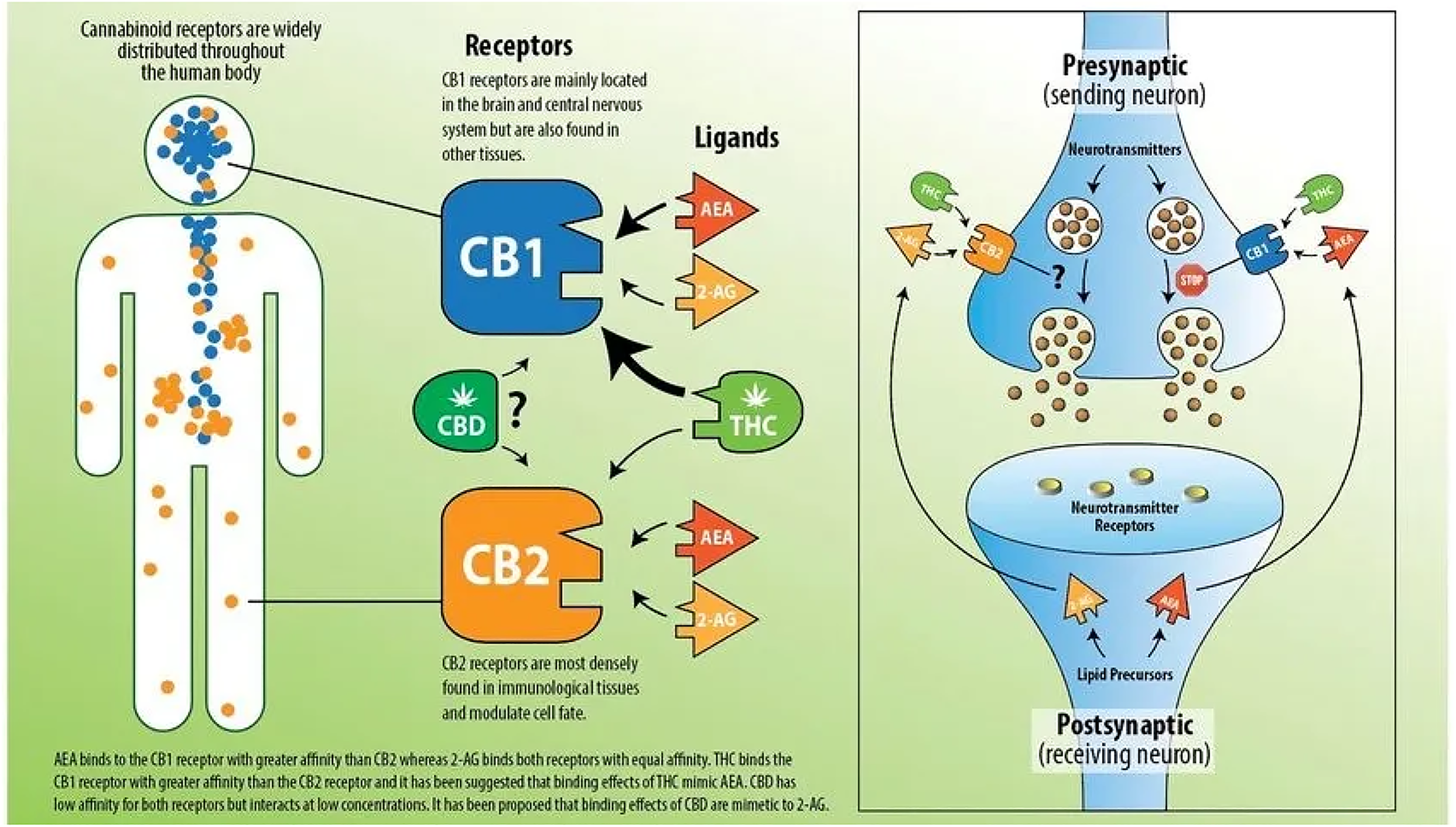
Endocannabinoids Action with THC and CBD.
Cannabinoid receptors: The primary receptors involved are the CB1 receptor (located in the central nervous system, especially in brain regions), which regulates functions such as memory, motor coordination, and pain sensation. CB2 receptors (mainly located in the immune system, expressed in peripheral tissues) are highly concentrated in immune cells and are responsible for modulating immune response and inflammation. 55
Enzymes: These enzymes, like fatty acid amide hydrolase (FAAH) and monoacylglycerol lipase (MAGL) are involved in the synthetization and degradation (breakdown) of endocannabinoids once their physiological roles are completed. 10
The ECS is vital in the formation of the central nervous system (CNS) and is believed to regulate various physiological activities, which include pain perception, appetite, memory, mood, emotions, inflammation, insulin sensitivity, fat and energy metabolism, and cardiovascular health.7,56,57
Cannabinoids’ Mode of Action Within the Endocannabinoid System
Phytocannabinoids, like THC and CBD, derived from cannabis engage with the endocannabinoid system (ECS) primarily through G-protein-coupled receptors as shown in Scheme 1. THC functions as a partial activator at both CB1 and CB2 receptors, binding directly to CB1 receptors and mimicking the effects of endogenous cannabinoids like anandamide. This interaction triggers downstream signaling pathways that affect neurotransmitter release, which leads to its well-known psychoactive effects of THC such as pain relief, appetite stimulation, and altered mood.13,58 Conversely, CBD does not directly bind (no strong affinity) to either CB1 or CB2 receptors, it rather modulates the ECS indirectly by influencing ECS through inhibition of the enzymes, which are involved in the degradation of anandamide, thus, elevating its levels and enhancing endocannabinoid signaling, and also interacts with other receptors, such as serotonin (5-HT) and TRPV1 (Vanilloid) receptors, contributing to its therapeutic effects without causing psychoactive effects. Cannabis, characterized by varieties of interaction between cannabinoids and the ECS underpins the various pharmacological effects associated with Cannabis sativa and its therapeutic potential in treating several ailments such as acute pain, inflammation, anxiety, and neurodegenerative diseases. 59 More importantly, the overall effect of cannabinoids on the ECS varies depending on the specific cannabinoid, receptor type, and physiological context.
Non-Receptor Mechanisms
CBD acts through multiple pathways independent of the cannabinoid receptors, such as inhibiting the uptake of the endocannabinoid anandamide, enhancing adenosine signaling, and interacting with various other receptors, including opioid and serotonin receptors, TRPV1 (pain and heat sensing), PPARγ (involved in metabolism), and GPR55 (an orphan receptor). This multifaceted mechanism further expands their range of effects.60,61
The Entourage Effect
The entourage effect explains the collaborative interplay between cannabinoids and other compounds in cannabis, which may improve the therapeutic efficiency compared to its isolated compounds. This phenomenon suggests that the various constituents of the plant work together to give rise to more significant pharmacological outcomes when chemically combined or taken together, rather than any single compound alone.
The synergistic interactions (combinations) of cannabinoids along other phytochemicals like terpenes such as myrcene, linalool, pinene and limonene can modulate the overall pharmacological effects, enhancing the span of healing benefits like pain relieving, anxiolytic, anti-inflammatory and antidiabetics. On the clinical implications, it has been observed that using full-spectrum cannabis products that contain a variety of cannabinoids and terpenes, and may provide better symptom relief for patients than isolated cannabinoids. For example, CBD has displayed its ability to mitigate some of the psychoactive effects of THC, making it more tolerable for patients, while terpenes and flavonoids could promote brain health; and give neuroprotective and anti-inflammatory effects. The entourage effect is likely to be complex and still requires more research study.
58
Reported Works:
Several researchers have studied and revealed that the combination of THC and CBD may enhance analgesic effects in chronic pain management; phytocannabinoids and terpenes have been reported to give rise to additional health benefits such as pain relief, cancer, inflammation, epilepsy, anxiety, and fungal infection. Highlighted below are a few related studies;
Sari Ferber et al (2019) conducted a review on the entourage effects of terpenes in combination with cannabinoids, focusing on their potential for treating mood and anxiety disorders. The report shows that cannabinoid activity could be enhanced when coupled with terpenes and terpenoids on psychiatric symptoms treatment.
62
Russo (2011) discussed the entourage effect in his review, emphasizing the importance of whole-plant extracts in achieving optimal therapeutic outcomes.
29
Blasco-Benito et al (2018) research on pure cannabinoid THC and the ethanolic extract of fresh cannabis flowers evaluated for anti-tumour action. His findings gave an insight into the entourage effect and pharmacological activities of terpenes and phytocannabinoids, respectively.
63
Hergenrather et al (2019) highlighted the potential of using specific cannabinoid-terpene combinations to tailor treatments for various conditions.
64
M. Vozza (2024) concluded that non-cannabinoid compounds present in cannabis are involved in the obvious biological activities (antibacterial and anti-fungal) of different strains of cannabis extract.
65
Phytochemistry C. sativa
Cannabis sativa is abundant in bioactive constituents, with at least 750 compounds already identified in the plant. These phytochemicals include cannabinoids, terpenoids, flavonoids, alkaloids, phenolics, steroids, hydrocarbons, fatty acids, and lignans, and they contribute to their pharmacological properties and therapeutic potential.109,110 Among them are over 275 cannabinoids, 200 terpenes, and 20 Flavonoids. Cannabinoids are typically categorized into three main types - endocannabinoids (non-plant); phytocannabinoids (plant-origin), and synthetic cannabinoids. The major organic compounds in C. sativa are Cannabinoids and have been the most studied. They are classified into two, based on the Δ9- Tetrahydrocannabinol (Δ9-THC) and Cannabidiol (CBD) content. Cannabis naturally synthesizes and stores its phytocannabinoids in the glandular trichomes of the flowering part (inflorescences) of female Cannabis sativa. 111 Cannabinoids are initially biosynthesized as prenylated aromatic carboxylic acids, with neutral cannabinoids being virtually absent in fresh plants. However, these acidic forms can undergo spontaneous decarboxylation under light or heat, converting into their neutral counterparts. In these neutral states, phytocannabinoids interact with cannabinoid receptors within the endocannabinoid system (ECS) of human body. Additionally, cannabinoids can undergo oxidation, such as tetrahydrocannabinol (THC) transforming into cannabinol (CBN), as shown in Scheme 2.

Biosynthesis Pathways of Cannabinoids
Generally, Geranyl pyrophosphate (GPP) and Olivetolic acid are the precursor molecules; they undergo a condensation reaction catalyzed by the enzyme geranyl pyrophosphate: olivetolate geranyl transferase (GOT), followed by the polyketide and Plastidial Methyl erythritol pathways respectively, resulting in cannabigerol acid (CBGA) been synthesized. CBGA serves as the precursor compound for the synthesis of all major cannabinoid compounds. Cannabigerolic acid (CBGA) then undergoes enzymatic cyclization by two distinct enzymes; THCA synthase transform CBGA into tetrahydrocannabinolic acid (THCA), while the CBDA synthase changes CBGA into cannabidiolic acid (CBDA). Afterwards, the decarboxylation of these acidic forms (THCA and CBDA) through heat or UV light, results in the formation of their neutral forms THC and CBD.
The THC and CBD biosynthetic pathways are part of the larger cannabinoid biosynthetic pathway in Cannabis sativa. These refer to the enzymatic conversion of CBGA, which is sequentially converted into THCA and CBDA respectively, followed by decarboxylation to form THC and CBD, each by a particular plant synthase enzyme such as CBDA-synthase (Scheme 2). In addition, terpenes of different classes are derived through various additional reactions such as geranyl (C10H16) and farnesyl (C15H24) units, respectively. THC, the primary psychoactive compound in cannabis, exhibits analgesic, antiemetic, anti-inflammatory, and appetite-stimulant properties. In contrast, CBD modulates THC's euphoric effects and provides antipsychotic, neuroprotective, anticancer, antidiabetic, and other benefits, such as reducing tobacco addiction.10,112 Other cannabinoids, including cannabinol (CBN), cannabigerol (CBG), Cannabichromene (CBC), and Cannabidivarin (CBDV), are increasingly recognized for their potential therapeutic effects, particularly their analgesic, anti-inflammatory, antioxidant, antimicrobial and anticonvulsant effects.
Non- Cannabinoids in Cannabis sativa
Terpenes and flavonoids are significant classes of non-cannabinoid secondary metabolites identified from C. sativa; they contribute to the plant's therapeutic potential, aside from the distinctive aroma and pigmentation they provide to the plant, respectively. Each compound exhibits distinct pharmacological activities by interacting with the cannabinoids to enhance medicinal effects called the “entourage effect”. 115 The biosynthesis of terpenes involves the mevalonate (MVA) pathway, in the cytoplasm and methylerythritol phosphate (MEP) pathway in plastids, 30 while flavonoids are biosynthesized through the phenylpropanoid pathway, with the conversion of phenylalanine to cinnamic acid as the precursor, followed by enzyme-catalyzed reactions that lead to the formation of different flavonoid structures. Several researchers have successfully isolated various non-cannabinoid compounds from the plant, identifying their notable bioactivities. Table 2 gives an insight into some of these common compounds found in C. sativa. In addition, the chemical structures of some selected terpenes and flavonoids that have been isolated from Cannabis sativa are presented in Figure 4.

Chemical Structural Representation of Some Terpenes and Flavonoids Isolated from C. sativa;
Examples of Chemical Compounds Isolated from Cannabis sativa.

Conclusion
Cannabis sativa possesses rich and complex phytochemicals that provide diverse pharmacological effects and longstanding ethnobotanical applications. The pharmacological activities of C. sativa are mediated by a complex interaction of cannabinoids and other phytochemicals, which combine to contribute to its numerous therapeutic effects. The entourage effect accentuates the importance of taking into consideration the full chemical profile of cannabis while evaluating its therapeutic potential, indicating that the whole-plant perspective may be more beneficial than isolating individual compounds. Understanding the complex interactions between cannabis’ bioactive compounds is crucial for the optimization of its potential benefits, minimizing adverse effects, and also paving the way for its integration into mainstream medicine. The ongoing legalization and decriminalization of Cannabis in various parts of the world is fostering more extensive research and potentially broadening its therapeutic applications in both traditional and modern medical practices. The Western perspective primarily focuses on the recreational and significant medicinal applications of cannabis as against its uses for traditional and spiritual practices of many African cultures.
Footnotes
Acknowledgements
The Vaal University Research Office, Institute of Chemical and Biotechnology (ICBT) Laboratory of the Vaal University of Technology, and the National Research Foundation-The World Academy of Sciences (NRF-TWAS) supported the present study.
Statement of Human and Animal Rights
This review article does not involve human or animal participants and no informed consent is required.
Statement of Informed Consent
There are no human subjects in this article and informed consent is not applicable.

Ethical Considerations
Ethical approval is not applicable to this article.
Author Contributions/CRediT
Conceptualization, F.T.A and F.M.M..; methodology, O.N.A.; software, S.M..; validation, F.T.A.; formal analysis, F.T.A.; investigation, S.M., F.M.M.; resources, O.N.A.; data curation, O.N.A..; writing—original draft preparation, F.T.A.; writing—review and editing, F.T.A, O.N.A..; supervision, F.M.M., S.M..; project administration, F.M.M.; funding acquisition, F.M.M. All authors have read and agreed to the published version of the manuscript.
Funding
The authors disclosed receipt of the following financial support for the research, authorship, and/or publication of this article: This work was supported by the National Research Foundation, (grant number MND210503598796).
Conflicting Interests
The authors declared no potential conflicts of interest with respect to the research, authorship, and/or publication of this article.