



Abstract
Trevesia Vis. species are small evergreen trees belonging to the family Araliaceae that occur naturally throughout Asia. The multiple parts of Trevesia species have been used in traditional medicinal systems in several countries for their potential therapeutic properties, including pain relief, inflammation, fevers, microbial infections, diabetes, cancer, edema, bone fractures, and arthritis. This work presents a fascinating exploration of previous studies on Trevesia species, especially T. palmata, delving into their phytochemical constituents, biological activities, and toxicology, inviting you to uncover their potential further. This paper database meticulously compiles valuable data gathered from all accessible literature between 1842 and 2024 through a wide range of resources, including Web of Science, Scopus, Google Scholar, PubMed, Science Direct, Springer, and other scientific databases, ensuring a comprehensive and reliable overview of the research on Trevesia species. Various bioactive phytochemicals, such as triterpenoid saponins, flavonoids, and phenolic compounds, have been found in multiple parts of these plants. Chemotaxonomic investigations have revealed that the genus Trevesia may be closely related to the genera Aralia, Acanthopanax, and Hedera. Pharmacological studies showed that extracts and phytocompounds from T. palmata exhibit various biological activities, such as antiproliferative, anticancer, antibacterial, antifungal, antiviral, antioxidant, anti-inflammatory, antidiabetic, analgesic, thrombolytic, and hepatoprotective activities. Moreover, numerous toxicological reports revealed the safety of the T. palmata plant. For the first time, this paper highlights the role of therapeutic effects and health benefits of Trevesia species in food and medicine while also providing an overview of the current study status and future prospects for Trevesia species, mainly T. palmata.
Introduction
The Araliaceae family, commonly known as the Ginseng family, is a highly diversified family with various species having great medicinal and economic value,1,2 such as the genus of Panax L., Aralia L., Hedera L.,2‐4 etc The Araliaceae family includes approximately 46 genera and 1700 species. 5 They are predominantly found in tropical and subtropical regions 6 ; most genera are shrubs or woody plants with compound leaves that are typically palmately or pinnately divided. Among the genera within the Araliaceae family, the genus Trevesia Vis. is notable for its unusual pseudo-compound leaves in several species. 7 This genus includes eight species (namely T. palmata (Roxb. ex Lindl.) Vis. (1842), T. sundaica Miq. (1856), T. beccarii Boerl. (1887), T. burckii Boerl. (1887), T. valida Craib (1930), T. arborea Merr. (1934), T. lateospina Jebb (1999), and T. vietnamensis J.Wen & P.K.Lôc (2007)) 8 of small, sparsely branched trees primarily distributed across China, South and Southeast Asia, including countries like Myanmar, 9 Thailand, 10 Laos, 11 Cambodia, Vietnam, 12 Malaysia, 13 Indonesia, Nepal, India, Bhutan, and Bangladesh.8,14
Trevesia species have long been used as food. The uniquely shaped leaves also make some species, like T. burckii and T. sundaica, popular as ornamental plants. 14 Moreover, Trevesia species are widely used in traditional medicine across Laos, 11 Vietnam, 15 China, 16 Malaysia, 17 Thailand, India, Bangladesh, 18 and other countries. Different parts of these plants treat various conditions affecting the skin, bones, joints, digestion, and reproduction.17,19 Notably, T. palmata is one of the evergreen trees used for medicine and ornamental purposes. 20 It is used in folk medicine to treat various ailments, such as fever, inflammation, edema, diabetes, rheumatism, bone fractures, colic, stomachache, high blood pressure, snake bites, health promotion, nutritional supplementation, etc19,21‐31 Additionally, its flower buds and young shoots are used as a potherb 32 ; its fruit is used for fishing; the core of its trunk is used for making hats 33 ; and it is also cultivated as an ornamental plant. 34 These species’ many noteworthy ethnomedicinal qualities may be the foundation for future studies of one of its phytochemical and pharmacological aspects. Despite their traditional use for various ailments, research on the chemical composition and pharmacology of Trevesia species remains limited. Most studies have focused on identifying and isolating triterpenoid saponins. 19 These compounds exhibit several pharmacological effects, including antiproliferative, antioxidant, cognitive enhancement, physical recovery, metabolic stimulation, and health promotion.35,36
Trevesia species have not been comprehensively assessed despite their medical and economic benefits. This study aims to provide updated information on recent developments in its botanical chemistry, safety profiles, pharmacology, and economic importance, hoping to inspire further research and guide future studies on the benefits of Trevesia species. Moreover, the chemotaxonomic significance of the isolated compounds was also discussed.
Research Methodology
A thorough bibliographic study covering works published between 1842 and 2024 was carried out. Information about Trevesia species and their synonyms was gathered from several resources, including Web of Science, Scopus, Google Scholar, PubMed, Science Direct, and Springer. Several ethnobotanical textbooks and abstracts were also consulted. Keywords included the scientific name of the Trevesia species, synonym, ethnobotany, phytochemistry, pharmacology, and toxicity used in this study. Additionally, the online databases, including the Plants of the World Online (https://powo.science.kew.org/), the Flora of China (http://www.efloras.org/), the WorldCat (https://search.worldcat.org/), the Synonymic Checklist and Distribution of the World Flora (https://www.worldplants.de/), and the Catalogue of Life (https://www.catalogueoflife.org/), were used to identify the scientific names of Trevesia species and their synonyms. The chemical structures were compared based on PubChem (https://pubchem.ncbi.nlm.nih.gov/).
The survey results obtained about 60 articles relevant to the topic of the present study. Several publications in the introduction and discussion sections, particularly for chemotaxonomic investigations (46 articles), were also included to provide additional information unrelated to the search parameters.
Ethno-traditional Uses
Trevesia species, herbs rich in ethnomedicinal significance, hold a venerable position in folk medicine across diverse cultures and regions. Based on our investigations, Trevesia species, especially T. palmata, have traditionally been widely used in folk medicine as a therapeutic remedy in several countries, such as Vietnam, Laos, Thailand, India, Bangladesh, Indonesia, etc.
Accordingly, T. sundaica (“Daun pelindo”) shoots and leaves are consumed as vegetables. 37 T. sundaica is also used for rheumatism, as a general tonic, 19 and to treat heartburn. 38 In traditional medicine, the leaves of T. burckii (“Tapak hantu”) are applied to small ulcers, general skin diseases, bone fractures, anti-rheumatism, and reduced fever. 17 Moreover, decoction of root bark and leaves drunk as a tonic with aphrodisiac properties. 17
In Traditional Vietnamese Medicine, T. palmata (also known as “Snowflake Tree, Snowflake Plants, or Snowflake Aralia” in English, “Du Du Rung”, “Thong Thao Gai”, “Thau Dau Nui”, “Nhat Phien”, “Nhat Phien Qua Tron”, “Thoi Hoang”, “Thoi Phong”, “La Tang”, “Mac Rau Dong” (Tay), “Co Tang” (Thai), or “Tam Thong Dang” (Dao) in Vietnamese) has been used for reducing heat, diuretics, the treatment of fever, inflammation, edema, rheumatism, diabetes diseases, and bone fractures, as well as health-promoting effects.24,29,31 In India, it is used as a general tonic and for bone fractures.19,23 T. palmata (“Kawhtebel”) is also used for stomachaches by the Mizo ethnic group in the Lunglei district, Mizoram 26 ; moreover, leaves and fruits of T. palmata are edible and are used for treating stomachache and high blood pressure, especially the Mizo's consume the leaf juice for treating dyspepsia. 25 In Laos, T. palmata (“Tang” or “Kreuale Tang”) is used for postpartum recovery first and second phases (perineal healing and retraction of the uterus), in addition to being an adjunctive therapy in the elimination of lochia, abdominal pain, physical recovery, and lactagogue effects by the Kry ethnic group. 11 In Bangladesh, root paste of T. palmata (“Bon papay”) is applied to the swollen and painful penis of children in Chittagong Hill Tracts; additionally, paste prepared from roots and fruits is applied to snake bites. 28 T. palmata is used for treating urinary tract problems in eastern Indonesia. 39 T. palmata is also used in Peninsular Malaysia to treat bone fractures and skin-related diseases.21,22 In northern Thailand, flowers and seeds of “Kai Lang Du” have been used by the Pwo people in the form of decoction to supplement nourishment for the body. 30 Particularly, T. palmata is also used for food and ornamental purposes. For example, the flowers and buds (shoots) of T. palmata (“Mo Tang”) are used to cook many popular dishes in Hmong cuisine (Thailand). 40 The flower buds (∼0.5 kg) of T. palmata (“Kawhtebel”) are placed in a pressure cooker for 10 min; the water is poured out, and the remaining food is set aside. First, chopped onions, garlic, and coriander are stir-fried with tomatoes for 5 min, and finally, flower buds are added and mixed well, which is called “Kawhtebel kan” (Mizoram, North East India).27,41 Particularly, T. palmata (“Hpaw-bu”) is used as food in the Palaung tribe of Kyaukme township (Myanmar) for its nutritional value, with an observed protein content of 40.47%, total carotenoid of 0.023%, and carbohydrate of 7.64% in its flowers and buds. 42 Additionally, β-carotene and retinol contents in T. palmata flowers are 463.51 ± 245.267 and 38.63 (µg/100 g), respectively. Therefore, T. palmata is commonly used in many dishes by most Karen adults (at the Samoeng National Forest in northern Thailand). 43 However, lactating women and young children should not eat it because this species is very bitter and negatively affects the taste of breast milk, or if eaten directly by children (or indirectly via breast milk), it causes stomachache. 44 According to magico-religious belief in the eastern Himalayas of India, leaves of the T. palmata (“Tago Schein”) plant are used in rituals and religious ceremonies in which evil spirits do exist. 45
This species’ many noteworthy ethnomedicinal qualities may be the foundation for future studies of one of its phytochemical and pharmacological aspects. Table 1 briefly summarizes the ethnomedicinal properties and uses of Trevesia species.
Ethno-traditional Uses of Several Trevesia Species.

Phytochemical Compositions
Recently, studies have focused mainly on the chemical composition of two species, namely T. sundaica 19 and T. palmata.23,29,48‐50 According to the literature survey, no studies have been conducted on other Trevesisa species. Thus, the literature survey highlighted the occurrence of different types of phytocompounds in parts of T. sundaica 19 and T. palmata.23,29,48‐50 More recently, the interest of phytochemists has focused on isolating specific biologically active compounds of T. palmata and T. sundaica. Phytochemical constituents isolated from different parts, plant origin (related to geography, climate, soil, region, etc), and extraction and identification methods can also lead to various phytochemical compounds.19,23,29,48‐50 Currently, this work has gathered literature reporting on the phytochemical composition of T. palmata and T. sundaica. The investigation results show several types of phytochemicals, including triterpenoids, 51 phenolics, flavonoids,52,53 etc In addition, previous preliminary phytochemical studies have also demonstrated that phytoconstituents such as saponins, alkaloids, flavonoids, tannins, reducing sugars, amino acids, and proteins are present in the methanolic extract of T. palmata leaves.28,54 The details of these chemical components are summarized and discussed in this study.
Triterpenoid Saponins
Oleanane-type Triterpenoid Saponins
In 1997, the dried leaves and flowers of T. sundaica (collected from Italy) were extracted successively with petroleum ether and methanol, and the obtained methanolic extract was divided into aqueous (H2O) and butanol (n-BuOH) soluble fractions by liquid-liquid distribution.
19
Further purification over Sephadex LH-20 column chromatography (CC) and thin layer chromatography (TLC) followed by droplet countercurrent chromatography (DCCC) (n-BuOH-EtOH-AcOH-H2O (8:4:2:1)), were separated by reverse-phase high-performance liquid chromatography (RP-HPLC), resulted in the isolation of six new bisdesmosidic saponin compounds (ie, triterpene saponins), namely 3β-O-β-D-glucopyranosyl-(1→3)-α-L-rhamnopyranosyl-(1→4)-α-L-rhamnopyranosyl-(1→6)-β-D-galactopyranosyl-(1→4)-β-D-glucopyranosylolean-12-en-28-oic acid β-D-glucopyranosyl ester
In 2000, De Tommasi and colleagues
23
were isolated and identified eight triterpene saponin compounds from the aerial parts of T. palmata collected from Italy, named 3β-O-[β-D-glucopyranosyl-(1→3)-α-L-rhamnopyranosyl-(1→2)-α-L-arabinopyranosyl]olean-12-ene-28-O-[β-D-glucopyranosyl-(1→3)-α-L-rhamnopyranosyl (1→4)-β-D-glucopyranosyl-(1→6)-β-D-glucopyranosyl] ester
From the methanolic extract of T. palmata aerial parts collected in Vietnam, three oleanane-type triterpene glycosides, namely hederagenin-3-O-β-D-glucopyranosyl-(1→3)-α-L-rhamnopyranosyl-(1→2)-α-L-rhamnopyranosyl-(1→2)-α-L-arabinopyranoside
Lupane and Ursane-types Triterpenoid Saponins
In 2018, Kim et al
48
conducted extensive research to determine the ursane-type triterpenoid saponins. As a result, ilekudinoside D
In 2019, three new triterpene saponins, including two lupane-types (namely, trevepaloside A
Acetylated Saponins
Recently, two new acetylated saponin compounds, including acetyltrevesiasaponins A
Flavonoid and Phenolic Compounds
The HPLC analysis has indicated the occurrence of six prominent peaks, including gallic acid
Table 2 and Figures 1–5 summarize and present a list of thirty-three phytocompounds isolated from different parts of Trevesia species and their six hydrolyzed compounds.
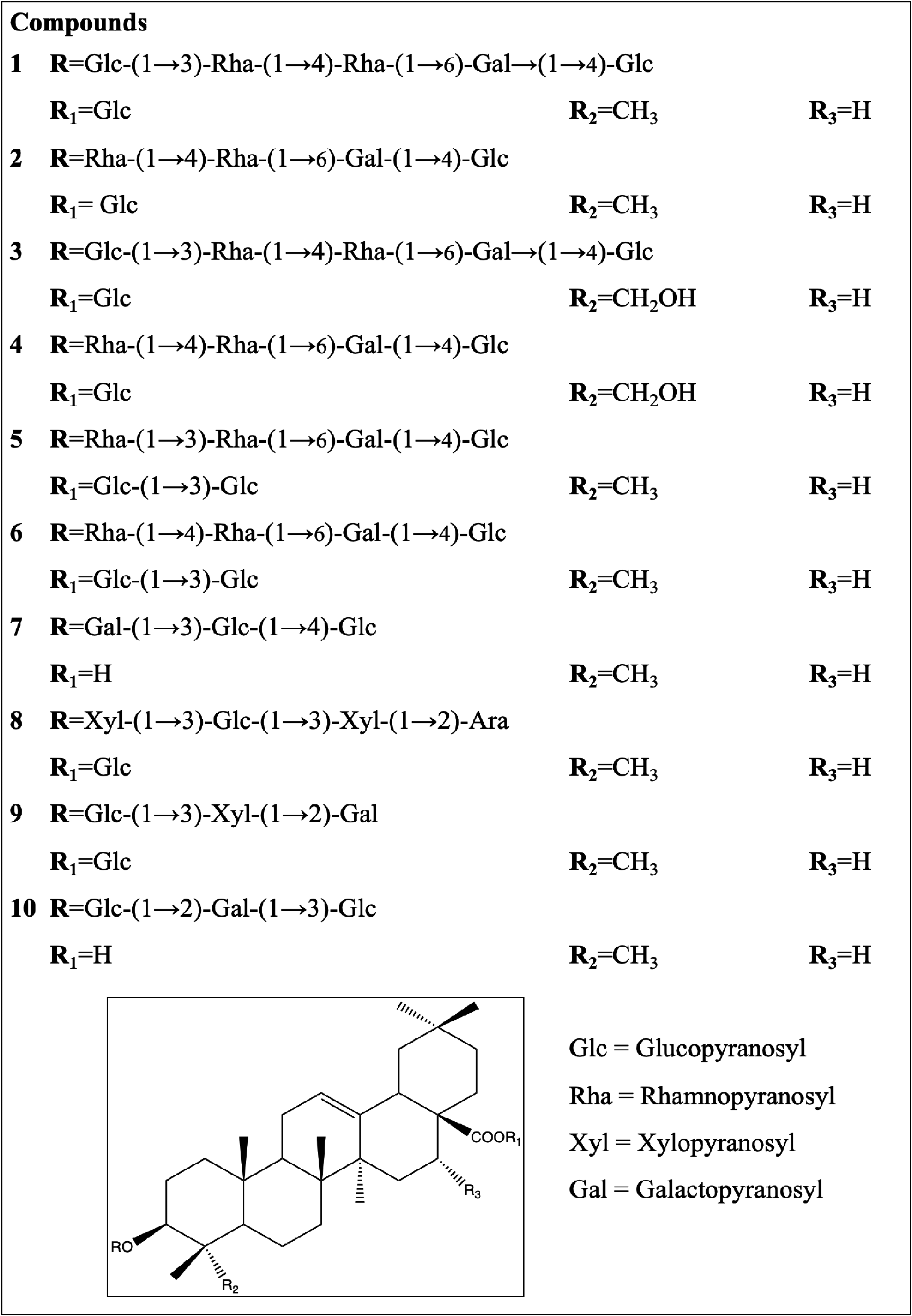
The Structures of Oleanane-type Triterpenoid Saponins from T. sundaica (Drawn from ChemDraw Professional 16.0).
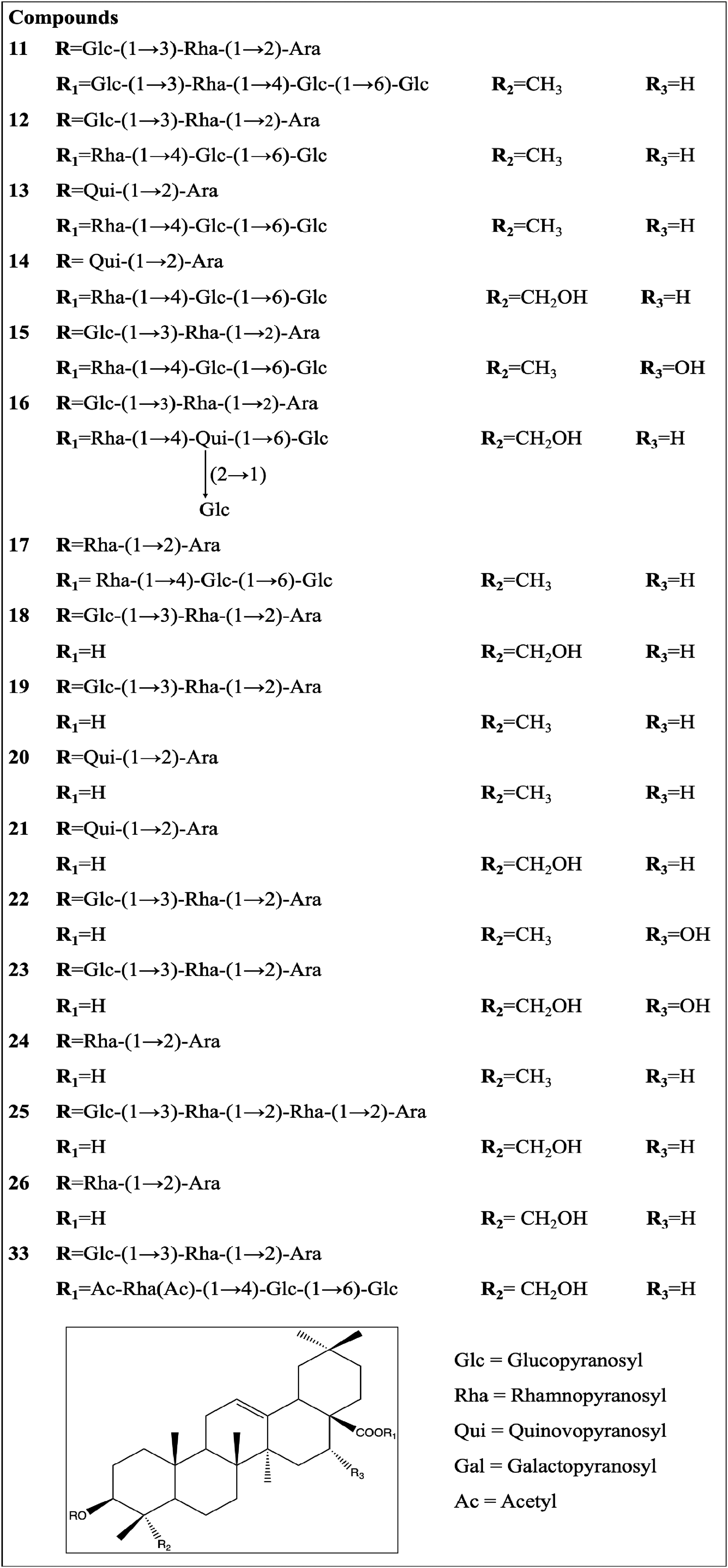
The Structures of Oleanane-type Triterpenoid Saponins (Compounds 11-26) and Acetylated Saponin (Compound 33) from T. palmata (Drawn from ChemDraw Professional 16.0).
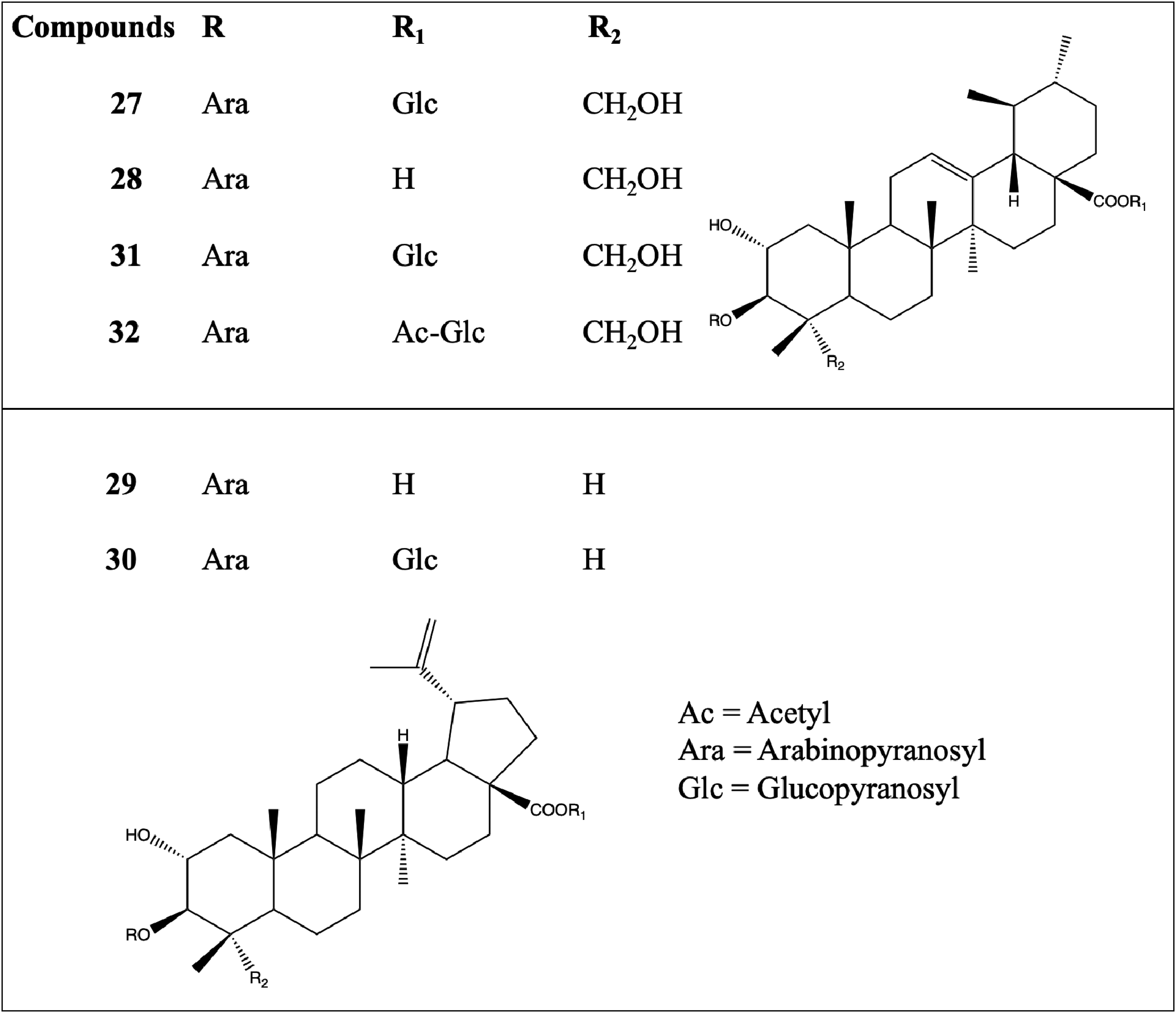
The Structures of Ursane-type Triterpenoid Saponins (Compounds 27, 28, 31), Lupane-type Triterpenoid Saponins (Compounds 29, 30), and Acetylated Saponin (Compound 32) from T. palmata (Drawn from ChemDraw Professional 16.0).
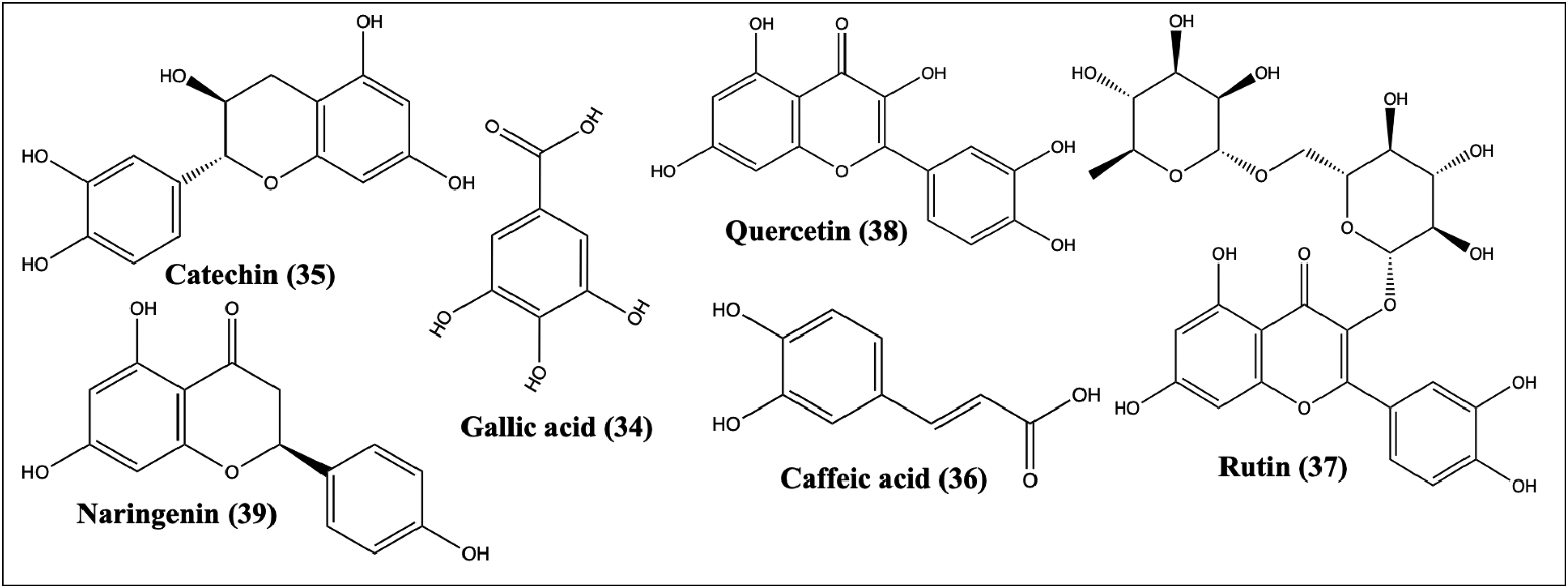
The Structures of Flavonoids (Compounds 35, 37-39) and other Phenolics (Compounds 34, 36) from T. palmata (Drawn from ChemDraw Professional 16.0).

The Alkaline Hydrolytic Procedure of Saponins (Compounds 12-17, 33) from T. palmata (Drawn from ChemDraw Professional 16.0).
Phytocompounds Isolated from Multiple Parts of T. palmata and T. sundaica.

Chemotaxonomic Significance
In the present work, a total of thirty-nine phytocompounds, including twenty-six oleanane-type triterpenoid saponins (
To our knowledge, compounds (
Compound (
In the genus Trevesia, four flavonoids and two phenolics were only purified from T. palmata, being caffeic acid (
Recent explorations of these phytocompounds have facilitated a broadened understanding of the phytochemical diversity of the genus Trevesia. They may act as potential chemotaxonomic biomarkers or fingerprints to differentiate T. sundaica and T. palmata from other species of the Araliaceae family. Chemotaxonomic investigations have revealed that the genus Trevesia may be closely related to the genera Aralia, Acanthopanax, and Hedera. As can be noticed, compounds (
Pharmacological Activities
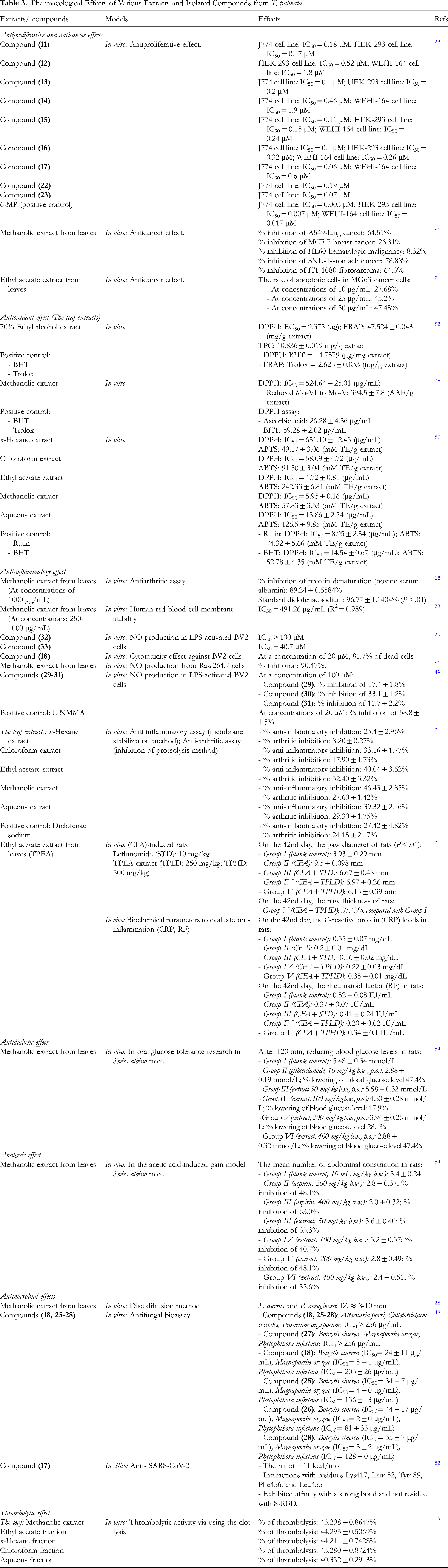
So far, only reports on T. palmata have been investigated regarding pharmacological effects; therefore, this work discusses only T. palmata. Scientific studies worldwide have revealed several insights into the pharmacological effects of T. palmata. Crude extracts and pure phytocompounds from different parts of T. palmata have shown significant antiproliferative, 23 anti-cancer,50,81 antioxidant,28,50,52 anti-inflammatory,28,29,49,50,81 antidiabetic, 54 antimicrobial,28,48 antiviral, 82 and analgesic effects. 54 The pharmacological properties of Trevesia palmata could be correlated with the significant phytocomponents, which exhibit various pharmacological effects with numerous mechanism insights. This section highlights the pharmacological effects of the active phytocompounds in the T. palmata plant (Table 3).
Pharmacological Effects of Various Extracts and Isolated Compounds from T. palmata.
Antiproliferative and Anticancer Activities
Cancer arises from uncontrolled cellular proliferation. Therefore, antiproliferative activities, cell cycle control, and apoptosis are pivotal in antitumor activity. 83 Extracts from T. palmata contain saponins and ethyl acetate, which provide anti-proliferative 23 and anti-osteosarcoma effects. 50 This suggests that T. palmata has potential anti-cancer properties.
Antiproliferative Activity
Although no document was found in the past decade that any part of T. palmata was used to treat cancer in folk medicine, the isolated phytocompounds from T. palmata aerial parts exhibited their antiproliferative activities in recent investigations. De Tommasi et al (2000)
23
showed triterpenoid saponins isolated from the methanolic extract of T. palmata aerial parts to be antiproliferative to murine monocyte-macrophage (J774), human epithelial kidney (HEK-293), and murine fibrosarcoma (WEHI-164) cell lines. All eight of the isolated saponins and their pro-sapogenins (ie, 15a (compound
Regarding the triterpenoid saponins structural relationship and anti-proliferative effects (SAR), the results of the investigation showed that the role of the hydroxyl group at position C-16 and the esterified saccharide chain at position C-28 in triterpenoid saponins structure is vital in mediating antiproliferative activity. However, the saccharide chain at position C-3 does not appear to be essential for cytotoxicity.23,51
Anticancer Activity
A recent study has explored the anti-osteosarcoma property of T. palmata leaves. 50 This study conducted in India demonstrated the potent anti-osteosarcoma effect of this plant. Flow cytometry analysis examined the cell proliferation and cell cycle arrest in MG63 cancer cells treated with T. palmata extract. The rate of apoptotic cells increased with an increase in treatment doses (10 μg/mL (27.68%), 25 μg/mL (45.2%), and 50 μg/mL (47.45%)) resulting from Annexin V binding. Moreover, at doses of 10, 25, and 50 μg/mL, the sample showed a significant increase in cell cycle arrest. 50
In normal cells, the cell cycle comprises G1-S-G2-M phases with an inactive or quiescent G0 state. 84 These four stages are also present in cancer cells; however, the regulation of the different phases may be altered. 85 Apoptosis is a programmed and physiological form of cell death and is the primary mechanism of cell death in cancer therapies.86,87 Compared to controls not treated with plant extracts, more cells accumulated in all cell cycle phases and a higher proportion of cells in the sub-G0/G1 phase. This indicates that the apoptotic population has increased. In parallel with the above phase, the G2/M phase and S phase of the cell cycle decrease, indicating reduced DNA replication. Cancer development is also associated with cell cycle down-regulation in the G1/S and G2/M phases and biochemical abnormalities as reported in previous studies.50,88 According to the study, cell cycle arrest is critical in preventing malignancies. Thus, the ethyl acetate extract from T. palmata leaves promotes apoptosis and anti-metastasis in MG63 cells. 50 In other words, T. palmata leaf extract induced apoptosis and inhibited invasion in MG63 cells, possibly through inhibition of the G1/S and G2/M checkpoints of the cell cycle (Figure 6).
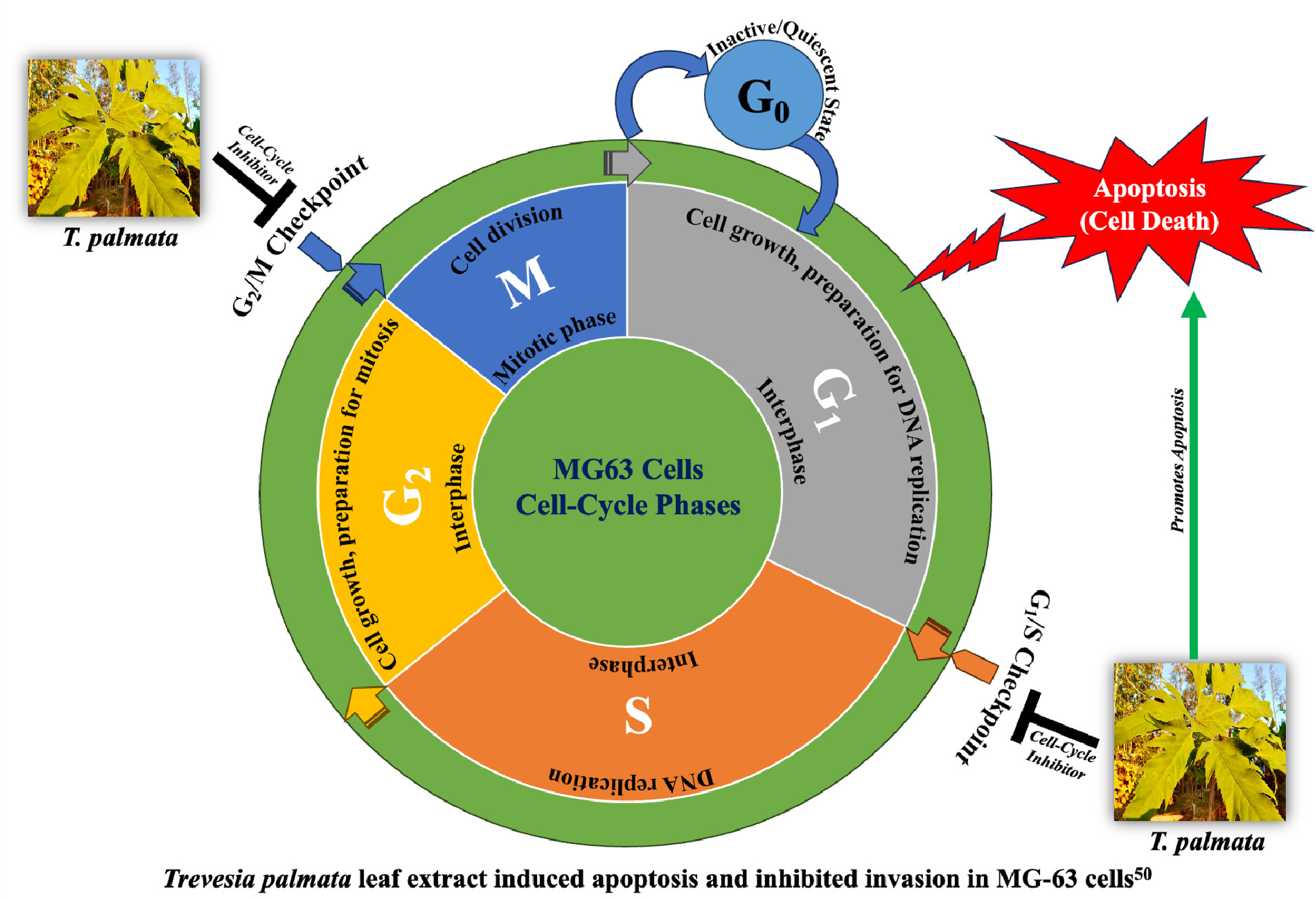
Schematic Diagram of T. Palmata Leaf Extract-induced cell Cycle Arrest in MG63 cells (Created by Tran Van Chen).
In an in vitro study by Changyoung et al (2019), 81 the methanolic extract of T. palmata leaves (syn., T. sphaerocarpa) was shown to have anticancer activity against cell lines, including A549-lung cancer, MCF-7-breast cancer, HL60-hematologic malignancy, SNU-1-stomach cancer, and HT-1080-fibrosarcoma, with a percent inhibition of 64.51%, 26.31%, 8.32%, 78.88%, and 64.3%, respectively. 81 These findings can be attributed to the secondary metabolite component within the plant extract.
Antioxidant Activity
Adverse conditions such as extreme temperatures, drought, and nutrient deficiency can lead to the accumulation of high concentrations of reactive oxygen species (ROS), resulting in oxidative stress. To combat this, cells have developed a complex antioxidant system comprising enzymatic and non-enzymatic elements. Among the non-enzymatic components, plant secondary metabolites—specifically phenolic compounds—play a crucial role in defending against oxidative stress. These compounds act as antioxidants and are associated with preventing cardiovascular diseases and cancer in humans. 89 Effectively extracting and accurately assessing antioxidants from medicinal plants are essential for identifying potential antioxidant sources. This process is vital for promoting their application in functional foods, pharmaceuticals, and food additives. 90 Therefore, studying the antioxidant activity of extracts from different plant species could help establish their value as sources of new antioxidant compounds.
Source natural plants used in traditional medicine have antioxidant activities through different mechanisms, including 1,1-Diphenyl-2-picrylhydrazyl (DPPH) radical scavenging assay, ferric-reducing power (FRAP) assay, ABTS radical scavenging assay, superoxide anion scavenging assay, and hydroxyl radical scavenging assay. 91 Based on the medicinal plants used in Northern Thailand as postpartum herbal bath recipes by the Mien (Yao) community, T. palmata was tested to determine the antioxidant effect. 52 Panyaphu and colleagues evaluated the antioxidant potential of 70% ethyl alcohol extract of T. palmata. Scavenging activities on DPPH radical (EC50) and ferric-reducing antioxidant power (mg/g extract) were found to be 9.375 (µg) and 47.524 ± 0.043 (mg/g extract), respectively, while BHT and Trolox equivalents were 14.7579 (µg/mg extract) and 2.625 ± 0.033 (mg/g extract). T. palmata extract showed the content of total phenolic compounds as expressed as gallic acid equivalents (10.836 ± 0.019 mg/g extract). 52
Another study showed that the methanolic extract obtained from the leaves of T. palmata demonstrated very weak DPPH radical scavenging capacity with IC50 values of 524.64 ± 25.01 μg/mL compared to standards (ascorbic acid of 26.28 ± 4.36 μg/mL and BHT of 59.28 ± 2.02 μg/mL). However, this plant extract reduced molybdenum (Mo-VI) to molybdenum (Mo-V) with a capacity of 394.5 ± 7.8 (AAE/g extract). This result reveals that T. palmata extract showed good total antioxidant capacity, from which it can be inferred that the good total antioxidant capacity of the methanolic extract may be due to the presence of alkaloids and flavonoids. 28
Recently, the free radical scavenging properties of different extracts from T. palmata leaves were determined by DPPH and ABTS radical scavenging assays via a study by Manoharan et al (2023). 50 As a result, n-hexane, chloroform, ethyl acetate, methanol, and aqueous extracts derived from T. palmata leaves significantly scavenged DPPH and ABTS free radicals. The IC50 values for the n-hexane, chloroform, ethyl acetate, methanol, and aqueous extracts were determined to be 651.10 ± 12.43, 58.09 ± 4.72, 4.72 ± 0.81, 5.95 ± 0.16, and 13.86 ± 2.54 µg/mL, respectively. The ability to scavenge ABTS free radicals of the n-hexane, chloroform, ethyl acetate, methanol, and aqueous extracts were 49.17 ± 3.06, 91.50 ± 3.04, 242.33 ± 6.81, 57.83 ± 3.33, and 126.5 ± 9.85 (mM TE/g extract), respectively. Rutin (IC50 = 8.95 ± 2.54 µg/mL for DPPH quenching capacity and 74.32 ± 5.66 mM TE/g extract for ABTS scavenging capacity) and BHT (IC50 = 14.54 ± 0.67 µg/mL for DPPH quenching capacity and 52.78 ± 4.35 mM TE/g extract for ABTS scavenging capacity) were used as control positives in this study. 50 Overall, polar and semipolar solvent-extracted T. palmata leaves were more likely to exhibit moderate to strong antioxidant activity at concentrations varying from 4.72 to 58.09 µg/mL than nonpolar extracts (IC50 = 651.1 µg/mL). 50
Anti-inflammatory Activity
Inflammation is the immune system's response to harmful stimuli such as pathogens, damaged cells, toxic substances, or radiation, aiming to eliminate these threats and initiate the healing process.92,93 The main mechanisms involved in immune regulation include phagocytosis and the release of cytokines. Activated macrophages play a role in delivering antigens, resisting infections, and controlling inflammations. 94 It is a vital defense mechanism for maintaining health.92‐94 However, if acute inflammation is not adequately controlled, it can become chronic and contribute to various inflammatory diseases.92,93 Moreover, chronic local inflammation is associated with tumor growth, promoting tumor initiation and progression at the primary site and facilitating tumor dissemination and metastasis. 87 Therefore, there is a need to investigate potential compounds and develop new therapeutic agents to treat and management of treating and manage inflammation. 95
The investigation of medicinal herbs with anti-inflammatory activities is essential. Depending on the various experimental models employed, the extracts of T. palmata leaves contained unique anti-inflammatory activities. In the previous study for an in vitro antiarthritic assay, the methanolic extract of T. palmata leaves (1000 µg/mL) showed a mean inhibition of protein denaturation (bovine serum albumin) of 89.24 ± 0.6584%, compared to standard diclofenac sodium (1000 µg/mL) of 96.77 ± 1.1404% (P < .01). This study revealed that the extract of T. palmata had significant antiarthritic activity. 18
In a study by Thao and colleagues (2018),
29
new acetylated saponin compounds, namely acetyltrevesiasaponin A
Changyoung and colleagues (2019)
81
reported that the methanolic extract of T. palmata leaves (syn., T. sphaerocarpa) collected from Quang Tri (Vietnam) has remarkable anti-inflammatory effects, with a percentage inhibition of NO production from Raw264.7 cells of 90.47%.
81
According to a study, three new triterpene saponins, namely trevepaloside A
In a recent study, Manoharan et al (2023) 50 investigated the in vitro anti-inflammatory assay by membrane stabilization method and the anti-arthritic assay by inhibiting proteolysis method from the T. palmata leaf extracts. The results demonstrated that the n-hexane, chloroform, ethyl acetate, methanol, and aqueous extracts derived from the leaves of T. palmata exhibited anti-inflammatory and anti-arthritic activities. The % anti-inflammatory inhibitions for the n-hexane, chloroform, ethyl acetate, methanol, and aqueous extracts were determined to be 23.4 ± 2.96%, 33.16 ± 1.77%, 40.04 ± 3.62%, 46.43 ± 2.85%, and 39.32 ± 2.16%, respectively. Thus, the highest anti-inflammatory capacity was found in the methanolic extract (46.43 ± 2.85%). Similarly, the % arthritic inhibition was highest for ethyl acetate extract (32.40 ± 3.32%), followed by aqueous (29.30 ± 1.75%), methanol (27.60 ± 1.42%), chloroform (17.90 ± 1.73%), and n-hexane (8.20 ± 0.27%) extracts. The diclofenac sodium standard exhibited anti-inflammatory and anti-arthritic activities of 27.42 ± 4.82% and 24.15 ± 2.17%, respectively. 50
The in vivo anti-inflammatory and anti-arthritic activities of the ethyl acetate extract from T. palmata leaves were determined in a previous study. 50 Five groups of animals (Groups I, II, III, IV, and V) were designed for the in vivo bioassay. Groups I (blank control), II (CFA), and III (CFA + STD) served as blank, negative, and positive controls, respectively. Groups IV (CFA + TPLD) and V (CFA + TPHD) received ethyl acetate extract at doses of 250 and 500 mg/kg body weight (p.o.), respectively. Regarding paw diameter measurement, Complete Freund's Adjuvant (CFA)-induced rats were utilized to evaluate the therapeutic properties of treatment with the ethyl acetate extract from T. palmata leaves. Compared with group II (CFA, 9.5 ± 0.098 mm on the 42nd day), the ethyl acetate extract reduced the mean diameter of the rat paw in the CFA-induced inflammation on the 28th, 35th, and 42nd days after treatment. The results showed that ethyl acetate leaf extract had a significant dose-dependent anti-inflammatory effect against CFA-induced inflammation. On the 42nd day, the extract suppressed paw diameter by 6.97 ± 0.26 and 6.15 ± 0.39 mm at dosages of 250 mg/kg (group IV) and 500 mg/kg (group V) (P < .05), respectively. The T. palmata high dose (group V) effectively reduced paw thickness by about 37.43% compared with group I, indicating reduced inflammation. Additionally, the pain test scoring was analyzed through extension and flexion scores, which showed a gradual increase in pain as the inflammation in joints increased. Groups treated with the standard (III) and sample (IV and V) showed decreased pain effects. On the contrary, the mobility and stance scores increased considerably in the standard (III) and sample-treated (IV and V) groups. Regarding biochemical parameters to evaluate anti-inflammation, on the 42nd day after the treatment, C-reactive protein (CRP) levels in rats decreased by 0.2 ± 0.01, 0.16 ± 0.02, and 0.22 ± 0.03 mg/dL for groups II, III, and IV when compared with the group I (0.35 ± 0.07 mg/dL). However, the study results showed no drastic change in CRP levels in group V (0.35 ± 0.01 mg/dL) and were similar to group I. Additionally, group I (0.52 ± 0.08 IU/mL) showed elevated rheumatoid factor (RF) compared to groups II (0.37 ± 0.07 IU/mL), III (0.41 ± 0.24 IU/mL), IV (0.20 ± 0.02 IU/mL), and V (0.34 ± 0.1 IU/mL). 50 Histopathologically, group V treated with TPHD had normal epidermis and dermis, reduced inflammation compared with epidermis infiltrated by inflammatory cells and signs of focal necrotic bone, and mild stromal edema in the CFA-treated group. 50 Thus, the anti-inflammatory and anti-arthritic capacities of T. palmata leaf extracts, which contain polyphenolic compounds such as gallic acid, catechin, caffeic acid, rutin, quercetin, and naringenin, 50 imply that it is a promising herbal remedy for pain and inflammation management.
Antidiabetic Activity
Diabetes mellitus, one of the most prevalent endocrine metabolic disorders, leads to significant morbidity and mortality due to its microvascular and macrovascular complications. 96 Hyperglycemia, the primary symptom of diabetes mellitus, generates reactive oxygen species, causing lipid peroxidation and membrane damage. 97 Due to insulin deficiency, individuals with diabetes have elevated blood glucose levels. Various plants are used as antidiabetic remedies due to their insulin-mimetic or secretagogue properties. The hypoglycemic effects of these plants are attributed to chemical compounds such as glycosides, alkaloids, terpenoids, flavonoids, and carotenoids. 98 Research has demonstrated significant antidiabetic activity in extracts of T. palmata.
In oral glucose tolerance research on T. palmata for tested mice with diabetes, the fasted Swiss albino mice were grouped into six groups, including group control (1.0% Tween 80 in water, 10 mL/kg body weight), group positive control (glibenclamide, 10 mg/kg body weight), and groups receiving leaf extract (at doses of 50, 100, 200, and 400 mg per kg body weight). 54 As a result of the study, the methanolic extract of T. palmata leaves showed a dose-dependent hypoglycemic effect on blood glucose levels in hyperglycemic mice following 120 min of glucose loading. At a dose of 50 mg/kg, T. palmata extract was observed not to reduce blood glucose levels compared to the control group, with blood glucose levels of 5.58 ± 0.32 and 5.48 ± 0.34 (mmol/L), respectively. 54 However, at doses of 100, 200, and 400 mg/kg body weight, this extract was found to reduce blood glucose levels by 4.50 ± 0.28 (mmol/L) (corresponding to 17.9% lowering of blood glucose level), 3.94 ± 0.26 (mmol/L) (corresponding to 28.1% lowering of blood glucose level), and 2.88 ± 0.32 (mmol/L) (corresponding to 47.4% lowering of blood glucose level), respectively (P < .05). 54 In particular, the T. palmata extract treatment group (400 mg/kg) had a hypoglycemic effect corresponding to the control standard drug glibenclamide (10 mg/kg) with a hypoglycemic level of 47.4% (P < .05). 54 With the assayed antihyperglycemic activity, the T. palmata extract showed a significant antidiabetic effect in the mice model. 54 However, the corresponding natural bioactive compounds with antidiabetic activity are still unknown for this species. Unambiguously, more investigations are requested concerning the antidiabetic effects of T. palmata.
Analgesic Activity
Despite advancements in pain management, conservative treatments often yield inadequate responses. Additionally, potent analgesics like opioids frequently usually come with drawbacks such as side effects and dependence. This underscores the critical importance of discovering safer alternatives capable of effectively addressing various painful conditions, particularly chronic pain.99,100 Research has been conducted to evaluate the analgesic properties of T. palmata extracts, yielding significant results.
A study suggested that T. palmata's methanolic extract (50, 100, 200, and 400 mg/kg, p.o.) had a substantial analgesic effect and reduced the abdominal constrictions caused by acetic acid in a dose-dependent way. 54 Specifically, at doses of 50, 100, 200, and 400 mg/kg body weight, the extract plant exhibited inhibitory effects of 33.3, 40.7, 48.1, and 55.6%, respectively (P < .05). While a standard analgesic drug, aspirin (at doses of 200 and 400 mg/kg body weight), reduced the number of constrictions by 48.10 and 63.0%, respectively (P < .05). The findings indicate that the methanolic extract's potency is comparable to that of a 200 mg/kg dose of aspirin. According to this investigation, the extract derived from T. palmata leaves demonstrated notable inhibition of abdominal constrictions in tested Swiss albino mice. 54
Antimicrobial Activity
Infectious diseases caused by microorganisms such as bacteria, viruses, fungi, or parasites continue to be a primary health concern, placing significant strains on the economy and public well-being. With the rise of antimicrobial resistance against current drugs, there's an urgent need for new approaches to developing innovative antibiotics and related products to counteract this problem. Currently, attention is turning towards exploring biologically active compounds found in plant species commonly used in herbal medicine, as they offer potential as excellent sources of antibacterial and antifungal properties.101,102
Antibacterial and Antifungal Activities
Limited studies have been carried out to date concerning the antibacterial and antifungal efficacies of T. palmata. Thus far, only two in vitro studies have evaluated T. palmata's antibacterial and antifungal activities. The in vitro result suggested that the methanolic extract exhibited antibacterial activity against gram-positive (S. aureus) and gram-negative (P. aeruginosa) bacteria, with a zone of inhibition of approximately 8-10 mm. However, this extract was observed not to inhibit E. coli and S. agalactiae bacteria. 28
Another study found that isolated compounds from T. palmata leaves are used to inhibit phytopathogenic fungi (Alternaria porri, Botrytis cinerea, Colletotrichum coccodes, Fusarium oxysporum, Magnaporthe oryzae, and Phytophthora infestans), showing various antifungal effects.
48
The results of the in vitro antifungal bioassay revealed that except for compound
Antiviral Activity
A coronavirus's (COV) ability to bind and enter its host cells depends on the spike protein receptor binding domain (S-RBD). Therefore, it has emerged as an attractive antiviral drug target. The study by Muhseen and colleagues (2020)
82
aimed to target S-RBD causing severe acute respiratory syndrome caused by Coronavirus 2 (SARS-CoV-2) S-RBD with novel bioactive compounds against Coronavirus disease 2019 (COVID-19) via an in silico computational approach.
82
As a result of this study, the hit of compound
Thrombolytic Activity
The blockage of blood flow caused by clot formation, known as thrombosis, is a severe health problem that can lead to tissue oxygen deprivation and damage, contributing to morbidity and mortality across various conditions and among different groups of patients. Thrombosis presents a significant challenge to blood circulation and health, emphasizing the importance of interventions like fibrinolytic drugs, whose role is vital in improving patient outcomes. 103 Therefore, actions are taken to investigate and develop new potential compounds to minimize the adverse effects of the available thrombolytic drugs. Studies on T. palmata have shown promising results in this regard.
Sayeed et al (2014) 18 evaluated in vitro the thrombolytic activity of one crude extract (methanolic) and four fractionated extracts (n-hexane, chloroform, ethyl acetate, and aqueous) of T. palmata leaves from the Sitakunda area (Chittagong, Bangladesh) by using the clot lysis of the active extracts. The screening bioassay revealed that T. palmata ethyl acetate fractionated extract had the highest activity, followed by n-hexane, methanolic, chloroform, and aqueous extracts with thrombolytic percentages of 44.293 ± 0.5069%, 44.211 ± 0.7428%, 43.298 ± 0.8647%, 43.280 ± 0.8724%, and 40.332 ± 0.2913%, respectively (P < .01). Thus, the research results have demonstrated the significant thrombolytic effect of T. palmata leaf extract and fraction when compared to streptokinase (positive control, 71.668 ± 0.4661%) and made a difference compared to water (negative control, 5.54 ± 0.9555%) (P < .01). 18 Further investigation is needed to identify the specific molecules that exert thrombolytic effects and comprehensively understand their accurate mechanism of action. This requires a comprehensive investigation using both in vitro and in vivo methods.
Safety Evidence
Components extracted from plants can interact with biological component elements, such as tissues, cells, proteins, and DNA, which can disrupt the host body's immune response and metabolism. Therefore, assessing the in vivo behavior of test animals will provide a basis for the beneficial and toxic effects of natural compounds or plant extracts. Moreover, predicting pharmacokinetic models to evaluate compounds or herbal medicines and their intended effects is essential. 104
In a brine shrimp lethality bioassay, the toxicity effect of the leaf methanolic extract of T. palmata against brine shrimp nauplii was studied. The mortality rate of brine shrimp nauplii increased with the concentration of the extracted sample, with an LC50 value of 0.57 μg/mL. 28
In a study by Rahman and colleagues (2014), 54 the in vivo acute toxicological evaluation of methanolic extract from T. palmata leaves was investigated using a Swiss albino mice model. As a result of the study, the methanolic extract of T. palmata leaves administered orally to tested mice at 100-3000 mg/kg did not show signs of toxicity or changes in behavioral patterns, and mortality was not observed. The study concluded that there was no toxicity in mice, even at the highest dose tested. 54 This result was confirmed through a follow-up study by Victoria and colleagues (2019). 105 The study also determined that the methanolic extract of T. palmata leaves was safe and showed no toxic effects when administered at a dose of 2000 mg/kg body weight in healthy Wistar albino rats. 105 In a similar study, the leaf ethyl acetate extract of T. palmata administered by oral route to healthy male and female Wistar albino rats at doses of 500, 1000, and 2000 mg/kg induced no significant differences in body weight, no altered morphology, behavioral actions, and functions in animals, no mortality, and no signs of toxicity. This study also showed that the median lethal dose (LD50) of ethyl acetate extract from T. palmata leaves was estimated to exceed 2000 mg/kg. Thus, used doses (maximum up to 2000 mg/kg) are considered safe for treatment without adverse toxic effects. 50 Although there have been reports of acute toxicity of T. palmata leaf extract, the results of studies have determined that the LD50 ranges from 2000 to 3000 mg/kg. This result may be due to differences in testing conditions, test animals, and extraction solvents. Therefore, more research is needed to evaluate this plant's acute and chronic toxicity.
In 2019, Victoria and colleagues revealed that the methanolic extract of T. palamata leaves administrated orally to Wistar albino rats at 200 and 400 mg/kg showed a significant decrease in all the serum marker levels of serum transaminases (ALT, AST), serum alkaline phosphatase (ALP), and total bilirubin (TB), as well as a significant increase in total protein concentration (P < .001). 105 Moreover, there were significant decreases in cholesterol levels treated with 200 and 400 mg/kg T. palmata extract compared with the CCl4-treated rats (P < .05). Hematologically, the results of this study showed that the mean red blood cell (RBC) and hemoglobin (Hb) concentrations increased significantly at 200 mg/kg and 400 mg/kg of administration (P < .05). At doses of 200 mg/kg and 400 mg/kg, the eosinophil count was considerably reduced (P < .05). However, neutrophils and lymphocytes did not show significant differences at any of the tested doses. 105 In the same in vivo study, Victoria et al 106 also demonstrated that the methanolic extract of T. palmata leaves has shown the ability to maintain the normal functions of the liver as a hepatoprotective solid effect of this plant. 106
According to the study of Manoharan and colleagues (2023), 50 oxidative stress was assessed in the liver of the ethyl acetate extract T. palmata-treated rats by evaluating the antioxidant enzymes, including superoxide dismutase (SOD), catalase (CAT), glutathione peroxidase (GPx), and non-enzymatic glutathione (GSH), on the 42nd day after the treatment. As a result of this study, it was observed that there were statistically significant differences in the enzymatic antioxidants for the T. palmata extract-treated groups compared with the usual standard control group (P < .001 and P < .01). Briefly, a significant effect of the antioxidant enzymes was observed at a dose of 500 mg/kg of the ethyl acetate extract from T. palmata leaves. In other words, TPHD had a profound ability to activate SOD (0.41 ± 0.01 U/mg protein), CAT (0.34 ± 0.02 μmol of H2O2 consumed/mg protein), GPx (0.30 ± 0.02 μM of glutathione oxidized/mg protein), and GSH (0.33 ± 0.05 μM/mg protein) enzymes, which prove its enhanced cellular antioxidant activity in a dose-dependent manner. In this study, parameters assessing kidney function, including urea, uric acid, and creatinine levels, were also observed to decrease in all the treatment groups compared to the usual standard control group, except for the creatinine increase in the CFA-induced group. Regarding red blood cells (RBC), white blood cells (WBC), and hemoglobin (Hb) analysis, there was no significant change in the hematological parameters; nevertheless, the erythrocyte sedimentation rate (ESR) increased in the CFA-induced (23 ± 8.7 mm/h), TPHD (13 ± 2.9 mm/h), and standard-treated (7.3 ± 0.88 mm/h) groups. Biochemical and hematological parameters are essential because they explain the biological activities of a plant extract or its products on blood and indicate the toxicity of plant-based samples in animals. 50
Isolated compounds from T. palmata should also be investigated for their toxicity effects, which is the basis for novel drug development or herbal remedies.
Figure 7 illustrates the biologically active compounds and typical pharmacological activities of T. palmata and T. sundaica.
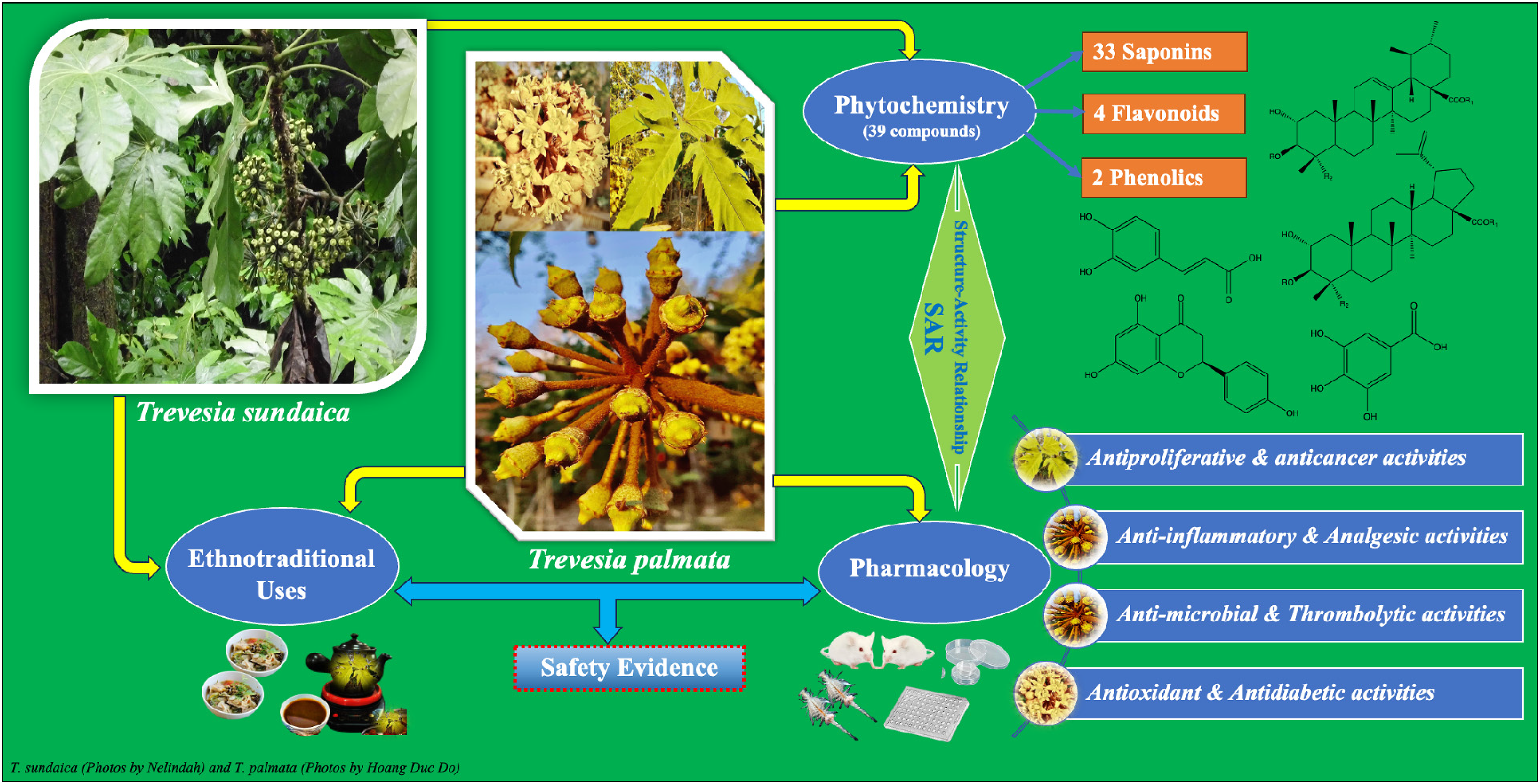
Diagram Illustrating the Bioactive Compounds and Representative Pharmacological Properties of T. palmata and T. sundaica (Created by Tran Van Chen).
Conclusions and Future Perspectives
Various parts of Trevesia species have been used in traditional medicine across different countries and cultures to treat health conditions such as fever, inflammation, and edema or consumed as vegetables. For the first time, our comprehensive review of the literature reveals that T. sundaica (
Although many studies have been conducted on T. sundaica and T. palmata, the phytochemical profile is still limited. The evaluation of pharmacological effects using crude extracts and isolated compounds has not yet been widely performed in in vitro and in vivo models. Furthermore, the biological potential of small compounds has not yet been considered. Based on the results of this overview, prospects for the Trevesia plant are proposed as follows: Firstly, given its extensive history of use, it is imperative to conduct further research to explore its active components and therapeutic potential. Secondly, promoting its cultivation and utilization across various fields will enhance its value and applications. Thirdly, further toxicological, preclinical, and clinical evaluations, structure-activity relationship studies, and the synthesis of new derivatives should be performed. These findings indicate significant potential for developing new, cost-effective, safe plant-based drugs, highlighting the urgent need for continued, in-depth research and development. Finally, the sustainable propagation, cultivation, development, and management of the quality of these plants are also conducted to prevent food security issues in the future.
The detailed information about Trevesia plants, especially T. palmata, and its pharmacological effects provided in this review can lay the groundwork for using this plant in the future in the research and development of multiple drugs or functional foods.
Footnotes
Abbreviations
Statement of Human and Animal Rights
This review article does not contain any studies with human or animal subjects.
Statement of Informed Consent
There are no human subjects in this review article and informed consent is not applicable.

Ethical Considerations
Ethical approval is not applicable for this review article.
Author Contributions/CRediT
TVC: Conceptualization, Methodology, Investigation, Formal analysis, Data curation, Supervision, Writing–Original draft preparation, Writing–Reviewing and Editing. NTN: Writing–Original draft. VTT: Writing–Original draft. TVTN: Writing–Reviewing and Editing. NTT: Reviewing and Editing. NTTH: Investigation, Data curation, Conceptualization.
Funding
The authors received no financial support for the research, authorship, and/or publication of this article.
Conflicting Interests
The authors declared no potential conflicts of interest with respect to the research, authorship, and/or publication of this article.