



Abstract
Frostbite is a severe cold-induced vascular injury caused by the formation of ice crystals within and between cells, leading to endothelial damage. It poses a significant health risk to military and field personnel working in freezing conditions. The most commonly affected body parts include the feet, toes, fingers, hands, ears, cheeks, and nose due to their exposure and difficulty in protection. In severe cases, frostbite can necessitate amputation due to the absence of early symptoms. This study explores the potential of plant-based phytoconstituents with pharmacological properties for frostbite treatment and evaluates whether herbal medicine is as effective as or superior to allopathic treatments. A systematic review was conducted using an advanced search of MeSH terms and titles/abstracts in databases such as PubMed, Scopus, and Web of Science. Literature was screened based on publication period, relevance to active components, and the pharmacological and therapeutic properties of herbs. The analysis identified allopathic treatments such as ibuprofen, iloprost, alteplase, and heparin, alongside herbal medicines like barbaloin, capsaicin, and escin. Both treatment approaches exhibited promising pharmacological properties for frostbite management. Medicinal plants, including Aloe barbadensis, Calendula officinalis, and Equisetum arvense, along with their phytoconstituents such as barbaloin and palustrine, have demonstrated effectiveness in treating frostbite. Herbal medications and phytoconstituents offer an effective treatment option without adverse effects, making them a promising alternative or complement to allopathic treatments.
Introduction
Frostbite is a cold-induced vascular injury in which ice crystals develop within and between cells, causing substantial endothelial damage. 1 Vulnerable populations such as the homeless, industrial workers, and military personnel are typically affected in cold climates, with symptoms ranging from vasoconstriction and hemorrhage to ischemia perfusion damage. 2 Mountaineers, particularly those affected by cold weather and high altitudes, are one of the main risk groups for frostbite. 3 Military personnel are still at risk of severe frostbite, but the number of soldiers suffering from it has increased significantly. 4 There are four levels of severity for frostbite: the first level causes damage to the epidermis, which causes redness and swelling; the second level causes blisters and major swelling; the third level causes hemorrhagic blisters and severe pain; and the fourth level affects deeper tissues, such as muscles and bones. The nose, cheeks, ears, fingers, and toes are commonly affected areas, showing symptoms like numbness, changes in skin color, and the risk of tissue necrosis if treatment is delayed. 5
Pathophysiology of Frostbite
The pathophysiology of frostbite has been the subject of research in recent years. Figure 1 illustrates two different mechanisms that cause tissue damage.

Pathophysiology of Frostbite.
Direct Phase: Cold exposure causes cell death.
Indirect Phase: Increasing skin ischemia induces necrosis and degeneration. 6
Direct Phase
Ice crystals occur at the intracellular and extracellular sites when tissue temperatures fall below −2.2 °C, and ice causes direct mechanical damage to cell walls. The development of ice crystals in the blood vessels causes another type of harm, which damages the inner lining of the blood vessels (endothelium) and triggers inflammation. This inflammation exacerbates the situation by causing ischemia, thrombosis, and vascular stasis, which slow down or block blood flow. An unexpected increase in the concentration of electrolytes in the cell leads to dehydration and cell shrinkage. The tissue temperature continues to drop, and as the intracellular ice crystals grow and expand the cell membrane ruptures, causing structural damage to the cells. 7
Indirect Phase
The indirect freezing stage consists of four stages: the pre-freezing duration, freezing-thawing phase, vascular stasis phase, and late ischemia phase. 7
Vasoconstriction and ischemia cause the tissue to cool during pre-freezing, but no ice crystals form; neuronal cooling and ischemia cause hyperesthesia or paraesthesia. During the freeze-thaw phase, ice crystals can form outside or inside of cells. This can mess up the balance of proteins and fats, make cells dry out, mess up the balance of electrolytes inside cells and break down cell membranes, During the vascular stasis phase, blood may flow or clot in the blood vessels as they alternate between constriction and dilation. During the late ischemic phase, many things can happen, including tissue ischemia and infarction. These include thrombin A2, prostaglandin F2a, bradykinins, histamine, an abnormal narrowing of arterioles and venules, damage that persists after reperfusion, embolic events across microvessels and blood vessels, and the formation of thrombi in large blood vessels. 8
Frostbite: A Possible Molecular Mechanism
Frostbite is caused by complex physiological and molecular mechanisms to cold. Various significant routes and processes influence its development. The cold climate causes the blood vessels to constrict, regulating body temperature. 5 Due to reduced extremity blood flow, prolonged vasoconstriction accelerates frostbite and tissue damage. Cold-induced vasoconstriction reduces tissue oxygen and nutrition supply. Frostbite causes tissue necrosis and damage from ischemia. When ice crystals develop inside cells and tissues, they can cause severe injury or death. 5 Preserving cell membranes with cryoprotective medications and methods is crucial to thawing freezing cells. Cell viability and ice crystal prevention require appropriate methods. An imbalance between antioxidant defense mechanisms and ROS generation during cold exposure might cause oxidative stress and tissue damage. Oxidative stress can cause inflammation and slow frostbite healing. Low temperatures cause inflammation by promoting the formation of inflammatory chemicals and immune cells. Inflammation can damage tissues and accelerate frostbite. 8 Low temperatures can damage the endothelium, increase blood vessel permeability, accelerate blood clot formation, and disrupt blood flow. Frostbite often causes microvascular blockage and tissue hypoxia due to endothelial dysfunction. Peripheral nerve damage from freezing temperatures can cause sensory and motor issues in frostbitten areas. Nerve injury has been found to decrease pain and tissue healing. 9
Anti-Microbial Resistance (AMR)
AMR becomes worse because of climate change and drug-resistant infections. Antibiotics for frostbite will likely integrate AMR control with wound care and infection control as AMR spreads worldwide. Frostbite injuries damage the skin and increase bacterial infection risk. Due to antibiotic-resistant bacteria, treatments are more difficult; thus, patients and therapists must know local resistance levels. Due to their potency against resistant bacteria, oral antibiotics may help treat post-frostbite infections. Alternative treatment techniques that can effectively treat these diseases without conventional antibiotics are required. 10 The inherent antimicrobial peptides (AMPs) destroy the bacterial membrane and can be effective against resistant forms. Topical frostbite treatments may use synthetic AMP. CRISPR-Cas systems targeted antibiotic-resistant microorganisms for unique bullseye infection control. Nanobiotics and probiotics may improve skin microbial flora, pathogenic bacteria resistance, medication delivery, and resistant strains. Molecular diagnostics quickly detect infections and their resistance patterns so the proper antibiotic medication or other treatment may be initiated at diagnosis. 11 Identifying biomarkers that indicate illness severity or immunity might help guide antibiotic doses and reduce use. Cryoprotective agents may help prevent frostbite and infections by making the skin stronger at very low temperatures using man-made cryoprotectants and antifreeze proteins. Focusing on skin-linked antibiotic-resistant bacteria vaccinations instead of healthcare facility stress might improve frostbite patient outcomes. 12
The review article study has two main objectives: (a) to identify promising plant-based phytoconstituents that demonstrate pharmacological properties with the potential to treat frostbite and (b) to determine whether herbal medicine is as effective as or superior to allopathic medicines in the treatment of frostbite. In many cases, traditional treatments usually improve healing or reduce tissue loss. Phytotherapy which uses medicinal herbs and phytoconstituents to promote circulation, inflammation, and tissue regeneration. Emphasizing phytotherapy in frostbite treatment is essential for improving patient outcomes and methods of treatment. It gives significance to frostbite and recognizes phytotherapy as an important factor in the treatment. This paper provides exposure to herbal treatments, pathophysiology and the current merits and demerits of allopathic drugs.
Results and Discussion
Allopathic and Herbal Medicines: Pharmacological Properties and Side-effects
Table 1 describes the comparative pharmacological properties and side effects of allopathic and herbal medicines used for the treatment of frostbite. Allopathic medicines are ibuprofen, iloprost, alteplase, and heparin while herbal medicines are barbaloin, capsaicin, and escin. Both allopathic and herbal medicines exhibited promising pharmacological properties with the potential to effectively treat and manage frostbite. 13
Comparative Pharmacological Properties and Side-effects of Allopathic and Herbal Medicines.

Pharmacological properties of both medicines could effectively prevent or break down blood clot; rewarm affected areas; alleviate pain, oxidative stress, and tissue edema; enhance tissue regeneration; dilate arteries to enhance blood flow; and prevent pathogenic infections. However, side effects (chest pains, irregular breathing, paralysis, bleeding) attributable to the administration of allopathic medicines seem to be more severe than those of herbal medicines (nausea, vomiting, diarrhea, itching). Integrating allopathic and herbal treatments could therefore become the most beneficial strategy to achieve improved outcomes. That could possibly be achieved when frostbite patients undergo a combination of short- and long-term treatments of allopathic and herbal medicines, respectively. A short-term treatment of allopathic medicines could reduce severity of the side effects. Combined treatments are likely to enhance overall well-being and immunological function, which could result in enhanced therapeutic effectiveness and quality of life. 19 This finding could empower patients to make informed decisions about their choices of treatments. 13 The following subsections 2.2 and 2.3 provide some detailed information on the efficacy and safety of frostbite treatments of allopathic and herbal medicines.
Allopathic Medicines: Efficacy and Safety
Broadly, allopathic medicinal treatments for frostbite include narcotic pain relievers, nonsteroidal anti-inflammatory drugs (NSAIDs), antibiotics to treat or prevent infections, and tetanus vaccines. Some of these medicines are reflected in Table 1. Nonsteroidal anti-inflammatory drugs (NSAIDs) like ibuprofen and aspirin are crucial for decreasing prostaglandin production and alleviating pain and inflammation. 15 Alteplase and iloprost are effective in reducing frozen tissue damage. People have turned to herbal therapies as an alternative for treating frostbite because of the negative effects associated with the latter. 15 Alteplase and iloprost are effective in reducing frozen tissue damage. Allopathic frostbite treatments have advanced, especially in rewarming, pain relief, and pharmaceutical management. Rapid rewarming with 40 °C-42 °C (104-107.6 °F) water till the wounded region turns red or purple takes 15 min to 1 h. Thawing must continue until the afflicted region is soft and flexible. Rapid rewarming did not promote tissue salvaging like thrombolytics. 20 Oral NSAIDs such as ibuprofen and flurbiprofen can treat pain and inflammation. Ibuprofen treats frostbite pain. It reduces inflammation and discomfort at 12 mg/kg, twice a day, up to 2400 mg per day. Give Ibuprofen immediately to prevent vasoconstriction and tissue injury. 21 Frostbite treatment has increasingly focused on thrombolytic therapy, notably tPA, to improve blood flow and reduce amputations. TPA reduces the number of frostbite amputations. A study shows that tPA within 24 h of damage greatly lowers amputations. 14 One study demonstrated that 10% of tPA patients needed finger amputations, compared to 41% of the second group. In another research study, tPA-treated patients had an 81% tissue reperfusion rate, proving its efficacy. 22 Current literature suggests using vasodilators, such as iloprost, to treat severe frostbite. This is due to their improved efficacy and lower amputation rates. The FDA authorized Aurlumyn (iloprost) for adult acute frostbite. This is the first medicine licensed to prevent finger amputation. Iloprost is a strong anti-vasoconstrictive drug that is used to treat frostbite because it makes blood vessels wider and stops blood from clotting. Iloprost reduced amputation rates in a controlled, blinded trial of 47 severe frostbite patients. Monotherapy with iloprost did not require amputation, while 19% and 60% of the two groups had the alternative treatment. This indicates that tissue healing requires early therapy with iloprost. HBOT is 100% oxygen in a pressure chamber at higher pressures. It raises PO2, oxygenates hypoxic tissues, induces angiogenesis, and decreases edema by vasoconstriction. By increasing leukocyte production, the treatment serves to combat frostbite infections. Three patients with high-altitude frostbite who underwent HBOT and normal wound treatment after 24 h recovered without morbidity after 30 therapy sessions. Patients had reduced pain and enhanced tissue viability. 23 The effectiveness of different treatments for frostbite remains insufficiently established because of the lack of randomized controlled trials (RCTs) that compare various therapies. Only one published RCT has shown the advantages of iloprost when given within 48 h. Most of the existing evidence is derived from retrospective studies and case reports, leading to variability in the data concerning tissue salvage and the effectiveness of treatments. 24 Allopathic treatments like thrombolytics can have serious side effects, like bleeding and heart problems, so it's important to do a full risk-benefit analysis. Delays in managing severe frostbite frequently arise from misdiagnosis or insufficient specialized care caused by differences in clinical practices and a lack of conclusive guidelines. 25 Symptoms such as hypotension, breathing difficulties, and severe allergic responses may indicate major health conditions that require rapid treatment, focusing on the significance of prompt management for improved outcomes for patients. Emotional problems like depression, anxiety and palpitations may indicate heart disease. 26 There is also a growing shift towards the use of herbal therapies as an alternative solution for treating frostbite because of the severe side effects associated with allopathic medicines. 15 Table 1 outlines the Allopathy Medicines, Current Allopathic Treatments, as well as the Knowledge Gaps and Side Effects related to frostbite conditions.
Herbal Medicines Used for Frostbite
Tables 1 and 2 illustrate herbal-specific drugs that exhibit pharmacological properties that could treat and manage frostbite injuries. This finding is not surprising as Traditional Indian Medicine is commonly known to treat frostbite. 27 The frostbite condition of the tissues usually determines the type of herbal medicines that works best for the body. 28 The traditional Siddha formulations and herbal medicines cure a wide range of diseases, including edema, taste loss, cryopathy, and lifestyle diseases. Siddha formulations such as kulirchi punn are used to treat frostbite. 27 Herbs used for frostbite have anti-inflammatory, soothing, cleansing, analgesic, antiseptic, antibacterial, dehydrating, and anti-ulcer properties. 29
Herbal Medicines Effective in the Treatment and Management of Frostbite Injuries.

Other pharmacological properties include antioxidant, tissue regeneration, wound healing, analgesic (pain-relieving), neuroprotective, thermal skin injury, and blood circulation agents, all of which have the potential to treat and manage frostbite injuries. This finding is corroborated by another article that has demonstrated the existence of herbal pharmacological properties that encompass wound healing, relaxing, revitalizing, and burning activities that could address the effects of frostbite. 30 Herbal medicines effectively treated patients diagnosed with grade 3 frostbite, successfully preventing the need for amputation of the affected body parts. Another promising study 40 showed that herbal medicines could indeed be utilized as a complementary or alternative treatment for frostbite injuries. Tables 2 and 3 provide some phytoconstituents or bioactive compounds with the potential to treat frostbite and other related conditions, while Figure 2 illustrates the molecular mechanism of action of phytoconstituents against frostbite.

Molecular Mechanism of Frostbite with Phytoconstituents.
Phytoconstituents for the Management of Frostbite.
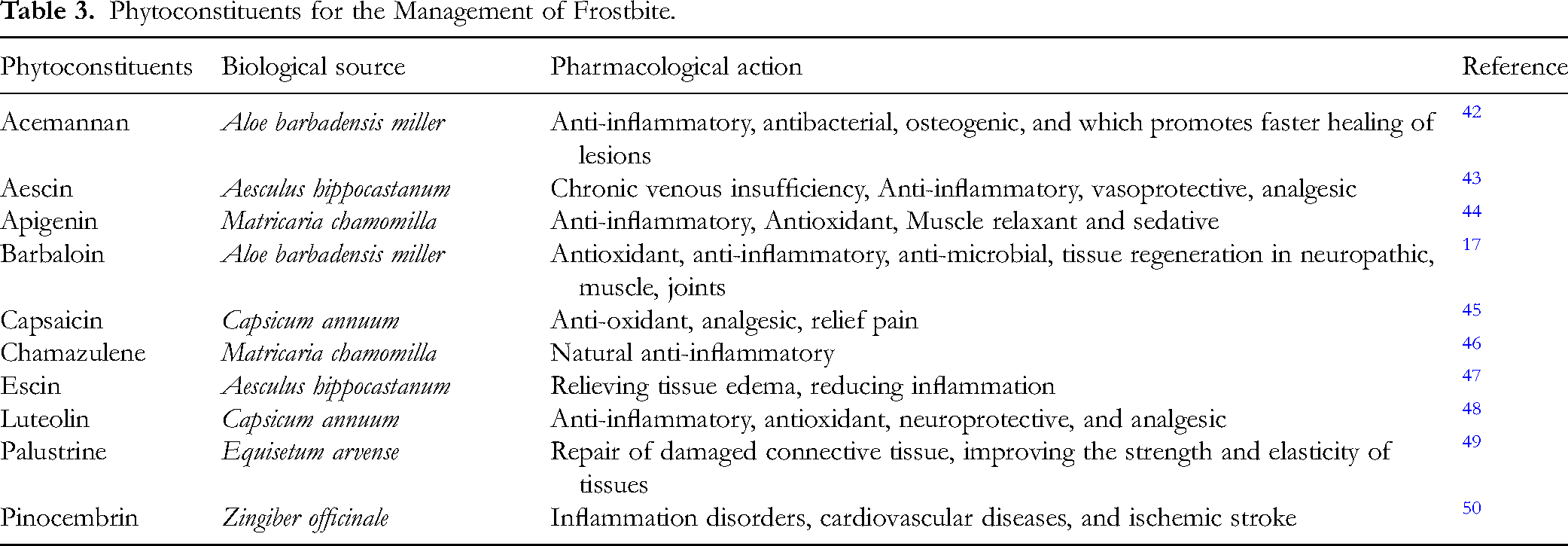
Phytoconstituents such as acemannan, aescin, apigenin, barbaloin, capsaicin, chamazulene, escin, luteolin, and pinocembrin reduce inflammation by inhibiting cytokines such as IL-1β, IL-6, and TNF-α while enhancing macrophage activity. 50 Apigenin, barbaloin, luteolin, and pinocembrin are phytoconstituents that protect cell structure by removing free radicals (reactive oxygen species – ROS or reactive nitrogen species - RNS) and reducing lipid peroxidation. Aescin and escin, as phytoconstituents, play a role in reducing edema through the modulation of inflammation and oxidative stress. 30 This promotes wound healing by increasing fibroblast activity, collagen formation, and tissue repair and restoration. Enhancing tissue integrity reduces edema and accelerates the healing process.34 Aescin, capsaicin, and luteolin have been shown to activate TRPV1 channels, which leads to pain relief. These channels play a crucial role in the perception of heat and pain. Prolonged exposure may lead to desensitization and a decrease in pain sensitivity. 32 Some details regarding the effectiveness of some herbal medicines in treating and managing frostbite are presented in the following subsections: 2.3.1 - 2.3.20.
Aloe barbadensis miller (Aloe)
The primary defense against frostbite is to sustain homeostasis and regulate body temperature. Traditional Indian medicine has long used Aloe barbadensis miller. Aloe vera contains polysaccharides like acemannan, which have wound-healing properties. It comprises anthraquinones such as aloe and barbaloin, which have antibacterial and anti-inflammatory properties. 30 The use of aloe vera cream to treat frostbite injuries increased tissue viability by as much as fourfold. Animal and human models have demonstrated pharmacological advantages, including antioxidant, anti-inflammatory, antibacterial, and proliferative activities, which promote wound healing. 31
Populus balsamifera
People have used Populus balsamifera to treat painkillers, skin wounds, hemorrhoids, frostbite, and sunburn. P. balsamifera contains flavonoids such as quercetin and kaempferol, known for their antioxidant and anti-inflammatory properties. The plant extract contains salicin, a natural chemical that the body converts into salicylic acid, which has anti-inflammatory and analgesic properties. 51
Capsicum annuum
Capsicum annuum contains capsaicinoids, carotenoids, and flavonoids, such as capsaicin, lutein, quercetin, kaempferol, and rutin. These chemicals can alleviate pain, decrease inflammation, and expand blood vessels. In addition, they possess antioxidant properties and have the potential to combat inflammation. This has numerous advantages, such as expanding blood vessels, safeguarding against heart disease, alleviating pain, enhancing digestion, preventing frostbite-related bleeding, and reducing inflammation and arthritis symptoms. 32
Juglans regia linn
Doon walnuts are a type of tree called Juglans regia linn. The plant extract includes flavonoids, omega-3 fatty acids, and vitamin E. Omega-3 fatty acids reduce inflammation and enhance blood circulation, essential for healing frostbite. Vitamin E protects cell membranes from oxidative stress, commonly seen during freezing. 33 Quercetin and kaempferol, both flavonoids, exhibit anti-inflammatory properties and aid in tissue repair in frostbite-affected regions. 52 Flavonoids, particularly quercetin and kaempferol, lower oxidative stress, inhibit pro-inflammatory cytokines, reduce low-density lipoprotein oxidation, prevent platelet aggregation, and function as vasodilators in blood vessels. Flavonoids possess pharmacological properties that may inhibit frostbite, diabetes, cardiovascular issues, tissue injury, neuron damage, chronic diarrhea, and constipation. 52
Matricaria chamomilla
For thousands of years, people have used Matricaria chamomile for medicinal purposes. It contains chamazulene, apigenin, flavonoids, coumarins, and polyacetylenes. These compounds exhibit pharmacological activities that include antioxidant, anti-inflammatory, and antibacterial properties, as well as mild sedative and soporific effects. 34 This plant has more anti-inflammatory properties of chamazulene may aid in reducing the inflammation resulting from skin lesions such as frostbite. Apigenin, lutein and quercetin are known for their antioxidant, anti-inflammatory, and healing effects. Umbelliferon, which has anti-inflammatory and vasodilatory properties, can help improve blood circulation and reduce inflammation in frostbite areas. Topically, the Matricaria flower treats skin infections and irritations, bacterial skin conditions, wounds (infected and poorly healing), frostbite, and insect bites. 53
Zingiber officinale
Zingiber officinale (ginger), is a popular medicinal plant in Ayurvedic, Chinese, and Tibb-Unani herbal therapies. It contains gingerols and shoals, as well as zingerone, flavonoids, and terpenoids. These extracts have various pharmacological activities, including anti-inflammatory, anti-apoptotic, and antiemetic actions. These compounds can reduce inflammation and improve blood circulation. Its anti-inflammatory and circulatory actions imply potential benefits for managing frostbite damage. It is used to treat non-infectious conditions such as frostbite, burns, physical injury, and chemical irritants. 35
Equisetum arvense
Equisetum arvense (horsetail) is used to treat frostbite, slow-healing wounds, ulcers, swellings, fractures, and bleeding from the nose, lungs, and stomach issues. Plant extracts contain phytoconstituents like silica, flavonoids, saponins, phenolic compounds, and minerals. These phytoconstituents are known for their ability to aid tissue repair and enhance wound healing. This could help in frostbite treatment. 36 Flavonoids like kaempferol and quercetin, which have antioxidant and anti-inflammatory properties, can help reduce frostbite. The antioxidant, anti-inflammatory, and smooth muscle relaxant effects of these compounds on the arteries and ileum could be their effectiveness in treating frostbite. 54
Aesculus hippocastanum
Aesculus hippocastanum (horse chestnut) has been found to have potential benefits in the treatment of frostbite, varicose veins, leg ulcers, and hemorrhoids. The composition includes aescin, flavonoids, coumarins, and polyphenols. It is commonly known to enhance the strength of capillary walls, decrease inflammation, and enhance blood circulation, which may be beneficial in treating frostbite. Enhanced blood circulation leads to anti-inflammatory, vasodilating, anti-allergic, and astringent effects. These compounds enhance vein tone, improving blood flow in frostbite tissues. 37
Calendula officinalis
Calendula officinalis (marigold) is a plant of traditional medicine that uses an aromatic herb to treat a variety of skin conditions, such as frostbite, swelling, skin tumors, ulcers, and neurological disorders. The plant extract contains flavonoids, triterpenoids, carotenoids, saponins, quercetin, rutin, faradiol esters, and faradiol glycosides. The therapeutic activities include antioxidants, anti-inflammatory, antibacterial, antifungal, antiviral, and wound healing activities. Antioxidants such as lutein and beta-carotene can shield skin cells from the oxidative damage frostbite causes. This means that they might be useful for treating frostbite. 38
Quercus robur linn
Quercus robur linn (oak) is a prominent member of the Fagaceae family. Traditional medicine commonly uses it to treat and prevent skin inflammation, frostbite, and wound healing. The composition includes flavonoids, tannins, phenolic acid, quinones, and triterpenoids. The pharmacological properties of this substance encompass antioxidant, antimicrobial, anti-inflammatory, and neurogenerative activities. Tannins, known for their antioxidative and anti-inflammatory characteristics, possess astringent properties. They can reduce inflammation and enhance wound healing, making them a valuable option for treating frostbite. Incorporating particular treatments can effectively reduce oxidative damage and inflammation associated with frostbite. 39
Acemannan
The primary polysaccharide found in aloe is acemannan. Three processes occur simultaneously during wound healing: inflammation, the formation of new tissue in frostbite, and matrix remodeling. In addition, the moisturizing properties of this product can assist in hydrating the skin, which is crucial for treating frostbite. 41 The contents of acemannan in Aloe vera were significantly higher in three-year-old plants than in the young or mature plants. Other species of aloe, such as Aloe arborescens may also contain acemannan but their concentrations are often less than that found in Aloe ferox. This means that; A. arborescens contains low amounts of acemannan compared to A. vera but has become worse when exposed to different conditions. 55 Acemannan is biocompatible, which is important for its application for wound healing. It also promotes cell migration and proliferation, which occurs in the healing of damaged tissues by frostbite. The procedure involved acemannan stimulating the production of cyclin D1 in cultured fibroblasts through the AKT/mTOR signaling pathway, enhancing the activity of eukaryotic translation initiation factor-4F (eIF4F) and increasing the translation of cyclin D1, hence facilitating wound healing in the skin. 56 Regulating the immune system, diminishing the synthesis of pro-inflammatory cytokines, and enhancing the activation of macrophages are crucial for immunological response. Suppresses the expression of inflammatory markers including TNF-α and IL-6, which are essential in chronic inflammation. 57
Aescin
Aesculus hippocastanum's primary active compound is aescin. Aescin reduces inflammation of frostbite and enhances blood flow to the affected area, potentially preventing further tissue damage. The content of the aescin varies depending on the plants used to prepare the medicine. 58 In terms of the saponin content, total Aesculus hippocastanum seeds contain aescin as a considerably larger content than in Aesculus chinensis amounting to 2%-3% of the total saponin. The relative bioavailability of β-aescin has been found in one study to be similar between the sustained-release and immediate-release formulations. When comparing the area under the curve (AUC), to reference ratio was approximately 1.06 mg*h/L, which indicated a proper absorption rate in both formulations. This suggests that this compound, β-aescin, is bioavailable when administered, a precondition for its efficacy in frostbite treatment. 59 Aescin contains substantial anti-inflammatory properties that hold great promise in the prevention and treatment of frostbite because of the inflammation caused in tissues. This holds great benefit because it works to reduce the secretion of mediators and reduce the permeability of the blood vessels so that there is a lower risk of generation of edema and tissue injury. It has also elucidated that Aescin can enhance the conditions of the vessel's tones and their integrity in frostbite treatment. 58 It preserves capillary walls and thus reduces filtration output into the surrounding tissues and consequently edema formation. This characteristic helps keep the blood supply of driven to congested areas, and that is so crucial to healing. In frostbite conditions, treatment with Aescin is relevant, as increased tissue volume can lead to the development of tissue lesions. It has a vasoconstrictive effect and minimizes capillary permeability and edema formation in areas with frostbite. 42
Apigenin
Matricaria chamomile contains apigenin, a flavonoid with physiological benefits. Its properties can relieve inflammation and oxidative stress from freezing. Its vasodilatory actions enhance blood circulation to the affected area, facilitating tissue recovery. This compound induces drowsiness, muscle relaxation, provides antioxidant protection, shows anti-inflammatory properties and may help prevent Alzheimer's disease. 43 Different sources of apigenin are as follows, Matricaria chamomile flowers contain a range of 3000 to 5000 μg/g; Celery seeds contain 786.5 μg/g; Vine spinach contains 622 μg/g; Chinese celery contains 240.2 μg/g. These concentrations emphasize the presence of apigenin in dietary conditions as many herbs and vegetables. 60 Several substances containing glycosylated forms of apigenin are recognized to influence its bioavailability. The liver conjugates apigenin with glucuronic acid and sulphate to metabolize it, affecting its pharmacological efficacy. Apigenin is low in bioavailability due to its high first-pass metabolism. Despite this, the ability to alter so many metabolic pathways must be important at the dietary level. 61 Apigenin shows the prospect of suppressing the nuclear factor kappa-light-chain-enhancer of activated B cells and mitogen-activated protein kinase signaling pathways and limiting the production of inflammatory mediators. This could have the possibility to reduce tissue damage from frostbite. Apigenin enhances the activity of endogenous antioxidants such as SOD and CAT and thus is effective in mitigating oxidative stress on the tissues which it has otherwise degraded. 62
Barbaloin
Aloe vera naturally contains the compound barbaloin. It shows effective anti-inflammatory properties for managing frostbite. This treatment stimulates the body to generate new, beneficial cells, resulting in faster and more effective relief from frostbite symptoms. It provides a more effective and rapid freezing action on symptoms while promoting the formation of new, naturally healthy cells. It positively affects the tissue repair process. It provides various medicinal and therapeutic benefits, including anti-inflammatory, anticancer, antibacterial, and antidiabetic effects. This treatment focuses on various skin conditions: frostbite, acne, burns, rashes, cold sores, and sunburn. 63 The outermost layer or the outer leaf parenchyma in aloe vera normally contains 15%-40% of the total dry matter. Cape aloes (Aloe ferox) is approximately 20%-25% of dried weight. Aloe arborescens are higher than in Aloe Vera, on average, ranging from 10%-15% of the dry matter. Socotrine Aloe or Aloe perryi can contain up to 30% of the dry weight. The concentrations of the hybrids of Aloe ferox Concentrations normally are in the area of 15%-30% although slightly differ depending on the hybrid kind. Aloe saponaria is about 5%-10% of dry matter. 64 It is most likely found that barbaloin plays an efficient role in the treatment of frostbite because it has skin healing and anti-inflammatory properties. The topical application of barbaloin may provide low therapeutic benefit, promoting skin health and facilitating the healing of cold-injured tissue. When barbaloin reaches your gut, the bacteria in your gut ferment it and convert it into aloe emodin which is more easily absorbed into the bloodstream. It is important as this metabolic conversion determines the usefulness and efficiency of barbaloin for medical purposes. 65 Barbaloin has high anti-inflammatory properties and any issues such as frostbite that has inflammation require treatment from this compound. Demonstrating an anti-inflammatory effect will also help in the prevention of synthesizing prostaglandins, nitric oxide and thereby preventing tissue injury and enhancing tissue repair. Frostbite damage may lead to symptoms that have reduced pain and inflammation because of its effect. 66 Barbaloin protects the cells from the oxidative damage that free radicals induce. They help in helping the skin barrier and overall skin condition when thawing from frostbite. Complementing Barbaloin helps achieve a quick recovery and reduces the risk of using chronic issues with the help of overcoming oxidative impacts. Barbaloin helps to enhance skin cell production and enhances the formation of collagen needed in skin tissue repairs and healing. The concept of promoting new cell growth can enhance the overall capability of repairing injured tissues and possibly improve the impacts of frostbite. 67
Capsaicin
People frequently apply capsaicin, a powerful component of peppers, to the skin for pain relief. The vasodilatory effects of this treatment may benefit frostbite management. It treats wounds, manages blood sugar levels, and deals with dyslipidemia, cancer, and other medical conditions.
The pharmacological effects include various therapeutic applications: treating diabetic neuropathy, reducing inflammation, addressing skin diseases, relieving muscle tension, managing rheumatoid arthritis, and alleviating persistent neuropathic pain. 17 Cayenne Pepper (Capsicum annuum): Poblano (Capsicum annuum): 1000 to 2000 SHU; Jalapeno (Capsicum annuum): 2500 to 8000 SHU; Serrano (Capsicum annuum) 9000 to 12 000 SHU, Cayenne (Capsicum annuum) 30 000 to 50 000 SHU; Habanero (Capsicum Chinese). These concentrations affect its odor and possible uses of capsaicin. 68 Specific treatments like patches have distinct advantages over oral preparations because they improve the concentration of drugs in the affected region. The 8% patch shows the grand improvement of pain with topical application of capsaicin under conditions such as non-freezing cold injury (NFCI); effective pain relief is achieved even if measured on low pain scores. Particular oils or fats should enhance the integrity of absorption. Capsaicin metabolism might be dependent on genetic components. 44 Capsaicin directly acts on the TRPV-1 receptors responsible for the signalization of pain, and it is famous for its ability to decrease the neuropathic pain connected with frostbite. Capsaicin has anti-inflammatory properties which makes it an added advantage in inflammatory diseases. It has the potential to inhibit the signaling of inflammation and even reduce pain and inflammation associated with sicknesses such as arthritis and muscular pull. The anti-inflammatory effect is owing to its impact on the activities of multiple signaling pathways associated with inflammation. 44
Chamazulene
Chamomile extracts have a compound called chamazulene. The anti-inflammatory properties may help reduce inflammation associated with freezing, while the antioxidant properties may aid in tissue repair. The pharmacological actions are beneficial for cells, showing anti-inflammatory and anti-allergic properties. This compound offers benefits like improved blood circulation and enhanced digestion. Studies indicate that it improves skin clarity and brightness. 45 Chamomile flower essential oil consists of approximately 2%-5% chamazulene. Some of the species of the Artemisia genus, such as Artemisia absinthium, contain chamazulene, but usually in much smaller concentrations than those present in German chamomile. 53 Chamazulene has certain solubility and is mainly administered in a specific method that hampers its bioavailability. It exhibits good skin permeation when applied on the skin and therefore can be useful for localized treatments such as frostbite. An obvious disadvantage of first-pass metabolism is related to its effect on the bioavailability of the drug when given orally; however, its direct application at the site of injury has a positive impact on the therapeutic effect. 69 Chamazulene has a specific pharmacological activity that includes an anti-inflammatory effect on the body, thus the frostbite which leads to swelling and pain will be eased. Those anti-inflammatory effects are due to the suppression of cyclooxygenase and lipoxygenase which are involved in inflammation. The substance promotes cell migration and proliferation thus improving on the rate of healing of the wound. 70 Chamazulene may help to speed up the clinical course of frostbite injury through the stimulation of the basic processes of tissue restoration and recovery. The act of increasing blood flow is recommended when treating injuries caused by frostbite. Chamazulene may help in the dilatation of blood vessels, which helps in a better supply of nutrients and oxygen, ‘and removal of metabolic waste products, the way for better healing. 71
Escin
Escin is a natural mixture of triterpene saponins obtained from the seeds and peels of Aesculus hippocastanum. The vasoconstrictive properties of escin can help increase blood flow to the damaged area, preventing further tissue damage during frostbite. Frostbite can alleviate inflammation due to its anti-inflammatory properties. 18 Horse Chestnut seeds contain about 13% of escins by weight so it can be concluded that this plant contains a high concentration of this compound. Such other plants may contain these saponins but in lesser proportions than the Aralu genus of the Sapindaceae family. 72 They can take several forms, including escin Ia, escin Ib, and isoescins. The fact that isomers containing the tigeloyl moiety, like escin Ia, absorb better and are more bioavailable than those with a different moiety, like escin Ib, explains this. The conversion of escin into more bioavailable forms enhances its therapeutic effectiveness. When a formulation contains multiple isomers, the conversion process prolongs its effectiveness. 46 The results indicate that Escin has an inhibitory effect on inflammation by reducing the secretions of TNF-alpha and IL-1β proteins and a decrease in inflammation by 30%. This activity helps to decrease the inflammation that occurs with frostbite and can cause injury to the tissues. It also enhances the integrity of blood vessels and reduces permeability by avoiding further tissue damage after frostbite feasible by Escin. 73 Escin keeps the blood vessels open which is important in the delivery of blood to the areas that are injured so that they can heal. One of the marvelous features of Escin is the ability to inhibit the formation of edema, which will be of great benefit when treating frostbite. It minimizes the development of edema but assists in achieving a proper fluid homeostasis within tissues helping to alleviate the pain and enhance the equipment of motion. 74
Luteolin
Capsicum annuum has a flavonoid called luteolin, which appears like a yellow crystal. Frostbite has anti-inflammatory and antioxidant properties that reduce inflammation and oxidative stress. Its vasodilatory effects enhance blood flow to the affected area, promoting tissue healing. 47 Different types of peppers have been found to contain high percentages of luteolin which are Capsicum annuum 1472.6 mg/100 g DW, Celery (Apium graveolens) 4.5 mg/100 g DW, Parsley (Petroselinum crispum) 4.0 mg/100 g DW, Broccoli (Brassica oleracea) 2.5 mg/100 g DW, Onion (Allium cepa) 1.0 mg/100 g dry weight. The variety of bioavailability may vary between a minimum of 4.1% and a maximum of 26%. 75 The liver and intestines primarily metabolize luteolin. The liver and intestines conjugate it with glucuronic acid or sulphate, converting it into more hydrophilic forms that facilitate excretion. Microemulsion systems can significantly enhance the bioavailability of luteolin when administered orally by increasing the levels of its byproducts in the bloodstream. Liposomes are now under inquiry to improve the absorption and retention of luteolin in the bloodstream. 76 Luteolin also revealed potential in suppressing pro-inflammatory cytokines including IL-1β, IL-6 and TNF-α that are involved in inflammation of frostbite injury. Luteolin also exhibited protection against oxidative stress caused by frostbite through constant neutralization of reactive oxygen species (ROS). Luteolin inhibits ROS and minimizes the occurrence of further loss to cells and stimulates tissue repair. 75
Palustrine
Equisetum arvense contains an alkaloid known as palustrine. The pharmacological effects of this treatment are known to enhance tissue strength and flexibility, as well as repair damaged connective tissue in cases of frostbite. 54 The species Carex pseudocyperus, Carex hirta, Equisetum palustre and Holcus lanatus have a high p-value of .05 showing its threat status as a strictly protected species. In-vitro microenvironment analysis palustrine also demonstrated facing the migration of human dermal fibroblasts, a key step in wound healing. 77 Enhanced fibroblast migration increases cell proliferation, forming new tissue and facilitating healing. Histological comparisons show that the plausterine accelerates the rate of wound healing in the full-thickness skin injury model. The plausterine administration before freezing improved tissue repair in the frostbite mice, further suggesting its potential in treating freezing injuries. 48 Palustrine pretreatment can enhance the rate of recovery from frostbite damage. While using palustrine, the wound healing rate was higher than the untreated controls of carefully designed inquiries and therefore proposed that plausterine has therapeutic value in the treatment of frostbite. 78
Zingiber officinale (Ginger) contains a natural flavonoid known as pinocembrin. This compound reduces frostbite-related oxidation and inflammation with its antioxidant and anti-inflammatory abilities. It showed anti-inflammatory and neuroprotective effects in preclinical testing. It can reduce reactive oxygen species, protect the blood-brain barrier, modulate mitochondrial activity, and regulate apoptosis. Pinocembrin has several pharmacological effects, such as antioxidant, anti-inflammatory, hemorrhagic, and neuroprotective properties. 79 One gram of propolis contains approximately 606-701 milligrams, according to the weighted average. The study's propolis sample underwent an extraction using 70% ethanol. The wild marjoram (Origanum vulgare) contains pinocembrin, but the concentration is still unknown. Liquorice, scientifically known as Glycyrrhiza glabra, is another source of coumarin and pinocembrin, though the specifics of its presence remain unknown. Ornithogalum caudatum was utilized to study biosynthetic pathways; concentration was not specified. 49 Oral administration of Pinocembrin promotes its entry into the brain since it is a neuroprotective agent. The pinocembrin was able to be metabolized by the gut into more active molecules hence enhancing the bioavailability. Pinocembrin-7-O-D-glucoside (PCBG) exists in its glycoside form, which is converted to its aglycone form upon passing through the gastrointestinal tract. The intestinal bacteria enhance the conversion in the process to enhance the systemic active compounds when administered orally. 49 Pinocembrin shows extensive distribution throughout the body after absorption it helps protect frostbitten tissues. Pinocembrin possesses effective metabolic and excretion pathways; it is not accumulated in the body. This compound was found to inhibit several proinflammatory cytokines that play an important role in the inflammation process following tissue injury. This modulation can decrease inflammation and increase healing in tissues that are injured by frostbite. 80 Pinocembrin inhibits the generation of reactive oxygen species (ROS) which are toxic products of the metabolic processes leading to worsening of tissue injury. Pinocembrin can maintain the protection of tissues which has been injured in the process of frostbite treatment during the rewarming phase through the regulation of oxidative stress. The substance also has certain neuroprotective properties because it decreases the levels of oxidative stress and prevents neuronal cells from apoptosis. This is especially the case in frostbite where, due to ischemia, there can be substantial nerve damage. 81
Potential Interaction Between Herbal Remedies and Allopathic Treatment
Most traditional herbal medicines can affect the pharmacokinetics of allopathic drugs by altering their absorption, distribution, metabolism and excretion. Some of these herbs can either increase the rate of metabolism of other medicines or decrease the rate of metabolism hence increasing their toxicity or reducing their effectiveness. Several of the herbs may have actions that are as good as the allopathic agents, whether like or unlike their conventional classification. 82 Garlic may increase the effect of anti-coagulant drugs including warfarin and thereby increase susceptibility to hemorrhage. The fact is that the synergistic combination of herbal and allopathic medicines may either increase the therapeutic effect or cause side effects. This is particularly the case especially for those who must take several drugs at a go.85 Even though ADRs have potential, it is alarming that ADR rates rise in conjunction with the number of multisource drugs taken concurrently. The dangers of herbal use require healthcare practitioners to ask about their use while administering allopathic agents. Antidepressants can lead to serotonin syndrome, a serious condition that complicates treatment due to excessive serotonin levels in the body. Additionally, herbal supplements like ginseng and cayenne pepper may interact with anticoagulants, increasing risks for patients with frostbite, necessitating careful monitoring and patient education on these combinations. 83 Allopathic frostbite therapies, despite their toxicity, can cause chest pain, breathing issues, dizziness, anxiety, and palpitations, which may indicate heart disease. Allopathy is also more expensive, ineffective, and harmful than herbal therapy. Few major research studies have demonstrated that herbal treatments are safe and effective. Combining allopathic and herbal medications might damage people. Herbal therapy aids in alleviating frostbite pain and promoting regeneration by phytoconstituents, though it is essential to manage concentrations appropriately. The flavonoids of Cuscuta reflexa demonstrate antioxidant activity through biological mechanisms. Those compounds reduce free radicals and malondialdehyde to minimize frostbite-causing oxidative stress. Plant phytoconstituents and inflammatory cytokines may help frostbite patients recover and retain tissue. Future research can then centralize randomized controlled trials (RCTs) on the safety of herbal frostbite treatment methods. Human clinical trials and standardized formulation will enhance the credibility and the health-wise usage. By focusing on these key areas, herbal medicine is an addition to traditional frostbite therapy thus raising the level of improvements among patients.
Conclusion
Findings in terms of the presence of diverse pharmacological properties suggest that both allopathic and herbal medicines have great potential in the treatment of frostbite. The only observed difference was that allopathic medicines contained side effects that were more severe than those of the herbal medicines. These findings also demonstrate that the integrated treatment of both medicines could have a synergistic healing effect on frostbite than having to administer just either one of the two medicines. To maximise efficacy and minimise the severity of side effects, allopathic and herbal medicines could be administered for short- and long-term periods, respectively. However, efficacy and safety in terms of optimal doses, mechanisms of action of phytoconstituents, as well as bioavailability and concentrations of active phytoconstituents of herbal medicines are unknown. These gaps are to be addressed through preclinical and clinical studies. The findings of such studies could lead to the discovery of new natural drugs that are relatively safe, effective, and accessible.
Materials and Methods
This review focused on allopathic and herbal treatments that were considered to be useful in the treatment and management of frostbite symptoms. Online databases such as Google Scholar, Scopus, Science Direct, and PubMed were utilized to identify pertinent articles containing relevant information. Keywords including “frostbite,” “allopathic drugs for frostbite,” “medicinal plants, herbs,” and “phytoconstituents” were utilized. The review included all articles that discussed those keywords and were published in English. Excluded articles included those with partial access (abstract only), missing author names, and non-English full texts. Articles containing Siddha and homeopathic formulations were also excluded. Data and information were organized into tables and figures.
Footnotes

Ethical Considerations
Ethical approval is not applicable for this article
Funding
The authors disclosed receipt of the following financial support for the research, authorship, and/or publication of this article: The author accepts and thanks JSSAHER for providing fellowship.
Conflicting Interests
The authors declared no potential conflicts of interest with respect to the research, authorship, and/or publication of this article.
Data Availability
The data used to support the findings of this study are included within the article.
Statement of Human and Animal Rights
This article does not contain any studies with human or animal subjects.
Statement of Informed Consent
There are no human subjects in this article and informed consent is not applicable.