



Abstract
Modern dietary habits and other factors have led to a global rise in chronic diseases, posing significant threats to daily life. Among the most valuable fruits worldwide, mulberry has been extensively studied for its diverse health benefits and economic potential. Mulberries are not only rich in nutrients and active compounds but also demonstrate antioxidant, hypolipidemic, hypoglycemic, hepatoprotective, antibacterial, and anticancer pharmacological effects. Despite these promising attributes, there is a lack of systematic evaluations of mulberry's bioactive substances and their pharmacological impacts. Additionally, the increasing focus on developing mulberry derivatives is crucial for enhancing its economic value. This systematic review, complemented by bibliometric analysis, aggregates relevant information from databases such as PubMed and Web of Science to explore research trends and hotspots. Through comprehensive analysis, this review elucidates the nutritional value of mulberry, its unique mechanisms in preventing and treating chronic diseases, and its potential applications in developing functional foods and biomaterials. The latest research findings are summarized to provide a robust scientific foundation for the future research, development, and utilization of mulberry and its derivatives, thereby expanding and deepening its applications in health promotion and disease prevention.
Highlights
Mulberry is both a fruit and a medicinal plant with diverse applications.
Its primary active compounds include polysaccharides, polyphenols, and alkaloids.
It exhibits various pharmacological effects such as antioxidant, lipid-lowering, blood sugar reduction, liver protection, antibacterial, and anticancer properties.
Rich in essential functional components for the human body, it has high nutritional and medicinal value, holding significant application potential in functional foods, biomaterials, and medicine.
Introduction
The World Health Organization (WHO) defines chronic health conditions as long-lasting diseases that progress slowly and are not transmitted from person to person. 1 These conditions have complex etiologies and, once developed, often result in irreversible health damage and significant economic burdens for patients. Lack of physical activity2-4 and poor dietary habits 5 have been identified as primary factors contributing to the increased incidence of these chronic diseases. In this context, various dietary patterns have been associated with health benefits. 6 In recent years, advancements in nutritional and pharmacological research have highlighted the potential preventive and therapeutic effects of active compounds in mulberries, such as polyphenols, polysaccharides, and alkaloids, on cardiovascular diseases, diabetes, and certain types of cancer. 7
Mulberry has been documented since the Tang Materia Medica (Tang Dynasty, AD 659) and is mentioned in successive medical classics such as Herbal Supplement and Extended Meanings of Materia Medica. The 2020 edition of the Chinese Pharmacopoeia lists mulberry (Morus alba L.) as the dried fruit spike of the Moraceae family, recognized for its ability to nourish Yin and blood, generate fluids, and moisten dryness. Highly nutritious and multifunctional, mulberry is a popular choice worldwide as both food and medicine.8,9 Its fruit is rich in vitamins (A, B, C, K, and E), fatty acids, organic acids, minerals (magnesium, iron, potassium, and calcium), proteins, amino acids, and carbohydrates (including sugars and fiber). 10 Additionally, mulberry exhibits important biological functions such as antioxidant activity, blood sugar reduction, 11 anticancer, 12 antibacterial, and lipid-lowering effects. 13
Despite preliminary confirmations of mulberry's health benefits, there is a lack of comprehensive summaries regarding the structures, physicochemical properties, and research findings of its nutritional components. The specific mechanisms of action and bioavailability of its active compounds in the human body remain not fully understood, and the potential and safety of its clinical applications have not been systematically assessed. Addressing these gaps is crucial for enhancing the economic and medicinal value of mulberry. Therefore, this review aims to discuss and summarize the nutritional value, health benefits, and applications of mulberry fruit in food, biomaterials, and medicine. The goal is to support the development of new drugs, biomaterials, functional foods, and complementary therapies, while also providing new strategies for public health and disease prevention.
Methods
This review conducted a comprehensive analysis of published literature using a web-based search strategy to examine the nutritional value, health benefits, and applications of mulberry. The search encompassed renowned scientific databases, including PubMed, ScienceDirect, Web of Science, ResearchGate, and Google Scholar. Inclusion criteria comprised full-length articles published in English that covered aspects such as geographical distribution, phytochemistry, and pharmacological effects of mulberry. Exclusion criteria included data from historical literature, non-experimental research, non-open access journal articles, or studies with partially accessed data. The following keywords were employed to ensure a thorough exploration of the literature: “mulberry,” “pharmacological effects,” “phytochemistry,” “application,” “benefits,” and related terms. Additionally, bibliometric methods were utilized to analyze research hotspots related to the applications, biomaterials, and natural products derived from mulberry.
Global Cultivation of Mulberry Plants
Mulberry Species and Global Cultivation
Mulberry (Morus nigra L.) is widely cultivated across East Asia, West Asia, Southeast Asia, Southern Europe, the southern regions of North America, Northwestern South America, and parts of Africa. 14 The genus Morus comprises 24 species and one subspecies, with at least 100 recognized varieties. 15 A primary distinguishing feature among these varieties is the color of their fruit. Varieties with the most significant medicinal properties include white mulberry (Morus alba L.), black mulberry (Morus nigra L.), and red mulberry (Morus rubra L.). Among cultivated types, mulberries exhibit a strong adaptability to diverse climatic and soil conditions, facilitating their growth in numerous regions worldwide. Turkey, for instance, has a long history of mulberry cultivation spanning over 400 years, achieving a production volume of 639.68 KKG in 2022. The extensive variety of mulberries, each possessing unique medicinal values, positions them as one of the most promising sources for traditional medicine and functional foods.
Mulberry Cultivation in China
Originating from central China, mulberries have been cultivated for over 4000 years. 16 In China, mulberries are revered for their juicy flesh and sweet flavor, earning titles such as the “King of Fruits” and the “Holy Fruit of the Common Folk.” Post-Ming Dynasty records highlight a rich diversity of mulberry types within China, with the saying, “Mulberries are found everywhere, but Jiangsu and Zhejiang provinces are unparalleled,” reflecting their widespread cultivation. According to the “Chinese Morus Species Index,” China's germplasm resources include 15 species and 4 varieties of mulberry, predominantly distributed along the ancient Yellow River path and in southern Xinjiang. Major production areas include Shanxi, Yunnan, Sichuan, Beijing, Shandong, Tianjin, Liaoning, and Jiangsu provinces. Specific distribution within China is illustrated in Figure 1(A), while the distribution of particular varieties is shown in Figure 1(B). The mulberry ripening and market season typically occurs in April and May. Notably famous varieties in the modern market include Xiazhu Mulberry from Dezhou, Shandong; Gaoqing Mulberry from Zibo, Shandong; White Mulberry from Shandong; Yangcheng Mulberry from Jincheng, Shanxi; Tangzhang Mulberry from Tongshan, Xuzhou, Jiangsu; and Dechang Mulberry from Liangshan Yi Autonomous Prefecture, Sichuan. These outstanding varieties are cultivated on a large scale, significantly contributing to the development of China's mulberry industry.

Distribution and related varieties of mulberry in China.(a.Xiaonangou mulberry in Lianshan District, Huludao City, Liaoning Province, China ; b.Honghuayu mulberry in Jixian County, Tianjin City, China ; c.Xiajin mulberry in Dezhou City, Shandong Province, China ; d.Gaoqing mulberry in Zibo City, Shandong Province, China ; e.White mulberry in Shandong Province, China ; f.Yangcheng mulberry in Jincheng City, Shanxi Province, China ; g.Tangzhang mulberry in Tongshan District, Xuzhou City, Jiangsu Province, China ; h.Dechang mulberry in Liangshan Yi Autonomous Prefecture, Sichuan Province, China ; i.Mulberry in Yunnan Province, China.).
Nutritional Components and Medicinal Value
Nutritional Components
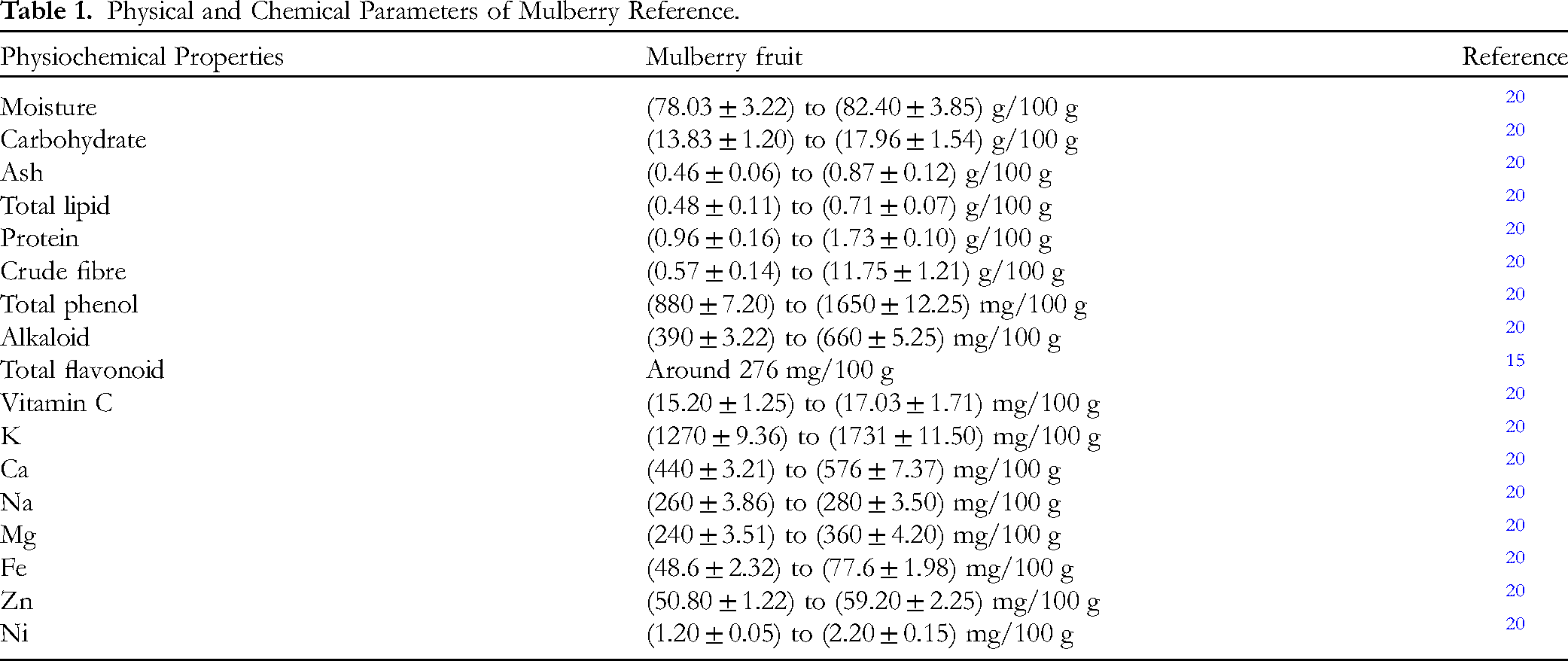
Mulberries are a rich source of essential functional components vital for human health. The composition of mulberries has been determined to include approximately 71.4% fruit flesh, 23.5% skin, 2.9% seeds, and 2.2% stems. Fresh mulberries possess a high moisture content, which presents challenges for preservation. In addition to their high water content, mulberries contain fatty acids, free acids, crude fiber, proteins, vitamins, amino acids, and various trace elements. The fatty acid content in mulberries ranges from 0.3% to 0.5%, free acids constitute about 1.1% to 1.8%, crude fiber ranges from 0.9% to 1.3%, and protein content varies between 0.5% and 1.4%. 17 Among the 19 amino acids identified in mulberries, seven are essential for humans. Aspartic acid and glutamic acid are particularly abundant, providing a necessary foundation for maintaining normal immune function. Mulberries are also abundant in essential minerals, including calcium (Ca), potassium (K), sodium (Na), iron (Fe), magnesium (Mg), zinc (Zn), nickel (Ni), and the trace element selenium (Se). Notably, the selenium content in mulberries is significantly higher—up to 5 to 20 times greater—than that found in apples, offering therapeutic and protective benefits for the heart and immune system. From a nutritional standpoint, these functional components play critical roles in regulating physiological functions and metabolism within the human body. Fatty acids act as buffers, thereby maintaining glucose homeostasis 18 Vitamins and trace elements, such as minerals, are intricately involved in supporting the immune system 19 However, nutrient content can vary among different mulberry varieties. Table 1 provides a general reference for the various physical and chemical parameters across different mulberry types.
Physical and Chemical Parameters of Mulberry Reference.
Medicinal Value
Traditional Chinese Medicine (TCM) characterizes mulberries as sweet in taste and cool in nature. They are believed to generate body fluids to quench thirst, nourish the liver and kidneys, enrich Yin and blood, clear vision, calm the spirit, benefit the joints, eliminate rheumatism, and counteract the effects of alcohol. Long-term consumption of mulberries is traditionally thought to promote longevity. The primary bioactive components in mulberries include polysaccharides, polyphenols, and alkaloids, with the chemical structures of some key components illustrated in Figure 2.
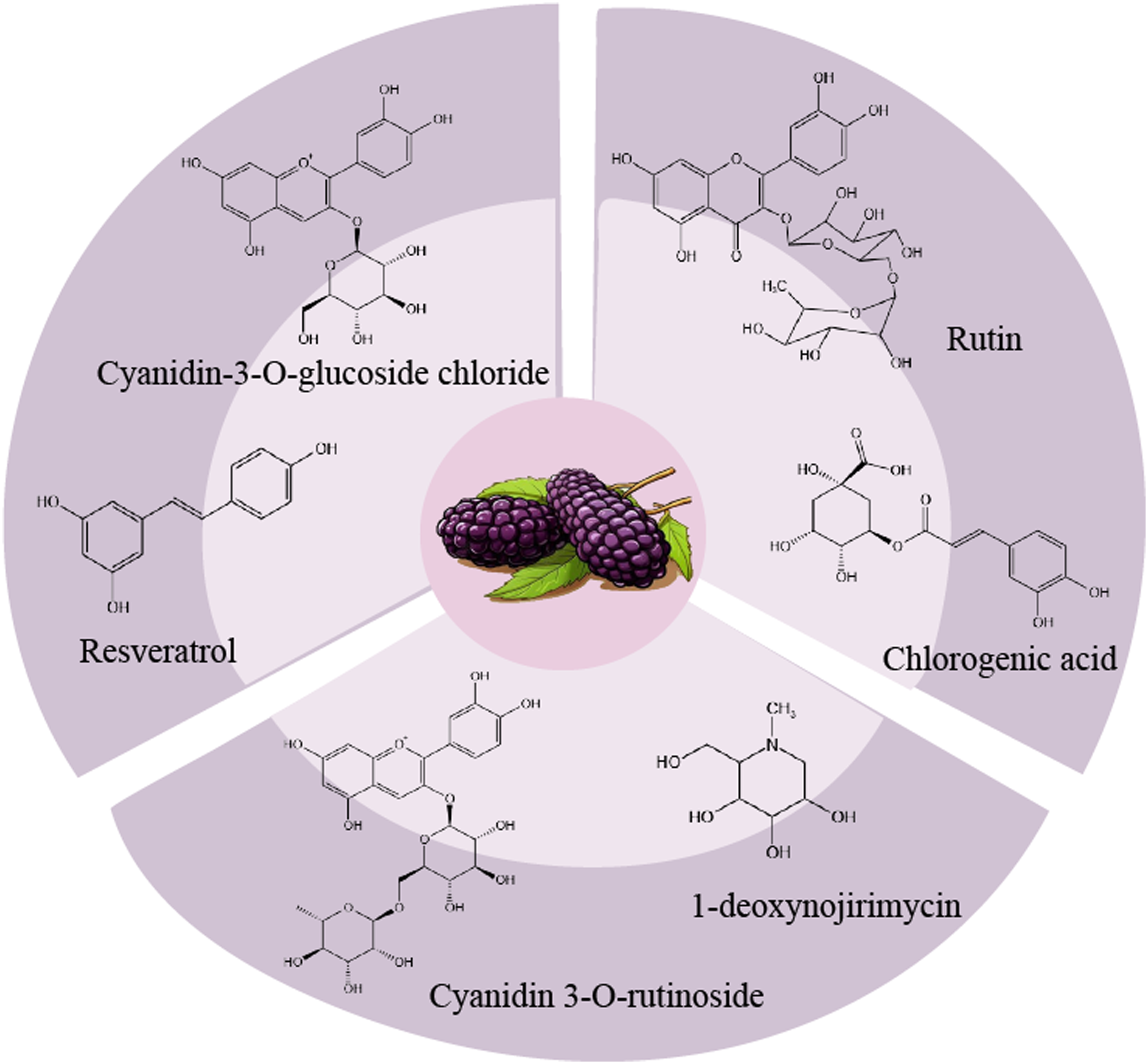
The structural formula of the main bioactive components of mulberry.
Polysaccharides
Polysaccharides are highly active biomolecules composed of more than ten monosaccharide units linked by glycosidic bonds. They serve as primary energy storage substances in organisms. Mulberry polysaccharides exhibit significant reducing power and hydroxyl radical scavenging abilities, with their content exceeding 10% in mulberries.21,22 Currently, the carbohydrate and protein contents in mulberry polysaccharides are approximately 84.67% and 0.79%, respectively. These polysaccharides are primarily composed of arabinose (31.73%), galactose (25.75%), glucose (19.18%), mannose (10.31%), and galacturonic acid (13.03%). 23
Mulberry polysaccharides are believed to inhibit lipid absorption. Chen 24 isolated three types of polysaccharides from mulberries—MFP-1, MFP-2, and MFP-3—composed of arabinose, galactose, glucose, mannose, xylose, and galacturonic acid. MFP-1 has the largest molecular weight, while MFP-2 demonstrates the strongest ability to reduce both the rate and extent of lipid digestion, making it a potential functional additive in high-fat foods to promote health. The main chain of these polysaccharides consists of mannans linked by (1→3) bonds, with galactose and glucose residues branched at the O-6 position of the mannose residues. 25 This structural configuration significantly influences their properties and biological activity.
Polyphenols
Mulberries are rich in total phenolic content, reaching up to 336.05 mg/100 g in mature fruits. 21 The main polyphenolic components include resveratrol, anthocyanins, rutin, and chlorogenic acid. Resveratrol (3,4′,5-trihydroxystilbene) is a non-flavonoid polyphenolic compound and a potent antioxidant. It effectively prevents cardiovascular diseases, protects against lipid peroxidation in cells, offers significant health benefits, and promotes longevity. 26 Anthocyanins and rutin are the most significant flavonoid polyphenolic compounds in mulberries. 27 Anthocyanins, primarily belonging to the cyanidin class, were identified in mulberries by Qin 28 using UV-Vis, HPLC, LC-MS, and HNMR analyses. The main components and their proportions are as follows: cyanidin-3-O-rutinoside (60%), cyanidin-3-O-glucoside (38%), and pelargonidin-3-O-glucoside along with pelargonidin-3-O-rutinoside (2%). Rutin, also known as quercetin-3-O-rutinoside, is one of the pharmacologically active bases of mulberries. It has been identified as the main antioxidant in black mulberries, with its content surpassing that in strawberries. 29 Rutin accounts for approximately 66% of the total phenolic acid content in 44 different mulberry fruit varieties 30 and exhibits antioxidant, anti-hyperglycemic, anti-nephritic, anti-hyperlipidemic, and anti-obesity effects. 31 Chlorogenic acid is the most abundant phenolic acid in white mulberries 32 and can reduce non-fasting blood glucose levels in a dose-dependent manner, demonstrating anti-diabetic properties. Other phenolic acids present in mulberries include catechins, quercetin, ferulic acid, ortho-coumaric acid, para-coumaric acid, caffeic acid, syringic acid, vanillic acid, and gallic acid.
Alkaloids
Alkaloid compounds isolated from mulberry plants often coexist with amino acids, betaine, and other compounds, and are classified as polyhydroxy alkaloids and their glycosides. They are primarily divided into three categories: polyhydroxypyrrolidine, polyhydroxypiperidine, and polyhydroxytropane. A representative compound is 1-deoxynojirimycin, a unique alkaloid found exclusively in the genus Morus. It is present only in mulberry twigs, leaves, and fruits. 33 Studies have cloned, expressed, and functionally verified the mulberry lysine decarboxylase gene responsible for synthesizing 1-deoxynojirimycin. 34 It was found that this gene encodes a functional protein involved in the biosynthesis of 1-deoxynojirimycin, thereby increasing its content. Additionally, 1-deoxynojirimycin has been proven to be the main bioactive compound in mulberries for the treatment of diabetes, and its alkylated derivatives are used clinically as therapeutic drugs. 35
Pharmacological Actions of Mulberries
As illustrated in Figure 3, mulberries exhibit a variety of pharmacological properties. Clinically, they are utilized for treating liver and kidney Yin deficiency, vertigo, and tinnitus. Additionally, mulberries serve as both a folk remedy for various ailments and a source of diverse antioxidants. The following sections comprehensively discuss the antioxidant, hypolipidemic, hypoglycemic, hepatoprotective, antibacterial, and anticancer effects of mulberry and its active constituents.

The health care effect and related molecular mechanism of mulberry.
Antioxidant
Mulberries contain natural free radical scavengers capable of neutralizing various free radicals, including superoxide anions, hydroxyl radicals, hydrogen peroxide, and alkyl radicals. Research conducted on aged mice has demonstrated that mulberry extract significantly increases moisture, hyaluronic acid (HA), and hydroxyproline (HYP) content in the skin, reduces advanced glycation end-products (AGEs) levels, and ameliorates oxidative stress-induced damage. These findings suggest that mulberries can delay aging and offer substantial cosmetic benefits. 36 Furthermore, component analysis indicates a positive correlation between the phenolic substance content in mulberries and their antioxidant capacity. Resveratrol and resveratrol glucoside, in particular, have shown high antioxidant abilities by enhancing the activities of catalase (CAT), superoxide dismutase (SOD), and glutathione (GSH), while reducing the production of reactive oxygen species (ROS), lactate dehydrogenase (LDH) levels, and malondialdehyde (MDA) content. This mechanism effectively protects HepG2 cells from oxidative damage. 13
Lipid-Lowering Effects
Dyslipidemia is a major risk factor for cardiovascular diseases, 37 and effective prevention and treatment can significantly reduce the morbidity and mortality associated with these conditions. 38 Chen 39 discovered that water extracts of mulberries significantly reduced serum triglycerides (TG), total cholesterol (TC), and low-density lipoprotein cholesterol (LDL-C) levels in rabbits fed a high-cholesterol diet, thereby preventing the formation of arterial sclerosis. Additionally, dyslipidemia in diabetic mice is characterized by increased levels of LDL-C, TG, TC, and free fatty acids (FFA), alongside decreased levels of high-density lipoprotein cholesterol (HDL-C). Research has found that ethyl acetate extracts of mulberries alleviate dyslipidemia in diabetic mice to varying degrees. 40 These lipid-lowering effects highlight the potential of mulberries in managing lipid metabolism disorders and reducing cardiovascular risk.
Blood Sugar Reduction
Persistent hyperglycemia disrupts the body's internal environment, leading to a series of biochemical and pathological changes that jeopardize normal metabolism and physiological health. Mulberry extracts have been proven effective in alleviating hyperglycemia. Zhang 40 found that mulberries mitigate insulin resistance (IR) in diabetic mice by activating the AMP-activated protein kinase (AMPK) pathway and regulating the activity of GLUT4, acetyl-CoA carboxylase (ACC), and peroxisome proliferator-activated receptor gamma (PPARγ). This regulation reduces hyperglycemia and improves lipid metabolism disorders. Additionally, the phosphorylation of AKT and glycogen synthase kinase 3β (GSK3β) increases glycogen synthesis. 41 Research 42 has shown that anthocyanins in mulberries activate phosphorylated AKT, increasing the phosphorylation level of GSK3β, which leads to elevated glycogen synthase 1 (GYS1) levels. The reduced ratios of p-AKT/total AKT, p-GSK3β/total GSK3β, and p-FOXO1/total FOXO1 in cells pre-treated with LY294002 indicate that the protective effect against IR is PI3K-dependent. In summary, anthocyanins in mulberries improve functional impairments in diabetic mice and alleviate insulin resistance in HepG2 cells by activating the PI3K/AKT pathway, thereby achieving blood sugar reduction.
Hepatoprotection
The liver is the most metabolically versatile organ in the body, regulating metabolism, detoxification, glycogen storage, and the synthesis and secretion of proteins. 43 Bioactive compounds in mulberry water extracts have been proven to alleviate liver damage, with preliminary results indicating a reduction in liver fibrosis. This hepatoprotective effect may relate to the regulation of fatty liver degeneration and lipid metabolism, as well as the suppression of oxidative stress and inflammatory responses. 44 MicroRNAs (miRNAs), which regulate gene expression and translation efficiency, are involved in the physiological and pathological processes of liver function. 45 Studies have shown that mulberry extracts can reduce liver damage by regulating miR-155, a differentially expressed miRNA in obese individuals, and peroxisome proliferator-activated receptor alpha (PPARα) related to lipid metabolism. 44 Moreover, Wei 46 discovered that mulberry water extracts inhibit liver oxidative stress, ferroptosis, and inflammation by activating the Nrf2 signaling pathway, offering significant protection against CC4-induced liver fibrosis. Interestingly, research has found that white mulberry extract can protect against iron overload-induced apoptosis by upregulating the protein levels of Bax, caspase-3, and PARP. This treatment also affects the expression of mitogen-activated protein kinases (MAPKs) such as ERK, JNK, and p38, thereby alleviating liver damage and fibrosis. Additionally, mulberroside shows great potential in preventing the development of liver fibrosis by inhibiting macrophage activation and reducing the production of pro-inflammatory factors. 47
Antimicrobial Activity
The development of antibiotic resistance poses a major threat to global public health, making the role of medicinal plants crucial in combating certain bacterial infections. Research has demonstrated that mulberry water extracts exhibit potent antimicrobial activity against Escherichia coli, Salmonella typhi, Shigella dysenteriae, Staphylococcus aureus, and Vibrio cholerae. Time-kill and antimicrobial adhesion assays further indicated that mulberry water extracts can inhibit bacterial growth and prevent pathogenic intestinal bacteria from adhering to intestinal epithelial cells. 48 Therefore, mulberries possess antimicrobial properties that can combat pathogens responsible for gastrointestinal infections.
Anticancer
Mulberries act as mediators in inhibiting cancer cell metastasis, positioning them as potential anticancer agents. The active components of mulberries inhibit cancer progression by regulating apoptosis and matrix metalloproteinases. 49 Studies have shown that anthocyanins in mulberries can induce apoptosis in AGS cells through both extrinsic (p38/Fas/FasL/caspase-8 signaling) and intrinsic (p38/p53/Bax signaling) apoptotic pathways. 50 Additionally, many polyphenolic compounds can suppress the NF-κB pathway in cancer cells, leading to induced apoptotic cell death and inhibiting cancer cell proliferation, migration, and invasion. 51 Chen 52 found that morusin could potentially inhibit the proliferation of human colorectal cells by suppressing NF-κB signaling.
Development and Comprehensive Utilization of Mulberry Products
Bibliometric Analysis of Research Hotspots
This review employs a mixed-method approach, combining bibliometric analysis with a comprehensive literature review. Articles were sourced from the Science Citation Index Expanded (SCI-E) and the Social Sciences Citation Index (SSCI) within the Web of Science (WoS) database as of March 2024. The search terms “mulberry” AND “applications” were utilized to filter studies focusing on mulberries and their various applications.
Articles published in non-peer-reviewed journals, studies not directly related to mulberry, studies with unclear research methods or incomplete data were excluded. The search yielded 648 articles, encompassing all relevant papers present in the WOS database. These were then processed using Cite Space (6.1.R6) software. The analysis used co-occurrence of keywords to examine citations and trends within the field.
The analysis concluded that research on mulberries and their applications has undergone three major shifts: from macro to micro, from holistic to specific, and from focusing solely on production to combining environmental sustainability with economic benefits. Based on keyword clustering maps (Figure 4), timeline views, and analysis of the literature, two major research hotspots were further identified: biomaterials and natural products. These findings highlight the evolving landscape of mulberry research, emphasizing the increasing specialization and integration of sustainability practices with economic development.
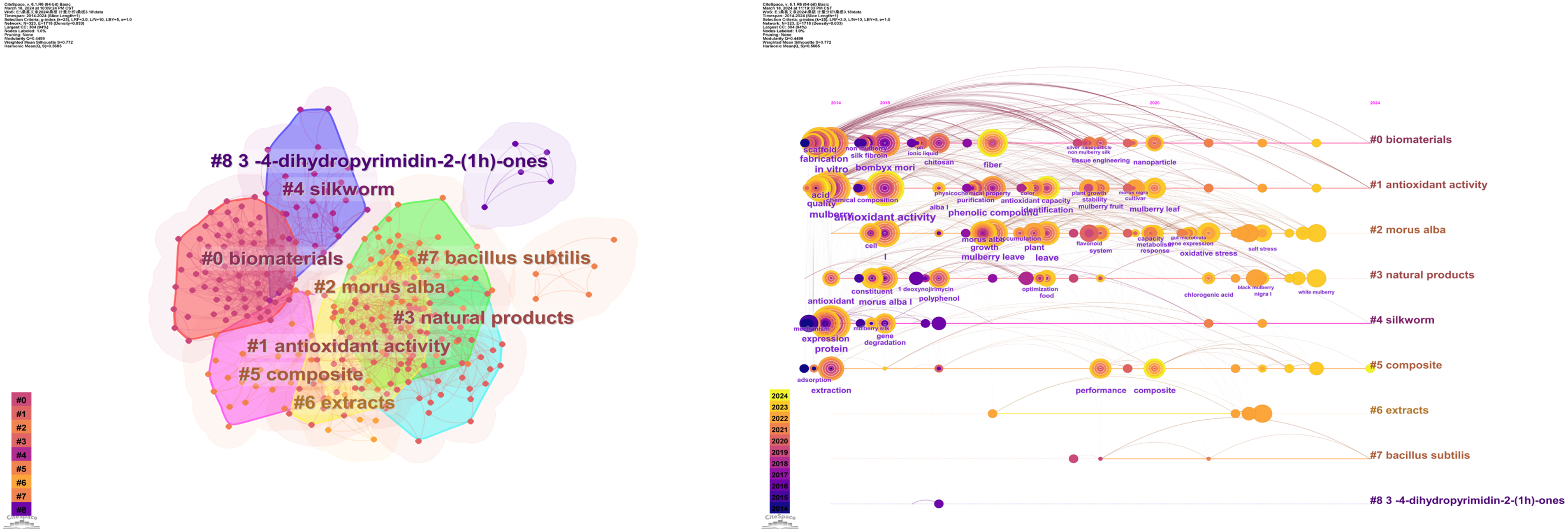
Timeline view of keyword clustering analysis of mulberry and its application fields from 2008 to 2024 (data from WOS).
Applications of Mulberries in Biomaterials
Biomaterials, also known as biomedical materials, 53 have evolved in their definition from “artificial non-living materials that integrate with the living body” to “materials used for the diagnosis, treatment, rehabilitation, and prevention of diseases, as well as for replacing, enhancing, or restoring the function of biological tissues and organs when in contact with biological systems.” The classic Eastern medicine text, Compendium of Materia Medica, praises mulberries for their divine benefits and extensive utility in human life. As a traditional Chinese medicine that shares the same origin as food, mulberries are commonly used in adjunct treatments for anemia, diabetes, hypertension, hyperlipidemia, coronary heart disease, cancer, and neurasthenia.49,54,55 Beyond these medical applications, there is significant research interest in their potential as biomaterials.
Clinical anticancer drugs commonly used today are derived from plants. Research 56 has demonstrated the feasibility of using silk fibroin, a protein from silkworms, as a drug carrier to successfully deliver targeted drugs exhibiting cytotoxicity to various cancer cell lines and achieve prolonged release. Agarwal 57 encapsulated morusin in nanoparticles to create a robust drug delivery system, enhancing anticancer activity against multiple cancers. Additionally, flavonoid compounds extracted from mulberry leaves, by binding with the glycosyl-phosphate backbone, extended the lifespan of cancer-affected mice, 58 laying the foundation for developing new targeted therapies. Interestingly, this controlled release mechanism is also widely applied in antimicrobial areas, where the antimicrobial properties of mulberries make them promising candidates for new antimicrobial agents. Li 59 successfully prepared an active food packaging film by incorporating anthocyanins from mulberries and lauroyl arginate as colorants and antimicrobial agents into a polyvinyl alcohol/tapioca starch matrix. This film can monitor the quality changes of packaged food and extend its shelf life. However, despite various known techniques for coating antimicrobial drug delivery systems,60,61 antimicrobial polymer technologies are still needed. Novel packaging materials made by incorporating antimicrobial agents into polymer matrices can more effectively suppress the activity of target microbes and foodborne pathogens, 62 thereby extending the shelf life of various foods and reducing food waste. 63 Moreover, hot-melt extrusion technology is an alternative technique for improving the solubility and bioavailability of low-water-soluble active molecules. 64 Research utilizing hot-melt extrusion technology enhanced the stability of natural cyanidin pigments in mulberries and prolonged the release time, endowing the processed formulations with probiotic properties and antimicrobial activity against pathogenic intestinal flora. 65 The combination of plant-based compounds with natural and synthetic polymers offers new dressing options for wound areas. Polyphenolic compounds in mulberries, with their strong anti-inflammatory properties, can serve as excellent agents for controlling microbial infections and accelerating the wound healing process. 66 Additionally, mulberries, by inhibiting melanin synthesis and exhibiting antioxidant effects, can serve as whitening agents. 67 Specific applications are illustrated in Figure 5.
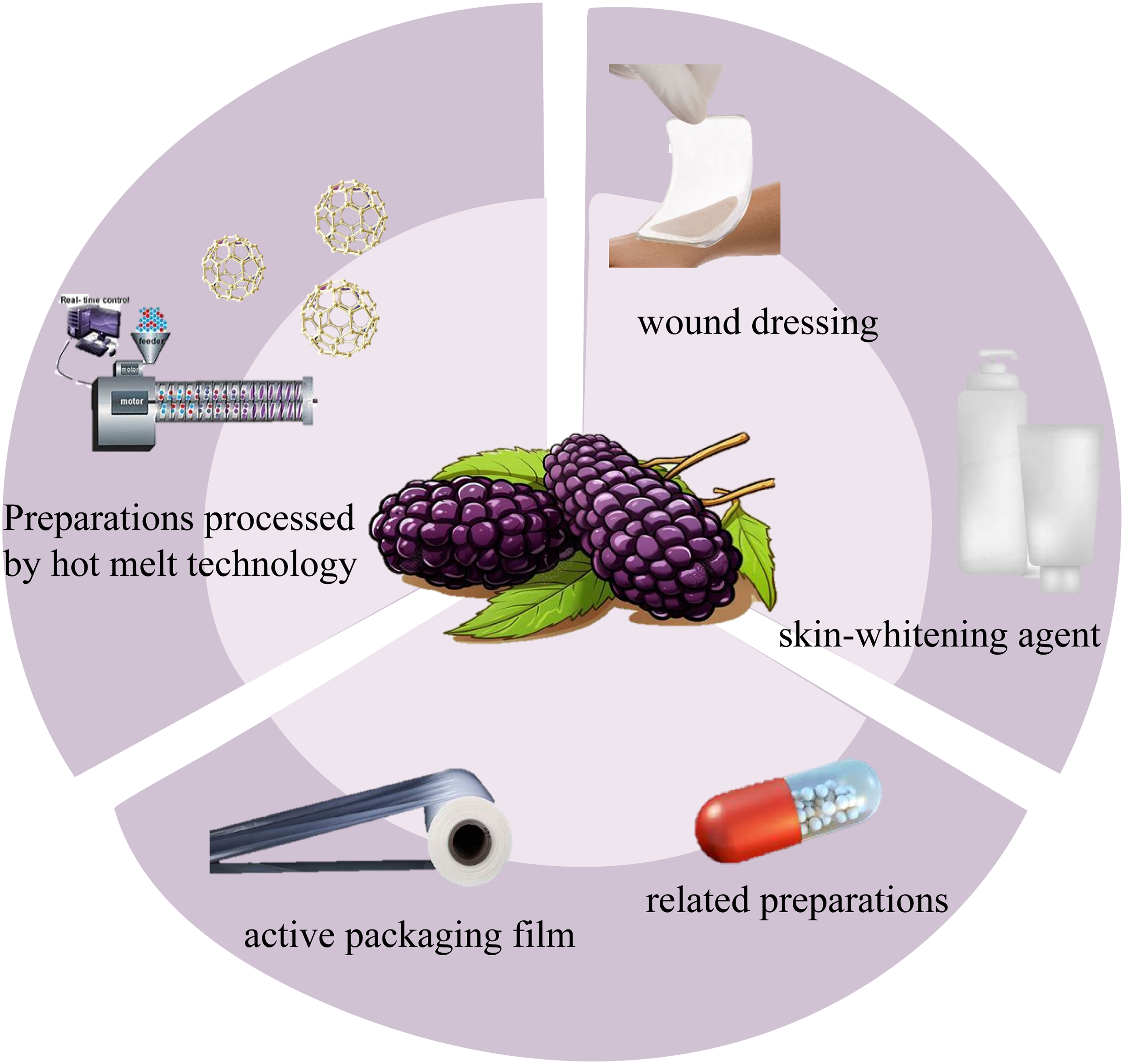
Application of mulberry in biomaterials.
Applications of Mulberries in Natural Products
Mulberries, renowned for their thin skins, juicy taste, and popularity as a fruit, have long been utilized as functional foods due to their rich phytochemical composition. However, fresh mulberries are not storage-resistant, necessitating their processing into various products such as dried fruits, jams, health yogurts, mulberry juice, mulberry vinegar, mulberry wine, and others (Table 2). These processed products are favored by consumers for their unique taste and extended shelf life. The efficacy of mulberries’ polyphenols and other bioactive components depends significantly on their bioavailability and bioaccessibility. For instance, mulberry syrup, which is rich in phenols, flavonoids, and anthocyanins, maintains stable component levels for up to 30 days. 68 Fermentation is an effective method for extracting phenolic substances. 69 During fermentation, phenolic compounds in fruit pomace can bind to cell walls, releasing them from the matrix and thereby improving their bioaccessibility. 70 Consequently, adding phenolic-rich fruit pomace to yogurt production and leveraging the fermentative release of free phenolic compounds by lactic acid bacteria enhance the product's antioxidant activity. 71 Mulberry wine also exhibits enhanced free radical scavenging ability, maximizing the utilization of mulberry fruits. 72 Additionally, mulberry vinegar, fermented from mulberries, has been proven to reduce pro-inflammatory factors and prevent neuroinflammation by modulating the NF-κB signaling pathway and neuroglial activation. 73 Furthermore, mulberry enzymes have been shown to improve gastrointestinal transit rates, thereby alleviating constipation. 74
Application of Mulberry in Natural Products.

The processing of mulberry juice76,77 and jam 75 helps the food industry minimize the loss of antioxidants and enhance the quality of the final product. Mulberry jelly, which incorporates prebiotics such as inulin and agar-agar as gelling agents, has been developed into potential functional jelly formulations. These formulations achieved a high count of lactic acid bacteria, good sensory quality, and beneficial antioxidant properties. 78 Moreover, mulberry milk has been shown to inhibit cortisol levels and enhance memory function. 81 Beyond edible products, mulberries can also serve as food antioxidants and colorants, mitigating free radical damage and enhancing the nutritional profile of various food items. 82
Challenges in the Production and Utilization of Mulberries
Variety Protection and Specific Applications
The ecological environment significantly influences the growth, yield, quality, and distribution of mulberry trees. Different geographical regions and cultivation conditions notably impact mulberry quality. China possesses the most extensive genetic resources of mulberry trees. 83 Through a prolonged process of natural and artificial selection, considering the growth habits, geographical environment, and cultivation conditions, a rich diversity of mulberry resources has emerged. Despite this diversity, research on mulberries’ adaptation to climate change and their nutritional value remains insufficient.
The primary goal of mulberry breeding is to develop or enhance varieties with high nutritional content that can achieve high yields, withstand extreme conditions, and resist diseases. Key criteria for selecting mulberries include robust rooting capabilities and ease of propagation through hardwood cuttings. The main propagation methods employed are open pollination, artificial hybridization, polyploid breeding, and mutation breeding, among others. These methods aim to optimize mulberry varieties for both agricultural productivity and functional applications.
Challenges in Researching Health Benefits
Mulberries are recognized for their diverse bioactive components, such as polysaccharides, polyphenols, and alkaloids, which offer numerous health benefits and have the potential to improve suboptimal health conditions. Studies have also highlighted the unique value of mulberry and similar phytochemical-rich substances in promoting skin health.36,84
Traditional medicine attributes several functions to mulberries, including generating fluids to quench thirst, nourishing the liver and kidneys, enriching Yin and blood, and calming the mind. However, research on the impact of mulberries on human health faces two main challenges. Firstly, the specific mechanisms of action and bioavailability of mulberry's active components in the human body are not fully understood, and their dose-response relationship in disease treatment requires further investigation. Secondly, the potential and safety of mulberry's clinical applications lack comprehensive assessment.
Quality and Safety
Mulberries present unique challenges related to their high water content and thin skin, making them difficult to preserve. Although morphological differences between mulberry varieties are minor, their active ingredients and functional activities can vary significantly. Precisely distinguishing between varieties and ensuring proper storage and transportation are crucial for maintaining quality in the food industry. Furthermore, common contaminants in the production process include pesticide residues, mycotoxins, and heavy metals. Farmers may use unregulated pesticides or harvest mulberries outside of safe periods to increase fruit yield and improve pest control effects, 85 posing significant challenges for their use in the food and pharmaceutical industries.
Mulberries and their extracts are generally considered safe for most people. As a food and traditional medicinal material, mulberries have been consumed for thousands of years in some parts of Asia. However, as a functional food or pharmaceutical ingredient, their safety primarily depends on the intake amount, frequency of consumption, and the processing method of the product. Although adverse reactions to mulberries are relatively rare, there are potential risks in specific circumstances. For instance, certain components in mulberries, such as 1-deoxynojirimycin, may affect blood sugar levels, impacting diabetes patients who are using hypoglycemic drugs. Additionally, the high fiber content in mulberries may cause digestive discomfort in some sensitive individuals. Regulatory oversight of mulberries and their derivative products varies across different countries and regions. In some countries, mulberry products may be marketed as dietary supplements without the need for special approvals; whereas, in others, if the product claims to have specific health benefits, it may be subject to a more rigorous review and approval process. To ensure the quality and safety of mulberry fruits, it is necessary to progressively refine the quality standard system in the future, and to enhance the regulatory oversight of mulberry quality and safety based on specific circumstances and individual differences.
Critical Assessment and Discussion
Mulberry is a natural plant widely distributed across the globe, boasting thousands of years of application history. It not only treats diseases, strengthens physical fitness, and enhances the quality of life through holistic regulation but also serves as a versatile food source. Mulberries can be consumed directly as fresh fruit or processed into various food products, aligning with their dual role as both medicine and nutrition. In contemporary society, where many individuals experience suboptimal health states, TCM attributes these conditions to a deficiency in “healthy Qi” and the invasion of “evil Qi.” Mulberries, with their combined nutritional and therapeutic effects, offer a safe alternative to chemical drugs, addressing these health imbalances.
In this paper, mulberry was systematically reviewed. To date, while research into the active components and pharmacological actions of mulberries has made some progress, the medicinal development of mulberries remains largely in the experimental phase, with few related health products, drugs, and biomaterials approved for market. The functional components of mulberries mainly focus on polyphenols, polysaccharides, and alkaloid compounds, and the relationship between their molecular structures and pharmacological activities is still under investigation. Specifically, resveratrol, anthocyanins, rutin, chlorogenic acid, and 1-deoxynojirimycin are considered the primary active components of mulberries. Moreover, due to the complexity of mulberry components, the potential targets and precise molecular mechanisms are not fully understood, posing the risk of adverse reactions that could hinder further research into mulberry medicinal products. Secondly, as the carriers of all products, natural biomaterials are generally renewable, widespread, diverse, and easily obtainable. To promote the development and application of mulberry medicinal resources, create safer methods to treat more diseases in the future, and integrate the application of biomaterials, we propose four related recommendations: (1). Although research has explored the polyphenols, polysaccharides, and alkaloids in mulberries, the roles of many secondary metabolites and trace elements remain unclear. Future research could focus on the extraction, identification, and potential impact on human health of these components. (2). While animal experiments and in vitro studies have shown mulberries to have various health benefits, clinical evidence in humans is relatively limited. More clinical studies on mulberry-related active components or biomaterials, including multicenter, double-blind, randomized, and controlled trials, are needed, especially in the prevention and treatment of chronic diseases such as diabetes, cardiovascular diseases, and cancer, to assess their safety and efficacy. (3). Understanding the absorption, distribution, metabolism, and excretion processes of active components in mulberries is crucial for evaluating their health benefits. Future research should focus on the biotransformation processes of these components and methods to improve their bioavailability. 4). The human microenvironment is a dynamic process. Ideally, the release time, amount, and speed of active factors loaded on biomaterials should be adjusted based on feedback from different stages of the microenvironment. This will be the direction for the next step in intelligent innovation breakthroughs related to biomaterials associated with mulberries.
In the development of new functional foods and other natural products, the unique nutritional components and health benefits of mulberries make them an ideal ingredient. Based on the many products that have already been developed, further research should explore their complex interactions and synergistic effects through dialysis, ensuring the feasibility of the processes to promote the sustainable development of related by-products. This could include the development of fortified beverages, energy bars, or antioxidant supplements as new types of functional foods and nutritional supplements. Additionally, applications in cosmetics and personal care products are also worth exploring, utilizing its polyphenolic compounds such as anthocyanins to develop sunscreen and anti-aging creams. Beyond food and pharmaceutical applications, mulberries could serve as plants for ecological restoration or be used in organic agriculture, contributing to agriculture and environmental protection. With continued scientific research and technological advancements, the range of applications for mulberries is expected to expand further, making significant contributions to human health and sustainable development.
Conclusion
In this paper, the nutritional value, health benefits of mulberry and its application in food, biological materials and medicine were reviewed, which laid a theoretical foundation for the follow-up research and development and utilization.
Footnotes
Acknowledgements
This study was supported by the Jiaxing Science and Technology Program (2022AY30025, 2023AZ11005) and the Zhejiang Medical and Health Science and Technology Program (2025KY362).
Author Contributions
Data Availability
No data were used for the research described in this article.
Declaration of Conflicting Interests
The authors declared no potential conflicts of interest with respect to the research, authorship, and/or publication of this article.
Funding
The authors disclosed receipt of the following financial support for the research, authorship, and/or publication of this article: This work was supported by the Science and Technology Bureau of Jiaxing City, Health Commission of Zhejiang Province, (grant number 2022AY30025, 2023AZ11005, 2025KY362).
