



Abstract
The citrus plant is the general term for Citrus, Fortunella, and Poncirus, which includes oranges, tangerines, lemons, grapefruits, and citrons. Not only does it contain a variety of delicious fruits, but it is also an important part of traditional Chinese medicine. Citrus plant peels are rich in essential oils, the primary active component of which is limonene. Modern pharmacological research has revealed that limonene has many pharmacological effects, including antibacterial, anticancer, analgesic, immune regulation, neuroprotection, antioxidant, anti-inflammatory properties, and the treatment of metabolic diseases. It finds widespread application in a variety of industries, including cosmetics, food, personal care, medicine, pesticides, and others. This article reviews the pharmacological effects of limonene from citrus plants to build a scientific basis for future limonene research and application and also to lay the groundwork for developing functional foods for the prevention and management of linked disorders.
Introduction
Citrus L., Fortunella, and Poncirus are all members of the citrus plant, which contains oranges, tangerines, lemons, grapefruits, and citrons. Citrus is a globally significant fruit crop. According to the 2016 statistics bulletin, the global total citrus output was predicted to be 124.24 million tons, with China ranking among the top 10 citrus-producing countries. 1 Not only does it contain a variety of delicious fruits, but it is also an important part of traditional Chinese medicine, such as Foshou, Chenpi, Zhishi, and Zhiqiao et al. Citrus fruit is high in essential oils and serves as a key source of natural essential oils. Citrus essential oil has a variety of pharmacological effects and a high commercial value. 2 Limonene, the primary constituent of citrus essential oil, mainly includes d-limonene, l-limonene, and dl-limonene, with d-limonene accounting for up to 90% of the citrus essential oil content. 3 The limonene content of different citrus plants varied considerably, with blood oranges containing 63% limonene, sweet oranges 88%, lemons 78%, bergamot 72%, bitter oranges 48.85%, and mandarin 69%4,5 (all extracted by solvent extraction). Its content is also affected by the extraction method. 6 The pharmacological effects of limonene include antimicrobial, anti-cancer, analgesic, anti-inflammatory, antioxidant, immune regulation, neuroprotection, and therapeutic benefits for metabolic and cardiovascular disorders.
The pharmacological effects of limonene are reviewed in this article to set the stage for future studies and applications of the compound, as well as for the creation of functional foods for the management and prevention of related ailments. The structure of d-limonene is shown in Figure 1.
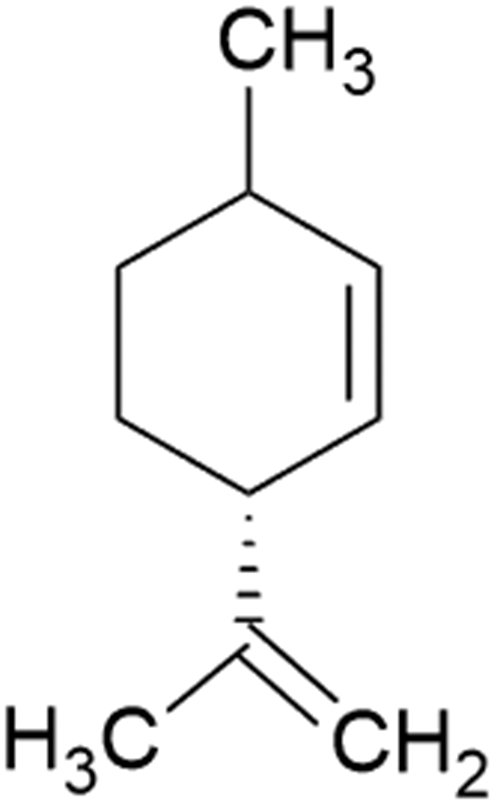
The basic structure of d-limonene.
Pharmacology
Anti-Inflammatory and Analgesic Effects
Limonene has analgesic and anti-inflammatory effects, including potential therapeutic effects on colitis, pneumonia, and airway inflammation. The mechanism is associated with the control of inflammatory signaling pathways and the suppression of inflammatory factors.
Anti-Inflammatory Effects
Computer analysis showed that limonene extracted from orange peel had the potential to resist a novel coronavirus infection. 7 The phosphoinositide 3-kinase (PI3 K)/Akt signaling pathway is linked to the formation of pulmonary fibrosis induced by novel coronavirus pneumonia, and d-limonene can reduce PI3K/protein kinase B (Akt)/IκB kinase-α (IKK-α)/nuclear factor kappa-B (NF-κB) p65 signaling pathway expression and phosphorylation.8,9 Chi et al 10 found that limonene (20, 50, and 75 mg/kg) had a strong anti-inflammatory effect and could significantly improve lung function in mice with lipopolysaccharide-induced acute lung damage, with the mechanism being related to the inhibition of extracellular signal-regulated kinase (ERK), p38 Mitogen-activated protein kinase (MAPK), NF-κB, and C-Jun N-terminal kinase signal pathways.
D'Alessio et al 11 found that limonene (10 mg/kg) lowered TNF-α levels and inflammation in colitis model rats. In vitro, it could also inhibit NF-κB translocation induced by TNF-α. 11 In addition, elderly healthy subjects who took dietary supplements containing d-limonene for 56 days had significantly reduced plasma IL-6 levels. 11 D-limonene, by acting on A2A and A2B receptors, may also reduce airway inflammation and hyperresponsiveness in asthma model mice. 12 D-limonene (600 and 1200 mg/kg) could alleviate intestinal damage in mice caused by Escherichia coli via anti-inflammatory and antioxidant effects. 13
Analgesic Activity
Limonene has analgesic effects in mice with various hyperalgesia models; nasal inhalation of limonene can reduce the increase in lick/bite induced by formalin in mice, 14 and oral application of limonene (10 mg/kg) can inhibit the hyperalgesia caused by intrathecal injection of gp120, IL-1β, and TNF-α in mice.14,15 Limonene's analgesic action was related to TNF-α down-regulation, transient receptor potential (TRP) vanilloid 1 (V1)/ankyrin 1 (A1) receptor blocking, inhibition of protein kinase A and C activation, and inhibition of the NF-κB/p38 MAPK signaling pathway. 16 The TRPA1 channel of sensory neurons can be activated by limonene intraplantar injection, resulting in acute pain. 17 In contrast, limonene administered systemically to mice decreased their nociceptive behaviors when exposed to H2O2. 17 Limonene could produce a persistent analgesic effect in the mouse model of chronic musculoskeletal pain, and its mechanism might be related to γ-aminobutyric acid (GABA) and TRPV1 receptors. 18 The analgesic mechanism of limonene is concluded in Figure 2.

The analgesia mechanism of limonene.
Antimicrobial Activity
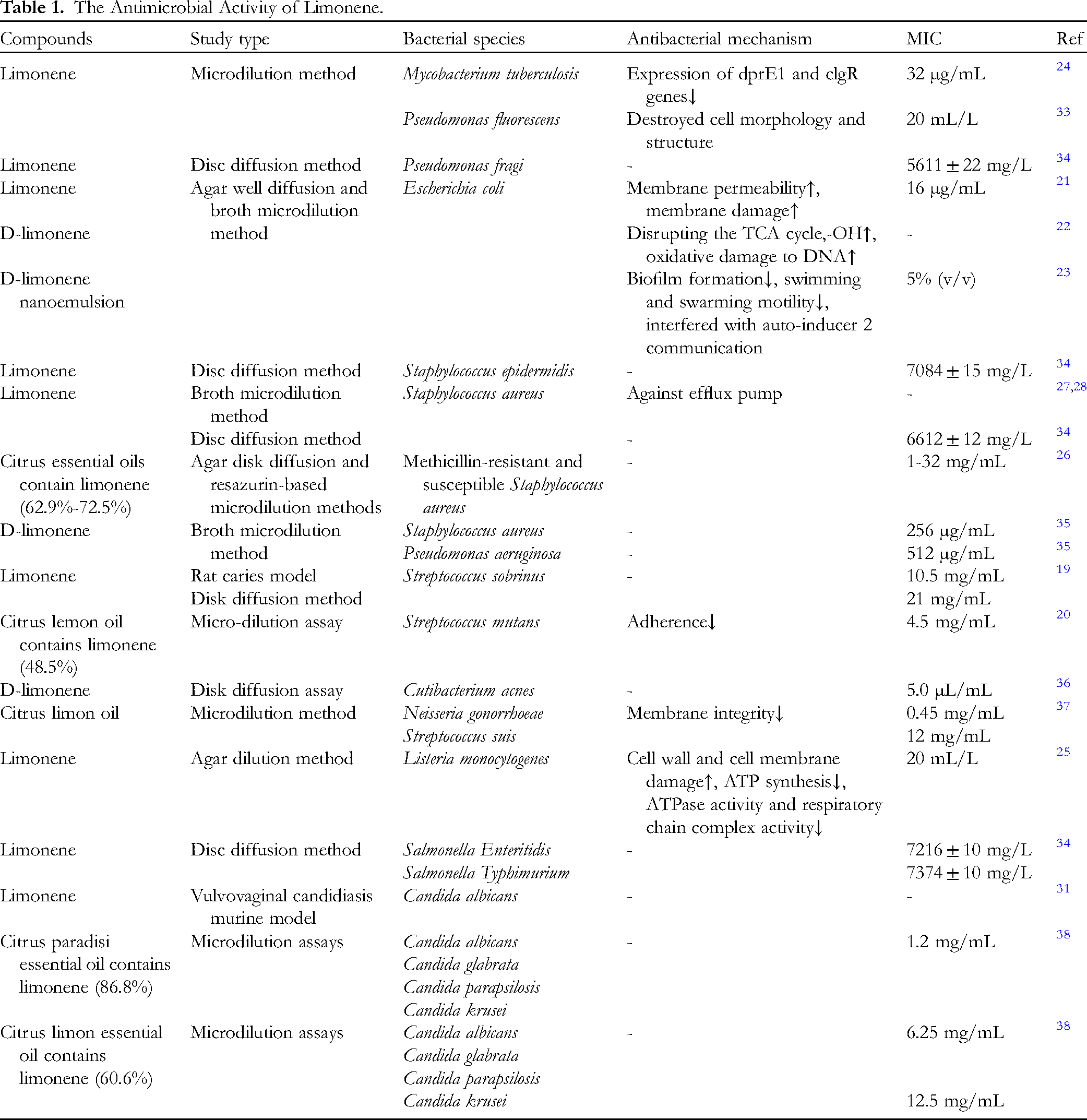
Limonene is a promising antibacterial agent against multidrug-resistant bacterial infections due to its broad-spectrum antibacterial capabilities and multitarget bactericidal properties. Limonene may have an anticaries effect by suppressing the growth of Streptococcus sobrinus and Streptococcus mutans.19,20 Liu et al 20 found that citrus lemon oil (which has a 48.5% limonene content) can successfully prevent S mutans from growing and adhering to saliva-coated enamel surfaces and glass. In addition, it can suppress glucosyltransferase enzyme activity and transcription.
Limonene can fight E coli through a variety of mechanisms, including chemotaxis, enzyme inhibition, protein synthesis interference, change or destruction of the bacterial outer membrane, interference with cell wall synthesis, cell content leakage, depolarization on the inner membrane, nucleic acid synthesis inhibition, and so on.21–23 Chueca et al 22 found that limonene (2000 μL/L) could act on the citric acid cycle and promote the Fenton reaction to produce hydroxyl radicals, causing DNA oxidative damage in E coli. Wang et al 23 made a d-limonene nanoemulsion and discovered that it can inhibit the production of extracellular polymers and amyloid fiber by interfering with self-induced autoinducer-2 to reduce E coli aggregation and inhibit the formation of E coli biofilm. Sawicki et al 24 found that limonene could regulate the expression level of Mycobacterium tuberculosis's cell wall synthesis gene dprE1 and the cell membrane preservation gene clgR. Han et al 25 found that limonene induced Listeria monocytogenes death through mechanisms involving respiratory dysfunction and the impairment of both cell membrane and cell wall integrity.
Furthermore, limonene and many antibiotics have synergistic antibacterial effects; for example, limonene and gentamicin have synergistic antibacterial effects on Staphylococcus aureus and methicillin-resistant S aureus. 26 DeAraújo et al27,28 found that limonene inhibited S aureus's efflux pump, reduced bacterial resistance, and increased the antibacterial activity of norfloxacin, which could be related to the interaction of the transporter NorA. Sieniawska et al 29 found that limonene could reduce the minimum inhibitory concentration of anti-tuberculosis antibiotics such as ethambutol, rifampicin, and isoniazid.
Limonene is also useful in the treatment of fungal infections. It was found that orange oil extract (92.52% limonene content) and tangerine oil extract (91.79% limonene content) had inhibitory effects on both Candida albicans and Aspergillus species. 30 Muñoz et al 31 found that limonene protected mice from vaginal candidiasis. In addition, limonene has antiviral activity. Luo et al 32 found that limonene has significant anti-tobacco mosaic virus (TMV) activity. The antimicrobial effects of limonene are concluded in Table 1.
The Antimicrobial Activity of Limonene.
Effects on Metabolic and Cardiovascular Disorders
Limonene has the potential to prevent and treat a variety of metabolic and cardiovascular diseases (Table 2), including liver protection, antiobesity, hypoglycemic action, and so on.
Pharmacological Activities of Limonene in Metabolic and Cardiovascular Diseases.

Abbreviations: NF-κB, nuclear factor kappa-B; MAPK, mitogen-activated protein kinase; AMPK, AMP-activated protein kinase; PPAR-α, peroxisome proliferator-activated receptor α; COX-4, cyclooxygenase-4; CYT C, cytochrome C.
Hepatorenal Protective Activity
D-limonene exerts antagonistic effects on iron overload, lipid metabolism disorders, and pathological damage to liver tissue in rats with alcoholic liver injury.39,40 Limonene has the ability to treat chronic immobilization stress-induced liver injury 41 and protect against carbon tetrachloride-induced liver fibrosis in rats. 42 Moreover, d-limonene also has the potential to treat nonalcoholic fatty liver disease. D-limonene could ameliorate biochemical abnormalities in rats’ livers induced by N(ω)-nitro-L-arginine methyl ester hydrochloride and a high-fat diet. 43
Anti-Obesity Activity
D-limonene reduces metabolic abnormalities in obese mice by a variety of mechanisms, such as regulating the gut microbiota, preventing liver steatosis, lowering triglycerides, and lowering fasting blood glucose. 44 Lone et al 45 illustrated that limonene could trigger the browning of 3T3-L1 white adipocytes, increase the number of brown adipocytes, and promote fat metabolism by activating the ERK signaling pathways and β3-adrenergic receptor. Research has demonstrated that limonene can effectively alleviate obesity symptoms in model rats by modulating fat synthesis and metabolism-related mRNA expression through its action on the AMP-activated protein kinase (AMPK) signaling pathway. 46
Hypoglycemic Activity
Bacanli et al 47 found that limonene exhibited protective effects against the liver and kidney damage brought on by diabetes and could dramatically lower the blood glucose level of diabetes model rats. Jing et al 48 demonstrated that d-limonene can reduce insulin resistance in mice, control the lipid profile, and prevent dyslipidemia and hyperglycemia in obese mice brought on by a high-fat diet. Genetic tests reveal that the process is linked to the suppression of the liver X receptor (LXR)-β and the activation of the peroxisome proliferator-activated receptor α (PPAR-α). 48
Long-term elevated blood glucose levels can induce protein glycosylation and chronic damage to various tissues. A protein glycation inhibitor, limonene, stabilizes protein structure via hydrophobic interactions and hence prevents protein glycation. 49 In vitro studies found that limonene can resist the denaturation of bovine serum protein caused by urea and high temperatures, and the differential and synergistic mechanisms of aminoguanidine and limonene can effectively inhibit protein glycation. 50 Meanwhile, the combination of the two can reduce the effective dose of aminoguanidine by 20 times. 50 Methylglyoxal is a key precursor of advanced glycation end products. Suh et al 51 demonstrated that limonene protects osteoblasts from the generation of methylglyoxal-derived adducts via modulating glyoxalase, oxidative stress, and mitochondrial activity.
Treatment of Cardiovascular Diseases
By restricting cardiomyocyte apoptosis, reducing oxidative stress injury, and blocking the MAPK/ERK/NF-κB signaling cascade, d-limonene protects rats and mice from isoproterenol-induced myocardial infarction injury.52,53 Nascimento et al 54 illustrated that limonene could lower the heart rate and left ventricular pressure of isolated perfused rats as well as the arrhythmia score of rats in an arrhythmia model. The pharmacological activities of limonene in metabolic and cardiovascular diseases are concluded in Table 2.
Anti-Cancer Activity
One of limonene's primary pharmacological effects is anticancer, and it has preventive effects in several cancer models. Limonene has the ability to target several cell signaling pathways associated with the initiation, growth, and chemoresistance of cancer cells. 45 Additionally, it has detoxifying properties, suppresses the growth of tumors and angiogenesis, leads to the apoptosis of cancer cells, repairs damage to DNA, interferes with the cancer cell cycle, and inhibits the proliferation of cells. 55 Research has indicated that limonene exhibits noteworthy antiproliferative activity against human cells that cause liver cancer, colorectal adenocarcinoma, breast cancer, skin melanoma cells, lung adenocarcinoma, colon cancer, and bladder cancer.34,56–59 Furthermore, it was discovered that limonene regulated autophagy (Atg) markers in human neuroblastoma, indicating that limonene can inhibit tumor formation in its early stages. 56 Cocrystal solvents containing limonene and ibuprofen offer synergistic anti-inflammatory properties and can selectively prevent the growth of human colon cancer HT29 cells while not interfering with healthy cell activity. 60
Several studies have shown that limonene increases pro-apoptotic protein Bax expression while decreasing antiapoptotic protein Bcl-2 expression, thereby promoting apoptosis in cancer cells, and that this regulation involves multiple signaling pathways.58,59,61 Chaudhary et al 62 found that topical treatment with limonene could inhibit the Ras/Raf/ERK1/2 signaling pathway, down-regulate the expression of cyclooxygenase-2, inhibit inflammation and oxidative stress, promote tumor cell apoptosis, and delay the occurrence of skin tumors in mice. Its apoptosis-inducing mechanism may also involve the mitochondrial pathway and inhibition of the PI3K/Akt signaling pathway. 58 It was discovered that d-limonene induced apoptosis in colon cancer cells by activating caspase-3, caspase-9, and poly (ADP-ribose) polymerase, as well as increasing cytochrome C expression. 58 In addition, limonene up-regulates the expression of Atg-related proteins, which promote Bax activation to promote apoptosis, implying that limonene also induces apoptosis in cancer cells by regulating Atg. 61 Feng et al 63 found that d-limonene may target PDIA3P1 to prevent and inhibit lung adenocarcinoma by regulating genes related to lipid metabolism, immunity, and chromosome structure changes. D-limonene reduces vascular endothelial growth factor and microvessel density levels, thereby inhibiting tumor cell angiogenesis, 64 and has anti-leukemia and anti-angiogenic effects in chronic myeloid leukemia model mice. 65 Limonene's anticancer mechanism is also linked to decreased c-myc overexpression and increased Yin Yang 1 (YY1) expression in cancer cells. 66 The anticancer mechanisms of limonene are summarized in Figure 3.
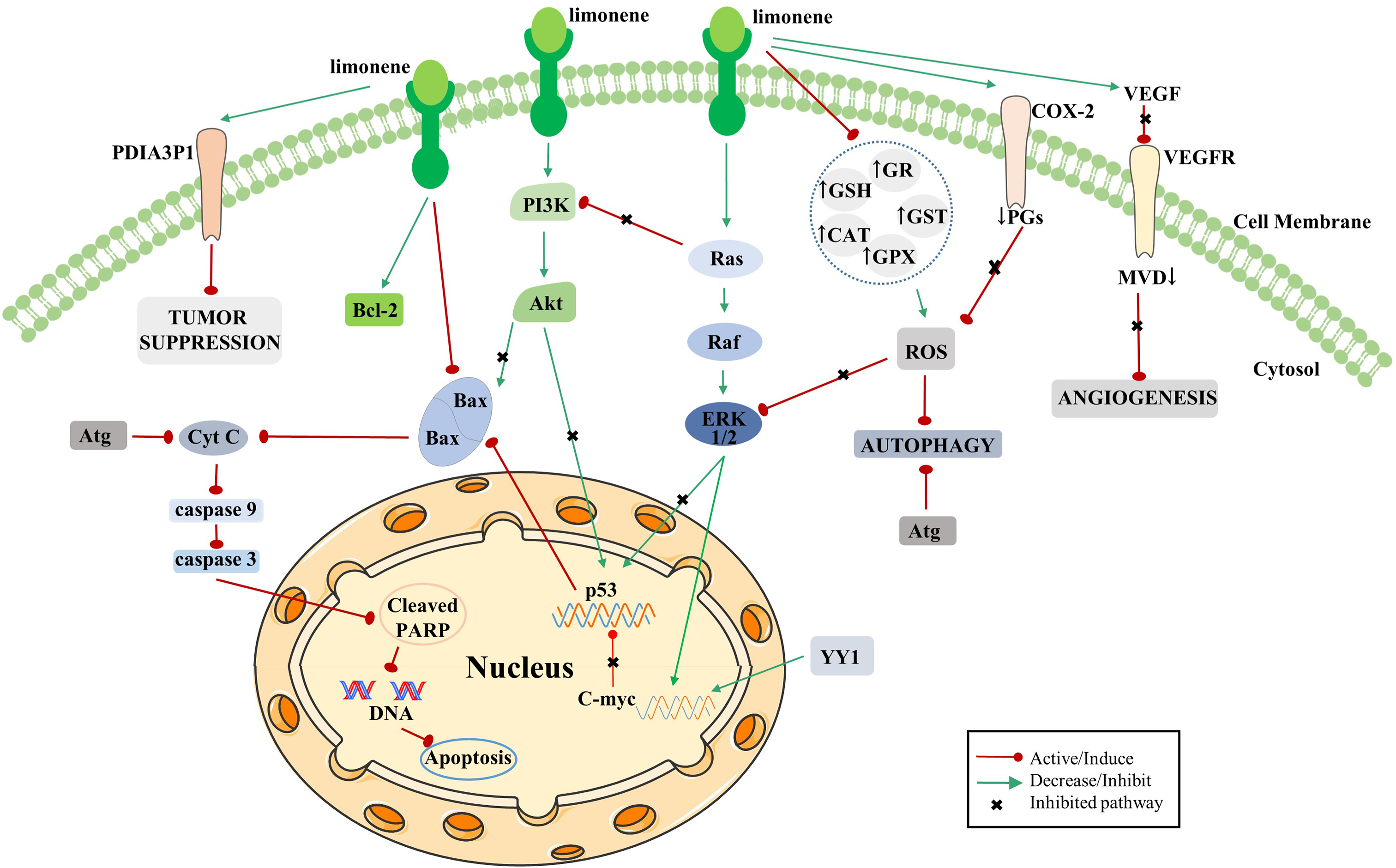
The anticancer mechanism of limonene.
Limonene was well tolerated in human early breast cancer clinical trials and demonstrated excellent promise for development as a breast cancer therapeutic drug. 67 Miller et al 68 gave limonene (2 g/d) to patients with early breast cancer before surgery for two to six weeks and discovered that limonene was concentrated in the breast and could decrease cyclin D1 expression in breast cancer cells, thereby blocking the cell cycle and inhibiting cancer cell proliferation. Further study of plasma metabonomic data revealed that adrenal steroids were significantly reduced, while bile acids and a variety of collagen decomposition products were significantly increased. 69 The reduction of cyclin D1 in tumor tissue was linked to metabolite alterations, suggesting that limonene may alter glucose metabolism. 69
Neuroprotective Activity
By reducing inflammatory responses and increasing the neurotrophic process, limonene improved regeneration and the recovery of motor and sensory function in the peripheral nerve injury model in mice. 70 It could also have an antistress effect by modifying central neurotransmitter functions and ortho/parasympathetic parameters. 71 Moreover, d-limonene prevents anticonvulsant activity induced by pentylenetetrazole via modulating GABAergic neuronal activity through the adenosine A2A receptor. 72
Treatment of Neural Degenerative Diseases
Through a variety of targets, limonene may have therapeutic potential for treating neurodegenerative diseases. Numerous studies have been conducted that limonene has a neuroprotective effect on neurodegenerative diseases.73,74 Piccialli et al 75 investigated limonene's neuroprotective impact in fighting the neurotoxicity produced by Aβ1-42 oligomers and found that limonene may help to prevent neuronal suffering caused by Aβ1-42 oligomers, preventing KV3.4 hyperactivity. Also, limonene inhibited acetylcholinesterase with an IC50 close to that of galantamine. 75 Eddin et al 76 found that limonene can protect rats from rotenone-induced dopaminergic neurodegeneration via regulating apoptosis, neuroinflammation, and hippo signaling.
Anxiolytic Effect
Limonene has anxiolytic effects but does not act via benzodiazepine receptors. 77 Lima et al 77 found that limonene had good anxiolytic-like benefits in an elevated maze model of anxiety in mice and that flumazenil did not impede the pharmacological impact of limonene (1%). Limonene modulates GABAergic and dopaminergic neuronal function through adenosine A2A receptors and exhibits anxiolytic effects in the mouse striatum. 78 Lu et al 79 found that limonene could improve the anxiety behaviors occurring in mice under simulated microgravity conditions through aromatherapy. In a clinical trial, d-limonene selectively relieved tetrahydrocannabinol-induced anxiety in healthy adults through aromatherapy. 80
Antidepressant Action
Limonene also has great promise in treating depression. Tang et al 81 found that limonene activates the AMPK pathway to protect PC12 cells from corticosterone-induced neurotoxicity, suggesting that limonene may protect against neuronal death and alleviate symptoms of depression. According to in vivo research, limonene can alleviate symptoms of depression in different model mice with depression, and the mechanism is related to the attenuation of neuroinflammation and nitrite levels and improvements in neuroendocrine, neurotrophic, and monoaminergic systems.82,83
Others
By eradicating cancer and virally infected cells, natural killer (NK) cells contribute significantly to the innate immune system. Terao et al
Good antioxidant properties of limonene are observed both in vitro and in vivo. Through the p38 pathway, limonene was found to save human lens epithelial cells from oxidative stress-triggered cell damage and reduce DNA and micronucleus damage caused by H2O2.85,86 Santos et al 87 found that limonene applied topically is just as efficient as phonophoresis in restoring the oxidative characteristics of damaged skeletal muscle in rats.
In addition, limonene has been shown to protect the mucosa of the stomach, improve poststroke ischemic injury, improve renal injury, protect the reproductive system, and promote bone healing.88–92
Safety and Risk of Limonene
Apart from the deleterious skin impacts observed in humans, no noteworthy toxic consequences of d-limonene have been documented. According to repeated-dose toxicity and lethal dosage (LD50) tests, d-limonene was classified as a compound of low toxicity when given orally to animals. 93 In addition to possessing advantageous pharmacokinetic properties, Corrêa et al 94 analysis of d-limonene's cytotoxicity using MRC-5 and HaCaT revealed that the compound does not have cytotoxic fragments or produce mutagenic effects and does not have irritating potential at diluted concentrations. The safe evaluation of dl-limonene (racemic) by Api et al 95 showed that it is safe in terms of phototoxicity/photoallergenicity, genotoxicity, environmental toxicity, repeated dosage toxicity, reproductive toxicity, local respiratory toxicity, and skin sensitization.
Limonene Applications
Generally considered a harmless flavoring additive, d-limonene is recognized in the Code of Federal Regulations and is present in many typical foods, including pudding, baked products, nonalcoholic ice cream, beverages, chewing gum, and soft drinks. D-limonene has been widely utilized in the cosmetics sector and home items, including perfumes, soaps, detergents, cleaning agents, room fresheners, floor wax, etc. 96 Studies have found that limonene can reduce collagenase and elastase enzyme activities, 97 inhibit melanogenesis, 98 and fight Cutibacterium acnes, 36 suggesting its potential for use as a cosmetic additive to fight against skin aging, hyperpigmentation, and acne. Recent research has demonstrated that limonene is an appropriate component for the agri-food sector as well. It has been shown to possess potent antimicrobial properties against a wide range of food-spoilage microorganisms and pests that impact crops. 99 Additionally, it has the antioxidant capacity to prevent postharvest deterioration during the processing, storage, and packaging procedures, thereby prolonging the shelf life of food items. 99 Applications of limonene in other fields are shown in Figure 4.

The applications of limonene in other areas.
Summary and Outlook
This article reviews the pharmacological effects of the volatile component limonene in citrus plants. Modern pharmacological studies suggest that limonene has a variety of pharmacological effects, like antibacterial, anticancer, analgesic, treating metabolic diseases, protecting the cardiovascular system, anti-inflammatory, immunomodulatory, antioxidant, and protecting the nervous system.
Anticancer is one of the main pharmacological effects of limonene, and in vitro studies have demonstrated inhibitory effects on several types of cancer cells. Limonene has been demonstrated to suppress cancer cell proliferation in human early breast cancer clinical trials and is well tolerated by patients. Consequently, limonene holds promise as a future anti-breast cancer drug with extensive development prospects. Limonene has a broad antibacterial spectrum, inhibiting a wide range of bacteria, fungi, and viruses, which not only has the potential for the treatment of infectious diseases but also has great prospects for development in the fields of agricultural pest control, food preservation, and other areas. Metabolic diseases are chronic and mostly difficult to cure, and limonene has the potential to combat various metabolic diseases. Limonene has the potential to treat various psychiatric disorders and has been shown to improve anxiety through aromatherapy. Based on the volatility of limonene and its pharmacological effects, such as antidepressants and anxiolytics, the development of aromatherapy to assist in the treatment of these psychiatric disorders is also a good research idea.
Limonene, as a natural product, has great potential for development and economic value. However, clinical trials of limonene are currently limited, largely based on cell and animal studies. Future research is needed for further verification in other clinical applications.
Conclusions
This article summarizes the research progress on the pharmacological effects of limonene, a volatile constituent of citrus plants, and establishes a certain theoretical foundation for subsequent study.
Footnotes
Author Contributions
All authors contributed to the study's conception and design. Material preparation, data collection, and analysis were performed by Xian-fang Chen. The first draft of the manuscript was written by Xian-fang Chen, and all authors commented on previous versions of the manuscript. All authors read and approved the final manuscript. Xian-fang Chen and Yan-yan Ding contributed equally to this work and should be considered co-first authors.
Declaration of Conflicting Interests
The authors declared no potential conflicts of interest with respect to the research, authorship, and/or publication of this article.
Funding
The authors disclosed receipt of the following financial support for the research, authorship, and/or publication of this article: This work was supported by the Project of the National Natural Science Foundation of China (grant number 82274134), National Key Research and Development Plan (grant number 2017YFC1702200 and 2017YFC1702202), and the Key Research and Development Program of Zhejiang Province (grant number 2020C04020).
