



Abstract
Hyptis suaveolens is a widely well-known species of the Lamiaceae family. This plant is regarded as noxious exotic invasive weeds. It has medicinal and insecticidal properties and is used in traditional medicine to treat various illnesses. This review examines the potential utility of the understudied plant species H. suaveolens for future drug development and design, the existence of medicinally significant secondary metabolites, and their potential pharmacological and pharmacognostic importance. Search engines such as Science Direct, Google Scholar, Springer Link, PubMed, and Scopus were used to find data and information to write this paper. Alkaloids, essential oils, terpenoids, sterols, tannins, saponins, and flavonoids are only a few of the phytochemicals abundant in H. suaveolens that have therapeutic value. These bioactive compounds possess diaphoretic, analgesic, gastroprotective, antiviral, antimicrobial, anticancer, antispasmodic, antirheumatic, antibacterial, antiseptic, anti-inflammatory, and antiulcer properties. Among the polyphenolic substances found in high concentration in H. suaveolens are methyl rosamarinate, p-coumaric acid, p-hydroxybenzoic acid, vanillic acid, prodelphinidins, syringic acid, profisetinidins, protocatechuic acid, gentisic acid, caffeic acid, rosamarinic acid, and proanthocyanidins. In H. suaveolens, some terpenoid bioactive compounds such as ursolic acid, methyl suaveolate, suaveolic acid, beta-sitosterol, and suaveolol are available in different parts of the plant. Some essential compounds, such as Linoleic acid, Palmitic acid, and Oleic acid, are found in the seed oils of H. suaveolens. Pentacyclic triterpenoid and ursolic acid from H. suaveolens have been reported to have effective antiviral responses. The plant extract is used to prepare silver and copper nanoparticles for different biological activities. Due to these characteristics, the plant may be able to treat resistant and recently discovered bacterial and viral infections instead of conventional medications.
Introduction
Plant extracts and the chemicals separated from them are employed extensively for the well-being of humans worldwide. Plants in the genus Hyptis have been used for medicinal purposes worldwide, particularly in subtropical and tropical regions. There are over 400 species in the genus Hyptis, which is part of the Lamiaceae family. 1 Hyptis suaveolens is one of the well-known species in the genus Hyptis; it is commonly named daddoya-ta-daji in Hausa, Konda thulasi in Telugu, vilayet tulsi in Hindi, and bhustrena in Sanskrit. 2 H. suaveolens is native to tropical America. 3 At the moment, it can be found in the following regions: Asia, China, and India; Africa, Benin, Kenya, Nigeria, Sudan, and Cameroon; France Guiana, Brazil, Venezuela, and Ecuador; and North America, the United States. 3 H. suaveolens grows on fields, on the sides of roadways, and worldwide; it is considered a weed plant. 3
Among the ethnomedicinal plants found in the world, H. suaveolens is one of them that has high medicinal value. 4 Traditional H. suaveolens has been used as a medicinal plant throughout the world. In northern Nigeria, for example, a person with diabetes mellitus would be given a decoction of H. suaveolens leaves to cure the illness. 5 To solve headaches illness, people use H. suaveolens crushed leaves and place them on the forehead to treat antipyretic, carminative, and diuretic; the leave and inflorescence of H. suaveolens is given to the ill person. 6 Additionally, to treat kidney and diarrhea, a decoction of the whole part of H. suaveolens was used to relieve the illness. 2 H. suaveolens contains important bioactive compounds like alkaloids, tannins, saponins, flavonoids, and terpenoids. The result also showed that in addition to the above phytochemicals, other primary metabolites, such as protein, carbohydrates, fats, and fiber, are found in H. suaveolens. 1 H. suaveolens leaf extract has been reported to have anti-hyperglycemic effects. 7 Leaf methanolic extract treats urolithiasis, renal calculi, and urinary calculi. 8 The plant also possesses antiulcer activities due to the presence of essential elements and nutrients such as phosphate, nitrogen, potassium, calcium, and magnesium in it 9 ; the plant also showed the properties of antilithiatic, anthelmintic, as well as hepatoprotective, 10 antioxidant, 11 herbicidal and insecticidal, 12 antidiarrhoeal and gastroprotection. 13 In the work of Okukpe et al, 14 H. suaveolens showed the Agricultural application by studying the impact of leaf extract on seed germination and seedling growth. H. suaveolens is also used as food as a source of food nutrients. Important nutritional compounds such as fats, fibre, carbohydrates and protein, and phytonutrients such as terpenoids, flavonoids, saponins, tannins, and alkaloids, are found in H. suaveolens. 15 Although they have been used for different activities, the effectiveness of H. suaveolens in all dimensions has yet to be thoroughly reviewed in the literature. Since most people would consider this plant to be a weed, we were motivated to conduct a review of its medicinal properties. Thus, this review aims to highlight the diverse array of phytochemicals such as polyphenols, flavonoids, terpenoids, and essential oils present in H. suaveolens, emphasizing their potential therapeutic properties or pharmaceutical activities such as antioxidant activities, anti-inflammatory, gastroprotective, insecticidal, repellant, antimicrobial activity, antidiarrheal, antiplasmodial, wound-healing, anti-cancer, antifertility, and anthelmintic for the potential of drug development in the field of medicine. Additionally, it aims to underscore the plant's potential as a source of novel drug candidates for treating various diseases, including bacterial and viral infections.
Materials and Methods
Search Strategy and Study Selection
Published research papers, review articles, proceedings, brief communications, and book chapters describing H. suaveolens served as the primary sources for the information in this article. We searched over 120 publications between 1990 and 2023. The following search terms or keywords were used in the search process for this study: “H. suaveolens ethnomedicinal uses,” “commercial use of H. suaveolens, “H. suaveolens bioactivity,” and other related words in combination with words related to botanical description, essential oils, bioactive constituents, ethnopharmacological uses, pharmacological uses, and phytochemical constituents. We divided the information into categories based on H. suaveolens applications, pharmacological activity, phytochemistry, and ethnomedicine. The structure of bioactive compounds was depicted using ChemDraw, and reference writing was done using Endnote. To write the botanical name and the local name of the medicinal plant, we use the Natural Products Database for Africa (NDA).
Chemical Composition
Isolated Compounds
H. suaveolens is an aromatic plant known for its unique chemical profile, such as phenolics, steroids, di- and tri terpenoids, flavonoids, saponins, phenolics, and tannins. 16 In the work of Prasanna and Koppula, 17 the leaves of H. suaveolens contain tannins (5.50%), flavonoids (1.90%), and alkaloids (2.80%). However, the stems only contain alkaloids (1.60%), flavonoids (0.30%), and tannins (0.23%). In other research work, Ijeh et al, 18 the leaves and stems of H. suaveolens contain saponins with amounts of 6.1% and 10.5%, respectively. In a study of H. suaveolens, the phytochemical screening test of both aqueous and ethanolic extracts contain tannins, phenylpropanoids, coumarins, saponins, tannins, and flavonoids (Figure 1). 19 Another study by Agarwal 20 showed that H. suaveolens ethanol extract found alkaloids, tannins, flavonoids, and steroids.

Polyphenolic compounds of H. suaveolens. 19 .
The plant contains diverse polyphenolic compounds like methyl rosa marinate, gentisic acid, tartaric acids, ferulic acid, chicory, protocatechuic acid, p-hydroxybenzoic acid, profisetinidins, vanillic acid, caffeic acid, p-coumaric acid, syringic acid, rosamarinic acid, prodelphinidins, and proanthocyanidins, in high concentration. 21 Ngozi et al 2 isolated two compounds, podophyllotoxin and picropodophyllotoxin, from the root of H. suaveolens.
In H. suaveolens, the amount of flavonoids ranges from 10–13%. These include chlorogenic acid, rutin, gallic acid, quercetin, and ferulic acid. 22 Several flavonoids, including aluteolin, apigenin, and hesperidin have anti-inflammatory and analgesic properties. These flavonoids include catechin, naringenin, quercetin, and rutin. 23 Eight chemicals, including methyl rosmarinate, kaempferol, sorbifolin, quercetin 3-O-D glucopyranoside, rosmarinic acid, genkwanin, quercetin, and apigenin were extracted from the aerial portions of H. suaveolens (Figure 2). 2

The structure of some flavonoids found in H. suaveolens. 2 .
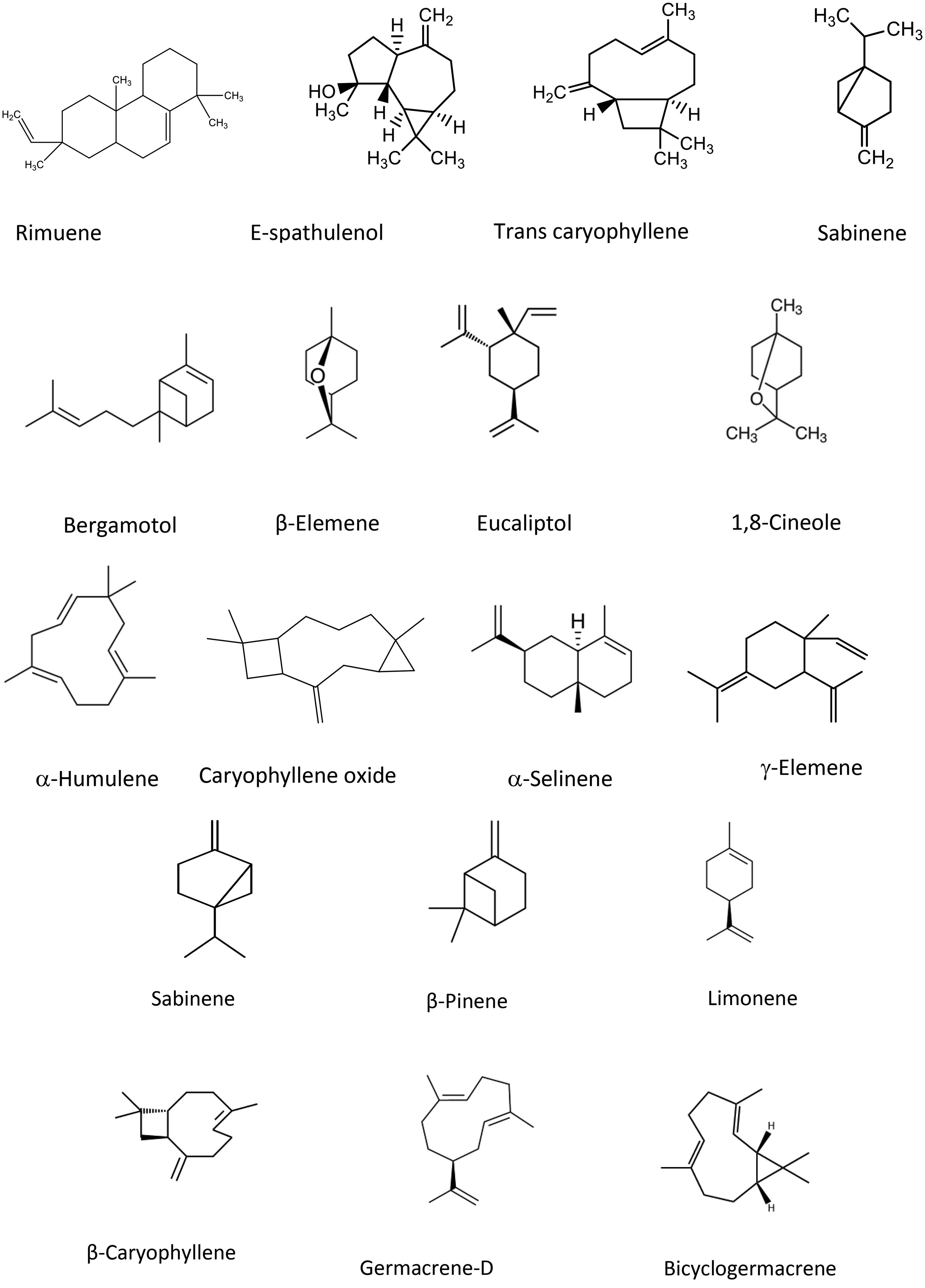
H. suaveolens contains two diterpenoid chemicals: suaveolic acid and suaveolol. These substances have a strong cytotoxic effect and prevent other plants from growing next to their clusters. 24 In addition, H. suaveolens contains some important bioactive compounds such as triterpene and triterpenoid substances such as acetylenic acid, oleic acid, betulinic acid, beta-sitosterol, as well as ursolic acid. 22 H. suaveolens has also been reported to yield a novel pentacyclic triterpene with therapeutic activity. 25 Pentacyclic triterpenoid, such as Ursolic acid, is also found in H. suaveolens. 26 Based on the result obtained using Gas chromatography-Mass spectrometry (GC-MS) analysis, Poonkodi et al 27 obtained important terpenoids such as alpha humulene, alpha-Selinene, Eucalyptol, Rimuene, trans caryophyllene, Caryophyllene oxide, Bergamotol, Beta-Elemene, E-spathulenol, Z-alpha trans, 1, 8-Cineole and sabinene in the essential oil of H. suaveolens (Figure 3). Their finding also showed that the aerial parts of H. suaveolens also contain important compounds like methyl rosmarinate, rosmarinic acid, genkwanin, kaempferol, quercetin, sorbi folin, apigenin and quercetin 3-O-D-glucopyranoside and the root of H. suaveolens also contain compounds such as podophyllotoxin in the plant's roots.

Important terpenoid found in the H. suaveolens. 27 .
Essential oil
H. suaveolens is a well-known plant used as a source of essential oil. 28 The essential oil extracted from the plant depends on the sources from which the plant is obtained. 25 Based on the result obtained after GC-MS analysis, Poonkodi et al 27 isolated 24 essential oil components from H. suaveolens using hydrodistilled methods. They obtained main constituents such as β-Elemene (4.25%), and Eucaliptol (3.00%), and minor constituents such as 1, 8-Cineole (4.61%), Rimuene (5.73%), E-spathulenol (7.10%), Trans caryophyllene (13.66%), and Sabinene (29.42%). Various phytochemicals, including α-caryophyllene, trans-alpha-bergamotene, gamma-elemene, caryophyllene oxide, dihydrotachysterol, retinol, α-hydroxypregeneolone, bicycle {3.1.1} hept-2-ene-216 dimethyl-6–6(4-methyl-3-pentenyl, and bicyclo{4.1.0}-3-heptene,2-isopropenyl-5-isopropyl-7,7 dimethyl extracted from the essential oil of H. suaveolens. 29 According to the research of Sharma et al, 30 GC-MS analysis of essential oil found that the leave, root, and seed of the plant are predominantly composed of monoterpenes, with the leading chemical ingredients being limonene, α-phellandrene and α-pinene as primary constituents. However, the essential oils from H. suaveolens differ in composition. According to Bayala et al, 31 the essential oil of H. suaveolens contained 58 different compounds. Major compounds found in the oil included eucalyptol, trans-caryophyllene, trans-oxide of linalol, pinene, bicyclogermacrene, germacrene-D, sabinene, and limonene (Figure 4). In other studies, the essential oil components of monoterpene hydrocarbons such as thujene, o-cymene, limonene, phellandrene, pinene, terpinene, and allo-ocimene found in leaves of H. suaveolens (Figure 4).32,33 Peerzada 34 extracted important phytochemicals from essential oils obtained from the leaves of H. suaveolens, such as 8-cineole and β-caryophyllene. In the work of Ngozi et al, 2 an important bioactive compound called terpenes from essential oils of the plant such as phenanthrene (0.72%), 1-Octen-3-ol (2.42%), α-pinene (2.04%), β-Elemene (0.6%), β-pinene (6.72%), bergamotol (0.64%) and cyclohexane (0.47%). The essential oil is derived from a leaves of H. suaveolens such as β-caryophyllene, caryophyllene oxide, phytol and α-humulene showed strong antimicrobial activity against Enterococcus faecalis, Bacillus cereus and Candida albicans done by Ogunwande. 35 in Vietnam. Tripathi and Upadhyay, 36 isolated bioactive compounds like sabinene, β-pinene, β-caryophyllene and terpinen-4-ol from H. suaveolens in India (Figure 4). In Ivory Coast Soumahoro et al, 37 found the chemical composition, such as Quercetin, propanoate, Suaveolol, β-sitosterol glycoside and 3-O-β-D-glucopyranoside quercetin, from the plant's essential oil. According to Sharma et al 38 carried out in India, phytochemicals such as camphene, β-caryophyllene, 1,8-cineole, and α-pinene were isolated from leaves of H. suaveolens. In another research work, the essential oil extracted from the leaves of H. suaveolens contained important bioactive compounds such as α-phellandrene 1%, limonene 3.1%, camphene 5%, trans-α-bergamotene 7.7%, abietatriene 3.9%, kaurene 2.7%, bicyclogermacrene 6.5%, spathulenol 7.0%, β-elemene 10.4%, and β-caryophyllene 26.0%. 39 Another study from Indonesia found that the chemical makeup of the essential oil of H. suaveolens contains significant amounts of α-copaene, α-bergamotene, β -caryophyllene, germacrene-D, and rimuene. 28 Rana et al 40 investigated the essential oils such as abietadiene (1.01%), p-cymen-8-ol (1.76%), cis-sabinene hydrate (3.52%), terpinen-4-ol (4.88%), sabinene (14.18%), b-pinene (2.42%), spathulenol (3.14%), limonene (4.42%), b-caryophyllene (12.52%), trans-sabinene hydrate (1.33%), caryophyllene oxide (10.50%), abietatriene (6.42%), and α-terpinolene (2.75%) from mature blooming twigs of H. suaveolens.
Seed oil
H. suaveolens is also used as a source of seed oil. In the work of Bachheti et al, 41 the seed oil extracted from the seed showed important phytochemicals in H. suaveolens seed oil. Some of the detected phytochemicals in the plant seed oils were heptacosanoic acid, linoleic acid, stearic acid, oleic acid, and palmitic acid (Figure 5) as the major constituents. This property made H. suaveolens seed oil have similar phytochemical content to other widely used oils. In the study of Maidment et al, 42 saturated fatty acids, such as stearic and palmitic acid, were found in more significant amounts than unsaturated fatty acids, like oleic and linoleic acid. In another study, a high percentage of linoleic acid content (76.13%), similar to soya bean and sunflower oils, was found in the seed oil of H. suaveolens, which is already used for edible applications. 43 In the detection of phytochemical compound study in H. suaveolens seed oil, the result showed that the plant possesses the following primary phytochemicals such as proteins, starch, and unstable oil, and secondary phytochemicals like glycosides, alkaloids, fats, saponins, and tannins. 44

Structure of some seed oils extracted from H. suaveolens. 42 .
Pharmacological Activities
Studies on H. suaveolens have shown that the plant's leaves, seeds, and roots contain varying concentrations of bioactive substances, such as flavonoids, terpenoids, alkaloids, and essential oils. These substances have been associated with pharmacological properties such as anti-inflammatory, anti-cancer, anti-diarrheal, antibacterial, wound-healing, and anti-microbe properties (Figure 6). 45

Important phytochemicals and activates of H. suaveolens.
Antioxidant Activities
The genus Hyptis, including H. suaveolens, has been studied in various parts of the world for its antioxidant activities. 46 To determine the effectiveness against free radicals, several H. suaveolens extracts were tested for their antioxidant capacity. 19 The bioactive compounds extracted from the leaves of H. suaveolens using ethanol solvent showed strong antioxidant activities based on the result obtained from free radical scavenging activities. 47 An ethanol-water (70:30) extract of the plant was shown to have antioxidant properties by Feghhi-Najafabadi et al; 48 according to their findings, the best antioxidant activity was shown with the lowest IC50 value of 2.73 mg/mL. The antioxidant capacity of H. suaveolens aqueous extract was examined using the 2,2-diphenyl-1-picrylhydrazyl (DPPH) radical scavenging test. H. suaveolens was found to possess significant bioactive components, including flavonoids, which contributed to its substantial antioxidant radical scavenging activity, as demonstrated by its IC50 value of 100 g/ml. 25 Using free radical scavenging tests such as DPPH and butylated hydroxyanisole (BHA) test, H. suaveolens essential oil was examined for its antioxidant properties. The outcome showed that H. suaveolens methanol extracts exhibit strong DPPH radical scavenging properties, with an IC50 value of 14.04 μg mL−1. They also found that the IC50 values for BHA and gallic acid were 1.15 μg mL−1 and 14.04 μg mL−1, respectively. This may have an impact on the value and use of essential oils in the food industry and related sectors, including fragrances, flavorings, and preservatives. 49 The bioactive compounds extracted from the leaves of H. suaveolens using methanol as a solvent showed strong antioxidant activities based on the results obtained using the DPPH and 2,2'-azino-bis(3-ethylbenzothiazoline-6-sulfonic acid (ABTS) methods. It was shown that the methanol extracts from H. suaveolens leaves obtained the lowest IC50 value of 14.04 g/L as compared to IC50 values of 0.4 and 1.15 g/L for gallic acid and beta-hydroxy acid (BHA), respectively; this confirmed that the plant extract possesses the most potent antioxidant activities. 50 The DPPH radical scavenging test and the ABTS free radical methods were also used by Nantitanon et al 51 to assess H. suaveolens's antioxidant potential. The result showed strong antioxidant potential with a Tetraethylammonium Chloride (TEAC) value of 65.02 M/mg and an IC50 value of 3.72 mg/ml in the ABTS and DPPH radical scavenging tests. In another study, H. suaveolens methanol extract was also shown to have antioxidant properties. 52 Based on their finding, Fluorescence recovery after photobleaching (FRAP), DPPH, and 2,2'-azino-di-(3-ethylbenzothiazoline)-(6)-sulfonic acid, ammonium salt (AzBTS-(NH4)2) tests displayed strong antioxidant activity. In other studies, Gavani and PM 50 reported that methanol extract from the leaves of H. suaveolens showed strong antioxidant activity with different IC50 values of 14.04, 1.15, and 0.4 g mL−1. In this study, researchers showed that flavonoids are responsible for the antioxidants’ activity. The antioxidant activity of a methanolic extract of H. suaveolens using the DPPH technique is also indicated by Agarwal and Varmam. 20 They confirmed that the antioxidant activities depend on the concentration of plant extract. In the work of Aye et al, 53 the antioxidant activity of isolated compounds and essential oil was assessed using the DPPH free radical scavenging assay technique. The findings imply that the main components of H. suaveolens’ gallic acid have strong antioxidant properties. Studies showed that the antioxidant properties of H. suaveolens due to free radical scavenger properties may be linked to hepatoprotective and cytoprotective advantages. 54 H. suaveolens extract may have neuroprotective, hepatoprotective, and cytoprotective qualities because of its capability to scavenge free radicals or boost the body's antioxidant reserves.
Free radicals are unstable chemicals that can damage cells and are involved in several disorders. Antioxidants aid in defending cells against these damaging molecules. Antioxidant activity neutralizes free radicals through electron donation, which stabilizes the radicals. This procedure lessens the chance of oxidative stress, inflammation, and cell damage. 55
Anti-Inflammatory
Different studies have used H. suaveolens for its anti-inflammatory properties. For instance, Machado et al 56 reported that the ethanol extract of H. suaveolens has been used to stop the inflammatory process. In another study, Mahesh 57 studied the anti-inflammatory activities of the essential oil of H. suaveloens and compared it to commercial products such as Diclofenac sodium. According to a study, the leaf essential oil has more potent anti-inflammatory properties than the commercial product. In addition, two diterpenes, such as methyl suaveolate and suaveolol, extracted from H. suaveloens, have anti-inflammatory properties when used to treat mouse ears with croton oil-induced dermatitis. It resulted in a dose-dependent suppression of edema. 58 The isolated bioactive compounds from leaves of H. suaveloens, such as Uric acid and a pentacyclic triterpenoid, showed solid and long-lasting anti-inflammatory properties. 59 Using the carrageenan-induced paw edema method, albino rats were used to study the effects of the H. suaveolens ethanolic extract on the inflammatory response. The results showed strong anti-inflammatory characteristics. 47 Grassi et al 58 studied the anti-inflammatory of suaveolol and methyl suaveolate for the first time by preventing mouse ear dermatitis caused by croton oil. The result showed that the two substances displayed dose-dependent topical anti-inflammatory activities, almost identical to the reference drug, indomethacin. Using the carrageenan-induced paw edema method, albino rats’ inflammatory response was studied in relation to the effects of an ethanolic extract of H. suaveolens. When comparing the extract to the reference medication, ibuprofen, a significant anti-inflammatory effect was seen. Antioxidant investigations of the ethanol extract and its fraction showed potent free radical scavenging activity using a nitric oxide-induced free radical test, confirming its anti-inflammatory characteristics. 25 Shirwaikar et al 60 investigated H. suaveolens anti-inflammatory effect for its wound healing activities utilizing the incision, excision, and dead space wound models in ether-anesthetized Wistar rats. Santos et al 61 examined the anti-nociceptive properties of the aqueous extract of H. suaveolens leaves in mice using chemical and thermal nociception paradigms. Following oral administration of an aqueous extract at doses of 100, 200, and 400 mg/kg, washing induced by acetic acid reduced early-phase licking activity in the formalin test but prolonged reaction time in the hot-plate test.
Various mechanisms can be employed to achieve anti-inflammatory actions. Many anti-inflammatory substances function by preventing pro-inflammatory mediators such as prostaglandins, chemokines, and cytokines from being produced or from acting. Certain anti-inflammatory drugs can control the immune system and lessen inflammation. 62 It is well-recognized that oxidative stress plays a role in inflammation. Scavenging free radicals and lowering oxidative damage activities reduce inflammation through decreasing oxidation. 55 Several enzymes, including lipoxygenase (LOX) and cyclooxygenase (COX), are essential for synthesizing inflammatory mediators. Attenuating these enzymes can aid in the reduction of inflammation. Certain anti-inflammatory drugs target particular signaling pathways implicated in inflammation to lessen the inflammatory response, such as the Mitogen-activated protein kinases (MAPK) or Nuclear factor kappa B (NF-κB) pathways. 63
Gastroprotective
H. suaveolens is used as a remedy for inflammation, infection, and stomach ulcers in many parts of the world. For instance, Jesus et al 64 used a hexane fraction and an ethanolic extract to investigate the gastroprotective properties of H. suaveolens. Plant extracts effectively reduced the stomach lesions caused by all ulcerogenic agents. Based on research by Takayama et al, 9 the ethanolic and aqueous extracts of H. suaveolens and the essential oil from H. spicigera have shown a gastroprotective effect. They showed that sulfhydryl groups play a role in the gastroprotective mechanism of action. Vera-Arzave et al 13 demonstrated the gastroprotective properties of the hexane-isolated molecule known as suaveolol. The findings indicate that the hexane extract exhibited protective efficacy at dosages ranging from 10% to 70% between 10 and 100 mg/kg. H. suaveolens has been shown to have gastroprotective properties against acute gastric ulcer models. These properties are associated with cytoprotective pathways. 64 According to studies by Jesus et al, 64 phytochemicals such as betulinic acid, oleanolic acid, and ursolic acid have demonstrated various biological effects, including antiulcer, anti-inflammatory, and antioxidant properties. According to studies conducted on the herb H. suaveolens, an ethanolic extract of the plant aided in the healing of duodenal ulcers and prevented rats from developing experimentally induced duodenal ulceration. 65 According to Britto et al, 66 the aqueous extract of H. suaveolens showed antiulcer efficiency by promoting duodenal ulcer healing and avoiding duodenal ulceration caused by cysteamine hydrochloride in rats. Using an ethanol-induced stomach ulcer experimental model in rats, Vera-Arzave et al 13 discovered the active chemical responsible for the gastroprotective action of H. suaveolens. According to the findings, the hexane extract exhibited about 70% protective action at dosages ranging from 10 to 100 mg/kg. Furthermore, the molecule suaveolol extracted from H. suaveolens was found to be one of the active gastroprotective agents. The gastroprotection levels of rats treated with this drug at 3, 10, 30, and 100 mg/kg were 12.6, 21.3, 39.6, and 70.2%, respectively.
Insecticidal and Repellant
Researchers showed that H. suaveolens has been used as an insecticidal and repellant in different research studies. The bioactive compounds extracted from essential oil were obtained from H. suaveolens
Antimicrobial Activity
Many scientific studies have confirmed that H. suaveolens has been used for antimicrobial properties. Important bioactive compounds such as flavonoids, phenolic compounds, and essential oils isolated from H. suaveolens have potent antibacterial properties against pathogenic gram-positive and gram-negative bacteria, such as Vibrio vulnificus, Lactobacillus plantarum, E. faecalis, Salmonella typhi, Pseudomonas aeruginosa, Staphylococcus aureus, and Escherichia coli72,73 However, due to the outer hydrophilic membrane in the Gram-negative bacteria, the antibacterial effectiveness of both flavonoids and phenolics found in H. suaveolens is more prominent in Gram-positive than Gram-negative bacteria. 51
Investigations were conducted into the antibacterial qualities of H. suaveolens volatile oil against a range of bacteria and fungi responsible for dermatological disorders. It was reported that the volatile oil of H. suaveolens prevented the growth of some fungus and bacteria. 74 Asekun et al 49 conducted a study that demonstrated the antibacterial activity of H. suaveolens leaf essential oil at a concentration of 5 mg/ml against gram-positive and gram-negative bacteria. The result showed that Bacillus subtilis, Micrococcus luteus, S. aureus, Escherichia coli, and P. aeruginosa are highly inhibited by plant extract. A study conducted by Mondal et al, 75 showed that in comparison to M. luteus and A. niger, H. suaveolens exhibited the strongest antibacterial and antifungal activities. According to Moola et al, 29 the essential oil of H. suaveolens showed antioxidant and larvicidal activity. According to the GC-MS, they came to the conclusion that the essential oil against Aedes aegypti performs as promisingly as larvicides. The hydro-distilled essential oil of fresh H. suaveolens leaves showed significant antibacterial effectiveness against Mucor sp. compared to ketoconazole. 39 In a comparison between H. suaveolens and A. galangal, the antimicrobial activity of the former revealed minimal inhibitory dose (MID) values of 1:80, 1:80, 1:20, 1:80, 1:160, and 1:160 against Streptococcus pyogenes, Pasteurella multocida, E. coli, P. aeruginosa, Erysipelothrix rhusiopathiae, Streptococcus suis, and S. aureus, respectively. 76 Research on the antifungal properties of H. sauveolens leaves shows that 95% ethanol extracts showed antifungal activities with a value of 2.39% w/w based on the research done by Sharma et al 25 However, It has also been shown that H. suaveolens oil has stronger antifungal effects than antibacterial ones. The antifungal activity of H. suaveolens oil in a 20% ethanolic solution was higher than that of 4% phenol, but it was comparable to 2% benzoic acid, 6% boric acid, and 5% salicylic acid. The oil was more effective against gram-positive bacteria than gram-negative bacteria, especially P. aeruginosa and E. coli. This might be because the hydrophilic outer membrane protects the gram-negative bacteria and blocks the essential oil from passing through.. 74 The effectiveness of H. suaveolens leaf essential oil as an antifungal against Mucor sp., Fusarium moniliforme and Saccharomyces cerevisiae, was assessed in a different study. The results demonstrated that the oil exhibited antifungal properties against F. moniliforme and Mucor sp. 39 The essential oil isolated from H. suaveolens also showed inhibited growth of C. albicans,, 77 Aspergillus fumigatus, 78 M. luteus, 75 and A. niger.38,78 Mbatchou et al 77 showed that the bioactive compounds present in H. suaveolens possess antifungal activities against A. niger, C. albicans, Cryptococcus, and Fusarium species. The result also showed strong antibacterial activities against bacterial strains such as E. coli, Klebsiella pneumoniae, S. aureus, P. aeruginosa, and S. typhi.
The essential oil from the leaves of H. suaveolens, in Brazil, exhibited anti-Aspergillus properties with minimum inhibitory and minimum fungicidal concentrations of 40 and 80 L/mL, respectively. A. fumigatus and Aspergillus parasiticus mycelial growth was severely reduced by the essential oil at 80 and 40 L/mL for 14 days. 78 Another study by Bachheti et al 79 reported the antimicrobial activity of seed oil of H. suaveolens. The seed oil shows antibacterial activity against Candida tropicalis, P. aeruginosa, and L. plantarum with values of 8.11, 10.22, and 10.92 mm, respectively. Samrot et al and Prasanna et al17,80 support the antibacterial activity test of H. suaveolens; based on their result, four bacteria (K. pneumonia, S. aureus, E. coli, and Pseudomonas aeruginosa) and three fungi (C. albicans, Rhizopus stolonifer, and Aspergillus) were used to test the antimicrobial effects of various solvent extracts of H. suaveolen. The methanol extract was efficient against all five of the tested microorganisms. However, no inhibition zone bacteria were detected against C. albinos, S. aureus, or P. aeruginosa in the chloroform extract of plant material—the bioactive chemicals produced from H. suaveolen exhibit antibacterial properties. The primary antibacterial mechanisms are as follows: bacterial metabolism is inhibited, bacterial cell wall construction is inhibited, bacterial metabolism is prevented, and the production of proteins and nucleic acids is blocked. 81
Antidiarrheal
More than five million children under the age of five die from severe diarrheal infections every year, making diarrhea one of the main reasons of the high mortality rate in underdeveloped nations. Each year, there are between three and five billion instances of diarrhea. 82 This condition is responsible for about five million fatalities. 83 It is widespread in crowded living situations mixed with inadequate cleanliness, and it is a significant factor in undernourishment and a cause of rapid dehydration in young children and the elderly. 84 In a mouse experimental model of castor oil-induced diarrhea, Shaikat et al 85 reported research on the antidiarrheal properties of ethanol extract. The extract had a significant (P = 0.010) and dose-dependent inhibitory impact on castor oil-induced diarrhea when it was administered orally at 250 and 500 mg/kg. Their results showed that oral administration of an ethanol leaf extract of H. suaveolens to mice significantly reduced the frequency of diarrheal episodes and the length of time it took for diarrhea to start.
Antiplasmodal
Malaria can be traditionally treated with H. suaveolens. 86 Different experimental studies were conducted scientifically to evaluate H. suaveolens’ antiplasmodal activities. A study showed that, under in vitro circumstances, petroleum ether preparation of H. suaveolens leaf extracts prevents the growth of Plasmodium falciparum. This antiplasmodial activity was due to an important diterpenoid in it. 87 In vitro cultivation of P. falciparum in erythrocytes revealed that dehydroabietinol, a compound derived from H. suaveolens, inhibited growth. However, Transmission electron microscopy (TEM) revealed that erythrocytes exposed to dehydroabietinol underwent dose-dependent spherostomatocytic form transformation with concurrent endovesicle formation. 88 A petroleum ether extract of H. suaveolens leaves was later found to inhibit 13-epi-dioxiabiet-8(14)-en-18-ol, an abietane-type diterpenoid endoperoxide. This compound later showed higher antiplasmodial properties with IC50 value of 0.1 g/ml. Due to the conversion of discocytes into stomatocytes, H. suaveolens’ antiplasmodial component dehydroabietinol demonstrated its action. 3 It was also discovered that the A. egypti mosquito larvae were negatively impacted by the ethanolic extract of H. suaveolens. 25
Wound-Healing
Different studies indicate that H. suaveolens have been used in wound-healing activities. For instance, H. suaveolens extracts in alcohol, chloroform, ether, and petroleum increased wound healing properties by increasing hydroxyproline content, enhancing granuloma cell antioxidant enzyme levels, and free radical scavenging action. 89 Shirwaikar et al 60 investigated H. suaveolens anti-inflammatory effect through studying its wound healing activities utilizing the incision, excision, and dead space wound models in ether-anesthetized Wistar rats. The hydroxyproline content, dry granuloma weight, wound contraction, granuloma breaking strength, and epithelization time significantly improved. However, the rapid wound healing activity might be due to the plant's capacity to scavenge free radicals and the higher concentration of antioxidant enzymes in granuloma tissue. Flavonoids and triterpenoids in H. suaveolens have been linked to the plant's ability to heal wounds. 89 These substances have astringent and antibacterial qualities that may be behind the wound's contraction and accelerated epithelialization rate.
Anti-Cancer
Cancer is a category of illnesses that cause uncontrolled cell division, resulting in masses of abnormal cells. It results from a change (mutation) in genetic makeup that causes unregulated cell division. 90 Modern medicine offers a variety of treatment alternatives, but they all have significant adverse effects. These include hormone suppression, immunotherapy, radiation therapy, chemotherapy, and monoclonal antibody therapy 45 In One study, using varied essential oil concentrations (18.5-300 g/ml), the essential oil was examined for its anticancer efficacy against the Human Breast Cancer Cell Line (MCF-7) by 3-[4,5-dimethylthiazol-2-yl]-2,5 diphenyl tetrazolium bromide (MTT) test. The result showed that the activity of essential oil against a cell line depended on concentration. The MCF-7 cell line's IC50 value was 90.6 g/ml. This could be a result of significant terpenoid content. 27 By decreasing the activity of the anti-apoptotic protein Bcl2, H. suaveolens ethanolic extract accelerates the apoptosis process. 91 Ursolic acid is an effective anticancer drug because it modulates mitochondrial metabolism by different pathways, causing reactive oxidative species (ROS) formation that destabilizes mitochondrial membrane potential and activates the p53 pathway, which causes cancerous cells to undergo apoptosis. 92 Ursolic acid causes cancer cells to undergo a caspase-dependent process of apoptosis. 93 Numerous signaling molecules implicated in cancer metastasis, angiogenesis, cellular transformation, and cell proliferation can be targeted by ursolic acid.94,95 In cancerous cell lines, ursolic acid and other triterpenoids induce cell cycle arrest by selectively targeting a carcinogenic enzyme for proteasome destruction. 96 For this reason, ursolic acid and its derivatives can be used as potent anticancer agents.
Antifertility
A study showed that petroleum ether, alcohol, or water extraction of the leaves of H. suaveolens has an anti-fertility action (Table 1), especially the alcoholic extracts, which have been found in studies to have 100% anti-fertility action. 25 Another study examined how alcohol, petroleum ether, and aqueous preparations of H. suaveolens affected the fertility of pregnant rats. The result demonstrated that the alcohol-based extracts of H. suaveolens (leaves) at 150 mg/kg and 125 mg/kg showed 100% anti-fertility efficacy. The best time to take H. suaveolens during pregnancy has yet to be determined by further investigation. Hydrocarbon ether, alcohol, and aqueous extract of H. suaveolens (leaves) were tested for their anti-zygotic, blastocystotoxic, anti-implantation, and early abortifacient effects in female albino rats. The result showed that the alcoholic extract inhibited conception at 125 mg/kg. 97 In order to prevent or decrease an individual's fertility, antifertility actions can include hormonal modulation, barrier techniques, sperm function suppression, ovulation inhibition, interference with implantation, and permanent sterilization. 98
Pharmacological Activities of Different Parts of Hyptis suaveolens.

Anthelmintic Activities
A different study showed that anthelmintic medications were applied to the H. suaveolens plant. 99 A research finding indicated that the presence of some metabolites such as alkaloids, flavonoids, essential oils, phenols, saponins, terpenes, and sterols in H. suaveolens possess a plant to have good anthelmintic properties. 100 Researchers studied the anthelmintic properties of ethanol-dissolvable concentrates made from H. suaveolens seeds against Pheritima posthuma. The preliminary data clearly shows that at 75 mg/ml, the unrefined ethanolic concentrates of H. suaveolens seeds exhibited strong anthelmintic activity. At this concentration, the worms’ times of loss of motion and death were noted. This is due to important bioactive compounds such as glycosides, tannins, unstable oils, starch, saponins, proteins, fats, and alkaloids. 44 An in vitro anthelmintic activity of whole plant extracts of H. suaveolens has been investigated by Nayak et al 101 In their study, Pheretimaposthuma and Ascardiagalli examined the effects of the plant's ethanol and aqueous extracts on the adult Indian earthworm, using piperazine citrate as a positive control and distilled water as a negative, based on the duration of the worm's paralysis and time of death, at various concentrations of (25, 50, and 100 mg/ml. The result showed that the highest concentration of 100 mg/ml of H. suaveolens extract was found to have strong anthelmintic action. In another test of anthelmintic activities, aqueous and methanol extracts of H. suaveolens were subjected to an anthelminthic test against P. posthuma. The phytochemical screening findings revealed phenols, tannins, terpenoids, cardiac glycosides, alkaloids, flavonoids, sphenoids, phytosterols, and fat and oil metabolites. The result demonstrated that P. posthuma was susceptible to the anthelminthic action of the methanol and aqueous extracts. The methanol extract of H. suaveolens displayed a more potent anthelmintic action than P. posthuma. 102
Anti-Hyperglycemic Activity/Anti-Diabetic Activity
Anti-hyperglycemic activity, also known as anti-diabetic activity, is the metabolic error that causes blood glucose concentrations to rise as a result of insufficient or insufficient pancreatic hormone insulin synthesis, which leads to diabetes mellitus. Patients with diabetes who are insulin deficient experience several problems, including an accumulation of lipids (triglycerides and cholesterol). The methanolic extract derived from H. suaveolens leaves demonstrates anti-hyperglycemic effects in diabetic rats caused by streptozotocin. 103 The leaves of H. suaveolens have shown anti-hyperglycemic efficacy using a streptozotocin paradigm. To examine the activity, the plant extract (250 and 500 mg/kg) was given to diabetic patients orally. The result showed that, compared to diabetic rats, it demonstrated a significant decrease in blood glucose in diabetic animals treated with H. suaveolens extract at various doses. 103 When diabetic rats were given varying doses of H. suaveolens extract, their levels of total cholesterol, triglycerides, low-density lipoprotein, and very low-density lipoprotein were lowered in comparison to their control values. The findings demonstrate that H. suaveolens extract has intense antihyperglycemic action, which may be explained by its stimulatory effects on glucose consumption and the antioxidant enzyme. 103 One potential mechanism of action for plant preparations to produce an anti-hyperglycemic response could be the reduction of endogenous glucose synthesis.
Use of Hyptis suaveolens as Nanoparticle Synthesis
Materials research has focused much attention on “green” synthesis as a stable, durable, and sustainable way to produce various materials and nanomaterials, including metal/metal oxide nanoparticles, hybrid materials, and bioinspired materials.110–112 Plant extract biomolecules can green synthesize metal ions into nanoparticles in a single step. It is possible to swiftly and quickly carry out this naturally occurring conversion of a metal ion to a base metal at room temperature and pressure. The synthesis of nanomaterial using plant extract is green and environmentally friendly.113,114 Table 2 shows different medicinal uses of nanoparticles synthesized using H. suaveolens. Mostly, the leaves of the plant were used to synthesize silver nanoparticles (AgNPs) for nanomedicine application.
Nanomedicine with the use of H. suaveolens Against various Human Ailments.

A study was conducted to synthesize AgNPs by biologically reducing silver nitrate, using H. suaveolens leaf extract as the reducing agent. Fourier transform infrared (FTIR), Ultraviolet-visible (UV-Vis), x-ray diffraction (XRD), and electron microscopic analyses are used to characterize the produced AgNPs. The outcome demonstrated the production of spherical nanosilver particles that ranged in size from 2 to 85 nm. The results also showed that the produced AgNPs effectively treat candidal infections. 115 H. suaveolens was processed in water for this investigation, and the resulting extracts were used to create copper nanoparticles (CuNPs). Selected area electron diffraction (SAED), TEM, and XRD analyses revealed the production of spherical-shaped CuNPs with average diameters of 7.2 nm. The nanoparticles demonstrated outstanding antibacterial effectiveness against bacteria and fungi, even at the lowest recorded concentration. 116 Elumalai et al 108 investigate the environmentally friendly synthesis of AgNPs by employing aqueous leaf extract from H. suaveolens as a reducing agent and evaluating the larvicidal properties of the resultant nanoparticle. The AgNPs produced were identified by performing UV, FTIR, XRD, FESEM, and HRTEM characterization techniques. Their result showed that the nanoparticles produced possessed a spherical shape with 5 and 25 nm average diameters. In a larvicidal bioassay, synthesized AgNPs made from the extract of H. suaveolens at a concentration of 10 mg/L killed A. aegypti, C. quinquefasciatus and A. stephensi.
Lateef et al 117 demonstrated that biomolecules like phenolics, proteins, carbohydrates, and esters aided the formation of H. suaveolens -AgNPs with a maximum of 420 nm size and spherical shape. The produced AgNPs effectively inhibited the growth of fungi and multidrug-resistant bacteria by 75.22%–100% and 73.33%–100%, respectively. It also efficiently prevented blood from coagulating. The antioxidant and antibacterial properties of AgNPs produced from H. suaveolens leaves were studied by Bhave et al 118 using AgNO3 solution combined with plant extracts. They informed us that plant-based phytochemicals are used as reducing and capping properties of AgNPs. The synthesized nanoparticles were examined using FTIR, TEM, Dynamic Light scattering (DLS), and UV-vis. In another study, cytotoxicity against cancer cells test was performed with AgNPs utilizing H. suaveolens aqueous leaf extract as a green, effective, and environmentally beneficial production of nanoparticles method. The development of AgNPs with spherically shaped particles between 20 and 80 nm in size were produced. 119 The result also showed that the produced AgNPs using H. suaveolens are effective for cytotoxicity against cancer cells test. When compared to AgNPs from leaf extracts of other plant species, such as Andredera cordifolia, the cytotoxicity of H. suaveolens AgNPs against human prostate cancer cell (PC-3 cells) was higher. 119
CuNPs with cytotoxic and antibacterial qualities were also synthesized from H. suaveolens. Plant extracts contain phytochemicals that give the nanoparticles antibacterial and other medicinal properties. Images obtained using TEM revealed that the synthesized CuNPs had an average diameter of 7.2 nm and were spherical in shape. The outcome revealed that the nanoparticles exhibited strong antibacterial activity against bacteria and fungus even at the lowest assessed dosage. 116
This study aims to manufacture AgNPs through the biological reduction of silver nitrate using H. suaveolens leaf extract as a reducing agent. Electron microscopy and spectral (UV-Vis, XRD, and FTIR) investigations were utilized to characterize the generated AgNPs. The result showed that a microscopic investigation revealed scattered spherical nanosilver particles in the 2–85 nm range, while XRD tests demonstrated the particles’ crystalline structure. AgNPs that were biosynthesized were tested for their anticandidal action against two strains of C. albicans. AgNPs had minimum inhibitory concentrations (MIC) of 0.27 μg/ml and 0.97 μg/ml against the two clinical pathogens. 115 H. suaveolens silver nanoparticles produced from leaves and calluses have antioxidant, antimetastatic, and apoptotic properties. AgNPs generated from leaves had an IC50 value of 74.22 µg/ml, whereas those derived from calluses had an IC50 value of 74.66 µg/ml. AgNPs generated from leaves and callus were investigated using the metastatic mammary adenocarcinoma (MDA-MB-231) cell line for their antimetastatic potential. 120
Conclusion
In conclusion, the presence of bioactive substances such tannins, alkaloids, and flavonoids in the leaves, stems, and roots of H. suaveolens (Lamiaceae) has shown considerable therapeutic promise for different type diseases. These compounds contribute to the plant's wide range of pharmacological properties, including antidiabetic, antifungal, anthelmintic, antihyperglycemic, antiplasmodial, wound healing, antioxidative, anticancer, antifertility, anti-inflammatory, and cytotoxic activities. Additionally, nanoparticles prepared from H. suaveolens extracts have shown biological activity against various human ailments, further supporting its therapeutic potential. However, despite extensive studies on its essential oils, many specific components responsible for these effects remain unexplored. Therefore, further research is needed to extract, identify, and characterize novel compounds from different parts of the plant to fully understand its medicinal potential and enhance its application in drug development.
Footnotes
Acknowledgments
The authors thank the Debre Tabor University for providing the facility during this review.
Authors’ Contributions
LA and RKB drafted the review. AB, WKA, and SSB prepared the required tables and figures, provided guidance during the idea's development, and wrote and revised the manuscript. The authors read and approved the final manuscript.
Data Availability
The data used to support the findings of this study are included in the article.
Declaration of Conflicting Interests
The authors declared no potential conflicts of interest with respect to the research, authorship, and/or publication of this article.
Funding
The authors received no financial support for the research, authorship, and/or publication of this article.
