



Abstract
Introduction
In recent years, related studies of BHD have shown that it has the potential to treat cerebral ischemia-reperfusion, 1 atherosclerosis, 2 diabetes, 3 hyperlipidemia, 4 spinal cord injury 5 and prevent pulmonary fibrosis. 6 Fu 7 et al extracted the glycoside in Buyang Huanwu Decoction, and the anti-atherosclerosis ability of the glycoside was basically the same as that of BHD. Several unpublished studies from our laboratory have shown that BHD has different therapeutic effects on pulmonary fibrosis, hypercholesterolemia and nonalcoholic fatty liver disease after being divided into six parts: precipitated components (PC part), distilled water elution components (DW part), 30% ethanol elution components(30% part), 50% ethanol elution components(50% part), 75% ethanol elution components(75% part), 90% ethanol elution components(90% part). Such as the PC part in mixture with the DW part can improve the energy metabolism of erythrocyte membrane, 8 the 30% and 50% part can be prevention and treatment of pulmonary fibrosis in rats, 9 75% parts can reduce the qi deficiency of blood stasis model mice blood viscosity, 8 the cholesterol content of the hyperlipemia model in mice 10 and the Oleic acid-induced lipid accumulation in hepatocytes. 11 It can be seen from the above literature that simple separation of the components of BHD with different concentrations of ethanol can achieve the purpose of treating different diseases. Therefore, we chose to perform compositional analysis of the compounds in each group to identify the components with pharmacological activity in each group and provide theoretical basis for subsequent experiments.
Materials and Methods
Drugs and Reagents
Drugs
The composition of each pair of Buyang Huanwu decoction is as follows: Astragalus membranaceus (Fisch.) Bunge 120 g, Angelica sinensis (Oliv.) Diels 6 g, Paeonia lactiflora Pall 5 g, Ligusticum chuanxiong hort 3 g, Carthamus tinctorius L. 3 g, Prunus persica (L.) Batsch 3 g, Pheretima aspergillum (E. Perrier) 3, which were purchased from the First Hospital of Heilongjiang University of Chinese Medicine. It was identified by associate Professor Wu Junkai of Heilongjiang University of Chinese Medicine as the genuine medicinal material.
Reagent
Distilled water, absolute ethyl alcohol, methanol (Fisher Chemical, HPLC,206408), acetonitrile (Fisher Chemical, HPLC, 205303), Formic acid (CNW, HPLC, 206840), Water (Fisher Chemical, LC-MS,206866), Isopropanol (Merck, HPLC, 01377055/AH323-4), 2-chloro-L-phenylalanine (Adamas-beta, ≥ 98%).
Instrument
Circulating water vacuum pump (Gongyi Yuhua Instrument Co., LTD, SHB-111), rotary evaporator (Shanghai Yarong Biochemical Instrument Factory, RE-52 series), Lyophilizer (Gardner Denver Thomas GmbH), NewClassic MS electronic balance (Mettler Toledo, NewClassic MF MS105DU), freezing Centrifuge (Eppendorf, Centrifuge 5424R), Freezing Centrifuge (Eppendorf, Centrifuge 5430R), temperature controlled ultrasonic cleaner −10L(SBL-10TD, Ningbo Xinzhi Biotechnology Co., LTD), Multi-sample freezing grinder (Wonbio-96c, Shanghai Wanbo Biotechnology Co., LTD), Table rapid centrifugal concentration dryer (Taicang Huami Biochemical Instrument Factory, LNG-T88), nitrogen purging instrument (Shanghai Jingxin Industrial Development Co., LTD, JXDC-20), UHPLC liquid chromatography system (Thermo Scientific, Vanquish Horizon system), mass spectrometer (Thermo Scientific, Q-Exactive HF-X).
Methods
Sample Preparation
Weigh and mix 21 portions of medicine. Soak in 21L distilled water for 30 min and then heat and cook for 90 min. Strain, add 21L of distilled water to the residue and boil for 60 min. Mix filtrate twice and concentrate to 3L. Add ethanol to the solution and stir until the final ethanol concentration is 80%. Let it sit overnight. Supernatant and precipitation are separated the next day. Repeat three times. Name the precipitate “precipitated part”. The supernatant concentrated and passed through the macroporous resin, we get the distilled water elution components (DW part), 30%/50%/75%/90% ethanol elution components(30%/50%/75%/90% part). All products are freeze-dried and stored.
Accurate said samples from 20 ± 5 mg to 2 mL centrifuge tube, add grinding beads 6 mm in diameter and 400 μL extract. The extract was 80% (v/v) aqueous methanol solution containing four internal standards (0.02 mg/mL 2-chloro-L-phenylalanine, etc). The frozen tissue was ground for 6 min (−10 °C, 50 Hz), extracted by low temperature ultrasound for 30 min (5 °C, 40 KHz), left at −20 °C for 30 min, centrifuged (13000 g*15 min, 4 °C), and the supernatant was taken for analysis.
Instrument Condition
Column: ACQUITY UPLC HSS T3 (100 mm × 2.1 mm i.d., 1.8 µm; Waters, Milford, USA); Mobile phase A consisted of 95% water +5% acetonitrile (containing 0.1% formic acid), and mobile phase B consisted of 47.5% acetonitrile +47.5% isopropanol +5% water (containing 0.1% formic acid); The column temperature was 40°C; The injection volume was 3 μL. An electrospray ion source (ESI) was used; The MS signals were collected by positive and negative ion scanning modes (m/z range 70-1050), respectively. The main MS parameters were as follows: sheath gas flow rate was 50 arb; The auxiliary gas flow rate was 13 arb. The heating temperature is 425 °C; Capillary temperature is 325 °C; The electrospray voltage in positive mode was 3500 V, and the electrospray voltage in negative mode was −3500 V. S-Lens voltage is 50; Collision energy is set to 20 eV, 40 eV and 60 eV; The resolution is 60000.
Composition Identification
The raw data were imported into ProgenesisQI (WatersCorporation, Milford,USA) for baseline filtering, peak identification, integration, retention time correction, peak alignment, etc Finally, the data matrix containing retention time, mass-to-charge ratio and peak intensity information was obtained. The MS and MS/MS mass spectrum information were matched with the metabolic database. The MS mass error was set to less than 10 ppm, and the metabolites were identified according to the secondary mass spectrum matching score. In this paper, we will mainly analyze the components with relative abundance greater than 107. Main database is the mainstream public databases such as http://www.hmdb.ca/, https://metlin.scripps.edu/, and the biological medicine company self-built database.
Comparative Analysis
Scipy(Python) (Version1.0.0) was used for sample correlation heatmap analysis. KEGG pathway (Release 2017-05-01) was used for KEGG functional pathway analysis.
Statistic Analysis
All data were processed by ProgenesisQI and summarized using Microsoft Office Excel 2016. The pie charts and bar charts were made using Microsoft Office Word 2016. The weight of the freeze-dried powder, the extraction rate and the retention time of the compound are retained to four decimal places, and the relative abundance of the compound is retained to six decimal places.
Results and Discussion
Conditions of Product Freeze-Drying
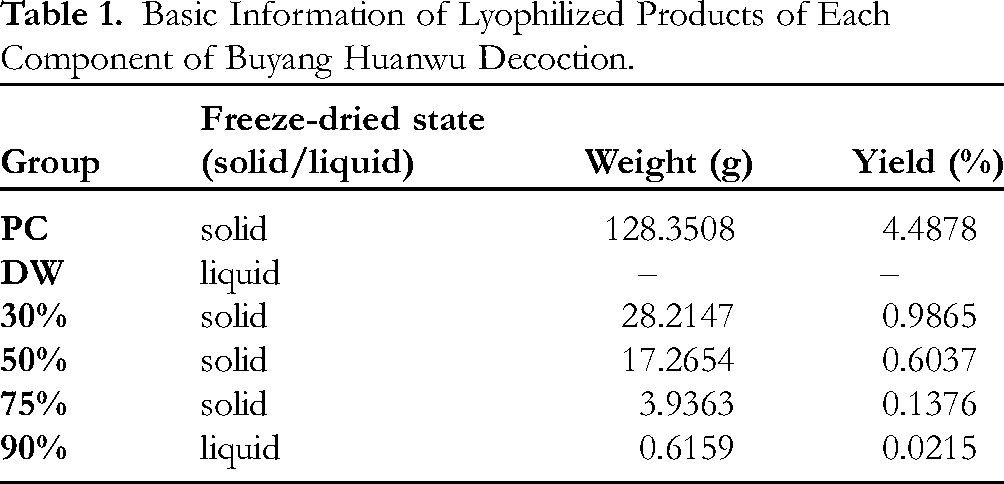
In this experiment, the decoction of Buyang Huanwu decoction was separated into six parts. Among them, the precipitated components, 30% ethanol eluting components, 50% ethanol eluting components and 75% ethanol eluting components could be lyophilized into powder, the 90% ethanol eluting components were oil-like after freeze-drying, and the water-eluting components had strong water absorption after freeze-drying. Therefore, the water-elute component was redissolved, so that the final volume was 400 mL. The weights and yields of all groups are shown in Table 1.
Basic Information of Lyophilized Products of Each Component of Buyang Huanwu Decoction.
Software Analysis
Heat map of Sample Correlation
The data analysis of the sample correlation shows the results in Figure 1, with the names of the samples on the right and bottom. Each cell represents the correlation between the two samples, and the different colors represent the relative size of the correlation coefficients between the samples.The darker the color, the more correlated the two samples are. As can be seen from Figure 1, there are strong negative correlations between the water-eluting and 50% sites, between the water-eluting and 75% sites, and between 75% and 90% sites, and between 75% and 90% sites.However, there was no strong correlation between BHD and water elution, between BHD and 30% site, between 50% and 75%, and between 50% and 90%.

Correlation between samples(BHD: Buyang Huanwu decoction; B-DW: distilled water elution components; B-PC: precipitated components; B30: 30% ethanol elution components; B50: 50% ethanol elution components; B75: 75% ethanol elution components; B90: 90% ethanol elution components).
KEGG Functional Pathways
The product information was compared with the KEGG compound database to obtain the KEGG compound ID number corresponding to the metabolites. According to the KEGG compound ID number, the specific biological pathways involved in a metabolite and the biological function classification information of the metabolite can be obtained, as shown in Figure 2. The analysis results showed that most of the compounds contained in BHD were closely related to metabolism such as amino acid metabolism, lipid metabolism and carbohydrate metabolism. Many components may have a role in different systems of the body, such as the digestive system, the nervous system, the endocrine system, the sensory system, the environmental adaptation system and the immune system. In terms of disease treatment, the obtained data show that some components of BHD are associated with cancer, drug dependence, neurodegenerative diseases, cardiovascular diseases, infectious diseases and endocrine and metabolic diseases. This is also consistent with the reports of in vivo and in vitro pharmacology related to BHD. At the same time, our results also show that a small number of components in BHD are related to environmental information processing, cellular processes, genetic information processing and drug development, suggesting that these aspects can be explored in the future.
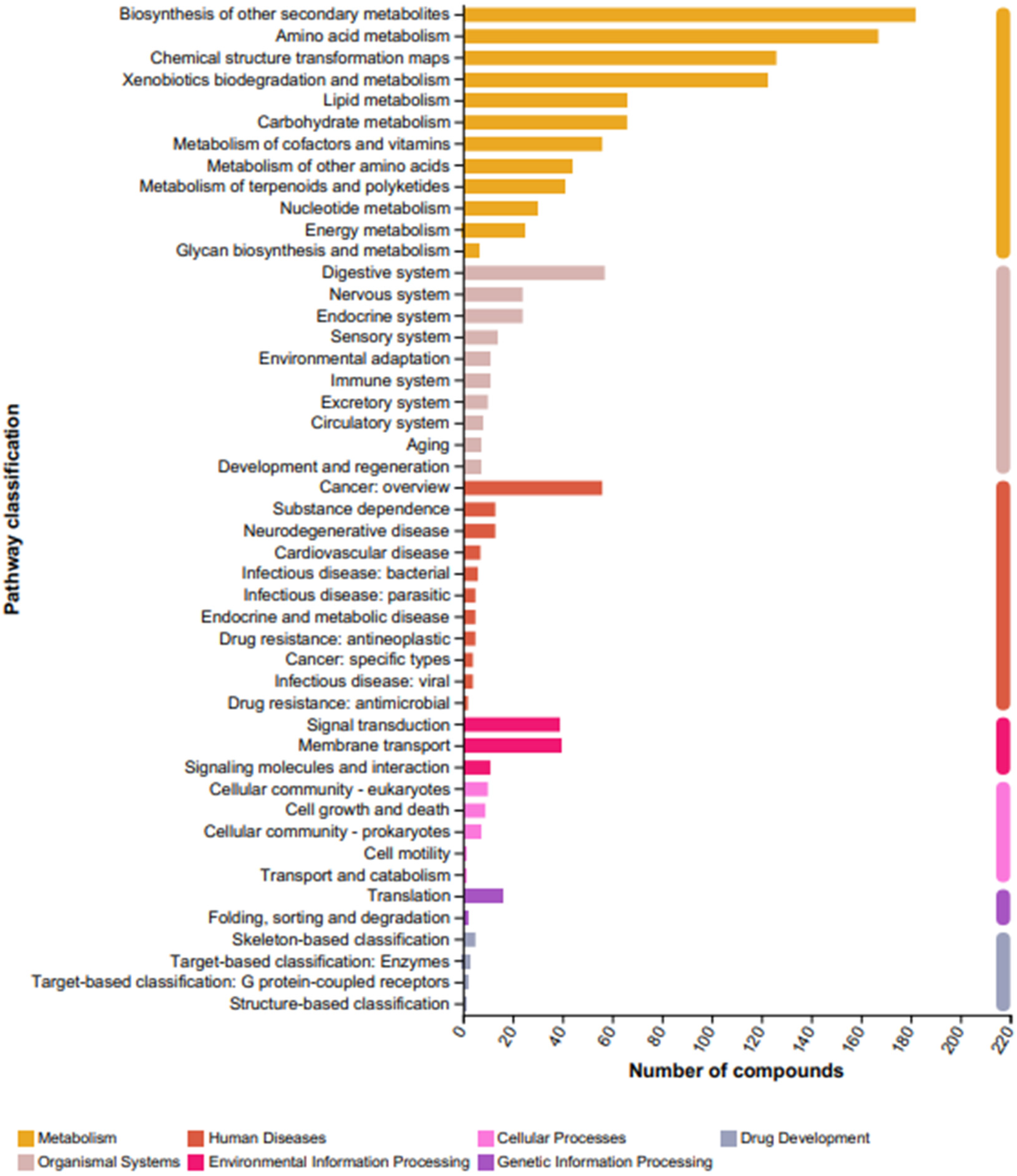
KEGG pathway of Buyang Huanwu decoction.
UPLC-MS Results
HMDB Classification
The HMDB database was used to classify and count the high-content compounds in Buyang Huanwu Decoction and each group, and the results are shown in Figure 3. The content of heterocyclic compounds and benzene derivatives in different components did not have obvious rules, and the other types of compounds were concentrated in some components. Carbohydrates, organic acids and nucleotides were mainly concentrated in the distilled water elution components. Phenylpropanoids, lipids and lignans were mainly concentrated in the 75% and 90% groups, which were less polar. Alkaloids were mainly concentrated in the low polarity 50%, 75% and 90% groups, but because the content was too low, it was not clear whether they had a stable regularity.

Comparison of the number of various compounds in each component of Buyang Huanwu decoction.
Buyang Huanwu Decoction
According to UPLC-MS and database retrieval and matching, a total of 257 compounds met the requirements and had a large abundance, of which 98 were detected in the negative ion mode and 159 in the positive ion mode. The total ion current diagram is shown in appendix. A total of 33 kinds of carbohydrate, 34 kinds of organic acids, 44 kinds of phenylpropyl and polyketones, 48 kinds of lipids, 9 kinds of nucleosides and nucleotides, 28 kinds of heterocyclic compounds, 14 kinds of benzene derivatives (including 7 kinds of phenols), 3 kinds of lignans, 4 kinds of alkaloids, and 40 kinds of other compounds were detected under the two ion modes. The proportion of various kinds of compounds is shown in Figure 4.

Types of compounds contained in Buyang Huanwu decoction.
Precipitated Components
A total of 183 compounds that met the requirements and had a large abundance were detected in the precipitate components(PC), of which 41 were detected in the negative ion mode and 142 in the positive ion mode. The total ion current diagram is shown in appendix. A total of 17 kinds of carbohydrate, 38 kinds of organic acids, 20 kinds of phenylpropyl and polyketones, 41 kinds of lipids, 8 kinds of nucleosides and nucleotides, 18 kinds of heterocyclic compounds, 12 kinds of benzene derivatives (including one kind of phenol), 1 kind of alkaloid, and 28 kinds of other compounds were detected in the two ion modes. The proportion of various kinds of compounds is shown in Figure 5.
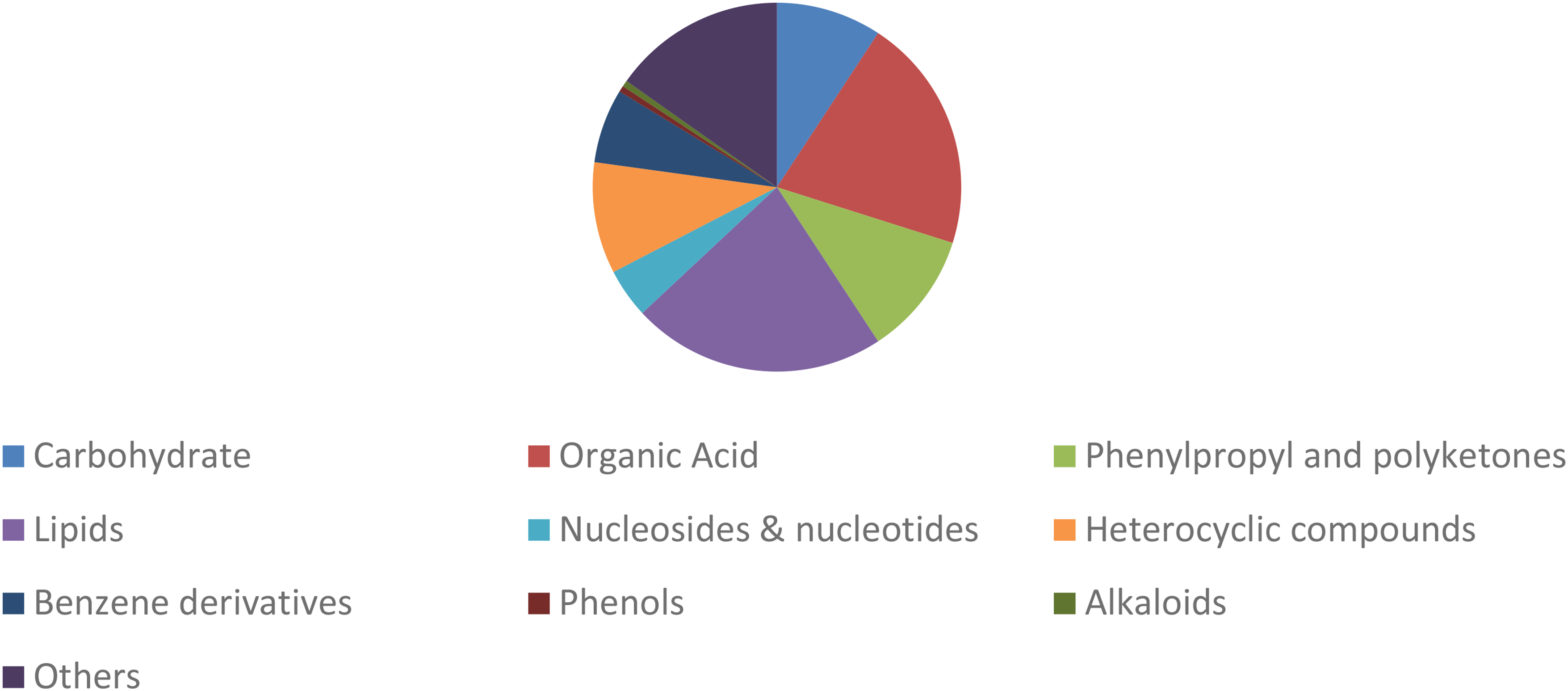
Types of compounds contained in the precipitate components.
We searched the compounds in Figure 10 and found that Formononetin, V-PYRRO/NO, Biochanin A, Citrulline and Sebacic acid have some pharmacological activities. Formononetin is a flavonoid compound. As one of the main active ingredients of Astragalus membranaceus, Formononetin has the effects of reducing atherosclerosis, 12 inhibiting liver injury, 13 protecting neurons, 14 and has antitumor activity. 15 V-PYRRO/NO is a kind of liver specific nitric oxide donor, which can reduce liver injury caused by ischemia-reperfusion, 16 alleviate hepatic steatosis,17,18 improve glucose tolerance of hepatocytes and optimize the composition of intracellular fatty acids. Biochanin A, 19 derived from Astragalus membranaceus in this prescription, is a isoflavone phytoestrogen with antibacterial, anti-inflammatory, anti-oxidation, anti-cancer, antihypertensive and lipid-lowering activities. Citrulline is an amino acid, which has clinical significance in assisting the diagnosis of rheumatoid arthritis. Studies in various laboratories have found that Citrulline has the potential of anti-inflammatory 20 and anti-cancer, 21 and can also improve renal injury and skeletal muscle atrophy in diabetic mice. 22 Sebacic acid is an even, medium-chain dicarboxylic acid. Some studies 23 have shown that oral administration of Sebacic acid can improve hyperglycemia and complications caused by hyperglycemia in diabetic patients. Citrulline and Sebacic acid are unique to the precipitating components of the above compounds.
The main active substances in the precipitated components are less diverse, but there is a high content of Formononetin. Formononetin was also detected in the other groups, indicating that its content was much higher than the adsorption capacity of the macroporous resin. It is speculated that the components in this group have undiscovered potential in the treatment of endocrine diseases (such as type II diabetes mellitus, non-alcoholic fatty liver disease and hyperlipidemia) and cardiovascular diseases (such as ischemia-reperfusion and atherosclerosis).
Distilled Water Elution Components
A total of 219 compounds that met the requirements and had a large abundance were detected in the distilled water elution component(DW), of which 67 were detected in the negative ion mode and 152 in the positive ion mode. The total ion current diagram is shown in appendix. A total of 29 kinds of carbohydrate, 59 kinds of organic acids, 19 kinds of phenylpropyl and polyketones, 33 kinds of lipids, 14 kinds of nucleosides and nucleotides, 26 kinds of heterocyclic compounds, 11 kinds of benzene derivatives (including 4 kinds of phenols), 1 kind of alkaloid, and 27 other compounds were detected in the two ion modes. The proportion of various kinds of compounds is shown in Figure 6.

Types of compounds contained in the distilled water elution components.
The content of organic acids in the elution group was significantly higher than that in the precipitation group, but the high content components were monosaccharides, disaccharides and amino acids, and there were few kinds of organic acids. Among the top 30 compounds, only V-PYRRO/NO had certain pharmacological activities. The other 99 compounds were only found in the DW group, and 8 of them were reported in pharmacological studies. Difructose anhydride III, 24 a cyclic difructose, has been shown to exhibit prebiotic effects, low cariogenicity and cholesterollowering activity. Carglumic acid is a derivative of N-acetylglutamic acid, which is approved by the FDA as a treatment for hyperammonemia. It has also been shown to inhibit the growth of liver and lung cancer cells. 25 Beta-Aminoisobutyric acid 26 can reduce non-ischemia-reperfusion injury through AMPK/Nrf-2 signaling pathway. D-Pinitol 27 is a widely studied natural product, which is known to have insulin sensitive-regulating, anti-inflammatory, anti-oxidative, anti-cancer and hepatoprotective effects. Stachydrine, a bioactive substance widely present in Chinese herbal medicine, has potential for anti-cancer28,29 and treating diseases of the cardiovascular system and central nervous system. 30 Gallic Acid is a kind of polyphenolic organic compound, which is widely found in a variety of plants. In recent years, the research on its pharmacological effects mainly focuses on anti-cancer 31 Maria 32 et al used virgin olive oil to study Hydroxytyrosyl acetate, and found that this compound has the effect of reducing cholesterol in the bile and plasma and improving the antioxidant capacity of the body. It is also speculated that the compound in this study came from the peach kernel, which has a high oil content, similar to the situation in olive oil. Filgotinib 33 is a JAK-1 inhibitor, which can regulate the signaling pathway related to JAK protein, mainly around the anti-inflammatory pharmacological action.
In general, the distilled water-eluting group has good anti-inflammatory, anti-cancer and cardiovascular disease effects, but in our previous study, the water-eluting group has high cytotoxicity and poor treatment effect on the disease model we selected. It is speculated that one of the reasons is that the high content of components in this group does not have too much pharmacological activity. The second reason is that in addition to the compounds with high content only in the DW group discussed above, there are also many toxic substances in this group, which increase the degree of oxidation and inflammation in cells and the body, and then affect the therapeutic effect of the drugs in this group.
30% Ethanol Elution Components
A total of 155 compounds that met the requirements and had a large abundance were detected in the 30% ethanol elution component, of which 63 were detected in the negative ion mode and 92 in the positive ion mode. The total ion current diagram is shown in appendix. A total of 21 kinds of carbohydrate, 26 kinds of organic acids, 19 kinds of phenylpropyl and polyketones, 19 kinds of lipids, 7 kinds of nucleosides and nucleotides, 15 kinds of heterocyclic compounds, 19 kinds of benzene derivatives (including 5 kinds of phenols), 1 kind of lignans, 1 kind of alkaloids, and 27 kinds of other compounds were detected under the two ion modes. The proportion of various compounds is shown in Figure 7.

Types of compounds contained in the 30 components of 30% ethanol elution components.
In 30% ethanol elution group, Paeoniflorin, Albiflorin, Trifolirhizin, Glycitin and other compounds were among the top 30 substances in the relative abundance. Among them, Paeoniflorin is one of the active substances of red Peony root in this prescription, and it is also the standard for measuring the quality of red peony root in the Chinese Pharmacopoeia. It has anti-inflammatory,34,35 anti-cancer, 36 antidepressant 37 and anti-pulmonary fibrosis 38 effects. Albiflorin is also one of the active substances of red peony root in this prescription, which has significant anti-inflammatory and oxidative stress relieving effects, 39 and can alleviate cerebral ischemia-reperfusion injury 40 and osteoarthritis injury. 41 Trifolirhizin, a glycoside compound, can inhibit the proliferation and migration of nasopharyngeal carcinoma cells through the PI3 K/Akt signaling pathway, 42 and induce colon cancer-related cell apoptosis through the AMPK/mTOR signaling pathway. 43 Trifolirhizin also has a therapeutic effect on mice with colitis. 44 Glycitin has therapeutic effects on osteoarthritis, 45 bone loss 46 and intervertebral disc disease 47 It can also reduce acute lung injury through NF-κB pathway and MAPKs pathway. 48 92 compounds in this group were found to have high content only in 30% ethanol eluate, of which 6 compounds had pharmacological effects. Protocatechuic Acid is a kind of natural phenolic acid, which can prevent non-alcoholic fatty liver disease by regulating intestinal flora. 49 It can prevent neurodegenerative diseases in rodents and humans. 50 Amygdalin, the signature compound of peach kernel in this prescription, has antioxidant and anti-cancer activities, 51 and can also improve pulmonary 52 and liver fibrosis. 53 Sakuranetin 54 is a flavonoid with anti-inflammatory, anti-oxidative, anti-diabetic and neuroprotective properties. Oxypaeoniflorin, a pharmacological component of red Peony root, has antioxidant effect 55 and can improve acute lung injury 56 and myocardial ischemia-reperfusion injury. 57 Coniferaldehyde can reduce the damage of articular cartilage, 58 alleviate Alzheimer's disease 59 and reduce cell apoptosis. 60 Physagulin B is a steroid compound with pharmacological effects such as anti-cancer, 61 inhibition of vascular smooth muscle proliferation and migration, 62 and alleviation of liver fibrosis. 63 Neoisoastilbin can improve acute gouty arthritis through NF-κB pathway. The anti-fibrotic effects of Paeoniflorin and Amygdalin, combined with the anti-inflammatory and anti-oxidative effects of other compounds, are consistent with previous findings in our laboratory.
Taken as a whole, the lyophilized product of 30% ethanol eluent has some potential in the treatment of cartilage and osteoarthritis due to its high content of Albiflorin, Glycitin, Coniferaldehyde, Neoisoastilbin and other bioactive components for osteoarthritis. Meanwhile, other compounds also have the ability to inhibit neurodegenerative diseases. Therefore, the therapeutic effects of this group of compounds on several typical geriatric diseases can be considered.
50% Ethanol Elution Components
A total of 199 compounds that met the requirements and had a large abundance were detected in the 50% ethanol elution component, of which 64 were detected in the negative ion mode and 135 in the positive ion mode. The total ion current diagram is shown in appendix. A total of 14 kinds of carbohydrate, 20 kinds of organic acids, 44 kinds of phenylpropyl and polyketones, 52 kinds of lipids, 18 kinds of heterocyclic compounds, 16 kinds of benzene derivatives (including 2 kinds of phenols), 3 kinds of lignans, 3 kinds of alkaloids, and 29 kinds of other compounds were detected under the two ion modes. The proportion of various compounds is shown in Figure 8.

Types of compounds contained in the 50% ethanol elution components.
Glycitin, Ononin, Isoformononetin, Calycosin, Curculigoside and other active natural products were found in the top 30 relative abundance substances in the 50% ethanol elution group. Ononin has a wide range of pharmacological activities, which can alleviate colitis, 64 endoplasmic reticulum stress, 65 osteoarthritis, 66 and has anti-cancer potential. 67 Isoformononetin belongs to flavonoids, which has anti-inflammatory effects, 68 can prevent osteoblast apoptosis 69 and prevent estrogen deficiency induced osteoporosis. 70 Calycosin, which is mainly provided by astragalus in this prescription, can mainly treat cardiovascular and cerebrovascular diseases,71,72 regulate ferroptosis 73 and apoptosis, 74 and has a certain anti-cancer effect.75,76 Curculigoside can improve osteoporosis, 77 osteoarthritis 78 and promote osteoblast differentiation. 79 A total of 88 compounds in this group were found to have high content only in 50% ethanol eluent, and 5 of these compounds had pharmacological effects. Ginkgolide A 80 has been shown to have anti-inflammatory, anti-cancer, anti-atherosclerotic and liver-protective effects. Hesperidin can fight pulmonary fibrosis, 81 protect the nervous system, 82 and fight osteoporosis. 83 Xanthotoxol 84 inhibits neuroinflammatory response and alleviates secondary brain injury after intracerebral hemorrhage. Liquiritigenin has hepatoprotective 85 and anti-cancer 86 effects. Cirsimarin 87 is a flavonoid glucoside that is effective in fighting fat accumulation.
The lyophilized product of the 50% ethanol eluent, like the 30% group, has some potential for treating cartilage and osteoarthritis. Different from the 30% ethanol eluent, which focuses on anti-inflammatory ability, the 50% ethanol eluent is more inclined to promote osteoblast differentiation by mimicking estrogen, thereby reducing bone loss and treating diseases.
75% Ethanol Elution Components
A total of 270 compounds that met the requirements and had a large abundance were detected in the 75% ethanol elution component, of which 96 were detected in the negative ion mode and 174 in the positive ion mode. The total ion current diagram is shown in appendix. A total of 19 kinds of carbohydrate, 15 kinds of organic acids, 56 kinds of phenylpropyl and polyketones, 78 kinds of lipids, 1 kind of nucleoside or nucleotide, 19 kinds of heterocyclic compounds, 25 kinds of benzene derivatives (including 7 kinds of phenols), 11 kinds of lignans, 3 kinds of alkaloids and 43 kinds of other compounds were detected in the two ion modes. The proportion of various kinds of compounds is shown in Figure 9.

Types of compounds contained in 75% ethanol elution components.
There were Calycosin, Biochanin A, Ononin, Acacetin and other bioactive components in the top 30 relative abundance substances in the 75% ethanol elution components, among which only Acacetin did not have high relative content in the other groups. Acacetin can prevent cardiovascular diseases, 88 prevent liver lipid accumulation induced by high-fat diet, 89 and also has a certain inhibitory effect on gastric cancer. 90 Another 93 compounds were only found in 75% ethanol group, many of which have been reported by pharmacological studies. For example, afzelechin 91 can alleviate lung injury, traumatic acid 92 can inhibit lipid accumulation in adipocytes, 3-Hydroxyphenylacetic acid 93 can alleviate aging-related spermatogenic dysfunction, swertiajaponin 94 can inhibit skin pigmentation, and so on. Cirsiliol 95 and Gingerol 96 have the potential to treat cancer, and Deltonin can induce apoptosis of cancer cells 97 and improve the sensitivity of cells to chemotherapeutic drugs. 98 Astragaloside III can enhance the anti-tumor response of NK cells 99 and activate TACE/ ADAM38-dependent anti-inflammatory effect in endothelial cells. 100 Astragaloside IV 101 is an important bioactive substance of Astragaloside in this prescription, and it is stipulated in the Chinese Pharmacopoeia that the quality of astragaloside should be measured as a standard. Astragaloside IV is involved in multiple pathways and plays a role in neuroprotection, anti-diabetes, liver protection and anti-cancer. Ferutinin is a phytoestrogen with antioxidant and anti-cancer pharmacological effects. 102
Acacetin and Astragaloside IV were able to protect the liver by reducing lipid accumulation in the liver, which was consistent with previous findings from our laboratory that 75% ethanol eluate reduced cholesterol content in hyperlipidemic mice and intracellular triglyceride content in L02 cells under high oleic acid condition. The active components of 75% ethanol eluate are mainly flavonoids, glycosides and steroids. Pharmacological studies on these components are mainly anti-inflammatory and anti-cancer, followed by the treatment of lipid accumulation in liver and adipocytes. For later research, the next experiment can be carried out from the direction of anti-inflammatory and anti-cancer.
90% Ethanol Elution Components
A total of 256 compounds that met the requirements and had a large abundance were detected in the 90% ethanol elution component, of which 94 were detected in the negative ion mode and 162 in the positive ion mode. The total ion current diagram is shown in appendix. A total of 18 kinds of carbohydrate, 23 kinds of organic acids, 52 kinds of phenylpropyl and polyketones, 83 kinds of lipids, 1 kind of nucleoside or nucleotide, 19 kinds of heterocyclic compounds, 18 kinds of benzene derivatives (including 3 kinds of phenols), 4 kinds of lignans, 3 kinds of alkaloids, and 35 kinds of other compounds were detected under the two ion modes. The proportion of various compounds is shown in Figure 10.

Types of compounds contained in 90% ethanol elution components.
Isoformononetin, Calycosin, Acacetin, Tectochrysin and other bioactive substances were found in the top 30 substances in the elution components of 90% ethanol eluate. Tectochrysin can directly induce the anti-inflammatory effect of macrophages 103 and alleviate learning and memory impairment. 104 3-butylidene-4,5-dihydrophthalide, a volatile extract mainly from Angelica sinensis and Ligusticum Chuanxiongxi, has antioxidant activity and can improve retinal dysfunction in diabetic rats. 105 Another 78 compounds were only found at high levels in 90% ethanol eluate, several of which have been reported in pharmacological studies. Isoliquiritigenin, for example, has anti-inflammatory 106 and anti-viral 107 effects and can alleviate liver and kidney injury108,109 and fibrosis through mediating ferroptosis. Ginsenoside Ro can inhibit the growth of melanoma 110 and reduce lipid accumulation and insulin resistance in high-fat diet mice. 111 Soyasapogenol B has anti-cancer activity,112,113 and recent studies have shown its potential to treat neurodegenerative diseases. 114
The active ingredient in the 90% ethanol eluent does not have obvious application in the known pharmacological literature. In addition, the freeze-dried product of this part is oil-like and poorly water-soluble, and its bioavailability needs to be further optimized.
Conclusion
The composition of the six effective fractions was different, which may be due to water extraction and alcohol precipitation and column chromatography gradient elution. The composition of the six effective fractions was different, which may be due to water extraction and alcohol precipitation and column chromatography gradient elution. Water extraction and alcohol precipitation is a common means of separating alcohol-soluble and alcohol-insoluble components, 115 which will convert large molecules such as polysaccharides and proteins and strongly polar small molecules such as inorganic salts into precipitation, while the alcohol-soluble components continue to remain in the supernatant. Column chromatography is also a common means of separating complex components. 116 Components of different polarity and molecular weight can be separated by the difference in the polarity of the mobile phase. The AB-8 macroporous resin we used is one of the commonly used fixed phases of this method.
The use of different concentrations of ethanol instead of different organic solvents (such as ethyl acetate, petroleum ether, etc) is a reference basis for the separation of the solution after water extraction and alcohol precipitation. 117 The difference from the reference literature is that we did not further separate the components of different parts, because the same batch of drugs needs to be tested in vivo and in vitro pharmacodynamics. Although the highest point of the concentration gradient set in the paper is not anhydrous ethanol, our experiment has tried to do this. After the early elution, the samples obtained from the elution of anhydrous ethanol are not much left after rotation evaporation. This experiment is expected to analyze the active components of different parts, hoping that it can guide the follow-up pharmacological experiments of our laboratory, so no further study was carried out on the parts with too low yield.
There are also some common components in the six groups of effective parts. The reasons for the existence of these components may be as follows: 1. Although the separation method of the mixture of water extraction and alcohol precipitation is simple, the rapid precipitation may wrap the compounds that should exist in the supernatant, forming a “co-precipitation". 118 2. From 30% ethanol to 90% ethanol is a mixture of ethanol and water, so components with similar solubility to water and ethanol are likely to be detected.
In general, the six effective parts extracted by our method can be regarded as different and related drugs, and the difference of compounds in each part caused the difference between the results of each group in our preliminary experiment.8‐11 From the results of this analysis, our laboratory may conduct further research on the mechanism of the precipitated components and 75% parts in the treatment of glucose and lipid metabolism disorders and cardiovascular diseases. It is also considered to use these components in experiments on osteoarthritis, bone loss model animals and cells to further investigate differences in the treatment of various parts.
However, the manuscript has some limitations: the results of our analysis are limited to the medicinal materials purchased at this time. For the herbs with the same name but different species (such as Astragalus mongolicus and Astragalus membranaceus) that may exist in the prescription, different results may also be obtained by using the method in this manuscript.
Supplemental Material
sj-docx-1-npx-10.1177_1934578X241275820 - Supplemental material for The Components of Buyang Huanwu Decoction with UPLC-MS
Supplemental material, sj-docx-1-npx-10.1177_1934578X241275820 for The Components of Buyang Huanwu Decoction with UPLC-MS by Shijian Fang, Yuxue Ma, Shuaihu Yang, Ruihong Yang, Xingtong Chen, Jinbiao Yang, Yunyue Zhou, Hongbin Xiao, Yukun Zhang and Wenying Niu in Natural Product Communications
Footnotes
Declaration of Conflicting Interests
The authors declared no potential conflicts of interest with respect to the research, authorship, and/or publication of this article.
Funding
The authors disclosed receipt of the following financial support for the research, authorship, and/or publication of this article: This work was supported by the National Natural Science Foundation of China (grant number 82074326, 82274405).
Ethical Approval
Ethical approval is not applicable for this article.

Statement of Human and Animal Rights
This article does not contain any studies with humans or animal subjects.
Statement of Informed Consent
There are no human subjects in this article and informed consent is not applicable.
Supplemental Material
There are no human subjects in this article and informed consent is not applicable.
References
Supplementary Material
Please find the following supplemental material available below.
For Open Access articles published under a Creative Commons License, all supplemental material carries the same license as the article it is associated with.
For non-Open Access articles published, all supplemental material carries a non-exclusive license, and permission requests for re-use of supplemental material or any part of supplemental material shall be sent directly to the copyright owner as specified in the copyright notice associated with the article.
